


Kung Fu Panda is one of DreamWorks Animation’s most enduring series and it’s no surprise considering how much heart and humour the films have. It’s difficult to resist Jack Black’s giant panda Po, who is improbably chosen as the Dragon Warrior in the original film and slowly becomes a master of kung fu, leading the Furious Five, a quintet of legendary warriors. As the series progress, we see Po develop and DreamWorks’ franchise has spawned four mainline films, three television series and six short films.
With Kung Fu Panda 4 arriving into cinemas after almost a decade’s hiatus, let’s see how the films rank.
4) Kung Fu Panda 4
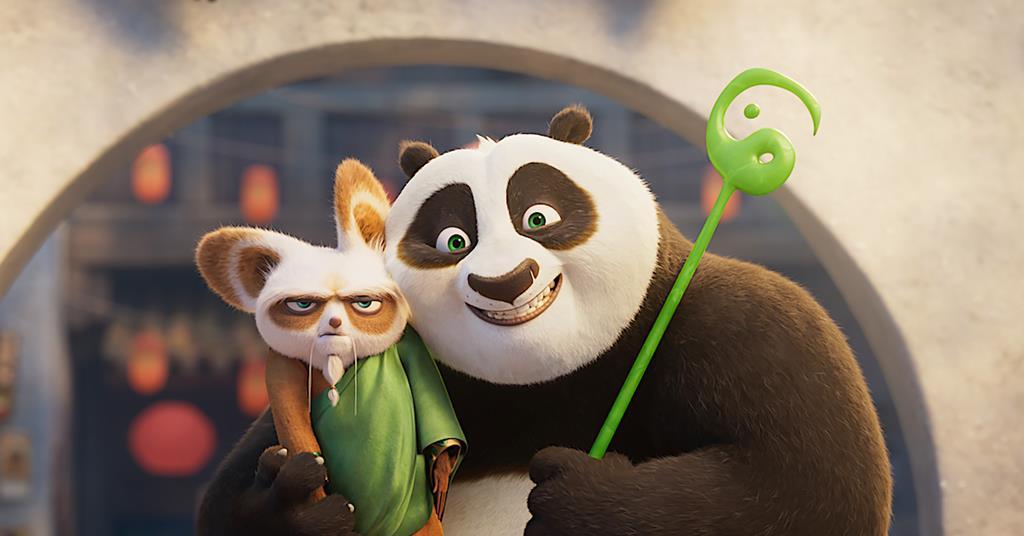
The latest in the series is unfortunately the weakest but Kung Fu Panda 4 is still good fun. Directed by Mike Mitchell (who coincidently also made the fourth Shrek film, Shrek Forever After), this still has most of the heart of the earlier entries but it’s not as consistently funny. In the film, Po must select and train his Dragon Warrior successor, but the cuddly panda doesn’t want to hold up the mantle just yet, especially since an evil sorceress called The Chameleon (Viola Davis) tries to steal the kung fu abilities of deceased figures. Kung Fu Panda 4‘s key mistake is sidelining the Furious Five, who only appear in a brief cameo towards the end of the film and that robs the film of a lot of chemistry. Still, there’s some good messages here, specifically about what it means to be an outcast and Awkwafina’s streetwise thieving fox makes for a good double-act with Po’s panda. There’s an excellent sequence in a bandit bar which is full of slapstick and Davis’ villain is quite strong.
3) Kung Fu Panda 3
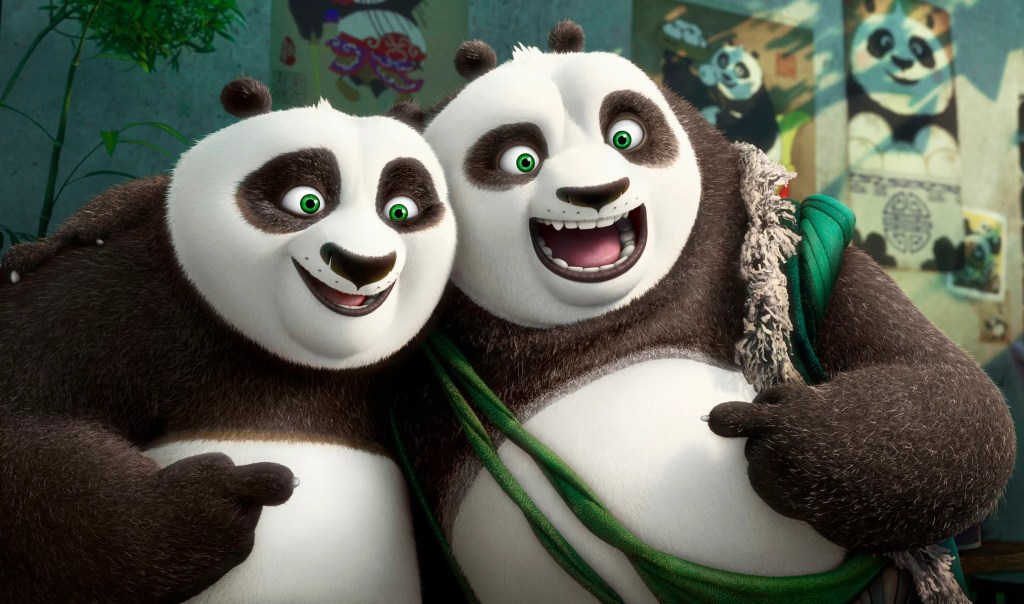
Although it’s more slight than previous entries, there’s a lot of heart in Kung Fu Panda 3 and it’s undeniably the best-looking film of the quadrilogy with its stunning vistas. This third installment picks up immediately after the second and Po is reunited with his birth father, Li Shan (Bryan Cranston) who takes him to a secret Panda village to prepare to fight against General Kai (J. K. Simmons). I particularly enjoyed the interplay between Li Shan and Po’s loveable adoptive goose father Mr Ping (James Hong) and it’s great that Dustin Hoffman’s Master Shifu is given more to do this time round, after being largely absent from Kung Fu Panda 2. This threequel also boasts the best score of the series, with Hans Zimmer melding the themes he previously established with John Powell previously with some exciting new pieces, especially the villainous Kai’s theme.
2) Kung Fu Panda 2

While many consider Kung Fu Panda 2 to be the highlight of the series, it lands in second place for me. It’s undoubtedly the most emotional of the four, with a breathtakingly emotional sequence on Po’s origins and the influences of executive producer Guillermo del Toro’s works are clear. Gary Oldman makes for a terrific villain, Lord Shen, a slender peacock with more brains than brawn over Tai Lung in the original film. But it doesn’t quite top the list for me because it’s missing the interplay between Po and Master Shifu (who is absent through large stretches of the film) and the film’s a little baggy in its pacing. Still, one has to admire director Jennifer Yuh’s ambition in not just repeating the beats that worked from the original.
1) Kung Fu Panda

The original is still the best and there’s a ton of laughs mixed with plenty of emotion in Kung Fu Panda. Jack Black’s Po is brilliant, an unlikely candidate for the Dragon Warrior who undergoes quite the character arc while having plenty of clever parallels with film staples in the kung fu and wuxia genres. Dustin Hoffman’s Master Shifu is a real highlight and the interplay between Po and Shifu is what really makes the film work, as well as the introduction of the Furious Five. The final action sequence is particularly brilliant, full of energy and laughs as Po dukes it out with the villainous Tai Lung (Ian McShane). It’s no surprise that Kung Fu Panda spawned a successful series.
 The Film Meister