

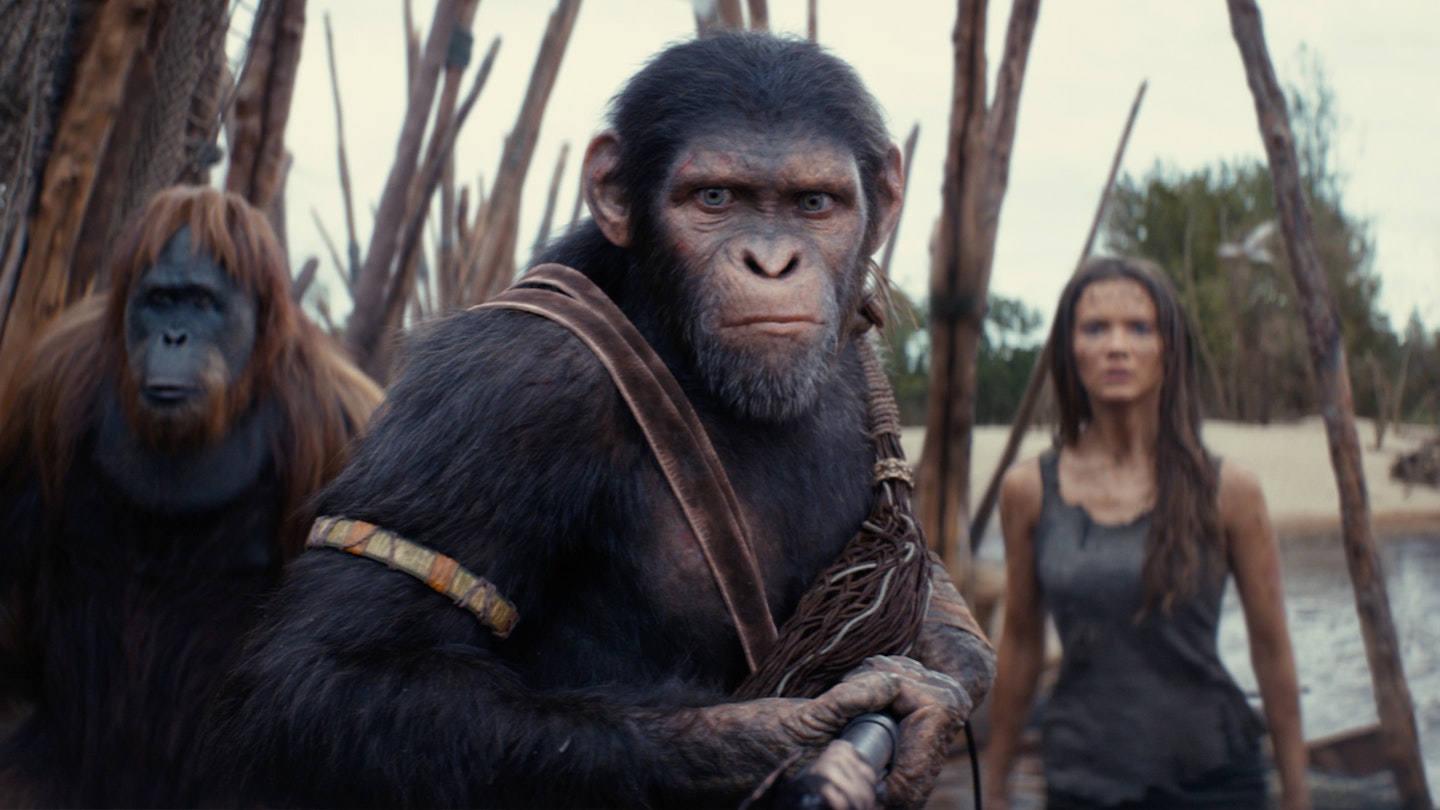
Planet of the Apes is one of the most enduring sci-fi franchises and for good reason – almost all of them explore morality-questioning themes that mirror our world. Coming off Pierre Boulle’s 1963 novel, La Planète des singes, the series imagines a world where apes are the dominant species and humans are reduced to a savage, animal-like and mute state.
There’s been 10 films so far, with an original pentalogy running from 1968 to 1973, in addition to a television series. A Tim Burton remake of the original followed in 2001 to a largely negative reception. Rise of the Planet of the Apes rebooted the series in 2011, with three further films following.
Let’s take a look at the series and rank all of the entries.
10) Planet of the Apes (2001)

Tim Burton’s remake is unfortunately in last position, chiefly because it’s the only film in the series to not provide a commentary on society. Instead, Burton’s film is simply an imagining of a planet of apes and that’s it. It’s not terrible but it could have been so much more.
Mark Wahlberg is miscast and no match for Charlton Heston but Tim Roth makes for a menacing villain and Paul Giamatti’s clearly having fun too. Rick Baker’s makeup is a highlight and the apes are strikingly realised. Many have complained about the film’s final twist but I actually think it’s one of the most interesting elements in what’s a pretty rote film and admire it for being bonkers.
9) Beneath the Planet of the Apes

A disappointing sequel to the original but an like Burton’s remake, an utterly bonkers one. The first half of the film is essentially an amalgamation of the first, with astronaut Brent (James Franciscus) a less charismatic and less talented Charlton Heston.
The second half is where the film erratically veers as we head into The Forbidden Zone, where a group of telepathic human survivors live who worship a nuclear bomb. This all culminates in a truly bleak ending, a direction that surely no Hollywood studio would ever let a filmmaker take now.
8) Dawn of the Planet of the Apes

The controversial placing of this list, I don’t understand all the love for the second film in the reboot trilogy. Matt Reeves’ first outing in the director’s chair is visually stunning and Andy Serkis continues to mature as Caesar. There’s also a palpable tension in the first half as the humans and apes figure out how to live alongside one another in relative peace.
But the story is surprisingly simplistic and extremely predictable. There’s not much to latch onto emotionally with the human characters and the film would also have benefitted from a tighter edit.
7) Battle for the Planet of the Apes

Often regarded as the worst of the original pentalogy, yes Battle for the Planet of the Apes isn’t the most lavish production with its titular battle mainly set in a field. But there’s a lot of substance here.
Roddy McDowall is brilliant as Caesar and the development of the apes where we see them at the start of the film compared to Conquest of the Planet of the Apes feels very natural. The conflict of ‘ape shall never kill ape’ is explored more convincingly here than in Dawn of the Planet of the Apes and Aldo (Claude Akins) makes for a multi-faceted villain.
6) Conquest of the Planet of the Apes

The first of the original pentalogy to have Roddy McDowall leading as Caesar, this is a particularly dark outing of pure rage and revolution. A filmmaker wouldn’t be allowed to treat a series that has to also appeal to the younger generation like director J. Lee Thompson managed to get away with here.
As Caesar struggles to come to terms with how terribly apes are treated by humans, he sets about teaching the other apes to resist their masters and it all culminates in a violent and impassioned final act. Don Murray makes for a particularly sinister villain and Hari Rhodes shines as Breck’s chief aide, an African American who is able to sympathise with the apes.
5) Escape from the Planet of the Apes

The ending of Beneath the Planet of the Apes didn’t leave many options on how to narratively continue the series, so why not fly back through time to the past? Escape starts out as a much lighter film than the previous entries as the Cornelius and Zira (Roddy McDowall and Kim Hunter) are treated as celebrities but soon shows it darker hand as the cruelty of humanity enters the fray.
This is a brilliant and tightly edited series entry with a sharp script by Paul Dehn and the performances across the board are excellent. It all culminates in a particularly distressing ending that closes an old chapter and teases an exciting new one.
4) Kingdom of the Planet of the Apes

Set nearly 300 years after War for the Planet of the Apes, director Wes Ball impresses with this intelligent and mature fourth installment. The decision to explore how a key figure’s teaching have been twisted after a period of time is a genius move and I love how Ball advances the aesthetic and tone of the series – gone are the predominantly forested surroundings of Dawn and War and its road movie influence feels closer to the original pentalogy.
Owen Teague proves an excellent lead as Noa and Kevin Durand’s Proximus Caesar is one of the most memorable villains of the series. There’s some fantastic setpieces too, bolstered by a memorable score by John Paesano.
3) War for the Planet of the Apes
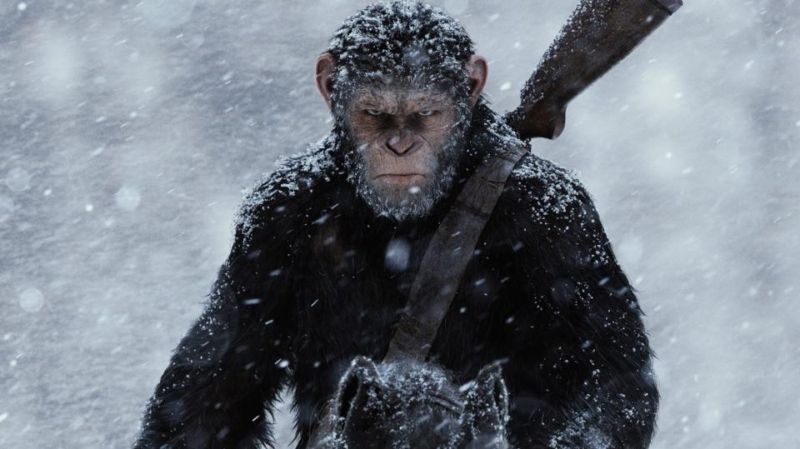
Although I found Dawn to be overrated, director Matt Reeves got it right on the second go. This is a grim, heartfelt, revenge-filled and morality-questioning closing chapter to Caesar’s trilogy. There are many prolonged sequences where War almost feels like a silent film and it’s just stunning to behold.
Andy Serkis gives his best performance as Caesar, now capable of speaking pretty much fluent English and Woody Harrelson makes for a particularly nasty piece of work as the Colonel. The score by Michael Giacchino is perhaps a career-best and it’s lusciously shot by Michael Seresin.
2) Planet of the Apes (1968)

Franklin J. Schaffner’s original is still the best of the original series and one of the best sci-fi pieces of all time. Michael Wilson and Rod Serling’s script is particularly tightly written, exploring many fascinating themes and ideologies. They show particular restraint in not introducing the apes until a good third of the way in, complimented by Leon Shamroy’s paranoid cinematography and Jerry Goldsmith’s eclectic score.
Charlton Heston makes for a terrific lead and despite many of the ape’s cruelty, all of them are similarly well-developed and we can sympathise from different perspectives. The iconic ending is still devastating and it fully deserves its rich legacy.
1) Rise of the Planet of the Apes
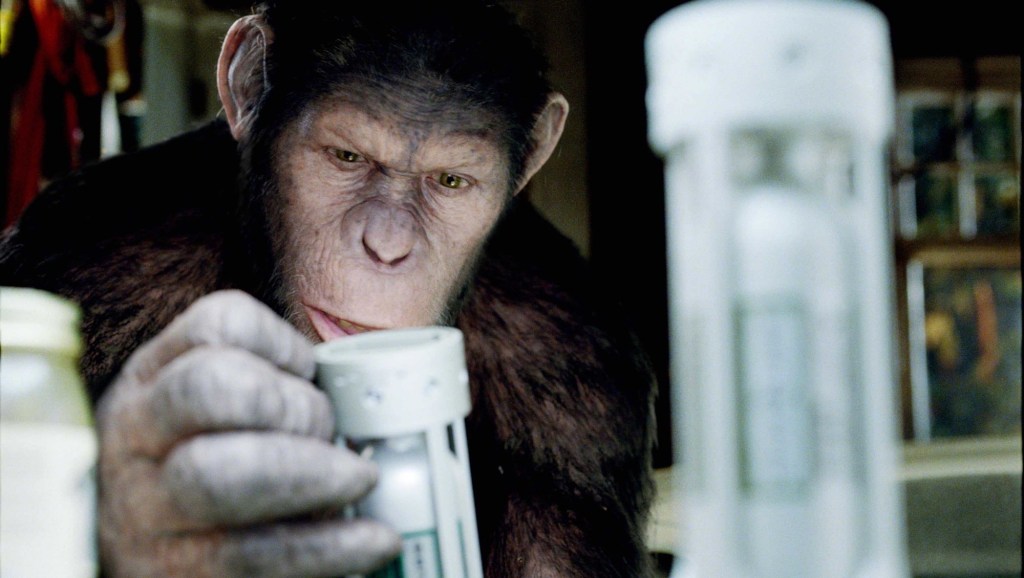
Although many would still rate the 1968 original as the pinnacle of the series, Rise of the Planet of the Apes is an astonishing achievement and a better-paced, more emotional film. The series was dead in the water after Tim Burton fumbled his remake and what better way to reboot it than to start right back at the beginning?
Andy Serkis is sensational as Caesar, in a role he would go onto further develop across two more films. What sets this entry apart are the human characters – James Franco and Freida Pinto are excellent leads and John Lithgow lends a lot of heart to proceedings as Franco’s dementia-ridden father. Tom Felton and David Oyelowo are brilliant as the villains that incite the ape onslaught and the film’s beautifully shot by Andrew Lesnie. Patrick Doyle’s score is very memorable and the final act that culminates on a battle on the Golden Gate Bridge is a sheer assault on the senses.
 The Film Meister
One thought on “Ranking the Planet of the Apes films from worst to best”