

2025 has reached its end and that means it’s time to look back on the year just gone and unveil my top film picks. It was an overall very strong year, but strange in how lots of the heavy hitters came in waves. After a decent Awards season (some of the Best Picture-nominated films that released in the UK this year feature in this list), it was a veritable desert from March through to August bar a few exceptions. I’ve never seen such a quiet summer for tentpole releases – once Jurassic World: Rebirth and The Fantastic Four: First Steps had done their business, there was precious little.
But there was then a flurry of top-drawer films in the second half of August, with new works from Zach Cregger, Mike Flanagan, Darren Aronofsky and Ari Aster, before a second wave at the end of October into November. It was a tough job cramming in so many films in one go, which proved a real contrast to the frustrating dry spells in between.
Fortunately, there was more than enough good to mute out the bad and curating a top 20 list proved a significantly more difficult task than usual. In this first of two articles, I’ll list numbers 20 to 11. Stay tuned for part two, where I’ll unveil my top ten films of the year.
But first, a few honourable mentions that didn’t quite make the list – A Complete Unknown, Ballerina: From The World of John Wick, Bring Her Back, Hallow Road, Highest 2 Lowest, Roofman, The Penguin Lessons and Tornado.
20) I Swear
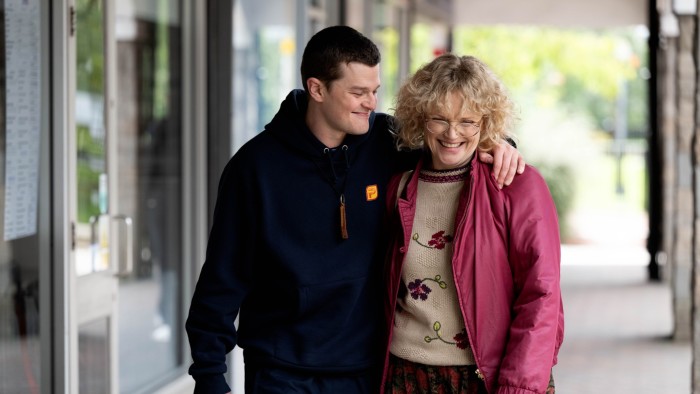
Beginning proceedings is I Swear, a biographical drama that’s based on the true story of John Davidson, who was diagnosed with Tourette’s syndrome when the disorder wasn’t widely recognised. Davidson lived in Galashiels in Scotland in a working class family and the film follows his unconventional childhood at school through to how he navigates adult life. It’s directed by Kirk Jones, best known for making Waking Ned and Nanny McPhee. Like Jones’s previous films, I Swear has the same feel-good and infectiously upbeat spirit about it – it may tread familiar biopic territory but that doesn’t mean I wasn’t riveted from start to finish. Jones’s script is full of energy and there’s plenty of laughs to be had – but they are crucially always with the characters rather than at them. The director also doesn’t neglect to include some wince-inducing moments of some of the difficult situations Davidson faces to keep his story grounded – this film really gets you in the feels with its three-dimensional characters.
Although some may say the film sticks to a somewhat conventional biopic formula, I loved I Swear. It gets the tone just right – compassionate, but never pandering – and the performances are across the board. This is a film that reminds you that people can be good and I guarantee you’ll be leaving the cinema with a smile plastered on your face.
19) The Smashing Machine
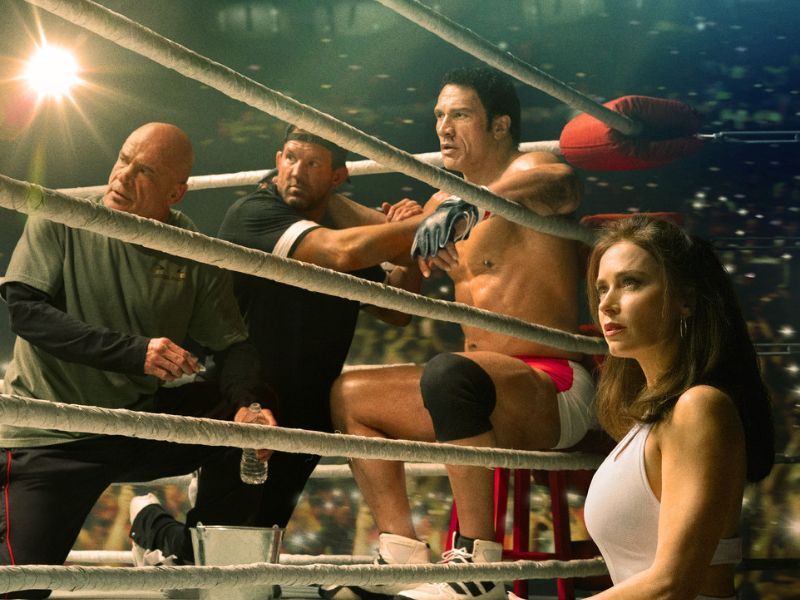
The Smashing Machine is Benny Safdie’s first time behind the camera without his brother Josh – the duo received acclaim for their collaborations with films such as Good Time and Uncut Gems. Dwayne Johnson stars as former amateur wrestler and MMA fighter Mark Kerr, with the film taking place between 1997 and 2000, and Johnson turns in what is easily a career best performance as the wrestler who is often incredibly sweet and polite on the outside, but you know there’s a screw loose that could snap at any moment. This is a fascinating sports biopic and hats off to Safdie for deviating from the conventional biopic formula. The film has a cinéma vérité quality to it (not dissimilar from Darren Aronofsky‘s The Wrestler or Bennett Miller’s Foxcatcher) and Safdie isn’t afraid to really dive deep into the complicated psyche of the heavyweight star – I was gripped throughout. The fight sequences are authentically brutal and there’s an interesting jazz-infused score by Nala Sinephro.
It’s interesting how The Smashing Machine has largely been shrugged as a film and I suspect it will be remembered only for Dwayne Johnson’s performance. But that’s a real shame because there’s a lot more going for it and Safdie really succeeds with diving into the inner psyche of the troubled fighter. Some have labelled the story as unremarkable, but that’s exactly the point – this is a film that’s about a fall from greatness and how a complicated individual such as Kerr navigates relationships and mental obstacles. This film really succeeds by looking past the sport’s shimmery gleam and how to accept and make the most of a mundane routine. I wouldn’t be surprised if this film gets a reappraisal in years to come.
18) Eddington
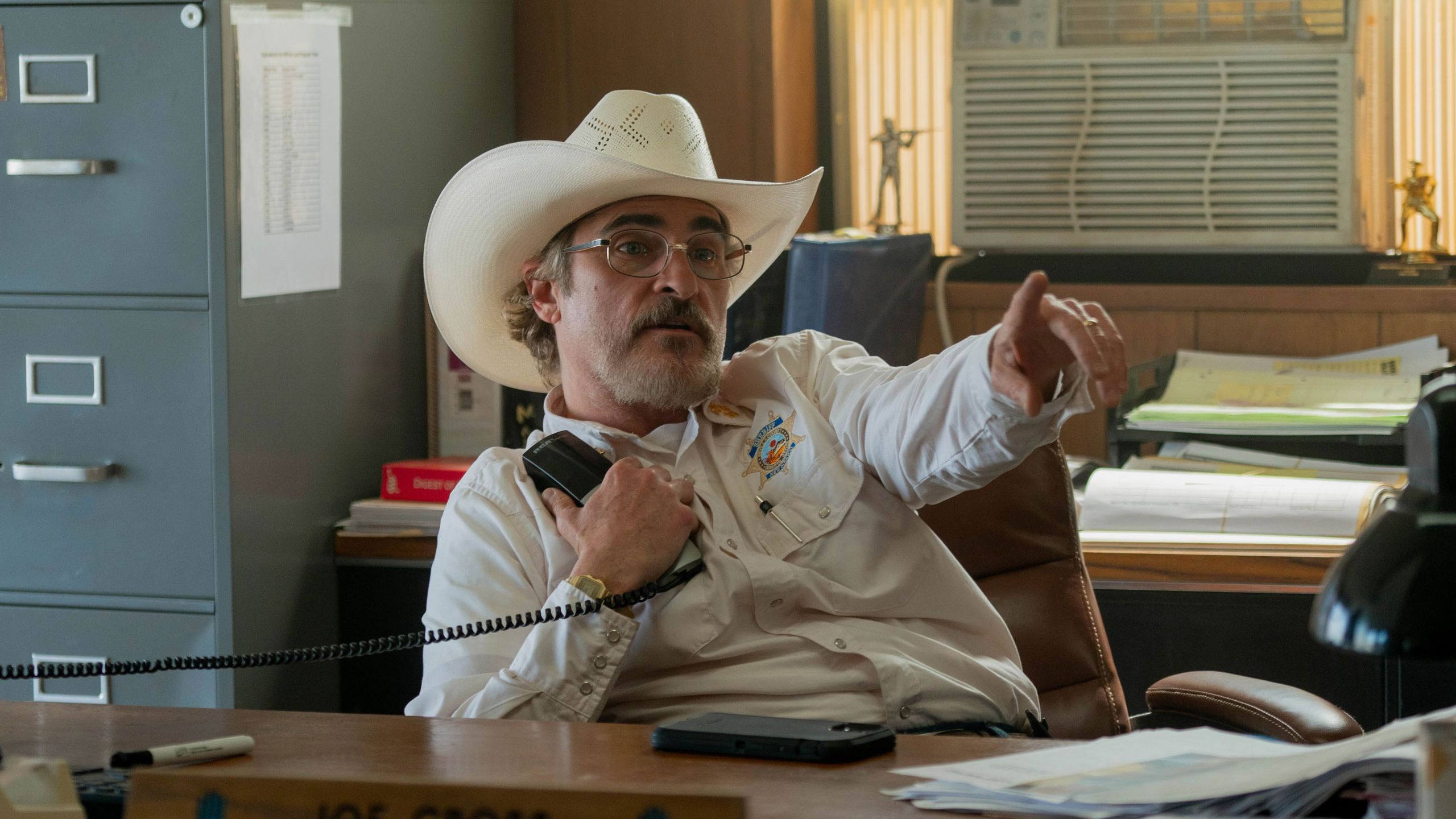
Ari Aster is one of the most exciting filmmakers currently working and after impressing many cinephiles with his first two horror films, Hereditary and Midsommar, his surrealist tragicomedy Beau Is Afraid really split opinion. I loved it and when it was revealed that Aster was working on a neo-Western thriller set in the coronavirus pandemic, it was evident the director wasn’t out to make a crowdpleaser. Joaquin Phoenix stars as Sheriff Joe Cross, who faces off against Pedro Pascal’s Mayor Ted Garcia who is up for re-election. While I admired the film on a first viewing, I had some issues with it – but I really grew to appreciate it on a rewatch, having the knowledge of where the story was heading. This is a fearsomely original work from Aster with a brilliant Joaquin Phoenix performance that poses lots of interesting questions. It’s beautifully shot by Darius Khondji and the film particularly soars in its first and third acts. There’s one major flaw – I think the Emma Stone and Austin Butler story arc is unnecessary and stunts the film’s pacing. But even if it’s not perfect, you have to admire the ambition and I’m positive I’ll be revisiting Eddington in years to come.
17) The Long Walk

The first of two Stephen King adaptations in this list (and the other two that aren’t here were also pretty good), The Long Walk is set in a future United States under a totalitarian military regime where fifty men compete in an annually televised competition, meant to inspire viewers. There’s a man representing each state and they must walk at a speed of at least three miles per hour – if they fall below and receive three warnings, they’re shot on the spot, with the winner being the final survivor. Francis Lawrence directs – and you couldn’t ask for a more fitting name at the helm, given he’s directed all of The Hunger Games films (bar the first), where people must also fight to the death.
This excellent adaptation deftly sustains a chilling and grim tone, but balanced with a humanity in the well-developed characters. Lawrence really makes the most of its simple premise and there’s a sustained sense of dread throughout – if a character wants to tie a shoelace or stop to relieve themselves, they’re naturally going to be doing that at less than three miles an hour. As you’d expect, the characters move through emotional states as the walk progresses and it’s exciting to see what were adversaries become friends, and vice versa. The film does a great job in forcing you to think that any relationships formed are doomed, given the inevitable’s going to happen. It’s also testament to how strong a story this is when most of the film is just a tracking shot of some characters walking along a road – Lawrence doesn’t use many flashbacks.
Unlike The Hunger Games films where the commentary behind the games is just as compelling as the contest, Lawrence trims the fat from The Long Walk and makes it lean and mean instead. The film doesn’t waste any time in getting started and never wanders into eye-rolling schmaltz, which is an easy trap for a film like this to run into. What’s more, there’s an excellent score by Jeremiah Fraites, who crafts several memorable themes and the film’s well shot by Lawrence’s regular cinematographer Jo Willems, who conveys the expanse and monotonous of the never-ending roads the characters must travel on.
16) 28 Years Later

28 Years Later is the long-awaited third instalment in the 28 Days Later series, director Danny Boyle’s 2002 post-apocalyptic horror that was novel for introducing the fast-moving zombie (even if Boyle famously doesn’t consider it to be a zombie film). The film arrives 18 years after 28 Weeks Later, which was directed by Juan Carlos Fresnadillo, and is the first of a planned new trilogy with Alex Garland on writing duties. This is a very exciting and ambitious sequel that was worth the long wait and it often really soars. It’s a Danny Boyle film through-and-through, so expect the grainy feel of the original (this time, lots of the film is shot on iPhones), coupled with seriously kinetic cinematography from Boyle’s regular collaborator Anthony Dod Mantle. This is a film that’s full of ideas, and one that refuses to take obvious choices and like some of Garland’s recent filmography, there are plenty of influences from the UK’s recent political turmoils as the duo paint a picture of a national identity crisis. Although there’s a slight slump in the seond act, when the film peaks, 28 Years Later is transcendent. I’m very excited to see where the story heads next and although many have expressed dissatisfaction at the intentionally befuddling final scene, fear not because I’m confident we’re in safe hands.
15) Dangerous Animals

For about 70 minutes of its 93 minute run time, Dangerous Animals is a near-perfect genre mash-up of a shark film and serial killer mystery that’s deliciously nasty – a blending of Jaws meets Peeping Tom, but turned up to eleven. Jai Courtney plays Tucker, an eccentric ship captain who runs a shark cage tourist attraction business. But as we very quickly learn, he’s also a serial killer with a seriously twisted mind, with his latest victims Heather (Ella Newton), an Englishwoman on a gap year and a feisty American drifter, Zephyr (Hassie Harrison). He likes to harness women up and slowly dunk them into shark-infested waters, and film the results. Nick Lenard’s script is sharp and deftly develops the characters, so it’s easy to care for them later into proceedings. The film’s also gorgeously shot by cinematographer Shelley Farthing-Dawe, with some stunning ocean vistas and blending the turquoise waters with blood red. Until that 70 minute mark or so, I’d go as far as to call Dangerous Animals the definitive shark film. It’s such a shame that in the last 20 minutes, the film really jumps the shark (pun fully intended) – neither director Sean Byrne or Lenard have the strength to act on their sadistic convictions and you really have to suspend disbelief. But despite its disappointing ending, Dangerous Animals still earns a high spot on my list because that first 70 minutes really is something special, and I hope this film revamps Jai Courtney’s career because it’s proof that he can be brilliant when he’s given the right material.
14) Black Bag
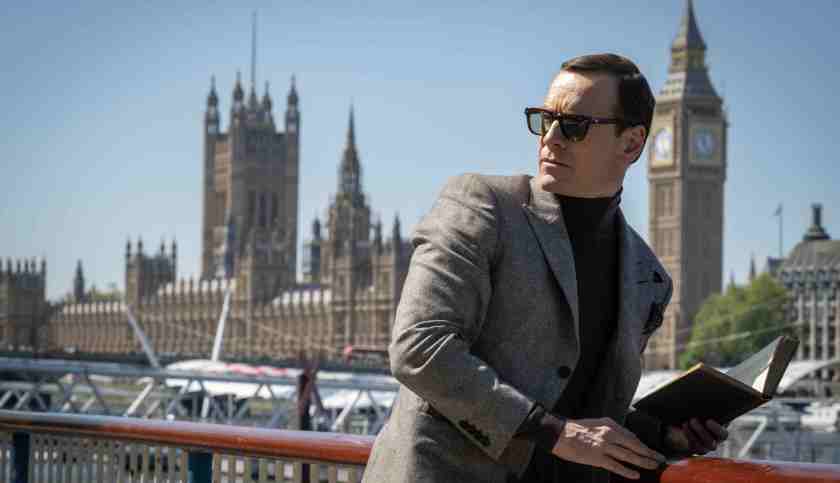
Black Bag is a stripped-down espionage thriller by Steven Soderbergh, one of two films he directed in 2025 (with another one coming up shortly…). Michael Fassbender plays British Intelligence officer George Woodhouse and as the film opens, he is given one week by his superior to investigate who has leaked a top-secret software program. One of the suspects is his fellow intelligence officer and wife, Kathryn (Cate Blanchett). He invites the other four suspects to dinner and drugs the chana masala (which he tells his wife to avoid) to get them to loosen up and in his words “watch the ripples”.
This is another excellent film from Soderbergh and it’s impressive how lean Black Bag is – there isn’t an ounce of fat in this fast-paced 94 minute thriller. David Koepp’s flirtatious script is very sharply written and the film feels very much indebted to the works of John le Carré, albeit with Soderbergh’s influence. It’s very satisfying constantly seeing this ensemble play each other wih the film’s dry wit and there’s a surprising number of laughs here too, especially a serious Fassbender cooking up a storm in the kitchen with steamed-up glasses. The film’s lusciously shot by Soderbergh (under his usual Peter Andrews pseudonym) and David Holmes’ playful score is very fitting.
13) Presence
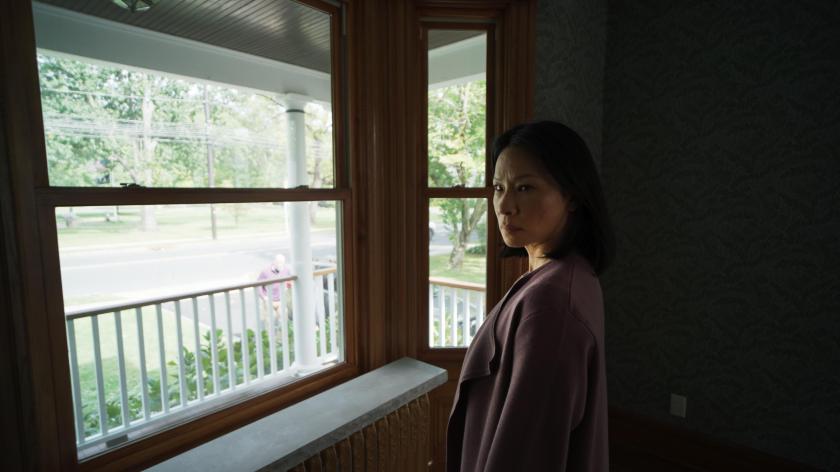
I’m going to give the slight edge to Soderbergh’s first 2025 release, an innovative horror film that’s presented in a series of long takes rom the poltergeist’s point of view – an interesting creative decision. Written by David Koepp, who previously wrote Soderbergh’s Kimi, Presence follows a family of four who move into a house inhabited by a poltergeist. The family includes mother Rebecca (Lucy Liu), father Chris (Chris Sullivan), bratty elder brother Tyler (Eddy Maday) and troubled younger sister Chloe (Callina Liang). They’re all suffering from various problems – Rebecca clearly prefers her son and has been committing financial fraud, Chris suffers from depression and is considering separation from Rebecca and Chloe is grieving the death of her best friend, Nadia, who recently died in her sleep. Almost immediately after moving in, Chloe starts to complain of a supernatural presence.
Presence does a really good job of slowly building a sense of unease with a tinge of sadness and there’s some excellent character development among the family. You can really see the cracks start to grow, particularly as the strained marriage falls apart. Chris Sullivan stands out as the father in a very understated performance who generates a lot of empathy. Calling Liang also impresses as the developing but vulnerable daughter who hasn’t quite worked out her purpose yet. Lucy Liu’s mother isn’t particularly likeable, but that’s the point and her performance satisfies the brief. The first person point of view also works here, even if it occasionally falters under scrutiny. It compliments the narrative and the dream-like images of the wide lens (Soderbergh is on cinematographer duties, too), forcing us to question what the spirit’s intentions are and if it’s malicious by the way the camera studies its subjects. There’s a melodically moody score too from Zack Ryan and at 85 minutes, the film is lean and doesn’t outstay its welcome. If anything, I wish it were a bit more substantial.
12) The Monkey
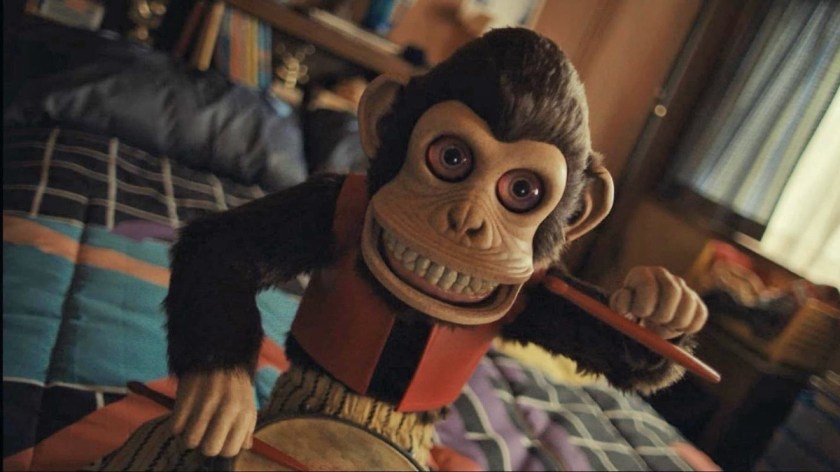
After reaching new career heights with the excellent Longlegs in 2024, director Osgood Perkins’ follow-up sees him adapt Stephen King’s 1980 short story of a cursed monkey that brings death and destruction. Adding further excitement behind the camera is horror maestro James Wan, who produces the film. This is a hugely enjoyable film with some brilliant set-pieces and striking imagery. Perkins is the perfect pick to direct this project, having himself lost his parents in headline-making ways. He decides to intentionally avoid subtlety and use the film’s sadistic gore to joke about the absurdity, pointlessness and randomness of death. That’s a genius approach and really distinguishes The Monkey from more serious horror films about possessed toys, of which there have been many. The film’s brilliantly edited and it packs a real wallop in its breakneck pacing as it hurtles through its sub-100 minute run time. The humour really works – especially how a man reacts to their neighbour getting gruesomely slain in a lawnmower incident, and the film is brimming with Perkins’ signature style in terms of the mise-en-scène. The monkey itself of a wonderfully creepy design – James Wan is no stranger to the genre after all being behind the similarly evil creations of Jigsaw in the Saw films and Annabelle in The Conjuring Universe. The Monkey is another winner from Perkins and it’s a very coherent film with clear influences from King and Wan that really elevate it. The decision to lean into the absurdity of death is a particularly strong choice and it’s a real blood-drenched thrill ride from start to finish. This is an intriguing film that builds to a memorable conclusion, which stays with you long after the credits roll.
11) Bugonia

Just missing out on a top ten spot is Yorgos Lanthimos’s latest, which stars Emma Stone as the CEO of a pharmaceutical company, who is abducted by conspiracy theorist Teddy Gatz (Jesse Plemons) and his disabled brother Don (Aidan Delbis). Bugonia is yet another thought-provoking work from Lanthimos, packing plenty of surprises and thrills up its sleeve. This is a film that keeps you second-guessing throughout with its complex characters and striking visuals, and like lots of his work, it’ll take multiple watches to fully unpack. I’ve always found Lanthimos is at his best when he’s on scriptwriting duties with his co-writer Efthimis Filippou (they co-wrote Dogtooth, Alps, The Lobster, The Killing of a Sacred Deer and Kinds of Kindness together) with their arch dialogue. It’s why The Favourite didn’t fully work for me. And although Will Tracy’s script isn’t quite as arch as what Lanthimos and Filippou would conjure, I didn’t notice the writing as much as I did in The Favourite.
While Emma Stone is reliably excellent as Michelle, it’s Jesse Plemons and Aidan Delbis that really stand out as the abductors. Plemons is scarily convincing as the unkempt Teddy, who constantly takes advantage of his cousin with his conspiracy theories and has a very short fuse – I hope he’s recognised come Awards season. Delbis is equally brilliant in his debut role, brilliantly balancing the vulnerability of his disability with a clear sense of right and wrong. Robbie Ryan’s cinematography is outstanding, shooting the film in VistaVision with a vivid colour palette. Jerskin Fendrix, who seems to also becoming Lanthimos’ new composer of choice given this is his third collaboration, turns in a career-best score. The monumental score beautifully compliments the events on-screen, upping the intensity with memorable themes. Bugonia is yet another excellent Lanthimos film that kept me gripped throughout with its fascinating story, memorable performances and stunning visuals.
What are your thoughts? Let me know in the comments or tweet @TheFilmMeister
 The Film Meister
One thought on “Best Films of 2025 (20-11)”