The King’s Man (Review)

Uncategorized
⭐⭐⭐ (Good)

Director: Matthew Vaughn
Starring: Ralph Fiennes, Gemma Arterton, Rhys Ifans, Matthew Goode, Tom Hollander, Harris Dickinson, Daniel Brühl, Djimon Hounsou, Charles Dance
Certificate: 15
Run Time: 131 mins

The King’s Man is the third film in the expanding Kingsman franchise, with this entry serving as a prequel. When Matthew Vaughn’s Kingsman: The Secret Service released back in 2015, it was a self-aware and giddy sugar-rush of a film, rejuvenating the spy genre as Kick-Ass (also directed by Vaughn) did for the comic-book film. The sequel Kingsman: The Golden Circle doubled down hard on the more crass elements of the first film which attracted a mixed reception, I still found a lot to like in it, although it suffered in its villain department. Matthew Vaughn remains in the director’s chair for this prequel. 

The King’s Man begins at the climax of the Boer War and the story extends to the end of the First World War. It follows Ralph Fiennes’ charismatic aristocrat Orlando, the Duke of Oxford, an ex-army officer who received the Victoria Cross. Although he fought in the war, he was unsatisfied with killing people and is of the belief that conflict can be resolved using more peaceful methods, combined with espionage. Two of his house servants, Shola (Djimon Hounsou) and Polly (Gemma Arterton), join his spy network as the First World War approaches. His son, Conrad (Harris Dickinson) is desperate to join the war effort and fight for his country, but Orlando forbids it and uses his government and army connections to make it impossible for him. 

Behind the scenes, a group headed by a mysterious figure called ‘The Shepherd’ and comprised of historical figures such as Grigori Rasputin (Rhys Ifans), Erik Jan Haunssen (Daniel Brühl) and Gavrilo Princip (Joel Basman) are plotting on inciting war by assassinating the Archduke Franz Ferdinand and convincing the Russian Tsar Nicholas to remove Russia from the war, to allow Germany to conquer Great Britain. 

The King’s Man has been subject to numerous delays due to the Disney / Fox merger and the coronavirus pandemic, originally scheduled for release in November 2019. So has it been worth the wait? 

The King’s Man is an interesting but ultimately unnecessary prequel. Vaughn changes the formula from the first two films by interweaving actual historical events and historical figures. This isn’t a bad thing but gone is the majority of the heightened reality that the first two films exist in, and with that the witty and crass humour. This film is played a lot more straight-faced and in proceeding with this tone, the film loses a lot of the series’ charm and energy. 

Ralph Fiennes makes for a compelling lead and injects as much life into the material as he can. He has some amusing moments, one in particular where he refuses a cup of tea in a drunken state. Rhys Ifans is devilishly good as Rasputin and is clearly having fun with the material. The limited scenes he shares with Fiennes are where the film is at its best. Tom Hollander is also another highlight of the film, playing a triple role of King George V, Kaiser Wilhelm II and Tsar Nicholas. 

Of the rest of the cast, they are all largely under-utilised. Djimon Hounsou and Gemma Arterton show promise as the two house servants but their characters are underdeveloped. Harris Dickinson is no match for Taron Egerton’s Eggsy in the mainline films and other than the fact that he wants to join the war effort, there is no meat to the character. Daniel Brühl is completely wasted in a small henchvillain role which is a shame, given how strong and versatile he is of an actor. 

A significant downside with the film is that it peaks too early. There is an early action sequence with Rasputin which is a giddy excitement and as Ifans describes the scene, ‘a delicious excess’. It is perhaps the only scene in the film which has the kinetic energy of anything from the first two films but the film can never sustain or surpass this sequence 

The film badly suffers in its villain department, with the exception of Rhys Ifans’ Rasputin. A spy film is generally only as good as its villain and the The Secret Service remains the series’ pinnacle with Samuel L. Jackson’s menacing yet hilarious, lisping villain. The Golden Circle ran into villain problems as Julianne Moore’s Poppy was no equal to Jackson and this film represents an even steeper descent down this filmic trap. Allowing Ifan’s Rasputin more screen time or making him the lead villain would have really worked wonders for the film. 

The King’s Man is a serviceable entry in the series and Vaughn’s attempt at shaking up the formula isn’t to be ignored as many sequels run into the trap of repeating what worked in previous instalments. However, save Rasputin’s early action sequence and Fiennes’ performance, the film isn’t particularly memorable and represents a low point for the franchise. It can never settle on a cohesive tone, erratically veering between historical thriller and swashbuckling action. A sequence in the second act of the film set on the Western Front feels like a pale imitation of Wonder Woman infused with 1917. With a cast this star-studded and on the promise of the first two films, The King’s Man wasn’t worth the long wait and is a disappointment. 

⭐⭐⭐ (Good)

Don’t Look Up (Review)

Uncategorized
⭐⭐⭐ (Good)

Director: Adam McKay
Starring: Leonardo DiCaprio, Jennifer Lawrence, Rob Morgan, Jonah Hill, Mark Rylance, Tyler Perry, Timothee Chalamet, Ron Perlman, Ariana Grande, Scott Mescudi, Himesh Patel, Cate Blanchett, Meryl Streep
Certificate: 15
Run Time: 138 mins

Don’t Look Up represents director Adam McKay’s continuing exploration into more serious yet satirical filmmaking with a political edge. McKay is most famous for his collaborations with Will Ferrell with timeless films such as Anchorman and Talladega Nights. McKay’s foray into more serious fare started with The Big Short, an interesting and unconventional investigation into the American financial housing crisis in 2007/8 that earned Awards attention but I found its tone particularly obnoxious and its pacing disjointed. There was a lot more to like in his follow-up, Vice, a biopic concerning Dick Cheney with a transformative performance from Christian Bale, although it also runs into the same shortcomings. 

Don’t Look Up is a completely fictional piece this time around, although it draws many parallels with modern society. Leonardo DiCaprio (in his first role since Once Upon A Time In… Hollywood) and Jennifer Lawrence play two astronomers, Dr Randall Mindy and PhD student Kate Dibiasky. Dibiasky discovers a comet one evening whilst she is monitoring the sky and once Mindy calculates its trajectory, he discovers that it will impact Earth in approximately six month’s time and is large enough to cause a planet-wide extinction. After confirming the findings, they attempt to warn humanity, initially by being invited to meet the President, Janie Orlean (Meryl Streep) who responds to the duo with complete apathy. The two astronomers are then encouraged to leak the news via media on a morning talk show, ‘The Daily Rip’, but the hosts (Tyler Perry and Cate Blanchett) and by extension, the public, do not take the threat seriously. The film draws many obvious parallels to the coronavirus pandemic, the climate crisis and scathing depictions of government and the media. 

Don’t Look Up is an interesting piece from Adam McKay. It is an expectedly biting satire with many satisfyingly uncomfortable comparisons to reality. There aren’t many laughs here due to how close the humour hits to home. The third act is a particularly morbid and elegiac affair as the comet becomes increasingly visible to Earth. That said, Don’t Look Up runs into the exactly the same problems as his previous two films with its obnoxious and boisterous tone.  McKay directs with the subtlety of a sledgehammer and the film would have worked better if he had left more to the imagination, perhaps with the aid of a co-writer, who could have reigned him in. The film’s pacing is scattershot throughout but particularly in its first half. Reducing the length by around twenty minutes would have really helped tighten up the pacing as the film doesn’t need to be 140 minutes. 

There are some strong performances. Jennifer Lawrence makes the strongest impression of the cast as the doctoral candidate astronomer. She is unafraid to speak her mind, whatever that may mean for her image and career. Leonardo DiCaprio doesn’t fare quite as well and although he clearly isn’t as comfortable in comedy as he is in other genres, he still turns in a solid performance with the material he has to work with. McKay has assembled quite the supporting cast full of heavy-hitting A-listers. Of the supporting cast, Ron Perlman has some excellent moments as a right-wing, racist military leader who gets some memorable lines and Melanie Lynskey provides stable support to DiCaprio as his wife. 

There are also some performances that don’t fare as well. Meryl Streep as President Orlean is serviceable but like DiCaprio, she also appears uncomfortable in her comedic moments. Jonah Hill isn’t given much depth as Orlean’s son, who is the cantankerous Chief of Staff in the White House. Cate Blanchett plays one of the vapid hosts of ‘The Daily Rip’ and her characters is pretty despicable but I suppose that means she has met the brief. Finally, there is Mark Rylance, who puts in one of the strangest performances of the year as Sir Peter Isherwell, a tech billionaire CEO of BASH. Isherwell has bleached white hair, false teeth and a lisp and the character draws clear comparisons to Steve Jobs. 

Technically, the film is admirable. Linus Sandgren’s cinematography is polished, giving the film an unnatural sheen to compliment its shallowness and the visual effects are strong for a film of this budget, particularly with sequences of the comet. Nicholas Britell’s score is also strong with some memorable and ethereal themes. 

Ultimately, Don’t Look Up is an interesting piece from Adam McKay. Although it runs into his usual shortcomings, this is still a biting satire and its third act in particular is particularly amiable in its ambition. It’s very interesting to see that this film has attracted a decidedly marmite response when I would consider my reaction straight down the middle.  

⭐⭐⭐ (Good)

Spider-Man: No Way Home (Review)

Uncategorized
⭐⭐⭐⭐ (Excellent)

Director: Jon Watts
Starring: Tom Holland, Zendaya, Benedict Cumberbatch, Jacob Batalon, Jon Favreau, Jamie Foxx, Alfred Molina, Marisa Tomei
Certificate: 12A
Run Time: 148 mins

Spider-Man: No Way Home is not just the latest in the Marvel Cinematic Universe but a culmination of the live-action films to date to feature the webbed slinger. Both director Jon Watts and Spider-Man star Tom Holland return for this third entry in the MCU-positioned trilogy. Spider-Man: Homecoming was a surprisingly excellent first solo outing, with a John Hughes feel and a menacing villain in Michael Keaton’s Vulture. Sadly, despite critical acclaim, I found the follow-up Spider-Man: Far From Home to be an abomination. It strikes an incredibly smug tone and completely wastes Jake Gyllenhaal as a villain. Naturally, there was a sense of trepidation heading into Spider-Man: No Way Home

The film opens immediately at Far From Home’s close when Spider-Man’s identity of Peter Parker is revealed to the world. No Way Home explores the prospect of the Multiverse, first introduced in Avengers: Endgame, when Peter Parker asks Doctor Strange (Benedict Cumberbatch) to make the population forget the impromptu identity reveal. The spell goes awry as Peter realises he doesn’t want his close friends, MJ (Zendaya) and Ned (Jacob Batalon) to forget his identity. Thus, Spider-Man villains from the Sam Raimi and Marc Webb era inadvertently enter the fray, such as Doc Ock (Alfred Molina) and Electro (Jamie Foxx). 

Spider-Man: No Way Home is a mostly thrilling ride with some excellent surprises in its narrative. It perfectly melds with the Raimi and Webb era and irreverently integrates the included villains with the Marvel Cinematic Universe. The film clearly takes inspiration from Spider-Man: Into The Spider-Verse, which was rapturously received and although I admired the film’s effort to metatextualise its story, it runs into a raft of problems. 

No Way Home features some excellent interactions between characters, particularly in the second act, and the script penned by Chris McKenna and Erik Sommers is sharp. It is not an easy task to meld the past and present in a film, with other tentpole films such as Star Wars: The Rise of Skywalker cheaply capitalising on nostalgia. 

No Way Home naturally barrels towards a large CGI set piece in the final act, which is well-handled due to some plot revelations that allow the film to explore what it means to be Spider-Man. The narrative choices are generally well-judged and attempts to mirror or contrast other entries in the MCU or prior Spider-Man films. 

The performances are generally excellent – Holland is genuine as the webbed slinger and the film reminds us that he is still a developing teenager as he makes some poor choices. This is the best Zendaya has been in the trilogy as MJ and both actors share a palpable chemistry. Molina and Foxx’s villains receive interesting developments and aren’t just featured as one-dimensional villains. Foxx received mixed reviews for his performance as Electro in the divisive The Amazing Spider-Man 2, which I preferred more than most, and this is less risky. I would like to comment on other performances but to do so would be to spoil some surprises. 

As for the film’s low points, Jon Watts’ direction is again, anonymous and he doesn’t allow any of his personality to shine through. Watts knows how to create an atmosphere with both Clown and Cop Car interesting and gritty pieces of work but with all three of his Spider-Man films, his authorship has been sucked into the Marvel vacuum. No Way Home could have been directed by anyone. 

Michael Giacchino’s score isn’t particularly memorable and while he briefly revisits his own themes from previous entries and Doctor Strange, as well as those by Danny Elfman and Hans Zimmer from previous Spider-Man films, there’s not a lot of substance to the score. 

Spider-Man: No Way Home is a satisfying round-up to the trilogy and amalgamation of the entire MCU and Spider-Man oeuvre thus far. It’s a relief that it takes some narrative risks and takes its time to focus on character interactions compared to the cynical tone of Far From Home. I’m not sure how well No Way Home will hold up to repeat viewings, as a lot of the film rests on its narrative surprises, but on an initial viewing, it’s a thoroughly entertaining ride with unexpected depth in places. 

⭐⭐⭐⭐ (Excellent)

The Lost Daughter (Review)

Uncategorized
⭐⭐ (Poor)

Director: Maggie Gyllenhaal
Starring: Olivia Colman, Dakota Johnson, Jessie Buckley, Paul Mescal, Dagmara Dominczyk, Jack Farthing, Oliver Jackson-Cohen, Peter Sarsgaard, Ed Harris
Certificate: 15
Run Time: 121 mins

The Lost Daughter is the directorial debut from actress Maggie Gyllenhaal based on a 2006 novel of the same name by Elena Ferrante. It follows a middle-aged professor Leda Caruso who is holidaying in Greece. She is clearly carrying a lot of emotional baggage and we learn that she’s had a rocky relationship with her children due to her finding motherhood unwieldy. When she is resting on a beach, a fellow holidaymaker Nina (Dakota Johnson) notices her young child goes momentarily missing. Leda finds her and reunites her with her mother but the girl has lost her prized doll, which causes her distress. It is revealed that Leda has taken the doll, for god knows whatever reason, and is a theme that recurs time and again throughout. Gyllenhaal explores the parallels with Leda’s complicated experiences in her life with her Greek holiday. 

The Lost Daughter is a strange film and whilst it’s never boring, I struggled to connect with the characters. Whilst Olivia Colman’s performance is typically excellent as Leda, her character is deeply troubled and unlikeable. That’s not a problem in itself as there are plenty of excellent deceitful characters in film but Gyllenhaal fails to fully explore the ideas she sets up. There are some interesting notions on motherhood, such as the under-explored idea that a mother may not always like her children, which the film is on the cusp of unpacking.

Jesse Buckley plays Leda in her younger years and like Colman, has received lots of awards attention for her performance. I thought Buckley’s performance was terrible. Her British accent constantly slips and slides and she’s totally unconvincing as a young mother.  Of the rest of the cast, Ed Harris is fine but isn’t given a great deal to work with and Dakota Johnson is underused as the young mother and her difficult familial situation is also under-explored. 

Whilst The Lost Daughter is far from a conventional debut in its ambitious narrative and unsettling tone, Gylllenhaal’s debut is ultimately disappointing in that it fails to fully explore its themes. I’m surprised the film has resonated with critics as much as it has. The Lost Daughter is drawn-out, tedious and unfortunately doesn’t hang together. 

⭐⭐ (Poor)

Swan Song (Review)

Uncategorized
⭐⭐⭐ (Good)

Director: Benjamin Cleary
Starring: Mahershala Ali, Naomie Harris, Awkwafina, Glenn Close, Adam Beach, Dax Rey
Certificate: 15
Run Time: 112 mins

Swan Song is a sci-fi drama directed by Irish filmmaker Benjamin Cleary, of which this is his first feature-length film. He had previously directed the short film Stutterer, which earned him an Oscar. 

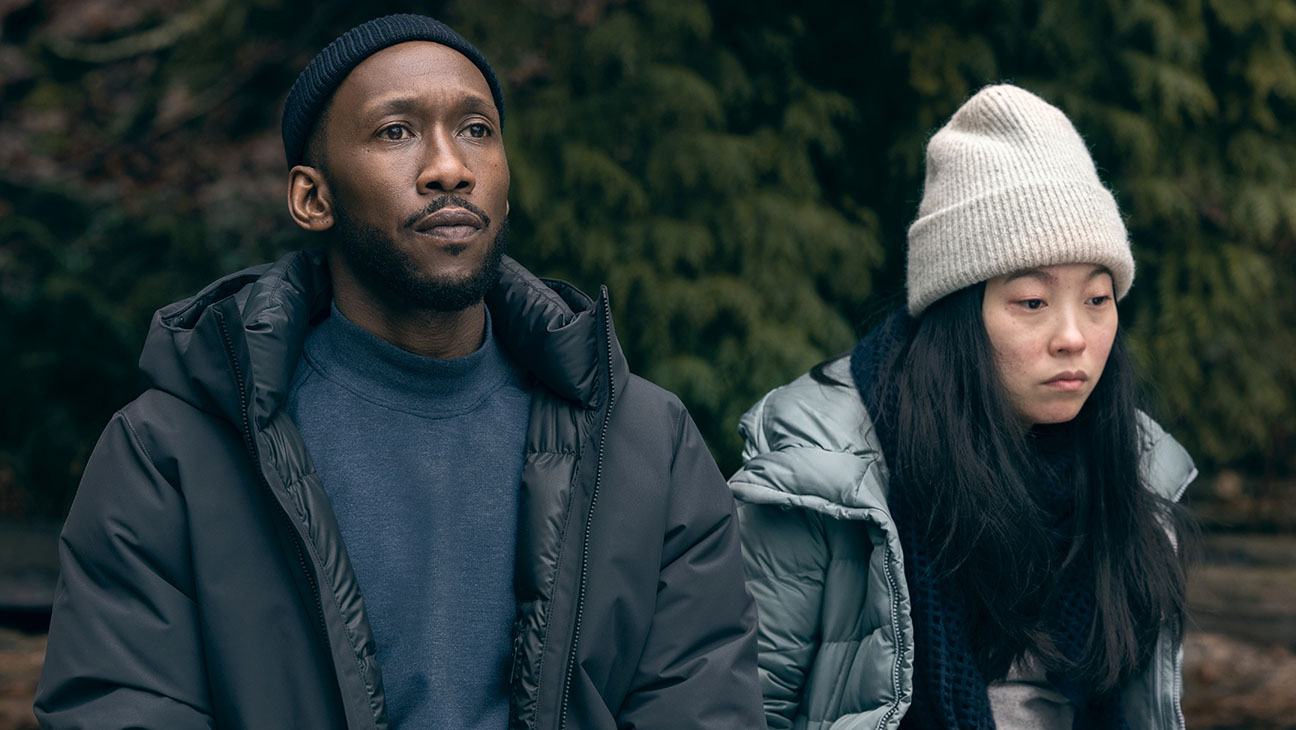
Cameron Turner (Mahershala Ali) is a graphic designer and father who has been diagnosed with a terminal illness. He has a relatively quiet relationship with his wife, Poppy (Naomie Harris) and his young son, Hugo (Dax Rey). He cannot bear the thought of his family grieving for him and he is approached by a technology company led by the enigmatic Dr Scott (Glenn Close). Turner is offered the opportunity to have a clone of him replicated that could replace Turner in his home and the clone would be imperceptible to his family. He would then live the rest of his days on the remote island owned by the company. Scott explains to Turner that he would be the third subject to be cloned and he is invited to meet Kate (Awkwafina), who is also suffering from the debilitating effects of a terminal illness whose clone is happily integrated in reality.

Swan Song’s fascinating premise makes for a strong foundation. If you knew your time on earth was limited and an undetectable clone could be created that allows your family to be happy, what option would you take?

Swan Song poses many thoughtful questions and is a sci-fi that possesses more brain than brawn. Like its protagonist, its tone is meditative and unassuming. The film is clinically lensed by Masanobu Takayanagi and he captures the melancholic atmosphere of the remote island particularly crisply, an island visually divorced from reality.

Mahershala Ali gives a typically reliable dual performance as Cameron and his clone. There are some solid performances from the rest of the cast too. Glenn Close is excellent as the direct pioneering scientist who lacks empathy and the film offers a very different dual role for Awkwafina to play but she nails it. It’s also great to see Hostiles and Suicide Squad actor Adam Beach in a film with a meatier role than he normally receives, as Close’ psychologist assistant. 

Swan Song doesn’t quite manage to hit its stride that its premise suggests and it can be languorous and a little repetitive in places. It would benefit from trimming twenty minutes or so to allow it a harder-hitting edge. The musical choices by Jay Wadley are also rather jarring and don’t particularly mesh with the events on-screen. 

It may not quite live up to the lofty potential of the narrative but Swan Song is a solid and cerebral sci-fi that makes for an assured debut from the filmmaker. 

⭐⭐⭐ (Good)

The Unforgivable (Review)

Uncategorized
⭐⭐⭐ (Good)

Director: Nora Fingscheidt
Starring: Sandra Bullock, Vincent D’Onofrio, Jon Bernthal, Richard Thomas, Linda Emond, Aisling Franciosi, Rob Morgan, Viola Davis
Certificate: 15
Run Time: 114 mins

The Unforgivable is an American feature film adaptation of a 2009 British television series called Unforgiven. The film is directed by Nora Fingscheidt in her English-language debut, with her first film Systemcrasher in her native Germany. Fingscheidt relocates the action to Seattle, which is portrayed in an unrelentingly grim light, far removed from its coffee, alternative rock and literature culture. The film’s spent a fairly long time in development limbo, with Angelina Jolie attached at one point to star and Scott Frank to direct. 

Sandra Bullock plays Ruth Slater, an unkempt and shaky individual who is released from prison in the opening moments of the film after serving twenty years for murdering a sheriff who tried to evict her, as well as her younger sister, Katie, from a former property. Slater moves into a hostel and immediately takes up two jobs to make ends meet  so she can rebuild her life, as well as locate her estranged sister. 

Katie (Aisling Franciosi) lives with her foster parents (Richard Thomas and Linda Emond) and sister Emily (Emma Nelson), who have withheld her origins from her, although she has flashes of trauma. Ruth finds herself drawn to her old house to begin her search, where she meets current inhabitant lawyer John Ingram (Vincent D’Onofrio), his wife Liz (Viola Davis) and two teenage boys. After a chain of events, Ruth asks John to help her locate her sister.  

The Unforgivable is an entertaining enough drama with a committed Sandra Bullock performance who excels in carrying Slater’s world-weariness and emotional baggage. She looks chronically tired and scatty, walking a capricious line between survival and homelessness. There are some other solid performances too, Aisling Franciosi continuing to prove a force to be reckoned with even if her character is underdeveloped after her electrifying turn in Jennifer Kent’s haunting Australian revenge drama The Nightingale. Vincent D’Onofrio and Viola Davis’ performances are typically excellent but their characters also underdeveloped. 

Unfortunately, Fingscheidt doesn’t master the dour tone the story requires to match its harsh setting. The storytelling is contrived and predictable and races through it in its sub two hour run time. The script warrants a longer run time to really breathe and a more tactful tone, as the film borders on laughable in its third act and there are multiple instances where characters change their minds over weighty decisions in seemingly seconds. Scott Frank would have been a terrific pick if he had stuck in the director’s chair – A Walk Among The Tombstones oozes with substance in its tone, as do his television efforts, Godless and The Queen’s Gambit

The film seems a strange pick for Hans Zimmer to choose to score, who collaborates with David Fleming. The score is disappointing as it’s not memorable and isn’t well utilised in how it meshes with the events on-screen. Luckily, Guillermo Navarro’s cinematography fares better, offering the film a bleak and muted aesthetic. 

The Unforgivable is fine in the moment but it’s shame that Fingscheidt’s direction is undercooked and the film struggles to justify its existence in a heavily crowded genre. The film is held together mainly by its performances and whilst the story is reasonably gripping, other than one minor twist in the final act, it’s very predictable. 

⭐⭐⭐ (Good)

Wrath Of Man (Review)

Uncategorized
⭐⭐⭐ (Good)

Director: Guy Ritchie
Starring: Jason Statham, Holt McCallany, Jeffrey Donovan, Josh Hartnett, Laz Alonso, Raúl Castillo, DeObia Oparei, Eddie Marsan, Scott Eastwood
Certificate: 15
Run Time: 119 mins

Wrath of Man is the latest by director Guy Ritchie and reteams the eclectic director with Jason Statham, whose career can be attributed by his star turns in Ritchie’s two earliest features, Lock, Stock and Two Smoking Barrels and Snatch. Ritchie’s filmography is a mixed bag – he has strong successes with films such as Sherlock Holmes and The Gentlemen but then there are misfires such as Swept Away and The Man From U.N.C.L.E. and then bizarre blockbusters in between with King Arthur: Legend of the Sword and the more family friendly live-action remake of Aladdin

Ritchie and Statham return to their roots with Wrath of Man, which is an entertaining yet angry heist thriller that boasts a typically snarky script. Split into four chapters, Statham plays ‘H’, who is hired by Los Angeles security firm Fortico, which transports millions of dollars in cash in its trucks. When H and his colleague, Bullet (Holt McCallany) are ambushed, H demonstrates an expert adeptness with firearms, earning a promotion and credibility within the company. But is H really in it for the job or does he have an ulterior motive? 

Wrath of Man is at its best in its opening act, Ritchie introducing the characters coolly and suitably ramps up the tension after the initial hijacking, that culminating in a desperate and rage-filled event. Statham is reliably solid as a man of few words, although the words that do manage to venture out of his mouth are rich in swagger. The rest of the cast are fine, but there isn’t a great deal of development and it’s a shame to see actors such as Eddie Marsan wasted in small roles. Holt McCallany and Scott Eastwood fare the best out of the supporting cast, McCallany is Statham’s supervisor and Eastwood a psychotic villain. 

The main problem with Wrath of Man is that it’s a film that feels more important than it is. The decision to tell its story in chapters is an acceptable one but the narrative is not as labyrinthine as Ritchie thinks it is to warrant this creative decision. It lacks depth and is mostly all surface. It’s a surprisingly more restrained film stylistically than previous Ritchie efforts in its camera work and editing which is often frenetic. Chris Benstead’s score is excellent though and he crafts some memorable themes, adding a compelling sense of foreboding to the narrative. 

Wrath of Man is ultimately a mid-tier effort from Guy Ritchie. It’s suitably entertaining throughout and has its moments but it’s not particularly memorable and lacks some of Ritchie’s trademark identity that he is famed for. This is a satisfyingly bitter heist film with a committed Jason Statham performance but not a great deal else. 

⭐⭐⭐ (Good)

Encanto (Review)

Uncategorized
⭐⭐ (Poor)

Director: Jared Bush & Byron Howard
Starring: (voices of) Stephanie Beatriz, Maria Cecilia Botero, John Leguizamo, Mauro Castillo, Jessica Darrow, Angie Cepeda, Carolina Gaitan, Diane Guerrero, Wilmer Valderrama
Certificate: U
Run Time: 102 mins

Encanto represents quite the milestone in that is the 60th film in Disney’s original animated canon. This milestone film follows heroine Mirabel Madrigal, an intelligent and sympathetic young woman living with her family in a magical protected enclave in rural Colombia. The matriarch of the family, Abuela was the first of the family to be bestowed with powers and the magical house was created at the same time as she lost her husband. Each of her children and grandchildren each have a magical power and when they are young, the community gather together in a ceremony where the child puts their hand on a door of the enchanted house which gifts them their skill. Mirabel is the only member of the family to have not been gifted and she lives her life with her family as an outsider and not knowing what to make of her life. As is customary with a film of this type, a crisis occurs and it is up to Mirabel to restore order to the family. Boasting songs penned by Lin-Manuel Miranda (does he ever take a break?!) and its Colombian setting, this sounds like the perfect and diverse recipe for a tentpole Disney release. 

Unfortunately, Encanto is a rare misfire from Disney and lacks the charm of the vast majority of their back catalogue. This is a cynical film that very much feels like a committee effort rather than a film crew, feeling like a box-ticking exercise that doesn’t take any risks. The film squanders its Colombian setting and fails to explore or acknowledge the culture – Encanto could be set anywhere in the world and it wouldn’t matter. 

The main failure of the film is the fact that it lacks a core narrative. There are various subplots that pull the film in different directions, which make it difficult to invest in as it never settles on one through-line tale. The best Disney films boast coherent simplistic stories that lay out the parameters of the world they exist in and fully explore and build upon their setting. 

Encanto is stuffed with musical numbers but unfortunately, the songs aren’t catchy and the lyrics are uninspired, repetitive and frequently baffling. It seems as if Lin-Manuel Miranda is behind every musical at the moment and has a very impressive output of work but the quality just isn’t here. Characters burst into musical rapture at inopportune times about trivial things and this gets grating very quickly. Miranda needs to take a break before he becomes a caricature of himself. 

It’s a shame that this tentpole feature from the revered studio is a disappointment, especially considering the promise of the premise. Encanto is ultimately a half-baked and cloying effort from Disney that lacks an inspirational message and a succinct narrative. Its absence of an identity means I’ll likely forget about it in five minutes. 

⭐⭐ (Poor)

The Power Of The Dog (Review)

Uncategorized
⭐⭐⭐ (Good)

Director: Jane Campion
Starring: Benedict Cumberbatch, Kirsten Dunst, Jesse Plemons, Kodi Smit-McPhee, Thomasin McKenzie
Certificate: 12A
Run Time: 126 mins

The Power Of The Dog is director Jane Campion’s first feature film since 2009’s Bright Star. Her foray into the Western genre is set in 1920s Montana but filmed in Campion’s native New Zealand. This is an existential piece centred on power dynamics. 

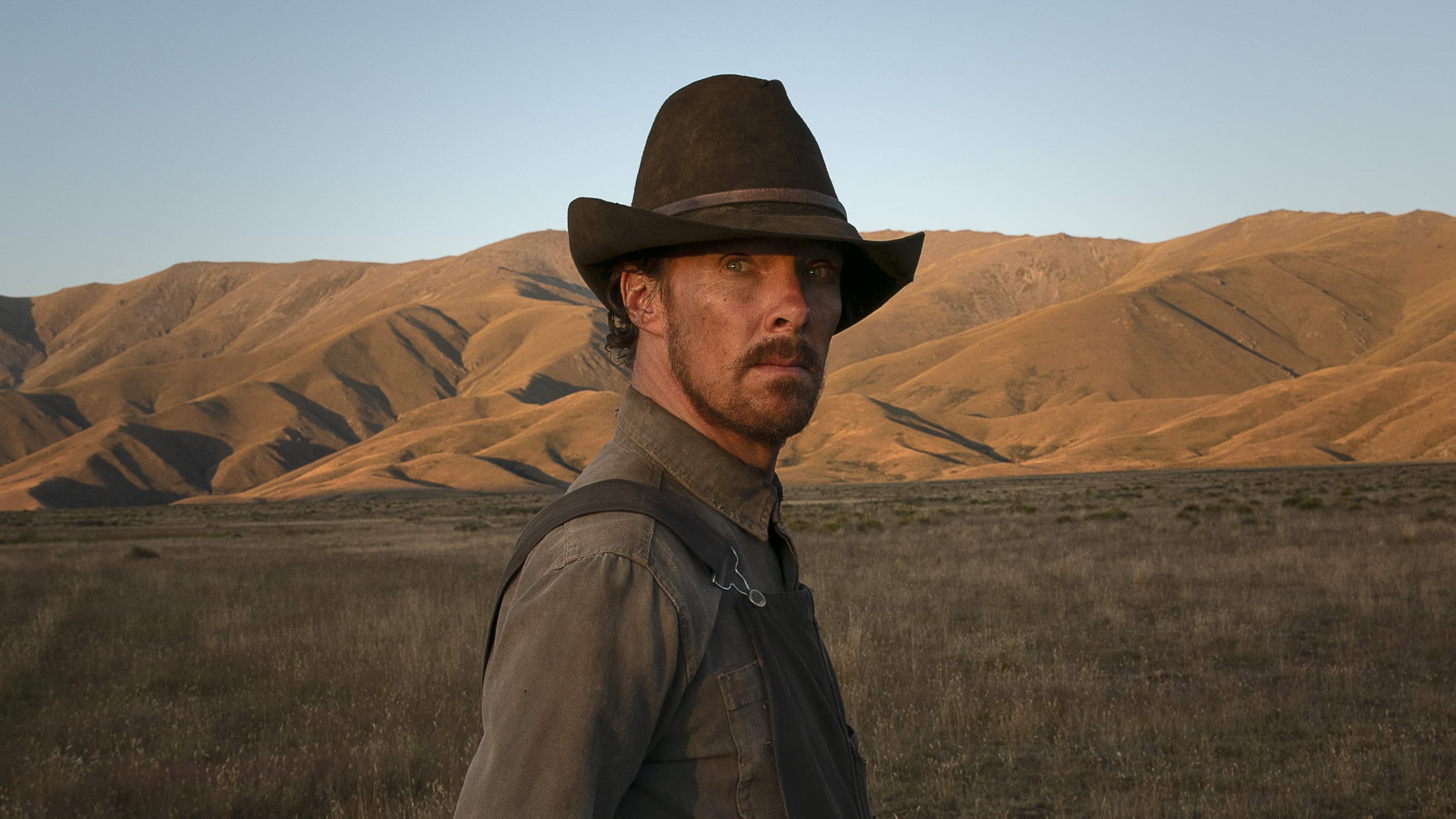
Phil (Benedict Cumberbatch) and George Burbank (Jesse Plemons) both live and run a profitable ranch and are the polar opposite of each other. Phil is a serpent-like, slippery and angry presence who has a disregard for personal hygiene and revels in his unkemptness. George is a more introverted and kind-hearted individual. He doesn’t really fit in with the gang, even though the gang display signs of respect. Phil simultaneously bullies and relies on George, often calling him ‘Fatso’. Phil displays an admiration for Bronco Henry, a figure who we do not see in the film, who acted as a mentor to him and possibly served a more homoerotic function. When their gang dine at an inn run by Rose (Kirsten Dunst), a former cinematic pianist, Phil belittles her effeminate son, Peter (Kodi Smit-McPhee) to the point of driving Rose to tears. George comforts her and the pair then fall in love, with Rose ultimately moving in to the house, sending Phil in to a seething, incandescent rage. Phil taunts Rose and has nothing but disdain for her, driving her to the point of alcoholism and depression. This dynamic is further disturbed by Peter, a young adult who struggles to fit in with his homosexuality. He makes paper flowers and is studying to be a surgeon and his arrival at the house marks as a turning point in the relationships between the characters. 

The Power Of The Dog is an atmospheric, slow-burning yet fascinating character study from the revered director. It features some brilliant performances. Benedict Cumberbatch gives possibly a career-best performance as Phil, a man with a masculine crisis. He conveys the seething and bullish nature of the character perfectly, going to great depths with his method acting by chain smoking to the point of nicotine poisoning and refusing to bathe and interact with Kirsten Dunst. A scene mid-way in the film where Rose is practicing the piano for a later dinner is particularly chilling as she struggles to perform the piece and Phil cruelly plays it faultlessly on his banjo out of sight. This is a masterful performance and one of the best of the year. 

Jesse Plemons is reliably strong as George and Kirsten Dunst also makes an impression as Rose, although her character is sidelined as the film progresses. Kodi Smit-McPhee is excellent as Peter, even if he is rather old for the role, but the brilliance of his performance lies in that he doesn’t convey what his character agenda is. Smit-McPhee is no stranger to the Western with his electrifying performance in Slow West

Technically, the film is handsomely shot by Ari Wegner, whose captivating vistas of the Western landscape invoke wonder and magic. There is a pensive string-based score by Jonny Greenwood, which brilliantly assists in creating an uneasy atmosphere. 

The Power Of The Dog is an enigmatic experience with powerhouse performances. It is deserving of its praise and the unexpected fierce ending creeps up on you. Although the film is slow in its pacing, the ending asks the audience to reconsider what you have witnessed and you’ll want to watch it again to piece the character motivations, where it is a richer and more multi-layered experience. 

⭐⭐⭐ (Good)

House Of Gucci (Review)

Uncategorized
⭐⭐⭐ (Good)

Director: Ridley Scott
Starring: Lady Gaga, Adam Driver, Jared Leto, Jeremy Irons, Salma Hayek, Al Pacino
Certificate: 15
Run Time: 158 mins

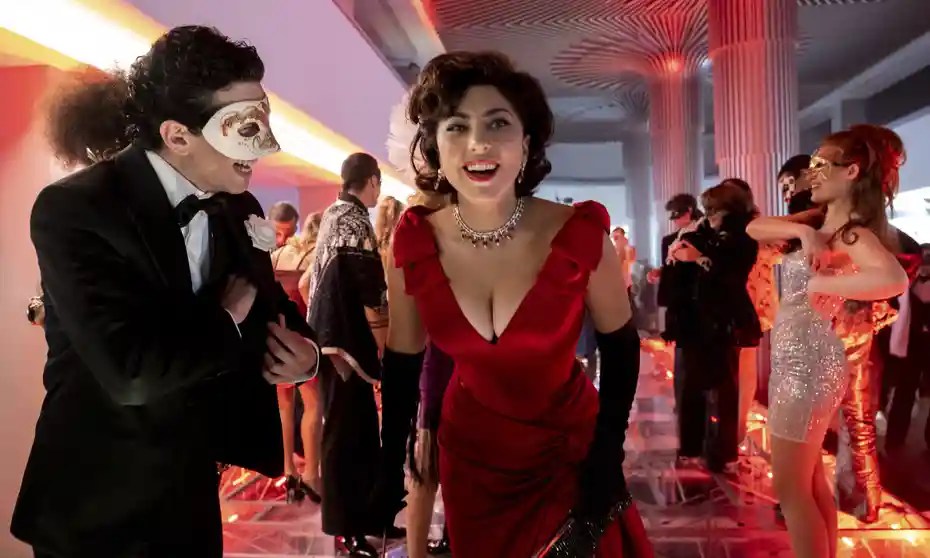
House of Gucci is the second of two Ridley Scott offerings this season after The Last Duel. This is a crime biopic with quite the powerhouse cast adapted from a non-fiction book by Sara Gay Forden on Patrizia Reggiani, who was found guilty of arranging the murder of her husband, Maurizio Gucci. It’s a fascinating story which begins with the whirlwind fairytale romance between the two that starts to sour once they involve themselves in Maurizio’s father and uncle’s business. Patrizia forces Maurizio to be cutthroat and has an intuitive business sense even if that means spoiling family relations, whereas Maurizio is a more coolly calculated individual and understands that the Gucci name alone is enough to drive the business. 

House of Gucci is a solid biopic and succeeds mainly on its performances and its gripping story. It is rather scattershot narratively in that it covers a lot of ground in a reasonably long run time but the film never really feels like it has a chance to breathe as it tries to cover too much. Scott also doesn’t quite master the balance between camp and serious and the film uneasily oscillates between the two tones. 

The characters are gleefully horrible and this is a sprawling exploration of the timeline. Lady Gaga is deserving of her praise in the lead role, a tempestuous character who descends further into delirium. It is impressive that this is her second major feature film role after A Star Is Born and she more than fends her own against the experienced cast. Adam Driver is also excellent as the more level-headed yet savvy Maurizio and provides an interesting contrast to Gaga in his more sober performance. Al Pacino is typically passionate as Maurizio’s Uncle, Aldo and Jeremy Irons is chilling as the decadent yet increasingly vampiric Rodolfo. Then, there is Jared Leto, who has received a mixed reaction to his performance, some labelling it as Awards worthy and others citing he is acting in a different film. I would position my opinion somewhere in the middle – he tries to do something different but isn’t too outlandish and the performance worked for me. There is one particular scene between Leto and Pacino and for Leto to outshine Pacino when he is in full-Pacino mode is no mean feat. 

Technically, the film is interesting with some expressionistic shots from Ridley Scott regular, Dariusz Wolski. They create a sense of foreboding with its muted colour palette as the film progresses, as if their lives are decaying and descending into hell. Harry Gregson-William’s jukebox soundtrack is disappointing in that the song choices are obvious and there aren’t any memorable themes. 

Ultimately, House of Gucci is a gripping yet sprawling biopic that will be remembered more for its performances than its filmic construction. Scott’s direction is shambolic in places and he tries to bite off more than he can chew and it would have been a more interesting film if he had leaned more into the camp or blackly serious tone rather than swerve between the two. What we get is a film that doesn’t take enough risks as it should yet isn’t completely devoid of the ridiculousness this type of story requires. 

⭐⭐⭐ (Good)