Death On The Nile (Review)

Uncategorized
⭐⭐ (Poor)

Director: Kenneth Branagh
Starring: Kenneth Branagh, Tom Bateman, Annette Bening, Russell Brand, Ali Fazal, Dawn French, Gal Gadot, Armie Hammer, Rose Leslie, Emma Mackey, Sophie Okonedo, Jennifer Saunders, Letitia Wright
Certificate: 12A
Run Time: 127 mins

Death On The Nile is the second of Agatha Christie’s Poirot novels for Sir Kenneth Branagh to adapt and star as the revered detective. Having made his debut in Murder On The Orient Express, Poirot finds himself embroiled in yet another murder mystery when he is invited to meet his friend, Bouc (Tom Bateman) in Egypt. Bouc invites him to the wedding of Linnet ‘Linny’ Ridgeway-Doyle (Gal Gadot), a wealthy heiress and Simon Doyle (Armie Hammer). Simon had previously been in a relationship with Jacqueline ‘Jackie’ de Bellefort (Emma Mackey). Jackie still believes Simon loves her and stalks them on their trip. 

To escape Jackie, all of the guests board a cruise ship, the S.S. Karnak. Linnet confides in Poirot regarding her paranoia, worried that something is going to happen to her as all of the guests would stand to gain something if the unfortunate should occur. 

Death On The Nile was filmed a couple of years ago and is another victim of the coronavirus pandemic in that it is only being released now. Unfortunately, it’s had some problems on the way to release with actor Armie Hammer’s unfathomable allegations arguably accounting for some of the delay. On the plus side, Branagh’s passion project Belfast is building momentum at this year’s Awards season and if the film isn’t to scratch, it could hurt its chances. 

Murder On The Orient Express had lots of problems, chiefly Branagh failing to develop any of the star-studded cast that had been assembled and putting his Poirot front and centre. Once again, Branagh is working with a talented cast including Gal Gadot, Annette Bening, Russell Brand, Dawn French and Jennifer Saunders to name a few. The film also had problems with its ending, which I felt cheated by, although this is more a flaw with the novel. 

Death On The Nile solves some of its predecessors problems and regresses on other aspects. Starting with the positives, although Branagh’s Poirot is again very much the centre of the film, the rest of the cast have some development this time around. There are some good performances too, firstly with Branagh settling into the role with his outrageous moustache. Russell Brand’s performance is quiet and mournful, playing against type and when not saddled with poor dialogue, Gal Gadot makes the most of her role. 

The film starts on more sure-footed ground, allowing an opportunity to care for the story and characters somewhat. Poirot’s double-moustache even receives a satisfying pseudo-origin story. Murder On The Orient Express began rather terribly with a mini-mystery in Jerusalem that suffered an overly sickly tone.

Unfortunately that’s about it with the positives. Death On The Nile is 127 minutes long and it takes well over an hour for its inciting murder to take place. There is a lot of needless dead weight in the first hour with lots of Egyptian sightseeing and set-up laden with some trite speeches. 

Once a character meets their untimely end, the film picks up at a barreling pace. We go through the routine questioning of all of the characters and the old-fashioned second-guessing, where Branagh is in his element. The film could have done with more time to breathe here to build suspense and momentum and lost some of the fluff in its first hour. 

The ear-scraping script is a major issue. Screenwriter Michael Green returns and he has some great credits to his name with films such as Logan, Alien: Covenant and Blade Runner 2049. All three films were very well-written. I didn’t take issue with Green’s script in Murder On The Orient Express but this sequel is just really not very well-written. A lot of the dialogue is on-the-nose and is littered with insensitive and unintentionally laughable lines. 

Visually, the film is poor with many obvious uses of green screen. Coronavirus undoubtedly played a part but surely it would have been better to wait and shoot on-location as the visual result is often laughable. Branagh-regular Haris Zambarloukos’ cinematography is also uninspired. His work on the Murder on the Orient Express was interesting at times, filming the train compartments and suspects from above, reminiscent of a Cluedo board game as we head from room to room. 

Patrick Doyle’s original score was offensively bad in the first film but his score isn’t really noticeable this time around. There is, however, an overuse of jazzy blues music which is grating.

Overall, Death On The Nile is a clunky detective thriller that has its moments but suffers in critical areas. Neither of Branagh’s efforts have serviced Christie’s detective properly despite his inspired performance which has lots of potential. Serious lessons need to be learnt if this series is to thrive and arguably, a change in crew is what’s needed. 

⭐⭐ (Poor)
Belfast (Review)

Uncategorized
⭐⭐⭐ (Good)

Director: Kenneth Branagh
Starring: Caitríona Balfe, Judi Dench, Jamie Dornan, Ciarán Hinds, Colin Morgan, Jude Hill
Certificate: 12A
Run Time: 98 mins

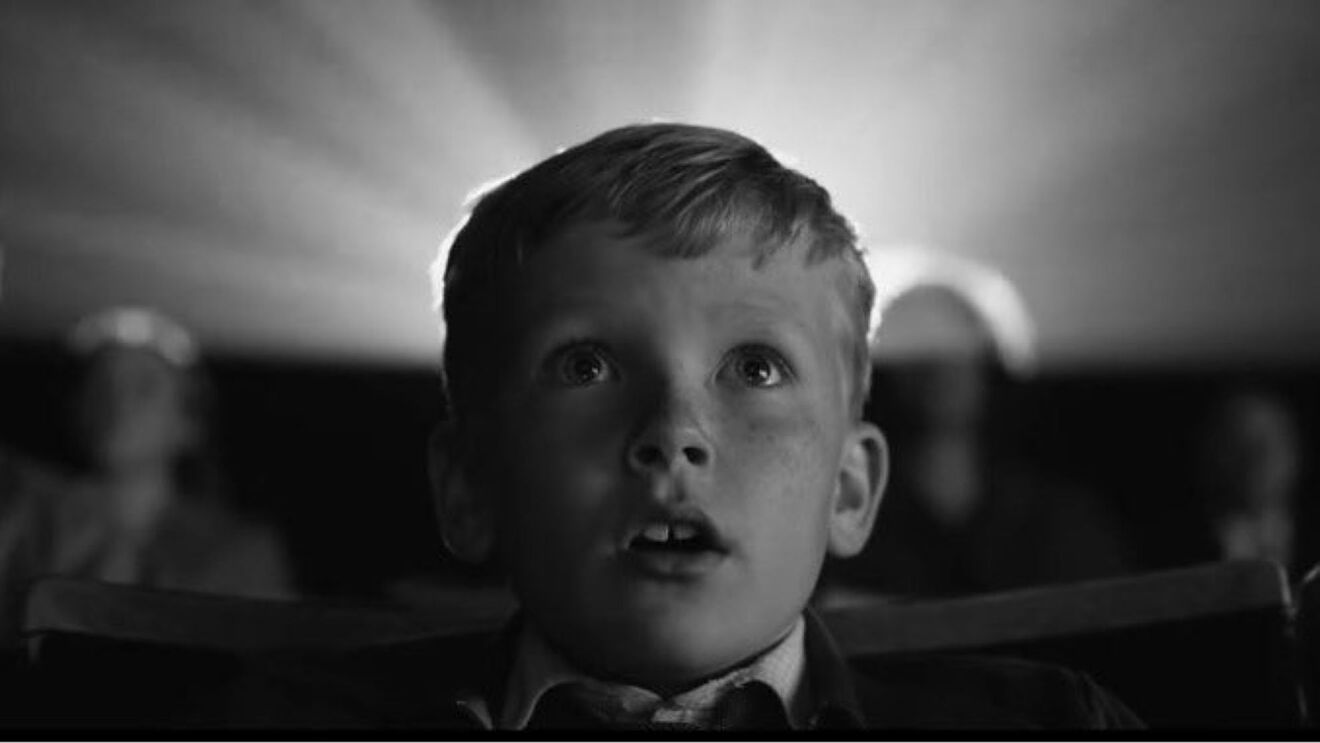
Belfast is a coming-of-age drama directed by Kenneth Branagh who cites the film as one of his most personal works. This predominantly monochrome film centres on nine-year-old Buddy (newcomer Jude Hill), who lives in a community in the titular city in what he perceives as an idyll. He is left largely in the care of his mother (Caitriona Balfe) as his father (Jamie Dornan) works in England. His paternal grandparents (Ciaran Hinds and Judi Dench) regularly visit and in many ways help raise Buddy and his older brother, Will (Lewis McAskie). 

The film is set at the start of The Troubles in 1969 and the film recounts the resulting division and disruption that occurs in Buddy’s community. The father, who has accumulated a large amount of debt, is offered a promotion at work. Wanting a better life for his family and to remove them from the conflict, he proposes moving abroad. The family contemplate this throughout the film, anxious that they will be seen as outsiders and having to leave their friends and family behind. 

Belfast is a well-meaning and earnest drama that strikes parallels with John Boorman’s Hope and Glory, that was similarly told from a similarly child-like lens set against the backdrop of war.  Branagh certainly pours himself into the project, taking inspiration from his own childhood. The sub-plots that Buddy experiences, such as trying to move up to the top two tables at school so that he can sit with his crush, are beautifully handled. Buddy is inspired from a harsh sermon at the start of The Troubles that his family attend, who delivers a ‘fork in the road’ speech, the rhetoric bears weight on him throughout the film as he ponders his choices. Branagh deftly balances the more innocent aspects of childhood with the temptation of immorality and Buddy finds himself dragged into uncomfortable situations that test his character. 

Branagh has a clear love of cinema and the film captures the wonder that Buddy has for cinema. Buddy enjoys nothing more than going to ‘the pictures’ with his family and he experiences films such as Chitty Chitty Bang Bang and The Man Who Shot Liberty Valance. Branagh chooses to portray excerpts from these films in colour that reflect back on Buddy who views them from a monochrome view, connoting the wonder and transcendent experience that cinema can bring audiences.

There are some excellent performances, most notably from newcomer Jude Hill who captures the wonder and innocence of childhood perfectly. Caitriona Balfe and Jamie Dornan are also brilliant as the parents, at a ‘fork in the road’ in their lives with some tough choices ahead. They always try and do what’s right for each other and their children and perfectly balance the warm and caring nature of parenthood whilst also teaching their children valuable morals and life lessons. Both Judi Dench and Ciaran Hinds have received critical acclaim for their performances and the pair are reliably excellent as the grandparents. That said, Balfe and Dornan have the meatier roles and their performances are equally, if not more impressive. 

Belfast runs into some issues though. It took me about half-an-hour to become accustomed to the filmic world that Branagh creates and doesn’t quite hit its stride straightaway. The use of black-and-white, interspersed with flashes of colour when Buddy heads to the cinema is an interesting stylistic choice but the opening credits are set in present-day Belfast, which doesn’t really work and comes across as odd as the film never comes full-circle at the end. The notion of condensing all of Buddy’s communities religious and political problems into one villainous character is also unnatural and the film would have worked better either without it or having ambiguous characters. There is an artificial quality to the film and it possesses a stage-play aesthetic at times, the barricades at the end of the family’s street resemblant of an exit stage. 

Belfast is ultimately an enjoyable passion project from Branagh and the warm characters, performances and script are admirable. The film has received lots of awards talk, many regarding it as a strong contender. I can see why the film has this appeal as it represents a personal project for a director which always goes down well and it has a feel-good quality. That said, I don’t think the film is quite to that level. I’d have liked to have seen more nuance to the material and a more contemplative and morally grey edge to the film instead of the relatively straight-faced and earnest finished product. Taken on its own merits as a singular film without the context of the upcoming awards season, Belfast is an amiable effort from Branagh and there is certainly a lot to like but it has its flaws. 

⭐⭐⭐ (Good)

Nightmare Alley (Review)

Uncategorized
⭐⭐⭐ (Good)

Director: Guillermo Del Toro
Starring: Bradley Cooper, Cate Blanchett, Toni Collette, Willem Dafoe, Richard Jenkins, Rooney Mara, Ron Perlman, Mary Steenburgen, David Strathairn
Certificate: 15
Run Time: 150 mins

Nightmare Alley is visionary director Guillermo Del Toro’s follow-up film after his Best Picture win for The Shape of Water in 2017. This film represents a departure for the director in many ways. Del Toro is most famed for his fantastical elements with monsters and creatures crafted using practical effects forming prominent components of his work. Nightmare Alley is not only an adaptation of the 1946 novel of the same name by William Lindsay Grensham but also a remake as there was a 1947 film starring Tyrone Power. 

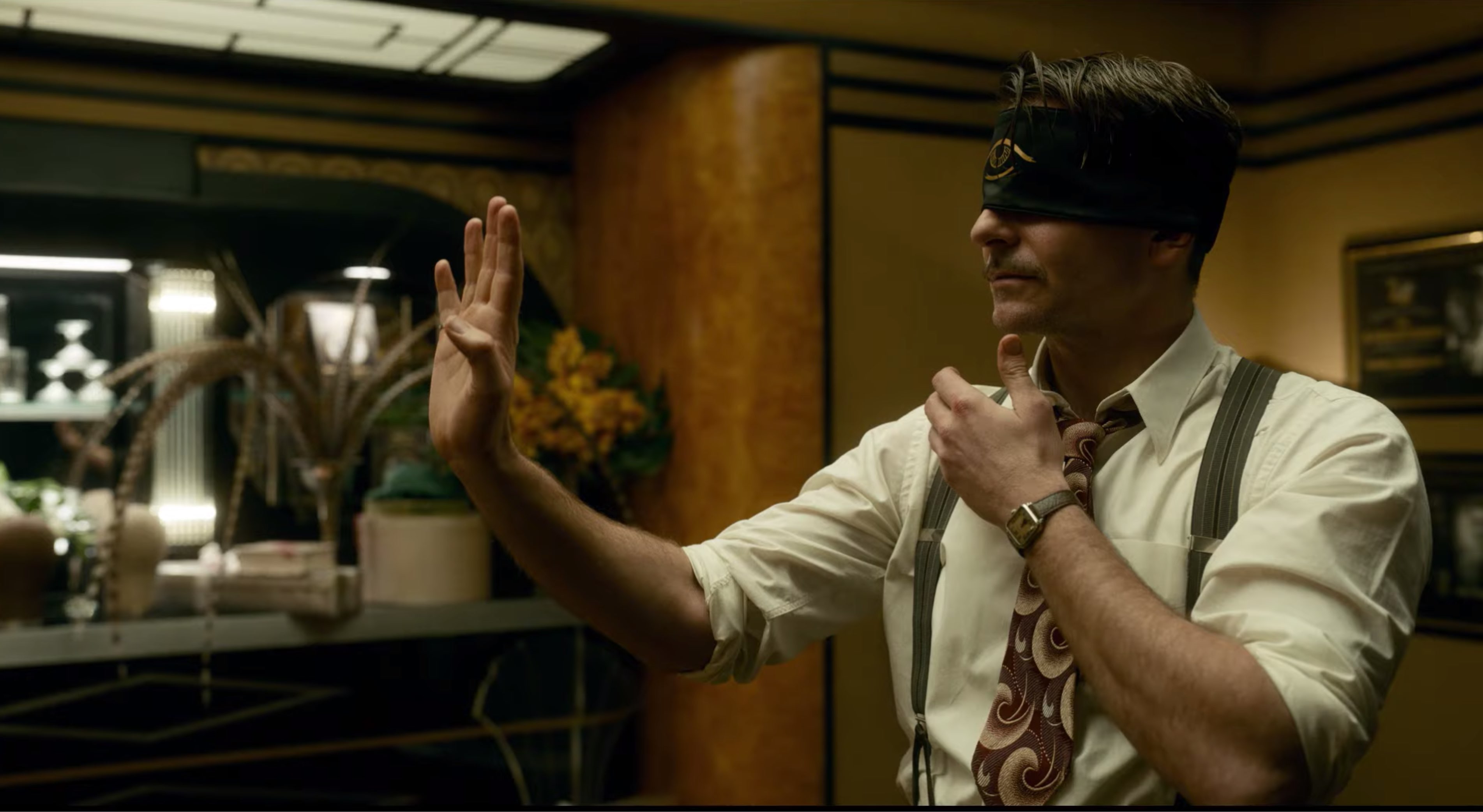
This film noir psychological thriller is initially set in 1939 where we witness Stanton Carlisle (Bradley Cooper) burning a house down with a dead body inside and takes up a job at a carnival. The carnival is run by Clem (Willem Defoe) and is home to a cohort of eclectic characters. Stanton works with a clairvoyant Madam Zeena (Toni Collette) and her alcoholic husband, Pete (David Straithairn) and begins to learn the coded language they use to communicate in their act. He also falls in love with performer, Molly (Rooney Mara) and they contemplate the possibility of starting their own act. Where the film heads to next is ultimately inevitable as Stanton keeps trying his luck. 

Nightmare Alley features a typically luscious production and set design and is buoyed by a heavy and committed central turn from Bradley Cooper, who plays against type in what is one of his best performances. Its conclusion is poetic and satisfying, even if it is a little predictable and Del Toro really captures the minutiatie of the film noir aesthetic, which he is clearly in adoration of. It’s not a problem that the film lacks a signature monster as Del Toro revels in the macabre and peppers in some disturbing and powerful imagery throughout, as well as recurring motifs such as circles. 

Dan Laustsen’s cinematography is expectedly satisfying, hanging onto shots for as long as possible to create tension and he fully takes advantage of the rich production design. Despite having to replace the ever-dependable Alexandre Desplat late in the game, Knives Out composer Nathan Johnson’s score more than takes its inspiration from classic film noir and makes for a fitting accompaniment. 

With the caveat that this review is based on a first viewing, the film does feel strangely uninvolving and it is difficult to empathise with virtually all of the supporting characters as their personalities are underdeveloped. It’s difficult to buy the central relationship between Stanton and Molly and considering that in many ways, Molly is the moral compass of the film, her lack of development is disappointing. The third act of the film centres on Stanton assisting a dangerous but influential individual, Ezra Grindle (Richard Jenkins) reunite and find closure with a loved one but again, Del Toro omits to explore Grindle’s perspective and his characterisation is one dimensional. Considering that Nightmare Alley’s overarching narrative is dependent on its supporting characters, the fact that Del Toro doesn’t grant audiences the opportunity to empathise with their problems, it seems a strange creative choice. Nightmare Alley also lacks the cohesive pacing and energy of the rest of his filmography. This is a sizeable film at 150 minutes that is evenly split into two timeframes. Its second half fares better than the first but the film could very easily lose half an hour and that would have tightened everything up – there is no reason for the film to be this long. 

Nightmare Alley is ultimately a flawed follow-up from Guillermo Del Toro. There is lots to like here with a powerful Bradley Cooper performance, an intense atmosphere and Del Toro’s admiration for the material is very clear. I just wish it delved deeper into its supporting characters and  it was more engaging. Del Toro is one of my favourite filmmakers and I’ll certainly give Nightmare Alley another watch as I want to like more than I do. I’m certainly glad that the film exists as it provides an original service for the film noir aesthetic but it is ultimately an interesting yet deeply flawed film. 

⭐⭐⭐ (Good)

Mass (Review)

Uncategorized
⭐⭐⭐ (Good)

Director: Fran Kanz
Starring: Reed Birney, Ann Dowd, Jason Isaacs, Martha Plimpton,  Breeda Wool
Certificate: 15
Run Time: 110 mins

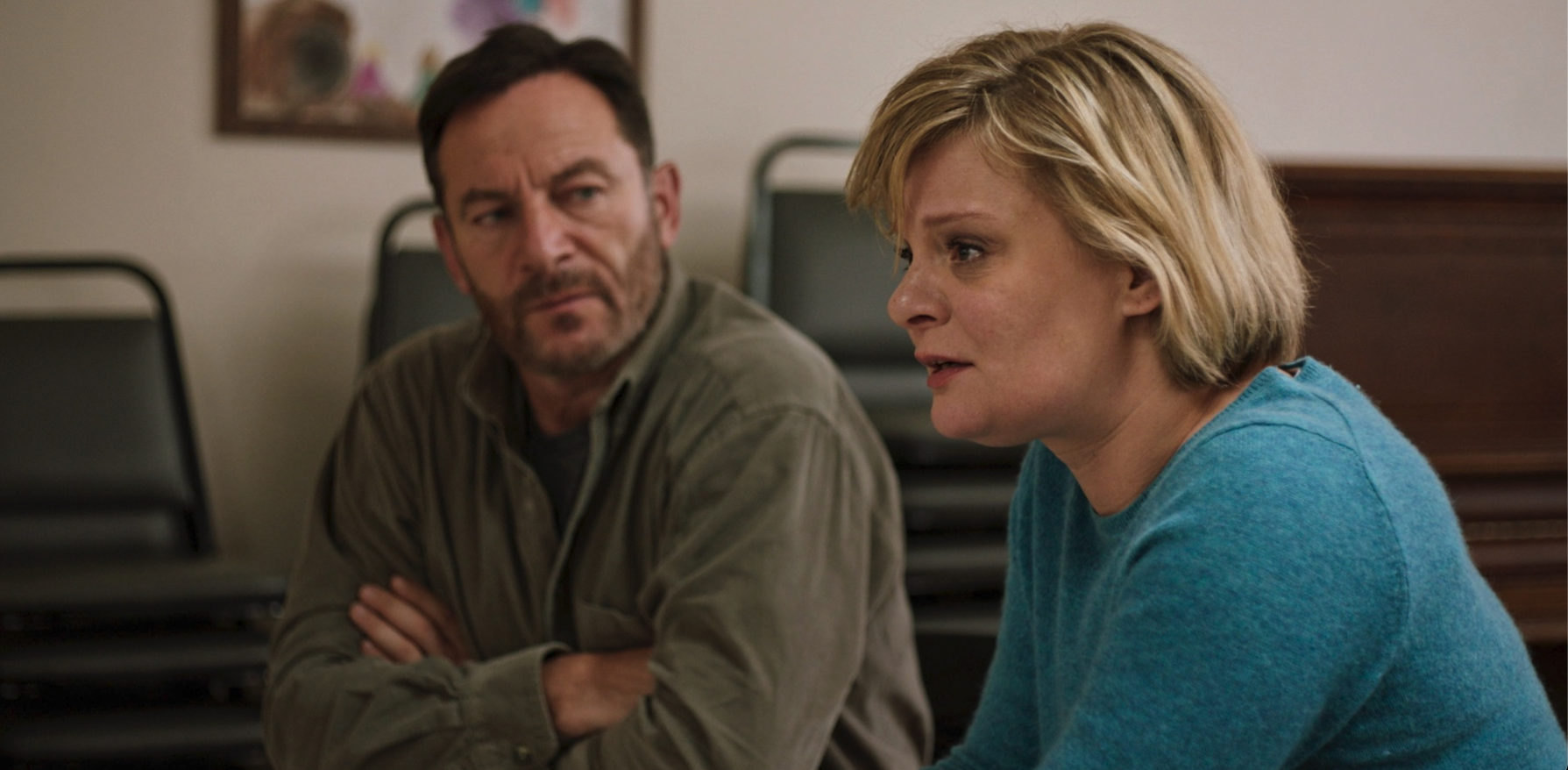
Mass is the directorial debut of actor Franz Kanz and follows two couples, who meet to discuss a tragedy theirs sons were involved in. Jay and Gail Perry (Jason Isaacs and Martha Plimpton) are the couple in grief and are looking for closure and answers from Richard and Linda (Reed Birney and Hereditary‘s Ann Dowd). The film is mostly set in a meeting room in an Idahoan Episcopal church, with Judy (Breeda Wool) its parishioner. In Mass’ opening, we see Judy setting up the meeting space and discussing with a co-ordinator on the suitability of the room and its decoration.  

Mass is an interesting drama that explores a harrowing subject and Kanz does an excellent job of withholding what the event the couples are discussing for a considerable amount of time. The performances from the central quartet are all excellent – both Plimpton and Dowd are emotional wrecks whereas Isaacs and Birney are mostly more reserved and tighter-lipped, although also let their emotions out of the bag in key moments. The script by Kanz is efficient, with some crescendoes of emotional eruptions at key points. Ryan Jackson-Healy’s cinematography doesn’t allow the characters anywhere to hide, the angelic white and empty decor painting an empty canvas for the characters to project. 

Unfortunately, the emotional impact of Mass is somewhat undone by its opening, which is unnecessary and heavy-handed. It goes on for far too long and it’s an artificial device to elicit care for the quartet before they enter the fray. Mass would have benefitted from jumping straight into the first couple arriving at the venue and the film would be tigher-paced and allow audiences to try and piece together what exactly is happening. 

As it stands, Mass is an assured debut from Kanz and it deals with a difficult subject matter in an unflinching way with some committed performances. If its opening was removed, it would be excellent. I’d be interested to see what project Kanz works on next as he undeniably has potential behind the screen. 

⭐⭐⭐ (Good)

Boiling Point (Review)

Uncategorized
⭐⭐⭐⭐ (Excellent)

Director: Philip Barantini
Starring: Stephen Graham, Vinette Robinson, Alice Feetham, Hannah Walters, Malachi Kirby, Taz Skylar, Lauryn Ajufo, Daniel Larkai, Lourdes Faberes, Jason Flemyng, Ray Panthaki
Certificate: 15
Run Time: 92 mins

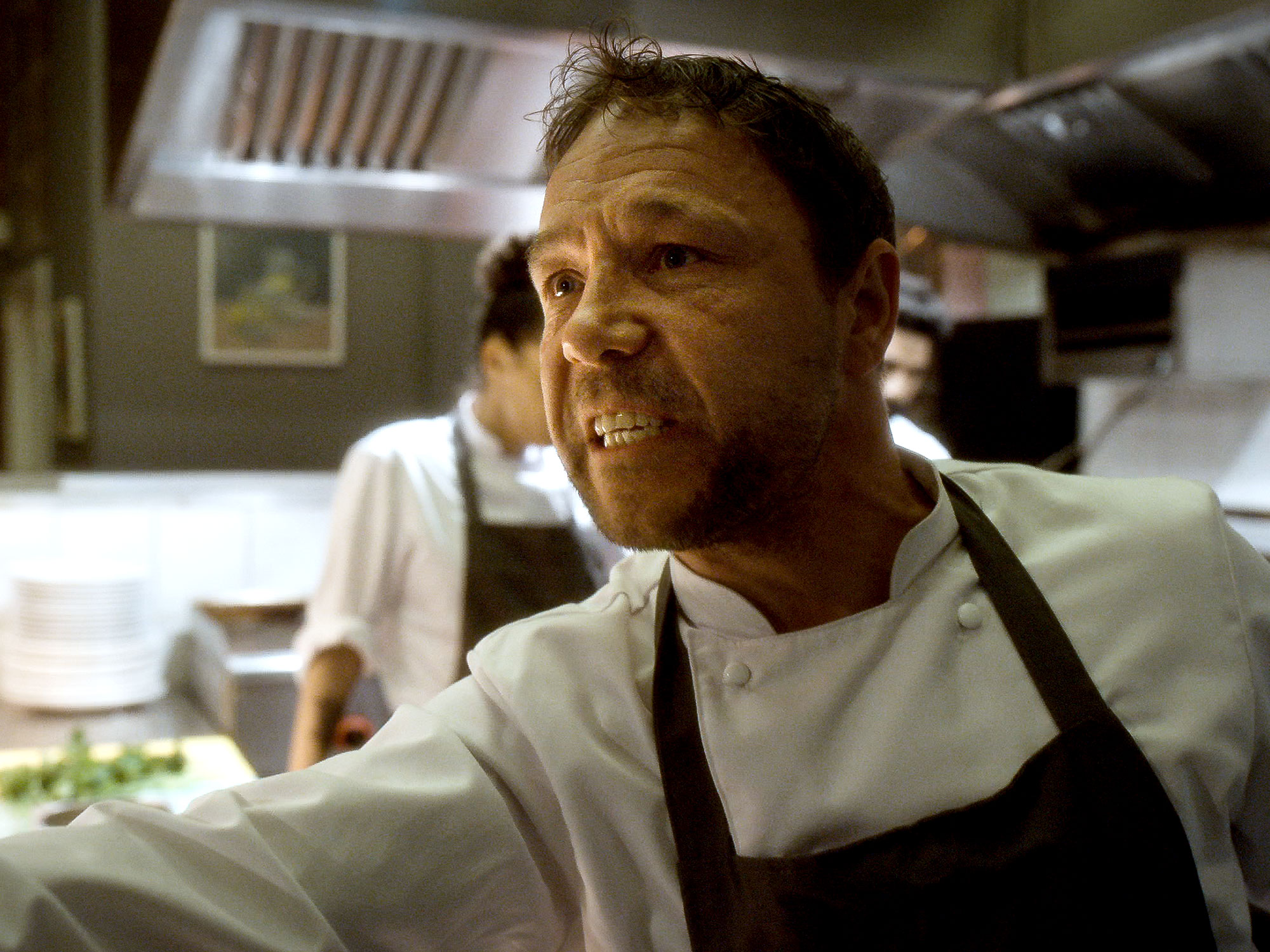
Boiling Point is a drama shot in a single-take in an up-market London restaurant. It is directed by Philip Barantini who expands his 2019 short film of the same name. The ever-versatile Stephen Graham stars as Andy Jones, the Head Chef, who also starred in the short film. As the film opens and Andy arrives at work in a mental daze due to his recent divorce, the restaurant is savagely downgraded from a five-star Health and Safety rating to a three by a pernickety inspector. To add insult to injury, the upcoming evening is overbooked which includes a marriage proposal and the visit of a food critic, Alastair Skye (Jason Flemyng), whom Andy previously worked for. 

As a concept, the story might not sound particularly exciting and there have been plenty one-take films in recent memory with Awards contenders such as Birdman and the wildly overrated 1917. Will Boiling Point just reheat cold and unwanted leftovers or will it serve something delectable to the table? 

Boiling Point is a thrilling and sharp drama that constantly ramps in tension and maintains its momentum throughout. From the opening sequence of the Health and Safety assessment, Barantini has created a startlingly authentic, cutthroat environment and it’s astonishing to witness a film as riveting as Boiling Point is from seemingly few ingredients.  

The script by Barantini and James Cummings is razor-sharp. They introduce a convincing restaurant team from the fellow chefs to the service staff and how they are divided. There is then the inexperienced and shallow restaurant manager, Beth (Alice Feetham) who further splits the teams through micro-managing. The duo deftly tackle themes of influencers, mental health issues through to the relative mundanity of some of the tasks the staff carry out.  

Stephen Graham delivers an astonishing performance as Andy, a man at his wits end and on the verge of a breakdown with his home life and the added stresses of ensuring that the dinner service runs like a Swiss watch. He runs around the restaurant like a headless chicken trying to deal with problem after problem and constantly gets sidetracked to a bigger problem.

The rest of the cast are also brilliant and are sure to land future roles based on the strengths of their performances here. Vinette Robinson is sincere as Andy’s assistant Chef, who is also at the end of her tether with the chef’s treatment from Beth and her lack of support from Andy. She very much holds the team together. Alice Feetham is suitably slimy as Beth on the outset but has another side to her that we learn as the film progresses. There are also commendable performances from other cast members such as the waitresses who have to contend with customer abuse through to a young man whose job it is to take the bins out that clearly doesn’t want to be there. 

Films that are or have been created to feel like they have been shot in one take have often been labelled as a gimmick, and to some extent this is true. Alfred Hitchcock pioneered and perfected the technique with the exemplary Rope. Like Rope, Boiling Point succeeds as a gripping, anxiety-inducing drama first with searing performances. It isn’t a hollow film that tries to hide behind a showy camera technique – the handheld one-shot take further adds to the hysteria on-screen. I just have one element to nitpick and that is the film fails to explore a sensitive plot line that it introduces with one of the chefs in its first act and sidelines it. Otherwise, Boiling Point is close to an intense masterpiece and makes for an incredible start to the year. 

⭐⭐⭐⭐ (Excellent)