


Director: Steven Soderbergh
Starring: Lucy Liu, Chris Sullivan, Callina Liang, Eddy Maday, West Muholland
Certificate: 15
Run Time: 85 mins
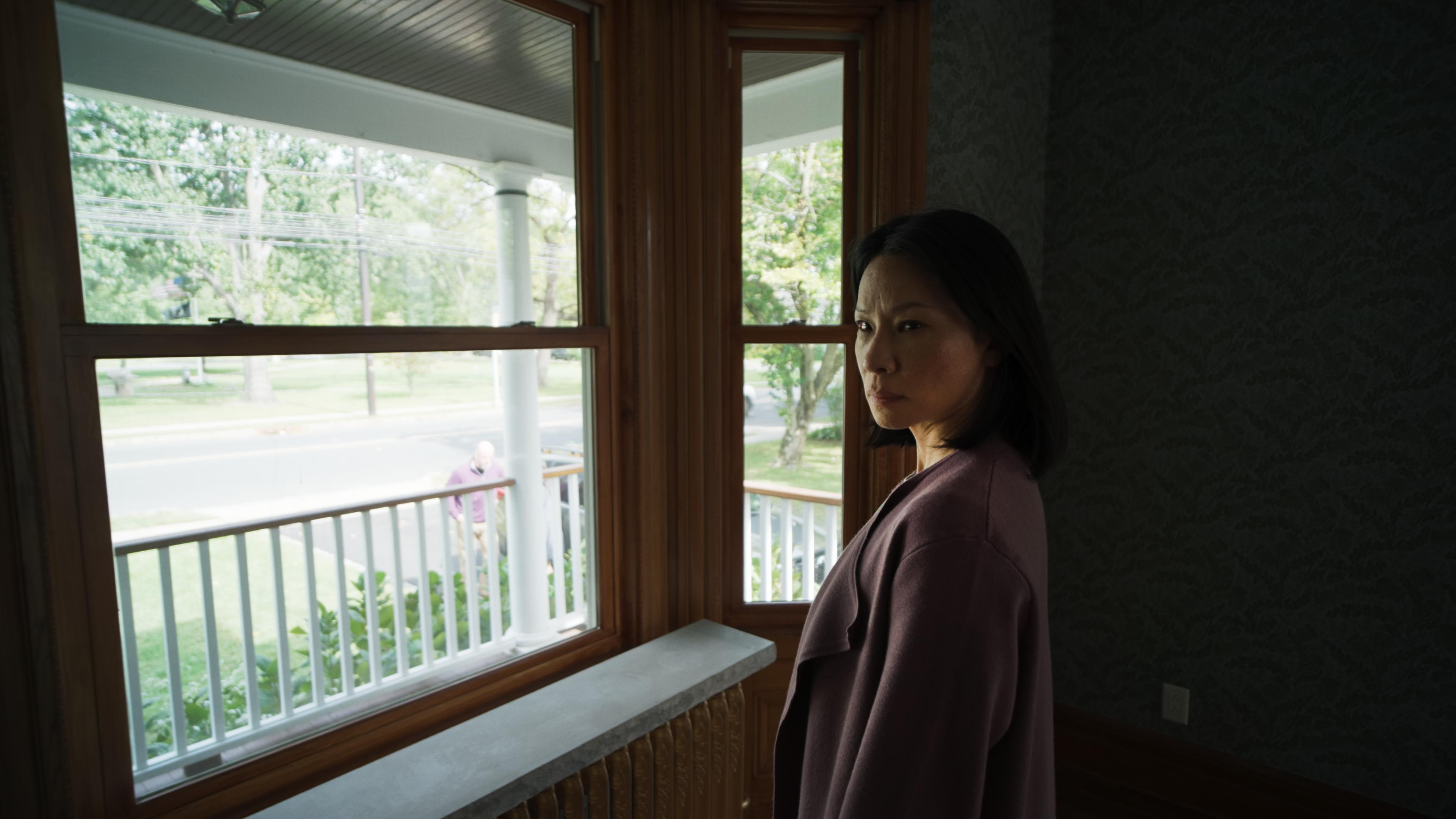
Presence is the new film by Steven Soderbergh, perhaps the most versatile director of his generation. Written by David Koepp, who previously wrote Soderbergh’s Kimi, Presence follows a family of four who move into a house inhabited by a poltergeist. The family includes mother Rebecca (Lucy Liu), father Chris (Chris Sullivan), bratty elder brother Tyler (Eddy Maday) and troubled younger sister Chloe (Callina Liang). They’re all suffering from various problems – Rebecca clearly prefers her son and has been committing financial fraud, Chris suffers from depression and is considering separation from Rebecca and Chloe is grieving the death of her best friend, Nadia, who recently died in her sleep. Almost immediately after moving in, Chloe starts to complain of a supernatural presence.
The film is presented in a series of long takes rom the poltergeist’s point of view – an interesting creative decision. As such, the camera never leaves the house, for example whenever the family go onto the decking, instead peering from the window. A similar technique is also used in Nickel Boys, one of this year’s Best Picture hopefuls. While it received near unanimous praise, the film really didn’t work for me precisely for this filming technique, primarily because the first person point of view detracted from the important story being told.
Fortunately, Soderbergh is a far more competent director and I really enjoyed Presence. The film does a really good job of slowly building a sense of unease with a tinge of sadness and there’s some excellent character development among the family. You can really see the cracks start to grow, particularly as the strained marriage falls apart. Chris Sullivan stands out as the father in a very understated performance who generates a lot of empathy. Calling Liang also impresses as the developing but vulnerable daughter who hasn’t quite worked out her purpose yet. Lucy Liu’s mother isn’t particularly likeable, but that’s the point and her performance satisfies the brief.
The first person point of view also works here, even if it occasionally falters under scrutiny. It compliments the narrative and the dream-like images of the wide lens (Soderbergh is on cinematographer duties, too), forcing us to question what the spirit’s intentions are and if it’s malicious by the way the camera studies its subjects. There’s a melodically moody score too from Zack Ryan and 85 minutes, the film is lean and doesn’t outstay its welcome. If anything, I wish it were a bit more substantial.
Presence is proof that Soderbergh can effortlessly fit into any genre and although it’s flawed, this is an intriguing film that builds to a memorable conclusion, which stays with you long after the credits roll. Move over Nosferatu – this is a great note for the horror genre to start on this year.
 The Film Meister
One thought on “Presence (Review)”