


Director: Nia DaCosta
Starring: Ralph Fiennes, Jack O’Connell, Alfie Williams, Erin Kellyman, Chi Lewis-Parry
Certificate: 18
Run Time: 109 mins
Fittingly arriving 28 weeks later after last year’s excellent 28 Years Later is 28 Years Later: The Bone Temple, which was filmed back-to-back with its predecessor. While Danny Boyle returned to the director’s chair for the first film in the proposed trilogy, The Bone Temple is directed by Nia DaCosta. I’ve had mixed opinions on her filmography to date – both Little Woods and Candyman were excellent, The Marvels was rather ropey (although DaCosta reportedly experienced a rough ride under the Marvel Cinematic Universe regime) and I don’t understand what all the fuss is about for her most recent film Hedda.
This sequel picks up immediately after 28 Years Later‘s jaw-dropping final scene, which generated rather a lot of controversy. The film opens as Spike (Alfie Williams) is initiated into the Fingers gang, led by the psychopathic “Sir Lord” Jimmy Crystal (Jack O’Connell), who claims to be the son of Satan. Crystal styles himself after Jimmy Savile, as do his gang members. The group go around disturbing the peace with any non-infected humans they can find, with torture and violence regularly on the menu (much to Spike’s disgust).
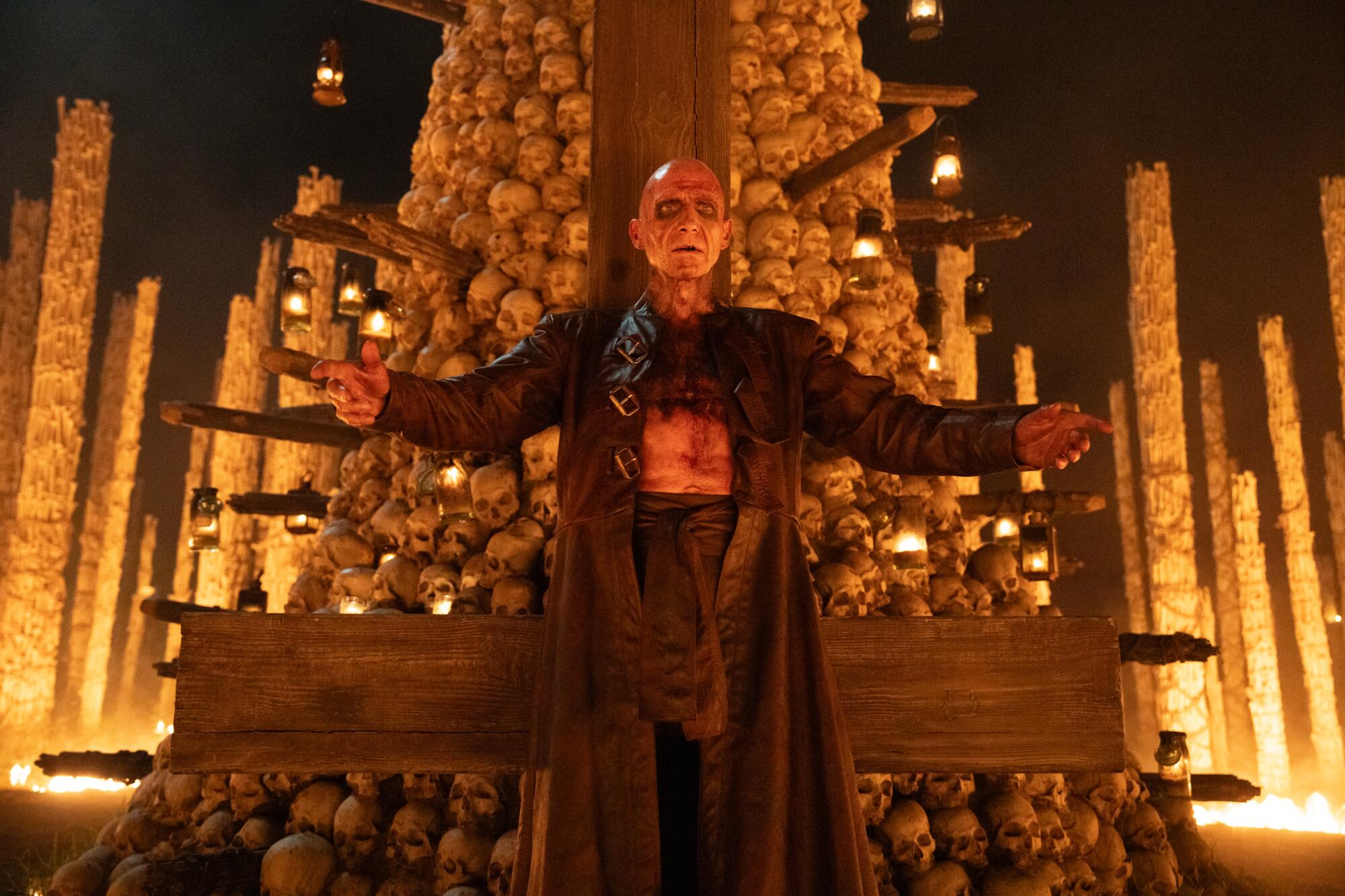
This storyline is intercut with another featuring Dr Ian Kelson (Ralph Fiennes) who continues to maintain the titular Bone Temple, and his interesting relationship with Samson (Chi Lewis-Parry), the villainous Alpha zombie from the previous film. In the film’s third act, the two storylines are brought together to a rather memorable climax.
While 28 Years Later: The Bone Temple lacks Danny Boyle’s frenetic directorial style, it more than makes up for it with its fascinating narrative and memorable characters. It’s the very antithesis of 28 Years Later – a shaggy-dog affair with Anthony Dod Mantle’s disorienting but beautiful camerawork (often on an iPhone) that’s stuffed to the brim with thoughtful ideas and themes, while Nia DaCosta’s sequel is a focussed and polished film that feels smaller in scope. But that’s not a problem because this is a powerfully gripping sequel from start to finish (28 Years Later‘s second act relies on a slightly far-fetched decision that throws you out a little) with some sensational performances.
DaCosta sets the grim tone from the very first scene with Spike’s brutal and foul-mouthed initiation and never relents – this film is gleefully nasty and doesn’t hold back with its torture or body organ consumption. It’s certainly the strongest film in the 28 Days Later series to earn its 18 BBFC age rating. Jack O’Connell’s turn as the Satanic cult leader is absolutely fantastic – he makes for a truly repugnant villain, but with plenty of charisma to make him memorable. This is a much nastier performance than his much-lauded villainous turn in Sinners.
There’s some good performances from the rest of the Fingers gang (which reminded me of A Clockwork Orange), although some characters are inevitably short-changed with Jimmy Crystal’s penchant for needless violence. Erin Kellyman is brilliant as Jimmy Ink, one of the cult’s more empathetic members and Emma Laird is another highlight as one of the more sadistic figures.
The second storyline with Ralph Fiennes is also excellent, and his relationship with Samson is fascinating and even becomes touching as it progresses. Fiennes was one of the highlights of the last film, and here we get to dig even deeper into his methodological psyche as he tries to memorialise the victims of the epidemic and perhaps find a cure. Chi Lewis-Parry is just as impressive, and DaCosta’s humanisation of what was a no-good zombie lands this film a real emotional heft.
When the two storylines eventually collide, it results in a giddily exciting third act climax of immense proportion. There’s a particularly memorable sequence with Ralph Fiennes that I shan’t spoil and of course, there’s an exciting tease for what’s to come in the closing chapter.
But The Bone Temple isn’t a perfect film. The most significant flaw is the sidelining of Spike, who doesn’t get much of a character arc other than bearing witness to the cult’s horrific atrocities, and DaCosta could have explored the trauma of his character. On the flipside though, spending more time focussing on Spike might have disrupted the film’s breakneck pacing.
Hildur Guðnadóttir’s score is the very opposite of 28 Years Later‘s frenzied Young Fathers music, but it’s yet another brilliant work by the Oscar-winning composer. There are so many memorable themes here, especially in the opening and many of the scenes set in the Bone Temple, with brilliant needledrops too. And like the score, Sean Bobbitt’s cinematography isn’t as kinetic as Anthony Dod Mantle’s, but there are some stunning shots here, particularly of the Bone Temple and the star-filled night sky.
Other than Spike’s sidelining, 28 Years Later: The Bone Temple is a masterclass of a middle chapter, that doesn’t sag under the weight of its own bones with its coherent and self-contained storyline. It’s wickedly nasty with some juicy performances, backed by a brilliant Hildur Guðnadóttir score and striking visuals. I think 28 Years Later is the slightly stronger film overall though – although ramshackle, it really soars in its strongest moments and there’s something to be said for Danny Boyle’s direction and Anthony Dod Mantle’s gonzo cinematography. I can’t wait to see how this trilogy concludes.
 The Film Meister
One thought on “28 Years Later: The Bone Temple (Review)”