Director: Andrés Muschietti Starring: Ezra Miller, Sasha Calle, Michael Shannon, Ron Livingston, Maribel Verdú, Kiersey Clemons, Antje Traue, Michael Keaton Certificate: 12A Run Time: 144 mins
The Flash is the solo film for the superhero that can travel at the speed of lightning, although its production journey has been anything but rapid. Although there were plans for a film as far back as the 1980s, as far as the DCEU (DC Extended Universe) is concerned, there were tentative plans for a 2016 release, with duo Phil Lord and Chris Miller writing a treatment. That then changed to Seth Grahame Smith after Lord and Miller vacated the project, before creative differences led to Rick Famuyiwa jumping on board. He then left and the Game Night duo of John Francis Daley and Jonathan Goldstein took the mantle, who then they also departed (but receive a story credit) before we arrive at Andrés Muschietti who managed to get the project to the finish line.
Muschietti is, by far, the least interesting pick of the bunch. His debut horror Mama was pretty dreadful and he then went on to helm It and It: Chapter Two. Both It films were very watchable, but their downfall was resorting to cheap, mechanical jump scares – Muschietti just doesn’t do darkness very well, and I was more than a little trepidatious for The Flash as this has always been the DCEU’s winning ingredient.
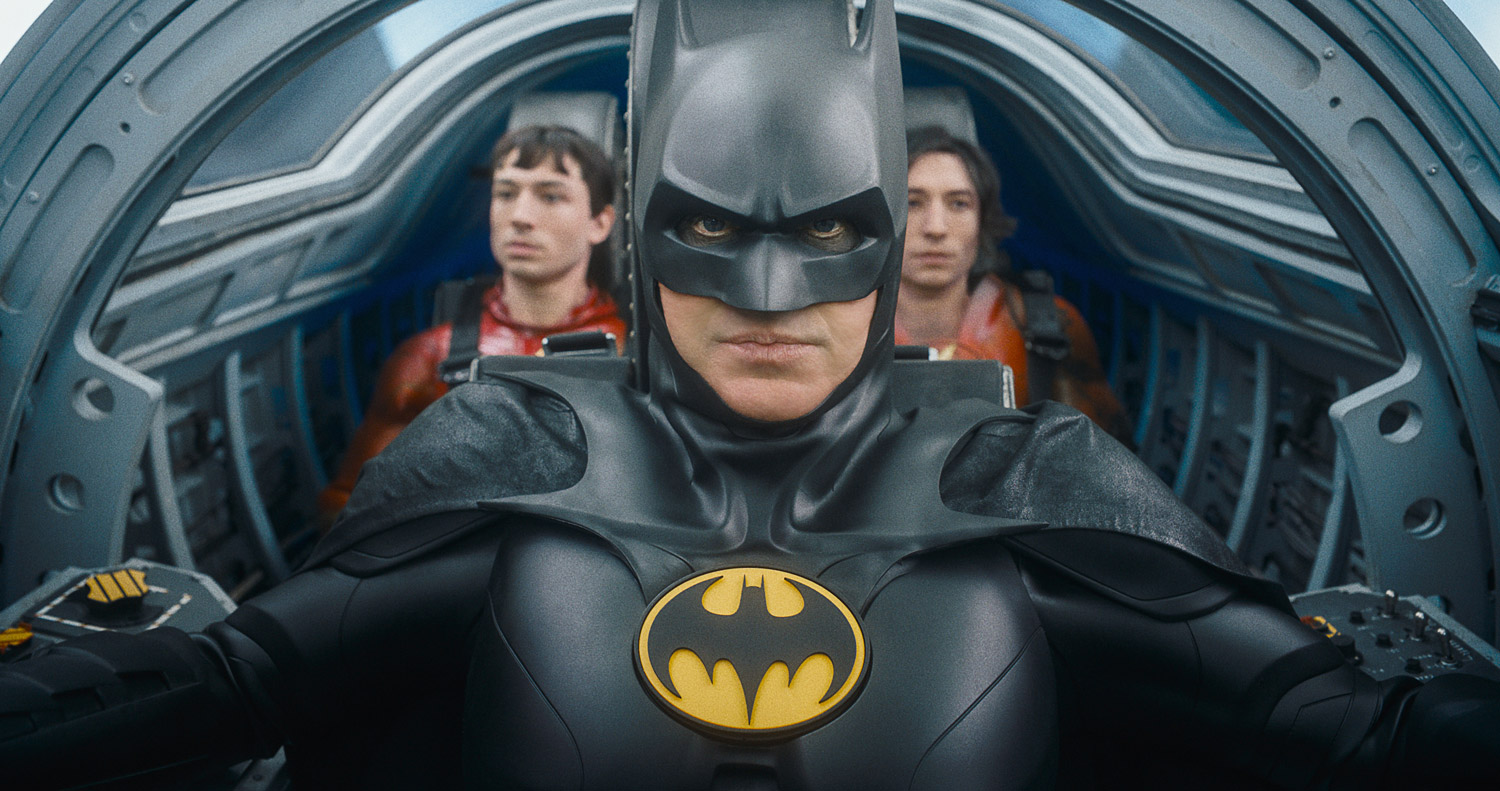
In the film, Barry Allen (Ezra Miller) continues to reel over the death of his mother and against Batman’s (Ben Affleck) advice, travels back in time to try and prevent the tragedy. It wouldn’t be a spoiler (given the trailers have revealed this already) that Barry’s actions mean he rewrites history and finds himself in a different multiverse where members of the Justice League don’t exist and he finds an older Batman (Michael Keaton reprising his role from Tim Burton’s Batman and Batman Returns).
The Flash is a mixed bag – there’s some fun to be had in the middle with Keaton’s Batman but it’s bookended by fairly turgid first and third acts. The multiverse is an increasingly worn concept and it really plagues this film as it lessens the stakes for the characters. Despite a carousel of cameos from stars all over the DC canon, the result is a film with an episodic quality akin to watching a Saturday morning cartoon than the series-defining reset The Flash was intended to be.
There’s a burgeoning theme of ropey visual effects affecting big-budget films recently due to artists being overworked and under-resourced. Many were quick to pick up on the inexcusably poor CGI in Thor: Love and Thunder, Black Adam and Ant-Man and the Wasp: Quantumania for example. Unfortunately, this problem has also infected The Flash, despite Muschietti going on the record and saying it was intentional, as the sequences are shot from Allen’s perspective. “Yeah, right”, I say. A spectactularly misjudged opening action sequence involving a group of babies will surely be an example used in future classes in film schools of what’s not fit for cinema release.
Despite the 144 minute run time, most of the supporting characters aren’t particularly well-developed. Ezra Miller makes for a fine, if schizophrenic lead, although the character arguably received a more meaningful arc with less screentime in Zack Snyder’s Justice League. Sasha Calle makes her debut as Supergirl and has zero charisma. Both Ron Livingston (replacing Billy Crudup) and Maribel Verdu play Allen’s parents and offer reasonable performances but aren’t particularly well-developed, and this is also true of Kiersey Clemons’ Iris West.
The three bigest casualties are Ben Affleck, Michael Shannon and Antje Traue, all reprising their roles from previous films. Affleck’s Batman appears in the film’s first act, in what is designed to be a poignant send-off for the actor, but his appearance in the poor opening sequence and brief scene later in the first act have more of an embarassing effect. Shannon and Traue reprise their roles as villains General Zod and Faora-Ul from Man of Steel and both get absolutely nothing to work with. In fact, I’d need to rewatch the film to determine if Traue even gets a line in the script. I can’t say I’m surprised Shannon’s recently gone on the record to call his series return “unsatisfying”.
The film finds its feet when Keaton’s Batman arrives and the treatment of the character is somewhat satisfying. He receives some good character development, a grizzled version of his former self and there’s an entertaining scene with him explaining what the multiverse is using a bowl of spaghetti. There were times in the second act I thought I was watching a sequel to Batman Returns rather than a film about The Flash and that’s somewhat troubling. Still, despite the good work, I wonder if Keaton could have received an even more satisfying treatment under a different director as Muschietti neglects to lean into the character’s darkness.
Benjamin Wallfisch’s score is utterly forgettable and his decision to include Danny Elfman’s Batman theme but ignore Junkie XL’s Flash theme is criminal. Guardians of the Galaxy Vol. 3 cinematographer Henry Braham lenses the film and while he’s battling with poor CGI, there are some interesting shots such as the camera panning to Siberia from Wayne Manor via an inversion.
Despite a fun second act, it’s a shame The Flash isn’t the triumph it ought to have been. It’s plagued by a poor beginning and end, shoddy CGI and a script that short-changes most of its characters, while including some frankly baffling cameos. In fact, The Flash is the closest DCEU entry to feeling like a Marvel Cinematic Universe film with its throwaway humour which really reduces any impact of the narrative. That’s not to say all Marvel films are guilty of this but the humour and lightness are certainly some of the series’ defining traits. I’m also gravely concerned Muschietti has been given the gig of directing the upcoming The Brave and the Bold and do not see him as a proper fit for a Batman project.
Director: Ari Aster Starring: Joaquin Phoenix, Nathan Lane, Amy Ryan, Stephen McKinley Henderson, Hayley Squires, Denis Ménochet, Kylie Rogers, Parker Posey, Patti LuPone Certificate: 15 Run Time: 179 mins
Beau Is Afraid is the new film by Ari Aster, who’s two-for-two with horror films Hereditary and Midsommar. Both films demonstrated Aster as an auteur on top of his craft in the horror genre, impressing with their social commentary and disturbing yet metaphorical storytelling, eschewing mechanical jump scares. While Aster’s third effort may be hard to pigeonhole into a genre – it has surreal and tragicomic elements – the director certainly hasn’t completely departed from horror. The film follows the mild-mannered but anxiety-ridden Beau (Joaquin Phoenix) who lives alone in what seems to be an overly poverty-stricken city. Beau is meant to be catching a flight to see his mother, Mona (Patti LuPone), but misses his plane due to some bizarre circumstances and the film follows his surreal odyssey to get there.
Beau Is Afraid is easily the most confounding cinematic experience I have had in quite some time. It’s a fiercely original effort – a sprawling, paranoia-inducing epic with more than its fair share of Kafka-inspired horror infused with Charlie Kaufman surrealism and a dose of Darren Aronofsky’s mother!. As you’d expect from an Ari Aster film, it’s overflowing in symbolism and requires multiple viewings to better understand its meaning. This isn’t a film that will ever be truly understood, but after two viewings, there is a ton to unpack. A beautiful animated sequence towards the close of the film’s second act is particularly affecting
It seemed to me as if two storylines were going to converge in the third act, but the finale didn’t play to my expectations at all. In my opinion, this is a filmic experience of what it means to have anxiety, with Aster’s heightened portrayal of reality. The heights in how Aster portrays Beau’s city setting is utterly nightmarish, supported by Bobby Krlic’s satisfyingly sickly score. Aster’s regular cinematographer Pawel Pogorzelski’s moody cinematography is stunning, an individual once again at the top of his game.
Joaquin Phoenix is phenomenal as Beau, effortlessly flitting between being pathetic the line between pathetic – crazed emotions, stunts, panic, confusion. While this is Phoenix’s film, there’s some great supporting performances too. Amy Ryan and Nathan Lane are both sickly sweet as a couple who house Beau in one of his episodes and I’m sure both Armen Nahapetian and Julia Antonelli, who play younger versions of two characters have a fruitful career ahead of them.
Beau Is Afraid is quite the filmic assault on the senses and is another home run for Aster, whose transposed his proven skill in the horror genre to surreal cinema. It’s undoubtedly the most ambitious and challenging film of the year and frankly, a miracle that A24 were happy to finance the film and had this level of trust in Aster. Many will take umbrage with Beau Is Afraid and dismiss it as self-indulgent, but for most of its three hour run time, I was utterly transfixed.
Director: James Gunn Starring: Chris Pratt, Zoe Saldana, Dave Bautista, Karen Gillan, Pom Klementieff, Vin Diesel, Bradley Cooper, Will Poulter, Sean Gunn, Chukwudi Iwuji, Linda Cardellini, Nathan Fillion, Sylvester Stallone Certificate: 12A Run Time: 150 mins
Guardians of the Galaxy Vol. 3 is the final instalment in the well-regarded series and wider Marvel Cinematic Universe, once again written and directed by James Gunn. Coming six years after Vol. 2, this third entry has experienced a protracted production, the height of which Gunn being fired from the project in July 2018 after controversial tweets from his past resurfaced. Gunn was later reinstated but not before he was attached to direct The Suicide Squad, which he planned to complete before production continued on this film. Gunn’s venture to DC paid off and he was later hired to co-chair DC’s future slate with producer Peter Safran. Not only is Guardians of the Galaxy Vol. 3 the close of a trilogy, it is also Gunn’s Marvel swansong.
This threequel picks up after Avengers: Endgame and Thor: Love and Thunder, where we briefly saw the Guardians team up with the Norse god. The Guardians’ peace at their headquarters is quickly disturbed by the arrival of Adam Warlock (Will Poulter), sent by Vol. 2’s big-bad Ayesha (Elizabeth Debicki). Rocket Racoon (Bradley Cooper) is left seriously wounded by the attack. The Guardians are unable to help Rocket as he has a kill switch embedded in his body and need to travel to Orgocop, a company led by the maniacal High Evolutionary (Chukwudi Iwuji) to find the override code. Intercut into the mission is a recounting of Rocket’s disturbing past.
Guardians of the Galaxy was a refreshing antidote to the Marvel formula when it released, with Gunn crafting a compelling story of the C-list comic-book heroes with plenty of heart and humour. Although there was also fun to be had in Vol. 2, it was a rather messy and unbalanced film with a problematic third-act that descended into a meaningless CGI-fest. The Suicide Squad, on the other hand,was mostly terrific and really showcased Gunn’s talent for adult comic-book fare, unconstrained by the 12A / PG-13 rating. Now that Gunn’s been brought down a peg and the film needs to cater for a younger audience, can Vol. 3 successfully close out the trilogy?
Guardians of the Galaxy Vol. 3 is quite different in tone from its predecessors but for the most part, it’s an enjoyable trilogy closer. Gunn treats the characters with love and care and it’s impressive how every characters gets a meaningful arc and isn’t short-changed. When you’re juggling close to ten primary characters, that’s no mean feat. The film is surprisingly dark in places and has Gunn’s fingerprints all over it, even if its violence, language and disturbing depictions are somewhat sanitised. It’s also a very personal watch, its story mirroring Gunn’s Marvel experience and how he is saying goodbye to the conglomerate that propelled his career. That said, I wish Gunn took more narratively risks and applied his ‘everyone is expendable’ mentality from The Suicide Squad here. Like Vol. 2, it’s also baggily constructed and at least half an hour too long. It’s also not as humorous as the first two but this isn’t necessarily a con given it tackles darker subject matter.
The cast are uniformly excellent and it’s refreshing to see Chris Pratt excel again in a leading role, after a tired performance in Jurassic World Dominion last year. Of the Guardians themselves, both Bradley Cooper and Pom Klementieff are the standouts this time around, both receiving some excellent, poignant lines they deliver with satisfying conviction. Chukwudi Iwuji is brilliant as the High Evolutionary, a properly nasty villain who he plays with a Shakespearean quality. I hope this is the performance audiences and critics recognise and he receives more high-profile work as a result. The only character I didn’t really connect with was Will Poulter’s Adam Warlock. Although the character receives an arc, the attempts of humouring the character felt forced.
Visually the film looks rousing and is colourfully shot by returning cinematographer Henry Braham. Fortunately, the film doesn’t suffer from the ropey visual effects which plagued Thor: Love and Thunder and Ant-Man and the Wasp: Quantumania.
Although Tyler Bates scored the first two films, he is replaced by John Murphy who scored The Suicide Squad for this trilogy-closer. Murphy’s score has its moments but is underused and there isn’t really a theme to latch onto. That said, the signature jukebox soundtrack curated by Gunn is well-utilised once again, especially an early sequence set to a slowed-down version of Radiohead’s Creep.
Overall, Guardians of the Galaxy Vol. 3 is a very competent trilogy closer but the first is still the best in the series. What it lacks in humour and its baggy pacing is made up by its heart and interesting portrayal of darker subject matter. Gunn’s presence will be missed from the Marvel machine but I’m excited to see what we will see from him in DC where his creativity and adult-oriented leanings aren’t sanitised.
Director: Lee Cronin Starring: Lily Sullivan, Alyssa Sutherland, Morgan Davies, Gabrielle Echols, Nell Fisher Certificate: 18 Run Time: 97 mins
Evil Dead Rise is the long-awaited fifth instalment to the popular supernatural horror series around an ancient Sumerian text that wreaks havoc upon a group. The original trilogy cemented director Sam Raimi’s career with its fusion of grotesque horror and comedy, as well as later sequels’ use of stop-motion and prosthetic makeup effects. Fede Alvarez rebooted the franchise in 2013 with more of a straight-edged, gory agenda to a more muted but still ultimately positive response.
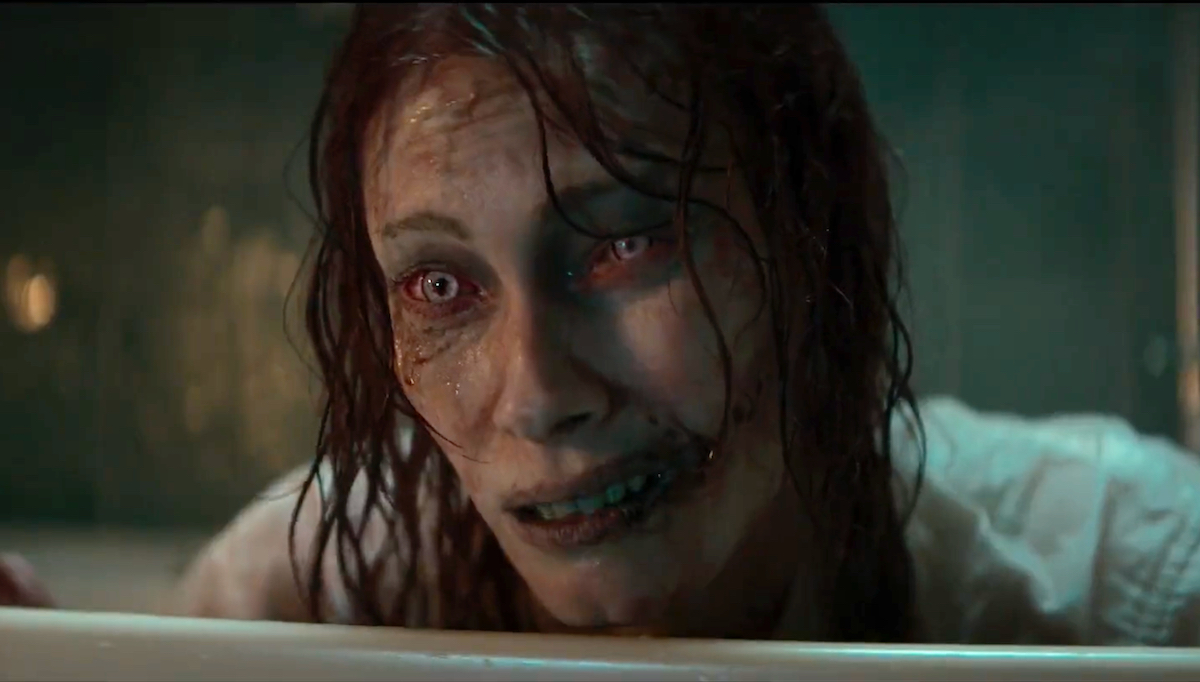
Irish filmmaker Lee Cronin assumes the director’s chair for Evil Dead Rise, which moves the concept from a cabin in the woods to a dingy block of flats in the city (although the film opens on a rural slaying). Beth (Lily Sullivan) and Ellie (Alyssa Sutherland) are two estranged sisters. Ellie is a single mother to teenagers Danny and Bridget, and a child Kassie. When Beth comes to visit the family and an earthquake shakes the building, Danny discovers a strange book in a concealed chamber and unleashes a supernatural terror on the block.
Unfortunately, Evil Dead Rise is a complete misfire and makes virtually every mistake possible in the horror rulebook. Cronin seems content to just go through the motions and the film lacks a gleeful edge or any kind of personal stamp. I didn’t connect with any of the characters and Cronin fails to make use of the urban setting. While we get to briefly meet a handful of the neighbours, they’re cordoned off pretty quickly and Cronin fails to convey the feeling of a family being ripped apart. Evil Dead Rise also criminally seems to go against the franchise logic in how only one character can be possessed at a time. The score by Stephen McKeon is disappointingly anonymous and the cinematography is crushingly dull, lazily resorting to quick cuts.
The film earns its 18-certificate with lashings of blood and guts, although the overreliance on CGI lessens its impact. It’s a shame Cronin didn’t pursue the use of practical effects and even Evil Dead (2013) respectably shunned CGI. Still, there’s some mild fun to be had in the film’s final blood-drenched set-piece which slightly elevates the turgid mess one has to endure beforehand.
Evil Dead Rise is by far and away the worst of the series and I fail to understand the largely positive critical reception. Cronin fails to demonstrate an understanding of the qualities that made the other films work. It’s a shame he doesn’t make the most of the urban setting and centres the story around a rote carousel of characters. If a sequel is commissioned (the film’s ending sets one up), it would be wise to head back to the drawing board to avoid further tarnishing this long-enduring series.
Director: Ben Affleck Starring: Matt Damon, Ben Affleck, Jason Bateman, Marlon Wayans, Chris Messina, Matthew Maher, Chris Tucker, Viola Davis Certificate: 15 Run Time: 112 mins
Air is a biographical sports drama centred around the origin of the Air Jordan basketball shoeline. More importantly, it’s the first film to be directed by Ben Affleck since 2016’s Live By Night. Prior to that aforementioned film, Affleck enjoyed a string of critical successes from Gone Baby Gone to The Town, culminating in Argo, which won the Best Picture Oscar in 2012. Although I found Live By Night to be thoroughly entertaining and sporadically gripping, many found it to be a major disappointment. Affleck was then attached to direct The Batman but left the project due to a packed schedule.
Back to Air, the film opens as Nike Inc. is on the verge of shutting its basketball division. The company’s basketball talent scout Sonny Vaccaro (Affleck reuniting with Good Will Hunting co-star and writer Matt Damon) is tasked to find new players to sponsor. Very much an underdog company compared to the giant it is today, Vaccaro is told Nike are happy to sponsor three athletes. After obsessively watching gameplay of Jordan and convinced of his future stardom, Vaccaro decides he’d rather spend all of the budget just on Jordan, much to the disagreement of both Marketing VP Rob Strasser (Jason Bateman) and co-founder and CEO Phil Knight (Ben Affleck). They not only argue he is too expensive for the meagre budget Nike has, they are convinced Jordan will want to stick with his preferred Adidas partnership.
Although at its core, the concept of a biopic about a pair of shoes may sound pretty dull, Affleck manages to spin an entertaining yarn on the relentless pursuit of what we now know to be a sport-defining outcome. Air is good fun in the moment and has a particularly strong script by first-time Alex Convery, full of sharp quips and meaningful character development. An early scene in which Vaccaro rejects the possible partnerships Strasser suggests is particularly peppery and gives an early insight into the psyche of the film’s personalities.
There’s some great performances too – Matt Damon is reliably fun as the determined Vaccaro. He’s well aware he could lose his job and makes some unconventional decisions, such as visiting the Jordan family in-person which is considered a big no-no and Jordan’s fiery agent David Falk (Chris Messina) is particularly livid at the stunt. Affleck is clearly having fun as the somewhat impenetrable CEO and it’s refreshing to see Jason Bateman in a more serious role, arguably his first since his career-best performance in The Gift. Viola Davis is also excellent as Jordan’s mother, very much the deciding figure over how her son’s career will progress. The underrated Matthew Maher is also terrific as shoe designer, Peter Moore as is Chris Tucker in his first role since 2016’s Billy Lynn’s Long Halftime Walk as marketer Howard White.
However, while Air is fun in the moment, it’s a frothy film and doesn’t leave a particularly long lasting impression. Affleck doesn’t particularly inject a great deal of his personality behind the screen and surprisingly, even regular collaborator (as well as Quentin Tarantino’s preferred cinematographer) Robert Richardson’s lensing feels rather anonymous. Although the jukebox soundtrack captures the 1984 setting, it’s somewhat obvious and distracting.
Whilst Air is a lively, fast-paced and warm biopic, it’s a little disappointing considering Affleck’s directorial back catalogue. A tinge of darkness would have really elevated the film and would have played to Affleck’s strengths. However, if you momentarily forget the powerhouse crew behind the film, Air is a fun crowd-pleaser about the pursuit of a basketball icon and how he came to wear an endearing shoe.
Director: Chad Stahelski Starring: Keanu Reeves, Donnie Yen, Bill Skarsgård, Laurence Fishburne, Hiroyuki Sanada, Shamier Anderson, Lance Reddick, Rina Sawayama, Scott Adkins, Ian McShane Run Time: 169 mins
John Wick: Chapter 4 is the latest in the action series that’s breathed new life into Keanu Reeves’ career. The thrilling original spawned an unintentional series that has become more popular with each entry. Chapter 4 picks up immediately after the close of John Wick: Chapter 3 – Parabellum which saw Wick join forces with the Bowery King (Laurence Fishburne) to enact vengeance against the High Table, a council of twelve crime lords that govern the assassins’ world.
Former stuntman turned director Chad Stahelski is at the helm again and has proven an expert hand at crafting action sequences. Each entry in the series has proven an antidote to the quick-cut fights that plague many films, whereas Stahelski likes to hold onto a shot and the choreography is almost balletic. It’s been refreshing seeing Stahelski trying to continuously top himself with each John Wick entry. Chapter 3 – Parabellum, in particular, wowed with its sheer variety in the first half of the film. The first remains my favourite of the series and rewatching it just before this new entry was quite eye-opening for its decidedly smaller scale.
John Wick: Chapter 4 is yet another strong entry in the series and its second half is particularly impressive, especially considering the intimidating 169 minute run time. It tells a clear and coherent story and there are real, life-threatening stakes for the characters. The film feels like a sprawling, ultra-violent James Bond film on steroids and mostly earns its length. As you’d expect, Chapter 4 sports some truly mesmerising action sequences that are straight up there as some of the best in the series and a model for action cinema in general.
If I’m being picky, the first half could have a 20 minute chop and that would make for a tighter film but once the action reaches Paris, it rip-roars its way to the end with breathtaking action sequence after action sequence.
Keanu Reeves once again turns in an excellent performance as the titular character. Although he doesn’t have many lines in the film, Reeves is totally convincing in his suicidal mission to dispatch as many High Table subordinates as possible. Both Ian McShane and Laurence Fishburne turn in reliably fun performances and it was rather poignant to see the late Lance Reddick who died shortly before this film’s release return with a memorable and heartfelt final performance.
Bill Skarsgård makes for what is probably the most formidable villain of the series to date and Donnie Yen is clearly having fun as a likeable old friend of Wick, who is forced out of retirement to kill him. Hiroyuki Sanada is also excellent as the Osaka Continental Hotel in Japanese and Scott Adkins is another highlight as a Russian mafia crime lord. Adkins is best known for playing intimidating henchmen but here, he plays against type as he wears a fat suit and isn’t as energetic.
Returning cinematographer Dan Laustsen’s work is once again superb, an overhead tracking shot in an apartment mesmeric. This is definitely the best looking John Wick film. Elsewhere, the duo of Tyler Bates and Joel J. Richard once again turn in a terrific score, revisiting some old themes while introducing some new ones.
John Wick: Chapter 4 is a fantastic sequel and a genre-defining film for action cinema. It’s a globe-trotting stunt showcase from beginning to end that mostly earns its length and its second half is a tour-de-force. It’s certainly the best sequel of the franchise, although I’m not sure if it betters the original. It’s rare to see a series improve with each entry, although Chapter 4 ends on a fitting note and I hope Stahelski and Reeves aren’t tempted to risk making another.
Despite the many controversies riding against the film, as well as acting as a follow-up to the disappointing The Crimes of Grindelwald, I was surprised by how well this film redeems the series. Returning director David Yates deftly melds both Grindelwald’s political quest and Newt’s storyline and unlike the second film which sidelined the titular fantastic beasts, Newt’s briefcase of magical creatures play an important part in the narrative. There are some arresting visuals and the film is directed by Yates with confidence.
There are some noteworthy performances, with Jude Law the standout in an expanded role as Dumbledore, who retains Michael Gambon’s twinkly personality and Irish lilt. Redmayne carries the film well again and Callum Turner as Newt’s Auror brother, Theseus makes more of an impression in an expanded role, as he was quite wooden last time round. Newcomer Mads Mikkelsen is excellent as Grindelwald but wisely avoids channeling Johnny Depp’s equally strong performance.
Cinematographer George Richmond replaces Philippe Rousselot for this third installment and he conjures a greyer aesthetic to suit the world that is on the brink of an all-out war, foregoing Rousselot’s more romantic elements.
Fantastic Beasts: The Secrets of Dumbledore is a thoroughly entertaining ride that justifies the existence of this series. I’m not sure if it’s quite as good as the first instalment but it’s certainly pretty close. Sadly, the film attracted mixed-to-positive reviews and didn’t perform very well at the box office – I really hope it’s not the end for the series and I’d love to see how the story develops.
Zach Cregger’s high-concept directorial debut packs plenty of satisfying surprises up its sleeve throughout its run time. This is a taut, claustrophobic and mostly satisfying piece that had me hooked throughout. It runs out of steam a little in its last ten minutes, where the ending is not quite as subversive as the rest of the film and Cregger feels the need to overexplain a little too much. However, this is forgivable considering how reserved the rest of the film is at showing its hand. Cregger balances the horror elements with pepperings of comedy, a notable highlight being Justin Long bringing a new meaning to measuring the square footage of a property. Barbarian is further elevated by its rich exploration of social commentary too, with plenty to say on the state of America, gender and race. I can’t wait to see what Cregger does next.
A controversial choice but director Joseph Kosinski features again with Spiderhead, a straight-to-Netflix sci-fi thriller that received mixed reviews. Spiderhead boasts a fascinating concept in that it is set in a penitentiary where prisoners are allowed to roam freely, in exchange for being experimented on medically. The characters are subjected to make some dark and difficult decisions and the film is directed with flair by Kosinski. Miles Teller is typically reliable and carries the baggage of his character’s crimes with the will to change his future convincingly. Chris Hemsworth is excellent as the voyeuristic Abnesti, whose charisma walks a fine line between prickly comedy and satisfying ridiculousness.
Cinematographer Claudio Miranda captures the prisoners’ point of view excellently, the hues of artificial colours inside the penitentiary juxtaposed with the lush, tropical island settling. Kosinski does well to methodically reveal character backstories, maintaining tension throughout proceedings. He constantly keeps the film fresh, being careful to keep audiences on their toes with its narrative. Many feel the film falls apart in its third act, but I found the climax a natural and satisfyingly bleak place to develop its story.
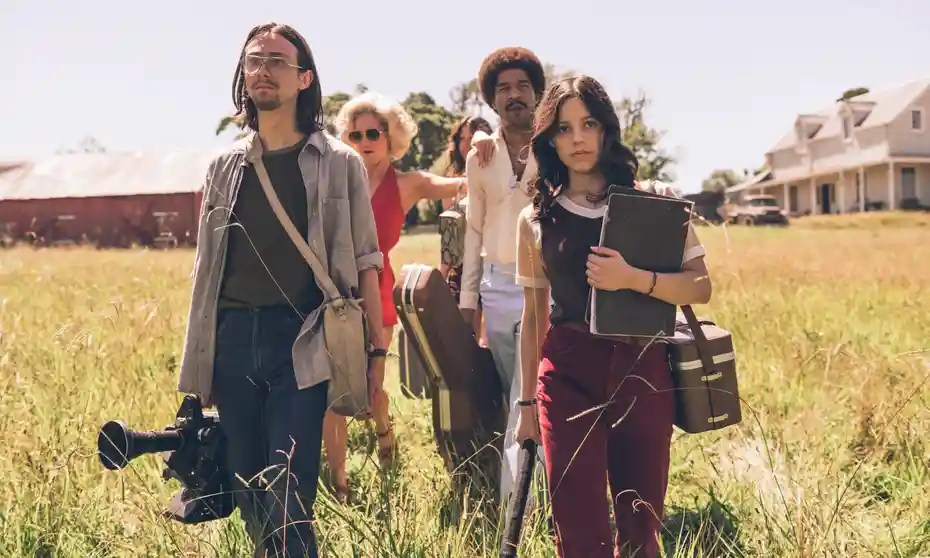
X is the new film from director Ti West, who returns to his horror roots after a brief venture to the Western with the giddily entertaining In A Valley Of Violence. X is a thoroughly entertaining horror that is elevated by its cineliteracy towards 20th-century slasher films such as TheTexas Chainsaw Massacre, as well as its satisfying exploration of a range of themes. It is most effective in its first half as the build-up is at a constant simmer. The film heads off the rails in its second half in a mostly satisfying way, albeit with some silliness as it leans into the genre tropes of that era.
Mia Goth has impressed in horror films with A Cure For Wellness and Suspiria and makes her mark here again. She brings a down-and-dirty edge into the role of Maxine and she quite literally disappears into her second role under heavy prosthetics as Pearl, the wife of Howard. The rest of the cast are all game too, with Jenny Ortega receiving a meaningful arc and Stephen Ure proving what an underrated actor he is, channeling the nastiness from his most famous portrayal of an Orc in Lord of the Rings: The Two Towers.
The score by Tyler Bates and Chelsea Wolfe is haunting using period pieces as well as an original predominantly synth-based score. Chelsea Wolfe’s rendition of Oui Oui Marie is particularly mesmerising. The film is also beautifully shot by Eliot Rockett. He frames the characters as if they are prey, an aerial shot of an alligator stalking its target and an eagle encircling the air above the film crew are of particular note.
The score by Tyler Bates and Chelsea Wolfe is haunting using period pieces as well as an original predominantly synth-based score. Chelsea Wolfe’s rendition of Oui Oui Marie is particularly mesmerising. The film is also beautifully shot by Eliot Rockett. He frames the characters as if they are prey, an aerial shot of an alligator stalking its target and an eagle encircling the air above the film crew are of particular note.
Contrary to the generally negative reception the film has received, I was enamoured by Where The Crawdads Sing. An adaptation of Delia Owen’s 2018 coming-of-age murder mystery Southern Gothic novel, director Olivia Newman’s film is consistently compelling and not afraid to explore some dark and tragic sub-plots. It really makes the most of its swampy location, which feels like a character of its own, and the 125 minutes raced by. I’d have been happy for the film to be an hour longer as it was that interesting. The film’s beautifully shot by Polly Morgan and is supported with a thoughtful Mychael Danna score. Daisy Edgar-Jones is tremendous in the lead role, a misunderstood yet ultimately kind and caring young woman.
Where The Crawdads Sing is a haunting adaptation told with beautiful humanity and is one of the best films of the year. It effortlessly melds its murder mystery, romantic and thriller genre qualities into a coherent and affecting drama that is never cheesy. I can’t wait to see what projects Newman and Edgar-Jones pick next as they are clearly both talents to watch.
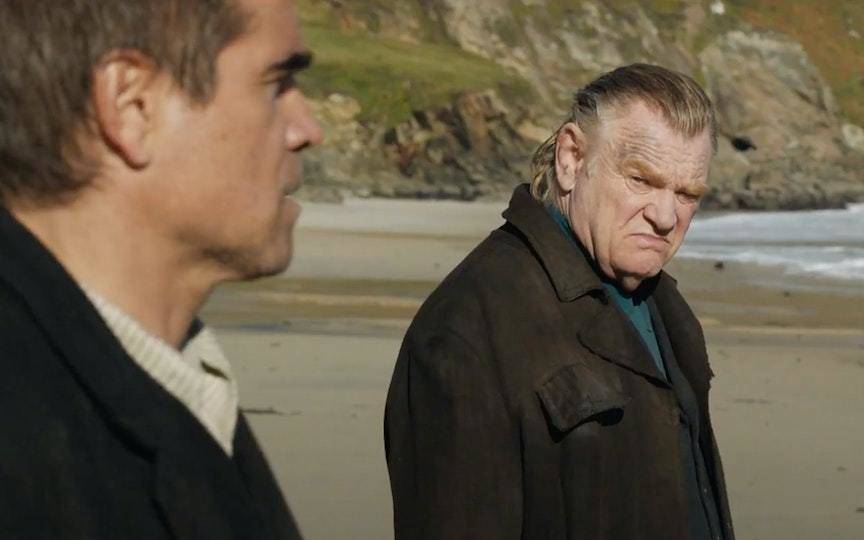
The Banshees of Inisherinis the latest by writer-director Martin McDonagh, whose three film track record is untarnished so far. Yet another knockout McDonagh feature, the script is full of his signature black, dry humour and the first half of the film is full of comedic moments. The film gets progressively grimmer and McDonagh deftly balances the initial laughs with the heavier subject matter and tone. There’s a lot of substance to the story, McDonagh being both critical and drawing parallels of the events on-screen with the Civil War, infused with a Shakespearean quality. Both Farrell and Gleeson turn in excellent performances, fully deserving of the awards attention.
Having watched the film three times now, it gets better each rewatch as you start to pick out the smaller minutatie and the foreboding signs of the narrative direction the film is heading in. It’s definitely McDonagh’s grimmest watch to date and the film leaves you stone-cold in its closing moments with characters that have lost their way. The film isn’t quite perfect though – it doesn’t seem to have quite as much substance as McDonagh’s first two films and the film’s pacing sags briefly just before it enters its final act.
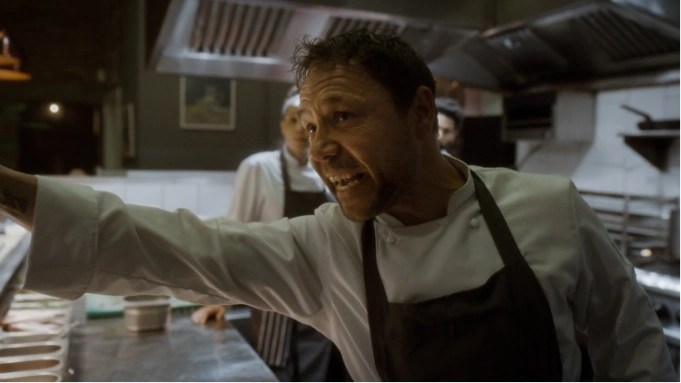
My top choice in my mid-year report, Boiling Point slips to a commendable fourth position. This single-take drama is thrilling and sharp, constantly ramping in tension and maintaining its momentum throughout. From the opening sequence of the Health and Safety assessment, director Philip Barantini has created a startlingly authentic, cutthroat environment and it’s astonishing to witness a film as riveting as Boiling Point is from seemingly few ingredients. The script by Barantini and James Cummings is razor-sharp. They introduce a convincing restaurant team from the fellow chefs to the service staff and how they are divided.
Stephen Graham delivers an astonishing performance as Andy, a man at his wits end and on the verge of a breakdown with his home life and the added stresses of ensuring that the dinner service runs like a Swiss watch. The rest of the cast are uniformly brilliant and are sure to land future roles based on the strengths of their performances here.
Films that are or have been created to feel like they have been shot in one take have often been labelled as a gimmick, and to some extent this is true. But Boiling Point succeeds as a gripping, anxiety-inducing drama first with searing performances. It isn’t a hollow film that tries to hide behind a showy camera technique – the handheld one-shot take further adds to the hysteria on-screen.
Thirteen Lives is a biographical retelling of the nail-biting 2018 Tham Lang cave rescue in northern Thailand. A tremendous piece of work, it is quite possibly Ron Howard’s best film. Despite its two and a half hour length, it’s taut and constantly maintains tension. The film does a great job of re-dramatising the narrative from different perspectives, be it the local farmers whose land need to be flooded so the water can be diverted away from the cave, to the governor trying to manage the situation and facing pressure from his seniors. Both Viggo Mortensen and Colin Farrell are excellent, although it took me a couple of scenes to buy their British accents. It’s brilliantly shot by Sayombhu Mukdeeprom, most acclaimed for his collaborations with Suspiria director Luca Guadagnino. Mukdeeprom thrillingly captures both the claustrophobia of the situation and the serene yet threatening rural surroundings.
A misunderstood masterpiece, Andrew Dominik’s fictional retelling of Marilyn Monroe’s life is searing and provocative. It’s a hellish, unrelenting account that deftly captures the descent of Monroe’s life. The film argues Monroe was used and abused at every turn, a child-like figure who couldn’t handle herself. Redefining the parameters of the biopic genre, Blonde indebted to the style of David Lynch and Darren Aronofsky in its hallucinogenic portrayal of Monroe’s gloomy life. Dominik also experiments with colour and aspect ratios and there are numerous sequences which feel like they have been lifted straight from the 1950s.
The opening twenty minutes is particularly startling, a young Monroe (brilliantly played by Lily Fisher) suffering abuse at the hands of her mentally unstable mother, Gladys (Julianne Nicholson). Dominik’s portrayal of the paparazzi and male gaze is also fascinating, especially how he meticulously recreates iconic images from Monroe’s career. The film is unflinching in its depiction of sexual violence and domestic abuse, thoroughly earning its 18-rating. Its last act is a disorienting Lynchian descent into drug-fuelled mania. A scene where Monroe is sleeping is shot as if from the angle of a voyeur and she awakens from her slumber to check her surroundings. DP Chayse Irvin experiments with shadows and figures and there is definitely someone in the room.
The score by Nick Cave and Warren Ellis is breathtaking – a haunting and melancholic soundscape that is endlessly memorable and is the glue that holds the film together. Chayse Irvin’s cinematography is similarly mindblowing, regularly experimenting with colours and aspect ratio.
Blonde is not for the faint-hearted but this is a fierce and muscular horror-filled biopic of Monroe. It’s directed with real vigour, backed up by committed performance and a technical crew on top of their game. The 166 minutes fly by and a second watch unlocks even more substance.
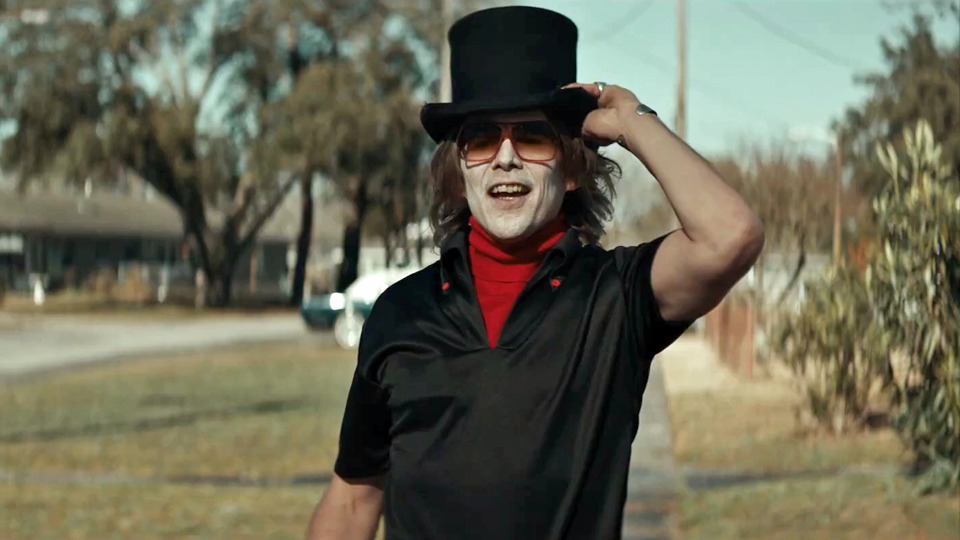
A film that gets better on each rewatch, The Black Phone sees horror maestro Scott Derrickson return to his roots, reteaming with writer C. Robert Cargill and actor Ethan Hawke. The result is an excellent, intelligent horror film that is very well-directed by Derrickson. He crafts a delicious setting, leaning into 1970’s suburbia and isn’t afraid of unflinchingly portraying playground violence. Derrickson takes the narrative to dark places and the fast pacing grips you instantly. The film is very cine-literate, with Derrickon’s passion for film evident on the screen, be through the inclusion of period television shows from the time and the playful nods to It. On that note of the nods to Stephen King, it’s not unreasonable that his son carries some of his traits such as a community of children going missing, but it’s not derivative and the tone isn’t cynical.
The script by Derrickson and Cargill deftly humanises the characters through meaningful arcs and avoids resorting to caricatures. There are also some exhilarating set pieces and I loved the creative choice to portray some of the previous victim’s lives on grainy film, which was a highlight of Derrickson’s magnum opus Sinister. The film is further bolstered by an interesting and unnerving score by Mark Korven and it’s beautifully shot by Brett Jutkiewicz. The cast are excellent, especially newcomers Mason Thame and Madeleine McGraw who make an explosive impression. Hawke is also terrific – he has not played a villain on-screen before and ‘The Grabber’ is an unhinged and suitably sinister screen presence.
The Black Phone isn’t perfect – Hawke’s villain could have been further explored, James Ransone’s character arc isn’t very well executed and I wish the film further explored the link between overcoming one’s demons and the repercussions stemmed from that. But otherwise, it’s pretty terrific and I can’t wait to see what Derrickson has up his sleeve next.
Director: Brandon Cronenberg Starring: Alexander Skarsgard, Mia Goth, Cleopatra Coleman, Jalil Lespert, Thomas Kretschmann Certificate: 18 Run Time: 118 mins
Infinity Pool is a sci-fi horror written and directed by Brandon Cronenberg. The film is centred around a struggling writer, James Foster (Alexander Skarsgård) who is on holiday at a resort in the fictional country of Li Tolqa with his wife Em (Cleopatra Coleman). The super-exclusive resort is isolated from the rest of the country with a barbed wire fence, security guards patrolling its perimeter. Wealthy tourists are shuttled to and from the airport.
James and Em’s relationship is clearly strained, until Gabi (Mia Goth) approaches him and professes her love for his only novel published six years prior. Joined by Gabi’s husband Alban (Jalil Lespert), the four share dinner together and rent a car the next day to explore the countryside and head to a remote beach. After a drunken day out, James drives the group back and hits a native citizen. He is arrested and soon discovers the country’s eye-for-an-eye outlook on crime.
For the first forty minutes, Infinity Pool looked to be film of the year – an endlessly atmospheric, tense exploration of the human psyche and failed careers. It has a nightmarish quality to it with a satirical edge. There is then a plot point that introduces the theme of the doppelgänger, changing the film’s direction, which I didn’t fully get on board with. That is until the last half an hour or so with an electrifying standoff between passengers in a bus and a group that box them in and the film rip-roars to the end. The score by Tim Hecker is eerily effective and full of portent and the film is disorienting shot by Karim Hussain, an early montage of the resort shot at tilted angles is particularly breathtaking.
There’s certainly a ton to admire in Infinity Pool but it doesn’t fully work as Cronenberg’s ideas aren’t fully-fledged. The class satire isn’t fully explored, nor is the idea of the double fully clear in its execution. Cronenberg certainly crafts some arresting images though and the film has a suitably hallucinogenic quality.
Although I’ve been critical of Alexander Skarsgård in the past, his aloof and wooden acting style really suits the role here. Much has been touted of Mia Goth’s performance and along with her performance in Pearl (finally released in the UK last week), she continues to cement herself as one of the best horror actresses of her time. Cleopatra Coleman is also excellent as Em, who struggles to fully integrate with the other tourists’ way of life and Jalil Lespert makes for a slimy, charismatic screen presence. Another highlight is Thomas Krestchmann as a sadistic yet cooly calculated detective.
Although Infinity Pool doesn’t fully work with its muddled storytelling, Cronenberg’s ambition is to be admired. This is a fierce piece of work, with many standout images that are etched into my brain and memorable performances to boot. If Cronenberg can sustain his style and develop his storytelling, he will be a very exciting filmmaker.
Director: David F. Sandberg Starring: Zachary Levi, Asher Angel, Jack Dylan Grazer, Rachel Zegler, Adam Brody, Ross Butler, D. J. Cotrona, Grace Caroline Currey, Meagan Good, Lucy Liu, Djimon Hounsou, Helen Mirren Certificate: 12A Run Time: 130 mins
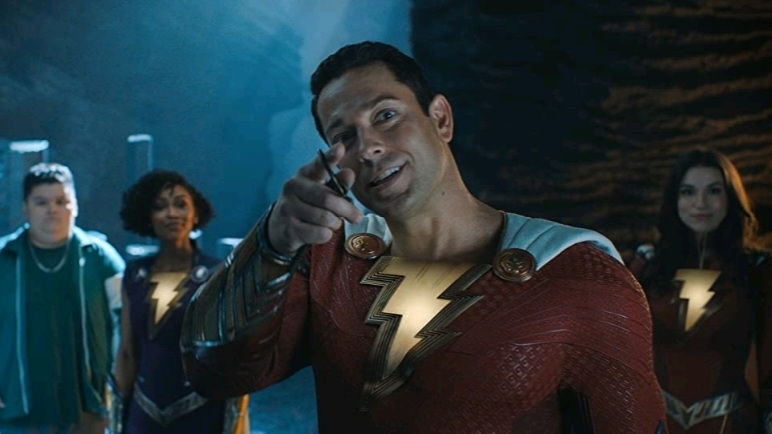
Shazam: Fury of the Gods is the sequel to the thoroughly entertaining Shazam! and the latest entry in the DC Extended Universe. The original really worked with its well-judged humour and heart-warming exploration of the theme of family. Although the DC Extended Universe as we know it is coming to a close with James Gunn’s soft reboot soon upon us, it’s a shame this film feels somewhat dead on arrival.
Lights Out and Annabelle: Creation director David F. Sandberg returns to the helm and this film picks up two years after the first. Billy Batson (Zachary Levi and Asher Angel) and his family of foster siblings are shown to put their superhero skills to good use as they prevent casualties on the Benjamin Franklin Bridge early in the film. However, their personal interests see them drift apart as they grow up. However, the daughters of Atlas, Hespera (Helen Mirren) and Kalypso (Lucy Liu) are soon reason enough for the siblings to unite together as they unveil carnage on the planet.
Shazam: Fury of the Gods isn’t as fresh as its predecessor but aside from a rocky start, it’s another entertaining ride. It’s considerably of a higher production value than Shazam spin-off Black Adam that released last year. This sequel mostly retains its warm portrayal of family and all of the characters receive meaningful character development. The script penned by Henry Gayden and Chris Morgan is sharply written and there’s a few laughs peppered throughout.
Once again, Sandberg’s horror fingerprints can be felt all over the film, particularly in the climactic battle sequence and there’s even a cameo by the Annabelle doll that you’ll need to keep an eye out for. Other than the opening action sequence, there’s some fun set pieces here and even the final climactic battle remains consistently fun to watch, often the undoing of many a comic book film. The film is well shot by Gyula Pados but the score by Christophe Beck is disappointing and unmemorable.
The performances are really fun once again. Zachary Levi injects lots of energy and charisma into the lead role and a natural fit for the material. Djimon Hounsou proves he’s a criminally underrated supporting actor in an expanded role as the titular wizard and both Helen Mirren and Lucy Liu are reliably slimy as the villains. Rachel Zegler also makes a good impression as Anne, a new girl at school who Freddy (Jack Dylan Grazer and Adam Brody) has a crush on at school .
It’s a shame DC aren’t pushing Shazam: Fury of the Gods, treating the film as if it’s dead weight before the newly revamped DC arrives. Although it’s highly unlikely we’ll see a third chapter, Sandberg has crafted a highly likeable sequel, even if it’s not quite as fresh-on-arrival as its predecessor.
After 2021 course-corrected the film industry after the coronavirus pandemic, 2022 continued to put it back on track.
Having sampled much of what 2021 had to offer, I now feel ready to share my best films of the year. I know that I am late in the game but there were quite a few films I didn’t get to watch in time and felt that it would be a disservice to generate a list that wasn’t truly reflective of the year. By and large, 2022 was a sound year for film and on a par with 2021 in terms of general quality.
Here I rank numbers 25 to 11. Numbers 10 – 1 will be detailed in a separate post so stay tuned for that.
As always, I am following the UK release date calendar from January 1st to December 31st hence the inclusion of some awards films from the start of the year.
25) The Electrical Life Of Louis Wain
Contrary to the overly whimsical trailers for the film, The Electrical Life Of Louis Wain is a thoroughly touching and fascinating biopic about the titular artist, famous for his anthropomorphic large-eyed cat drawings. Benedict Cumberbatch is excellent as Wain, deftly balancing the initial misunderstood energy of the artist and his fragmented mental state of mind as the film progresses. The relationship between Cumberbatch and Foy’s governess is tender and director Will Sharpe is able to gracefully shake up the tired biopic formla.
24) Kimi
Kimi is the latest by director Steven Soderbergh, whose enjoyed an incredibly varied career in terms of the genres he has worked in. This action thriller follows Angela Childs (Zoë Kravitz), an agoraphobe whose previously been the victim of assault and her anxiety has been worsened by the coronavirus pandemic.
Kimi is an efficient, mostly one-location thriller with a terrific central performance from Kravitz. Its first two acts are its best, with Soderbergh excellently capturing and exploring Angela’s agoraphobia, and there are clear parallels to Alfred Hitchcock’s Rear Window. In many ways, it’s a modern update for the Alexa-owning, coronavirus pandemic generation. The script is sleek and plays to writer David Koepp’s strengths who’s proved himself in this genre before with films such as Panic Room and Secret Window. The third act leans more into action, which I found less interesting, although still rather enjoyable and the film doesn’t outstay its welcome.
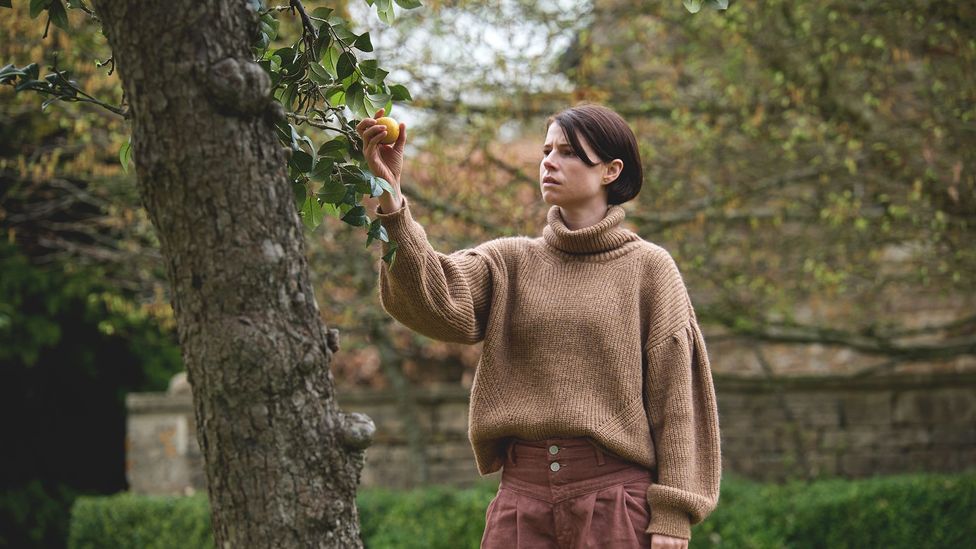
Men is the third film from Alex Garland, whose first two sci-fi films Ex_Machina and Annihilation were thoughtful, thrilling and visually interesting pieces. Garland sidesteps from sci-fi into British folk horror and this film follows a young widow, Harper (Jessie Buckley) who ventures to the Cotswolds for a well-earned break from London city life and to recover from the death of her husband, although she is terrorised by the predatory and patronising men in the village, who are all played by Rory Kinnear.
Men’s first two acts are thrilling and Garland skilfully drip-feeds his audience details of her past trauma a piece at a time. He establishes a deeply unsettling tone and deftly ramps up the tension through Harper’s mental paranoia. The film is as much a metaphorical piece as much as it is a horror, using its frightening elements as allegories for misogyny, grieving and rebirth. Unfortunately, the film nosedives in its third act. On the plus side, there’s some suitably slimy body horror but Garland is self-indulgent and throws away any subtlety he builds in its first two acts. It just becomes rather silly and certainly not as clever as it thinks it is.
The film is bolstered by an eery choral soundtrack from Garland regulars, Ben Salisbury and Geoff Barrow, and DOP Rob Hardy vividly captures the beauty yet foreboding nature of the Cotswolds. Jessie Buckley’s great as the prickly Harper (despite my sniffy opinions on her past performances, especially with The Lost Daughter) and this is career best work from Rory Kinnear. Men may be Garland’s weakest film but it’s still a strong piece from the director and I’d rather a filmmaker take a risk and it not fully succeed than play it safe.
Hustle doesn’t particularly stray from sports drama convention but it’s an investing and consistently entertaining drama from start to finish. After giving the performance of his career in the thoroughly unnerving Uncut Gems, Adam Sandler continues to turn his poor comedic career choices around with another excellent performance as Stanley Sugarman, a washed-up NBA scout. Juancho Hernangómez is also terrific as Cruz and is given a compelling back story for why he finds himself in the situation he is initially in at the start of the film. Both Sandler and Hernangómez share an absorbing chemistry, which makes the duo easy to root for. Of the rest of the cast, Latifah isn’t given much to work with as Sandler’s wife, and the ever-versatile Ben Foster is also short-changed as Sandler’s disparaging boss.
Top Gun: Maverick is the long-awaited sequel to the late Tony Scott’s 1982 original, a film which quite literally propelled Tom Cruise’s career. Very much a product of its time in its tone and treatment of women, while the action sequences are admirable and Cruise’s performance is earnest, I can’t say I’m a big advocate of the original. This sequel is directed by Joseph Kosinski, who most recently directed the excellent forest-fire action drama Only The Brave and he reunites with some of the cast and crew such as Miles Teller, Jennifer Connelly and cinematographer Claudio Miranda.
Top Gun: Maverick is a surprisingly good film and is vastly superior to the original. While its story is familiar and fairly predictable, it is significantly more coherent and focussed with a singular narrative to achieve this specific mission. Tony Scott’s original wrangled in different directions and its climax sequence felt tacked on and unearned. The flight sequences are particularly excellent and are nail-biting in moments. It has the precision of Mission: Impossible director Christopher McQuarrie who co-writes and produces the film.
I’ve long been a critic of Tom Cruise and I’d argue he has far more misses than hits. Cruise’s performance works here as he plays an older and jaded instructor, whose ego and arrogance have been somewhat tarnished by his experiences. Miles Teller is reliably excellent as Rooster but there isn’t quite as much meat to the bone to the tumultuous relationship between him and Maverick as there could have been.
Kosinski wisely finds the right balance between relying on nostalgia and creating an original piece. It’s not quite the action masterpiece that some are claiming it to be though – it’s not as radical a piece as George Miller’s Mad Max: Fury Road, which was essentially an entire film of rip-roaring action, and it doesn’t pack many narrative twists up its sleeve. But it doesn’t need to be. For Top Gun: Maverick to be an improvement on the original is a miracle in and of itself and I’m glad it exists.
Turning Red is the latest in the Disney Pixar canon and like Soul and Luca last year, it has released straight on Disney+. Director Domee Shi’s feature-length debut is to be commended for its sheer ambition of exploring female puberty, a fairly taboo subject matter for a mainstream film, especially one that also has to appeal to younger audiences. It represents a very different affair for a Pixar film and as is typical for the animation studio, it is moving in parts. It is clearly inspired by anime with its transformative element and colour scheme, down to the extreme facial expressions of its characters. The script, co-written by Shi and Julia Cho, is smart and its characters bursting with personality. Mei is a very well written lead and is endlessly empathetic.
Once you settle into its eclectic tone, it’s a very satisfying journey to watch unfold bolstered by its strongly written female characters. It’s not quite top-tier Pixar for me, as it isn’t quite as effortlessly charming and poignant as its best entries such as Up or Coco, but I’m very glad it exists. The film is sure to launch Domee Shi’s career and I can’t wait to see what she does next.
Smile is a psychological horror written and directed by Parker Finn, in his feature-length debut. The film follows a therapist named Rose Cotter (Sosie Bacon) who starts having increasingly disturbing experiences after witnessing the unexplained suicide of a patient.
Smile is a surprisingly effective psychological horror that deftly explores the themes of trauma, grief and guilt through horror’s generic constructs. It’s not perfect – it overrelies on some classical horror tropes, particularly with its use of jump scares and there’s nothing here you’ve haven’t seen before. It’s also around 10 minutes overlong. That said, it’s impressive that it doesn’t fully reveal what is haunting Cotter right until the very end and as a result, it maintains its tension. There’s also a terrifically creepy yet awkward party and the atmosphere of the hospital Cotter works at is also well-realised. Smile is ultimately much better than it has any right to be and is thoroughly entertaining and meaningful from start to finish. I’m looking forward to seeing how Finn’s career develops.
The Good Nurse is a thrilling drama based on the true story of a night nurse Amy (Jessica Chastain) who suspects her co-worker, Charlie Cullen (Eddie Redmayne) might be a serial killer. Both Chastain and Redmayne are brilliant and share a palpable chemistry together, with Redmayne particularly charismatic and chilling. Director Tobias Lindholm does an excellent job maintaining the tension throughout and the film is particularly effective as Amy tries to distance herself from Charlie after sharing quite a close and vulnerable relationship with him, prior to her accepting the insurmountable evidence against him.
17) The Batman
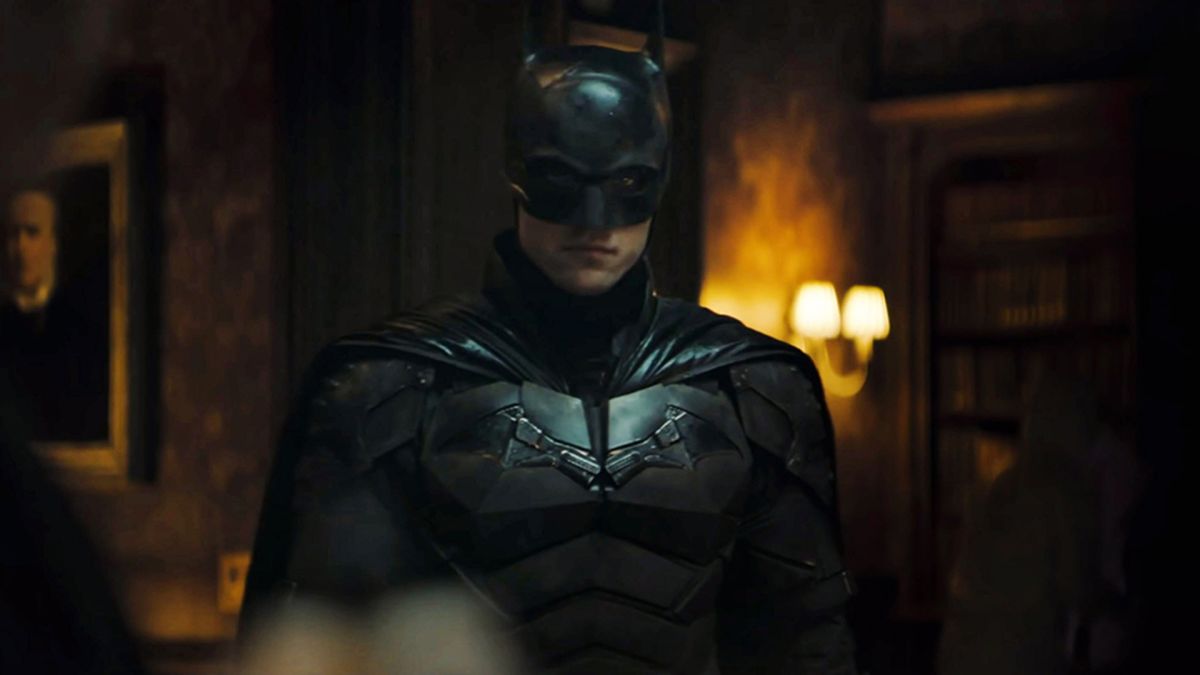
The Batman is a new rendition of the Caped Crusader by War For The Planet Of The Apes director Matt Reeves, positioned outside of the DCEU canon, and sees a younger Dark Knight (Robert Pattinson) in his second year of crimefighting and Reeves hones in on his detective skills. It is an interesting, if flawed, depiction of the Caped Crusader. Reeves’ take on the character is certainly admirable. It very much owes a debt to the Christopher Nolan and Zack Snyder aesthetic in that it is a darker and grungier interpretation. Experiencing Batman as a detective figure is refreshing. The notion of Batman providing narration is also innovative, yet uneven in that it’s not sustained throughout the film. The extended run time of 176 minutes isn’t to the film’s detriment. It’s always promising to see a director allow a film breathe when it warrants it rather than resorting to quick cuts.
Pattinson’s portrayal of Batman is expectedly excellent, although his Bruce Wayne needs some work. This is more a choice of the script rather than any wrongdoing by Pattinson as Bruce Wayne doesn’t receive a particularly meaningful arc so he isn’t granted the opportunity. Other highlights of the cast include Colin Farrell, who is almost unrecognisable as Oswald Cobblepot in his early Penguin days, and Jeffrey Wright is effortless as James Gordon.
Paul Dano’s Riddler is an interesting villain and poses a genuine threat to Batman throughout much of the film but his character arc is severely let down towards the end of the film to the point where he doesn’t pose a threat and his performance borders on being laughable.
The score by Michael Giacchino is really excellent and he establishes very memorable themes for the characters, although the score doesn’t always fit in with the scenes they are inserted in. The cinematography by Greig Fraser is beautiful, hot on the footsteps of his similarly excellent work on Dune.
The Batman is a strong interpretation from Reeves and I’m looking forward to see where future instalments could go, although I have some reservations with the teases. However, it’s not quite the masterpiece that some have proclaimed it to be and Reeves is just not as competent a director as Nolan or even Snyder.
After Black Panther electrified the superhero film genre, earning seven Oscar nominations and winning three, to say Wakanda Forever has its work cut out for it would be an understatement. Not least by the sudden death of its titular star, Chadwick Boseman, director Ryan Coogler had to effectively chuck out the original script and rewrite it to reframe the narrative on the character’s passing.
The result is a significant improvement over its predecessor and Coogler has delivered an intelligent, sombre and politically charged sequel. Coogler makes a strong choice to fully explore the characters and how they react to T’Challa’s death, very much mirroring how audiences have mourned Boseman in reality, recreating a scenario we all understand. In a refreshing change of pace for Marvel and a trait that has plagued many of its films, Coogler retains the sombre tone throughout and doesn’t resort to cheap and disposable quips.
The performances are uniformly excellent, with Letitia Wright, Angela Bassett and Danai Gurira the highlights, as well as Tenoch Huerta’s fiersome yet empathetic villain, Namor. You can really empathise with his position and motivation and this makes him one of Marvel’s best villains.
The action sequences are much better this time around and the third act doesn’t succumb to the usual mindless CGI-fest many comic-book films descend into. The film is crisply shot by Autumn Durald Arkapaw and the score by Ludwig Göransson is once again excellent.
The extended 161 minute run time wasn’t an issue for me and the film kept me engaged throughout. This is much more of a slow-burn, which I appreciated, and Coogler deftly balances a grim tone with the idea of future hope and prosperity for the fictional nation of Wakanda.
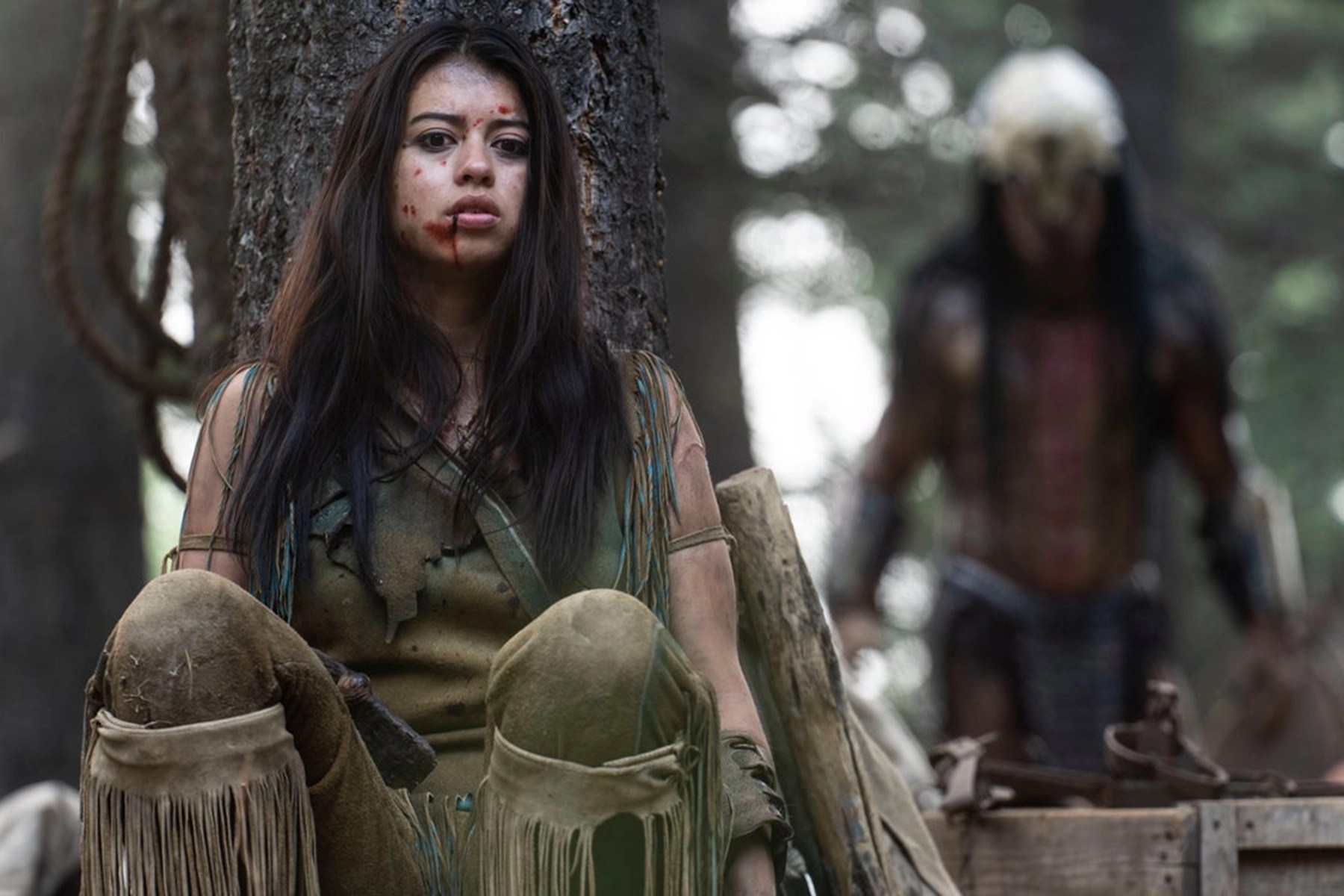
Prey is an excellent prequel and is just the gut-punch The Predator series needs. 10 Cloverfield Lane director Dan Trachtenberg puts his own stamp on the material and the film features some terrific performance among its almost exclusively Native American cast. The very fact Trachtenberg has opted to centre the film around an underrepresented community is to be commended, too, with the only exception to the rule being a group of French fur trappers Naru encounters. Amber Midthunder makes for a formidable screen presence and it’s great the film focusses on her humanity. She is portrayed as both a skilled hunter but also an individual who makes mistakes. Trachtenberg’s mirroring of smaller animals hunting each other and the Predator and anything that steps in its way is also an excellent creative stroke.
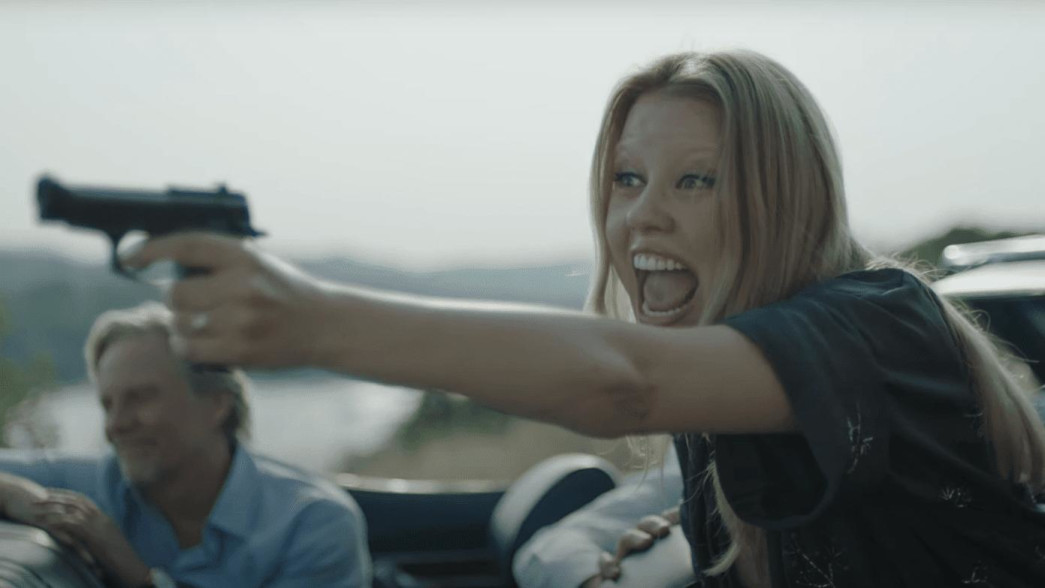
Damian Leone’s blood-soaked sequel is a slasher epic running 138 minutes and received a fair amount of media attention for its gory murders, with reports of some viewers vomiting and fainting. Not only does Terrifier 2 lives up to its gory hype but Leone has also crafted a gleefully riveting and original horror epic. Leone has demonstrably grown as a filmmaker and although there are some holes in the narrative, the time taken to develop the characters is a welcome one and sets the stage for events to unfold.
I particularly appreciated the hallucinatory, dream-like elements, which afford a tangible scope to the story. The practical effects and make-up are brilliant and although it’s a bloody film, there is a sardonic edge to the kills. Terrifier 2 reaches creaky territory in its conclusion, where it starts to introduce some fantastical elements. While I got on board with it and appreciated the over-the-top execution, others understandably won’t.
Terrifier 2 is an excellent slasher that outdoes its predecessor in pretty much every single way, other than the gnarliest kill which I think still belongs to the first film. It’s superbly directed, the increased character development compliments the gore and Leone crafts some arresting images. If Leone proceeds with a Terrifier 3, which an ambitious mid-credits scene alludes to, he has his work cut out to create a sequel that can better this.
The Forgiven sees John Michael McDonagh mostly back on form after the disappointing War On Everyone, although it’s not a masterpiece like his first two films were. The film is uneven and after the opening sequence, it takes a good twenty minutes or so to find its stride. At first, I thought McDonagh had made a straight-faced adaptation without his trademark black humour but thankfully, there’s plenty of that to be found once the film finds its feet. McDonagh balances this satisfying mean-spiritedness with sequences of profundity. Like the rest of his filmography, it’s a cathartic experience and the narrative leads you down some unexpected but satisfying roads.
Ralph Fiennes is excellent in the lead role, a tired and pitiful individual with a pessimistic outlook on life and McDonagh’s characterisation of him is excellent. He’s given some cracking lines in the script, especially one sequence where he is riding a camel in the desert. Fiennes balances this initial pessimism with an individual who has to do his penance and accept guilt.
Nopeis an original but flawed third film from Jordan Peele after Get Outand Us. It’s a multi-layered story that explores themes such as spectacle, the media, fantasy and the art of filmmaking and despite its shortcomings, it’s subversive and thrillingly original. Daniel Kaluuya is reliably great as an introverted but principled rancher. The score by Michael Abels is typically strong, ranging from other-worldly foreboding horror riffs to Western infusions. The film is beautifully shot by Hoyte van Hoytema, who captures the spectacle of the wide vistas, through to immersive blood-drenched, nighttime horror.
After a first viewing, you’ll need to ponder the various meanings and storyline and it’s a film that’s designed to be rewatched. Although it doesn’t flow quite as succinctly as Peele’s other films, Nope‘s many arresting images have stuck with me and it’s another success for the filmmaker.
Old Henry is a thrilling Western with a particularly satisfying final act with an inspired performance from Tim Blake Nelson. Nelson plays the titular character, a widower whose quite clearly experienced a violent past. He lives with his son, Wyatt (Gavin Lewis) on a farm in Oklahoma, who he is is very protective of.
Directed by Potsy Ponciroli in what is his second feature-length film after the little known Super Zeroes in 2012, Old Henry keeps its cards close to its chest in its first act. But when it gets going, it’s a deeply satisfying romp with an elegiac quality. While it may seem like a fairly typical (but well done) Western, its narrative is elevated by a character revelation in the final act. There are some thrilling action sequences, particularly a chase within some reeds and a customary final shoot-out. The film is also beautifully shot by director of photography, John Matysiak.