Sinners (Review)

Review

Rating: 3 out of 5.

Director: Ryan Coogler
Starring: Michael B. Jordan, Hailee Steinfeld, Miles Caton, Jack O’Connor, Wunmi Mosaku, Jayme Lawson, Omar Miller, Delroy Lindo
Certificate: 15
Run Time: 138 mins

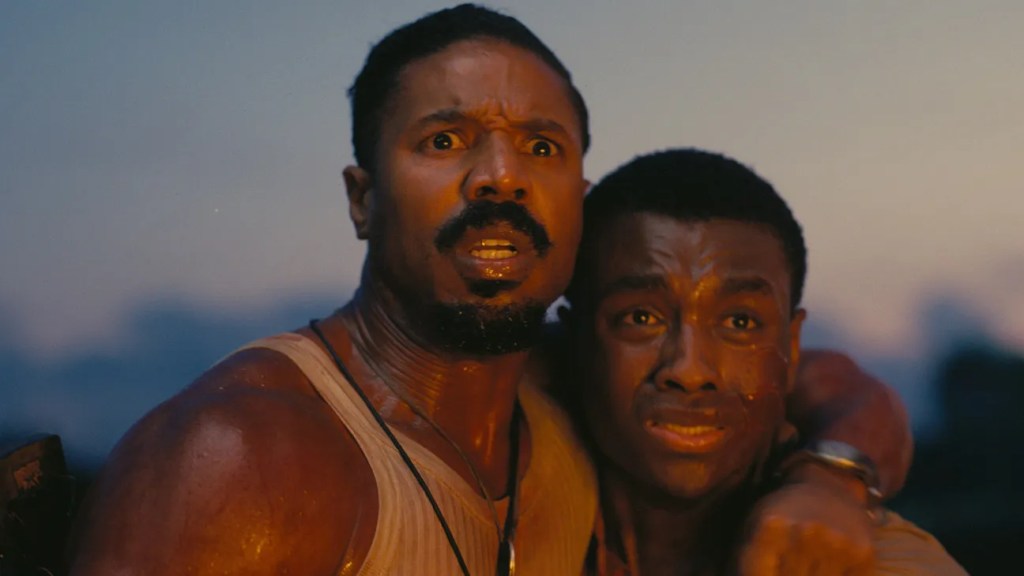
Sinners is an original horror film written, co-produced and directed by Ryan Coogler, notable for injecting new life into established series with films such as Creed and Black Panther. Set in 1932 in the Mississippi Delta, Coogler-regular Michael B. Jordan stars in a dual role as twin brothers Elijah ‘Smoke’ and Elias ‘Stack’ Moore who return to their home after spending years working for the Chicago Outfit. They buy a sawmill from a racist landowner with stolen cash from the gangsters so they can open a juke joint for the local black community. After recruiting a team of staff, the Moore’s cousin Sammie’s (Miles Caton) blues music is so transcendent that it unknowingly summons spirits, unfortunately attracting the attention of some vampires led by Irish-immigrant Remmick (Jack O’Connell).

Sinners is an ambitious piece and while it’s refreshing that Coogler’s got to make a relatively big-budget ($100 million) original work is to be commended, the film is rather messy in its construction. Coogler’s script is the fundamental problem – it’s too talky and expository, and none of the themes are explored with any form of subtlety. There’s also next-to-no character development, despite the cast doing the best with the material they’ve got. For example, I found it difficult in distinguishing the difference between Michael B. Jordan’s characters. Still, Jordan puts in a committed performance and of the supporting cast, it’s Delroy Lindo that’s the standout as an alcoholic pianist.

While there’s the beginnings of a formidable villain in Remmick (I particularly appreciated his abrupt entrance in how he seems to drop out of the sky), the vampire element of Sinners didn’t work for me. Coogler is clearly more interested in the transcendent music and rushes through the film’s blood and guts, with no tension whatsoever.

There’s certainly many plus points though, chiefly some very entertaining sequences here and there. The world that Coogler creates feels authentic, from everything to the costume and set design – the film certainly wears its reasonable budget with pride. Ludwig Göransson’s score also stands out, really elevating the film in how it flirts with all manner of generational and musical genres. Autumn Durald Arkapaw’s cinematography deftly captures the hot, arid nature of the Mississippi but some of the nighttime shots are too darkly lit.

While I found enough to like in Sinners, I don’t quite understand the rapturous reception it’s received – it’s rather overrated. It’s a rewrite away from being something really special and I wish Coogler’s script had more focus. If you’re expecting a modernised version of From Dusk till Dawn, you’re going to be disappointed. But there’s certainly some interesting ideas in Sinners, and I’m glad an original piece such as this exists.

Warfare (Review)

Review
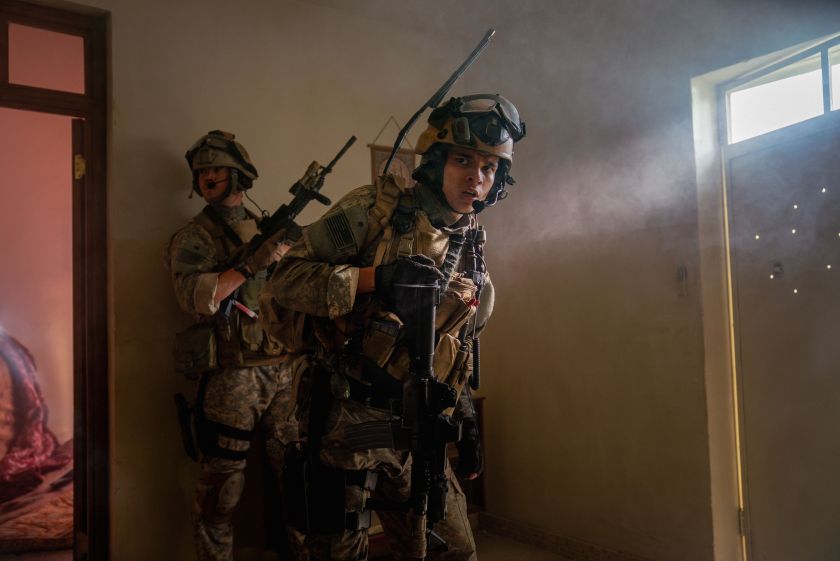
Still from Warfare (2025) film

Rating: 4 out of 5.

Director: Ray Mendoza & Alex Garland
Starring: D’Pharaoh Woon-A-Tai, Will Poulter, Cosmo Jarvis, Kit Connor, Finn Bennett, Joseph Quinn, Charles Melton, Noah Centineo, Michael Gandolfini
Certificate: 15
Run Time: 95 mins

Warfare is a war film directed by Ray Mendoza and Alex Garland and is based on Mendoza’s experiences during the Iraq War as a US Navy SEAL. The script and story is taken from the testimonies of the platoon members and presented in real time on one horrible day in November 2006 as the squad takes control of an Iraqi house under the cover of darkness. What follows is a bloody, pointless siege as the platoon comes under enemy attack. The film is dedicated to platoon member Elliott Miller, who lost his leg and ability to speak in the incident. With the exception of Mendoza and Miller, all of the real-life figures are given aliases for their characters in the film.

Mendoza previously acted as the military supervisor for Alex Garland’s excellent previous film, Civil War. For Warfare, Mendoza and Garland wrote the script together and although both filmmakers receive a director credit, Garland says he had more of a supporting role to Mendoza. All in, this film certainly an original and intriguing concept.

Warfare is a powerful and gripping war film that shows the genre at its best – a haunting meditation of the human experience without a forced story arc or political stance. Mendoza and Garland ratchet up the tension throughout, crafting an unnerving atmosphere that the platoon are going to be annihilated by the enemy, even though long stretches of the film are of the monotony of waiting around. There’s almost a documentary feel to cinematographer David J. Thompson’s cameras, which makes the experience all the more life-like.

The sound design, in particular stands out – this is a must-see in the cinema for the sound alone. I particularly admired how the film experiments with sound from the character’s perspective, for example a high-frequency, unearthly pitch after a bomb explodes. Save for an ending sequence, the film’s also devoid of music which really works – there are no artificial devices here to emotionally manipulate.

The performances are also brilliant, even if none of the characters receive any backstory – instead, the ensemble all coalesce as a group, like the team they are. D’Pharaoh Woon-A-Tai stands out as Mendoza, with a clear weight on his shoulder because he needs to relay the team’s status and any incoming information from the home base – if he messes up, he risks the team’s safety. Cosmo Jarvis is also brilliant as Elliott, who hauntingly conveys his pain and is dripping in sweat as he surveys his surroundings while on sniper duty. After his fantastic turn in May December, Charles Melton is another highlight as Jake, the Alpha Two leader who steps in to help manage the Alpha One team once all hell breaks loose.

Warfare is an incredibly immersive and visceral piece with a lean and mean quality to its pacing. I’m sure some who will criticise the film for not taking a political stance, like Garland was criticised for not doing with Civil War but that’s missing the point –Warfare is instead about the pointless destruction of war. It’s probably a stretch that Warfare is going to sustain its momentum throughout the year and into next year’s Awards season. But this is the best war film I’ve seen in a long time, and so much better than 1917 or All Quiet On The Western Front, which received considerable Awards attention in their respective years. Warfare is far more deserving of such accolades and I can’t wait to see what Mendoza and Garland do next.

La Cocina (Review)

Review
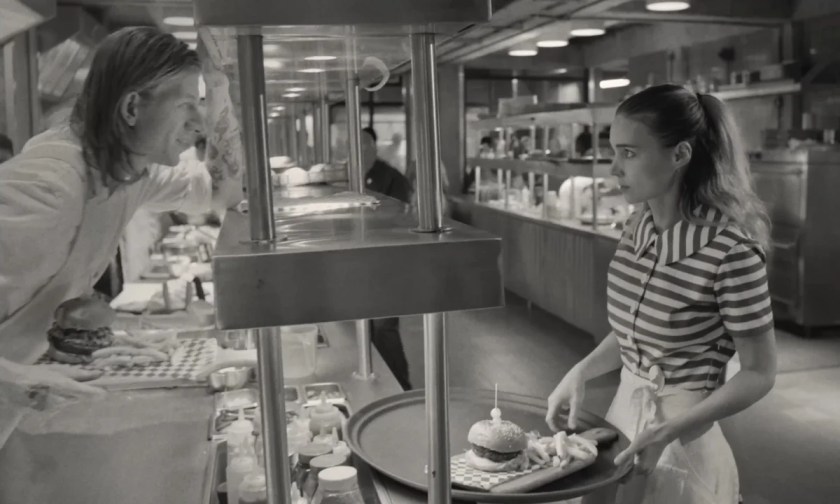
La Cocina 2025

Rating: 2.5 out of 5.

Director: Alonso Ruizpalacios
Starring: Raúl Briones, Rooney Mara, Anna Diaz, Motell Foster, Oded Fehr, Spenser Granese, Soundos Mosbah
Certificate: 15
Run Time: 139 mins

La Cocina is written and directed by Alonso Ruizpalacios, a comedy-drama based on an Arnold Wesker 1957 stage play called The Kitchen. But Ruizpalacios updates this story about a Times Square tourist trap restaurant called ‘The Grill’ for the modern day. Rather than the kitchen staff being mainly continental European immigrants, here they are replaced with Latin Americans and Arabs, with the restaurant run by Rashid (Oded Fehr), a successful Arab-American entrepreneur. Rashid regularly promises the illegal immigrants a legal status in the US to keep the carrot dangling over them, but he never delivers on his promises. The waitresses are predominantly white American women. 

The film opens as Estela, a newly arrived Mexican immigrant comes to work at the restaurant where she knows Pedro, one of the cooks. Pedro is a hot-tempered cook whose girlfriend Julia (Rooney Mara) is one of the waitresses and is pregnant with his child, but determined to get an abortion, which Pedro disagrees with. Instead, he wants them to run away to an unspoiled beach in Mexico and escape their problems.

La Cocina is an odd film. I found its first hour quite profound as Ruizpalacios deftly sets the scene and introduces us to the charismatic, burnt out kitchen staff, with its tone steeped in anger. But the film then becomes exhausting and very self-indulgent in its scattershot approach, with a meandering narrative that often go nowhere, especially a protracted speech during a staff break. Fortunately, the film has something to say in its searing ending though. Ruizpalacios’ film is visually interesting, largely shot in black-and-white, save for a scene in a freezer, and the use of sound is excellent, with the constant ticking of a printer reeling off kitchen orders a brilliant touch to add to the stress.

The performances are good – Raúl Briones deftly portrays the chef at the end of his tether. Mara’s reliably fine but her waitress doesn’t get as much development as I’d like. Anna Diaz is another highlight as Estela but it’s a shame her character gets sidelined as the film progresses, especially seeing as her character is initially the audience’s view into how the restaurant is run. Oded Fehr is unrecognisable as the manipulative restaurant owner and has a commanding presence with his character’s God-like control.

La Cocina is an interesting and certainly original piece, and for the first half, this had the potential to be one of the best films of the year. But its scattershot second half brings the film down and while I appreciate the message Ruizpalacios is trying to convey, the meandering and self-indulgent approach in the second half doesn’t work.

The Alto Knights (Review)

Review

Rating: 2.5 out of 5.

Director: Barry Levinson
Starring: Robert De Niro, Debra Messing, Cosmo Jarvis, Kathrine Narducci, Michael Rispoli, Michael Adler, Ed Amatrudo
Certificate: 15
Run Time: 123 mins

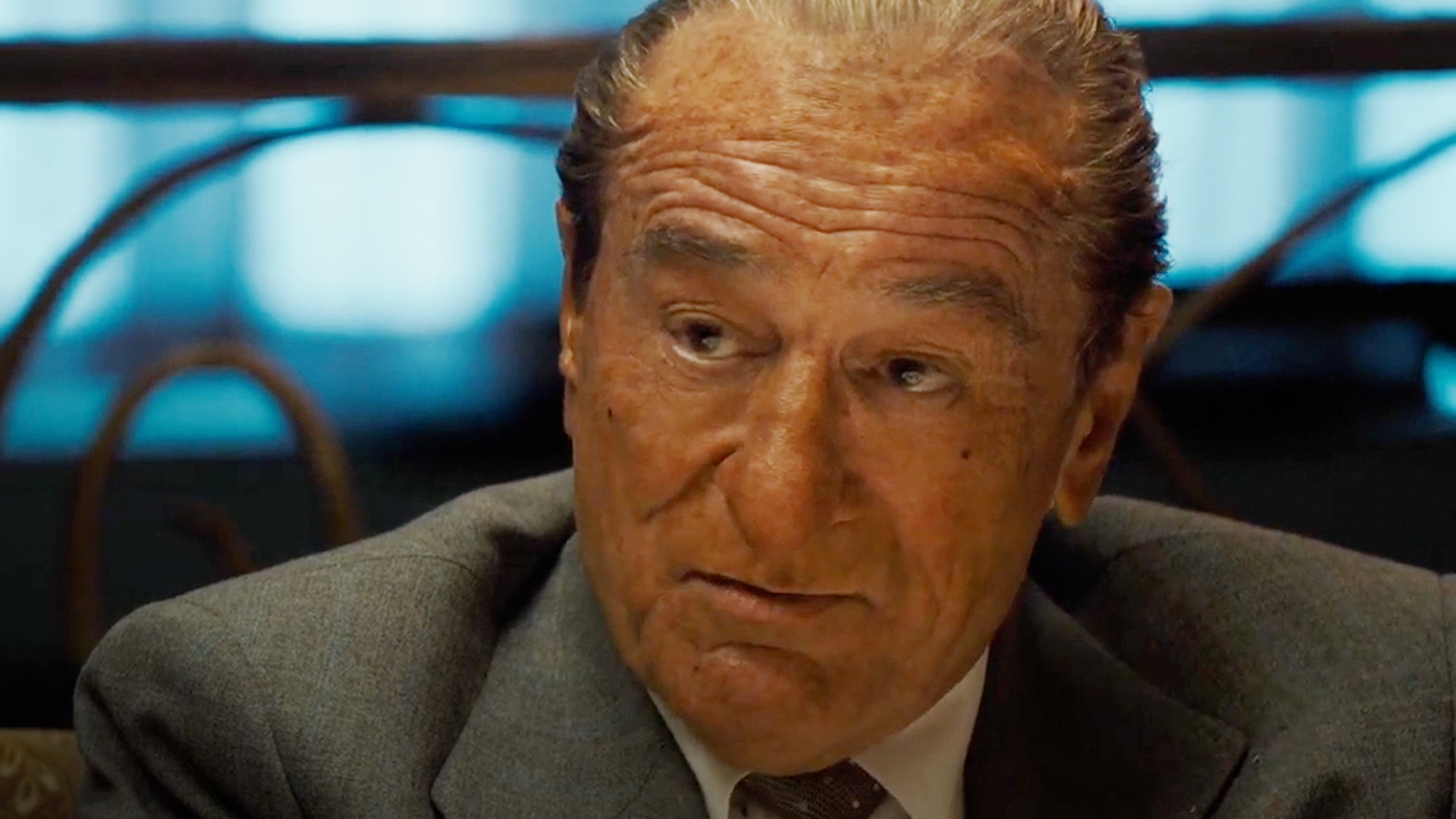
The Alto Knights is directed by Barry Levinson and stars Robert De Niro in a dual role as 1950s mob bosses Frank Costello and Vito Genovese. If that Oscar winning director and actor duo isn’t enough for you, then the film’s also written by Nicholas Pileggi, the mastermind behind Martin Scorsese classics Goodfellas and Casino

Based on true events, The Alto Knights is told from Costello’s perspective as he looks back on his life. The film opens on a failed assassination attempt of Costello, who was on the verge of a quiet retirement. The hit had been ordered by Genovese, a man consumed by paranoia and distrust, who suspects Costello has an underlying motive and the two are forced to go toe-to-toe.  

The Alto Knights isn’t terrible but the film does little to justify its existence. It begins solidly then slumps before peaking in its final act. Levinson’s proven a fine director in his prime, with films such as Bugsy and Rain Man but he lacks both the energy and cutting cruelty of Scorsese. Pileggi’s screenplay is very novelistic and the film feels like reheated leftovers of a bygone era. The film’s neither good enough to be memorable or bad enough to really get angry at. 

While De Niro’s reliably excellent as the two gangsters, the fact that he plays both roles feels rather pointless. This is certainly the case with Genovese, where De Niro feels like he’s imitating Joe Pesci. There are many scenes where Costello and Genovese converse together, but the film didn’t absorb me because I was instead pondering the mechanics of how the filmmakers shot the scene. Ultimately, The Alto Knights would have been a stronger film with De Niro in a single role. 

The prosthetics are also distracting, particuarly Costello’s outrageously fake nose. That said, I think I stand on the side of prosthetics over de-aging, which really hurt The Irishman a few years back, particularly a scene in which a younger-looking De Niro walks to beat someone up and the body moves like an old man.

There are some other positives though. Cosmo Jarvis steals the show as Vincent Gigante, a rising star in Genovese’s family who’s ordered to carry out the initial hit and the film’s handsomely shot by Dante Spinotti. I particularly liked how Levinson intercuts key scenes with still photography, which gives the film a historical quality. 

It’s a shame The Alto Knights doesn’t deliver as highly as it should, given the pedigree of its cast and crew. While it’s competent enough and quite fun in its third act with a committed Robert De Niro performance, the decision to have the octogenarian in a dual role is a mistake. The Alto Knights probably would have been a lot better if it released a decade or two ago – it suffers under the commanding weight of exemplar efforts in the mafia genre. 

Black Bag (Review)

Review

Rating: 3.5 out of 5.

Director: Steven Soderbergh 
Starring: Cate Blanchett, Michael Fassbender, Marisa Abela, Tom Burke, Naomie Harris, Regé-Jean Page, Pierce Brosnan
Certificate: 15
Run Time: 94 mins

Black Bag is a stripped-down espionage thriller by Steven Soderbergh, his second film of the year after the excellent Presence. Michael Fassbender plays British Intelligence officer George Woodhouse and as the film opens, he is given one week by his superior to investigate who has leaked a top-secret software program. One of the suspects is his fellow intelligence officer and wife, Kathryn (Cate Blanchett). He invites the other four suspects to dinner and drugs the chana masala (which he tells his wife to avoid) to get them to loosen up and in his words “watch the ripples”. 

This is another excellent film from Soderbergh and it’s impressive how lean Black Bag is – there isn’t an ounce of fat in this fast-paced 94 minute thriller. David Koepp’s flirtatious script is very sharply written and the film feels very much indebted to the works of John le Carré, albeit with Soderbergh’s influence. It’s very satisfying constantly seeing this ensemble play each other wih the film’s dry wit and there’s a surprising number of laughs here too, especially a serious Fassbender cooking up a storm in the kitchen with steamed-up glasses. The film’s lusciously shot by Soderbergh (under his usual Peter Andrews pseudonym) and David Holmes’ playful score is very fitting. 

The performances are uniformly excellent. Fassbender’s played a similarly meticulous character before in The Killer but he’s oozing with swagger in this and Cate Blanchett makes for a great foil and we’re never sure whether she can be trusted or not. Marisa Abela is another standout as a satellite imagery specialist and Pierce Brosnan’s surprisingly great as the big boss, even if he’s not in the film very much. 

Black Bag is a hugely enjoyable spy thriller and a thrilling genre exercise from Soderbergh in how stripped back it is. There’s a medley of excellent performances and some very satisfying set-pieces, with Koepp’s script proving globe-trotting action isn’t the key ingredient to a spy caper. I can’t wait to see how it holds up to a rewatch – this is a deliciously entertaining film. 

Mickey 17 (Review)

Review

Rating: 3 out of 5.

Director: Bong Joon Ho
Starring: Robert Pattinson, Naomi Ackie, Steven Yeun, Toni Collette, Mark Ruffalo 
Certificate: 15
Run Time: 137 mins

Mickey 17 is the new film by Bong Joon Ho, the South Korean auteur’s follow-up to his 2020 Best Picture award winning Parasite. Based on a novel by Edward Ashton, the film is set in the year 2054 and follows Mickey Barnes (Robert Pattinson), who joins a space colony headed by Trump-like politician Kenneth Marshall (Mark Ruffalo). Mickey joins as an ‘Expendable’, which means he gets cloned and reprinted by a state-of-the-art machine every time he dies for research purposes. As you can imagine, he receives some pretty dangerous missions. When the seventeenth Mickey iteration is tasked with capturing an indigenous lifeform called a ‘creeper’ on the snowy planet of Niflheim, he falls into an ice fissure and his colleague, Timo (Steven Yeun) reports his death. However, Mickey 17 survives the fall and when he’s back on board the spaceship, he meets the new and more aggressive Mickey 18. Since ‘Multiples’ are banned on board, that inevitably introduces some difficulties. 

Like most of Bong Joon Ho’s work, Mickey 17 is a strange piece full of biting satire and veers erratically between genres, from slapstick to absurdism to horror and back again. There’s a handful of laughs but it would be fair to say a lot of the humour doesn’t land either. While the film’s always entertaining, Mickey 17 is unfortunately rather messy and it’s particularly odd how the film abandons its cloning storyline half-way through to then focus on the themes of colonisation between species. Fortunately, I was more interested in the film’s second half and it’s always better for a film to end on a high note. The film’s visually interesting and some of the otherworldly landscapes are beautifully shot by Darius Khondji. There’s also an interesting score by Jung Jae-Il, although some of the song choices are on-the-nose.

Robert Pattinson makes a good effort as the titular Mickey but the kooky performance didn’t really work for me. It feels akin to a character a young Johnny Depp would have excelled at. Faring better is Naomi Ackie’s love interest Nasha, who stands by Mickey through thick and thin and although Mark Ruffalo’s Trump-like politician feels rather stale (despite the director insisting the character is an amalgamation of many historical dictators), there’s no denying the actor’s entertaining effort. Toni Collette also has fun as Marshall’s devious wife with sinister designs of her own. 

Mickey 17 is certainly distinctive and feels like a mash-up of The Host and Okja. But it’s a disappointment when you consider the film as a follow-up to the pitch-perfect Parasite. Still, at least Bong Joon Ho has gone and made something on his own terms and I’m glad it exists, even if it falls short of his best work.

Last Breath (Review)

Review
Still from 'Last Breath'

Rating: 3 out of 5.

Director: Alex Parkinson
Starring: Woody Harrelson, Simu Liu, Finn Cole, Cliff Curtis
Certificate: 12A
Run Time: 94 mins

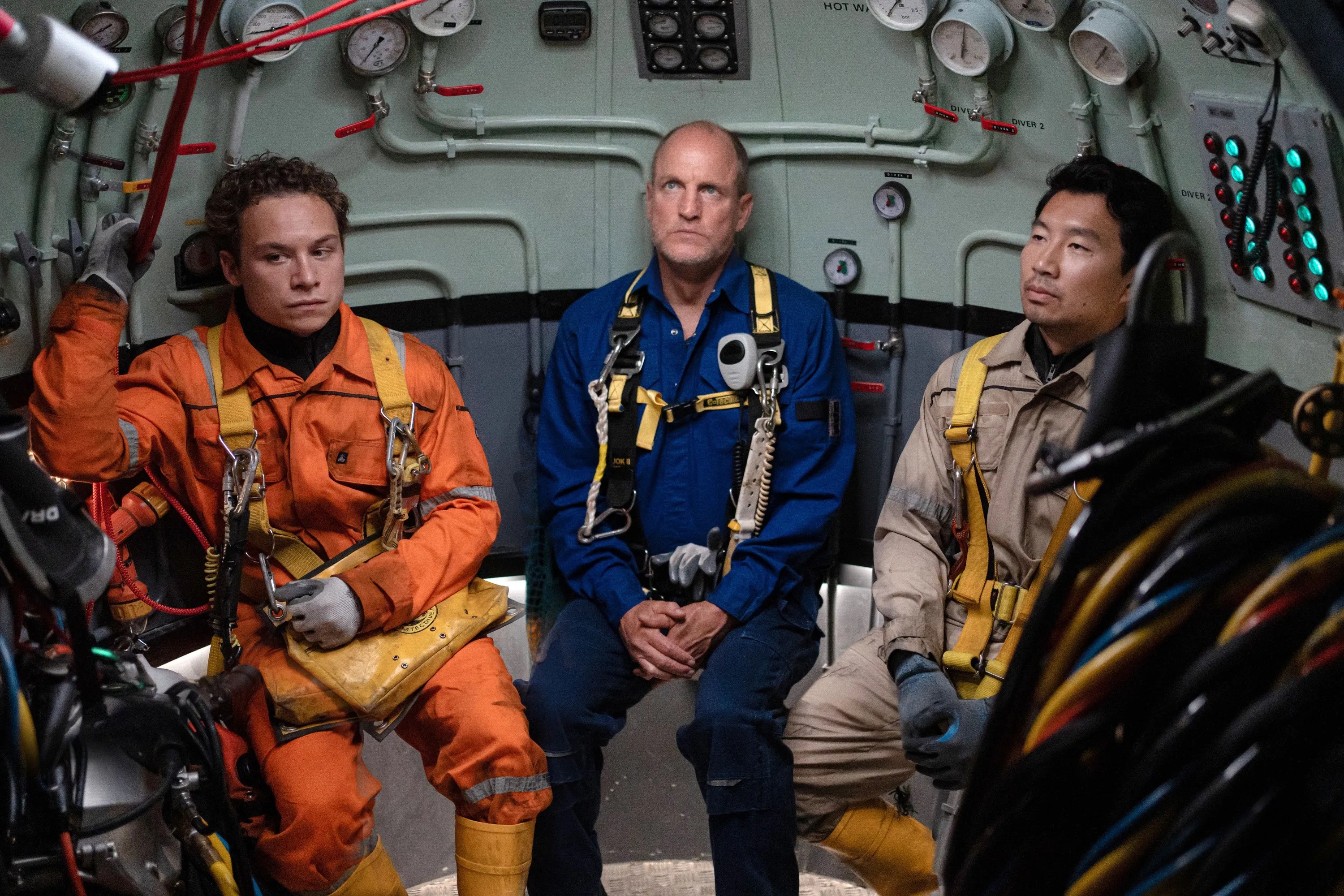
Last Breath is a survival thriller about the race to save a stranded deep-sea diver who gets stranded after an incident, with his back-up oxygen supply rapidly running out. The film’s directed by Alex Parkinson, remaking the 2019 documentary of the same name he co-directed with Richard da Costa into a feature film. 

Chris Lemons (Finn Cole) is the stranded diver in question, is a member of a team of saturation divers who maintain undersea gas lines in the North Sea at depths of around 100m. In order to simulate these conditions, they have to live onboard a vessel in a pressurised chamber for a few days before and after they work underwater so that they remain at pressure. He works with Duncan Allcock (Woody Harrelson), a veteran who is being forced into early retirement after this shift and David Yuasa (Simu Liu), a no-nonsense, aloof colleague. 

Last Breath is a taut and anxiety-inducing thriller and really excels when it’s at heart of the action. It’s a film that reminds you that breathing is a privilege and Parkinson ratchets up the tension, deftly conveying why being a saturation diver is one of the most dangerous jobs on earth. Adding a timer on-screen to remind us how much time Chris has been with or without oxygen is an excellent touch. 

The performances are also top-notch, with Woody Harrelson and Simu Liu the highlights and Liu stealing the show as he slowly comes out of his shell. I’d have liked to have had more meat on the bone with both characters though – they’re not particularly well-developed and it’s the proven charisma of both actors that sells these characters. Finn Cole is also great, even if he spends a large amount of the film incapacitated and brilliantly but subtly shows his apprehension for the task right from the very beginning. 

The major issue with Last Breath though is just how generic it is when we’re not in the heat of its distressing crisis. As the film opens, we get the expected interaction between Chris and his fiancee where he reassures her of his safety and that it’s just another day at the office. There’s also the usual overegged ending, which feels almost like a parody of a romcom, complete with closing captions and footage from the real event with an emotionally manipulative tone. 

Last Breath ultimately succeeds on the strength of its remarkable story and Parkinson does well to trim a lot of the fat out where he can. But it’s a shame the director doesn’t manage to break convention or at least do something a bit more interesting with its opening and closing scenes that fall into sigh-inducing melodrama.  

The Last Showgirl (Review)

Review

Rating: 2.5 out of 5.

Director: Gia Coppola
Starring: Pamela Anderson, Kiernan Shipka, Brenda Song, Billie Lourd, Dave Bautista, Jamie Lee Curtis
Certificate: 15
Run Time: 89 mins

The Last Showgirl is the new film by Gia Coppola, the granddaughter of Francis Ford Coppola and niece of Sofia Coppola. Pamela Anderson plays Shelly Gardner, a 57-year-old showgirl who has performed for nearly three decades in a classic French-style revue at a casino resort in Las Vegas. Eddie (Dave Bautista), the show’s producer, breaks the news that the show is due to close in two weeks due to declining ticket sales, which leaves Shelly downcast and worried for her livelihood. She’s viewed as a mother figure by some of her younger co-stars and Shelly maintains a close friendship with Annette (Jamie Lee Curtis), who also used to be part of the show but now works as a cocktail waitress. Shelly also has a semi-estranged daughter, Hannah (Billie Lourd), who she struggles to connect with because they’ve spent much of their lives apart. The film’s received some awards attention for its performances, with Pamela Anderson nominated for a Golden Globe and Jamie Lee Curtis for a BAFTA, but that didn’t materialise into an Oscar nomination for either star.

This is an odd film – The Last Showgirl has some interesting performances but its story doesn’t really amount to much. On the plus side, Pamela Anderson turns in an honest and authentic performance as the ageing showgirl and Dave Bautista is a standout as the show’s sweet-natured producer. It was also refreshing to see the charismatic Brenda Song, who hasn’t played in a high-profile role in a while and Jason Schwartzman shines in a brief cameo as an audition director.

But the film around the committed performances left me feeling pretty indifferent. Its direction feels like an awkward mix of Sofia Coppola and Sean Baker, especially the latter with its grainy cinematography. There’s next-to-no tension to Shelly’s existential crisis and once we get past sub-plots that go nowhere, the film begins to explore how women’s value in showbiz declines simply because of their age before it abruptly ends. It’s perhaps unfortunate that this film has released relatively close to The Substance, and while I’m no fan of that film either, at least it fully commits to unpacking the relationship between aging and stardom. In the end, The Last Showgirl just feels inconsequential with its unsatisfying narrative.

I’m Still Here (Review)

Review

Rating: 4 out of 5.

Director: Walter Salles
Starring: Fernanda Torres, Selton Mello, Fernanda Montenegro
Certificate: 15
Run Time: 138 mins

I’m Still Here is a political biographical drama about a husband’s forced disappearance during the military dictatorship in Brazil and Walter Salles’ first film since 2012’s On The Road. It’s based on Marcelo Rubens Paiva’s 2015 memoir of the same name, Marcelo being the son of Rubens Paiva, who was the victim in question. Fernanda Torres places Eunice Paiva, Rubens’ wife and activist, with the film largely told from her perspective and how she struggles to cope emotionally and financially, while trying to raise her five children. The film’s received a near unanimously positive response and is one of the Best Picture contenders at this year’s Academy Awards, and has also become the highest-grossing Brazilian films since the coronavirus pandemic.

I found I’m Still Here to be a deeply affecting and gripping piece of work, masterfully directed by Salles who skilfully contrasts the quiet family domesticity with the simmering and oppressive political horror. Although the film tells a story that happens in the past, I’m Still Here feels very contemporary with its mirroring of current dystopian events. The first hour is quite fast-paced, whereas the second is much slower but this is where the film really wraps its enchanting spell – it reminded me of Roma in many ways in terms of how it finds beauty in the mundane. The film’s complimented by a wonderful Warren Ellis score, which is very subdued in the first half but becomes more melodic later on. Although the majority of the film is set in 1970, the last half an hour jumps forward to 1996 and 2014. Although these somewhat disturb the film’s rhythm, they’re crucial in how they magnify the cruel Brazilian regime of 1970 and how the father’s disappearance continues to have a lasting effect on Eunice and the rest of her family’s lives, lending the film an epic quality.

Fernanda Torres is just sensational as Eunice and fully deserving of her Best Actress Oscar nomination. She deftly balances her intelligence and frantic search for the truth while being as motherly as she can to her children. Torres’ mother, Fernanda Montenegro appears late in the film in a brief cameo as the older Eunice. Montenegro was also nominated for a Best Actress Oscar 25 years ago in Central Station, also directed by Walter Salles and her appearance lends a heavy weight to the feel, as if we’re watching something come full-circle. The rest of the cast are also excellent, especially all of the children who have distinct and bright personalities, as well as Pri Helena as Zezé the housekeeper.

I absolutely loved I’m Still Here and found myself powerfully moved as the credits started to roll. This is Walter Salles at the top of his game supported by terrific performances and an important, timely story. It’s tied with The Brutalist as my pick of the Best Picture cohort this year and I can’t wait to watch it again – I’m Still Here is a must-see.

The Monkey (Review)

Review

Rating: 3.5 out of 5.

Director: Osgood Perkins
Starring: Theo James, Tatiana Mislay, Christian Convery, Colin O’Brien, Rohan Campbell, Sarah Levy, Adam Scott, Elijah Wood
Certificate: 15
Run Time: 98 mins

After reaching new career heights with the excellent Longlegs last year, director Osgood Perkins’ follow-up sees him adapt Stephen King’s 1980 short story of a cursed monkey that brings death and destruction. Adding further excitement behind the camera is horror maestro James Wan, who produces the film. The Monkey follows twin brothers Hal and Bill (Christian Convery in their formative years and Theo James as an adult). Bill is the more confident of the two and bullies Hal and they live with their mother Lois (Tatiana Maslany) after their father, Peter (Adam Scott) disappears. In the opening scene, we see Petey try to pawn off the drum-playing monkey but to bloody effect, yet the monkey somehow finds its way back in a closet in his belongings which the boys discover. When they wind its key, the monkey plays its drums later that evening at a Japanese restaurant, with their babysitter finding themselves accidentally decapitated and so begins a vicious cycle of gory slayings.

The Monkey is hugely enjoyable with some brilliant set-pieces and striking imagery. Perkins is the perfect pick to direct this project, having himself lost his parents in headline-making ways. He decides to intentionally avoid subtlety and use the film’s sadistic gore to joke about the absurdity, pointlessness and randomness of death. That’s a genius approach and really distinguishes The Monkey from more serious horror films about possessed toys, of which there have been many. The film’s brilliantly edited and it packs a real wallop in its breakneck pacing as it hurtles through its sub-100 minute run time. The humour really works in places – especially how a man reacts to their neighbour getting gruesomely slain in a lawnmower incident, and the film is brimming with Perkins’ signature style in terms of the mise-en-scène. The monkey itself of a wonderfully creepy design – James Wan is no stranger to the genre after all being behind the similarly evil creations of Jigsaw in the Saw films and Annabelle in The Conjuring Universe.

The cast are all very game, with Theo James making for a strong lead (although he’s more convincing as Hal). This is very much his and Christian Convery’s film – you’d be lucky to be a member of the supporting cast and survive for very long! Still, Tatiana Maslany stands out as the mother and Elijah Wood laps it up as the new husband of Hal’s ex-wife in a brief, but very funny appearance.

My only real flaw with the film is that its third act feels a little divorced from the first two because it begins to leans in more to fantasy and the philosophical, feeling more Stephen King-like. I still really enjoyed the it though, and there’s some truly haunting imagery as the film ends, especially as we see the consequences of the town’s devastation.

The Monkey is another winner from Perkins and it’s a very coherent film with clear influences from King and Wan that really elevate it. The decision to lean into the absurdity of death is a particularly strong choice and it’s a real blood-drenched thrill ride from start to finish.