


Director: Cristian Mungiu
Starring: Sebastian Stan, Renate Reinsve
Certificate: 15
Run Time: 146 mins
Fjord is the new film by Cristian Mungiu, which won the Palme d’Or at Cannes this year. In doing so, the Romanian became the tenth director to win the coveted award twice, after also taking the gong in 2007 for 4 Months, 3 Weeks and 2 Days. A co-production between Romania, Norway, France, Denmark, Finland and Sweden, Fjord is about a Romanian-Norwegian couple (Sebastian Stan and Renate Reinsve) who move back to the wife’s remote Norwegian hometown with their five children. They are devout evangelical Christians and their methods soon clash with the community’s progressive values. And when the eldest child, Elia (Vanessa Ceban), is spotted with bruises at school, her teacher reports the parents to Child Welfare Services, which kicks off a tumultuous investigation that necessitates all of the children being removed from the home.
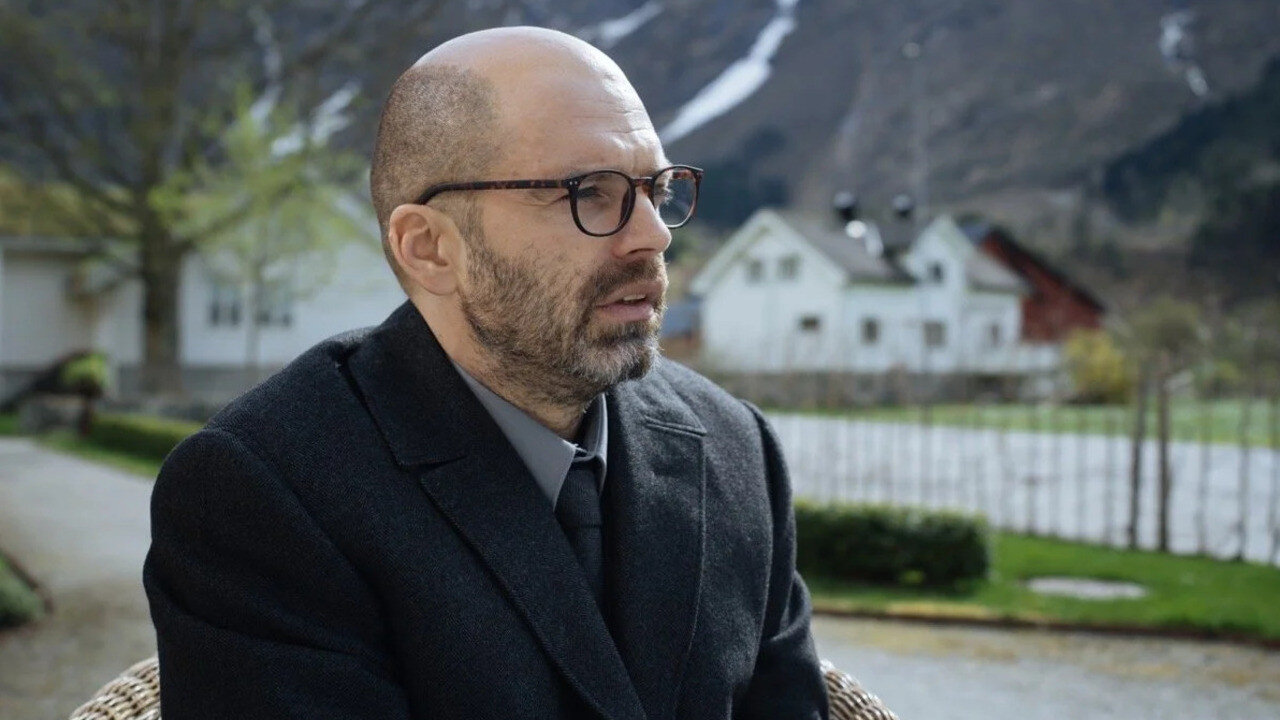
Although it takes about 20 minutes to set the scene, Fjord is exceptionally gripping and thought-provoking once it gets going. Both Mihai and his wife Lisbet are brilliantly developed characters, with Stan and Reinsve delivering exceptional performances. While this seems to be par for the course for Reinsve, after a string of excellent films, such as Sentimental Value and Backrooms, this is easily career-best work for Sebastian Stan. Fully shaven and complicated, Stan is brilliant as a stoic man unaccustomed to bridge his cultural differences with a real fire in his belly. His response when his children are being taken away by the kitchen window is outstanding, as are his on-the-spot comments in court that land him in trouble.
The moral dilemma at the centre of this of whether it’s acceptable to use physical punishment (and what consistutes as being physical) on your children is fascinating, and it paints an interesting picture of how different cultures are opposed. As the film inevitably barrels towards the courtroom, we really feel for all the characters and can sympathise with their viewpoints. But Mungiu doesn’t really care whether we agree or disagree – I really admired the film for how the director questions how certain cultural viewpoints are rejected, and what that means in a supposedly progressive society. It also helps that the film is beautifully shot by Tudor Vladimir Panduru, who captures the beauty of the Norwegian fjordland.
Once we get past a slightly clunky opening in how characters describe other characters’ backstory, Fjord is hypnotic and a real giddy rush to the finish. The performances are terrific and Mungiu quietly ratchets up the tension as the case heads to its conclusion. This is one of the best films of the year and fully deserving of any awards attention.

