Ballerina: From The World Of John Wick (Review)

Review
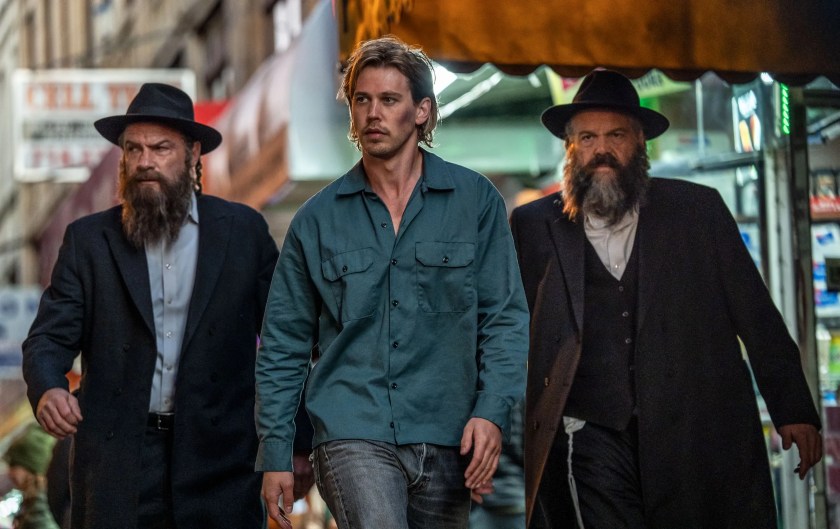
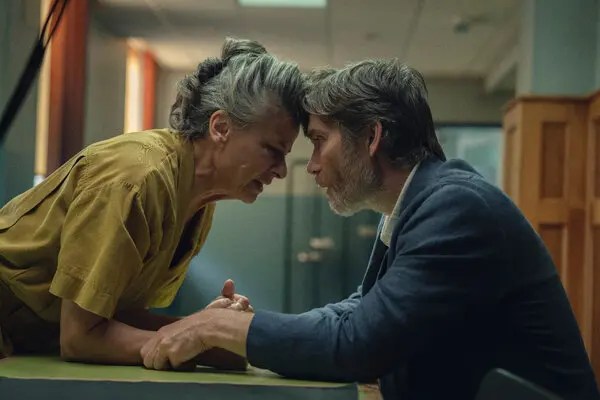
Still from Ballerina: From The World of John Wick

Rating: 3.5 out of 5.

Director: Len Wiseman
Starring: Ana de Armas, Anjelica Huston, Gabriel Byrne, Lance Reddick, Norman Reedus, Ian McShane, Keanu Reeves
Certificate: 15
Run Time: 125 mins

Ballerina: From The World Of John Wick is a spin-off in the series focusing on Eve Macarro (Ana de Arias), a ballerina-turned-assassin. Set between the events of John Wick: Chapter 3 – Parabellum and John Wick: Chapter 4, Macarro seeks revenge against those responsible for the death of her father. This is the first film in the series not to be directed by Chad Stahelski, with Underworld and Die Hard 4.0 helmer Len Wiseman taking the reins. However, Stahelski oversaw major reshoots after unfavourable early test screenings without Wiseman’s involvement, so he hasn’t really left. Another person who hasn’t really left is Keanu Reeves as Wick, who shows up in Ballerina in a reasonably significant role.

Ballerina: From The World Of John Wick is undoubtedly the weakest of the series, but it’s still wickedly entertaining in places. After showing real promise in the action genre with No Time To Die, Ana de Armas seamlessly slots into the role, with bags of personality and empathy. It’s easy to understand why she wants revenge after the childhood horror she had to endure. That said, Macarro doesn’t have a deadpan delivery like Wick – Reeves is clearly in on the joke – but that’s as a result of how her character has been written.

There’s three excellent setpieces that left me with a big grin on my face – one involving grenades, another set in a chalet-style kitchen and a climactic sequence with a flamethrower. Stahelski’s impact is really felt here, although cinematographer Romain Lacourbas doesn’t shoot the action with anywhere near the same pizzazz as series regular Dan Laustsen. There’s nothing here that comes close to topping the train fight of John Wick: Chapter 2, the horseback chase of Chapter 3, or the overhead fire setpiece of Chapter 4. Laustsen lit the three films he was responsible for (Chapter 2 to Chapter 4) with real grandeur and Ballerina lacks that. Although the action is above average, the fights and chases also lack, dare I say it, the balletic quality, of the Stahelski-helmed films.

The film feels a little shambolically edited together, particularly in its first act but the film better finds it feet later on. Gabriel Byrne makes for a sadistic villain, even if he’s not the series best, and it’s nice to see series regulars Ian McShane, Anjelica Huston and Lance Reddick (sadly in his final posthumous role) get some great moments. Also returning are Tyler Bates and Joel J. Richards on music duties, replacing what would have been newcomers Marco Beltrami and Anna Drubich who were originally set to score the film. They introduce some new themes, rather than recycle the ones used in the mainline films and while it’s a decent enough score, it’s not very memorable.

Ballerina: From The World Of John Wick somewhat proves that the magic of Chad Stahelski and Keanu Reeves can be replicated by others, even if the pair ended up contributing heavily to the finished product. While not as strong as any of the other John Wick films, there’s still plenty to like in Ballerina with Ana de Armas seamlessly pirouetting into action, even if the action and cinematography lack some the balletic skill of Stahelski.

Hallow Road (Review)

Review
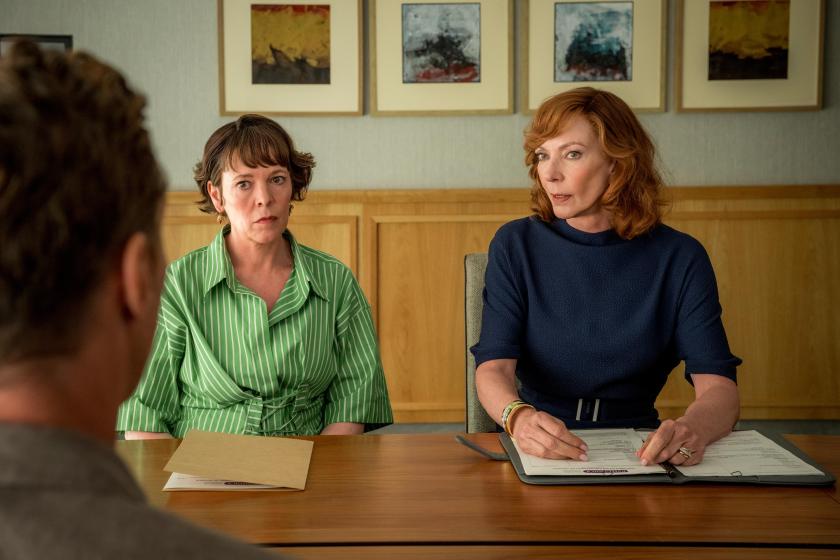
Still from Hallow Road imagery

Rating: 3.5 out of 5.

Director: Babak Anvari
Starring: Rosamund Pike, Matthew Rhys, Megan McDonnell
Certificate: 15
Run Time: 80 mins

Hallow Road is the new film by British-Iranian director Babak Anvari, most famous for the excellent Persian language horror film Under The Shadow. Since that knockout debut, Anvari’s follow-up films, Wounds and I Came By received a more mixed reception and he’s gone back to basics for Hallow Road. Rosamund Pike and Matthew Rhys play Maddie and Frank, a couple who are awoken by a phone call from their 18-year-old daughter, Alice, in the middle of the night. Having run out of an argument from her parents earlier that evening, Alice has got herself into a rather terrible spot because she’s hit a girl who ran out into the road with her car. The rest of the film follows Maddie and Frank’s journey to get to Alice, as they drive the forty painstaking minutes.

Hallow Road is a real return to form for Babak Anvari with this very effective psychological chiller about a truly terrible situation that inevitably worsens. William Gillies’ taut script slowly reveals its hand and I really liked how he combines the impressive realism with fairytale-like elements that give certain scenes an almost spiritual quality. Kit Fraser’s claustrophobic cinematography is also assured, and the decision to shoot the exterior scenes in 16mm, and use digital for the interior is a strong creative choice.

Rosamund Pike is the star of the show and has a real gravitas that really elevates the film – the film may have struggled without the weight of such an actress. Matthew Rhys is also brilliant, and the two make for an interesting pair, as they flit between standing up for and pointing out each other’s flaws in their believable panic.

The only real flaw I have with the film is its geography. The film’s meant to be set in a sprawling UK city, yet all of the roads to get to the scene of the crime are on rural farm tracks that are very clearly not set in the country. Digging deeper, Hallow Road was filmed in both Ireland and the Czech Republic, and it’s very evident watching the film. I know it’s nitpicking but I’d rather the film be set in an undisclosed location – that way, the journey the couple take would be more believable.

Geography-flaws aside, Hallow Road is a really strong piece of work from Babak Anvari, with plenty to say about the lengths parents will go to in order to protect their child. The predominantly fixed location isn’t to the film’s detriment, and this is a much better film than Locke, for example. The film’s also well-paced and doesn’t outstay its welcome, at a very economical 80 minutes.

Thunderbolts* (Review)

Review
Still from Thunderbolts* 2025 film

Rating: 2.5 out of 5.

Director: Jake Schreier 
Starring: Florence Pugh, Sebastian Stan, Wyatt Russell, Olga Kurylenko, Lewis Pullman, Geraldine Viswanathan, Chris Bauer, Wendell Pierce, David Harbour, Hannah John-Kamen, Julia Louis-Dreyfus
Certificate: 12A
Run Time: 126 mins

Thunderbolts* is the second effort of the year in the Marvel Cinematic Universe and combines a group of rag-tag antiheroes who are caught in a deadly trap and are forced to work together – sound familiar? Part Black Widow sequel but also a continuation of The Falcon and the Winter Soldier Disney+ series, the film opens with Yelena Belova (Florence Pugh) tired of being a mercenary and contemplating her purpose. She’s given one last job by CIA director Valentina Allegra de Fontaine (Julia Louis-Dreyfus) to prove herself before a promotion to destroy a laboratory. Once there, she learns that all the operatives there have been pitted against one another as a means of concealing de Fontaine’s involvement in a superhuman project. The group includes John Walker (Wyatt Russell) from The Falcon and the Winter Soldier, Ava Starr (Hannah John-Kamen), last seen in Ant-Man and the Wasp, Taskmaster (Olga Kurylenko) and a mysterious man named Bob (Lewis Pullman).

The film’s directed by Jake Schreier, most famous for heartthrob romcom Paper Towns a decade ago, and he got the gig after apparently blowing away Marvel executives with his pitch. The Marvel Cinematic Universe has had a rocky ride lately – The Marvels and Captain America: Brave New World both received a lukewarm critical reception (although I liked elements of the latter), although Deadpool and Wolverine fared well (which I thought was a real let-down). Can Schreier inject new life into the machine?

The answer is kinda. Thunderbolts* is another mixed bag but on the plus side, it has some genuinely thoughtful and original ideas. Schreier just makes a bit of a hash of the execution. It’s easy to draw parallels with The Suicide Squad and to some extent, Thunderbolts* is Marvel’s answer but it lacks the darkness and stakes of that film. Like its DC cousin, this film assembles an unkempt team of C-list superheroes. While Pugh made a promising impression as Yelena in Black Widow, I still haven’t warmed to her character here and although he’s usually a fine actor, David Harbour is once again saddled with some poor dialogue here. Wyatt Russell fares better as Walker, although Hannah John-Kamen’s Ghost is given next-to-no development. Anchoring proceedings is Sebastian Stan, who turns in his best performance in the series to date as Bucky (he’s really developed as an actor with recent films such as Fresh, A Different Man and his Oscar-nominated turn in The Apprentice). Thunderbolts* instantly feels more alive whenever he turns up on screen. Julia Louis-Dreyfus is also having fun and really chews the scenery and Lewis Pullman turns in a nuanced performance as the mysterious Bob.

I really liked that the film explores the themes of anxiety, depression and addiction – surprisingly grounded fare for a tentpole film. Unfortunately, these heavier themes aren’t satisfyingly developed and are often cheapened by the usual Marvel quips, none of which really worked for me. Captain America: Brave New World was given a bit of critical kicking but one thing it did really well was its more serious tone. As a result, Thunderbolts* is a real tonal jumble and although it’s undoubtedly coherently put together, the tone just didn’t work for me.

My other major problem with Thunderbolts* is that the stakes feel really low. and I never felt the characters were in danger. This is particularly problematic given the villain’s skillset, which I won’t spoil, but most of the action sequences and plot points just felt tired and overfamiliar. Despite the lack of stakes, there’s no denying Thunderbolts* is one of the best-looking Marvel films – it’s crisply shot by David Lowery’s preferred cinematographer Andrew Droz Palermo. The opening scene in particularly stands out visually, especially the way in which Palermo uses light and shadows, and he also captures some lovely desert backdrops during one extended sequence. The score by Son Lux, the band who hit the big leagues with Everything Everywhere All At Once is also one of Marvel’s best (certainly since Ludwig Göransson’s Oscar-winning work on Black Panther) with clear, memorable themes that are well-developed.

Despite some original concepts, I can’t say that Thunderbolts* is one of my favourite Marvel Cinematic Universe films but it’s certainly much better than Black Widow, Deadpool and Wolverine and The Marvels. That intriguing asterisk in the film’s title is revealed in the film’s closing moments which should provide some excitement for fans, who will be intrigued to see where the direction these characters go in next. But if I had to ask myself the question – “would I want to see a Thunderbolts* sequel?” – I can’t say I’d be jumping for joy at the idea of rushing to the cinema on opening night. It’s a failing of Schreier’s film that the characters aren’t particularly well developed or likeable and I’d much rather see a film in the vein of James Gunn’s The Suicide Squad where life is infinitely more expendable and exciting, with real stakes.

Until Dawn (Review)

Review
Still from Until Dawn (2025) film

Rating: 2 out of 5.

Director: David F. Sandberg
Starring: Ella Rubin, Michael Cimino, Odessa A’zion, Ji-young You, Belmont Cameli, Maria Mitchell, Peter Stormare
Certificate: 15
Run Time: 103 mins

Until Dawn is a film adaptation of the 2015 PlayStation video game, featuring its own standalone story that expands upon the game’s mythology. The film’s directed by David F. Sandberg, who returns to his horror genre roots after stepping up to superheroes with Shazam! and Shazam! Fury of the Gods. Sandberg originally made his name with the solid Lights Out but then really delivered the goods with the gleefully sadistic Annabelle: Creation, one of the highlights of The Conjuring Universe. While I really enjoyed it, his second Shazam! effort didn’t hit the mark from a critical and box office perspective, which perhaps explains his return to horror. The film’s written by Gary Dauberman, who also wrote Annabelle: Creation and went on to direct Annabelle Comes Home, and he rewrote Blair Butler’s original draft.

The film opens with five friends – Clover (Ella Rubin), her ex-boyfriend Max (Michael Cimino), her best friend Nina (Odessa A’zion) and accompanying boyfriend Abe (Belmont Cameli) and Max’s step sister Megan (Ji-young Yoo). They’re retracing the steps of Clover’s missing sister, Melanie, and when they stop at a petrol station, the station attendant Hill (Peter Stormare) reveals people tend to go missing around the the nearby mining town of Glore Valley. In typical silly horror fashion, the friends delve too deep into the mystery and wind up in a secluded area embedded within a time loop, where they have to avoid being killed by all manner of entities every night and survive until morning.

While there’s a couple of bright spots, Until Dawn is a real disappointment – especially when you consider a talent like Sandberg is behind the director’s chair. There’s a decent enough introduction and the film establishes the quintet, so you know who’s who and I had some semblance of care for the characters. It also has a reasonably high production design and I like that when the carnage ensues, there’s a clear effort to stick with practical effects wherever possible.

But that’s about it. Once the film reveals its hand, it’s just content to roll through every trope in the horror book and there are zero stakes. Character development also takes a backseat and by the time the third act rolls around, Until Dawn becomes quite tiresome. Not even Peter Stormare, who’s excellent whenever he shows up, can save it because he’s woefully underused. Also not helping proceedings is Maxime Alexandre’s cinematography – many of the shots are just too dark, murky and hard to make out. Benjamin Wallfisch’s score is also lazy and not memorable in the slightest.

It’s a shame Until Dawn isn’t better than it is, especially considering the talent involved. While there’s flickers of promise here and there and you can see Sandberg’s tried to inject some personality, the film falls under its own weight. Until Dawn is easily Sandberg’s worst film and I don’t suspect this film will have much of a shelf life once it leaves the cinema.

The Penguin Lessons (Review)

Review
The Penguin Lessons still 2025

Rating: 3.5 out of 5.

Director: Peter Cattaneo
Starring: Steve Coogan, Jonathan Pryce, Vivian El Jaber, Björn Gustafsson
Certificate: 12A
Run Time: 112 mins

The Penguin Lessons is a comedy-drama directed by Peter Cattaneo, best known for The Full Monty, based on a 2015 memoir by Tom Michell. Michell was a British teacher who taught at a boys’ boarding school in Argentina in the 1970s, during the escalating coup d’état and after he goes on a trip with fellow science teacher Tapio (Björn Gustafsson) to Uruguay for a week, he comes back with a penguin, which he finds covered in oil on a beach that he can’t get rid of and the two form a strong bond. Steve Coogan plays the English teacher and the film’s script is written by Jeff Pope, who wrote the excellent Philomena, which Coogan also starred in.

This is a rousing film with an excellent central Steve Coogan performance and his winning relationship with the penguin gives the film a strong emotional core. Pope’s sharp script gives Coogan plenty of opportunities with lots of wit – the film definitely wouldn’t work as well as it does without Coogan. Although this feel-good memoir succeeds on the buddy narrative, it struggles with the haunting political subtext which is rather glossed over. This is especially unfortunate given the recent release of the Oscar-winning I’m Still Here, which tackles eerily similar political themes with far more depth and emotion.

Despite the odd, but true events, Cattaneo’s film resorts to a predictable Hollywood structure with the typical heartwarming comedy story beats. But even though you can see most of the beats coming, the film does just enough to keep things fresh with Coogan’s performance and the various warm character relationships he has in the film. Vivian El Jaber is excellent as Maria, one of the housekeepers whose granddaughter, Sofia (Alfonsina Carrocio) is an activist who is at risk of getting into trouble with the Argentine authorities, and I really bought the relationship between them and Coogan’s teacher. And it’s always refreshing to see Jonathan Pryce in a film, who brings a twinkle to the stern, but impenetrable Headmaster of the boarding school.

Although familiar in its construction and flawed in that it glosses over what was a disturbing part of Argentina geopolitical history, I still found a lot to like in The Penguin Lessons. Coogan really carries the film and the bond his teacher forms with the penguin is an effective metaphor for the more troubling historical backdrop, as well as a good serving of wry writ of Jeff Pope’s script.

Sinners (Review)

Review

Rating: 3 out of 5.

Director: Ryan Coogler
Starring: Michael B. Jordan, Hailee Steinfeld, Miles Caton, Jack O’Connor, Wunmi Mosaku, Jayme Lawson, Omar Miller, Delroy Lindo
Certificate: 15
Run Time: 138 mins

Sinners is an original horror film written, co-produced and directed by Ryan Coogler, notable for injecting new life into established series with films such as Creed and Black Panther. Set in 1932 in the Mississippi Delta, Coogler-regular Michael B. Jordan stars in a dual role as twin brothers Elijah ‘Smoke’ and Elias ‘Stack’ Moore who return to their home after spending years working for the Chicago Outfit. They buy a sawmill from a racist landowner with stolen cash from the gangsters so they can open a juke joint for the local black community. After recruiting a team of staff, the Moore’s cousin Sammie’s (Miles Caton) blues music is so transcendent that it unknowingly summons spirits, unfortunately attracting the attention of some vampires led by Irish-immigrant Remmick (Jack O’Connell).

Sinners is an ambitious piece and while it’s refreshing that Coogler’s got to make a relatively big-budget ($100 million) original work is to be commended, the film is rather messy in its construction. Coogler’s script is the fundamental problem – it’s too talky and expository, and none of the themes are explored with any form of subtlety. There’s also next-to-no character development, despite the cast doing the best with the material they’ve got. For example, I found it difficult in distinguishing the difference between Michael B. Jordan’s characters. Still, Jordan puts in a committed performance and of the supporting cast, it’s Delroy Lindo that’s the standout as an alcoholic pianist.

While there’s the beginnings of a formidable villain in Remmick (I particularly appreciated his abrupt entrance in how he seems to drop out of the sky), the vampire element of Sinners didn’t work for me. Coogler is clearly more interested in the transcendent music and rushes through the film’s blood and guts, with no tension whatsoever.

There’s certainly many plus points though, chiefly some very entertaining sequences here and there. The world that Coogler creates feels authentic, from everything to the costume and set design – the film certainly wears its reasonable budget with pride. Ludwig Göransson’s score also stands out, really elevating the film in how it flirts with all manner of generational and musical genres. Autumn Durald Arkapaw’s cinematography deftly captures the hot, arid nature of the Mississippi but some of the nighttime shots are too darkly lit.

While I found enough to like in Sinners, I don’t quite understand the rapturous reception it’s received – it’s rather overrated. It’s a rewrite away from being something really special and I wish Coogler’s script had more focus. If you’re expecting a modernised version of From Dusk till Dawn, you’re going to be disappointed. But there’s certainly some interesting ideas in Sinners, and I’m certainly glad an original piece such as this exists.

Warfare (Review)

Review
Still from Warfare (2025) film

Rating: 4 out of 5.

Director: Ray Mendoza & Alex Garland
Starring: D’Pharaoh Woon-A-Tai, Will Poulter, Cosmo Jarvis, Kit Connor, Finn Bennett, Joseph Quinn, Charles Melton, Noah Centineo, Michael Gandolfini
Certificate: 15
Run Time: 95 mins

Warfare is a war film directed by Ray Mendoza and Alex Garland and is based on Mendoza’s experiences during the Iraq War as a US Navy SEAL. The script and story is taken from the testimonies of the platoon members and presented in real time on one horrible day in November 2006 as the squad takes control of an Iraqi house under the cover of darkness. What follows is a bloody, pointless siege as the platoon comes under enemy attack. The film is dedicated to platoon member Elliott Miller, who lost his leg and ability to speak in the incident. With the exception of Mendoza and Miller, all of the real-life figures are given aliases for their characters in the film.

Mendoza previously acted as the military supervisor for Alex Garland’s excellent previous film, Civil War. For Warfare, Mendoza and Garland wrote the script together and although both filmmakers receive a director credit, Garland says he had more of a supporting role to Mendoza. All in, this film certainly an original and intriguing concept.

Warfare is a powerful and gripping war film that shows the genre at its best – a haunting meditation of the human experience without a forced story arc or political stance. Mendoza and Garland ratchet up the tension throughout, crafting an unnerving atmosphere that the platoon are going to be annihilated by the enemy, even though long stretches of the film are of the monotony of waiting around. There’s almost a documentary feel to cinematographer David J. Thompson’s cameras, which makes the experience all the more life-like.

The sound design, in particular stands out – this is a must-see in the cinema for the sound alone. I particularly admired how the film experiments with sound from the character’s perspective, for example a high-frequency, unearthly pitch after a bomb explodes. Save for an ending sequence, the film’s also devoid of music which really works – there are no artificial devices here to emotionally manipulate.

The performances are also brilliant, even if none of the characters receive any backstory – instead, the ensemble all coalesce as a group, like the team they are. D’Pharaoh Woon-A-Tai stands out as Mendoza, with a clear weight on his shoulder because he needs to relay the team’s status and any incoming information from the home base – if he messes up, he risks the team’s safety. Cosmo Jarvis is also brilliant as Elliott, who hauntingly conveys his pain and is dripping in sweat as he surveys his surroundings while on sniper duty. After his fantastic turn in May December, Charles Melton is another highlight as Jake, the Alpha Two leader who steps in to help manage the Alpha One team once all hell breaks loose.

Warfare is an incredibly immersive and visceral piece with a lean and mean quality to its pacing. I’m sure some who will criticise the film for not taking a political stance, like Garland was criticised for not doing with Civil War but that’s missing the point –Warfare is instead about the pointless destruction of war. It’s probably a stretch that Warfare is going to sustain its momentum throughout the year and into next year’s Awards season. But this is the best war film I’ve seen in a long time, and so much better than 1917 or All Quiet On The Western Front, which received considerable Awards attention in their respective years. Warfare is far more deserving of such accolades and I can’t wait to see what Mendoza and Garland do next.

La Cocina (Review)

Review
La Cocina 2025

Rating: 2.5 out of 5.

Director: Alonso Ruizpalacios
Starring: Raúl Briones, Rooney Mara, Anna Diaz, Motell Foster, Oded Fehr, Spenser Granese, Soundos Mosbah
Certificate: 15
Run Time: 139 mins

La Cocina is written and directed by Alonso Ruizpalacios, a comedy-drama based on an Arnold Wesker 1957 stage play called The Kitchen. But Ruizpalacios updates this story about a Times Square tourist trap restaurant called ‘The Grill’ for the modern day. Rather than the kitchen staff being mainly continental European immigrants, here they are replaced with Latin Americans and Arabs, with the restaurant run by Rashid (Oded Fehr), a successful Arab-American entrepreneur. Rashid regularly promises the illegal immigrants a legal status in the US to keep the carrot dangling over them, but he never delivers on his promises. The waitresses are predominantly white American women. 

The film opens as Estela, a newly arrived Mexican immigrant comes to work at the restaurant where she knows Pedro, one of the cooks. Pedro is a hot-tempered cook whose girlfriend Julia (Rooney Mara) is one of the waitresses and is pregnant with his child, but determined to get an abortion, which Pedro disagrees with. Instead, he wants them to run away to an unspoiled beach in Mexico and escape their problems.

La Cocina is an odd film. I found its first hour quite profound as Ruizpalacios deftly sets the scene and introduces us to the charismatic, burnt out kitchen staff, with its tone steeped in anger. But the film then becomes exhausting and very self-indulgent in its scattershot approach, with a meandering narrative that often go nowhere, especially a protracted speech during a staff break. Fortunately, the film has something to say in its searing ending though. Ruizpalacios’ film is visually interesting, largely shot in black-and-white, save for a scene in a freezer, and the use of sound is excellent, with the constant ticking of a printer reeling off kitchen orders a brilliant touch to add to the stress.

The performances are good – Raúl Briones deftly portrays the chef at the end of his tether. Mara’s reliably fine but her waitress doesn’t get as much development as I’d like. Anna Diaz is another highlight as Estela but it’s a shame her character gets sidelined as the film progresses, especially seeing as her character is initially the audience’s view into how the restaurant is run. Oded Fehr is unrecognisable as the manipulative restaurant owner and has a commanding presence with his character’s God-like control.

La Cocina is an interesting and certainly original piece, and for the first half, this had the potential to be one of the best films of the year. But its scattershot second half brings the film down and while I appreciate the message Ruizpalacios is trying to convey, the meandering and self-indulgent approach in the second half doesn’t work.

The Alto Knights (Review)

Review

Rating: 2.5 out of 5.

Director: Barry Levinson
Starring: Robert De Niro, Debra Messing, Cosmo Jarvis, Kathrine Narducci, Michael Rispoli, Michael Adler, Ed Amatrudo
Certificate: 15
Run Time: 123 mins

The Alto Knights is directed by Barry Levinson and stars Robert De Niro in a dual role as 1950s mob bosses Frank Costello and Vito Genovese. If that Oscar winning director and actor duo isn’t enough for you, then the film’s also written by Nicholas Pileggi, the mastermind behind Martin Scorsese classics Goodfellas and Casino

Based on true events, The Alto Knights is told from Costello’s perspective as he looks back on his life. The film opens on a failed assassination attempt of Costello, who was on the verge of a quiet retirement. The hit had been ordered by Genovese, a man consumed by paranoia and distrust, who suspects Costello has an underlying motive and the two are forced to go toe-to-toe.  

The Alto Knights isn’t terrible but the film does little to justify its existence. It begins solidly then slumps before peaking in its final act. Levinson’s proven a fine director in his prime, with films such as Bugsy and Rain Man but he lacks both the energy and cutting cruelty of Scorsese. Pileggi’s screenplay is very novelistic and the film feels like reheated leftovers of a bygone era. The film’s neither good enough to be memorable or bad enough to really get angry at. 

While De Niro’s reliably excellent as the two gangsters, the fact that he plays both roles feels rather pointless. This is certainly the case with Genovese, where De Niro feels like he’s imitating Joe Pesci. There are many scenes where Costello and Genovese converse together, but the film didn’t absorb me because I was instead pondering the mechanics of how the filmmakers shot the scene. Ultimately, The Alto Knights would have been a stronger film with De Niro in a single role. 

The prosthetics are also distracting, particuarly Costello’s outrageously fake nose. That said, I think I stand on the side of prosthetics over de-aging, which really hurt The Irishman a few years back, particularly a scene in which a younger-looking De Niro walks to beat someone up and the body moves like an old man.

There are some other positives though. Cosmo Jarvis steals the show as Vincent Gigante, a rising star in Genovese’s family who’s ordered to carry out the initial hit and the film’s handsomely shot by Dante Spinotti. I particularly liked how Levinson intercuts key scenes with still photography, which gives the film a historical quality. 

It’s a shame The Alto Knights doesn’t deliver as highly as it should, given the pedigree of its cast and crew. While it’s competent enough and quite fun in its third act with a committed Robert De Niro performance, the decision to have the octogenarian in a dual role is a mistake. The Alto Knights probably would have been a lot better if it released a decade or two ago – it suffers under the commanding weight of exemplar efforts in the mafia genre. 

Black Bag (Review)

Review

Rating: 3.5 out of 5.

Director: Steven Soderbergh 
Starring: Cate Blanchett, Michael Fassbender, Marisa Abela, Tom Burke, Naomie Harris, Regé-Jean Page, Pierce Brosnan
Certificate: 15
Run Time: 94 mins

Black Bag is a stripped-down espionage thriller by Steven Soderbergh, his second film of the year after the excellent Presence. Michael Fassbender plays British Intelligence officer George Woodhouse and as the film opens, he is given one week by his superior to investigate who has leaked a top-secret software program. One of the suspects is his fellow intelligence officer and wife, Kathryn (Cate Blanchett). He invites the other four suspects to dinner and drugs the chana masala (which he tells his wife to avoid) to get them to loosen up and in his words “watch the ripples”. 

This is another excellent film from Soderbergh and it’s impressive how lean Black Bag is – there isn’t an ounce of fat in this fast-paced 94 minute thriller. David Koepp’s flirtatious script is very sharply written and the film feels very much indebted to the works of John le Carré, albeit with Soderbergh’s influence. It’s very satisfying constantly seeing this ensemble play each other wih the film’s dry wit and there’s a surprising number of laughs here too, especially a serious Fassbender cooking up a storm in the kitchen with steamed-up glasses. The film’s lusciously shot by Soderbergh (under his usual Peter Andrews pseudonym) and David Holmes’ playful score is very fitting. 

The performances are uniformly excellent. Fassbender’s played a similarly meticulous character before in The Killer but he’s oozing with swagger in this and Cate Blanchett makes for a great foil and we’re never sure whether she can be trusted or not. Marisa Abela is another standout as a satellite imagery specialist and Pierce Brosnan’s surprisingly great as the big boss, even if he’s not in the film very much. 

Black Bag is a hugely enjoyable spy thriller and a thrilling genre exercise from Soderbergh in how stripped back it is. There’s a medley of excellent performances and some very satisfying set-pieces, with Koepp’s script proving globe-trotting action isn’t the key ingredient to a spy caper. I can’t wait to see how it holds up to a rewatch – this is a deliciously entertaining film.