You Were Never Really Here (Review)

Uncategorized
you-were-never-really-here-jpg

⭐⭐⭐ (Good)

Director: Lynne Ramsay
Starring: Joaquin Phoenix, Ekaterina Samsonov, Alex Manette, John Doman, Judith Roberts
Certificate: 15
Run Time: 90 mins

You Were Never Really Here is a rather frustrating experience, especially given the long wait for director Lynne Ramsay to pick a new project, having last made We Need To Talk About Kevin in 2011. Although her latest feature is certainly frequently disorienting and atmospheric, it is completely empty of any character empathy or development and strips back on narrative. This is a conscious choice made by Ramsay, instead deciding to focus on sound and images rather than get bogged down in a narrative.

Whilst this technique worked for her previous films, there just isn’t much meat on the bone of this film to gnaw on which makes the film rather anti-climatic. Ramsay’s second feature, Morvern Callar is also a problematic film but at least the characterisations were convincing, regardless of the strange decisions they made. Joaquin Phoenix is a strong actor, so perhaps he just didn’t really understand his character here either. I just couldn’t connect with him whatsoever.

Perhaps You Were Never Really Here is a film that simply requires multiple rewatches to truly unpack what Ramsay is trying to aim for here. Tonally, the film is very bleak and has several memorable images. There are some strong, creative moments here particularly in the depiction of violence, particularly what is shown on-screen and off-screen. The score by Jonny Greenwood is also quite interesting, with hints of indie rock, electronic and classical cues that make for an eclectic mix.  I just couldn’t become engrossed in the way Ramsay interweaves these textual elements together, which perhaps a rewatch might help with.

⭐⭐⭐ (Good)

Top Five Ben Mendelsohn Performances

Uncategorized

ben-1.jpg

Australian actor Ben Mendelsohn features in Steven Spielberg’s sci-fi extravaganza, Ready Player One, which releases today. Whatever film he is in, Mendelsohn consistently puts in a good performance and always integrates well into a wide genre of filmmaking.

I thought this would be a suitable time to have a look back at Mendelsohn’s career so far and count down his Top Five films. These films are based on both his performance in them and their quality.

DARK-KNIGHT-RISES_BEN-MENDELSOHN

5) The Dark Knight Rises

The Dark Knight Rises rounds off as the final film in Christopher Nolan’s superb trilogy extremely well. Mendelsohn plays John Daggett, a construction company owner who is a rival to Bruce Wayne’s enterprise. Although Mendelsohn only has a small role, he shares a particularly powerful scene with Tom Hardy’s menacing villain, Bane and Mendelsohn more than holds his own against the more popular villain here.


cess-on-set-the-place-beyond-the-pines-ryan-gosling-01-h

4) The Place Beyond The Pines 

Mendelsohn plays a small role as car garage owner and mechanic, Robin Van Der Hook in Derek Cianfrance’s ambitious crime drama. The Place Beyond The Pines follows Ryan Gosling’s motorcycle stunt rider who robs banks as a way to provide for his young child and part-way through the film, he works for Mendelsohn’s character. Robin is the catalyst for Gosling’s character to start robbing banks as well as having a polar opposite personality.

benmendelsohnslowwest1b1

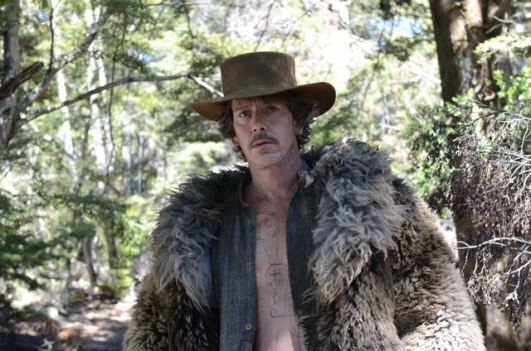
3) Slow West 

Mendelsohn plays the villainous Payne in John Maclean’s barnstorming debut Western, further proof of the resurgence of the genre. The performances are incredible and Mendelsohn easily holds his own against Kodi Smit-McPhee puts in a career-best performance and Caren Pistorius’s terrific debut. The film also features a wonderful Jed Kurzel score and multiple electric set pieces.

Ben-Mendelsohn

2) Animal Kingdom 

Animal Kingdom is an ambitious Australian crime drama in the vein of Martin Scorsese, director David Michod inspired by the Pettingill criminal family. Mendelsohn plays Andrew ‘Pope’ Cody, the psychopathic eldest brother who will stop at nothing to evade the law and seek justice. He is a particularly dangerous character who poses a huge risk through main protagonist, ‘J’, and particularly as the film advances, we begin to see just the extent of how far this individual will go.

kts_06cf

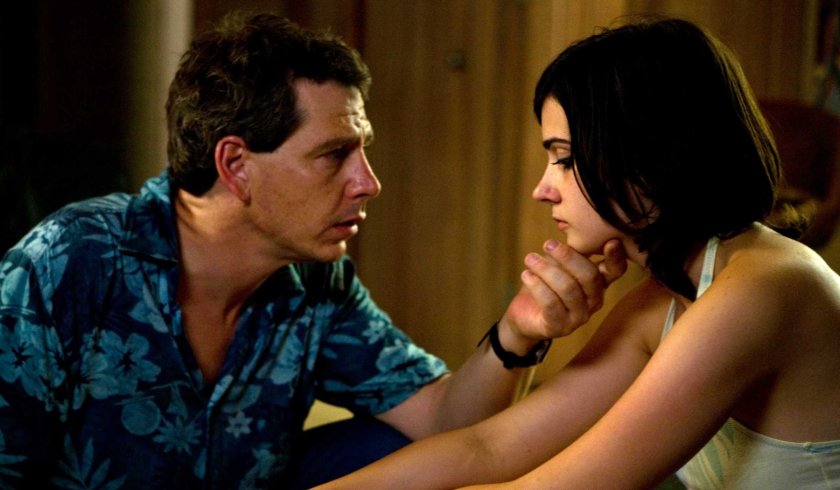
1) Killing Them Softly 

Andrew Dominik’s follow-up to the superb revisionist Western, The Assassination of Jesse James by the Coward Robert Ford, is an interesting beast in the genre, running at a brisk 90 minutes compared to the typical 3 hour epic gangster films. Mendelsohn plays dog kidnapper and heroin addict, Russell, who along with Scott McNairy’s, Frankie, target a game run with dire consequences. Mendelsohn’s character is so prickly and disgusting both in appearance and his ideologies and the actor perfectly encapsulates this nasty character. It’s a wonderful performance in a strongly different film.


So there we go. What do you think? What did I miss? If you haven’t watched any of these films, I’d highly recommend you do so as they’re all really worthwhile and I hope this actor’s career continues to go from strength to strength.

Ready Player One is out now in UK cinemas 

Red Sparrow (Review)

Uncategorized
Red-Sparrow

⭐⭐⭐ (Good)

Director: Francis Lawrence
Starring: Jennifer Lawrence, Joel Edgerton, Matthias Schoenaerts, Charlotte Rampling, Mary-Louise Parker, Ciaran Hinds, Joely Richardson, Bill Camp, Thekla Reuten, Jeremy Irons
Certificate: 15
Run Time: 140 mins

Red Sparrow is the latest in Jennifer Lawrence’s post-Hunger Games career, who consistently proves to pick courageous yet controversial projects. Recently, Lawrence starred in Passengers, a film that many reacted badly too due to a central element in the plot which I managed to get on board with. More obviously controversial was Darren Aronofsky’s mother!, a film designed to shock which also recieved a mixed response. For Lawrence to pick a project filled with sexual and bloody violence is certainly brave. Lawrence reunites with her Hunger Games director, Francis Lawrence, in this spy thriller about a girl who is entrapped by her Uncle to work as a ‘Sparrow’ for the Russian government. Her mission is to uncover the identity of a Russian mole working for the Americans. The spy / action thriller genre has been at a high recently and particularly pertinent following hot off the heels from Atomic Blonde with a female lead character.

Red Sparrow is a slow-burn which might infuriate viewers but I found it to be consistently entertaining if not a little meandering both in narrative and in pace. It boasts some intelligent twists up its sleeve but they are a little late in the game. The film has a lengthy 140 minute run time and whilst it is atmospheric in parts, it also trudges through some of its narrative and isn’t consistently gripping.

The cast are all sound here but like with a lot of Russian spy films, there are some wonky accents on display here. Lawrence fares well, proving yet again to be a charismatic lead who is empathetic. Schoenaerts makes for a very sinister yet calm and calculated character, proving again why he is a top talent. Whilst Joel Edgerton is one of the finest actors (and director) we have, his character is a little underwritten but he does the best with what he has. As fine actors as Jeremy Irons and Charlotte Rampling are, their accents are all over the place and seem to only be in this for the cheque.

The film is very grim for a 15 rating, with some particularly disturbing and nasty sequences of violence, torture and sexual violence. The film pulls no punches and I was surprised for a 15 just how much it pushed the boundary. This is a good thing and puts a different spin on the spy thriller genre and all of this violence has meaning to elevate the plot.

Red Sparrow isn’t quite the knockout it should be, considering the talent on-board but it is consistently entertaining and does pull some unexpected punches up its sleeve. For a mainstream film, it is very daring in its violence which is a good thing but for those watching simply as fans of Jennifer Lawrence, the film will definitely be a surprise. With a tighter plot and pacing, Red Sparrow has all the ingredients of a great film but is ultimately flawed.

⭐⭐⭐ (Good)

Game Night (Review)

Uncategorized
image

⭐⭐ (Poor)

Director: John Francis Daley & Jonathan Goldstein
Starring: Jason Bateman, Rachel McAdams, Billy Magnussen, Sharon Horgan, Lamorne Morris, Kylie Bunbury, Jesse Plemons, Danny Huston, Michael C. Hall, Kyle Chandler 

Certificate: 15
Run Time: 100 mins

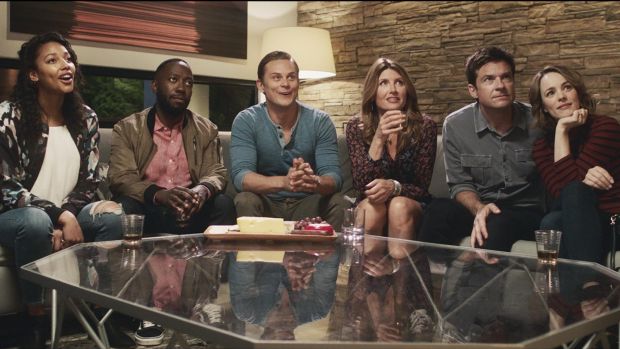
Game Night is the sophomore effort from directors John Francis Daley and Jonathan Goldstein after directing the horrible Vacation and most recently writing Spider-Man: Homecoming, a pretty spotty record in all. They have also been tapped to direct the DCEU Flashpoint film, so a lot rides on this film to display their talent. Game Night certainly boasts a fresh premise – a comedy that follows some friends who often hold game nights where they play board games competitively. Board games have united Max and Anna, who are married and often host these nights with their friends. When Max’s brother, Brooks, comes to visit, he tries to one-up the couple whose game night turns into a very real murder mystery.  Game Night has an impressive cast, featurng Jason Bateman, (playing to type) and Rachel McAdams (playing against type) as the central character, with Kyle Chandler and Jesse Plemons also in the film.

Game Night often strikes an awkward and obnoxious tone and ultimately, consistently misses its humour.  I laughed perhaps four or five times, but it’s not enough when a film is supposed to be a comedy and most of the jokes don’t land. That said, the film does get certain elements right with its central premise and Daley and Golstein do have the right idea here with this film, as it is well directed but it’s a real shame that it cannot deliver on the comedy front. The narrative is also a complete and utter mess. Fairly quickly into the film, the mystery the characters find themselves in is utterly ludicrous and there are some late twists that make the film needlessly convoluted.

The cast are sound and admirable, but Jesse Plemons really shines here as Max and Anna’s next door neighbour, who has stopped being invited to their game nights. Plemons has consistently proved himself in his career, with excellent performances particularly in Black Mass, The Program and Hostiles, but here he proves a talent for comedy. Despite Game Night not being a particularly great film, if there’s one thing it can leave in its legacy is further audience recognition of this endlessly versatile actor.

Daley and Goldstein prove themselves in their direction as they try to do the best with the material. They clearly know how to shoot an action sequence and coupled with Barry Peterson’s cinematography, makes for some exciting set pieces. There is one moment in particular which is shot in one take which is utterly seamless. There are also repeated animations and images of the suburban street Max and Anna live in, which almost makes the street look like a board game, with characters seemingly moving spaces, further enhanced by Cliff Martinez’ tension-filled score.

Game Night is unfortuantely a disappointment and I don’t really understand the positive reviews as it mostly fails to conjure laughs and has a convoluted and unfocussed narrative. That said, it is mostly an exercise for Daley and Goldstein to prove their talent. If they can be as playful with the material and execution when it comes to a Flashpoint film, like they have displayed here, they would certainly be a good fit. They just need a solid script which scores with the humour, which this film consistently fails to do.

⭐⭐ (Poor)


I, Tonya (Review)

Uncategorized
ows_151508712319866

⭐⭐⭐ (Good)

Director: Craig Gillespie
Starring: Margot Robbie, Sebastian Stan, Allison Janney, Julianne Nicholson, Bobby Cannavale 

Certificate: 15
Run Time: 119 mins

I, Tonya makes for a opportunistic vehicle for some great performances across the board but as a film, it has some major structural problems. The film tells the true story of figure skater, Tonya Harding and the famous scandal she was involved in in the run up to the Olympics, perhaps one of the biggest in sports history. The film virtually screams as an Awards bid for star Margot Robbie, who also produces this film, eager to overturn the quality of her films after the disappointing Suicide Squad and The Legend of Tarzan. Director Craig Gillespie has opted to tell this story through the use of unreliable narrators, various characters in the film reveal their ‘truth’ in this contradictory narrative, regularly breaking the fourth wall.

Unfortunately,  Gillespie doesn’t display as much confidence as director Martin Scorsese who used this technique in The Wolf of Wall Street (which Robbie also starred in) and instead, the film feels a little obnoxious in its storytelling. The film is also too theatrical and the visual effects in the skating sequences are unconvincing.

Of the perforances, Allison Janney is the standout here, deserving of her Academy Awards success for her role here as Tonya’s mother, a cold and calculated figure whose upbringing of her daughter is particularly unconventional and scheming. I was also pleasantly surprised by Sebastian Stan, who I’ve found quite wooden as an actor in the past, but his husband for Tonya is a multi-layered character who is particularly unhinged.

The music choices that permeate the film are also problematic. Whilst Peter Nashel’s score works well, it is only used rarely and instead painfully obvious music choices are implored instead, which got to the point of grating.

Overall, I Tonya isn’t quite the success that was to be expected and walks an awkard line between restrained and obnoxious in tone, director Craig Gillespie not really sure what works and what doesn’t. It’s a good thing the performances are as good as they are because if they weren’t, the film would crumble.

⭐⭐⭐ (Good)

Black Panther (Review)

Uncategorized
black-panther-trailer-image-1

⭐⭐⭐ (Good)

Director: Ryan Coogler
Starring: Chadwick Boseman, Michael B. Jordan, Lupita Nyong’o, Danai Gurira, Martin Freeman, Daniel Kaluuya, Letitia Wright, Winston Duke, Angela Bassett, Forest Whitaker, Andy Serkis
Certificate: 12A
Run Time: 134 mins

Black Panther is the first feature film based on the Wakandan King superhero introduced into the Marvel Cinematic Universe in Captain America: Civil War. Like Wonder Woman last year, Black Panther is an important event in the superhero genre’s history, as it is the first one to feature predominantly black characters. Furthermore, within its own canon, Black Panther is also important as it is the final film before Avengers: Infinity War arrives at the end of April which all of the MCU films have been building up to. After impressing with Fruitvale Station and Creed, Ryan Coogler is on director duties and based on the strength of those two films, he is definitely a good choice.

The film picks up shortly after the events of Captain America: Civil War where the recently crowned King T’Challa (Chadwick Boseman) heads back to his home country of Wakanda. Wakanda is a technologically advanced nation and hidden to the rest of the world, famous for its fictional vibranium, a wonder metal that is exceptionally strong, is lightweight and vibration-absorbent. They have made the difficult decision not to share this with the rest of the world and instead, convincingly pose as a Third World country. In the film, T’Challa finds his kingship challenged and is plummeted into a conflict with potential global consequences.

Although Black Panther definitely has some great moments, it is unfortunately very inconsistent, awkwardly paced and overly familiar. It’s not quite the fresh, subversive experience that was promised. The biggest problem is the narrative, which is all over the place and Coogler seems to grapple with how best to pace the film. It’s a film that consistently seems to chop and change in its tone, from moments of wonder in the Afrofuturistic Wakanda to scenes of poverty and hardship in deprived areas. Coogler’s juxtaposition of the two extremes is obvious in the film’s narrative but it just doesn’t gel together and then when a third act storyline kicks in of feudal relations, it’s too little too late. Coogler has clearly been influenced from films such as The Lion King and the James Bond series of which there are odes to in the film, but Black Panther feels like its treading water between them.

Within this narrative, Coogler also frustratingly fails to develop what are some really interesting ideas, such as themes of Afrofuturism, world aid and family. This is particularly true of Michael B. Jordan’s villain, whom many have taken to, considering him to be a multi-layered villain compared to the vast majority of antagonists in the other films. I found the development of this character in particular, problematic. Whilst he is multi-layered and there is an interesting back story to the character, Coogler’s development is very shallow and I didn’t really care about the character. He doesn’t really show up until the film’s second half with perhaps one scene at the beginning and he is then off-screen for about an hour. I forgot he existed in the film and when his storyline does kick in, he makes a poor decision in my opinion and before Coogler can properly explore his character, the film descends into typical, mind-numbing third act action.

At least Coogler gets most of the characters right. Chadwick Boseman as the titular hero is great and it’s refreshing to see a solemn and sincere superhero for a change rather than one who constantly makes wisecracking jokes. Letitia Wright is perhaps the standout of the film as Black Panther’s sister, a little like James Bond’s Q but with more heart. It’s refreshing to see the female characters in this film take centre stage, with Danai Gurira and Lupita Nyong’o also contributing strong performances, as well as Wright. Of the rest of the cast, Andy Serkis clearly seems to be having fun and it’s good to see Daniel Kaluuya in a small role, fresh off his Oscar nomination for Get Out. The cast generally have great chemistry with each other and despite Coogler’s spotty tendency of lack of character development in this film, I would happily watch another film with these characters in it.

However, as well as Michael B. Jordan’s villain, the treatment of Martin Freeman’s CIA agent, Everett Ross, is problematic. He is a character who Coogler treats with zero dignity and some of the situations and lines he is given border on the embarassing.

Unlike Creed, the action sequences in the film aren’t particularly great and the film’s climactic fight succumbs to all the usual problems that plague many superhero films. There are a few moments which are so obviously green-screened, most notably in a recurring ritual setting where we see an audience of characters watching on. It’s surprising and given the fact that most Marvel films are visually stunning, it’s a little baffling why Black Panther isn’t. A big part of the problem is down to the cinematography. The film is shot by Rachel Morrison, who recently created history by being the first female DP ever to be nominated for an Oscar for her work on Mudbound. There are so many cuts in the action, to the point where it is actually hard to see what is going on and there is no sense of pacing in the choreography. This problem is then magnified in the big, overlong climactic battle at the end which I found boring and frustrating because it was so poorly shot.

That’s not to say the film is bad though, not at all. The first half fares quite well and is at times, gripping, particularly a sequence in a casino. Additionally, Coogler’s world building of Wakanda is good and I liked how it was established and developed as a setting. Most of the characters share good chemistry and Ludwig Göransson’s score is quite interesting, infusing traditional African sounds with more contemporary pieces.

Ultimately, Black Panther is a mixed bag and has some severe structural problems that really hinder the film. Coogler fails to develop, what are some really interesting ideas and the action sequences are surprisingly poor. That said, it is mostly entertaining and on the strength of some of the characters, with a firmer grasp of the material, there is potential for the future. At least Coogler has created a film that is very standalone in the canon. Black Panther isn’t concerned with setting up future sequels or constantly referencing other films, which is a good thing as there have been some installments that have fallen down this rabbit hole. That said, I really don’t understand why this film is being heralded as one of the best superhero films of all time. Far from it, in fact and even within its own cinematic universe, it ranks towards the lower end of the scale.

⭐⭐⭐ (Good)

Ranking The Best Picture Nominees

Uncategorized

best_picture_new-split-h_2018

The Academy Awards have now been and gone and The Shape of Water ended up being triumphant edging out Three Billboards Outside Ebbing, Missouri which took the Golden Globes and BAFTA’s by storm. Here I rank the Best Picture nominees in order of my own personal preference. Unfortunately, I have only recently managed to watch The Shape of Water and Call Me By Your Name hence why I am a little late.

Let’s get started… 
the-post-2

9) The Post 

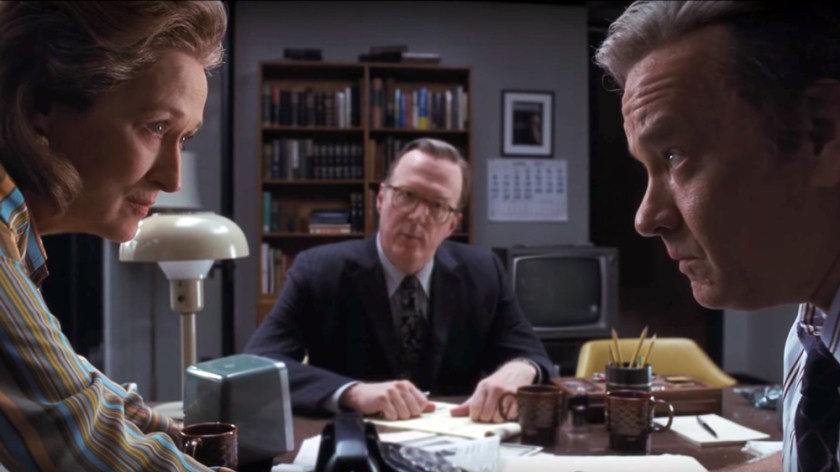
Unfortunately, Spielberg’s rush to get the film has got the better of him as The Post is painfully mediocre. The film tries to make itself more important than it is and whilst the subject material is very compelling in itself, the way in which the film has been constructed is never gripping. Other than a strong scene near the beginning with acquisition of the documents, the first half of the film is very clunky and strangely, almost devoid of any tension. Whilst The Post does manage to find its footing a little more in the second half, the film is never as fascinating as it should be and feels very contrived. (My review here)

08-the-darket-hour-gary-oldman-w710-h473

8) Darkest Hour 

Much has been made of Darkest Hour for Gary Oldman’s transformative and unrecognisable performance as Winston Churchill in Joe Wright’s new film, Darkest Hour, who completely disappears and inhabits the role and deserved his Best Actor win. However, in terms of how Darkest Hour functions as a piece of cinema though, it has some serious problems. From a historical viewpoint, the film is codswallop. A train sequence in particular towards the end of the film, pretty much derails the entire film from its tracks and it loses virtually all credibility. I could never get back on board with the film after this sequence threw me out so much and it hurts what is already a fairly mediocre film. (My review here)

call-me-by-your-name-2017-003-armie-hammer-timothee-chalamet-cafe-table_0

8) Call Me By Your Name

Call Me By Your Name is a mature exploration of sexuality and is particularly well and sensually directed by Luca Guadagnino, who fully captures the hot Italian climate as every frame feels opulent and sundried. The performances across the cast are all solid, with Michael Stuhlbarg the standout as an onlooking father. However, I wasn’t wowed by the film as a lot of people have been as it is rather langorous in pace at times and I just didn’t find as exciting or innovative as some of the other films featured on this list. But I certainly have a degree of respect for this film.

There is now a big step up in quality…

Bodega Bay

6) Dunkirk

A list where a Christopher Nolan film is only seventh! Whilst there is undoubtedly a lot to admire in ‘Dunkirk’, unfortunately I also have a lot of problems with it. It’s not a bad film by any means but Nolan misses the mark for me in a story that is too ambitious and hard to have any care towards. This was a point that kept cropping up in a lot of the more lukewarm reviews that I read prior to watching the film and I got a little bit annoyed as it seems as if those reviewers want convention. I can’t quite put my finger on it but the actual tone of the film seems off and I didn’t really find myself caring much for not just the characters but the actual event as the approach for me felt too conservative. It’s a very strange approach to take and I applaud Nolan for taking it but along with other reasons which I will discuss, I couldn’t find an emotional response. (My Review here)

Now we get to the excellent films:

It is at this point where this list gets excruciatingly tough and not as clear-cut as the other films in this list. I think the next five films are all outstanding and having to rank them was nigh-on impossible. There is every chance that the order of these five films could change and every notion that what is at fifth could become first – I just don’t know. For now, I’m basing it on gut feeling.

Film Title: Get Out

5) Get Out 

Get Out is an innovative and intelligent comedy-horror that is meticulously crafted and endlessly cine-literate. The concept behind this film is very original and is highly critical and satirical of the post-Obama presidency. Rose’s father even states in a recurring line that he “would have nominated Obama for a third term.” Its final third is particularly impressive as the narrative starts to gradually unravel, culminating in a collection of shocking sequences. It also features an interesting score by Michael Abels that is an eclectic mix of neck-prickling strings and melodic themes. The cinematography by Toby Oliver is also thoughtful and well-judged.  (My review here)

lady-bird-2017-001-saoirse-ronan-wall_0

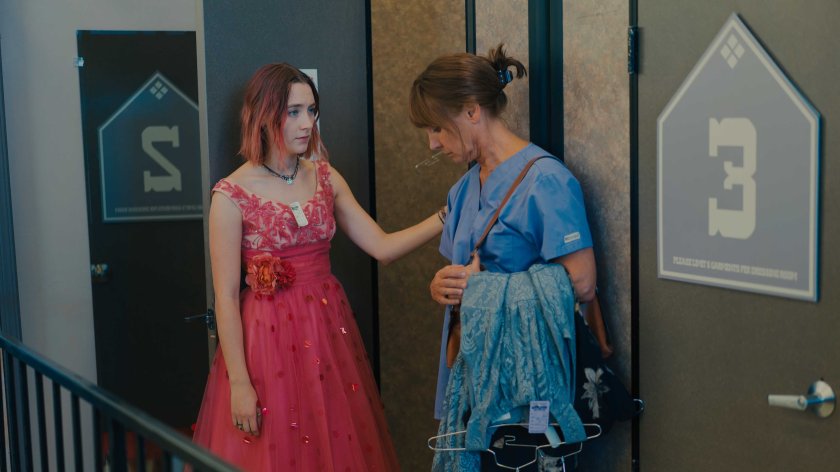
4) Lady Bird

Lady Bird, the directorial debut of actress / writer Greta Gerwig, is a beautifully humane coming-of-age story of a teenager whose strong personality conflicts with her mothers equally volatile temper. It makes for a fascinating character study, containing plenty of scenarios and vignettes that run true to many home experiences of growing up. Gerwig’s script is particularly polished, mostly avoiding cliche, which keeps the story fresh and makes for a deeply personal insight into the film’s setting of Sacramento, where Gerwig herself grew up. Due to this great script, all of the cast excel in their roles with some brilliant performances from Saorise Ronan, Laurie Metcalf and Tracy Letts. (My review here)

phantom-thread1

3) Phantom Thread

Phantom Thread, for the majority of its run time, is engrossing and a masterclass in filmmaking. Just like Anderson’s other films such as There Will Be Blood and The Master, Phantom Thread is thematically rich, interrogating themes of duality and what it means to be in a relationship. It manages to balance its realism with fantasy and the film at times, evokes a Brothers Grimm tale. On one side of the spectrum, there are equisiste scenes of women being dressed up to impress their Princes and on the other, seemingly innocent women mushroom-picking in the forest. This Brothers Grimm quality to the film is juxtaposed by a Hitchockian / Kubrickian tone of voyeurism, mystery and intrigue. I’m just a little unsure on the direction the film heads in its final act, as it doesn’t quite conform to the neatness the first two have. I suspect on further rewatching, this film will continue to unpack itself and there is a lot more to gain from it. (My review here)
screen-shot-2017-09-14-at-9-49-54-am1

2) The Shape of Water 

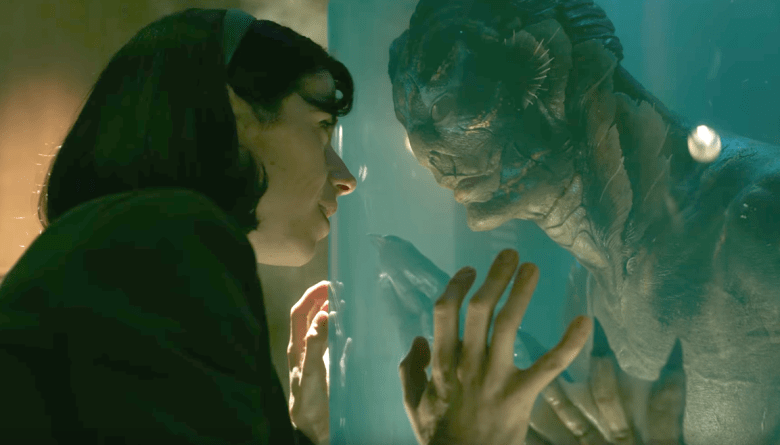
The Shape of Water is a beautiful triumph from visionary director Guillermo Del Toro, who once again successfully interweaves and juxtaposes the supernatural to reality. The film takes inspiration from The Creature from the Black Lagoon and through Del Toro’s love of early cinema, infused with his darker work such as Pan’s Labyrinth and The Devil’s Backbone. The performances are all top-notch (although I think Michael Shannon, Michael Stuhlbarg or Doug Jones should have been nominated for Best Supporting Actor, not Richard Jenkins) and I was hooked by the film throughout. It’s also got a wonderful score by Alexandre Desplat and is beautifully shot by Dan Laustsen. The Shape of Water is Del Toro’s best English-language film, though I think Pan’s Labyrinth remains his magnum-opus. (My review here)

And the best film is…

billboard2-0

1) Three Billboards Outside Ebbing, Missouri

Three Billboards Outside Ebbing, Missouri proves McDonagh’s writing talent again and then some. McDonagh has such a great ear for dialogue in this film and there are so many wonderful exchanges of dialogue between characters. It is frequently comic, always entertaining and what I particularly love about this film, is it takes many unexpected diversions in its narrative. The film leads you to believe a certain plot point will go in one direction, but McDonagh in multiple instances, subverts expectations and this makes this film all the more fresh. There are many moments where I was genuinely in awe and shock. It is a biting drama about murder, investigating and how people have multiple sides to their personality. (My review here)

Summary

Overall, this is a mostly strongest collection of films nominated for Best Picture and certainly in my opinion, to have five out of nine be films that I love is very promising. That is of course, with the exception to Darkest Hour and The Post, both films which I can’t understand why they feature. The Shape of Water ultimately won the coveted award, which many took offence to, but it’s a deserving winner and rectifies the problem of some of Del Toro’s previous works being grossly misunderstood and underappreciated. That said, any of the top five would have made worthy winners.


Lady Bird (Review)

Uncategorized
ladybird2

⭐⭐⭐⭐ (Excellent)

Director: Greta Gerwig
Starring: Saoirse Ronan, Laurie Metcalf, Tracy Letts, Lucas Hedges, Timothée Chalamet, Beanie Feldstein, Stephen McKinley Henderson, Lois Smith 

Certificate: 15
Run Time: 94 mins

Lady Bird, the directorial debut of actress / writer Greta Gerwig, is a beautifully humane coming-of-age story of a teenager whose strong personality conflicts with her mothers equally volatile temper. It makes for a fascinating character study, containing plenty of scenarios and vignettes that run true to many home experiences of growing up. Gerwig’s script is particularly polished, mostly avoiding cliche, which keeps the story fresh and makes for a deeply personal insight into the film’s setting of Sacramento, where Gerwig herself grew up.

The performances in the film further bring to life the excellent characters that have been crafted on the page. Saorise Ronan gives a career-best performance as the titular character, Christine ‘Lady Bird’ MacPherson, a teenager who is in her final year of high school and is applying for colleges and universities next year. Laurie Metcalf, as her psychologist mother, Marion, makes for a challenging and often, fiery counterpart but ultimately a mother who deeply cares about her daughter and just wants the best for her. Both actresses are fully deserving of all the Awards attention they have recieved.

Perhaps rather underappreciated is Tracy Letts as Christine’s father, who is facing his own personal demons. Letts is wonderfully subdued as a man who is struggling as he grows older, but he is so convincingly warm and admiring of his daughter and acts as the bridge between Christine and her mother. formances brilliant.

The film is not without flaws though and there are a handful of decisions that Gerwig takes in her narrative that felt a little off, but otherwise the film is excellent. It’s hard to stand up against similar films that have released recently, the minor-key realism of Manchester By The Sea perhaps the best result, but Lady Bird is a film fully deserving of its praise and is definitely an experience that will harken back to one’s adolescent memories. I would have happily spent another hour and a half with these characters as I was so invested in them and the thought of Gerwig recently announcing she wanted to tell other stories based from her experiences in Sacramento can surely be the sign of great things to come.

⭐⭐⭐⭐ (Excellent)

The Shape of Water (Review)

Uncategorized
shapecover.0

⭐⭐⭐⭐ (Excellent)

Director: Guillermo Del Toro
Starring: Sally Hawkins, Michael Shannon, Richard Jenkins, Doug Jones, Michael Stuhlbarg, Octavia Spencer

Certificate: 15
Run Time: 123 mins

The Shape of Water is the latest film by director Guillermo Del Toro, whose films at worst, are ambitious and thoughtful and at best, masterpieces. Del Toro is one of the most visionary directors working today, who consistently explores the supernatural and his films are full of beautifully realised monsters. Pan’s Labyrinth is his magnum-opus, a Spanish adult fairy tale set to the backdrop of the Spanish civil war and The Devil’s Backbone is not too far behind. I really liked his work on both Hellboy films, particularly the second which is a brilliant alternative superhero film and I’ve got a soft spot for Crimson Peak, which recieved a very mixed reception on its release. Naturally, I was very excited for The Shape of Water, particularly considering the Awards attention that it has recieved for a filmmaker who is often, sadly underappreciated.

The Shape of Water tells the story of a mute cleaner, Elisa (Sally Hawkins) who works at a top security government facility who falls in love with a mysterious amphibian-like creature with human qualities. This is set to the backdrop of the Cold War which means there are uneasy relations within this facility between its staff and some are suspicious that there could be spies working there.

The Shape of Water is a beautiful triumph from Del Toro, who once again successfully interweaves and juxtaposes the supernatural to reality. Del Toro has clearly been inspired from The Creature from the Black Lagoon, a film that he wanted to remake from a female perspective but wasn’t allowed. As well as this inspiration, Del Toro’s film is a love letter to early cinema which it borrows in some of its tropes and plot points, infused with his darker work on Pan’s Labyrinth and The Devil’s Backbone. I was hooked by the film throughout and it has a lot hidden up its sleeve and like his other films, it earns its adult rating with its sex and grotesque violence.

The performances in the film are all top-notch. Sally Hawkins is wonderful as Elisa, who manages to convey all of her emotions through her physicality in the role and her relationship with the creature is very convincing. Richard Jenkins is great as her homosexual illustrator neighbour, an individual who shares a strong bond with Hawkins. There is a brilliant sequence mid-way through the film where Jenkins’ character tries to introduce himself to someone who he admires, which Del Toro cleverly interweaves the historical context of the time. Octavia Spencer is also ever-likeable as Hawkins’ work colleague, who effectively does the talking for the both of them.

All three of these actors have been nominated for their performances in this film but I think the standouts are actually Michael Shannon, Michael Stuhlbarg and Doug Jones. Michael Shannon is superb as the antagonistic Colonel, who will stop at nothing to get what he wants, a character who is icily cold and brutal. Stuhlbarg has a particularly meaty role as a Doctor, which he is very convincing as a scientist investigating the creature. Doug Jones as the creature is brilliant, again a character that relies on physicality with Jones having to spend long bouts in a full prosthetic body suit. In combination with Andy Serkis in his motion capture roles, it’s high time that roles and performances such as Jones’ recieve recognition.

Alexandre Desplat’s score is beautiful and hypnotic, really complimenting the film well. Desplat balances his score with endlessly memorable cues, as well as being a nostalgia trip into early cinema and music. Dan Laustsen’s cinematography is excellent too and the film is a visual treat to behold, Doug Jones’ creature in particular painstakingly wonderfully realised.

The film isn’t quite perfect though. The relationship between Elisa and the creature feels a little rushed and I think the film would have been slightly better if it had taken its time a little more in the beginning to fully set the scene. There is also a sex scene between two characters mid-way in the film that is a little silly and unbelievable, but is important to the film’s narrative. Finally, I don’t think Del Toro has quite managed to weave in the film’s Cold War backdrop as assuredly as he did with the Spanish Civil War in Pan’s Labyrinth. It wasn’t evident at the beginning of the film that this is what he was trying to do and I think a little more development there would have helped.

These are all minor points in what is otherwise a wonderful film and The Shape of Water is certainly Del Toro’s best English-language film, closely followed by Crimson Peak. The Shape of Water is an engrossing and enrapturing experience, that shouldn’t be missed on the big screen and fully deserves all the Awards praise it is getting.The only downside, not of the film but of this Awards attention, is that the other half of the cast should have been nominated for their performances, not Richard Jenkins. Despite this, The Shape of Water is a masterful exercise in visual and narrative storytelling and is a film that on further viewing, will reveal itself even more with regards to a couple of plot points.  I cannot wait to watch it again.

⭐⭐⭐⭐ (Excellent)

Last Flag Flying (Review)

Uncategorized
28-last-flag-flying.w710.h473

⭐⭐⭐⭐ (Excellent)

Director: Richard Linklater
Starring: Steve Carell, Bryan Cranston, Laurence Fishburne

Certificate: 15
Run Time: 124 mins

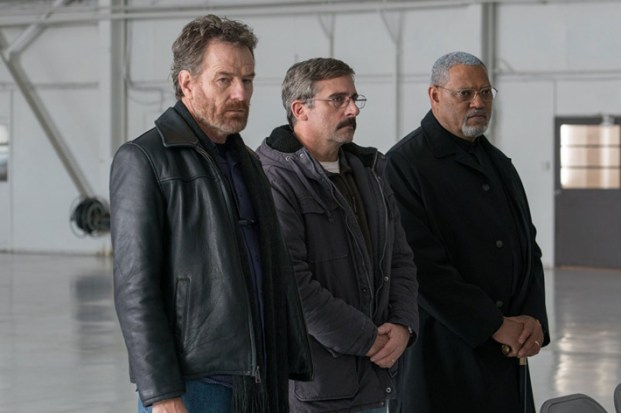
Director Richard Linklater never seems to make the same kind of film twice, always choosing very interesting projects on varying degrees of subject matter. He’s consistently proven himself as a director from films like School of Rock to the Before trilogy to his magnum opus, Boyhood. Last Flag Flying is an unofficial sequel to a 1973 film called The Last Detail, starring Jack Nicholson. Both are based on novels penned by Darryl Ponicsan, only Linklater has opted to change the names of some of the characters in this film.  The film follows three Vietnam war veterans who reunite after Larry ‘Doc’ Sheppard’s (Steve Carell) son is killed in action. Doc finds and reunites with Sal Nealon (Bryan Cranston) and Richard Mueller (Laurence Fishburne) and asks them to accompany him to retrieve his son’s body and bury him.

Last Flag Flying really knocked me back. Linklater has crafted a bittersweet and warm tale of friendship and coming to terms with loss that is very mature. Yet, the film also has bite in its conflicted commentary of military service and patriotism. The performances by the entirety of the cast are superb and of course, the trio of Carell, Cranston and Fishburne have such good chemistry together.

All of the characters are so well developed that when the film finished, I could have easily watched another two hours of these characters interacting with each other. They are all morally flawed individuals, who have all made mistakes in the past but they all have good intentions. Linklater documents their change from the past beautifully. Carell continues to prove that he is not a comedic actor and gives a very mournful performance as a broken man struggling to come to terms with the loss of his son and before, his wife. Doc only has himself and doesn’t know what to do with himself, but he appreciates the time he had with his family. Cranston’s performance as Sal, is also brilliant. Sal now runs a bar and is a no-nonsense figure who always wants the right thing for his friends. There’s an excellent sequence where he openly disagrees and challenges a Colonel, choosing to find the truth rather than respecting a higher rank military official. Fishburne might even give a career-best performance here as Richard Mueller. He is no longer the brutal, sweary Marine he was in the war and has now turned to the path of religion, becoming a pastor in his town.

Whilst this may sound like a depressing watch, and it can be quite heartbreaking at times, it also balances comedic moments very well. There’s a brilliant sequence in which the characters discover and buy mobile phones to keep in touch with each other and an equally funny recounting of experiences in the war. This film isn’t billed as a comedy, but I laughed far more in it than some recent comedy releases.

The film also looks and sounds beautiful. Shane F. Kelly’s cinematography chooses to focus on the urban areas, grey and gritty images interrogating the decay of America and the cold country that has failed these characters. Graham Reynold’s score proves a warm, yet non-obtrusive accompaniment that is used sparingly.

Last Flag Flying is ultimately a transformative and emotionally moving exercise in filmmaking. Linklater perfectly balances the tone, with just the right measure of sadness and warmth, peppered with humour. The characters are so brilliantly written and realised on the page and all of the actors are a perfect match for the material. I’d need to see it a few more times to see how it lives up to repeat viewing but it might even be one of Linklater’s best works. Last Flag Flying will be a tricky film to find in its very limited release but its simultaneous internet release means that is easily accessible at the click of a button. It’s a brilliant film and one that I highly recommend seeking.

⭐⭐⭐⭐ (Excellent)