Oxygen (Review)

Uncategorized
oxygen

⭐⭐⭐ (Good)

Director: Alexandre Aja 
Starring: Mélanie Laurent, Mathieu Amalric, Malik Zidi 
Certificate: 15
Run Time: 101 mins

Oxygen is a survival horror film where a woman wakes up in a cryogenic chamber with no recollection of how she got there, who she is and she cannot escape whilst she is running out of air. This is a strong concept that has been done before to near-perfection with Ryan Reynolds’ Buried. Buried was excellent in how it developed Reynolds’ character, the ordeal he had to go through and it didn’t outstay its welcome. The ever-versatile Mélanie Laurent is in the lead role here, most famous for her role in Inglourious Basterds. The film is directed by Alexandre Aja, who is a seasoned hand with horror, with works such as The Hills Have Eyes, the underrated Horns and the alligator invasion disaster film Crawl.

Oxygen makes the most out of its single location and there is a committed performance from Mélanie Laurent. It is handsomely shot by Maxime Alexandre, who conveys the panic-inducing claustrophobia of the suffocating space and the film is well-directed with Aja making the most of the film’s budget. Some of the film’s technical, more showy moments are impressive for a film of this stature.

Unfortunately, Oxygen runs into trouble in the second half. It is a good 20-30 mins overlong for its story and the antics Laurent has to go through begin to wear thin and are repetitive. Its final act is also very disappointing and the narrative choices felt like a cop-out. Buried wildly succeeded in its simplicity but Aja overcomplicates matters here and delves down a rabbit hole. It is understandable that Aja wanted to lean more heavily into sci-fi but it costs the film its promising build up.

Oxygen is ultimately one of the better efforts of a survival horror in one location but the good work of its first act fails to pay off with its poor narrative choices later in the film and it outstays its welcome. It’s a valiant effort and a back-to-basics approach for Aja but the second half disappoints in its failure to pay off the promising first half.

⭐⭐⭐ (Good)

Nomadland (Review)

Uncategorized
nomadland

⭐⭐⭐ (Good)

Director: Chloé Zhao
Starring: Frances McDormand, David Strathairn, Linda May, Charlene Swankie
Certificate: 15
Run Time: 109 mins

Nomadland is an original and unassuming exploration into the nomadic lifestyle that a proportion of Americans take where they cannot afford to live by conventional means in a bricks and mortar dwelling. In what is director Chloe Zhao’s third feature, Nomadland paints a desperate situation where hard-working Americans cannot afford to live in a normal society. We follow Frances McDormand’s widowed and unemployed Fern. She describes herself as ‘houseless’ and chooses to travel the US, partaking in various job opportunities, living from her van. These jobs range from a stint in Amazon to working in hot and sweaty kitchens to running a spa. We meet some real-life nomads that her character crosses paths with along the way, as well as a blossoming relationship with another nomad played by David Strathairn.

The performances are first-rate in the film, with Frances McDormand winning her third Best Actress Oscar for this role. McDormand is brilliant here but she could play this type of role in her sleep – it doesn’t rate with the quality of her other two wins in Fargo and Three Billboards Outside Ebbing, Missouri. Of the other characters, it is Charlene Swankie (as Swankie!) who makes the biggest impression in the film’s best sequence where she recounts her life choices and philosophies. Technically, Nomadland is excellent as well with Joshua James Richard’s Terence Malick-esque cinematography beautifully capturing the vast open landscapes and offering a magical quality. Ludovico Einaudi’s piano-based score is sparsely used but packs a punch when it is featured.

With the Awards success Nomadland has received, not least a Best Picture Oscar win, it’s easy to go into the film with lofty expectations. Nomadland is not perfect, by any means. Save for Swankie’s affecting monologue, the film never really packs enough of an emotional wallop and there are sequences in the film that are languorously paced. Nomadland is a strong and original film that blends fact and fiction seamlessly with some amiable performances, even if it is somewhat overrated.

⭐⭐⭐ (Good)

Without Remorse (Review)

Uncategorized


5f2c17e7b0cb090bd5bfc20dc816a07b1a9ecde2dd407533a299667940ffe08f._SX1080_.png-2

⭐⭐⭐ (Good)

Director: Stefano Sollima
Starring: Michael B. Jordan, Jamie Bell, Jodie Turner-Smith, Luke Mitchell, Jack Kesy, Brett Gelman, Lauren London, Colman Domingo, Guy Pearce 
Certificate: 15
Run Time: 109 mins

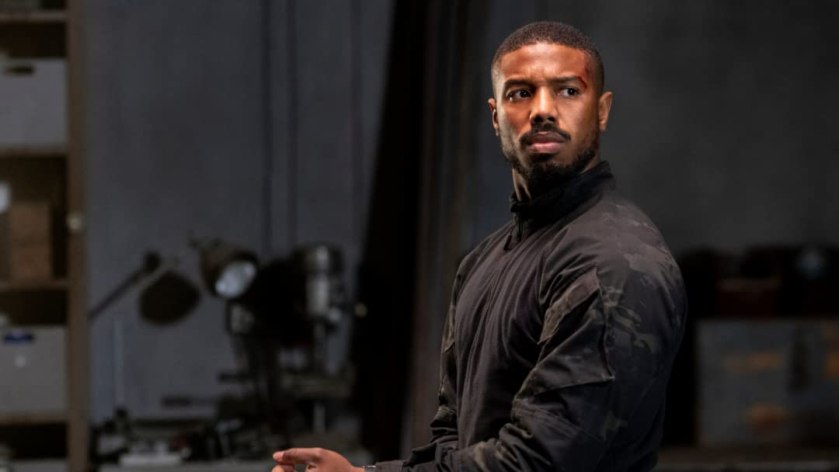
Without Remorse is the long-awaited adaptation of the Tom Clancy novel and refreshingly follows the character of John Clark, a US Navy SEAL rather than Jack Ryan in previous films, but Clark is also very much a shadow recruit. This adaptation has been through a raft of various cast and crew throughout the years such as Keanu Reeves and Tom Hardy. Ultimately, what has arrived on screens settles on the ever-versatile Michael B. Jordan as John Clark. In the director’s chair is Stefano Sollima who created a near-masterpiece with Sicario 2: Soldado in its grim and unrelenting atmosphere. Sollima reunites with screenwriter Taylor Sheridan, who co-writes the film with Will Staples. Sheridan has gone from strength to strength, responsible for both Sicario films, the heavily Oscar-nominated Hell Or High Water and Wind River and is yet to stumble. Can this promising talent deliver?

Without Remorse excels in its action sequences and dour first half but it suffers with its obvious story and narrative choices in the second half. Sollima and Sheridan do a commendable job of establishing Clark and his blossoming relationship with his pregnant wife but circumstances unfortunately do not allow Clark to spend time with his family. The film does a really good job in getting into the psyche of Clark’s character and Jordan convinces with his dispassionate and vengeful attitude. By the mid-point of the film, there isn’t much hope to hold for the future of Clark. Sollima also succeeded with the tone of the narrative in Sicario 2: Soldado which felt like going into a dark abyss. The action sequences are intelligently crafted and are majestic in spectacle for the budget this film has.

Michael B. Jordan is excellent in the lead role, his character fuelled by rage and grief. There are strong performances across the board, Jamie Bell successful as a shady CIA operative and Jodie Turner-Smith has good chemistry with Jordan. Lauren London also makes a strong impression in her brief role. It’s always good to see Guy Pearce in a film and he chews the scenery here.

The film runs into problems in its second half where it takes some questionable yet obvious narrative choices, which are typical for the genre. The intelligent development of the first half isn’t sustained. What we get is still entertaining but one has to suspend disbelief in the events being portrayed on-screen. Sheridan and Staples’ script isn’t quite as fresh as previous work, as it lacks some of the nuanced character development, opting instead for a faster action pace.

Without Remorse is ultimately above average for this type of action thriller and Sollima succeeds in creating a dark atmosphere for the first half and achieves some assured performances from the cast. I’d be more than on board for any future instalments (the film hints at a Rainbow Six adaptation) as some good groundwork is built here. It doesn’t live up to the lofty standards both Sollima and Sheridan have established in their careers thus far but this is still a solid piece of work and certainly worth a watch.

⭐⭐⭐ (Good)

Sound Of Metal (Review)

Uncategorized
e5b234538191e6aacd70563e0cd244643dda3da8bb2e9378f75c2ac53e0ec1e0._SX1080_

⭐⭐⭐ (Good)

Director: Darius Marder
Starring: Riz Ahmed, Olivia Cooke, Paul Raci, Mathieu Amalric 
Certificate: 15
Run Time: 120 mins

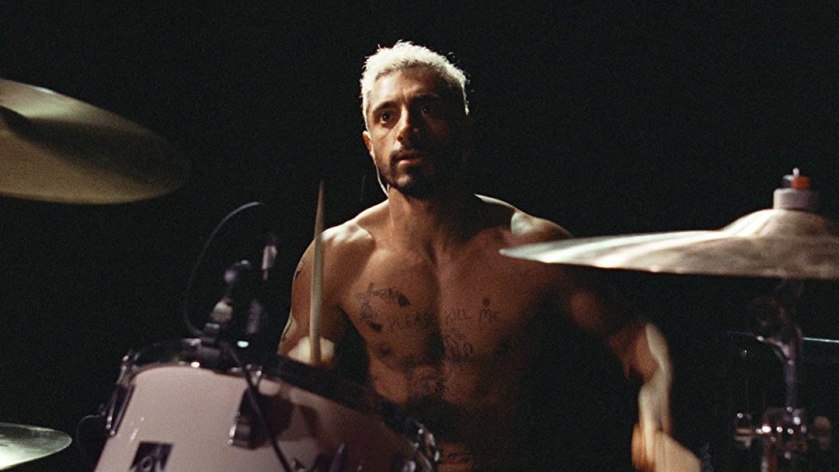
Sound of Metal is a poignant and original drama about a drummer, Ruben (Riz Ahmed) who loses his hearing and the impact that has on him and his relationship with his partner, Lou (Olivia Cooke). Directed by Darius Marder in his debut after writing The Place Beyond The Pines, this is a touching and at times, fascinating delve into the world of the deaf and how they integrate into society, or in this film’s case, how some form their own isolated community. Riz Ahmed is terrific in the lead role, a desperate and thoroughly down-on-his-luck individual who isn’t taken seriously by society after a stint with drugs.

The film is particularly impressive on a technical level with how it uses sound, from sequences of pure silence to the sounds of what Ruben can hear, a muffled, tinny aura of society. This film more than deserved its Oscar win for its sound and editing.

Unfortunately, Sound of Metal falters in its pacing. The film is languorous in its 130 minute run time and doesn’t delve deep enough into the inner psyche of Ruben’s personality. He is forced into his desperate situation but the film would have really benefitted if we had learnt more about Ruben’s context and character first and it would have had more pathos.

Sound of Metal is an assured first film from director Darius Marder that succeeds more on a technical level and with its central performance rather than substance. The fact that the film received the extent of Awards attention that it did heightened my expectations perhaps too much, as the film underdelivered for me.

⭐⭐⭐ (Good)

Antebellum (Review)

Uncategorized
⭐⭐⭐ (Good)

Director: Gerard Bush & Christopher Renz
Starring: Janelle Monáe, Eric Lange, Jena Malone, Jack Huston, Kiersey Clemons, Gabourey Sidibe
Certificate: 15
Run Time: 106 mins

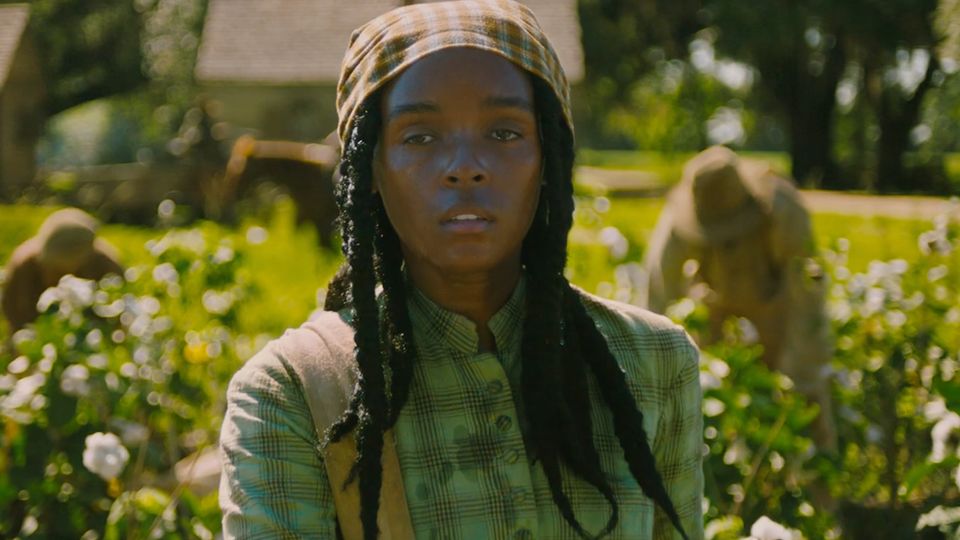
Antebellum is the feature debut from directors Gerard Bush and Christopher Renz. Although marketed as a horror, this is more of a mystery thriller in which a woman who has been renamed Eden (Janelle Monáe) finds herself on a brutal slave plantation run by Confederate soldiers in seemingly Civil War-era America. The slaves are treated particularly despicably and are not allowed to speak. About forty minutes in, Eden wakes up in the present day as Dr. Veronica Henley who has a loving family and is a renowned sociologist. Parallels are drawn between the two storylines and Bush and Renz pose the question of what connects these two stories. 

Positioned as a female-centered nervous mix of The Twilight Zone and 12 Years A Slave with more than a heavy dose of M. Night Shyamalan infused in the mix, Antebellum is a fierce debut and is a brave narrative to tackle. The plantation sequences are particularly uncomfortable to watch and the slave owners are some of the most sadistic to be witnessed in the genre. There is a satisfying twist that reframes earlier scenes in the film, which warrants a rewatch to further unpack. 

Janelle Monáe is admirable in what is her first leading role, after impressing in films such as Moonlight and Hidden Figures in a supporting capacity. She perfectly captures the plight of a slave, predominantly having to communicate with her fellow prisoners via her facial expressions, as he calculatedly plots her next move. Eden has quietly learned her away around the plantation, for example knowing which floorboards creak in her owner’s lodge, so that she may one day plot an escape. 

Technically, Antebellum is impressive with Pedro Luque beautifully capturing the plantation. The film opens up on an uncomfortably long tracking shot introducing the plantation and the cotton-pickers exhaustedly working in the lush fields and the horrifying killing of a worker. The plantation sequences are brightly lit invoking that the slaves have nowhere to hide. The string-based score by Nate Wonder and Roman Gianarthur is terrific, further ratcheting up the tension with its uncomfortable riffs and suitably grand in the spurts of action . 

The film runs into problems in its second act in its present day setting. It isn’t as engaging as the first and third acts and it’s clear that Renz and Bush aren’t in their element. The messages that Veronica conveys are quite Gabourey Sidibe’s character, Dawn, who is a friend of Veronica’s is particularly problematic. It is not clear whether the filmmakers are attempting to portray her as a strong independent force or just plain rude. I found her to be the former and she is a real thorn for the film, despite Sidibe having a strong filmography. It would also be fair to say that some of the characters, even the slave owners are rather one-dimensional. 

Antebellum is a really interesting debut and I’m very glad it exists, particularly in the context of a ‘Make America Great Again’ society. The first and third acts are particularly riveting even if the film sags in the middle. It’s a shame that the reception to this film has been fairly negative, with many finding the film to be exploitative, its twist not justifying the brutal violence and that its violence is torture porn. I would strongly disagree and would argue that the sadistic violence assists in creating a stronger verisimilitude. It also doesn’t help that the film has been marketed as a horror when it is somewhat light on horror elements and films such as It Comes At Night and mother! have been similarly rejected for misleading marketing. I can’t wait to see what Bush and Renz go onto make next and hope that they continue to take risks and are not deterred from the negative critical response.

⭐⭐⭐ (Good)

Minari (Review)

Uncategorized
⭐⭐⭐⭐ (Excellent)

Director: Lee Isaac Chung
Starring: Steven Yeun, Han Ye-ri, Alan Kim, Noel Kate Cho, Youn Yuh-jung, Will Patton
Certificate: 12A
Run Time: 115 mins

Minari is an affecting and amiable portrayal of a hard-working, but down on their luck Korean family who are trying to carve out their own American dream. Directed by Lee Isaac Chung, Minari follows immigrant Jacob Yi (Steve Yeun), who is fed up of working in a chicken hatchery in California and moves his young family to a considerable piece of land that he has brought in rural Arkansas with a rickety mobile home. He plans to farm the land with Korean vegetables which he can then sell to Korean vendors, so he can finally make something for himself and his family. His wife, Monica (Han Ye-ri), is unimpressed with the living arrangements and the two of them argue regularly, in front of their two young children, Anne (Noel Kate Cho) and David (Alan Kim). One such argument is beautifully realised when the children create model aeroplanes, writing ‘Don’t fight’ on the wings and they launch them into the lounge to attract the attention of the parents. To complicate family matters more, David has a heart condition which Monica has to frequently monitor and he is not allowed to run to overly exert himself. The set-up is excellent and the characters are all very well developed and have emotional stakes. Despite the fact that Jacob and Monica argue and are on the verge of splitting, there is still a passionate admiration for each other between them, which at times, is heartbreaking. 

Things take an interesting turn as Jacob and Monica need someone to look after the children when they are at work and they choose to fly Monica’s mother, Soon-ja (Youn Yuh-jung) from South Korea. Soon-ja is pretty distant with the children, David not remembering her as he was too young when he saw her last. She is a rambunctious, unconventional Grandmother who regularly swears in front of the children but has an unconditional affection for them all and tries her best to dilute the families hardships, even when she makes poor decisions. She tries to get David to come out of his shell and she plants minari seeds (a Korean water celery) by a stream on the land, which she is convinced will bring luck and prosperity for the family. 

The interplay between the family is excellent and the performances poignant. The highlights are of course, Youn Yuh-Jung, whose Oscar win for her turn as the grandmother is excellent, deftly balancing the comedic elements of the role with some powerful sequences in the third act. Steve Yeun is also commendable as Jacob and his plight for success is piercing to the audience, as is Han Ye-ri as Monica. The film is technically beautiful with dream-like cinematography from Lachlan Milne, the families land seeming other-worldly and distant. Emile Mosseri’s predominantly piano and woodwind based score is also soul-stirring in its ethereal quality. 

Minari is a quiet and unassuming drama that packs a punch as it invests you in its sincere and well-developed characters. It is one of the best films of this year’s Oscar nominees and one of the best films of the year. 

⭐⭐⭐⭐ (Excellent)

Godzilla vs Kong (Review)

Uncategorized

gvk

⭐⭐⭐ (Good)

Director: Adam Wingard
Starring: Alexander Skarsgård, Millie Bobby Brown, Rebecca Hall, Brian Tyree Henry, Shun Oguri, Eiza González, Julian Dennison, Lance Reddick, Kyle Chandler, Demián Bichir 
Certificate: 12A
Run Time: 113 mins

It is rather surreal that Godzilla vs Kong has finally arrived on our screens, even if in most cases, that is the small screen. The Toho titan duo match-up has been a long time coming and is the MonsterVerse’s culmination film, thus far. There have been two Godzilla entries, the first of which had a fantastic first half before a disappointing second, and the second, King of the Monsters, was pretty much a disaster from start to finish. Kong: Skull Island is where the cinematic universe has peaked so far, which was directed by Jordan Vogt-Roberts, who succesfully managed to infuse the big-budget Hollywood studio structure with his signature style and some terrific visuals.

Godzilla vs Kong is directed by Adam Wingard, in what is certainly his biggest film to date. Wingard peaked in his career with You’re Next and The Guest, two excellent horror / thriller films with a John Carpenter sensibility. The story most closely follows on from Godzilla: King of the Monsters, with Millie Bobby Brown and Kyle Chandler returning as the father / daughter duo. However, Alexander Skarsgård is in the lead role here, who is a geologist and cartographer, with Rebecca Hall playing a Doctor, who is adopting a young, deaf, native orphan who forms a special bond with Kong. The human characters have mostly been on the weaker scale in all of the MonsterVerse films and it’s the monsters that audiences are really expecting to see.

Godzilla vs Kong is rather ramshackle in its construction and has a preposterous narrative. That said, it’s very entertaining, even if one must suspend belief for the majority of the run time, especially at some of the mass destruction of cities and the non-existent consequences that has. Wingard proves an assured director here, and I particularly admire how lean the film is in its run time, making it one of the more coherent entries in the franchise. The human characters aren’t great here again, with Skarsgard proving a wooden lead. Rebecca Hall and Brian Tyree Henry have the most substance out of the characters here and it’s a real shame that the talented Julian Dennison isn’t particularly well utilised. But Wingard knows not to dwell on the humans and there is plenty of punchy spectacle here.

There are some terrific visuals from cinematographer Ben Seresin, and the film has a vibrant colour mix. The score by Junkie XL is excellent, his melodic yet foreboding theme for Kong is particularly memorable.

This is certainly more of a Kong film than a Godzilla film, and it’s all the better for it, as he has far more personality. This iteration of Kong is a far cry from his origin film and also far removed from previous incarnations, but he is well developed and the idea for him to relate strongly to a character is a wise decision.

Godzilla vs Kong is ultimately more brawl than brain and isn’t particularly deep, but Adam Wingard has crafted a lean and entertaining match-up of the two titans with some spectacular visuals and arresting action sequences.

⭐⭐⭐ (Good)

Zack Snyder’s Justice League (Review)

Uncategorized

mUYt8jvC8MCpTfEMhGW348

⭐⭐⭐⭐ (Excellent)

Director: Zack Snyder
Starring: Ben Affleck, Henry Cavill, Amy Adams, Gal Gadot, Ray Fisher, Jason Momoa, Ezra Miller, JWillem Dafoe, Jesse Eisenberg, Jeremy Irons, Diane Lane, Connie Nielsen, J. K. Simmons, Ciarán Hinds, Ryan Zheng, Amber Heard, Joe Morton, Lisa Loven Kongsli, David Thewlis, Jared Leto, Kiersey Clemons, Ray Porter 

Certificate: 15
Run Time: 242 mins

Zack Snyder’s Justice League is the director’s cut of the film Snyder tried to originally make before butting heads with Warner Brothers executives and then departing the project after a family tragedy. Joss Whedon of the first two Avengers films was drafted in to finish the project and effectively rewrote and reshot a significant portion of the film. The studio further mandated a two hour run time after the disappointing reception to Batman v Superman: Dawn of JusticeWhedon further didn’t want to use Junkie XL’s score that he had written for the film and drafted in Danny Elfman to write a new score.

The end result was a crushing disappointment – a schizophrenic mess that represented a clash of two opposing styles of direction with an unfinished feeling. The film neglected to develop its new characters of Aquaman, Cyborg and The Flash that it introduces and Steppenwolf was a very forgettable, one-dimensional CGI villain with typical end-of-the-world antics. It failed in establishing the stakes faced against these characters and the film has a poor sense of flow. The action sequences were cartoonish and for a $300 million dollar budget, the visual effects were laughable.

Fans have petitioned for Snyder’s original vision and the movement began on social media with the hashtag #RestoreTheSnyderCut. After many months of speculation, Snyder then revealed that he had most of a finished cut completed and it was up to Warner Bros to release it. Fans continued to push for its release in their numbers and the ‘Snyder Cut’ was announced in May 2020. Warner Bros granted Snyder an additional $70 million to finish the film and it now sees the light of day in its full 242 minute glory.

Zack Snyder’s Justice League is an astonishing achievement and represents a mature and risky effort in establishing the DC team. The four hours fly by and it is a visual treat throughout. This is a Zack Snyder film through and through but it interestingly represents a more mature effort in that the storytelling here is improved from some of his previous filmography, where some of his films have bordered on the incoherent. By the film having its length, the film can breathe and Snyder works wonders in establishing and developing each and every character of the team. There is no conceivable way this story can be told in a two hour run time.

This director’s cut is completely different in story and structure from the theatrical cut. There isn’t many of Snyder’s scenes in the theatrical cut and it’s interesting that Whedon cut many of his scenes to the point where they dramatically alter the meaning they are attempting to effect. This director’s cut has real stakes and sets up a greater arc for future films to explore, although it is improbable that will come to fruition. Snyder presents his superheroes as god-like figures that have made sacrifices and the narrative interweaves with various forms of ancient mythology.

Ray Fisher’s Cyborg makes the biggest impression in this cut, a character that barely registered in the theatrical rendition. We witness the origins of how Victor Stone becomes Cyborg and there are real emotional stakes in his character, particularly in his relationship with his father played by Joe Morton, again in an expanded capacity in this cut. Wonder Woman and The Flash also have expanded roles compared to the original cut that further develop both characters, Snyder portraying a darker and more gritty take on Wonder Woman. The focus Snyder takes with Ben Affleck’s Batman is more of a mentor role, which is also interesting and we see the more vulnerable aspect to the character in some of the action sequences where he clearly isn’t as physically strong as other members on the team. Aquaman features more in the film but isn’t as much the focus, but this is a nice introduction to the character in preparation for what was his solo film. It’s fascinating that Superman’s resurrection sequence occurs around two and a half hours into the film, which is quite a long way in and the first two and a half hours effectively portray the dour reality of a world without Superman.

The villains are much better in this film compared to the theatrical cut. Ciarán Hinds’ Steppenwolf was really poorly established and developed in the theatrical cut. Interestingly, Steppenwolf’s first scene in the Snyder Cut is when he acquires the first Mother Stone from Themiscyra. It is a much better scene compared to in the Whedon cut (which this scene was surprisingly one of the highlights) as his motivations are made much clearer. Steppenwolf is actually a pawn to a greater power, Darkseid, and the interplay between them is excellent and Steppenwolf’s servant role is greatly explored. Ray Porter’s Darkseid also makes a strong impression here in a limited role that introduces audiences to him, almost the equivalent in stature in DC than Thanos is to Marvel.

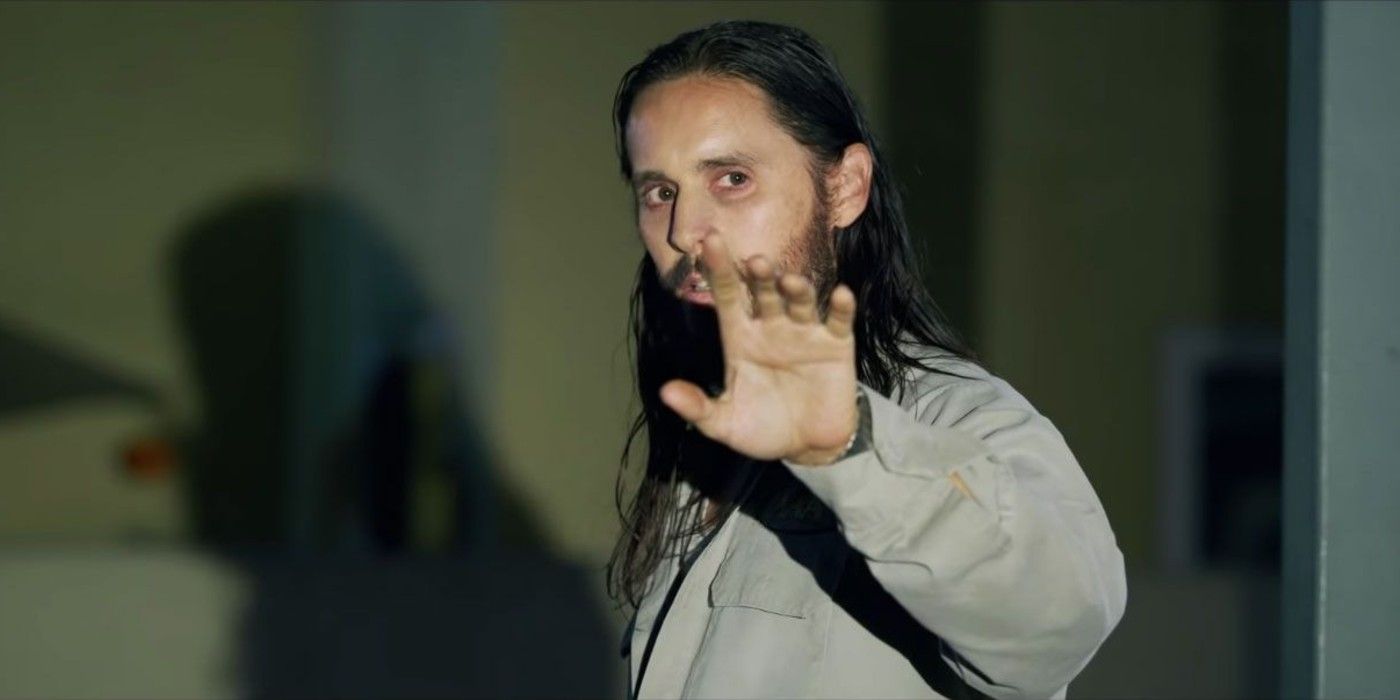
Jared Leto features in a scene towards the end of the film as the Joker that was shot towards Snyder’s completion of the film. Leto’s portrayal was derided in Suicide Squad (although I found enough to like in his portrayal) and in the scene he shares with Batman here, he is unhinged and unpredictable, diverting from other portrayals in that he focusses more on the ‘Wild Card’ aspect of the character.

This director’s cut also wildly succeeds on a visual level, playing to Snyder’s strengths. At no point in the 4 hour run time did I feel that the effects looked unfinished or rushed and the apocalyptic aesthetic of the film has far more weight than the brighter aesthetic of the theatrical cut. Fabian Wagner’s cinematography is outstanding – it didn’t make much of an impression in the theatrical cut but clearly, the majority of that cut consisted of reshoots. Wagner crafts some mesmerising images, complimenting Snyder-regular Larry Fong’s work on Batman v Superman.

Junkie XL’s metal-heavy and god-like score further elevates the film and is far more bombastic and ambitious than Danny Elfman’s stale score for the theatrical cut. That said, not all of Elfman’s score made it to the original cut and there is some material on the soundtrack that is excellent. Junkie XL successfully crafts new and memorable themes for the new superheroes introduced and it’s impressive that throughout the extended run time, it manages to sustain its quality.

Ultimately, Zack Snyder’s Justice League is a frequently astonishing and bold take on this DC lineup and it earns its four hour run time. Snyder has matured as a director and he has markedly improved on some of his lesser qualities in previous films in regards to storytelling and representations. The wider context of this director’s cut is fascinating in how different it is from what Warner Bros chose to release. The stark differences between both cuts is something that can and likely will be studied for years to come and having watched this director’s cut, one has to question the psychology of the decision to approve the theatrical cut for cinema release. It would be really interesting to see where the narrative of this cuts leads with further installments but that is unlikely to happen. Still, it’s miraculous that this director’s cut has seen the light of day and if there is the audience demand for the continuation of Snyder’s storyline, it would be barmy for Warner Bros to ignore its market.

⭐⭐⭐⭐ (Excellent)

Judas And The Black Messiah (Review)

Uncategorized

⭐⭐ (Poor)

Director: Shaka King
Starring: Daniel Kaluuya, Lakeith Stanfield, Jesse Plemons, Dominique Fishback, Ashton Sanders, Darrell Britt-Gibson, Lil Rel Howery, Algee Smith, Dominique Thorne, Martin Sheen
Certificate: 15
Run Time: 126 mins

Every Awards season, there is one undeserving film and this year, that honour goes to Judas And The Black Messiah. Directed by Shaka King, the film chronicles the story of Fred Hampton (Daniel Kaluuya) and his rise in the Illinois Black Panther chapter, culminating in his eventual betrayal by William O’Neale (Lakeith Stanfield), an FBI informant. The film is largely told from the perspective of O’Neale, who we meet at the beginning of the film as he raids a bar with a fake FBI licence and steals a car, only to then get arrested and inform for them by infiltrating the Black Panther party. Judas and the Black Messiah is one of the heavy hitters this Awards season and it has a star studded cast so why doesn’t the film work? 

The storytelling isn’t particularly coherent and King fails to capitalise on key moments. Plot points are glossed over throughout the film with no depth or meaningful character development. Most irritating is King’s glossing over of O’Neale’s betrayal at the end of the film and the results are emotionless, without consequence. The plot feels like a tick-box exercise. 

Much praise has been touted regarding Daniel Kaluuya’s performance, who looks almost certain to win, as the Black Panther leader. Kaluuya is good but the way the character is written is one-note and this is far from his career best performance. It’s a shame that certain actors get rewarded for work that isn’t their best. If anything, Lakeith Stanfield gives the better performance of the two as his character has more gravitas but not nearly enough emotional development to empathise with the sticky situation O’Neale finds himself intertwined in. 

The biggest mistake this film commits is it has an obnoxiously preachy tone, although luckily not to the extent of Selma, another Awards film that had received unanimous praise but I found it abhorrent. 

The film’s not without a handful of merits. There are some energetic moments here and there where it feels like the film is going to take off but then it never happens and these attempts are ultimately inert. The opening with O’Neale raiding a bar is well done, as is a pulse-raising shootout on a busy street against the police. The score by Mark Isham and Craig Harris is interesting at times and there is a good performance in a standout scene from Lil Rey Howery, a mirroring of an earlier scene. 

It’s a shame that with a cast and crew this good that the result is this inert. Whilst it has a couple of bright spots, for the most part, Judas And The Black Messiah is a slog of a biopic and a real disappointment. 

⭐⭐ (Poor)

The Little Things (Review)

Uncategorized

little things

⭐⭐⭐⭐ (Excellent)

Director: John Lee Hancock
Starring: Denzel Washington, Rami Malek, Jared Leto, Natalie Morales
Certificate: 15
Run Time: 128 mins

The Little Things is a neo-noir crime thriller that heavily wears its inspiration of David Fincher’s Se7en and Zodiac on its sleeve. Denzel Washington stars as a grizzled detective, Joe ‘Deke’ Deacon who crosses paths with recently appointed lead Detective Jimmy Baxter (Rami Malek). The two of the them team to investigate a string of serial murders and their search leads them to a strange loner (Jared Leto), who may or may not be the culprit. Director John Lee Hancock lends an assured hand to the material, allowing the film a familiar feel that revels in its atmosphere. His filmography is quite diverse from Saving Mr Banks and The Founder proving success but his most recent project for Netflix, The Highwaymen, was a howler.

Although familiar, for the majority of The Little Things, I was enamoured by the atmosphere, the development of the characters and the performances. Denzel Washington and Rami Malek make a great pair, Washington particularly convincing as the experienced but unorthodox sheriff. Jared Leto is suitably creepy as the suspect, although he has played this type of role before. The characters are all really well developed and Washington conveys his age and experience in his interactions with former acquaintances brilliantly. The interplay between Malek and his young family is also convincing. The central mystery is enticing as well. Thomas Newman’s score is excellent in being his signature but uncomfortable.

Unfortunately, the film runs into murky water in its final 15 minutes with its controversial ending. Granted, it is original but I found it very anti-climatic, abrupt and like a big nothing and more than a little underwhelming. Hancock justifies the decision to end the film in this way. The film could easily for me have gone on for longer to solve its central mystery, but the film isn’t really interested in this and is more focussed on character.

It is easy to understand the mixed reception to The Little Things but until its ending, I found it to be a riveting drama that is very cine-literate.

⭐⭐⭐⭐ (Excellent)