The Gray Man (Review)

Uncategorized
⭐⭐ (Poor)

Director: Anthony and Joe Russo
Starring: Ryan Gosling, Chris Evans, Ana de Armas, Jessica Henwick, Rege-Jean Page, Wagner Moura, Julia Butters, Dhanush, Alfre Woodard, Billy Bob Thornton 
Certificate: 15
Run Time: 129 mins

The Gray Man is the hotly anticipated project from The Russo Brothers and Netflix’s joint largest budget film to date along with Red Notice. After a shaky start in comedy, the Russo’s enjoyed a healthy stint at Marvel. They directed some of the most cherished entries – Captain America: The Winter Soldier, Captain America: Civil War, Avengers: Infinity War and Avengers: Endgame

Post-Marvel, the Russo’s have kept themselves busy. They directed the crime war drama Cherry last year, which I found to be an ambitious if flawed exploration of the cost of war. They’ve also produced some action films such as 21 Bridges and the better-than-expected Extraction and the critically acclaimed absurdist Everything Everywhere All At Once

The Gray Man is a James Bond-influenced espionage thriller and sees the Russo’s reunite with writers Christopher Markus and Stephen McFeely. The quartet have proved time and time again they are able to craft intelligent scripts with an equal amount of brain to brawn.

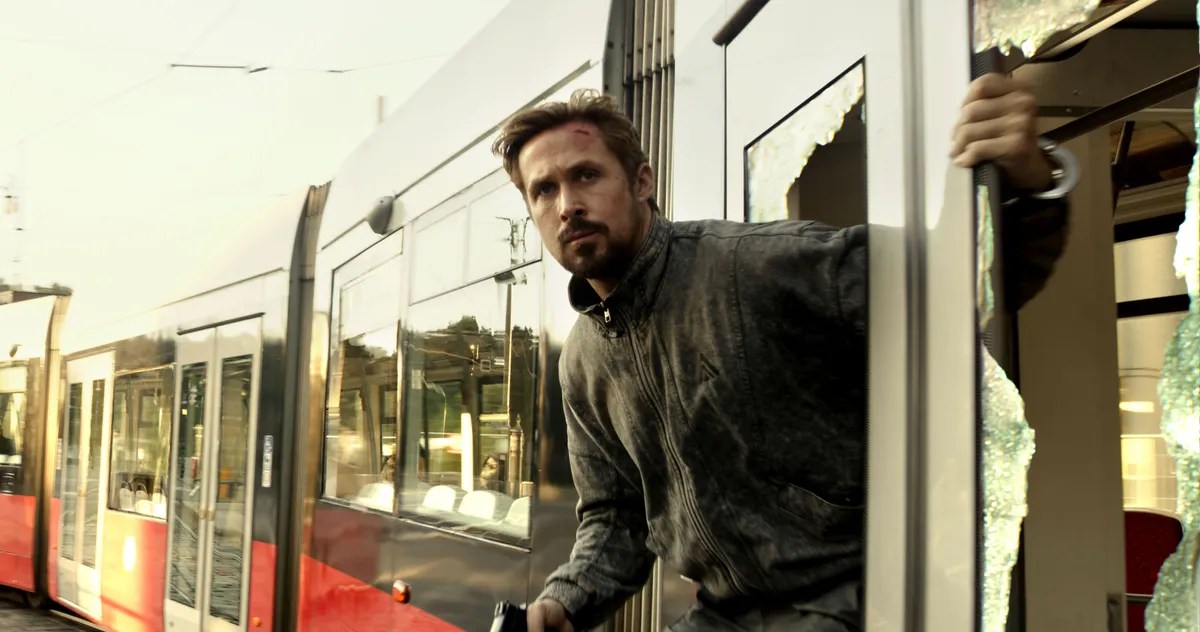
The film centres on ‘Sierra Six’ (Ryan Gosling), an ex-convict offered his freedom by a CIA senior official Fitzroy (Billy Bob Thornton) in exchange for working as an assassin. The film picks up eighteen years later in Bangkok and Fitzroy has now retired. The mission in Bangkok goes awry and Six discovers his life is on the line. All hell breaks loose and action mayhem ensues. 

The Gray Man is fairly entertaining but ultimately is a disappointment, considering the talent involved. This has got to be one of the most unintelligent films I have seen in quite some time and the script is on-the-nose and generic. The action isn’t particularly kinetic either. It’s CGI-heavy and the visual effects are surprisingly ropey for its extravagant $200 million budget. The film never really takes a moment to breathe either and that results in next to no character development. 

There’s a couple of fun performances to be had. Ryan Gosling is always reliable as a lead and Chris Evans hams it up in a villainous role. The ever-versatile Ana de Armas isn’t given all that much to do, which is a shame considering her action chops in films such as No Time To Die. There’s a brief but giddy performance from Wagner Moura and Billy Bob Thornton always turns in a reliable performance. Once Upon A Time In Hollywood’s Julia Butters is also a highlight as Fitzroy’s clinically vulnerable niece and gets the bulk of the film’s character development.

Henry Jackman’s score is all over the place and sometimes aggressively doesn’t fit with the action on-screen. The cinematography by Stephen F. Windon is also obtrusive and there’s an over reliance on shaky drone footage. 

The Gray Man does what it says on the tin and delivers on its action promise but that’s about it. It’s disappointingly thin both in story and character development and considering the back catalogue of the crew, the result should have been better than it is. 

⭐⭐ (Poor)
Thor: Love and Thunder (Review)

Uncategorized
⭐⭐⭐ (Good)

Director: Taika Waititi
Starring: Chris Hemsworth, Christian Bale, Tessa Thompson, Jaimie Alexander, Taika Waititi, Russell Crowe, Natalie Portman 
Certificate: 12A
Run Time: 119 mins


Thor: Love and Thunder is the latest entry in the Marvel Cinematic Universe and the fourth solo outing for the Norse God. The first two films were generally regarded as lesser entries in the Marvel canon, although I found aspects to like in both of them. Director Taika Waititi made the transition from smaller budget fare to the Marvel juggernaut and helmed the third film Thor: Ragnarok, which rejuvenated the series. It went hard on the comedy, retaining his signature humour and subverted expectations of what a Thor film should be – ultimately, a refreshingly different and vibrant direction. 

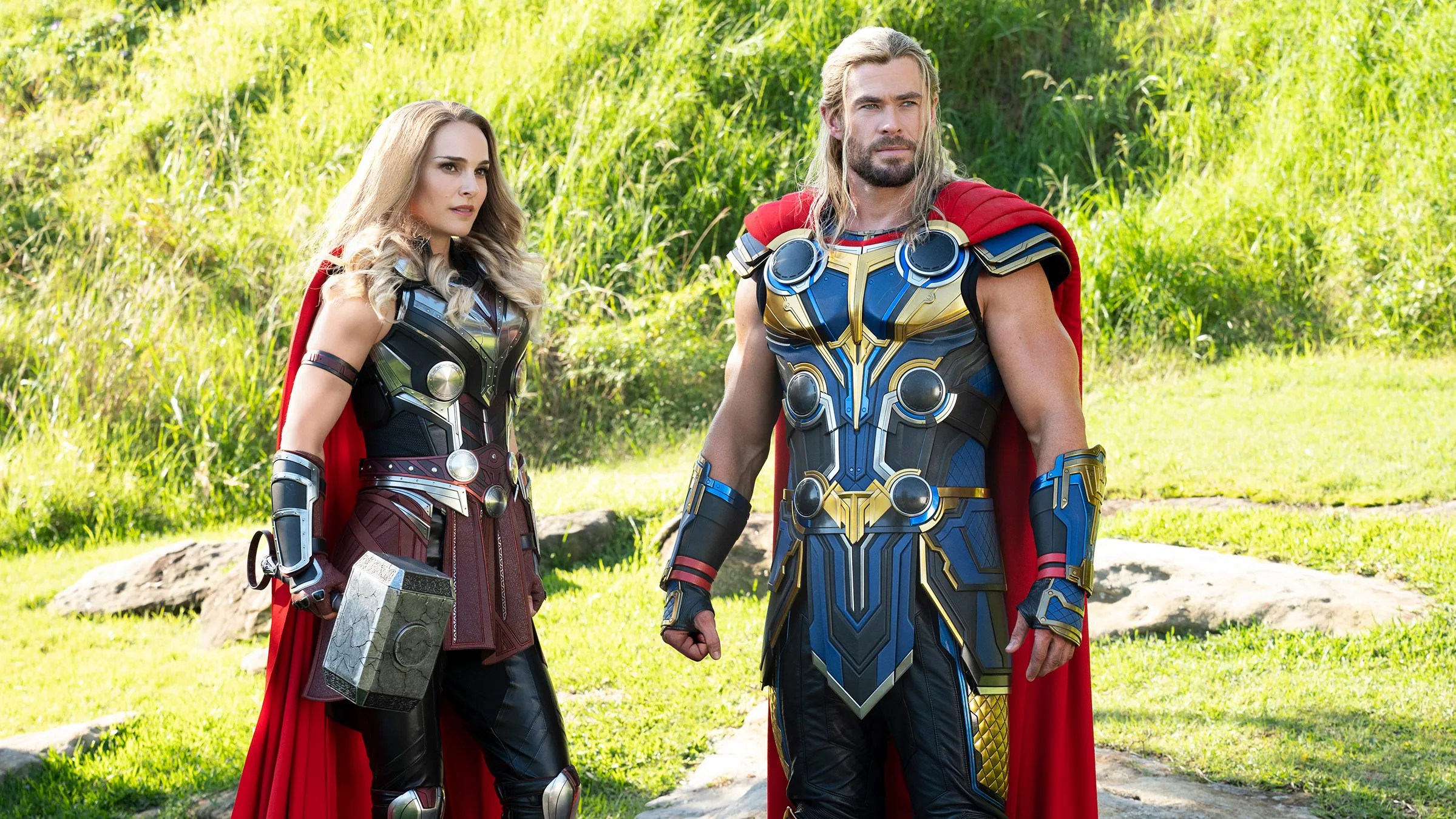
After the events of Avengers: Endgame, we find Thor, who has joined the Guardians of the Galaxy, part ways from the team after he learns of a distress signal from warrior Sif (Jaimie Alexander). She has come into contact with Gorr the God Butcher (Christian Bale), who is on a quest to kill all gods after the loss of his daughter and his sights are set on New Asgard.

The impending threat of Gorr’s destruction is complicated by Waititi bringing Dr. Jane Foster (Natalie Portman) back into the fray (her character was absent in Thor: Ragnarok), who discovers she has stage four terminal cancer and her path crosses with Thor. 

Thor: Love and Thunder has attracted some very sniffy reviews and while it’s far from the Marvel Cinematic Universe’s best, it’s perfectly watchable and there’s enough going on in it for it to be worthwhile. Some have commented it is a redux of Thor: Ragnarok and I would disagree – arguably the reason why the reviews have been lukewarm is because Waititi once again subverts expectations, but with some mis-steps. 

In many ways, Thor: Love and Thunder feels more akin to Thor and Thor: The Dark World in exploring the relationship between the titular character and Foster. Waititi injects a fair amount of heart and clearly revels in digging deeper into their romantic banter. 

Chris Hemsworth once again proves his game as the God and successfully balances both the comedic and tragic elements Thor is exposed to. It’s a welcome return for Portman, too, and the pair share a healthy chemistry. 

Christian Bale is excellent as Gorr but he’s woefully underused. Waititi’s decision to bathe the character and his surroundings in black-and-white is inspired, affording the vampiric character a Nosferatu quality. 

Outside of Gorr, the film is visually a mixed bag. Some of the visual effects are surprisingly ropey for a film costing $250 million and Marvel has attracted controversy over the treatment of its VFX artists, specifically with this film. A sequence of Thor communicating with a teenager is particularly poorly realised visually and there are also instances of obvious green screen – I don’t see the film aging well in this respect. At least Barry Idoine’s cinematography is interesting, although the score by Michael Giacchino and Nami Melumad is sadly forgettable. 

Thor: Love and Thunder isn’t the freshest film in Marvel’s canon but Taika Waititi’s Thor: Ragnarok follow-up is a mostly entertaining and sincere outing for the God of Thunder. Waititi doubles down on the humour and the cast are mostly game, although Bale’s villain gets shortchanged in the proceedings. Despite its flaws and ramshackle construction, Thor: Love and Thunder gets enough right to make it worthwhile. 

⭐⭐⭐ (Good)

The Black Phone (Review)

Uncategorized
⭐⭐⭐⭐ (Excellent)

Director: Scott Derrickson
Starring: Mason Thames, Madeleine McGraw, Jeremy Davies, James Ransone, Ethan Hawke
Certificate: 15
Run Time: 103 mins

The Black Phone sees horror maestro Scott Derrickson return to his roots, a director most famed for The Exorcism of Emily Rose and his magnum opus, Sinister. More recently, Derrickon’s experienced a spell with Marvel, directing Doctor Strange which was one of my favourite entries in the ever-expanding canon. Not only was it visually arresting, but his authorship was somewhat on display, which is often the downfall of many a Marvel film. 

Derrickson was meant to direct its sequel Doctor Strange in the Multiverse of Madness and intended to further lean into his horror credentials with it but ended up departing over creative differences. Sam Raimi, another director esteemed for his work in the horror genre, ultimately stepped in and whilst the film is successful, I’d argue Derrickson’s vision could have been something very special. 

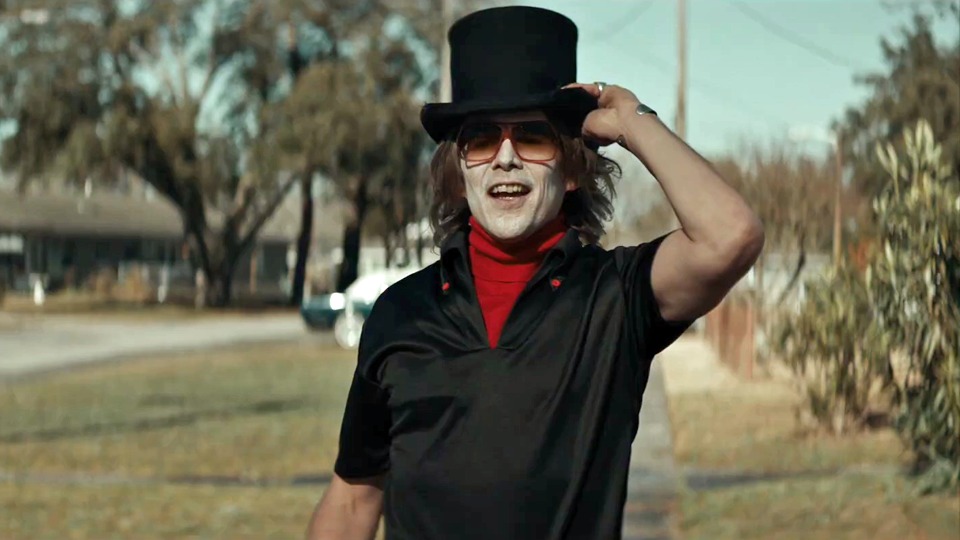
The Black Phone sees Derrickson reteam with writer C. Robert Cargill, this time adapting a short story of the same name by Joe Hill, son of Stephen King. Set in a Denver suburb, a serial child abductor dubbed ‘The Grabber’ (Ethan Hawke) roams the streets. We follow a 13 year old boy called Finney (Mason Thames) who has a close relationship with his supportive, psychic sister Gwen (Madeleine McGraw). They live with their alcoholic father, Terrence (Jeremy Davies) after their mother died in a suicide. Gwen’s abilities take after her mother and Terrence tries to beat it out of her. Finney struggles bullying at school. 

Finney is abducted by ‘The Grabber’ and locked in a cellar. There is a disconnected phone which rings and when Finney answers, it is the voices of the previous victims who give him advice on how to deal with the situation. Gwen receives visions and she leads her own investigation to try and free Finney. 

The Black Phone is an excellent, intelligent horror film that is very well-directed by Derrickson. He crafts a delicious setting, leaning into 1970’s suburbia and isn’t afraid of unflinchingly portraying playground violence. Derrickson takes the narrative to dark places and the fast pacing grips you instantly. The film is very cine-literate, with Derrickon’s passion for film evident on the screen, be through the inclusion of period television shows from the time and the playful nods to It. On that note of the nods to Stephen King, it’s not unreasonable that his son carries some of his traits such as a community of children going missing, but it’s not derivative and the tone isn’t cynical. 

The script by Derrickson and Cargill deftly humanises the characters through meaningful arcs and avoids resorting to caricatures. There are also some exhilarating set pieces and I loved the creative choice to portray some of the previous victim’s lives on grainy film, which was another highlight of Sinister. The film is further bolstered by an interesting and unnerving score by Mark Korven and it’s beautifully shot by Brett Jutkiewicz.

The cast are excellent, especially Thame and McGraw who make an explosive impression. Thame makes for a compelling lead and deftly carries the baggage from bullied school kid to learning to stand up for himself. McGraw’s foul-mouthed but heroic sister gets many of the film’s best lines and she is surely destined for greatness. Her dream sequences are beautifully captured and possess a metaphysical quality. 

Hawke is also terrific – he has not played a villain on-screen before and ‘The Grabber’ is an unhinged and suitably sinister screen presence. The costume design for the character is brilliant, as he literally dons a threatening multi-layered mask. I wish his character was given a little more meat though and his interactions with Finney were longer or more frequent to make the horror villain really stand the test of time but I can understand why Derrickson would want to go down a more enigmatic route. 

The weak link of the cast is surprisingly James Ransone as a cocaine addict who is also trying to put the pieces of the puzzle together, independent of the police. It’s not that his performance is lacking but the character isn’t particularly well developed and a plot revelation that involves him felt out of place. 

Although the film aligns most closely with the horror genre, it’s not particularly frightening. There are some jump scares here and there and Derrickson conjures a generally creepy atmosphere but the film is more of a psychological thriller with supernatural elements. 

The Black Phone is a terrific ride from start to finish and further cements Derrickson as a master of the horror genre. It features some terrific performances from its child actors and Ethan Hawke and it’s a film that feels like it’s made with passion. It’s not perfect – Hawke’s villain could have been further explored, Ransone’s character arc isn’t very well executed and I wish the film further explored the link between overcoming one’s demons and the repercussions stemmed from that. Sinister remains Derrickson’s best work, however The Black Phone is up there and is one of the best films of the year so far. 

⭐⭐⭐⭐ (Excellent)

Spiderhead (Review)

Uncategorized
⭐⭐⭐⭐ (Excellent)

Director: Joseph Kosinski
Starring: Chris Hemsworth, Miles Teller, Jurnee Smollett, Mark Paguio, Tess Haubrich, Angie Millikan
Certificate: 15
Run Time: 107 mins

Spiderhead is the second film of the year to be directed by Joseph Kosinski, who is currently enjoying healthy box office returns and critical acclaim with Top Gun: Maverick, currently in cinemas. This straight-to-Netflix dystopian sci-fi thriller is set on a state-of-the-art penitentiary, called Spiderhead. The inmates are convicts from state prisons who have volunteered to head to the facility to reduce their sentence time. They wear a surgically attached device that administers a cocktail of mind-altering drugs, the effects analysed by Steve Abnesti (Chris Hemsworth) and his assistant, Mark (Mark Paguio). Abnesti runs the prison with an open-door policy and the inmates are unsupervised – they have their own rooms and are free to roam around the facility. One of the inmates, Jeff (Miles Teller) represents the audience insight into the narrative and the first act of the film explores an experiment with him and two female inmates. 

It’s a fascinating concept and the characters are subjected to make some dark and difficult decisions. Spiderhead is directed with flair by Kosinski and the performances are great. Miles Teller is typically reliable and carries the baggage of his character’s crimes with the will to change his future convincingly. Hemsworth is excellent as the voyeuristic Abnesti, whose charisma walks a fine line between prickly comedy and satisfying ridiculousness. 

Cinematographer Claudio Miranda captures the prisoners’ point of view excellently, the hues of artificial colours inside the penitentiary juxtaposed with the lush, tropical island settling. Kosinski does well to methodically reveal character backstories, maintaining tension throughout proceedings. 

There’s also an interesting soundtrack by Kosinski-regular Joseph Trapanese, who flits between a predominantly electronic original score with 1970s rock, with some of the tracks are interestingly inserted dietetically into the film. 

The third act of the film changes gear from exploring its interesting themes and human behaviour to a more action-heavy delirium. I suspect this is why the film is receiving mixed reviews but I got on board with it and liked how Kosinski leaned into the ridiculousness of the premise. 

Spiderhead is an original sci-fi thriller that I had a lot of fun with. Kosinski constantly keeps the film fresh, being careful to keep audiences on their toes with its narrative and the cast are all fresh. I found the ending a natural and satisfyingly bleak place to develop its story and the film is bolstered by some entertaining performances.  

⭐⭐⭐⭐ (Excellent)

Lightyear (Review)

Uncategorized
⭐⭐⭐ (Good)

Director: Angus MacLane
Starring: (voices of) Chris Evans, Keke Palmer, Peter Sohn, Taika Waititi, Dale Soules, James Brolin, Uzo Aduba
Certificate: PG
Run Time: 105 mins

Lightyear is the latest from Disney Pixar, a spin-off of the family favourite Toy Story character voiced by Tim Allen. The Toy Story series was a perfect trilogy and when Pixar announced a fourth film, many were trepidatious. While Toy Story 4 is, by far, the weakest in the series, it’s remains a ‘pretty great’ quadrilogy. Pixar are now heading down the prequel route with Lightyear but the studio says the film is divorced from the Toy Story series. A succinct opening title card states the film’s intention – “In 1995 Andy got a toy. That toy was based on a movie. This is that movie.” 

Chris Evans voices the space ranger and the film opens with Buzz and his commanding officer and best friend, Alisha Hawthorne, exploring a potentially habitable planet. Like the figure audiences have grown to love in Toy Story, this version of Lightyear is equally stubborn and prefers to work alone. 

Buzz and Hawthorne soon discover the planet is home to devil’s snare-like hostile life forms and the vessel they arrived on sustains damage. The planet ultimately becomes home to the duo and in time, a colony including Hathorne’s granddaughter Izzy, as Buzz is unable to crack the code of hyperspace travel. Buzz feels responsible for his mistake and feels it his mission to move the colony off the planet to pastures new. 

Lightyear is an amiable but unremarkable entry from Pixar that hits obvious narrative beats. It’s beautifully animated and the cinematography of Pixar-regular Jeremy Lasky, is inspired, but when you’re focussing on the interstellar aesthetics and not the story, there’s clearly a problem somewhere. 

On the plus side, Chris Evans makes the character his own and seems to have made an effortless step into voice acting. The script is tightly-paced, although it doesn’t leave a lot of time for characters to breathe and for them to be fleshed out. Other than the brilliant feline robot, Sox, who gets some excellent lines delivered in deadpan by Peter Sohn, the humour didn’t really work for me. 

The character interactions between Lightyear and the misfit crew are well-intentioned and they build a meaningful rapport. Taika Waititi essentially voices a spaceman version of himself and Keke Palmer is fine as Hawthorne’s granddaughter. Dale Soules as Darby Steel rounds out the crew and gets some humorous moments here and there, an ex-convict with a penchant for munitions. 

Director Angus MacLane clearly has a love of science fiction and that’s evident in the film’s reverent tone. But he seems to be reluctant to deal with the reasonably philosophical themes of change and personal growth, only hinting at them now and again. The score by Michael Giacchino is serviceable but never particularly rousing.  

Perhaps Lightyear’s execution is intentionally obvious – if Andy received the Buzz Lightyear figure in 1995, that would date the film to the 1980s. On that note, it succeeds and if you haven’t watched a film of this type before, of course a younger child would enjoy it. 

Lightyear is a reasonably stirring and well-intentioned film but it doesn’t particularly advance the series, nor is it particularly memorable. It’s a film that deserves a stronger concept and story and it doesn’t live up to the vast majority of Pixar’s other animated works. 

⭐⭐⭐ (Good)

Hustle (Review)

Uncategorized
⭐⭐⭐ (Good)

Director: Jeremiah Zagar
Starring: Adam Sandler, Queen Latifah, Ben Foster, Juancho Hernangómez, Robert Duvall, Anthony Edwards
Certificate: 15
Run Time: 117 mins

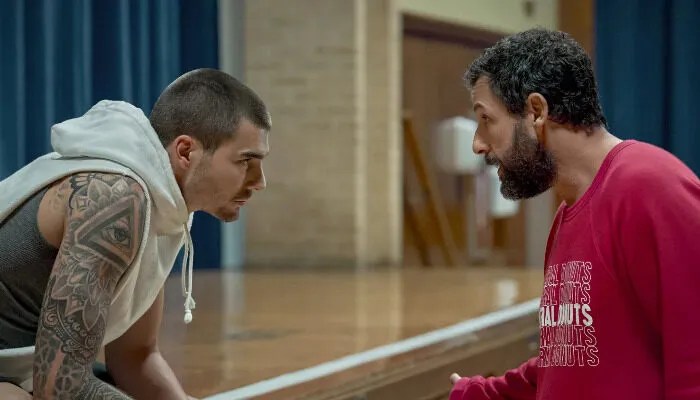
Hustle is a sports drama and represents the second feature length film to be directed by Jeremiah Zagar, following his debut We The Animals. Adam Sandler stars as Stanley Sugarman, a basketball NBA scout for the Philadelphia 76ers who is beyond the prime of his career. After a turn of events see him head to Spain, he stumbles upon an unknown but talented player in a local game called Bo Cruz (Juancho Hernangómez). After some initial hesitation stemmed from his family arrangements, Cruz accepts Sugarman’s invitation and flies to America in an attempt to draft him into the NBA scouts. Sugarman also faces life baggage as he is consistently away from his family, his wife Teresa (Queen Latifah) and daughter Alex (Jordan Hull). There’s a repeated, poignant line that he has missed the last nine of his daughter’s birthdays. 

Hustle doesn’t particularly stray from sports drama convention but it’s an investing and consistently entertaining drama from start to finish. After giving the performance of his career in the thoroughly unnerving Uncut Gems, Adam Sandler continues to turn his poor comedic career choices around with another excellent performance. Sandler sells the washed-up mentality of the scout but clearly still has lots of passion for the sport. When he first witnesses Cruz playing in a local pick-up game, Sandler deftly portrays Sugarman’s lifelong inspiration rushing back to him in one hit, having been sucked dry for many years.

Juancho Hernangómez is also terrific as Cruz and is given a compelling back story for why he finds himself in the situation he is initially in at the start of the film. Both Sandler and Hernangómez share an absorbing chemistry, which makes the duo easy to root for. Of the rest of the cast, Latifah isn’t given much to work with as Sandler’s wife, and the ever-versatile Ben Foster is also short-changed as Sandler’s disparaging boss. 

It may not be as unpredictable as a basketball fixture, but Hustle is a well-intentioned film with a spring in its step bolstered by two great performances, even if it chooses to stick closely to convention. 

⭐⭐⭐ (Good)

Men (Review)

Uncategorized
⭐⭐⭐ (Good)

Director: Alex Garland
Starring: Jessie Buckley, Rory Kinnear, Paapa Essiedu, Gayle Rankin
Certificate: 15
Run Time: 100 mins

Men is the third film from Alex Garland, whose first two sci-fi films Ex_Machina and Annihilation were both thoughtful, thrilling and visually interesting pieces. Garland sidesteps from sci-fi into British folk horror and this film follows a young widow, Harper (Jessie Buckley) who ventures to the Cotswolds for a well-earned break from London city life and to recover from the death of her husband. 

She meets Geoffrey (Rory Kinnear), the eccentric owner of the holiday let and Harper later dismisses him to her friend on a FaceTime calling him a “certain type”. Harper is clearly still raw from the event that made her a widow and shortly after she reaches her holiday retreat, she starts to become tormented by strange men in the village, all of whom are portrayed by Rory Kinnear. Harper starts to become overwhelmed by the titular men, who all share predatory or patronising traits.

Men’s first two acts are thrilling and Garland skilfully drip-feeds his audience details of her past trauma a piece at a time. He establishes a deeply unsettling tone and deftly ramps up the tension through Harper’s mental paranoia. The film is as much a metaphorical piece as much as it is a horror, using its frightening elements as allegories for misogyny, grieving and rebirth. 

Unfortunately, the film nosedives in its third act. On the plus side, there’s some suitably slimy body horror but Garland is self-indulgent and throws away any subtlety he builds in its first two acts. It just becomes rather silly and certainly not as clever as it thinks it is. 

The film is bolstered by an eery choral soundtrack from Garland regulars, Ben Salisbury and Geoff Barrow. The duo combine diegetic music with non-diegetic, one scene imaginatively sees Harper stop in a tunnel and sing chords, to experience the effects of the echo. 

Rob Hardy vividly captures the beauty yet foreboding nature of the Cotswolds. He captures many arresting images, from the full blown body horror to the biblical apple tree in the holiday let’s front garden.   

Jessie Buckley’s great as the prickly Harper. I’ve been quite sniffy on her performances in the past, especially with The Lost Daughter where her accent wanders all over the place (I still cannot grasp how she earned an Oscar nomination), but this role plays to her strengths. This is career best work from Rory Kinnear – all of his characters are strikingly individual and have their own personalities, which is an impressive feat. 

One aspect that threw me out somewhat in the film’s opening was a geographical goof – Harper is seen driving on the M40 motorway as there is a sign for Princes Risborough and Watlington which are small towns on the Oxfordshire / Buckinghamshire border but Kinnear’s landlord makes reference to how “the M4 can be a bore”. Harper would have had no reason to travel on the M4 to the Cotswolds if she is driving on the M40 past these towns. 

It’s a shame that Men falls apart in its third act, but for its first two, I was generally really on board with the film. Garland initially unveils his hand methodically and he coaxes two excellent performances from Jessie Buckley and Rory Kinnear. Men may be Garland’s weakest film but it’s still a strong piece from the director and I’d rather a filmmaker take a risk and it not fully succeed than play it safe.  

⭐⭐⭐ (Good)

Top Gun: Maverick (Review)

Uncategorized
⭐⭐⭐ (Good)

Director: Joseph Kosinski
Starring: Tom Cruise, Miles Teller, Jennifer Connelly, Jon Hamm, Glen Powell, Lewis Pullman, Ed Harris, Val Kilmer
Certificate: 12A
Run Time: 130 mins

Top Gun: Maverick is the long-awaited sequel to the late Tony Scott’s 1982 original, a film which quite literally propelled Tom Cruise’s career. Very much a product of its time in its tone and treatment of women, while the action sequences are admirable and Cruise’s performance is earnest, I can’t say I’m a big advocate of the original. This sequel is directed by Joseph Kosinski, who most recently directed the excellent forest-fire action drama Only The Brave and he reunites with some of the cast and crew such as Miles Teller, Jennifer Connelly and cinematographer Claudio Miranda. 

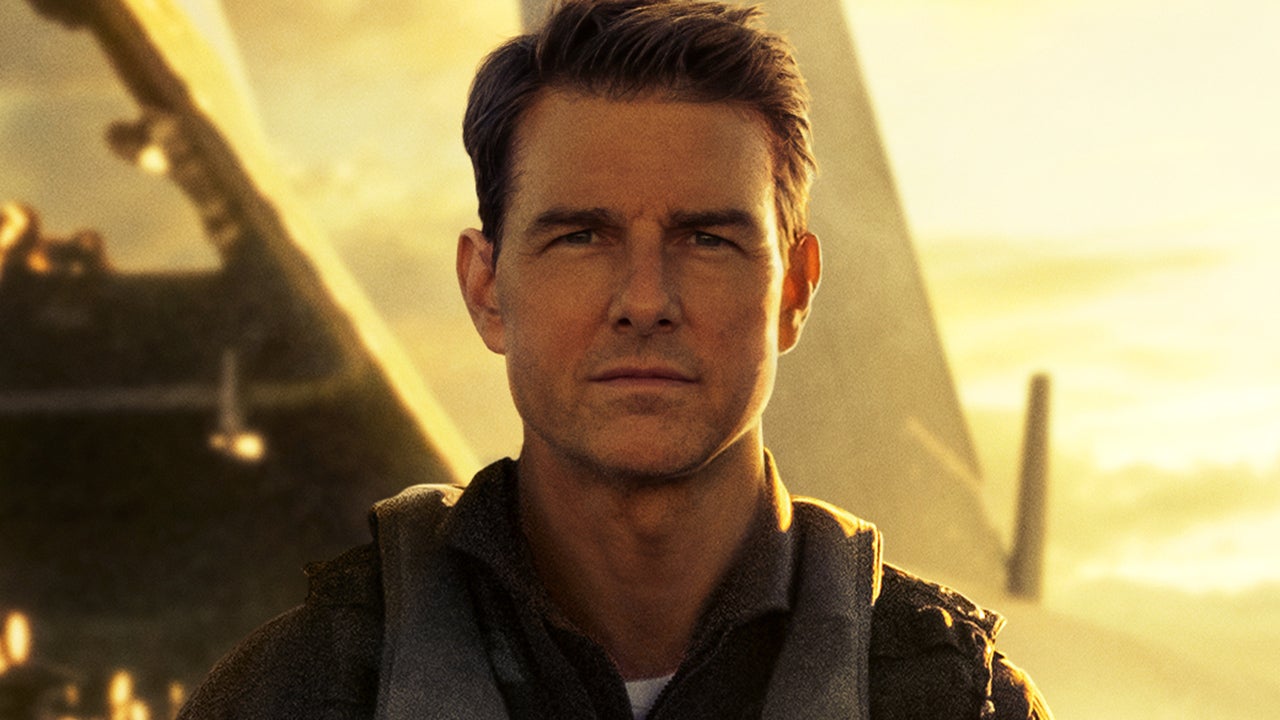
Cruise returns as the titular Maverick, whose career has stalled thirty years later at the Captain rank after graduating from TOPGUN, due to repeat insubordination. Fellow TOPGUN rival and friend Iceman (Val Kilmer) has kept Maverick’s career afloat. 

Maverick is drafted in to tutor current TOPGUN students and to lead them on a mission to destroy an unsanctioned uranium enrichment plant. It relies on two miracles as it sits at a low altitude in a canyon. They have two chances to shoot at the target that lies in the canyon and to then escape, they have to fly up a steep bank where the pilots will experience forces in excess of 9.5G’s. The mission is further compounded by the fact they have to achieve all of this in the space of two and a half minutes. 

Maverick is uneasy with the assignment firstly due to its complexity but chiefly, as one of the test pilots in the group is Rooster (Miles Teller), son of Goose who was famously cooked in the first film. Maverick feels responsible for Goose’s death and both Maverick and Rooster share disdain for each other. 

Top Gun: Maverick is a surprisingly good film and is vastly superior to the original. While its story is familiar and fairly predictable, it is significantly more coherent and focussed with a singular narrative to achieve this specific mission. Tony Scott’s original wrangled in different directions and its climax sequence felt tacked on and unearned. 

The flight sequences are particularly excellent and are nail-biting in moments. It has the precision of Mission: Impossible director Christopher McQuarrie who co-writes and produces the film.

I’ve long been a critic of Tom Cruise and I’d argue he has far more misses than hits. Cruise’s performance works here as he plays an older and jaded instructor, whose ego and arrogance have been somewhat tarnished by his experiences. Miles Teller is reliably excellent as Rooster but there isn’t quite as much meat to the bone to the tumultuous relationship between him and Maverick as there could have been. There is a poignant scene with Val Kilmer, who returns as Iceman to offer his advice to Maverick and his voice is recreated using archival footage, after Kilmer lost his voice following throat cancer. 

Jennifer Connelly is rather wasted in a mundane role as Cruise’s love interest – like the original, Kosinski mostly fails with the treatment of women, although that said, Monica Barbaro as a courageous test pilot is excellent. 

The score by Harold Faltermeyer, Lady Gaga and Hans Zimmer fits in well with the film, although it isn’t particularly memorable. The composers continue the theme of pop music interspersed with an original score and they reuse Kenny Loggins’ iconic Danger Zone.  The film is richly shot by Claudio Miranda, who is particularly adept with the action sequences where he doesn’t resort to frenetic quick cuts. 

Top Gun: Maverick is an excellent action sequel that improves on the original in almost every way. The flight sequences are thrilling and the story thrives in its simplicity. Kosinski wisely finds the right balance between relying on nostalgia and creating an original piece. It’s not quite the action masterpiece that some are claiming it to be though – it’s not as radical a piece as George Miller’s Mad Max: Fury Road, which was essentially an entire film of rip-roaring action, and it doesn’t pack many narrative twists up its sleeve.  But it doesn’t need to be. For Top Gun: Maverick to be an improvement on the original is a miracle in and of itself and I’m glad it exists. 

⭐⭐⭐ (Good)

Everything Everywhere All At Once (Review)

Uncategorized
⭐⭐⭐ (Good)

Director: Dan Kwan & Daniel Scheinert
Starring: Michelle Yeoh, Stephanie Hsu, Ke Huy Quan, Jenny Slate, Harry Shum Jr, James Hong, Tallie Medel, Jamie Lee Curtis
Certificate: 15
Run Time: 139 mins

Everything Everywhere All At Once is the second feature film directed by Dan Kwan and Daniel Scheinert (collectively known as ‘Daniels’). Their debut feature was Swiss Army Man, a surreal comedy that starred Paul Dano as a man marooned on an island who is joined by Daniel Radcliffe as a farting corpse. Yes, you read that right. Despite critical acclaim, I couldn’t connect with the film at all and found it too zany for its own good. 

It is difficult to categorise Everything Everywhere All At Once as it blends many genres but it is most closely an absurdist science fiction with elements of black comedy and martial arts. 

The film stars Michelle Yeoh as Evelyn Quan Wang, an overwhelmed laundromat owner who lives with her goofy husband, Waymond (Ke Huy Quan). The laundromat is being audited by the IRS and Waymond is similarly dissatisfied with life, ready to hand Evelyn divorce papers. 

Family matters are complicated further by their daughter, Joy (Stephanie Hsu) who is trying to get her mother to accept her girlfriend, Becky (Tallie Medel). This is as well as Evelyn’s demanding wheelchair-bound father Gong Gong (James Hong), who has just arrived to stay with the family from China. 

It’s an excellent set-up and the directors deftly introduce the family members and their dysfunctional dynamic. The film then veers into genre mayhem as it’s crunch-time for the family with the IRS (Jamie Lee Curtis plays the interrogating inspector).  Evelyn is introduced to the concept of the Multiverse by ‘Alpha Waymond’, a version of Waymond from the ‘Alphaverse’. He explains that each decision a person creates an alternate universe and he has developed the ability to jump across universes. The multiverse is being threatened by Jobu Tupaki, formerly Alpha Joy, who can experience every universe simultaneously following a disagreement with Alpha Evelyn. 

The multiverse has been explored extensively in film recently, with Marvel using it to align different comic properties and expand the overarching narratives with films such as Spider-Man: No Way Home and Doctor Strange in the Multiverse of Madness. I have a mixed outlook on the concept, as it tends to lessen the stakes of character emotional involvement, as well as making them more expendable. Kwan and Scheinert explore the concept differently as they draw parallels between universes and the life choices Evelyn has made, which affords the film an existential and nihilistic quality. The multiverse is therefore not for the sake of simply advancing a narrative but to function as a thematic mirror. 

Everything Everywhere All At Once is a film that needs to be watched repeatedly to fully understand it but my impressions after a first viewing are mixed. Starting with the positives, the first half an hour before the multiverse shenanigans are introduced is pretty much perfect. Once the multiverse concept is introduced, the film goes off the rails. There’s some giddy and inventive action sequences and heading into the third act, the film has a celestial quality as it starts to merge the multiverse with the theme of family. At times, the film is also quite profound. 

Another plus are the performances, which are uniformly excellent. Michelle Yeoh gives one of the best performances of her career as Evelyn, who goes through quite the emotional arc. What a comeback for Ke Huy Quan, who peaked as a child with Indiana Jones and the Temple of Doom and The Goonies before largely leaving Hollywood. He matches Yeoh in the scenes they share and has a sincere yet earnest quality. 

Stephanie Hsu is clearly a talent to watch for as she is brilliant as the daughter with an identity crisis. James Hong is given some great moments as the directors explore the inevitable problems old age can bring but brilliantly subvert this at times. Jamie Lee Curtis is fine as the IRS representative, whose character morphs into other personalities but I found the character strange and hard to connect with. 

Onto the negatives, again with the caveat that I need to rewatch the film, but I found the film to be painfully overlong and repetitive. The novelty of the action sequences wore off quickly once the multiverse concept is let out of the bag and there’s just far too much baggage and a lack of momentum before the film starts to draw connections between the multiverse and the mother-daughter relationship. A good forty minutes or so could be cut. 

I didn’t find the film particularly funny and the Daniels often revert to their boisterous stoner humour. They explore absurdist realities such as one where people have hotdogs for fingers as well as one that bizarrely features a raccoon transposition of Ratatouille. Both subplots are tediously overextended and aren’t as funny or profound as the Daniels intended. 

On initial viewing, Everything Everywhere All At Once is a decidedly mixed bag. The film features excellent performances and its presentation of family is often well-judged. The film is strongest in its first and final acts but I found large stretches of its middle to be convoluted and repetitive and the humour often didn’t work for me. It’s a gargantuan step-up from Swiss Army Man and an ambitious follow-up but I don’t think the film is quite as intelligent as it thinks it is and find it quite overrated. I wish I liked it more. 

⭐⭐⭐ (Good)

Doctor Strange In The Multiverse Of Madness (Review)

Uncategorized
⭐⭐⭐ (Good)

Director: Sam Raimi
Starring: Benedict Cumberbatch, Elizabeth Olsen, Chiwetel Ejiofor, Benedict Wong, Xochitl Gomez, Michael Stuhlbarg, Rachel McAdams
Certificate: 12A
Run Time: 126 mins

Doctor Strange in the Multiverse of Madness is the latest in the ever-expanding Marvel Cinematic Universe. It principally follows the events of Spider-Man: No Way Home and the Disney+ television series WandaVision. Although this is the officially Doctor Strange’s second solo film, the Sorcerer Supreme has featured in many Marvel films now, a key figure of Avengers: Infinity War and Avengers: Endgame, as well as a brief appearance in Thor: Ragnarok

His first solo outing, Doctor Strange, was one of the best entries in the Marvel canon, a thoroughly entertaining self-contained film directed by Scott Derrickson. Derrickson is most famous for his horror films such as The Exorcism of Emily Rose and Sinister and was able to put his own distinctive stamp on the material. 

Derrickson was slated to write and direct this sequel but unfortunately joins an ever-increasing group of directors who leave a project due to creative differences. It is always difficult for a distinguished director to be granted their own voice in the Marvel juggernaut and the studio have received repeated criticism for having a ‘house’ style. Luckily, Sam Raimi stepped in, another horror auteur, who found fame through his Evil Dead trilogy and the overrated and silly Drag Me To Hell. Raimi is also no stranger to the superhero genre, having directed the original Tobey Maguire Spider-Man trilogy.

Doctor Strange in the Multiverse of Madness is a well-directed and generally entertaining sequel that takes ambitious risks in its narrative with its characters. From a directorial standpoint, Raimi mostly succeeds with putting his signature stamp on the material such as the exploration of the themes of possession, witchcraft and apparitions. There are a handful of jump scares too, which is novel for a Marvel entry, although they are relatively tame for a mature audience. 

The film is often visually arresting and the cinematography by John Mathieson is interesting. Like his work on Logan, Mathieson prefers to hold onto a shot than resort to quick cuts and the camera movement is often disorienting and kaleidoscopic. 

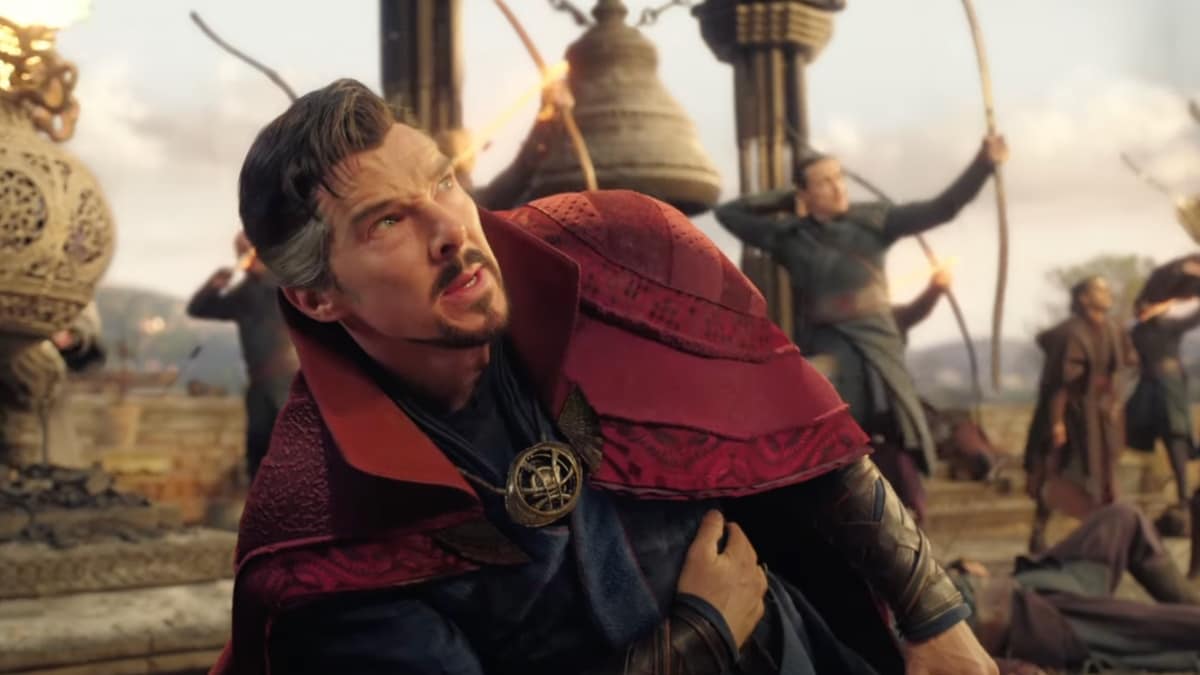
There are also some strong performances. Benedict Cumberbatch is effortless as the Sorcerer Supreme and the film offers him a natural character progression. Elizabeth Olsen is also excellent as Wanda Maximoff and the film offers her an ambitious but satisfying arc, although it is likely to draw controversy amongst some fans. Newcomer Xochitl Gomez makes a strong impression as America Chavez, a teenager who has the ability to change between ‘Multiverses’ (universes) when she is afraid, who is being hunted by an individual and Doctor Strange is forced to team up and protect her. 

There is also an interesting score by Danny Elfman, who regularly collaborates with Raimi, that has a domineering presence throughout the film. Some cues really gel with the material, although some doesn’t and it is disappointing that Elfman doesn’t revisit Michael Giacchino’s original and very memorable theme. In fact, it is quite hypocritical as Elfman controversially chose to ignore Hans Zimmer and Junkie XL’s themes for the theatrical edition of Justice League, citing that the best way to justice the characters was to to revisit their original themes. 

Doctor Strange in the Multiverse of Madness’ most significant downfall is its ramshackle construction. It is all over the place narratively and not everything sticks. For every bold choice, there is a regressive counterpart and the film isn’t paced particularly well. It comes in at a reasonable 126 minute run time but there is a lot of narrative to get through and some scenes race through character beats whilst others are tiresome. The film opens rather wonkily, with a silly first-act action sequences between Strange, Chavez and a creature but luckily finds its feet soon afterward. At least Raimi doesn’t fall into the frequent trap of comic-book films overdoing the third act with an uninteresting and overlong CGI-heavy battle, which has hurt many a Marvel film. 

Although Marvel are hell-bent on developing a Multiverse, the notion is always a difficult concept as it feels like a cheap way of rectifying a narrative which lessens the stakes for the characters. That said, it’s not Doctor Strange in the Multiverse of Madness’ fault specifically, as it’s a running theme throughout the canon. 

Doctor Strange in the Multiverse of Madness is ultimately a hodgepodge of a sequel, but an often entertaining ride and Raimi is able to put his personal stamp on the material to a degree. I wish Raimi was allowed even more free rein and leaned harder into the horror angle, as that feels like a natural tone for the material. There will always be a part of me that wonders what Scott Derrickson had in mind, as he also wanted to head down the horror route. Had he been able to deliver the film that he envisaged, it could have been very special. Doctor Strange in the Multiverse of Madness isn’t top-tier Marvel or Sam Raimi fare, but it’s an ambitious and for the most part, an exciting if flawed sequel. 

⭐⭐⭐ (Good)