Rental Family (Review)

Review
Still from 'Rental Family'

Rating: 3.5 out of 5.

Director: Hikari
Starring: Brendan Fraser, Takehiro Hira, Mari Yamamoto, Shannon Mahina Gorman, Akira Emoto
Certificate: 12A

Run Time: 110 mins

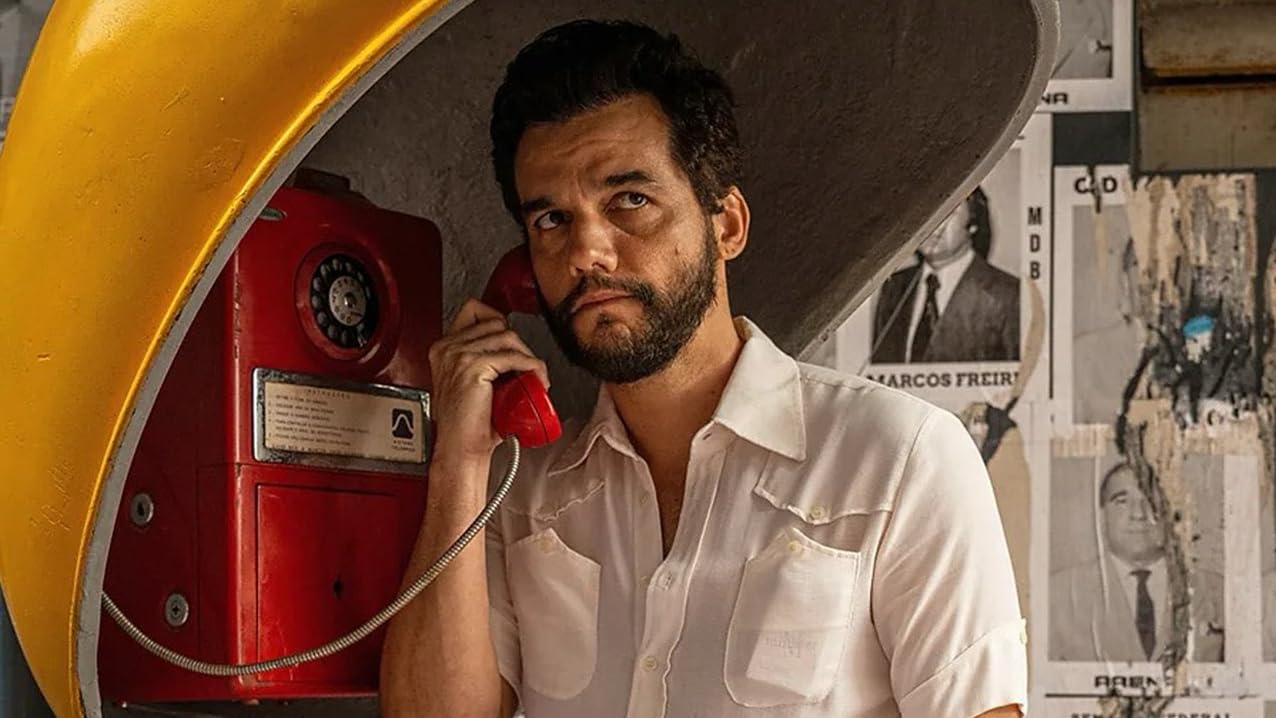
Rental Family is a comedy drama starring Brendan Fraser as Phillip Vanderploeg, a Japanese-based American actor who has been struggling to find meaningful work after a successful toothpaste advert seven years earlier. He meets Shinji (Takehiro Hira) who introduces him to his company, ‘Rental Family’, a business that provides actors to play stand-in family members and friends for strangers. “We sell emotion” is how Shinji sells it. Although somewhat reluctant at first, Phillip takes on two long-term jobs – one acting as the estranged father of a young half-Japanese girl called Mia (Shannon Mahina Gorman), who her mother thinks will be a great way to boost her daughter’s mood to get her into private school, and another as a journalist profiling retired actor Kikuo Hasegawa (Akira Emoto) with dementia. But Phillip finds himself getting a little too involved and finds himself caring for them.

This is a sweet-natured and very positive comedy-drama with an excellent Brendan Fraser performance that you’re sure to walk out of with a smile on your face. While the first half borders on saccharine, director Hikari does enough to keep things more than interesting in the latter half where the complexities and moral questionings of what the firm’s employees do come into the fray and it takes a more melancholic tone.

It’s hard not to be totally wrapped up by Fraser’s deliciously twinkly performance, with a gentle physicality and affable temperament – and Rental Family wouldn’t be half of what it is without that central performance. There’s good supporting performances from the rest of the cast, and there’s reasonably strong development of the firm’s employees who begin to form a warm dynamic. Takurô Ishizaka lenses the film neatly too, with some colourful, sweeping shots of the luscious Japanese landscape.

But although I enjoyed Rental Family for what it is, I wanted a deeper exploration into the themes of loneliness and loss, which the film only touches on. That would have given the narrative more of a complete circle. Still, if you want an uplifting comedy-drama with an effortlessly likeable Brendan Fraser, Rental Family hits the spot.

28 Years Later: The Bone Temple (Review)

Review
Still from '28 Years Later: The Bone Temple'

Rating: 4 out of 5.

Director: Nia DaCosta
Starring: Ralph Fiennes, Jack O’Connell, Alfie Williams, Erin Kellyman, Chi Lewis-Parry
Certificate: 18

Run Time: 109 mins

Fittingly arriving 28 weeks later after last year’s excellent 28 Years Later is 28 Years Later: The Bone Temple, which was filmed back-to-back with its predecessor. While Danny Boyle returned to the director’s chair for the first film in the proposed trilogy, The Bone Temple is directed by Nia DaCosta. I’ve had mixed opinions on her filmography to date – both Little Woods and Candyman were excellent, The Marvels was rather ropey (although DaCosta reportedly experienced a rough ride under the Marvel Cinematic Universe regime) and I don’t understand what all the fuss is about for her most recent film Hedda.

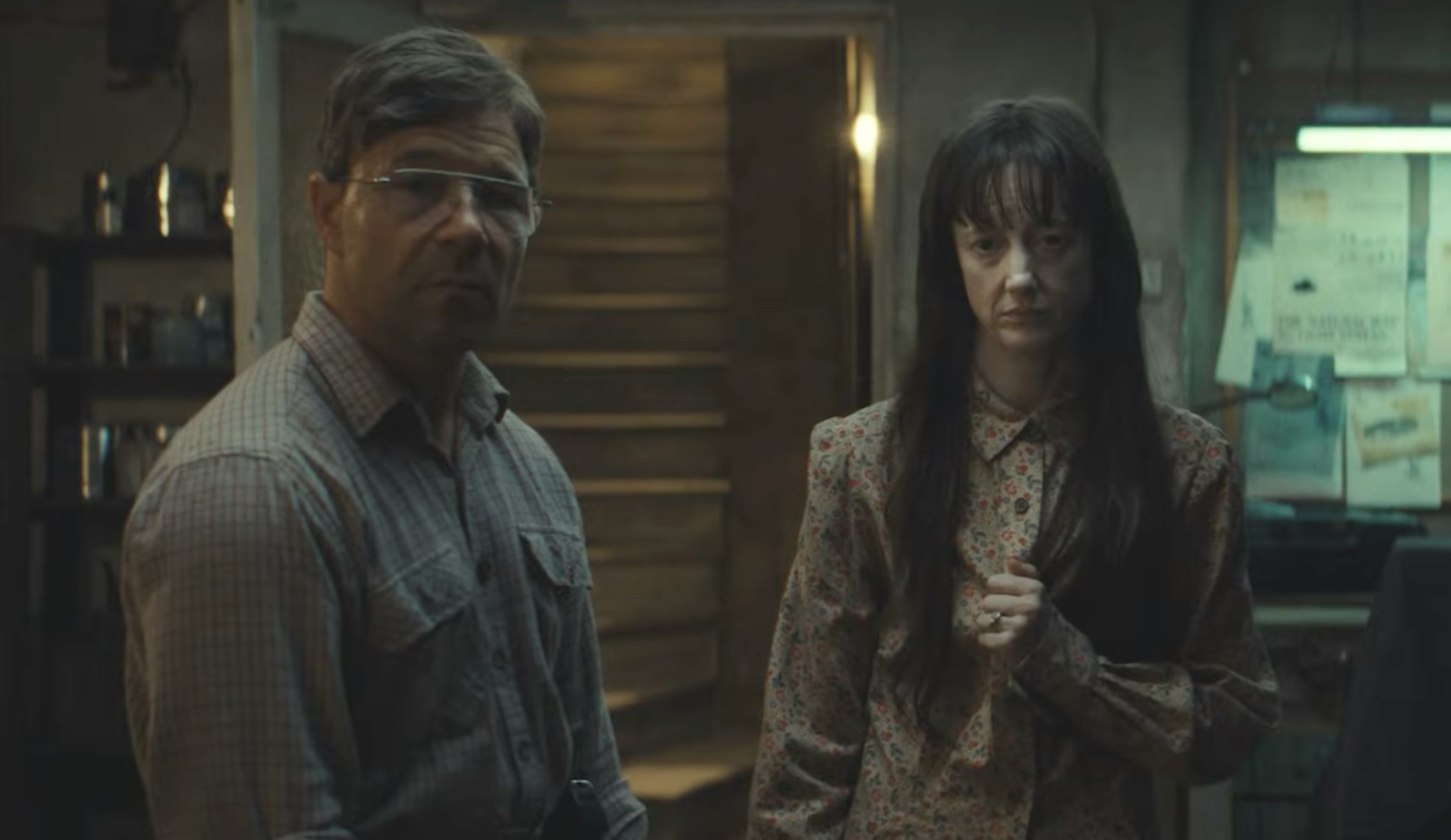
This sequel picks up immediately after 28 Years Later‘s jaw-dropping final scene, which generated rather a lot of controversy. The film opens as Spike (Alfie Williams) is initiated into the Fingers gang, led by the psychopathic “Sir Lord” Jimmy Crystal (Jack O’Connell), who claims to be the son of Satan. Crystal styles himself after Jimmy Savile, as do his gang members. The group go around disturbing the peace with any non-infected humans they can find, with torture and violence regularly on the menu (much to Spike’s disgust).

This storyline is intercut with another featuring Dr Ian Kelson (Ralph Fiennes) who continues to maintain the titular Bone Temple, and his interesting relationship with Samson (Chi Lewis-Parry), the villainous Alpha zombie from the previous film. In the film’s third act, the two storylines are brought together to a rather memorable climax.

While 28 Years Later: The Bone Temple lacks Danny Boyle’s frenetic directorial style, it more than makes up for it with its fascinating narrative and memorable characters. It’s the very antithesis of 28 Years Later – a shaggy-dog affair with Anthony Dod Mantle’s disorienting but beautiful camerawork (often on an iPhone) that’s stuffed to the brim with thoughtful ideas and themes, while Nia DaCosta’s sequel is a focussed and polished film that feels smaller in scope. But that’s not a problem because this is a powerfully gripping sequel from start to finish (28 Years Later‘s second act relies on a slightly far-fetched decision that throws you out a little) with some sensational performances.

DaCosta sets the grim tone from the very first scene with Spike’s brutal and foul-mouthed initiation and never relents – this film is gleefully nasty and doesn’t hold back with its torture or body organ consumption. It’s certainly the strongest film in the 28 Days Later series to earn its 18 BBFC age rating. Jack O’Connell’s turn as the Satanic cult leader is absolutely fantastic – he makes for a truly repugnant villain, but with plenty of charisma to make him memorable. This is a much nastier performance than his much-lauded villainous turn in Sinners.

There’s some good performances from the rest of the Fingers gang (which reminded me of A Clockwork Orange), although some characters are inevitably short-changed with Jimmy Crystal’s penchant for needless violence. Erin Kellyman is brilliant as Jimmy Ink, one of the cult’s more empathetic members and Emma Laird is another highlight as one of the more sadistic figures.

The second storyline with Ralph Fiennes is also excellent, and his relationship with Samson is fascinating and even becomes touching as it progresses. Fiennes was one of the highlights of the last film, and here we get to dig even deeper into his methodological psyche as he tries to memorialise the victims of the epidemic and perhaps find a cure. Chi Lewis-Parry is just as impressive, and DaCosta’s humanisation of what was a no-good zombie lands this film a real emotional heft.

When the two storylines eventually collide, it results in a giddily exciting third act climax of immense proportion. There’s a particularly memorable sequence with Ralph Fiennes that I shan’t spoil and of course, there’s an exciting tease for what’s to come in the closing chapter.

But The Bone Temple isn’t a perfect film. The most significant flaw is the sidelining of Spike, who doesn’t get much of a character arc other than bearing witness to the cult’s horrific atrocities, and DaCosta could have explored the trauma of his character. On the flipside though, spending more time focussing on Spike might have disrupted the film’s breakneck pacing.

Hildur Guðnadóttir’s score is the very opposite of 28 Years Later‘s frenzied Young Fathers music, but it’s yet another brilliant work by the Oscar-winning composer. There are so many memorable themes here, especially in the opening and many of the scenes set in the Bone Temple, with brilliant needledrops too. And like the score, Sean Bobbitt’s cinematography isn’t as kinetic as Anthony Dod Mantle’s, but there are some stunning shots here, particularly of the Bone Temple and the star-filled night sky.

Other than Spike’s sidelining, 28 Years Later: The Bone Temple is a masterclass of a middle chapter, that doesn’t sag under the weight of its own bones with its coherent and self-contained storyline. It’s wickedly nasty with some juicy performances, backed by a brilliant Hildur Guðnadóttir score and striking visuals. I think 28 Years Later is the slightly stronger film overall though – although ramshackle, it really soars in its strongest moments and there’s something to be said for Danny Boyle’s direction and Anthony Dod Mantle’s gonzo cinematography. I can’t wait to see how this trilogy concludes.

Hamnet (Review)

Review
Still from 'Hamnet'

Rating: 2 out of 5.

Director: Chloé Zhao
Starring: Jessie Buckley, Paul Mescal, Emily Watson, Joe Alwyn
Certificate: 12A

Run Time: 126 mins

Hamnet is the new film by Chloé Zhao, best known for her Best Picture and Best Director Oscar-winning film Nomadland. I’ve been rather mixed on her filmography – I thought Nomadland was fine but not Best Picture material, I really wasn’t a fan of The Rider and I liked Eternals, her divisive Marvel Cinematic Universe effort which I admired exactly because it upset the apple cart. Still, there’s no denying she has a distinctive style, with her Terrence Malick-like documentary aesthetics combined with themes of self-discovery and marginalised communities.

An adaptation of the 2020 novel of the same name by Maggie O’Farrell, Hamnet dramatises the life of William Shakespeare (Paul Mescal) and his wife Agnes (Jessie Buckley) from their courtship to how they cope with the tragic death of their 11-year-old son. The film has received quite the critical acclaim.

But I found Hamnet to be a very disappointing experience – an overlong, emotionally manipulative film that continuously and aggressively tries to get its audience to weep. Zhao’s film has the subtlety of a sledgehammer. Rather than getting invested in the depressing events it depicts and really feeling for the characters, I found myself rolling my eyes on multiple occasions and on the border of sniggering during what’s supposed to be a traumatic childbirth sequence because the film grossly overeggs it.

What’s more, I don’t understand the praise Jessie Buckley is receiving for her performance – I thought she was terrible. I’ve had mixed feelings on her past performances – she fares well in films such as I’m Thinking Of Ending Things, Men and Wicked Little Letters but she was woeful in Women Talking and The Lost Daughter. To this day, I can’t believe she received a Best Supporting Actress Oscar nomination for the latter with her wandering attempt at a British accent. In Hamnet, the problem is she’s simply miscast and her natural smirk does her no favours with the character’s emotional baggage. It’s unfortunate Buckley is also saddled with some rather trite dialogue.

Paul Mescal fares better, even if his Shakespeare is underdeveloped, but at least it’s a quiet performance where we’re invited to ponder how he might be feeling through his silences, emotionally distant expressions. This is a hurting character and the only way he can process the various tragedies he has experienced is by leaving his family behind and taking to developing his stage plays.

Max Richter can always be trusted to turn in a reliable score – and that’s true to an extent here. His moody music is sparsely used in the first half, but becomes more prevalent in the latter half and there’s a few excellent and memorable cues. But unfortunately, the film makes a choice to use what is perhaps his most notable work ‘On The Nature of Daylight’ in the closing scenes – and this is another factor that really hurts Hamnet. There’s no denying it’s a powerful piece, used to striking effect in works such as Shutter Island and The Last of Us – although it didn’t quite work for me in Arrival.

Richter reportedly was set to use original score for Hamnet’s ending, but apparently the inclusion of this prolific piece was suggested by Jessie Buckley. After already becoming withered and grey for the best part of an exasperating two hours in a film that’s tried and failed to get me to cry, ‘On The Nature of Daylight’s inclusion was the cherry on top of my frustrations and again, I snickered and rolled my eyes at the overcooked finale.

Elsewhere, Łukasz Żal’s (of Ida and The Zone of Interest fame) cinematography is occasionally beautiful, the highlight being how he captures the Globe Theatre, but I thought much of the film was unnecessarily dim, failing to convey the mood it’s trying to achieve.

Hamnet is ultimately a big disappointment. Its biggest problem is tone – Zhao tries to force-feed the emotion of the tragic events rather than being delicate. This is odd because the director’s style is one of delicacy and minimalism. In fact, Hamnet doesn’t really feel like a Chloé Zhao film because it’s lacking that meditative and thoughtful energy – none of her films have been emotionally manipulative or (I hate to say it) felt like Oscar bait. One of my issues with Nomadland was that it never quite managed to stick the emotional wallop it needed, but it’s the opposite problem here.

The core problems of Hamnet‘s script and tone not working then feed into the performances, and Jessie Buckley doesn’t have the chops to save it. Throw in the egregious use of ‘On The Nature of Daylight’ and scenes that evoke laughter rather than tears and it’s a recipe for disaster. At least Paul Mescal gets away with his reputation relatively unscathed. It’s saddening that Hamnet is dissatisfying on so many levels and I’m frightened at what Oscars it might get nominated for and win – it’s properly pants!