

The Academy Award nominations celebrating the films of 2023 have been announced and in this article, I’ll rank the Best Picture nominees in order of my own personal preference. The winners will be announced in the Oscar’s ceremony on 10th March 2024.
In my opinion, this is the strongest set of nominations in quite some time with seven brilliant films out of ten. I have to cast my mind back all the way to 2016 for a collection of films of similar quality (although I think 2023’s are still more consistent). 2019 was also a decent year, with three brilliant Best Picture nominees otherwise buried in a sea of mediocrity.
Let’s get started…
10) Maestro
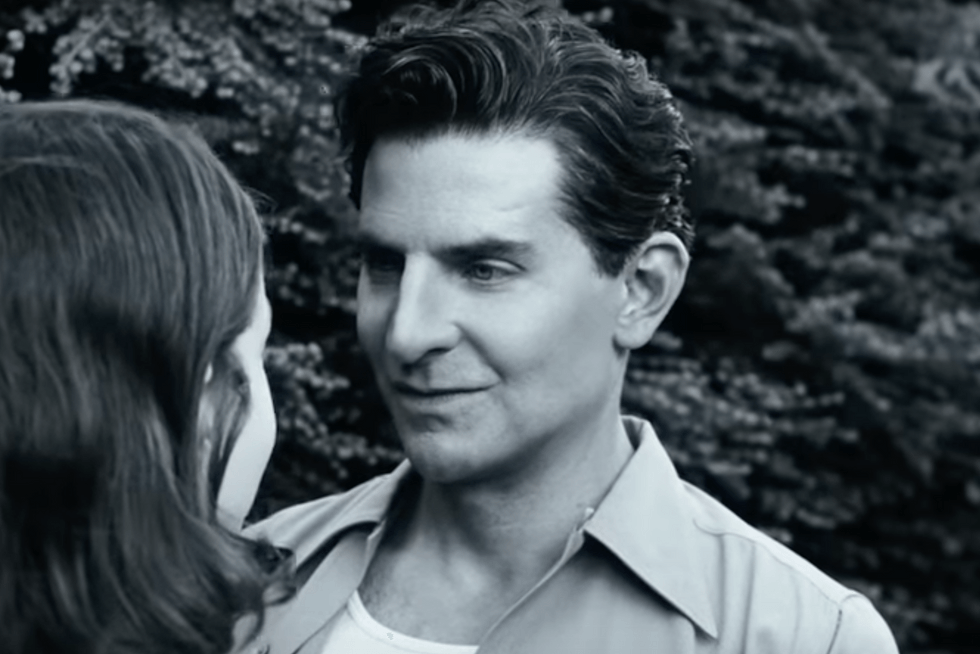
Every year, there is at least one (if not multiple) undeserving Awards films and for 2024, that honour goes to Maestro. Maestro is the sophomore writer-director effort by actor Bradley Cooper, after A Star Is Born (2018) which earned lots of awards love. Conversely, I didn’t think his remake was up to much, despite Lady Gaga’s committed performance. Cooper moves to Netflix for Maestro, a biopic about composer Leonard Bernstein covering his conducting debut at the New York Philharmonic in 1943 to 1987, nine years after the death of his wife, Felicia Montealegre.
Bradley Cooper is so infatuated with himself, so hungry for Awards success that he doesn’t tell anything meaningful about Bernstein at all. The film is completely inert of energy and a real chore to sit through for its extended 129 minute run time. While Cooper may look like Bernstein with a fake schnozz and wrinkles, he’s just playing himself. Even Carey Mulligan, who generally shines in everything she’s in, fails to make much of an impression as Felicia Montealegre, because the film doesn’t dig into the psyche of her character at all. Rather miserably, the only scene I felt anything for her character is when she is diagnosed with cancer. The chemistry between Cooper and Mulligan is non-existent. The decision to race through the composer’s first 15 years in 45 minutes and then stay fixated on a shorter period throughout the rest of the film is an odd decision. Even Matthew Libatique, Darren Aronofsky’s preferred cinematographer, fails to inject his signature personality into the film.
- Read the full Maestro review
9) Barbie

Barbie has a well-paced and energetic first half. Unfortunately, the latter half struggles in incorporating too many ideas are thrown and I found its message overly preachy. Starting with the positives, director Greta Gerwig explores some interesting themes, including existentialism and the impact both Barbie and Ken have had on modern culture. There are obvious references to Groundhog Day, Toy Story, The Wizard of Oz and The Lego Movie in its storyline and I also appreciated Gerwig’s personal and loving nods to her Sacramento roots, which also worked wonders for Lady Bird. Despite its 12A rating, Barbie isn’t particularly suitable for children and I suspect most of the themes and jokes will go over their heads. There’s some great performances here too. Margot Robbie is perfectly cast as the titular character, deftly balancing the likeability, humour and pathos needed for the crisis she undergoes. Even Helen Mirren’s satirical narration points to her suitability.
The film’s second half just didn’t work for me. It introduces too many ideas and ties itself in knots and it struck me as preachy in tone. In fact, there is one character who delivers an extended speech late into the film about what it means to be a woman in current society which although inspirational, is incredibly heavy-handed. It doesn’t leave any room for nuance whatsoever. While its exploration of gender is interesting on the surface, the resolution the film ultimately reaches borders on unsettling and sexist. Barbie is the first film to be directed by Gerwig where she has collaborated with another individual on the script, in this case her partner and fellow filmmaker Noah Baumbach. While I can tolerate Marriage Story, I’ve not been a fan of the vast majority of Baumbach’s filmography. The film feels as if Gerwig was in charge of the film’s first half, with Baumbach piloting the second, although this isn’t necessarily the case.
- Read the full Barbie review
8) Past Lives
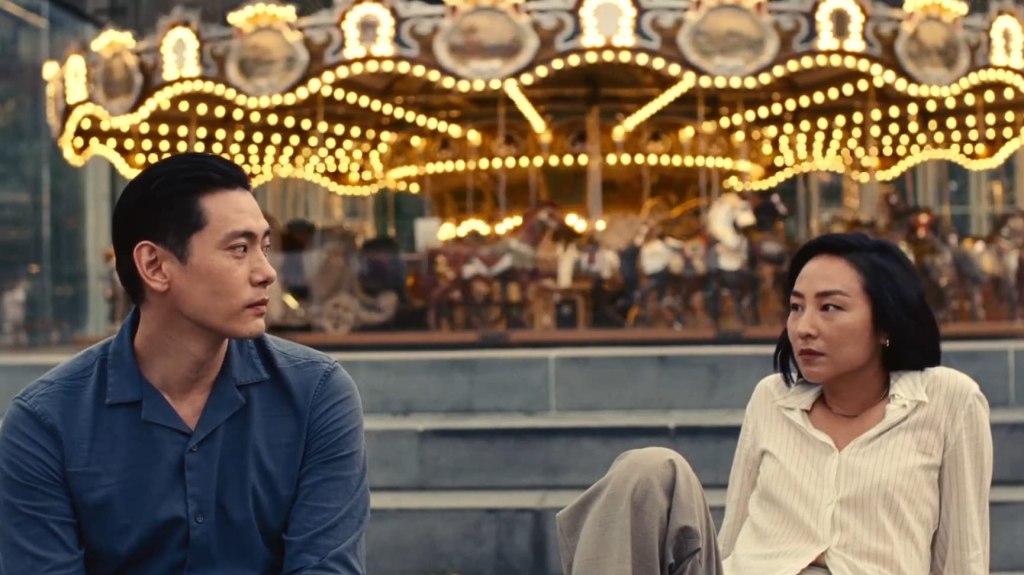
Past Lives is the directorial debut of Celine Song and follows the relationship of two childhood friends over the course of 24 years, as they lead different lives. It’s certainly an original piece and the relationship between both Nora (Greta Lee) and Hae Sung (Teo Yoo) is nicely developed, with both actors turning in excellent performances. The film’s also handsomely shot on 35mm film by cinematographer Shabier Kirchner. But I never found Past Lives to be as affecting as others have raved it to be and it’s a little sluggishly paced in places. The score by Christopher Bear and Daniel Rossen also aggressively didn’t work for me.
7) American Fiction

American Fiction is the directorial debut of Cord Jefferson, a satirical comedy-drama adapted from Percival Everett’s 2001 novel Erasure. It’s a highly entertaining literary comedy with a blisteringly sharp script that in some ways, feels like a film a more muted Spike Lee would make. This is a tough genre to crack and there have been far more failures than hits but I genuinely laughed quite a few times at this. There’s also more than a few kernels of truth about the publishing industry and what it means to be a writer, exploring the highs and lows of both the creative process and critical reception. But Jefferson deftly balances his commentary on the media with a heartfelt treatment of the themes of loneliness and family. The family drama element of the film is equally riveting, with the treatment of Alzheimers touching and the mundane but necessary tasks of trying to get someone into a home. There’s some terrific performances here too, especially Jeffrey Wright who’s always been a reliable screen presence but doesn’t often take the lead role. Wright nails the prickly, depressing nature of his character as he struggles to fit in and open up to people but with an almost lovable quality.
- Read the full American Fiction review
6) The Zone of Interest

The Zone of Interest is director Jonathan Glazer’s new film, an uncomfortably long eleven year wait after Under The Skin. 11 years in the making, the film tells the story of Rudolf Höss, the longest-serving commandant of the Auschwitz concentration camp, where he lived with his wife Hedwig (Sandra Hüller) in what they perceived as their idyllic home. Small catch – the garden wall with barbed wire atop it is shared with Auschwitz.
The Zone of Interest is a fiercely original work from Glazer that’s uncomfortable viewing and really gets under your skin. The film possibly represents the most important use of sound I can think of in quite some time – the sound of the droning concentration camp with its whirring machinery is ever-present during mundane conversation and day-to-day life. Glazer never shows us the atrocities inside the camp and what we hear beyond the frame is another film in itself. I loved the surreal elements too, particularly a storyline shot with thermal cameras. Christian Friedel is sensational as the despicable SS officer – a cold, calculated yet frank and career-driven individual. His whole life becomes an obsession into how fast he can kill and there’s an everyday quality to the terrible schemes he is complicit in, which makes the film all the more chilling. The film is masterfully shot by Loving Vincent and Cold War cinematographer Łukasz Żal, an incredible shot of a chimney through a window that’s reflected on the glass will forever be ingrained in my memory. Mica Levi’s score, although sparse, is also deeply effective. Save for two doom-laden tracks at the beginning and end, the rest of the film uses more of a soundscape except for a recurring motif during the surreal sequences.
- Read the full The Zone of Interest review
5) Anatomy of a Fall

Anatomy of a Fall is a fascinating character study of a family, the couple at its centre and the legal system that tries to break Sandra and her son apart. It’s a smart film that’s simmering with tension and excellent performances, although I’m confident it would pack an even greater wallop if it was tighter. Sandra Hüller is terrific in the lead role and is fully deserving of the praise she has been lauded. Her character is a matter-of-fact, frank individual and director Justine Triet delves into the idea that writers use those around them to bolster their image. Swann Arlaud is also brilliant as Sandra’s silver fox lawyer, Vincent Renzi, as is Antoine Reinartz as a particularly nasty prosecutor. He unpicks anything and everything Sandra or other persons called up to the bar say, constantly repurposing words as evidence of Sandra’s guilt. Although there isn’t an original score, the use of music is terrific and the recurring use of 50 Cent’ P.I.M.P. and Daniel’s piano recitals are chillingly effective. The film’s also beautifully shot by Simon Beaufils, who evocatively captures the high altitude setting of the chalet and likes to zoom in on certain minutiae, as if you’re a fly-on-the-wall.
- Read the full Anatomy of a Fall review
4) The Holdovers
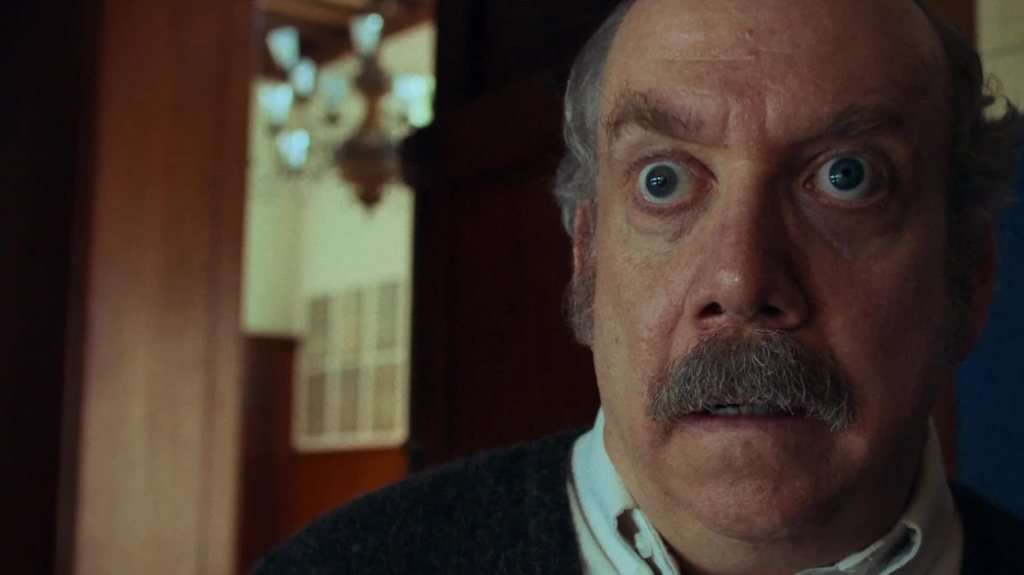
The Holdovers is the new Alexander Payne film and his first since 2017’s Downsizing. Payne reunites with his Sideways lead Paul Giamatti who stars as Paul Hunham, a strict classics teacher at Barton Academy, a New England boarding school that he attended back in his youth. The Holdovers is Payne at his best and is a tender delight from start to finish, but it deftly balances its warmth with a bittersweet tone. The performances are terrific all around, especially Giamatti, and the film perfectly evokes classic 1970’s cinema with its intentionally rustic aesthetic – it looks and feels like a work made at the time. It’s beautifully shot by In Bruges cinematographer Eigil Bryld, especially the wintry landscapes during the opening credits and some disorienting frames that feature late into the film. Paul Giamatti turns in what I’d probably consider a career-best performance as Hunham. Hunham is both lovable and loathsome and an easy character to relate to with the hardships he’s faced in life. In fact, there are many similarities between Hunham and Miles Raymond, the character Giamatti plays in Sideways, both characters that have been hard done-by in life.
I absolutely loved The Holdovers and was completely swept up by the film throughout, with its intelligent script and committed performances. It’s Payne’s best film since Sideways and I predict it will become a Christmas classic, with its perfectly judged bittersweet tone. They certainly don’t make films like this anymore.
- Read the full The Holdovers review
3) Poor Things

Poor Things is Lanthimos back on track (I thought The Favourite was flawed) with a brilliantly twisted, uncomfortable yet multi-layered triumph. There’s so much going on here, both from a thematic and visual standpoint and it’ll take multiple rewatches to fully understand its message but it’s a film that gets better on each viewing. Lanthimos recaptures his bizarre yet oddly moving tone, which is what made his earlier efforts really shine, combined with lavish yet evocative production design. Robbie Ryan’s cinematography is a career-best, with every frame a painting worth pausing to analyse, which is interesting considering some of his work can be quite vanilla. The film boldly experiments with colour and perspectives are often shot through a fish-eye lens and it’s supported by the lavish production design. I also loved the retrofuturistic vision, with the Victorian London setting contrasting with succeeding elements.
Emma Stone turns in a career-best performance as the Frankenstein-like Bella Baxter, who opens the film as an inquisitive and brash child and ends as a self-made woman. I’ve sometimes struggled with her performances in the past and couldn’t believe she won the Best Actress Oscar for La La Land but not so here. Willem Dafoe is also reliably brilliant as the eccentric surgeon, who has to belch bubbles at the dinner table due to a health condition. Mark Ruffalo provides much of the comic relief as Wedderburn, who becomes increasingly child-like as the film progresses, although his British accent is rather wandery. The Killing of a Sacred Deer remains Lanthimos’ best work, in my opinion, but Poor Things is fully deserving of its praise and is a sensational experience to begin the year.
- Read the full Poor Things review
2) Killers of the Flower Moon
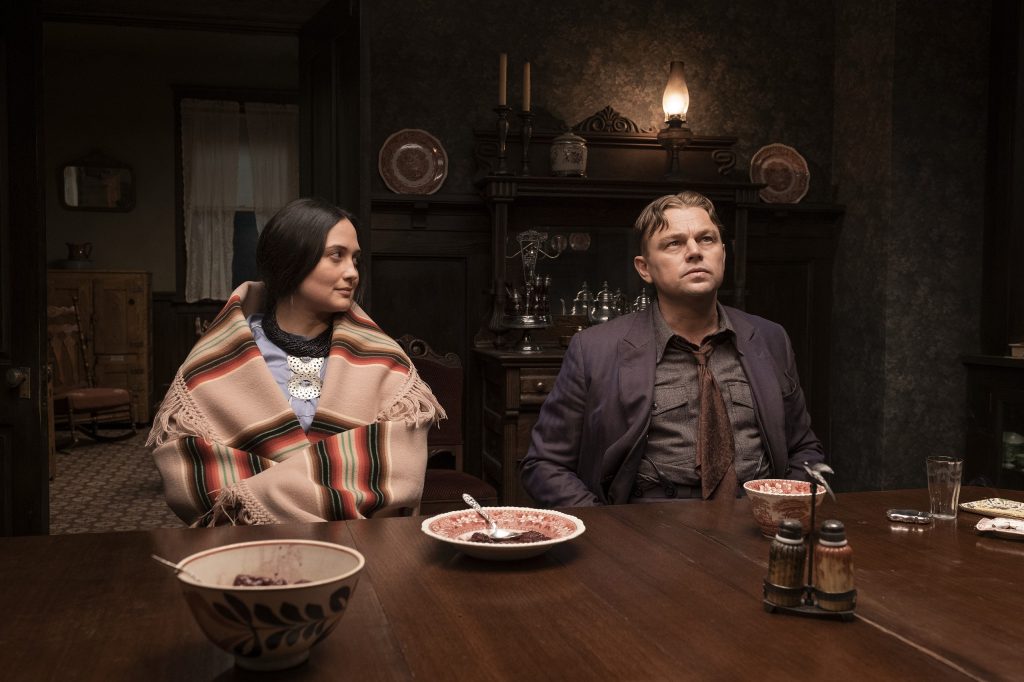
Killers of the Flower Moon is the latest by Martin Scorsese and an adaptation of David Grann’s 2017 non-fiction novel of the same name. The book is a must-read and tells the sickly story of how the Osage community are systematically murdered in the 1920s after oil is discovered on their tribal land. Killers of the Flower Moon is, for the most part, an excellent adaptation. It earns its 206 minute run time with its sprawling, fascinating story and Scorsese takes his time to develop the characters. He immerses you in the terror felt by the Osage, that no-one is safe on their own land with greedy wolves scheming from every corner. I was particularly impressed how like in The Irishman, Scorsese presents the horror in quite an understated way, raw and fact-of-life. Although a revisionist Western first and foremost, there’s still many of Scorsese’s gangster elements to be found, from fatally flawed men to America’s founding myths. Of course, being a Scorsese picture, the film has real big screen beauty and is handsomely shot by regular cinematographer Rodrigo Prieto. He gorgeously captures the expansive Oklahoma vistas and holds onto a shot for uncomfortably long during heinous murders. The stunning cinematography and assured direction is paired with a haunting, bluesy final soundtrack by Robbie Robertson (who sadly passed away in August). A heartbeat motif that is repeated throughout the film is particularly effective, lending a feverish quality.
- Read the full Killers of the Flower Moon review
1) Oppenheimer
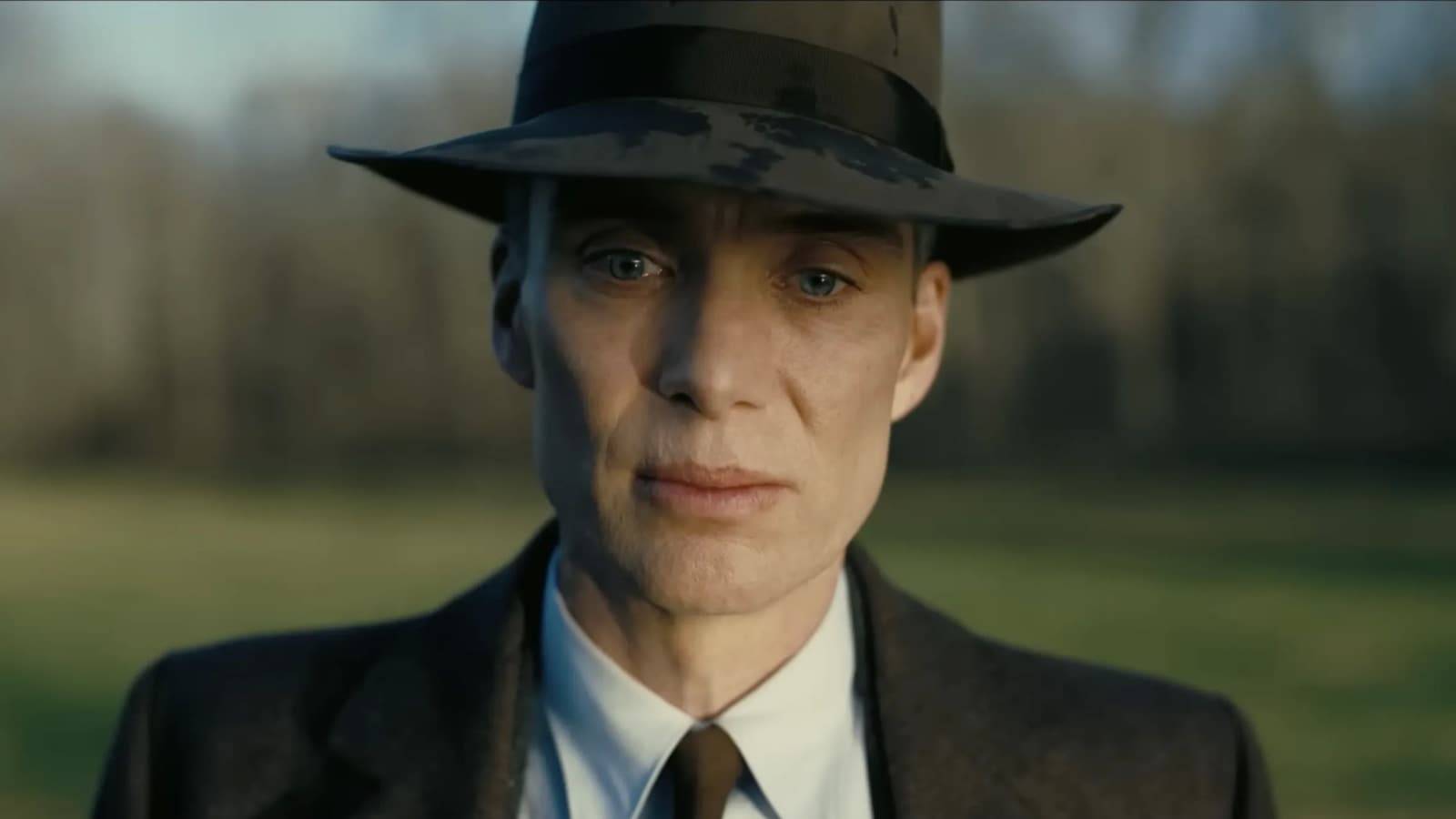
Oppenheimer is a tension-fuelled, thought-provoking minor-key masterpiece and is straight up there with director Christopher Nolan’s best work. It’s an incredibly rich piece of work and it left me feeling stone-cold with its characters haunting deliberation over the consequences of their work. This is a largely dialogue-heavy film for its lengthy three hour running time and except a breathtaking sequence depicting the Trinity test (even more impressive considering the minimal CGI), is largely bereft of action. Cillian Murphy has often represented one of the mechanisms to a successful Nolan film, and steps up to the lead role for Oppenheimer. His performance is simply sensational and a career-best. Oppenheimer is stacked with A-list actors, with Emily Blunt and Robert Downey Jr other notable highlights. The film is beautifully shot by now-Nolan regular Hoyte van Hoytema and Ludwig Göransson’s score is the glue that holds the film together.
- Read the full Oppenheimer review
 The Film Meister
One thought on “Every 2024 Best Picture Oscar nominee ranked from best to worst”