


Director: Francis Lawrence
Starring: Joseph Zada, Jesse Plemons, Ralph Fiennes, Glenn Close, Kieran Culkin, Elle Fanning, Mckenna Grace, Maya Hawke, Whitney Peak, Kelvin Harrison Jr, Ben Wang, Woody Harrelson, Josh Hutcherson, Jennifer Lawrence
Certificate: 12A
Run Time: 158 mins
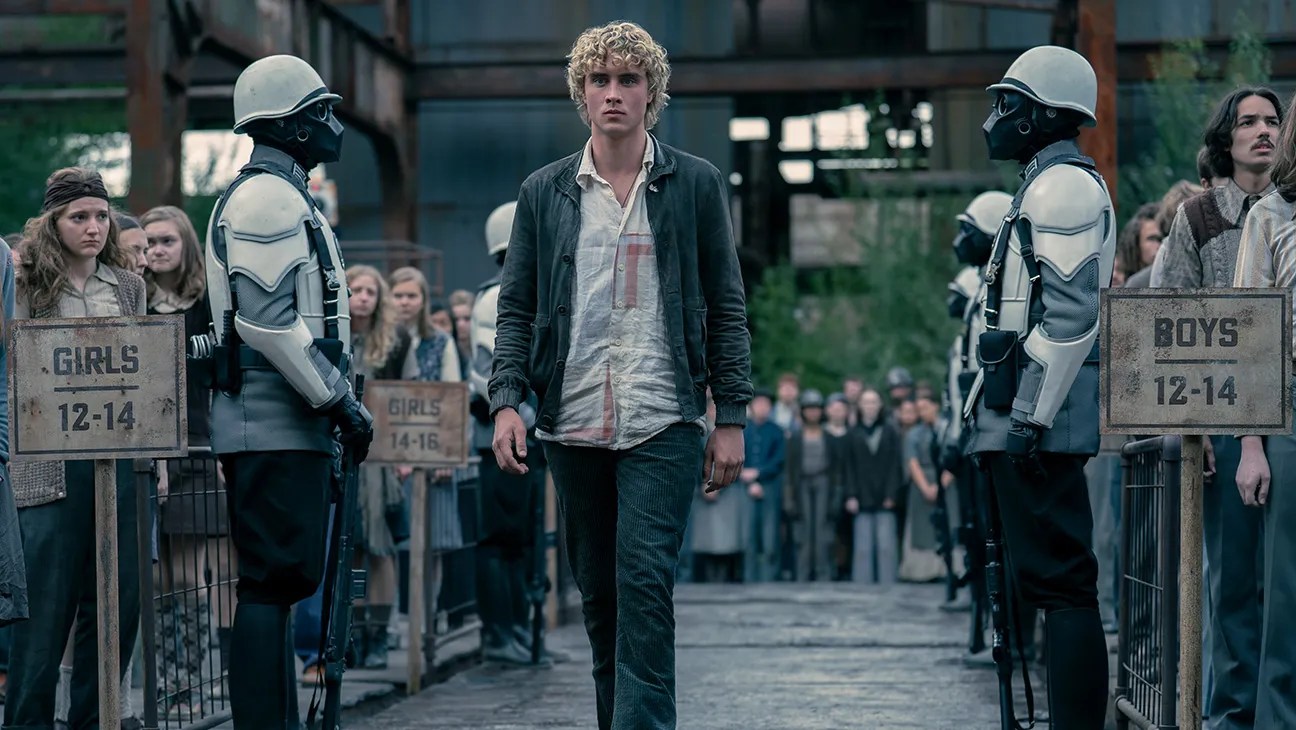
An adaptation of Suzanne Collins’s 2025 dystopian novel, The Hunger Games: Sunrise on the Reaping is set after The Ballad of Songbirds and Snakes but before The Hunger Games. Set 24 years before The Hunger Games, this latest instalment follows a 16-year-old Haymitch Abernathy (Joseph Zada, played by Woody Harrelson in the main series), and how he was the victor of the 50th Hunger Games (a special edition referred to as the Second Quarter Quell). Let’s just say we come to understand how he becomes the washed-up alcoholic when we first meet him in The Hunger Games. Sunrise on the Reaping is once again directed by Francis Lawrence, who’s helmed every film in the series, except the first.
While The Ballad of Songbirds and Snakes proved there was plenty of mileage left in the series with its darker tone and thought-provoking themes, Sunrise on the Reaping isn’t as successful. The fact that it’s sandwiched in between two films already somewhat puts it on the backfoot because you know how everything is ultimately going to play out. Treating it as a standalone film though and it’s a mixed bag. As usual, Lawrence succeeds with the excellent world-building, the grim picture of District 12 juxtaposed with the disconcertingly bright and colourful battlefield.
There’s some great performances here too – Joseph Zada is an excellent find as Haymitch, channeling some of Harrelson’s mannerisms, with flashes of a younger Jared Leto. He ably carries the film. Mckenna Grace is also great as fellow District 12 contestant Maysilee Donner, who isn’t someone you’d want to be on the wrong side of. Glenn Close is a particular hight as Drusilla Sickle, Effie Trinket’s pre-cursor who announces the votes in District 12. Sickle is particularly sadistic, and Close’s performance reminded me of her villainous turn as Cruella De Vil in 101 Dalmations, relishing in her nastiness.
And then a lot of Hunger Games characters show up in younger form that are in future films. Jesse Plemons makes for a top Plutarch Heavensbee, bringing the same measured approach as Philip Seymour Hoffman did, and although Ralph Fiennes is underused, he makes a memorable impression as President Snow. Elle Fanning is another highlight as Effie Trinket, deftly capturing all of Elizabeth Banks’s mannerisms in the main series.
While I’ve not read the novel, there’s plenty in the way of meaty themes here story-wise, such as how Haymitch’s future is pre-determined and how he’s unable to course-correct it, plus the topics of surveillance, authoritarianism and propaganda. Unfortunately, Lawrence doesn’t quite land the pacing to truly do any of them justice – while the film takes its time in the first third to set the scene, the game itself is rushed through, as is Haymitch’s experiences following it.
The biggest problem with Sunrise on the Reaping is the lack of tension – and it’s surprising given how deliciously nasty previous installments directed by Lawrence were, as well as his other films, such as Red Sparrow and The Long Walk. Apart from at the very start, Haymitch faces next-to-no jeopardy from any of the other contestants in the game until very late into proceedings. There was always a sense of jeopardy in other films that your life could be over if you took another step, and it’s missing here. Although Gary Ross faced some schtick for his direction of the original film, I loved its gritty and handheld feel, which really heightened the stakes – Sunrise on the Reaping feels too polished and like a redux, without anything new to bring to the table. Although I understand it’s also in the novel, the tacked-on ending (which features Harrelson, Josh Hutcherson and Jennifer Lawrence) felt very cheesy and unearned, prompting me to leave the cinema once the credits began with a bad taste.
While perfectly serviceable and with some top performances, The Hunger Games: Sunrise on the Reaping is always entertaining, but it’s missing the spark of the franchise’s best films and fails to properly justify its existence. It may be that Lawrence has omitted some of the novel (or it’s a flaw of the book), but Sunrise on the Reaping doesn’t have much to add to the series and suffers from a rushed pacing that fails to have any form of tension. I’d say it’s slightly better than The Hunger Games: Mockingjay Part 1, but it falls behind every other film in the series.

