Director: Maggie Gyllenhaal Starring: Jessie Buckley, Christian Bale, Peter Sarsgaard, Annette Bening, Jake Gyllenhaal, Penélope Cruz Certificate: 15 Run Time: 126 mins
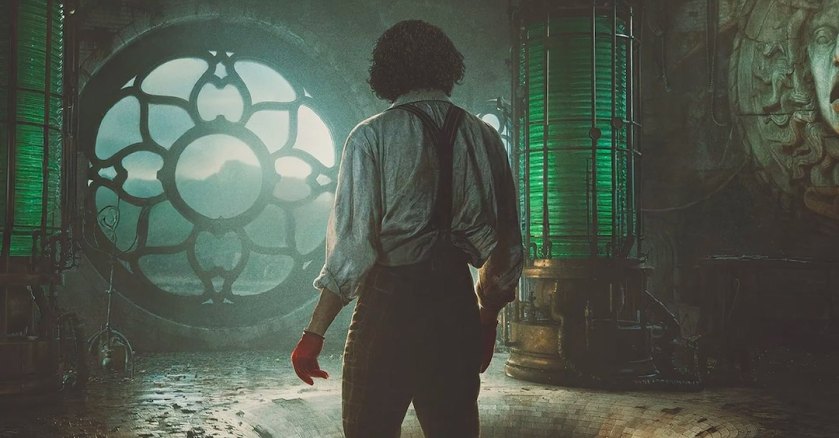
The Bride! (yes, that exclamation mark is intentional…) is the second film by Maggie Gyllenhaal after her multi-Oscar nominated debut The Lost Daughter. While the film had some interesting themes, it failed to fully explore them and I didn’t care for the characters at all. But Gyllenhaal takes some bolder swings with The Bride! – an alternative take on the Bride of Frankenstein that was of course based on Mary Shelley’s 1818 novel.
The film opens with Mary Shelley (Jessie Buckley) speaking from the afterlife, who explains she had another story to tell after Frankenstein, but her death put an end to that desire. So she possesses Ida (also Jessie Buckley), a woman in 1930s Chicago who in the film’s opening scene, openly discusses the criminal activities of crime boss Lupino (Zlatko Burić) at a fancy restaurant, before being finished off by his henchmen.
Elsewhere in Chicago, Frankenstein’s monster (Christian Bale), who goes by ‘Frank’ arrives at Dr Cornelia Euphronius’ (Annette Bening). Aware of her reanimation work, he enlists her to create a companion to combat his loneliness, which happens to be Ida’s corpse. What follows is the relationship that develops between Frank and Ida and the trouble they get into against the law.
There have been many adaptations of Frankenstein over the years – just look at Guillermo del Toro’s recent rendition that’s currently up for a Best Picture Oscar – Shelley’s novel is a timeless tale, after all. But not all of them are good, and while undoubtedly an original vision, The Bride! is a bad one…
A mash-up between Bonnie and Clyde, Joker: Folie a Deux and Public Enemies, The Bride! is an utter mess that frequently changes gear and can never decide what it wants to be – it flits between being a gangster film to sci-fi to a twisted romance, with some musical numbers thrown in – and it’s often incoherent. Maggie Gyllenhaal is also on scriptwriting duties and it’s just woeful, with fine actors delivering some seriously ear-scraping lines. I knew I was in for a rough ride with the spectacularly misjudged opening scene, which would surely send Mary Shelley spinning in her grave – and the overlong experience rarely let up afterwards.
After being miscast in Hamnet (although I’m in the minority with that opinion), Jessie Buckley is dreadful as the titular bride, saddled with delivering literary gibberish as the possessed corpse. I felt nothing for the character and cringed every time she was on screen (which is a lot!), however it must be acknowledged that Buckley’s only doing what’s been asked of her by her director.
Christian Bale just about gets away with his reputation intact as Frankenstein’s monster, even if the character is confoundingly written, as does Annette Bening in a largely expository role. Peter Sarsgaard and Penélope Cruz play a detective and assistant duo, who are also poorly serviced by Gyllenhaal’s script – but both are more tolerable than Jessie Buckley’s abomination. In a sprinkling of nepotism as the cherry on top, the always-excellent Jake Gyllenhaal also appears as a popular Hollywood actor, but his role is so minor that he also walks alway scot-free – give it a few years and most will forget he was in this film!
Not even Hildur Guðnadóttir’s score can save proceedings, nor can Lawrence Sher’s bleak cinematography – it’s interesting that Gyllenhaal opted for the same composer and cinematographer as Joker and its divisive sequel. Slightly elevating The Bride! is the excellent and lavish costume design by Sandy Powell – it’s just a shame that the film around it is just so weak.
Some have and will continue to champion The Bride! for trying something different. But different doesn’t always mean good and Maggie Gyllenhaal’s film is a car crash of clashing tones and ideas, hamstrung by an atrocious script and a ghastly Jessie Buckley performance. It proved a thoroughly miserable cinematic experience and I’ll be surprised (and depressed) if there’s a worse film this year…
Director: Daniel Chong Starring: (voices of) Piper Curda, Bobby Moynihan, Jon Hamm, Kathy Najimy, Dave Franco, Meryl Streep Certificate: U Run Time: 104 mins
Hoppers is the first of two Disney Pixar films this year, an original work from director Daniel Chong, who cut his teeth at the studio as a storyboard artist. It has quite a high-concept plot – Mabel Tanaka (Piper Curda) is a 19-year-old with a deep love for the natural world. When Mayor Jerry (Jon Hamm) announces plans to build a freeway that would cross over a pond, where a colony of beavers formerly lived, Mabel actively campaigns against him. She discovers her university professor is developing a technology called the ‘Hoppers program’ where a human can ‘hop’ their consciousness into a robotic animal to communicate with their respective species – a little like Avatar, if you will. After Mabel hops into a robotic beaver against her professor’s wishes, she makes friends with the local animal community to help save their habitat from destruction. Although Turning Red and Inside Out 2 both performed very well, Pixar’s recent crop of films haven’t been up to the studio’s usual standard in my view. Does Hoppers finally put them back on track?
Although not top-tier Pixar, Hoppers is one of the studio’s better efforts in recent years. It’s energetically paced with a sharp and fast-paced script with some decent jokes and puns, although it’s rarely laugh-out-loud funny. More importantly, Chong’s film is a smart parable for climate change and the detrimental effects to the environment humans have, as well as showing kindness to animals – a good message for younger audiences. There’s some fun set pieces too, especially a chase sequence at the end of the film’s second act, as well as a spirited score by Mark Mothersbaugh.
As is customary for Pixar, Hoppers is beautifully animated and occasionally touching, especially an early sequence of Mabel spending time with her inspirational grandmother. Many Pixar films try to tug on the heartstrings, and although Hoppers has some tender moments, it gets the tone right in and the film never over-eggs it.
Where Hoppers looses its footing a little is in the villain department, where the story feels a little awkward as the film reaches its third act climax and Chong seems indecisive with how far he wants to go. But otherwise, this is a perfectly fun effort that should appeal to children and adults alike, with an important message at its core that anything can be accomplished if we work together. Hoppers might not be top-tier Pixar, but it’s certainly the studio’s strongest film since Turning Red.
Director: Mary Bronstein Starring: Rose Byrne, Conan O’Brien, Danielle Macdonald, Christian Slater, ASAP Rocky Certificate: 15 Run Time: 113 mins
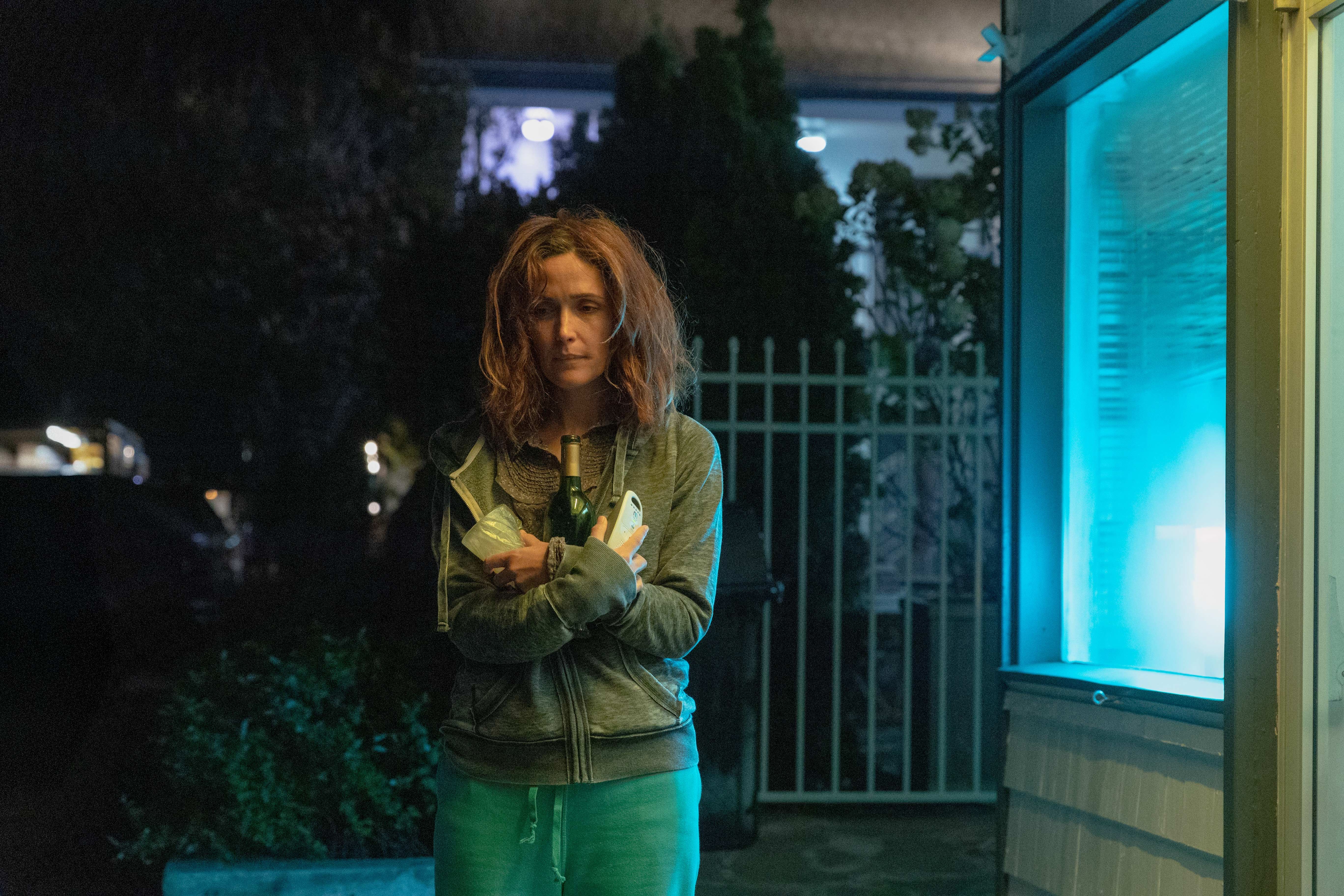
If I Had Legs I’d Kick You is a drama film about a psychotherapist who gets stretched to her mental limit. Rose Byrne (nominated for a Best Actress Oscar for her performance) plays Linda, whose daughter has a paediatric feeding disorder where she requires feeding through a tube at night, while her husband Charles (Christian Slater) is away for work. Things worsen in the opening scene when Linda is forced to leave her apartment after it gets flooded when the ceiling collapses, and the pair are moved to a shabby motel. And then it doesn’t exactly get easier for Linda when she gets dealt an even worse hand…
This is a claustrophobic and grim work that holds its uneasy-feeling claw over you for its entirety, but it’s a gripping film from director Mary Bronstein with some outstanding performances. Many have drawn comparisons to Uncut Gems (Josh Safdie coincidently gets a producer credit) with how the film resembles a panic attack, but I find the two very different. While Uncut Gems is stress-inducing for how Adam Sandler’s Jewish jeweler constantly digs himself into a deeper hole, Linda isn’t the master of her own fate. At times, it feels like a horror film – particularly one scene where a character peers into the hole in the ceiling, where it almost feels like there’s going to be a jump scare – and there’s even a few chuckles to be had at other moments.
But it took a while for Bronstein’s film to cast its spell on me – the director makes a conscious decision to keep Linda’s daughter off-screen, as if she’s a void. While I understand the creative decision, the film’s first half felt rather jarring in places (almost bordering on being gimmicky) because of how the camera moves and also because some set-up is required before a string of unfortunate events occur. However, when Linda’s life starts to completely unravel in the second half, the film really kicks into gear and I’d settled into the daughter being withheld from view.
Bronstein gets some really terrific performances out of her cast – Rose Byrne is phenomenal as the lady at the end of her tether, really conveying a palpable desperation and call for help. It’s a far superior performance to Jessie Buckley in Hamnet, who I suspect will sadly win the Best Actress Oscar. But it’s not just Byrne’s show – cast-against-type Conan O’Brien is fantastic as Linda’s indifferent and smarmy therapist. After impressing in Spike Lee’s Highest 2 Lowest, ASAP Rocky also has bags of charisma as James, who works at the motel and tries to bond with Linda. And Mary Bronstein is also brilliant as an unsympathetic doctor who is constantly on Linda’s case.
If I Had Legs I’d Kick You is ultimately a very mature piece of filmmaking from Bronstein and although I wouldn’t quite go as far as to call it outstanding, the second half in particular is certainly very powerful once the scene is set. With excellent performances, grimy visuals and a thought-provoking story, this is a very memorable film but I’m not sure it would have quite the bracing impact on a repeat viewing.
The Academy Award nominations celebrating the films of 2025 have been announced and here, I’ll rank the Best Picture contenders in order of my own personal preference.
This year’s nominees represent a slight upgrade on the 2025 crop (an incredibly weak year), but I still don’t think it’s up to the 2024 gold standard. While there are five (six at a push) deserving candidates, it’s another weak year with lots of undeserving choices. It wasn’t that there was a shortage of options – there were some truly excellent films that should have made the cut, such as Weapons, No Other Choice or Zootopia 2.
The winners will be announced in the Academy Awards ceremony on 15th March 2026.
10) Hamnet
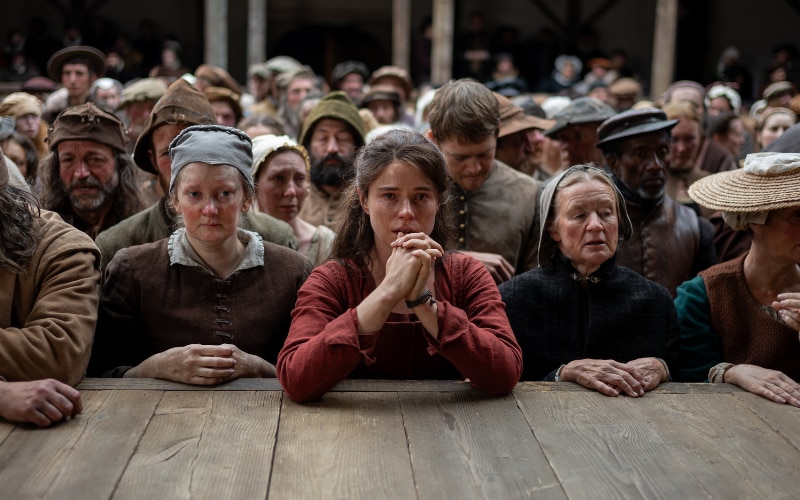
Hamnet is the new film by Chloé Zhao, of Nomadland fame. An adaptation of the 2020 novel of the same name by Maggie O’Farrell, Hamnet dramatises the life of William Shakespeare (Paul Mescal) and his wife Agnes (Jessie Buckley) from their courtship to how they cope with the tragic death of their 11-year-old son. I found Hamnet to be a very disappointing experience – an overlong, emotionally manipulative film that continuously and aggressively tries to get its audience to weep. Zhao’s film has the subtlety of a sledgehammer. Rather than getting invested in the depressing events it depicts and really feeling for the characters, I found myself rolling my eyes on multiple occasions and on the border of sniggering during what’s supposed to be a traumatic childbirth sequence because the film grossly overeggs it. What’s more, I don’t understand the praise Jessie Buckley is receiving for her performance – I thought she was terrible. The problem is she’s simply miscast and her natural smirk does her no favours with the character’s emotional baggage. It’s unfortunate Buckley is also saddled with some rather trite dialogue. Throw in the egregious use of Max Richter’s ‘On The Nature of Daylight’ in the emotionally manipulative finale and it’s a recipe for disaster.
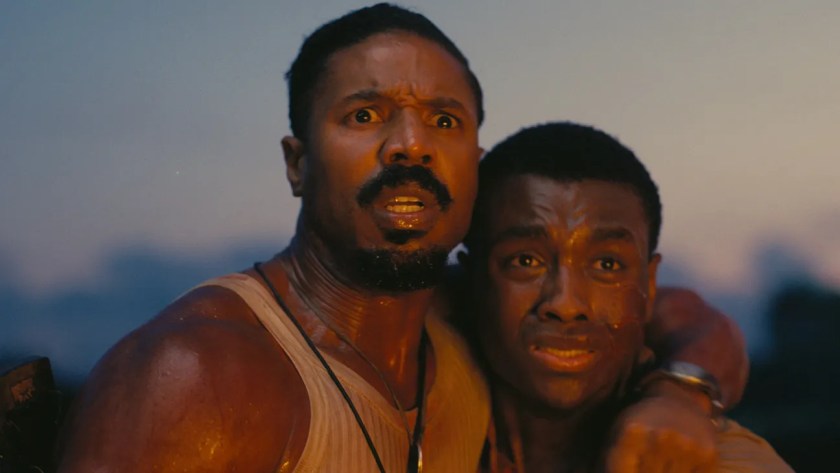
I’ve watched Sinners twice now because I didn’t get the universal love for it the first time round, and I stand by that opinion after a rewatch. An original horror film written, co-produced and directed by Ryan Coogler, Michael B. Jordan stars in a dual role as twin brothers Elijah ‘Smoke’ and Elias ‘Stack’ Moore who return to their home after spending years working for the Chicago Outfit. They buy a sawmill from a racist landowner with stolen cash from the gangsters so they can open a juke joint for the local black community. After recruiting a team of staff, the Moore’s cousin Sammie’s (Miles Caton) blues music is so transcendent that it unknowingly summons spirits, unfortunately attracting the attention of some vampires led by Irish-immigrant Remmick (Jack O’Connell). Sinners is an ambitious piece and while it’s refreshing that Coogler’s got to make a relatively big-budget ($100 million) original work is to be commended, the film is rather messy in its construction. Coogler’s script is the fundamental problem – it’s too talky and expository, and none of the themes are explored with any form of subtlety. There’s also next-to-no character development, despite the cast doing the best with the material they’ve got. For example, I found it difficult in distinguishing the difference between Michael B. Jordan’s characters. Still, Jordan puts in a committed performance and of the supporting cast, it’s Delroy Lindo that’s the standout as an alcoholic pianist. While there’s the beginnings of a formidable villain in Remmick (I particularly appreciated his abrupt entrance in how he seems to drop out of the sky), the vampire element of Sinners didn’t work for me. Coogler is clearly more interested in the transcendent music and rushes through the film’s blood and guts, with no tension whatsoever.
There’s certainly many plus points though, chiefly some very entertaining sequences here and there. The world that Coogler creates feels authentic, from everything to the costume and set design – the film certainly wears its reasonable budget with pride. Ludwig Göransson’s score also stands out, really elevating the film in how it flirts with all manner of generational and musical genres. Autumn Durald Arkapaw’s cinematography deftly captures the hot, arid nature of the Mississippi but some of the nighttime shots are too darkly lit.
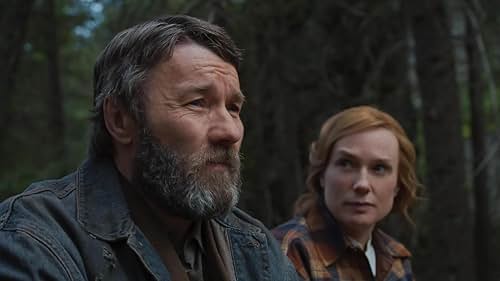
Tonally, Train Dreams falls somewhere in between The Tree of Life and The Assassination of Jesse James By The Coward Robert Ford, and it’s got an excellent Joel Edgerton lead performance as Robert Grainier, who this film tells the story of his 80-year life. It’s beautifully shot by Adolopho Veloso with a thoughtful Bryce Dessner score, and the film borders on being profound particularly in its closing moments of how someone can live through a life of technological developments. But Train Dreams lacks the elegiac nature of either of those reference points and after watching this film twice, I find it to be rather hollow. While undeniably an ambitious effort by Clint Bentley (this is only the director’s second film), Train Dreams is more style-over-substance.
⭐⭐⭐
Rating: 3 out of 5.
7) F1
F1 is the hotly anticipated Apple TV-fronted mega-budget film about the race circuit, with Lewis Hamilton credited as a producer who prances onto screen at one point, alongside other big racing names. The film’s directed by Joseph Kosinski, who has plenty of experience with big-budget fare and is riding on a high after Top Gun: Maverick (and the little seen but excellent Spiderhead). Although F1‘s story feels like it was written on the back of a cigarette packet, it’s Joseph Kosinski’s kinetic direction that ultimately makes the film work, along with some committed performances. There’s nothing here to rival the dogfight at Top Gun: Maverick‘s climax, but the race sequences here are vividly shot by Kosinski’s regular cinematographer Claudio Miranda and exciting to watch unfold. It’s testament to the quality of the direction that I was never bored (despite the paper-thin story) during the lengthy 156 minute run time. And although it’s far from his best work, Hans Zimmer’s score has its moments. Brad Pitt is effortless as the has-been racer, who has made a bit of a mess of his life with a gambling addiction and three marriage breakdowns, as he grapples with the changing landscape of the Formula One scene. The chemistry he shares with Damson Idris’s hotshot rookie Joshua Pearce, is excellent and develops at a fine pace. But while F1‘s fun and puts a smile on your face in the moment, I’m really not so sure it should be considered Oscar material…
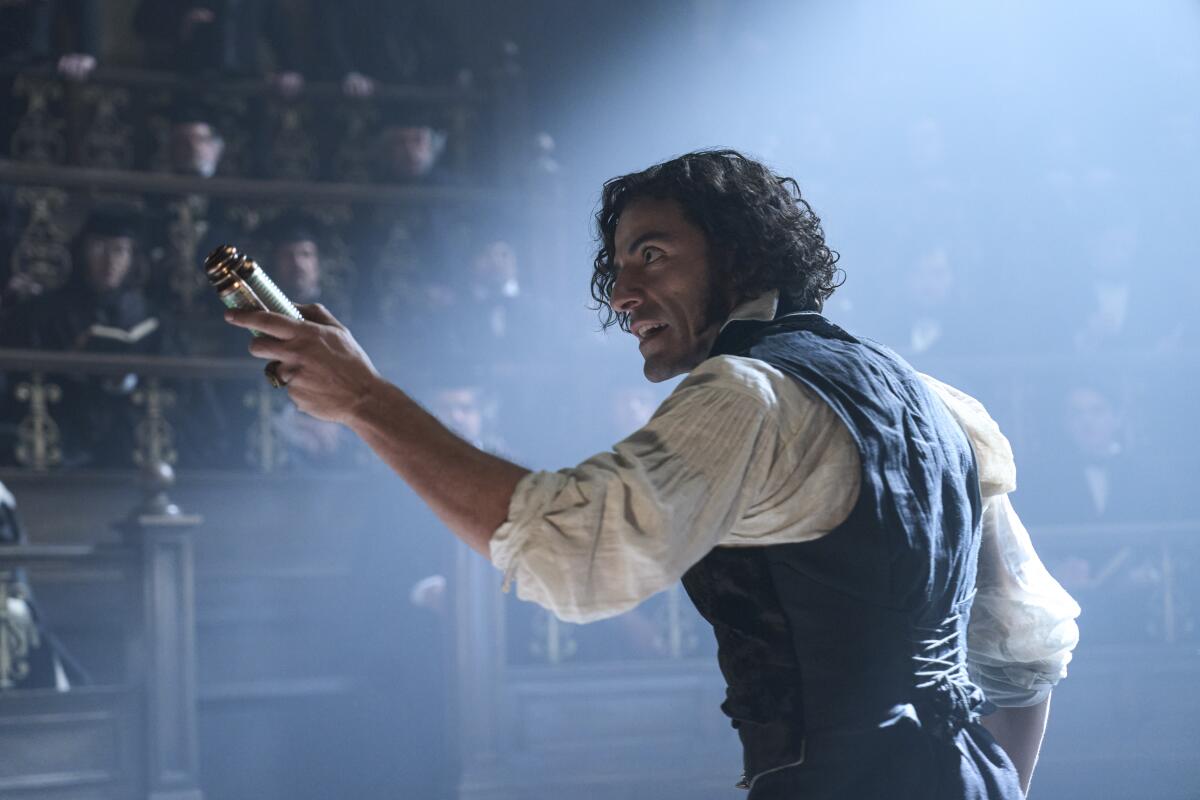
Frankenstein is visionary director Guillermo del Toro’s long-awaited passion project that he’s been trying to get off the ground since 2007 when he first started crafting concept art. Adapting Mary Shelley’s highly influential 1818 novel certainly plays to the director’s strengths, who has made a career for himself with his grotesque-looking monsters and Gothic imagery. Del Toro has once again joined forces with Netflix for Frankenstein and although Doug Jones and Andrew Garfield (and Benedict Cumberbatch was courted at one point) were previously attached to play the monstrous creation, it’s Saltburn‘s Jacob Elordi who undergoes the transformation. Oscar Isaac plays the titular surgeon, who we see being chased by his creation in the opening scenes where he then gets rescued by the Horisont Royal Danish Navy ship that’s trapped in the ice. After the prelude, the film is split between Victor’s and The Creature’s perspectives. Was Del Toro’s passion project worth the lengthy wait?
To a large extent, yes. Frankenstein is a sumptuous Gothic feast with a standout performance from an unrecognisable Jacob Elordi. From a technical perspective, it’s a beautiful-looking film, gracefully shot by Del Toro’s preferred cinematographer Dan Laustsen and I loved the use of symbolic colours, especially the red Frankenstein’s ill-fated mother is bathed in. There’s also a handful of excellent set-pieces, such as the opening chase to the ship, the monster’s creation and a melancholic extended section in a blind man’s home. Alexandre Desplat’s romping score often stands out too, but it’s a shame there isn’t an overarching main theme to latch onto. This is definitely a film to experience on the biggest screen you can find (as I was lucky to do so), and it’s a shame that most will be watching Del Toro’s passion project via the streaming giant. Although the film’s always entertaining, it never quite soars. Like Nightmare Alley, it’s overlong and the film would have benefitted from having a good 20 to 30 minutes chopped. What became more apparent on the second viewing on the small screen was just how wordy Del Toro’s script is, and some of the dialogue stilts the film.
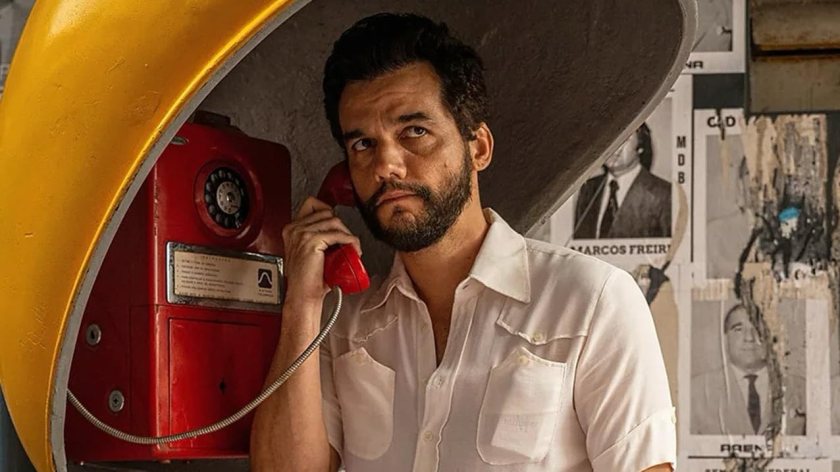
Although ramshackle in its construction, The Secret Agent is a powerful film with an outstanding central performance from Wagner Moura. It’s particularly period-appropriate in its sun-dried setting and rich characters from the warm refugees Marcelo shares a block of flats with (run by Dona Sebastiana, in an endlessly charismatic performance by Tânia Maria). From the gripping opening scene, human life is treated as expendable as Marcelo fills his car up at a petrol station where a fly-encrusted corpse is rotting in the corner, and when the police turn up, they’re more interested in finding something wrong with his car than they are about the casualty – death is simply a way of life. Even more impressive is how Filho contrasts these realistic skits with surreal images, such as a symbolic severed leg.
If you can get on board with The Secret Agent and have patience with its themes that may at first seem arbitrary, it’s an enriching experience that’s profound in its exploration of this dark age of Brazilian history. It won’t be for everyone, but this is fearsomely original filmmaking with a brilliant Wagner Moura performance that deftly balances warm characters, surrealism and emotional poignancy – once you get past the somewhat disjointed first half.
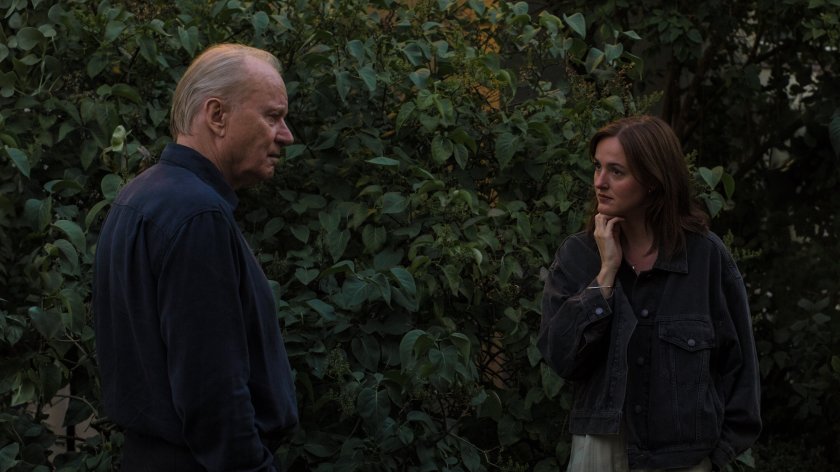
Sentimental Value is the new film by Joachim Trier and has received quite the acclaim, especially for Stellan Skarsgård’s performance. This is an excellent drama that maturely melds history, stardom and generational trauma with brilliant performances across the board, not just from Skarsgård. Trier skilfully builds the relationship between Gustav and his daughters (Renate Reinsve and Inga Ibsdotter Lilleaas) to the point where we know what the characters think just by their facial expressions and body language, rather than by what isn’t said. This is a film about what it means to be an artist and how one can express themselves and find meaning with the parallels in their lives, while also untangling the building trauma the characters have experienced in their past. I also loved the smart smatterings of film industry criticism, such as how Netflix tends to limit theatrical releases and how Gustav looks to reunite with his preferred cinematographer.
Skarsgård is excellent and deserving of the critical acclaim he’s received as the director getting back in the saddle. He sensitively conveys his need of another hit but I also fully bought him as someone who wants to fix the familial cracks in the process, even if he clearly lacks the emotional intelligence. But it’s Renate Reinsve and Inga Ibsdotter Lilleaas who are Sentimental Value‘s standouts and some of the best acting I’ve seen this year. Their characters are particularly authentic as close siblings, with both deftly portraying the cracks and ripples their tainted childhood has had on them. But the sisters are both very different from each other – Reinsve’s Nora is impulsive and vulnerable, whereas Lilleaas’s Agnes is more maternal and level-headed. The film’s technically brilliant too, lusciously shot by Riders of Justice cinematographer Kasper Tuxen who balances the almost documentary-like feel of some of the everyday life and filming scenes with several surreal and dream-like sequences. He knows when to hold onto a shot for maximum effect and there’s an interesting colour palette throughout. The film’s also complemented by a thoughtful score by Hania Rani, which never feels emotionally manipulative.
Yorgos Lanthimos’s latest, which stars Emma Stone as the CEO of a pharmaceutical company, who is abducted by conspiracy theorist Teddy Gatz (Jesse Plemons) and his disabled brother Don (Aidan Delbis). Bugonia is yet another thought-provoking work from Lanthimos, packing plenty of surprises and thrills up its sleeve. This is a film that keeps you second-guessing throughout with its complex characters and striking visuals, and like lots of his work, it’ll take multiple watches to fully unpack. I’ve always found Lanthimos is at his best when he’s on scriptwriting duties with his co-writer Efthimis Filippou (they co-wrote Dogtooth, Alps, The Lobster, The Killing of a Sacred Deer and Kinds of Kindness together) with their arch dialogue. It’s why The Favourite didn’t fully work for me. And although Will Tracy’s script isn’t quite as arch as what Lanthimos and Filippou would conjure, I didn’t notice the writing as much as I did in The Favourite.
While Emma Stone is reliably excellent as Michelle, it’s Jesse Plemons and Aidan Delbis that really stand out as the abductors. Plemons is scarily convincing as the unkempt Teddy, who constantly takes advantage of his cousin with his conspiracy theories and has a very short fuse – I hope he’s recognised come Awards season. Delbis is equally brilliant in his debut role, brilliantly balancing the vulnerability of his disability with a clear sense of right and wrong. Robbie Ryan’s cinematography is outstanding, shooting the film in VistaVision with a vivid colour palette. Jerskin Fendrix, who seems to also becoming Lanthimos’ new composer of choice given this is his third collaboration, turns in a career-best score. The monumental score beautifully compliments the events on-screen, upping the intensity with memorable themes. Bugonia is yet another excellent Lanthimos film that kept me gripped throughout with its fascinating story, memorable performances and stunning visuals.
Marty Supreme is Josh Safdie’s first film as a solo director since 2008, after his many collaborations with his brother Benny. This sports drama is loosely inspired by the life and career of American table tennis player Marty Reisman, and stars Timothée Chalamet as Marty Mauser, an aspiring and ambitious table tennis champion. It’s a film Safdie has been wanting to make for a while, with Chalamet cast all the way back in 2018, the actor practicing the sport ever since.
This is a brilliant sports drama with a terrific Timothée Chalamet central performance and a tension-filled atmosphere. It reminded me heavily of Uncut Gems, the last film the Safdies directed together, in how it sustains a palpable tension throughout with Marty continually digging himself into more desperate situations. That Josh Safdie has been able to make such a gripping film out of what may seem like a low-stakes sport is a commendable achievement. The film is stunningly shot by Darius Khondji, with a seedy aesthetic that faithfully recreates a 1950s feel and there’s a pulsating score by Daniel Lopatin that dominates over the entire film. This is a wild thrill ride from start to finish that never lets you take a breather and it’s impressive how Safdie gets you to root for a host of unlikeable characters.
One Battle After Another is a Paul Thomas Anderson triumph – it’s a giddily exciting action epic with plenty of thrilling surprises up its sleeve. It’s fiersomely original, Anderson constantly subverts expectations in a refreshing way with some outrageous set-pieces too. There’s two heart-racing car chases, with the one in the final act particularly memorable for how simple it is – cinematographer Michael Bauman (who also lensed Licorice Pizza) intercuts between three drivers and a stunning desert vista. A 20-minute extended sequence mid-way through the film where DiCaprio’s character needs to evade the authorities is another wildly entertaining highlight. But under the surface of this riveting story, Anderson has plenty to ruminate on the current state of American affairs but in a playful way with plenty of intelligent humour.
Leonardo DiCaprio is fantastic in the lead, dabbling his hand at comedy once again after his last turn in the underrated Don’t Look Up. Once a sharp and intelligent explosives expert, Anderson gets a lot of mileage out of the character who fries his brain with drugs after 16 years and DiCaprio nails it. Is this one of his best roles? It’s hard to say because the actor is so good in almost everything he’s in. Sean Penn puts in career-best work as the bigoted Colonel Lockjaw, an utterly ridiculous and tragicomic racist military officer with a particularly memorable walk. Benicio Del Toro is another standout too as a chilled-as-a-cucumber karate teacher – “I’ve had a few small beers” has already entered the lexicon. The film is beautifully shot on VistaVision by Michael Bauman and Jonny Greenwood turns in a thoroughly unconventional but sensational score. One Battle After Another is a near-masterpiece from Paul Thomas Anderson and it’s certainly his best film since There Will Be Blood.
Director: Gore Verbinski Starring: Sam Rockwell, Haley Lu Richardson, Michael Peña, Zazie Beetz, Asim Chaudhry, Juno Temple Certificate: 15 Run Time: 134 mins
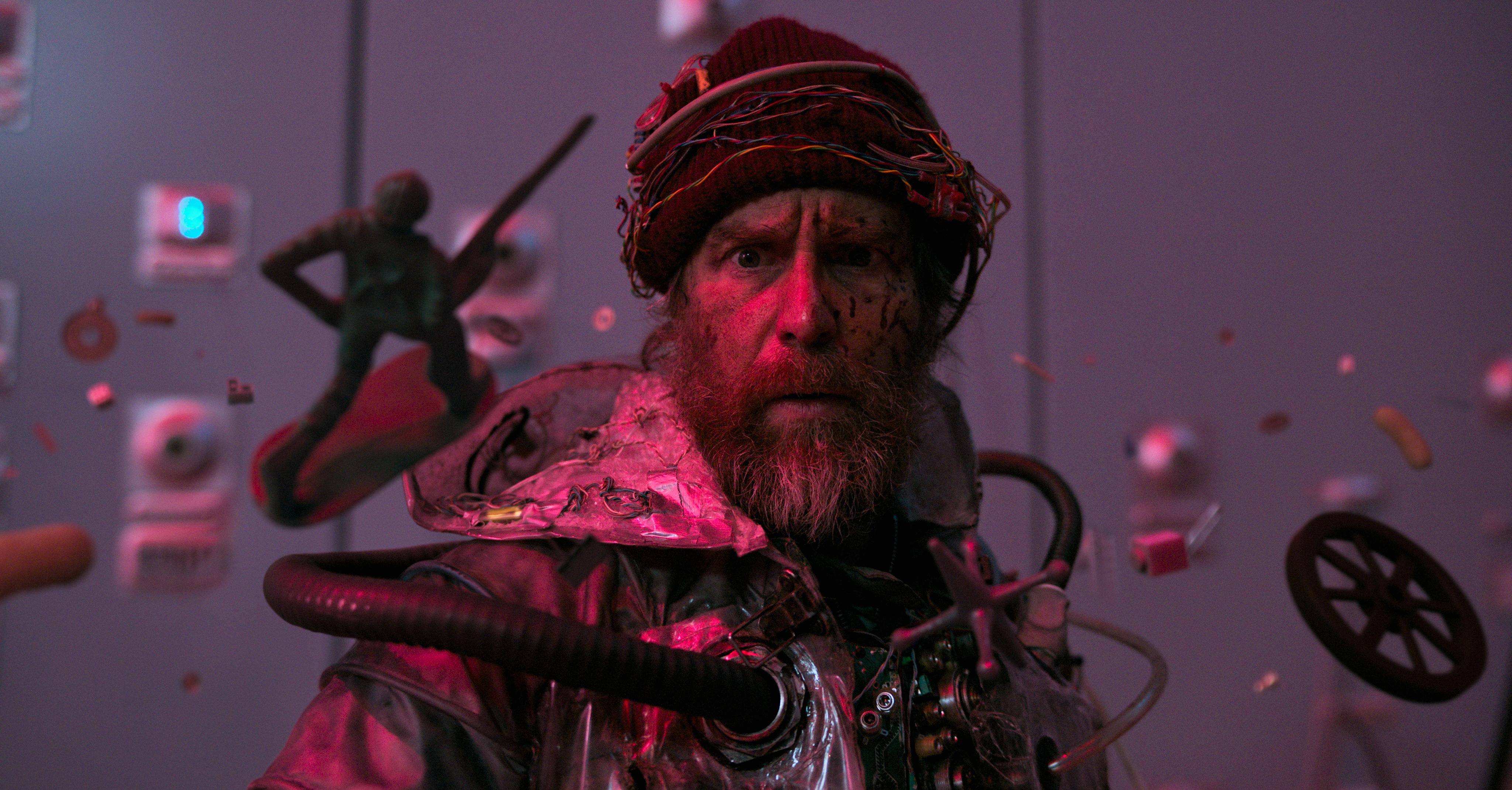
Good Luck, Have Fun, Don’t Die is a new sci-fi thriller by Gore Verbinski, the director’s first film since the underrated A Cure For Wellness back in 2016. Sam Rockwell stars as the unnamed ‘man from the future’ who rocks up at a Los Angeles diner as the film opens and announces to the patrons he is there to save the world from a rogue artificial intelligence and needs volunteers to help him. It transpires this is his 117th attempt and his knowledge of the customers from when they’ve helped him before convinces some to join his cause. Once he’s assembled a team, we then follow the group’s journey (which begins from trying to escape the diner while it’s surrounded by police) which is intercut with flashbacks that provide a backstory to some of the diner patrons.
Although the film looked pretty rote from the trailers, Good Luck, Have Fun, Don’t Die is fortunately a very entertaining piece with a biting and thought-provoking message at its core on phone use and the rise of AI. If you want a film that will discourage you from mindlessly doomscrolling on your phone, this is it. There’s some thrilling set-pieces and inventive visuals too. That the film only has a $20 million budget is frankly staggering – this looks like a much more expensive film, especially considering Verbinski’s previous experience with big-budget fare, such as Pirates of the Caribbean or The Lone Ranger.
Comparisons have been made to Everything Everywhere All At Once, which is fair from a visual standpoint – this is equally exaggerated, but I vastly prefer this film for its focussed storytelling. Props to screenwriter Matthew Robinson for dreaming up the concept – and it fits considering his back catalogue because he co-wrote and co-directed The Invention of Lying with Ricky Gervais. That Verbinski has then been able to realise Robinson’s vision with gorgeous cinematography and fun performances cements this film’s success. It’s also by far and away the best score Geoff Zanelli’s ever produced, who I’ve been very sniffy on in the past, with memorable and romping themes.
Sam Rockwell’s effortless as the tramp-like ‘man from the future’ and full of charisma. There’s plenty of meat to the bone with the cohort he assembles – Michael Peña, Zazie Beetz and Juno Temple all get profound Black Mirror-esque backstories (that don’t feel derivative), but it’s Haley Lu Richardson who’s the real highlight as Ingrid, a woman with an allergy to electronic devices.
Good Luck, Have Fun, Don’t Die is overall a return to form for Gore Verbinski after a decade’s hiatus (although I really enjoyed A Cure For Wellness) with a lively story that barrels along at an energetic pace with an important warning message about mankind’s increasing technology use. Its committed performances are supported by inventive visuals that really pop and some profound sequences, especially its climax. I’m excited to see what’s next in store for Verbinski and Robinson.
Director: Kleber Mendonça Filho Starring: Wagner Moura, Carlos Francisco, Tânia Maria, Robério Diógenes, Alice Carvalho, Gabriel Leone, Maria Fernanda Cândido, Hermila Guedes, Isabél Zuaa, Udo Kier Certificate: 15 Run Time: 161 mins
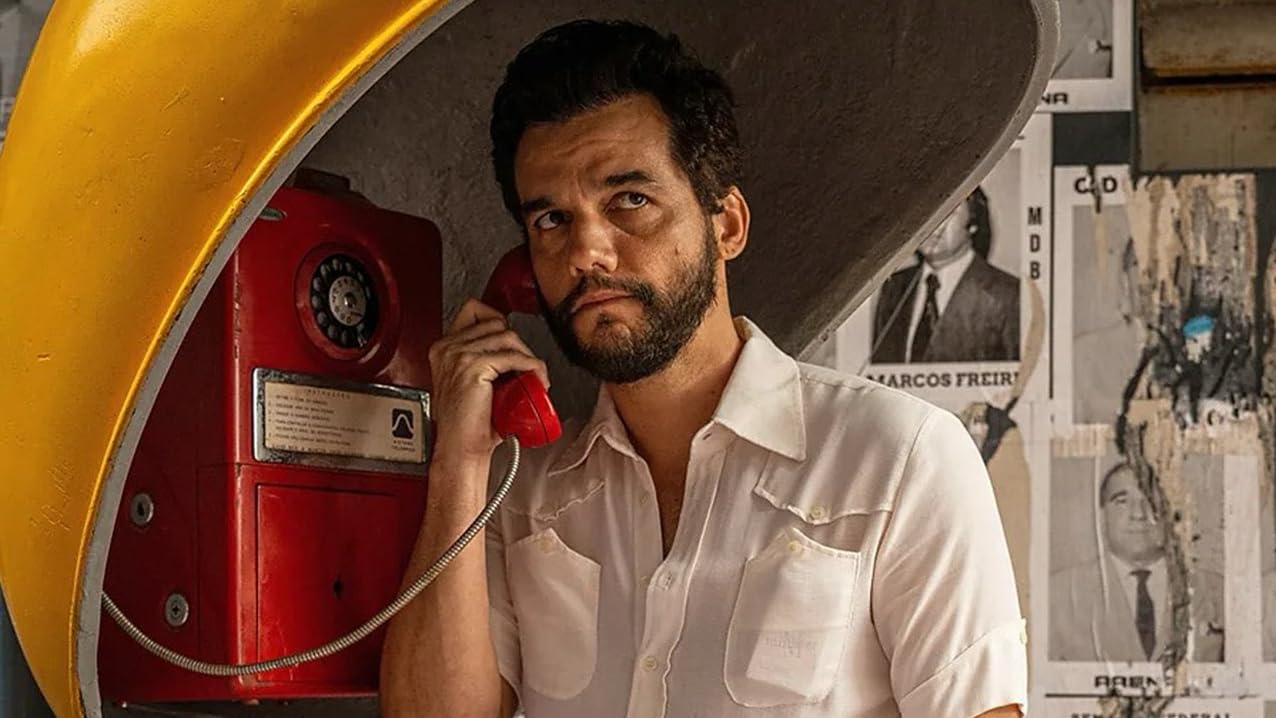
The Secret Agent is a historical political thriller directed by Kleber Mendonça Filho that’s received quite the buzz at this year’s Academy Awards, including a Best Picture nomination. The film stars Wagner Moura as a man we’re first introduced to as Marcelo Alves, who’s travelling to Recife (which happens to be the director’s hometown) in his yellow Volkswagen Beetle to seek refuge during the 1977 Carnival – during the political turmoil of the Brazilian military dictatorship. Slowly but surely, The Secret Agent reveals its hand as to who Moura’s character really is and why he’s ended up in this tension-fuelled city. It’s interesting that this is the second film in the space of a year to explore the same point in history, with Walter Salles’s hypnotic I’m Still Here landing a Best Picture nomination just last year.
Although ramshackle in its construction, The Secret Agent is a powerful film with an outstanding central performance from Wagner Moura. It’s particularly period-appropriate in its sun-dried setting and rich characters from the warm refugees Marcelo shares a block of flats with (run by Dona Sebastiana, in an endlessly charismatic performance by Tânia Maria). From the gripping opening scene, human life is treated as expendable as Marcelo fills his car up at a petrol station where a fly-encrusted corpse is rotting in the corner, and when the police turn up, they’re more interested in finding something wrong with his car than they are about the casualty – death is simply a way of life. Even more impressive is how Filho contrasts these realistic skits with surreal images, such as a symbolic severed leg.
As well as Moura’s effortlessly likeable performance, he’s surrounded by a superb supporting cast. Carlos Francisco is superb as Marcelos’ projectionist father-in-law, as is Robério Diógenes as the diabolical police chief Euclides. Gabriel Leone and Roney Villela are terrific as two hitmen who are hot on Marcelo’s trail, as is Kaiony Venâncio as an impoverished gunman. Technically, the film’s sumptuously shot by Evgenia Alexandrova and although tonally all over the place, the score by Tomaz Alves Souza and Mateus Alves soars in the third act, especially in a monumental chase sequence.
Although unconventional in its storytelling, if you can get on board with The Secret Agent and have patience with its themes that may at first seem arbitrary, it’s an enriching experience that’s profound in its exploration of this dark age of Brazilian history. It won’t be for everyone, but this is fearsomely original filmmaking with a brilliant Wagner Moura performance that deftly balances warm characters, surrealism and emotional poignancy – once you get past the somewhat disjointed first half.
Director: Bart Layton Starring: Chris Hemsworth, Mark Ruffalo, Barry Keoghan, Monica Barbaro, Corey Hawkins, Jennifer Jason Leigh, Nick Nolte, Halle Berry Certificate: 15 Run Time: 140 mins
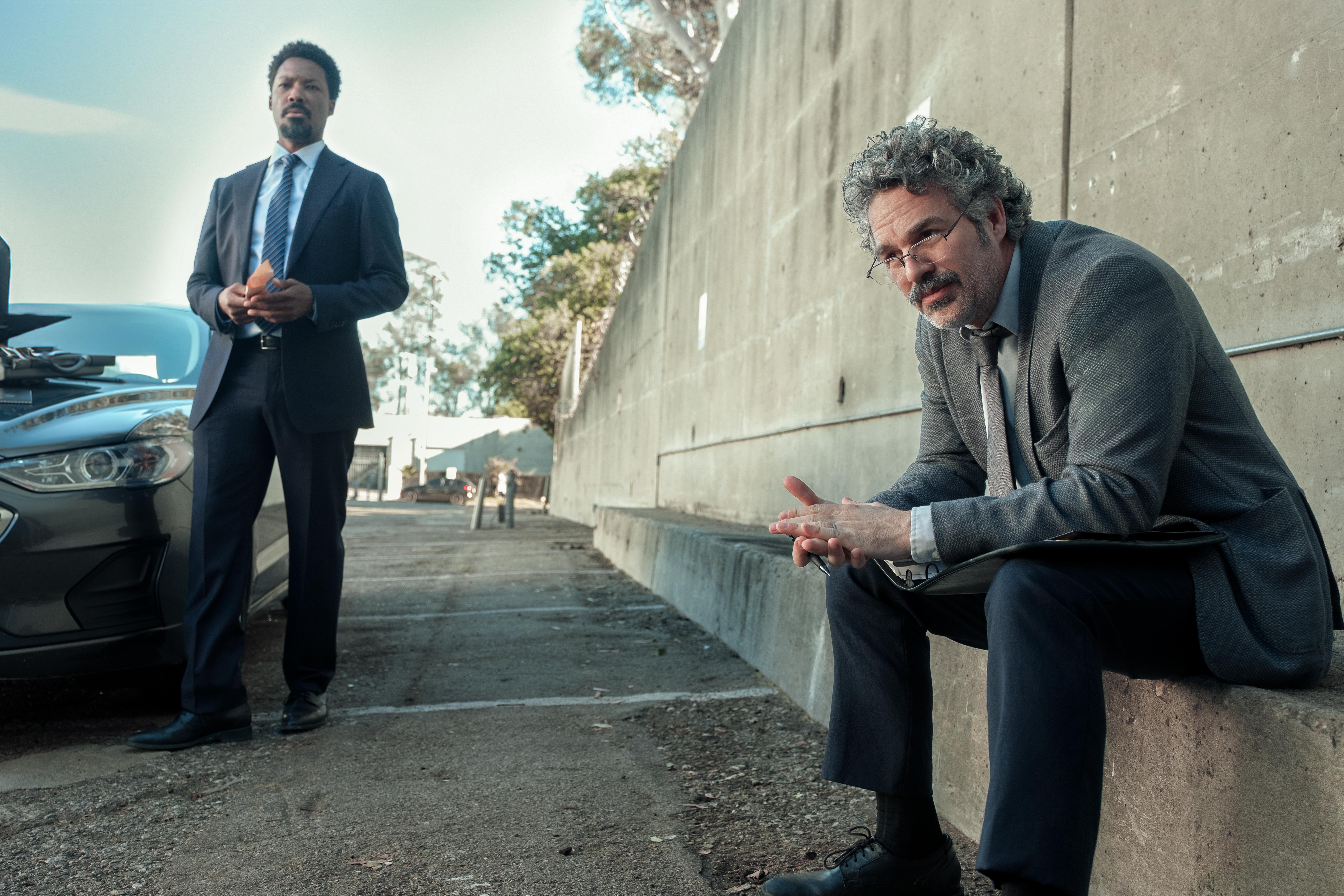
Crime 101 is the new Bart Layton film, who last directed the excellent American Animals all the way back in 2018. Staying in the heist film genre, Crime 101 stars Chris Hemsworth as an elusive jewel thief, who skilfully plans violence-free robberies while escaping via the 101 Freeway in Southern California. When a job that goes wrong shakes him up, he calls off his next planned robbery, but his fence Money (Nick Nolte) sends a psychotic young biker Ormon (Barry Keoghan) to do it instead with violent results. Mark Ruffalo plays Detective Lou Lubesnick who investigates the robberies and Halle Berry plays an insurance broker who’s becoming increasingly frustrated with her firm. It’s certainly got a star-studded cast.
For the vast majority of its runtime, Crime 101 is a hypnotic heist film with brilliantly developed characters and thrilling set pieces. While many will inevitably make comparisons with Michael Mann’s Heat, Crime 101 takes the usual crime thriller and Los Angeles tropes and does something interesting with them. This is a film that gives its characters space to breathe – Hemsworth is excellent as the stoic lead who wants emotional fulfilment but can’t make eye contact or bring himself to tell Monica Barbaro’s love interest what he does for a living. Mark Ruffalo’s perhaps more impressive as the dishevelled detective, who’s under pressure from his superior to find a neat solution to the robberies and park the case, and Barry Keoghan’s suitably slimy as the unstable motorbiker with bleached white hair. Layton also lays on some interesting critique on materialism in how every character is simply concerned with earning or gaining money or possessions to feel happiness.
The meaty substance is complimented by some terrific action sequences – the opening heist is outstanding, as is a car chase around half-way through. It’s confidently shot by Erik Wilson – the opening shot of an inverted LA skyline is particularly memorable and he doesn’t resort to quick, frenetic cuts on the action sequences, instead allowing them to breathe. Blanck Mass’ moody soundtrack is also excellent and ups the film’s intensity.
My only real qualm with Crime 101 is it doesn’t quite stick the ending – while the film builds up to a satisfying finale, its final scenes feel a little too neat, but I can mostly forgive the final five minutes or so when the rest of it’s just so gripping. Otherwise, Crime 101 is yet another brilliant showcase of Bart Layton’s talent and certainly the best heist film I’ve seen since American Animals or Widows. I can’t wait to see what he does next.
Director: Sam Raimi Starring: Rachel McAdams, Dylan O’Brien, Edyll Ismail, Xavier Samuel, Chris Pang, Dennis Haysbert Certificate: 15 Run Time: 115 mins
Send Help is a horror comedy directed by Sam Raimi, his first wholly original work since Drag Me To Hell all the way back in 2009. The always-reliable Rachel McAdams plays hard-working corporate strategist Linda Liddle, who’s been looking forward to a long-promised promotion at work. But when the CEO of the company dies, and his repugnant son, Bradley Preston (Dylan O’Brien) takes the mantle, Linda’s promotion is given to a recent hire who he happened to be fraternity brothers with. When she accompanies the team on a business trip to Bangkok, the plane crashes after suffering engine failure and Linda and Bradley find themselves wound up on a deserted island.
It might not be particularly thematically deep, but Send Help is a fun and gnarly romp that’s a Sam Raimi film through-and-through. Blood splatter? Check. Projectile vomit? Check. Rachel McAdams is brilliant as the meek office worker and shares an excellent chemistry with Dylan O’Brien’s loathsome CEO. As you’d expect, the tables turn because it just so happens Linda auditioned for a television show called ‘Survivor’, so knows a thing or two on how to sustain herself, while Bradley requires spoon-feeding. There’s a real thrill in witnessing the duo play off each other and you’re always questioning what their ulterior motives are.
Blending horror and comedy is perhaps the most difficult genre mix to pull off, but Raimi is reasonably successful here, although I wouldn’t call this a scary film in the slightest and while some of the jokes really land, others fall flat. One has to suspend belief a little in the third act where there’s perhaps one rug pull too many, but to Raimi’s credit, the finale is suitably vicious and nasty. It’s all accompanied by a somewhat subdued Danny Elfman score, and Bill Pope’s cinematography is uncharacteristically unshowy for a Sam Raimi film.
Send Help is an enjoyable romp with a standout Rachel McAdams performance that reminded me of Lord of the Flies, only under the veil of a corporate satire rather than a bunch of schoolboys. I wanted a bit more meat to the bone in terms of its themes and some of its beats are repetitive, but this is a fun, if not especially enriching, experience that only Sam Raimi could have concocted.
Director: Johannes Roberts Starring: Johnny Sequoyah, Jessica Alexander, Victoria Wyant, Gia Hunter, Benjamin Cheng, Troy Kotsur Certificate: 18 Run Time: 89 mins
Primate is a creature feature horror film about a chimpanzee who goes on a killer rampage after becoming infected with rabies. It’s directed by Johannes Roberts, whose credits include 47 Meters Down, The Strangers: Prey at Night and Resident Evil: Welcome to Raccoon City – quite the chequered CV. The film opens with a vet entering an outdoor animal enclosure, where his face is grossly turn off by said chimpanzee, before the film winds back 36 hours earlier. Lucy (Johnny Sequoyah) is taking a flight back home after spending years away at college with her best friend Kate (Victoria Wyant), but Lucy doesn’t know that Kate has invited her friend Hannah (Jessica Alexander) to join the club too. Lucy’s deaf father, Adam (Troy Kotsur) is a celebrated author who lives on the edge of a cliff in a beautiful home with younger daughter Erin (Gia Hunter). They have an adopted chimpanzee, Ben, who Adam has taught to be highly intelligent and he communicates using custom soundboard software on a tablet. But when Ben gets bitten my a rabid mongoose, all hell breaks loose…
While it’s lacking in the script and character development department, Primate is a lean and mean natural horror film that relishes in its visceral violence and brutal body-part dismemberment. While I wouldn’t say it’s frightening, the film’s undeniably intense and there were several sequences where I winced – this is probably the nastiest horror I’ve seen since Terrifier 3 or In A Violent Nature. There’s a couple of very effective sequences, especially an impressively tense encounter in a bed. A significant portion of the film is set in an infinity pool – a place where Ben can’t attack, given the hydrophobia caused by rabies – novel, considering it’s the inverse of other natural horror films involving underwater creatures.
Hats off to Roberts and the crew on opting for practical physical effects over CGI. The killer chimpanzee is played by former mixed martial artist Miguel Torres Umba, and the way in which he moves brings a real menace that you’d never get with digital. The film’s also confidently shot by Stephen Murphy, with the camera often swirling around and peering on the characters like they’re being watched. Adrian Johnston’s score is also terrific, with memorable themes and its 1980s synth-heavy sound reminiscent of the works of John Carpenter.
It’s just a shame that the film drops the ball in the script department. Roberts co-writes the script with Ernest Riera and some of the dialogue is really ropey, not helped by some of the unconvincing performances from the cast. That said, the two performances that fare well are Johnny Sequoyah as the likeable lead and Troy Kotsur as the father – the deaf representation is a nice touch and lends the film some much-needed emotion, but it also results in an excellent set piece devoid of sound that’s from Kotsur’s perspective. After his Best Supporting Actor win for CODA, it’s refreshing to see Kotsur back on the big screen.
Primate is ultimately an effective animal rampage horror, a genre that no filmmaker’s really explored for a while. It’s grisly and gnarly, with the reliance on practical effects lending the film a real weight. I just wish the script and character development were on the same level – then we’d really be talking. Despite this, Primate is undeniably Johannes Roberts’s best film (although that’s damning with faint praise) and I hope it inspires him to be similarly creative in his future works.
Director: Park Chan-wook Starring: Lee Byung-hun, Son Ye-jin, Park Hee-soon, Lee Sung-min, Yeom Hye-ran, Cha Seung-won Certificate: 15 Run Time: 139 mins
No Other Choice is the new film by South Korean auteur Park Chan-wook, of Oldboy and The Handmaiden fame. It’s the second adaptation of a 1997 novel ‘The Ax’ by Donald E. Westlake, the first being a 1997 French film called The Axe. Park Chan-wook is no stranger to adapting English-language novels and transplanting them into his native South Korea, with The Handmaiden, for example, an adaptation of Sarah Waters’s ‘Fingersmith’.
Man-su (Lee Byung-hun) is an award-winning employee of papermaking company Solar Paper. He’s got a decent salary, he has purchased his childhood home and lives a luxurious lifestyle with his wife, two children and dogs. When an American company buys Solar Paper and fires many employees, Man-su finds himself out of work after 25 years of service. After thirteen months, he struggles to find a new gig, and the family have minimised their spending and now struggling to pay the mortgage, Man-su decides to identify those whose credentials exceed his own by posting a fake job advert and then bump them off to improve his employment prospects.
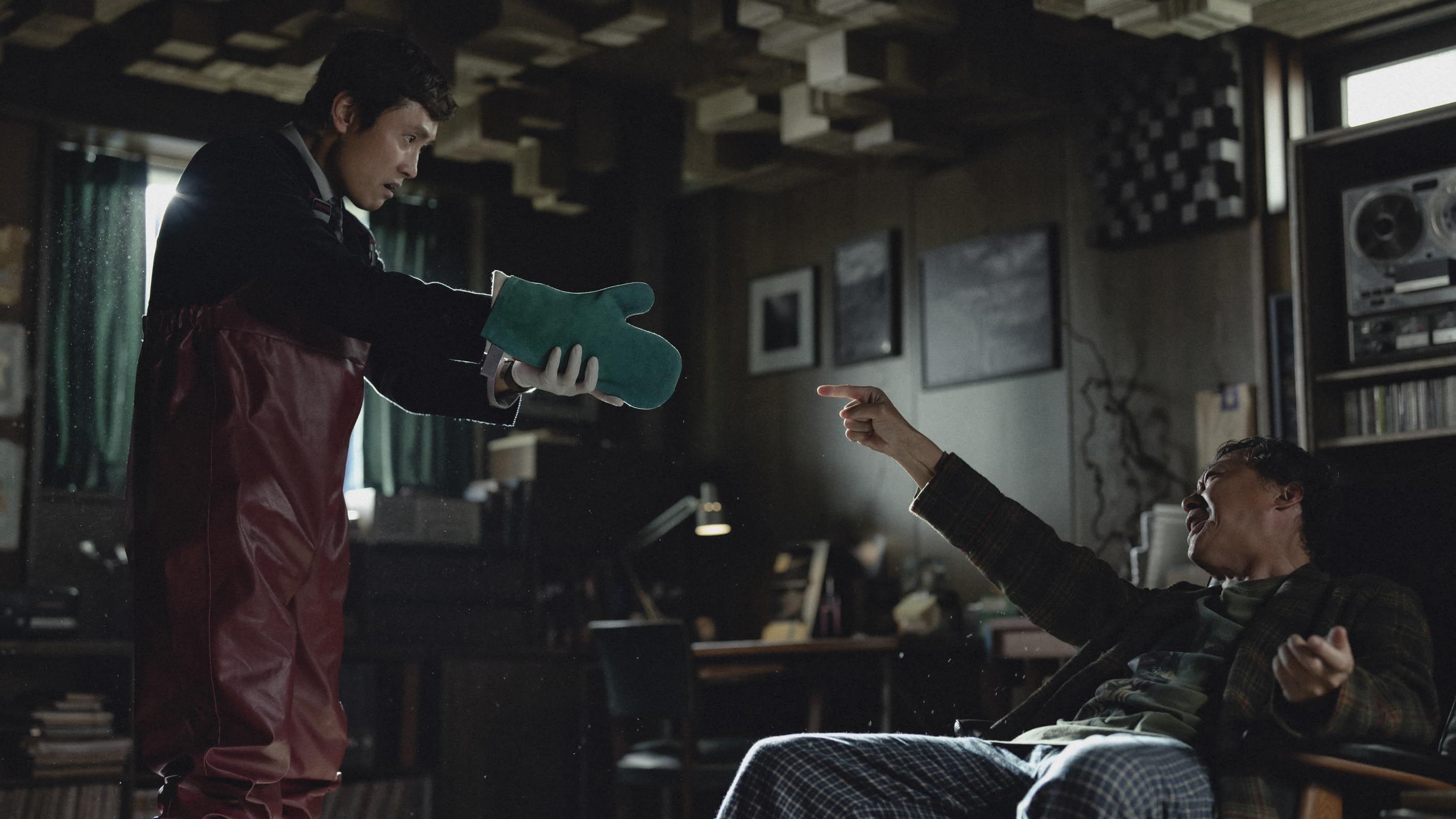
No Other Choice is yet another excellent film by the auteur filmmaker that’s directed with real confidence. Although its tone at first seems a little off for the usually serious director (it almost feels as if Park Chan-wook is trying to emulate Bong Joon Ho’s Parasite), the film quickly becomes darker with a scathing outlook on capitalism and Man-su’s murderous descent. There’s a sensational sequence with loud music and a three-way struggle involving oven gloves that goes straight up there with the director’s most memorable work.
The characters are uniformly well-developed, with the always-reliable Lee Byung-hun making for a compelling lead, a character who has to go through all the emotions that come with redundancy and finding one’s purpose again. It’s beautifully shot by Kim Woo-hyung with the director’s meticulous attention to detail and symmetry, and I found the film’s ending commentary on automation particularly grim and affecting. While No Other Choice isn’t quite up there with Park Chan Wook’s very best, it’s still a brilliant and ruthless critique on capitalism with excellent performances and memorable set pieces. I suspect it will be even better on future rewatches.









 The Film Meister