I Swear (Review)

Review
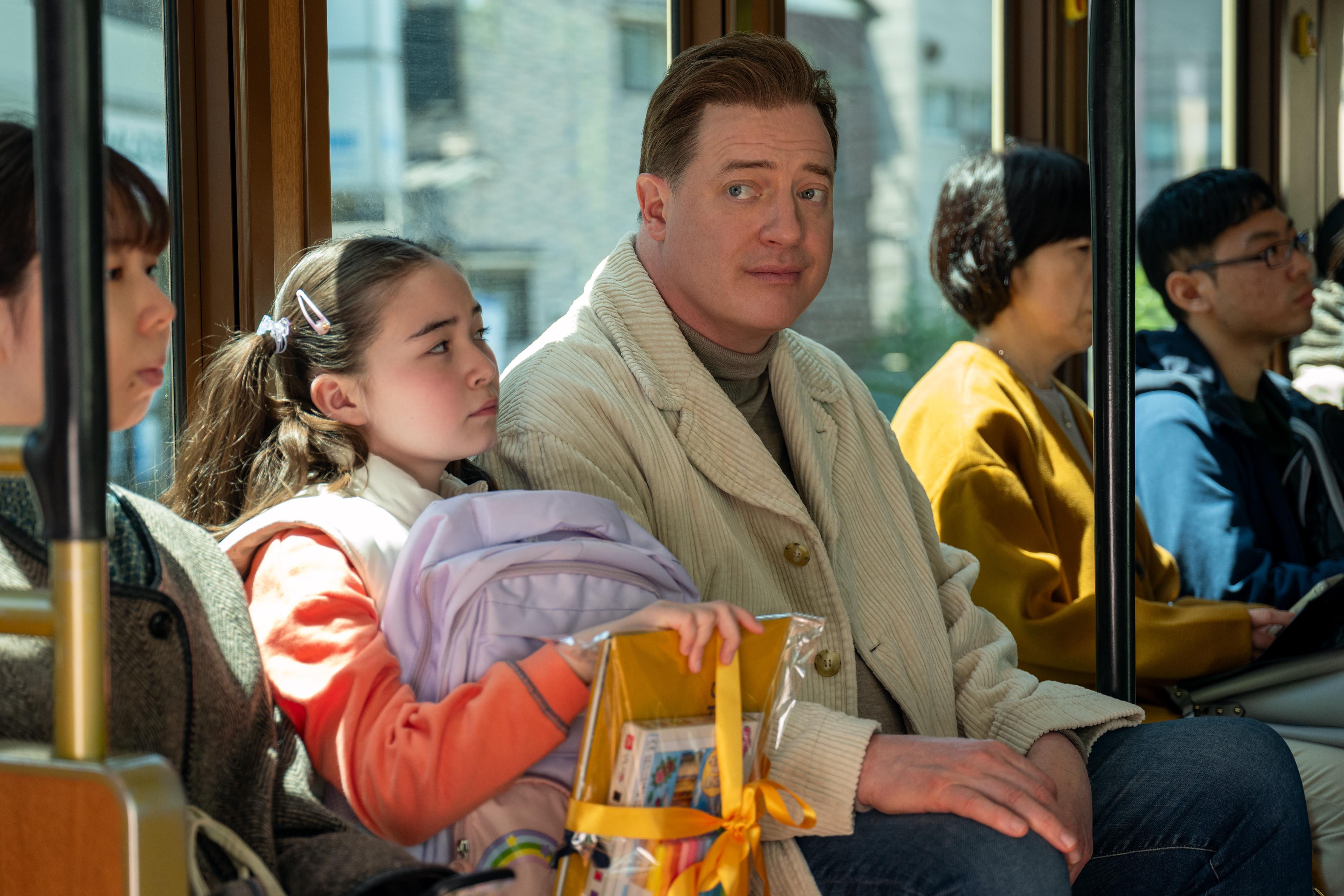
Still from 'I Swear'

Rating: 4 out of 5.

Director: Kirk Jones
Starring: Robert Aramayo, Maxine Peake, Shirley Henderson, Peter Mullan, Scott Ellis Watson
Certificate: 15

Run Time: 120 mins

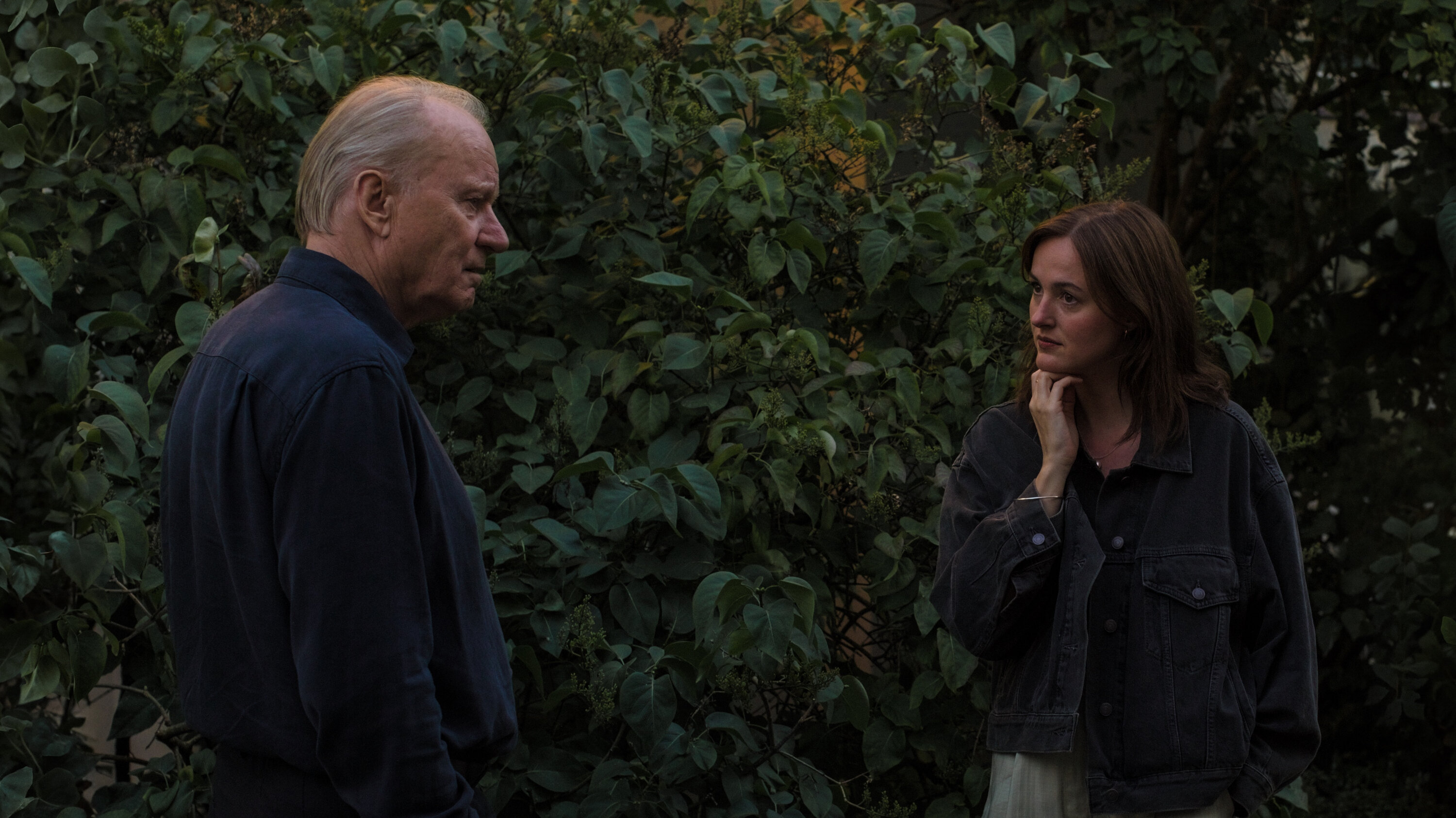
I Swear is a biographical drama that’s based on the true story of John Davidson, who was diagnosed with Tourette’s syndrome when the disorder wasn’t widely recognised. Davidson lives in Galashiels in Scotland in a working class family and the film follows his unconventional childhood at school through to how he navigates adult life. It’s directed by Kirk Jones, best known for making Waking Ned and Nanny McPhee.

Like Jones’s previous films, I Swear has the same feel-good and infectiously upbeat spirit about it – it may tread familiar biopic territory but that doesn’t mean I wasn’t riveted from start to finish. Jones’s script is full of energy and there’s plenty of laughs to be had – but they are crucially always with the characters rather than at them. The director also doesn’t neglect to include some wince-inducing moments of some of the difficult situations Davidson faces to keep his story grounded – this film really gets you in the feels with its three-dimensional characters.

Robert Aramayo is sensational as the Tourette’s sufferer, who is otherwise a down-to-earth young man who just wants to fit in – this is a far cry from his Game of Thrones or The Lord of the Rings: The Rings of Power days. Maxine Peake is also brilliant as Dottie, the mother of one of John’s friends and a former mental health nurse, who takes him under her wing. Shirley Henderson’s reliably excellent as Davidson’s mother, who is clearly stressed out by John’s situation and Peter Mullan shines as Tommy, a caretaker who gives John a job at a local community centre.

Although some may say the film sticks to a somewhat conventional biopic formula, I loved I Swear. It gets the tone just right – compassionate, but never pandering – and the performances are across the board. This is a film that reminds you that people can be good and I guarantee you’ll be leaving the cinema with a smile plastered on your face.

The Smashing Machine (Review)

Review
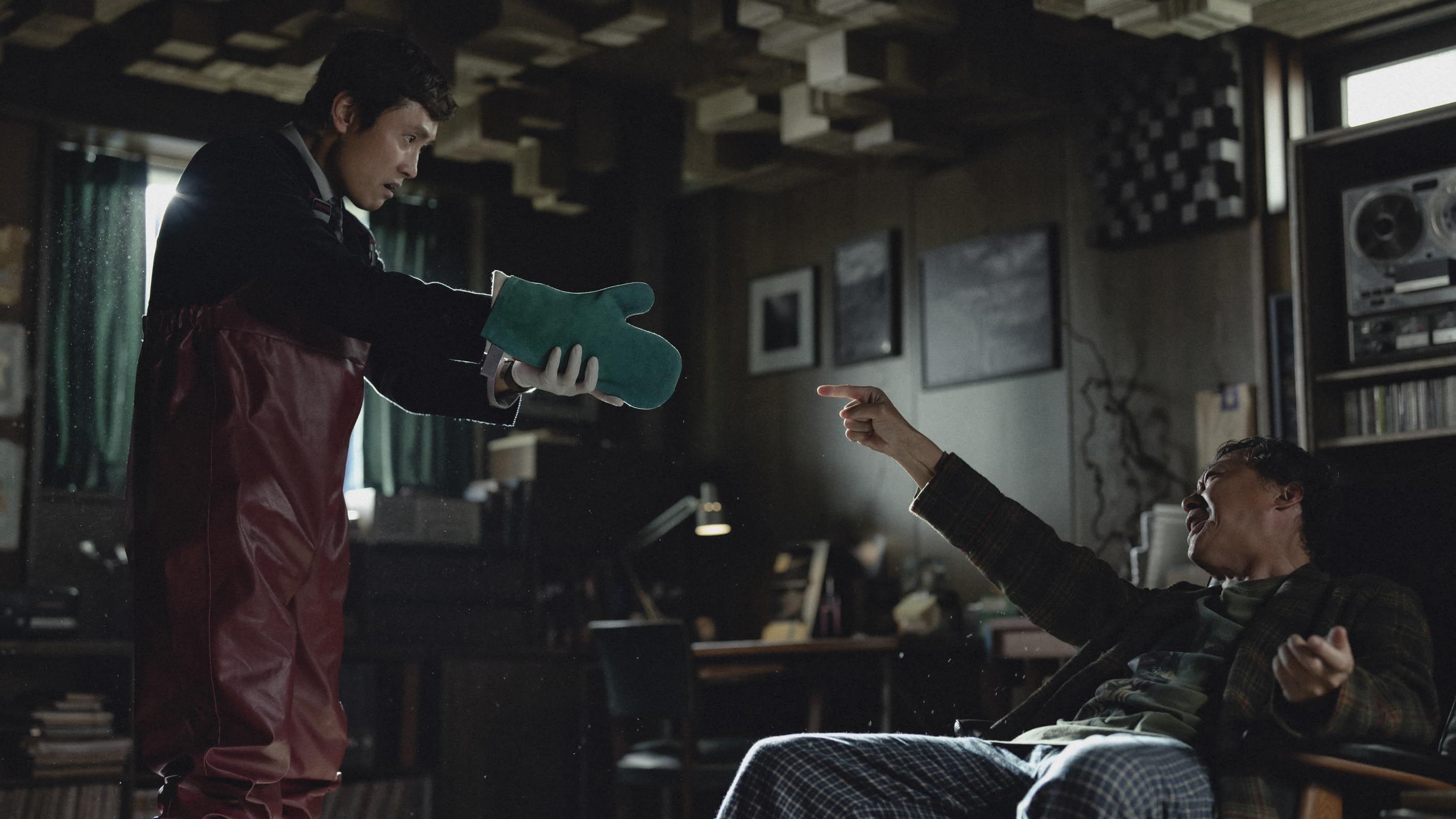
Still from 'The Smashing Machine'

Rating: 3.5 out of 5.

Director: Benny Safdie
Starring: Dwayne Johnson, Emily Blunt, Ryan Bader, Bas Rutten, Oleksandr Usyk
Certificate: 15

Run Time: 123 mins

The Smashing Machine is a biographical sports drama directed by Benny Safdie, his first time behind the camera without his brother Josh – the duo received acclaim for their collaborations with films such as Heaven Knows What, Good Time and Uncut Gems. Dwayne Johnson stars as former amateur wrestler and MMA fighter Mark Kerr, with the film taking place between 1997 and 2000. At the start, he’s yet to lose a match and is being coached by fellow MMA fighter and best friend Mark Coleman (Ryan Bader) while stumbling in and out of drug use before competing against the fearsome Igor Vovchanchyn (Oleksandry Usyk). He also has a complicated relationship with his girlfriend, Dawn (Emily Blunt).

The Smashing Machine is a fascinating sports biopic with some terrific performances, and hats off to Safdie for deviating from the conventional biopic formula. The film has a cinéma vérité quality to it (not dissimilar from Darren Aronofsky‘s The Wrestler or Bennett Miller’s Foxcatcher) and Safdie isn’t afraid to really dive deep into the complicated psyche of the heavyweight star – I was gripped throughout. The fight sequences are authentically brutal and there’s an interesting jazz-infused score by Nala Sinephro.

This is easily the best performance of Dwayne Johnson’s career. He excels as Kerr, and I found it fascinating how he’s often incredibly sweet and polite from the outside, but you know there’s a screw loose that could snap at any moment. He gets Kerr’s mannerisms spot on and I really felt for the character as the odds begin to stack against him, Johnson playing him with a tinge of sadness and regret.But it’s not just Johnson’s film. Emily Blunt is excellent too as his high-maintenance girlfriend who also has her demons, but Ryan Bader stands out as Coleman, who has to balance his own career while trying to keep Kerr under check too.

I suspect The Smashing Machine will largely be shrugged as a film and will be remembered more for Dwayne Johnson’s performance. But that’s a real shame because there’s a lot more going for it and Safdie really succeeds with diving into the inner psyche of the troubled fighter. Some have labelled the story as unremarkable, but that’s exactly the point – this is a film that’s about a fall from greatness and how a complicated individual such as Kerr navigates relationships and mental obstacles. This film really succeeds by looking past the sport’s shimmery gleam and how to accept and make the most of a mundane routine.

Steve (Review)

Review
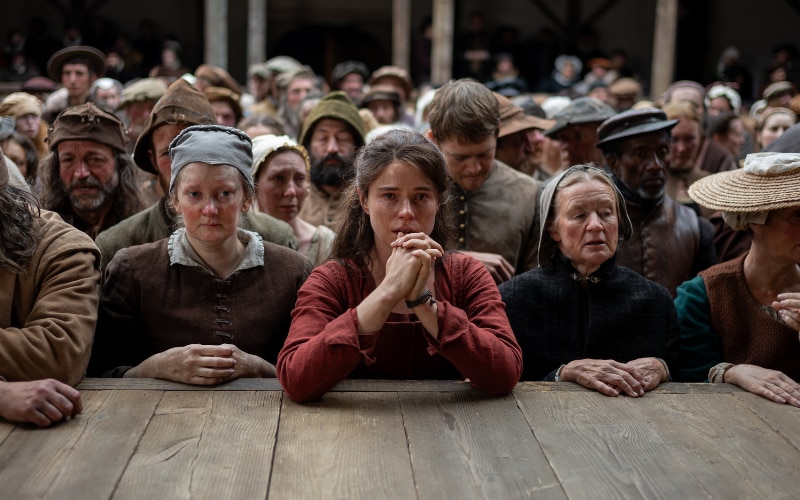
Still from 'Steve'

Rating: 3.5 out of 5.

Director: Tim Mielants
Starring: Cillian Murphy, Tracey Ullman, Jay Lycurgo, Simbi Ajikawo, Emily Watson
Certificate: 15

Run Time: 108 mins

Steve is a drama that centres around a headteacher of a boarding school for troubled boys called Stanton Wood in 1995. The school is effectively a last chance saloon for the sweary and rowdy boys, instead of prison. The film’s directed by Tim Mielants, who reunites with Cillian Murphy after last year’s Small Things Like These, which I found very overrated. It’s an adaptation of a 2003 novella called Shy by Max Porter (who writes the script here), which was told from the perspective of one of the 16-year-old students, Shy (played here by Jay Lycurgo). For Steve, that shifts to Cillian Murphy’s headteacher. The film opens as we see the very run-down Steve heading to school, where a local news crew are there for the day to film a piece, framing the question whether the teachers are doing good work, or if these boys are a lost cause and the taxpayer shouldn’t be wasting their money on keeping the school going.

Steve is a poignant and engaging film with a standout Cillian Murphy performance, as the weary headteacher battling his own demons. There’s a complexity to how Mileants gets us to side with the teenagers and overstretched staff, and it’s fascinating to see how the film crew take advantage of the situation. This is enunciated by Robrecht Heyvaert’s kinetic cinematography, who disorientingly lenses the school. It’s easy to see straightaway the inevitable conclusion the film barrels towards, but the staff are desperate to make the best of it – if they can’t set these teenagers on the correct course, no-one can.

Outside of the terrific Cillian Murphy performance, Tracey Ullman, Simbi Ajikawo and Emily Watson are all excellent as other teachers – Ullman in particular in an uncharacteristically serious role as the school’s deputy head. There’s some impressionable performances among the teenagers too, with Jay Lycurgo standing out as Shy, with the character describing himself as “angry and bored” when asked to define himself by the news crew in three words. But it’s a shame the character doesn’t have a little more meat to the bone – yes, Mielants clearly portrays him as a complex but lost cause, an individual who recognises what he’s done wrong, but the film could have dug deeper.

Steve is very close to being an excellent film – this is a mature and moving piece with some top-notch performances. It’s great to see Cillian Murphy opting for the smaller types of roles he found his original success from off the back of his Best Actor Oscar win for Oppenheimer. I just wish Steve had a little more ferocity up its sleeve for it to really shine.

One Battle After Another (Review)

Review
Still from 'One Battle After Another'

Rating: 4.5 out of 5.

Director: Paul Thomas Anderson
Starring: Leonardo DiCaprio, Sean Penn, Benicio Del Toro, Regina Hall, Teyana Taylor, Chase Infiniti
Certificate: 15

Run Time: 162 mins

One Battle After Another is the new Paul Thomas Anderson film, a filmmaker who I have a hit-and-miss relationship with. There Will Be Blood is an undisputed masterpiece, I love both Punch Drunk Love and Phantom Thread, but Magnolia, The Master and Licorice Pizza all left me cold. Anderson’s latest is another adaptation of a Thomas Pynchon novel (Inherent Vice was his first), although the director has taken some liberties with the source material by incorporating some of his own stories into the narrative.

Leonardo DiCaprio plays “Ghetto” Pat Calhoun, who we meet as a member of a revolutionary far-left group known as the French 75 with his partner Perdifia Beverly Hills (Teyana Taylor). The group has a successful run, but it’s undone by Perfidia’s relationship with the fiersome Colonel Steven J. Lockjaw (Sean Penn). The film then jumps 16 years later where Pat (now living in hiding as Bob Ferguson) has become a paranoid drug addict who lives with his daughter Willa (Chase Infiniti) off the grid in the sanctuary city of Baktan Cross. But Lockjaw is still on their tail.

One Battle After Another is a Paul Thomas Anderson triumph – it’s a giddily exciting action epic with plenty of thrilling surprises up its sleeve. It’s fiersomely original, Anderson constantly subverts expectations in a refreshing way with some outrageous set-pieces too. There’s two heart-racing car chases, with the one in the final act particularly memorable for how simple it is – cinematographer Michael Bauman (who also lensed Licorice Pizza) intercuts between three drivers and a stunning desert vista. A 20-minute extended sequence mid-way through the film where DiCaprio’s character needs to evade the authorities is another wildly entertaining highlight. But under the surface of this riveting story, Anderson has plenty to ruminate on the current state of American affairs but in a playful way with plenty of intelligent humour.

Leonardo DiCaprio is fantastic in the lead, dabbling his hand at comedy once again after his last turn in the underrated Don’t Look Up. Once a sharp and intelligent explosives expert, Anderson gets a lot of mileage out of the character who fries his brain with drugs after 16 years and DiCaprio nails it. Is this one of his best roles? It’s hard to say because the actor is so good in almost everything he’s in.

If there’s an actor who’s a dead-lock for an acting Oscar nomination, it’s going to be Sean Penn, who quite possibly puts in career-best work as the bigoted Colonel Lockjaw. He is utterly ridiculous as the racist military officer, a parody of male machismo with a particularly memorable walk, with Penn deftly balancing physical comedy with a tragicomic storyline for the character. He’s magnificent and would be deserving of a Best Supporting Actor win.

Benicio Del Toro is another standout as a chilled-as-a-cucumber karate teacher, who happens to also be a community leader and he gets many memorable lines – “I’ve had a few small beers” will undoubtedly be a line the actor is going to be remembered for after this film. Finally, Chase Infiniti as Perfidia’s daughter is a terrific find and she’ll find instant stardom after this film.

The film is beautifully shot on VistaVision by Michael Bauman (the second film this year after The Brutalist) – there are so many memorable shots here, and he too would be deserving of awards attention. Jonny Greenwood turns in a sensational score, which is very unconventional but fitting and memorable. The score felt rather alien the first time I watched One Battle After Another, but on a second viewing, it just fits in so seamlessly and it’s straight up there as one of his best works.

One Battle After Another is a near-masterpiece from Paul Thomas Anderson and it’s certainly his best film since There Will Be Blood. This is a bold, infectiously entertaining epic thriller with a litany of top-quality performances and inventive set-pieces. I’m positive it’s going to be a film that appears on decade-end lists and will be talked about for years to come, and it’ll be hard to resist switching off if it comes on television with its outstanding pacing.

Is One Battle After Another perfect? Not quite. After two viewings, I don’t think the opening 30 minutes quite matches the energy of the rest of the film (but there’s still so many positives, especially a grisly car chase). When the film jumps to 16 years later, the rest of the 162-minute film is just perfectly paced. This is a film where you’ll pick up on subtle character cues or themes every time you rewatch it – it is bursting in spirit and substance. One Battle After Another is worth racing to the cinema for as soon as you can and goes straight up there as one of the best films I’ve seen this year.

The Long Walk (Review)

Review
Still from 'The Long Walk'

Rating: 4 out of 5.

Director: Francis Lawrence
Starring: Cooper Hoffman, David Jonsson, Garrett Wareing, Tu Nyuot, Charlie Plummer, Ben Wang, Roman Griffin Davies, Joshua Odjick, Judy Greer, Mark Hamill
Certificate: 15

Run Time: 108 mins

The Long Walk is an adaptation of the 1979 Stephen King novel (under his pseudonym Richard Bachman) and is set in a future United States under a totalitarian military regime where fifty men compete in an annually televised competition, meant to inspire viewers. There’s a man representing each state and they must walk at a speed of at least three miles per hour – if they fall below and receive three warnings, they’re shot on the spot, with the winner being the final survivor.

Francis Lawrence directs – and you couldn’t ask for a more fitting name at the helm, given he’s directed all of The Hunger Games films (bar the first), where people must also fight to the death. Cooper Hoffman plays Raymond ‘Ray’ Garraty, and the film opens as we see his mother Ginnie (Judy Greer) begging him to back out, but he’s insistent on participating (for reasons we find out later on) and he starts to get to know the other players, forming a close bond Peter ‘Pete’ McVries (David Jonsson).

The Long Walk is an excellent adaptation and Lawrence deftly sustains a chilling and grim tone, but balanced with a humanity in the well-developed characters. The film really makes the most of its simple premise and there’s a sustained sense of dread throughout – if a character wants to tie a shoelace or stop to relieve themselves, they’re naturally going to be doing that at less than three miles an hour. Naturally, the characters move through emotional states as the walk progresses and it’s exciting to see what were adversaries become friends, and vice versa. The film does a great job in forcing you to think that any relationships formed are doomed, given the inevitable’s going to happen. It’s also testament to how strong a story this is when most of the film is just a tracking shot of some characters walking along a road – Lawrence doesn’t use many flashbacks.

Cooper Hoffman makes for an excellent lead, especially once he reveals his motivations and David Jonsson gives a soulful performance as Pete, a character with plenty of meat on the bone too. Charlie Plummer is another standout, who typically plays meek and quiet characters in films such as All The Money In The World and Lean On Pete, but here he plays against type. An almost unrecognisable Mark Hamill is deliciously evil here as The Major, who’s clearly relishing the role as a horrible villain that symbolises everything that’s wrong with society.

Unlike The Hunger Games films where the commentary behind the games is just as compelling as the contest, Lawrence trims the fat from The Long Walk and makes it lean and mean instead. The film doesn’t waste any time in getting started and never wanders into eye-rolling schmaltz, which is an easy trap for a film like this to run into. What’s more, there’s an excellent score by Jeremiah Fraites, who crafts several memorable themes and the film’s well shot by Lawrence’s regular cinematographer Jo Willems, who conveys the expanse and monotonous of the never-ending roads the characters must travel on.

The Long Walk is an excellent Stephen King adaptation in a strong year of them, considering we’ve also had The Monkey, The Life of Chuck and Edgar Wright’s The Running Man remake will be releasing shortly. Lawrence directs this with real flair and the sombre tone and well-rounded characters meant I was fully invested throughout. The Long Walk might be too grim for some, but that’s to its benefit – it makes for powerful viewing.

The Conjuring: Last Rites (Review)

Review
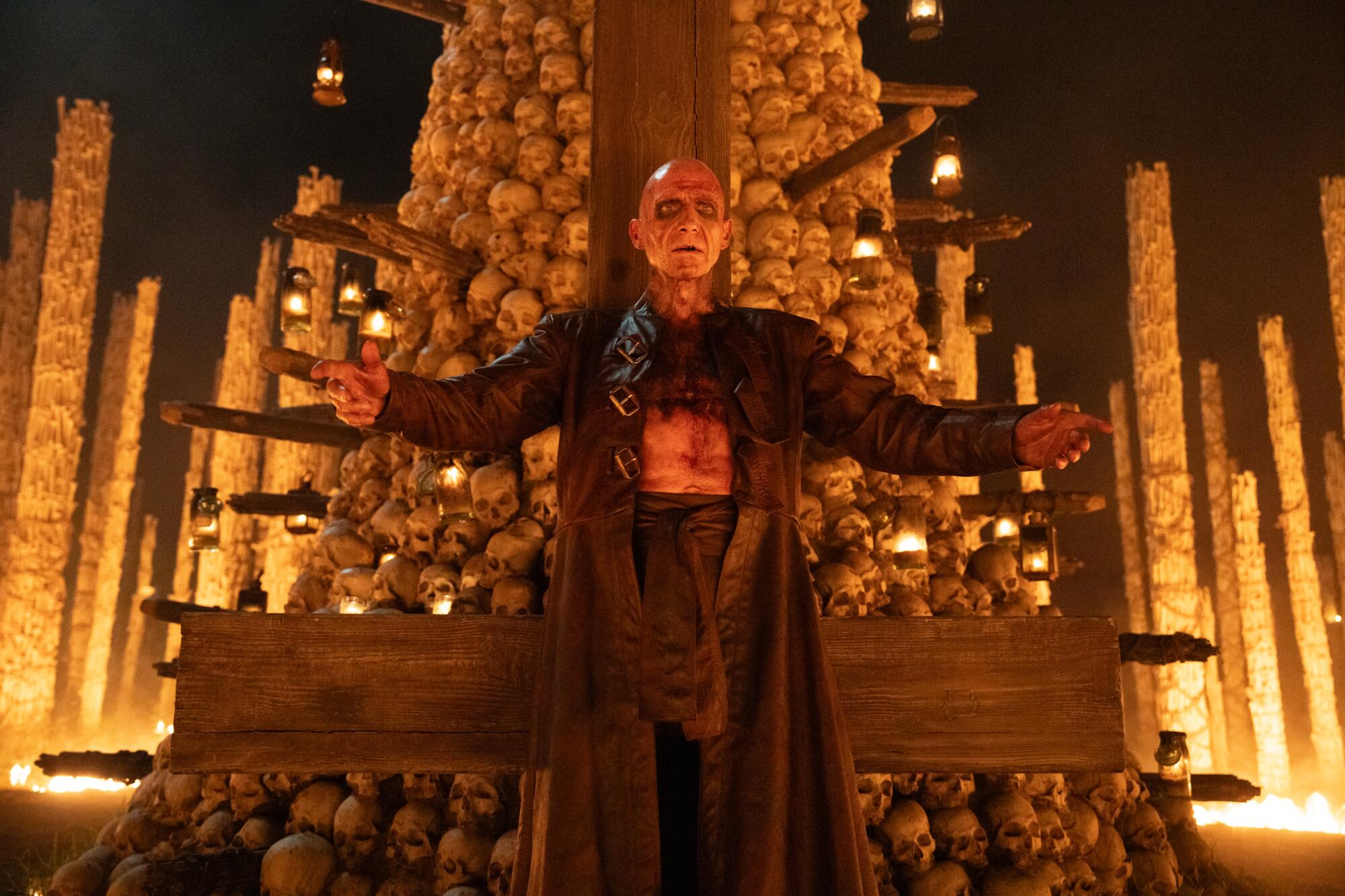
Still from The Conjuring: Last Rites

Rating: 2.5 out of 5.

Director: Michael Chaves
Starring: Vera Farmiga, Patrick Wilson, Mia Tomlinson, Ben Hardy, Steve Coulter
Certificate: 15

Run Time: 135 mins

The Conjuring: Last Rites is the fourth and supposedly final film in the mainline series, and is a loosely adapted portrayal of the Smurl haunting. It’s the tenth entry in the wider The Conjuring Universe (if you’re counting The Curse of La Llorona, which I do). While the various spin-offs have been of varying quality – Annabelle: Creation the high point, and Annabelle and The Nun complete and utter disasters – the mainline series has always been excellent. James Wan’s 2013 original is a horror masterpiece and The Conjuring 2, which he returned to direct, is also very strong. Michael Chaves assumed the director’s chair for The Conjuring: The Devil Made Me Do It and although it received mixed reviews, I thought it was an excellent entry – yes, it isn’t as strong in the scares department, but it more than makes up for it by moving away from the haunted house formula and being more of a crime thriller.

Chaves is once again on director duties for The Conjuring: Last Rites, and moves back to the haunted house formula. As the film opens, Ed and Lorrain Warren (Patrick Wilson and Vera Farmiga) have retired from their invesitgations, but continue giving lectures. Their now-adult daughter Judy (Mia Tomlinson) is becoming increasingly sensitive to psychic visions and is in a developing relationship with her boyfriend Tony (Ben Hardy). However, the Warren’s are persuaded out of retirement with the Smurl case.

While The Conjuring: Last Rites isn’t a bad film, it’s a disappointing ending to the mainline series. Chaves veers between an overly schmaltzy tone in how the relationship between Judy and Tony develops, and also the relationship between Ed and Lorraine, with sub-par horror. He’s proven in the past that he lacks James Wan’s mastery, and while there’s semblances of tension here and there, he doesn’t create a palpable atmosphere of dread like James Wan does. There’s a couple of good scares – one involving pausing a videotape and another in a room of mirrors, but the rest are rather underwhelming. Nothing here is on the scale of the tremendous scene from the first film of two children frozen in fear of something that may or may not be behind a door.

In many ways, Last Rites repeats many of the story beats of the original in how a family is haunted in their home. However, unlike Wan who really developed each family member, Chaves neglects to flesh out the Smurl’s. There’s very little meat to the bone and the fact it takes almost 80 minutes for the Warren’s to finally reach the residency is symbolic of the film’s strange pacing. It just feels like Chaves is going through the motions of a typical horror film without much finesse.

Chaves unfortuantely also succumbs to many bouts of fan service and in an age of legacy sequels, he leaves the door open by setting Judy and Tony as successors to their parents – Ben Hardy’s Tony essentially performs the same function as Shia La Boeuf’s Mutt in Indiana Jones and the Kingdom of the Crystal Skull. At least the strength of Patrick Wilson and Vera Farmiga’s performances as the Warren’s mostly carries the film. They’ve always been the highlight of the series and frankly, I’d watch them read from the phonebook.

All of the previous films have been handsomely shot by their cinematographers but newcomer Eli Born can’t inject much life into the film. Outside of some effectively dreary shots of the industrial town the Smurl’s live in, the film is often dimly shot and lacks polish. Also lacking polish is Benjamin Wallfisch’s completely forgettable score, replacing the excellent Joseph Bishara who composed the music for the previous films.

It’s a real shame The Conjuring: Last Rites stalls the mainline series momentum. Like The Devil Made Me Do It redefined the series by shaking up the formula, it would have been wise for Last Rites to do this again, rather than revert back to the haunted house formula of the first two films. Instead, what we’ve got is a serviceable entry that’s overlong and doesn’t quite get the tone right, that’s also lacking in the scares department. While The Conjuring: Last Rites is supposedly the end for Ed and Lorraine Warren for now, nothing’s really the end but I hope whatever’s next in store for the series has some more thought and care put into it.

The Roses (Review)

Review
Still from 'The Roses'

Rating: 2.5 out of 5.

Director: Jay Roach
Starring: Benedict Cumberbatch, Olivia Colman, Andy Samberg, Allison Janney, Sunita Mani, Ncuti Gatwa, Kate McKinnon
Certificate: 15

Run Time: 105 mins

The Roses is a satirical black comedy directed by Jay Roach, a remake of the 1989 Danny DeVito film which was loosely based on a 1981 novel by Warren Adler. Roach is a dab hand at comedy, hailing all three Austin Powers films, Meet The Parents and Meet The Fockers (but fortunately not the terrible Little Fockers) and The Campaign – all masterpieces. Ok, Dinner for Schmucks was poor, but that’s otherwise a pretty impressive run. More recently, Roach has turned his hand to dramas, directing Trumbo and Bombshell, which were also both excellent.

This satirical black comedy stars Benedict Cumberbatch and Olivia Colman as Theo and Ivy Rose, an English couple who have relocated to California with two twin children. Theo is an architect, while Ivy is a chef, and the two have very different parenting styles. When Theo’s career comes to a crashing halt during a severe storm, Ivy picks up the slack and rapidly grows her restaurant business, which slowly draws the couple apart to increasingly icy results.

Although The Roses comfortably passes the six laugh test and Cumberbatch and Colman make for a prickly duo, the film is never as consistently funny as it needs to be. Roach’s film feels like it’s pulling in two different directions – screenwriter Tony McNamara (who wrote Poor Things and co-wrote The Favourite) has a distinctive way with words, which is at odds with the director’s more slapstick American brand of humour. While The Roses is never boring and has flashes of brilliance (the film’s opening, a dinnertime conversation exchange between guests, and scene where a character sneakily smokes cannabis are all great) it would have been better for it to either put all its eggs into either McNamara’s script or Roach’s humour rather than act as a compromise between the two.

Cumberbatch and Colman really carry the film, both turning in excellent performances. Colman’s proven many times to be a dab hand at comedy, but this is new territory for Cumberbatch, and he proves a worthy foil. The constant verbal sparring match between Cumberbatch and Colman is sharply written, and it’s satisfyingly cringeworthy to watch each character continue to dig themselves into a deeper hole. But both actors also bring plenty of heart – it’s easy to empathise with Colman’s Ivy when the growing pressure of her work begins to consume her, likewise you can sympathise with Cumberbatch’s Theo who has to bear the brunt of raising their children.

Andy Samberg and Kate McKinnon play Barry and Amy, friends of the Roses and while Samberg gets some great lines, McKinnon’s Amy is rather grating. Faring better are Ncuti Gatwa and Sunita Main and Jeffrey and Jane, two members of staff in Ivy’s restaurant, who are both clearly having fun and Allison Janney makes a lasting impression as Ivy’s divorce lawyer in the one scene she gets.

The film’s competently shot by Florian Hoffmeister, and he does a particularly adept job at showcasing the various houses the Roses live in during their marriage. Roach’s frequent collaborator composer Theodore Shapiro also turns in a playful score.

While The Roses is by no means a bad film, it falls short of the greatness Jay Roach has demonstrated in the past with the majority of his comedies. It’s perfectly passable in the moment and has a handful of memorable laughs, but it’s not consistently funny and there are some flat stretches. It may be that Roach is just the wrong director for this particular script because his brand of humour isn’t an obvious match for McNamara’s witty dialogue. Still, The Roses is fun in the moment and Cumberbatch and Colman make for a memorable duo but considering the director’s comedy calibre, it should have been better.

The Thursday Murder Club (Review)

Review
Still from 'The Thursday Murder Club'

Rating: 1.5 out of 5.

Director: Chris Columbus
Starring: Helen Mirren, Pierce Brosnan, Celia Imrie, Ben Kingsley, David Tennant, Jonathan Pryce, Naomie Ackie, Daniel Mays, Henry Lloyd-Hughes, Richard E. Grant 
Certificate: 12A

Run Time: 118 mins

The Thursday Murder Club is an adaptation of Richard Osman’s debut 2020 murder mystery novel, which has since spawned a successful series. It followed a group of pensioners who set about solving the mystery of the murder of a local property development from the comfort of their luxurious retirement village. This adaptation (which heads straight to Netflix after a limited release) has a star-studded cast, with Helen Mirren, Pierce Brosnan, Celia Imrie and Ben Kingsley as the central quartet. It’s directed by Chris Columbus, who has a great track record with comedies with films such as Home Alone and Mrs Doubtfire, and of course, he directed the first two Harry Potter films. With a high-calibre cast and crew, this sounds like it could be a promising start to the series.

Sadly, The Thursday Murder Club is an unmitigated disaster. Other than being handsomely shot and a couple of actors trying to make the most of a poor script, there’s little fun to be found here. The two biggest problems are Katy Brand and Suzanne Heathcote’s script and the film’s tone. Osman’s wit is of a certain brand, and there were chuckles to be had in the book, but the script here is wooden and none of the jokes land. There’s also zero suspense and the film moves at a glacial pace, often being rather boring – that’s quite an achievement considering the star-studded cast. The tone is also completely off, perhaps because Columbus is an American director and hasn’t fully understood the book that’s steeped in British humour.

There’s a surprising real mixed bag of performances, but you can only do what you can do with such a shoddy script. Helen Mirren and Ben Kingsley fare the best out of the central quartet, but both play their roles very straight. While Celia Imrie’s a fine actress, her retired nurse Joyce lacks all the sweetness and naivety the character has in the book. And then there’s Pierce Brosnan, who’s Ron Ritchie is meant to have a Cockney accent but Lord knows where the character hails from with Brosnan’s woeful performance.

Of the supporting cast, Naomie Ackie and Daniel Mays are toe-curlingly bad as the two police officers who are tasked with investigating the case, with all their comedic attempts falling flat. David Tennant, Richard E. Grant and Henry Lloyd Hughes are also surprisingly awful in their roles – Tennant as the villainous retirement village co-owner, Grant as a gangster-like crime boss with laughable tattoos and Hughes as an inauthentic Polish maintenance man.

While Thomas Newman’s score is certainly instantly noticeable as his, it aggressively doesn’t fit in with the film’s tone and isn’t memorable in the slightest. The film is handsomely shot by Don Burgess, who does a great job of establishing the grandiose retirement village’s presence.

It’s a real shame The Thursday Murder Club is so poor considering the talent involved. It completely bellyflops tonally and Columbus and his crew haven’t understood the essence of Osman’s novel. That even the veteran cast can’t elevate proceedings demonstrates this adapation is doomed. It wouldn’t surprise me if the film performed well enough to justify a sequel – in many ways, it feels like a television series in its execution in how it’s largely confined to one location and lacks a cinematic sheen. But The Thursday Murder Club just goes to show that a top-tier cast and crew isn’t a guarantee of a film’s quality.

Caught Stealing (Review)

Review
Still from Caught Stealing

Rating: 4 out of 5.

Director: Darren Aronofsky
Starring: Austin Butler, Regina King, Zoe Kravitz, Matt Smith, Liev Schreiber, Vincent D’Onofrio
Certificate: 15

Run Time: 107 mins

Caught Stealing is the new film by Darren Aronofsky, a crime thriller adaptation of the 2004 Charlie Huston novel. At first, it might seem strange that Aronofsky is directing what appears to be a straight-up crime thriller – after all, he’s known for his psychological dramas that explore broken and conflicted individuals. However, don’t worry because there’s plenty of Aronofsky to be found in this darkly original adaptation.

Austin Butler plays Henry ‘Hank’ Thompson, a former baseball player-turned-bartender who’s bordering on alcoholism while living in the Lower East Side of New York, where his girlfriend Yvonne works as a paramedic. His British punk neighbour Russ Binder (Matt Smith) is off to London to see his ailing father and asks Hank to look after his cat. All hell breaks loose when two Russian mobsters rock up at the door searching for Russ though, and Hank finds himself on the receiving end of their anger.

Caught Stealing is a wildly unpredictable ride from start to finish that holds no punches in its brutal approach. Aronofsky is on top form here, and the film is directed with real flair, with plenty of his trademark grimness. This is a film that’s often wince-inducing and blackly comic, sometimes at the same time. It has a real kineticism, and there’s some excellent setpieces, especially a third act car chase. But there’s also heart and I really brought the electic mix of characters, and Aronofsky deftly showcases the dirty, grimy nature of the city.

Austin Butler is terrific as Hank, a deeply troubled individual who’s struggling to get himself out of a vicious cycle. Aronofsky gives the character plenty of meat to the bone. Matt Smith is having fun as the drug dealer neighbour with an outrageous mohawk, and Regina King’s excellent as a deliciously slippery police detective. Liev Schreiber and Vincent D’Onofrio are also brilliant as Lipa and Smully Drucker, Hasidic brothers who you really don’t want to mess with.

The film’s vividly shot by Aronofsky’s regular cinematographer Matthew Libatique and there’s a fun post-punk score by British band Idles that’s been written by Rob Simonsen, who scored The Whale.

I was surprised just how much I liked Caught Stealing, expecting it to be a minor work by Aronofsky after his last couple of films have explored some heavy subject matter. But the director proves his versatility by transposing his fingerprints onto a genre he hasn’t explored before, and I was completely on board with Caught Stealing from start to finish. This is an excellent film, and one I can’t wait to rewatch.

The Life of Chuck (Review)

Review
Still from 'The Life of Chuck'

Rating: 3 out of 5.

Director: Mike Flanagan
Starring: Tom Hiddleston, Chiwetel Ejiofor, Karen Gillan, Mia Sara, Carl Lumbly, Benjamin Pajak, Jacob Tremblay, Mark Hamill
Certificate: 15

Run Time: 111 mins

The Life of Chuck is the new film by Mike Flanagan and an adaptation of the 2020 Stephen King novella, which was part of If It Bleeds, a collection of four previously unpublished stories. One of these stories also includes Mr Harrigan’s Phone, which was adapted into a Donald Sutherland-starring film back in 2022. Flanagan is no stranger to Stephen King, having previously directed the underwhelming Gerald’s Game but the sensational Doctor Sleep, and he’s currently filming a new Carrie television series. However, it’s Flanagan’s first non-horror film and is quite atypical for a Stephen King story.

A fantasty drama, The Life of Chuck is divided into three acts that play out in reverse order. In Act 3, we meet middle school teacher Marty Anderson (Chiwetel Ejiofor) as the world begins to seemingly end – there’s a worldwide loss of internet and frequent natural diasters. There are posters all over town of Chuck Krantz (Tom Hiddleston), celebrating his 39 years of service, but we don’t meet or learn any more than that about Chuck until Act 2, which is set nine months before his death. In Act 1, we then learn about Chuck’s formative years.

The Life of Chuck is another good Stephen King adapation from Flanagan, and often borders on greatness. Although it contains some of King’s trademark elements of a small town community, the plot and themes are very nuanced – this is a film that will likely improve on future viewings, especially because lots of the fun of a first viewing is piecing together the backwards narrative. The film is quite strange and profound in equal measure, and some may be frustrated that it often moves at a slow, fairytale-like pace. Flanagan’s screenplay showcases both his best and worst traits – its profundity and intriguing narrative are its strengths, but the signature monologues he often resorts to in his television series hold this film back a little. The film’s also handsomely shot by Eben Bolter, a departure from Flanagan’s regular cinematographer Michael Fimognari.

There’s some good performances here, too. While Tom Hiddleston gets top billing, he isn’t in the film very much, but makes a remarkable impression with a showstopper dance sequence in Act 2. Chiwetel Ejiofor is another highlight as the schoolteacher, always reliably brilliant in whatever he’s in, and Mark Hamill is twinkly as Chuck’s grandfather. Flanagan’s usual recurring cast also pop up, including Carl Lumbly, Samantha Sloyan, Rahul Kohli and his wife, Kate Siegel – all are excellent, as usual.

While I suspect The Life of Chuck may struggle to find a mainstream audience, this is an atypical Mike Flanagan adapation of an unconventional Stephen King novel. That it’s always entertaining, sometimes profound and certainly ambitious, is to be applauded and this is a film that’s likely to improve on future viewings.