Mowgli: Legend Of The Jungle (Review)

Uncategorized
9e106caa1f3022e1042d5e72e56ab732b16aef30

⭐⭐⭐ (Good)

Director: Andy Serkis
Starring: Rohan Chand, Christian Bale, Cate Blanchett, Benedict Cumberbatch, Naomie Harris, Andy Serkis, Matthew Rhys, Frieda Pinto
Certificate: 12A
Run Time: 104 mins

It seems a minor miracle that Andy Serkis’ long gestating alternative take on The Jungle Book has actually made it out for public viewing. First, the film recieved numerous delays and then Warner Bros got cold feet, thinking they had a disaster on their hands and the film was then unceremoniously acquired by Netflix. Part of the reason for this trepidation was undoubtedly the widescale success of Jon Favreau’s 2015 Disney film which recieved unanimous praise.  Serkis’ film could afford not to be anything other than stellar otherwise it would be unfavourably compared to Favreau’s take. Serkis takes a different look at these characters audiences have come to cherish by sticking more closely to Rudyard Kipling’s original material, offering a much darker and grittier take compared to Disney.

Mowgli: Legend of the Jungle is an ambitious film that is consistently entertaining and is very different to other interpretations that have come before it. The darker tone Serkis strikes suits the material well and results in a film that is more adult and this makes the stakes much more realistic for the character we have come to love. This is certainly not a film for younger audiences. Serkis again proves to be a master of motion capture and this film represents further evidence of his talents, that extends to the rest of the cast as well. The wild animals of the jungle look like their acting counterparts and this gives them much greater empathy.

The performances are great with both Andy Serkis as Baloo and Christian Bale as Bagheera the standouts, who have more of a wilder streak than Bill Murray and Ben Kingsley in Favreau’s version and both share a good chemistry. Matthew Rhys is also well cast as a human hunter in the native village, who is just as much a villain as Benedict Cumberbatch’s Shere Khan. Rohan Chand is solidly cast as the titular character but lacks the likeability of Neel Sethi’s performance in the 2016 film. Benedict Cumberbatch is also suitably nasty as Shere Khan in the limited screentime he has and it’s a shame that he isn’t all that developed.

The main problem with Mowgli: Legend of the Jungle is it doesn’t try to strike a dark enough tone. Having a 12A rating means it still appeals to slightly older children but cannot quite push the boundary in merciless violence to really deliver the additional bite the film needs. It also lacks the energetic pace of Favreau’s film whose film flows much better but this film is never boring.

Visually, the film also looks unfinished. Serkis’ intentions are admirable and the visual ideas posed here are good but it doesn’t look like he’s been given the budget to fully realise his film which means the film doesn’t look as refined as Favreau’s photorealist vision. This means that Serkis’ film has too have a good story to overcome the unfinished visuals which it has, which is the main success of this film. Serkis knows that character work is most important.

Overall, Mowgli: Legend of the Jungle is an ambitious retelling of Rudyard Kipling’s classic material and whilst it is ultimately a success, it is likely to be underappreciated due to releasing so quickly after the 2015 Disney film. It’s also a real shame that Warner Bros seemed to have such little confidence in this work and had Serkis been allowed to refine the visuals, this could have been a very good film. Instead, this film has been dumped on Netflix and unfortunately, one can only imagine how much better this film could have been had it of recieved a proper post-production and distribution.

⭐⭐⭐ (Good)
The Old Man And The Gun (Review)

Uncategorized
redford2.0

⭐⭐⭐ (Good)

Director: David Lowery
Starring: Robert Redford, Casey Affleck, Danny Glover, Tika Sumpter, Tom Waits, Sissy Spacek
Certificate: 12A
Run Time: 93 mins

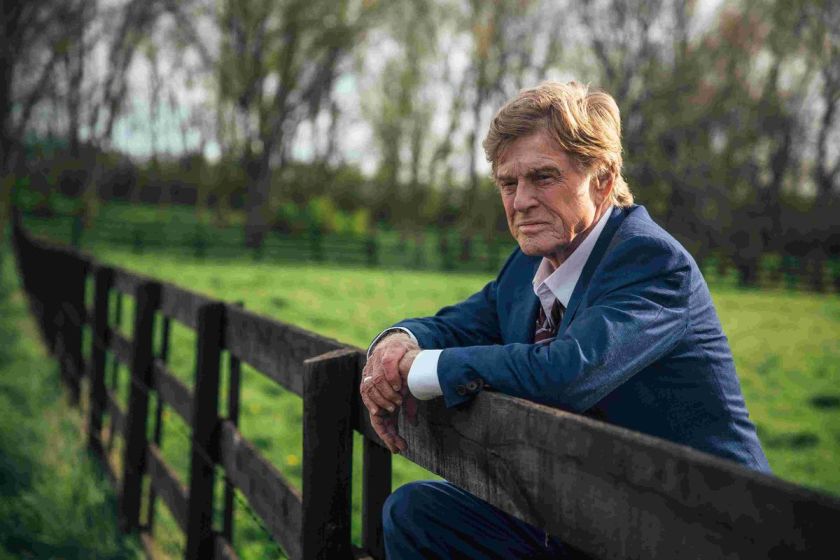
If The Old Man And The Gun is indeed Robert Redford’s swansong, it will be a very good note to go out on. This is an entertaining heist film based on a true story that poses some interesting questions yet deconstructs the generic constructs of the hist film with Redford’s portrayal of an older-aged bank robber with manners, Forrest Tucker, who is oddly charming, feel-good and unthreatening. After escaping prison for the umpteenth time, Tucker conducts an unprecedented amount of heists with an equally older-aged crew whilst Casey Affleck’s rookie family-man detective is hot on his tail. However, he also meets a new companion, Sissy Spacek’s peaceful horse rancher.

David Lowery’s film is a mature and oddly elegiac study into the psyche of the criminal, as he interrogates existential themes of a man who cannot not commit criminal acts as it makes him tick. Redford’s robber doesn’t know a life other than the one he has lived and despite finding a love interest, cannot settle. Lowery’s film is also consistently comedic, with many laughs to be had despite this being a serious subject.

The performances are uniformly excellent with Robert Redford being the standout, with his seductive but low-key and charming performance. Redford has some strong support from Sissy Spacek and their relationship is maturely portrayed on-screen. Danny Glover and Tom Waits are also excellent as members of Redford’s gang, with Waits getting a satisfying speech mid-way through the film.

Visually, The Old Man And The Gun looks sharp, with some great cinematography from Joe Anderson, who constructs some memorable shots. David Lowery’s regular composer Daniel Hart’s score is also fitting with the film, using jazz to create a soothing mood.

Overall, The Old Man And The Gun is a fine note for Redford to go out on (should this be his last role which he has alluded to) and for the most part, is an entertaining and original heist film. The amiable tone it sustains throughout is impressive and it makes for a satisfying tonic to the more gritty, thrilling aspects of the conventional heist film, yet revels in nostalgia to older 70’s heist films, mirroring the younger Robert Redford’s then-burgeoning career. I haven’t always been a fan of Lowery’s filmography but I really liked The Old Man And The Gun and it’s a film that has the potential to further develop on rewatches.

⭐⭐⭐ (Good)

Suspiria (Review)

Uncategorized
suspiria

⭐⭐⭐ (Good)

Director: Luca Guadagnino
Starring: Dakota Johnson, Tilda Swinton, Mia Goth, Sylvie Testud, Jessica Harper, Chloë Grace Moretz 
Certificate: 18
Run Time: 152 mins

After heightening his career with the Academy Award nominated Call Me By Your Name, it seems a strange choice for director Luca Guadagnino to follow it up with a remake of an Italian giallo horror film. However, Guadagnino has proven multiple times that he doesn’t stick to convention and here he chooses to reinvent Dario Argento’s cult classic as a more radical and feminised affair. This remake relocates the narrative to an Autumnal 1977 Berlin and the political violent uprising of the Baader-Meinhof faction. Dakota Johnson plays the film’s protagonist who gains a place at the Markos dance academy, where strange things happen almost instantaneously, as it is revealed early on that the academy is ruled by a coven of witches.

Suspiria is an ambitious remake that manages to justify its existence by diverting heavily from the original. It features some memorable horror imagery, beautifully lensed by Sayombhu Mukdeeprom and revels in its grandeur that it takes its time in setting up, over the course of six chapters and an epilogue. The feminist-charged performances in this film are great, with the standout undoubtedly Tilda Swinton, who has three roles in the film and excels in all of them. Dakota Johnson is equally excellent in a role that has more development than one initially expects.

That said, Suspiria faulters in these ambitious in that it often feels very heavy, almost like a PhD thesis and this self-seriousness is undone by some of the more silly aspects of the Argento-influenced horror, which the film erratically veers between. Argento’s film is laughable in places and this is translated over to this remake as well. Crucially, for a film that is meant to be a horror film, it isn’t scary and because of the laughable nature of the subject material, it’s merely mildly unsettling in parts. The pacing is also langorous and there are stretches where the film lacks energy. Suspiria also represents Radiohead lead Thom Yorke’s first foray into film scoring. His score is excellent on its own, a mix of instrumental orchestral pieces and songs but it doesn’t always fit in with the film.

In summary, Suspiria is a mixed bag that succeeds more than it faulters. It’s a film that has the potential to improve on future rewatches. Regardless, I’m glad it exists and Guadagnino makes a strong case in what it means to remake a film. I think this is probably a better film than the original, which I have more problems with than this. Whilst an interesting experiment and Guadagnino has some great ideas, Suspiria isn’t quite the knockout it looked and deserved to have been.

⭐⭐⭐ (Good)

Fantastic Beasts: The Crimes of Grindelwald (Review)

Uncategorized
FANTASTIC BEASTS 2

⭐⭐⭐ (Good)

Director: David Yates
Starring: Eddie Redmayne, Katherine Waterston, Dan Fogler, Alison Sudol, Ezra Miller, Zoë Kravitz, Callum Turner, Carmen Ejogo, Claudia Kim, William Nadylam, Kevin Guthrie, Jude Law, Johnny Depp 
Certificate: 12A
Run Time: 134 mins

Fantastic Beasts: The Crimes of Grindelwald is the hotly anticipated sequel to the 2016 spin-off to the Harry Potter series, that now looks set on becoming a five-feature franchise. After the first film established a strong set of new characters in a new environment and the titular Grindelwald teased, a second film always has more scope in that it can have more fun with the material as it doesn’t need to rely on introducing new concepts. This film follows Eddie Redmayne’s Newt Scamander once again, who has been tasked by Jude Law’s younger portrayal of Dumbledore to locate Credence, an Obscurus who Grindelwald took a keen interest to in the first film. Johnny Depp’s dark wizard, Gellert Grindelwald, is simultaneously is growing stronger and recruiting new followers whilst also trying to locate Credence for his personal gain. Director David Yates again returns for this film after helming the first film and the last four Harry Potter films, as do much of the cast and crew.

Fantastic Beasts: The Crimes of Grindelwald is a crushing disappointment and is the worst film in the Wizarding World thus far, by quite a sizeable distance. Whilst Fantastic Beasts and Where To Find Them did wonders in character development and a gripping storyline, this film fails to deliver on these promises hinted in the first film and makes for a particularly frustrating experience. The chief problems of the film are J.K. Rowling’s bewildering retconning of narrative events and characters and too much focus on setting up future installments which results in a sore lack of energy through stretches of the film. Considering the talent involved, the result is very surprising and this is the first film that David Yates has directed where he seems to be on autopilot throughout. Yates is such a talented director who doesn’t always recieve fair credit but even the visuals of the film lack that arresting quality of his previous filmography and at times, are a little ugly.

This is a film that strangely seems to primarily, be concerned with family trees and relations. As many of the characters that are important to the central plotline are new to the franchise, as an audience, there isn’t much to latch on to in terms of character emotion. I don’t mean this lightly when I say that the third act of the film felt like a Big Brother sketch. Characters also resort to blatant and lengthy exposition multiple times in the film.

Without going into spoilers, for die-hard Harry Potter fans, this film makes some strange decisions narratively. Whilst it’s always good to throw in some twists or take an unexpected diversion to what the audience are expecting, Rowling threatens to undermine the rich world she has created by retconning the main timeline of the series and trying to find ways to milk more plot points out of events. The ending to this film, which is a big reveal, I found to be very disappointing and out of character. Characters who have previously featured in either the first film or the Harry Potter series are treated rather disrespectfully by Rowling and make for jarring character arcs in the film.

There are some redeeming qualities to this film and I have overall graded it a ‘Good’. Firstly, Redmayne’s Newt remains a likeable and oddball lead, even if his character felt seemingly insignificant to the wider issues at hand. Jude Law’s Dumbledore is fantastic, who retains Michael Gambon’s twinkly personality and Irish lilt. Zoe Kravitz is also very convincing, even if her character is rather ill-treated on the page. Johnny Depp’s Grindelwald also fares well and Depp does the best what he can do with the material given and there are some interesting stabs at development that interrogate the wider politics of this world.

Overall, Fantastic Beasts: The Crimes of Grindelwald is a step-down in quality from the previous film and is disappointing in most respects. Rowling’s storyline has dug itself into a deep hole that at the moment, looks like will be difficult to dig itself out of. Serious changes will be needed in the next installment if this franchise has any chance of rivalling Harry Potter, or it threatens further undoing of this once promising series. That said, the film does have some interesting moments and some characters recieve good development. It’s certainly not a ‘bad’ film, but it represents a moment in the franchise where some important creative decisions will need to be made going forward.

⭐⭐⭐ (Good)

Overlord (Review)

Uncategorized
overlord_01_4web_only__large

⭐⭐⭐⭐ (Excellent)

Director: Julius Avery
Starring: Jovan Adepo, Wyatt Russell, Mathilde Ollivier, John Magaro, Gianny Taufer, Pilou Asbæk, Bokeem Woodbine 
Certificate: 18
Run Time: 110 mins

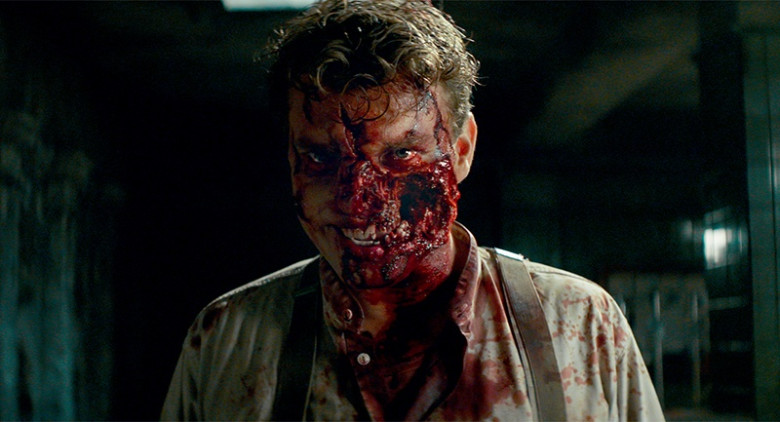
Overlord is an effective and highly entertaining genre hybrid that is a total blast from start to finish. The premise is quite simple – set in the run-up to D-Day, we follow a group of American soldiers who have been tasked to destroy a German radio tower in an old church. However, this task is made rather difficult when their plane is shot down, in spectacular fashion, and they need to evade the Nazi’s whilst completing their mission.

This is only director Julius Avery’s second feature but he clearly has the skills of a more seasoned director in how well this film is constructed. With the support of J.J. Abrams’ Bad Robot company producing, many thought this film would be another Cloverfield sequel, but it’s certainly not and it’s all the better for it in how standalone it is. There are multiple sequences here that are outstanding – the first scene in the film with the shooting down of the plane is claustrophobic and harrowing, starting the film immediately on a high. An extended sequence in an attic is masterfully paced too, as are some action sequences in the back-end of the film, but to reveal more would be to delve into spoiler territory. The violence in this film is particularly nasty at times, fully earning the film’s 18 certificate – this is not a film for the squeamish.

The performances by the relatively low-key cast are great, Jovan Adepo proving a solid lead as a young Private,after impressing in Fences a few years ago. Wyatt Russell as Corporal Ford, the leader of the group, is also excellent, a character who is solely concerned with achieving his mission rather than deviating from it once problems start to arise for the group. The two standouts of the cast are firstly Mathilde Ollivier as a French civilian who helps the group hide in her house with her brother and bed-ridden, ill Aunt. This is a breakout role for her and her performance is empathetic yet confident. Pilou Asbæk stars as a particular slimy and villianous Nazi SS Captain, who shines in many moments of the film in his nastiness, channelling Sergi López’s evil Captain in Guillermo Del Toro’s masterpiece, Pan’s Labyrinth.

Visually, Overlord looks great as well, with an emphasis on practical effects over CGI that make the film feel more authentic and gives it a B-movie quality. Jed Kurzel’s score has some memorable cues and suits the film well, even if it’s not his best work.

To summarise, Overlord winds up being one of the most exciting films of the year in its breakneck pacing from start to finish and other than perhaps a slightly corny, but luckily brief American ending. This is particularly surprising given my somewhat low expectations after the poor trailers. It’s also one of the rare genre hybrid films that manages to be fully successful on that promise, whereas lots of films stumble on one of the aspects. If you can handle the violence and gore, Overlord is bloody fun and is well worth a watch in the ever-crowded selection of films on offer.

⭐⭐⭐⭐ (Excellent)

Bohemian Rhapsody (Review)

Uncategorized
bohemian-rhapsody-ht-ml-181115_hpMain_4x3_992

⭐⭐⭐⭐ (Excellent)

Director: Bryan Singer
Starring: Rami Malek, Lucy Boynton, Gwilym Lee, Ben Hardy, Joe Mazzello, Aidan Gillen, Tom Hollander, Allen Leech, Mike Myers
Certificate: 12A
Run Time: 134 mins

In what has been a tumultous journey to the big screen, it’s rather surreal that that the Queen biopic, Bohemian Rhapsody, has finally made it to release. The film was originally greenlit in 2010 with Sacha Baron Cohen as Freddie Mercury, the actor didn’t see eye to eye with both the crew and Brian May and Roger Taylor, two of the band members who have had an important input into the film. The project was in lingo due to problems cracking the script and finding a replacement for Cohen until Rami Malek was cast in 2016. Then, there were setbacks with Eddie The Eagle director Dexter Fletcher, dropping out. Bryan Singer replaced him and it is Singer that has the directing credit here, but he was fired after a combination of not getting on with Malek and not showing up and then Dexter Fletcher came back to finish the film.

Although these all represent bad omens for the film, Bohemian Rhapsody is a well-crafted biopic that I was emotionally invested in for much of its running time. Rami Malek’s performance as Mercury is sensational and he completely inhabits the role, through his appearance, speech and mannerisms, capturing the late rock icon to a tee. The performances across the board are uniformly strong and Mike Myers is particularly good in a small role as a slimy EMI executive. Visually, the film looks good, for the most part Bryan Singer-regular, Newton Thomas Sigel’s cinematography is sound and the hair/make up and costuming are convincing, with the exception of Malek’s fake buckteeth at the beginning of the film which are a bit jarring. The film is sensible in its scope in terms of the events it goes through in the space of the 134 minute running time and achieves all the major beats in the band’s history, ending in Queen’s Live Aid performance and Mercury’s AIDS diagnosis. As a Queen fan, I’d have been more than happy to watch more if the film was longer and went into further detail but one must realise this film has to appeal on all levels.

Considering that the film has multiple directors in its production, the film feels like one vision and it’s a rather seamless experience, unlike films such as Justice League, which feel like a frankenstein product where distinct visions pull the film in different directions. That said, this film does feel more like a Dexter Fletcher creation than a Bryan Singer one, particularly in its humour and sharp script, which is a relief as Singer seemed like a strange choice when one considers his filmography.

Bohemian Rhapsody is a rather sanitised affair though. Considering this is a film about a band that took risks, the film could have interrogated some of the events and the band members a little more perceptively. Other than Mercury, the rest of the band are portrayed pretty much as perfect individuals, which is not surprising that May and Taylor had a big influence and whilst Gwyilym Lee, Ben Hardy and Joe Mazzello are all very good in the roles, they don’t have all that much to do. This is much more a Freddie Mercury study, but even then the film doesn’t delve too deeply into his life, only offering subtle hints at his sexuality and his personal life. I think this decision has been made more out of respect for him and to preserve his legacy, but instead perhaps there could have been a greater emphasis on the band dynamic and this would have enabled all of the band members greater development. Obviously, it’s a tricky juggling act trying to service all four band members and the film does a good enough job in the time frame, choosing not to get under the surface too much.

Unlike many reviews, I found the major mis-step with the film to be the ending Live Aid concert, which goes on for a good 15/20 minutes. Newton Thomas Sigel’s cinematography in this sequence is rather too flashy for its own good, with too many aerial shots and it looks too digitised and the whole sequence almost borders on being a bit naff and karaoke-like. As good as Malek and the cast are as Queen, they’re not the real thing when it comes to this sequence. It also felt more like a concious effort to get any remaining important Queen songs that hadn’t yet featured in the film into it.

Flaws aside, I was surprised by how emotionally invested I ended up being in Bohemian Rhapsody and it does overall, more than manage to capture the overarching essence of the band and succeeds in how they interact, even if the film does end up playing things safe. It is a respectful account of the band and if you’re not already a fan of them, will more than likely provide some inspiration to discover or re-discover what is one of the best rock bands in living memory. Rami Malek, in particular, is jaw-droppingly good as Mercury and I hope he gets some recognition for his performance in the upcoming Awards season. Bohemian Rhapsody is certainly well worth watching and should appeal to both the avid Queen fan or a newcomer as it works very well as a film in its own right.

⭐⭐⭐⭐ (Excellent)


Widows (Review)

Uncategorized
_102481791_005-035

⭐⭐⭐⭐ (Excellent)

Director: Steve McQueen
Starring: Viola Davis, Michelle Rodriguez, Elizabeth Debicki, Cynthia Erivo, Colin Farrell, Brian Tyree Henry, Daniel Kaluuya, Jacki Weaver, Carrie Coon, Robert Duvall, Liam Neeson 
Certificate: 15
Run Time: 129 mins

Widows is the long-awaited next project by director Steve McQueen, riding off the success of the Award-winning 12 Years A Slave. Here, McQueen explores the heist film and this film is a loose adaptation of a 1980’s ITV primetime television series. He has joined forces with Gone Girl writer Gillian Flynn, with the script and they relocate the story to Chicago.

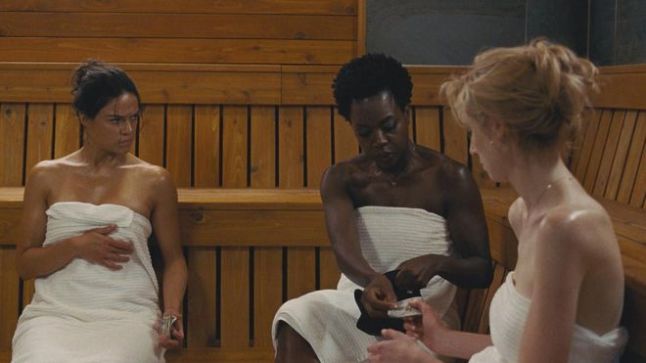
After a robbery job goes wrong, killing four men, the film follows their widowed wives, who team up to carry out one last job to pay back Jamal Manning, a crime boss and politician. Viola Davis’ Veronica Rawlings spearheads the job after she finds her late husband’s notebook which details all past and future heists. Davis brings the cast of women together, comprised of Michelle Rodriguez’s clothes shop owner and Elizabeth Debicki’s abused and fragmented young woman. This heist is set to the backdrop of a political campaign, which Manning is running for as well as Colin Farrell’s Jack Mulligan, who is the son of current electorate Robert Duvall’s Tom Mulligan.

Widows is an intelligent, taut and well-constructed piece that not only succeeds as a basic heist film, but it has a lot to say on the themes of gender and politics. The cast are uniformly brilliant, Viola Davis leading the pack with ease and swagger. The standouts are Michelle Rodriguez, who plays against type as one of the widows and Daniel Kaluuya as Jamal’s menacing mob enforcer brother, also playing against type as his past characters have had a sense of morality. McQueen delivers on the more basic elements of the genre in spades, the heists gripping and tension-filled and the action sequences equally satisfying, given that his previous filmography hasn’t featured this.

Visually, the film looks great with Sean Bobbitt’s cinematography outstanding. There is one sequence, which many have highlighted, where we watch a conversation from the outside of a car and we see just how quick it takes to go from a poor to an affluent neighbourhood in Chicago. Hans Zimmer’s score is also refreshingly fitting, after a couple of misfires lately, and it is used sparsely in the film’s first half but becomes more prominent in the second half.

Widows is ultimately an excellent heist film that is satisfying on a multiplex level but also bears McQueen’s director’s stamp all over it. It is a rich, sprawling tale that differs from generic heist films by having empowered female characters that face high stakes. The film is riveting from start to finish and never lets its foot off the gas at all. Coupled with Baby Driver and Logan Lucky, it is one of the best heist films in recent memory. Widows is also one of the best films of the year and would be wholly deserving, should it end up making a mark on the upcoming Awards season.

⭐⭐⭐⭐ (Excellent)

Halloween (Review)

Uncategorized
nick-castle-halloween-2018-02-600x350

⭐⭐⭐⭐ (Excellent)

Director: David Gordon Green 
Starring: Jamie Lee Curtis, Judy Greer, Andi Matichak, Will Patton, Virginia Gardner
Certificate: 18
Run Time: 106 mins

It’s hard to believe that John Carpenter’s 1978 Halloween is now 40 years old, a film that has inspired countless horror films since its release and has become a staple in the genre. Whilst the equally countless sequels that have followed since have varied wildly in quality, none have been able to match Carpenter’s original. After Rob Zombie’s remakes failed to capture audiences, the franchise has been dormant for a while. This was until the unlikely duo of comedian Danny McBride and director David Gordon Green had an idea and wrote a script, choosing to ignore all of the sequels to Halloween and make a direct sequel to it.

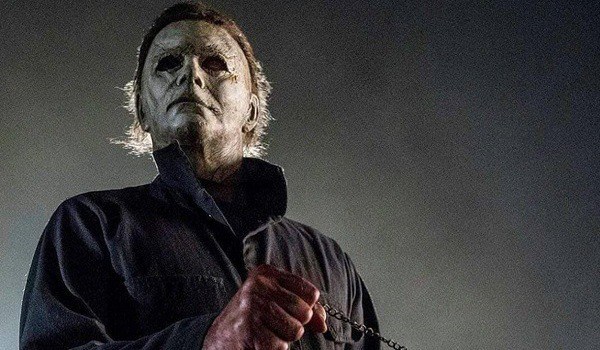
The film follows 40 years after the original where Michael Myers is still imprisoned but Jamie Lee Curtis’ Laurie Strode, who is suffering from PTSD, has been preparing for Myers’ return. She lives in a heavily guarded and weaponised home but this has cost her the relationship with her daughter, which consequently trickles down to a strained relationship with her grandaughter. Of course, Myers escapes and Laurie has to protect her family whilst embarking on a showdown with the infamous villain.

Ever since this film was announced, the entire production has seemed promising and the fact that this has the seal of approval from John Carpenter himself, heightens this excitement. Carpenter returns to score as well and his simplistic, yet very memorable score has been used throughout the series and has become an icon in itself.

Halloween (2018) is an excellent entry in the franchise and it is clear that the filmmakers have understood what made the original work. It is a thoroughly entertaining and mostly satisfying sequel that is very much in the vein of Carpenter’s original. The central idea of exploring the psychology of Laurie and how the events of the original affected her is a genius move and there are some excellent interactions between her and her family that are authentic to reality. Jamie Lee Curtis is in brilliant form in the role that made her a star and Andi Matichak as her grandaughter puts in a barnstorming performance and is surely a rising talent. Judy Greer, who is pretty much always the weak point of any film she’s in, is not bad here as Laurie’s daughter, which is an improvement from normal.

There’s some well-orchestrated scares here too. Green manages to create an eery atmosphere, that are tension-filled and he doesn’t rely too much on jump scares. The kills are suitably gory, although not as grisly as the 18 certificate would suggest. The best sequence in the film is when a girl is babysitting an self-aware yet hilarious young child and coupled with some excellent dialogue, it serves as a great synthesis of comedy and horror. It interrogates the codes and conventions of the horror genre whilst being able to deliver an inventive kill. Both Virigina Gardner and Jibrail Nantambu deliver in spades in this sequence and I hope they are recognised for their work here with future films.

John Carpenter, also collaborating with his son, Cody, and his godson, Daniel Davies, have crafted an excellent score for this film. The score revisits many of the same themes as the original whilst there is some new material too, which is equally as memorable. Again, referring back to the babysitting sequence in the film, Carpenter inventively uses synths with an electric guitar that is just genius. A variation of this theme gets used later in the film as well to the same effect.

The film is not without fault though. There are slightly too many characters which don’t get developed enough and are only introduced for Myers to kill later on. It takes about twenty minutes for the film to find its feet as the beginning is a little hokey and it doesn’t make a very compelling case to revisit the material until Laurie comes into the picture. There is also a rather odd, jarring twist just before the film’s third act which I didn’t quite buy but in retrospect, it is needed as a plot device to advance the film.

However, when Halloween works, it’s absolutely brilliant and despite a couple of false steps, delivers on the promise of a true sequel to the original. This is one of the best horror films of the year and again, makes a strong case that McBride and Green are multi-talented and don’t just belong in the comedy genre. John Carpenter’s original Halloween is still the best in the franchise but this new film is a very strong and competent thrill ride that boasts some fantastic sequences and demonstrates an actual understanding of what made the original so great.

⭐⭐⭐⭐ (Excellent)

Johnny English Strikes Again (Review)

Uncategorized
4114_D009_02634_R

⭐⭐⭐ (Good)

Director: David Kerr
Starring: Rowan Atkinson, Ben Miller, Olga Kurylenko, Jake Lacy, Emma Thompson 
Certificate: PG
Run Time: 89 mins

It’s rather surprising that a third Johnny English film has actually been made and released, considering the lukewarm responses to the first two entries. I’ve got a soft spot for both, particularly the second one, and there is no denying that Rowan Atkinson is a physical comedy genius. Both films were fun, memorable endeavours that offered a unique parody on the spy genre and both are really energetically well-paced.

In the interim between Johnny English Reborn and this film, Atkinson’s spy now works as a geography teacher in a private school who secretly trains his students in the art of espionage and the relationship between him and the students is reminiscent of School of Rock. However, after a cyber-attack on MI7 that exposes all of the identities of its current agents. Of course, this means that English is now called back into action. After taking a break from the second film, Ben Miller’s Bough from the first film returns as English’s sidekick and the two team up to resolve this problem.

Johnny English Strikes Again sadly lacks the energy and memorability of the first two and the humour just isn’t as sharp or sophisticated. It also rehashes set pieces and comes across as a bit of a ‘greatest hits’ of the first two. That said, there are some individual set pieces that work and Atkinson is clearly having a good time and is more than up to the task of this role reprisal. The film even offers slight amounts of of political satire, for instance, there are comparisons between Emma Thompson’s Prime Minister and Theresa May to be made, particularly the methods in which she responds to the hacking. Despite Johnny English Strikes Again being a lesser film in the trilogy, it’s never boring and as the film finds its footing as it goes along, it’s just about good enough.

⭐⭐⭐ (Good)

Bad Times At The El Royale (Review)

Uncategorized
badtimes2.0

⭐⭐⭐ (Good)

Director: Drew Goddard
Starring: Jeff Bridges, Cynthia Erivo, Dakota Johnson, Jon Hamm, Cailee Spaeny, Lewis Pullman, Nick Offerman, Chris Hemsworth
Certificate: 15
Run Time: 141 mins

Bad Times At The El Royale, writer-director Drew Goddard’s sophomore directorial effort after Cabin In The Woods, is an interesting piece of work. Departing from the horror genre of his debut feature, here Goddard explores neo-noir. Rather originally, the film is set at the El Royale hotel, an establishment that sits quite literally between the California and Nevada border where guests can choose which state to stay in. It is revealed that ten years prior to the events in the film, a bag of money was buried under the floorboards of one of the rooms and the film follows a set of strangers who each have their own secret intentions, that arrive at the hotel.

Bad Times At The El Royale is gripping when Goddard has full command of the material and there are some mostly satisfying twists that are unearthed throughout the course of the film. Like Cabin In The Woods, Goddard again deconstructs genre through the film’s setting, characters and its moody, pulp atmosphere. There are also some great performances from the cast, with Jeff Bridges’ priest, Dakota Johnson’s femme fatale, Jon Hamm’s hoover salesman and Cynthia Erivo’s singer all rich characterisations. Lewis Pullman is particularly good as the hotel concierge, who also has some secrets up his sleeve and Chris Hemsworth shows up in the film’s final act as a Charles Manson-esque cult leader. The film is also frequently visually arresting to look at, Seamus McGarvey again conjuring some striking images and impresses particularly in one sequence with a tracking shot.

However, what undoes Bad Times At The Royale is its self-indulgence and portentousness. The film has a rather langourous 141 minute run time and whilst the film is often gripping, when it isn’t, it’s a chore to get through. Goddard’s script only has some moments of brilliance, and memorable lines, particularly Bridges’ quip, “Shit happens. Get the whiskey!”. Many have compared this film to Quentin Tarantino’s Pulp Fiction, another filmmaker who has a sharp voice in his scripts. Unfortunately, this lacks the overall sustained wit from Tarantino and doesn’t have anywhere near the same amount of energy.

Overall, Bad Times At The El Royale is a frustrating film in that it is close to being excellent, but Goddard’s script and indulgent run time seriously dent the film’s pacing. The film is best in the first third when it is establishing the setting and characters. It has perhaps the best opening scene of the year which properly sets the tone of the film. But then, as it begins to delve deeper into its murky filmic world, the pacing problems begin to develop, as Goddard heavy-handedly draws out conversations and introduces too many sub-plots and themes. There’s certainly a lot to like in Bad Times At The El Royale, but it falls short of being the perfect genre deconstruction piece it aspires to be.

⭐⭐⭐ (Good)