Phantom Thread (Review)

Uncategorized
phantom-thread-trailer-920x584

⭐⭐⭐⭐ (Excellent)

Director: Paul Thomas Anderson
Starring: Daniel Day-Lewis, Lesley Manville, Vicky Krieps

Certificate: 15
Run Time: 130 mins

Phantom Thread is the latest film by director Paul Thomas Anderson and supposedly Daniel Day-Lewis’ final performance before he retires. Whether or not this actually happens or not, we shall have to see. But if it is, Phantom Thread is a fantastic note to end on.

Phantom Thread, for the majority of its run time, is engrossing and a masterclass in filmmaking. It is a fascinating character study of fictional fashion designer, Reynolds Woodcock (Daniel Day-Lewis), who lives with his influential sister, Cyril (Lesley Manville), and he creates dresses for higher society members. Reynolds develops an interest in a countryside hotel waitress, Alma (Vicky Krieps) and they soon begin a relationship but Reynolds’ domineering personality begins and persists to clash with Alma’s.

Just like Anderson’s other films such as There Will Be Blood and The Master, Phantom Thread is thematically rich, interrogating themes of duality and what it means to be in a relationship. It manages to balance its realism with fantasy and the film at times, evokes a Brothers Grimm tale. On one side of the spectrum, there are equisiste scenes of women being dressed up to impress their Princes and on the other, seemingly innocent women mushroom-picking in the forest. This Brothers Grimm quality to the film is juxtaposed by a Hitchockian / Kubrickian tone of voyeurism, mystery and intrigue.

The duality of every character makes Anderson’s film all the more satisfying and engaging. I sympathised and loathed them at the same time and that is testament to the quality of the writing and the performances. Day-Lewis is sensational and surprisingly funny at times with the witty, sharp script he has to work with. Manville has, as well as Day-Lewis, been Oscar-nominated for her performance here and the chemistry she shares with him is perfect and I really bought them as on-screen siblings.

It is Vicky Krieps however, who perhaps impresses the most – Alma is a character who is effectively the audience gateway into the House of Woodcock, someone who is initially naive and shy but then develops. She is in many respects, the audience’s eyes into this rich world underpinned by a duality.

The film is shot beautifully. Phantom Thread doesn’t have a designated DP, many have speculated Anderson has shot the film. There are multiple breathtaking shots, my favourite a recurring riff of Reynolds driving his vintage car around the country, in which the way it it is shot echoes an Alfred Hitchock film. The score by Jonny Greenwood is rather frenetic but it has its moments.

Unfortunately, I didn’t buy the film’s final act. It would be a spoiler to disclose what happens but the film’s narrative heads in a particular direction that I couldn’t really get on board with and I began to feel a little uncomfortable at where the film was going.

Overall, Phantom Thread is one of the strongest entries in this years Best Picture line-up. It represents yet another high for director Paul Thomas Anderson and is a fantastic note for Daniel Day-Lewis to go out on, should this in fact be his swansong. It makes for a masterful character study and a real treat for cinephiles. I’m just a little unsure on the direction the film heads in its final act, as it doesn’t quite conform to the neatness the first two have. I suspect on further rewatching, this film will continue to unpack itself and there is a lot more to gain from it.

⭐⭐⭐⭐ (Excellent)
 

Winchester (Review)

Uncategorized
film1806-winchester

⭐⭐⭐ (Good)

Director: Michael & Peter Spierig
Starring: Helen Mirren, Jason Clarke, Sarah Snook
Certificate: 15
Run Time: 99 mins

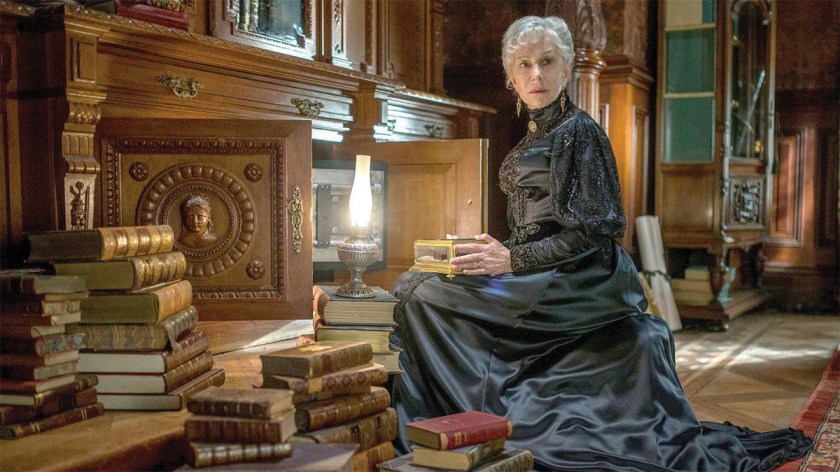
Winchester may not be the best horror film to be released in recent memory, but it really is nowhere near as bad as critics and audiences are suggesting. Based on the fascinating premise of the Winchester mansion in San Jose, California, the film follows heiress Sarah Winchester (Helen Mirren), who is haunted by spirits in the mansion. She is constantly extending or removing parts of the house, even going to the extent of installing staircases that lead to nowhere in an effort to confuse said spirits. Eric Price (Jason Clarke), a doctor who is hired to assess whether or not the elderly Sarah Winchester is fit to continue running her father’s company which she inherited, a gun manufacturing company.

This fascinating premise, coupled with the strong cast of Helen Mirren, Jason Clarke and Sarah Snook and The Spierig Brothers directing is a worthy collection of talent and bodes well for the film. The Spierig Brothers are interesting directors, consistently picking thoughtful projects and always inject some of their own ideas into their films. Predestination, in particular, is an original and twist-filled sci-fi that demonstrates their talent. This is why it was all the more surprising to see just how bad the reviews were.

Winchester gets off to a very shaky start with a terrible and unflattering introduction to Clarke’s character, who we first see dependent on laudanum and drink. It’s not exactly a great way to build sympathy for the character, particularly as Clarke is in fact, the main character in this film. Although Mirren is top-billed, Clarke is our eyes into this world, as we and him discover the Winchester mansion and the secrets it holds through the course of the film. Mirren isn’t in the film all that much but she does the best with what she’s given.

Luckily, the film picks itself up about half an hour in and the rest of the film is always entertaining. I actually think the film has some depth, which many people seem to have missed. The film questions the use of guns and has an anti-gun message, which is quite interesting and the ways in which it questions life after death and the act of death itself has some gravitas.  Without getting into spoiler territory, the ending is quite satisfying and neatly ties up some of the loose ends of the film, without being heavy-handed.

The main problem with Winchester is its reliance on jump scares, which are not scary in the slightest. Dead people constantly appear on-screen and The Spierig Brothers use all of the poor tropes associated with this aspect of the genre that have plagued horror films in the past. It’s simply not enough to whet a horror fan’s appetite anymore and means that the more heady ideas have less weight as they are cheapened by the jump scares.

But, Winchester does offer some chills in alternative methods. There is one quite powerful scene mid-way into the film involving a dead character which is executed quite well. I also question whether or not this film is even meant to be a horror film. I found it to be more of a psychological thriller, which just happens to have a horror element of the supernatural within it.

Ultimately, the sheer entertainment value of Winchester and its exploration of some key themes mean that the film is just about passable. The film does have a myriad of problems, chiefly that the film isn’t scary and its negative, awkwardly handled characterisations at the beginning of the film. If you can look past these elements and dig a little deeper into the film, there is enough in it to enjoy.

⭐⭐⭐ (Good)


Downsizing (Review)

Uncategorized
downsizing-matt-damon-paramount

⭐⭐⭐ (Good)

Director: Alexander Payne
Starring: Matt Damon, Christoph Waltz, Hong Chau, Jason Sudeikis, Kristen Wiig, Maribeth Monroe, Udo Kier

Certificate: 15
Run Time: 135 mins

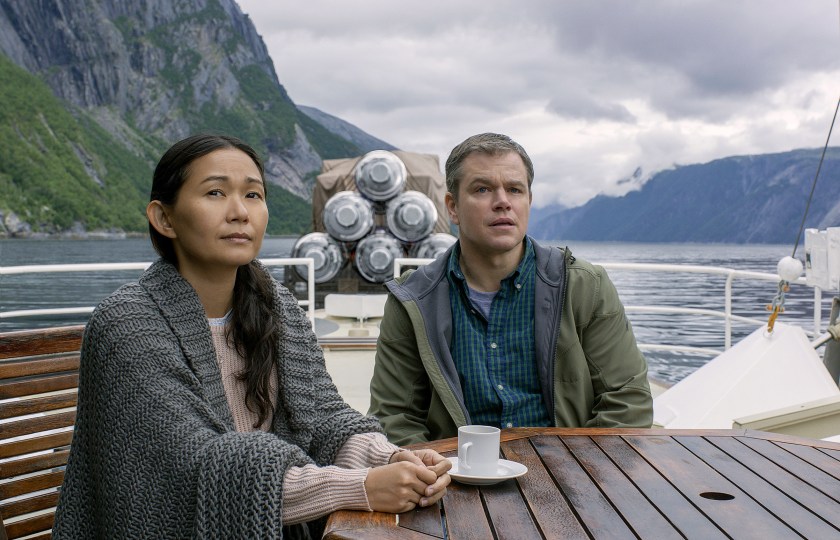
Downsizing, director Alexander Payne’s latest, is an interesting beast in a strong body of work. Set in a near future, the narrative utilises the lofty concept of ‘downsizing’, the irreversible process pioneered by Norwegian doctors of shrinking humans down to approximately five inches tall as a means of combatting overpopulation. Opening in a world where both normal and ‘downsized’ people co-exist, the film follows strapped-for-cash occupational therapist Paul Safranek (Matt Damon) who lives with his wife, Audrey (Kristen Wiig). They ponder ‘downsizing’ after meeting a friend at a reunion party, who reveals other benefits – chiefly, financial security. 

To reveal anymore would be a disservice to the film as this is what is sold in the marketing. However, Downsizing has a lot hidden up its sleeve, perhaps accounting for the film’s decidedly mixed reception. Downsizing is actually a lot better than the reviews would suggest and is a marvel in world-building. The little worlds that Payne creates are frequently awe-inspiring and the minutiae admirable, greatly elevating the verisimilitude of the film.

That said, a tonal shift mid-way through the film does feel like a switch-and-bait. There is still enjoyment to be had in the slightly more familiar, ‘finding oneself’ narrative route Payne explores, even though its moral messages are delivered heavy-handedly.

Downsizing balances comedy and emotion rather well and is bolstered by being thematically rich and chock-full of metaphors, right down to the very concept of the film itself that interrogates political and planetary notions. The performances are all generally sound with the highlights being Christoph Waltz and Udo Kier. Waltz deviates from playing a villain and to see both German-speaking stalwarts share the screen is very satisfying.

Downsizing is overall, a commendable effort by Alexander Payne with transfixing world-building but it requires one to have faith in the tonal shift in the second half. The first half is much stronger, but the direction it takes thereafter is probably why many have taken quite sourly to the film: you don’t exactly get what the trailers promised.

⭐⭐⭐ (Good)

The Post (Review)

Uncategorized
the_post_dom_nor_d30_071017_204253_204322_r_comp_rgb-0

⭐⭐ (Poor)

Director: Steven Spielberg
Starring: Meryl Streep, Tom Hanks, Sarah Paulson, Bob Odenkirk, Tracy Letts, Bradley Whitford, Bruce Greenwood, Matthew Rhys
Certificate: 12A
Run Time: 116 mins

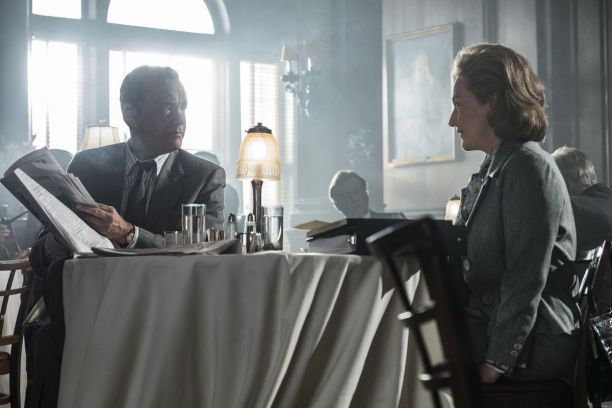
The Post depicts the true story of journalists in The Washington Post and their uncovering of the Pentagon Papers, classified documents associated with America’s involvement in the Vietnam War. These damning papers reveal the American cover-up of their progress in the Vietnam War, aware that their efforts were fruitless, yet still sent in more troops. The journalists then have to decide whether to publish or withold this sensitive information, risking prosecution by Nixon should they publish.

Directed by Steven Spielberg, this is a project he reportedly felt very passionate about and fast-tracked it into production, feeling that the story needed to be told now, especially in the current American climate. Spielberg managed to shoot the film very swiftly (basically, he needed to get it done in time for the Oscars…), whilst the same time managing post-production on the upcoming visual effects heavy, Ready Player One. At the same time, Spielberg has assembled a talented cast for this film comprising of Meryl Streep and Tom Hanks and of course, reunites with composer John Williams and cinematographer Janusz Kaminski.

Unfortunately, Spielberg’s rush to get the film has got the better of him as The Post is painfully mediocre. The film tries to make itself more important than it is and whilst the subject material is very compelling in itself, the way in which the film has been constructed is never gripping. Other than a strong scene near the beginning with acquisition of the documents, the first half of the film is very clunky and strangely, almost devoid of any tension. Whilst The Post does manage to find its footing a little more in the second half, the film is never as fascinating as it should be and feels very contrived.

The film isn’t all a shambles. In conjunction with a merely adequate second half, Spielberg clearly seems to love the act of newspaper printing and the film offers an insightful view into the world of journalism. There are numerous sequences of newspapers being printed and distributed and journalists working their socks off to get work done. There are some good performances here too, most notably Bob Odenkirk, Bruce Greenwood, Matthew Rhys and Jesse Plemons. All four actors play in supporting roles and all manage to inhibit their characters very convincingly.

Of the two main performances, it’s genuinely surprising to see Meryl Streep getting Awards attention for her performance. Streep is unconvincing in the role of Katharine Graham, the first female publisher of a major American newspaper who inherited the paper after the suicide of her husband. Streep’s performance lacks emotion. Her portrayal of her character never seemed so desperate to publish as the real figure was and she never felt particularly haunted or overwhelmed by her circumstance. Tom Hanks gives the better performance as the executive editor, but this is a role Hanks could play in his sleep.

The Post is ultimately a big disappointment, not just in Spielberg’s catalogue but principally, as a film. In a genre that boasts great films such as Zodiac and Spotlight, The Post pales in comparison and reaches nowhere near the giddy heights of both of those films. Spielberg’s lofty ambitions for Awards success seem to have got the better of him and had he taken more care to refine the finished product and the script, The Post would have been a much better film. Instead, the film we get is never gripping, awkwardly paced and too full of itself. The portrayal of The Washington Post felt like a pompous, pretentious dinner party audience, who believe in their own self-importance and I never really empathised with any of the characters. There can be no doubt of Steven Spielberg’s stature in the film industry, but even the great can fall.

⭐⭐ (Poor)

Coco (Review)

Uncategorized
coco

⭐⭐⭐⭐ (Excellent)

Director: Lee Unkrich
Starring: (voices of) Anthony Gonzalez, Gael García Bernal, Benjamin Bratt, Alanna Ubach, Renée Victor, Ana Ofelia Murguía, Edward James Olmos 

Certificate: PG
Run Time: 109 mins

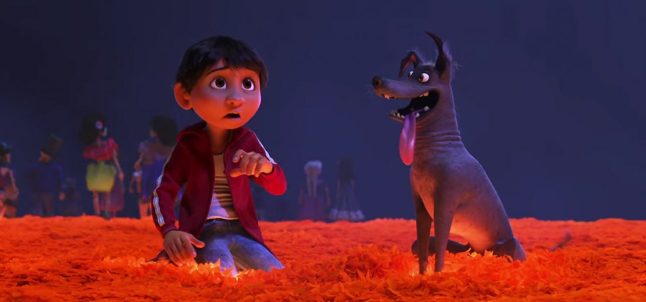
Coco is another triumph from the geniuses at Pixar, who continue to prove why they are the masters of animation. It is a memorable, captivating and heartfelt film set to the backdrop of the Mexican Day of the Dead festival. We follow Miguel, a sprightly but well-intentioned twelve year old boy who is obsessed with music. He is an avid devotee of Ernesto de la Cruz, the fictional most famous musician in Mexican history and a scene early on in the film reveals him essentially worshipping the musician through a makeshift shrine that he has created. Unfortunately for Miguel, his family have been torn apart by music and prosper in the shoe-making business and completely ban music out from their lives. This is rather problematic for Miguel, who after a series of events, finds himself transported to the land of the dead and must find his way back to reality before sunrise.

The characters in this film are wonderfully developed and Coco skilfully interrogates the themes of fame and family. After an opening that manages to balance exposition and visual storytelling almost perfectly, I felt part of Miguel’s family that had been introduced on-screen. Many of the personalities and traits of the eclectic family bear similarities to most families and the problems that they face. Once the film moves to the Land of the Dead, Miguel’s living family are largely absent in the film but by the time the end came, like Miguel, it felt like an authentic family reunion. The film also questions the importance (and legitimacy) of fame, from the famous to the infamous.

Coco isn’t quite perfect though. The film does feel rather familiar in its plotting and channels the narrative journey of Inside Out a little, but a couple of late twists manage to keep the narrative fresh. Furthermore, despite being one of Pixar’s longest films, the film could have been a little longer, which would have given it a little more time to breathe as it explores its themes. Instead, the film feels like it’s ticking a checklist, albeit a very good one!

Coco is yet another triumph for the animation giant and ranks as one of their strongest works. It is moving, life-affirming and should manage to appeal to both adults and children alike. It also goes without saying that the attention to detail in the animation is second to none, Pixar continuing to elevate animation to photorealist levels. Combined with the excellent narrative and emotional journey this film takes us through, Coco is a film fully deserving of its all praise.

⭐⭐⭐⭐ (Excellent)

Insidious: The Last Key (Review)

Review
37947

Rating: 3 out of 5.

Director: Adam Robitel
Starring: Lin Shaye, Angus Sampson, Leigh Whannell, Spencer Locke, Caitlin Gerard, Bruce Davison
Certificate: 15
Run Time: 103 mins

Insidious: The Last Key is the fourth installment in the so-far, very robust series spearheaded by horror maestro James Wan. Each installment in the franchise has been very solid so far – the first a great exercise in horror filmmaking with some memorable scares. I admired how well Wan ties up the narrative in the second film, even though the film did not recieve great reviews. Writer Leigh Whannell directed the third film, which is underrated, boasting some excellent scares and has a multi-layered villain who I weirdly empathised with.

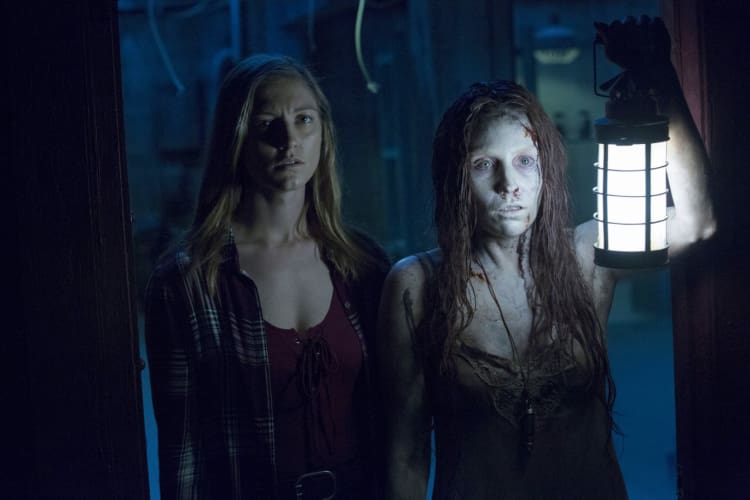
This entry is directed by newcomer Adam Robitel, picked after his work on The Taking of Deborah Logan. Whannell remains on scripting duties and like with the third, Wan still produces so both pioneers of the series still have influence. The Last Key, narratively, is a sequel to the third film but is set before the first two films, which the back-end of The Last Key leads into. So in chronological order – 3, 4, 1, 2. This installment continues to follow Lin Shaye’s paranormal investigator, Elise Rainier, who investigates a haunting in her childhood home, a place that has caused her many pains.

Insidious: The Last Key begins with a powerful extended sequence which explores Elise’s difficult childhood and introduces her dysfunctional family. It’s quite emotive and her relationship with her father in particular is haunting, more so in fact than the rest of the scares in the film. And this is where the film faulters. It can never regain the same momentum that propels its opening and instead, resorts to cliche and its mechanical scares are dismally second-rate. There is a particular plot point which even threatens to undo the good work Robitel does in the opening.

That’s not to say the rest of the film is terrible. The main villain, played by Javier Botet, continues to prove why Botet is a key innovator of the horror genre and visually, he’s very impressive. It’s just a shame that his characterisation lacks the complexity of other villains in the series. There are also some good performances as well as Botet’s. Of course Lin Shaye proves again she is able to carry a film with such ease – without Shaye, the film would be far worse. Tessa Ferrer and Josh Stewart as Elise’s parents are excellent, as is Bruce Davison as Elise’s younger brother. Robitel also does a good job in directing the film. It’s clear he’s put a lot of effort and thought and the film flows quite well and he manages to do the best of poor material.

Unfortunately, other than these factors, the film is painfully average, in what has so far been an above-average series and the narrative that follows the opening is too familiar. What tips my verdict into the ‘Poor’ category however, is the lazy plot device introduced to sort the dilemma Shaye’s character finds herself in and also as a means of securing more sequels. Equally as offensive is the fact that the film, a film in the horror genre, it fails to do what it says on the tin, the scares obvious and mechanical.

Ultimately, Insidious: The Last Key is a big disappointment and is easily the worst of the franchise so far. However, the film isn’t a complete waste as its direction, performances and a powerful opening are to be admired but are nowhere near enough to mask the poor narrative and financial future-proofing the film leaves itself in. At least for a January horror release, typically notorious for the worst of the worst horror films to be scheduled for, Insidious: The Last Key is far from it, which perhaps was my greatest fear. Whilst deep down, I hope this franchise doesn’t go the way of Saw or Paranormal Activity in their endless sequels which continue to decline in quality, I suspect it will. This is a great shame, particularly like both aforementioned series, they all started out so well and Insidious did a better job in having at least two great sequels.

Darkest Hour (Review)

Uncategorized

darkest-hour-trailer

⭐⭐ (Poor)

Director: Joe Wright
Starring: Gary Oldman, Kristin Scott Thomas, Lily James, Stephen Dillane, Ronald Pickup, Ben Mendelsohn
Certificate: PG
Run Time: 125 mins

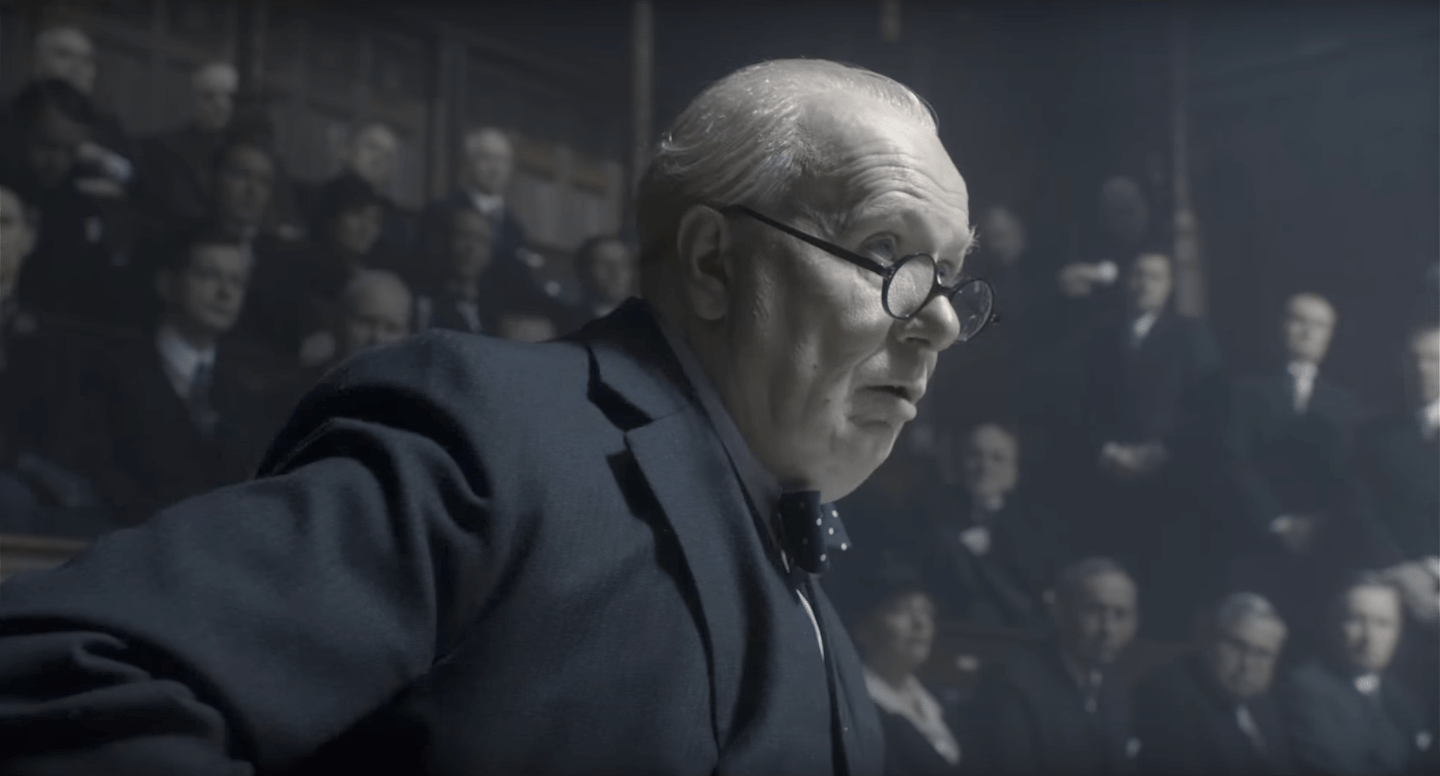
Much has been made of Darkest Hour for Gary Oldman’s transformative and unrecognisable performance as Winston Churchill in Joe Wright’s new film, Darkest Hour, who completely disappears and inhabits the role. Surely Oldman is a dead cert for the Oscar win after triumphing at the Golden Globes and also winning the SAG Award. Darkest Hour recounts Churchill’s first month in office and his mission to win over those initially sceptical and hostile towards him at a critical moment in the height of the Second World War.

However, in terms of how Darkest Hour functions as a piece of cinema though, it has some serious problems. From a historical viewpoint, the film is codswallop. A train sequence in particular towards the end of the film, pretty much derails the entire film from its tracks and it loses virtually all credibility. I could never get back on board with the film after this sequence threw me out so much and it hurts what is already a fairly mediocre film.

The script is often very expository, assumedly in order to allow people to have more historical context. Characters will often mention their background profile or to an illicit event, which made the delivery of dialogue very wooden and unnatural. Ronald Pickup and Stephen Dillane, who play Neville Chamberlain and Viscount Halifax are particularly bad offenders, who constantly explain their intentions to the audience. This whole film feels very theatrical, in a pantomime fashion which doesn’t do it any favours.

Perhaps the worst offender in this pantomime is Ben Mendelsohn’s performance as King George. Mendelsohn is a fine actor, who consistently puts in brilliant performances in many memorable films but he is simply miscast here. His vision of King George VI has an odd Australian twang and his stutter is utterly unconvincing. Oldman shares many scenes with Mendelsohn and it feels very odd witnessing two performances on different ends of the spectrum.

On the plus side, the film is well shot by Bruno Delbonnel. Darkest Hour has multiple memorable images, Delbonnel painting a suitably dark and gloomy picture of the perilous time this film is set in. A sequence where Churchill delivers a speech over the radio is particularly gripping visually and Delbonnel experiments to great success with lighting, often choosing to focus on Oldman’s figure and shadows.

Unfortunately, the film is also rather emotionally cold. Whilst Delbonnel employs these wonderful images, director Joe Wright is unable to instil any emotion to his audience. There are numerous cutaways to war scenes in Calais or Dunkerque which should show the devastation and the casualties of troops, but they never do and again, exaggerated cries in battle make the film feel only more theatrical. Many have compared Darkest Hour as a companion piece to Dunkirk. At least Darkest Hour does one thing right in having a single shot of the magnitude of civillian ships heading towards the shore, something which Dunkirk failed to do.

It’s a shame Darkest Hour isn’t a better film than it ought to be, especially considering the talent involved. Darkest Hour is simply a vehicle for Gary Oldman to give the performance of a lifetime, but other than good cinematography, there is nothing else in terms of substance. Joe Wright’s filmography in general has been a mixed bag. Luckily, Darkest Hour doesn’t stoop to that level of his most recent film, Pan, my least favourite film of 2015 – an atrocious, visually disgusting film that was a complete headache and embarassment for all involved. Instead, Darkest Hour is painfully average and whilst I was never bored by it, largely due to Gary Oldman’s sensational performance, the film’s storytelling is just too creaky to overlook.

⭐⭐ (Poor)

Three Billboards Outside Ebbing, Missouri (Review)

Uncategorized

three-billboards-2017

⭐⭐⭐⭐ (Excellent)

Director: Martin McDonagh
Starring: Frances McDormand, Woody Harrelson, Sam Rockwell, John Hawkes, Peter Dinklage, Abbie Cornish, Lucas Hedges, Samara Weaving, Caleb Landry Jones, Clarke Peters, Željko Ivanek

Certificate: 15
Run Time: 115 mins

Three Billboards Outside Ebbing, Missouri is the long overdue follow-up from playwright / director Martin McDonagh after he directed both In Bruges and Seven Psychopaths, two films that I love. I would even go as far to say that In Bruges is one of my personal favourite films of all time.

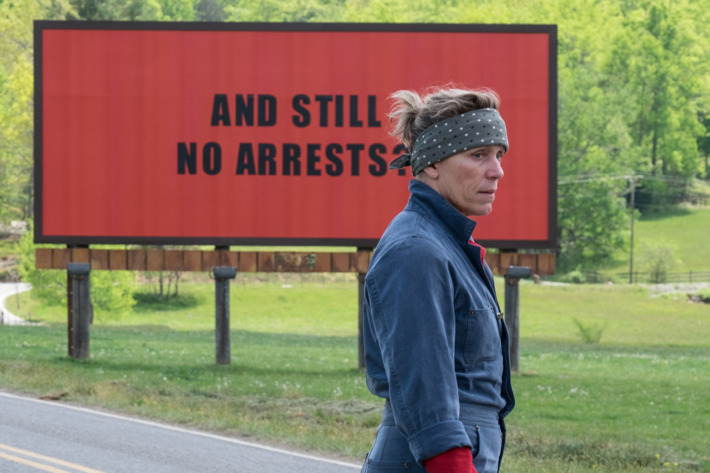
Based off McDonagh’s own script, the film tells the story of Mildred (Frances McDormand) whose daughter has been brutally raped and murdered but she feels that the Police don’t want to do anything about it. When she purchases the rent to three unused Billboards close to the titular town and puts up three provocative billboards, things take a dramatic turn in the town.

McDonagh has a wonderful talent when it comes to screenwriting and with a lot of his works, not just on-screen, there are moments which are both darkly comic yet heartfelt. He also has a beautiful quality to writing profanity, always finding artful ways to include it.

Three Billboards Outside Ebbing, Missouri proves McDonagh’s writing talent again and then some. McDonagh has such a great ear for dialogue in this film and there are so many wonderful exchanges of dialogue between characters. It is frequently comic, always entertaining and what I particularly love about this film, is it takes many unexpected diversions in its narrative. The film leads you to believe a certain plot point will go in one direction, but McDonagh in multiple instances, subverts expectations and this makes this film all the more fresh. There are many moments where I was genuinely in awe and shock. It is a biting drama about murder, investigating and how people have multiple sides to their personality.

As always in McDonagh’s films, the performances are great. McDonagh reunites with a lot of his Seven Psychopaths cast and the standouts are Frances McDormand, Woody Harrelson and Sam Rockwell, all playing typically larger-than-life characters. McDormand is simply brilliant as Mildred, a mother who just wants some closure who is also trying to sustain her family. Written with McDormand in mind, she is truly deserving of all the Awards attention she is getting. Equally so is Woody Harrelson, who I think gives the better performance between him and Rockwell as Chief Willoughby. Rockwell’s police officer is initially juvenile, racist and rather clueless about the real world but his character arc is so well developed and it’s one of his best performances.

Ben Davis’ cinematography is superb and he manages to capture the minutiae of the town to a tee, along with McDonagh’s script, making the town its own character in the drama. There is a particularly nail-biting sequence mid-way into the film, shot in one extended take, that is very satisfying. Less satisfying is Carter Burwell’s score which is a little forgettable compared to his other work, particularly in McDonagh’s other films, but there are some moments that fit the film very well.

Three Billboards Outside Ebbing, Missouri isn’t McDonagh’s best film however. It could even be the least out of his three feature length films although I would need to rewatch it multiple times to unpack it more. Certainly true though, without a doubt is this film has more baggage to it and isn’t quite as tightly edited, sagging a little in its ending.

Whilst I’m very happy McDonagh is finally being realised for the exceptional filmmaker that he is, it is slightly surprising to see this film clean up at the Golden Globes and at the moment, lead the pack in the Awards race. There is a danger with this narrative of the film being labelled racist and it’s not exactly a crowd pleaser.

Regardless of its Awards status, I loved Three Billboards Outside Ebbing, Missouri and found it to be a highly satisfying film which plays against expectations and it contains excellent performances and a brilliant script. Time will tell if I rate it as highly as his first two films, but I cannot wait to rewatch it and discover smaller details that this film has to offer. Three Billboards Outside Ebbing, Missouri is a must-see.

⭐⭐⭐⭐ (Excellent)


Molly’s Game (Review)

Uncategorized

mollys_game_review_jessica_chastain_0

⭐⭐⭐ (Good)

Director: Aaron Sorkin
Starring: Jessica Chastain, Idris Elba, Kevin Costner, Michael Cera, Jeremy Strong, Chris O’Dowd, Bill Camp, Brian d’Arcy James, Graham Greene
Certificate: 15
Run Time: 140 mins

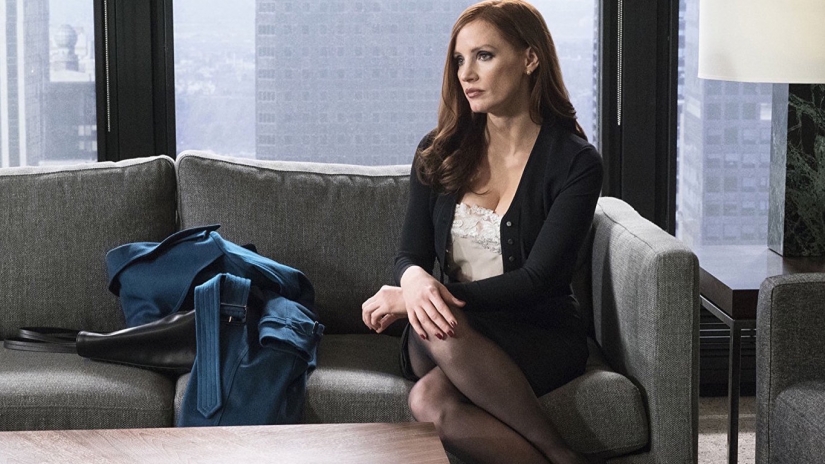
Molly’s Game is a competent film that has an especially strong first half, spearheaded by Jessica Chastain’s brilliant central performance. It is directed by famed screenwriter Aaron Sorkin, behind films such as The Social Network and Steve Jobs, who now steps into the director’s chair. As is to be expected based on his previous works, the script is very sharp, full of quips and impressively wordy. Sorkin’s adapted screenplay is based on the true story of Molly Bloom, a former Olympic-class skier, who is targeted by the FBI for running the world’s most exclusive high-stakes poker game, which the film investigates and recounts.

Chastain is brilliant in the lead role, who narrates her life experiences and when combined with Sorkin’s sharp script, is a particularly magnetic screen presence. The supporting cast, although typically extensions of Aaron Sorkin as they also possess an impressive vocabulary, are mostly solid. The standouts are Idris Elba as Molly’s lawyer who is reliably strong and Michael Cera and Bill Camp, as two poker players in the games. Cera plays a composite character of other famous actors who were alleged to have participated in the games (the film doesn’t disclose true identities). His performance is snarky and slimy and there is a moment where we see a very sinister side to his character that is executed to a tee. Camp, on the other hand, plays a gambling addict, and there is a particularly heartfelt and intense sequence mid-way through the film where he is literally playing for his life.

The first half of the film is a particular highlight and is frequently riveting. The prologue to the film, which recounts Molly’s skiing attempts, is a masterful sequence that is edited superbly and manages to synthesise the themes of family, competition and chance extremely assuredly. As Molly gets herself deeper into the world of poker, the film channels some of Scorsese’s gangster films juxtaposed by Sorkin’s peppery dialogue. It’s really well done and although the poker games are jargon-heavy, the script explains to the audience the nuts and bolts of what is going on, but suprisingly never in a patronising manner.

The second half of the film doesn’t fare quite as well and is tonally uneven. There are some great sequences scattered within, particularly a monologue by Elba’s lawyer and a vicious attack by a gangster, but it feels convoluted and lacks the energy that carries the first half.

The film could also have been much darker. Sorkin’s script investigates some mature themes such as gambling, drug addiction and the troubles and dilemmas within family. Had Sorkin explored these in greater, more intrinsic detail, the film would have been much better for it. Instead, it is more a slightly uneasy collection of ideas, but not all of them fully developed.

The chronology of the film also feels off. Different timelines are interspersed into the narrative and there were a few moments where I wasn’t quite sure where in the chronology the film was in. Also, Molly’s rise to the top took many years to achieve but it feels like days or weeks in how the film paces itself.

Furthermore, Sorkin isn’t as good a director as he is a writer but it’s clear to see that his past experience of working with directing heavyweights such as David Fincher or Danny Boyle for example, has paid off as he definitely seems to have learnt a few lessons from them. But considering Molly’s Game is as debut effort from him, it’s quite possible that after he has some more experience, he could be very good. At least the film looks the part as it is shot rather handsomely by cinematographer Charlotte Bruus Christensen and Daniel Pemberton turns in a fitting if somewhat obvious score.

Molly’s Game is ultimately a good film with a stronger first half, anchored by Chastain’s and some of the supporting cast’s performances. Sorkin balances both directorial and screenwriting jobs well, even if his script outshines his direction. With a tighter second half, more experienced direction, more intrinsic analysis of some of the film’s darker themes and a better sense of chronology, Molly’s Game could have been brilliant. Instead, it is pretty solid with some gripping sequences, if rather ultimately unremarkable.


⭐⭐⭐ (Good)

Hostiles (Review)

Uncategorized

hostiles-movie-trailer-2017-christian-bale-western

⭐⭐⭐⭐ (Excellent)

Director: Scott Cooper
Starring: Christian Bale, Rosamund Pike, Wes Studi, Jesse Plemons, Adam Beach, Rory Cochrane, Ben Foster, Stephen Lang, Timothée Chalamet
Certificate: 15
Run Time: 135 mins

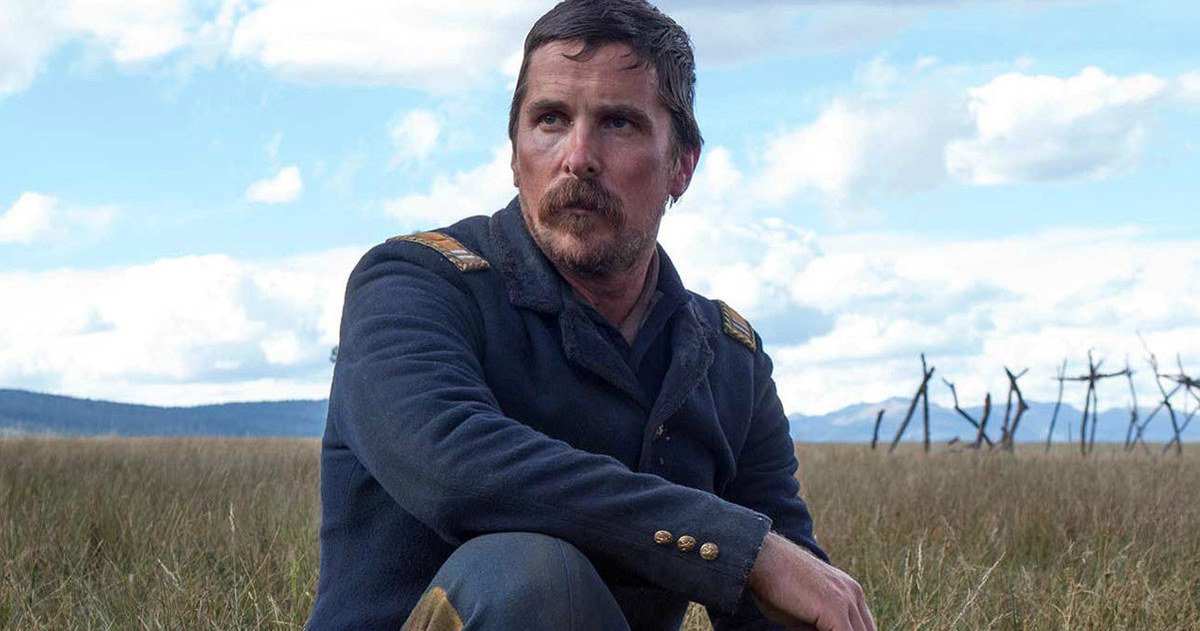
Hostiles is the latest film by Scott Cooper, a director whose work I have consistently enjoyed. Cooper’s first film, Crazy Heart, received near unanimous praise from critics and audiences and earned Jeff Bridges an Oscar for his barnstorming performance. His second film, Out of the Furnace, received a decidedly mixed reception but I believe it is criminally underrated – a near-perfect revenge thriller that features some outstanding performances. Black Mass, his third film, thought not quite as good is still very solid, and marks a turning point in Johnny Depp’s lately waning career. Hostiles is a revisionist Western which sees Cooper reteams with his Out of the Furnace lead, Christian Bale, as Captain Joseph Blocker, who is tasked to escort the cancer-ridden Cheyenne war chief, Yellow Halk (Wes Studi) back to his homeland along with his family.

Hostiles is another winner – a visceral, downbeat and often gut-wrenching watch. There are many scenarios and moments in the film that are emotionally sapping and Cooper puts these characters through hell. Cooper again, manages to get the best out of his actors. The three leads – Bale, Pike and Studi, are all on top form, all giving career-defining performances. Bale’s Captain is gruff, sombre and constantly thrown arduous challenges both mentally and physically. Rosamund Pike’s character brutally loses all of her family in the very memorable first scene of the film and is psychologically damaged and tormented. There is one moment in particular when she first lays eyes on Studi’s tribe which reminds her of past horrors which Pike conveys brilliantly. It is testament to Wes Studi’s performance as Yellow Halk how much of an impression he is able to make – the character is underwritten but Studi is really able to do a lot with the role and manages to convey the bittersweet juxtaposition of his family beside him and the cancer eating away at him. Studi’s performance allows one to imagine how ruthless this war chief may have been back in his day but now is a more mellow, world-weary individual who simply wants to return to his homeland with his family.

Unfortunately, this notion of characters being underwritten is where the film falls short. Bale’s Captain is accompanied by many famous faces in his unit, but it feels like a roster that frequently gets swapped out for someone new when someone dies. Perhaps most disappointing is Ben Foster, a wonderful screen presence who suits the Western genre to a tee. I expected him to make more of an impression, but he has virtually nothing to work with. However, the two actors who make the biggest impression out of this group, despite still being underwritten, are Jesse Plemons and Rory Cochrane, who both appeared in Black Mass and Cochrane in particular, continues to prove why he is one of Hollywood’s most underappreciated talents.

Hostiles also has problems narratively. The film is a little overlong, as the journey these characters take is rather extensive. There’s nothing wrong with this, but the film would have succeeded better if Cooper had chosen to develop his characters more and lose some of the narrative baggage. I’m also of the opinion that the film ends one scene too late. The final scene states the obvious and is a little too neat in wrapping its narrative. It would have been much more cryptic had Cooper ended the film a scene before, which would have been in keeping with the rest of the film and its decision not to reveal everything.

At least, Cooper manages to create a wholly believable atmosphere even if the narrative and character development are somewhat lacking. The cinematography by Cooper-regular, Masanobu Takayanagi is jaw-dropping – there are frequent moments of awe in terms of how Takayanagi shoots the landscapes and he really makes the most of the locations, which refer visually to the Western classic, The Searchers. Max Richter’s score is also expectedly hypnotic – the score fits in so well with the film and is endlessly atmospheric, groaning and distorting with the sand flying around in the desert.

There is lots to wonder in awe at in Hostiles and the film explores its titular notion in many different ways through its characterisations and narrative. The craft and performances of the film elevate the film exponentially, almost enough to cover up the slightly meandering narrative and lack of character development. It’s certainly a lot more subtle in execution than Black Mass as Cooper regularly attempted to shadow Scorsese’s gangster classics, which worked but it didn’t leave much up to audience imagination. Cooper certainly has more commentary on the Western genre, a genre that many have commented has died. This is simply not true. Hostiles is further proof of the Caweltian transformation of the genre and stands up as an additional companion piece to recent Western works.

Despite some structural problems, Hostiles has stuck in my mind long after the screening and it’s a film that I think, will have a lot more to reveal about itself on rewatching. This is a film not to miss and actively seek out in its rather small release.

⭐⭐⭐⭐ (Excellent)