Thanksgiving (Review)

Uncategorized
⭐⭐⭐ (Good)

Director: Eli Roth 
Starring: Patrick Dempsey, Addison Rae, Milo Manheim, Jalen Thomas Brooks, Nell Verlaque, Rick Hoffman, Gina Gershon
Certificate: 18
Run Time: 106 mins

Thanksgiving is the new film by Eli Roth, returning to his horror roots since the uncharacteristically family-friendly The House with a Clock in its Walls back in 2018. Roth’s filmography is a mixed bag – Hostel was chillingly nasty, The Green Inferno and Death Wish are both better than their negative reviews suggest but still far from masterpieces and Knock Knock was a mean-spirited, patience-testing exercise. 

Thanksgiving started life as a fake trailer for Robert Rodriguez and Quentin Tarantino’s Grindhouse double-feature. It’s the third trailer to receive the feature-length treatment, with Machete (which also spawned a sequel) and Hobo With A Shotgun preceding it. Thanksgiving’s premise is simple – in 2022, the citizens of Plymouth, Massachusetts go nuts at a Black Friday and a stampede results in multiple deaths. The following year, a killer who dons a John Carver mask enacts his revenge in gruesome fashion.

Thanksgiving doesn’t rewrite the horror rulebook but it’s good fun in the moment. Roth is clearly enjoying chewing the scenery and delivering some inventive kills, even if the film isn’t particularly scary because Roth opts for a tongue-in-cheek cheesiness instead. There’s some interesting political sub-text with the stampede taking place at an alternative RightMart supermarket, offering a critique on the greedy and materialistic nature of Black Friday. The third act is particularly fun as the serial killer reaches their peak, with some satisfying slayings as the table is set for a Thanksgiving meal. 

The cast are all fair game too and receive good development considering the relatively brisk 106 minute running time. Jeff Rendell’s script is a little juvenile in places but it does the job economically. Nell Verlaque is the standout as Jessica, the film’s protagonist. Her father, Thomas (Rick Hoffman) owns the aforementioned RightMart store and she is lusted after two boyfriends, who she flits between during the film, Bobby (Jalen Thomas Brooks) and Ryan (Milo Manheim). Verlaque is excellent, effortlessly conveying the young adult who is trying to decide on a life path but is confined to the mundane boundaries of her home town. Her career will undoubtedly propel, thanks to her scream queen turn here. Patrick Dempsey is also great in a late career multi-faceted performance after appearing in a fair amount of dross over the years. He plays Sheriff Eric Newlon who is tasked with leading the investigation into the identity of the killer. 

Thanksgiving is ultimately far more fun that it has any right to be and it’s well-timed with the American federal holiday, as well as Black Friday and Christmas. For those who are increasingly cynical over the commercialisation of these holidays, this film will prove a compelling antidote and I suspect it’ll age well because of this. It doesn’t set the horror genre alight but Thanksgiving is a blast from start to finish with an engaging whodunnit, gory kills, surprise twists and a surprising amount of character development and heart. 

⭐⭐⭐ (Good)
The Marvels (Review)

Uncategorized
⭐⭐ (Poor)

Director: Nia DaCosta
Starring: Brie Larson, Teyonah Parris, Iman Vellani, Zawe Ashton, Gary Lewis, Park Seo-joon, Samuel L. Jackson  
Certificate: 12A
Run Time: 105 mins

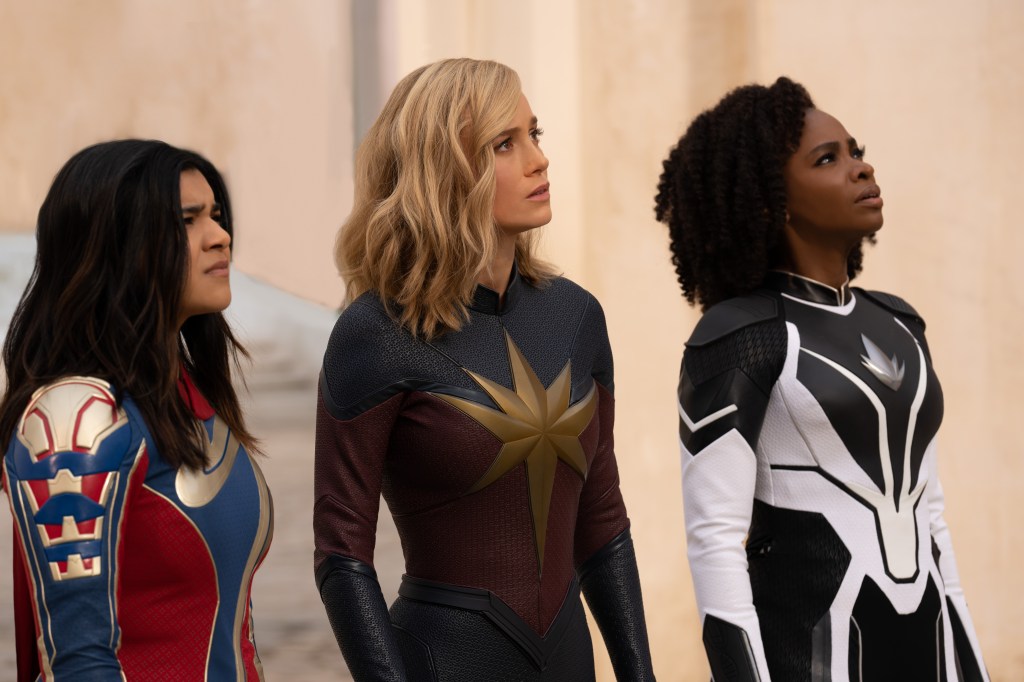
The Marvels is the latest in the Marvel Cinematic Universe and a sequel to Captain Marvel. Although Captain Marvel received positive reviews, the response wasn’t as rapturous as other Phase 3 titles. Other than a so-so first act, I thought the film really stood out with its 1990’s, fish-out-of-water approach with some thrilling twists. Director Nia DaCosta replaces the original pair of Anna Boden and Ryan Fleck and is an exciting choice after her excellent, smart Candyman sequel. In the film, Carol Danvers (Brie Larson) finds she begins swapping places with Monica Rambeau (Teyonah Parris) and Kamala Khan (Iman Vellani) every time they use their powers. 

Unfortunately, The Marvels has been in the press for poor reasons, from reports of negative test screenings to DaCosta leaving mid-production to work on her next project, Hedda. Debates have ensued as to whether these reports are accurate, but coupled with the increasing saturation of the superhero genre, prospects look poor for The Marvels.  

It’s a real shame that The Marvels misses the mark, both as a Marvel and a Nia DaCosta film. The finished product seems to be bereft of DaCosta’s fingerprints and is completely misguided. It doesn’t help that not only do you need to have seen Captain Marvel to be up-to-date before watching this film but you also need to have seen two Marvel television series – Ms Marvel and Secret Invasion. The trademark quippy humour of Marvel films rears its ugly head here and it’s missing almost all of the ingredients that made its predecessor a success. There’s next-to-no character development for Danvers and the film doesn’t capitalise on her relationship with Nick Fury (Samuel L. Jackson) – the interplay between them was one of the main ingredients that made it work. 

Teyonah Parris fails to make an impression as Monica Rambeau, the daughter of Maria Rambeau (Lashana Lynch) in the original film. Unless you’ve watched WandaVision (another Marvel TV series), she receives no development whatsoever beyond the fact that Danvers failed to return to her as a child. Iman Vellani fares better as Kamala Khan but the arc of being inspired by your childhood heroes is a well-worn trope. 

The Marvels also suffers from a poor villain in the form of Dar-Benn (Zawe Ashton), a Kree warrior who is trying to restore her homeland after a devastating civil war. Ashton’s a fine actress, impressing in films such as Nocturnal Animals and Velvet Buzzsaw, but her villain is one-dimensional and has typical destructive antics. Both of Marvel’s two other entries this year, Ant-Man and the Wasp: Quantumania and Guardians of the Galaxy Vol. 3 left me feeling rather indifferent, but you can’t deny they were both excellent in the villain department. 

The final performance worthy of mention is Gary Lewis as Emperor Dro’ge, the leader of a Skrull company. I haven’t seen him in a film in quite some time and knew he was going to be in this but he is yet another casualty – completely wasted under a lot of heavy make-up with no development. 

Laura Karpman’s original score does nothing to add to the proceedings and the use of songs like M.I.A’s Double Bubble Trouble and Skrillex’s Ratata in action sequences are grating. Captain Marvel wasn’t the first film to rely on a soundtrack from the time period it was set in, but the use of tracks from Nirvana and R.E.M, among others, complemented Pinar Toprak’s original score nicely. 

I was excited to see Sean Bobbitt would be lensing The Marvels, Bobbitt being most famous for his collaborations with director Steve McQueen with films such as 12 Years A Slave and Widows. Unfortunately, The Marvels doesn’t have single memorable shot and is uncharacteristic of Bobbitt, whose works typically rely on dark contrasts, long takes and natural light. It doesn’t help that The Marvels is overly reliant on CGI, although at least it isn’t quite as visually ugly as Ant-Man and the Wasp: Quantumania, although that’s damning with faint praise. 

Overall, The Marvels is a complete failure as a Captain Marvel sequel, a Marvel Cinematic Universe entry and as part of the wider superhero genre. It’s painfully anonymous despite a stellar director at the helm, its story misguided and cringeworthy in places (especially an out-of-place-scene on a planet where everyone converses through song), visually drab and fails to develop any of its characters. 

It may even be the Marvel Cinematic Universe’s worst entry yet – the other two contenders would be the smug Avengers: Age of Ultron and the boring and formulaic Black Widow. However, the former has a compelling villain and the latter has an interesting first twenty minutes that suggest a new direction for Marvel before settling into convention. I suppose what The Marvels has going in its favour is it’s the shortest film yet in the ever-expanding franchise at 105 minutes, so it’s a brisk affair and it also isn’t mean-spirited. Still, what a shame considering the talent involved. 

⭐⭐ (Poor)

Anatomy Of A Fall (Review)

Uncategorized
⭐⭐⭐⭐ (Excellent)

Director: Justine Triet
Starring: Sandra Hüller, Swann Arlaud, Milo Machado-Graner, Antoine Reinartz, Samuel Theis, Jehnny Beth, Saadia Bentalieb, Camille Rutherford, Anne Rotger, Sophie Fillières
Certificate: 15
Run Time: 152 mins

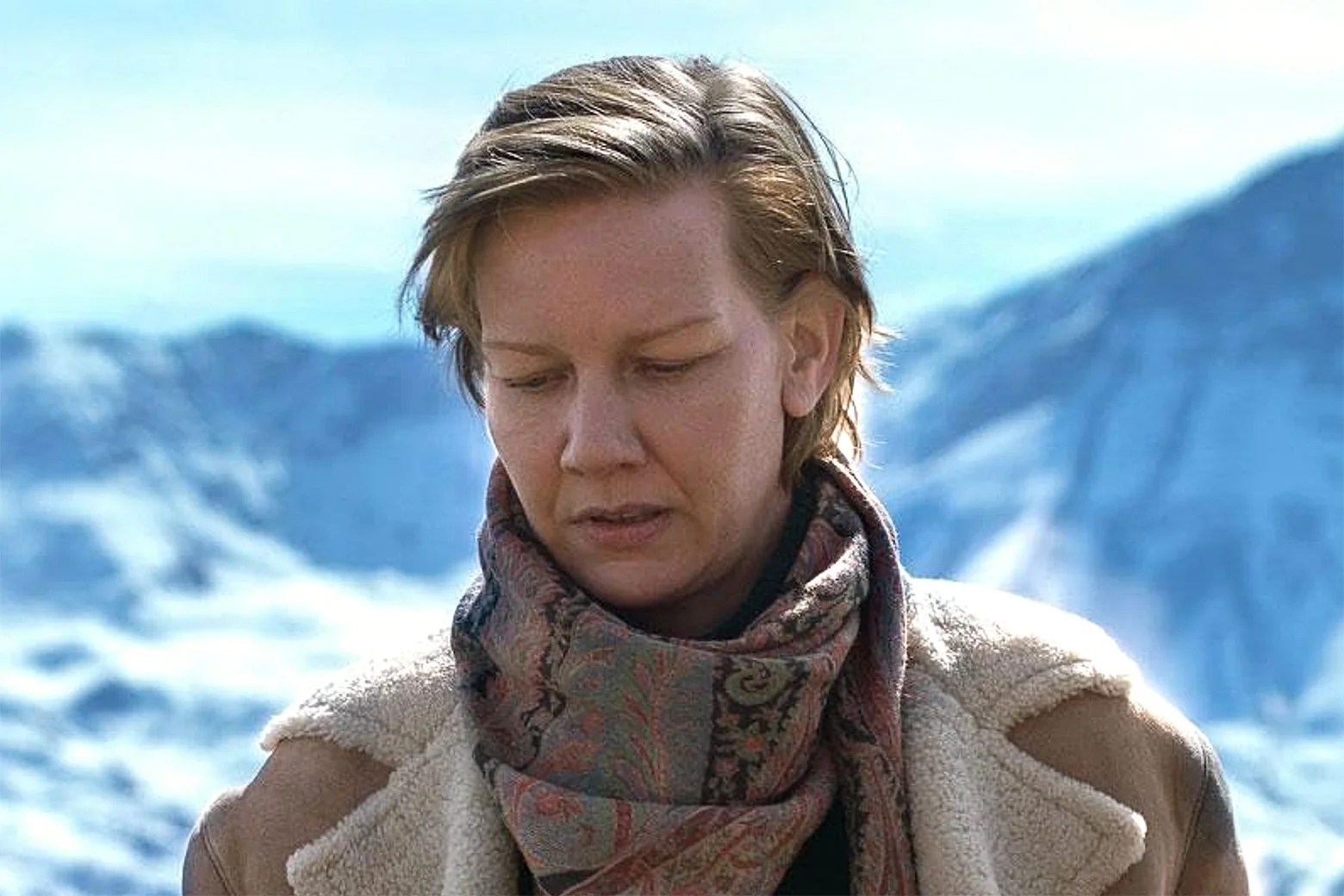
Anatomy of a Fall is the new film by Justine Triet, which took the Palme D’Or at this year’s Cannes Film Festival. The film stars Sandra Hüller as Sandra Voyter, an author who lives with her husband, Samuel (Samuel Theis) and partially-blind son Daniel (Milo Machado-Graner) at an Alpine chalet near Grenoble. Sandra is trying to conduct an interview when her husband, who is upstairs renovating the loft when he stars blaring a steel drum cover of 50 Cent’s P.I.M.P. The interview comes to a halt as neither Sandra or the interviewer can concentrate and Daniel heads out for a walk with his guide dog, Snoop. When Daniel returns, he finds Samuel dead in the driveway with a head wound. When an autopsy reveals Samuel’s head wound was inflicted before his body hit the ground, Sandra is the prime suspect and what ensues is a meticulous courtroom drama as she attempts to prove her innocence. 

Anatomy of a Fall is a fascinating character study of a family, the couple at its centre and the legal system that tries to break Sandra and her son apart. It’s a smart film that’s simmering with tension and excellent performances, although I’m confident it would pack an even greater wallop if it was tighter.  

Sandra Hüller is terrific in the lead role and is fully deserving of the praise she has been lauded. Her character is a matter-of-fact, frank individual and Triet’s film delves into the idea that writers use those around them to bolster their image. Swann Arlaud is also brilliant as Sandra’s silver fox lawyer, Vincent Renzi, as is Antoine Reinartz as a particularly nasty prosecutor. He unpicks anything and everything Sandra or other persons called up to the bar say, constantly repurposing words as evidence of Sandra’s guilt. 

Although there isn’t an original score, the use of music is terrific and the recurring use of 50 Cent’ P.I.M.P. and Daniel’s piano recitals are chillingly effective. The film’s also beautifully shot by Simon Beaufils, who evocatively captures the high altitude setting of the chalet and likes to zoom in on certain minutiae, as if you’re a fly-on-the-wall. 

Anatomy of a Fall is an unflinching courtroom drama, Triet diligently chiselling away over the film’s running time at exposing a family, flaws and all. While the performances are excellent all-round, Hüller is thoroughly deserving of Awards recognition. I just wish Triet chopped 15/20 minutes off the lengthy 152 minute running time, and the slightly tighter edit would have given the film even more of a punch. 

⭐⭐⭐⭐ (Excellent)

Dream Scenario (Review)

Uncategorized
⭐⭐⭐ (Good)

Director: Kristoffer Borgli
Starring: Nicolas Cage, Julianne Nicholson, Michael Cera, Tim Meadows, Dylan Gelula, Dylan Baker
Certificate: 15
Run Time: 100 mins

Dream Scenario is the latest Nicolas Cage vehicle in his career resurgence, a surreal fantasy satire directed by Kristoffer Borgli and produced by Ari Aster, the mastermind behind Hereditary and Beau is Afraid. Cage plays a hapless yet mild-mannered biology professor, Paul Matthews, who inexplicably starts appearing in the dreams of people around him. He soon becomes a celebrity in the town but as ever, with fame comes the inevitable toxicity. 

Dream Scenario is yet another interesting choice for Cage and while the film poses a lot of interesting ideas, it doesn’t always explore them in the most satisfying way and it begins to fizzle out as it reaches its conclusion. Although marketed as a black comedy, I didn’t laugh once and Borgli just isn’t as accomplished a director for tackling this avenue of surrealism compared to Aster or genre stalwart Charlie Kaufman because he lacks subtlety. There’s lots of good work here though – the dream sequences are disturbing and tragic and the exploration of cancel culture is fascinating. A sexual encounter Cage has with another character is particularly awkward, as is a late scene in a restaurant where he is refused service.

Cage expectedly turns in a terrific performance as the middle-aged professor with an increasingly large bald patch, who feels the world owes him something as his career stagnates. He deftly captures a pathetic nature of someone who wants to receive stardom and feels hurt his academic peers have seen success with writing novels, yet he has never pulled his finger out to take the time to write his thoughts on paper. 

There’s some strong performances from the supporting cast too, with Julianne Nicholson rock-solid as his wife and Dylan Gelula a highlight as a PR assistant. This may possibly be a career-best performance from Michael Cera, who plays the head of a viral marketing firm. Visually, the film’s crisply shot Mandy cinematographer Benjamin Loeb, although I found Owen Pallet’s score jarring and it never seemed to fit with the events being portrayed on-screen. 

Dream Scenario is an interesting film in Cage’s career and worth seeing for his performance alone.  Although a good watch, it’s just shame the film doesn’t quite live up to the potential of its lofty premise. 

⭐⭐⭐ (Good)

The Killer (Review)

Uncategorized
⭐⭐⭐ (Good)

Director: David Fincher
Starring: Michael Fassbender, Arliss Howard, Charles Parnell, Kerry O’Malley, Sala Baker, Sophie Charlotte, Tilda Swinton
Certificate: 15
Run Time: 118 mins

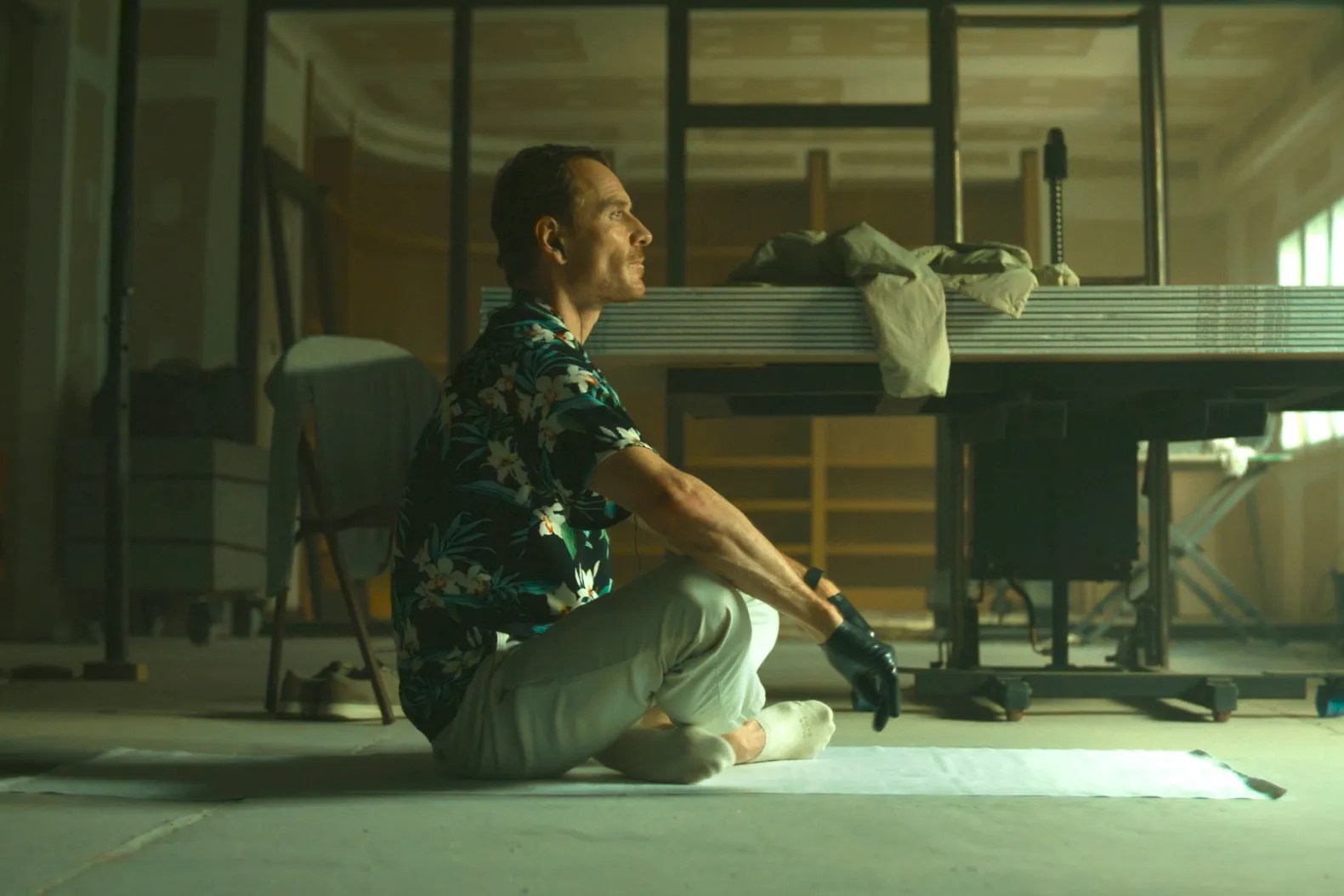
The Killer is the new film by auteur director David Fincher, his second collaboration Netflix after Mank. The film is an adaptation of a French graphic novel series, written by Alexis ‘Matz’ Nolent and illustrated by Luc Jacamon. After a three year hiatus, Michael Fassbender plays the titular role, an ice-cold unnamed professional assassin who we first meet staking out a Parisian hotel room. He’s calm and methodical and the film opens with his narration on the monotony of his job and his cynical outlook on life. Despite seeming like a character who never mistakes, he botches the job. What follows this first sequence are the repercussions of his error, as he gets embroiled in an international manhunt. This is very much familiar ground for Fincher, who reunites with Se7en writer Andrew Kevin Walker.

The Killer is an odd film and while there’s no denying its scrupulous craftsmanship and visual pizzazz, it left me feeling rather empty and cold throughout. There just isn’t a lot of substance, which I think is intentional as Fincher attempts to satirise the hitman thriller sub-genre. 

Michael Fassbender makes for an enigmatic lead, unemotional and with very strict morals and a code of conduct. The character borders on the absurd, especially with his innumerable identities as he passes through airport to airport in his largely US-based city trotting revenge quest. The script largely relies on Fassbender’s self-parodic narration, which I found overwrought and a little tedious – as with any film, it’s always better to show rather than tell. Walker’s script couldn’t be further removed from his back catalogue, with credits such as Sleepy Hollow and The Wolfman

There’s not a great deal to say about the other performances because this is very much Fassbender’s film, but both Arliss Howard and Charles Parnell are impressionable, the former as a somewhat-vulnerable millionaire and the latter a calculated handler. Tilda Swinton is easily the most high-profile supporting actor in the film but I found her speech contrived. 

On the plus side, the film is meticulously staged, Fincher’s famous multiple-take philosophy clearly on show here. It’s beautifully shot by Mank cinematographer Erik Messerschmidt, who favours a jet black colour palette and the outbursts of violence are particularly coolly crafted. And of course,  it wouldn’t be a Fincher film without an innovative opening credits sequence. Here, he delivers what is possibly the fastest-flowing title sequence I have ever seen.

There’s a pulsating score by Trent Reznor and Atticus Ross, which is deeply effective, especially in the film’s sudden outbursts of violence. A particular highlight is when Fassbender’s assassin confronts Sala Baker’s ‘The Brute’ – a raw and brutal fight for the ages. 

Fassbender’s assassin takes pleasure through listening to The Smiths through his earphones to relax and the execution in sound design is very interesting. The tracks are played diegetically when we are in Fassbender’s perspective and are non-diegetic when outside of his view, flitting seamlessly between the two. While the use of The Smiths fuels the story, it does seem a little bit of a shame to consign the talents of Reznor and Ross to the back seats. 

Ultimately, The Killer is a strange film in Fincher’s oeuvre and I’m not sure what drew him to it. While seductively constructed, the film isn’t as confident in its footing, compared to a filmmaker such as Steven Soderbergh who’s a stalwart in this genre. Although The Killer’s bordering on the absurd suggests there is substance, the film struck me as rather empty on a first watch and I didn’t have much to latch onto. Perhaps it’s a film that opens up on a rewatch but on first impressions, I judge The Killer to be Fincher’s second-weakest film after The Game

⭐⭐⭐ (Good)

Killers of the Flower Moon (Review)

Uncategorized
⭐⭐⭐⭐ (Excellent)

Director: Martin Scorsese
Starring: Leonardo DiCaprio, Robert De Niro, Lily Gladstone, Jesse Plemons, Tantoo Cardinal, John Lithgow, Brendan Fraser
Certificate: 15
Run Time: 206 mins

Killers of the Flower Moon is the latest by Martin Scorsese and an adaptation of David Grann’s 2017 non-fiction novel of the same name. The book is a must-read and tells the sickly story of how the Osage community are systematically murdered in the 1920s after oil is discovered on their tribal land. Grann’s novel is divided into three parts – the first largely from the perspective of the Osage community, with the murders presented as a mystery. The second part is framed around the newly formed FBI’s investigation, led by Tom White, and the third and final part is a chilling, retrospective investigation performed by Grann himself. 

The novel doesn’t particularly lend itself well to a film adaption in the way it’s formatted and Scorsese knows this. He chooses to tell the story from the perspective of the villains – largely William Hale (Robert De Niro) and his nephew, Ernest Burkhart (Leonardo DiCaprio). This film represents the first time Scorsese unites his two key career collaborators.

Hale presents himself as a friendly benefactor of the Osage, often referred to as ‘King’ but secretly schemes to murder them and steal their wealth. He tells Ernest to court Mollie (Lily Gladstone), whose extended family own oil headlights and a romance develops between them, with members of her family slowly and mysteriously bumped off. 

Killers of the Flower Moon is, for the most part, an excellent adaptation. It earns its 206 minute run time with its sprawling, fascinating story and Scorsese takes his time to develop the characters. He immerses you in the terror felt by the Osage, that no-one is safe on their own land with greedy wolves scheming from every corner. I was particularly impressed how like in The Irishman, Scorsese presents the horror in quite an understated way, raw and fact-of-life. Although a revisionist Western first and foremost, there’s still many of Scorsese’s gangster elements to be found, from fatally flawed men to America’s founding myths.  

Of course, being a Scorsese picture, the film has real big screen beauty and is handsomely shot by regular cinematographer Rodrigo Prieto. He gorgeously captures the expansive Oklahoma vistas and holds onto a shot for uncomfortably long during heinous murders. The stunning cinematography and assured direction is paired with a haunting, bluesy final soundtrack by Robbie Robertson (who sadly passed away in August). A heartbeat motif that is repeated throughout the film is particularly effective, lending a feverish quality. 

Scorsese has extensively publicised how the screenplay was written when he and co-writer Eric Roth realised telling the story from the Osage perspective was more appropriate. While the shift in focus works, the fact we know Hale is despicable from the off removes an element of mystery that Grann’s novel had. I’d have liked to have seen more of the FBI storyline (which the film somewhat simplifies) and a deeper exploration into the Osage, particularly Mollie and how a character initially presented as impenetrable succumbs to Ernest’s charm. Still, Scorsese’s decision to have DiCaprio and De Niro’s characters as the film’s centre allows them to showcase their talents and boy, do they. 

DiCaprio’s reliably excellent as Burkhart, an individual who is easily manipulated with large, stained teeth. De Niro is also clearly having fun as Hale and is particularly chilling in how he integrates himself into the Osage community, a wolf in sheep’s clothing who has learned their language and presents himself as the community’s caretaker. 

Lily Gladstone’s performance, however, trumps the duo. Her performance is brilliantly restrained, yet devastating quiet and we still feel her character’s presence over proceedings as she becomes increasingly sidelined. All three lead performances are likely to garner awards attention. 

Jesse Plemons also turns in a career-best performance as FBI lead Tom White, but is sadly underused. Had the film been more faithful to the book, Plemons would be up there with the leading trio. There’s some other impressionable performances too, William Belleau as the melancholic Henry Roan and Gene Jones is particularly gleeful as Pits Beaty, the man who effectively gets to decide when and how the Osage can use their money. Finally, Brendan Fraser shows up in the third act as Hale’s attorney W. S. Hamilton in a performance straight from The Whale – I can’t decide if it’s a terrible performance or quietly brilliant because a lawyer would typically act overly theatrical if they’re having to represent a criminal who has no hope of being reasonably defended.

I didn’t have an issue with the film’s 206 minute length and if anything, I wanted it to be longer. The fascinating story certainly warrants further exploration. The final scene, which serves as an alternative take on an epilogue to wrap up proceedings, really rubbed me the wrong way. It felt forced and a surprising cameo came away as overly gratuitous. 

Killers of the Flower Moon is ultimately a strong adaptation of first-class source material and we should cherish the fact that Scorsese is an octogenarian auteur still at the top of his game. The performances are top-notch across the board and its uneasy depiction of how white privilege essentially destroyed the Osage community through plain hatred and greed in plain sight is to be applauded. 

While I’m mostly very pleased with Scorsese’s adaptation, I wonder if it would have worked better as a five hour television series, split into one hour episodes. A deeper exploration into the Osage community, especially Mollie, the formation of the FBI and its investigation, and finally the events that took place after the film’s timeline would have really been satisfying to see. Grann’s novel worked wonders with its contemporary exploration into the atrocities that functions as a thematic sledgehammer over the narrative and while Scorsese’s film sports most of the goods, its disappointing final scene isn’t the emotional wallop the film needs and deserves. Despite the odd ending, Killers of the Flower Moon still winds up as one of the best films of 2023 and a must-see.

⭐⭐⭐⭐ (Excellent)

The Exorcist: Believer (Review)

Uncategorized
⭐⭐ (Poor)

Director: David Gordon Green
Starring: Leslie Odom Jr, Lidya Jewett, Olivia O’Neill, Jennifer Nettles, Norbert Leo Butz, Ann Dowd, Ellen Burstyn
Certificate: 15
Run Time: 111 mins

The Exorcist: Believer is the latest in the horror series of variable quality, and is directed by David Gordon Green. Green is no stranger to reinvigorating a horror franchise, having recently overseen a trilogy of Halloween sequels. Halloween (2018) was excellent and demonstrated both Green and Danny McBride (yes, the comedian, who co-wrote the script) understood what made the original work. They should have stopped there though – Halloween Kills was an outright disaster and Halloween Ends took some risks but was ultimately a mixed bag. 

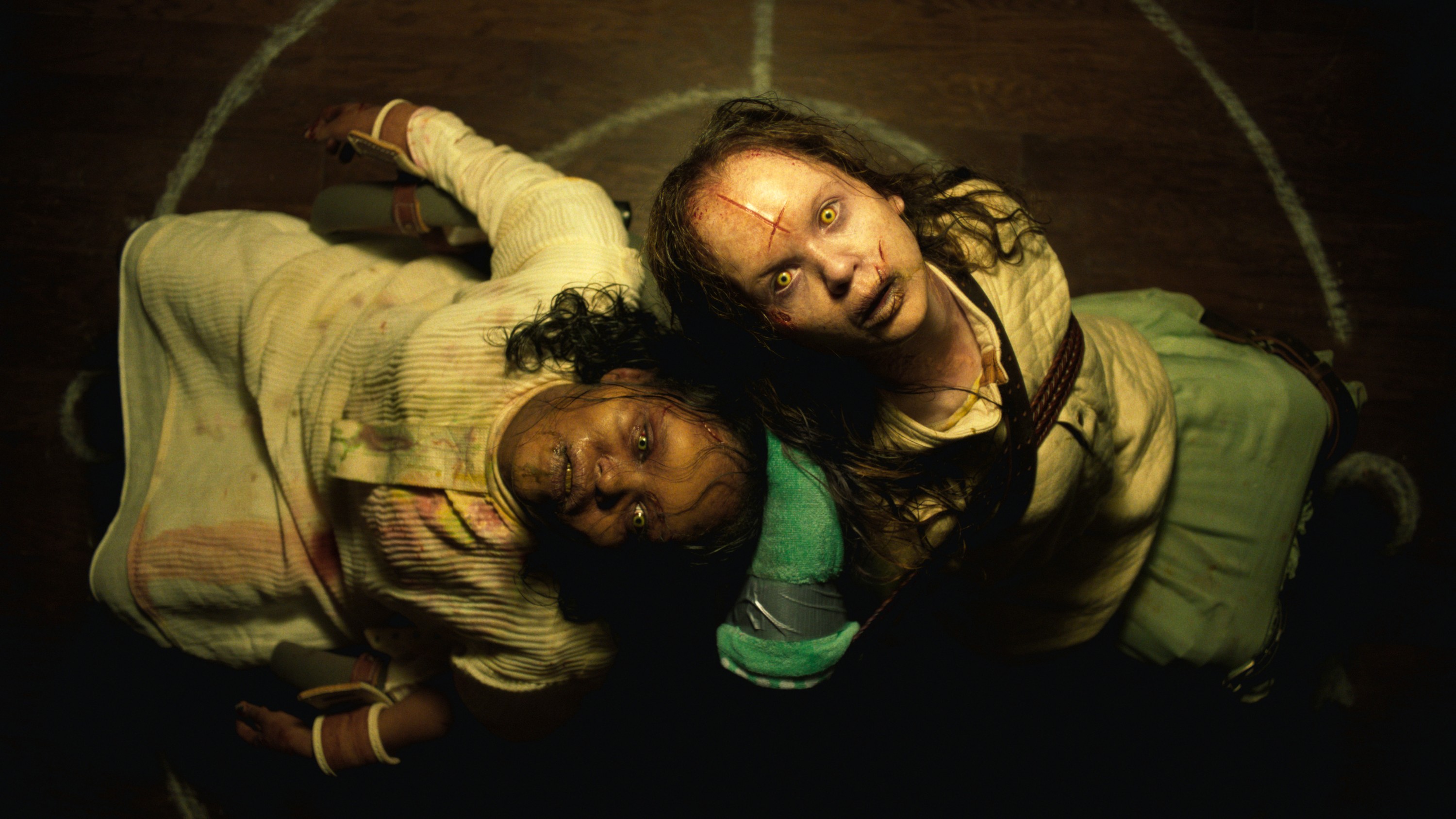
Like Halloween (2018), The Exorcist: Believer ignores all of the other films in the series and functions as a direct sequel to William Friedkin’s 1973 highly influential original. Victor Fielding (Leslie Odom Jr.) is a photographer who loses his pregnant wife in an earthquake. Fortunately, his child, Angela (Lidya Jewett) is saved and the film is set thirteen years later, Victor having lost his faith in God. When Angela wanders into the forest with her best friend Katherine (Olivia O’Neill) to perform a seance to contact her mother, they go missing for three days and once they are found, something is not right… 

The Exorcist: Believer is an ambitious sequel and has a very strong first half. The idea of a child going missing is really well-handled and the investigation is riveting, Green sustaining tension and dread. Green knows he can’t simply transpose what he did with Halloween and apply it to The Exorcist and I really appreciated his decision to take his time in letting the enveloping story breathe. 

Unfortunately, as soon as Ellen Burstyn’s legacy Chris Macneill is introduced into the fray, things go downhill. Any prior subtlety is thrown out of the window and the film is even unintentionally comedic at times. Whilst the idea of a simultaneous possession is interesting, the exorcism finale is second-rate and isn’t scary in the slightest.

The script in general is rather creaky – the story was concocted by Green, McBride and Scott Teems but the screenplay itself was written by Green and Peter Sattler. I couldn’t detect the Danny McBride influence – Halloween (2018) had a sardonic edge to it and this doesn’t. 

The performances are also a mixed bag. Leslie Odom Jr is great as the weary and internalised father, who bottles his anxieties. Both Lidya Jewett and Olivia O’Neill give it a good go as the possessed girls but both could have done with more development prior to their incident. Ellen Burstyn is largely wasted, saddled with large amounts of exposition and some will take umbrage at the story’s treatment of her. The supporting characters are generally underdeveloped and Ann Dowd is surprisingly terrible as Victor’s nurse neighbour. 

On the plus side, the score by David Wingo and Amman Abbassi is excellent and I loved how they developed and varied Mike Oldfield’s Tubular Bells. The film’s also handsomely shot by Michael Simmonds and the sound design is also strong. 

It’s unfortunate Green can’t make lightning strike twice in rejuvenating The Exorcist. Still, there are some interesting ideas here, particularly in the first half, and the film isn’t fully deserving of the critical pummelling it’s receiving. For a film that’s supposed to follow what was supposedly the scariest film ever made, it’s rather tame on release and the exorcism is completely lacking in novelty. 

The Exorcist: Believer is supposed to be the first in a trilogy and I’m sceptical whether it will continue. I suspect it will, given the high $400 million investment fee Blumhouse had to pay for the rights. But it’s rather telling how even Green doesn’t seem to be confident in his own film, seeing as it ends rather neatly without a hint of a sequel’s seeds being sown.

⭐⭐ (Poor)

The Creator (Review)

Uncategorized
⭐⭐⭐ (Good)

Director: Gareth Edwards 
Starring: John David Washington, Gemma Chan, Ken Watanabe, Sturgill Simpson, Allison Janney, Madeleine Yuna Voyles
Certificate: 12A
Run Time: 133 mins

The Creator is an original sci-fi from visionary director Gareth Edwards. Edwards attracted acclaim for his debut feature Monsters, which he shot on a shoestring budget and overlaid the 250 visual effects the film required in his bedroom over footage he had shot on location beforehand. He was quickly tapped to direct Godzilla, which had a fantastic opening only to self-combust in its second half. Edwards then directed Rogue One: A Star Wars Story, which sounded like a stressful project with extensive reshoots close to release. In my opinion, this was to the film’s benefit as the final result struggled with an uneven first act and then found its feet later on. It’d be fair to say Edwards has always been a better visionary than a storyteller and it’s striking that his follow-up to Rogue One arrives seven years later. 

Co-written with Chris Weitz but based on an original story from Edwards, The Creator is set in 2055. After a nuclear warhead is detonated in Los Angeles by an artificial intelligence created by the US government, the US and its Western allies want artificial intelligence eradicated. However, a region in Southeast Asia called New Asia resists attacks from the US and continue to embrace the technology. John David Washington plays Sergeant Joshua Taylor is tasked with returning to New Asia (after previously working undercover with devastating consequences) to locate ‘Nirmata’, New Asia’s chief architect behind its AI advancements.

The Creator is an enjoyable and thoughtful watch, although uneven in its execution. Although the storytelling may be flawed, Edwards has concocted an adventurous narrative and really showcases the most of some breathtaking locations. Edwards has clearly been by influenced Blade Runner, Apocalypse Now and District 9, with infusions of his own war imagery in Rogue One and strangely, Martin Scorsese’s religious epic Kundun. It doesn’t sound like it should work, but it mostly does. Although Edwards doesn’t really make his intentions clear, The Creator seems to perhaps be trying to compare this futuristic fight for humanity to the Vietnam War, suggesting Americans treated the natives as if they were robots. 

Despite the mixed messaging,as you’d expect for a Gareth Edwards film, The Creator is visually stunning with breathtaking cinematography. I was blown away by the fact the film had a $80 million budget – I’d have put it up there with the $250+ million budgets many blockbusters now have. Like Monsters, Edwards proves he’s masterful at dressing up footage with state-of-the-art visual effects. 

Edwards reunites with Greig Fraser, who served as Director of Photography through pre-production only for Oren Soffer to then take over. This film is sure to put Soffer on the cinematographer’s road map. A shot with a security camera guy inspecting footage who is then killed as we witness a solider enter the room on the CCTV recording and kill him is novel, as is a shot from the perspective of a child looking out an escape pod to see an explosion, the camera then dipping downward in the direction of the pod. There’s some phenomenal action sequences too, especially an early raid on a house. 

While the performances are serviceable, Edwards struggles with fleshing out the human characters. John David Washington is decent in the lead role but the character is a bit of a cypher and doesn’t have a lot of charisma. It’s a similar story with Gemma Chan, who is criminally underused. That said, Allison Janney’s a surprise highlight as a cutthroat Colonel and Ralph Ineson also impresses as a domineering General. Newcomer Madeleine Yuna Voyles fares well as the robotic simulate Joshua has to guide to safety.

Hans Zimmer’s score is very fitting at times but I wish the film cut back on some of the diegetic needle drops, which detract from the sombre tone it’s trying to go for. It was interesting to hear the film was originally edited without music, Edwards citing it was to allow the story to flow, with Zimmer being brought in late in post-production. 

Although The Creator’s plot doesn’t flow seamlessly, I appreciated Edwards’ ideas and ambition. It’s a remarkable-looking film and for an original sci-fi like this to exist without ties to existing properties is a miracle in and of itself. Despite its flaws, The Creator is an entertaining ride that has something to say.

⭐⭐⭐ (Good)

Saw X (Review)

Uncategorized
⭐⭐⭐ (Good)

Director: Kevin Greutert 
Starring: Tobin Bell, Shawnee Smith, Synnøve Macody Lund, Steven Brand, Renata Vaca, Michael Beach
Certificate: 18
Run Time: 118 mins

Saw X is the latest in the splatter horror series and a third attempt at a reinvigoration after Jigsaw and Spiral: From The Book of Saw. Ten films in and so far, none have been able to surpass James Wan’s 2004 original. That said, I certainly admired the effort Chris Rock made with Spiral even if it was obfuscated by Darren Lynn Bousman’s poor direction. 

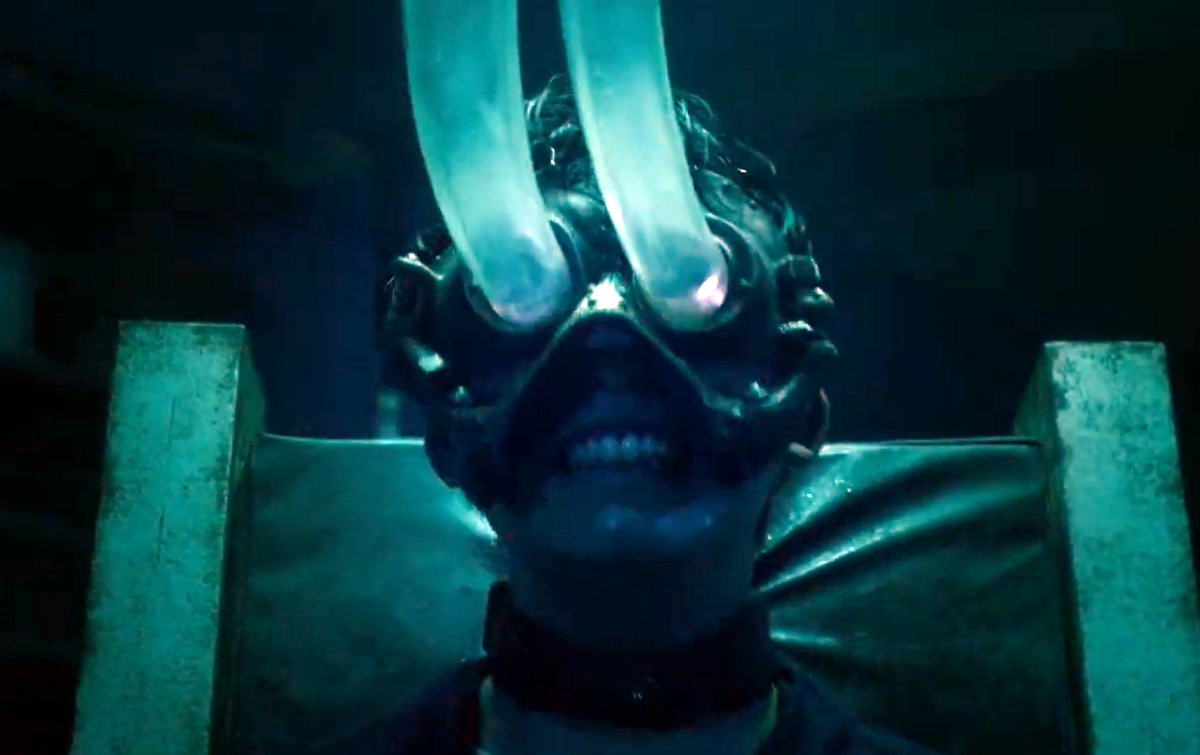
Saw X takes the series back to its roots and is set between the original and Saw II. Despite being the architect of the series, Tobin Bell’s John Kramer is satisfyingly brought front and centre (it only took ten attempts!). Kramer travels to Mexico for an experimental procedure that he hopes will cure his brain cancer. Shortly after surgery, he discovers it all to have been a hoax and he sets on enacting his elaborate and twisted revenge on those responsible. 

The film is directed by Kevin Greutert, who edited the first five entries and Jigsaw. Greutert then went on to direct Saw VI, one of the better sequels which had an interesting commentary on the insurance industry and Saw: The Final Chapter (that title clearly didn’t work out), the worst in the series by quite some distance. Given his mixed track record, can he jump-start the series back to life? 

For the most part, yes. Saw X is quite possibly the best sequel, its success largely based on Bell’s expanded role, a surprising amount of heart and a truly nasty villain. The film satisfyingly takes its time to develop the situation Kramer finds himself in – the first 40 minutes is largely devoid of any traps or violence. This is all to Saw X’s benefit because once we get to the torture sequences, we can surprisingly empathise and understand why an individual that inflicts torture on others does so. Bell is expectedly terrific in the lead role and could play the role in his sleep. 

There’s also a decent amount of development for the con artists and when they meet their match in Kramer, we can also understand their position. This is definitely the turning point for Synnøve Macody Lund’s career. She plays Dr Cecilia Pederson, who leads the experimental cancer treatment group and is one truly vile, twisted individual. 

It wouldn’t be a Saw film without the sadistic traps and it’s a positive to see Greutert return to some of the more simpler traps given this is set between the original and Saw II. Still, the traps work well and are pretty wince-inducing. It is a shame that the traps peak early, with some of them not being as grisly in the final act. 

With the exception of Jigsaw, all the Saw films resort to frenetic editing for the traps, which was often very distracting. While Saw X’s editing isn’t as clinical as Jigsaw, Greutert shows a degree of restraint and encompasses a happy middle ground between the two extremes. 

Charlie Clouser returns to score the film and although he doesn’t do much to shake up the tried-and-tested formula, it works. Nick Matthews is on cinematography duties this time around and shoots the film with a more sepia tone. While Saw X looks fine, it’s not as visually arresting as Spiral.

Saw X is a surprisingly strong tenth instalment to a once-waning franchise. While it doesn’t reach the heights of Wan’s original as it lacks the sheer simplicity of its plot and novelty, it still stands head and shoulders above many of the sequels. The decision to centre the film around Jigsaw is an obvious winner and Greutert deftly develops the characters so that once all the chess pieces are in position, the stakes are well-earned. 

⭐⭐⭐ (Good)

A Haunting In Venice (Review)

Uncategorized
⭐⭐ (Poor)

Director: Kenneth Branagh
Starring: Kenneth Branagh, Kyle Allen, Camille Cottin, Jamie Dornan, Tina Fey, Jude Hill, Ali Khan, Emma Laird, Kelly Reilly, Riccardo Scamarcio, Michelle Yeoh
Certificate: 12A
Run Time: 103 mins

A Haunting In Venice is the latest Poirot property directed and starring Sir Kenneth Branagh, loosely based on Agatha Christie’s 1969 novel Hallowe’en Party. This is Branagh’s third outing as the Belgian detective – Murder on the Orient Express was fine but failed to make the most of its star-studded cast. Death on the Nile better developed its characters but suffered with an ear-scraping script, blatant and distracting green screen and poor pacing. Branagh changes tact for A Haunting In Venice, with a lower $60 million budget and introducing supernatural horror elements.  The film opens with Poirot living in retirement in Venice until mystery writer Ariadne Oliver (Tina Fey) turns up at his door and convinces him to attend a Halloween party. At the party, famous psychic Joyce Reynolds (Michelle Yeoh) is performing a seance and the two plan to expose the medium as a fraud. 

While A Haunting In Venice is a major improvement over Death On The Nile, Branagh sadly still hasn’t managed to quite strike the right chord tonally and the film has its fair share of issues. On the plus side, Branagh tones down his Poirot performance (even the moustache itself this time has shrunk) and seems to have better settled into the role. It’s visually the best-looking film of the trio and is beautifully shot by Haris Zambarloukos, resplendent with Dutch angles. Venice is stunningly captured in the daylight, even if its canals aren’t typically in as pristine a condition as Zambarloukos conveys here. 

Branagh has also ditched his regular composer Patrick Doyle, in exchange for Hildur Guðnadóttir, who won an Oscar for her sensational Joker score. Her string-based score is more effective both of Doyle’s previous efforts, although it’s under-utilised and therefore not developed enough for there to be any distinct and memorable themes. 

A Haunting In Venice is also better paced than its predecessors, coming in at a more economical 103 minutes (the previous entries hovered around the 120 minute mark). While the script, once again penned by Logan and Blade Runner 2049 screenwriter Michael Green isn’t of Academy Award calibre, it’s a stark improvement over Death on the Nile.  

Unfortunately, the horror tinged feel Branagh tries to go for just doesn’t really work – there’s the odd attempt at a jump scare but the film lacks the claustrophobia and the nastiness for it to be truly effective. A Haunting In Venice also has the least interesting mystery of the three films – we know the supposedly supernatural elements can be explained rationally and it all feels a bit tedious having to go through the motions of the mystery to get to the underwhelming reveal. The characters also aren’t particularly well developed, with John Wick: Chapter 2’s Riccardo Scamarcio probably fairing the best as an ex-police officer who acts as Poirot’s bodyguard. Tina Fey doesn’t get a lot to work with and the usually great Kelly Reilly turns in an overly catatonic performance. 

It’s a shame that Branagh still isn’t able to crack the correct formula for a Poirot film. While A Haunting In Venice improves on its predecessors in many ways, particularly with its pristine visuals, it’s let down by its reticence to fully commit to its horror influences and a largely uninvolving story.

⭐⭐ (Poor)