Evil Dead Rise (Review)

Uncategorized
⭐⭐ (Poor)

Director: Lee Cronin
Starring: Lily Sullivan, Alyssa Sutherland, Morgan Davies, Gabrielle Echols, Nell Fisher
Certificate: 18
Run Time: 97 mins

Evil Dead Rise is the long-awaited fifth instalment to the popular supernatural horror series around an ancient Sumerian text that wreaks havoc upon a group. The original trilogy cemented director Sam Raimi’s career with its fusion of grotesque horror and comedy, as well as later sequels’ use of stop-motion and prosthetic makeup effects. Fede Alvarez rebooted the franchise in 2013 with more of a straight-edged, gory agenda to a more muted but still ultimately positive response. 

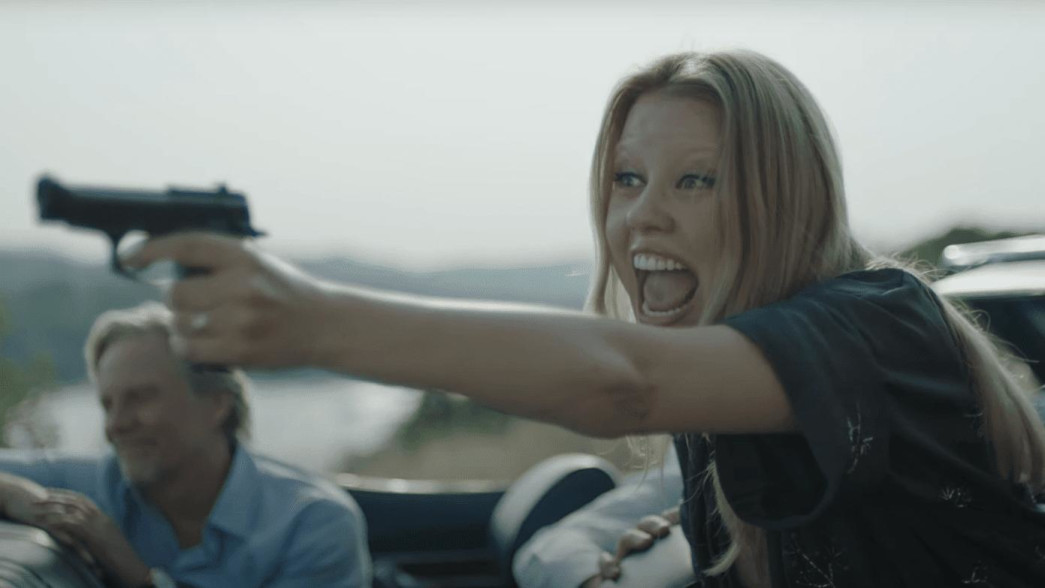
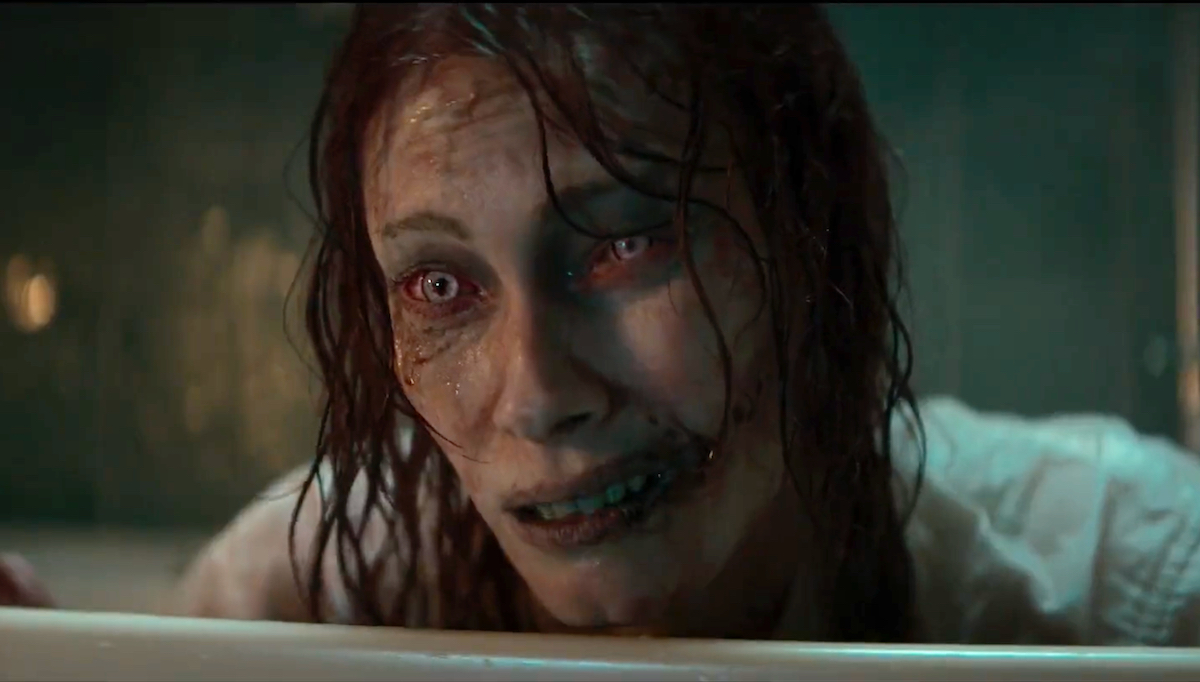
Irish filmmaker Lee Cronin assumes the director’s chair for Evil Dead Rise, which moves the concept from a cabin in the woods to a dingy block of flats in the city (although the film opens on a rural slaying). Beth (Lily Sullivan) and Ellie (Alyssa Sutherland) are two estranged sisters. Ellie is a single mother to teenagers Danny and Bridget, and a child Kassie. When Beth comes to visit the family and an earthquake shakes the building, Danny discovers a strange book in a concealed chamber and unleashes a supernatural terror on the block. 

Unfortunately, Evil Dead Rise is a complete misfire and makes virtually every mistake possible in the horror rulebook. Cronin seems content to just go through the motions and the film lacks a gleeful edge or any kind of personal stamp. I didn’t connect with any of the characters and Cronin fails to make use of the urban setting. While we get to briefly meet a handful of the neighbours, they’re cordoned off pretty quickly and Cronin fails to convey the feeling of a family being ripped apart. Evil Dead Rise also criminally seems to go against the franchise logic in how only one character can be possessed at a time. The score by Stephen McKeon is disappointingly anonymous and the cinematography is crushingly dull, lazily resorting to quick cuts.

The film earns its 18-certificate with lashings of blood and guts, although the overreliance on CGI lessens its impact. It’s a shame Cronin didn’t pursue the use of practical effects and even Evil Dead (2013) respectably shunned CGI. Still, there’s some mild fun to be had in the film’s final blood-drenched set-piece which slightly elevates the turgid mess one has to endure beforehand.

Evil Dead Rise is by far and away the worst of the series and I fail to understand the largely positive critical reception. Cronin fails to demonstrate an understanding of the qualities that made the other films work. It’s a shame he doesn’t make the most of the urban setting and centres the story around a rote carousel of characters. If a sequel is commissioned (the film’s ending sets one up), it would be wise to head back to the drawing board to avoid further tarnishing this long-enduring series.  

⭐⭐ (Poor)

Air (Review)

Uncategorized
⭐⭐⭐ (Good)

Director: Ben Affleck
Starring: Matt Damon, Ben Affleck, Jason Bateman, Marlon Wayans, Chris Messina, Matthew Maher, Chris Tucker, Viola Davis  
Certificate: 15
Run Time: 112 mins

Air is a biographical sports drama centred around the origin of the Air Jordan basketball shoeline. More importantly, it’s the first film to be directed by Ben Affleck since 2016’s Live By Night. Prior to that aforementioned film, Affleck enjoyed a string of critical successes from Gone Baby Gone to The Town, culminating in Argo, which won the Best Picture Oscar in 2012. Although I found Live By Night to be thoroughly entertaining and sporadically gripping, many found it to be a major disappointment. Affleck was then attached to direct The Batman but left the project due to a packed schedule. 

Of course, the fact Affleck’s been busy playing Batman since directing Live By Night in Batman v Superman: Dawn of Justice and Justice League (and the vastly superior director’s cut) explains his hiatus behind the screen. And in any case, outside of Batman, he’s taken on interesting projects such as Triple Frontier, The Last Duel and the critically panned Deep Water, which I really enjoyed. 

Back to Air, the film opens as Nike Inc. is on the verge of shutting its basketball division. The company’s basketball talent scout Sonny Vaccaro (Affleck reuniting with Good Will Hunting co-star and writer Matt Damon) is tasked to find new players to sponsor. Very much an underdog company compared to the giant it is today, Vaccaro is told Nike are happy to sponsor three athletes. After obsessively watching gameplay of Jordan and convinced of his future stardom, Vaccaro decides he’d rather spend all of the budget just on Jordan, much to the disagreement of both Marketing VP Rob Strasser (Jason Bateman) and co-founder and CEO Phil Knight (Ben Affleck). They not only argue he is too expensive for the meagre budget Nike has, they are convinced Jordan will want to stick with his preferred Adidas partnership. 

Although at its core, the concept of a biopic about a pair of shoes may sound pretty dull, Affleck manages to spin an entertaining yarn on the relentless pursuit of what we now know to be a sport-defining outcome. Air is good fun in the moment and has a particularly strong script by first-time Alex Convery, full of sharp quips and meaningful character development. An early scene in which Vaccaro rejects the possible partnerships Strasser suggests is particularly peppery and gives an early insight into the psyche of the film’s personalities.  

There’s some great performances too – Matt Damon is reliably fun as the determined Vaccaro. He’s well aware he could lose his job and makes some unconventional decisions, such as visiting the Jordan family in-person which is considered a big no-no and Jordan’s fiery agent David Falk (Chris Messina) is particularly livid at the stunt. Affleck is clearly having fun as the somewhat impenetrable CEO and it’s refreshing to see Jason Bateman in a more serious role, arguably his first since his career-best performance in The Gift. Viola Davis is also excellent as Jordan’s mother, very much the deciding figure over how her son’s career will progress. The underrated Matthew Maher is also terrific as shoe designer, Peter Moore as is Chris Tucker in his first role since 2016’s Billy Lynn’s Long Halftime Walk as marketer Howard White. 

However, while Air is fun in the moment, it’s a frothy film and doesn’t leave a particularly long lasting impression. Affleck doesn’t particularly inject a great deal of his personality behind the screen and surprisingly, even regular collaborator (as well as Quentin Tarantino’s preferred cinematographer) Robert Richardson’s lensing feels rather anonymous. Although the jukebox soundtrack captures the 1984 setting, it’s somewhat obvious and distracting. 

Whilst Air is a lively, fast-paced and warm biopic, it’s a little disappointing considering Affleck’s directorial back catalogue. A tinge of darkness would have really elevated the film and would have played to Affleck’s strengths. However, if you momentarily forget the powerhouse crew behind the film, Air is a fun crowd-pleaser about the pursuit of a basketball icon and how he came to wear an endearing shoe. 

⭐⭐⭐ (Good)

John Wick: Chapter 4 (Review)

Uncategorized
⭐⭐⭐⭐ (Excellent)

Director: Chad Stahelski
Starring: Keanu Reeves, Donnie Yen, Bill Skarsgård, Laurence Fishburne, Hiroyuki Sanada, Shamier Anderson, Lance Reddick, Rina Sawayama, Scott Adkins, Ian McShane
Run Time: 169 mins

John Wick: Chapter 4 is the latest in the action series that’s breathed new life into Keanu Reeves’ career. The thrilling original spawned an unintentional series that has become more popular with each entry. Chapter 4 picks up immediately after the close of John Wick: Chapter 3 – Parabellum which saw Wick join forces with the Bowery King (Laurence Fishburne) to enact vengeance against the High Table, a council of twelve crime lords that govern the assassins’ world.  

Former stuntman turned director Chad Stahelski is at the helm again and has proven an expert hand at crafting action sequences. Each entry in the series has proven an antidote to the quick-cut fights that plague many films, whereas Stahelski likes to hold onto a shot and the choreography is almost balletic. It’s been refreshing seeing Stahelski trying to continuously top himself with each John Wick entry. Chapter 3 – Parabellum, in particular, wowed with its sheer variety in the first half of the film. The first remains my favourite of the series and rewatching it just before this new entry was quite eye-opening for its decidedly smaller scale. 

John Wick: Chapter 4 is yet another strong entry in the series and its second half is particularly impressive, especially considering the intimidating 169 minute run time. It tells a clear and coherent story and there are real, life-threatening stakes for the characters. The film feels like a sprawling, ultra-violent James Bond film on steroids and mostly earns its length. As you’d expect, Chapter 4 sports some truly mesmerising action sequences that are straight up there as some of the best in the series and a model for action cinema in general. 

If I’m being picky, the first half could have a 20 minute chop and that would make for a tighter film but once the action reaches Paris, it rip-roars its way to the end with breathtaking action sequence after action sequence. 

Keanu Reeves once again turns in an excellent performance as the titular character. Although he doesn’t have many lines in the film, Reeves is totally convincing in his suicidal mission to dispatch as many High Table subordinates as possible. Both Ian McShane and Laurence Fishburne turn in reliably fun performances and it was rather poignant to see the late Lance Reddick who died shortly before this film’s release return with a memorable and heartfelt final performance. 

Bill Skarsgård makes for what is probably the most formidable villain of the series to date and Donnie Yen is clearly having fun as a likeable old friend of Wick, who is forced out of retirement to kill him. Hiroyuki Sanada is also excellent as the Osaka Continental Hotel in Japanese and Scott Adkins is another highlight as a Russian mafia crime lord. Adkins is best known for playing intimidating henchmen but here, he plays against type as he wears a fat suit and isn’t as energetic. 

Returning cinematographer Dan Laustsen’s work is once again superb, an overhead tracking shot in an apartment mesmeric. This is definitely the best looking John Wick film. Elsewhere, the duo of Tyler Bates and Joel J. Richard once again turn in a terrific score, revisiting some old themes while introducing some new ones.

John Wick: Chapter 4 is a fantastic sequel and a genre-defining film for action cinema. It’s a globe-trotting stunt showcase from beginning to end that mostly earns its length and its second half is a tour-de-force. It’s certainly the best sequel of the franchise, although I’m not sure if it betters the original. It’s rare to see a series improve with each entry, although Chapter 4 ends on a fitting note and I hope Stahelski and Reeves aren’t tempted to risk making another. 

⭐⭐⭐⭐ (Excellent)

Infinity Pool (Review)

Uncategorized
⭐⭐⭐ (Good)

Director: Brandon Cronenberg
Starring: Alexander Skarsgard, Mia Goth, Cleopatra Coleman, Jalil Lespert, Thomas Kretschmann  
Certificate: 18
Run Time: 118 mins

Infinity Pool is a sci-fi horror written and directed by Brandon Cronenberg. The film is centred around a struggling writer, James Foster (Alexander Skarsgård) who is on holiday at a resort in the fictional country of Li Tolqa with his wife Em (Cleopatra Coleman). The super-exclusive resort is isolated from the rest of the country with a barbed wire fence, security guards patrolling its perimeter. Wealthy tourists are shuttled to and from the airport. 

James and Em’s relationship is clearly strained, until Gabi (Mia Goth) approaches him and professes her love for his only novel published six years prior. Joined by Gabi’s husband Alban (Jalil Lespert), the four share dinner together and rent a car the next day to explore the countryside and head to a remote beach. After a drunken day out, James drives the group back and hits a native citizen. He is arrested and soon discovers the country’s eye-for-an-eye outlook on crime.  

For the first forty minutes, Infinity Pool looked to be film of the year – an endlessly atmospheric, tense exploration of the human psyche and failed careers. It has a nightmarish quality to it with a satirical edge. There is then a plot point that introduces the theme of the doppelgänger, changing the film’s direction, which I didn’t fully get on board with. That is until the last half an hour or so with an electrifying standoff between passengers in a bus and a group that box them in and the film rip-roars to the end. The score by Tim Hecker is eerily effective and full of portent and the film is disorienting shot by Karim Hussain, an early montage of the resort shot at tilted angles is particularly breathtaking.

There’s certainly a ton to admire in Infinity Pool but it doesn’t fully work as Cronenberg’s ideas aren’t fully-fledged. The class satire isn’t fully explored, nor is the idea of the double fully clear in its execution. Cronenberg certainly crafts some arresting images though and the film has a suitably hallucinogenic quality. 

Although I’ve been critical of Alexander Skarsgård in the past, his aloof and wooden acting style really suits the role here. Much has been touted of Mia Goth’s performance and along with her performance in Pearl (finally released in the UK last week), she continues to cement herself as one of the best horror actresses of her time. Cleopatra Coleman is also excellent as Em, who struggles to fully integrate with the other tourists’ way of life and Jalil Lespert makes for a slimy, charismatic screen presence. Another highlight is Thomas Krestchmann as a sadistic yet cooly calculated detective. 

Although Infinity Pool doesn’t fully work with its muddled storytelling, Cronenberg’s ambition is to be admired. This is a fierce piece of work, with many standout images that are etched into my brain and memorable performances to boot. If Cronenberg can sustain his style and develop his storytelling, he will be a very exciting filmmaker. 

⭐⭐⭐ (Good)

Shazam: Fury of the Gods (Review)

Uncategorized
⭐⭐⭐ (Good)

Director: David F. Sandberg
Starring: Zachary Levi, Asher Angel, Jack Dylan Grazer, Rachel Zegler, Adam Brody, Ross Butler, D. J. Cotrona, Grace Caroline Currey, Meagan Good, Lucy Liu, Djimon Hounsou, Helen Mirren
Certificate: 12A
Run Time: 130 mins

Shazam: Fury of the Gods is the sequel to the thoroughly entertaining Shazam! and the latest entry in the DC Extended Universe. The original really worked with its well-judged humour and heart-warming exploration of the theme of family. Although the DC Extended Universe as we know it is coming to a close with James Gunn’s soft reboot soon upon us, it’s a shame this film feels somewhat dead on arrival. 

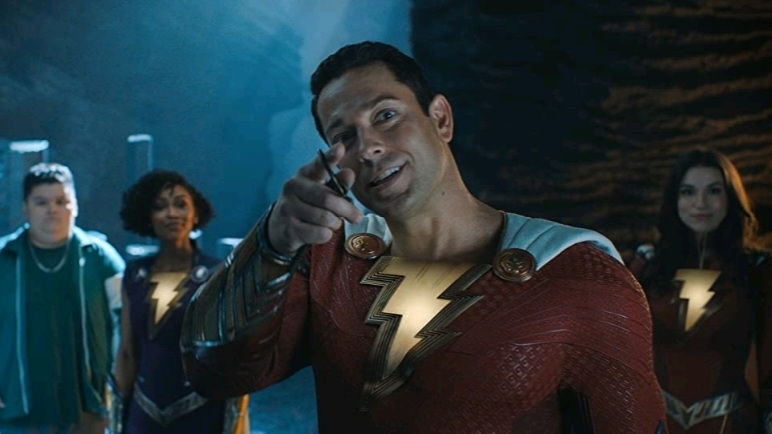
Lights Out and Annabelle: Creation director David F. Sandberg returns to the helm and this film picks up two years after the first. Billy Batson (Zachary Levi and Asher Angel) and his family of foster siblings are shown to put their superhero skills to good use as they prevent casualties on the Benjamin Franklin Bridge early in the film. However, their personal interests see them drift apart as they grow up. However, the daughters of Atlas, Hespera (Helen Mirren) and Kalypso (Lucy Liu) are soon reason enough for the siblings to unite together as they unveil carnage on the planet. 

Shazam: Fury of the Gods isn’t as fresh as its predecessor but aside from a rocky start, it’s another entertaining ride. It’s considerably of a higher production value than Shazam spin-off Black Adam that released last year. This sequel mostly retains its warm portrayal of family and all of the characters receive meaningful character development. The script penned by Henry Gayden and Chris Morgan is sharply written and there’s a few laughs peppered throughout. 

Once again, Sandberg’s horror fingerprints can be felt all over the film, particularly in the climactic battle sequence and there’s even a cameo by the Annabelle doll that you’ll need to keep an eye out for. Other than the opening action sequence, there’s some fun set pieces here and even the final climactic battle remains consistently fun to watch, often the undoing of many a comic book film. The film is well shot by Gyula Pados but the score by Christophe Beck is disappointing and unmemorable.

The performances are really fun once again. Zachary Levi injects lots of energy and charisma into the lead role and a natural fit for the material. Djimon Hounsou proves he’s a criminally underrated supporting actor in an expanded role as the titular wizard and both Helen Mirren and Lucy Liu are reliably slimy as the villains. Rachel Zegler also makes a good impression as Anne, a new girl at school who Freddy (Jack Dylan Grazer and Adam Brody) has a crush on at school . 

It’s a shame DC aren’t pushing Shazam: Fury of the Gods, treating the film as if it’s dead weight before the newly revamped DC arrives. Although it’s highly unlikely we’ll see a third chapter, Sandberg has crafted a highly likeable sequel, even if it’s not quite as fresh-on-arrival as its predecessor. 

⭐⭐⭐ (Good)

Cocaine Bear (Review)

Uncategorized
⭐⭐⭐ (Good)

Director: Elizabeth Banks
Starring: Keri Russell, O’Shea Jackson Jr, Christian Convery, Alden Ehrenreich, Brooklynn Prince, Isiah Whitlock Jr, Margo Martindale, Ray Liotta
Certificate: 15
Run Time: 95 mins

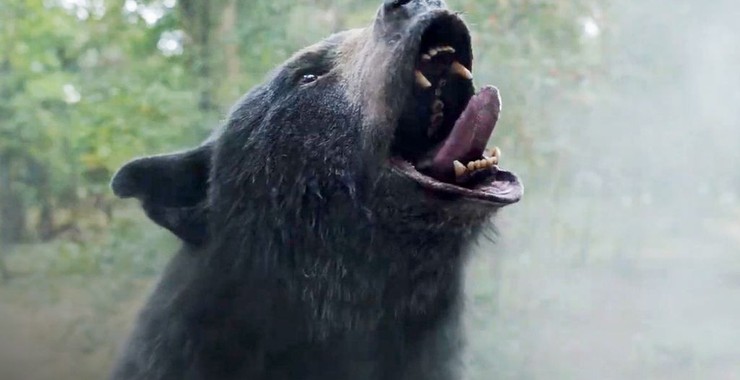
Cocaine Bear is the latest from actor-director Elizabeth Banks and is inspired by the outrageous true story of a black bear that died from an overdose of the fateful narcotic in 1985 at the Chattahoochee National Forest. However, Banks takes some liberties and allows the bear to go on a murderous spree. In reality, the events between the bear ingesting cocaine after it was dumped from an aeroplane and dying are unknown. Still, killer animal horror films can be immensely fun when done well and Cocaine Bear has a particularly ridiculous premise. 

Cocaine Bear does what it says on the tin and is generally a fun ride from start to finish. As you’d expect, it’s fairly disposable and not profound in the slightest. The film reasonably balances its horror and comedy, although it’s never funny or scary enough as it could be. It’s well-paced and  doesn’t outstay its welcome at a brisk 95 minutes. Banks and screenwriter Jimmy Warden, do a solid job at establishing and developing a collection of human characters for the bear to interact with. 

Keri Russell is the closest the film has to a lead, playing a nurse called Sari. Russell’s had a varied career, a career low being a terrible supporting performance in Dawn of the Planet of the Apes to making a reasonable lead in Antlers. This may be her best performance yet and Russell has sound comedic timing and clearly embraces the ridiculousness of the film. O’Shea Jackson Jr is a highlight, a crony of Ray Liotta’s (in one of his final roles) drug kingpin who sends him to the national park to try and retrieve the remaining cocaine. The Florida Project’s Brooklynn Prince also impresses with a committed performance as Sari’s daughter and Isiah Whitlock Jr gets some of the best lines as a local detective. Finally, Margo Martindale is brilliant as an inept park ranger.

The film is well shot by Candyman’s John Guleserian and generally has high production values. Much of the budget has gone into creating a CGI bear, with Lord of the Rings and Avatar: The Way of Waters Wētā being the visual effects company responsible.

Cocaine Bear is ultimately a fun ride from start to finish that although isn’t as frightening or as comedic as it could be, is a more than passable enough way to spend 95 minutes.  

⭐⭐⭐ (Good)

Ant-Man and the Wasp: Quantumania (Review)

Uncategorized
⭐⭐⭐ (Good)

Director: Peyton Reed
Starring: Paul Rudd, Evangeline Lilly, Jonathan Majors, Kathryn Newton, David Dastmalchian, Katy O’Brian, William Jackson Harper, Bill Murray, Michelle Pfeiffer, Corey Stoll, Michael Douglas
Certificate: 12A
Run Time: 124 mins

Ant-Man and the Wasp: Quantumania is the third entry in the series and the film to kickstart the Marvel Cinematic Universe’s Phase 5. Both Ant-Man and Ant-Man and the Wasp rank among Marvel’s very best – refreshingly frothy palette cleansers from some of Marvel’s heavier films bursting with energy and heart. Director Peyton Reed is once again in the director’s chair and this sequel picks up after the events of Avengers: Endgame

Scott Lang (Paul Rudd) has become a successful memoirist and lives happily with Hope van Dyne (Evangeline Lilly). His relationship with his political activist daughter Cassie (now played Kathryn Newton replacing Abby Ryder Fortson and Emma Fuhrmann) is strained. When the trio visit each other, along with Hope’s parents, Hank Pym (Michael Douglas) and Janet (Michelle Pfeiffer), Cassie reveals she’s been working on a device that can establish contact with the Quantum Realm, a subatomic universe where space and time don’t exist. During her demonstration, things go awry and the quintet are sucked into the Quantum Realm where they face Kang the Conqueror (Jonathan Majors). 

Ant-Man and the Wasp: Quantumania performs a very different function to its predecessors in that it is not the palette cleanser to other Marvel entries. Instead, it needs to introduce Kang, the big bad for Marvel’s foreseeable future. Unfortunately, compared to its predecessors, the film is disappointing but it’s still a perfectly serviceable entry. 

Starting with the positives, the cast are excellent and the chemistry shared between Lang and his daughter is admirable, although not as heartfelt as in previous films. Paul Rudd effortlessly carries the film and although Lily and Douglas’ characters don’t receive a lot of development, they still make enough of an impression. Although a brief performance, Bill Murray’s performance is fun and William Jackson Harper is great as the telepath Quaz. 

Jonathan Majors is by far and away the standout as Kang, a cool and calculated villain with oodles of charisma and intelligence. Provided the films he features in are of high quality, Kang will undoubtedly prove to be a Marvel big-bad as effective as Josh Brolin’s Thanos in Avengers: Infinity War and Endgame

Outside of the fun performances, the film unfortunately has an episodic quality to it, akin to watching a Saturday morning television show. Moving the story away from Earth to the Quantum Realm also lowers the film’s quality. The first two films excelled with their innovative action sequences and their manipulation of size and spectacle, whereas this disappointingly doesn’t. Most distractingly, the Quantum Realm is not well-realised. There is an unnerving amount of CGI and the film is visually drab. Even the score by Christophe Beck isn’t particularly memorable and Bill Pope’s cinematography is surprisingly anonymous considering his filmography, likely drowned out by the distracting CGI. 

Ant-Man and the Wasp: Quantumania is far from Marvel’s best and suffers from poor visual effects and the filmmakers neglecting to play to the character’s strengths. Still, it’s not as poor as some have made it out to be and it’s worth watching for Majors’ charismatic performance alone. While Ant-Man and the Wasp: Quantumania is fun in the moment, it’s ultimately sadly rather disposable. 

⭐⭐⭐ (Good)

Knock At The Cabin (Review)

Uncategorized
⭐⭐⭐⭐ (Excellent)

Director: M. Night Shyamalan
Starring: Dave Bautista, Jonathan Groff, Ben Aldridge, Nikki Amuka-Bird, Kristen Cui, Abby Quinn, Rupert Grint
Certificate: 15
Run Time: 100 mins

Knock At The Cabin is the latest by M. Night Shyamalan, whose once tarnished career is happily back on an uphill trajectory. A high-concept apocalyptic horror adapted from a novel by Paul G. Tremblay, the film follows a family of three on holiday in a remote cabin. Seven-year-old Wen (Kristen Cui) is catching grasshoppers in the idyllic woodland surrounding the cabin when she is approached by a stranger Leonard (Dave Bautista) who tries to befriend her. It’s unclear whether Leonard is a trustworthy or unsavoury character until three other people holding makeshift weapons enter the picture. Wen and her fathers, the calm Eric (Jonathan Groff) and fair but short-tempered Andrew (Ben Aldridge) are suddenly held hostage by the group. They demand the family sacrifice one of their own to prevent an apocalypse. 

Knock At The Cabin is another excellent thriller from Shyamalan – it’s a taut, intense ride while also being thought-provoking. This is not the first time the director’s explored the end of the world and this is a significant step-up from both After Earth and The Happening. Although the premise plays to Shyamalan’s strengths, as you’d expect he doesn’t do things by the book. The film does an excellent job of leaving you guessing the fanatical group’s motive – is the world really about to end? Are they telling the truth or are they suffering from some kind of psychosis?

Shyamalan really makes the most of the mostly single location – the film doesn’t feel stagey and it’s beautifully shot by Jarin Blaschke, collaborating with Lowell A. Meyer. Shyamalan has said that Blaschke is responsible for the interior shots, with Meyer shooting the exteriors. The film has an earthy, biblical aesthetic on the outside and Blaschke prioritises natural light in the cabin. Mainstream newcomer Herdis Stefansdottir’s score is also very effective at creating a sense of foreboding and full of moody portent. 

The cast are uniformly excellent. This may well be Dave Bautista’s best work yet, who is fantastic as the hulking yet polite Leonard. Kristen Cui is extraordinary as the seven year old, deftly balancing the line between the sponge-like brain of a child soaking her surroundings while having to face sheer horror. Ben Aldridge also makes quite the impression as Andrew, with a reason behind his seemingly short fuse and Abby Quinn is the highlight of Leonard’s supporting trio. 

I wish Knock At The Cabin had a little more ambiguity though. Films such as 10 Cloverfield Lane, for example, take longer to reveal their hand and better develop the ensemble. A slightly longer run time probably wouldn’t have hurt the breakneck pacing of this film to care for the characters more and Shyamalan shouldn’t have felt the need to answer almost every question with a definitive answer. 

Despite tackling uncomfortable subject matter, the film is surprisingly mostly bloodless. Although showing isn’t always the best par for the course, arguably the film would have been better for it to burn a horrific image into your mind. Perhaps Shyamalan did this to symbolise the camera as being Wen’s point of view, given her eyes are covered during horrific acts.

Knock At The Cabin is ultimately another success story for Shyamalan as he continues to right the wrongs of his previous career slump. This is a chilling and intense ride from start to finish and although it’s not perfect, Shyamalan’s ambition, the committed performances and the visual execution of the film are very admirable. This is a strong film to start 2023 on. 

⭐⭐⭐⭐ (Excellent)

The Whale (Review)

Uncategorized
⭐⭐⭐⭐ (Excellent)

Director: Darren Aronofsky
Starring: Brendan Fraser, Sadie Sink, Hong Chau, Ty Simpkins, Samantha Morton
Certificate: 15
Run Time: 117 mins

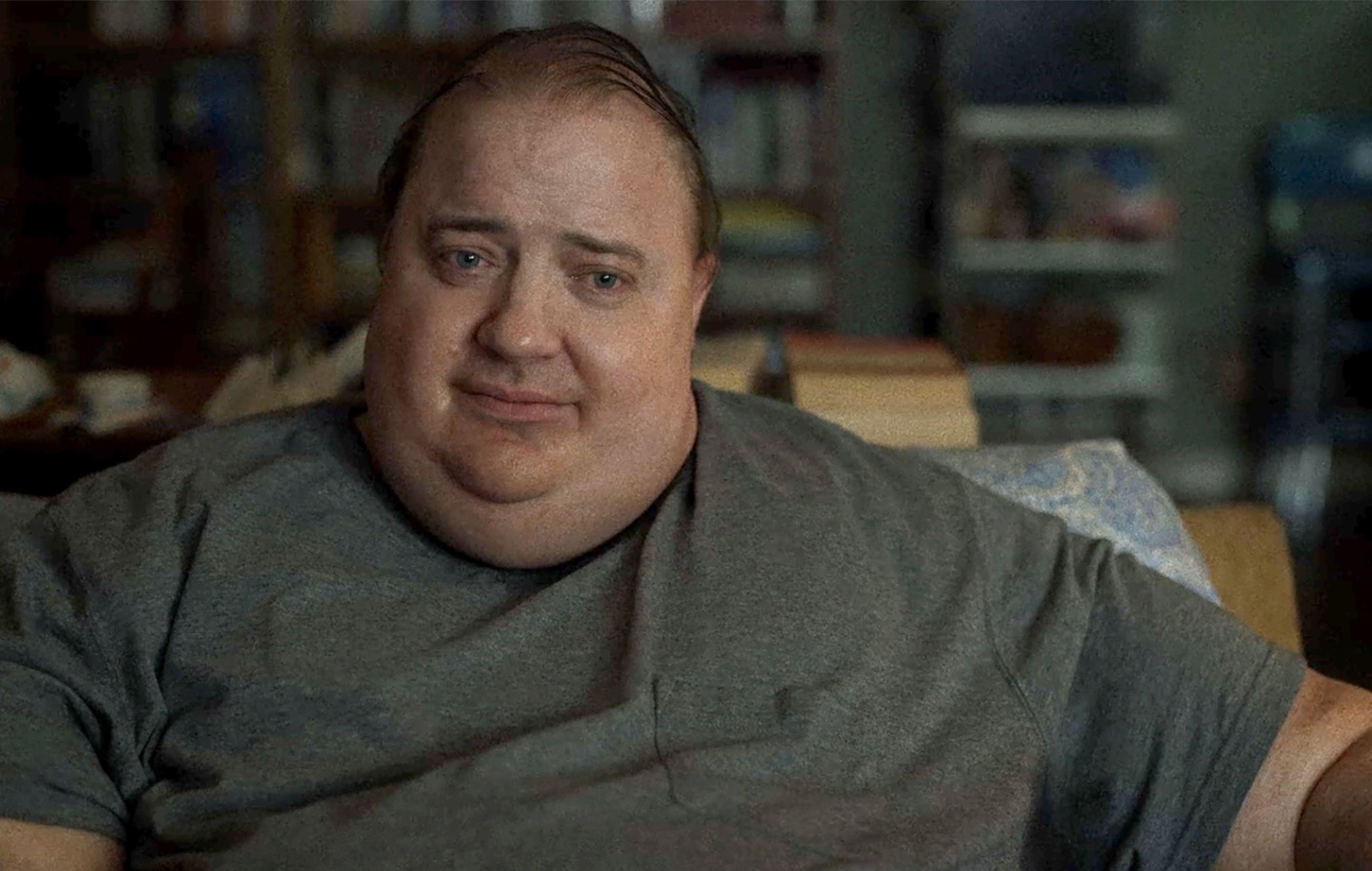
The Whale is the latest by Darren Aronofsky, his first film since mother! which proved divisive. Aronofsky is one of my favourite directors, his films are always ambitious, often exploring themes of religion and the extremity of humanity. The Whale is an adaptation of Samuel D. Hunter’s 2012 play and follows a morbidly obese English teacher, Charlie (Brendan Fraser). He has eaten himself to this state following the suicide of his partner. Charlie is on the brink of congestive heart failure and refuses to go to hospital. He is cared for by his friend, Liz (Hong Chau) and wants to restore his relationship with his prickly teenage daughter Ellie (Sadie Sink). 

The Whale is an emotionally powerful experience with a terrific performance from Brendan Fraser. Aronofsky beautifully explores the relationship between a father and his daughter and there are many touching moments focussing on Charlie’s outlook of life. I walked out of the film grateful and determined to further my relations with others and to always be positive. Yet, the film deftly conveys Charlie’s pain and hopelessness and it becomes inevitable early on that he is on a path of self-destruction. The way in which Aronofsky portrays binge-eating is particularly harrowing – like Requiem For A Dream will make you never want to touch drugs, The Whale is the equivalent for food. It wouldn’t be an Aronofsky film without the exploration of religion and the events on-screen are interwoven with religious parallels and texts, which lend a pathos to Charlie’s situation. 

However, The Whale isn’t Aronofsky’s best work. The film is limited by the fact it’s mostly set in one location and that gives the film a stagey quality. In some ways, the material almost seems as if it is beneath Aronofsky but he manages to really elevate what could have been a pedestrian adaptation. 

Fraser is terrific and fully deserving of the Awards attention. He deftly balances the positivity Charlie has to others, such as encouraging characters to fulfil their ambitions, and his dark, depressed and reclusive internal thoughts and outlook on his life. Charlie is an individual at the end of the line, unable to walk unaided and sweats just shifting his mass on the sofa. 

Hong Chau also puts in a barnstorming supporting performance as Liz, who has an honest and stern personality but equally struggles not to feed Charlie’s bad habits. Sadie Sink is suitably spiky as Charlie’s daughter and her performance is devastating the way in which she treats and speaks to her father. Ty Simpkins is also unrecognisable as a missionary and gives an earnest performance, an impressive transformation from some of his childhood roles such as Insidious, Iron Man 3 or Jurassic World.

Matthew Libatique’s cold and claustrophobic cinematography is excellent and he makes the most out of the single location. The film has a suitably frosty colour palette. The Whale represents the second time Aronofsky hasn’t enlisted Clint Mansell’s services for the score, which is instead provided by Rob Simonsen. Simonsen’s score is magnificent and particularly memorable, skilfully balancing happiness, melancholia and pain.   

Although The Whale overall can’t quite break free of its stage-like quality, it’s still an emotionally thrilling rollercoaster with an unforgettable performance from Brendan Fraser. Aronofsky’s fingerprints are all over the film and there’s plenty of meat on the bone to the story. I came out deeply moved and although it would be very easy to label the film as emotionally manipulative, I found The Whale to have a satisfying weight and outside of Fraser’s performance, it stands up on its own as an engaging piece of cinema. 

⭐⭐⭐⭐ (Excellent)

The Fabelmans (Review)

Uncategorized
⭐⭐⭐⭐ (Excellent)

Director: Steven Spielberg
Starring: Michelle Williams, Paul Dano, Seth Rogen, Gabriel LaBelle, Judd Hirsch
Certificate: 12A
Run Time: 151 mins

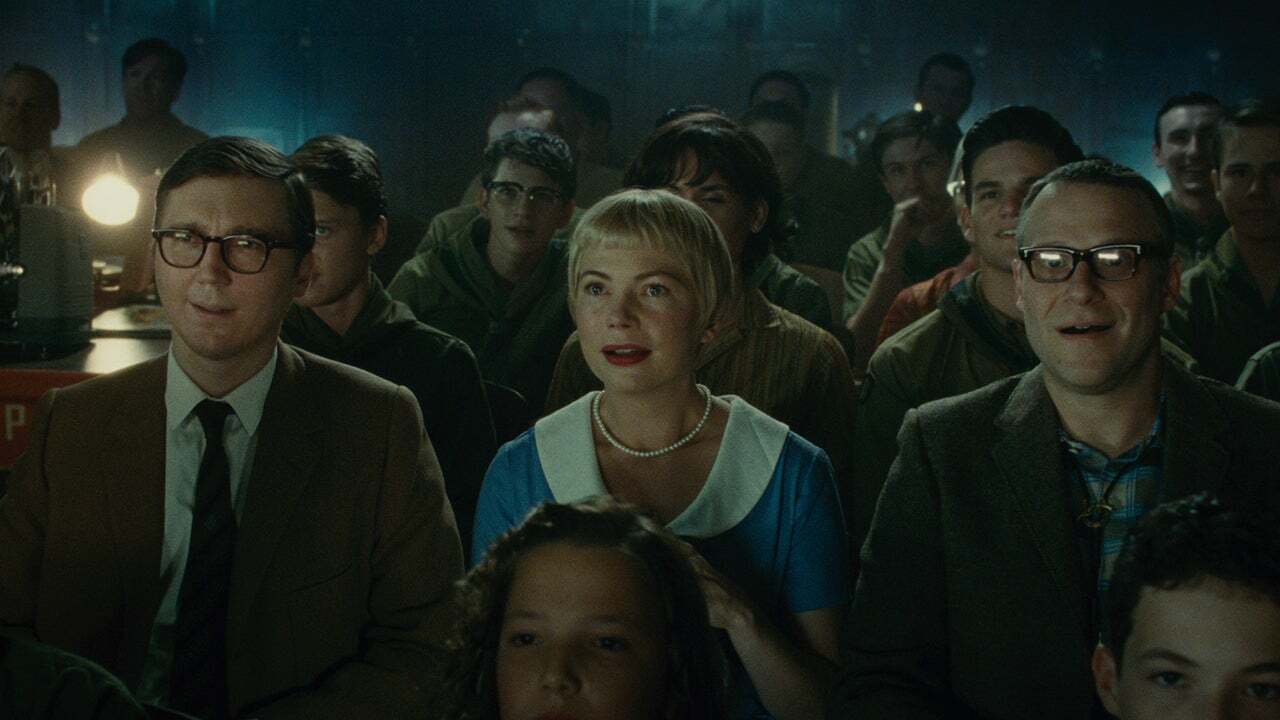
The Fabelmans is a coming-of-age drama directed and co-written by Steven Spielberg, representing a passion project for the revered filmmaker. The film is a semi-autobiographical tale loosely based on Spielberg’s adolescence and burgeoning career. Sammy Fabelman (Gabriel LaBelle and Mateo Zoryan Francis-DeFord in his younger years) is taken to see his first film at the cinema, which has a traumatic yet extraordinary effect on his childhood. Sammy, his mother Mitzi (Michelle Williams) and and three sisters regularly relocate around the United States due to his father, Burt’s (Paul Dano) work. As Sammy grows up, so does his talent and hunger for filmmaking, and not always to his benefit. 

The Fabelmans isn’t quite the masterpiece some have professed it to be but it’s certainly a profound and candid effort. If you’re a film fan, this semi-autobiographical tale will definitely resonate in places. Sammy’s love of the medium sometimes usurp his commitments to his family and relationships, and Spielberg deftly explores how filmmaking can consume an individual and how one needs to be reminded that your close ones are more important. It’s beautifully shot by Spielberg-regular Janusz Kaminski, although the film is a tad overlong. That said, it really nails its last half an hour or so.

Gabriel LaBelle’s is excellent as the older Sammy in what his highest profile role to date, following a small role in The Predator. Michelle Williams also makes quite the impression as Mitzi, who’s stuck between a rock and a hard place in her love life. Paul Dano is the standout, however, a scene late in the film where he calms Sammy after he experiences a panic attack is easily some of the best acting of the year.  

The Fabelmans is a tender reminiscence of Spielberg’s childhood and although it would benefit from tighter pacing, it’s a warm and personal experience with some excellent performances. 

⭐⭐⭐⭐ (Excellent)