Wallace and Gromit: Vengenace Most Fowl (Review)

Review

Rating: 4 out of 5.

Director: Nick Park & Merlin Crossingham
Starring: (voices of) Ben Whitehead, Peter Kay, Lauren Patel, Reece Shearsmith
Certificate: U
Run Time: 79 mins

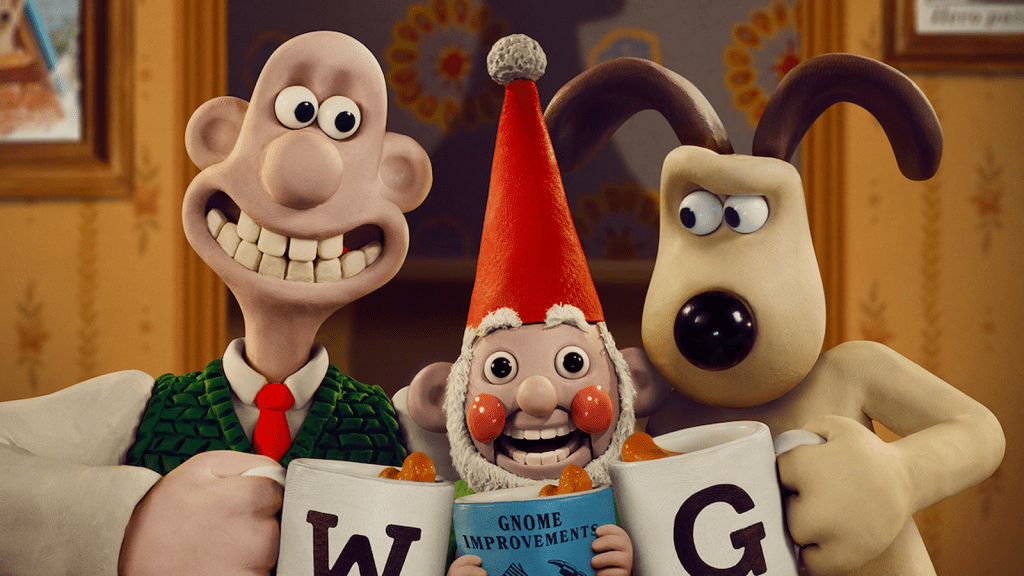
Wallace and Gromit: Vengeance Most Fowl is the new Aardman film featuring the good-natured cheese-loving inventor and his intelligent anthropomorphic beagle, in what’s been a lengthy wait. The last time we saw the lovable clay-based duo was in A Matter of Loaf and Death (2008) and this is the first feature-length film since The Curse of the Were-Rabbit (2005), which I consider to be a masterpiece. With Peter Sallis (the voice of Wallace) sadly passing away in 2017, he’s now been replaced by Ben Whitehead. This new film also sees the return of the villainous Feathers McGraw from The Wrong Trousers (1995), a scheming penguin who enacts his revenge on the duo by reprogramming Wallace’s new invention – Norbot, a robotic garden gnome – to an ‘evil’ setting. 

And it’s another triumph – Wallace and Gromit: Vengeance Most Fowl is an excellent sequel with plenty of laughs and a typically sharp and witty script. The rapport between Wallace and Gromit is as strong as ever and the film has a lot to say on the reliance of AI and automation, the resurgence of old technology and police incompetence. There’s some fabulous action sequences (especially a climactic boat chase) and the film’s typically brimming with small details to pick up on future rewatches. Feathers McGraw steals the show yet again with some delicious gags and Ben Whitehead fits in seamlessly as Wallace – you’d be hard-pressed to tell it’s not Peter Sallis. 

That said, after two viewings, I don’t think it’s quite as strong as The Curse of the Were-Rabbit. Vengeance Most Fowl is decidedly smaller-scale and there’s a surprising lack of cheese jokes (although the film makes up for it with plenty of other gags). This is yet another Wallace and Gromit adventure that’s impossible to resist and it does nothing to tarnish their revered reputation.

Carry-On (Review)

Review

Rating: 2 out of 5.

Director: Jaume Collet-Serra
Starring: Taron Egerton, Sofia Carson, Danielle Deadwyler, Theo Rossi, Logan Marshall-Green, Jason Bateman
Certificate: 15
Run Time: 119 mins

Carry-On is an action thriller directed by Jaume Collet-Serra, returning to the genre he’s most comfortable in. After directing a spate of Liam Neeson-fronted actioners on various modes of transport, Collet-Serra progressed to bigger budget fare and made Jungle Cruise and Black Adam. Set on Christmas Eve, Carry-On follows Ethan Kopek (Taron Egerton) who lives with his girlfriend Nora (Sofia Carson). They both work at Los Angeles International Airport, and Ethan feels pretty unfulfilled at his TSA job, after he failed to get into the police force after concealing his father’s criminal history. He manages to talk his supervisor into manning the baggage scanning machine. Well, he couldn’t have picked a more testing day to demonstrate his merits because he comes into contact with a group of terrorists who threaten him, as they try to get a bag filled with Novichok nerve agent through and onto a plane. 

Unfortunately, Carry-On is content to just go through the motions with its workmanlike direction and an ear-scraping script. It also requires one to seriously suspend disbelief with plot holes you could drive a truck through. The usually charismatic Egerton fails to make much of an impression and the rest of the cast also struggle to register. The biggest disappointment is undoubtedly Jason Bateman, who I had high expectations for, given he’s impressed in the past whenever he’s diverted from comedic fare with excellent performances in The Gift and Air. Unfortunately, his villain is overly talky and lacks nuance, resulting in a real lack of tension. 

The far-fetched action sequences are shot with an annoyingly glossy sheen, and Los Angeles airport is portrayed as being almost clinically clean. A thankless and implausible sub-plot featuring Danielle Deadwyler as a detective further presses on the brakes of this inert affair and Lorne Balfe’s score isn’t memorable in the slightest. 

Christmas Eve turmoil at an airport has been done to great success in the past, with films such as Die Hard 2. But Carry-On never manages to reach the heights of the films it’s inspired by and while it’s just about watchable if you suspend disbelief, that’s not good enough amongst the competition.  

Kraven The Hunter (Review)

Review

Rating: 2 out of 5.

Director: J. C. Chandor 
Starring: Aaron Taylor-Johnson, Ariana DeBose, Fred Hechinger, Alessandro Nivola, Christopher Abbott, Russell Crowe
Certificate: 15
Run Time: 127 mins

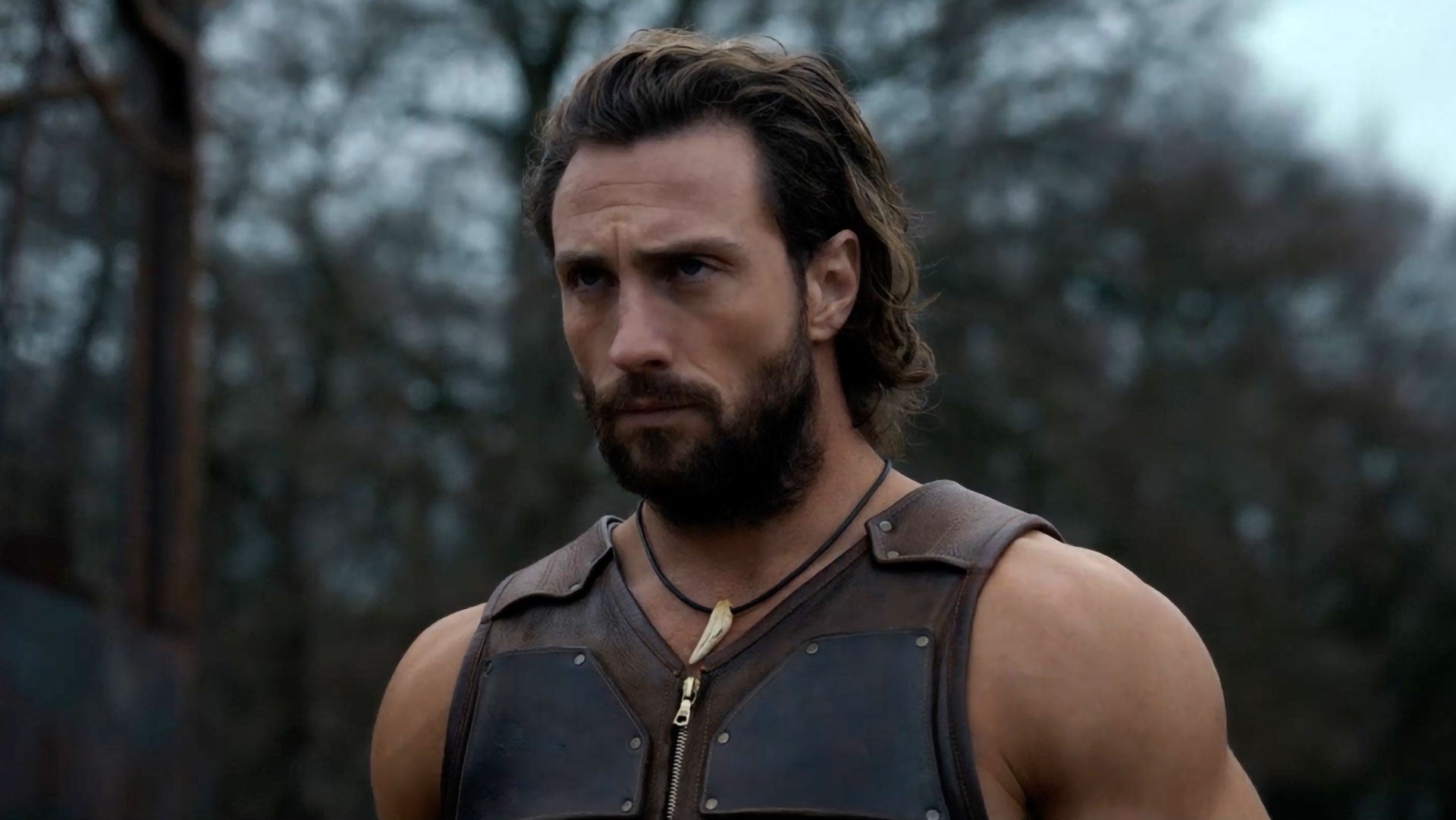
Kraven The Hunter is the latest in Sony’s Spider-Man Universe and the first live-action appearance of the supervillain. Unfortunately, none of the five previous instalments of Sony’s shared universe series have hit the mark so far – all three Venom films were awful, as was Morbius. And then, while Madame Web is undoubtedly the most enjoyable of the lot, it’s only because it’s so-bad-it’s-good.  Despite over two years of delays though, I’ve always held out hope for Kraven The Hunter. Why? Because it’s directed by J. C. Chandor, who is one of the most exciting original directors working today, responsible for Margin Call, All Is Lost and Triple Frontier, as well as A Most Violent Year, which I would consider one of my top five films of the 2010s. 

Of course, not all directors succeed when they transition to mainstream fare. On the one hand, Jordan Vogt-Roberts and Taika Waititi’s fingerprints are all over Kong: Skull Island and Thor: Ragnarok but there is precious little of James Mangold or Nia DaCosta in Indiana Jones and the Dial of Destiny and The Marvels, for example. 

Aaron Taylor-Johnson plays the titular villain, and the film opts for an origins story opening where we see how a young Sergei is mortally wounded protecting his younger brother, Dmitri, from a lion. Sergei is found by a girl named Calypso, who having been forewarned she would intervene in an accident, heals him with a serum that gives him animalistic attributes. When Sergei becomes an adult sixteen years later, he tracks down criminals and crosses them off his list. 

While there are some interesting ideas here and there and it’s probably the best film in Sony’s shared universe, Kraven The Hunter is an unfortunate disappointment that is clearly the product of major studio interference. While many superhero films have taken the origins story route, the meat and bones of Kraven the Hunter’s structure is good but it’s plagued by an utterly atrocious script – the trio of Richard Wenk, Art Marcum and Matt Holloway are to blame. The visual effects are also embarrassingly bad, with obvious CGI animals and backdrops, as well as awful ADR. You wouldn’t think this should be a problem when you have a $130 million budget. The film’s blandly shot by Ben Davis and Benjamin Wallfisch’s score doesn’t make much of an impression. 

The performances are a mixed bag. There’s typically two types of Aaron Taylor-Johnson performances. When he’s in the right role, such as Kick-Ass or Nocturnal Animals, he’s excellent. But he’s often miscast and when that happens in films such as Godzilla, Avengers: Age of Ultron and Tenet, he’s very wooden. This is the rare performance where he walks the middle line. He clearly puts his all into the character but is saddled by poor and cliched dialogue. Both A Most Violent Year veterans Alessandro Nivola and Christopher Abbott are clearly making an effort as the villains, The Rhino and The Foreigner. While I admired Nivola’s more realistic interpretation of the villain that’s a complete 180 from Paul Giamatti’s mechanised portrayal in The Amazing Spider-Man 2, the performance is once again a victim of the script and some dreadful visual effects. 

Members of the dreadful performances club include Oscar-winners Ariana DeBose and Russell Crowe. DeBose is completely miscast as Calypso and has no chemistry whatsoever with Taylor-Johnson and Crowe is laughably awful as Sergei’s drug-trafficking crime boss father, replete with an unconvincing Russian accent. Fred Hechinger, who can currently be seen in Gladiator II, comes away with his reputation unscathed as Sergei’s brother, Dmitri, who isn’t very well developed. 

On the plus side, I liked the standalone approach the film takes, refusing to tie itself into other Marvel or Sony properties, save for a brief mention on The Daily Bugle newspaper. I also admire that Chandor went for a 15 / R-rating, which is what the violent villain deserves. While there’s blood-spray and gore to the kills, unfortunately they’re repetitive and the violence is never lingered on – I wish the film leaned in harder on its rating. There’s also a couple of effective quieter moments of character building sprinkled in and I liked Chandor’s attempt to ground the film in realism. 

It’s a real shame that Kraven The Hunter isn’t the blood-drenched slamdunk it should have been. I genuinely don’t understand why Sony fail to trust their filmmakers and water down the final product. But it’s not as awful as other entries in this series (albeit the bar is set low) and not that it will happen because of the negative reception but I’m confident Chandor could have made an interesting sequel if he was free of the studio shackles. Unfortunately, Kraven The Hunter is a poor film with clear signs of studio interference that could have been so much more, and an unfortunate stain on Chandor’s until-now electric career. 

Conclave (Review)

Review

Rating: 3.5 out of 5.

Director: Edward Berger
Starring: Ralph Fiennes, Stanley Tucci, John Lithgow, Sergio Castellitto, Isabella Rossellini
Certificate: 12A
Run Time: 120 mins

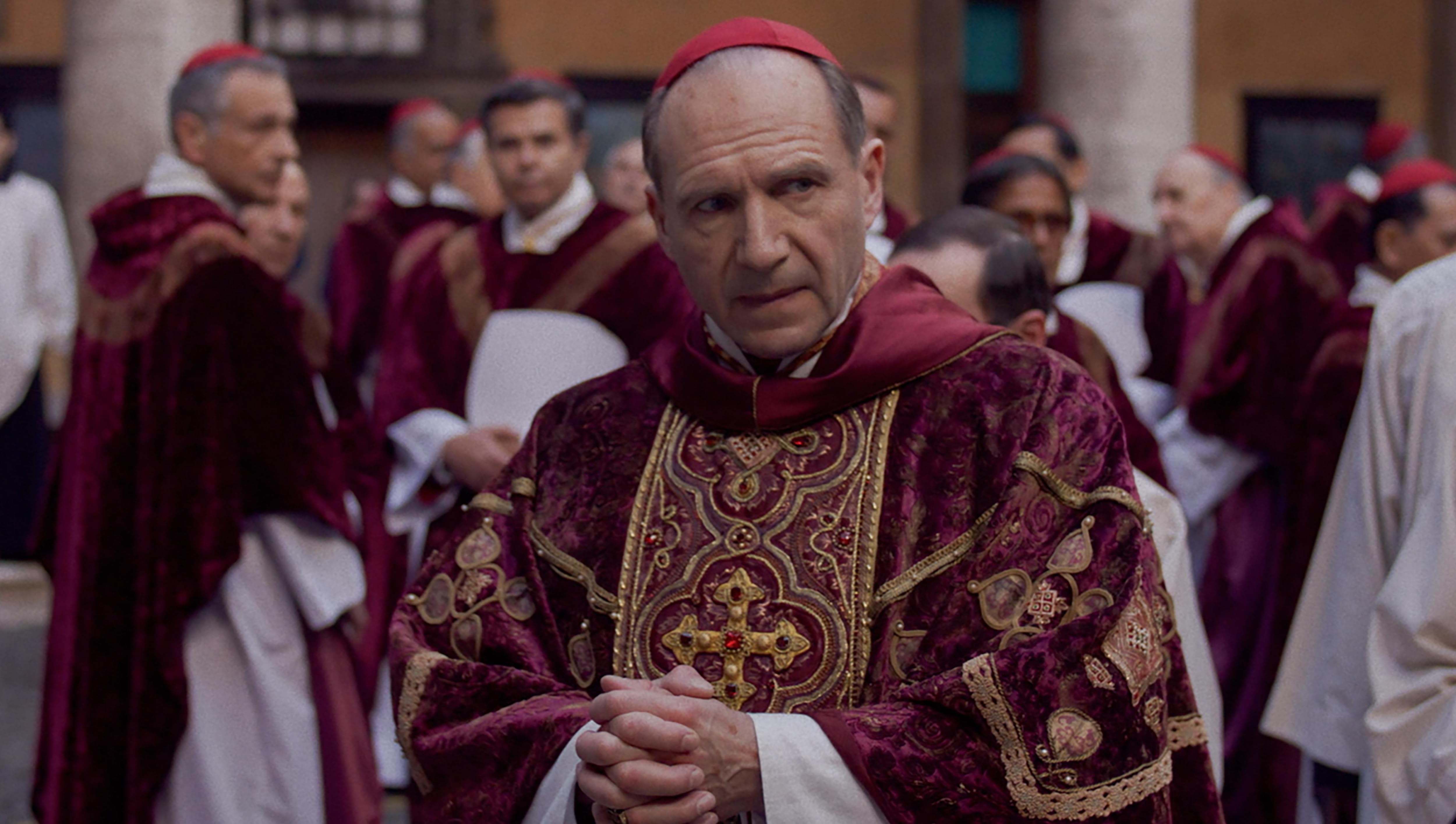
Conclave is a mystery thriller by Edward Berger, who directed All Quiet On The Western Front, which won four Oscars but I found it to be rather overrated. Based on a 2016 novel by Robert Harris, the film opens with the Pope dying of a heart attack and Cardinal Thomas Lawrence (Ralph Fiennes) is tasked with organising a papal conclave to elect a successor. However, Lawrence quickly finds himself investigating secrets and scandals about each of the candidates. They include Aldo Bellini (Stanley Tucci), an ambitious American liberal, Joseph Tremblay (John Lithgow), a Canadian moderate with a secret, Goffredo Tedesco (Sergio Castellitto), an Italian reactionary right-winger and Joseph Adeyemi (Lycian Msamati), a Nigerian candidate with homophobic views.

Not dissimilar from many popular recent elections, Conclave is about deciding who is the least worst option and that’s what makes it rather entertaining. You’ll need to suspend disbelief (especially with its many twists) but if you’re after an overripe thriller filled with catty remarks, this delivers. Ralph Fiennes is reliably excellent as the overseer, who is also standing in the election and throughout the film, you’re constantly working out whether he has secret ambitions and if he’s as impartial as he should be. Sergio Castellitto, who was fantastic as the villainous King Miraz in The Chronicles of Narnia: Prince Caspian, turns his performance up to eleven as Tedesco and Isabella Rossellini also stands out as the head caterer and housekeeper who doesn’t have time for aimless chitchat. 

The jittery score by Volker Bertelmann (Hauschka) is fantastic and he crafts many memorable themes that add to the urgency of the election. Stéphane Fontaine lusciously shoots the film too, with excellent use of light and shadow to underscore the theme of corruption. 

But as entertaining as Conclave is, I’m not sure it’s quite the awards material it looks like it may become. None of the performances are career-best work from anyone (as committed as they are) and it isn’t particularly profound. Treat Conclave as the rousing thriller it is where old men in mitres run around making snide remarks and backstab each other, but nothing more. 

Gladiator II (Review)

Review

Rating: 4 out of 5.

Director: Ridley Scott 
Starring: Paul Mescal, Pedro Pascal, Joseph Quinn, Fred Hechinger, Lior Raz, Derek Jacobi, Connie Nielsen, Denzel Washington 
Certificate: 15
Run Time: 148 mins

Gladiator II is the long-awaited sequel to the Best Picture winning 2000 original. Directed once again by Ridley Scott, this sequel picks up sixteen years after Marcus Aurelius’ (the late Richard Harris) death in the first film.  His grandson, Lucius (Paul Mescal) lives under the alias ‘Hanno’, with his wife Arishat (Yuval Gonen) in Numidia. Their peace is short-lived after the Romans invade, led by General Acacius (Pedro Pascal). Hanno swears revenge against Acacius, becoming a gladiator for Macrinus (Denzel Washington), a former slave who has his own sights on the throne. 

Ridley Scott’s hit-and-miss when it comes to historical epics. On the one hand, he’s made hits such as Gladiator and The Last Duel but on the other hand are the disasters that are Kingdom of Heaven, Robin Hood and Napoleon. While Gladiator was an entertaining film, I wouldn’t have called it Oscar material and there are many other Ridley Scott films I’d have preferred he received awards recognition for. This sequel’s gone through a lengthy production period, with musician Nick Cave initially writing a script that saw Russell Crowe’s Maximus battle the gods in purgatory that was rejected. The story that Scott’s ultimately settled on is far more conventional – was the 24 year wait worth it? 

Gladiator II is an excellent sequel and although it shares some similar story beats to the original, it shakes things up more than enough to avoid it being a simple rehash. At its height, it almost has a soap opera quality (much in the same vein as House of Gucci and Napoleon) but in a good way. There’s an immense pleasure in anticipating how the different characters are going to eventually clash with their various motivations, and David Scarpa’s script sets them up well. Some of the characters are gleefully horrible and the cast are more than game for it. Scott’s also concocted some thrilling (if wildly historically inaccurate set-pieces with sharks and killer monkeys) that lean into the gore – this is very much a film about revenge and retribution. It’s also vividly shot by returning cinematographer John Mathieson, who lends the film a rich colour palette. 

Paul Mescal makes for a brilliant lead, almost channeling Oliver Reed in his Shakespearean delivery. Although he’s not going to receive the same level of acclaim as Russell Crowe, I predict Mescal will be fondly remembered for this role as time passes. Denzel Washington’s brilliant as Macrinus and steals his scenes as the influential and complexly written slave trader. Pedro Pascal is another highlight, who’s also written in a multi-layered fashion, who we initially regard from a villainous perspective but are then later asked to view him in a different light. Joseph Quinn and Fred Hechinger are also excellent as the mentally unstable Emperors and they make for refreshingly different villains from Joaquin Phoenix’s Commodus in the original. And then when Matt Lucas turns up as a ceremonial host for the gladiatorial battles, you know this isn’t a film that’s taking itself very seriously. 

That Ridley Scott can still be directing a sword-and-sandals sequel like this with so much energy in his late eighties is nothing short of miraculous. Gladiator II is a film to watch on the biggest possible screen and it’s a compelling sequel that I think matches the original. There’s a real energy to it with a more complex set-up to it than the original and the thrill in watching how all the characters play each other result in a hugely enjoyable sequel. 

Anora (Review)

Review

Rating: 4 out of 5.

Director: Sean Baker
Starring: Mikey Madison, Mark Eydelshteyn, Yura Borisov, Karren Karagulian, Vache Tovmasyan, Aleksei Serebryakov, Darya Ekamasova
Certificate: 18
Run Time: 139 mins

Anora is the new film by Sean Baker and it won the Palme D’Or at this year’s Cannes Film Festival. Anora ‘Ani’ Mikheeva (Mikey Madison) works as a stripper in Brooklyn – so far, so Sean Baker. Since she has Russian heritage, her boss and introduces her to Ivan ‘Vanya’ Zakharov (Mark Eydelshteyn), the 21-year-old son of a Russian oligarch. Although Vanya is supposed to be in the US to study, he prefers to be unruly by playing videogames, getting drunk and high every second of the day in his family’s mansion. He quickly takes a shine to Anora, paying her $15,000 for her to stay with him for a week. Things begin to escalate. 

Other than Mikey Madison’s fantastic performance, I found the first 45 minutes of Anora really testing. I hated Vanya and his similarly childish friends who run around clubs, bars and hotels as if they own the place, wreaking destruction on their path. But when two men knock on Vanya’s mansion door one day, the narrative takes a different direction and the rest of the 139 minute film had me grinning with its breathless fireball energy and wit. In retrospect, the first 45 minutes are needed to get you to despise the characters for the rest of it to work, so stay with it if you’re feeling the same way. It’s a film where characters are consistently pulled from pillar to post but there’s also a stark tenderness to its humanity and Baker portrays a vivid contrast between the rich and poor. It’s beautifully shot by Drew Daniels, who lends the film its disorientingly frenetic edge. 

Mikey Madison, who was one of Charles Manson’s accomplices in Once Upon A Time In Hollywood, is fantastic as Anora and thoroughly deserving of awards attention. She has bundles of empathy and despite her demeaning work selling her body, she knows how to get what she wants. Yura Borisov is also brilliant as Igor, a Russian henchman with morals with a similarly modest financial background as Anora who makes such an impression despite not having many lines. Karen Karagulian is brilliant as Toros, an Armenian handler, who’s mania knows no bounds when his career is jeopardised. And although I hated the character, there’s no doubt Mark Eydelshteyn satisfies the brief as Vanya. 

Anora is ultimately an excellent film from Sean Baker and quite possibly his best work. It made for quite the memorable cinema experience, especially my frustrated reaction to its first act, only to u-turn once it takes a different direction. That’s what makes Anora quite the emotional rollercoaster and it’s undoubtedly a fearsomely original piece of work.  

Juror No. 2 (Review)

Review

Rating: 3.5 out of 5.

Director: Clint Eastwood
Starring: Nicholas Hoult, Toni Collette, J.K. Simmons, Chris Messina, Zoey Deutch, Kiefer Sutherland
Certificate: 12A
Run Time: 114 mins

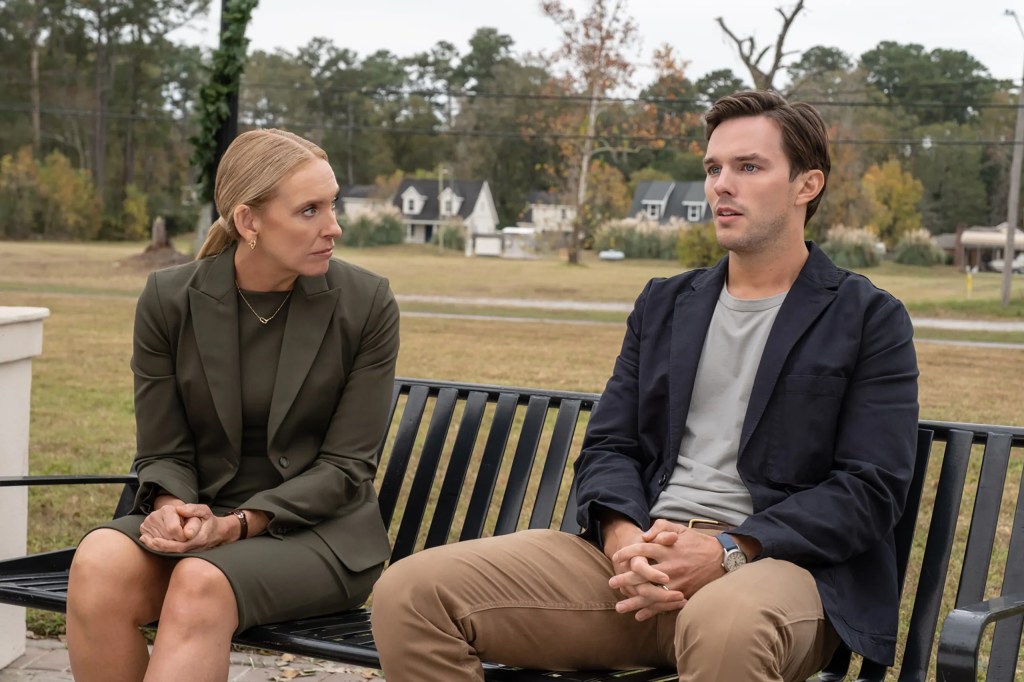
Juror No. 2 is the new Clint Eastwood film and possibly his last. A legal thriller, the film opens with Justin Kemp (Nicholas Hoult) being summoned for jury service, with his wife Ally (Zoey Deutch) due to give birth any day. A recovering alcoholic, Justin soon realises he may have been responsible for the death he’s a member of the jury for and his guilt-ridden conscious starts to affect his judgement. Eastwood’s as adept behind the camera as he is in front of it. Unfortunately, Cry Macho, his previous film bombed at the box office (despite being excellent) and Warner Bros initially envisioned this film as a direct-to-streaming release on Max. Sacrilege. The studio since decided to release the film in fewer than 50 cinemas in the US and not report on the box office results, a peculiar approach for such the prolific nonagenarian director.

Warner Bros may well come to regret this decision because Juror No. 2 is another excellent Eastwood effort and is akin to a lower-profile melding of 12 Angry Men and Anatomy of a Fall. What initially seems like a fairly routine, low-profile case gradually turns into a crime with plenty of holes. A morally ambiguous film that asks its audience what they would do in the main character’s situation, Jonathan Abrams’ script does a good job of messing with its audience’s minds in creating doubt of what’s being portrayed on-screen. The film also questions the imperfect nature of the justice system, even if it’s rather unsubtle. But Eastwood does a better job of analysing the biases that certain characters bring into the courtroom, from the lawyers defending and prosecuting the accused to the backstories of the jury members.

Nicholas Hoult makes for an excellent lead and we’re never sure whether we can fully side with him or not, despite making a compelling case for the decisions he makes. Zoey Deutch also makes an impact as his trusting wife and the disappointment she conveys when he takes a wrong decision. Toni Collette, in a rather strange reuniting with her About A Boy co-star, is reliably strong as the prosecuting Assistant District Attorney Faith Killebrew, who seems somewhat impenetrable in her opinion initially but then starts to show a different side. The script also does an excellent job in how the jury members’ backgrounds clash and we can empathise why they may feel a certain way.

While Juror No. 2 isn’t overlong, I think its message would be even more impactful if it were 15 minutes shorter. The film seems like it has multiple endings and a tighter run time would strengthen its messaging. As is typical for many of Eastwood’s films, its direction is rather workmanlike but the film works for its simplicity. It’s nowhere near one of Eastwood’s best but Juror No. 2 is a typically thoughtful piece from the multi-faceted director and if this is indeed his last film, it’s a good one to go out on.

Heretic (Review)

Review

Rating: 3.5 out of 5.

Director: Scott Beck & Bryan Woods
Starring: Hugh Grant, Sophie Thatcher, Chloe East
Certificate: 15
Run Time: 111 mins

Heretic is a high-concept horror written and directed by Scott Beck and Bryan Woods, best known for scripting A Quiet Place and directing the Adam Driver-starring sci-fi 65. A semi-satirical theological chiller, the film follows two Mormon missionaries who go to a house off the beaten track to convert a reclusive man, Mr Reed (Hugh Grant), as night and rain are starting to fall. Sister Barnes (Sophie Thatcher) appears confident, while Sister Paxton (Chloe East) is more timid. It’s a classic horror set-up – Mr Reed offers the women into his seemingly humble abode, assuring them his wife is preparing a blueberry pie in the kitchen when they ask if there is another woman present for their safety. However, it quickly becomes evident that this is not a safe environment. 

Heretic is a smart and thought-provoking psychological horror with a powerhouse Hugh Grant performance that loses some of its steam in the third act. The script is very wordy and dense, as Mr Reed quickly lets on that he knows a lot more about religion than the Sisters originally envisaged. Mr Reed is charming and likeable to get the girls through the door, but it’s clear he has a darker side. There’s a real thrill as the women start to realise they’re in trouble, but with the typical niceties of a guest who is too polite to leave. What follows is a tantalising rumination on religion and how it has the ability to trap people into a box, complete with gripping analogies. 

Hugh Grant’s played in a fair amount of dross over the years, but is now at the most interesting point of his career with against-type roles in films such as Paddington 2 and The Gentlemen. He’s completely magnetic as the cunning recluse, bringing his trademark charm and wit with a darker underbelly, the perfect ingredients of the best type of villain. The two missionaries don’t fare quite as well because neither are particularly well-developed but Chloe East gives the stronger performance of the duo with her meatier character. 

The film’s also beautifully lensed by Chung Chung-hoon, best known for his collaborations with South Korean auteur Park Chan-wook. His achievement is especially impressive, given the film is largely set in one (albeit expensive) location and it’s anchored by a dense script – two ingredients that, in the wrong hands, might not be particularly cinematic. 

It’s just a shame that the third act can’t quite live up to the first two. While still interesting, the film peaks early as we try and suss out Reed’s true intention. The direction it takes also isn’t as original as the film thinks it is, nor is it subtle. 

Otherwise, there’s a lot to like about Heretic and even if its reach exceeds its grasp. Hugh Grant’s performance is worth the price of admission alone and the film poses some ambitious questions on religion, asking us why we believe what we do and that every action has a consequence. 

Venom: The Last Dance (Review)

Review

Rating: 1.5 out of 5.

Director: Kelly Marcel
Starring: Tom Hardy, Chiwetel Ejiofor, Juno Temple, Rhys Ifans, Stephen Graham, Peggy Lu, Clark Backo, Alanna Ubach, Andy Serkis
Certificate: 15
Run Time: 109 mins

Venom: The Last Dance is the third instalment in the Venom series and the fifth in Sony’s ill-judged Spider-Man Universe. It would be fair to say that five films in, none of the Venom films, Morbius or Madame Web have hit the mark critically but because they turn a profit, they keep getting made. This third attempt picks up immediately after the events of Venom: Let There Be Carnage (a film that not even director Andy Serkis or renowned cinematographer Robert Richardson could salvage), with Tom Hardy’s Eddie Brock drunk in a bar in Mexico. Eddie’s on the run after being named the prime suspect for a murder but when a intergalactic creature starts tracking him with the Venom symbiote, he has two sets of authorities to evade. After writing both the previous films, Kelly Marcel makes her directorial debut.

And sadly, yet again, Venom: The Last Dance is an absolute car crash, feeling more like a collection of sketches than a coherent feature-length film. It all results in an aggressively odd experience bereft of laughs, thrills or any form of intelligence whatsoever. The plot, and I use the word ‘plot’ in the loosest sense possible, is non-existent and full of holes, a dancing sequence set to ABBA’s Dancing Queen laughable in how it’s meant to act as a set-piece to allow two characters to clash. The visual effects are rote, reminiscent of early 2000’s comic-book efforts, even if the film’s reasonably shot by Justice League’s Fabian Wagner.

The performances are terrible. Tom Hardy was never really able to crack the Venom shtick but at least he made an effort in the first two films – here, he just looks tired. The usually brilliant Chiwetel Ejiofor doesn’t register at all and Juno Temple is saddled with some dreadful dialogue. And then rounding off proceedings is Rhys Ifans, who you might expect to be secretly reprising his role as The Lizard from The Amazing Spider-Man and Spider-Man: No Way Home. But no, he’s wasting his time here as a washed-up hippie exploring Area 51 with his insufferable family.

It’s quite telling that after three films, Sony has proven unable to crack the formula with Venom. Although marginally better than the second, and possibly on a par with the first although the bar is incredibly low, Venom: The Last Dance is utter brainrot. Not even the star-studded cast can save this incoherent horror show. I also struggle to see who this is aimed at – on the one hand, there’s pepperings of puerile, juvenile humour aimed at children but then the film has a 15-rating for its violence and occasional strong language. Make it stop!

Smile 2 (Review)

Review

Rating: 3 out of 5.

Director: Parker Finn 
Starring: Naomi Scott, Rosemarie DeWitt, Lukas Gage, Miles Gutierrez-Riley, Peter Jacobson, Ray Nicholson, Dylan Gelugpa, Raul Castillo, Kyle Gallner
Certificate: 18
Run Time: 127 mins

Smile 2 is a horror sequel to the 2022 original, which itself was an expansion on a short film called Laura Hasn’t Slept. Although Smile had an abrasively aggressive marketing campaign, the film ended up being surprisingly excellent. This sequel is once again directed by Parker Finn, who made his debut with the original. Unlike many horror sequels that simply try and turn everything up to eleven and retread all the beats that made the original work, Finn is smart enough to not fall into this trap. Smile 2 follows troubled pop star Skye Riley (Naomi Scott) who’s about to head on tour after a public struggle with substance abuse and a car crash that killed her boyfriend a year earlier. It would be safe to say Riley isn’t in the best headspace and things get significantly uglier when the Smile Entity is passed onto her via her drug dealer. 

Until its final act, Smile 2 largely works and is refreshingly different from its predecessor. There’s a palpable sense of dread and Naomi Scott delivers a knockout performance as the doomed pop star. It’s unfashionable for horror performances to be recognised when it comes to Awards season, but she really carries the film with her convincing descent into madness. Finn deftly blends the rules associated with the demonic entity introduced in the original with a new setting and characters. Witnessing the mayhem unleashed in this operatic setting provides a real contrast to the smaller scale of the first film. The film’s also crisply lensed by returning cinematographer Charlie Sarroff with more than a fair share of Dutch angles.

This idea of upscaling the horror also has an effect on the running time, with Smile 2 running over the two hour mark. While in its first two acts, the longer running time works well to allow for a satisfying amount of character development and to build tension, the film’s final act falls short. It drags and the story starts to undermine its own logic to the point of becoming incoherent. The film’s ending is particularly unsatisfying and left a sour taste.

Smile 2 is ultimately a grander, more lavish sequel that has something to say on the modern celebrity and its toxic fandom. It’s not quite as strong as its predecessor, which I preferred with its simpler setup and more consistent narrative but this sequel still has an effectively nasty sting to its tail for horror fans. It’s a real shame the final act falls apart because until that point, Smile 2 is an effective horror sequel.