Salem’s Lot (Review)

Review

Rating: 3.5 out of 5.

Director: Gary Dauberman
Starring: Lewis Pullman, Mackenzie Leigh, Alfre Woodard, John Benjamin Hickey, Bill Camp, Jordan Preston Carter, Nicholas Crovetti, Spencer Treat Clark, William Sadler, Pilou Asbæk
Certificate: 15
Run Time: 113 mins

Salem’s Lot is a new adaptation of Stephen King’s 1975 novel, written and directed by Gary Dauberman. Dauberman’s no stranger to horror or King, having written co-written It before then having sole credit on It: Chapter Two. He also made his directorial debut with the solid Annabelle Comes Home. Although not the first adaptation, it’s the first time Salem’s Lot is committed to cinema. There were two previous television series in 1979 and 2004, with Tobe Hooper’s 1979 mini-series particularly influental.

Unfortunately, this adaptation’s faced an upward struggle – it was made in 2020 and has faced delay after delay ever since, including being cut down from an original three hour runtime. Although it’s receiving a theatrical release in the UK, it’s gone straight to Max in the US. 

The film is mostly faithful to King’s novel. Writer Ben Mears (Lewis Pullman) returns to his hometown of Jersualem’s Lot to pen a new book but when a speight of murders happen after the arrival of a strange European man Straker (Pilou Asbæk) and a coffin that’s shipped to his house which people are warned not to touch.

Although significantly condensed from King’s original, Salem’s Lot is a lot of fun, especially in its second half. While it’s not particularly scary, there’s some excellent setpieces with real tension. Like with It, Dauberman does an excellent job of establishing the town and creating a believable world. The film’s handsomely shot by Michael Burgess, too, with some interesting lighting choices and the use of smoke machines. Although there’s a lot of characters to introduce and a sub-two hour runtime, he also does as decent a job he can with developing the characters. 

Lewis Pullman’s a solid lead as the scarred writer. The highlight, though, is Bill Camp as schoolteacher Matthew Burke who’s empathetic but proactive. Pilou Asbæk’s clearly having fun as Straker, as is William Sadler who shows up as a policeman who warns Mears not to cause any trouble. 

As much fun as I had with the film, I’m certain the original three hour cut would have been better. That would have allowed more time for the horror to really unfold and further develop the characters. But considering the disrespect by the studio with its delayed release, Salem’s Lot is very entertaining and not the car crash many were fearing it might be. 


Terrifier 3 (Review)

Review

Rating: 3.5 out of 5.

Director: Damian Leone
Starring: David Howard Thornton, Lauren LaVera, Elliott Fullam, Samantha Scaffidi
Certificate: 18
Run Time: 125 mins

Terrifier 3 is the latest in the slasher series, with the sadistic and depraved killer clown Art the Clown continuing to wreak gory havoc. Series mastermind Damian Leone once again writes and directs, with the film picking up immediately after Terrifier 2 before jumping forward five years. After being introduced in the previous film, Sienna Shaw (Lauren LaVera) and her brother Jonathan (Elliott Fullam) struggle to adjust to day-to-day life after their gory exploits but plan to reunite at Christmas at Sienna’s Aunt’s house. I’ve enjoyed the series so far. Terrifier was grisly and stripped back but didn’t have much of a story. Leone smartly decided to go for broke in Terrifier 2, an epic sequel running in excess of two hours that introduced Sienna’s memorable protagonist and I particularly appreciated its fantastical elements. Not everyone was on board with the extended running time though and this sequel runs just over the two hour mark, showing a little more restraint.

Terrifier 3 is more of the same but that’s no bad thing. This is a slightly tamer sequel that doesn’t quite revel in its excess and I wish there was more left to interpretation story-wise. But there’s plenty to enjoy here and those wanting a gonzo gore-fest will be more than satisfied. There’s a particularly depraved opening scene, a memorably mean-spirited shopping mall attack and the last half an hour is gleefully intense. But I didn’t think there was anything as shocking to match that scene in Terrifier 2, or even the hacksaw bisection in the original. 

Still, David Howard Thornton is brilliant again as the killer clown who has a particularly grisly interpretation of Christmas, contrasted by Lauren LaVera’s grounded performance as the battle-scarred protagonist. The practical and sound effects for the kills are once again visceral, and it’s a good-looking film visually. 

Terrifier 3 won’t attract new series converts but if you’re after inventive kills with a high production value, Leone’ third effort is a very fun watch – just don’t expect quite as much depth as its superior predecessor. 

The Outrun (Review)

Review

Rating: 3 out of 5.

Director: Nora Fingscheidt
Starring: Saoirse Ronan, Paapa Essiedu, Nabil Elouahabi, Izuka Hoyle, Saskia Reeves, Stephen Dillane
Certificate: 15
Run Time: 118 mins

The Outrun is a drama directed by Nora Fingscheidt, an adaptation of a 2016 memoir by Amy Liptrot who co-writes the screenplay with Fingscheidt. Fingscheidt previously made Systemcrasher and most recently The Unforgivable, which I admired for its harsh setting but it had some tonal issues. 

 Saoirse Ronan stars as Rona, a young woman at the tail-end of her twenties who moves back to her childhood home in the Orkney Islands. She previously lived in London, where she earned a biology degree and had a serious boyfriend. Unfortunately, her life spiralled out of control when she succumbed to alcoholism. Her parents are separated, her religious mother living in the family home and her bipolar father (Stephen Dillane) living nearby in a static caravan. As such, Rona splits her time between them as she continues her rehabiliation. 

Although conventional in its structure, The Outrun is a solid depiction of addiction. The film mainly works because of a superb performance by Saoirse Ronan. It’s impressively lacking in melodrama, with Finscheidt doing well to focus on the grim realities of alcohol abuse, as well as a stirring depiction of loneliness. Fingscheidt also deftly captures the wind and isolation of Scotland, and the contrast and physical displacement the Orkney’s have in relation to London.  

The decision for the film to be told in a non-linear fashion doesn’t really achieve much though – it’s often obvious why Rona might feeling a certain way. It’s also rather conventional in places and I have to admit I felt the film’s two hour length. 

Still, a fundamental part of the film’s overall success is Ronan’s performance. Ronan is utterly convincing as the young lady who knows she’s made some wrong decisions and is at peace with the consequences while trying to move on. It’s her best performance since Lady Bird and she deserves awards recognition. 

Ultimately, although The Outrun succumbs to convention in its structure, there’s enough to make it worthwhile with an excellent Saoirse Ronan performance and a mostly delicate way of approaching its heavy themes. 

The Substance (Review)

Review

Rating: 2 out of 5.

Director: Coralie Fargeat
Starring: Demi Moore, Margaret Qualley, Dennis Quaid
Certificate: 18
Run Time: 141 mins

The Substance is a satirical body horror, directed by Coralie Fargeat in her English language debut and it’s received quite the acclaim. The film follows fading Hollywood star Elisabeth Sparkle (Demi Moore) and we see her dismissed from her long-running television show due to her age. She’s intrigued by a black market serum, conveniently called ’The Substance’, which promises a “younger, more beautiful, more perfect” version of onself. But of course, any deal like this has its consequences which Sparkle comes to find. 

While The Substance is certainly original in its execution, I found it quite disappointing. For a film that runs in excess of 140 minutes, it doesn’t have a great deal to say and is very on-the-nose. The direction is extremely aggressive and in-your-face, which is clearly intentional but it just got on my nerves. The second half is particularly hard work, especially its go-for-broke ending which it doesn’t earn. The body horror did nothing for me and I don’t understand the comparisons many have made to David Cronenberg.  

There are certainly some positives though – it’s well shot by Benjamin Kracun and the film will definitely be remembered for its clinical yet leering camerawork. The performances are also memorable, with quite possibly a career-best performance from Demi Moore. She brilliantly conveys the depression about the inevitably of getting old and she’ll do anything to get back into the limelight. Margaret Qualley’s also very strong as Sue, Elisabeth’s double once she takes the serum but the character annoyingly gets no real meaningful development. Finally, Dennis Quaid is clearly having fun as the unsubtly named Harvey, the grotesque show producer and in one particularly memorable scene chows down on some prawns with the manners of a child, the sound cranked up to the max. 

 I wish I liked The Substance more than I did. There have been many films that have explored the unattainable level of fandom and how women have to navigate a world of unrealistic standards. Fargeat thinks she has a lot to say, but the film’s message is ultimately very simple. Although some will lap up her original direction, it aggressively didn’t work for me and I found the film quite exhausting. 

Beetlejuice Beetlejuice (Review)

Review

Rating: 3.5 out of 5.

Director: Tim Burton 
Starring: Michael Keaton, Winona Ryder, Catherine O’Hara, Justin Theroux, Monica Bellucci, Jenna Ortega, Willem Dafoe, Burn Gorman
Certificate: 12A
Run Time: 104 mins

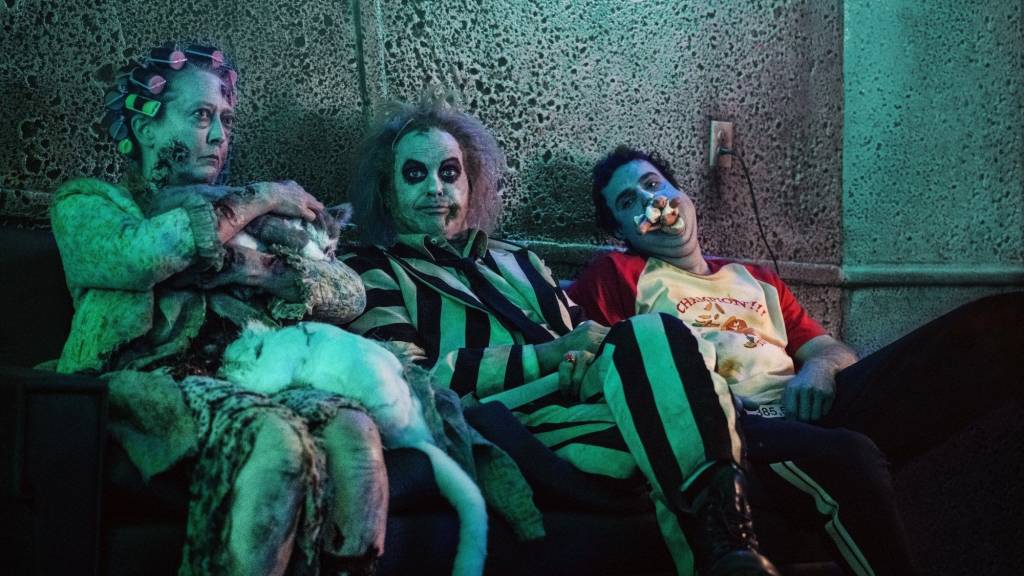
Beetlejuice Beetlejuice is the long-awaited sequel to Tim Burton’s original, arguably the height of his career. Although I found a lot to like in Big Eyes and Dumbo, it would be fair to acknowledge none of Burton’s films over the last decade have particularly resonated with audiences. A legacy sequel set more than three decades from the original, many of the original cast return. Legacy sequels are always risky business and while there’ve been some successes such as Halloween (2018) and Top Gun: Maverick, we’ve also born witness to disasters such as The Exorcist: Believer and Alien: Romulus

Original goth girl Lydia Deetz (Winona Ryder) is now a mother and the host of a supernatural television show. She’s estranged from her daughter, Astrid (Jenna Ortega) since the death of her husband on a family trip to the Amazon. She’s also still haunted by the spectre of Betelgeuse (Michael Keaton), the charismatic, grotesque ghost who tried to marry her in the original.  When Lydia’s stepfather Charles (an off-screen Jeffrey Jones) meets an untimely end, she travels back to her childhood home of horrors in Winter River, Connecticut with Astrid and stepmother Delia (Catherine O’Hara) for the funeral. As one can imagine, all hell breaks loose. 

Beetlejuice Beetlejuice is a very pleasant surprise – an excellent legacy sequel that’s not far off the quality of the original, showcasing Burton at his best. The script by Alfred Gough and Mark Millar is razor-sharp and full of charm, with lots of laughs to be had. The only element that didn’t work for me was an explanation as to why Geena David and Alec Baldwin’s deceased couple in the original film didn’t feature. 

Although some have criticised this sequel for being overstuffed, I thought the various elements really worked and there’s excitement in knowing that all of the different storylines are inevitably going to collide. The film’s visually arresting too, with lots of physical effects and I particularly admired an early body horror sequence where a character staples body parts together. Danny Elfman turns in a typically romping and swooning score that keeps the film fast-paced. 

Michael Keaton’s reliably excellent as the grotesque bio-exorcist, in the role that arguably launched his career and he gets plenty of smart quips. It’s also refreshing to see Winona Ryder, who hasn’t taken a leading role in a mainstream film in quite a while. Catherine O’Hara brings an energetic wit that permeated her early roles and the newcomers are excellent too. Jenna Ortega is a defiant, quieter version of her mother and Justin Theroux has fun as a Lydia’s slimy boyfriend. There’s also a deliciously fun cameo from Danny DeVito early into the film that’s very memorable. 

I was quite surprised by how entertaining Beetlejuice Beetlejuice is, especially considering my tempered expectations. Burton proves he’s still flowing with the creative juices that left such an impression on his early work and I hope the strong reception to this film inspires him to continue developing wholly original pieces. 

Rebel Ridge (Review)

Review

Rating: 4 out of 5.

Director: Jeremy Saulnier
Starring: Aaron Pierre, Don Johnson, AnnaSophia Robb, David Denman, Emory Cohen, Steve Missis, James Cromwell
Certificate: 15
Run Time: 131 mins

Rebel Ridge is a crime thriller by Jeremy Saulnier, his first film in six years after Hold The Dark. Saulnier has proved quite the accomplished director, with Blue Ruin, Green Room and Hold The Dark all suitably atmospheric and gritty. Of his four films to date, Green Room is undoubtedly the one that’s attracted the most acclaim, a visceral and raw thriller about a punk band who get themselves tangled with a bunch of neo-Nazi skinheads. Although critics liked Hold The Dark, audiences seemed to find it more challenging but I thought it was brimming in atmosphere and it has a particularly sensational midway shootout sequence. 

Another revenge thriller, Rebel Ridge opens with Marine veteran Terry Richmond (Aaron Pierre) cycling into the town of Shelby Springs to post bail for his jailed cousin. He’s intentionally rammed by two police officers, who seize his $36,000 in cash via civil forfeiture. But the corrupt police force, led by the charismatic Chief Sandy Burnne (Don Johnson) don’t know who they’re messing with when Terry turns up at the police station to report the cash as stolen. 

Rebel Ridge is a gripping thriller with a deliciously mean streak about it, even if it’s slightly overlong and peaks in its first act. Despite its early peak, I still had a grin on my face throughout though. Straight from the off, the film grips with the casual horror of how the police lay the law down and how we can relate to Terry, who was simply minding his own businesses before the police officers pick on him. Saulnier has plenty to say on police corruption and there’s some terrific chase sequences, with crunchy violence, echoing late ’80s action films and the classic Westerns before them.

Aaron Pierre is brilliant as the calm but righteous Terry, a role that was originally destined for John Boyega. He’s also going to be starring in the upcoming Mufasa: The Lion King, so I suspect he has a strong career incoming. As you’d expect, Don Johnson is great as the deliciously crooked police chief – he could play this role in his sleep, and AnnaSophia Robb also impresses in what’s arguably her highest-profile role outside of her childhood career.

Elsewhere, there’s a pulse-raising score from Brooke and Will Blair and the film’s slickly shot by David Gallego, who does a particularly excellent job at establishing the town’s geography. It’s just a shame that such a tightly crafted action thriller has been consigned to Netflix – Rebel Ridge is a lot better than many action thrillers that get theatrical releases and this one deserves to do well.

Alien: Romulus (Review)

Review

Rating: 1 out of 5.

Director: Fede Álvarez 
Starring: Cailee Spaeny, David Jonsson, Archie Renaux, Isabela Merced, Spike Fearn, Aileen Wu
Certificate: 15
Run Time: 119 mins

Alien: Romulus is the latest in the franchise and represents a change of course after Ridley Scott’s Prometheus and Alien: Covenant prequels. Directed by Fede Álvarez, Alien: Romulus is an interquel, set between the events of Alien and Aliens. It follows an entirely new cast, with a group of young space colonists in pursuit of better life conditions after being treated poorly by the Weyland-Utani corporation. 

Legacy sequels seem to be in-fashion at the moment, with films such as Halloween (2018), Terminator: Dark Fate and The Exorcist: Believer ignoring previous, lesser-regarded films in their respective series. While the approach to break free of poor sequels is an admirable one, not all legacy sequels have been positively received, with some creating even more irreversible damage. Álvarez is most notable for his horror work and made a name for himself with the Evil Dead (2013) remake and Don’t Breathe. While these films are fine, Álvarez has always been a more visual director than one with thematic depth which doesn’t make him a natural fit for Alien

Unfortunately, Alien: Romulus is an outright disaster. The characters are unlikeable and paper-thin, there’s no thematic depth, the script is ear-scraping and there’s a complete lack of tension. Furthermore, Álvarez makes the grave mistake of including tedious moments of fan service, but they certainly didn’t service this fan. Most embarassingly, Alien: Romulus makes Alien: Resurrection seem a competent film. 

The problem is Álvarez and fellow screewnriter Rodo Sayagues’ script, which is just woeful. The characters speak unnaturally (Spike Fearn’s Cockney geezer Bjorn is particularly grating) and there’s no development. The first 45 minutes of the film are thunderously boring as we are introduced to the characters. Whatever your opinion of Alien: Covenant, Ridley Scott economically introduces the colony ship crew and we know who’s who very quickly. Other than a couple of snippets of Rain’s (Cailee Spaeny) upbringing and how her reprogrammed android surrogate brother, Andy (David Jonsson) has come to be the way he is, Alvarez gives us nothing. 

Because Álvarez either knows he’s not adding anything new to the party or is lacking confidence that his idea can carry a film, he litters the film with ‘fan service’. There are numerous callbacks to previous films which drag the film down, especially the reprise of one of Sigourney Weaver’s iconic lines. But the worst crime Álvarez commits is by including a character (or more specifically, a related character) who featured in a previous entry and it’s shoddily recreated using CGI and AI technology because the actor is no longer alive. Ethical concerns aside, it adds nothing to the film and the visual effects are embarassing. 

Aside from the shoddy visual effects, the film’s murkily shot by Galo Olivares. The film lacks any of the technical wonder of Ridley Scott’s prequels. It’s quite interesting how those films too, also have large sections set in dark environments but Dariusz Wolski is a far more accomplished cinematographer than Olivares in that he is able to bring out the wonder in them. Even Benjamin Wallfisch’s score fails to make an impression, who chooses to ape Jerry Goldsmith’s original Alien riff rather than forge any creative path of his own. 

Both Álvarez and Sayagues also fail to understand the lore of the series. The Xenomorphs (and various other creature) don’t follow franchise logic and because characters are able to get away with seemingly impossible tasks as a result, it results in a complete lack of tension or investment. 

It’s quite staggering how poor Alien: Romulus is. To think we got this rather than a sequel to the flawed but fascinating Alien: Covenant is an insult. Not only is this this comfortably the worst film in the franchise, it’s also Álvarez’s worst effort out of his own filmography. The initial concept should have been buried well before the film was greenlit. Sadly, the reception to Alien: Romulus has been bafflingly positive – I just hope Álvarez goes and does something else rather than further tarnish the series. In my opinon, this is comfortably the worst film of 2024 so far. 

Deadpool and Wolverine (Review)

Review

Rating: 2.5 out of 5.

Director: Shawn Levy  
Starring: Ryan Reynolds, Hugh Jackman, Emma Corrin, Morena Baccarin, Rob Delaney, Leslie Uggams, Aaron Stanford, Matthew Macfadyen 
Certificate: 15
Run Time: 128 mins

Deadpool and Wolverine is the long-awaited sequel to Deadpool 2 and in this installment, The Merc with a Mouth teams up with Wolverine. With 20th Century Fox now absorbed into Disney, the film now exists within the Marvel Cinematic Universe. Six years after the events of Deadpool 2, Wade Wilson (Ryan Reynolds) is now at rock-bottom, having broken up with Vanessa (Morena Baccarin). He’s soon captured by the Time Variance Authority, where an agent called Mr Paradox (Matthew Macfadyen) explains that because Wolverine (Hugh Jackman) died in Logan, its universe has lost its anchor-being. Mr Paradox wants to use a ‘Time Ripper’ device to accelerate the process of Wade’s timeline being wiped but Wade refuses to accept his fate and travels across universes to find a suitable Logan replacement. Shawn Levy’s in the director’s chair, who has experience with both Reynolds and Jackman and fortunately, the film is still 15 / R-rated rather than being diluted for Disney. But Jackman was adamant when Logan released that that would be his swansong, and it proved a suitably fitting and moving conclusion to the revered character. It’s safe to say, many were trepidations when Jackman agreed to return for this sequel. 

While there’s the occasional laugh here and there, Deadpool and Wolverine is a disappointing sequel. There are simply no stakes with the overused multiverse construct and the film has next-to-no plot. The film simply felt like a series of smug in-jokes, akin to Marvel patting itself on its back. There are so many cameos and while some are great, it all feels meaningless in this overly corporate-feeling film. Deadpool and Wolverine is also let down by a poor villain with no personality or character development and typical end-of-the-world antics. You’d think this would be old hat for comic-book films now. I felt quickly worn out and the film more than overstays its welcome at 128 minutes. There’s no denying the script is sharp, even if the tone is far from personal but there are a lot of hands in the pie here – there’s five credited writers. Carrying on the confusion is Rob Simonsen’s score, which is just all over the place – he typically turns in thoughtful work. 

To give the film its due, both Reynolds and Jackman give committed performances. Deadpool is old-hat for Reynolds now but he’s fine and does his shtick. And while Jackman doesn’t ruin his Logan legacy by returning, I’d have preferred it if he hadn’t returned because his character isn’t given the time to shine here. 

Deadpool and Wolverine is easily the worst of the trilogy and feels like a cynical love letter to Fox. I really hope this smug cynicism isn’t a tone that will be replicated in future comic-book films but I suspect the rapturous audience reception and strong box office means studios will double-down on this approach. This is a creatively bankrupt, plotless and tiresome film. Shawn Levy is a fine director and some of his films have a real sense of fun but Deadpool and Wolverine feels like a product constructed by a corporate committee. 

Sleep (Review)

Review

Rating: 1.5 out of 5.

Director: Jason Yu 
Starring: Jung Yu-mi, Lee Sun-kyun
Certificate: 15
Run Time: 95 mins

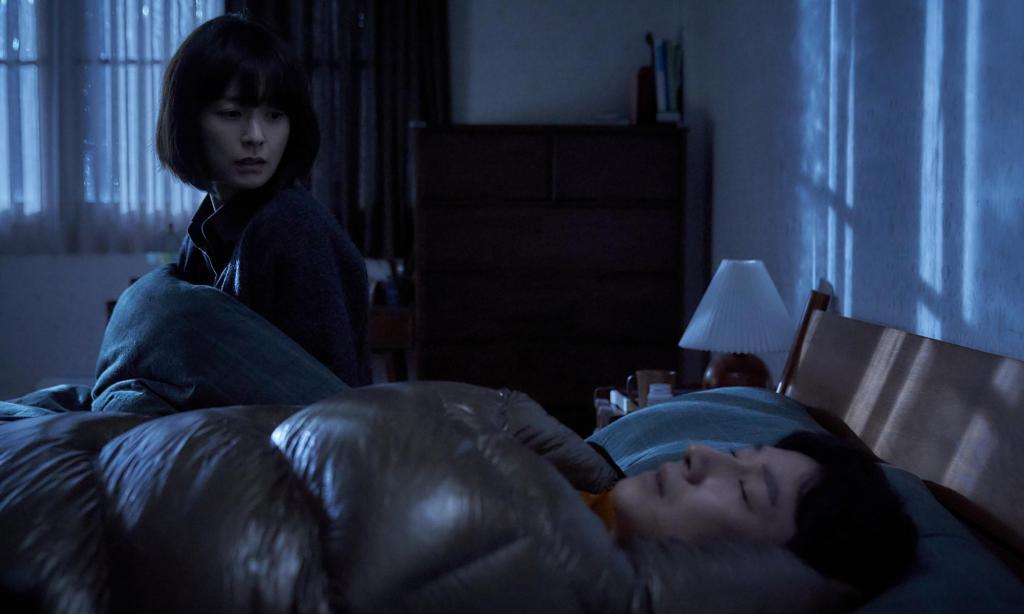
Sleep is the directorial debut of Jason Yu, a South Korean black comedy horror mystery thriller. Hyeon-soo (Lee Sun-kyun) and Soo-jin (Jung Yu-mi) are newlyweds and one night, Soo-jin discovers her husband sleepwalking. His nighttime antics get increasingly severe and with Soo-jin heavily pregnant, she’s worried harm could come to her newborn. The film received acclaim where it played in the Critics’ Week at the 2023 Cannes Film Festival, an initiative aimed at discovering and supporting new talents. 

Much to my disappointment, I lost patience with Sleep pretty early in and found the 95 minutes to really drag. My main problem with it is its complete lack of logic – it’s absolutely riddled with plot holes. The film struggles to satisfy its genre intentions – it’s not scary whatsoever and lacks tension on the horror front. From a black comedy perspective, I didn’t find its humour funny at all but perhaps some of its intended humour is lost in translation. The plot is generally all over the place and the direction the narrative ultimately heads in is very unsatisfying. 

There’s no character development of the two newlyweds – all we really know about Hyeon-soo is that he’s an actor and we learn nothing about Soo-jin. You don’t need a fully fleshed out character every time for a film to work but I struggled to empathise with them. What’s more, a character’s mental shift feels sudden and completely unearned. 

The score by Hyuk-jin Chang and Yong-jin Chang aggressively doesn’t fit the film and veers between different genres. Cinematographer Tae-soo Kim fails to make the most of what is mainly one location (a block of flats and an apartment, although there are some scenes set in different places). It never settles on a visual style and the film looks drab. 

It’s a real shame because the idea of someone sleepwalking to dangerous effect is horrific. With the right hands and a more intimate, atmospheric approach, there’s a lot of potential here. But Sleep is an utter logic-defying car crash and I’m genuinely surprised at the very positive critical reception. 

In A Violent Nature (Review)

Review

Rating: 2.5 out of 5.

Director: Chris Nash 
Starring: Ry Barrett, Andrea Pavlovic, Cameron Love, Reece Presley, Liam Leone, Charlotte Creaghan, Lea Rose Sebastianis, Sam Roulston, Alexander Oliver, Lauren Taylor
Certificate: 18
Run Time: 94 mins

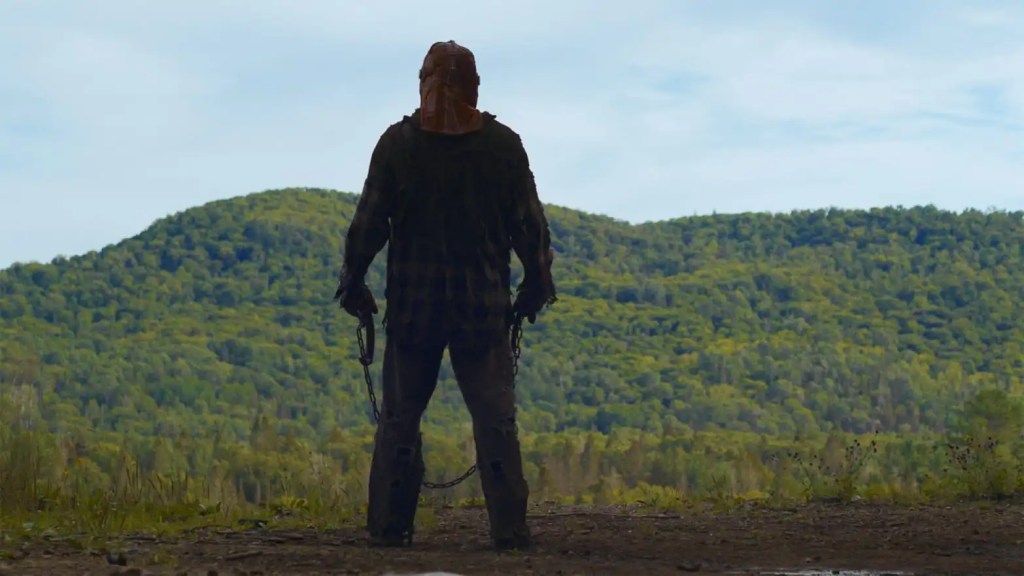
In A Violent Nature is a high-concept slasher, which flips the genre on its head by depicting the events largely from the killer’s perspective. The film opens with a group of friends discovering a locket hanging on the remains of a fire tower. When one of them pockets it, the corpse of Johnny (Ry Barrett) swiftly arises and stalks the group and anyone in his way for the locket. 

While In A Violent Nature has an interesting concept, unfortunately the film fails to make the most of it. Comparisons have been drawn with slow cinema, which are certainly apt given nothing happens other than Johnny gruesomely murdering the group between large, prolonged stretches of walking through the Ontario wilderness setting. A last minute shift to another character also feels completely out of place. 

Being free of a narrative isn’t necessarily a problem in my view but director Chris Nash doesn’t do anything with the concept to maintain interest. The writing is particularly poor and the group of characters seem to simply box-tick trendy current personality types – I didn’t care for any of them at all. Nash also fails to maintain tension or a sense of dread in between kills, forgetting tension for monotony. 

At least In A Violent Nature is memorable for its brutal slayings. Two of them are particularly grisly and prolonged and will be what the film is remembered for. To a degree, most of the kills are more elaborate than the last but the two in question (one involving a character practicing cliffside yoga and the other a log splitter) don’t come at the film’s climax. 

Nash also succeeds in not revealing Johnny’s face until quite far into the film (Longlegs also succeeds in this department). Instead, DP Pierce Derks uses the dark and shadows or simply follows Johnny from behind and this is deeply effective. 

While there are two slayings that will be forever etched in my brain, it’s a shame In A Violent Nature cannot quite make the most of its innovative concept. The slow cinema approach is also novel but what undoes the film for me is the ear-scraping script, its lack of tension or dread and the last minute perplexing bait-and-switch to another character’s perspective. In a Violent Nature is certainly a better film to discuss than to experience.