


Director: Paul Greengrass
Starring: Andrew Garfield, Jamie Bell, Stephen Dillane, Tom Hollander, Cosmo Jarvis, Thomasin McKenzie, Jonny Lee Miller, Woody Norman, Katherine Waterston
Certificate: 15
Run Time: 128 mins
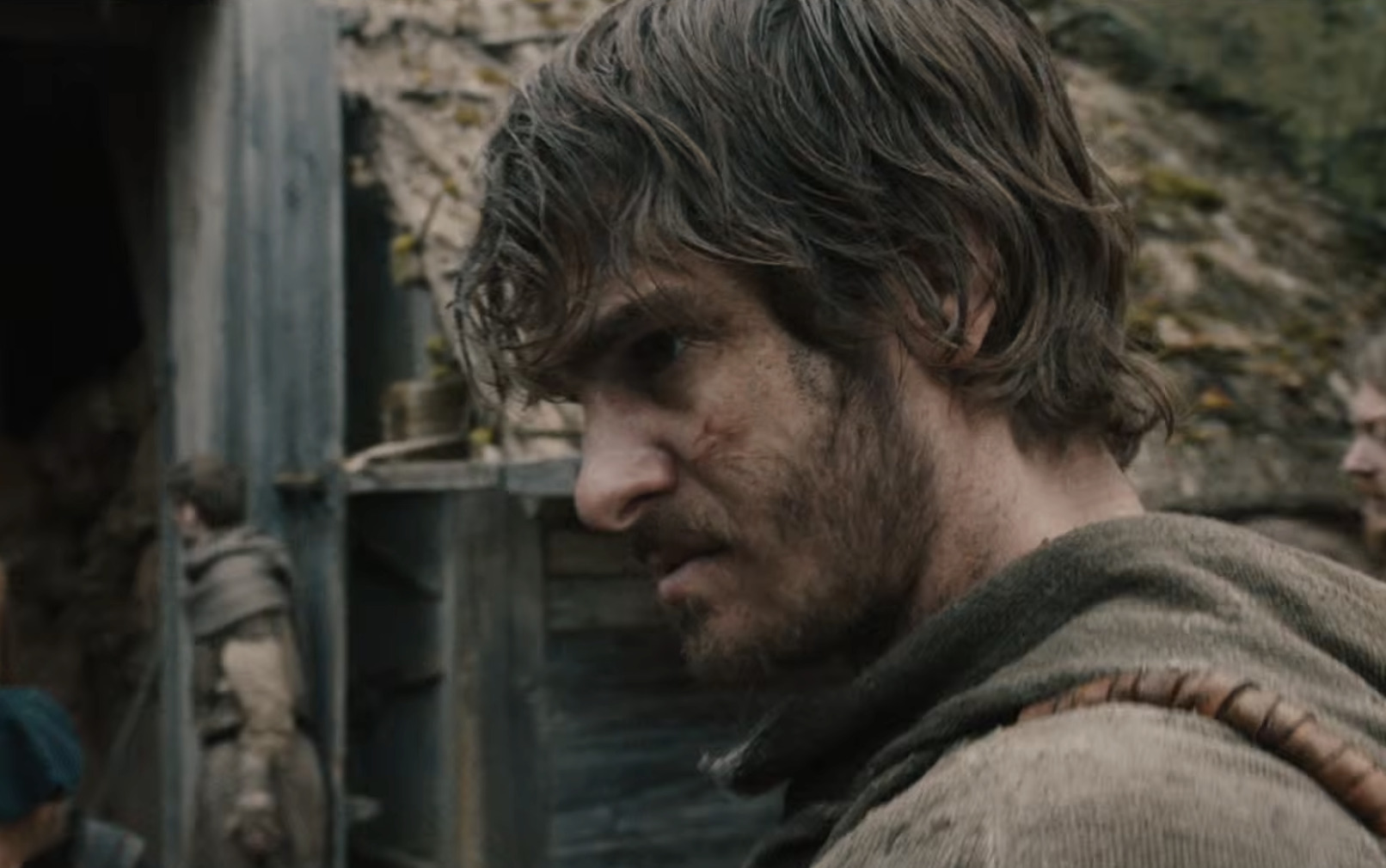
The Uprising is the new film by Paul Greengrass, the former journalist turned film director known for his documentary style realism and shaky-cam technique. It stars Andrew Garfield as an unnamed ploughman in 1381, where Britain is ruled by the council of the 14-year-old Richard II (Woody Norman). The kingdom needs more money, and the council decide to up the taxes on the peasantry. When the ploughman comes to pay and sees the atrocious way the soldiers are treating people in the village, he accosts the tax collector and kills a soldier who tries to arrest him, sparking the Peasants’ Revolt.
A period historical drama is certainly a different genre for Green grass, most famous for his Jason Bourne entries and action thrillers, such as Captain Phillips and 22 July, to explore. While it makes some missteps, The Uprising is a visceral piece of work when it’s firing on full cylinders with some interesting themes. Greengrass’s shaky-cam technique is present and correct and while it might seem odd to use this in a period piece, I thought it made the action feel urgent and convey the chaos of this historical event. The recreations of the riots and some establishing shots of a period London are beautifully realised, and Greengrass knows how to drop you right in the middle of it. The film’s also bolstered by an excellent Volker Bertelmann’s score with some memorable themes.
There’s also some great performances – Andrew Garfield is reliably excellent as the ploughman and Cosmo Jarvis never puts a foot wrong as Wat Tyler. Woody Norman’s excellent as the monarch in a surprisingly multi-layered performance, who we first meet as an incompetent young 14-year-old. There’s also some suitably slimy performances from Tom Hollander, Stephen Dillane and Stanley Townsend as scheming members of the council.
There are two performances that don’t fully work though – Jamie Bell’s John Ball is thinly written and Thomasin McKenzie is simply miscast as Alyce, as a follower of John Ball. On a technical level, the sound mix with the dialogue is rather odd, with the dialogue sometimes muted and this is a film that I think would be better on a rewatch with subtitles.
The film’s main problem is it never quite settles on a theme to tie everything together. Greengrass says he wanted to make a film that mirrors the rage and disempowerment British people have recently felt with a historical event. And while he achieves this to a degree, the messaging is muddled. There’s also a bizarre coda at the end of the film that reframes Garfield’s ploughman that detracts from the rest of the film and it’s unnecessary.
While undeniably flawed, The Uprising captures the chaos of a change being campaigned for and the unintended consequences that can have. The visceral actions sequences have also stuck with me, and I suspect my opinion of the film may improve with a rewatch. But the unclear throughline message, a bizarre coda and the film being overlong are weak points – although I applaud Greengrass’s ambition for trying something new in an unfamiliar genre to him.

