Wonka (Review)

Review
⭐⭐⭐ (Good)

Director: Paul King
Starring: Timothée Chalamet, Calah Lane, Keegan-Michael Key, Paterson Joseph, Matt Lucas, Matthew Baynton, Sally Hawkins, Rowan Atkinson, Jim Carter, Tom Davis, Olivia Colman, Hugh Grant
Certificate: PG
Run Time: 116 mins

Wonka is a prequel to Roald Dahl’s Charlie and the Chocolate Factory novel, telling the chocolatier’s origin story. There have already been two excellent adaptations of Dahl’s novel – Mel Stuart’s 1973 Willy Wonka and the Chocolate Factory with a scene-stealing turn by Gene Wilder in the lead role and Tim Burton’s more faithful but equally dark 2005 adaptation starring Johnny Depp. While the thought of an origin story may seem like a cynical cash grab (and goes against Dahl’s wishes), it’s written and directed by Paul King, who struck gold with his Paddington films. While I found Paddington overrated, Paddington 2 represents the gold standard of sequels with its infectious energy. 

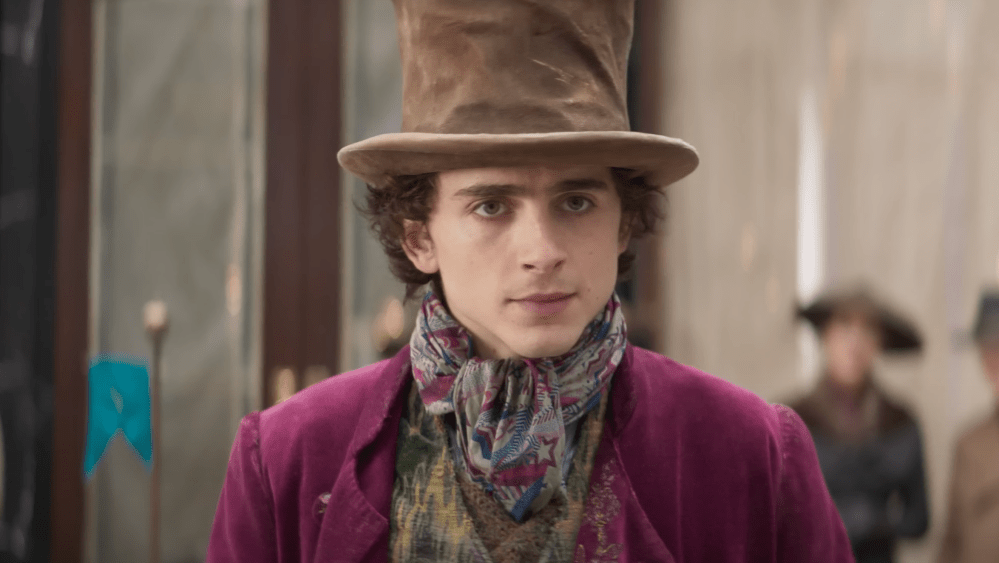
Timothée Chalamet has big boots to fill in place of Wilder and Depp, and Wonka opens with the young chocolatier arriving at an unnamed European city that feels like a hybrid between Dickensian London and upmarket Paris. He’s hoping to fulfil his dream by opening a chocolate shop at the Galeries Gourmet. However, the Galeries’ main chocolatiers Slugworth, Prodnose and Fickelgruber (Paterson Joseph, Matt Lucas and Matthew Baynton) have a monopoly over the city. Dubbed the ‘Chocolate Cartel’, they even control the Chief-of-Police (Keegan-Michael Key) and their large reserve of chocolate is stashed underneath a parish, run by the corrupt Father Julius (Rowan Atkinson) and his ‘chocoholic’ monks. Wonka also has his own problems to contend with, when he is banished to work 10,000 days performing laundry to repay his debt at a hotel he stays at, run by Mrs Scrubbit (Olivia Colman) and her henchman Bleacher (Tom Davis). There are five other captors who have fallen foul to Scrubbit’s con and Wonka hatches a plan to sell enough chocolate to free them all. 

I went into Wonka with low expectations and while I didn’t come out a changed individual, it’s much better than expected. The film has King’s stamp through and through and while there’s some laughs to be had, it’s combined with a decent story with a lot of heart. While there are some dark undertones to the story, it doesn’t really feel one of Roald Dahl’s creations – there are no Dahlian lessons for children about the consequences of bad behaviour, for instance. 

Chalamet is solid as the titular character and while he doesn’t amaze in the musical numbers, he’s more than good enough but he’s no Wilder or Depp. His Wonka lacks the terrifying element of either of his predecessors but that is partly a limitation of the film’s story. Chalamet’s decision to lead a kids film is also a shrewd move, given his more brooding adult fare with films such as Dune, Bones And All and Call Me By Your Name.

Wonka’s greatest asset are the performances all round. The Boggis, Bunce and Bean-like villains trio are all excellent (there’s a particularly funny gag with Baynton’s Fickelgruber who resents the poor). Paterson Joseph is particularly sinister as Slugworth and although he’s had a long career, I hope his propels him into the limelight. Atkinson is also excellent as the clergyman, albeit underused and Jim Carter is a highlight as Abacus Crunch, who was previously an accountant for the villains. After his terrific turn as the antagonist in Paddington 2, Hugh Grant steals the show as the Oompa Loompa, who is given an entertaining story and gets to revive the 1971 film’s original tune. 

Like the 1973 film (although Tim Burton’s remake also includes some songs), King’s film is a musical. Although there are more musical numbers than the original, King gets the balance of song to story right and although Neil Hannon is no Candyman with the quality of the songs – they’re just not as memorable as any of the creations of Leslie Bricusse or Anthony Newley (although he reprises Oompa Loompa and Pure Imagination) – they’re good enough. A duet between Chalamet and newcomer Calah Lane, who plays Noodle who becomes Wonka’s assistant, is the highlight and helps to really furthers their relationship. Joby Talbot’s supporting original score fares well and also respectfully reprises notes from the original. 

Wonka also looks gorgeous with its eye-popping production design, although its cinematography by Chung-hoon Chung, one of director Park Chan-Wook’s key collaborators, feels uncharacteristic of him considering his back catalogue, lacking a surreal edge. This would have lent well here, considering many of the characters have dreams they’re looking to fulfil. 

Wonka is ultimately a surprising success for what seemed like a misjudged prequel and I admired King’s kind-hearted and amiable tone. Although it occasionally feels a little like a Christmas pantomime with its low stakes and musical numbers, there’s some good chuckles to be had and the sumptuous, sugar-rush production design is worth experiencing in the cinema. I don’t think Roald Dahl would have appreciated it (although he was a tough critic of many adaptations of his literary works) and it feels more Dickensian than Dahl with its workhouse elements and conniving characters. However, as a piece of candy, Wonka more than does the job even if it doesn’t reach the sugary heights of the other adaptations). I’d certainly be game for a sequel that explores how Wonka morphs into the darker character we meet in Dahl’s novel but it wouldn’t feel fitting of King’s directorial style – still one can hope. 

⭐⭐⭐ (Good)

Indiana Jones and the Dial of Destiny (Review)

Review

Rating: 3 out of 5.

Director: James Mangold
Starring: Harrison Ford, Phoebe Waller-Bridge, Antonio Banderas, John Rhys-Davies, Toby Jones, Boyd Holbrook, Ethann Isidore, Shaunette Renée Wilson, Mads Mikkelsen
Certificate: 12A
Run Time: 154 mins

Indiana Jones and the Dial of Destiny is the long-awaited fifth instalment of the swashbuckling series, despite many assuming the underrated Kingdom of the Crystal Skull represented Harrison Ford’s swansong. How wrong they were, as Ford is once again front and centre of the action at age 80. Dial of Destiny is the the first time Steven Spielberg isn’t in the director’s chair with James Mangold stepping up to the challenge. Mangold is more than up to the task as he is no stranger to concluding chapters – just take a look at the excellent Logan, a grim and fitting closing chapter that framed the X-Men frontman as a relic of the past. 

Dial of Destiny is set in 1969, 12 years after the events of Kingdom of the Crystal Skull. An elderly Jones retires from his teaching role, only to be shortly visited by his goddaughter Helena (Phoebe Waller-Bridge), who also happens to be an archaeologist. She hopes to find the titular dial built by the ancient Syracusan mathematician Archimedes, which Jones happens to have half of. The pursuit of the dial drove Helena’s father Basil (Toby Jones) mad, who we meet in the film’s opening 25 minute prologue set in 1944 alongside a de-aged Indy where they first lay eyes on the dial. 

If both halves of the dial are combined, it can allow for possible time travel. However, astrophysicist (and former Nazi) Jürgen Voller (Mads Mikkelsen) is also after the dial so he can time travel to 1939 to assassinate Adolf Hitler and lead Germany to World War II victory. 

Indiana Jones and the Dial of Destiny is a disappointing finale on a number of levels. It’s overlong, the visual effects are unconvincing and it’s the first film in the series to lack a sense of fun in its action sequences. James Mangold clearly has a vision as his depiction of Jones immediately after the prologue shares parallels with Logan, a drunk and miserable shadow of his former self with his head stuck in the past. I suspect Disney didn’t want to take a risk and watered down Mangold’s treatment. 

It’s a film that clings onto nostalgia and visually, certainly intends to be in keeping with its predecessors. However, considering the film has a mammoth $300 million budget, the visual effects are surprisingly ropey. There’s an overreliance on CGI throughout and the de-aging of Harrison Ford in the prologue is largely unconvincing. While Ford looks younger, the way the character talks and moves is like an old man. The prologue’s action sequences feel formulaic, is dimly lit and lacks any spark in its action, content to just go through the motions. While Mangold-regular Phedon Papamichael’s cinematography is admirable in later set-pieces, they too lack the energy of previous installments.

The film could have really benefitted losing half an hour and it would have really tightened everything up. It’s a whole twenty five minutes than the previous longest entry Indiana Jones and the Last Crusade, and its story doesn’t warrant the extra length.

Harrison Ford turns in a committed performance but he expectedly lacks the physicality given his age. The way in which Jones constantly gets himself out of perilous situations feels too neat. To be honest, Ford’s performance in this, Star Wars: The Force Awakens and Blade Runner 2049 are all pretty interchangeable. 

Phoebe Waller-Bridge joins the cast as Helena and while she’s tolerable, she just doesn’t share a palpable chemistry with Indy. Mads Mikkelsen makes for an excellent villain and receives a decent amount of development and if he were in a better film, he’d be a real highlight. 

However, much of the rest of the star-studded cast are squandered. The two biggest casualties are Antonio Banderas and John Rhys-Davies. Banderas fails to make an impression as Reinaldo, a frogman with more of a glorified cameo and Davies is underused. Logan villain Boyd Holbrook plays Mikkelsen’s henchman but doesn’t receive much development. Shaunette Renee Wilson and Toby Jones are two of the film’s bright spots and give it their all with characters that don’t have much meat to the bone.

John Williams returns on scoring duties and it’s largely successful and he even introduces a couple of new themes, a piano-based riff in an early chase sequence makes a strong impression. 

Overall, Indiana Jones and the Dial of Destiny is a disappointing finale to the series. It’s lacking in stakes, as well as the Spielberg magic that made his four entries complete blasts from start to finish. The film’s not a complete failure as I admired the hints of how Mangold wanted to explore the character in its early scenes and Mikkelsen stands out, despite his relatively straightforward villain. However, in all other respects, it’s the thorn in what was a four-strong series and is a big disappointment considering the talent involved. 

The Pale Blue Eye (Review)

Review, Uncategorized
⭐⭐⭐ (Good)

Director: Scott Cooper
Starring: Christian Bale, Harry Melling, Gillian Anderson, Lucy Boynton, Robert Duvall, Charlotte Gainsbourg, Toby Jones, Harry Lawtey, Simon McBurney, Timothy Spall
Certificate: 15
Run Time: 128 mins

The Pale Blue Eye is the latest by director Scott Cooper, who has proven reliable in a variety of genres, crafting rich, thoughtful films mostly shared by a theme of revenge. The film is an adaptation of the 2003 novel of the same name which sees a young Edgar Allen Poe as a cadet.

Cooper reunites with his Out of the Furnace and Hostiles lead Christian Bale, who plays Augustus Landor. Landor is a retired detective who likes his drink and is asked to investigate the murder of a cadet at the United States Military Academy at West Point, New York. The cadet has been hanged and his heart cut out, not too dissimilar from Poe’s The Telltale Heart. During Landor’s investigation, he befriends Poe (Harry Melling), who proves a dab hand at solving puzzles and mysteries. Several more grisly murders suggest the work of a serial killer. 

The Pale Blue Eye has some fine moments but it could have been so much more. At least for the film’s first hour, the mystery is reasonably interesting, although never gripping. Visually, it’s rich in atmosphere, evoking a chilling feeling from the snowy and frostbitten landscapes captured. Despite a handful of somewhat energetic set-pieces, the second half loses its way. A final act twist reframes the preceding events in a new light, although the execution lacks pathos. 

Unfortunately, this is Cooper’s weakest film. The mystery is not particularly involving and the film feels sluggish at times. Even on a second watch, armed with the knowledge of the final twist, the film is just not that interesting. This is especially surprising as Cooper’s most recent (and underrated) film, Antlers, proved he could flourish in the horror genre. With The Pale Blue Eye naturally containing horror elements from its subject matter, there’s no real flair or bite to any of the brutal murders or discoveries the characters make in their investigations. 

Still, Bale makes for a reliable lead, injecting much-needed intensity but his character isn’t given all that much development and his accent wanders occasionally too. Melling is terrific as Poe, offering oodles of range and charisma, and this film hopefully proves to be the career propulsion he deserves. 

Cooper has assembled a buffet of thespian British actors playing Americans, such as Toby Jones, Timothy Spall and Simon McBurney who are all up to the challenge. Robert Duvall also features briefly and commands the screen in his two scenes. Surprisingly, Gillian Anderson plays a rather important role and is terrible with a high-pitched accent with a mouselike demeanour. 

Cooper reunites with cinematographer Masanobu Takayanagi, who shot Out of the Furnace, Black Mass and Hostiles. Although not quite as clinical as some of his other work, the film is shot beautifully and Takayanagi takes advantage of the cold, desolate setting and relishes the use of shadows. The score by Howard Shore is serviceable but could have been so much more. 

Ultimately, The Pale Blue Eye isn’t the slam dunk it should have been, considering the host of talent involved. It needed more energy and a rethink as to how the story could have been gripping. Despite its numerous flaws, this is still a handsome film with some strong visuals and performances. 

⭐⭐⭐ (Good)

Prey (Review)

Review

Rating: 3.5 out of 5.

Director: Dan Trachtenberg
Starring: Amber Midthunder, Dakota Beavers, Michelle Thrush, Stormee Kipp, Julian Black Antelope, Bennett Taylor, Dane DiLiegro
Certificate: 15
Run Time: 100 mins

Prey is the latest instalment of the Predator series. The series has experienced a tough life, with the Arnold Schwarzenegger original leaving a lasting impression on critics and audiences. However, none of the sequels have managed to capture audience and critics to the same extent. Director Shane Black tried to reinvigorate the franchise with The Predator in 2018 but it unfortunately achieved negative reviews. My experience of the franchise has been quite the opposite however, and Predator 2 and Predators are both highly underrated. 

Prey is directed by Dan Trachtenberg, his second major film after 10 Cloverfield Lane, which left a barnstorming impression. The film is strangely heading straight to Hulu or Disney+ in the UK, foregoing a traditional theatrical release. 

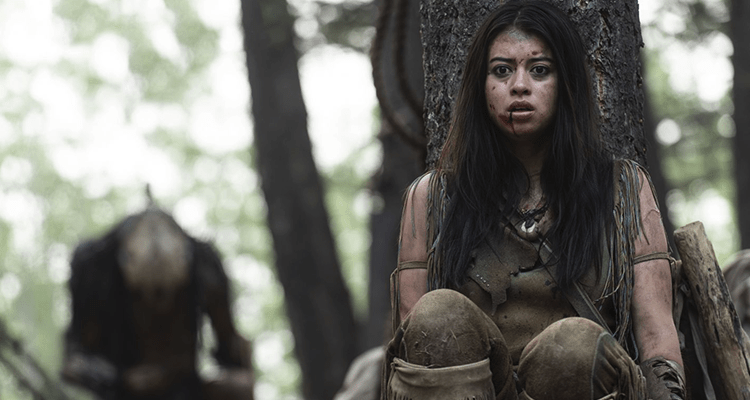
Trachtenberg smartly takes the series back to its roots, positioning the film as a prequel. The film is set in 1719 in the Northern Great Plains and centres around Naru (Amber Midthunder), a skilled Comanche warrior in a tribe. She dreams of becoming a great hunter like her brother, Taabe (Dakota Beavers). When a Predator makes its way to Earth and the tribe believe a lion or bear to have caused destruction amongst the local fauna, Naru knows from her experience the creature causing carnage is no lion or bear. What follows is an intense cat-and-mouse chase between the Predator and its prey. 

Prey is an excellent prequel and is just the gut-punch the series needs. Trachtenberg directs with flair and the film features some terrific performance among its almost exclusively Native American cast. The very fact Trachtenberg has opted to centre the film around an underrepresented community is to be commended, too, with the only exception to the rule being a group of French fur trappers Naru encounters. 

Amber Midthunder makes for a formidable screen presence and it’s great the film focusses on her humanity. She is portrayed as both a skilled hunter but also an individual who makes mistakes. Trachtenberg’s mirroring of smaller animals hunting each other and the Predator and anything that steps in its way is also an excellent creative stroke. 

Prey features a rousing score by newcomer Sarah Schachner, at times reminiscent of the sound of Nick Cave and Warren Ellis but not quite as memorable.  It is a shame she doesn’t revisit Alan Silvestri’s iconic original themes, though. 

The film is very well-shot by Jeff Cutter, who beautifully captures the Great Plain landscape. All of the action sequences are exciting and kinetic and Cutter doesn’t resort to quick cuts. The final climax is particularly gripping, as is an altercation between the Comanche, French fur trappers and the Predator. 

Prey is an absolute blast and it’s a real shame the film isn’t being released theatrically. I’ll need to rewatch it but it’s certainly up there with Predator 2 and Predators as the best in the series for me. Trachtenberg is two-for-two and I can’t wait to see both what he directs next and how this franchise continues to evolve, now that it’s been granted a well-needed breath of fresh air. 

Insidious: The Last Key (Review)

Review
37947

Rating: 3 out of 5.

Director: Adam Robitel
Starring: Lin Shaye, Angus Sampson, Leigh Whannell, Spencer Locke, Caitlin Gerard, Bruce Davison
Certificate: 15
Run Time: 103 mins

Insidious: The Last Key is the fourth installment in the so-far, very robust series spearheaded by horror maestro James Wan. Each installment in the franchise has been very solid so far – the first a great exercise in horror filmmaking with some memorable scares. I admired how well Wan ties up the narrative in the second film, even though the film did not recieve great reviews. Writer Leigh Whannell directed the third film, which is underrated, boasting some excellent scares and has a multi-layered villain who I weirdly empathised with.

This entry is directed by newcomer Adam Robitel, picked after his work on The Taking of Deborah Logan. Whannell remains on scripting duties and like with the third, Wan still produces so both pioneers of the series still have influence. The Last Key, narratively, is a sequel to the third film but is set before the first two films, which the back-end of The Last Key leads into. So in chronological order – 3, 4, 1, 2. This installment continues to follow Lin Shaye’s paranormal investigator, Elise Rainier, who investigates a haunting in her childhood home, a place that has caused her many pains.

Insidious: The Last Key begins with a powerful extended sequence which explores Elise’s difficult childhood and introduces her dysfunctional family. It’s quite emotive and her relationship with her father in particular is haunting, more so in fact than the rest of the scares in the film. And this is where the film faulters. It can never regain the same momentum that propels its opening and instead, resorts to cliche and its mechanical scares are dismally second-rate. There is a particular plot point which even threatens to undo the good work Robitel does in the opening.

That’s not to say the rest of the film is terrible. The main villain, played by Javier Botet, continues to prove why Botet is a key innovator of the horror genre and visually, he’s very impressive. It’s just a shame that his characterisation lacks the complexity of other villains in the series. There are also some good performances as well as Botet’s. Of course Lin Shaye proves again she is able to carry a film with such ease – without Shaye, the film would be far worse. Tessa Ferrer and Josh Stewart as Elise’s parents are excellent, as is Bruce Davison as Elise’s younger brother. Robitel also does a good job in directing the film. It’s clear he’s put a lot of effort and thought and the film flows quite well and he manages to do the best of poor material.

Unfortunately, other than these factors, the film is painfully average, in what has so far been an above-average series and the narrative that follows the opening is too familiar. What tips my verdict into the ‘Poor’ category however, is the lazy plot device introduced to sort the dilemma Shaye’s character finds herself in and also as a means of securing more sequels. Equally as offensive is the fact that the film, a film in the horror genre, it fails to do what it says on the tin, the scares obvious and mechanical.

Ultimately, Insidious: The Last Key is a big disappointment and is easily the worst of the franchise so far. However, the film isn’t a complete waste as its direction, performances and a powerful opening are to be admired but are nowhere near enough to mask the poor narrative and financial future-proofing the film leaves itself in. At least for a January horror release, typically notorious for the worst of the worst horror films to be scheduled for, Insidious: The Last Key is far from it, which perhaps was my greatest fear. Whilst deep down, I hope this franchise doesn’t go the way of Saw or Paranormal Activity in their endless sequels which continue to decline in quality, I suspect it will. This is a great shame, particularly like both aforementioned series, they all started out so well and Insidious did a better job in having at least two great sequels.