Mandy (Review)

Uncategorized
nicolas-cage-mandy-movie-1

⭐⭐⭐ (Good)

Director: Panos Cosmatos
Starring: Nicolas Cage, Andrea Riseborough, Linus Roache, Ned Dennehy, Olwen Fouéré, Richard Brake, Bill Duke 
Certificate: 18
Run Time: 121 mins

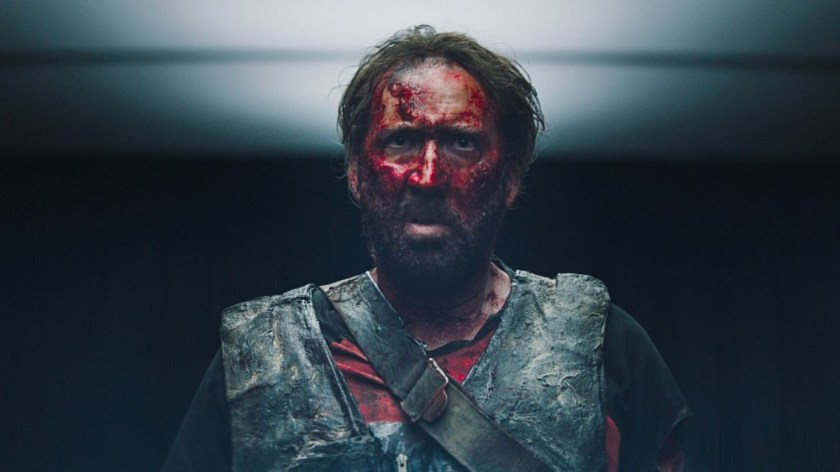
Mandy has finally released to UK audiences, in what has seemed like an incredibly long wait, after it impressed at various film festivals. It is the second film by director Panos Cosmatos after directing the rather polarising Beyond The Black Rainbow. Nicolas Cage plays Red Miller, a logger who is a recovering alcoholic. He lives with his girlfriend, Mandy (Andrea Riseborough) who works as a cashier at a local store in the day but draws fantasy art in her spare time. Although the conversations that they share at the beginning of the film come across as rather awkward, they are clearly a perfect match for each other, Mandy portrayed as a Mother Nature figure that Red has a positive influence from, who keeps order.

This order is demolished and then some when a hippie cult called the ‘Children of the New Dawn’ arrive on the scene, led by a Charles Manson-esque figure called Jeremiah Sand (Linus Roache). Sand becomes enamoured with Mandy and orders her kidnapping and subsequent murder. This then sends Red off the rails and revenge ensues.

Mandy is an interesting film and one that I think would benefit from several viewings to fully unpack some of the themes it explores. It is a psychedlic, hallucinatory experience that feels like an arthouse John Wick infused with Mad Max: Fury Road. Whilst it takes a while for the action sequences to start, which are worth the price of admission alone, there is a lot to like in the first half, even if it is a little ponderous in places.

Although the narrative may seem rather simple on the surface, Cosmatos has made a thematically rich film that interrogates questions of religion, drug use and the environment. Whilst I’m still trying to piece the entire film together, clearly some of the characters featured are meant to represent something that I’m still not entirely sure of what it is. Those who dismiss the narrative and simply watch the film for the action sequences aren’t getting the full experience.

Mandy is one of the most visually arresting films I have seen in quite some time. One could pause the film at any point as each of DP Benjamin Loeb’s frames is masterful in its construction. It’s not exactly certain where this film takes place, whether it’s on our Earth, another planet or if it’s just a psychedelic drug experience. This is because some films are shot normally, whereas some are drenched in feverish pink hues. The action sequences are superb, in particular the now famous chainsaw fight, although some of the kills are a little too ‘easy’ to achieve but I think this is something that Cosmatos is trying to portray intentionally.

Nicolas Cage goes full-on berserker-mode as Red and whilst his performances vary, Mandy definitely represents one of his best roles. Red goes through all the motions once Mandy is killed and reaps chaos on the cult. Andrea Riseborough is good, if a little one-note as the titular Mandy and she is a very important character in the film’s proceedings and is given a lot of the film’s meat to chew on. One of my chief reservations with the film though, is that I didn’t quite buy their relationship as Cage has a long absence in the first half of the film. Although his character is well-developed in the rage-filled second half, he’s a little ambiguous in the first half. The rest of the cast are all good, in particular Linus Roache as the cult leader, a character who feels he is enacting God’s will and who proves a nasty adversary for Cage’s Red.

Mandy is unfortunately, the last score by Jóhann Jóhannsson, who goes out on a very high note with this. Jóhannsson’s score is near-perfect, fitting with the film perfectly and is very memorable. He experiments with heavy metal and electronic elements and the result is a pulsating score that heightens in tension as the film does too. The use of King Crimson’s ‘Starless’ in the opening credits is also a brilliant use of the song too.

Overall, there is certainly a lot to like with Mandy, even if it’s not exactly the film I expected it to be. It is a hallucinogenic, phantasmagorical experience and is one of the most original films I have seen in a while. I liked that Cosmatos has created a film that has multiple meanings under the surface to satisfy those who want a strong narrative, as well as delivering (and then some…) on the action sequences. When Nicolas Cage has the right material, he shines and with the outstanding visual aesthetic and Jóhann Jóhannsson’s score, this is, on the whole, a great experience. I’m hoping this is a film that improves on further viewings and my current 3-star rating may well be bumped up. My main reservations with the film are the integrity of the central relationship and the overlong first half, but I’m hoping that there’s more to it on a next viewing. Regardless, for all the film gets right, Mandy is a film that needs to go straight on the top of your watchlist, but it is certainly going to be polarising.

⭐⭐⭐ (Good)

First Man (Review)

Uncategorized
landscape-1535559511-first-man-2

⭐⭐⭐ (Good)

Director: Damien Chazelle
Starring: Ryan Gosling, Claire Foy, Jason Clarke, Kyle Chandler, Corey Stoll, Ciaran Hinds, Christopher Abbott
Certificate: 12A
Run Time: 141 mins

First Man is the latest by Damien Chazelle, who made Whiplash, which was my favourite film of 2015. Chazelle also wrote the excellent 10 Cloverfield Lane and then experienced further success from La La Land, winning him the Best Director Oscar. However, I kind Chazelle crashed and burned with La La Land and I couldn’t understand the praise it recieved. Chazelle’s latest is a biopic based on Neil Armstrong and him being the first man on the moon. Chazelle reunites with La La Land lead Ryan Gosling, who portrays Armstrong and has assembled a high pedigree cast consisting of Claire Foy who plays Armstrong’s wife and talented actors such as Jason Clarke, Kyle Chandler and Ciaran Hinds as his colleagues.

First Man is an interesting film and certainly represents a step-up from La La Land but Chazelle unfortunately again isn’t on top form here. Chazelle has made what is a rather empty, downbeat film that explores Gosling’s stoic and enigmatic Neil Armstrong’s loneliness and detachment after the death of his daughter, more so than the actual mission. This personal approach is innovative for a biopic and the film succeeds in sustaining a chilly atmosphere. That said, we don’t learn all that much about Armstrong and the whole depiction of the Space Race is poor as it references the Russian attempt in the first act but then bizarrely throws it out the window.

The performances are good but unremarkable – Gosling essentially plays himself and the rest of the cast aren’t really given all that much to do. The other problem with the film is surprisingly the script. Chazelle didn’t write the script for this film and it is instead written by Josh Singer, who did a great job with Spotlight but a poor job on The Post. Like the latter, Singer’s script is rather expositional and characters say what they feel rather than leaving it up to audience interpretation. Dialogue exchanges feel rather heavy, flat and unnatural.

Where the film suceeds is on a technical level. Justin Hurwitz’s score is fantastic and very memorable, who establishes cues early on to then develop them throughout the course of the film. His use of the theremin is particularly impressive and especially in the space sequences, really fits well. The cinematography by Linus Sandgren is also impressive and there are many shots here that are breathtaking. The film is visually arresting and Chazelle estalishes a great verisimilitude with the space sequences.

Overall, First Man is an interesting film and makes some brave decisions such as heavily focussing on Armstrong’s inner feelings and his detachment from his family and society. Had the film further honed in on this, it could have been very good. However, First Man is hampered by an on-the-nose script, generally thin characterisations and only partly succeeds in its function of a biopic to tell Armstrong’s story. At least the arresting visual effects and score make the film worthwhile on a technical level but First Man is frustratingly, again Chazelle not firing on all cylingders and is ultimately an ambitious, but flawed experience.

⭐⭐⭐ (Good)

Venom (Review)

Uncategorized
VenomTrailer2

⭐⭐ (Poor)

Director: Ruben Fleischer
Starring: Tom Hardy, Michelle Williams, Riz Ahmed, Scott Hazd, Reid Scott, Jenny Slate
Certificate: 15
Run Time: 112 mins

With the superhero genre continuing to dominate at the multiplex, Venom is a strange beast. On the one hand, it’s a film that doesn’t really seem to belong and it feels like it’s straight from the 1990’s with its primitive script, corny character relationships and incoherent narrative with a pinch of the early 2000’s with its shaky-cam action sequences. On the other hand, despite this film being awful, it peculiarly does seem to perform an alternative service for the genre, much in the same way that Logan had influences with the Western, Venom tackles elements of the black comedy, for better or worse.

Venom is an adaptation of the much-loved Spider-Man villain and fans took offence with his shoe-horned inclusion in Sam Raimi’s maligned Spider-Man 3. Tom Hardy plays the journalist-turned-supervillain, Eddie Brock, in this adaptation by Zombieland director Ruben Fleischer. At the start of the film, a probe belonging to the bio-engineering company, the Life Foundation, discovers symbiotic lifeforms on a comet. These symbiotes are bought back to Earth and Carlton Drake, the evil megalomaniac who owns the Life Foundation, uses the symbiotes in near-instantaneous human trials to try and achieve symbiosis with the subjects. As one would expect, Brock gets infected by one of them and chaos ensues.

Unfortunately, Fleischer makes every mistake possible in the rulebook and at least until Brock gets infected with the symbiote, the film is frequently painful to watch. The script is so obvious and cliched and story beats so haphazardly and embarassingly put together. Brock’s girlfriend, Anne Weying, played by the always brilliant Michelle Williams, is a particular sore point as Brock betrays her for the sake of journalism very early in the film and then has the cheek to hang around her trying to win her back. Tom Hardy’s performance is cringeworthy and his character is an annoying loser and an embarassment of a low point of an entry into the career of journalism. Furthermore, the action sequences are ostensibly terrible, resorting to shaky-cam and there is a complete lack of any choreography or movement, making them also incoherent despite them being conventional.

When Venom enters the film, the film begins to unknowingly start to create an interesting dynamic between the symbiote and Brock, with some rather juvenile but interesting humour. Hardy does better in these scenes and the back-and-forth fares well. Don’t get me wrong, the film is still awful and for every good idea, there are multiple mis-steps but there’s something shamefully satisfying watching this trainwreck of a film.

Other points worthy of note in the film include a genius post-credit scene that excite the prospect of a sequel and Fleischer does a sound job of showcasing the city of San Francisco, with little details peppered into the film here and there.

Venom is ultimately a strange concoction. I can’t say I liked the film much and for a lot of it, it is embarassing to sit through. Yet, with a genius post-credit scene that hints at a better sequel and the result of Tom Hardy finally coming to terms with his character towards the end of the film, I would strangely look forward to a sequel.

⭐⭐ (Poor)

The Little Stranger (Review)

Uncategorized
stranger4.0

⭐⭐⭐ (Good)

Director: Lenny Abrahamson 
Starring: Domhnall Gleeson, Ruth Wilson, Will Poulter, Charlotte Rampling 
Certificate: 12A
Run Time: 111 mins

Those looking for a fully-fledged horror film should perhaps look elsewhere, but if you’re after an atmospheric Gothic drama with some great performances and an enticing narrative, The Little Stranger delivers. Directed by Lenny Abrahamson, who made the exemplary Room, this adaptation of Sarah Waters’ novel is a rather strange choice. Domhnall Gleeson plays Doctor Faraday, who attends Hundreds Hall, an 18th century estate that his mother used to work at. The Hall has fascinated him all of his life, from the decor to the luxuriousness of it, somewhat a forbidden fantasy from his more humble origins. Hundreds Hall is now slowly in decline and home to a scarred Royal Air Force veteran, Rodrick Ayres (Will Poulter) and his elderly mother (Charlotte Rampling) and sister, Caroline (Ruth Wilson) who live there too. As the film unravels, the house is not what it seems and mysterious happenings begin to unfold, whilst at the same time Faraday tries to befriend Caroline.

Abrahamson shows skill in creating tension and conjuring a dreary, melancholic atmosphere and there is a feeling throughout the film that something bad is going to happen. This is bolstered by Stephen Rennicks unsettling score and Ole Bratt Birkeland’s dark cinemaography. The performances really help here too, with all of the talented cast doing a good job as although there is strong character development, due to the nature of the narrative, the characters are rather cold and emotionless. Will Poulter is by far and away the standout, further cementing his talent after impressing in many of his roles recently, most notably The Revenant and Detroit. He wears the disfigurement of his character perfectly and his mannerisms are chilling.

But the film never really amounts to all that much and despite the sustained patience throughout the film, it ends rather minimalistically. That’s not to say it’s particularly unsatisfying, but I was expecting the narrative to amount to a little more than it does. After having a chance to think about the film, I’ve come to the conclusion that it’s not so much about the ending, it is more about Faraday’s journey and his ambition to break through the social classes.

Overall, The Little Stranger is a solid Gothic drama, but it is certainly not a horror film as the marketing has suggested and if you can appreciate Abrahamson’s quiet approach and rich characterisations, it’s a good watch. But this is certainly going to be a divisive film that will probably test the patience of many of its viewers.

⭐⭐⭐ (Good)

The Predator (Review)

Uncategorized
Predator4

⭐⭐⭐ (Good)

Director: Shane Black
Starring: Boyd Holbrook, Trevante Rhodes, Jacob Tremblay, Keegan-Michael Key, Olivia Munn, Thomas Jane, Alfie Allen, Sterling K. Brown
Certificate: 15
Run Time: 107 mins

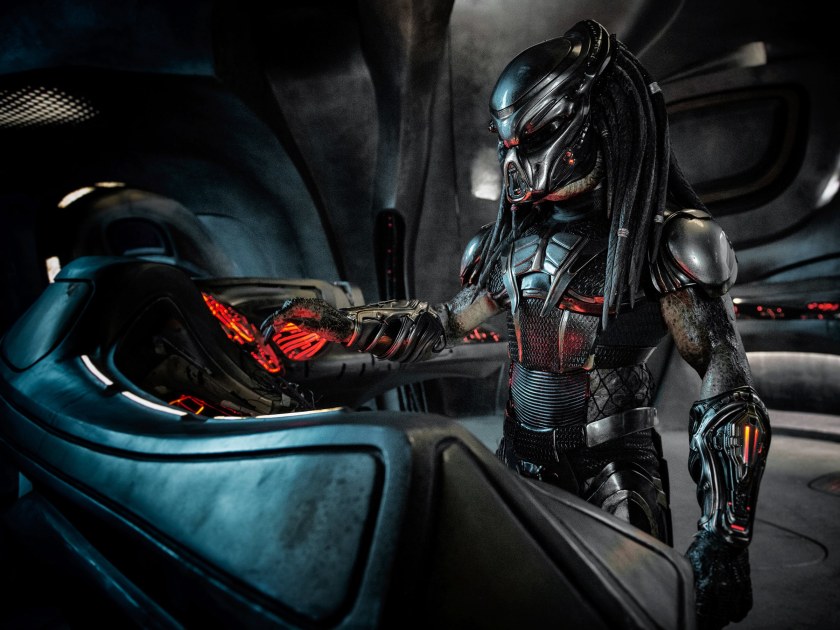
The Predator series seems to have now come full circle with Shane Black (who played Hawkins in the original) directing this fourth installment, with the aim to kickstart another trilogy. Black is a talented filmmaker with an impressive resume under his belt ranging from the big-budget but subversive Iron Man 3 to smaller projects such as Kiss Kiss Bang Bang and The Nice Guys. He’s a skilled writer, who generally tends to develop characters really well and has a good sense of humour. This should be a good match for him, and with a property as lucrative as this series, if this is successful, it should propel him even higher.

A little like the highly underrated Predator 2, Black moves this sci-fi extravaganza into the suburbs. The film follows Boyd Holbrook’s character, Quinn McKenna, a soldier who is the only survivor after a Predator attack. When he has some of the remnants after the dead Predator that he sends back to his address, his disabled son gets his hands on it, signalling the Predators to retrieve this. McKenna then teams up with a group of PTSD-ridden soldiers to take down these extra-terrestrial powers. Whilst a new narrative for the franchise is refreshing, Predators opened up possibilities to further narratives and it is a little disappointing to see that those avenues are no longer being explored. 

The reviews for this film have generally been very unkind so it surprised me that I had as much fun with The Predator as I did. Yes, it’s a little narratively all over the place and its pacing is rather breakneck, but Black’s signature humour and characterisations remains intact and I grew to care for the characters, even though they may not have quite been as fleshed out as they could have been. The film is at its strongest in its first third, where it poses some interesting ideas and a science facility action sequence is particularly well shot.

The cast are all pretty good and Boyd Holbrook does a sound job in the lead and bolsters the cast together. Jacob Tremblay, as McKenna’s disabled son, seems to come from a totally diffeent film at first, but he slowly settles into the role. Sterling K. Brown is great as the human villain, who is very sarcastic and has many of Black’s quips. Of the soldiers McKenna teams up with, Keegan-Michael Key makes the biggest impression and most of the film’s laughs, as expected, come from him. 

The film’s biggest problem is its pacing. The film comes in at a lean 107 minutes but this is a piece of work that certainly could have benefitted from another half-an-hour. Scenes are often quite short and there are a few moments where characters seem to get to places with no explanation. There’s a lot to get through and it seems a strange decision that Black edited it down to this relatively short length.

Henry Jackman’s score revisits some of Alan Silvestri’s original themes and is generally sound. Larry Fong’s cinematography is good and there are a few interesting shots but the film is not as visually resplendent as some other films that Fong has shot, such as Batman v Superman: Dawn of Justice and Kong: Skull Island

Overall, there is a lot of fun to be had with The Predator and one has to admire its shambolic construction. I’d be more than happy to watch Black direct a sequel and with perhaps lesser constraints and quotas, it could be a really good film. There’s a lot of good work here and although it’s by no means the best film in the series, it does offer some interesting ideas and a refreshing change of scenery into the suburbs. 

⭐⭐⭐ (Good)

The Nun (Review)

Uncategorized
The-Nun-teaser-screenshot-600x341

⭐⭐ (Poor)

Director: Corin Hardy
Starring: Demián Bichir, Taissa Farmiga, Jonas Bloquet, Bonnie Aarons 
Certificate: 15
Run Time: 96 mins

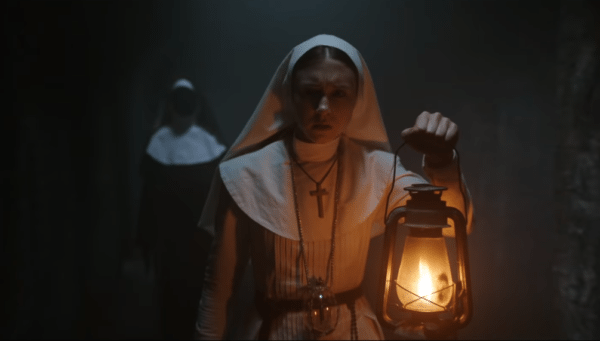
Following Marvel’s success, many studios have gone about trying to establish their own cinematic universes, and whilst some have come to fruition, by far and away the strongest is The Conjuring series. Beginning with James Wan’s exemplary 2013 horror, there has been a sequel to the mainline Conjuring film and also spin-off’s concerned with the Annabelle doll prevalent in these films and now, The Nun. The Nun is another spin-off based on the evil Valak in The Conjuring 2. Set in Romania in 1952, a Roman Catholic priest and a nun are sent to investigate the death of a nun at the Cârța Monastery. However, as is customary with a horror film, nothing is as it seems and the supernatural entity behind it takes to haunting the protagonists.

Perhaps the simplest way of describing The Nun is by calling it a ‘beautiful disaster’. The film is an absolute trainwreck – the film is edited extremely badly, its overreliance on jump scares mean that it isn’t scary and the story is borderline incoherent. It would be very easy to just completely dismiss this film and rip it apart.

Yet in a post-mortem exercise, it is clear to see that there are some good intentions here. Director Corin Hardy is clearly a horror aficionado which shows in the film’s cineliteracy (there are allusions to some of the Hammer horror films for instance) and the film is quite atmospheric and establishes a chilling setting. There are some breathtaking shots of the exteriors of the monastery which really portray the grandeur and influence it has on its characters. This is by far, the most frightening aspect of the film and leaves a lot to audience interpretation. It’s strange then that Hardy resorts to jump scares, which are all poor and there is not a single memorable one in the film. It’s also strange that Hardy chooses to punish the characters in the worst possible way towards the beginning of the film. There is an extended sequence where a character is stuck in a grave, which is a horrifying scenario but anything that happens to this character afterwards is never as bad. Surely, this sequence would have worked better towards the end of the film? Despite these fatal mis-steps, all of Hardy’s good work in the film’s atmosphere is undone and squandered by how the film has been edited.

Good editing should be invisible in a film – one shouldn’t notice it and the better the editing, the better the pace. The Nun has two editors credited – Michael Allen and Ken Blackwell, so perhaps one edited the film after the other or they both did it together? They constantly cut between different camera angles and shots and every scene in this film is just so brief. The film feels more like a trailer extended to feature-length. If they’d have let the shots breathe a bit and linger, this would have made the film endlessly more atmospheric and the film would be much better paced.

The editors try to cut between the different characters perspectives (as the story necessitates they stupidly split up and get haunted separately) and the narrative is almost incoherent. There were a few moments where I had to guess what was actually going on story-wise even though the film’s narrative is relatively paper-thin anyway.

As for the performances, Demián Bichir and Taissa Farmiga are serviceable with the poor material they’ve been given. It’s a shame that Farmiga in particular isn’t further utilised, particularly as her sister, Vera Farmiga, plays Lorraine Warren in The Conjuring films. After doing a great job with previous entry, Annabelle: Creation, Maxime Alexandre’s cinematography is sound, but the film is often too dark and it is hard to work out exactly what is going on in some frames.

I was really excited to hear that composer Abel Korzeniowski was hired for the film, as he has done some sterling work, particularly Nocturnal Animals. Korzeniowski’s score is suitably creepy and has a couple of memorable cues, but a composer of his statue could have done a better job.

It’s a shame The Nun isn’t as successful as the marketing led me to believe. This film looked like a surefire hit, but all of the film’s best sequences are in the trailer and the abhorrent editing completely kills the film. Even in terms of how the film functions in connecting to other entries, it does so in a strangely forceful manner that isn’t satisfying. Despite being a very disappointing film, there are some promising aspects here and perhaps if the film wasn’t so choppily edited, it would be much better. The Nun overall, represents a weak entry in The Conjuring series, but I certainly preferred it to the first Annabelle by quite some distance. That isn’t a difficult feat to achieve, but it’s a shame that the film isn’t as good as it looked. Perhaps as was the case with Annabelle, a strong sequel can redeem this material and really do it the justice it deserves.

⭐⭐ (Poor)

BlacKkKlansman (Review)

Uncategorized
blackkklansman.0

⭐⭐⭐⭐ (Excellent)

Director: Spike Lee
Starring: John David Washington, Adam Driver, Laura Harrier, Topher Grace
Certificate: 15
Run Time: 135 mins

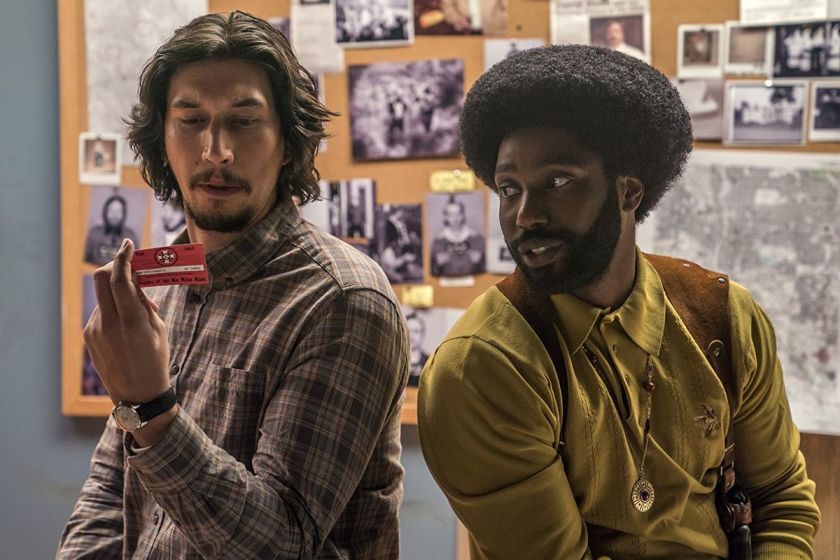
‘Based on some fo’ real, fo’ real shit’, BlacKkKlansman follows Ron Stallworth, the first black detective in the Colorado Springs Police Department. The film tells his story and how he successfully manages to infiltrate his local Klu Klux Klan by putting on a convincing portrayal of a white supremacist over the phone and then getting his Jewish colleague to assume his identity whenever his physical presence was required. This ‘joint’ is directed by Spike Lee (as he refers to his films), whose entire body of work is thought-provoking and interrogates issues of race and gender. Although his latest crop of films have received rather lukewarm reviews, I really enjoyed his remake of Oldboy (and am still holding hope we will one day get his true 140 minute vision before it was cut down) and Chi-Raq isn’t bad either. BlacKkKlansman premiered earlier this year at the Cannes Film Festival where reviews were almost unanimously positive, many citing this as a return to form and among his best work.

BlacKkKlansman certainly maintains Spike Lee’s passions and although the film stumbles in its first half an hour or so, when we get to the heart of the story, it is a mostly gripping and infectious account of these events. When you’ve got material as fascinating as this, it’s hard not to make a gripping film. But I don’t think BlacKkKlansman ranks as one of Spike Lee’s best. It has the tendency to be rather preachy at times, ham-fistedly spelling out its message. It’s also rather unsubtle in how it’s trying to link to current events, namely the Trump presidency and America’s deeply divided culture and racism.

But if you can get past some of the obvious storytelling, there’s certainly a lot to like here. Lee interrogates many different themes, chiefly duality between the film’s events and characters and he manages to balance some laugh-out-loud humour with its main message. All of the film’s characters are well-developed, even the KKK members have fleshed story arcs and you do begin to sympathise not with their beliefs, but with their personalities a little which is to be commended.

John David Washington is excellent in the lead role of Ron Stallworth giving a nuanced yet sprightly performance. Adam Driver as his Jewish police colleague is also strong, a character who is thrown in the deep end, who has to assume Stallworth’s personality when meeting KKK members in person. The real standout of the film though is Topher Grace as David Duke, ‘Grand Wizard’ of the KKK who is note-perfect and is endlessly charismatic yet sinister.

Stylistically, BlacKkKlansman is great, with excellent costume design and settings that perfectly mirror the 70’s setting. Terence Blanchard’s score, a mainly funk and jazz infused affair, has some memorable motifs and supplements the narrative well. Chayse Irvin’s cinematography is also good, with some interesting camera angles and shots.

When the main narrative takes centre stage, BlacKkKlansman is thoroughly enjoyable film in Spike Lee’s filmography. It spins a gripping yarn out of a fascinating story and is bolstered by being technically proficient and having some great performances. But its beginning is very self-indulgent and if the film was more subtle, it would be outstanding. I think due to the praise this film has received, I was expecting a little more. It’s a low 4-star grade-wise as a 3-star is rather harsh. BlacKkKlansman is definitely worth seeking out and most audiences should have a blast with it, as well as discovering and questioning the ways in which America’s society works, but it’s far from perfect.

⭐⭐⭐⭐ (Excellent)

The Festival (Review)

Uncategorized
1287325_thefestivalentertainmentfilm_637300

⭐⭐⭐ (Good)

Director: Iain Morris
Starring: Joe Thomas, Hammed Animashaun, Claudia O’Doherty, Jemaine Clement, Hannah Tointon, Kurt Yaeger, Noel Fielding, Nick Frost, Theo Barklam-Biggs
Certificate: 15
Run Time: 98 mins

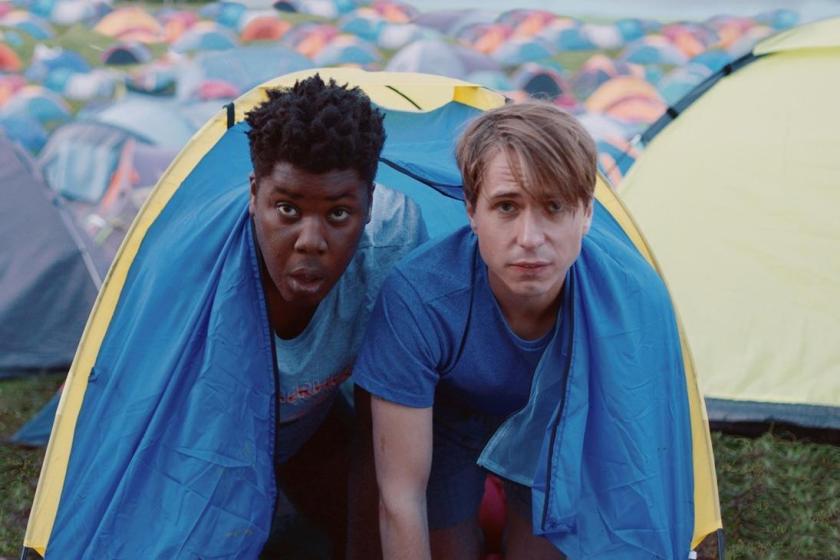
The Festival is the first project by the creators of the Inbetweeners, which spawned three hilarious television series and two flawed but serviceable films that took their characters on tour. The narrative and settings are very much in the same vein in The Festival. The film follows two university graduates, Nick (The Inbetweeners’ Joe Thomas) and his friend, Shane (Hammed Animashaun). Nick has recently gone through a break-up with his university girlfriend, Caitlin (conveniently played by Hannah Tointon who was also a love interest for Simon in The Inbetweeners) and spends the beginning of his Summer ‘cry-wanking’ surrounded by buckets of fast food chicken. After Shane manages to lure him out of his room, they head to a music festival, which as one would expect, is filled with mud, sex, drugs, bodily fluids, and conveniently Nick’s ex. Claudia O’Doherty plays Amy, a quirky but likeable Aussie traveller who Nick and Shane first meet on the train journey to Glastonbury. Amy is happy-go-lucky, a chatterbox, a little awkward and talks away to various people before they leave her. At first, she gets on the nerves of Nick and Shane but then conveniently they all begin to bond, Shane more so.

After a fairly funny but familiar opening, once the titular festival arrives, what follows is a succession of awkward, cringeworthy gags that are at worst, familiar, but at best, rib-tickling and surprisingly heartfelt. It also just about manages to shake its televisual feel with its festival set piece. There are a couple of clumsy references to other films such as The Wicker Man in an extended set piece and the plot is rather absurd, but it all just about hangs together.

Both Joe Thomas and Hammed Animashaun are reliably funny and pass for playing characters much younger than their real ages. The rest of the young cast are all sound and the film has the usual comedy slew of celebrity cameos that are welcome relief when there isn’t much for the film to do. What We Do In The Shadows’ Jemaine Clement is particular funny as one of the boys father, who has many of the film’s best lines and gags.

Ultimately, The Festival is a likeable and well-natured comedy that manages to capture the reality of a British music festival. In the wake of The Inbetweeners, it proves to be a perfectly entertaining diversion. It may not be the most memorable film and probably will be forgotten fairly quickly, but the film ultimately succeeds in its primary target of making audiences laugh and shouldn’t be overlooked.

⭐⭐⭐ (Good)

The Meg (Review)

Uncategorized
the-meg-4

⭐⭐⭐ (Good)

Director: Jon Turteltaub
Starring: Jason Statham, Li Bingbing, Rainn Wilson, Ruby Rose, Winston Chao, Cliff Curtis
Certificate: 12A
Run Time: 113 mins

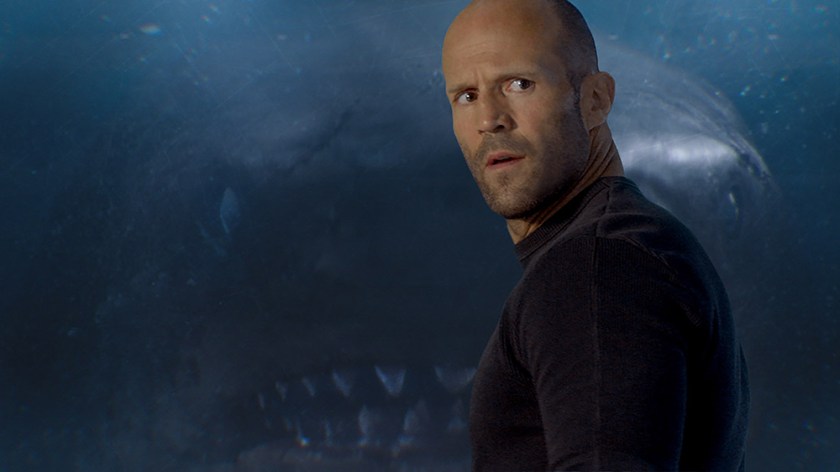
Another Summer, another shark film. At least, that’s what The Meg looks like and judging by the trailers and its marketing, it is the definition of a stereotypical Summer popcorn movie. The Meg, however looks much better, than the shark films from the last few years, from the disappointing The Shallows to the terrible 47 Meters Down. The Meg wears its cheese on its sleeve with smile-inducing taglines such as ‘Opening wide’ or ‘Chomp down’. Also, The Meg ups the stakes quite literally in that it follows a thought-to-be-extinct Megalodon shark that is let loose and it is up to Jason Statham and a group of scientists to stop it inflicting carnage and torment. Director Jon Turteltaub has a very mixed quality of filmography, having a promising start with Cool Runnings but then he made the terrible National Treasure films and never really recovered.

Surprisingly, The Meg gets a lot right and has a solid, at times, atmospheric first half. Tureltaub succeeds in only showing glimpses of the monster and manages to build tension, as the scientists are on a mission investigating a suspectedly deeper section of the Marianas trench. Although nothing groundbreaking, there are even attempts to flesh out the characters and they’re all quite empathetic and likeable. 

It is rather frustrating, then, that the film lacks ambition in its second half. The 12A / PG-13 rating really affects the film and actually, violence and gore would have really elevated it, rather than having the camera frustratingly cut away when the titular monster hunts its prey. It also lacks credibility in that nothing really happens, particularly in what could have been an outstanding setpiece of the shark creeping into a packed beach, but instead it more or less just swims through without many casualties. 

At least the cast and crew seem to be having fun and Statham is realiably cheesy in the lead role. Rainn Wilson possibly fares the best out of the supporting cast and is well-cast as a billionaire who initially supports the scientists research. Technically, the film looks good, with Clint Eastwood-regular cinematogapher, Tom Stern establishing a great atmosphere and inventively shooting some of the shark attacks. 

Ultimately, you pretty much get what you expect with The Meg but at least, the first half is pretty solid. It’s a shame that the filmmakers wanted to appeal to the largest possible audience, as a higher age rating could have really elevated it and would have satisfied the genre buffs. However, taken on its own merits, The Meg is certainly one of the better shark films in recent memory which although unfortunately says a lot about the genre, is good in that it’s not a travesty unlike other recent efforts. 

⭐⭐⭐ (Good)

Ant-Man and the Wasp (Review)

Uncategorized
MV5BNTAwNDU5MjQyMF5BMl5BanBnXkFtZTgwMDkwMDk1NDM_._V1_SX1500_CR0_0_1500_999_AL_.0

⭐⭐⭐⭐ (Excellent)

Director: Peyton Reed
Starring: Paul Rudd, Evangeline Lilly, Michael Peña, Walton Goggins, Bobby Cannavale, Judy Greer, Tip “T.I.” Harris, David Dastmalchian, Hannah John-Kamen, Abby Ryder Fortson, Randall Park, Michelle Pfeiffer, Laurence Fishburne, Michael Douglas
Certificate: 12A
Run Time: 118 mins

Ant-Man and the Wasp is Marvel’s third offering this year after Black Panther and Avengers: Infinity War and certainly is a lighter offering than the former films. The first film had a turbulent production with Edgar Wright developing the film for a few years until having creative differences and departing the project. Peyton Reed jumped on-board and delivered what was one of the best Marvel films to date. This sequel picks up after the events of Captain America: Civil War where Scott Lang is nearing the end of his house arrest. Lang teams up again with scientist Hank Pym (Michael Douglas) and Hope van Dyne (Evangeline Lilly) to try and rescue Janet van Dyne (Michelle Pfeiffer), who is stuck in the Quantum Realm, a dimension where users go sub-atomic and cannot return to the real world. Unfortunately, these plans are made difficult with the existence of the enigmatic Ghost (Hannah John-Kamen), as well as a shady black market dealer, the charismatic Sonny Burch (Walton Goggins).

Ant-Man and the Wasp is just as good as the original and like it, it is full of heart and character-driven moments. Reed further develops the innovative action sequences through the creative variations in size and spectacle in the first film, a car chase fares particularly well. This is aided again by confident performances from the cast all around and the additions of new cast members make the film feel fresh. Laurence Fishburne and Randall Park fare the best out of the new additions, Fishburne fitting perfectly into this world and Park is frequently hilarious as a bumbling, slightly useless agent.

Reed seems to feel a lot more confident this time around, particularly as his direction doesn’t bear the spectre of Wright. The humour consistently lands and there are many memorable sequences which their comedy is expertly judged. What was also particularly impressive to see was how standalone Reed’s sequel is and the film largely ignores other films in the canon. The film does finally connect to Infinty War in its final moments, in a very satisfying way that should leave fans eager to find out how the rest of these superhero’s story will continue. Christophe Beck returns to score and again, reuses his theme from the original sparingly which really helps.

Overall, Ant-Man and the Wasp successfully delivers on the success of the original and furthers the narrative of these characters. It is also a welcome tonic after the disappointing Black Panther and the frustrating Avengers: Infinity War. Ant-Man and the Wasp is definitely worth a watch this Summer.

⭐⭐⭐⭐ (Excellent)