Scope

Uncategorized

There’s something that’s really been bugging me recently in the movies and that has been a lack of scope in big-budget films.  Surely you would think with the more-than-healthy budgets they have, you’d have thought they could have spent a bit more on establishing a greater versimilitude. Apparently not. Two films that have really stuck out like a sore thumb this year are Dunkirk and Justice League, both for different reasons.

Bodega Bay

Although Christopher Nolan is one of my favourite film directors, I didn’t love Dunkirk and a big reason for this was its lack of scope. For a film based on an important World War II historical event, you’d have thought Nolan would have wanted to get everything accurate and really allow the film to connect with viewers. We are only ever told through exposition of the extent of the battle and what is happening in some other place. This is mainly through Kenneth Branagh’s Captain, who I strongly think, is only in the film for expository purposes. Branagh informs other characters what is happening in terms of the battle as opposed to Nolan giving us a visual representation. I really liked the idea of individuals not enlisted in the Navy using their boats to go to Dunkerque to help rescue soldiers and had Nolan capitalised on this idea, Dunkirk would be a substantially more rewarding experience. Instead, Mark Rylance’s character arc in the film is solely for that purpose and we don’t get to see anything else. Even just a few shots of civilian boats would have done the job. Famously, the British effort was collective from not just the Navy and we never get to see this. Nolan can make pretty much what he wants to make and nobody can tell him any different because he repeatedly proves he can make success after success. Surely, if you have the money and passion for this subject, you should try and do this. It’s overall hard to care for a film that looks smaller than it is.

HAR_DM_FIRST LOOK RND F04

With Justice League, on top of me finding the film a bit of a frustrating experience anyway, the final set piece really began to nark me off in places. The film’s final set piece should be the crowning jewel of this kind of a film, the moment it has all been building up to, but it is boring and juvenile. Characters make many references to saving the poor citizens who are being terrorised by the villain but we only see this suffering through the eyes of one family, stereotypically Russians. Whenever we see characters making these references, the film neglects to show us anyone and actually the area the villain is causing havoc in looks pretty empty. Even just a few shots of people running around the place and screaming would have helped create a more believable world. But the film doesn’t. Justice League has a huge $300 million budget – surely the filmmakers could have spent a little more in order to invoke that this situation is actually dangerous.

As you can probably tell, this is a frustrating issue and I hope this doesn’t continue to happen in many tentpole films. It is not as if films don’t have the money, as demonstrated by these two examples. We, as audiences, should expect more and let them deliver the goods.

Justice League is out now in UK cinemas. Dunkirk is out now on home release. 


What are your thoughts? Tweet @TheFilmMeister or leave your ideas in the comments

Top Five Oscar Isaac Performances

Uncategorized

hd-aspect-1510676380-oscar-issac-esquire-interview-main

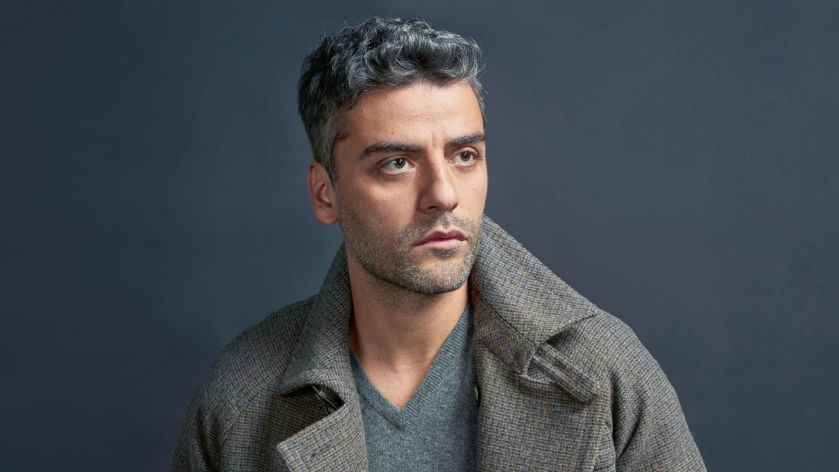
Oscar Isaac has got a little new film out this week which you may, just may, have heard of called Star Wars: The Last Jedi, the latest in the ever-popular and ever-expanding saga. With the one exception of X-Men: Apocalypse where he plays the titular villain and is made to constantly shout whilst looking uncomfortable in a blue outfit, Isaac always integrates seamlessly into any film he is in, elevating the material with his performances. He always tends to pick really interesting projects and a portray characters in a real range of genres as well. In Star Wars: The Last Jedi, he returns as Resistance Fighter pilot, Poe Dameron, in an expanded role after being introduced (and underused) in Star Wars: The Force Awakens.

I thought this would be a suitable time to have a look back at Isaac’s career so far and count down his Top Five films. These films are based on both his performance in them and their quality.

81cqsw60xgl-_sl1500_


5) Drive

I’m generally not the biggest fan of director Nicolas Winding Refn and took particular offence last year to The Neon Demon, but Drive is probably his most accessible film. Isaac plays Carey Mulligan’s debt-ridden husband who has recently been released from prison. He hires Ryan Gosling’s stone-cold getaway driver for a job, which turns out to be a disaster but Isaac does really well as a character who wants to turn his life around and wants the best for his family.

hero_twofacesofjanuary-2014-1

4) The Two Faces of January

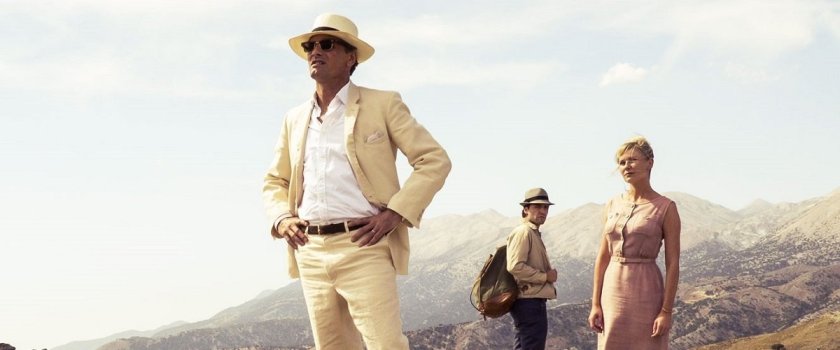
The Two Faces of January is the directorial debut of screenwriter Hossein Amini and a film that really holds up to repeat viewings, a kind-of Hitchock meets Agatha Christie blend. Oscar Isaac is excellent here as Rydal, a tour guide who scams tourists whose character arc is vastly developed as he meets The MacFarland’s, played by Viggo Mortensen and Kirsten Dunst. What works with the film and with his performance is you’re never really sure what his character intentions are and Isaac manages to portray this brilliantly. If you haven’t seen this film, definitely one to check out.

video-ex-machina-uk-trailer-1-videosixteenbynine1050

3) Ex_Machina

Alex Garland’s debut is tense and a slow-burn, yet a very philosophical watch and the film makes for a great character study. Isaac plays here as the CEO of a search engine company against Domhnall Gleeson’s computer programmer, who wins the opportunity to spend the week with him. Isaac has a very meaty role and as the film progresses, the film asks some tough, ethical questions of its audience which his character is central to. A different role for the actor, but one that he pulls off really well.

Inside Llewyn Davis: teaser trailer - video

2) Inside Llewyn Davis

The Coen Brothers’ Inside Llewyn Davis is an extremely underrated film in the director’s catalogue, with many quick to watch it and dismiss it. I loved it on first go and it gets better each time I rewatch it. Again, another new direction for Isaac who portrays the titular character, an individual who is trying to find his place in the world but finds himself constantly struggling. It’s a great film and one that I would rank really highly in the Coen Brothers’ entire body of work.

oscarissacamvyss

1) A Most Violent Year 

It has taken me a very long time to realize just how good A Most Violent Year is. I initially thought it was rather indulgent with there being a great 100 minute film in it. Since then, after rewatching it multiple times, I now consider it to be a masterpiece. You may have read when I wrote my favourite films from that year, I placed it at 12th – I’d probably now go about 5th. The film is paced so well and there are so many perfectly orchestrated scenes in the film. As well as trying to convince you to go and watch this film, you also get a career-best performance from Oscar Isaac here. Isaac’s performance channels many other crime drama’s, for example The Godfather and his character has so many layers to him. A Most Violent Year is a most incredible film.


So there we go. What do you think? What did I miss? If you haven’t watched any of these films, I’d highly recommend you do so as they’re all really worthwhile and I hope this actor’s career continues to go from strength to strength.

Star Wars: The Last Jedi is out now  in UK cinemas 

Ranking The Comic-Book Films Of 2017

Uncategorized

With 2017 bringing us a slew of comic-book films, 7 to be exact (6 live-action, 1 animation) and them all receiving very different receptions now would seem like a suitable time to rank them. Although comic-book films are increasingly prevalent every year at the moment in the film industry with 2016 jumping up to 6 releases, 2017 further continues this trend.

The Marvel Cinematic Universe continues to chug along and this year, we’ve had 3 new films – Guardians of the Galaxy Vol. 2, Spider-Man: Homecoming and Thor: Ragnarok. Marvel continue to prove with these films in their general reception that they are the current juggernauts and things look very promising indeed for next year’s big team-up which these films culminate in – Avengers: Infinity War.

2017 has been an even more important year for DC in their quest to also prop up a cinematic universe, like Marvel. Batman v Superman: Dawn of Justice and Suicide Squad were both received very negatively last year (I liked BvS a lot and can just about give a pass to Suicide Squad) so 2017 has been very important in them proving why they should also have a share of the market. 2017 saw the releases of Wonder Woman, which practically did a U-turn for the DCEU in its brilliant reception. Although Justice League, the culmiation of the DCEU films thus far which sees our favourite superheroes team up, wasn’t received nearly as well, in terms of reception, people have accepted it a little more than either of 2016’s releases. The Lego Batman Movie also features in this list, which is not an official entry in the DCEU but it’s still a comic-book film nonetheless based on the DC character of Batman.

The trend of comic-book films aimed more towards adults , which kicked off with Deadpool last year, continues with Marvel’s solo X-Men offering this year, Logan and it is also Hugh Jackman’s swansong as the character.

So this hasn’t just been a typical year in this genre hence why I have felt the need to rank them. Let’s get started!

lego_batman

7) The Lego Batman Movie

The Lego Batman Movie is a film of two halves – its first act is particularly impressive and constantly cracks jokes left, right and centre and is surprisingly very cine-literate. The opening sequence which is a fight between Batman and the Joker is particularly well-crafted and the gags keep coming at a rapid pace and there is so much to absorb on-screen, little references to the character and previous incarnations scattered across the screen – it is pure eye-candy. The voice cast are generally pretty strong and Lorne Balfe’s score is generally competent and there are a couple of memorable, dark and brooding themes that elevate the narrative, particularly in the opening fight sequence. Unfortunately, the film completely tanks in its second half. The reason why it tanks, primarily is because it chooses to go down a specific narrative which I won’t spoil but it really doesn’t do the film any favours. Part of why the first act works really well is because the filmmakers are clearly respectful of the source material but all that respect goes out of the window in the second half and this very much becomes a film centered for children. (My full review here)

HAR_DM_FIRST LOOK RND F04

6) Justice League

I debated whether to put Justice League in last position because between this and The Lego Batman Movie, at least the latter has a brilliant first half. But because that film so violently tanks in its second half and at least, Justice League has a bit more promise, it just edges that film out. Still, Justice League is an absolute mess and is the result of again in the DCEU, too many cooks in the kitchen. Snyder and Whedon as filmmakers pull in completely different directions, with Whedon injecting more humour into the film whereas Snyder has always been the more visionary filmmaker. Whilst I was watching the film, I never felt the stakes faced against these characters and the film has no sense of flow. 120 minutes is a very short run time for the story this film tries to tell and is the shortest DCEU installment thus far. The film neglects to develop its new characters of Aquaman, Cyborg and The Flash that it introduces and has a very forgettable, one-dimensional CGI villain with typical end-of-the-world antics. One also has to wonder what this fim could have been. I’m confident that if we ever see a Snyder cut of the film, it will be leaps and bounds ahead of the theatrical cut and could really elevate the film. (My full review here)
hero_got2-2017

5) Guardians of the Galaxy Vol. 2 

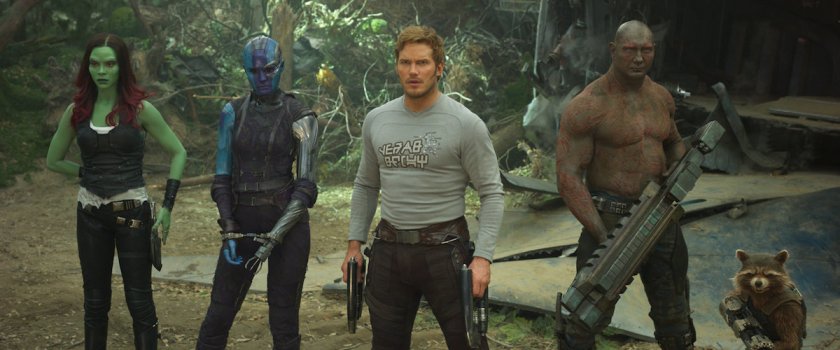
Guardians of the Galaxy Vol. 2 is unevenly paced and overstuffed but the amount of heart it has allows it to just about be successful. Gunn hasn’t made your typical sequel but the story he chooses to tell is all over the place and at times, incoherent. The film retains much of the heart the first film had and this is what allows the film to work better than a film such as Avengers: Age of Ultron or X-Men: Apocalypse which were lunk-headed, equally overstuffed and had zero heart. Gunn manages to further expand the mythology of this sub-universe of the Marvel Cinematic Universe and the Guardians of the Galaxy are very much an important and established strand of this behemoth. I just wish the film was better. It is only because of the characters and the amount of attention invested in them that I can just about be positive in my overall opinion. (My full review here)

And now for the good one’s…
wonder-woman-2_72

4) Wonder Woman 

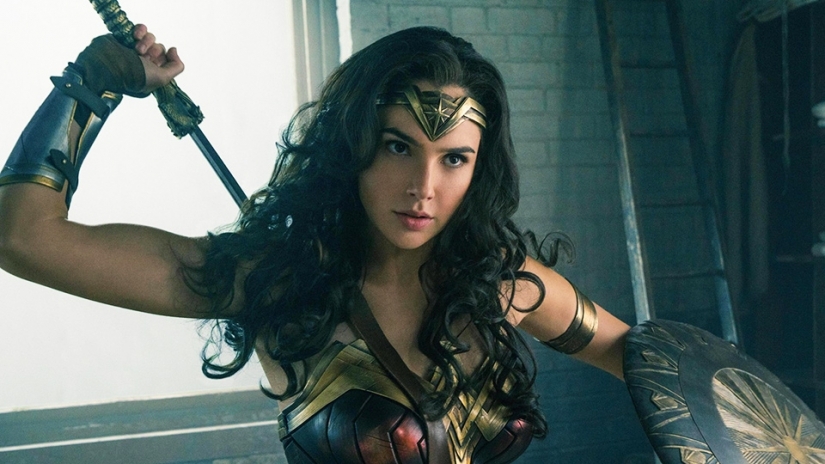
Wonder Woman is immensely enjoyable for a long strength of its lengthy runtime, has a lot of heart and is surprisingly quite human for a comic-book film. Action sequences are used quite sparingly in this film, Jenkins really puts these characters at the forefront and develops them strongly. The performances, pretty much across the board, are excellent and the film looks great visually. Unfortunately, it does fall into the trap of stumbling in its final act where it becomes quite formulaic and contrived but until this point, it is a very fine film and definitely the strongest DCEU film so far. (My full review here)

oz7zbvvqwmimvlglm7ud

3) Thor: Ragnarok

Thor: Ragnarok is a Taika Waititi film through and through – it retains his signature humour and really inverts expectations on what a Thor film should be. This feels refreshingly different from the first two films, more vibrantly coloured and more comical. The film is extremely entertaining and puts the characters that we have grown to like over the course of the films in rather vulnerable positions throughout the film and there is a real sense of danger prevalent. Unlike recent comic book films which have a great, big (and boring) action climax at the end of the film to save the world, Thor: Ragnarok actually earns its finale. The marketing for this film has also been extremely impressive upon viewing the final product – there’s a lot that Marvel have managed to withold from its audiences which is very satisfying. (My full review here)
spider_man_homecoming_df_28509_r2_r-0

2) Spider-Man: Homecoming

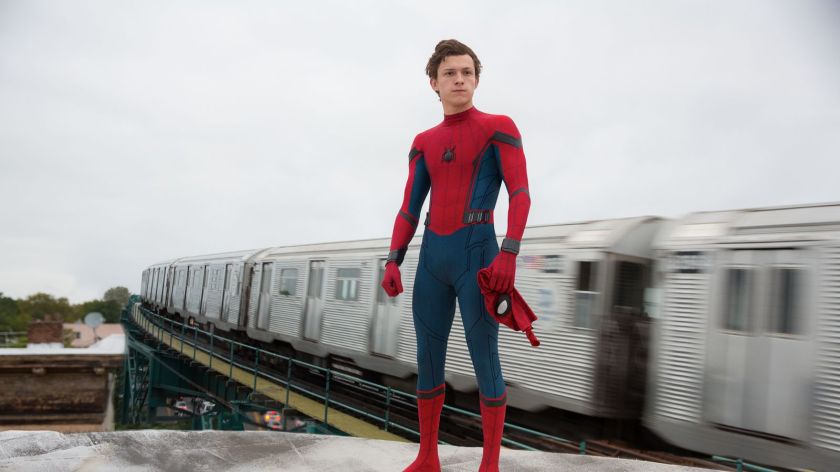
It was a tough choice where to place this with Thor: Ragnarok but ultimately Spider-Man: Homecoming, to my surprise, was more of a breath of fresh air in what has been quite a convoluted genre of late. I thought it struck just the right tone between seriousness and humour and it is a very realistic and grounded film in the Marvel canon. It also features one of the best villains we’ve had in Michael Keaton’s Vulture who is extremely sinister and narcissitic. The whole cast are generally excellent and I was really invested in the narrative that Watts portrays. Watts also does well to not aim too high in terms of visual effects and although there are a couple of impressive action sequences, they never reach the heights of some of the other Marvel films which further helps to keep this film very grounded. (My full review here)

And the best comic-book film of 2017 is…
17-logan-w600-h315-2x

1) Logan 

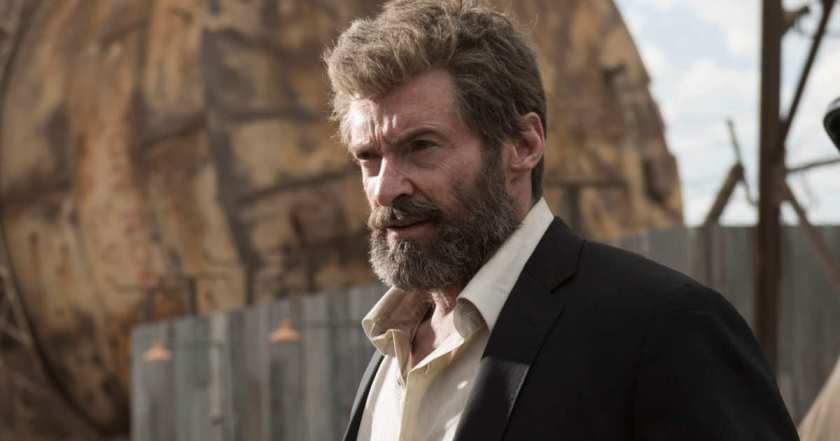
There was never any competition as to which film would get the top spot as Logan absolutely floored me in terms of how good it was. It’s not just the best comic-book film of 2017, it’s also one of the best films overall of the year. Logan is not really a superhero film, it is more of a Western film that just happens to have a superhero starring in it. The Western genre is a genre that is close to my heart so not only is it refreshing to be given another ace Western but for it to be in the shape of Logan is extremely impressive. The film is gritty, swearytastic and deliciously violent, fully earning the film a 15 / R rating. The performances by the cast all-round are great and Mangold directs this film with real flair. The film has a lot of emotional beats and really develops these characters that we have come to empathise with over the course of this franchise. The story, also manages to surprise with a couple of great twists and turns. I’m not sure if it’s better than The Wolverine but it is definitely equal to it and both of Mangold’s efforts are the best comic-book films since The Dark Knight. (My full review here)


What are your thoughts? Let me know in the comments or tweet @TheFilmMeister


Justice League (Review)

Uncategorized
justice-league-cast-hi-res

⭐⭐ (Poor)

Director: Zack Snyder
Starring: Ben Affleck, Henry Cavill, Amy Adams, Gal Gadot, Ezra Miller, Jason Momoa, Ray Fisher, Jeremy Irons, Diane Lane, Connie Nielsen, J.K. Simmons, Ciarán Hinds

Certificate: 12A
Run Time: 120 mins

It feels rather surreal that Justice League has finally arrived on the big screen, particularly after a really tumultous production. After the negative critical reception to both Batman v Superman: Dawn of Justice (BvS) and Suicide Squad, Warner Bros decided to rein returning director Zack Snyder back by making the film less dark, murky and devoid of humour which were the problems that plagued BvS. As for myself, I have always liked and will always defend Snyder’s vision on that particular film, so from the start this film always felt as if it was aiming in the wrong direction. The Justice League are what DC is to Marvel’s Avengers, the culmination and grouping of these superheroes together in a feature film. Not just for myself, but for years, even the notion of a Justice League film happening was one I had never dreamed would come. Snyder unfortunately left the project this year after a family tragedy and Avengers director Joss Whedon stepped in to finish the project. Whilst we’ll never know exactly who shot what, Whedon then was commissioned to lead extensive reshoots on the film, also replacing Junkie XL as composer with Danny Elfman and having to cut the film down to a 120 minute run time which is strongly suspected to have been mandated by the studio.

Unfortunately, this all shows on-screen. Justice League is an absolute mess and is the result of again, too many cooks in the kitchen. Snyder and Whedon as filmmakers pull in completely different directions, with Whedon injecting more humour into the film whereas Snyder has always been the more visionary filmmaker. Whilst I was watching the film, I never felt the stakes faced against these characters and the film has no sense of flow. 120 minutes is a very short run time for the story this film tries to tell and is the shortest DCEU installment thus far. The film neglects to develop its new characters of Aquaman, Cyborg and The Flash that it introduces and has a very forgettable, one-dimensional CGI villain with typical end-of-the-world antics.

The biggest problem with the film is it feels unfinished. This is from everything down to the film itself, its acting and its visual effects. You can trash BvS all you want but you can’t deny that there were multiple instances in which Snyder stunned his audience with some mesmerising visuals. Justice League has none of that and its big set pieces aren’t convincing or believable due to the poor visual effects. By extension, the whole film feels as if it has been cobbled together at the last minute, a far cry from what it once was before. Everyone in the cast looks tired and the performances are mostly wooden and lacking energy. Of the new characters, Jason Momoa’s Aquaman is going to have to do a lot of work to impress me in his standalone film next year as I thought his character was stupid and he spends virtually the entire film out of the water as opposed to in it which are his strengths. Ray Fisher’s Cyborg is average and some of Ezra Miller’s humour as The Flash sticks but some of it aggressively doesn’t. Ciaran Hinds is a fine actor and god knows what they were thinking when they made his villain all-CGI so as not for Hinds to showcase his talents and his villain is so bland, so one-dimensional and again, this trend of poor visual effects continues as his villain looks like he came straight out of an early generation computer game.

The script is just woeful. It is penned by Chris Terrio, who also wrote BvS but Whedon also recieves a credit for his rewrite and like the film, the script feels as if it’s the two of them pulling in different directions. Many attempts at humour feel forced and the film often resorts to cliched exposition. The film’s final set piece, which should be the crowning jewel of this kind of a film, is boring and lazy. Characters make many references to saving the poor citizens who are being terrorised by the villain but we only see this suffering through the eyes of one family. Justice League has a huge $300 million budget – surely the filmmakers could have established a sense of scope in order to invoke that this situation is actually dangerous.

Danny Elfman’s score has recieved some flack for him not opting to reuse the themes Hans Zimmer and Junkie XL had used in the previous films, instead opting to use his classic Batman theme and John Williams’ Superman one. Although perhaps in principle, an interesting idea, what of Elfman’s score that has made it into the film sadly doesn’t really stick. I would like to point out however that on the soundtrack, there are a couple of interesting tracks that for some reason haven’t made it into the film. Fabian Wagner’s cinematography is also sound but lacks the ambition and beauty of Snyder-regular, Larry Fong.

Justice League is not a bad film overall – it’s just a crushingly disappointing one with a real lack of ambition. With the talent involved and what could have been, it’s a real shame that the film that we get is one that doesn’t have much personality, is frustratingly pedestrian and inoffensively bland. There are a moments in it which showcase some of the better qualities of Snyder and Whedon but the cut that has been put together doesn’t fit together and it makes for a very jarring experience. I kept having to remind myself that I was actually watching a Justice League film because the low stakes that were being portrayed on-screen and the sub-par film weren’t really what I had anticipated.

DC need to have a big think going forward. With the exception of Wonder Woman earlier in the year, nothing has seemed to stick with audiences looking at past examples. Justice League is certainly not the worst film of the year and it is a film where I will always imagine what could have been. It will be interesting to see what happens with the standalone Aquaman film next year. Although his character recieved a poor introduction in this film, James Wan is in the director’s chair and hasn’t really put a foot wrong so I have confidence the first step in permanently course-correcting this franchise starts with him. We will have to wait and see.

⭐⭐ (Poor)


Only The Brave (Review)

Uncategorized
Josh Brolin;Jeff Bridges

⭐⭐⭐⭐ (Excellent)

Director: Joseph Kosinski
Starring: Josh Brolin, Miles Teller, Jeff Bridges, James Badge Dale, Taylor Kitsch, Jennifer Connelly 

Certificate: 12A
Run Time: 133 mins

Only The Brave translates the true story of the Granite Mountain Hotshots, a team of firefighters who died fighting the Yarnell Hill Fire in June 2013, to the screen. It is directed by Joseph Kosinski, who previously directed Tron: Legacy and Oblivion, both films that garnered mixed reviews. Kosinski has assembled an impressive cast consisting of Josh Brolin, Miles Teller, Jeff Bridges and Jennifer Connelly to name a few of its talents and tells this inspiring story from the perspective of the firefighters and we see how this team of firefighters impact on their community and their family lives.

Only The Brave is easily the best film of Kosinki’s career and a gripping account of the subject material. It is clear that the cast have the utmost respect for these heroes, resplendent in the modest, genuine performances. It wouldn’t be unfair to say that Kosinski is more of a visionary director than a narrative one and his previous filmography is visually pleasing to look at. Why Only The Brave works so well is because it combines Kosinki’s visual talents with a very solid script, allowing a strong equilibrium between the visual and the story. Kosinski captures the forest fires extremely faithfully – they felt genuinely threatening on the screen, the images of smoke and burning woodlands. The characters are also really well developed and I felt empathy particularly for Josh Brolin and Miles Tellers’ characters, the latter being our insight into the forest firefighter industry, a character trying everything he can to turn his life around from his dark past.

The film is not quite without its flaws though: it’s a little pedestrian in places and relies on generic beats of the genre at times. Furthermore, the film also gets off to a wobbly start, with its rather initially overt and on-the-nose presentation of gender at a few moments.

That said, Only The Brave is a largely successful effort and definitely represents a peak for director Joseph Kosinski. Perhaps, like Peter Berg who has also found success with adapting true stories into films such as Deepwater Horizon and Patriots Day after initially making turgid duds, this genre could be where Kosinski finally finds home as a filmmaker? Only time will tell…

⭐⭐⭐⭐ (Excellent)

The Killing Of A Sacred Deer (Review)

Uncategorized
lead_960

⭐⭐⭐⭐ (Excellent)

Director: Yorgos Lanthimos
Starring: Colin Farrell, Nicole Kidman, Barry Keoghan, Raffey Cassidy, Sunny Suljic, Alicia Silverstone, Bill Camp

Certificate: 15
Run Time: 121 mins

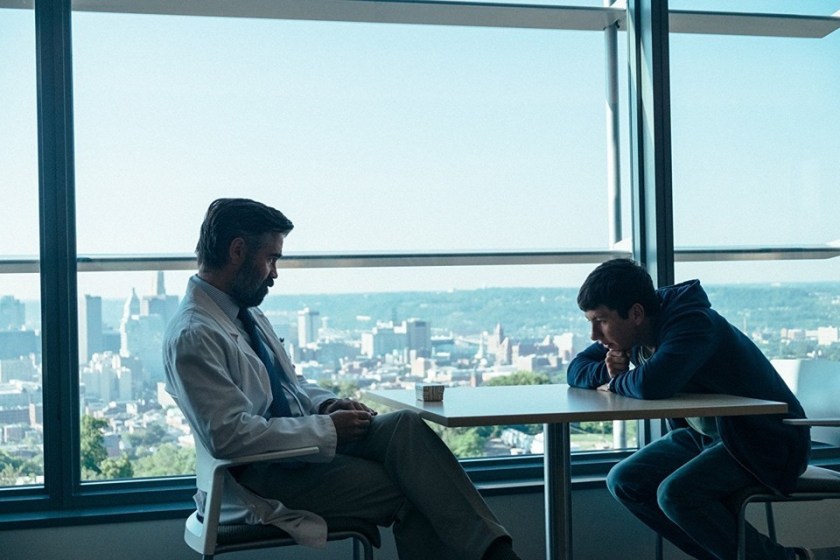
A Palme D’Or contender earlier in the year, The Killing of a Sacred Deer is the latest by Greek director, Yorgos Lanthimos, who solidified himself as a talent to watch with his English language debut film, The Lobster, in 2015 and before that, the deeply unnerving DogtoothThe Killing of a Sacred Deer sees the director reteaming with the ever-reliable Colin Farrell in the lead role as a cardiothoracic surgeon, Steve Murphy, who we first see completing open heart surgery in the film’s striking opening moments to Schubert’s ‘Stabat Mater’ in F minor. Murphy lives in a upper market, suburban area with his wife, Anna (Nicole Kidman) and two children, Kim and Bob (Raffey Cassidy and Sunny Suljic). Unknown to his family at the beginning of the film and for reasons not disclosed even to the film’s audience, Steve is a mentor to a teenager called Martin, played by the rising talent Barry Keoghan who was excellent back in the Summer in Christopher Nolan‘s Dunkirk. Martin is presented from the outset as a deeply disturbed and challenged individual with a past and his relationship with Steve feels extremely unnatural and sickly.

As with his previous filmography, Yorgos Lanthimos’ The Killing of a Sacred Deer is a genuinely unnerving and memorable experience, rich with strong themes and disturbing imagery. It is a film that requires multiple rewatches, particularly as Lanthimos has rooted this narrative in a Euripidian Ancient Greek myth. I felt genuinely unclean after watching it and was left thinking about it for quite a while.

Lanthimos maintains his signature arch, one-note dialogue and the characters are again, irrational yet weirdly enticing to watch. Farrell continues to prove why he is one of the most reliable actors in the business and whilst I’m not the biggest fan of Nicole Kidman, she does a great job here. It is however, the younger actors, who perhaps fare the best with Keoghan, Cassidy and Suljic all turning in brilliant performances and being able to mesh their adolescent innocence and maturity, fused with Lanthimos’ characterisation and dialogue.

The Killing of a Sacred Deer often feels not too dissimilar from a body horror film with Lanthimos’ bold music choices, amplifying the sustained tension and grisliness throughout the film and the situation the characters find themselves entrapped within. This is heightened by Thimios Bakatakis’ cinematography, which allows the film to feel very claustrophobic and sickening at times but also, the shots in the city and the hospital have clear power over the characters, vast spaces in a labyrinthine maze that Lanthimos’ characters are trapped in. There is one particular shot of a character blindfolded and spinning which I found very difficult to watch but the execution and staging of this scene is perhaps one of the most memorable images of the year.

I’m not sure whether The Killing of a Sacred Deer is an enjoyable experience or not but it’s certainly a memorable one and it’s a film that I cannot wait to watch again. It’s films like this that challenge and question their audiences that keep me fascinated with the film industry. It’ll be a hard film to seek out as it’s in a limited release, but I would definitely recommend making the effort to see this. The Killing of a Sacred Deer cements Lanthimos as one of the most powerful voices of cinema of our time.

⭐⭐⭐⭐ (Excellent)

The Limitations of Rotten Tomatoes

Uncategorized

HAR_DM_FIRST LOOK RND F04

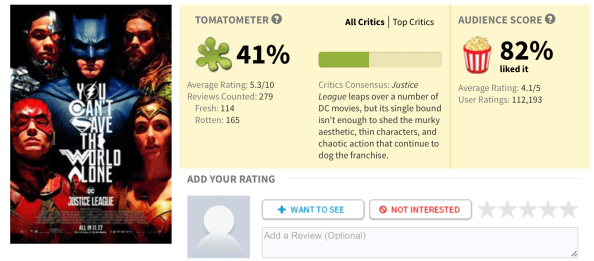
With Justice League currently playing in cinemas, the controversy of the critical reception to the films in the DCEU canon continues. One important aspect to many people is the Rotten Tomatoes score of the film, which people have been keen to follow. For those unfamiliar, Rotten Tomatoes is a site that measures how many critics gave a favourable review to a film, in the form of a percentage. If 60% of the reviews are deemed positive, the film is rated as ‘fresh’ and anything less, ‘rotten’.

hero_mother-tiff-2017

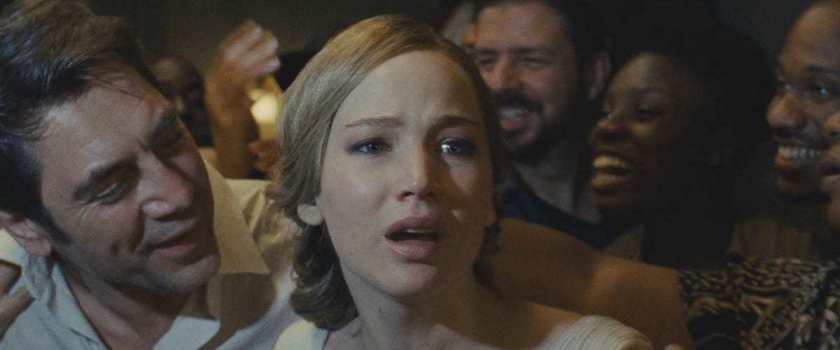
Of course, there are limitations with this model with the notion that a films can be reduced to scores and also the score doesn’t inform generally how much people liked or disliked a film. Take the recent release of Darren Aronofsky‘s mother! for example, a film that is intentionally designed to be divisive, which attained a 68% (fresh) score from critics. To those unaware, 68% would suggest that the film was pretty good but perhaps flawed in some way. What the score fails to divulge is that mother! is a film which people either loved or loathed or were, like myself, somewhere in between. How are you supposed to gauge from a score the varying attitudes and opinions to these reviews? All 68% tells you is that 68% of the critics featured in this poll would give a positive review to the film.

Screen Shot 2017-11-28 at 14.23.19.png

When Batman v Superman: Dawn of Justice (BvS) opened towards the beginning of last year, the famous critical backlash to the film lead to fans losing their heads over the damning 27% score (therefore, judged as ‘rotten’). This was furthered by Suicide Squad‘s also less-than-stellar critical reception, also scoring a measly 27%. Petitions were even created to “close the site down”, from dismayed fans who thought these scores had been rigged and  also believed that these scores may damage the legacies of these films.

Although the reception of Wonder Woman served as a U-turn for the critical reception of the DCEU with a 92% ‘fresh’ score, the reception to Justice League was still one of trepidation due to the turbulent production of the film and the fact that it serves as a follow-up to BvS, largely featuring the same cast and crew.

Screen Shot 2017-11-28 at 14.21.18.png

The scores came in and Justice League has been deemed as ‘rotten’ and currently sits on a disappointing 41%. But before the scores were revealed in what was in my opinion, a long drawn-out affair with a very late embargo, it became very apparent to me that a lot of people (even a couple of YouTubers that I have respect for) didn’t seem to know what Rotten Tomatoes is. I have heard things such as “Justice League deserves at least a 70%” and “27% is too harsh for BvS“.

I would like to point out that a film cannot deserve a score. In the case of BvS, all 27% means is that just over a quarter of people who watched the film thought it was at the very least, good. Like with my previous example of mother!, 27% doesn’t tell you how skewed the reviews were in either direction.

As flawed a system as Rotten Tomatoes is, I think people need to understand that it is just an indication of the general consensus to a film and not something that dishes out its own score. And please, no more of this shutting down business – it’s petty and childish and the so-called ‘fans’ that petitioned for this need to grow up.

Rotten Tomatoes is definitely useful as a tool, but should in no way affect your opinion of a film. Watch Justice League for yourself to form your own verdict – don’t judge it by a statistic. As film critic Mark Kermode puts it, aggregate scores “aren’t criticism, they’re just number-crunching”.

Justice League is out now in UK cinemas. 

The Florida Project (Review)

Uncategorized
the_florida_project-3c_marc_schmidt_h_2017

⭐⭐⭐ (Good)

Director: Sean Baker
Starring: Willem Dafoe, Brooklynn Prince, Bria Vinaite, Valeria Cotto, Christopher Rivera, Caleb Landry Jones

Certificate: 15
Run Time: 115 mins

After universally impressing with Tangerine, a film shot on an iPhone 5S, director Sean Baker is back with another insight into society, this time in the deprived areas surrounding Disney World in Florida, hence the film’s title derision from the working name for Walt Disney’s project. But where the film also takes place is in effect, not unlike American “project” communities. Although Baker’s film is now shot on more conventional film, The Florida Project is an equally unconventional, searing look at society.

We follow six year old Moonee and her twenty two year old mother, Halley, both brilliantly played by Brooklynn Prince and Bria Vinaite, who are equally stars in the making. They are both ‘residents’ at The Magic Castle motel. Although the motel’s name might connote expectations of happiness and fantasy, these connotations can be discarded as the majority of the people who reside there are in effect tenants, only to legally work, they have to move themselves and their belongings out for a day intermittently. Moonee is a highly inquisitive girl, whose playful character often gets the better of her as she pranks others with her friends from these residences. Her heart is in the right place, however, and she only ever wants the best for everyone. Her mother, Halley, is struggling both emotionally and with money and the film follows how she is becoming increasingly unhinged and how this is putting strain on her daughter until a crescendo of tension in the film’s finale. But she still clearly has a motherly love for her daughter and wants the best for her, despite knowing how best to raise her child. Willem Dafoe puts in a career-best performance as Bobby Hicks, the manager of this particular hotel, who effectively acts as a father figure to the children. He comes across to them as stern, even bordering on unfriendly at times but he so clearly wants what is best for his tenants welfare.

At times, The Florida Project is a fascinating character study and explores the juxtaposition of adulthoood and childhood and its climax is particularly moving. But the film panders along more than enough to get there, it is definitely a good twenty minutes too long. That said, it is a film that warrants repeat viewings as it leaves a lot of questions for its audience, something that more casual viewers may perhaps feel rather underwhelmed. Although deeply flawed, Baker’s film is certainly a story worth watching unfold.

⭐⭐⭐ (Good)

Murder On The Orient Express (Review)

Uncategorized
branstache-650x366

⭐⭐ (Poor)

This piece was further developed and submitted as part of my portfolio for a university project. 

Director: Kenneth Branagh
Starring: Kenneth Branagh, 
Penélope Cruz, Willem Dafoe, Judi Dench, Johnny Depp, Josh Gad, Derek Jacobi, Leslie Odom Jr, Michelle Pfeiffer, Daisy Ridley
Certificate: 12A
Run Time: 114 mins

Murder on the Orient Express is yet another adaptation of Agatha Christie’s crime novel, only this one is directed by and starring Kenneth Branagh as famous Belgian detective Hercule Poirot. After solving a theft by the Wailing Wall in Jerusalem, Poirot feels he has earned a well-earned holiday and one would be inclined to agree with the sheer amount of cases Christie has challenged him with in her many novels. However, this is short-lived when his presence is required in London so instead of an exotic holiday, he gets to travel in luxury aboard the lavish Orient Express. However, somebody is murdered on the journey and the train derails after an avalanche, effectively forcing Poirot to put his plans of a holiday on hold again. Branagh faces some strong competition from other adaptations and performances of the character – my personal favourite would be David Suchet in the television series, who is pretty much note-perfect.

Luckily, Branagh more than ably steps up to the task and his iteration of Poirot is outlandish and theatrical but with grace and respect for the character as well. In addition, he has also crafted the most fabulous yet outrageous moustache for Poirot!  However, Branagh puts his character so front and centre that he neglects to develop the rest of the cast. Branagh has perhaps one of the most star-studded casts of the year with actors such as Johnny Depp, Judi Dench, Michelle Pfeiffer and Penelope Cruz, but pretty much all of them just chew the scenery because they are given virtually nothing to work with. All of the suspects feature in introductory moments in the film as Poirot learns who he is travelling with and in an interrogation scene once the murder occurs. It’s a real shame and it makes the film quite oddly uninvolving and cold at times as there is nothing to latch on to. Branagh certainly has the ability, with his 2007 thriller remake, Sleuth, being a very gripping experience but this is weirdly not the case here.

Musically, Patrick Doyle’s score is a disaster. Doyle has composed pretty much all of Branagh’s directorial efforts and they’re generally a great match but what Doyle has come up with here aggressively does not fit with the film.

The other big issue I have with the film is its ending which I really didn’t like and felt cheated by it. It also then begins to reveal, in my opinion, plot holes in the entire concept of the narrative, practically undoing the film. I won’t be discussing spoilers but this is probably the biggest factor as to why my ultimate reaction is more negative than positive.

On the plus side, as well as Branagh’s performance, the film looks great. The cinematography by Haris Zambarloukos is excellent and a lot of shots almost feel as if they are an unnamed passenger, watching on the events unfolding. There are also some breathtaking, sweeping shots of the train and surrounding landscapes. The film certainly stylistically and visually looks the part.

I’m afraid I’m rather reticient to be overall positive on Murder on the Orient Express as is style over substance and its narrative and development of characters is very unsatisfying. Although perhaps a crude comparison, say what you will about The Snowman but at least that had the guts to be nasty at times and as silly as it was, I was more interested in it. The film is not a complete failure though – to give credit where it’s due, Branagh at least has the right building blocks should a sequel be made, which the film sets up in its final scene. I’d happily watch his iteration of the character solve a more satisfying mystery, coupled with the fact that the film is visually pleasing. Murder on the Orient Express is ultimately not the slamdunk on paper it should have been and its wasted journey should never have really left the station.

⭐⭐ (Poor)

Breathe (Review)

Uncategorized
Breathe_170816_Day37_ 1428.jpg

⭐⭐⭐ (Good)

Director: Andy Serkis
Starring: Andrew Garfield, Claire Foy, Tom Hollander, Hugh Bonneville, Dean Charles Chapman, Miranda Raison, Ed Speelers, Jonathan Hyde, Diana Rigg 

Certificate: 12A
Run Time: 117 mins

Breathe marks the directorial debut of motion capture maestro Andy Serkis and recounts the important, true story of Robin Cavendish, an individual whose content life is brought to a halt after he is stricken down with polio. Cavendish is played by the ever-talented Andrew Garfield, who put in two brilliant performances already this year in Silence and Hacksaw Ridge. Breathe is arguably the most physical of the three performances for Garfield, who very much has to act with his facial expressions. Serkis is no stranger to the theme of disability, putting in a brilliant performance in Ian Dury biopic, Sex and Drugs and Rock and Roll. 

Breathe is a decidedly safe film, mind, and is a neat, concise account of Cavendish’s life. Andrew Garfield, again demonstrates why he is one of the best actors working currently, towering over the rest of the cast. I’m reluctant to call it ‘Oscar-bait’ as that would be a disservice to its powerful story but Serkis would have really benefitted from crafting a more dark and daring film that explored more of Cavendish’s pains and feelings rather than every single character being portrayed as so upbeat, a quintessentially British mood. The swooning score by Nitin Sawhney fits the film neatly too and there are some nice moment in Robert Richardson’s cinematography.

Serkis runs into big problems late into the film as he simply doesn’t know where to end it. In my opinion, Serkis has two great opportunities (one after a powerful speech and another, after a shot of the ventilator working) but he squanders it and the film becomes overlong and increasingly emotionally manipulative. The final scenes are obviously intended for audiences to shed a tear but it left me cold, threatening to undo the good work he had done in the first 90 minutes.

For all its flaws, I was never bored by Breathe and for its first 90 minutes or so, it is particularly strong and tells a timely story of Cavendish’s life. It’s just a shame that Serkis chose not to be more risk-averse. If he did, the film could have been particularly special and that would justify its existence more for the relevant Awards.

⭐⭐⭐ (Good)