Director: Kevin Costner Starring: Kevin Costner, Sienna Miller, Sam Worthington, Giovanni Ribisi, Michael Rooker, Danny Huston, Jena Malone, Michael Angarano, Abbey Lee, Jamie Campbell-Bower, Luke Wilson Certificate: 15 Run Time: 181 mins
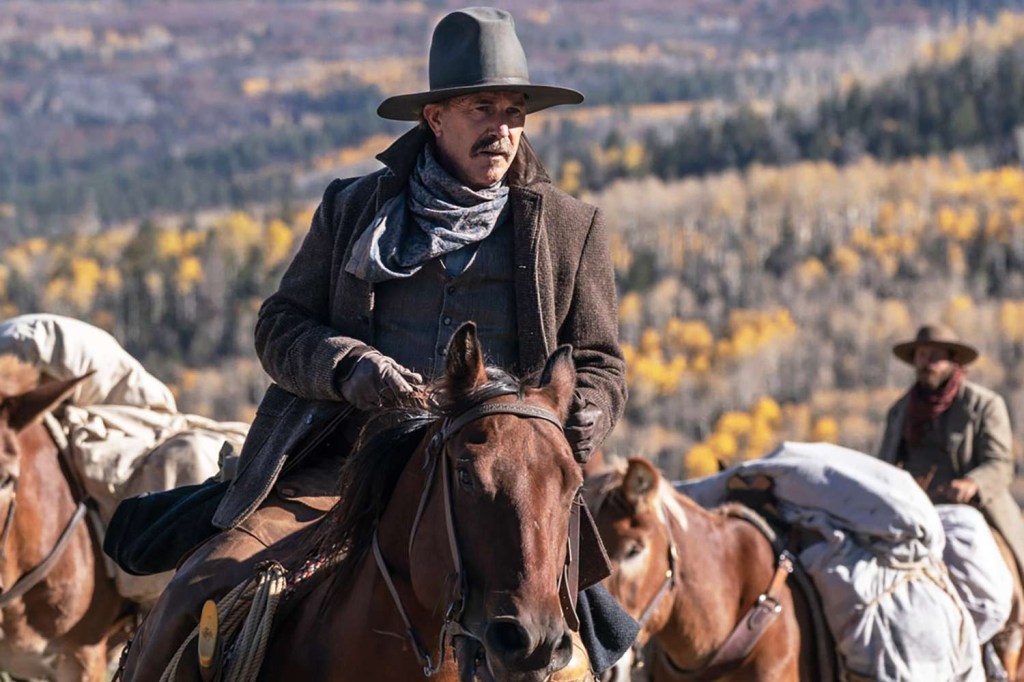
Horizon: An American Saga – Chapter 1 is the first in a planned four-film epic Western series directed, produced, co-written and starring Kevin Costner. Costner is no stranger to the epic Western having helmed the (overrated) Dance with Wolves and Open Range. His aim with this series is to tell a story spanning multiple generations, akin to the excellent How The West Was Won. Still, films like this just aren’t made anymore so despite Costner’s historical lack of subtlety, I was hoping it would be successful for the genre’s sake.
Told over a bum-numbing 181 minutes, this first chapter has three overarching stories, with separate strands within them. To keep it brief, Horizon, a supposedly idyllic paradise in the San Pedro Valley, is brutally attacked by an Apache tribe led by Pionsenay (Owen Crow Shoe). We see how some of the survivors, chiefly Frances Kittredge (Sienna Miller) and how her daughter are offered santucary in Camp Gallant.
In another story that begins in Montana, we see a woman, Lucy (Jena Malone) shoot James Sykes and escape, with the brothers hot on her tail. Within this storyline, we meet Hayes Ellison (Kevin Costner) who befriends prostitute Marigold (Abbey Lee), who is looking after Lucy’s child.
Finally, around two hours in, we are introduced to a wagon trail led by Matthew van Weyden (Luke Wilson) heading to Horizon.
It’s hard to definitively judge Horizon: An American Saga – Chapter 1 without the context of its sequels but as a standalone film, it falls short of the mark. While it’s always watchable, nothing really happens and the different storylines are no closer to colliding by the end of the film. It’s certainly true that the characters find themselves in a different situation than the one we first see them in when they are introduced though.
There’s some good setpieces, especially the opening, violent Horizon massacre but there’s a lot of baggage too that could have been edited to make the film tighter. Costner and Jon Baird’s script is very talky and not particularly sharp and the film lacks any of the emotion of How The West Was Won, often resorting to cliche.
Despite J. Michael Muro’s expansive cinematography and John Debney’s throwback, swirling but ultimately unmemorable score, the film felt more akin to a television series rather than a piece of cinema. The ending is particularly criminal, without any kind of hook for the unengaged viewer to feel the need to instantly put on Chapter 2. We end on a random scene and then a montage (trailer) for Chapter 2, which felt like a particularly cheap move.
Horizon: An American Saga – Chapter 1 is an odd film – as a standalone piece of cinema, it’s a failure but in the context of a series, I am somewhat interested in what happens to these characters next. With the trailer for Chapter 2 seemingly promising more action, I hope better storytelling and pacing comes with it because these are the critical components that hamper this opener.
With Chapters 3 and 4 in various forms of pre-production, I wonder if there will ever be a finished product. It certainly takes a devoted fan of the Western, who appreciates its sprawling and old-fashioned nature to want to persist with this story and realistically, I struggle to see this series performing well financially. With Horizon: An American Saga – Chapter 2 set for release in August, we’ll undoubtedly have a clearer idea whether Costner’s passion project is a viable one.
Director: Yorgos Lanthimos Starring: Emma Stone, Jesse Plemons, Willem Dafoe, Margaret Qualley, Hong Chau, Joe Alwyn, Mamoudou Athie, Hunter Schafer Certificate: 18 Run Time: 164 mins
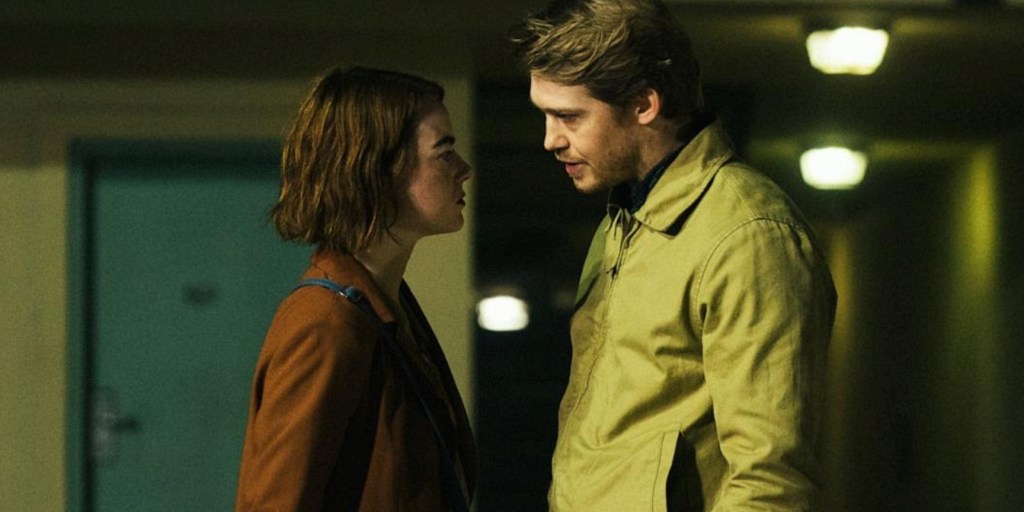
Kinds of Kindness is the new film by Yorgos Lanthimos, hot on the heels of Poor Things. Although it may seem as if Lanthimos has been uncommonly busy, Kinds of Kindness was actually shot before his Oscar-winning darling and it’s an entirely different beast in almost every way.
An absurdist triptych, Kinds of Kindness sees Lanthimos on scripting duties with Efthimis Filippou in their first collaboration since The Killing of a Sacred Deer (in my opinion, Lanthimos’ best film). On both The Favourite and Poor Things, Lanthimos didn’t have a hand in the script and you could tell – Lanthimos and Filippou’s scripts all have an arch quality to them, and is what makes them so great.
Kinds of Kindness is a thrillingly cold-hearted triptych with a razor dry sense of humour which only Lanthimos could have accomplished and represents the director at his most daring. As with any anthology film though, certain stories resonated with me more than others and the first one’s the best for me, because Jesse Plemons carries the emotional spiralling descent so chillingly.
While it may lack the sheer horror of The Killing of a Sacred Deer’s final act, this has all the surrealist elements and uncomfortable feeling of The Lobster and Dogtooth. There’s certainly a lot going on in Kinds of Kindness and even if some elements don’t seem to be fully fleshed out, it’s a fascinating film. Conversations about what ties the stories together are likely to only end in frustration.
The cast are all at the top of the game but Jesse Plemons is sensational, particularly the first two stories where he has the lead role and it may just be career-best work. Emma Stone is also very strong, particularly when she takes the lead in the third and somewhat frustrating fable and Willem Dafoe’s reliably excellent, with the same lilt he has in Poor Things.
Jerskin Fendrix’s score is very fitting and full of portent and cinematographer Robbie Ryan captures the neon glitz of Los Angeles but he’s not given as much an opportunity to really push the boat like he did with the memorable fish-eye lens of Poor Things.
Kinds of Kindness is a fascinating film in Lanthimos’ catalogue and in many ways, feels like a return to his past which is his strongest period. This has all the eerie strangeness and uncomfortable feeling of his best works, backed up by committed and memorable performances across the board.
Director: Michael Sarnoski Starring: Lupita Nyong’o, Joseph Quinn, Alex Wolff, Djimon Hounsou Certificate: 15 Run Time: 99 mins
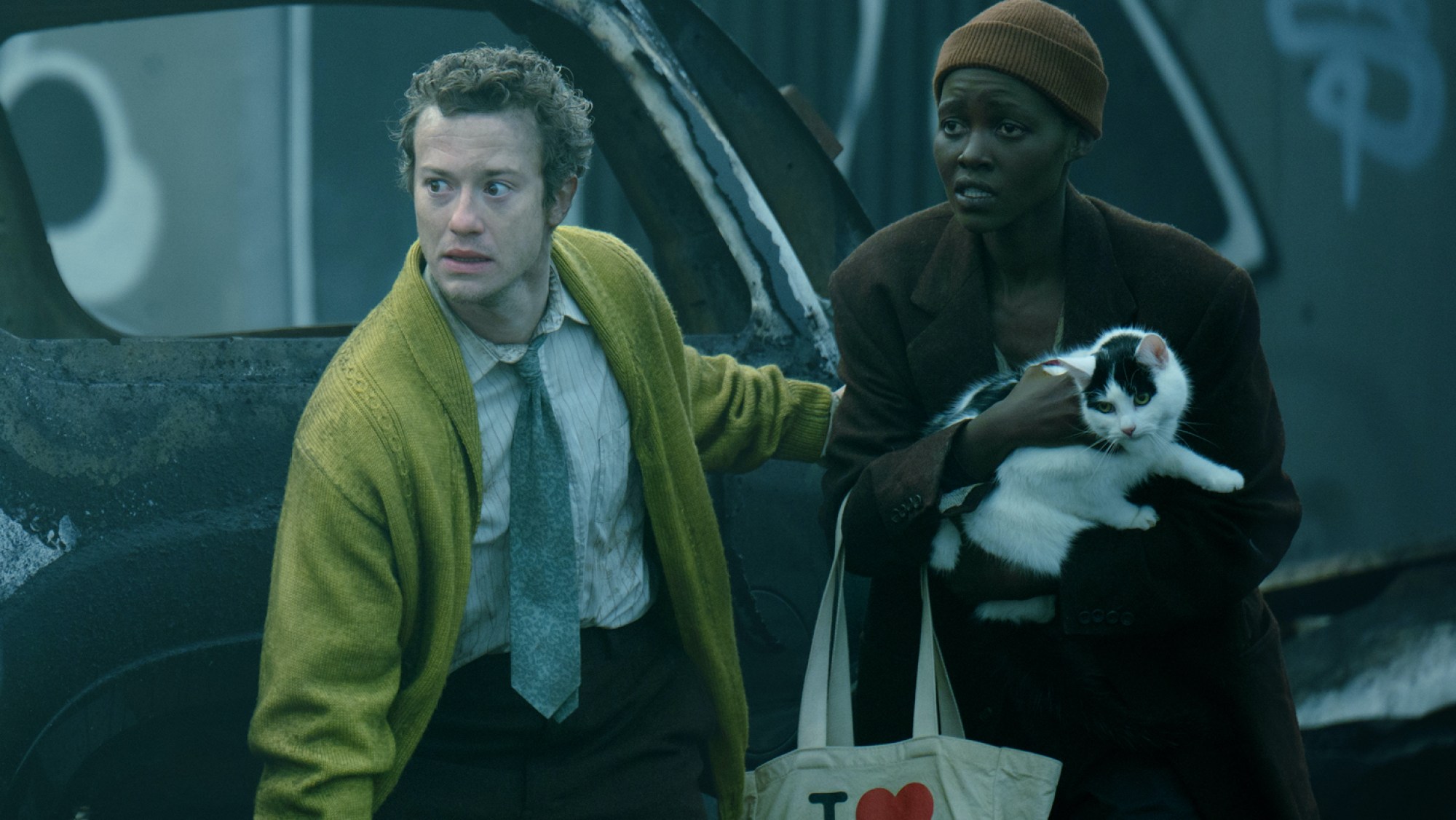
A Quiet Place: Day One is the latest in the expanding series, functioning both as a prequel and spin-off. While A Quiet Place and A Quiet Place: Part II focussed on the Abbott family, Day One relocates the action to New York and follows Sam (Lupita Nyong’o).
Sam is a terminally ill cancer patient who lives at a hospice. Thinking she’s had her last visit to the city before her death, she’s convinced to join a trip to a marionette show in Manhattan by a nurse, Reuben (Alex Wolff) with the promise of pizza afterwards. However, things take an apocalyptic turn when meteor-like objects fall from the sky mid-performance. As the extraterrestrial creatures take ahold of New York City, the citizens are encouraged to make their way to a boat because the creatures can’t swim. Sam, on the other hand, decides she would rather stay in the city and get pizza from her favourite restaurant, Patsy’s.
Unlike its predecessors which were both directed by John Krasinski (but he still gets a story credit here), Michael Sarnoski is in the director’s chair this time around. Sarnoski’s debut feature was Pig, which I utterly despised, so I was rightfully rather trepidatious heading into A Quiet Place: Day One.
A Quiet Place: Day One fortunately isn’t a disaster and there’s a lot that it gets right amidst more shortcomings. You mileage will vary depending on how much you buy into the story of a terminally ill individual wanting to eat pizza, as well as regular defiances of logic. On the plus side, while Sarnoski’s direction of Pig was bland, it isn’t here.
While the film’s overly schmaltzy in its quieter moments, I liked the more thoughtful idea of coming to terms with death within an apocalypse and the film is visually interesting. I liked how we see the creatures in broad daylight, whereas Krasinski tended to keep them in the dark the first time round. There’s some good set-pieces too, but unfortunately Sarnoski often doesn’t develop them. The film also would have benefitted from another re-write as the dialogue is quite wooden in places and although it’s only 99 minutes, cutting it down by 15-20 minutes would have made for a more effective piece.
It’s Lupita Nyong’o who really holds the film together. She tells us a lot about her character through her facial expressions, especially the pain and grief she’s experiencing. Joseph Quinn didn’t do much for me but Alex Wolff is excellent as Reuben and is almost unrecognisable.
While A Quiet Place: Day One is a rewrite and edit away from being pretty good, the result is an interesting mess held together by an excellent Lupita Nyong’o performance. It’s definitely better than A Quiet Place: Part II and it’s not far off the quality of the first, which despite its excellent concept I find to be quite overrated.
Director: Kelsey Mann Starring: (voices of) Amy Poehler, Maya Hawke, Kensington Tallman, Liza Lapira, Tony Hale, Lewis Black, Phyllis Smith, Ayo Edebiri, Diane Lane, Kyle McLachlan Certificate: U Run Time: 96 mins
Inside Out 2 is the sequel to the 2015 coming-of-age knockout from now-Pixar head creative Pete Docter.Inside Out is one of the least likely films from the Pixar canon to warrant a sequel and so not just in my view but this sequel has faced an uphill struggle from the start. Docter vacates the director’s chair this time for Kelsey Mann, who’s been with Pixar since 2013’s Monsters University.
The sequel is set a year after the original, with Riley (now voiced by Kensington Tillman) having just turned 13 and entering high school. She continues to have a love for ice hockey and after impressing Coach Roberts (Yvette Nicole Brown), she’s selected to attend a summer camp to apply for a team at her designated high school.
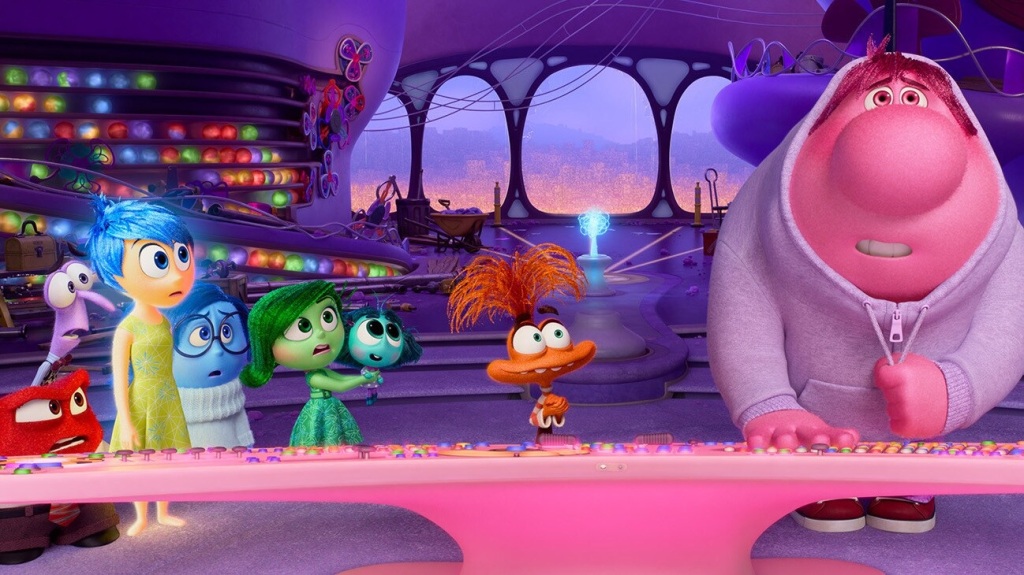
Riley’s emotions, Joy (Amy Poehler), Sadness (Phyllis Smith), Anger (Lewis Black), Fear (Tony Hale replacing Bill Hader) and Disgust (Liza Lapira replacing Mindy Kaling) have sound control of her. However, on the night before she leaves, the ‘Puberty alarm’ sounds and the emotions’ console is replaced with one that makes Riley overreact. And things become even more stressful when four new emotions enter headquarters, led by Anxiety (Maya Hawke).
Inside Out 2 unfortunately lacks the freshness and simplicity of the profound original but it’s not a completely wasted affair. Starting with the positives, the first and last twenty minutes are excellent. The beginning is sharply written and very much feels like a continuation of the original and the way in which the film ends is reasonably profound.
Unfortunately, the rest of the film is rather messy. Perhaps this is by design given the original’s exploration of childhood was simplistic and adolescence is far from a coherent process. And on that front, the film delivers but there’s just too much going on. We’ve now gone from five emotions to nine and it’s always hard to juggle the right amount of screentime and have a meaningful amount of development when you have an overabundance of characters. Of the four new emotions, it’s only Hawke’s Anxiety that makes an impression.
The original quintet of emotions are literally bottled away and removed from Headquarters and the quest element of them trying to return is in many ways, a retread of the original. There is an uninteresting element that the film is just going through the motions.
But what annoyed me most was that Mann just doesn’t seem to understands the original’s concept. I know it’s a minor point, but why are none of the quintet of emotions on dream duty like one of them always is in the original whenever Riley is asleep? The literal train of thought is gone and has instead been replaced by a stream of consciousness, but why didn’t that exist in a child? Why are we being introduced to new childhood figures that didn’t exist in the original, given we’ve only moved a year forward now? And moving to major examples – why do none of the other teenagers we meet in the film have these new emotions? I wasn’t trying to interntionally pick holes but these are glaring omissions and it really threw me out the film.
While Andrea Datzman honours Michael Giacchino’s original score and introduces a couple of rousing themes, it lacks the intelligence of Giacchino’s work. Listen carefully and you’ll notice Giacchino includes cues in the film’s earlier scenes which are later fully developed into the crescendo of when Riley runs away – the masterpiece on the soundtrack that is We Can Still Stop Her. Datzman’s score is simply window-dressing.
Inside Out 2 is fine and I wouldn’t go as far to say that it shouldn’t exist. But it does somewhat undermine the original with some of its logic and Mann lacks the subtlety and delicate touch of Pete Docter. It’s also unfortunate Pixar have already explored puberty far more assuredly just two years ago with Turning Red, reducing the novelty and impact of Inside Out 2. There’s undoubtedly more to take away from repeat viewings of Inside Out 2 given it runs at a barraging pace but even still, it’s undoubtedly a mess.
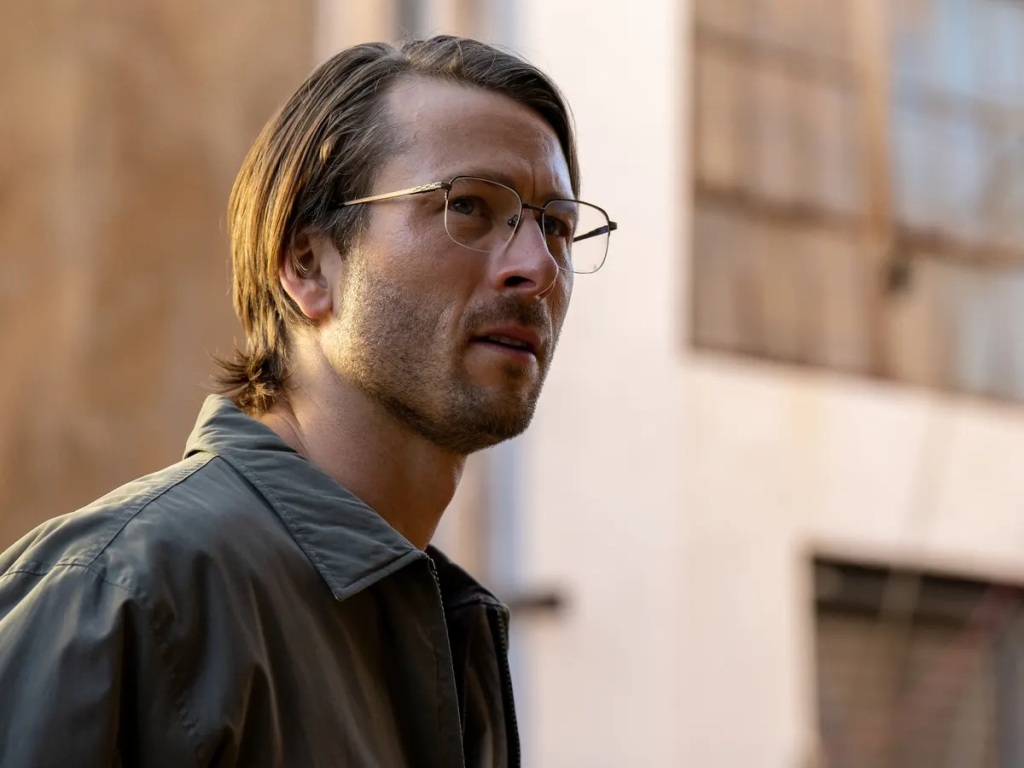
Director: Richard Linklater Starring: Glen Powell, Adria Arjona, Austin Amelio, Retta Certificate: 15 Run Time: 115 mins
Hit Man is a romantic black comedy by director Richard Linklater, who’s had quite the eclectic career. Linklater is one of the most versatile filmmakers around, from romace films such as the Before trilogy to comedies such as School of Rock to adult animation such as Apollo 10 1/2: A Space Age Childhood to his magnum opus coming-of-age drama Boyhood. The only other director I can think of who has had such a varied career is Steven Soderbergh but one thing that unites all of Linklater’s work is that regardless of genre, the story he tells is thought-provoking.
Linklater’s latest stars Glen Powell as Gary Johnson, a psychology and philosophy professor at the University of New Orleans. In his spare time, Johnson works undercover with the New Orleans Police Department, assisting in undercover sting operations. When a colleague is suspended, Gary is asked to step into his role. This entails him to portray fake hitmen, visiting clients to solicit murder-for-hire confessions. Gary quickly becomes very good at the role, becoming completely absorbed and thoroughly researching his clients beforehand and tailoring his appearance and personality to suit. However, things get tricky when he’s sympathetic to a client, Madison (Adria Arjona) and his job quickly becomes complicated.
Hit Man is a strange film in Linklater’s filmography and while I admired the concept, I didn’t find it particularly funny. On the plus side are the performances – Glen Powell is terrific as the professor-cum-hitman, a layered and rather likeable protagonist. Adria Arjona is also very solid as his ultimate love interest who deftly balanced being beautiful but terrified. Although sparse, Graham Reynolds’ score is also effective.
But I found Hit Man to overall be a little too ponderous and it wasn’t as light as its comedic intentions could have made it be or as cynical if it wanted to interrogate its preposterous concept. It’s also a good twenty minutes overlong and I found it dragged in the second half. Some have compared Hit Man to Linklater’s Bernie, where Jack Black plays a murderous mortician but I thought both films strike completely different tones.
While Hit Man has a thought-provoking concept and is reasonably entertaining in the moment with a terrific central performance from Glen Powell, I struggle to fully understand the lavish praise it’s received. It’s certainly not one of Linklater’s best works but there’s no denying it has an original concept.
Director: Ishana Night Shyamalan Starring: Dakota Fanning, Georgina Campbell, Olwen Fouéré, Oliver Finnegan Certificate: 15 Run Time: 102 mins
The Watchers is a supernatural horror that marks the directorial debut of Ishana Night Shyamalan. Based on the 2022 novel by A. M. Shine, the film follows Mina (Dakota Fanning), an American immigrant living in Ireland who struggles to come to terms with the death of her mother fifteen years prior. She works in a pet shop and is tasked with delivering a valuable golden parakeet to a zoo in Belfast. Unfortunately, her car breaks down en-route in a notoriously haunted forest – suspend your disbelief because the reality is the drive between Galway and Belfast is all via motorway! She quickly meets a trio that live in a bunker-like building nicknamed ‘The Coop’, where they must return every night or face a certain death.
The Watchers is an odd film, with a real mix of promising and frustrating elements. It’s not particularly scary and Shyamalan fails to decide whether to lean into full-blown horror or embrace the twisted fairytale nature of the source material. While she manages to inject some atmosphere into the film, her direction isn’t as assured as her influential father yet but that’s to be expected. The melding of Irish suburbia with a fantastical forest felt rather awkward and I did get frustrated at Mina’s typical horror antics quite early on.
Fortunately, the film picks up once Mina meets the trio and this is where The Watchers is at its best. A late chase sequence is particularly thrilling and the ideas of voyeurism and duality are interesting, but not fully explored. There’s a natural point for the film to end and it would have been a lean sub-80 minute experience but (perhaps a fault of the source material), it goes on for another 20 minutes of exposition and I found the ending very unsatisfying and protracted.
Dakota Fanning could play this type of role in her sleep and does the best with what she’s got. But Mina is unfortunately rather unlikeable and Fanning’s saddled with some rather stilted dialogue. After her winning turn in Barbarian, Georgina Campbell fares better as Ciara and Olwen Fouéré is also impressionable – we’re not sure whether we can trust Madeline or not. Unfortunately, Fouéré is regularly riddled with plot exposition.
Really elevating The Watchers is a tremendous score by Abel Korzeniowski. It’s hauntingly melodic and brooding and like many of his other works, does a lot of the heavy lifting. Eli Arenson’s cinematography is a mixed bag – sometimes, the lighting is too dark but at other times, he beautifully captures the forest settings.
While The Watchers is a perfectly serviceable horror film and stronger in its middle act, it’s a shame Shyamalan’s debut is bookended by a frustrating beginning and end. Still, I’m excited to see her career progression because although this film feels like it’s a debut feature, she clearly has promise.
Director: George Miller Starring: Anya Taylor-Joy, Chris Hemsworth, Tom Burke, Alyla Browne, Lachy Hulme Certificate: 15 Run Time: 148 mins
Furiosa: A Mad Max Saga is the long-awaited next chapter in the franchise, coming off the back of the widely-regarded masterpiece Mad Max: Fury Road. Rather than a sequel, returning director George Miller has opted for what functions as both a prequel and a spin-off on Charlize Theron’s Imperator Furiosa. Set 15 to 20 years before Fury Road, Furiosa explores the origins of the character, beginning from her childhood where she is kidnapped by the twisted warlord Dementus (Chris Hemsworth). What follows is her rise to power as a trusted lieutenant of Fury Road villain Immortan Joe (Lachy Hulme, replacing the late Hugh Keays-Byrne) and her quest for revenge against Dementus.
Those wanting a rehash of Fury Road should rethink their expectations because Furiosa: A Mad Max Sagaplays out very differently – a mature and slow-burn revenge thriller split into five chapters. Except for perhaps ten minutes when the characters reach The Green Place in Fury Road, that film was effectively a non-stop car chase whereas there’s plenty of room to breathe this time around. Considering he’s almost eighty years old, Miller’s film is brimming with the same passionate energy with some truly breathtaking action sequences, the highlight an extended chase aboard the War Rig. There’s plenty of meat to the bone to all the characters too, with an excellent script Miller co-wrote with Nico Lathouris, and it’s expectedly beautifully shot by Simon Duggan.
Although she doesn’t show up until the third chapter, Anya Taylor-Joy stuns as the titular character. Not only is her performance magnetic, but she also embodies Theron’s sounds and mannerisms. The character is also mostly silent to conceal her identity, leaving Taylor-Joy to communicate her performance through her facial expressions but when Furiosa finally starts to speak more, it feels like a natural progression into how she morphs into Theron’s depiction. Alyla Browne also impresses as the younger Furiosa, who’s forced to abandon her childhood rather prematurely.
Chris Hemsworth is clearly having fun as Dementus in a scenery-chewing but relatively nuanced performance and is more than an intellectual match for Immortan Joe. Dementus instantly becomes one of the most despicable villains in the series and the decision for him to wear a teddy bear is genius. Tom Burke also shines as Praetorian Jack and I really brought the blossoming but respectable relationship between him and Furiosa.
Junkie XL returns on scoring duties, with the soundtrack to Fury Road one of its defining features. His score here is also brilliant, weaving existing themes with a pumping heartbeat that grows as the film progresses, in line with Furiosa’s development. It would have been very easy for the composer to have repeated himself again and it shows great restraint that this score stands out on its own.
While I initially don’t think Furiosa: A Mad Max Saga is quite as strong as Mad Max: Fury Road, this is still a terrifically original film. It had me glued from start to finish and I appreciate Miller not trying to simply outdo himself by rehashing Fury Road’s best beats, instead refreshingly switching gears with the story and its tone. The performances elevate the film and all the crew are working at the top of their game once again. I really hope Miller gets to further expand the series and I hope we don’t have to wait another nine years.
Planet of the Apes is one of the most enduring sci-fi franchises and for good reason – almost all of them explore morality-questioning themes that mirror our world. Coming off Pierre Boulle’s 1963 novel, LaPlanète des singes, the series imagines a world where apes are the dominant species and humans are reduced to a savage, animal-like and mute state.
There’s been 10 films so far, with an original pentalogy running from 1968 to 1973, in addition to a television series. A Tim Burton remake of the original followed in 2001 to a largely negative reception. Rise of the Planet of the Apes rebooted the series in 2011, with three further films following.
Let’s take a look at the series and rank all of the entries.
10) Planet of the Apes (2001)
Tim Burton’s remake is unfortunately in last position, chiefly because it’s the only film in the series to not provide a commentary on society. Instead, Burton’s film is simply an imagining of a planet of apes and that’s it. It’s not terrible but it could have been so much more.
Mark Wahlberg is miscast and no match for Charlton Heston but Tim Roth makes for a menacing villain and Paul Giamatti’s clearly having fun too. Rick Baker’s makeup is a highlight and the apes are strikingly realised. Many have complained about the film’s final twist but I actually think it’s one of the most interesting elements in what’s a pretty rote film and admire it for being bonkers.
⭐⭐⭐
Rating: 2.5 out of 5.
9) Beneath the Planet of the Apes
A disappointing sequel to the original but an like Burton’s remake, an utterly bonkers one. The first half of the film is essentially an amalgamation of the first, with astronaut Brent (James Franciscus) a less charismatic and less talented Charlton Heston.
The second half is where the film erratically veers as we head into The Forbidden Zone, where a group of telepathic human survivors live who worship a nuclear bomb. This all culminates in a truly bleak ending, a direction that surely no Hollywood studio would ever let a filmmaker take now.
⭐⭐⭐
Rating: 2.5 out of 5.
8) Dawn of the Planet of the Apes
The controversial placing of this list, I don’t understand all the love for the second film in the reboot trilogy. Matt Reeves’ first outing in the director’s chair is visually stunning and Andy Serkis continues to mature as Caesar. There’s also a palpable tension in the first half as the humans and apes figure out how to live alongside one another in relative peace.
But the story is surprisingly simplistic and extremely predictable. There’s not much to latch onto emotionally with the human characters and the film would also have benefitted from a tighter edit.
⭐⭐⭐⭐
Rating: 3.5 out of 5.
7) Battle for the Planet of the Apes
Often regarded as the worst of the original pentalogy, yes Battle for the Planet of the Apes isn’t the most lavish production with its titular battle mainly set in a field. But there’s a lot of substance here.
Roddy McDowall is brilliant as Caesar and the development of the apes where we see them at the start of the film compared to Conquest of the Planet of the Apes feels very natural. The conflict of ‘ape shall never kill ape’ is explored more convincingly here than in Dawn of the Planet of the Apes and Aldo (Claude Akins) makes for a multi-faceted villain.
⭐⭐⭐⭐
Rating: 3.5 out of 5.
6) Conquest of the Planet of the Apes
The first of the original pentalogy to have Roddy McDowall leading as Caesar, this is a particularly dark outing of pure rage and revolution. A filmmaker wouldn’t be allowed to treat a series that has to also appeal to the younger generation like director J. Lee Thompson managed to get away with here.
As Caesar struggles to come to terms with how terribly apes are treated by humans, he sets about teaching the other apes to resist their masters and it all culminates in a violent and impassioned final act. Don Murray makes for a particularly sinister villain and Hari Rhodes shines as Breck’s chief aide, an African American who is able to sympathise with the apes.
⭐⭐⭐⭐
Rating: 3.5 out of 5.
5) Escape from the Planet of the Apes
The ending of Beneath the Planet of the Apes didn’t leave many options on how to narratively continue the series, so why not fly back through time to the past? Escape starts out as a much lighter film than the previous entries as the Cornelius and Zira (Roddy McDowall and Kim Hunter) are treated as celebrities but soon shows it darker hand as the cruelty of humanity enters the fray.
This is a brilliant and tightly edited series entry with a sharp script by Paul Dehn and the performances across the board are excellent. It all culminates in a particularly distressing ending that closes an old chapter and teases an exciting new one.
⭐⭐⭐⭐
Rating: 3.5 out of 5.
4) Kingdom of the Planet of the Apes
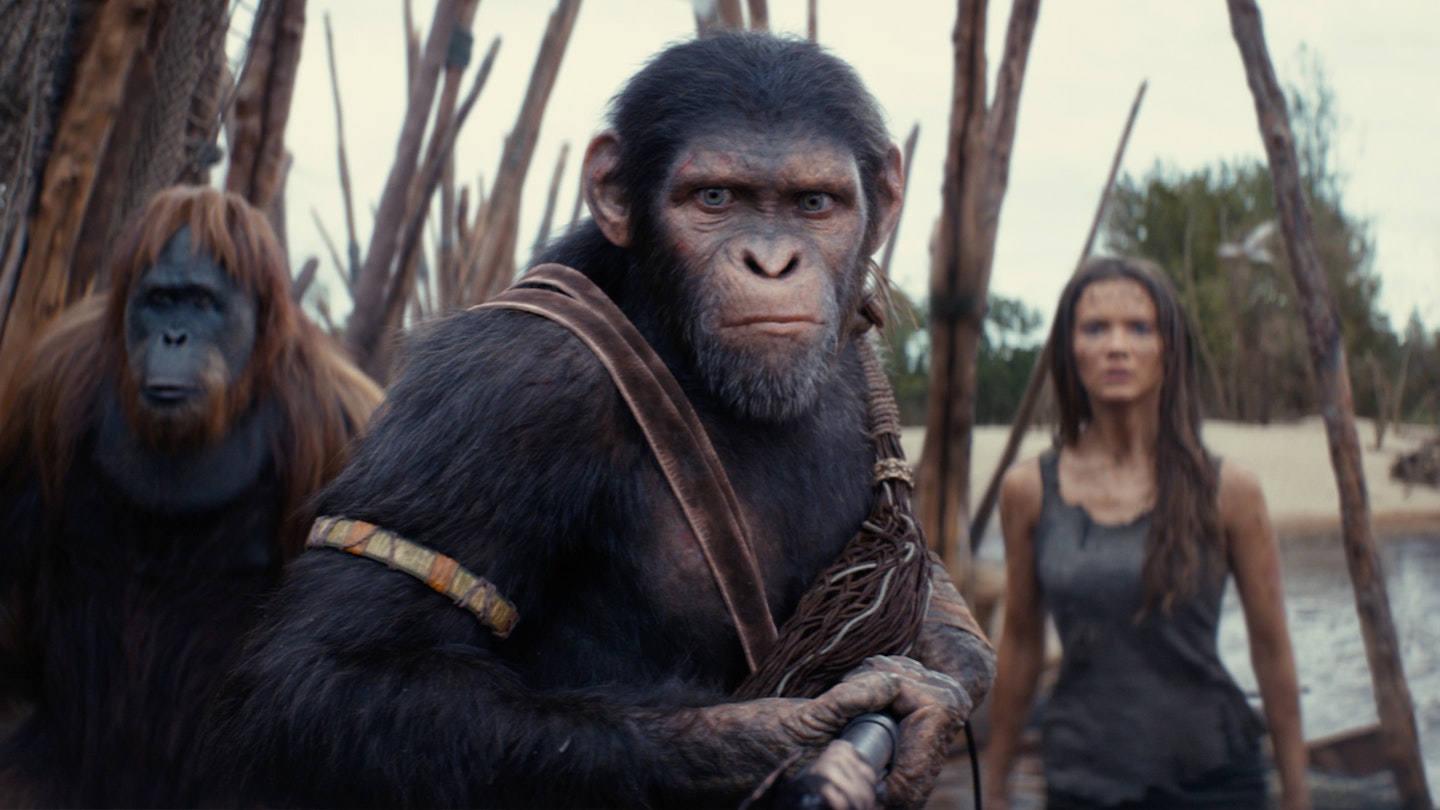
Set nearly 300 years after War for the Planet of the Apes, director Wes Ball impresses with this intelligent and mature fourth installment. The decision to explore how a key figure’s teaching have been twisted after a period of time is a genius move and I love how Ball advances the aesthetic and tone of the series – gone are the predominantly forested surroundings of Dawn and War and its road movie influence feels closer to the original pentalogy.
Owen Teague proves an excellent lead as Noa and Kevin Durand’s Proximus Caesar is one of the most memorable villains of the series. There’s some fantastic setpieces too, bolstered by a memorable score by John Paesano.
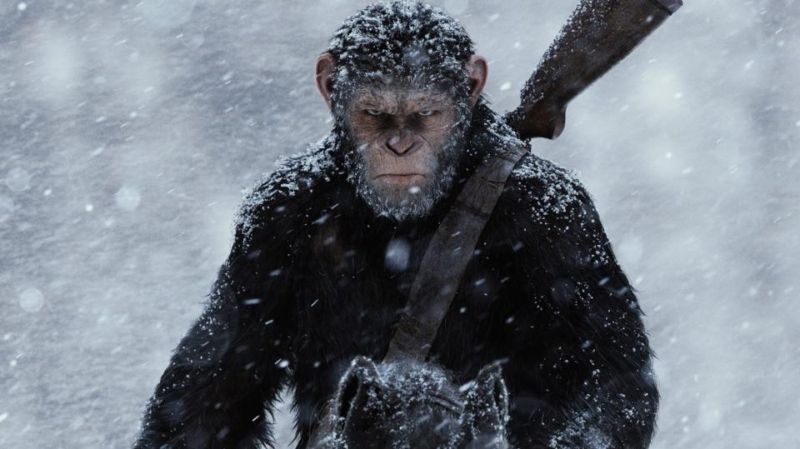
Although I found Dawn to be overrated, director Matt Reeves got it right on the second go. This is a grim, heartfelt, revenge-filled and morality-questioning closing chapter to Caesar’s trilogy. There are many prolonged sequences where War almost feels like a silent film and it’s just stunning to behold.
Andy Serkis gives his best performance as Caesar, now capable of speaking pretty much fluent English and Woody Harrelson makes for a particularly nasty piece of work as the Colonel. The score by Michael Giacchino is perhaps a career-best and it’s lusciously shot by Michael Seresin.
Franklin J. Schaffner’s original is still the best of the original series and one of the best sci-fi pieces of all time. Michael Wilson and Rod Serling’s script is particularly tightly written, exploring many fascinating themes and ideologies. They show particular restraint in not introducing the apes until a good third of the way in, complimented by Leon Shamroy’s paranoid cinematography and Jerry Goldsmith’s eclectic score.
Charlton Heston makes for a terrific lead and despite many of the ape’s cruelty, all of them are similarly well-developed and we can sympathise from different perspectives. The iconic ending is still devastating and it fully deserves its rich legacy.
⭐⭐⭐⭐
Rating: 4 out of 5.
1) Rise of the Planet of the Apes
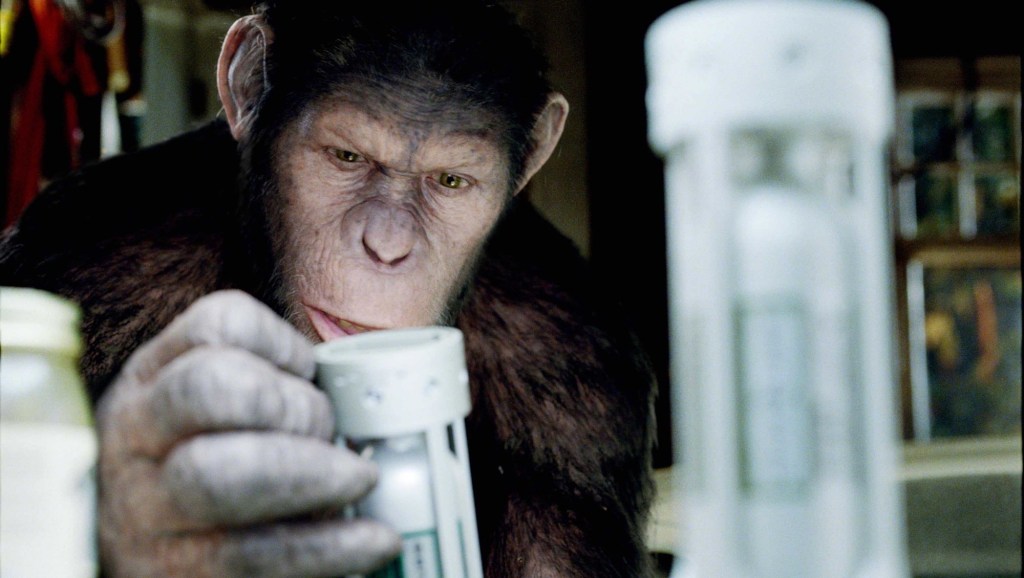
Although many would still rate the 1968 original as the pinnacle of the series, Rise of the Planet of the Apes is an astonishing achievement and a better-paced, more emotional film. The series was dead in the water after Tim Burton fumbled his remake and what better way to reboot it than to start right back at the beginning?
Andy Serkis is sensational as Caesar, in a role he would go onto further develop across two more films. What sets this entry apart are the human characters – James Franco and Freida Pinto are excellent leads and John Lithgow lends a lot of heart to proceedings as Franco’s dementia-ridden father. Tom Felton and David Oyelowo are brilliant as the villains that incite the ape onslaught and the film’s beautifully shot by Andrew Lesnie. Patrick Doyle’s score is very memorable and the final act that culminates on a battle on the Golden Gate Bridge is a sheer assault on the senses.
Director: Wes Ball Starring: Owen Teague, Freya Allan, Kevin Durand, Peter Macon, William H. Macy Certificate: 12A Run Time: 145 mins
Kingdom of the Planet of the Apes is the latest in the ever-endearing franchise and marks the start of a new era after the excellent reboot trilogy. With Andy Serkis’ Caesar kicking the bucket at the end of War for the Planet of the Apes, this film picks up ‘many generations’ after War’s conclusion with a new set of characters.
Directed by Wes Ball, most notable for The Maze Runner trilogy, Kingdom of the Planet of the Apes opens with the simians having established numerous clans. Humans have now become even more feral. Noa (Owen Teague) from the Eagle Clan, prepares for a coming-of-age ceremony by collecting eagle eggs with his friends. However, events lead to his village being burned down by a group of ape raiders, led by their self-proclaimed king, Proximus Caesar (Kevin Durand).
Although Ball witholds Proximus Caesar from the screen for quite a while, we feel his influence right from the raid, a wickedly intelligent villain who has twisted Caesar’s teachings and diluted them to something that the great ape hadn’t intended. Noa sets out after the raiders to rescue his clan, along with an orange-utan Raka (Peter Macon) and a human scavenger who he names Nova (Freya Allan).
Kingdom of the Planet of the Apes is an uncommonly intelligent sequel and is another strong entry in the series. The underlying social subtext is what really allows these films to excel, and the lack of it is what lets down its two weakest instalments – Tim Burton’s misguided Planet of the Apes remake and Beneath the Planet of the Apes. The idea of exploring how a key figure’s teachings have been twisted after a period of time is a genius move, reflecting the intrigue and conflict brought by religion in our world.
I loved how Ball advances the aesthetic and tone of the series – gone are the predominantly forested surroundings of Dawn and War and its road movie influence feels closer to earlier entries of the original pentology. The abandoned human world is fascinating to pick apart, from rusted escalators to buildings covered in overgrown fauna. There’s some great set-pieces too, with fast-paced and memorable action sequences, the highlight being one on a bridge.
The film is lusciously shot by Gyula Pados and John Paesano does a great job with the score, no mean feat coming off of Michael Giacchino’s work. Although it’s not quite the slamdunk of Giacchino, it’s fitting and I liked that Paesano respects both Giacchino and original Planet of the Apes composer Jerry Goldsmith’s theme, while hedging out his own. I particularly liked the theme of Noa riding out to track the clan under a bridge – Noa’s Purpose on the soundtrack.
Arguably with an even greater task on his plate is Owen Teague, who fortunately proves an excellent lead and at no point was I longing for Andy Serkis’ return. He gives Noa a likeable and easy personality to root for, even if he goes on a more straightforward journey than Caesar. That said, Noa’s thrown straight in the deep end and is constantly thrown obstacles to deal with.
Kevin Durand is brilliant as Proximus Caesar, quite possibly both career-best work and one of the most memorable villains of the series. Despite his limited screentime, you can feel his presence throughout and he’s given some killer dialogue by screenwriter Josh Friedman. Peter Macon’s also brilliant as the orange-utan, Raka, who gets given lots of the film’s comic relief but has bags of personality and does his best to spread the word of Caesar’s philosophy.
The human characters don’t fare quite as well, although that’s not a big problem compared to other Planet of the Apes entries or monster films such as the recent Godzilla x Kong: The New Empire because humans play second-fiddle to the apes in the story. Still, The Witcher’s Freya Allan makes a reasonable impression and William H. Macy is clearly having fun in a small role as Trevathan, a cowardly figure who teaches Proximus Caesar human history.
Kingdom of the Planet of the Apes is a more than worthy addition to the series and I was quite surprised by how good it was. It’s uncommonly thoughtful for a mainstream blockbuster and although long at 145 minutes, I really liked how Ball gave the film breathing room to develop the world he’s introducing and the characters. Although there are hints as to where future entries could go (I’ll admit there are some worrying elements here and I hope the series retains its grounded approach), they’re not at the cost of this film’s quality, a flaw which has dragged many a film down.
It isn’t clear yet whether Ball is going to direct the next entries but I’m really pleased to see he put the effort in with this entry. Kingdom of the Planet of the Apes does an excellent job of advancing the reboot series, while brimming with potent social subtext and respecting what made the original pentology work.
Director: Matt Bettinelli-Olpin & Tyler Gillett Starring: Melissa Barrera, Dan Stevens, Kathryn Newton, Will Catlett, Kevin Durand, Angus Cloud, Alisha Weir, Giancarlo Esposito Certificate: 18 Run Time: 109 mins
Abigail is the latest from horror director duo Matt Bettinelli-Olpin and Tyler Gillett. The duo have been in the horror game a while, contributing to the found footage anthology film V/H/S and directing Devil’s Due. They peaked with Ready or Not (which I thought was just fine) before rejuvenating the Scream franchise.
Abigail covers somewhat similar ground to Ready or Not in that it is also largely set in a grand, secluded manor. Six criminals are tasked with guarding the titular character, a young ballet dancer, for 24 hours while they wait for a ransom payment from her influential father. The film begins in the vein of Reservoir Dogs where none of the team know one another and use fake names to avoid any member from identifying the others. In a somewhat cheap move, Melissa Barrera (who led Scream (2022) and Scream VI)’s Joey, a former military medic struggling with substance abuse issues, deduces the identities of all the criminals in an early sccene. However, despite the seemingly straightforward task of babysitting Abigail, all is not what it seems and if you’ve seen the trailer (or any of the marketing material, for the matter), the big surprise has been bafflingly spoiled.
Abigail is just fine and you pretty much get the film promised by the trailer, albeit with a couple of narrative surprises to keep things fresh. It’s drastically overlong – the film would have been much punchier with a tigher 85 minute run time. As it stands with the 109 minute length, we end up going through the motions and being a step ahead of the characters which makes things predictable. The film isn’t particularly scary and I’m surprised the violence is enough to earn it an 18 rating in the UK. Horror-comedies are a tough genre to pull off and this is neither funny or scary enough to fully work as either.
The main draw of the film are the performances. Barrera embraces the scream queen role and it’s easy to empathise with her trauma. Kevin Durand is another highlight as Peter, an alcoholic and physically imposing, yet rather unintelligent mercenary. However, it’s Dan Stevens who steals the show as Frank, a former police detective and the actor delivers some ripping dialogue. Brian Tyler’s score is another plus, with the composer updating the iconic Swan Lake with a twisted and sadistic edge.
It’s a shame Abigail doesn’t fully work with its fun premise but this is a passable, somewhat fun-in-the-moment horror that you’ll forget about almost immediately afterwards. The film would have benefitted from a tighter edit and committing to either being a fully-fledged horror or comedy rather than awkwardly trying to balance both.










 The Film Meister