Director: Alex Parkinson Starring: Woody Harrelson, Simu Liu, Finn Cole, Cliff Curtis Certificate: 12A Run Time: 94 mins
Last Breath is a survival thriller about the race to save a stranded deep-sea diver who gets stranded after an incident, with his back-up oxygen supply rapidly running out. The film’s directed by Alex Parkinson, remaking the 2019 documentary of the same name he co-directed with Richard da Costa into a feature film.
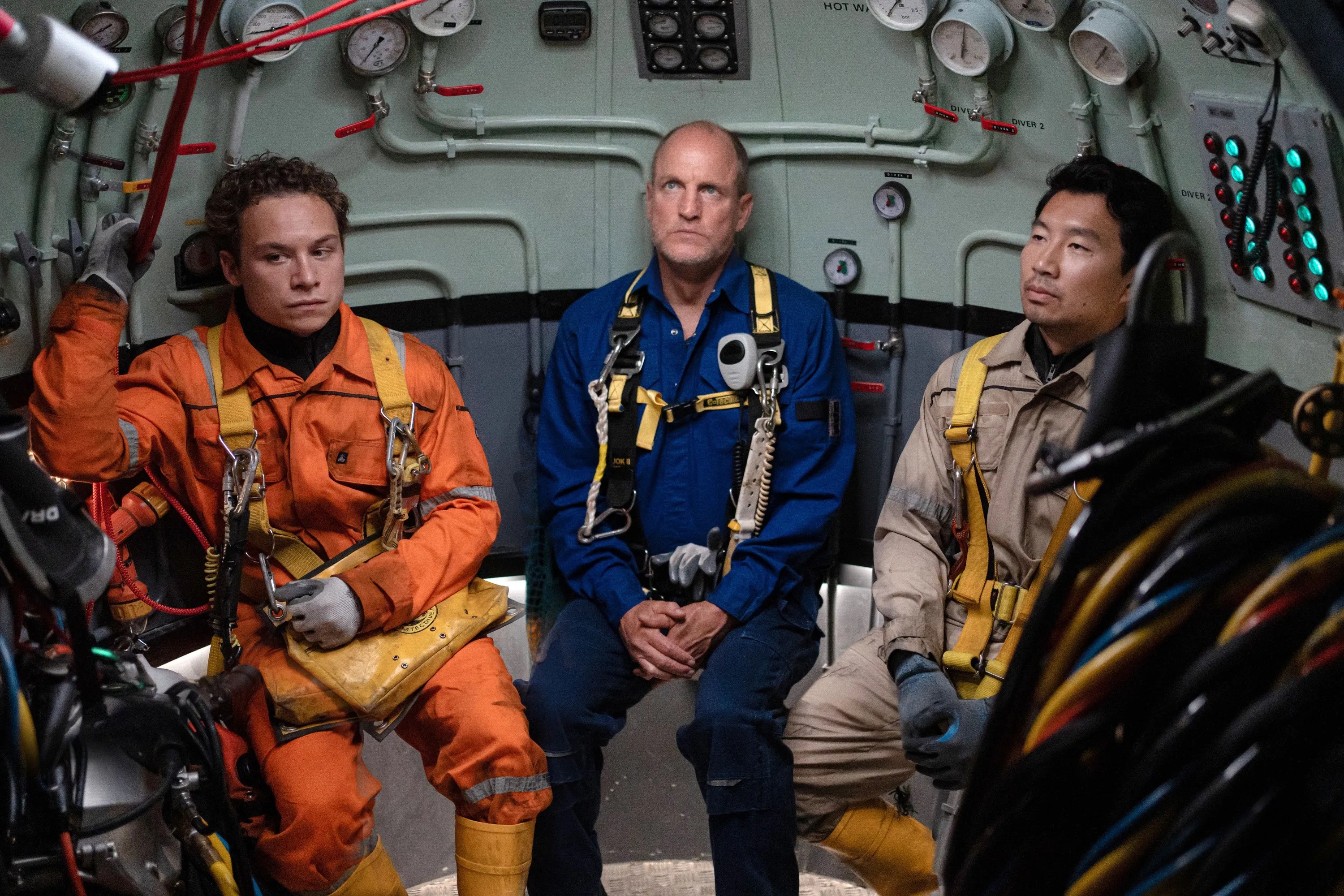
Chris Lemons (Finn Cole) is the stranded diver in question, is a member of a team of saturation divers who maintain undersea gas lines in the North Sea at depths of around 100m. In order to simulate these conditions, they have to live onboard a vessel in a pressurised chamber for a few days before and after they work underwater so that they remain at pressure. He works with Duncan Allcock (Woody Harrelson), a veteran who is being forced into early retirement after this shift and David Yuasa (Simu Liu), a no-nonsense, aloof colleague.
Last Breath is a taut and anxiety-inducing thriller and really excels when it’s at heart of the action. It’s a film that reminds you that breathing is a privilege and Parkinson ratchets up the tension, deftly conveying why being a saturation diver is one of the most dangerous jobs on earth. Adding a timer on-screen to remind us how much time Chris has been with or without oxygen is an excellent touch.
The performances are also top-notch, with Woody Harrelson and Simu Liu the highlights and Liu stealing the show as he slowly comes out of his shell. I’d have liked to have had more meat on the bone with both characters though – they’re not particularly well-developed and it’s the proven charisma of both actors that sells these characters. Finn Cole is also great, even if he spends a large amount of the film incapacitated and brilliantly but subtly shows his apprehension for the task right from the very beginning.
The major issue with Last Breath though is just how generic it is when we’re not in the heat of its distressing crisis. As the film opens, we get the expected interaction between Chris and his fiancee where he reassures her of his safety and that it’s just another day at the office. There’s also the usual overegged ending, which feels almost like a parody of a romcom, complete with closing captions and footage from the real event with an emotionally manipulative tone.
Last Breath ultimately succeeds on the strength of its remarkable story and Parkinson does well to trim a lot of the fat out where he can. But it’s a shame the director doesn’t manage to break convention or at least do something a bit more interesting with its opening and closing scenes that fall into sigh-inducing melodrama.
Director: Gia Coppola Starring: Pamela Anderson, Kiernan Shipka, Brenda Song, Billie Lourd, Dave Bautista, Jamie Lee Curtis Certificate: 15 Run Time: 89 mins
The Last Showgirl is the new film by Gia Coppola, the granddaughter of Francis Ford Coppola and niece of Sofia Coppola. Pamela Anderson plays Shelly Gardner, a 57-year-old showgirl who has performed for nearly three decades in a classic French-style revue at a casino resort in Las Vegas. Eddie (Dave Bautista), the show’s producer, breaks the news that the show is due to close in two weeks due to declining ticket sales, which leaves Shelly downcast and worried for her livelihood. She’s viewed as a mother figure by some of her younger co-stars and Shelly maintains a close friendship with Annette (Jamie Lee Curtis), who also used to be part of the show but now works as a cocktail waitress. Shelly also has a semi-estranged daughter, Hannah (Billie Lourd), who she struggles to connect with because they’ve spent much of their lives apart. The film’s received some awards attention for its performances, with Pamela Anderson nominated for a Golden Globe and Jamie Lee Curtis for a BAFTA, but that didn’t materialise into an Oscar nomination for either star.
This is an odd film – The Last Showgirl has some interesting performances but its story doesn’t really amount to much. On the plus side, Pamela Anderson turns in an honest and authentic performance as the ageing showgirl and Dave Bautista is a standout as the show’s sweet-natured producer. It was also refreshing to see the charismatic Brenda Song, who hasn’t played in a high-profile role in a while and Jason Schwartzman shines in a brief cameo as an audition director.
But the film around the committed performances left me feeling pretty indifferent. Its direction feels like an awkward mix of Sofia Coppola and Sean Baker, especially the latter with its grainy cinematography. There’s next-to-no tension to Shelly’s existential crisis and once we get past sub-plots that go nowhere, the film begins to explore how women’s value in showbiz declines simply because of their age before it abruptly ends. It’s perhaps unfortunate that this film has released relatively close to The Substance, and while I’m no fan of that film either, at least it fully commits to unpacking the relationship between aging and stardom. In the end, The Last Showgirl just feels inconsequential with its unsatisfying narrative.
The Academy Award nominations celebrating the films of 2024 have been announced and in this article, I’ll rank the Best Picture nominees in order of my own personal preference. The winners will be announced in the Oscars ceremony on 10th March 2025.
While 2024 was quite possibly the strongest field in many a year, unfortunately the selection for 2025 is incredibly weak. Amidst the sea of mediocrity is a truly terrible film and I would only consider four of the candidates Oscar-worthy. I suppose it’s inevitable that there was going to be a comedown after such a strong previous year. But there were some excellent films that should have made the cut: Hard Truths, Furiosa: A Mad Max Saga, Gladiator II and Juror No. 2 to name but a few.
10) Emilia Pérez
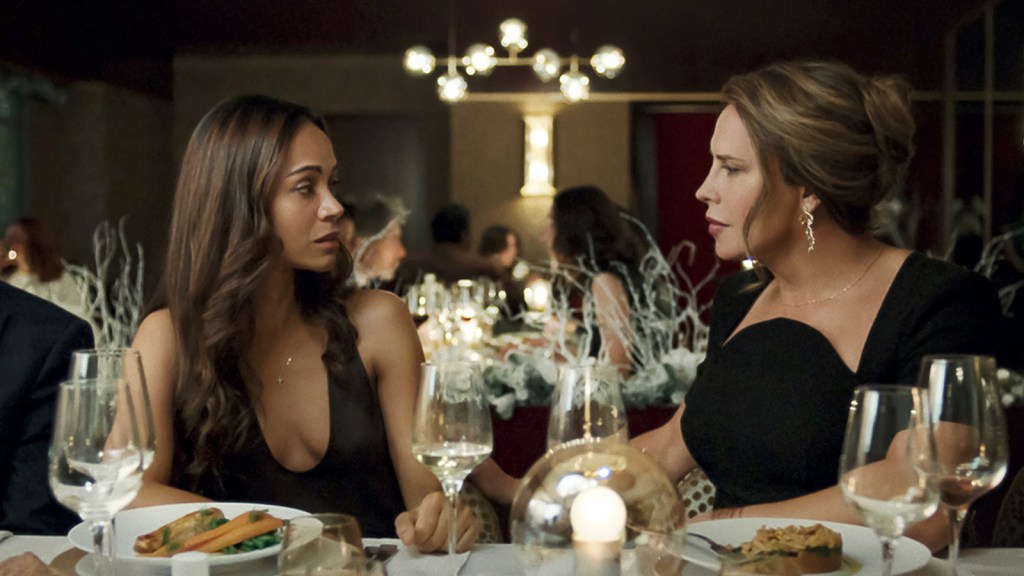
Emilia Pérez isn’t just a bad Best Picture pick – it’s one of the worst films I’ve ever seen and is an utter calamity. The fact this has 13 Oscar nominations show just how out of touch the Academy are with reality. This is a woefully misguided and ugly-looking film with a terrible script, awful musical numbers and poor performances. It’s blandly directed by Jacques Audiard and the mashing of thriller, musical and crime genres just doesn’t work. Zoe Saldaña and Selena Gomez are fine actresses but they’re both terrible in this film (I can’t believe they’ve been nominated for their performances…!). Saldaña is totally emotionless and glum and Gomez overacts what is supposed to be an emotional arc her character undergoes. And then there’s Karla Sofia Gascón as the titular character, who the less said, the better. This is a frighteningly bad film and I’m not surprised Mexican audiences have been offended by its treatment of their country.
⭐
Rating: 1 out of 5.
9) Nickel Boys
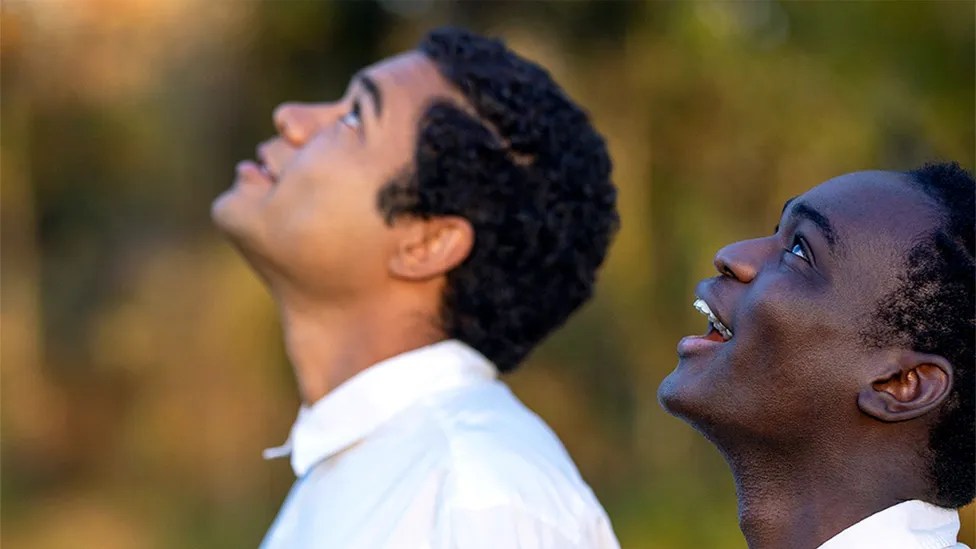
Nickel Boys is RaMell Ross’ narrative feature directorial debut, previously known for his 2018 Oscar-nominated documentary Hale County This Morning, This Evening. An adaptation of the 2019 novel of the same name by Colson Whitehead, Nickel Boys tells the story story of Elwood Curtis (Ethan Herisse), a young African-American living in a segregated Tallahassee, Florida who finds himself at a reform school notorious for its abusive treatment of black students, through no fault of his own. There, he meets Turner (Brandon Wilson) and despite their initially opposite ideals, become friends.
The film is shot in a first-person point-of-view so we see the plot unfold through the eyes of Elwood (the perspective is then shared with Turner in the film’s second half). That’s certainly an unconventional way to tell a story and stands Nickel Boys apart from more conventional historical drama biopics. Unfortunately, despite its novel filmmaking technique, I found Nickel Boys to be very dull and I think that first-person point-of-view decision is to blame. It detracts from the important story being told, which tackles some incredibly heavy themes, but the film never conveys its emotions. The stilted script doesn’t flow in a natural way and and I found it very difficult to connect with any of the characters. None of the performances worked for me, even Hamish Linklater who made such a powerful impression in Midnight Mass. The film is also drastically overlong at 140 minutes and a generic title card revealing some images of the true events feels emotionally manipulative – especially for a film that’s trying to defy convention.
The Substance is a satirical body horror, directed by Coralie Fargeat in her English language debut and it’s received quite the acclaim. The film follows fading Hollywood star Elisabeth Sparkle (Demi Moore) and we see her dismissed from her long-running television show due to her age. She’s intrigued by a black market serum, conveniently called ’The Substance’, which promises a “younger, more beautiful, more perfect” version of onself. But of course, any deal like this has its consequences which Sparkle comes to find. While The Substance is certainly original in its execution, I found it quite disappointing. For a film that runs in excess of 140 minutes, it doesn’t have a great deal to say and is very on-the-nose. The direction is extremely aggressive and in-your-face, which is clearly intentional but it just got on my nerves. The second half is particularly hard work, especially its go-for-broke ending which it doesn’t earn. The body horror did nothing for me and I don’t understand the comparisons many have made to David Cronenberg. The major positives are the performances.
Wicked was much better than I expected – this is an ambitious and visually striking adaptation of the first act of the stage musical. Cynthia Erivo and Ariana Grande are both brilliant as the two witches, and the film details their friendship at Shiz University before the future arrival of Dorothy. At 160 minutes, it’s a meaty film but there’s a lot of interesting themes that director Jon M. Chu develops such as the relationship between humans and animals and what happens when you’re an outcast. Although musicals are generally not for me, I’lll admit there are some memorable numbers in this. That said, I think the film could have lost half an hour or so with a club sequence that doesn’t particularly add much to proceedings.
⭐⭐⭐
Rating: 3 out of 5.
6) Dune: Part Two
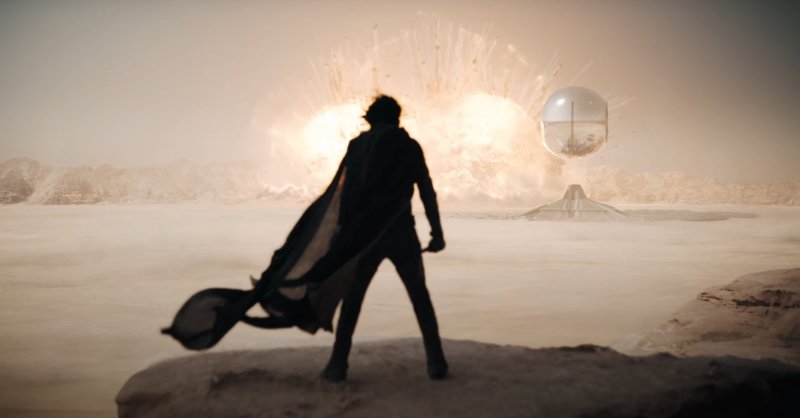
While there’s no doubting the visual flair on display, Dune: Part Two is a mixed bag and not as strong as its predecessor – by extension, it’s Denis Villeneuve’s weakest film. What really impressed me with Dune was how Villeneuve was able to maintain a clarity to the narrative, the key downfall of David Lynch’s film who overstuffed the entire book into a 137 minute film. And while that’s still largely the case here, Dune: Part Two runs into all manner of pacing issues. On the one hand, there’s some good world building for the first hour where ultimately not a lot happens. But then, but the film completely rushes through its climax during its last hour. The rushed pacing also comes at the expense of character development. I simply didn’t buy Paul (Timothée Chalamet) and Chani’s (Zendaya) blossoming relationship at the very centre of the film – it simply feels like we’re expected to invest in their relationship with no natural development. I wonder if it’s to do with the fact Eric Roth doesn’t write the script this time around, with Villeneuve himself stepping in to co-write with Jon Spaihts. It’s a shame Dune: Part Two doesn’t live up to the first film with its odd pacing and lack of character development. But it’s still a fun ride, with some above average elements, such as the black-and-white sequence on the Harkonnen planet, Austin Butler’s performance and some exciting action sequences here and there.
Based on a 2016 novel by Robert Harris, Conclave opens with the Pope dying of a heart attack and Cardinal Thomas Lawrence (Ralph Fiennes) is tasked with organising a papal conclave to elect a successor. However, Lawrence quickly finds himself investigating secrets and scandals about each of the candidates. They include Aldo Bellini (Stanley Tucci), an ambitious American liberal, Joseph Tremblay (John Lithgow), a Canadian moderate with a secret, Goffredo Tedesco (Sergio Castellitto), an Italian reactionary right-winger and Joseph Adeyemi (Lycian Msamati), a Nigerian candidate with homophobic views. Not dissimilar from many popular recent elections, Conclave is about deciding who is the least worst option and that’s what makes it rather entertaining. You’ll need to suspend disbelief (especially with its many twists) but if you’re after an overripe thriller filled with catty remarks, this delivers. Ralph Fiennes is reliably excellent as the overseer, who is also standing in the election and throughout the film, you’re constantly working out whether he has secret ambitions and if he’s as impartial as he should be. Sergio Castellitto, who was fantastic as the villainous King Miraz in The Chronicles of Narnia: Prince Caspian, turns his performance up to eleven as Tedesco and Isabella Rossellini also stands out as the head caterer and housekeeper who doesn’t have time for aimless chitchat. The jittery score by Volker Bertelmann (Hauschka) is fantastic and he crafts many memorable themes that add to the urgency of the election. Stéphane Fontaine lusciously shoots the film too, with excellent use of light and shadow to underscore the theme of corruption. But as entertaining as Conclave is, I’m not sure it’s quite the awards material it looks like it may become.
It may follow a conventional biopic structure, but I still found A Complete Unknown gripping from start to finish, with director James Mangold at the top of his game paired with many impressive performances. Here, Mangold tells the story of Bob Dylan, adapting a 2015 book by Elijah Wald called Dylan Goes Electric! which covers his earliest folk music success to his controversial use of electric instruments at the 1965 Newport Folk Festival. Mangold co-writes the script with Jay Cocks, his first since Martin Scorsese’s Silence. But straight from the opening scene, Mangold directs the film with a real warmth and energy and I loved the film’s tone. I especially liked its commentary on how genres evolve and how fellow artists support each other, even if that example isn’t followed by the public. It also has plenty to say on what it’s like to meet your idols. The film’s lusciously shot by Phedon Papamichael, and the production design of the 1960s is brilliantly captured. Timothée Chalamet is magnetic as Dylan, balancing the musician’s sheer talent while being somewhat impenetrable and unlikeable at times. The other standout’s Monica Barbaro as Joan Baez, who brings a real warmth to the singer and like Chalamet, also does all her own singing.
The Palme D’Or winning new Sean Baker film proved a very memorable cinema experience. Other than Mikey Madison’s fantastic performance, I found the first 45 minutes of Anora really testing. But as soon as two men knock on a mansion door, the narrative takes a different direction and the rest of the 139 minute film had me grinning with its breathless fireball energy and wit. In retrospect, the first 45 minutes are needed to get you to despise the characters for the rest of it to work, so stay with it if you’re feeling the same way. It’s a film where characters are consistently pulled from pillar to post but there’s also a stark tenderness to its humanity and Baker portrays a vivid contrast between the rich and poor. It’s beautifully shot by Drew Daniels, who lends the film its disorientingly frenetic edge. Mikey Madison, who was one of Charles Manson’s accomplices in Once Upon A Time In Hollywood, is fantastic as Anora and thoroughly deserving of awards attention. She has bundles of empathy and despite her demeaning work selling her body, she knows how to get what she wants. Yura Borisov is also brilliant as Igor, a Russian henchman with morals with a similarly modest financial background as Anora who makes such an impression despite not having many lines. Karen Karagulian is brilliant as Toros, an Armenian handler, whose mania knows no bounds when his career is jeopardised. Anora is ultimately an excellent film from Sean Baker and quite possibly his best work.
It was very hard to pick between first and second place but I’ve gone with I’m Still Here – a political biographical drama about a husband’s forced disappearance during the military dictatorship in Brazil and Walter Salles’ first film since 2012’s On The Road. It’s based on Marcelo Rubens Paiva’s 2015 memoir of the same name, Marcelo being the son of Rubens Paiva, who was the victim in question. Fernanda Torres places Eunice Paiva, Rubens’ wife and activist, with the film largely told from her perspective and how she struggles to cope emotionally and financially, while trying to raise her five children. I found I’m Still Here to be a deeply affecting and gripping piece of work, masterfully directed by Salles who skilfully contrasts the quiet family domesticity with the simmering and oppressive political horror. Although the film tells a story that happens in the past, I’m Still Here feels very contemporary with its mirroring of current dystopian events. The first hour is quite fast-paced, whereas the second is much slower but this is where the film really wraps its enchanting spell – it reminded me of Roma in many ways in terms of how it finds beauty in the mundane. The film’s complimented by a wonderful Warren Ellis score, which is very subdued in the first half but becomes more melodic later on. Fernanda Torres is just sensational as Eunice and fully deserving of her Best Actress Oscar nomination. She deftly balances her intelligence and frantic search for the truth while being as motherly as she can to her children. I absolutely loved I’m Still Here and found myself powerfully moved as the credits started to roll.
My top pick is The Brutalist, an epic period drama directed by Brady Corbet, who last made the excellent Vox Lux. Undeniably more ambitious in scope, Corbet’s latest spans over thirty years and a three and a half hour run time. Adrien Brody plays László Tóth, a Hungarian-Jewish Holocaust survivor and Bauhaus-trained architect who immigrates to America in search of a new life. The film isn’t perfect but The Brutalist is directed with real bravura and has a lot to say – although it’s about Tóth’s architectural career on the surface, there are plenty of parallels with the idea of how someone suffers for their art and how they are the person remembered rather than the entity throwing money at a project. Of course, that means there’s themes of compromise and interference and although its last 30 minutes may seem to take a different, seemingly incomprehensible tone, I found it very thought-provoking. Adrien Brody turns in a career-best performance as the suffering artist, nailing the Slavic accent and mannerisms – he’s fully deserving of his Best Actor nomination and he’s the clear winner. Guy Pearce is also a standout as the slimy financier in a very multi-faceted performance. Pearce is no stranger to playing villains – his deliciously evil turn in Lawlessis evidence of that – but this is a complex individual with all the qualities of someone who has too much money. Daniel Blumberg’s prickly score is wonderful, lending the film a simmering intensity and he crafts many memorable themes that develop throughout the film. The Brutalist is also beautifully shot by Lol Crawley, resurrecting the VistaVision process to authentically portray the period. It’s staggering how good the film looks, considering its modest $9.6 million budget and bearing in mind its epic run time. I was engrossed from start to finish.
Director: Walter Salles Starring: Fernanda Torres, Selton Mello, Fernanda Montenegro Certificate: 15 Run Time: 138 mins
I’m Still Here is a political biographical drama about a husband’s forced disappearance during the military dictatorship in Brazil and Walter Salles’ first film since 2012’s On The Road. It’s based on Marcelo Rubens Paiva’s 2015 memoir of the same name, Marcelo being the son of Rubens Paiva, who was the victim in question. Fernanda Torres places Eunice Paiva, Rubens’ wife and activist, with the film largely told from her perspective and how she struggles to cope emotionally and financially, while trying to raise her five children. The film’s received a near unanimously positive response and is one of the Best Picture contenders at this year’s Academy Awards, and has also become the highest-grossing Brazilian films since the coronavirus pandemic.
I found I’m Still Here to be a deeply affecting and gripping piece of work, masterfully directed by Salles who skilfully contrasts the quiet family domesticity with the simmering and oppressive political horror. Although the film tells a story that happens in the past, I’m Still Here feels very contemporary with its mirroring of current dystopian events. The first hour is quite fast-paced, whereas the second is much slower but this is where the film really wraps its enchanting spell – it reminded me of Roma in many ways in terms of how it finds beauty in the mundane. The film’s complimented by a wonderful Warren Ellis score, which is very subdued in the first half but becomes more melodic later on. Although the majority of the film is set in 1970, the last half an hour jumps forward to 1996 and 2014. Although these somewhat disturb the film’s rhythm, they’re crucial in how they magnify the cruel Brazilian regime of 1970 and how the father’s disappearance continues to have a lasting effect on Eunice and the rest of her family’s lives, lending the film an epic quality.
Fernanda Torres is just sensational as Eunice and fully deserving of her Best Actress Oscar nomination. She deftly balances her intelligence and frantic search for the truth while being as motherly as she can to her children. Torres’ mother, Fernanda Montenegro appears late in the film in a brief cameo as the older Eunice. Montenegro was also nominated for a Best Actress Oscar 25 years ago in Central Station, also directed by Walter Salles and her appearance lends a heavy weight to the feel, as if we’re watching something come full-circle. The rest of the cast are also excellent, especially all of the children who have distinct and bright personalities, as well as Pri Helena as Zezé the housekeeper.
I absolutely loved I’m Still Here and found myself powerfully moved as the credits started to roll. This is Walter Salles at the top of his game supported by terrific performances and an important, timely story. It’s tied with The Brutalist as my pick of the Best Picture cohort this year and I can’t wait to watch it again – I’m Still Here is a must-see.
Director: Osgood Perkins Starring: Theo James, Tatiana Mislay, Christian Convery, Colin O’Brien, Rohan Campbell, Sarah Levy, Adam Scott, Elijah Wood Certificate: 15 Run Time: 98 mins
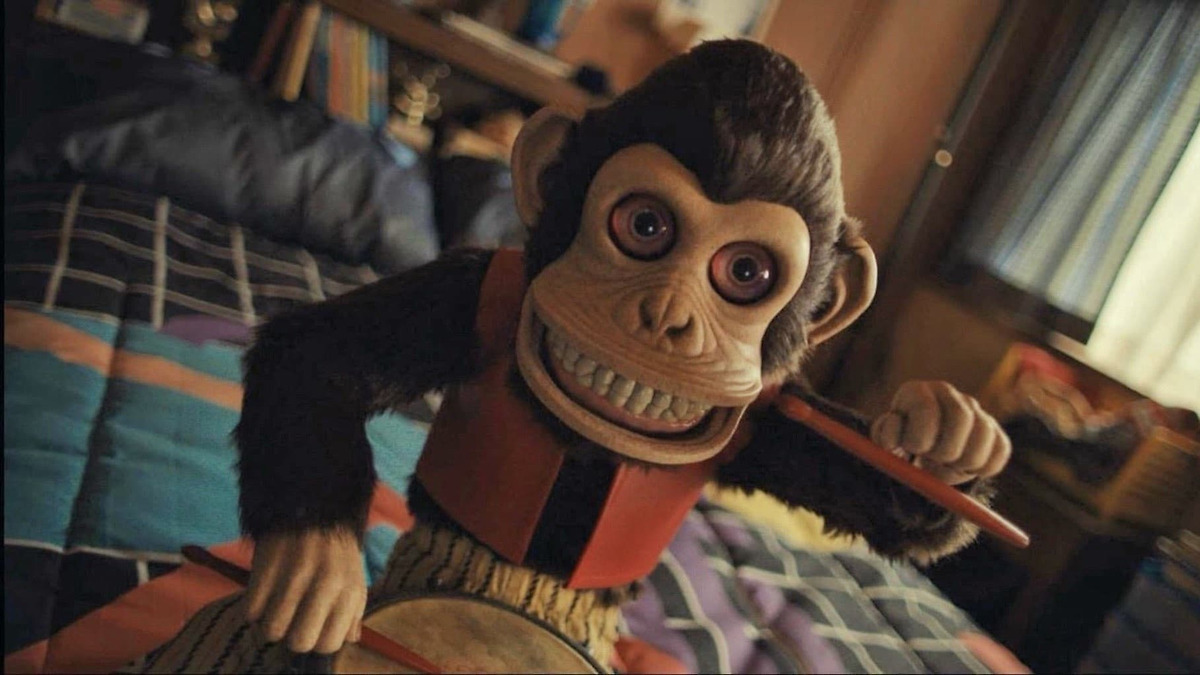
After reaching new career heights with the excellent Longlegs last year, director Osgood Perkins’ follow-up sees him adapt Stephen King’s 1980 short story of a cursed monkey that brings death and destruction. Adding further excitement behind the camera is horror maestro James Wan, who produces the film. The Monkey follows twin brothers Hal and Bill (Christian Convery in their formative years and Theo James as an adult). Bill is the more confident of the two and bullies Hal and they live with their mother Lois (Tatiana Maslany) after their father, Peter (Adam Scott) disappears. In the opening scene, we see Petey try to pawn off the drum-playing monkey but to bloody effect, yet the monkey somehow finds its way back in a closet in his belongings which the boys discover. When they wind its key, the monkey plays its drums later that evening at a Japanese restaurant, with their babysitter finding themselves accidentally decapitated and so begins a vicious cycle of gory slayings.
The Monkey is hugely enjoyable with some brilliant set-pieces and striking imagery. Perkins is the perfect pick to direct this project, having himself lost his parents in headline-making ways. He decides to intentionally avoid subtlety and use the film’s sadistic gore to joke about the absurdity, pointlessness and randomness of death. That’s a genius approach and really distinguishes The Monkey from more serious horror films about possessed toys, of which there have been many. The film’s brilliantly edited and it packs a real wallop in its breakneck pacing as it hurtles through its sub-100 minute run time. The humour really works in places – especially how a man reacts to their neighbour getting gruesomely slain in a lawnmower incident, and the film is brimming with Perkins’ signature style in terms of the mise-en-scène. The monkey itself of a wonderfully creepy design – James Wan is no stranger to the genre after all being behind the similarly evil creations of Jigsaw in the Saw films and Annabelle in The Conjuring Universe.
The cast are all very game, with Theo James making for a strong lead (although he’s more convincing as Hal). This is very much his and Christian Convery’s film – you’d be lucky to be a member of the supporting cast and survive for very long! Still, Tatiana Maslany stands out as the mother and Elijah Wood laps it up as the new husband of Hal’s ex-wife in a brief, but very funny appearance.
My only real flaw with the film is that its third act feels a little divorced from the first two because it begins to leans in more to fantasy and the philosophical, feeling more Stephen King-like. I still really enjoyed the it though, and there’s some truly haunting imagery as the film ends, especially as we see the consequences of the town’s devastation.
The Monkey is another winner from Perkins and it’s a very coherent film with clear influences from King and Wan that really elevate it. The decision to lean into the absurdity of death is a particularly strong choice and it’s a real blood-drenched thrill ride from start to finish.
Director: Julius Onah Starring: Anthony Mackie, Danny Ramirez, Shira Haas, Carl Lumbly, Xosha Roquemore, Giancarlo Esposito, Liv Tyler, Tim Blake Nelson, Harrison Ford Certificate: 12A Run Time: 118 mins
Captain America: Brave New World is the latest in the Marvel Cinematic Universe and the fourth standalone installment for the superhero. Previously playing The Falcon, Anthony Mackie’s Sam Wilson picks up the Captain America mantle from Chris Evans’ Steve Rogers after he naturally passed the baton at the end of Avengers: Endgame.
The Captain America films have always been generally regarded as some of the strongest works in the MCU, with both The Winter Soldier and Civil War having a stellar reputation. Both were directed by the Russo brothers (who went on to helm Avengers: Infinity War and Avengers: Endgame). To a large extent, I’d agree, although Captain America: The Winter Soldier drops the ball somewhat in its final act.
Julius Onah takes the director reins with Brave New World, best known for the highly underrated The Cloverfield Paradox. Taking place after The Falcon and Winter Soldier television series, newly-elected president Thaddeus Ross (Harrison Ford taking over the dearly departed William Hurt) sends Wilson and Joaquin Torres (Danny Ramirez, the new Falcon) on a Mexican mission to stop the illegal sale of classified items from the villainous Sidewinder (Giancarlo Esposito). When they return, the pair are invited to a summit at the White House, which all goes wrong when their fellow super soldier friend Isaiah Bradley (Carl Lumbly) makes an uncharacteristic attempt on Ross’ life and a political conspiracy ensues.
Captain America: Brave New World is a real mixed bag. Starting with the positives, the film is always reasonably entertaining and Anthony Mackie makes for a natural and charismatic lead in his first leading film. Mackie’s performance isn’t the only strong one – Carl Lumbly is reliably excellent, as is Giancarlo Esposito (although his Sidewinder villain is sadly underused).
Harrison Ford makes for an excellent Thaddeus Ross and he gets plenty of screen time. Ford’s phoned in many of his performances in franchise films over the past decade, such as Star Wars: The Force Awakens and Indiana Jones and the Dial of Destiny. And even though BladeRunner 2049 is an ambitious film, Ford’s performance is one of its weak points. While Ford’s Ross doesn’t feel like a carbon copy of William Hurt, he balances the dishonest and rage-fuelled nature of the character very well.
I also admired how the film feels rather standalone and doesn’t get too hamstrung in linking to other films in the franchise (although I liked how it progressed several storylines from previous underrated entries). Save for a scene with Sebastian Stan’s Bucky Barnes, Onah’s film also largely eschews Marvel’s forced humour which plagues some of its films. The climactic action sequence (which has been heavily spoiled in the trailers) is also thrilling and well-shot.
But the film is sadly pulled down by other factors. Firstly, it’s very evident the film’s been written by five screenwriters – the script is rather stilted in places. The film’s murkily shot by Kramer Morgenthau and it’s pretty ugly in places. He often resorts to quick cuts and save for the final action set-piece, the film’s visually reminiscent of a television series – not good considering the megabucks $180 million budget!
The score by Laura Karpman is also strange. She completely ignores Alan Silvestri and Henry Jackman’s previous themes – and while that’s fine because she might have wanted to create new themes for Mackie now that he’s in the lead, they’re not memorable in the slighest. Karpman also sprinkles in some commerical singles that are painfully obvious – she committed the same sin when she scored The Marvels.
And finally, while I won’t spoil the film’s final villain arrangement, the reveal is disappointing and a waste of an excellent actor’s talent with some hideous visuals and make-up.
Captain America: Brave New World has a lot going for it with its performances and relatively standalone approach to the rest of the Marvel Cinematic Universe fodder. But it’s a shame that it doesn’t reach its full potential with its mediocre script and visual effects. Out of the Phase Five cohort, Captain America: Brave New World is probably the film I’m most likely to rewatch, alongside Guardians of the Galaxy: Vol 3, but the fact it still isn’t brilliant is hardly a ringing endorsement. That said, there’s certainly future potential for Anthony Mackie’s superhero if it’s given the right treatment.
Director: Scott Derrickson Starring: Miles Teller, Anya Taylor-Joy, Sigourney Weaver Certificate: 15 Run Time: 127 mins
The Gorge is the new film by Scott Derrickson, a science fiction romantic action film with espionage and horror elements – quite the genre mash-up on paper. The director is best known for his work in the horror genre, with films such as Sinister and The Black Phone but he’s proven his hand at other works too, for example with Doctor Strange. The Gorge is written by Zach Dean, with the spec script spending time on the Black List before Derrickson signed on to direct in early 2022.
Miles Teller and Anya Taylor-Joy play two elite snipers who receive identical missions: travel to a secret location and guard a deep gorge without knowing what lies inside for a year without any outside contact. One guards the eastern side, the other the western and the two aren’t allowed to have contact with each other. But the two quickly start communicating with each other and things escalate from there.
While The Gorge shows a lot of promise in places, it’s overlong and goes heavy on the romance with painfully obvious story beats. There’s a reason Apple has decided to give this film a Valentine’s Day release. The film would be much stronger with a good half an hour removed, and the cuts to make would be to the protracted sequences where the duo’s romantic relationship develops. Even in its final form though, Teller and Taylor-Joy make for an expectedly great duo, but it’s Teller who gives the better performance because his character has more meat on the bone.
When Derrickson leans into the horror elements, the film excels. There’s a handful of effective jump scares and slimy creature design, akin to a harder-edged Guardians of the Galaxy meets Pirates of the Caribbean. The film’s vibrantly shot by Dan Laustsen and there’s a moody score by Trent Reznor and Atticus Ross, but some of the tracks outside of the score are painfully on-the-nose.
While it’s competently directed, it’s a shame The Gorge doesn’t live up to the potential of its intriguing premise. The decision to focus on the burgeoning romance between the duo feels at odds with the film’s harder horror edge and it’s drastically overlong. While The Gorge is one of Derrickson’s weakest efforts, I enjoyed some of its visuals and horror elements but the film could have been much better.
Director: Drew Hancock Starring: Sophie Thatcher, Jack Quaid, Rupert Friend Certificate: 15 Run Time: 97 mins
Companion is a sci-fi horror directed by Drew Hancock in his feature film debut and produced by Zach Cregger, who made the excellent Barbarian. The film opens on Iris (Sophie Thatcher) remembering how she first met her boyfriend, Josh (Jack Quaid). We then see the couple heading on a weekend getaway with friends to a grand lake house and to say anymore would be heading into spoiler territory. This is very much a film to go into blind – don’t watch the trailer because it gives away too much.
Companion is a mixed bag. On the plus side, there are some interesting ideas and attempts at social satire, but they’re not all fully-fledged (more on that later). The film’s well shot by Eli Born and it’s slickly edited too. Both Jack Quaid and an unrecognisable Rupert Friend stand out among the cast. As for Sophie Thatcher, who was the weaker half of the duo of missionaries in last year’s Heretic, she’s serviceable as Iris but doesn’t make a lasting impression.
However, the rest of the film is deeply flawed. While Zach Cregger had a commanding view on Barbarian’s pacing, Hancock isn’t in the same league. The first twenty minutes or so has some pretty ear-scraping dialogue and a finale that reminded me of The Terminator is rather unnecessary – there’s a neat point where this film could have ended that would have left the rest of the events to the audience’s imagination.
As a result, although Companion is only a 97-minute film, the reasonably assured second act isn’t substantial enough to warrant a feature length film on its own, but the bookending first and third acts around it feel too long. It’s simply poorly paced and the film would have benefitted from another rewrite. The score by Hrishikesh Hirway doesn’t really work either and the film needs something more melodic and menacing.
While certain elements of Companion work rather well, it could have been much sharper and have more bite for the ambitious story it’s trying to tell. I found the film sporadically fun but overall somewhat of a missed opportunity.
Director: Mike Leigh Starring: Marianne Jean-Baptiste, Michele Austin, David Webber, Tuwaine Barrett, Ani Nelson, Sophia Brown, Jonathan Livingstone Certificate: 12A Run Time: 97 mins
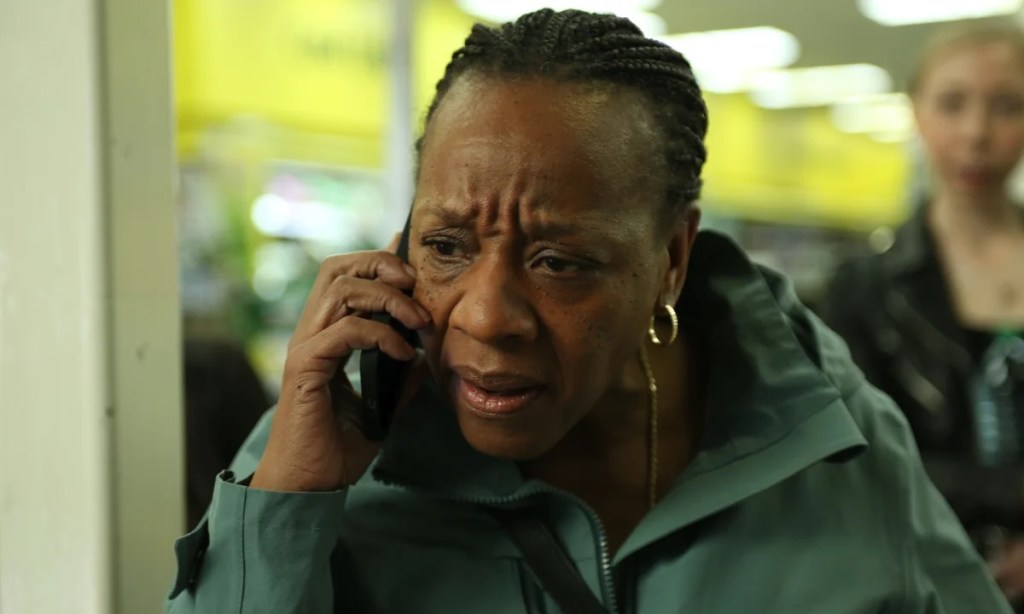
Hard Truths is the new film by Mike Leigh film, who returns to the trademark kitchen sink improvised drama he’s most notable for. Leigh’s last two films – Mr Turner and Peterloo were historical dramas and while I loved the former, the latter was underwhelming. In Hard Truths, Leigh reunites with Secrets and Lies star Marianne Jean-Baptiste, who plays Pansy Deacon, a woman with a short temper who criticises anything and everything. She lives with her quiet plumber husband, Curtley (David Webber) and overweight and jobless but kind-hearted adult son Moses (Tuwaine Barrett). It quickly becomes apparent, though, that Pansy is a deeply troubled woman battling severe anxiety and depression and her sister Chantelle (Michele Austin) tries to ease her out of it.
Hard Truths is another striking addition in Leigh’s filmography and is often very funny but simultaneously devastating. An early scene in a supermarket is particularly rib-tickling as Pansy comes to blows with fellow customers. That devastation slowly invades the humour, though, as the film progresses, and the result is one of Leigh’s most crushing works.
Marianne Jean-Baptiste is phenomenal as Pansy, but her performance is matched by both Webber and Barrett as her husband and son and the dynamic between the three of them is perfectly judged. I really felt for all of them and could understand their perspectives on the simmering situation. In what’s sadly his last film, the late Dick Pope shoots the film beautifully and it’s complimented by a prickly score by Leigh-regular Gary Yershon.
But I wanted more. Aside from Career Girls, Hard Truths is Leigh’s shortest film. The film ends on an affecting dilemma, leaving how the scenario is going to play out to the audience’s imagination. While that’s an effective technique and leaves one wanting more, the lack of development towards this crescendo (compared to his other films where he tends to take his time) felt uncharacteristically slight. Ultimately, it’s testament to the powerful and vivid characters Leigh’s created that meant I wanted more. Still, Hard Truths is a very powerful piece of work that goes straight up into his top tier of work.
Director: Brady Corbet Starring: Adrien Brody, Felicity Jones, Guy Pearce, Joe Alwyn, Raffey Cassidy, Stacy Martin, Emma Laird, Isaach de Bankolé, Alessandro Nivola Certificate: 18 Run Time: 215 mins
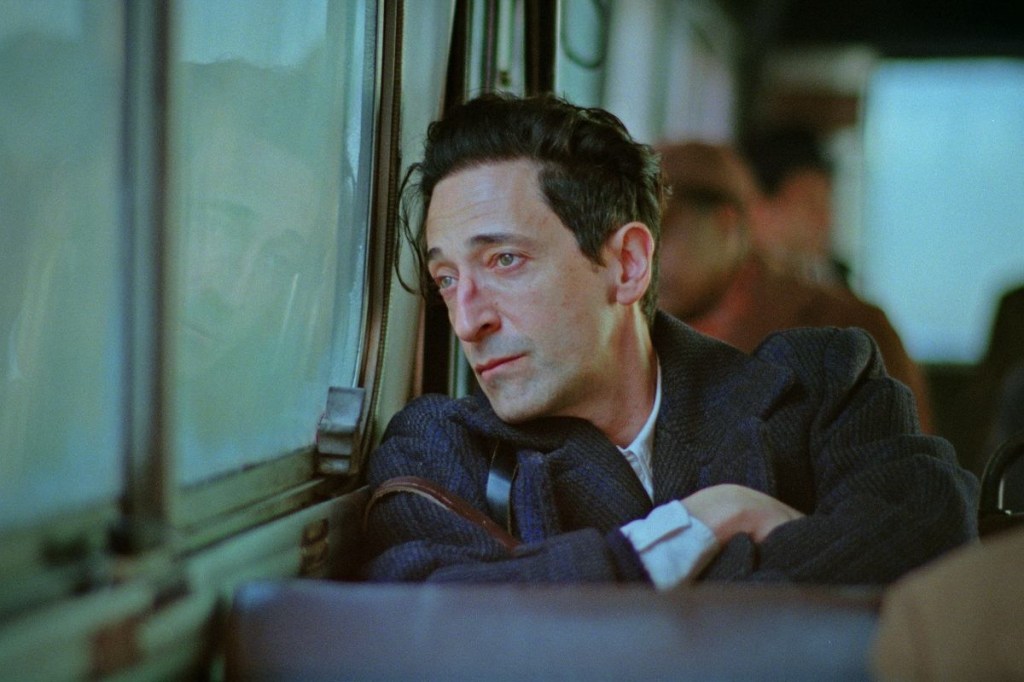
The Brutalist is an epic period drama directed by Brady Corbet, who last made the excellent Vox Lux. Undeniably more ambitious in scope, Corbet’s latest spans over thirty years and a three and a half hour run time. Adrien Brody plays László Tóth, a Hungarian-Jewish Holocaust survivor and Bauhaus-trained architect who immigrates to America. He stays with his cousin, Attila (Alessandro Nivola) and wife Audrey (Emma Laird), while László’s wife, Erszébet (Felicity Jones) stays behind in Europe due to her weak health. László is soon commissioned to renovate the library of the wealthy Harrison Lee Van Buren (Guy Pearce) at the behest of his son, Harry (Joe Alwyn) as he tries to integrate into American culture.
The Brutalist has received quite the critical acclaim and it’s up for ten Oscars – does it live up to the hype? It does. The film isn’t perfect but The Brutalist is directed with real bravura and has a lot to say – although it’s about Tóth’s architectural career on the surface, there are plenty of parallels with the idea of how someone suffers for their art and how they are the person remembered rather than the entity throwing money at a project. Of course, that means there’s themes of compromise and interference and although its last 30 minutes may seem to take a different, seemingly incomprehensible tone, I found it very thought-provoking.
Adrien Brody turns in a career-best performance as the suffering artist, nailing the Slavic accent and mannerisms – he’s fully deserving of his Best Actor nomination and he’s the clear winner. Guy Pearce is also a standout as the slimy financier in a very multi-faceted performance. Pearce is no stranger to playing villains – his deliciously evil turn in Lawless is evidence of that – but this is a complex individual with all the qualities of someone who has too much money. The smaller, supporting roles that stand out the most beyond Brody and Pearce are Raffey Cassidy as Tóth’s niece , Alessandro Nivola, Isaach de Bankolé as a single father he befriends and Jonathan Hyde as one of Harrison’s builders.
I was less taken with Felicity Jones’ turn as Erszébet, who doesn’t feel as authentic as Brody or Pearce. But I don’t think all of the blame should be placed on Jones because her relationship with László is underdeveloped and in my opinion, that’s the film’s main flaw. That said, Jones absolutely nails her final scene in a shouty and intense feud which reminded me of Daniel Day-Lewis’ “I drink your milkshake” speech in There Will Be Blood.
Daniel Blumberg’s prickly score is wonderful, lending the film a simmering intensity and he crafts many memorable themes that develop throughout the film. The Brutalist is also beautifully shot by Lol Crawley, resurrecting the VistaVision process to authentically portray the period. It’s staggering how good the film looks, considering its modest $9.6 million budget and bearing in mind its epic run time. I also loved the intended intermission – the two halves of the film feel distinct and it comes in a natural place. It really helped create an authenticity to this type of epic filmmaking that once soared and isn’t made anymore.
While not perfect, I loved The Brutalist and it’s fully deserving of its Awards praise. It’s teeming with brilliant performances, a sharp script and endlessly striking visuals. Granted, some elements are underdeveloped but this is a film that earns its lengthy runtime and I was engrossed from start to finish. I can’t wait to see what Brady Corbet does next.










 The Film Meister