Captain America: Brave New World (Review)

Review

Rating: 3 out of 5.

Director: Julius Onah 
Starring: Anthony Mackie, Danny Ramirez, Shira Haas, Carl Lumbly, Xosha Roquemore, Giancarlo Esposito, Liv Tyler, Tim Blake Nelson, Harrison Ford
Certificate: 12A
Run Time: 118 mins

Captain America: Brave New World is the latest in the Marvel Cinematic Universe and the fourth standalone installment for the superhero. Previously playing The Falcon, Anthony Mackie’s Sam Wilson picks up the Captain America mantle from Chris Evans’ Steve Rogers after he naturally passed the baton at the end of Avengers: Endgame

The Captain America films have always been generally regarded as some of the strongest works in the MCU, with both The Winter Soldier and Civil War having a stellar reputation. Both were directed by the Russo brothers (who went on to helm Avengers: Infinity War and Avengers: Endgame). To a large extent, I’d agree, although Captain America: The Winter Soldier drops the ball somewhat in its final act.  

Julius Onah takes the director reins with Brave New World, best known for the highly underrated The Cloverfield Paradox. Taking place after The Falcon and Winter Soldier television series, newly-elected president Thaddeus Ross (Harrison Ford taking over the dearly departed William Hurt) sends Wilson and Joaquin Torres (Danny Ramirez, the new Falcon) on a Mexican mission to stop the illegal sale of classified items from the villainous Sidewinder (Giancarlo Esposito). When they return, the pair are invited to a summit at the White House, which all goes wrong when their fellow super soldier friend Isaiah Bradley (Carl Lumbly) makes an uncharacteristic attempt on Ross’ life and a political conspiracy ensues. 

Captain America: Brave New World is a real mixed bag. Starting with the positives, the film is always reasonably entertaining and Anthony Mackie makes for a natural and charismatic lead in his first leading film. Mackie’s performance isn’t the only strong one – Carl Lumbly is reliably excellent, as is Giancarlo Esposito (although his Sidewinder villain is sadly underused). 

Harrison Ford makes for an excellent Thaddeus Ross and he gets plenty of screen time. Ford’s phoned in many of his performances in franchise films over the past decade, such as Star Wars: The Force Awakens and Indiana Jones and the Dial of Destiny. And even though Blade Runner 2049 is an ambitious film, Ford’s performance is one of its weak points. While Ford’s Ross doesn’t feel like a carbon copy of William Hurt, he balances the dishonest and rage-fuelled nature of the character very well. 

I also admired how the film feels rather standalone and doesn’t get too hamstrung in linking to other films in the franchise (although I liked how it progressed several storylines from previous underrated entries). Save for a scene with Sebastian Stan’s Bucky Barnes, Onah’s film also largely eschews Marvel’s forced humour which plagues some of its films. The climactic action sequence (which has been heavily spoiled in the trailers) is also thrilling and well-shot. 

But the film is sadly pulled down by other factors. Firstly, it’s very evident the film’s been written by five screenwriters – the script is rather stilted in places. The film’s murkily shot by Kramer Morgenthau and it’s pretty ugly in places. He often resorts to quick cuts and save for the final action set-piece, the film’s visually reminiscent of a television series – not good considering the megabucks $180 million budget! 

The score by Laura Karpman is also strange. She completely ignores Alan Silvestri and Henry Jackman’s previous themes – and while that’s fine because she might have wanted to create new themes for Mackie now that he’s in the lead, they’re not memorable in the slighest. Karpman also sprinkles in some commerical singles that are painfully obvious – she committed the same sin when she scored The Marvels

And finally, while I won’t spoil the film’s final villain arrangement, the reveal is disappointing and a waste of an excellent actor’s talent with some hideous visuals and make-up. 

Captain America: Brave New World has a lot going for it with its performances and relatively standalone approach to the rest of the Marvel Cinematic Universe fodder. But it’s a shame that it doesn’t reach its full potential with its mediocre script and visual effects. Out of the Phase Five cohort, Captain America: Brave New World is probably the film I’m most likely to rewatch, alongside Guardians of the Galaxy: Vol 3, but the fact it still isn’t brilliant is hardly a ringing endorsement. That said, there’s certainly future potential for Anthony Mackie’s superhero if it’s given the right treatment. 

The Gorge (Review)

Review

Rating: 2.5 out of 5.

Director: Scott Derrickson
Starring: Miles Teller, Anya Taylor-Joy, Sigourney Weaver
Certificate: 15
Run Time: 127 mins

The Gorge is the new film by Scott Derrickson, a science fiction romantic action film with espionage and horror elements – quite the genre mash-up on paper. The director is best known for his work in the horror genre, with films such as Sinister and The Black Phone but he’s proven his hand at other works too, for example with Doctor Strange. The Gorge is written by Zach Dean, with the spec script spending time on the Black List before Derrickson signed on to direct in early 2022. 

Miles Teller and Anya Taylor-Joy play two elite snipers who receive identical missions: travel to a secret location and guard a deep gorge without knowing what lies inside for a year without any outside contact. One guards the eastern side, the other the western and the two aren’t allowed to have contact with each other. But the two quickly start communicating with each other and things escalate from there. 

While The Gorge shows a lot of promise in places, it’s overlong and goes heavy on the romance with painfully obvious story beats. There’s a reason Apple has decided to give this film a Valentine’s Day release. The film would be much stronger with a good half an hour removed, and the cuts to make would be to the protracted sequences where the duo’s romantic relationship develops. Even in its final form though, Teller and Taylor-Joy make for an expectedly great duo, but it’s Teller who gives the better performance because his character has more meat on the bone. 

When Derrickson leans into the horror elements, the film excels. There’s a handful of effective jump scares and slimy creature design, akin to a harder-edged Guardians of the Galaxy meets Pirates of the Caribbean. The film’s vibrantly shot by Dan Laustsen and there’s a moody score by Trent Reznor and Atticus Ross, but some of the tracks outside of the score are painfully on-the-nose. 

While it’s competently directed, it’s a shame The Gorge doesn’t live up to the potential of its intriguing premise. The decision to focus on the burgeoning romance between the duo feels at odds with the film’s harder horror edge and it’s drastically overlong. While The Gorge is one of Derrickson’s weakest efforts, I enjoyed some of its visuals and horror elements but the film could have been much better. 

Companion (Review)

Review

Rating: 3 out of 5.

Director: Drew Hancock
Starring: Sophie Thatcher, Jack Quaid, Rupert Friend
Certificate: 15
Run Time: 97 mins

Companion is a sci-fi horror directed by Drew Hancock in his feature film debut and produced by Zach Cregger, who made the excellent Barbarian. The film opens on Iris (Sophie Thatcher) remembering how she first met her boyfriend, Josh (Jack Quaid). We then see the couple heading on a weekend getaway with friends to a grand lake house and to say anymore would be heading into spoiler territory. This is very much a film to go into blind – don’t watch the trailer because it gives away too much.

Companion is a mixed bag. On the plus side, there are some interesting ideas and attempts at social satire, but they’re not all fully-fledged (more on that later). The film’s well shot by Eli Born and it’s slickly edited too. Both Jack Quaid and an unrecognisable Rupert Friend stand out among the cast. As for Sophie Thatcher, who was the weaker half of the duo of missionaries in last year’s Heretic, she’s serviceable as Iris but doesn’t make a lasting impression.   

However, the rest of the film is deeply flawed. While Zach Cregger had a commanding view on Barbarian’s pacing, Hancock isn’t in the same league. The first twenty minutes or so has some pretty ear-scraping dialogue and a finale that reminded me of The Terminator is rather unnecessary – there’s a neat point where this film could have ended that would have left the rest of the events to the audience’s imagination.

As a result, although Companion is only a 97-minute film, the reasonably assured second act isn’t substantial enough to warrant a feature length film on its own, but the bookending first and third acts around it feel too long. It’s simply poorly paced and the film would have benefitted from another rewrite. The score by Hrishikesh Hirway doesn’t really work either and the film needs something more melodic and menacing.

While certain elements of Companion work rather well, it could have been much sharper and have more bite for the ambitious story it’s trying to tell. I found the film sporadically fun but overall somewhat of a missed opportunity.

Hard Truths (Review)

Review

Rating: 4 out of 5.

Director: Mike Leigh
Starring: Marianne Jean-Baptiste, Michele Austin, David Webber, Tuwaine Barrett, Ani Nelson, Sophia Brown, Jonathan Livingstone
Certificate: 12A
Run Time: 97 mins

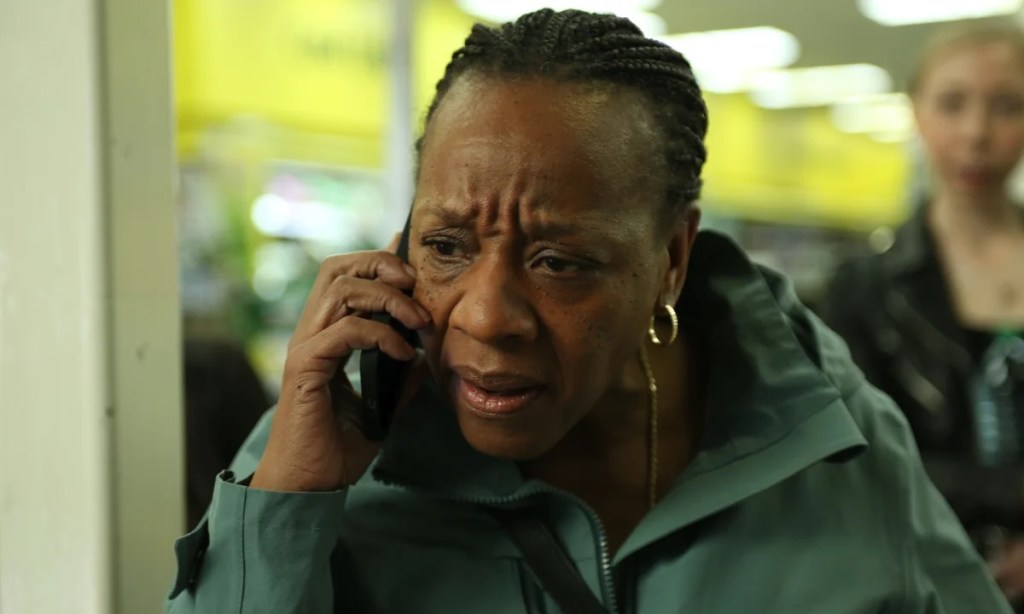
Hard Truths is the new film by Mike Leigh film, who returns to the trademark kitchen sink improvised drama he’s most notable for. Leigh’s last two films – Mr Turner and Peterloo were historical dramas and while I loved the former, the latter was underwhelming. In Hard Truths, Leigh reunites with Secrets and Lies star Marianne Jean-Baptiste, who plays Pansy Deacon, a woman with a short temper who criticises anything and everything. She lives with her quiet plumber husband, Curtley (David Webber) and overweight and jobless but kind-hearted adult son Moses (Tuwaine Barrett). It quickly becomes apparent, though, that Pansy is a deeply troubled woman battling severe anxiety and depression and her sister Chantelle (Michele Austin) tries to ease her out of it.

Hard Truths is another striking addition in Leigh’s filmography and is often very funny but simultaneously devastating. An early scene in a supermarket is particularly rib-tickling as Pansy comes to blows with fellow customers. That devastation slowly invades the humour, though, as the film progresses, and the result is one of Leigh’s most crushing works.

Marianne Jean-Baptiste is phenomenal as Pansy, but her performance is matched by both Webber and Barrett as her husband and son and the dynamic between the three of them is perfectly judged. I really felt for all of them and could understand their perspectives on the simmering situation. In what’s sadly his last film, the late Dick Pope shoots the film beautifully and it’s complimented by a prickly score by Leigh-regular Gary Yershon.

But I wanted more. Aside from Career GirlsHard Truths is Leigh’s shortest film. The film ends on an affecting dilemma, leaving how the scenario is going to play out to the audience’s imagination. While that’s an effective technique and leaves one wanting more, the lack of development towards this crescendo (compared to his other films where he tends to take his time) felt uncharacteristically slight. Ultimately, it’s testament to the powerful and vivid characters Leigh’s created that meant I wanted more. Still, Hard Truths is a very powerful piece of work that goes straight up into his top tier of work.

The Brutalist (Review)

Review

Rating: 4 out of 5.

Director: Brady Corbet
Starring: Adrien Brody, Felicity Jones, Guy Pearce, Joe Alwyn, Raffey Cassidy, Stacy Martin, Emma Laird, Isaach de Bankolé, Alessandro Nivola
Certificate: 18
Run Time: 215 mins

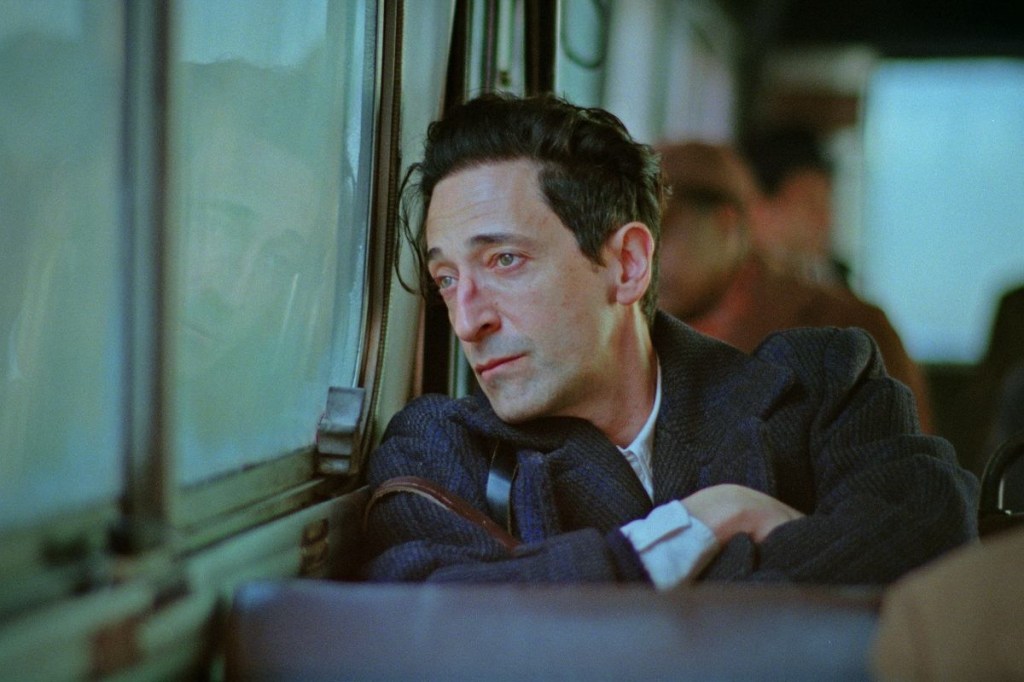
The Brutalist is an epic period drama directed by Brady Corbet, who last made the excellent Vox Lux. Undeniably more ambitious in scope, Corbet’s latest spans over thirty years and a three and a half hour run time. Adrien Brody plays László Tóth, a Hungarian-Jewish Holocaust survivor and Bauhaus-trained architect who immigrates to America. He stays with his cousin, Attila (Alessandro Nivola) and wife Audrey (Emma Laird), while László’s wife, Erszébet (Felicity Jones) stays behind in Europe due to her weak health. László is soon commissioned to renovate the library of the wealthy Harrison Lee Van Buren (Guy Pearce) at the behest of his son, Harry (Joe Alwyn) as he tries to integrate into American culture.

The Brutalist has received quite the critical acclaim and it’s up for ten Oscars – does it live up to the hype? It does. The film isn’t perfect but The Brutalist is directed with real bravura and has a lot to say – although it’s about Tóth’s architectural career on the surface, there are plenty of parallels with the idea of how someone suffers for their art and how they are the person remembered rather than the entity throwing money at a project. Of course, that means there’s themes of compromise and interference and although its last 30 minutes may seem to take a different, seemingly incomprehensible tone, I found it very thought-provoking.

Adrien Brody turns in a career-best performance as the suffering artist, nailing the Slavic accent and mannerisms – he’s fully deserving of his Best Actor nomination and he’s the clear winner. Guy Pearce is also a standout as the slimy financier in a very multi-faceted performance. Pearce is no stranger to playing villains – his deliciously evil turn in Lawless is evidence of that – but this is a complex individual with all the qualities of someone who has too much money. The smaller, supporting roles that stand out the most beyond Brody and Pearce are Raffey Cassidy as Tóth’s niece , Alessandro Nivola, Isaach de Bankolé as a single father he befriends and Jonathan Hyde as one of Harrison’s builders.

I was less taken with Felicity Jones’ turn as Erszébet, who doesn’t feel as authentic as Brody or Pearce. But I don’t think all of the blame should be placed on Jones because her relationship with László is underdeveloped and in my opinion, that’s the film’s main flaw. That said, Jones absolutely nails her final scene in a shouty and intense feud which reminded me of Daniel Day-Lewis’ “I drink your milkshake” speech in There Will Be Blood

Daniel Blumberg’s prickly score is wonderful, lending the film a simmering intensity and he crafts many memorable themes that develop throughout the film. The Brutalist is also beautifully shot by Lol Crawley, resurrecting the VistaVision process to authentically portray the period. It’s staggering how good the film looks, considering its modest $9.6 million budget and bearing in mind its epic run time. I also loved the intended intermission – the two halves of the film feel distinct and it comes in a natural place. It really helped create an authenticity to this type of epic filmmaking that once soared and isn’t made anymore.

While not perfect, I loved The Brutalist and it’s fully deserving of its Awards praise. It’s teeming with brilliant performances, a sharp script and endlessly striking visuals. Granted, some elements are underdeveloped but this is a film that earns its lengthy runtime and I was engrossed from start to finish. I can’t wait to see what Brady Corbet does next.


Presence (Review)

Review

Rating: 3.5 out of 5.

Director: Steven Soderbergh
Starring: Lucy Liu, Chris Sullivan, Callina Liang, Eddy Maday, West Muholland
Certificate: 15
Run Time: 85 mins

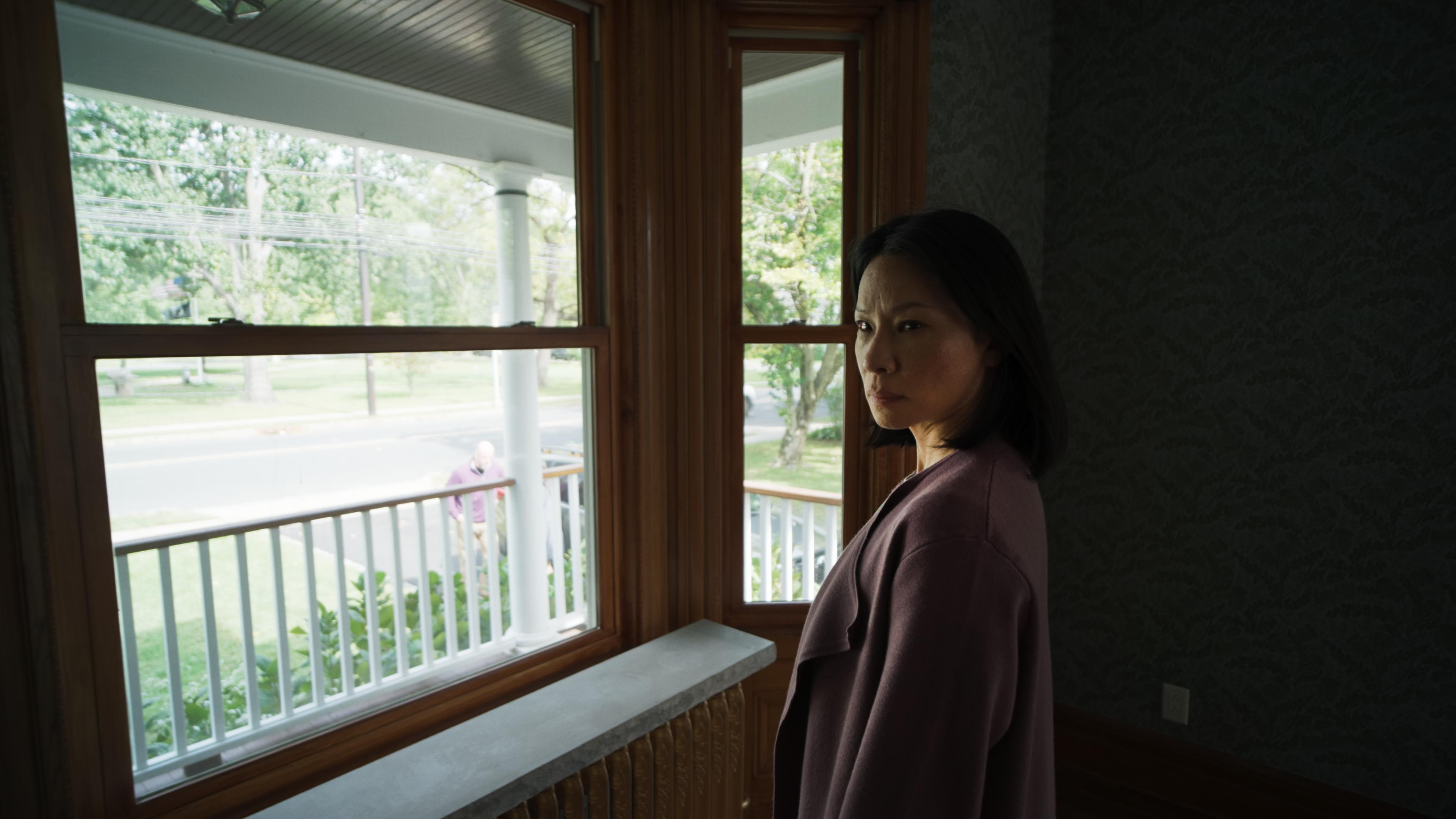
Presence is the new film by Steven Soderbergh, perhaps the most versatile director of his generation. Written by David Koepp, who previously wrote Soderbergh’s Kimi, Presence follows a family of four who move into a house inhabited by a poltergeist. The family includes mother Rebecca (Lucy Liu), father Chris (Chris Sullivan), bratty elder brother Tyler (Eddy Maday) and troubled younger sister Chloe (Callina Liang). They’re all suffering from various problems – Rebecca clearly prefers her son and has been committing financial fraud, Chris suffers from depression and is considering separation from Rebecca and Chloe is grieving the death of her best friend, Nadia, who recently died in her sleep. Almost immediately after moving in, Chloe starts to complain of a supernatural presence.  

The film is presented in a series of long takes rom the poltergeist’s point of view – an interesting creative decision. As such, the camera never leaves the house, for example whenever the family go onto the decking, instead peering from the window. A similar technique is also used in Nickel Boys, one of this year’s Best Picture hopefuls. While it received near unanimous praise, the film really didn’t work for me precisely for this filming technique, primarily because the first person point of view detracted from the important story being told. 

Fortunately, Soderbergh is a far more competent director and I really enjoyed Presence. The film does a really good job of slowly building a sense of unease with a tinge of sadness and there’s some excellent character development among the family. You can really see the cracks start to grow, particularly as the strained marriage falls apart. Chris Sullivan stands out as the father in a very understated performance who generates a lot of empathy. Calling Liang also impresses as the developing but vulnerable daughter who hasn’t quite worked out her purpose yet. Lucy Liu’s mother isn’t particularly likeable, but that’s the point and her performance satisfies the brief. 

The first person point of view also works here, even if it occasionally falters under scrutiny.  It compliments the narrative and the dream-like images of the wide lens (Soderbergh is on cinematographer duties, too), forcing us to question what the spirit’s intentions are and if it’s malicious by the way the camera studies its subjects. There’s a melodically moody score too from Zack Ryan and 85 minutes, the film is lean and doesn’t outstay its welcome. If anything, I wish it were a bit more substantial. 

Presence is proof that Soderbergh can effortlessly fit into any genre and although it’s flawed, this is an intriguing film that builds to a memorable conclusion, which stays with you long after the credits roll. Move over Nosferatu – this is a great note for the horror genre to start on this year.  

Flight Risk (Review)

Review
Still from Flight Risk (2025)

Rating: 3 out of 5.

Director: Mel Gibson
Starring: Mark Wahlberg, Michelle Dockery, Topher Grace
Certificate: 15
Run Time: 91 mins

Flight Risk is the new Mel Gibson film, and his first since 2016’s Best Picture-nominated Hacksaw Ridge. Gibson’s proven a skilled hand behind the camera, with Braveheart, The Passion of the Christ and Apocalypto, all proving visceral experiences. It seems rather uncharacteristic for Gibson to pick a 90-minute action thriller chamber piece as his latest project. This film follows Madolyn Harris (Michelle Dockery), a U.S. Marshal who is transporting fugitive Winston (Topher Grace) from Alaska to testify against a crime family. The plane is piloted by Daryl Booth (Mark Wahlberg), who might not be as innocent as he seems with an ulterior motive.

Even if it’s his weakest effort to date in its slightness, Flight Risk delivers and is big, dumb fun. It’s always entertaining and there’s a palpable tension in how things are going to play out and Gibson gets more than enough mileage out of the largely single location. It’s satisfyingly bloody too, with some crunchy fight and smatterings of gory injuries. The film’s visually interesting too, bolstered by a fitting Antonio Pinto score.

Although there isn’t much meat to the bone, Dockery and Grace both turn in committed performances and share a decent chemistry. Wahlberg, on the other hand, is quite something – he really chews the scenery as the completely nuts pilot with an outrageous bald patch. The actor reportedly shaved his head every day during filming instead of wearing a bald cap, but the effort is so distracting that it looks more like a wig. He’s entrusted with some truly despicable dialogue and I hated the character but I suppose that means Wahlberg satisfies the brief. 

Flight Risk is undeniably trashy but I’d be lying if I said I didn’t enjoy it. Casting a wider context as a Mel Gibson film, it’s undoubtedly not up to the rest of his work and I’m not sure what he saw when decided to take on this project. I wouldn’t be surprised to see Flight Risk become a future so-bad-it’s-good classic for its outrageous Mark Wahlberg performance.

Wolf Man (Review)

Review

Rating: 2 out of 5.

Director: Leigh Whannell
Starring: Christopher Abbott, Julia Garner, Sam Jaeger, Matilda Firth
Certificate: 15
Run Time: 103 mins

Wolf Man is the new film by Leigh Whannell, a modernised reboot of the 1941 original with a relatively modest $25 million budget. Of course, there’s been no shortage of other attempts at remaking the gothic horror Universal monster and although it was negatively received, I loved Joe Johnston’s 2010 Benicio Del Toro-starring effort. Whannell knows a thing or two about making intelligent horror films on a relative budget, being best known for his writing collaborations with director James Wan with films such as Saw and Insidious. He’s also proven an adept director, making Insidious: Chapter 3 (which I consider to be the best sequel in the series), Upgrade and The Invisible Man

Like The Invisible Man, Whannell updates the creature feature for modern times. Gone is the quintessential British setting, stately estates and a stage actor. Instead, we follow a young family man, Blake Lovell (Christopher Abbott) who lives with his workaholic wife, Charlotte (Julia Garner), and daughter Ginger (Matilda Firth). Blake had had a rough childhood in the remote Oregon mountains with his father and decides that that the best way to rekindle his relationship with his wife is to return to his childhood home on holiday. However, a creature drives them off the road as soon as they arrive and… you know the rest. 

Unfortunately, Wolf Man is a complete and utter misfire – a surprise for this otherwise reliable director. The idea of lycanthropy being a metaphor for toxic masculinity and family trauma is very heavy-handedly done and the script, which Whannell co-wrote with Corbett Tuck is a rewrite away from being reasonable. It’s poorly paced –the film would have benefitted from another 15 minutes to flesh out its characters and not just throw them into a new setting almost immediately. Characters make stupid decisions and I didn’t find either Blake or Charlotte to be likeable, despite both Abbott and Garner trying their best. The characters simply aren’t developed enough and the film lack the grand scale of its predecessors in that it largely confines itself to a single location. The lower budget isn’t a problem in itself but Whannell doesn’t do anything interesting with it. 

On the plus side, the film’s lusciously shot by Whannell-regular Stefan Duscio, who captures the isolated and solemn nature of the forest, lending the film a sporadically claustrophobic quality. There’s also a couple of ambitious attempts at body horror but the lack of budget is painfully apparent. I think Wolf Man would have fared better if it had divorced itself from the Universal original and been an original horror – the result feels much closer to It Comes At Night, even if it’s nowhere near as competent. It’s a shame Whannell wasn’t able to crack this one and Wolf Man proves that some stories are best left in the past. 

A Complete Unknown (Review)

Review

Rating: 4 out of 5.

Director: James Mangold
Starring: Timothée Chalamet, Edward Norton, Elle Fanning, Monica Barbaro, Boyd Holbrook, Scoot McNairy
Certificate: 15
Run Time: 140 mins

A Complete Unknown is the latest by James Mangold after the disappointing Indiana Jones and the Dial of Destiny. The director returns to the music biopic, a genre he’s proven influential in with the Oscar-winning Walk the Line. Here, Mangold tells the story of Bob Dylan, adapting a 2015 book by Elijah Wald called Dylan Goes Electric! which covers his earliest folk music success to his controversial use of electric instruments at the 1965 Newport Folk Festival. Mangold co-writes the script with Jay Cocks, his first since Martin Scorsese’s Silence

I must confess my knowledge of Dylan’s discography is very elementary. But perhaps that’s a positive because I really enjoyed A Complete Unknown, even if it succumbs to convention, the very antithesis of Dylan’s persona. But straight from the opening scene, Mangold directs the film with a real warmth and energy and I loved the film’s tone. I especially liked its commentary on how genres evolve and how fellow artists support each other, even if that example isn’t followed by the public. It also has plenty to say on what it’s like to meet your idols. The film’s lusciously shot by Phedon Papamichael, and the production design of the 1960s is brilliantly captured. 

Timothée Chalamet is magnetic as Dylan, proving himself ever the versatile actor, with leading roles in Call Me By Your Name, Dune and Wonka. Chalamet completely sells himself as Dylan, balancing his sheer talent while being somewhat impenetrable and unlikeable at times. The actor’s fully deserving of Awards attention. I’d have like to have seen even more development about his earlier life to make him less of a mystery. 

Chalamet’s bolstered by some terrific supporting performances. The standout’s Monica Barbaro as Joan Baez, who brings a real warmth to the singer and like Chalamet, also does all her own singing. This is a star-making turn and I hope she gets Oscar recognition. Edward Norton’s great too as the caring and gentle Pete Seeger and Mangold-regular Boyd Holbrook’s unrecognisable as Johnny Cash. 

It may follow a conventional biopic structure, but I still found A Complete Unknown gripping from start to finish, with Mangold at the top of his game paired with many impressive performances. Sometimes, convention is what’s required, if the subject matter and talent behind the screen can make an engaging experience of it, and Mangold certainly does that.  

Best Films of 2024 (10-1)

Rankings, Year In Film

This is the second of two posts detailing my top 20 films of 2024. I previously ran you through my best films of 2024 (20-11) and here, I’ll unveil my top ten. I find it rather interesting that all bar one of these films came out in the first half of the year (according to the UK release calendar).

10) The Zone of Interest

The Zone of Interest is a fiercely original work from Jonathan Glazer, his first film in eleven years. It tells the story of Rudolf Höss, the longest-serving commandant of the Auschwitz concentration camp, where he lived with his wife Hedwig (Sandra Hüller) in what they perceived as their idyllic home. Small catch – the garden wall with barbed wire atop it is shared with Auschwitz. 

The result is an uncomfortable viewing and a film that really gets under your skin. The Zone of Interest represents the most important use of sound I can think of in quite some time – the sound of the droning concentration camp with its whirring machinery is ever-present during mundane conversation and day-to-day life. Glazer never shows us the atrocities inside the camp and what we hear beyond the frame is another film in itself. I loved the surreal elements too, particularly a storyline shot with thermal cameras. The Zone of Interest is a fascinating work in Glazer’s career, despite its cold and intentionally bad taste that will leave you thinking long after the credits have rolled. 

9) Longlegs

Longlegs is a horror thriller written and directed by Osgood Perkins, his fourth film but by far his highest profile effort. The film follows Lee Harker (Maika Monroe), an FBI agent assigned to investigate a decades-spanning case of a series of brutal murder-suicides. Although Longlegs isn’t as outright scary as some have made it out to be and is more of a crime thriller, this is still a barnstorming original effort from Perkins. He maintains a real sense of dread and tension throughout and the film is relentlessly bleak with some a terrific central performance by Maika Monroe. The film’s beautifully shot by Andrés Arochi, favouring close-ups of characters but keeping the background in shot – an early scene where Harker reads a letter following a home invasion is brilliantly shot as we’re constantly peering at the edge of the kitchen door frame. I also loved the muted, grey colour palette and the dreary, dilapidated homes many of the characters live in that portray the Oregonian setting is not particularly affluent. It’s also complemented by an excellent, rather minimalist score by Zilgi (who is actually the director’s’ brother, Elvis Perkins) but there are equally many scenes of silence which really contributes to the dread. While perhaps a little too neatly crafted in its narrative, Longlegs is a fiersomely original horror directed with real skill and flair. 

8) Kingdom of the Planet of the Apes

Kingdom of the Planet of the Apes is an uncommonly intelligent sequel and is another strong entry in the series. With Andy Serkis’ Caesar kicking the bucket at the end of War for the Planet of the Apes, this film picks up ‘many generations’ after War’s conclusion with a new set of characters. The underlying social subtext is what really allows the Planet of the Apes films to excel, and the lack of it is what lets down its two weakest instalments – Tim Burton’s misguided Planet of the Apes remake and Beneath the Planet of the Apes. The idea of exploring how a key figure’s teachings have been twisted after a period of time is a genius move, reflecting the intrigue and conflict brought by religion in our world. I loved how director Wes Ball advances the aesthetic and tone of the series – gone are the predominantly forested surroundings of Dawn and War and its road movie influence feels closer to earlier entries of the original pentology. The abandoned human world is fascinating to pick apart, from rusted escalators to buildings covered in overgrown fauna. There’s some great set-pieces too, with fast-paced and memorable action sequences, the highlight being one on a bridge. The film is lusciously shot by Gyula Pados and John Paesano does a great job with the score, no mean feat coming off of Michael Giacchino’s work. Kingdom of the Planet of the Apes does an excellent job of advancing the reboot series, while brimming with potent social subtext and respecting what made the original pentology work. 

7) Furiosa: A Mad Max Saga

Those wanting a rehash of Mad Max: Fury Road should rethink their expectations because Furiosa: A Mad Max Saga plays out very differently – a mature and slow-burn revenge thriller split into five chapters. Except for perhaps ten minutes when the characters reach The Green Place in Fury Road, that film was effectively a non-stop car chase whereas there’s plenty of room to breathe this time around. Considering he’s almost eighty years old, Miller’s film is brimming with the same passionate energy with some truly breathtaking action sequences, the highlight an extended chase aboard the War Rig. There’s plenty of meat to the bone to all the characters too, with an excellent script Miller co-wrote with Nico Lathouris, and it’s expectedly beautifully shot by Simon Duggan.  Although she doesn’t show up until the third chapter, Anya Taylor-Joy stuns as the titular character. Not only is her performance magnetic, but she also embodies Charlize Theron’s (who played the character in Fury Road) sounds and mannerisms.

6) Civil War

Civil War is a brilliant film and director Alex Garland’s best work to date – it’s well-paced and sustains its unnerving tension throughout. I really connected with the characters and the film looks more expensive than its $50 million budget suggests.  I loved its depiction of journalism in how there is the dedication, thrill, rush and joy of creating content. The idea of one photo in every 100 being perfect is also true, but the lengths in which Garland depicts journalists in capturing even a single photo (for example, by jumping into enemy gunfire) is chilling. I also loved how photojournalism was edited into the film and Civil War is about how a story becomes an image. Sound is also used to brilliant effect, with the lack of sound in key sequences very effective in increasing tension and portraying how used to violence these characters have become. While the performance are uniformly excellent, it’s Jesse Plemons that stands out as a racist militant.

5) Io Capitano

Io Capitano is a terrific and thought-provoking piece from Italian director Matteo Garrone about two teenage cousins who decide to leave their native Senegal for a more prosperous future in Italy. While its first twenty minutes are quite atypical of Garrone’s usual directorial style, once the boys leave home, this is an immersive experience through and through. A scene with a desperate woman falling behind as a group walk through a desert is particularly affecting, especially with how Garrone plays with time and hallucinations. The ending is also bleak and hard-hitting yet simultaneously joyous. An extended sequence set in a prison is also typical of Garrone and I really brought the relationship between Seydou (Seydou Sarr) and Martin (Issaka Sawagodo), a man he’s imprisoned with. Garrone masterfully often shows but doesn’t tell and I always respect it when a filmmaker treats their audience as intelligent. 

4) American Fiction

American Fiction is a highly entertaining literary comedy with a blisteringly sharp script that in some ways, feels like a film a more muted Spike Lee would make. This is a tough genre to crack and there have been far more failures than hits but I genuinely laughed quite a few times at this. There’s also more than a few kernels of truth about the publishing industry and what it means to be a writer, exploring the highs and lows of both the creative process and critical reception. But Cord Jefferson (in his directorial debut) deftly balances his commentary on the media with a heartfelt treatment of the themes of loneliness and family. The family drama element of the film is equally riveting, with the treatment of Alzheimers touching and the mundane but necessary tasks of trying to get someone into a home. There’s some terrific performances here too, especially Jeffrey Wright who’s always been a reliable screen presence but doesn’t often take the lead role. Wright nails the prickly, depressing nature of his character as he struggles to fit in and open up to people but with an almost lovable quality. To think this is only the directorial debut of Cord Jefferson makes me excited to see where he goes next.

3) Kinds of Kindness

One of two Yorgos Lanthimos films to release this year, Kinds of Kindness sees the director reteam with Efthimis Filippou in their first writing collaboration since The Killing of a Sacred Deer (in my opinion, Lanthimos’ best film). An thrillingly cold-hearted abrudist triptych with a razor dry sense of humour, Kinds of Kindness represents the director at his most daring. It’s a fascinating film, where not everything in the three stories is meant to tie together, but it doesn’t stop one trying to piece the puzzle together. Jesse Plemons is sensational as the lead in the first two stories and Emma Stone and Willem Dafoe are also reliably excellent. Kinds of Kindness is a fascinating film in Lanthimos’ catalogue and while I expect he’ll be tempted to make more mainstream fare given The Favourite and Poor Things‘ reception, I love the eerie strangeness and uncomfortable feeling when he has a hand in the script.

2) The Holdovers

The Holdovers is the new Alexander Payne film and his first since 2017’s Downsizing. Payne reunites with his Sideways lead Paul Giamatti who stars as Paul Hunham, a strict classics teacher at Barton Academy, a New England boarding school that he attended back in his youth. The Holdovers is Payne at his best and is a tender delight from start to finish, but it deftly balances its warmth with a bittersweet tone. The performances are terrific all around, especially Giamatti, and the film perfectly evokes classic 1970’s cinema with its intentionally rustic aesthetic – it looks and feels like a work made at the time. It’s beautifully shot by In Bruges cinematographer Eigil Bryld, especially the wintry landscapes during the opening credits and some disorienting frames that feature late into the film. Paul Giamatti turns in what I’d probably consider a career-best performance as Hunham. Hunham is both lovable and loathsome and an easy character to relate to with the hardships he’s faced in life. In fact, there are many similarities between Hunham and Miles Raymond, the character Giamatti plays in Sideways – both characters that have been hard done-by in life.

I absolutely loved The Holdovers and was completely swept up by the film throughout, with its intelligent script and committed performances. It’s Payne’s best film since Sideways and after only the best part of a year since its release, I predict it will become a Christmas classic. They certainly don’t make films like this anymore.  

So the best film of the year is…

1) Poor Things

The first Yorgos Lanthimos film to release this year takes top honours. Poor Things is Lanthimos back on track (I thought The Favourite was flawed) with a brilliantly twisted, uncomfortable yet multi-layered triumph. A film that gets better on each viewing, Poor Things is narratively stuffed with thought-provoking themes, striking visuals and evocative production design. Robbie Ryan’s cinematography is a career-best, with every frame a painting worth pausing to analyse, which is interesting considering some of his work can be quite vanilla. The film boldly experiments with colour and perspectives are often shot through a fish-eye lens and it’s supported by the lavish production design. I also loved the retrofuturistic vision, with the Victorian London setting contrasting with succeeding elements.

Emma Stone turns in a career-best performance as the Frankenstein-like Bella Baxter, who opens the film as an inquisitive and brash child and ends as a self-made woman. I’ve sometimes struggled with her performances in the past and couldn’t believe she won the Best Actress Oscar for La La Land but not so here. Willem Dafoe is also reliably brilliant as the eccentric surgeon, who belches bubbles at the dinner table due to a health condition. Mark Ruffalo provides much of the comic relief as Wedderburn, who becomes increasingly child-like as the film progresses, although his British accent is rather wandery. Poor Things came out right at the very start of the year and nothing’s been able to dethrone it from the number one spot.


What are your favourite films of 2024? Let me know in the comments or tweet @TheFilmMeister