Frankenstein (Review)

Uncategorized
Still from 'Frankenstein'

Rating: 3.5 out of 5.

Director: Guillermo del Toro
Starring: Oscar Isaac, Jacob Elordi, Mia Goth, Felix Kammerer, Lars Mikkelsen, Christoph Waltz
Certificate: 15

Run Time: 150 mins

Frankenstein is visionary director Guillermo del Toro’s long-awaited passion project that he’s been trying to get off the ground since 2007 when he first started crafting concept art. Adapting Mary Shelley’s highly influential 1818 novel certainly plays to the director’s strengths, who has made a career for himself with his grotesque-looking monsters and Gothic imagery. But Del Toro’s last two films have seen the director step away from his comfort zone – Nightmare Alley saw him explore the neo-noir psychological thriller genre and he then teamed up with the late Mark Gustafson for an animated Pinocchio for Netflix. While I liked both films, neither represented Del Toro at his best – Nightmare Alley was rather languorous and I found some of the musical elements of Pinocchio challenging.

Del Toro has once again joined forces with Netflix for Frankenstein and although Doug Jones and Andrew Garfield (and Benedict Cumberbatch was courted at one point) were previously attached to play the monstrous creation, it’s Saltburn‘s Jacob Elordi who undergoes the transformation. Oscar Isaac plays the titular surgeon, who we see being chased by his creation in the opening scenes where he then gets rescued by the Horisont Royal Danish Navy ship that’s trapped in the ice. After the prelude, the film is split between Victor’s and The Creature’s perspectives. Was Del Toro’s passion project worth the lengthy wait?

To a large extent, yes. Frankenstein is a sumptuous Gothic feast with a standout performance from an unrecognisable Jacob Elordi. From a technical perspective, it’s a beautiful-looking film, gracefully shot by Del Toro’s preferred cinematographer Dan Laustsen and I loved the use of symbolic colours, especially the red Frankenstein’s ill-fated mother is bathed in. There’s also a handful of excellent set-pieces, such as the opening chase to the ship, the monster’s creation and a melancholic extended section in a blind man’s home. Alexandre Desplat’s romping score often stands out too, but it’s a shame there isn’t an overarching main theme to latch onto. This is definitely a film to experience on the biggest screen you can find (as I was lucky to do so), and it’s a shame that most will be watching Del Toro’s passion project via the streaming giant.

Although the film’s always entertaining, it never quite soars. Like Nightmare Alley, it’s overlong and the film would have benefitted from having a good 20 to 30 minutes chopped. What became more apparent on the second viewing on the small screen was just how wordy Del Toro’s script is, and some of the dialogue stilts the film.

While Oscar Isaac has turned in some monumental performances in the past, he only does a reasonable job as Frankenstein. This might be because the character’s not particularly likeable, although Del Toro does a great job of portraying his troublesome childhood which kickstarts his scientist’s ambition. Lots of the other characters get short-changed – there’s not much meat to the bone with Mia Goth’s Lady Elizabeth Harlander for whom Victor has feelings, and Christoph Waltz’s wealthy arms manufacturer who gives Victor the tools to make his creation doesn’t receive much development either. As well as Elordi, the always brilliant David Bradley stands out as a blind old man who befriends the creature with a measuredly delicate performance.

While Frankenstein doesn’t rank among Guillermo Del Toro’s best work, there’s plenty to admire here, especially the director’s personal approach to the material. It’s a shame it doesn’t quite soar as many of Del Toro’s other films though, but the film particularly impresses from a technical viewpoint and Jacob Elordi’s brilliant central performance.

May December (Review)

Uncategorized
⭐⭐⭐⭐ (Excellent)

Director: Todd Haynes
Starring: Natalie Portman, Julianne Moore, Charles Melton
Certificate: 15
Run Time: 117 mins

May December is the new Todd Haynes film, a drama loosely inspired by the Mary Kay Letourneau scandal where the then-34 year old had a sexual relationship with 12-year-old Vili Fualaau. Haynes-regular Julianne Moore plays Gracie Atherton-Yoo, who was caught having sex with 13-year-old Joe Woo at the age of 36 and gave birth to Joe’s child while serving a prison sentence. 23 years later, Gracie and Joe (Charles Melton) are married with three children, their relationship seemingly continuing to blossom. Natalie Portman plays Elizabeth Berry, an actress who is about to play Gracie in a film and as part of her research for the role, spends a couple of weeks with the family to find inspiration for her performance. She also further researches the wider community and how the scandal continues to loom over the town.

May December is an excellent, multi-layered drama and is quite possibly Todd Haynes’ finest work to date – I was enthralled from start to finish.  The film isn’t interested at all in unpicking the how’s and why’s of what happened. Haynes refreshingly chooses to focus on the dark and tangled obsessions of its characters and how they mirror each other. The film is seeping in details to unpick and there are many different possible readings, which make it all the more satisfying. It’s brilliantly paced with a sharp script by Samy Burch which deftly balances the camp and unease. 

Natalie Portman is phenomenal as Berry, in what is a fitting companion piece to her roles in Vox Lux and Jackie, in which she plays characters that are also putting on a performance. As Berry delves deeper into Gracie’s psyche, she starts to imitate Gracie’s mannerisms and appearance, even pursuing a faux-relationship with Joe to try and imitate the life of her subject. Crucially, Portman’s performance asks the question – is Berry simply looking to create the most authentic performance possible or is she looking for sexual gratification out of the process? 

Julianne Moore’s lispy turn is also impressionable as the flawed and unstable Gracie, who lives her life on tenterhooks. But it’s Charles Melton who out-acts both Portman and Moore as the genteel Joe who doesn’t know how to live his life. He’s lost his childhood which was stolen from him by Gracie but he wants a meaningful relationship with his children and is bittersweet about his two youngest flocking the nest to go to university. Two tremendous scenes stand out in particular, one of Joe sharing a beer with his ageing, chain-smoking father on his balcony and him trying cannabis for the first time with his son outside his bedroom window. 

Perfectly complimenting the film is a peppery score by Marcelo Zarvos, who reuses Michael Legrand’s whirlwind-like themes from The Go-Between but develops them beautifully. The film is lusciously shot by Christopher Blauvelt, a scene where Berry and Gracie are talking while Gracie’s daughter is trying on graduation dresses is particularly memorable, Berry effectively bookend by two Grace’s in the mirror. I also loved the butterfly imagery, a hobby of Joe’s. 

May December is a deliciously compelling psychological drama that demands multiple rewatches to further unpick its meanings. It’s Haynes’ best film and is totally seductive in its execution and it will leave you breathless in its closing moments. This is a must-see and one of the best films of the year. 

⭐⭐⭐⭐ (Excellent)

Saltburn (Review)

Uncategorized
⭐⭐⭐ (Good)

Director: Emerald Fennell
Starring: Barry Keoghan, Jacob Elordi, Rosamund Pike, Richard E. Grant, Alison Oliver, Archie Madekwe, Carey Mulligan
Certificate: 15
Run Time: 131 mins

Saltburn is the sophomore effort from Emerald Fennell, whose directorial debut was the razor-sharp feminist vigilante thriller Promising Young Woman, where she won an Academy Award for Best Original Screenplay. This follow-up is also an original work that is a fusion of black comedy and a psychological thriller. Barry Keoghan plays Oliver Quick, an Oxford University English Literature scholarship student, who struggles to fit in due to his inexperience with the upper-class. Even his professor is shocked he’s read the entire reading list. The other students sneer and make a mockery of him until he befriends Felix Catton (Jacob Elordi) one day, after he lets him borrow his bike to get to a class after he suffers a puncture. Felix is won over by Oliver’s tales of his seemingly hard upbringing, with tales of his parent’s alcoholism and addictions. After Oliver becomes distraught over the sudden death of his father, Felix invites him to spend the summer at his family’s lavish estate, Saltburn. 

Like Promising Young Woman, Saltburn is a darkly satirical piece that isn’t afraid to withhold the shock-factor. It has a raucous quality to it and explores the themes of excess and obsession, with thoroughly unlikeable, vampiric characters, although Fennell’s sharp script gives us plenty to make us invest in them. Oliver feels like a character who is going to be played with and then disposed when he no longer provides enjoyment to his owner and while Fennell satisfies that brief to an extent, she lends her jet-black hand to it. The film’s horror tinge is particularly satisfying and its narrative leaves you guessing where it might head to the very end, although a final twist does feel a little tacked on, especially on a rewatch. 

Although thoroughly entertaining for the most part, Saltburn suffers from its clashing of tones, at times feeling like St Trinians meets an Edgar Wright film with the darker, erotic undertones of The Talented Mr Ripley and Brideshead Revisited. I’d have preferred the film to do without the former, the tacked-on balloon celebratory stylings at odds with the film’s darker elements. The film would have had more bite if it leaned further into its Gothicism and the cheekiness of its erotic thriller elements. 

Most of the performances are more than up to the task of conveying the film’s violent playfulness, with Jacob Elordi and Rosamund Pike highlights as the entitled Oxfordian and his nosy mother. Richard E. Grant also shines as the blue-collared father and Archie Madekwe continues to impress after solid turns in Midsommar and Gran Turismo as Felix’s American cousin, Farleigh, who is an utterly abhorrent shit-stirrer. Paul Rhys is also clearly having fun as the eloquent yet judging Duncan, the head butler who wears a permanent smirk on his face. 

The only performance that doesn’t fully work is Barry Keoghan, who despite terrific performances in films such as The Killing of a Sacred Deer, American Animals and The Banshees of Inisherin, is simply miscast here. While he conveys the slimy, obsessive elements of Oliver brilliantly, his Liverpudlian accent is unconvincing.   

Linus Sandgren’s cinematography is uncharacteristic of the DP, whose work typically revels in opulence in films such as La La Land and Babylon. Here, Sandgren prefers to keep everything dark and dingy and the narrow 1.33:1 aspect ratios offers a claustrophobic feel. It also offers the film a timeless quality – although Saltburn is meant to be set in 2006, its aesthetic perfectly places it in the Victorian or post-War era. Fennell reunites with Promising Young Woman composer Anthony Willis, whose original score hits the spot but the frequent needle-drops felt forced and aggressively contrast the film’s dark storyline and aesthetic. 

Saltburn is ultimately a wholly original follow-up with an interesting tale of excess and obsession that doesn’t fully work with an issue of tone. Despite its flaws, it’s still a thoroughly entertaining film with fun performances and original visuals that is sure to challenge viewers preconceptions of the genres it fuses.

⭐⭐⭐ (Good)

The Hunger Games: The Ballad of Songbirds and Snakes (Review)

Uncategorized
⭐⭐⭐⭐ (Excellent)

Director: Francis Lawrence 
Starring: Tom Blyth, Rachel Zegler, Peter Dinklage, Jason Schwartzman, Hunter Schafer, Josh Andrés Rivera, Viola Davis
Certificate: 12A
Run Time: 157 mins

The Hunger Games: The Ballad of Songbirds and Snakes is the latest in the dystopian fantasy series and an adaption of Suzanne Collins’ 2020 novel. This prequel is set 64 years prior to The Hunger Games and follows a young Coriolanus Snow (Tom Blyth) on his path to political power, the villain devilishly played by Donald Sutherland in the other films. At the start of the film, Snow is selected to mentor a tribute in the 10th Annual Hunger Games and he is paired with the undernourished District 12 tribute Lucy Gray Baird (Rachel Zegler), who is a member of a travelling musician group. Although the film very much fictions as an origin story for Snow, it also serves to explore how the games came to be in the first place. 

Francis Lawrence returns in the director’s chair, having directed all of the previous entries bar the first. While Gary Ross’ original entry is my favourite for its stripped-back and rugged atmosphere, The Hunger Games: Catching Fire doesn’t lag far behind it in how it develops the first film’s thought-provoking themes. I wasn’t so hot on the decision to split the third novel into two films, although The Hunger Games: Mockingjay Part 2 was still thoroughly entertaining and they were still competently directed by Lawrence. Does this fifth entry prove there is still life in the series? 

The Hunger Games: The Ballad of Songbirds and Snakes is an excellent adaptation and quite possibly the most mature film in the series to date. Lawrence does a great job of showcasing the more outright barbarity of the games, which are minimalist and lack the polish and pizzazz of future arenas. In fact, the games in this film are set in a literal arena, rather than the forest or tropical settings of The Hunger Games and Catching Fire. Knowing Lucy Gray is unlikely to win, Snow suggests revisions to the game structure, such as sponsorship, to improve her chances, while simultaneously propelling the games as a spectacle to increase viewership. 

Tom Blyth makes for an excellent Snow and conveys his calculated nature and like all of the best villain origin stories, we can understand why he becomes the way he does by the film’s end. Rachel Zegler is also strong as Lucy Gray, although neither Blyth or Zegler share the same levels of chemistry as Jennifer Lawrence and Josh Hutcherson did in the original. 

Viola Davis is deliciously evil as gamemnaker Dr Volumnia Gaul and Jason Schwartzman is another standout as Lucky Flickerman, a predecessor of Caesar (Stanley Tucci), who Schwartzman channels. Josh Andrés Rivera is also excellent as Sejanus, a classmate of Snow who grows increasingly resentful of the games. 

Composer James Newton Howard returns to score this film and he deftly melds past and new memorable themes. The film’s lusciously shot by Lawrence-regular Jo Willems, who really captures the wonder of the Capitol and the expanse of the forest outside of District 12. The film look like it’s worth a lot more than its $100 million budget. 

Although many have taken issue with it, the third act was the most interesting because it is so starkly different from the games-driven first two acts. It hurtles towards Snow’s descent into villainy and really develops the remaining characters. The film is the longest in the series at 157 minutes but justifies its length through the sheer amount of material it needs to get through. 

The Hunger Games: The Ballad of Songbirds and Snakes is an excellent return to Panem and I really admired its more cold-blooded tone and its deeper dive into Snow’s character. It breathes new life into the series and it’ll be interesting to see if Collins writes a sequel to further explore Snow’s rise to power. It’s not quite as thrilling as the first two films but it’s a step-above both Mockingjay films and that’s more than one could hope for. 

⭐⭐⭐⭐ (Excellent)

Thanksgiving (Review)

Uncategorized
⭐⭐⭐ (Good)

Director: Eli Roth 
Starring: Patrick Dempsey, Addison Rae, Milo Manheim, Jalen Thomas Brooks, Nell Verlaque, Rick Hoffman, Gina Gershon
Certificate: 18
Run Time: 106 mins

Thanksgiving is the new film by Eli Roth, returning to his horror roots since the uncharacteristically family-friendly The House with a Clock in its Walls back in 2018. Roth’s filmography is a mixed bag – Hostel was chillingly nasty, The Green Inferno and Death Wish are both better than their negative reviews suggest but still far from masterpieces and Knock Knock was a mean-spirited, patience-testing exercise. 

Thanksgiving started life as a fake trailer for Robert Rodriguez and Quentin Tarantino’s Grindhouse double-feature. It’s the third trailer to receive the feature-length treatment, with Machete (which also spawned a sequel) and Hobo With A Shotgun preceding it. Thanksgiving’s premise is simple – in 2022, the citizens of Plymouth, Massachusetts go nuts at a Black Friday and a stampede results in multiple deaths. The following year, a killer who dons a John Carver mask enacts his revenge in gruesome fashion.

Thanksgiving doesn’t rewrite the horror rulebook but it’s good fun in the moment. Roth is clearly enjoying chewing the scenery and delivering some inventive kills, even if the film isn’t particularly scary because Roth opts for a tongue-in-cheek cheesiness instead. There’s some interesting political sub-text with the stampede taking place at an alternative RightMart supermarket, offering a critique on the greedy and materialistic nature of Black Friday. The third act is particularly fun as the serial killer reaches their peak, with some satisfying slayings as the table is set for a Thanksgiving meal. 

The cast are all fair game too and receive good development considering the relatively brisk 106 minute running time. Jeff Rendell’s script is a little juvenile in places but it does the job economically. Nell Verlaque is the standout as Jessica, the film’s protagonist. Her father, Thomas (Rick Hoffman) owns the aforementioned RightMart store and she is lusted after two boyfriends, who she flits between during the film, Bobby (Jalen Thomas Brooks) and Ryan (Milo Manheim). Verlaque is excellent, effortlessly conveying the young adult who is trying to decide on a life path but is confined to the mundane boundaries of her home town. Her career will undoubtedly propel, thanks to her scream queen turn here. Patrick Dempsey is also great in a late career multi-faceted performance after appearing in a fair amount of dross over the years. He plays Sheriff Eric Newlon who is tasked with leading the investigation into the identity of the killer. 

Thanksgiving is ultimately far more fun that it has any right to be and it’s well-timed with the American federal holiday, as well as Black Friday and Christmas. For those who are increasingly cynical over the commercialisation of these holidays, this film will prove a compelling antidote and I suspect it’ll age well because of this. It doesn’t set the horror genre alight but Thanksgiving is a blast from start to finish with an engaging whodunnit, gory kills, surprise twists and a surprising amount of character development and heart. 

⭐⭐⭐ (Good)

The Marvels (Review)

Uncategorized
⭐⭐ (Poor)

Director: Nia DaCosta
Starring: Brie Larson, Teyonah Parris, Iman Vellani, Zawe Ashton, Gary Lewis, Park Seo-joon, Samuel L. Jackson  
Certificate: 12A
Run Time: 105 mins

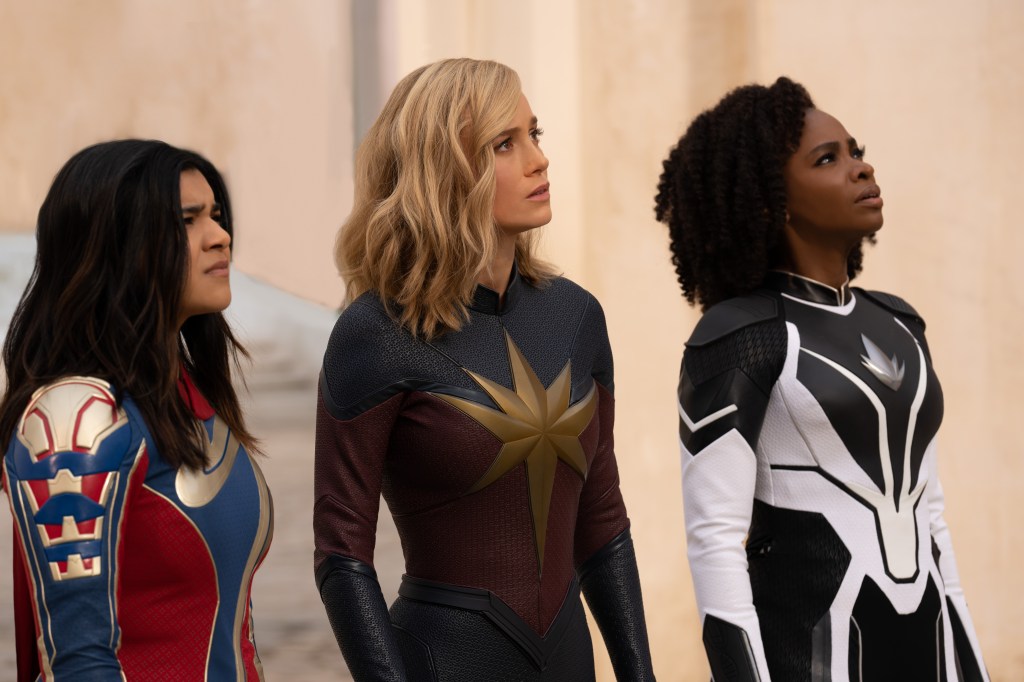
The Marvels is the latest in the Marvel Cinematic Universe and a sequel to Captain Marvel. Although Captain Marvel received positive reviews, the response wasn’t as rapturous as other Phase 3 titles. Other than a so-so first act, I thought the film really stood out with its 1990’s, fish-out-of-water approach with some thrilling twists. Director Nia DaCosta replaces the original pair of Anna Boden and Ryan Fleck and is an exciting choice after her excellent, smart Candyman sequel. In the film, Carol Danvers (Brie Larson) finds she begins swapping places with Monica Rambeau (Teyonah Parris) and Kamala Khan (Iman Vellani) every time they use their powers. 

Unfortunately, The Marvels has been in the press for poor reasons, from reports of negative test screenings to DaCosta leaving mid-production to work on her next project, Hedda. Debates have ensued as to whether these reports are accurate, but coupled with the increasing saturation of the superhero genre, prospects look poor for The Marvels.  

It’s a real shame that The Marvels misses the mark, both as a Marvel and a Nia DaCosta film. The finished product seems to be bereft of DaCosta’s fingerprints and is completely misguided. It doesn’t help that not only do you need to have seen Captain Marvel to be up-to-date before watching this film but you also need to have seen two Marvel television series – Ms Marvel and Secret Invasion. The trademark quippy humour of Marvel films rears its ugly head here and it’s missing almost all of the ingredients that made its predecessor a success. There’s next-to-no character development for Danvers and the film doesn’t capitalise on her relationship with Nick Fury (Samuel L. Jackson) – the interplay between them was one of the main ingredients that made it work. 

Teyonah Parris fails to make an impression as Monica Rambeau, the daughter of Maria Rambeau (Lashana Lynch) in the original film. Unless you’ve watched WandaVision (another Marvel TV series), she receives no development whatsoever beyond the fact that Danvers failed to return to her as a child. Iman Vellani fares better as Kamala Khan but the arc of being inspired by your childhood heroes is a well-worn trope. 

The Marvels also suffers from a poor villain in the form of Dar-Benn (Zawe Ashton), a Kree warrior who is trying to restore her homeland after a devastating civil war. Ashton’s a fine actress, impressing in films such as Nocturnal Animals and Velvet Buzzsaw, but her villain is one-dimensional and has typical destructive antics. Both of Marvel’s two other entries this year, Ant-Man and the Wasp: Quantumania and Guardians of the Galaxy Vol. 3 left me feeling rather indifferent, but you can’t deny they were both excellent in the villain department. 

The final performance worthy of mention is Gary Lewis as Emperor Dro’ge, the leader of a Skrull company. I haven’t seen him in a film in quite some time and knew he was going to be in this but he is yet another casualty – completely wasted under a lot of heavy make-up with no development. 

Laura Karpman’s original score does nothing to add to the proceedings and the use of songs like M.I.A’s Double Bubble Trouble and Skrillex’s Ratata in action sequences are grating. Captain Marvel wasn’t the first film to rely on a soundtrack from the time period it was set in, but the use of tracks from Nirvana and R.E.M, among others, complemented Pinar Toprak’s original score nicely. 

I was excited to see Sean Bobbitt would be lensing The Marvels, Bobbitt being most famous for his collaborations with director Steve McQueen with films such as 12 Years A Slave and Widows. Unfortunately, The Marvels doesn’t have single memorable shot and is uncharacteristic of Bobbitt, whose works typically rely on dark contrasts, long takes and natural light. It doesn’t help that The Marvels is overly reliant on CGI, although at least it isn’t quite as visually ugly as Ant-Man and the Wasp: Quantumania, although that’s damning with faint praise. 

Overall, The Marvels is a complete failure as a Captain Marvel sequel, a Marvel Cinematic Universe entry and as part of the wider superhero genre. It’s painfully anonymous despite a stellar director at the helm, its story misguided and cringeworthy in places (especially an out-of-place-scene on a planet where everyone converses through song), visually drab and fails to develop any of its characters. 

It may even be the Marvel Cinematic Universe’s worst entry yet – the other two contenders would be the smug Avengers: Age of Ultron and the boring and formulaic Black Widow. However, the former has a compelling villain and the latter has an interesting first twenty minutes that suggest a new direction for Marvel before settling into convention. I suppose what The Marvels has going in its favour is it’s the shortest film yet in the ever-expanding franchise at 105 minutes, so it’s a brisk affair and it also isn’t mean-spirited. Still, what a shame considering the talent involved. 

⭐⭐ (Poor)

Anatomy Of A Fall (Review)

Uncategorized
⭐⭐⭐⭐ (Excellent)

Director: Justine Triet
Starring: Sandra Hüller, Swann Arlaud, Milo Machado-Graner, Antoine Reinartz, Samuel Theis, Jehnny Beth, Saadia Bentalieb, Camille Rutherford, Anne Rotger, Sophie Fillières
Certificate: 15
Run Time: 152 mins

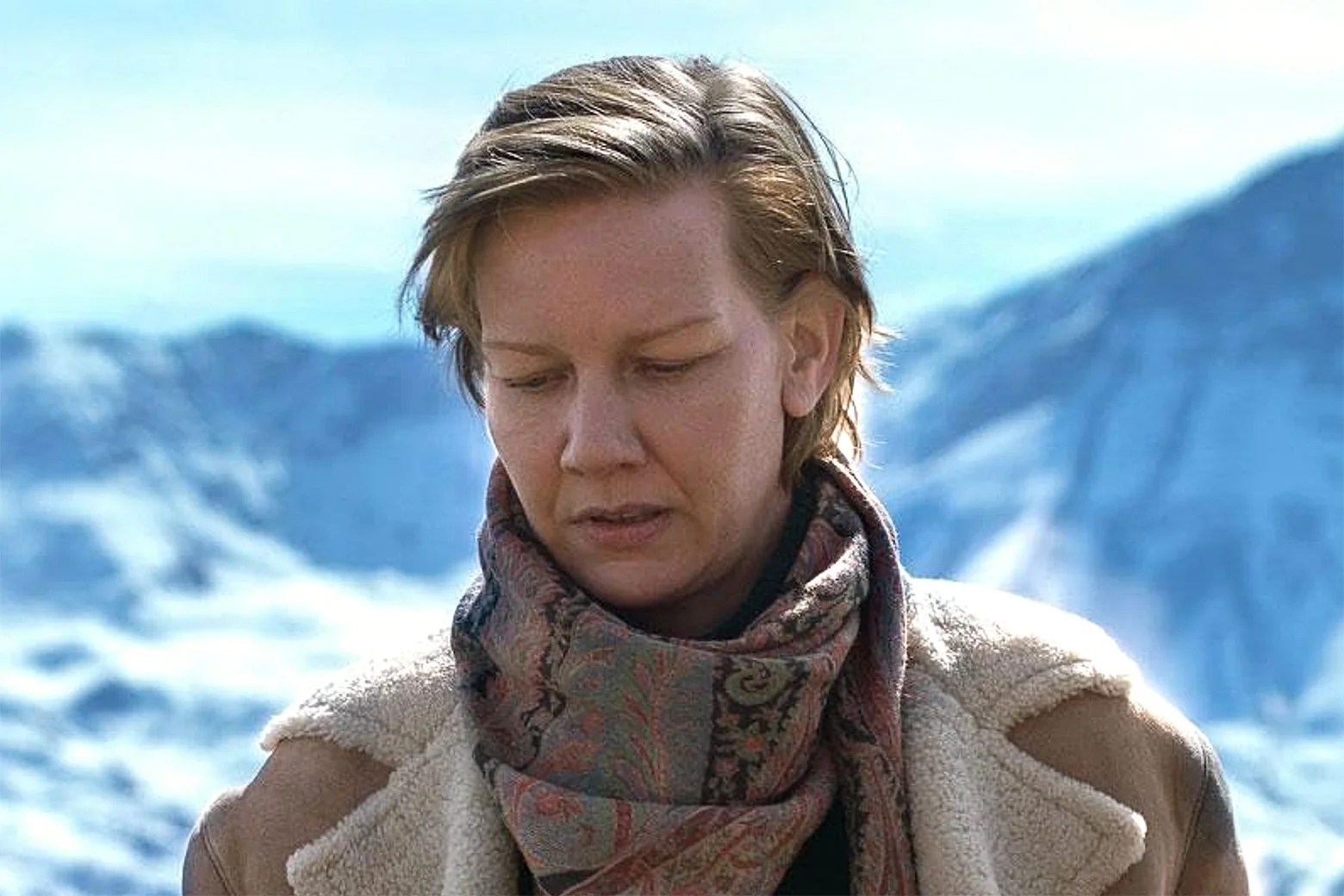
Anatomy of a Fall is the new film by Justine Triet, which took the Palme D’Or at this year’s Cannes Film Festival. The film stars Sandra Hüller as Sandra Voyter, an author who lives with her husband, Samuel (Samuel Theis) and partially-blind son Daniel (Milo Machado-Graner) at an Alpine chalet near Grenoble. Sandra is trying to conduct an interview when her husband, who is upstairs renovating the loft when he stars blaring a steel drum cover of 50 Cent’s P.I.M.P. The interview comes to a halt as neither Sandra or the interviewer can concentrate and Daniel heads out for a walk with his guide dog, Snoop. When Daniel returns, he finds Samuel dead in the driveway with a head wound. When an autopsy reveals Samuel’s head wound was inflicted before his body hit the ground, Sandra is the prime suspect and what ensues is a meticulous courtroom drama as she attempts to prove her innocence. 

Anatomy of a Fall is a fascinating character study of a family, the couple at its centre and the legal system that tries to break Sandra and her son apart. It’s a smart film that’s simmering with tension and excellent performances, although I’m confident it would pack an even greater wallop if it was tighter.  

Sandra Hüller is terrific in the lead role and is fully deserving of the praise she has been lauded. Her character is a matter-of-fact, frank individual and Triet’s film delves into the idea that writers use those around them to bolster their image. Swann Arlaud is also brilliant as Sandra’s silver fox lawyer, Vincent Renzi, as is Antoine Reinartz as a particularly nasty prosecutor. He unpicks anything and everything Sandra or other persons called up to the bar say, constantly repurposing words as evidence of Sandra’s guilt. 

Although there isn’t an original score, the use of music is terrific and the recurring use of 50 Cent’ P.I.M.P. and Daniel’s piano recitals are chillingly effective. The film’s also beautifully shot by Simon Beaufils, who evocatively captures the high altitude setting of the chalet and likes to zoom in on certain minutiae, as if you’re a fly-on-the-wall. 

Anatomy of a Fall is an unflinching courtroom drama, Triet diligently chiselling away over the film’s running time at exposing a family, flaws and all. While the performances are excellent all-round, Hüller is thoroughly deserving of Awards recognition. I just wish Triet chopped 15/20 minutes off the lengthy 152 minute running time, and the slightly tighter edit would have given the film even more of a punch. 

⭐⭐⭐⭐ (Excellent)

Dream Scenario (Review)

Uncategorized
⭐⭐⭐ (Good)

Director: Kristoffer Borgli
Starring: Nicolas Cage, Julianne Nicholson, Michael Cera, Tim Meadows, Dylan Gelula, Dylan Baker
Certificate: 15
Run Time: 100 mins

Dream Scenario is the latest Nicolas Cage vehicle in his career resurgence, a surreal fantasy satire directed by Kristoffer Borgli and produced by Ari Aster, the mastermind behind Hereditary and Beau is Afraid. Cage plays a hapless yet mild-mannered biology professor, Paul Matthews, who inexplicably starts appearing in the dreams of people around him. He soon becomes a celebrity in the town but as ever, with fame comes the inevitable toxicity. 

Dream Scenario is yet another interesting choice for Cage and while the film poses a lot of interesting ideas, it doesn’t always explore them in the most satisfying way and it begins to fizzle out as it reaches its conclusion. Although marketed as a black comedy, I didn’t laugh once and Borgli just isn’t as accomplished a director for tackling this avenue of surrealism compared to Aster or genre stalwart Charlie Kaufman because he lacks subtlety. There’s lots of good work here though – the dream sequences are disturbing and tragic and the exploration of cancel culture is fascinating. A sexual encounter Cage has with another character is particularly awkward, as is a late scene in a restaurant where he is refused service.

Cage expectedly turns in a terrific performance as the middle-aged professor with an increasingly large bald patch, who feels the world owes him something as his career stagnates. He deftly captures a pathetic nature of someone who wants to receive stardom and feels hurt his academic peers have seen success with writing novels, yet he has never pulled his finger out to take the time to write his thoughts on paper. 

There’s some strong performances from the supporting cast too, with Julianne Nicholson rock-solid as his wife and Dylan Gelula a highlight as a PR assistant. This may possibly be a career-best performance from Michael Cera, who plays the head of a viral marketing firm. Visually, the film’s crisply shot Mandy cinematographer Benjamin Loeb, although I found Owen Pallet’s score jarring and it never seemed to fit with the events being portrayed on-screen. 

Dream Scenario is an interesting film in Cage’s career and worth seeing for his performance alone.  Although a good watch, it’s just shame the film doesn’t quite live up to the potential of its lofty premise. 

⭐⭐⭐ (Good)

The Killer (Review)

Uncategorized
⭐⭐⭐ (Good)

Director: David Fincher
Starring: Michael Fassbender, Arliss Howard, Charles Parnell, Kerry O’Malley, Sala Baker, Sophie Charlotte, Tilda Swinton
Certificate: 15
Run Time: 118 mins

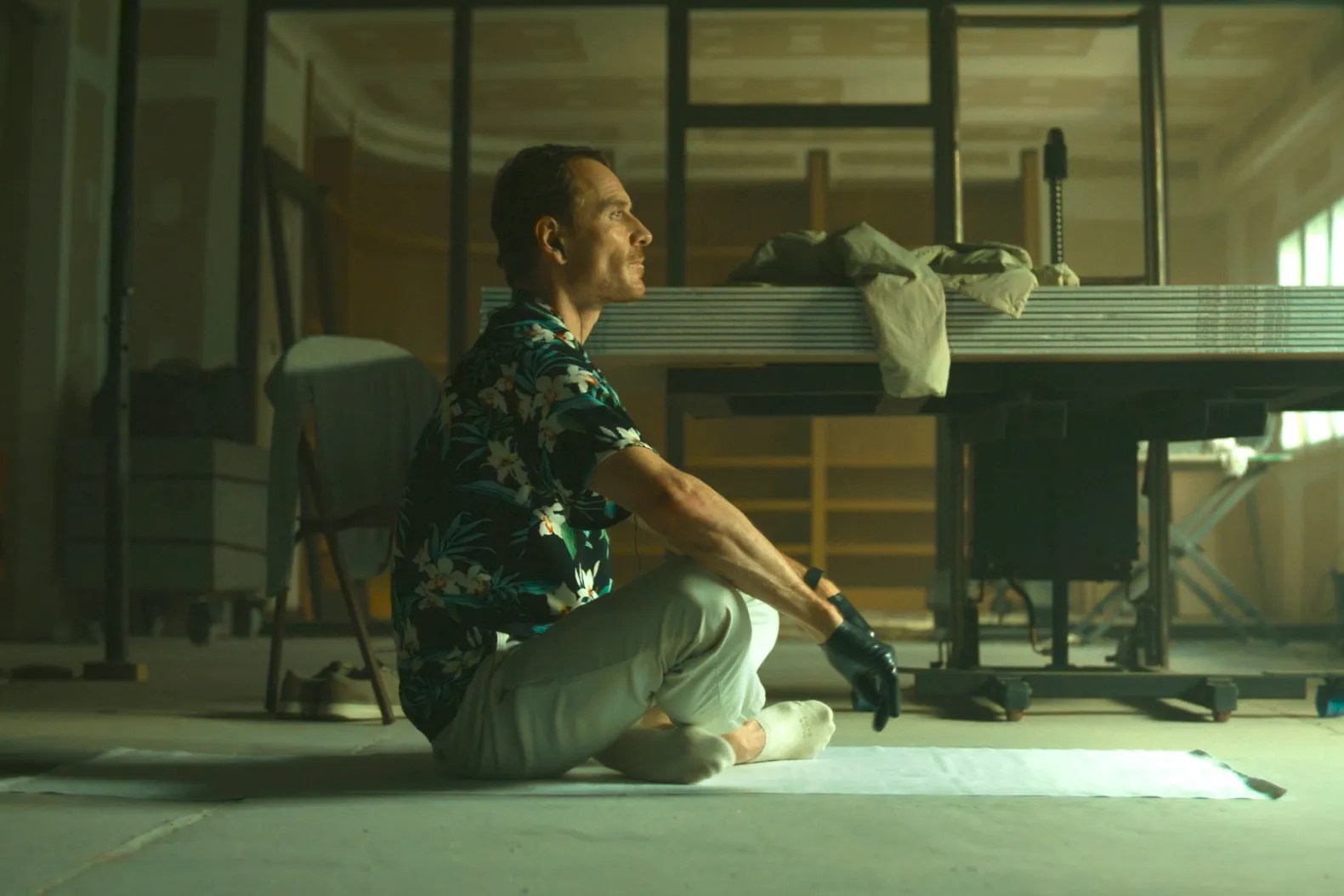
The Killer is the new film by auteur director David Fincher, his second collaboration Netflix after Mank. The film is an adaptation of a French graphic novel series, written by Alexis ‘Matz’ Nolent and illustrated by Luc Jacamon. After a three year hiatus, Michael Fassbender plays the titular role, an ice-cold unnamed professional assassin who we first meet staking out a Parisian hotel room. He’s calm and methodical and the film opens with his narration on the monotony of his job and his cynical outlook on life. Despite seeming like a character who never mistakes, he botches the job. What follows this first sequence are the repercussions of his error, as he gets embroiled in an international manhunt. This is very much familiar ground for Fincher, who reunites with Se7en writer Andrew Kevin Walker.

The Killer is an odd film and while there’s no denying its scrupulous craftsmanship and visual pizzazz, it left me feeling rather empty and cold throughout. There just isn’t a lot of substance, which I think is intentional as Fincher attempts to satirise the hitman thriller sub-genre. 

Michael Fassbender makes for an enigmatic lead, unemotional and with very strict morals and a code of conduct. The character borders on the absurd, especially with his innumerable identities as he passes through airport to airport in his largely US-based city trotting revenge quest. The script largely relies on Fassbender’s self-parodic narration, which I found overwrought and a little tedious – as with any film, it’s always better to show rather than tell. Walker’s script couldn’t be further removed from his back catalogue, with credits such as Sleepy Hollow and The Wolfman

There’s not a great deal to say about the other performances because this is very much Fassbender’s film, but both Arliss Howard and Charles Parnell are impressionable, the former as a somewhat-vulnerable millionaire and the latter a calculated handler. Tilda Swinton is easily the most high-profile supporting actor in the film but I found her speech contrived. 

On the plus side, the film is meticulously staged, Fincher’s famous multiple-take philosophy clearly on show here. It’s beautifully shot by Mank cinematographer Erik Messerschmidt, who favours a jet black colour palette and the outbursts of violence are particularly coolly crafted. And of course,  it wouldn’t be a Fincher film without an innovative opening credits sequence. Here, he delivers what is possibly the fastest-flowing title sequence I have ever seen.

There’s a pulsating score by Trent Reznor and Atticus Ross, which is deeply effective, especially in the film’s sudden outbursts of violence. A particular highlight is when Fassbender’s assassin confronts Sala Baker’s ‘The Brute’ – a raw and brutal fight for the ages. 

Fassbender’s assassin takes pleasure through listening to The Smiths through his earphones to relax and the execution in sound design is very interesting. The tracks are played diegetically when we are in Fassbender’s perspective and are non-diegetic when outside of his view, flitting seamlessly between the two. While the use of The Smiths fuels the story, it does seem a little bit of a shame to consign the talents of Reznor and Ross to the back seats. 

Ultimately, The Killer is a strange film in Fincher’s oeuvre and I’m not sure what drew him to it. While seductively constructed, the film isn’t as confident in its footing, compared to a filmmaker such as Steven Soderbergh who’s a stalwart in this genre. Although The Killer’s bordering on the absurd suggests there is substance, the film struck me as rather empty on a first watch and I didn’t have much to latch onto. Perhaps it’s a film that opens up on a rewatch but on first impressions, I judge The Killer to be Fincher’s second-weakest film after The Game

⭐⭐⭐ (Good)

Killers of the Flower Moon (Review)

Uncategorized
⭐⭐⭐⭐ (Excellent)

Director: Martin Scorsese
Starring: Leonardo DiCaprio, Robert De Niro, Lily Gladstone, Jesse Plemons, Tantoo Cardinal, John Lithgow, Brendan Fraser
Certificate: 15
Run Time: 206 mins

Killers of the Flower Moon is the latest by Martin Scorsese and an adaptation of David Grann’s 2017 non-fiction novel of the same name. The book is a must-read and tells the sickly story of how the Osage community are systematically murdered in the 1920s after oil is discovered on their tribal land. Grann’s novel is divided into three parts – the first largely from the perspective of the Osage community, with the murders presented as a mystery. The second part is framed around the newly formed FBI’s investigation, led by Tom White, and the third and final part is a chilling, retrospective investigation performed by Grann himself. 

The novel doesn’t particularly lend itself well to a film adaption in the way it’s formatted and Scorsese knows this. He chooses to tell the story from the perspective of the villains – largely William Hale (Robert De Niro) and his nephew, Ernest Burkhart (Leonardo DiCaprio). This film represents the first time Scorsese unites his two key career collaborators.

Hale presents himself as a friendly benefactor of the Osage, often referred to as ‘King’ but secretly schemes to murder them and steal their wealth. He tells Ernest to court Mollie (Lily Gladstone), whose extended family own oil headlights and a romance develops between them, with members of her family slowly and mysteriously bumped off. 

Killers of the Flower Moon is, for the most part, an excellent adaptation. It earns its 206 minute run time with its sprawling, fascinating story and Scorsese takes his time to develop the characters. He immerses you in the terror felt by the Osage, that no-one is safe on their own land with greedy wolves scheming from every corner. I was particularly impressed how like in The Irishman, Scorsese presents the horror in quite an understated way, raw and fact-of-life. Although a revisionist Western first and foremost, there’s still many of Scorsese’s gangster elements to be found, from fatally flawed men to America’s founding myths.  

Of course, being a Scorsese picture, the film has real big screen beauty and is handsomely shot by regular cinematographer Rodrigo Prieto. He gorgeously captures the expansive Oklahoma vistas and holds onto a shot for uncomfortably long during heinous murders. The stunning cinematography and assured direction is paired with a haunting, bluesy final soundtrack by Robbie Robertson (who sadly passed away in August). A heartbeat motif that is repeated throughout the film is particularly effective, lending a feverish quality. 

Scorsese has extensively publicised how the screenplay was written when he and co-writer Eric Roth realised telling the story from the Osage perspective was more appropriate. While the shift in focus works, the fact we know Hale is despicable from the off removes an element of mystery that Grann’s novel had. I’d have liked to have seen more of the FBI storyline (which the film somewhat simplifies) and a deeper exploration into the Osage, particularly Mollie and how a character initially presented as impenetrable succumbs to Ernest’s charm. Still, Scorsese’s decision to have DiCaprio and De Niro’s characters as the film’s centre allows them to showcase their talents and boy, do they. 

DiCaprio’s reliably excellent as Burkhart, an individual who is easily manipulated with large, stained teeth. De Niro is also clearly having fun as Hale and is particularly chilling in how he integrates himself into the Osage community, a wolf in sheep’s clothing who has learned their language and presents himself as the community’s caretaker. 

Lily Gladstone’s performance, however, trumps the duo. Her performance is brilliantly restrained, yet devastating quiet and we still feel her character’s presence over proceedings as she becomes increasingly sidelined. All three lead performances are likely to garner awards attention. 

Jesse Plemons also turns in a career-best performance as FBI lead Tom White, but is sadly underused. Had the film been more faithful to the book, Plemons would be up there with the leading trio. There’s some other impressionable performances too, William Belleau as the melancholic Henry Roan and Gene Jones is particularly gleeful as Pits Beaty, the man who effectively gets to decide when and how the Osage can use their money. Finally, Brendan Fraser shows up in the third act as Hale’s attorney W. S. Hamilton in a performance straight from The Whale – I can’t decide if it’s a terrible performance or quietly brilliant because a lawyer would typically act overly theatrical if they’re having to represent a criminal who has no hope of being reasonably defended.

I didn’t have an issue with the film’s 206 minute length and if anything, I wanted it to be longer. The fascinating story certainly warrants further exploration. The final scene, which serves as an alternative take on an epilogue to wrap up proceedings, really rubbed me the wrong way. It felt forced and a surprising cameo came away as overly gratuitous. 

Killers of the Flower Moon is ultimately a strong adaptation of first-class source material and we should cherish the fact that Scorsese is an octogenarian auteur still at the top of his game. The performances are top-notch across the board and its uneasy depiction of how white privilege essentially destroyed the Osage community through plain hatred and greed in plain sight is to be applauded. 

While I’m mostly very pleased with Scorsese’s adaptation, I wonder if it would have worked better as a five hour television series, split into one hour episodes. A deeper exploration into the Osage community, especially Mollie, the formation of the FBI and its investigation, and finally the events that took place after the film’s timeline would have really been satisfying to see. Grann’s novel worked wonders with its contemporary exploration into the atrocities that functions as a thematic sledgehammer over the narrative and while Scorsese’s film sports most of the goods, its disappointing final scene isn’t the emotional wallop the film needs and deserves. Despite the odd ending, Killers of the Flower Moon still winds up as one of the best films of 2023 and a must-see.

⭐⭐⭐⭐ (Excellent)