Director: Steven Soderbergh Starring:Zoë Kravitz, Betsy Brantley, Rita Wilson, India de Beaufort, Emily Kuroda, Byron Bowers Certificate: 15 Run Time: 89 mins
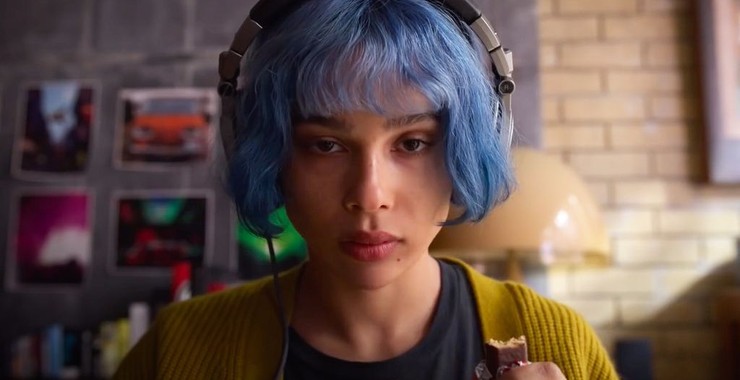
Kimi is the latest by director Steven Soderbergh, whose enjoyed an incredibly varied career in terms of the genres he has worked in. This action thriller follows Angela Childs (Zoë Kravitz), an agoraphobe whose previously been the victim of assault and her anxiety has been worsened by the coronavirus pandemic. She is an employee of a tech company called Amygdala, who have pioneered a smart speaker called Kimi that controversially makes use of human monitoring to improve its algorithm and deliver a better user experience.
Angela monitors incoming data streams and makes corrections to Kimi’s software. One day, she picks up on a disturbing stream that appears to portray a sexual assault and when she tries to report it to her superiors at Amygdala, things go, well, pear-shaped.
Kimi is an efficient, mostly one-location thriller with a terrific central performance from Kravitz. Its first two acts are its best, with Soderbergh excellently capturing and exploring Angela’s agoraphobia, and there are clear parallels to Alfred Hitchcock’s Rear Window. In many ways, it’s a modern update for the Alexa-owning, coronavirus pandemic generation. The script is sleek and plays to writer David Koepp’s strengths who’s proved himself in this genre before with films such as Panic Room and Secret Window. The third act leans more into action, which I found less interesting, although still rather enjoyable and the film doesn’t outstay its welcome.
Soderbergh (working under his usual alias of Peter Andrews) also acts as the cinematographer for Kimi and his work is impressive. He deftly captures Angela’s luxurious and extravagant apartment, making her enclosed world feel much larger than it really is. Scenes outside of the apartment are shot in a disorienting and kaleidoscopic manner, which are thrilling and clearly portray Angela out of her depth, as if her head is spinning.
Kimi is a minor entry in Soderbergh’s back catalogue but he clearly seems to be revelling in the journey, even if the film isn’t particularly deep. This is an effective and taut thriller that has something to say.
Director: Kenneth Branagh Starring: Kenneth Branagh, Tom Bateman, Annette Bening, Russell Brand, Ali Fazal, Dawn French, Gal Gadot, Armie Hammer, Rose Leslie, Emma Mackey, Sophie Okonedo, Jennifer Saunders, Letitia Wright Certificate: 12A Run Time: 127 mins
Death On The Nile is the second of Agatha Christie’s Poirot novels for Sir Kenneth Branagh to adapt and star as the revered detective. Having made his debut in Murder On The Orient Express, Poirot finds himself embroiled in yet another murder mystery when he is invited to meet his friend, Bouc (Tom Bateman) in Egypt. Bouc invites him to the wedding of Linnet ‘Linny’ Ridgeway-Doyle (Gal Gadot), a wealthy heiress and Simon Doyle (Armie Hammer). Simon had previously been in a relationship with Jacqueline ‘Jackie’ de Bellefort (Emma Mackey). Jackie still believes Simon loves her and stalks them on their trip.
To escape Jackie, all of the guests board a cruise ship, the S.S. Karnak. Linnet confides in Poirot regarding her paranoia, worried that something is going to happen to her as all of the guests would stand to gain something if the unfortunate should occur.
Death On The Nile was filmed a couple of years ago and is another victim of the coronavirus pandemic in that it is only being released now. Unfortunately, it’s had some problems on the way to release with actor Armie Hammer’s unfathomable allegations arguably accounting for some of the delay. On the plus side, Branagh’s passion project Belfast is building momentum at this year’s Awards season and if the film isn’t to scratch, it could hurt its chances.
Murder On The Orient Express had lots of problems, chiefly Branagh failing to develop any of the star-studded cast that had been assembled and putting his Poirot front and centre. Once again, Branagh is working with a talented cast including Gal Gadot, Annette Bening, Russell Brand, Dawn French and Jennifer Saunders to name a few. The film also had problems with its ending, which I felt cheated by, although this is more a flaw with the novel.
Death On The Nile solves some of its predecessors problems and regresses on other aspects. Starting with the positives, although Branagh’s Poirot is again very much the centre of the film, the rest of the cast have some development this time around. There are some good performances too, firstly with Branagh settling into the role with his outrageous moustache. Russell Brand’s performance is quiet and mournful, playing against type and when not saddled with poor dialogue, Gal Gadot makes the most of her role.
The film starts on more sure-footed ground, allowing an opportunity to care for the story and characters somewhat. Poirot’s double-moustache even receives a satisfying pseudo-origin story. Murder On The Orient Express began rather terribly with a mini-mystery in Jerusalem that suffered an overly sickly tone.
Unfortunately that’s about it with the positives. Death On The Nile is 127 minutes long and it takes well over an hour for its inciting murder to take place. There is a lot of needless dead weight in the first hour with lots of Egyptian sightseeing and set-up laden with some trite speeches.
Once a character meets their untimely end, the film picks up at a barreling pace. We go through the routine questioning of all of the characters and the old-fashioned second-guessing, where Branagh is in his element. The film could have done with more time to breathe here to build suspense and momentum and lost some of the fluff in its first hour.
The ear-scraping script is a major issue. Screenwriter Michael Green returns and he has some great credits to his name with films such as Logan, Alien: Covenant and Blade Runner 2049. All three films were very well-written. I didn’t take issue with Green’s script in Murder On The Orient Express but this sequel is just really not very well-written. A lot of the dialogue is on-the-nose and is littered with insensitive and unintentionally laughable lines.
Visually, the film is poor with many obvious uses of green screen. Coronavirus undoubtedly played a part but surely it would have been better to wait and shoot on-location as the visual result is often laughable. Branagh-regular Haris Zambarloukos’ cinematography is also uninspired. His work on the Murder on the Orient Express was interesting at times, filming the train compartments and suspects from above, reminiscent of a Cluedo board game as we head from room to room.
Patrick Doyle’s original score was offensively bad in the first film but his score isn’t really noticeable this time around. There is, however, an overuse of jazzy blues music which is grating.
Overall, Death On The Nile is a clunky detective thriller that has its moments but suffers in critical areas. Neither of Branagh’s efforts have serviced Christie’s detective properly despite his inspired performance which has lots of potential. Serious lessons need to be learnt if this series is to thrive and arguably, a change in crew is what’s needed.
Director: Kenneth Branagh Starring: Caitríona Balfe, Judi Dench, Jamie Dornan, Ciarán Hinds, Colin Morgan, Jude Hill Certificate: 12A Run Time: 98 mins
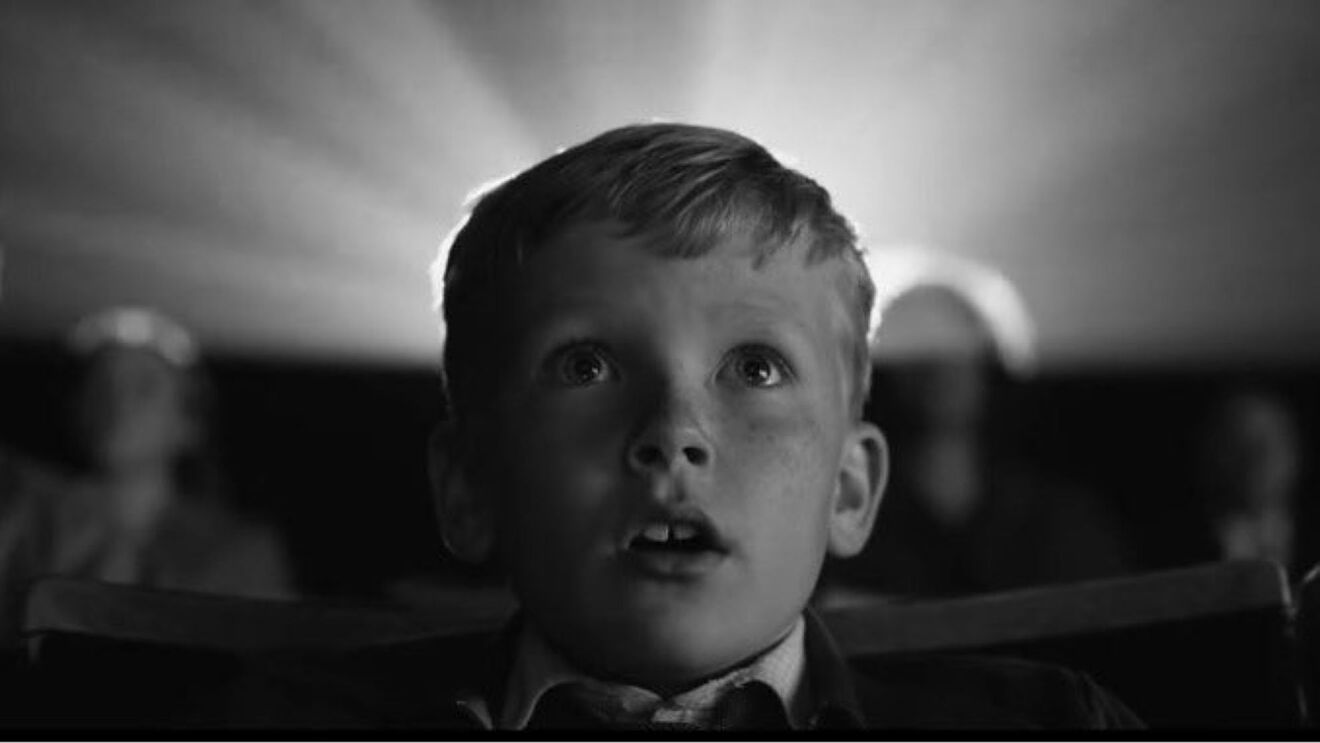
Belfast is a coming-of-age drama directed by Kenneth Branagh who cites the film as one of his most personal works. This predominantly monochrome film centres on nine-year-old Buddy (newcomer Jude Hill), who lives in a community in the titular city in what he perceives as an idyll. He is left largely in the care of his mother (Caitriona Balfe) as his father (Jamie Dornan) works in England. His paternal grandparents (Ciaran Hinds and Judi Dench) regularly visit and in many ways help raise Buddy and his older brother, Will (Lewis McAskie).
The film is set at the start of The Troubles in 1969 and the film recounts the resulting division and disruption that occurs in Buddy’s community. The father, who has accumulated a large amount of debt, is offered a promotion at work. Wanting a better life for his family and to remove them from the conflict, he proposes moving abroad. The family contemplate this throughout the film, anxious that they will be seen as outsiders and having to leave their friends and family behind.
Belfast is a well-meaning and earnest drama that strikes parallels with John Boorman’s Hope and Glory, that was similarly told from a similarly child-like lens set against the backdrop of war. Branagh certainly pours himself into the project, taking inspiration from his own childhood. The sub-plots that Buddy experiences, such as trying to move up to the top two tables at school so that he can sit with his crush, are beautifully handled. Buddy is inspired from a harsh sermon at the start of The Troubles that his family attend, who delivers a ‘fork in the road’ speech, the rhetoric bears weight on him throughout the film as he ponders his choices. Branagh deftly balances the more innocent aspects of childhood with the temptation of immorality and Buddy finds himself dragged into uncomfortable situations that test his character.
Branagh has a clear love of cinema and the film captures the wonder that Buddy has for cinema. Buddy enjoys nothing more than going to ‘the pictures’ with his family and he experiences films such as Chitty Chitty Bang Bang and The Man Who Shot Liberty Valance. Branagh chooses to portray excerpts from these films in colour that reflect back on Buddy who views them from a monochrome view, connoting the wonder and transcendent experience that cinema can bring audiences.
There are some excellent performances, most notably from newcomer Jude Hill who captures the wonder and innocence of childhood perfectly. Caitriona Balfe and Jamie Dornan are also brilliant as the parents, at a ‘fork in the road’ in their lives with some tough choices ahead. They always try and do what’s right for each other and their children and perfectly balance the warm and caring nature of parenthood whilst also teaching their children valuable morals and life lessons. Both Judi Dench and Ciaran Hinds have received critical acclaim for their performances and the pair are reliably excellent as the grandparents. That said, Balfe and Dornan have the meatier roles and their performances are equally, if not more impressive.
Belfast runs into some issues though. It took me about half-an-hour to become accustomed to the filmic world that Branagh creates and doesn’t quite hit its stride straightaway. The use of black-and-white, interspersed with flashes of colour when Buddy heads to the cinema is an interesting stylistic choice but the opening credits are set in present-day Belfast, which doesn’t really work and comes across as odd as the film never comes full-circle at the end. The notion of condensing all of Buddy’s communities religious and political problems into one villainous character is also unnatural and the film would have worked better either without it or having ambiguous characters. There is an artificial quality to the film and it possesses a stage-play aesthetic at times, the barricades at the end of the family’s street resemblant of an exit stage.
Belfast is ultimately an enjoyable passion project from Branagh and the warm characters, performances and script are admirable. The film has received lots of awards talk, many regarding it as a strong contender. I can see why the film has this appeal as it represents a personal project for a director which always goes down well and it has a feel-good quality. That said, I don’t think the film is quite to that level. I’d have liked to have seen more nuance to the material and a more contemplative and morally grey edge to the film instead of the relatively straight-faced and earnest finished product. Taken on its own merits as a singular film without the context of the upcoming awards season, Belfast is an amiable effort from Branagh and there is certainly a lot to like but it has its flaws.
After a brief lull in 2020 due to the coronavirus pandemic, the comic-book genre propelled back to full force and 2021 brought us seven new films. Here, I rank these films in order of my personal preference.
Marvel dominated with four MCU entries releasing and kicking off the brand’s Phase 4. It started with Black Widow, which was supposed to release in Spring 2020 and was then followed by Shang-Chi and the Legend of the Ten Rings and Eternals, the latter also having meant to release last year. Marvel closed the year out with Spider-Man: No Way Home.
In its Sony slate, Venom: Let There Be Carnage released, swapping places with Morbius, which has moved to next year.
DC initially just had The Suicide Squad to release, with Matt Reeves’ The Batman being pushed back to 2022 and being revealed to be a standalone project, outside of its own cinematic universe. However, early in the year, many had their wish granted as Zack Snyder was given the all-clear to release his director’s cut, as he intended it of Justice League.
There’s a varying degree of quality in this list but for the most part, it was a very strong year for the genre. Let’s get started!
7) Venom: Let There Be Carnage
Venom was a regressive film for the comic-book genre, a painfully embarassing watch with an ear-scraping script, its action sequences were terrible and even the stature of Tom Hardy in the lead role couldn’t propel the film. When I heard that a sequel was commissioned and Andy Serkis would be stepping in the director’s chair with Quentin Tarantino’s regular cinematographer Robert Richardson shooting the film, my interest was piqued. Despite a generally positive reception this time around, unfortunately, I think it’s possibly even worse than the original!
The script is once again cringe-inducing and Tom Hardy phones his performance in. Serkis’ direction is surprisingly totally anonymous, as is Richardson’s cinematography. Even Woody Harrelson is completely wasted as the villain and isn’t allowed to inject any of his personality into the film. Naomie Harris joins the cast as a villain called Shriek and her performance is abysmal. I can’t believe this film exists in the form it does and the only saving grace is it runs under 100 minutes, but it feels like a lot longer!
6) Black Widow
Black Widow starts out in a promising fashion and almost suggests a new direction for the Marvel Cinematic Universe with its grittier tone and its well choreographed and stylised action sequences. It embraces its globe-trotting James Bond-esque origins even if it lacks the sophistication, sex and wit. Unfortunately after about half an hour, the film loses its edge and descends into convention with a half-baked story, cheesy family reunions and an over reliance on CGI, particularly at the film’s climax, which has been many a comic book film’s downfall in recent years. There are glimpses of Cate Shortland’s authorship in the first half an hour but the rest of the film feels like it was directed by a committee.
Spider-Man: No Way Home is a mostly thrilling ride with some excellent surprises in its narrative. It perfectly melds with the Sam Raimi and Marc Webb era and irreverently integrates the included villains with the Marvel Cinematic Universe. The film clearly takes inspiration from Spider-Man: Into The Spider-Verse, which was rapturously received and although I admired that film’s effort to metatextualise its story, it runs into a raft of problems.
No Way Home features some excellent interactions between characters, particularly in the second act, and the script penned by Chris McKenna and Erik Sommers is sharp. It is not an easy task to meld the past and present in a film, with other tentpole films such as Star Wars: The Rise of Skywalker cheaply capitalising on nostalgia.
No Way Home naturally barrels towards a large CGI set piece in the final act, which is well-handled due to some plot revelations that allow the film to explore what it means to be Spider-Man. The narrative choices are generally well-judged and attempts to mirror or contrast other entries in the MCU or prior Spider-Man films.
Perhaps a controversial choice, but I found Eternals (the first MCU entry to receive mixed-to-negative reviews) to represent a refreshing change of pace for the Marvel Cinematic Universe and Nomadland Oscar-winner Chloe Zhao lends an intimate and delicate hand to the material. The complex cosmic narrative is well-handled and each of the ten Eternals is well introduced and possess identifiable character traits, no mean feat when you’re juggling . The relationship between them all is admirably tackled, which is no mean feat as there is always a high risk of sidelining characters, especially when you have ten personalities to juggle.
What allows Eternals to succeed (and perhaps why the film has received a decidedly mixed critical reception) is that it distances itself away from the wider Marvel Cinematic Universe formula and tone. This is a key problem with many entries, which silences the director’s vision and some of the films fall into the trap as feeling they are directed by committee. Other than some moments of light humour which are characteristic of most entries, Eternalsboasts a heavier weight in that it asks some difficult questions of its characters and portrays them as god-like, reminiscent of Zack Snyder’s treatment in his DCEU entries Batman v Superman: Dawn of Justice and the director’s cut of Justice League. The film’s at its best in its quieter moments when characters weigh up some tough decisions.
The best MCU entry of the year, other than a wonky beginning, Shang-Chi and the Legend of the Ten Rings is upper-tier superhero fare. It follows the Marvel formula but its emotional warmth and martial arts sequences make it stand out from the crowd. There is a great set up of Shang-Chi’s family, which plays an important dynamic in the film. Shang-Chi boasts some innovative set pieces, fusing and updating the wuxia and kung-fu genres with modern visual effects. The first action sequence on the bus and another early sequence set in Xialing’s fight club are particular highlights with their kinetic energy. The tone of the film feels like a melding of Crouching Tiger, Hidden Dragon and The Chronicles of Narnia with the mystical worlds that Cretton creates. Some of the sheen is lost in the final act of the film as Cretton succumbs to a big CGI battle, which is customary for comic-book films and is often their downfall as the investment is lost in the characters. However, the final CGI spectacle doesn’t derail the film as it is not overlong and there is a purpose in the narrative but it would have been far more exciting if Cretton had tried to deviate from convention.
The Suicide Squad is for the most part a giddy, gory and thoroughly adult superhero film. The film is written and directed by James Gunn, whose sensibility for gory horror and dark humour, blend perfectly with the source material, feeling much more akin to his earlier works such as Slither and Super. Gunn originally hit critical acclaim with Marvel’s Guardians of the Galaxy and its sequel, the first film in particular proving a refreshing break from the tired Marvel formula that really allowed his personality to shine through. Despite breaking free of the Marvel formula, Gunn was still constrained to a 12A / PG-13 rating, therefore The Suicide Squad represents him at his most unrestrained.
The Suicide Squad fits into the wider DCEU rather awkwardly in that it is a part-sequel to 2016’s critically mauled Suicide Squad in that it shares a handful of the same characters but it also functions as a part-reboot in that everything about it is completely different to that film.
Gunn has proven a knack for picking unfamiliar comic-book characters and spinning a gripping yarn from their background. The Suicide Squad is paced extremely well and the script is stuffed with quips and wisecracking interplay between the characters. There is violence and gore aplenty – heads are decapitated, blood splatters after characters get shot in the face and King Shark likes to devour people… a lot! This is a film that earns its 15 / R rating and it is all the better for it. Like its predecessor, there isn’t much of a story again this time round, but the characters combined objective acts as a coherent plot and there are some excellent character twists along the way. Gunn does an excellent job in not allowing his audience to get to attached to characters, as life is pretty expendable in this film.
In a wider context, what impressed me most about The Suicide Squad was its progressive characters for the genre, which acts as a revisionist take on the superhero genre. The superhero genre is overpopulated with generic films that are uncomfortable in breaking the mould and Gunn’s film actively tries to defy conventions, even if it’s not always successful, but the ambition is to be admired.
The main drawback of the film is in its ending, which unfortunately sticks to convention and is a little anti-climatic when the rest of the film is so entertaining and refreshing.
Zack Snyder’s Justice League is an astonishing achievement and represents a mature and risky effort in establishing the DC team. The four hours fly by and it is a visual treat throughout. This is a Snyder film through and through but it interestingly represents a more mature effort in that the storytelling here is improved from some of his previous filmography, where some of his films have bordered on the incoherent. By the film having its length, the film can breathe and Snyder works wonders in establishing and developing each and every character of the team. There is no conceivable way this story can be told in a two hour run time.
The wider context of this director’s cut is fascinating in how different it is from what Warner Bros chose to release. The stark differences between both cuts is something that can and likely will be studied for years to come and having watched this director’s cut, one has to question the psychology of the decision to approve the theatrical cut for cinema release.
Ultimately, Zack Snyder’s Justice League is a frequently astonishing and bold take on this DC lineup and it earns its four hour run time. With this director’s cut and Army Of The Dead, Snyder has matured as a director and he has markedly improved on some of his lesser qualities in previous films in regards to storytelling and representations.
Director: Guillermo Del Toro Starring: Bradley Cooper, Cate Blanchett, Toni Collette, Willem Dafoe, Richard Jenkins, Rooney Mara, Ron Perlman, Mary Steenburgen, David Strathairn Certificate: 15 Run Time: 150 mins
Nightmare Alley is visionary director Guillermo Del Toro’s follow-up film after his Best Picture win for The Shape of Water in 2017. This film represents a departure for the director in many ways. Del Toro is most famed for his fantastical elements with monsters and creatures crafted using practical effects forming prominent components of his work. Nightmare Alley is not only an adaptation of the 1946 novel of the same name by William Lindsay Grensham but also a remake as there was a 1947 film starring Tyrone Power.
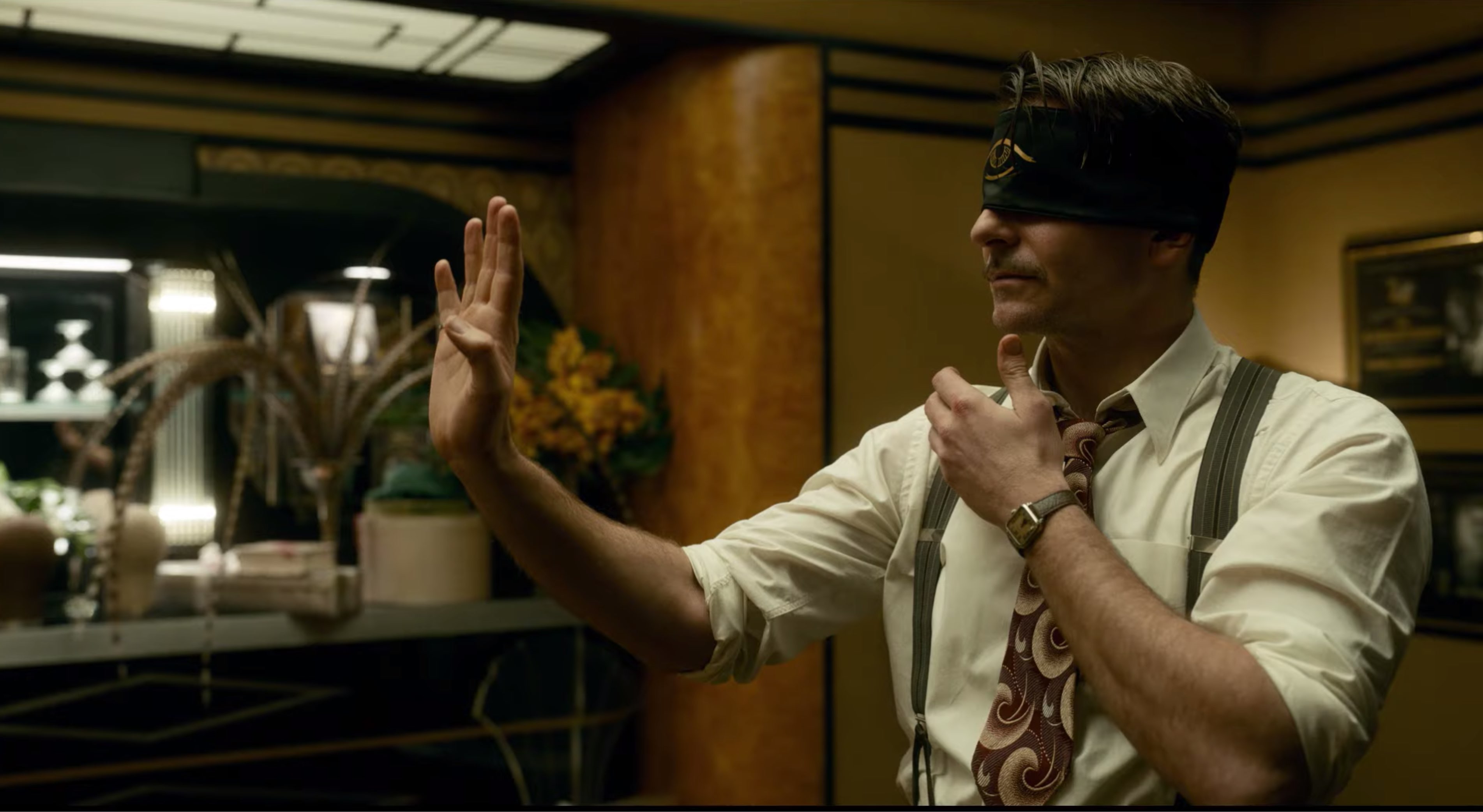
This film noir psychological thriller is initially set in 1939 where we witness Stanton Carlisle (Bradley Cooper) burning a house down with a dead body inside and takes up a job at a carnival. The carnival is run by Clem (Willem Defoe) and is home to a cohort of eclectic characters. Stanton works with a clairvoyant Madam Zeena (Toni Collette) and her alcoholic husband, Pete (David Straithairn) and begins to learn the coded language they use to communicate in their act. He also falls in love with performer, Molly (Rooney Mara) and they contemplate the possibility of starting their own act. Where the film heads to next is ultimately inevitable as Stanton keeps trying his luck.
Nightmare Alley features a typically luscious production and set design and is buoyed by a heavy and committed central turn from Bradley Cooper, who plays against type in what is one of his best performances. Its conclusion is poetic and satisfying, even if it is a little predictable and Del Toro really captures the minutiatie of the film noir aesthetic, which he is clearly in adoration of. It’s not a problem that the film lacks a signature monster as Del Toro revels in the macabre and peppers in some disturbing and powerful imagery throughout, as well as recurring motifs such as circles.
Dan Laustsen’s cinematography is expectedly satisfying, hanging onto shots for as long as possible to create tension and he fully takes advantage of the rich production design. Despite having to replace the ever-dependable Alexandre Desplat late in the game, Knives Out composer Nathan Johnson’s score more than takes its inspiration from classic film noir and makes for a fitting accompaniment.
With the caveat that this review is based on a first viewing, the film does feel strangely uninvolving and it is difficult to empathise with virtually all of the supporting characters as their personalities are underdeveloped. It’s difficult to buy the central relationship between Stanton and Molly and considering that in many ways, Molly is the moral compass of the film, her lack of development is disappointing. The third act of the film centres on Stanton assisting a dangerous but influential individual, Ezra Grindle (Richard Jenkins) reunite and find closure with a loved one but again, Del Toro omits to explore Grindle’s perspective and his characterisation is one dimensional. Considering that Nightmare Alley’s overarching narrative is dependent on its supporting characters, the fact that Del Toro doesn’t grant audiences the opportunity to empathise with their problems, it seems a strange creative choice. Nightmare Alley also lacks the cohesive pacing and energy of the rest of his filmography. This is a sizeable film at 150 minutes that is evenly split into two timeframes. Its second half fares better than the first but the film could very easily lose half an hour and that would have tightened everything up – there is no reason for the film to be this long.
Nightmare Alley is ultimately a flawed follow-up from Guillermo Del Toro. There is lots to like here with a powerful Bradley Cooper performance, an intense atmosphere and Del Toro’s admiration for the material is very clear. I just wish it delved deeper into its supporting characters and it was more engaging. Del Toro is one of my favourite filmmakers and I’ll certainly give Nightmare Alley another watch as I want to like more than I do. I’m certainly glad that the film exists as it provides an original service for the film noir aesthetic but it is ultimately an interesting yet deeply flawed film.
Director: Fran Kanz Starring: Reed Birney, Ann Dowd, Jason Isaacs, Martha Plimpton, Breeda Wool Certificate: 15 Run Time: 110 mins
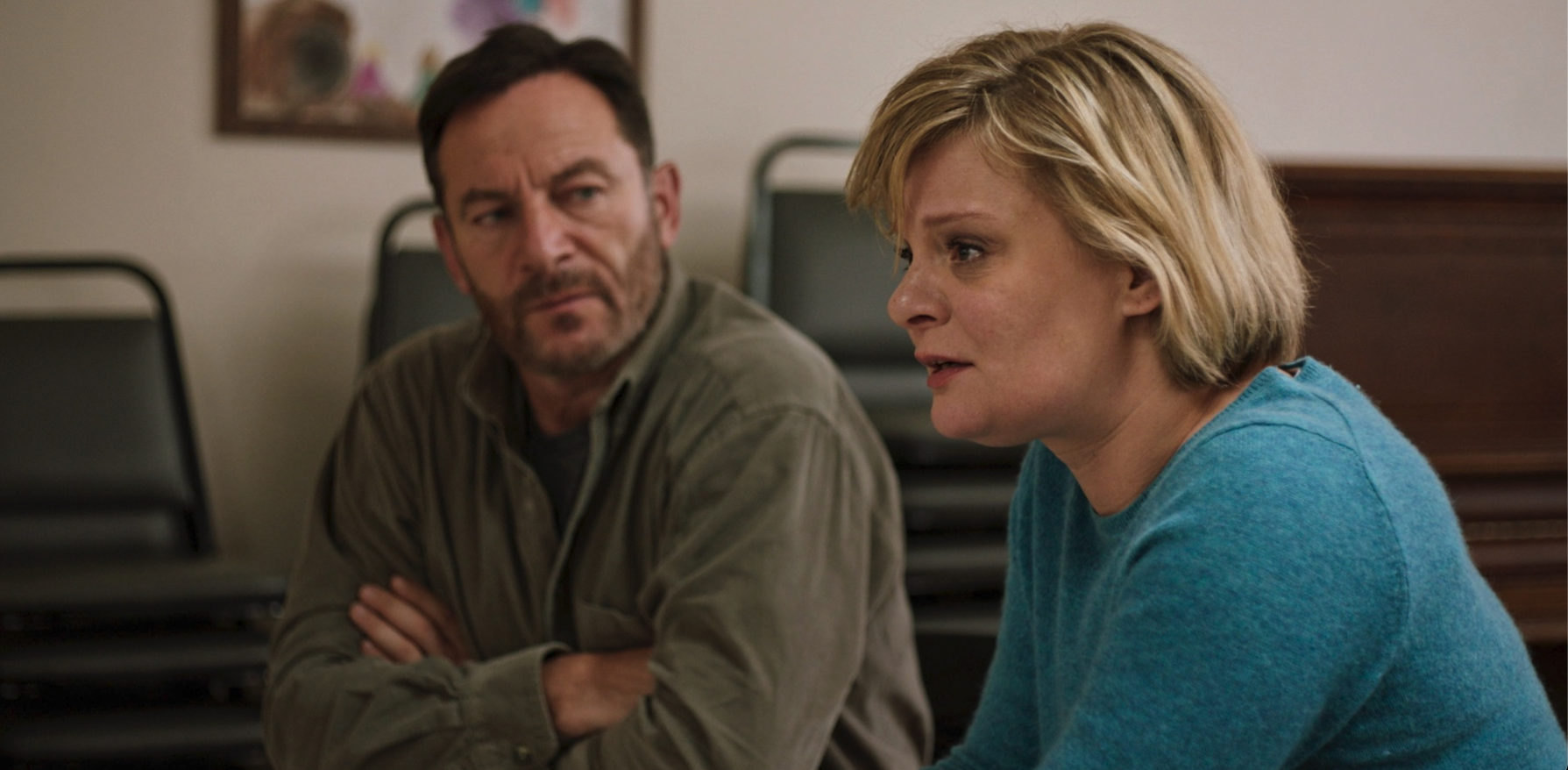
Mass is the directorial debut of actor Franz Kanz and follows two couples, who meet to discuss a tragedy theirs sons were involved in. Jay and Gail Perry (Jason Isaacs and Martha Plimpton) are the couple in grief and are looking for closure and answers from Richard and Linda (Reed Birney and Hereditary‘s Ann Dowd). The film is mostly set in a meeting room in an Idahoan Episcopal church, with Judy (Breeda Wool) its parishioner. In Mass’ opening, we see Judy setting up the meeting space and discussing with a co-ordinator on the suitability of the room and its decoration.
Mass is an interesting drama that explores a harrowing subject and Kanz does an excellent job of withholding what the event the couples are discussing for a considerable amount of time. The performances from the central quartet are all excellent – both Plimpton and Dowd are emotional wrecks whereas Isaacs and Birney are mostly more reserved and tighter-lipped, although also let their emotions out of the bag in key moments. The script by Kanz is efficient, with some crescendoes of emotional eruptions at key points. Ryan Jackson-Healy’s cinematography doesn’t allow the characters anywhere to hide, the angelic white and empty decor painting an empty canvas for the characters to project.
Unfortunately, the emotional impact of Mass is somewhat undone by its opening, which is unnecessary and heavy-handed. It goes on for far too long and it’s an artificial device to elicit care for the quartet before they enter the fray. Mass would have benefitted from jumping straight into the first couple arriving at the venue and the film would be tigher-paced and allow audiences to try and piece together what exactly is happening.
As it stands, Mass is an assured debut from Kanz and it deals with a difficult subject matter in an unflinching way with some committed performances. If its opening was removed, it would be excellent. I’d be interested to see what project Kanz works on next as he undeniably has potential behind the screen.
Director: Philip Barantini Starring: Stephen Graham, Vinette Robinson, Alice Feetham, Hannah Walters, Malachi Kirby, Taz Skylar, Lauryn Ajufo, Daniel Larkai, Lourdes Faberes, Jason Flemyng, Ray Panthaki Certificate: 15 Run Time: 92 mins
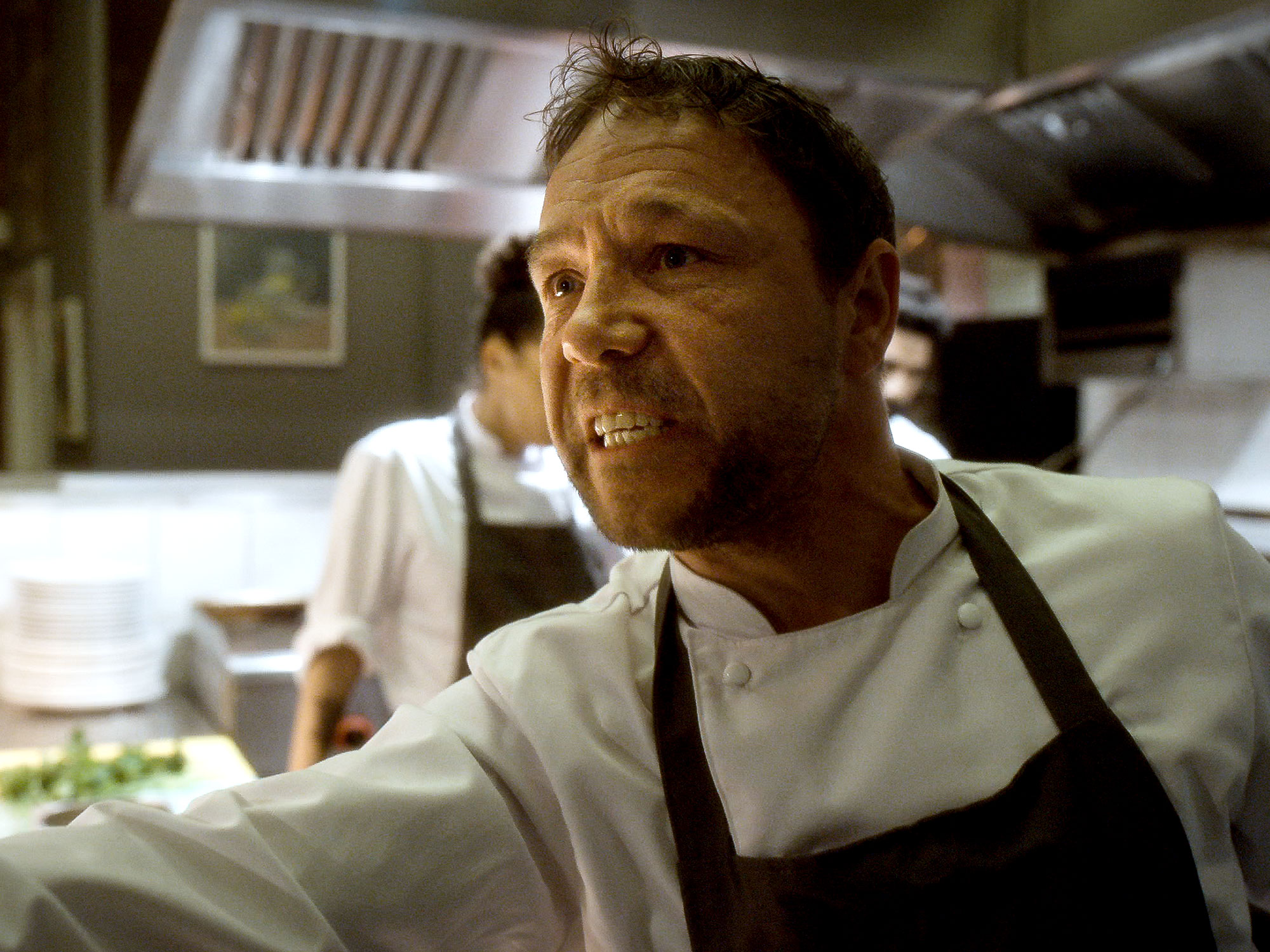
Boiling Point is a drama shot in a single-take in an up-market London restaurant. It is directed by Philip Barantini who expands his 2019 short film of the same name. The ever-versatile Stephen Graham stars as Andy Jones, the Head Chef, who also starred in the short film. As the film opens and Andy arrives at work in a mental daze due to his recent divorce, the restaurant is savagely downgraded from a five-star Health and Safety rating to a three by a pernickety inspector. To add insult to injury, the upcoming evening is overbooked which includes a marriage proposal and the visit of a food critic, Alastair Skye (Jason Flemyng), whom Andy previously worked for.
As a concept, the story might not sound particularly exciting and there have been plenty one-take films in recent memory with Awards contenders such as Birdman and the wildly overrated 1917. Will Boiling Point just reheat cold and unwanted leftovers or will it serve something delectable to the table?
Boiling Point is a thrilling and sharp drama that constantly ramps in tension and maintains its momentum throughout. From the opening sequence of the Health and Safety assessment, Barantini has created a startlingly authentic, cutthroat environment and it’s astonishing to witness a film as riveting as Boiling Point is from seemingly few ingredients.
The script by Barantini and James Cummings is razor-sharp. They introduce a convincing restaurant team from the fellow chefs to the service staff and how they are divided. There is then the inexperienced and shallow restaurant manager, Beth (Alice Feetham) who further splits the teams through micro-managing. The duo deftly tackle themes of influencers, mental health issues through to the relative mundanity of some of the tasks the staff carry out.
Stephen Graham delivers an astonishing performance as Andy, a man at his wits end and on the verge of a breakdown with his home life and the added stresses of ensuring that the dinner service runs like a Swiss watch. He runs around the restaurant like a headless chicken trying to deal with problem after problem and constantly gets sidetracked to a bigger problem.
The rest of the cast are also brilliant and are sure to land future roles based on the strengths of their performances here. Vinette Robinson is sincere as Andy’s assistant Chef, who is also at the end of her tether with the chef’s treatment from Beth and her lack of support from Andy. She very much holds the team together. Alice Feetham is suitably slimy as Beth on the outset but has another side to her that we learn as the film progresses. There are also commendable performances from other cast members such as the waitresses who have to contend with customer abuse through to a young man whose job it is to take the bins out that clearly doesn’t want to be there.
Films that are or have been created to feel like they have been shot in one take have often been labelled as a gimmick, and to some extent this is true. Alfred Hitchcock pioneered and perfected the technique with the exemplary Rope. Like Rope, Boiling Point succeeds as a gripping, anxiety-inducing drama first with searing performances. It isn’t a hollow film that tries to hide behind a showy camera technique – the handheld one-shot take further adds to the hysteria on-screen. I just have one element to nitpick and that is the film fails to explore a sensitive plot line that it introduces with one of the chefs in its first act and sidelines it. Otherwise, Boiling Point is close to an intense masterpiece and makes for an incredible start to the year.
Director: Joel Coen Starring: Denzel Washington, Frances McDormand, Bertie Cavel, Alex Hassell, Corey Hawkins, Harry Melling, Brendan Gleeson Certificate: 15 Run Time: 105 mins
Directing for the first time without his brother, The Tragedy of Macbeth is a new adaptation of William Shakespeare’s play by Joel Coen. There have been no shortage of adaptations, with Justin Kurzel’s 2015 film representing the pinnacle, a visceral and visually arresting experience with some powerhouse performances. This adaptation features Denzel Washington in the titular role, with Coen’s wife Frances McDormand as the fearsome and unfeminine Lady Macbeth.
Whilst a Macbeth retelling initially presents as a perplexing move to break the strong partnership, watching this ethereal and stark black-and-white adaptation unfold represents the director as his own distinctive voice, even if it lacks their typically zany qualities. This is an emotionless film that imagines the Scottish kingdom as an intermediary stop-over to hell, with its cold and abstract surroundings. Coen imagines Macbeth’s castle as angular and vapid, its never-ending staircases reminiscent of an escalator to judgement. The narratively expansive Birnam Wood is presented more intimately, the framing of soldiers akin to a narrow corridor.
The production design and Bruno Delbonnel’s cinematography are some of the best of cinema this year. There are countless shots that are poetically haunting, particular highlights include a shot of Kathryn Hunter’s witch looking down on Macbeth from a rafter as he learns his prophecy. There is also a terrific score by Coen-regular Carter Burwell, although it is only used sparingly.
There are some interesting performances here. Denzel Washington makes for a reliable lead and comfortably carries the character’s descent into madness. Frances McDormand is suitably venomous as Lady Macbeth, although Coen’s choice to cast these more veteran actors is perplexing. I just didn’t buy McDormand as a character capable of bearing children in her soliloquy where she grants the gods permission to remove her womanly feature as a means to achieve her goal. Brendan Gleeson’s King Duncan sounds like an excellent fit on paper. His role is more of a glorified cameo but the actor gives a strange performance. He’s solid in his first handful of scenes but later, he puts on an unconvincing Scottish accent.
Kathryn Hunter is the standout of the cast, who Coen imagines as one witch rather than a trio of weird sisters. The motif of the witch as a black crow is fascinating, following and treating Macbeth like a voodoo vessel. Coen reimagines Banquo’s sighting at a dinner as the witch’s influence on Macbeth, which is a fascinating interpretation.
There’s a lot to like in The Tragedy of Macbeth and the film cements Joel Coen as his own singular voice. It is a visual spectacle and has some interesting ideas to distance itself from other adaptations. This is a quieter, more meditative take, its other-worldly imagery positioning Shakespeare’s story more as a fable than reality.
Director: Andrew Levitas Starring: Johnny Depp, Hiroyuki Sanada, Minami, Jun Kunimura, Ryo Kase, Tadanou Asano, Bill Nighy Certificate: 12A Run Time: 115 mins
Minamata is directed by Andrew Levitas and is one of three Johnny Depp projects that has been in limbo for some time regarding its release in the UK. The revered actor became a risk for studios following his high-profile controversy with Amber Heard. Minamata happened to be a film he had starred in that the studio then had a problem with releasing due to Depp’s public image. It received a close to non-existent release at the end of August and has now been unceremoniously dumped and buried away on Amazon Prime Video. The other Depp vehicles that are yet to see the light of day in the UK are City of Lies and Ciro Guerra’s Waiting For The Barbarians, both of which pre-date Minamata in their filming.
Johnny Depp plays Life magazine photographer, W. Eugene Smith, who is at a low point of his career. He’s taken to drink, is overdue on his rent and is a recluse. That is until the beret-wearing, bearded photographer scores a job with his editor, Robert Hayes (Bill Night). Hayes admires his work but despises his personality. Eugene is sent to Minamata, Japan to investigate and chronicle the suffering of its local citizens who are experiencing severe to life-changing health problems. They are being poisoned by mercury in the shellfish they are eating, as the powerful chemical company Chisso Corporations is pumping mercury into the water. No-one is listening to the people and the corporation are only concerned with profit. This job would go onto become one of the most famous of Eugene’s career, with images such Tomoko in her Bath representinga poignant staple of photojournalism.
Minamata’s true-story narrative should play to its advantage but the result is unfortunately more of a miss than a hit. It’s a shame that Levitas isn’t sure if he wants the film to be a character study of Smith or if it should be an industrial pollution drama in the vein of Dark Waters. The result is a film that pulls in opposing directions and it just isn’t as affecting as its premise suggests, and is even criminally unengaging at times. It could have been possible to juggle these two components together but Levitas can’t figure out how to. There are prolonged sequences of Eugene’s alcohol exploits and his resulting hangovers that don’t really add much to the story. The biopic elements are overly familiar and feel divorced from Eugene’s eccentricity, as well as lacking in tension.
That’s not to say Minamata is without its bright spots. Johnny Depp’s performance is brilliantly nuanced and he gives the film a needed spark. It is fittingly well-shot by Benoit Delhomme, considering this is a film about photography and the score by the ever-reliable Ryuichi Sakamoto does some of the heavy lifting in places. When the film finds its feet in places, it’s engaging enough and Levitas at least does an amiable job of establishing the scope of chemical poisoning in the film’s closing moments.
Minamata is ultimately an overly conventional biopic that isn’t as enthralling as it should be but it’s worth seeing for Depp’s reliably brilliant performance.
With Adam McKay’s latest feature, Don’tLook Up, hitting cinemas and also Netflix, now would make a fitting time to rank the director’s work to date. McKay’s career can be divided into two – a string of Will Ferrell-starring comedies and more serious satires. McKay is arguably one of the most influential figures in mainstream comedy behind films such as Anchorman, Talladega Nights and Step Brothers, holding a special place in fans of Will Ferrell’s hearts. McKay has seemingly ended his collaborations with Ferrell after a disagreement and has now moved into satirical pieces. His first, The Big Short, earned considerable acclaim and received Awards attention and he has continued this brand of film with Vice and now Don’t Look Up.
8) Step Brothers
Step Brothers isMcKay’s only complete dud and what a shame with the talent involved. The conceit of Will Ferrell and John C. Reilly as brothers in adult’s bodies is genius but the film is aggressively unfunny and incredibly self-indulgent. It is expectedly juvenile in its humour but with a crass and nasty edge, the characters are nothing but annoying and the film’s tone is even quite mean-spirited at times. There isn’t really a narrative to the film and McKay just permits Ferrell and Reilly to perform their antics for the best part of 100 minutes. Even in lesser comedies, both comedians are capable of at least drawing a handful of laughs but even they can’t save this cynical and ugly film.
There is now a sizeable step in quality…
7) The Big Short
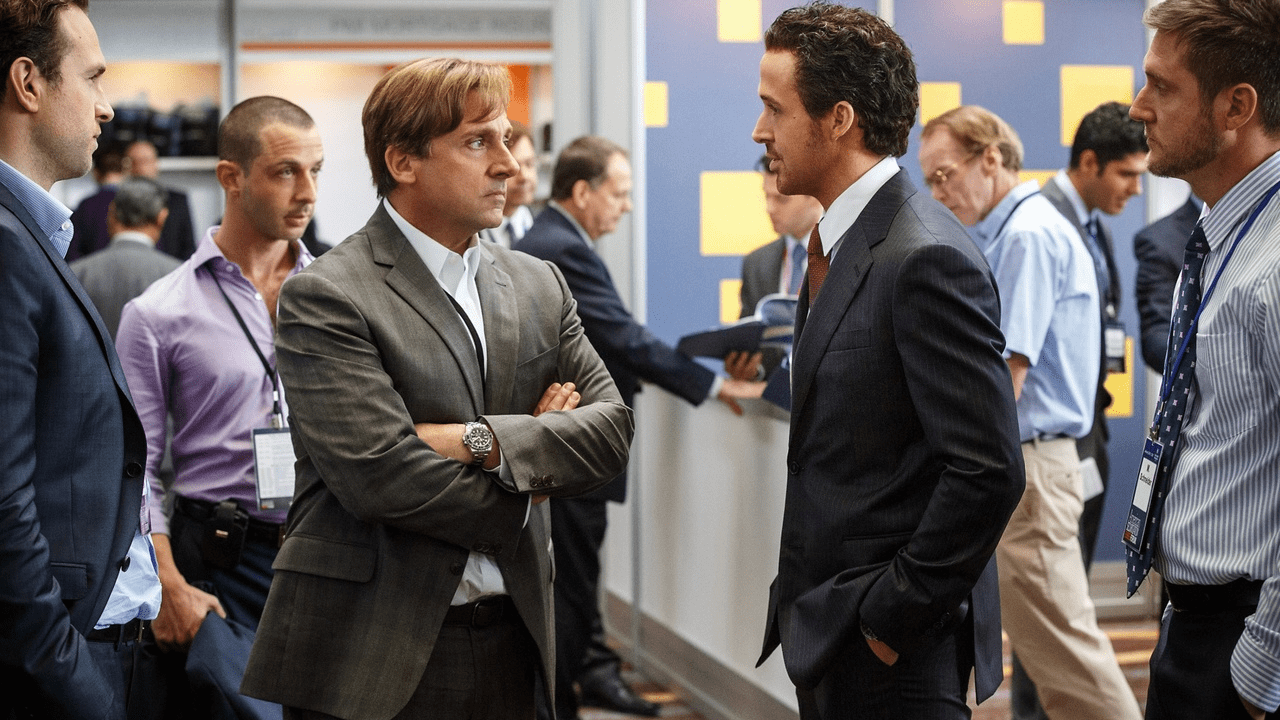
McKay’s first film without Will Ferrell, The Big Short deals follows stockbrokers who bet that America will collapse into a housing crisis and reap the rewards when it does. The Big Short is a mixed bag – it is very original and has many flashes of sheer brilliance. There are some fantastic performances – Christian Bale is the standout and plays against type, not sharing any scenes with the rest of the main cast. However, on the flipside, the film comes off as incredibly smug and boisterous and it has a big identity crisis tonally. McKay isn’t quite sure what the film wants to be – at times it feels like a knock-off of The Wolf of Wall Street and at other times, he regresses to his comedic roots. This deeply impacts the film as tonally it feels very disjointed and feels more like a collection of scenes (some outstanding) spliced together rather than a feature length film. However, originality is what is to be admired here despite the film not hitting all the right notes. (My full review here)
Another large step up in quality…
6) Don’t Look Up
McKay’s latest, Don’t Look Up is an interesting piece. It is an expectedly biting satire with many satisfyingly uncomfortable comparisons to reality. There aren’t many laughs here due to how close the humour hits to home. That said, Don’t Look Up runs into the exactly the same problems as his previous two films (The Big Short and Vice) with its obnoxious and boisterous tone. McKay directs with the subtlety of a sledgehammer and the film would have worked better if he had left more to the imagination, perhaps with the aid of a co-writer, who could have reigned him in. The film’s pacing is scattershot throughout but particularly in its first half. Reducing the length by around twenty minutes would have really helped tighten up the pacing as the film doesn’t need to be 140 minutes. There are a range of quality performances here with Jennifer Lawrence, Leonardo DiCaprio, Ron Perlman and Melanie Lynskey the highlights, Meryl Streep and Jonah Hill miscast and a very strange performance from Mark Rylance. (My full review here)
5) Vice
Vice is definitely watching alone for the Christian Bale performance and McKay is working with some strong material. Taken on its own merits outside of being an Awards film of its respective year, this is an interesting and unconventional telling of America’s most powerful Vice-President in its history. There’s a lot more to like in Vice compared to The Big Short as it features a tremendous performance by Christian Bale and it tells an interesting story of his rise to power. However, it’s unfortunate that the film runs into pretty much all the same problems that plagued The Big Short as it also is rather disjointed in its pacing and similiarly boisterous in tone. There is no subtlety to McKay’s direction whatsoever and he drives his political message home with a sledgehammer throughout which often crosses the line of being preachy. Whilst there are a number of comedic moments that work, there are also moments where the film is aggressively unfunny.(My review here)
4) The Other Guys
The Other Guys represented a slightly more serious affair than McKay’s previous comedies but this is still a rib-tickling buddy cop action comedy parody that has plenty of heart to boot. Mark Wahlberg and Will Ferrell make for an excellent duo – Ferrell’s sensible policeman has a hilarious but loveable back story and Wahlberg flexes his comedic chops, arguably for the first time in his career. There is plenty to enjoy with the star-studded cast with strong supporting performances from Eva Mendes and Michael Keaton. Samuel L. Jackson and Dwayne Johnson also make for a fantastic cop duo at the start of the film.
And now for the top three…
3) Anchorman: The Legend of Ron Burgundy
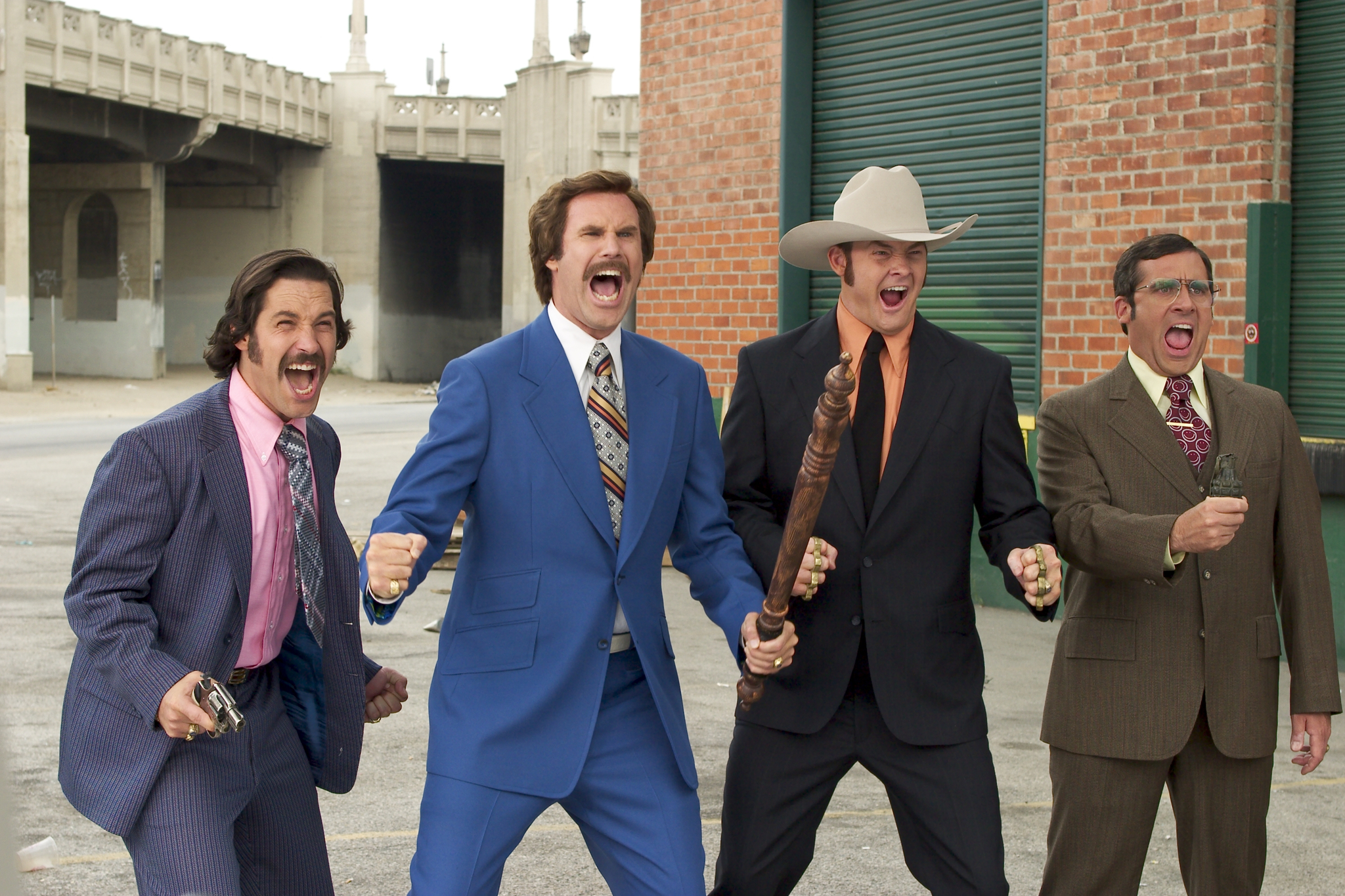
Whilst many would opine that Anchorman is McKay’s finest piece, it only makes it to third position on this list. Anchorman is a hilarious and endlessly quotable piece that put McKay on the map and elevated Will Ferrell’s career as the legendary newsreader Ron Burgundy, many still citing it up there with his best works. There are many standout comedic sequences, especially a scene with a cameo where Jack Black features in where Ferrell’s dog meets an unfortunate fate. Ferrell has great chemistry with the rest of the news team, consisting of Steve Carrell’s Brick, Paul Rudd’s Brian and David Koechner’s Champ who are all granted excellent lines and moments in the spotlight.
2) Talladega Nights: The Legend of Ricky Bobby
McKay and Ferrell’s second effort is another hilarious comedy, with Ferrell playing the titular character, a world-class NASCAR driver and his rivalry with Sacha Baron Cohen’s Jean Girard and the implications that has. Talladega Nights is yet another endlessly quotable comedy with some standout sequences, particularly one where Ricky Bobby is in hospital after a crash and is convinced that he is paralysed. This film also marks the first collaboration between Ferrell and John C. Reilly and both share an excellent chemistry here, bouncing off each other’s lines.
And the best Adam McKay film is…
1) Anchorman 2: The Legend Continues
A controversial choice but Anchorman 2 is the rare sequel that betters the original. It is a more cohesive film than its predecessor and is far more intelligent with its humour, asking the philosophical question of what consitutes news and how newsreporting developed in the 1980s. There are many standout sequences here and again, a very sharp script written by McKay and Ferrell with some committed performances and some fun cameos. What elevates an already excellent film is its third act, where Burgundy faces an existential crisis that forces him to discover himself as an individual. Anchorman 2 is by far the best Adam McKay film and one of my favourite comedies of the 2010s.
What are your thoughts? Let me know in the comments or tweet @TheFilmMeister