Director: Anders Thomas Jensen Starring: Mads Mikkelsen, Nikolaj Lie Kaas, Andrea Heick Gadeberg, Lars Brygmann, Nicolas Bro Certificate: 15 Run Time: 116 mins
Riders of Justice is an action comedy by Danish director Anders Thomas Jensen, who reunites with the brilliant Mads Mikkelsen after collaborating on The Green Butchers, Adam’s Apples and Men and Chicken. Mikkelsen plays Markus, a soldier stationed in Afghanistan with a temper, who is recalled home to his teenage daughter, Mathilde (Andrea Heick Gadeberg) after his wife dies in a tragic train incident. Mathilde had also been on the train with her mother where a stranger, Otto (Nikolaj Lie Kaas) had given up his seat for her. Both Markus and Mathilde deal with the ensuing grief in their own ways, causing a strained relationship.
Markus is visited by mathematician Otto (Nikolaj Lie Kaas), haunted by the grief, with his friend Lenart (Lars Brygmann), who have tracked him at his home to inform him that the train incident wasn’t a coincidence but a planned murder of a trial witness against the Riders of Justice motorbike gang. The three team up together, along with Otto’s hacker friend Emmenthaler (Nicolas Bro) to track the gang down and for Markus to enact revenge. However, this is to an unexpected and interesting result.
Riders of Justice is an original yet odd experience, both in its construction and in its fusion of the action and comedy genres. This is a film that swings between its genres, as well as moments of heartfelt sadness. It doesn’t all quite gel together, nor does it have the emotional gut-punch that this type of narrative requires. But the film is to be admired for attempting to deconstruct the revenge thriller genre in an innovative fashion and there is some excellent development of its oddball characters.
Mads Mikkelsen is typically excellent as Markus and portrays the broken soldier as a brute force of anger but someone who is trying to improve himself and emotionally connect with his daughter. Mikkelsen is normally the highlight of every film he features in but this is a rare case where the supporting cast are more than able to match the esteemed Danish actor. Nikolaj Lie Kaas is equally affecting as Otto, also tortured by grief and sees himself as pathetic. Lars Brygmann is brilliant as the geeky, wise-talking Lenart and Nicolas Bro has many of the film’s best lines as the overweight yet hard-working Emmenthaler. All four actors share excellent chemistry together and when the stakes increase in the film’s third act, Jensen has succeeded in his task of making the audience care for them.
The script, which is also written by Jensen, is particularly admirable and full of wit. There are some philosophical exchanges between characters such as on the nature of chess and the themes of chance, coincidence and randomness. There are also some sequences that are blackly comic, such as the opening theft of a bicycle and a weapons training sequence, peppered in for good measure.
The components of Riders of Justice shouldn’t really work but it surprisingly mostly comes together and the result is an innovative, heartfelt and often comic subversion of the revenge thriller genre. It is reminiscent of a Coen Brothers film in its tone but with a Eurocentric spin. It’s not quite the revelatory experience some are suggesting the film to be and it acts as a disservice to go into this film with sky-high expectations. This is yet another thoughtful Mads Mikkelsen vehicle and combined with Another Round, currently playing in cinemas, this is turning into a stellar year for the actor.
Director: Everardo Gout Starring: Ana de la Reguera, Tenoch Huerta, Josh Lucas, Cassidy Freeman, Leven Rambin, Alejandro Edda, Will Patton Certificate: 15 Run Time: 103 mins
The Forever Purge is the fifth instalment in the ever-expanding series that has also generated a television series in its second season. The Purge films have always rested on on a fascinating concept: that one night a year, all crime, including murder, is legal, with the exception of certain politicians of course. However, whilst each instalment has been entertaining, they have all failed to fully utilise and interrogate the thought-provoking themes that this concept raises.
The initial film (The Purge) was much smaller in scope than its sequels and although it used the annual event as a backdrop, it was by-and-large a fairly run-of-the-mill home invasion thriller. The Purge: Anarchy and The Purge: Election Year moved the action into the city, to better effect, the third representing the peak of the series thus far. The fourth film, The First Purge, was a prequel that highlighted how the first purge was an experiment on Staten Island designed to divide and destroy a predominantly black community and how citizens with lower incomes are offered financial incentives to participate. Again, another fascinating concept and the first half of the film was fairly promising but its second half was rote and formulaic.
The Forever Purge is set last in the timeline in 2048 after the events of the The Purge: Election Year where at the film’s close, anti-Purger Senator Charlene Roan (Elizabeth Mitchell) was elected to power. We learn that after two terms of Roan’s leadership, the New Founding Fathers of America (NFFA) have since been re-elected into power and that they have reinstated the annual Purge.
This film is set in Texas and primarily follows a Mexican couple, Adela (Ana de la Reguera) and Juan (Tenoch Huerta) who have recently illegally immigrated to escape from the cartel and begin a new life. Adela works in a catering firm and Juan works on a rancher’s property with fellow Mexican migrant co-worker, T.T. (Alejandro Edda). Juan frequently voices his discomfort of being away from Mexico to Adela whereas she is more confident in their decision to move.
The ranch that Juan works at is owned by the Tucker family with sympathetic patriarch Caleb Tucker (Will Patton), his son Dylan Tucker (Josh Lucas), Dylan’s pregnant wife Cassie (Cassidy Freeman) and his sister Harper (Leven Rambin). The opening scenes present Dylan as uncomfortably racist and there is tension between him and the servants. It is Adela and Juan’s first Purge since their move. Adela notices a nationalist Purger group roaming the streets, who call themselves the ‘Purge Purification Force’. Once the Purge ends, the group continue their killing rampage, which extends nationwide, described as the titular ‘Forever Purge’.
The Forever Purge is probably the best instalment so far and has several well developed characters. It succeeds as it shakes the formula and asks some loftier questions than its predecessors. The conflict between the Mexican immigrants and the rachers is well handled, the notion of border tensions offering a solid bedrock to empathise with the characters on both sides once the carnage ensues. It’s made even more relevant with the current political climate in a post-Trump America, although the film is generally unsubtle in its commentary.
After being one of the highlights earlier in the year in Army of the Dead, Ana de la Reguera makes for a compelling and sympathetic lead as Adela. Tenoch Huerta is also solid as Juan and they both share a believable chemistry. Of the rest of the cast, Josh Lucas and Will Patton make the strongest impression, although Patton is underused.
The Forever Purge also scores points in that its set pieces take place in a variety of landscapes and settings, as the narrative allows it to, unlike the previous films where the height of their action is set at night in a city. The film also boasts a higher production quality than previous instalments with some creative shots from cinematographer Luis Sansans and a fitting score from Mike Flanagan-regulars, The Newton Brothers.
Whilst it’s not perfect and it could have explored its themes with greater subtlety, The Forever Purge is a course correction for the franchise and the best entry so far. If the series is to continue, it would be interesting for it to focus on the repercussions of this film and continue these characters’ story but if this is to be the last, then it will be a good note to go out on.
Danish actor Mads Mikkelsen has a new film out later this week called Riders of Justice, which reunites him with director Anders Thomas Jensen, after collaborating on The Green Butchers, Adam’s Apples and Men and Chicken. Whatever film he is in, be it in his native Denmark or in his international efforts, Mikkelsen consistently puts in a strong performance and his filmography covers a vast array of genres. He has been often typecast for his villainous roles but Mikkelsen is capable and has proved himself in a wider range of characters and performances as one could be led to believe.
Here, I will reveal my top five performances in films that have featured Mikkelsen. These choices are based on both his performance in them and their quality.
5) The Salvation
This was a toss-up between this film and The Three Musketeers, the latter a rather controversial choice but the film is great fun and Mikkelsen makes for a devious Rochefort. The Salvation is a Western which finds Mikkelsen playing Jon, a Danish settler who has emigrated to the United States and his family arrive seven years later. Unfortunately, the family’s reunion is short-lived after an ill-fated stagecoach journey and Mikkelsen finds himself on a path of revenge and destruction against the villainous Delarue, gleefully portrayed by the also underrated Jeffrey Dean Morgan. The Salvation is a lean and mean Western that doesn’t particularly reinvent the genre but largely succeeds on Mikkelsen’s barnstorming performance.
4) Another Round
Currently in cinemas, although you may need to seek it out (and I suggest you do!), Another Round is a high concept tragicomedy from director Thomas Vinterberg. These qualities are shared by three of his close friends who also teach in the same school – sports teacher Tommy (Thomas Bo Larsen), music teacher Peter (Lars Ranthe) and psychology teacher Nikolaj (Magnus Millang). When they meet up to celebrate Nikolaj’s 40th birthday in an up-market restaurant, they get very drunk. One of them brings up the subject of a theory by Norwegian psychologist Finn Skårderud who opined that humanity performs best when they have a blood alcohol content of 0.05%. Martin decides to put this theory to the test one day whilst teaching and he finds that he has a much closer relationship with his pupils. The rest of the group decide to join in and they all have similarly positive results. They start to record their results in an academic journal that they curate and as the film progresses, they slowly up the alcohol level to explore the effects. Perhaps unsurprisingly, they discover that the benefits start to stagnate the more they drink and they eventually reach the road of self-destruction, with both comedic and devastating consequences.
Another Round is often infectiously humorous and the relationship between the four teachers is developed very authentically and they have fantastic chemistry. The film is equally depressing at times when we witness the dire consequences alcohol can have on these teachers. The first two thirds of the film is particularly beautifully crafted but it loses its footing in the final third somewhat. The final act negates the message of the first two acts and Vinterberg seems to be unsure in his argument of whether alcohol has a positive or negative influence. Mikkelsen is typically excellent in the role, who portrays Martin with a potent world-weariness and a tinge of sadness. He is an easy character to care for as he learns to live again many times in the film. (Full review here)
3) Polar
A wildly controversial choice as Polar got absolutely trashed by critics in its reviews. A Netflix Original, Polar is a revenge thriller in the vein of John Wick and Taken with Mads Mikkelsen playing the action hero with spectacular results. The film is utterly bonkers and what is impressive is how it manages to balance sheer grittiness and savage ultraviolence with its ridiculous tone. The decision to cast Matt Lucas as the over-the-top villain is a stroke of genius and the result is a film that I really got on board with.
2) Casino Royale
Mikkelsen’s big Hollywood break came in the form of James Bond where he is put against Daniel Craig in his debut film. Casino Royale rejuvenated the franchise after the disastrous Die Another Day, a film that rebooted Bond for the modern day audience with its grittier and darker tone. Mikkelsen plays Le Chiffre, an expert poker player who suffers from a blood-weeping eye. Mikkelsen makes for a nasty villain, who for much of the run time, taunts Bond intellectually. There is a particularly grisly torture sequence late in the film for Le Chiffre to further open up, which makes for satisfyingly uncomfortable viewing.
1) The Hunt
By far and away Mads Mikkelsen’s career pinnacle, The Hunt is a masterclass of a drama from director Thomas Vinterberg. Mikkelsen plays Lucas, a daycare employee, who is falsely accused of indecently exposing himself to a child. The film follows the community turn against him and Lucas is treated quite terribly, as he tries to prove his innocence. This film packs an emotional wallop and Lucas goes through hell, his world-weary and slitted eyes wearing guilt that he shouldn’t have. If you haven’t seen The Hunt, go and watch it immediately as it is not just Mikkelsen’s best performance or Vinterberg’s best film but it is one of the best films of the 2010s.
So there we go. What do you think? What did I miss? If you haven’t watched any of these films, I’d highly recommend you do so as they’re all really worthwhile and I’m sure Mikkelsen’s career will continue to be a fascinating one, especially with the untitled Fantastic Beasts sequel where he will replace Johnny Depp as the main antagonist of the series, Grindelwald.
Riders of Justice is released in UK cinemas on Friday 23rd July
Director: Cate Shortland Starring: Scarlett Johannsson, Florence Pugh, David Harbour, O-T Fagbenle, William Hurt, Ray Winstone, Rachel Weisz Certificate: 12A Run Time: 134 mins
Black Widow is the overly anticipated solo outing for Scarlett Johannsson’s Russian Avenger, a film that Marvel devotees have been clamouring for for years. Given the characters definite fate in Avengers: Endgame, is this film too little too late? In the director’s chair is Cate Shortland and as with a variety of other Marvel directors, this represents Shortland’s first big-budget feature. After an initial sequence set in Johansson’s Natasha Romanoff’s childhood, the film opens with the Avenger exiled in Norway, following the events of Captain America: Civil War but prior to Avengers: Infinity War and how she reunites with her adopted family and their backstory. This is a strange choice as there is the need for continuity and a prequel set in the characters more formative years would have surely given more substance. Romanoff crosses paths with her feisty sister, Yelena Belova (Florence Pugh), both characters were victims of the ‘Red Room’ in their early years, a facility led by General Dreykov (Ray Winstone) who trains and brainwashes Russian assassins. Romanoff had presumed Dreykov deceased but clearly this is not the case and the duo team up with their adopted parents, Red Guardian (David Harbour) and scientist mother Melina (Rachel Weisz) to investigate and prevent world destruction from the villain.
Black Widow starts out in a promising fashion and almost suggests a new direction for the Marvel Cinematic Universe with its grittier tone and its well choreographed and stylised action sequences. It embraces its globe-trotting James Bond-esque origins even if it lacks the sophistication, sex and wit. Unfortunately after about half an hour, the film loses its edge and descends into convention with a half-baked story, cheesy family reunions and an over reliance on CGI, particularly at the film’s climax, which has been many a comic book film’s downfall in recent years. There are glimpses of Shortland’s direction in the first half an hour but the rest of the film feels like it was directed by a committee.
The performances are sound, if a little rough around the edges. This is more Florence Pugh’s film than Scarlett Johannsson and Pugh makes a promising impression as Yelena. Johannsson can play this role in her sleep but it’s a shame that this film doesn’t add all that much substance to the character that we have already come to know from prior instalments. The roles that Rachel Weisz and David Harbour play are serviceable but overly familiar and they are saddled with poor dialogue. Harbour fares better as it is clear that he takes the role more seriously in the film’s first half but then embraces the camp and ridiculousness of it all later in the film.
The film’s major stumbling block is its villains. Ray Winstone is not convincing whatsoever as Dreykov and his performance is hammy although understated. The character of Taskmaster, who is Dreykov’s secret weapon, an assassin that can mimic the movements of its competitors, is an interesting choice to include in the film but is unfortunately under-utilised. There are two early action sequences that are brilliant with the character causing carnage to Romanoff and Yelena and are reminiscent of the kinetic action found in Captain America: The Winter Soldier but not a great deal after that. The filmmakers stray from the characters origins in the comic books in what is quite an unsatisfactory twist.
The fact that Black Widow is a prequel also brings up a question of timelines. I have watched all of the Marvel films but I am not a die-hard fan and don’t know all the backstories inside out but even I could find holes in the story. Furthermore, being a prequel unfortunately brings with it the curse of the stakes are never high enough as you know what the outcome will be.
For its first half an hour, I thought Black Widow was going to be a Marvel film that was going to head in a different direction but Shortland either doesn’t have the guts to stick to her convictions or the higher-ups at Marvel wanted the formula adhered to and this film is unfortunately one of the lesser efforts in the Marvel Cinematic Universe canon.
Director: Thomas Vinterberg Starring: Mads Mikkelsen, Thomas Bo Larsen, Magnus Millang, Lars Ranthe Certificate: 12A Run Time: 117 mins
Another Round is a high concept tragicomedy from director Thomas Vinterberg who re-teams with the ever-versatile Mads Mikkelsen. Mikkelsen plays Martin, a jaded and uninspired History teacher who is struggling to enthuse his students and has a stale relationship with his wife and kids at home. These qualities are shared by three of his close friends who also teach in the same school – sports teacher Tommy (Thomas Bo Larsen), music teacher Peter (Lars Ranthe) and psychology teacher Nikolaj (Magnus Millang). When they meet up to celebrate Nikolaj’s 40th birthday in an up-market restaurant, they get very drunk. One of them brings up the subject of a theory by Norwegian psychologist Finn Skårderud who opined that humanity performs best when they have a blood alcohol content of 0.05%. Martin decides to put this theory to the test one day whilst teaching and he finds that he has a much closer relationship with his pupils. The rest of the group decide to join in and they all have similarly positive results. They start to record their results in an academic journal that they curate and as the film progresses, they slowly up the alcohol level to explore the effects. Perhaps unsurprisingly, they discover that the benefits start to stagnate the more they drink and they eventually reach the road of self-destruction, with both comedic and devastating consequences.
Another Round is often infectiously humorous and the relationship between the four teachers is developed very authentically and they have fantastic chemistry. The film is equally depressing at times when we witness the dire consequences alcohol can have on these teachers. The first two thirds of the film is particularly beautifully crafted but it loses its footing in the final third somewhat. The final act negates the message of the first two acts and Vinterberg seems to be unsure in his argument of whether alcohol has a positive or negative influence.
Mikkelsen is typically excellent in the role, who portrays Martin with a potent world-weariness and a tinge of sadness. He is an easy character to care for as he learns to live again many times in the film. Vinterberg has proven he knows how to showcase Mikkelsen away from the typecast of a villainous actor he has gained in his Hollywood efforts, and Mikkelsen gave a career-best performance in an earlier teaming of the duo in The Hunt. The rest of the group of teachers are great, in particular Tommy Bo Larsen deftly balances the humour of his drinking with his affectionate group of young footballers with his depression.
Another Round is another really strong piece of work from Vinterberg, especially in its first two thirds and it’s a shame that the final act can’t quite match them in its grandeur. Vinterberg is a provocative filmmaker, founding the Dogme 95 movement with the more radical Lars Von Trier and Another Round finds the director in quite a restrained manner. The Hunt remains Vinterberg’s best film and packs much more of an emotional wallop than Another Round, but there is lots to admire here and the first two thirds of the film really are very powerful.
July has arrived and that means it’s time for my annual mid-year review of my favourite films of the year so far. As is to be expected, there are still a few films that I am still yet to see but I have tried to get through all the films that I have been looking forward to or the films that reviews have been good for. As usual, I am following the UK release date calendar between January and June. As you are about to see, there are some Awards films included in this list but these have all been released within this time period in the UK.
Top Ten Films Of 2021 – Mid Year-Report
10) Nomadland
Nomadland is an original and unassuming exploration into the nomadic lifestyle that a proportion of Americans take where they cannot afford to live by conventional means in a bricks and mortar dwelling. In what is director Chloe Zhao’s third feature, Nomadland paints a desperate situation where hard-working Americans cannot afford to live in a normal society. We follow Frances McDormand’s widowed and unemployed Fern. She describes herself as ‘houseless’ and chooses to travel the US, partaking in various job opportunities, living from her van. These jobs range from a stint in Amazon to working in hot and sweaty kitchens to running a spa. We meet some real-life nomads that her character crosses paths with along the way, as well as a blossoming relationship with another nomad played by David Strathairn.
The performances are first-rate in the film, with Frances McDormand winning her third Best Actress Oscar for this role. McDormand is brilliant here but she could play this type of role in her sleep – it doesn’t rate with the quality of her other two wins in Fargo and Three Billboards Outside Ebbing, Missouri. Of the other characters, it is Charlene Swankie (as Swankie!) who makes the biggest impression in the film’s best sequence where she recounts her life choices and philosophies. Technically, Nomadland is excellent as well with Joshua James Richard’s Terence Malick-esque cinematography beautifully capturing the vast open landscapes and offering a magical quality. Ludovico Einaudi’s piano-based score is sparsely used but packs a punch when it is featured. (Full review here)
9) Nobody
Nobody is directed by Ilya Naishuller and provides a vehicle for Bob Odenkirk as Taken and John Wick did for Liam Neeson and Keanu Reeves. It is far from an original concept but it is very entertaining and its main asset is Bob Odenkirk’s electric and deadpan performance. There are some kinetic action sequences, particularly a sequence in a bus and the climax. Pawel Pogorzelski’s cinematography is far more first-person POV than the longer shots in John Wick, very much in the vein of Naishuller’s Hardcore Henry and unlike his more showy work on Hereditaryand Midsommar. Also unlike John Wick, Hutch Mansell is a far more vulnerable character and he doesn’t come away from his fights unscathed. There are many occasions where he is battered in the process. Christopher Lloyd also has some strong moments, particularly in the third act as Mansell’s father, as does RZA as Hutch’s brother. When the film is at its best, it really is a hoot and Naishuller has a clear understanding of the mechanics of B-movie, trashy exploitation pieces in his direction. (Full review here)
8) Antebellum
Antebellum is a really interesting debut from directors Gerard Bush and Christopher Renz and I’m very glad it exists, particularly in the context of a ‘Make America Great Again’ society. Positioned as a female-centered nervous mix of The Twilight Zone and 12 Years A Slave with more than a heavy dose of M. Night Shyamalan infused in the mix, Antebellum follows Janelle Monae’s Eden, who is a slave on a plantation in what appears to be Civil War-era America. About forty minutes in, she wakes up as renowned sociologist Dr Veronica Henley and audiences are drawn to the parallels between both narratives and how they might be connected. The first and third acts are particularly riveting even if the film sags in the middle, where there are some overly preachy speeches and a misjudged character played by the normally reliable Gabourey Sidibe. The plantation sequences are particularly uncomfortable to watch for a film of this genre and the cinematography by Pedro Luque and menacing string-based score are stunning.
It’s a shame that the reception to this film has been fairly negative, with many finding the film to be exploitative, its twist not justifying the brutal violence and that its violence is torture porn. I would strongly disagree and would argue that the sadistic violence assists in creating a stronger verisimilitude. I can’t wait to see what Bush and Renz go onto make next and hope that they continue to take risks and are not deterred from the negative critical response. (Full review here)
There is now a marked step-up in quality…
7) The Conjuring: The Devil Made Me Do It
The Conjuring: The Devil Made Me Do It represents a welcome change of direction compared to the first two films in that it delves from the haunted house formula and is more of a police procedural crime thriller. The story the film is based on is riveting, even if some creative liberties have been taken with it for it to fit the horror genre. The performances are all excellent, Vera Farmiga and Patrick Wilson as the Warren’s again are the centrepiece of the franchise and the film expands and revolves around their strong relationship. Director James Wan is not behind the camera this time around and the film is directed by Michael Chaves, who directed a previous entry, The Curse Of La Llorona. Chaves’ direction attempts to ape Wan’s from the use of title cards and a prologue sequence at the beginning to the general tone of the film. However, when it comes to the horror aspect of the film, Chaves just does not craft the scares in as sophisticated a fashion as Wan. I was riveted from start to finish but there is always the question of what if this film had been directed by James Wan and I think if had, the result here would have been extraordinary. If the film doubled down on its scares or chose to eliminate them completely and spent longer developing its characters and establishing the stakes, this could have been a masterpiece. (Full review here)
6) Those Who Wish Me Dead
Those Who Wish Me Dead is the latest from writer-director Taylor Sheridan and in keeping with his back catalogue, is another film that explores the modern American frontier. It is yet another original and commanding effort from Taylor Sheridan. It is frequently thrilling and as is customary for the writer-director, there are some interesting twists narratively and in its portrayal of gender. The way in which Sheridan introduces the characters allow the audience to be two steps ahead of them, which is thrilling as we can predict how they will likely act when all the pieces fall together later in the film. Sheridan is again able to extract some excellent performances from the cast. Angelina Jolie makes for a commanding screen presence, haunted by what she feels is her mistake, and this is a solid project for her to pick in her acting comeback. Gillen and Hoult make for an unstoppable reckoning as the assassins. (Full review here)
Now into the Top Five…
5) The Little Things
The Little Things is a neo-noir crime thriller that heavily wears its inspiration of David Fincher’s Se7en and Zodiac on its sleeve. Denzel Washington stars as a grizzled detective, Joe ‘Deke’ Deacon who crosses paths with recently appointed lead Detective Jimmy Baxter (Rami Malek). The two of the them team to investigate a string of serial murders and their search leads them to a strange loner (Jared Leto), who may or may not be the culprit. Director John Lee Hancock lends an assured hand to the material, allowing the film a familiar feel that revels in its atmosphere. Although familiar, for the majority of The Little Things, I was enamoured by the atmosphere, the development of the characters and the performances. Denzel Washington and Rami Malek make a great pair, Washington particularly convincing as the experienced but unorthodox sheriff.
Unfortunately, the film runs into murky water in its final 15 minutes with its controversial ending. Granted, it is original but I found it very anti-climatic, abrupt and like a big nothing and more than a little underwhelming. Hancock justifies the decision to end the film in this way. The film could easily for me have gone on for longer to solve its central mystery, but the film isn’t really interested in this and is more focussed on character. It is easy to understand the mixed reception to The Little Things but until its ending, I found it to be a riveting drama that is very cine-literate. (Full review here)
4) Minari
Minari is an affecting and amiable portrayal of a hard-working, but down on their luck Korean family who are trying to carve out their own American dream. Directed by Lee Isaac Chung, Minari follows immigrant Jacob Yi (Steve Yeun), who is fed up of working in a chicken hatchery in California and moves his young family to a considerable piece of land that he has brought in rural Arkansas with a rickety mobile home. The interplay between the family is excellent and the performances poignant. The highlights are of course, Youn Yuh-Jung, whose Oscar win for her turn as the grandmother is excellent, deftly balancing the comedic elements of the role with some powerful sequences in the third act. Steve Yeun is also commendable as Jacob and his plight for success is piercing to the audience, as is Han Ye-ri as Monica. The film is technically beautiful with dream-like cinematography from Lachlan Milne, the families land seeming other-worldly and distant. Emile Mosseri’s predominantly piano and woodwind based score is also soul-stirring in its ethereal quality. (Full review here)
Now into the Top Three…
3) Army Of The Dead
Army of the Dead, visionary director Zack Snyder’s first film post-DC, is a total blast from start to finish. Snyder is no stranger to the zombie thriller genre as his first film was Dawn of the Dead, a very solid remake of George A. Romero’s original. This is not connected to Dawnbut does take some inspiration from other Romero works. Snyder crafts a fascinating world here and there is some interesting political sub-text. Ethical questions are posed that draw parallels to the current American political climate and treatment of migrants. We are introduced to a diverse set of characters that are going to carry out the heist operation. Whilst the character tropes are fairly conventional and some characters aren’t really fleshed out, this is a zombie film after all and it’s inevitable that some of the cast are only introduced to die. The film is a visual treat and Snyder, who acts his own cinematographer for the first time, does a commendable job in building a convincing post-apolocalyptic world that doesn’t feel too far removed from how it is currently. The film is bursting with colour and Snyder leans into the creative kills and gore that earn the film its 18-rating with joyful glee, the opening credits to the film being particularly memorable. He balances this with some suitably dour darker lit sequences that highlight the origins of the Alphas and their leader Zeus, who is particularly well developed as a villain, and fits in perfectly with Snyder’s horror roots. Army of the Dead is further proof that Snyder works best when he is not restrained by a film studio. (Full review here)
2) Zack Snyder’s Justice League
Who would ever have thought that two Zack Snyder films, a director of great controversy, features twice in a ‘Best of’ list?! Zack Snyder’s Justice League is the director’s cut of the film Snyder tried to originally make before butting heads with Warner Brothers executives and then departing the project after a family tragedy. The end result was a crushing disappointment that was a schizophrenic mess that represented a clash of two opposing styles of direction with a feeling that it felt unfinished. Fans have petitioned for Snyder’s original vision and the movement began on social media with the hashtag #RestoreTheSnyderCut. After many months of speculation, Snyder then revealed that he had most of a finished cut completed and it was up to Warner Bros to release it. Fans continued to push for its release in their numbers and the ‘Snyder Cut’ was announced in May 2020. Warner Bros granted Snyder an additional $70 million to finish the film and it now sees the light of day in its full 242 minute glory.
Zack Snyder’s Justice League is an astonishing achievement and represents a mature and risky effort in establishing the DC team. The four hours fly by and it is a visual treat throughout. This is a Zack Snyder film through and through but it interestingly represents a more mature effort in that the storytelling here is improved from some of his previous filmography, where some of his films have bordered on the incoherent. By the film having its length, the film can breathe and Snyder works wonders in establishing and developing each and every character of the team. There is no conceivable way this story can be told in a two hour run time.
The wider context of this director’s cut is fascinating in how different it is from what Warner Bros chose to release. The stark differences between both cuts is something that can and likely will be studied for years to come and having watched this director’s cut, one has to question the psychology of the decision to approve the theatrical cut for cinema release.
Ultimately, Zack Snyder’s Justice League is a frequently astonishing and bold take on this DC lineup and it earns its four hour run time. With this director’s cut and Army Of The Dead, Snyder has matured as a director and he has markedly improved on some of his lesser qualities in previous films in regards to storytelling and representations. (Full review here)
So the best film of the year is…
1) I Care A Lot
From start to finish, I Care A Lot is really excellent with a riveting and thought-provoking story with a collection of morally bankrupt characters. Rosamund Pike plays Marla Grayson, a morally bankrupt but cool-as-a-cucumber con artist who preys and scams on the older generation by becoming their ‘legal guardian’ and sending them to a care home, whilst she profits from selling their property and assets. Perhaps some of the twists the film takes in its third act aren’t quite as fresh as the beginning and it begins to move away from its smart commentary in the first two acts on the elderly generation. The notion that this could happen to you when you are older is genuinely frightening and really doesn’t feel that far removed from reality. Director J. Blakeson has markedly developed and this is a thrilling and thoroughly original concept. (Full review here)
Reflection on 2019 so far…
Whilst there have been a handful of excellent films so far this year, there have been so many disappointments. Most of the films featured in this list are a tier below previous mid-year lists and this is probably the weakest start to a year since 2011/12. Most films so far this year have either been pretty solid or above average but there have been a couple of unexpected stinkers. It’s surprising that films 10-8 feature on a ‘Best of’ list as they all have their problems and you’ll notice that I have omitted an ‘Honourable Mentions’ section this year.
Here’s hoping for a stronger second half of the year and films that look like they have potential include:
– Black Widow – Old – Riders of Justice – The Suicide Squad – Stillwater – The Green Knight – Reminiscence – The Night House – Candyman – Shang-Chi And The Legend Of The Ten Rings – Malignant – Prisoners of the Ghostland – No Time To Die – The Last Duel – Halloween Kills – Dune – Last Night In Soho – Antlers – Eternals – Spencer – The Card Counter – Cry Macho – House Of Gucci – Encanto – Spider-Man: No Way Home – The King’s Man
However, it is important to note that this is not a definitive list and these titles are just a few picks scattered across the remainder of the year that have piqued my interest.
What are your thoughts? Tweet @TheFilmMeister or leave your ideas in the comments
Director: Enrico Casarosa Starring: (voices of) Jacob Tremblay, Jack Dylan Grazer, Emma Berman, Saverio Raimondo, Maya Rudolph, Marco Barricelli, Jim Gaffigan Certificate: PG Run Time: 95 mins
Luca is the latest from Disney Pixar and like Soul before it, faced delays to its theatrical release before releasing on Disney+, which sparked controversy within the team. Set on the Italian Rivera, Luca is a young sea monster who lives with his over-protective parents, who warn him of the perils of the human world. Luca spends his days supervising a flock of fish (who behave and bleat like sheep) and clearly is longing for more purpose and excitement in his life. The set-up is essentially The Good Dinosaur under the sea. Luca meets a fellow sea monster named Alberto, who is seemingly care-free and adventurous and leads Luca out of the sea, where both assume human form once dry, literally ‘fish out of water’. They work up the courage to discover the port town of Portorosso, where they make friends with a young Italian female misfit named Giulia and attempt to compete in a the town’s traditional triathlon (swimming, cycling and eating pasta of course!), whilst Luca evades his parents who are searching for him.
Luca is a sweet and amiable film that is much smaller in scope and scale compared to some of Pixar’s other offerings. Although decidedly more suitable for children, Luca’s aesthetic cries of Call Me By Your Name combined with The Little Mermaid, director Enrico Casarosa (in his debut feature after assisting as a storyboard artist on previous Pixar films) drawing inspiration from his childhood in his vivid imagining of the sunblushed Italian coast. The central trio of Luca, Alberto and Giulia are very well developed and there are some humorous supporting characters. Luca’s Grandmother does not share the same world view as his parents, knowing from experience that breaking some rules in life is a part of growing up and Sacha Baron Cohen shows up in a very brief role as Luca’s unhygienic Uncle Ugo, who resides in the deep sea, where Luca’s parents threaten to send him to live if he fails to stop rebelling.
Luca is a significantly more gentle film compared to other Pixar entries and tackles less heady and existential themes. There isn’t a standout emotional sequence that reduces the audience to tears, which is customary for many of Pixar’s films. Whilst Luca is engaging and entertaining in the moment, this is not a film that has the lasting and endearing quality that Pixar’s top tier offerings have.
Director: Ilya Naishuller Starring: Bob Odenkirk, Connie Nielsen, RZA, Christopher Lloyd, Aleksey Serebryakov Certificate: 15 Run Time: 92 mins
Nobody is directed by Ilya Naishuller and provides a vehicle for Bob Odenkirk as Taken and John Wick did for Liam Neeson and Keanu Reeves. There have been many action films recently that historically dramatic actors have taken on in an effort to rejuvenate their career and not all have worked out, for example Sean Penn with The Gunman. The story of Nobody is pretty familiar for the genre. Odenkirk plays Hutch Mansell, a father who lives a seemingly average life with two kids he cares deeply for, a loving wife (Connie Nielsen), a routine and mundane job and his father (Christopher Lloyd) lives in a care home. However, Mansell has a past and when his particular set of skills are required, we learn he is actually an ex-CIA government assassin, who people certainly don’t want to mess with.
Nobody is far from an original concept but it is very entertaining and its main asset is Bob Odenkirk’s electric and deadpan performance. There are some kinetic action sequences, particularly a sequence in a bus and the climax. Pawel Pogorzelski’s cinematography is far more first-person POV than the longer shots in John Wick, very much in the vein of Naishuller’s Hardcore Henry and unlike his more showy work on Hereditaryand Midsommar. Also unlike John Wick, Hutch Mansell is a far more vulnerable character and he doesn’t come away from his fights unscathed. There are many occasions where he is battered in the process. Christopher Lloyd also has some strong moments, particularly in the third act as Mansell’s father, as does RZA as Hutch’s brother. When the film is at its best, it really is a hoot and Naishuller has a clear understanding of the mechanics of B-movie, trashy exploitation pieces in his direction.
Nobody isn’t quite as strong a film as its competitors as it can’t sustain its energy in its quieter moments. There is a lot of build up before the first action sequence, which is perfectly acceptable for a film of this type but it lacks tension or depth. The supporting characters, in particular, his family could have been better developed and the events in which Mansell finds himself suddenly needing to use his action skills aren’t quite as simplistic and clear-cut for a film of this type and a lot of the plot feels coincidental.
Nobody is ultimately far better than it has any right to be considering its heavy influences and could very easily have been an uninteresting cash grab. Its main draws are its beautifully choreographed action sequences to enjoy, a refreshingly light tone and an excellent performance from Bob Odenkirk. Given Nobody’s critical success, it is likely there will be a sequel which would be exciting, but it needs a few more ingredients to further differentiate it from its competitors and tighter pacing.
Director: Florian Zeller Starring: Anthony Hopkins, Olivia Colman, Mark Gatiss, Imogen Poots, Rufus Sewell, Olivia Williams Certificate: 12A Run Time: 97 mins
The Father is the directorial debut from playwright Florian Zeller, of which this is an adaptation of one of his plays. It stars the revered Anthony Hopkins as (fittingly) Anthony, an ageing man with progressing dementia. Zeller’s script offers a novel perspective on the debilitating condition in that the film is generally told from Anthony’s perspective which is suitably sprawling and incoherent. He often forgets his daughter Anne (Olivia Colman) and her partner Paul (Rufus Sewell) and confuses their identities with other people, for example Olivia Williams (credited as ‘The Woman’) appears in the film and informs Anthony that she is his daughter. Certain sequences are repeated with variations of actions or conversations, questioning reality. Lavish praise has been heaped on The Father, striking a chord with critics and audiences alike and it was a key contender at the Oscars this year, earning Hopkins a Best Actor win. Now that the film has finally arrived in the UK, does it deliver?
The Father is a difficult watch and its grim yet unconventional portrayal of dementia is to be admired. Anthony Hopkins’ performance is excellent and his range of being happy-go-lucky to breaking down in tears due to his inability to understand what is happening in his headspace is tremendous. There are some equally committed supporting performances from Olivia Colman, Olivia Williams, Imogen Poots and Rufus Sewell, the latter particularly effective as a seemingly slimy individual from Anthony’s perspective which Sewell delivers with glee.
However, I have reservations. Firstly, the film is just not very cinematic and feels like a stage play. This is partly down to a wordy script, but chiefly down to its predominantly single apartment setting and the way in which it is brightly lit acts as a literal spotlight for Hopkins’ performance. That said, there are occasional efforts made to change the setting.
It is hard to fully emotionally commit to The Father as it is unconvincing in its logic of time and space. At times, it feels like the film plays in real time but Anthony’s condition accelerates too rapidly. The film’s novel concept is also undone numerous times as there are interactions that are not from his perspective. It almost feels like a cop-out in that Zeller intends the audience to have some form of truth to cling onto. Perhaps because I have experience of family members who have suffered from dementia, but the film shies away from some of the dour everyday aspects, such as the loss of key motor skills such as the progressive lack of movement, eating difficulties and incontinence.
Whilst there is a lot to admire in The Father, ultimately it’s not as raw and fulfilling an experience as its premise suggests it should be. The film is worth seeing for its towering Anthony Hopkins performance alone and its innovative perspective of dementia in a filmic setting. But, it’s a shame that Zeller doesn’t fully unpack and utilise the concept with greater authenticity and The Father isn’t the towering achievement its awards success would suggest.
Director: Michael Chaves Starring: Patrick Wilson, Vera Farmiga, Ruari O’Connor, Sarah Catherine Hook, Julian Hilliard, John Noble, Eugenie Bondurant Certificate: 15 Run Time: 112 mins
The Conjuring: The Devil Made Me Do It is the third entry in the mainline series but the eighth entry in its respective cinematic universe. The films have all varied in quality, with highlights such as the two Conjuring films and Annabelle: Creation to complete misfires such as Annabelle and TheNun. The mainline films though are yet to faulter and are generally considered the benchmark in quality for the franchise and follow paranormal investigators Ed and Lorraine Warren’s cases. This entry is set in 1981 in Connecticut, following the murder trial of Arne Cheyenne Johnson who murdered his landlord and defended his innocence on the grounds of demonic possession.
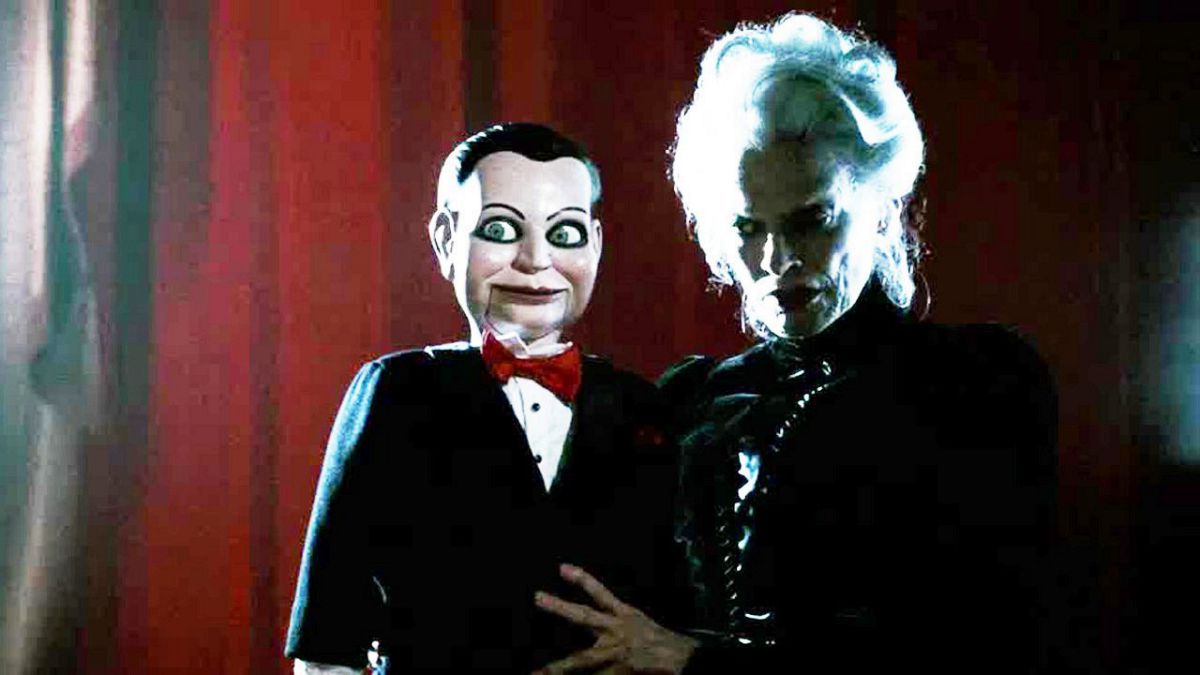
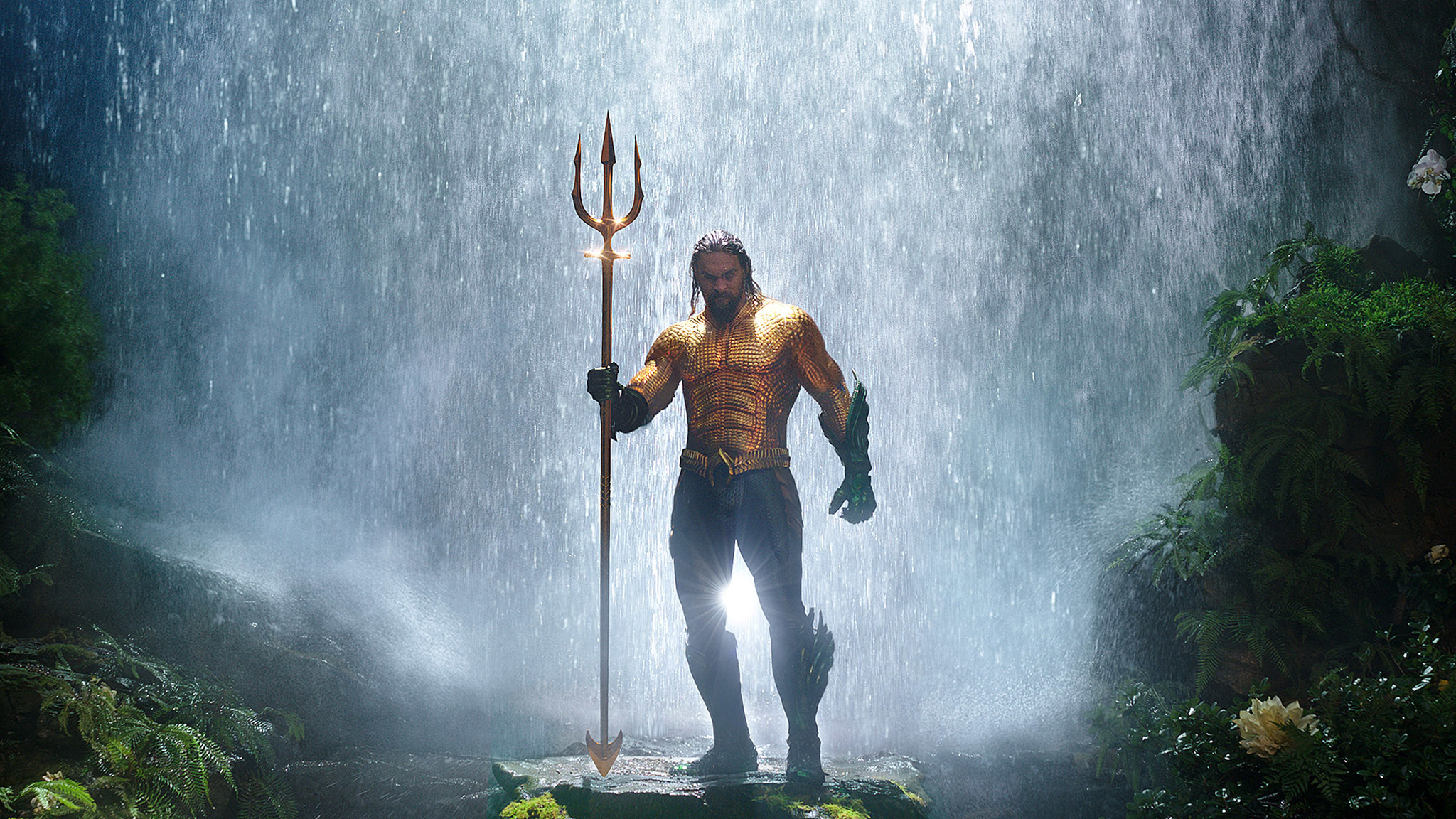
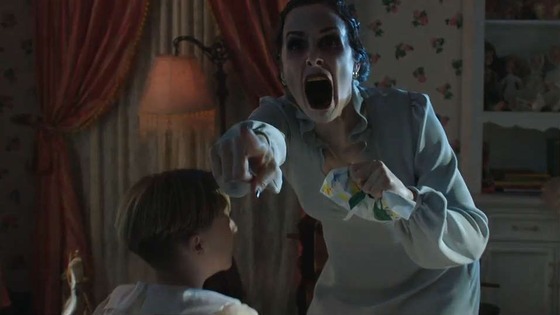
This sequel is the first Conjuring film to not have James Wan in the director’s chair. Wan has cemented himself as one of the leading voices of the genre with his success in establishing this series with his two entries and he is also responsible for other franchises in the horror genre such as Saw and Insidious, as well as recently directing Aquaman. TheConjuring is Wan’s best feature, near perfect in its construction and is one of the best horror films of the century. Naturally, there is trepidation when he is not in the director’s chair (although he does remain in a producer and story capacity) and he has cherry-picked Michael Chaves to direct this entry. Chaves is not new to this franchise, having previously directed The Curseof La Llorona, which is a middle-of-the-road entry. Can Chaves deliver another stellar instalment in the franchise?
The Conjuring: The Devil Made Me Do It represents a welcome change of direction compared to the first two films in that it delves from the haunted house formula and is more of a police procedural crime thriller. The story the film is based on is riveting, even if some creative liberties have been taken with it for it to fit the horror genre. The performances are all excellent, Vera Farmiga and Patrick Wilson as the Warren’s again are the centrepiece of the franchise and the film expands and revolves around their strong relationship. The rest of the cast are also strong, although they are underused and this is very much Farmiga and Wilson’s film. Ruairi O’Connor is excellent as the murder convict and it was surprising to see John Noble, of Lord of the Rings fame, appear here in a small but pivotal role, who performs sparingly.
Chaves’ direction attempts to ape Wan’s from the use of title cards and a prologue sequence at the beginning to the general tone of the film. However, when it comes to the horror aspect of the film, Chaves just does not craft the scares in as sophisticated a fashion as Wan. Wan’s scares are very creative and he is terrific at the build up. One of the best scares in The Conjuring is when a child can see a figure standing behind a door whilst her sister cannot see the figure but the door is shrouded in darkness so as an audience, we cannot quite make out what is accurate. Every scare Wan crafts is earned and he doesn’t resort to cheap tricks with false moments, which is unfortunately Chaves’ style. Although this is a horror franchise, in some ways, it would have been better if the film were completely bereft of scares as the film doesn’t need it, as its statement of intent is to be a crime thriller. The scares feel tacked on and unearned and there is nothing remotely terrifying about what we witness on screen. Of all the films in the franchise, this is probably the least scary instalment. What the film does do well is wear its graceful homages to other horror films on its sleeve and there is more than a cheeky nod to The Exorcist in the opening prologue and there is a waterbed sequence reminiscent of A Nightmare On Elm Street 4: The Dream Master.
The film also feels rather short, for its sprawling narrative. The film could easily have been another half an hour longer to really develop its characters so that we could better connect with them and it would have been really interesting to see Chaves tap more into the legal aspect of the case, which he hints at early on in the film but then chooses to abandon it. The story is that riveting to warrant the extra time.
Ultimately, The Conjuring: The Devil Made Me Do It is another strong entry in the franchise, but its success lies on its performances and shake-up of the haunted house formula into a crime thriller. I was riveted from start to finish but there is always the question of what if this film had been directed by James Wan and I think if had, the result here would have been extraordinary. If the film doubled down on its scares or chose to eliminate them completely and spent longer developing its characters and establishing the stakes, this could have been a masterpiece. As it stands, The Conjuring: The Devil Made Me Do It is very strong in some areas but flawed in others.