Best Films of 2022 (25-11)

Uncategorized

After 2021 course-corrected the film industry after the coronavirus pandemic, 2022 continued to put it back on track.

Having sampled much of what 2021 had to offer, I now feel ready to share my best films of the year. I know that I am late in the game but there were quite a few films I didn’t get to watch in time and felt that it would be a disservice to generate a list that wasn’t truly reflective of the year. By and large, 2022 was a sound year for film and on a par with 2021 in terms of general quality.

Here I rank numbers 25 to 11. Numbers 10 – 1 will be detailed in a separate post so stay tuned for that.

As always, I am following the UK release date calendar from January 1st to December 31st hence the inclusion of some awards films from the start of the year.

25) The Electrical Life Of Louis Wain

Contrary to the overly whimsical trailers for the film, The Electrical Life Of Louis Wain is a thoroughly touching and fascinating biopic about the titular artist, famous for his anthropomorphic large-eyed cat drawings. Benedict Cumberbatch is excellent as Wain, deftly balancing the initial misunderstood energy of the artist and his fragmented mental state of mind as the film progresses. The relationship between Cumberbatch and Foy’s governess is tender and director Will Sharpe is able to gracefully shake up the tired biopic formla.

24) Kimi

Kimi is the latest by director Steven Soderbergh, whose enjoyed an incredibly varied career in terms of the genres he has worked in. This action thriller follows Angela Childs (Zoë Kravitz), an agoraphobe whose previously been the victim of assault and her anxiety has been worsened by the coronavirus pandemic.

Kimi is an efficient, mostly one-location thriller with a terrific central performance from Kravitz. Its first two acts are its best, with Soderbergh excellently capturing and exploring Angela’s agoraphobia, and there are clear parallels to Alfred Hitchcock’s Rear Window. In many ways, it’s a modern update for the Alexa-owning, coronavirus pandemic generation. The script is sleek and plays to writer David Koepp’s strengths who’s proved himself in this genre before with films such as Panic Room and Secret Window. The third act leans more into action, which I found less interesting, although still rather enjoyable and the film doesn’t outstay its welcome. 
23) Men   

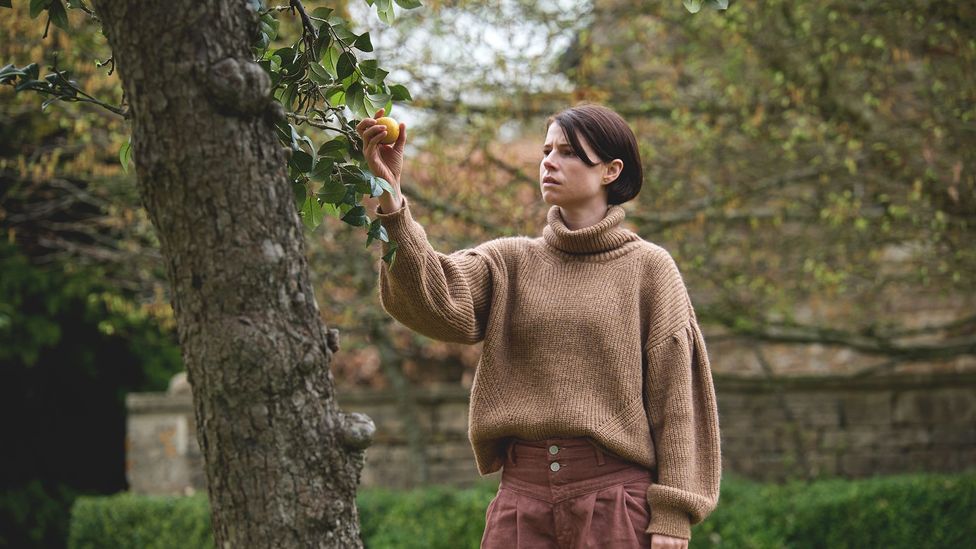
Men is the third film from Alex Garland, whose first two sci-fi films Ex_Machina and Annihilation were thoughtful, thrilling and visually interesting pieces. Garland sidesteps from sci-fi into British folk horror and this film follows a young widow, Harper (Jessie Buckley) who ventures to the Cotswolds for a well-earned break from London city life and to recover from the death of her husband, although she is terrorised by the predatory and patronising men in the village, who are all played by Rory Kinnear. 

Men’s first two acts are thrilling and Garland skilfully drip-feeds his audience details of her past trauma a piece at a time. He establishes a deeply unsettling tone and deftly ramps up the tension through Harper’s mental paranoia. The film is as much a metaphorical piece as much as it is a horror, using its frightening elements as allegories for misogyny, grieving and rebirth. Unfortunately, the film nosedives in its third act. On the plus side, there’s some suitably slimy body horror but Garland is self-indulgent and throws away any subtlety he builds in its first two acts. It just becomes rather silly and certainly not as clever as it thinks it is. 

The film is bolstered by an eery choral soundtrack from Garland regulars, Ben Salisbury and Geoff Barrow, and DOP Rob Hardy vividly captures the beauty yet foreboding nature of the Cotswolds.  Jessie Buckley’s great as the prickly Harper (despite my sniffy opinions on her past performances, especially with The Lost Daughter) and this is career best work from Rory Kinnear. Men may be Garland’s weakest film but it’s still a strong piece from the director and I’d rather a filmmaker take a risk and it not fully succeed than play it safe.

22) Hustle

Hustle doesn’t particularly stray from sports drama convention but it’s an investing and consistently entertaining drama from start to finish. After giving the performance of his career in the thoroughly unnerving Uncut Gems, Adam Sandler continues to turn his poor comedic career choices around with another excellent performance as Stanley Sugarman, a washed-up NBA scout. Juancho Hernangómez is also terrific as Cruz and is given a compelling back story for why he finds himself in the situation he is initially in at the start of the film. Both Sandler and Hernangómez share an absorbing chemistry, which makes the duo easy to root for. Of the rest of the cast, Latifah isn’t given much to work with as Sandler’s wife, and the ever-versatile Ben Foster is also short-changed as Sandler’s disparaging boss. 

21) Top Gun: Maverick

Top Gun: Maverick is the long-awaited sequel to the late Tony Scott’s 1982 original, a film which quite literally propelled Tom Cruise’s career. Very much a product of its time in its tone and treatment of women, while the action sequences are admirable and Cruise’s performance is earnest, I can’t say I’m a big advocate of the original. This sequel is directed by Joseph Kosinski, who most recently directed the excellent forest-fire action drama Only The Brave and he reunites with some of the cast and crew such as Miles Teller, Jennifer Connelly and cinematographer Claudio Miranda. 

Top Gun: Maverick is a surprisingly good film and is vastly superior to the original. While its story is familiar and fairly predictable, it is significantly more coherent and focussed with a singular narrative to achieve this specific mission. Tony Scott’s original wrangled in different directions and its climax sequence felt tacked on and unearned. The flight sequences are particularly excellent and are nail-biting in moments. It has the precision of Mission: Impossible director Christopher McQuarrie who co-writes and produces the film.

I’ve long been a critic of Tom Cruise and I’d argue he has far more misses than hits. Cruise’s performance works here as he plays an older and jaded instructor, whose ego and arrogance have been somewhat tarnished by his experiences. Miles Teller is reliably excellent as Rooster but there isn’t quite as much meat to the bone to the tumultuous relationship between him and Maverick as there could have been. 

Kosinski wisely finds the right balance between relying on nostalgia and creating an original piece. It’s not quite the action masterpiece that some are claiming it to be though – it’s not as radical a piece as George Miller’s Mad Max: Fury Road, which was essentially an entire film of rip-roaring action, and it doesn’t pack many narrative twists up its sleeve.  But it doesn’t need to be. For Top Gun: Maverick to be an improvement on the original is a miracle in and of itself and I’m glad it exists. 

20) Turing Red  

Turning Red is the latest in the Disney Pixar canon and like Soul and Luca last year, it has released straight on Disney+. Director Domee Shi’s feature-length debut is to be commended for its sheer ambition of exploring female puberty, a fairly taboo subject matter for a mainstream film, especially one that also has to appeal to younger audiences. It represents a very different affair for a Pixar film and as is typical for the animation studio, it is moving in parts. It is clearly inspired by anime with its transformative element and colour scheme, down to the extreme facial expressions of its characters. The script, co-written by Shi and Julia Cho, is smart and its characters bursting with personality. Mei is a very well written lead and is endlessly empathetic. 

Once you settle into its eclectic tone, it’s a very satisfying journey to watch unfold bolstered by its strongly written female characters. It’s not quite top-tier Pixar for me, as it isn’t quite as effortlessly charming and poignant as its best entries such as Up or Coco, but I’m very glad it exists. The film is sure to launch Domee Shi’s career and I can’t wait to see what she does next. 

19) Smile

Smile is a psychological horror written and directed by Parker Finn, in his feature-length debut. The film follows a therapist named Rose Cotter (Sosie Bacon) who starts having increasingly disturbing experiences after witnessing the unexplained suicide of a patient.

Smile is a surprisingly effective psychological horror that deftly explores the themes of trauma, grief and guilt through horror’s generic constructs. It’s not perfect – it overrelies on some classical horror tropes, particularly with its use of jump scares and there’s nothing here you’ve haven’t seen before. It’s also around 10 minutes overlong. That said, it’s impressive that it doesn’t fully reveal what is haunting Cotter right until the very end and as a result, it maintains its tension. There’s also a terrifically creepy yet awkward party and the atmosphere of the hospital Cotter works at is also well-realised. Smile is ultimately much better than it has any right to be and is thoroughly entertaining and meaningful from start to finish. I’m looking forward to seeing how Finn’s career develops. 

18) The Good Nurse

The Good Nurse is a thrilling drama based on the true story of a night nurse Amy (Jessica Chastain) who suspects her co-worker, Charlie Cullen (Eddie Redmayne) might be a serial killer. Both Chastain and Redmayne are brilliant and share a palpable chemistry together, with Redmayne particularly charismatic and chilling. Director Tobias Lindholm does an excellent job maintaining the tension throughout and the film is particularly effective as Amy tries to distance herself from Charlie after sharing quite a close and vulnerable relationship with him, prior to her accepting the insurmountable evidence against him.
17) The Batman

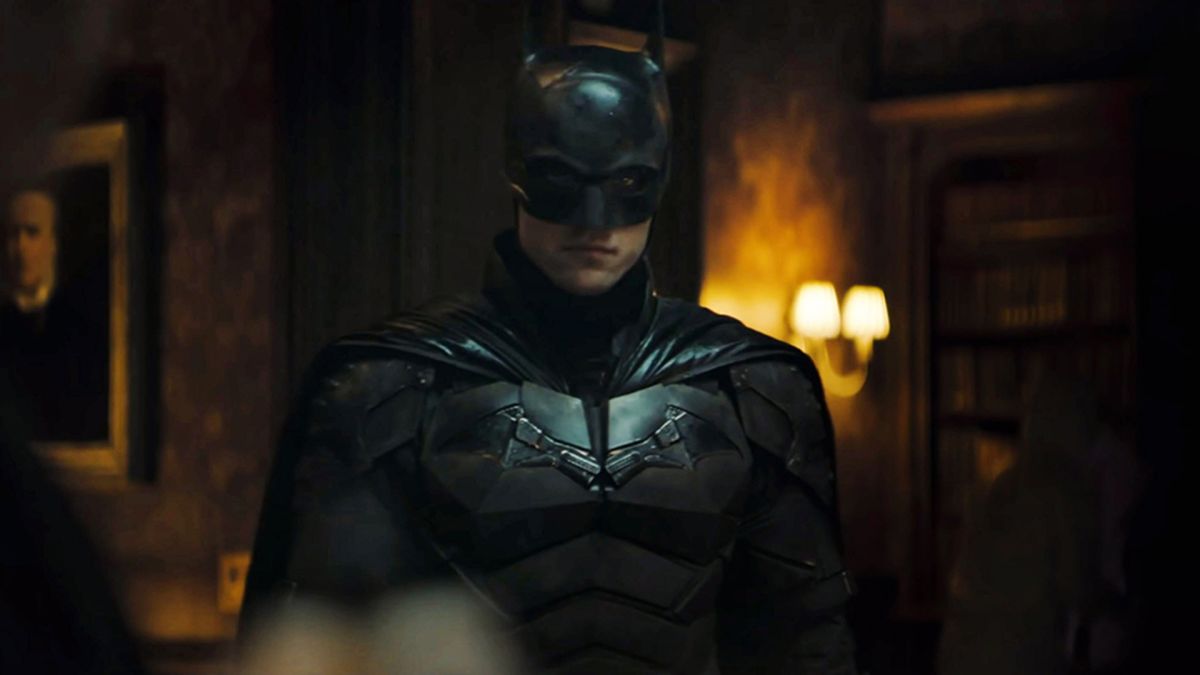
The Batman is a new rendition of the Caped Crusader by War For The Planet Of The Apes director Matt Reeves, positioned outside of the DCEU canon, and sees a younger Dark Knight (Robert Pattinson) in his second year of crimefighting and Reeves hones in on his detective skills. It is an interesting, if flawed, depiction of the Caped Crusader. Reeves’ take on the character is certainly admirable. It very much owes a debt to the Christopher Nolan and Zack Snyder aesthetic in that it is a darker and grungier interpretation. Experiencing Batman as a detective figure is refreshing. The notion of Batman providing narration is also innovative, yet uneven in that it’s not sustained throughout the film. The extended run time of 176 minutes isn’t to the film’s detriment.  It’s always promising to see a director allow a film breathe when it warrants it rather than resorting to quick cuts. 

Pattinson’s portrayal of Batman is expectedly excellent, although his Bruce Wayne needs some work. This is more a choice of the script rather than any wrongdoing by Pattinson as Bruce Wayne doesn’t receive a particularly meaningful arc so he isn’t granted the opportunity. Other highlights of the cast include Colin Farrell, who is almost unrecognisable as Oswald Cobblepot in his early Penguin days, and Jeffrey Wright is effortless as James Gordon. 

Paul Dano’s Riddler is an interesting villain and poses a genuine threat to Batman throughout much of the film but his character arc is severely let down towards the end of the film to the point where he doesn’t pose a threat and his performance borders on being laughable. 

The score by Michael Giacchino is really excellent and he establishes very memorable themes for the characters, although the score doesn’t always fit in with the scenes they are inserted in. The cinematography by Greig Fraser is beautiful, hot on the footsteps of his similarly excellent work on Dune.  

The Batman is a strong interpretation from Reeves and I’m looking forward to see where future instalments could go, although I have some reservations with the teases. However, it’s not quite the masterpiece that some have proclaimed it to be and Reeves is just not as competent a director as Nolan or even Snyder.

16) Black Panther: Wakanda Forever

After Black Panther electrified the superhero film genre, earning seven Oscar nominations and winning three, to say Wakanda Forever has its work cut out for it would be an understatement. Not least by the sudden death of its titular star, Chadwick Boseman, director Ryan Coogler had to effectively chuck out the original script and rewrite it to reframe the narrative on the character’s passing. 

The result is a significant improvement over its predecessor and Coogler has delivered an intelligent, sombre and politically charged sequel. Coogler makes a strong choice to fully explore the characters and how they react to T’Challa’s death, very much mirroring how audiences have mourned Boseman in reality, recreating a scenario we all understand. In a refreshing change of pace for Marvel and a trait that has plagued many of its films, Coogler retains the sombre tone throughout and doesn’t resort to cheap and disposable quips.

The performances are uniformly excellent, with Letitia Wright, Angela Bassett and Danai Gurira the highlights, as well as Tenoch Huerta’s fiersome yet empathetic villain, Namor. You can really empathise with his position and motivation and this makes him one of Marvel’s best villains. 

The action sequences are much better this time around and the third act doesn’t succumb to the usual mindless CGI-fest many comic-book films descend into. The film is crisply shot by Autumn Durald Arkapaw and the score by Ludwig Göransson is once again excellent. 

The extended 161 minute run time wasn’t an issue for me and the film kept me engaged throughout. This is much more of a slow-burn, which I appreciated, and Coogler deftly balances a grim tone with the idea of future hope and prosperity for the fictional nation of Wakanda. 

15) Prey

Prey is an excellent prequel and is just the gut-punch The Predator series needs. 10 Cloverfield Lane director Dan Trachtenberg puts his own stamp on the material and the film features some terrific performance among its almost exclusively Native American cast. The very fact Trachtenberg has opted to centre the film around an underrepresented community is to be commended, too, with the only exception to the rule being a group of French fur trappers Naru encounters. Amber Midthunder makes for a formidable screen presence and it’s great the film focusses on her humanity. She is portrayed as both a skilled hunter but also an individual who makes mistakes. Trachtenberg’s mirroring of smaller animals hunting each other and the Predator and anything that steps in its way is also an excellent creative stroke.

14) Terrifier 2

Damian Leone’s blood-soaked sequel is a slasher epic running 138 minutes and received a fair amount of media attention for its gory murders, with reports of some viewers vomiting and fainting. Not only does Terrifier 2 lives up to its gory hype but Leone has also crafted a gleefully riveting and original horror epic. Leone has demonstrably grown as a filmmaker and although there are some holes in the narrative, the time taken to develop the characters is a welcome one and sets the stage for events to unfold. 

I particularly appreciated the hallucinatory, dream-like elements, which afford a tangible scope to the story. The practical effects and make-up are brilliant and although it’s a bloody film, there is a sardonic edge to the kills. Terrifier 2 reaches creaky territory in its conclusion, where it starts to introduce some fantastical elements. While I got on board with it and appreciated the over-the-top execution, others understandably won’t. 

Terrifier 2 is an excellent slasher that outdoes its predecessor in pretty much every single way, other than the gnarliest kill which I think still belongs to the first film. It’s superbly directed, the increased character development compliments the gore and Leone crafts some arresting images. If Leone proceeds with a Terrifier 3, which an ambitious mid-credits scene alludes to, he has his work cut out to create a sequel that can better this. 

13) The Forgiven

The Forgiven sees John Michael McDonagh mostly back on form after the disappointing War On Everyone, although it’s not a masterpiece like his first two films were. The film is uneven and after the opening sequence, it takes a good twenty minutes or so to find its stride. At first, I thought McDonagh had made a straight-faced adaptation without his trademark black humour but thankfully, there’s plenty of that to be found once the film finds its feet. McDonagh balances this satisfying mean-spiritedness with sequences of profundity. Like the rest of his filmography, it’s a cathartic experience and the narrative leads you down some unexpected but satisfying roads.

Ralph Fiennes is excellent in the lead role, a tired and pitiful individual with a pessimistic outlook on life and McDonagh’s characterisation of him is excellent. He’s given some cracking lines in the script, especially one sequence where he is riding a camel in the desert. Fiennes balances this initial pessimism with an individual who has to do his penance and accept guilt. 
12) Nope

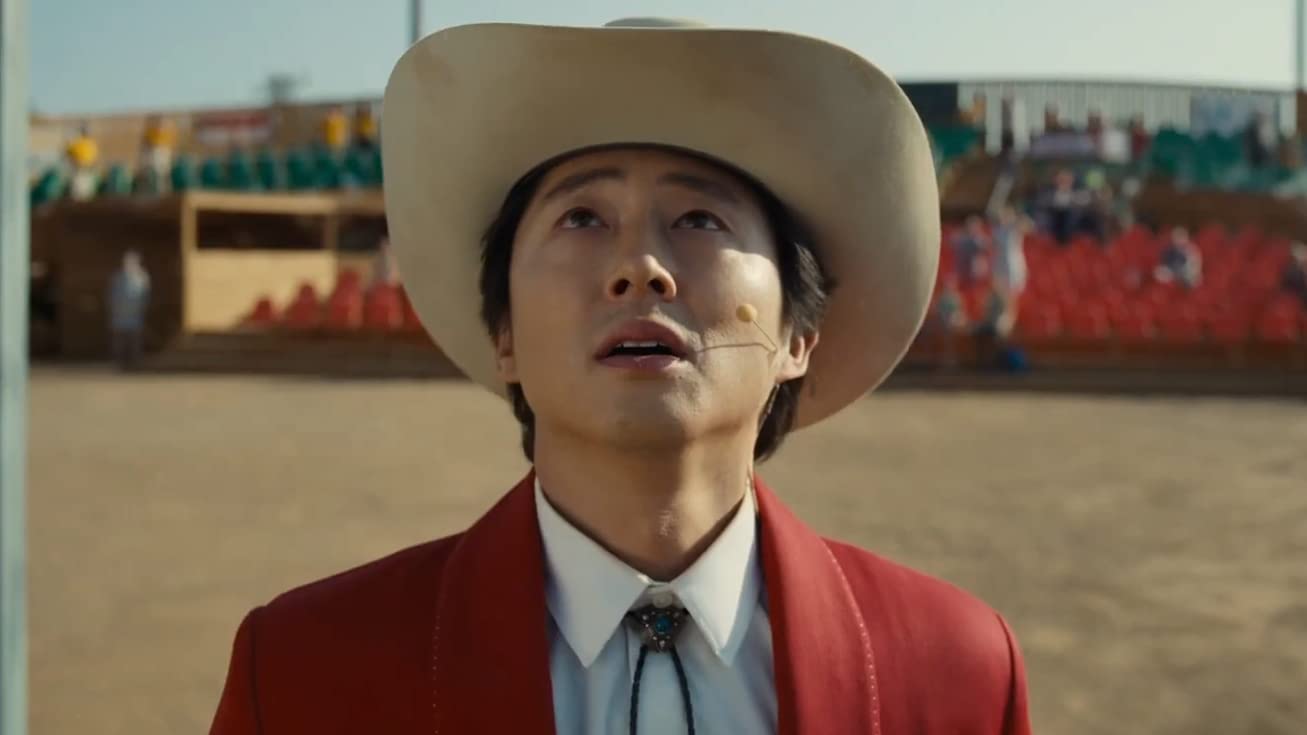
Nope is an original but flawed third film from Jordan Peele after Get Out and Us. It’s a multi-layered story that explores themes such as spectacle, the media, fantasy and the art of filmmaking and despite its shortcomings, it’s subversive and thrillingly original. Daniel Kaluuya is reliably great as an introverted but principled rancher. The score by Michael Abels is typically strong, ranging from other-worldly foreboding horror riffs to Western infusions.  The film is beautifully shot by Hoyte van Hoytema, who captures the spectacle of the wide vistas, through to immersive blood-drenched, nighttime horror. 

After a first viewing, you’ll need to ponder the various meanings and storyline and it’s a film that’s designed to be rewatched. Although it doesn’t flow quite as succinctly as Peele’s other films, Nope‘s many arresting images have stuck with me and it’s another success for the filmmaker.

11) Old Henry

Old Henry is a thrilling Western with a particularly satisfying final act with an inspired performance from Tim Blake Nelson. Nelson plays the titular character, a widower whose quite clearly experienced a violent past. He lives with his son, Wyatt (Gavin Lewis) on a farm in Oklahoma, who he is is very protective of. 

Directed by Potsy Ponciroli in what is his second feature-length film after the little known Super Zeroes in 2012, Old Henry keeps its cards close to its chest in its first act. But when it gets going, it’s a deeply satisfying romp with an elegiac quality. While it may seem like a fairly typical (but well done) Western, its narrative is elevated by a character revelation in the final act. There are some thrilling action sequences, particularly a chase within some reeds and a customary final shoot-out.  The film is also beautifully shot by director of photography, John Matysiak.


So there we go, numbers 20 down to 11. Stay tuned for the Top Ten in a separate post…


What are your thoughts? Let me know in the comments or tweet @TheFilmMeister
Cocaine Bear (Review)

Uncategorized
⭐⭐⭐ (Good)

Director: Elizabeth Banks
Starring: Keri Russell, O’Shea Jackson Jr, Christian Convery, Alden Ehrenreich, Brooklynn Prince, Isiah Whitlock Jr, Margo Martindale, Ray Liotta
Certificate: 15
Run Time: 95 mins

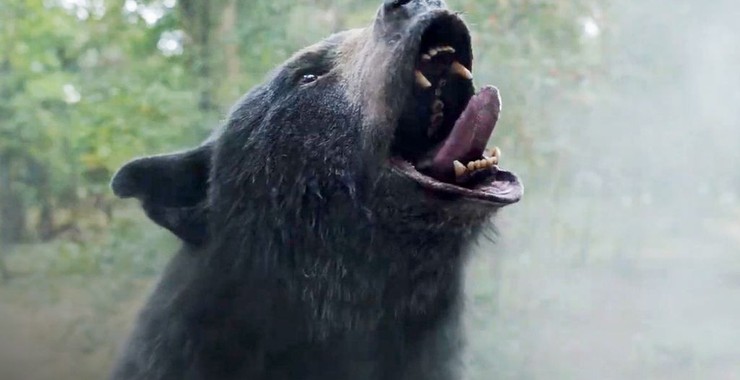
Cocaine Bear is the latest from actor-director Elizabeth Banks and is inspired by the outrageous true story of a black bear that died from an overdose of the fateful narcotic in 1985 at the Chattahoochee National Forest. However, Banks takes some liberties and allows the bear to go on a murderous spree. In reality, the events between the bear ingesting cocaine after it was dumped from an aeroplane and dying are unknown. Still, killer animal horror films can be immensely fun when done well and Cocaine Bear has a particularly ridiculous premise. 

Cocaine Bear does what it says on the tin and is generally a fun ride from start to finish. As you’d expect, it’s fairly disposable and not profound in the slightest. The film reasonably balances its horror and comedy, although it’s never funny or scary enough as it could be. It’s well-paced and  doesn’t outstay its welcome at a brisk 95 minutes. Banks and screenwriter Jimmy Warden, do a solid job at establishing and developing a collection of human characters for the bear to interact with. 

Keri Russell is the closest the film has to a lead, playing a nurse called Sari. Russell’s had a varied career, a career low being a terrible supporting performance in Dawn of the Planet of the Apes to making a reasonable lead in Antlers. This may be her best performance yet and Russell has sound comedic timing and clearly embraces the ridiculousness of the film. O’Shea Jackson Jr is a highlight, a crony of Ray Liotta’s (in one of his final roles) drug kingpin who sends him to the national park to try and retrieve the remaining cocaine. The Florida Project’s Brooklynn Prince also impresses with a committed performance as Sari’s daughter and Isiah Whitlock Jr gets some of the best lines as a local detective. Finally, Margo Martindale is brilliant as an inept park ranger.

The film is well shot by Candyman’s John Guleserian and generally has high production values. Much of the budget has gone into creating a CGI bear, with Lord of the Rings and Avatar: The Way of Waters Wētā being the visual effects company responsible.

Cocaine Bear is ultimately a fun ride from start to finish that although isn’t as frightening or as comedic as it could be, is a more than passable enough way to spend 95 minutes.  

⭐⭐⭐ (Good)

Ant-Man and the Wasp: Quantumania (Review)

Uncategorized
⭐⭐⭐ (Good)

Director: Peyton Reed
Starring: Paul Rudd, Evangeline Lilly, Jonathan Majors, Kathryn Newton, David Dastmalchian, Katy O’Brian, William Jackson Harper, Bill Murray, Michelle Pfeiffer, Corey Stoll, Michael Douglas
Certificate: 12A
Run Time: 124 mins

Ant-Man and the Wasp: Quantumania is the third entry in the series and the film to kickstart the Marvel Cinematic Universe’s Phase 5. Both Ant-Man and Ant-Man and the Wasp rank among Marvel’s very best – refreshingly frothy palette cleansers from some of Marvel’s heavier films bursting with energy and heart. Director Peyton Reed is once again in the director’s chair and this sequel picks up after the events of Avengers: Endgame

Scott Lang (Paul Rudd) has become a successful memoirist and lives happily with Hope van Dyne (Evangeline Lilly). His relationship with his political activist daughter Cassie (now played Kathryn Newton replacing Abby Ryder Fortson and Emma Fuhrmann) is strained. When the trio visit each other, along with Hope’s parents, Hank Pym (Michael Douglas) and Janet (Michelle Pfeiffer), Cassie reveals she’s been working on a device that can establish contact with the Quantum Realm, a subatomic universe where space and time don’t exist. During her demonstration, things go awry and the quintet are sucked into the Quantum Realm where they face Kang the Conqueror (Jonathan Majors). 

Ant-Man and the Wasp: Quantumania performs a very different function to its predecessors in that it is not the palette cleanser to other Marvel entries. Instead, it needs to introduce Kang, the big bad for Marvel’s foreseeable future. Unfortunately, compared to its predecessors, the film is disappointing but it’s still a perfectly serviceable entry. 

Starting with the positives, the cast are excellent and the chemistry shared between Lang and his daughter is admirable, although not as heartfelt as in previous films. Paul Rudd effortlessly carries the film and although Lily and Douglas’ characters don’t receive a lot of development, they still make enough of an impression. Although a brief performance, Bill Murray’s performance is fun and William Jackson Harper is great as the telepath Quaz. 

Jonathan Majors is by far and away the standout as Kang, a cool and calculated villain with oodles of charisma and intelligence. Provided the films he features in are of high quality, Kang will undoubtedly prove to be a Marvel big-bad as effective as Josh Brolin’s Thanos in Avengers: Infinity War and Endgame

Outside of the fun performances, the film unfortunately has an episodic quality to it, akin to watching a Saturday morning television show. Moving the story away from Earth to the Quantum Realm also lowers the film’s quality. The first two films excelled with their innovative action sequences and their manipulation of size and spectacle, whereas this disappointingly doesn’t. Most distractingly, the Quantum Realm is not well-realised. There is an unnerving amount of CGI and the film is visually drab. Even the score by Christophe Beck isn’t particularly memorable and Bill Pope’s cinematography is surprisingly anonymous considering his filmography, likely drowned out by the distracting CGI. 

Ant-Man and the Wasp: Quantumania is far from Marvel’s best and suffers from poor visual effects and the filmmakers neglecting to play to the character’s strengths. Still, it’s not as poor as some have made it out to be and it’s worth watching for Majors’ charismatic performance alone. While Ant-Man and the Wasp: Quantumania is fun in the moment, it’s ultimately sadly rather disposable. 

⭐⭐⭐ (Good)

Knock At The Cabin (Review)

Uncategorized
⭐⭐⭐⭐ (Excellent)

Director: M. Night Shyamalan
Starring: Dave Bautista, Jonathan Groff, Ben Aldridge, Nikki Amuka-Bird, Kristen Cui, Abby Quinn, Rupert Grint
Certificate: 15
Run Time: 100 mins

Knock At The Cabin is the latest by M. Night Shyamalan, whose once tarnished career is happily back on an uphill trajectory. A high-concept apocalyptic horror adapted from a novel by Paul G. Tremblay, the film follows a family of three on holiday in a remote cabin. Seven-year-old Wen (Kristen Cui) is catching grasshoppers in the idyllic woodland surrounding the cabin when she is approached by a stranger Leonard (Dave Bautista) who tries to befriend her. It’s unclear whether Leonard is a trustworthy or unsavoury character until three other people holding makeshift weapons enter the picture. Wen and her fathers, the calm Eric (Jonathan Groff) and fair but short-tempered Andrew (Ben Aldridge) are suddenly held hostage by the group. They demand the family sacrifice one of their own to prevent an apocalypse. 

Knock At The Cabin is another excellent thriller from Shyamalan – it’s a taut, intense ride while also being thought-provoking. This is not the first time the director’s explored the end of the world and this is a significant step-up from both After Earth and The Happening. Although the premise plays to Shyamalan’s strengths, as you’d expect he doesn’t do things by the book. The film does an excellent job of leaving you guessing the fanatical group’s motive – is the world really about to end? Are they telling the truth or are they suffering from some kind of psychosis?

Shyamalan really makes the most of the mostly single location – the film doesn’t feel stagey and it’s beautifully shot by Jarin Blaschke, collaborating with Lowell A. Meyer. Shyamalan has said that Blaschke is responsible for the interior shots, with Meyer shooting the exteriors. The film has an earthy, biblical aesthetic on the outside and Blaschke prioritises natural light in the cabin. Mainstream newcomer Herdis Stefansdottir’s score is also very effective at creating a sense of foreboding and full of moody portent. 

The cast are uniformly excellent. This may well be Dave Bautista’s best work yet, who is fantastic as the hulking yet polite Leonard. Kristen Cui is extraordinary as the seven year old, deftly balancing the line between the sponge-like brain of a child soaking her surroundings while having to face sheer horror. Ben Aldridge also makes quite the impression as Andrew, with a reason behind his seemingly short fuse and Abby Quinn is the highlight of Leonard’s supporting trio. 

I wish Knock At The Cabin had a little more ambiguity though. Films such as 10 Cloverfield Lane, for example, take longer to reveal their hand and better develop the ensemble. A slightly longer run time probably wouldn’t have hurt the breakneck pacing of this film to care for the characters more and Shyamalan shouldn’t have felt the need to answer almost every question with a definitive answer. 

Despite tackling uncomfortable subject matter, the film is surprisingly mostly bloodless. Although showing isn’t always the best par for the course, arguably the film would have been better for it to burn a horrific image into your mind. Perhaps Shyamalan did this to symbolise the camera as being Wen’s point of view, given her eyes are covered during horrific acts.

Knock At The Cabin is ultimately another success story for Shyamalan as he continues to right the wrongs of his previous career slump. This is a chilling and intense ride from start to finish and although it’s not perfect, Shyamalan’s ambition, the committed performances and the visual execution of the film are very admirable. This is a strong film to start 2023 on. 

⭐⭐⭐⭐ (Excellent)

The Whale (Review)

Uncategorized
⭐⭐⭐⭐ (Excellent)

Director: Darren Aronofsky
Starring: Brendan Fraser, Sadie Sink, Hong Chau, Ty Simpkins, Samantha Morton
Certificate: 15
Run Time: 117 mins

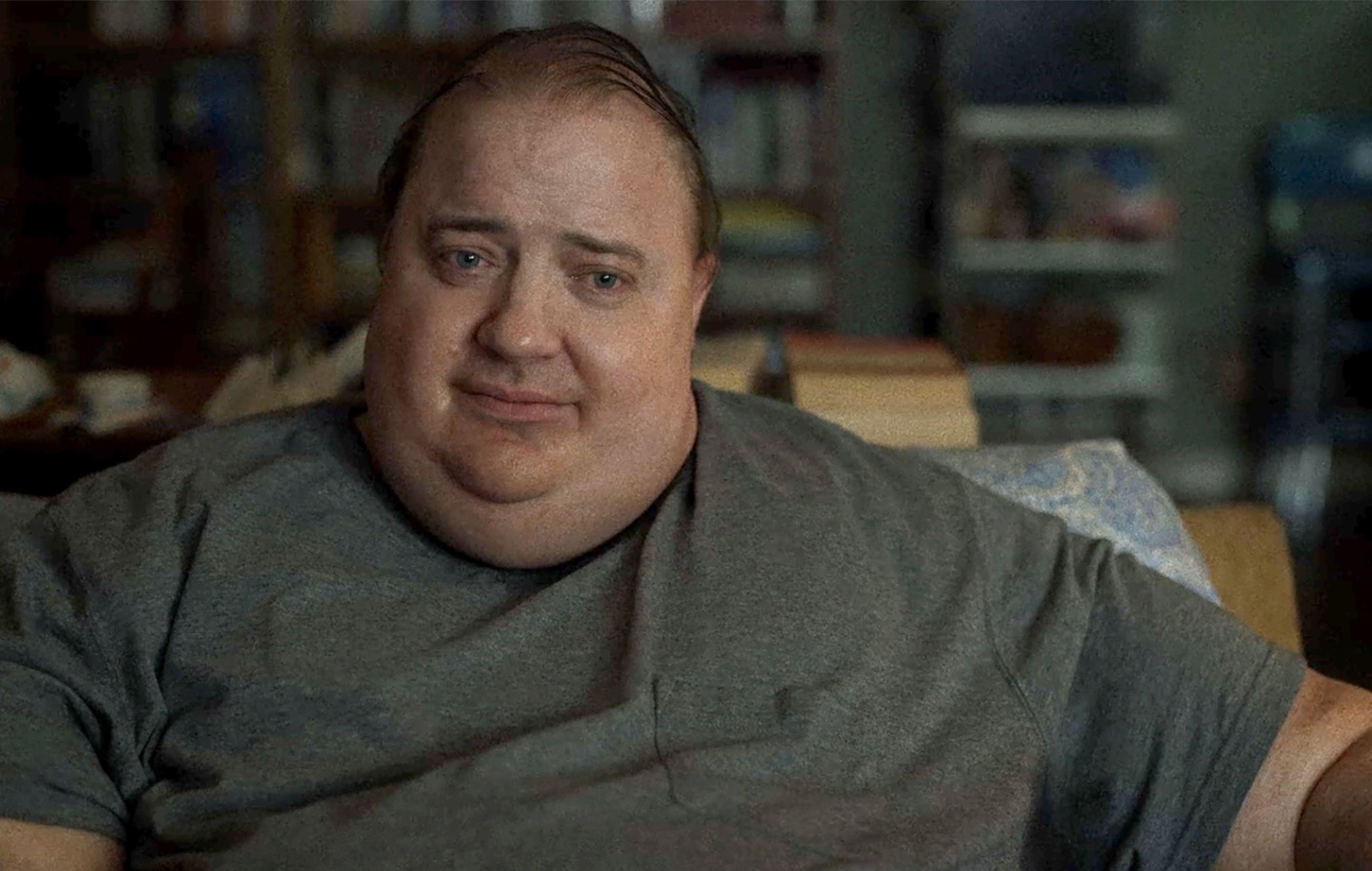
The Whale is the latest by Darren Aronofsky, his first film since mother! which proved divisive. Aronofsky is one of my favourite directors, his films are always ambitious, often exploring themes of religion and the extremity of humanity. The Whale is an adaptation of Samuel D. Hunter’s 2012 play and follows a morbidly obese English teacher, Charlie (Brendan Fraser). He has eaten himself to this state following the suicide of his partner. Charlie is on the brink of congestive heart failure and refuses to go to hospital. He is cared for by his friend, Liz (Hong Chau) and wants to restore his relationship with his prickly teenage daughter Ellie (Sadie Sink). 

The Whale is an emotionally powerful experience with a terrific performance from Brendan Fraser. Aronofsky beautifully explores the relationship between a father and his daughter and there are many touching moments focussing on Charlie’s outlook of life. I walked out of the film grateful and determined to further my relations with others and to always be positive. Yet, the film deftly conveys Charlie’s pain and hopelessness and it becomes inevitable early on that he is on a path of self-destruction. The way in which Aronofsky portrays binge-eating is particularly harrowing – like Requiem For A Dream will make you never want to touch drugs, The Whale is the equivalent for food. It wouldn’t be an Aronofsky film without the exploration of religion and the events on-screen are interwoven with religious parallels and texts, which lend a pathos to Charlie’s situation. 

However, The Whale isn’t Aronofsky’s best work. The film is limited by the fact it’s mostly set in one location and that gives the film a stagey quality. In some ways, the material almost seems as if it is beneath Aronofsky but he manages to really elevate what could have been a pedestrian adaptation. 

Fraser is terrific and fully deserving of the Awards attention. He deftly balances the positivity Charlie has to others, such as encouraging characters to fulfil their ambitions, and his dark, depressed and reclusive internal thoughts and outlook on his life. Charlie is an individual at the end of the line, unable to walk unaided and sweats just shifting his mass on the sofa. 

Hong Chau also puts in a barnstorming supporting performance as Liz, who has an honest and stern personality but equally struggles not to feed Charlie’s bad habits. Sadie Sink is suitably spiky as Charlie’s daughter and her performance is devastating the way in which she treats and speaks to her father. Ty Simpkins is also unrecognisable as a missionary and gives an earnest performance, an impressive transformation from some of his childhood roles such as Insidious, Iron Man 3 or Jurassic World.

Matthew Libatique’s cold and claustrophobic cinematography is excellent and he makes the most out of the single location. The film has a suitably frosty colour palette. The Whale represents the second time Aronofsky hasn’t enlisted Clint Mansell’s services for the score, which is instead provided by Rob Simonsen. Simonsen’s score is magnificent and particularly memorable, skilfully balancing happiness, melancholia and pain.   

Although The Whale overall can’t quite break free of its stage-like quality, it’s still an emotionally thrilling rollercoaster with an unforgettable performance from Brendan Fraser. Aronofsky’s fingerprints are all over the film and there’s plenty of meat on the bone to the story. I came out deeply moved and although it would be very easy to label the film as emotionally manipulative, I found The Whale to have a satisfying weight and outside of Fraser’s performance, it stands up on its own as an engaging piece of cinema. 

⭐⭐⭐⭐ (Excellent)

The Fabelmans (Review)

Uncategorized
⭐⭐⭐⭐ (Excellent)

Director: Steven Spielberg
Starring: Michelle Williams, Paul Dano, Seth Rogen, Gabriel LaBelle, Judd Hirsch
Certificate: 12A
Run Time: 151 mins

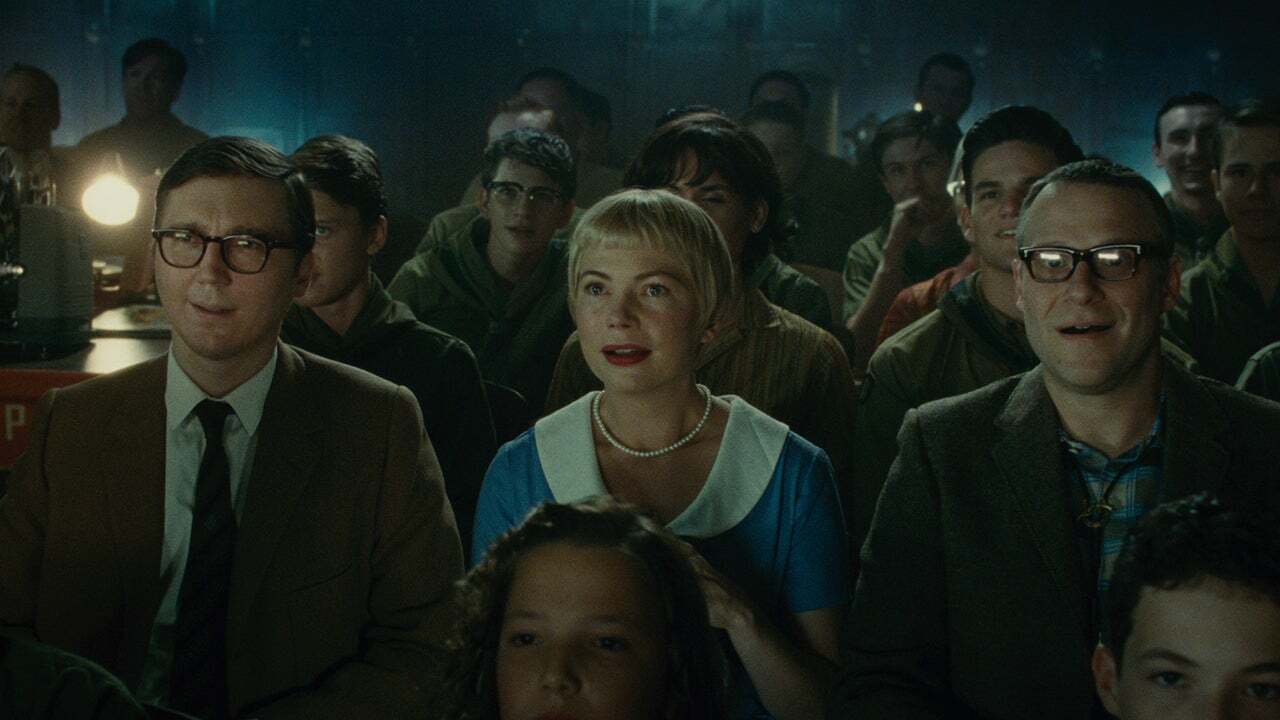
The Fabelmans is a coming-of-age drama directed and co-written by Steven Spielberg, representing a passion project for the revered filmmaker. The film is a semi-autobiographical tale loosely based on Spielberg’s adolescence and burgeoning career. Sammy Fabelman (Gabriel LaBelle and Mateo Zoryan Francis-DeFord in his younger years) is taken to see his first film at the cinema, which has a traumatic yet extraordinary effect on his childhood. Sammy, his mother Mitzi (Michelle Williams) and and three sisters regularly relocate around the United States due to his father, Burt’s (Paul Dano) work. As Sammy grows up, so does his talent and hunger for filmmaking, and not always to his benefit. 

The Fabelmans isn’t quite the masterpiece some have professed it to be but it’s certainly a profound and candid effort. If you’re a film fan, this semi-autobiographical tale will definitely resonate in places. Sammy’s love of the medium sometimes usurp his commitments to his family and relationships, and Spielberg deftly explores how filmmaking can consume an individual and how one needs to be reminded that your close ones are more important. It’s beautifully shot by Spielberg-regular Janusz Kaminski, although the film is a tad overlong. That said, it really nails its last half an hour or so.

Gabriel LaBelle’s is excellent as the older Sammy in what his highest profile role to date, following a small role in The Predator. Michelle Williams also makes quite the impression as Mitzi, who’s stuck between a rock and a hard place in her love life. Paul Dano is the standout, however, a scene late in the film where he calms Sammy after he experiences a panic attack is easily some of the best acting of the year.  

The Fabelmans is a tender reminiscence of Spielberg’s childhood and although it would benefit from tighter pacing, it’s a warm and personal experience with some excellent performances. 

⭐⭐⭐⭐ (Excellent)

Babylon (Review)

Uncategorized
⭐⭐⭐⭐ (Excellent)

Director: Damien Chazelle
Starring: Brad Pitt, Margot Robbie, Diego Calva, Jean Smart, Jovan Adepo, Li Jun Li
Certificate: 18
Run Time: 189 mins

Babylon is an epic comedy directed by Damien Chazelle that chronicles Hollywood’s transition from silent to sound films in the late 1920s. I’ve had a mixed experience with Chazelle’s filmography. Whiplash is one of my favourite films of the 2010s, I couldn’t understand the praise for La La Land and I admired but didn’t love First Man. Babylon largely follows three leads. Brad Pitt plays Jack Conrad, a successful silent film star and Margot Robbie plays Nellie LaRoy, an aspiring actress desperate to make her mark in Hollywood. Diego Calva plays Manuel ‘Manny’ Torres, a Mexican immigrant who is happy to work on any job in the film industry. Throughout the film, the characters journeys interweave, mere cogs in the Hollywood machine. 

Babylon is a return to form for Chazelle and is an ambitious, heady study of the history of cinema. It quite literally details the blood, sweat, tears and sheer luck needed to succeed in Hollywood and the strenuous work required to even film a single scene. Chazelle’s approach is unapologetic –  this is a sprawling, loud film that revels in excess be it through drink, drugs or discharging of bodily fluids. But it’s also regularly profound with characters wholly aware their Hollywood career has an expiry date. Although Chazelle’s view of the Hollywood studio system is critical, his passion for film as a medium is evident throughout this three hour plus extravaganza. 

The set pieces are lavish and memorable, Baz Luhrmann-esque in their construction and colour palette. The film is sumptuously shot by Chazelle regular, Linus Sandgren and the operatic, jazz-infused score by Justin Hurwitz is terrific. Chazelle also wrote the script, which is generally smart and sharp, although the humour doesn’t always work. 

Brad Pitt clearly enjoyed his time on Quentin Tarantino’s Once Upon A Time… In Hollywood and is reliably excellent in the lead role. He balances humour with melancholia beautifully, although his character is very different from his Oscar-winning film. Margot Robbie, who is also a OUATIH veteran also gives a strong performance, LaRoy desperate for stardom at any cost will do anything to stand out in the crowd, such as publicly fighting a rattlesnake. Babylon is Diego Calva’s highest-profile film to date and he is surely destined for great things. His performance is effortless, from Manny starting the film transporting an elephant to a party to having a sizeable influence on Hollywood productions. 

There’s also some excellent performances from the supporting cast. Overlord’s Jovan Adepo shines as a jazz trumpeter and Li Jun Li as a Chinese-American lesbian cabaret singer. Lukas Haas and Flea are other highlights, as is Tobey Maguire as an eccentric gangster in a jarring but chilling sequence. Even Eric Roberts is decent as LaRoy’s bumbling idiot of a father, his first good role in years. 

Babylon aims high and ultimately succeeds. The mixed reviews are understandable and coming into the film with an appreciation and knowledge of the Hollywood studio system will likely make for more of a profound experience. Chazelle is back at the top of his game – this is a film that only an auteur director would be allowed to make. Babylon is an unapologetic, sugar-rush of an experience and I hope the mixed reception doesn’t discourage Chazelle from taking ambitious risks. 

⭐⭐⭐⭐ (Excellent)

The Pale Blue Eye (Review)

Review, Uncategorized
⭐⭐⭐ (Good)

Director: Scott Cooper
Starring: Christian Bale, Harry Melling, Gillian Anderson, Lucy Boynton, Robert Duvall, Charlotte Gainsbourg, Toby Jones, Harry Lawtey, Simon McBurney, Timothy Spall
Certificate: 15
Run Time: 128 mins

The Pale Blue Eye is the latest by director Scott Cooper, who has proven reliable in a variety of genres, crafting rich, thoughtful films mostly shared by a theme of revenge. The film is an adaptation of the 2003 novel of the same name which sees a young Edgar Allen Poe as a cadet.

Cooper reunites with his Out of the Furnace and Hostiles lead Christian Bale, who plays Augustus Landor. Landor is a retired detective who likes his drink and is asked to investigate the murder of a cadet at the United States Military Academy at West Point, New York. The cadet has been hanged and his heart cut out, not too dissimilar from Poe’s The Telltale Heart. During Landor’s investigation, he befriends Poe (Harry Melling), who proves a dab hand at solving puzzles and mysteries. Several more grisly murders suggest the work of a serial killer. 

The Pale Blue Eye has some fine moments but it could have been so much more. At least for the film’s first hour, the mystery is reasonably interesting, although never gripping. Visually, it’s rich in atmosphere, evoking a chilling feeling from the snowy and frostbitten landscapes captured. Despite a handful of somewhat energetic set-pieces, the second half loses its way. A final act twist reframes the preceding events in a new light, although the execution lacks pathos. 

Unfortunately, this is Cooper’s weakest film. The mystery is not particularly involving and the film feels sluggish at times. Even on a second watch, armed with the knowledge of the final twist, the film is just not that interesting. This is especially surprising as Cooper’s most recent (and underrated) film, Antlers, proved he could flourish in the horror genre. With The Pale Blue Eye naturally containing horror elements from its subject matter, there’s no real flair or bite to any of the brutal murders or discoveries the characters make in their investigations. 

Still, Bale makes for a reliable lead, injecting much-needed intensity but his character isn’t given all that much development and his accent wanders occasionally too. Melling is terrific as Poe, offering oodles of range and charisma, and this film hopefully proves to be the career propulsion he deserves. 

Cooper has assembled a buffet of thespian British actors playing Americans, such as Toby Jones, Timothy Spall and Simon McBurney who are all up to the challenge. Robert Duvall also features briefly and commands the screen in his two scenes. Surprisingly, Gillian Anderson plays a rather important role and is terrible with a high-pitched accent with a mouselike demeanour. 

Cooper reunites with cinematographer Masanobu Takayanagi, who shot Out of the Furnace, Black Mass and Hostiles. Although not quite as clinical as some of his other work, the film is shot beautifully and Takayanagi takes advantage of the cold, desolate setting and relishes the use of shadows. The score by Howard Shore is serviceable but could have been so much more. 

Ultimately, The Pale Blue Eye isn’t the slam dunk it should have been, considering the host of talent involved. It needed more energy and a rethink as to how the story could have been gripping. Despite its numerous flaws, this is still a handsome film with some strong visuals and performances. 

⭐⭐⭐ (Good)

Glass Onion: A Knives Out Story (Review)

Uncategorized
⭐⭐⭐ (Good)

Director: Rian Johnson
Starring: Daniel Craig, Edward Norton, Janelle Monáe, Kathryn Hahn, Leslie Odom Jr, Jessica Henwick, Madelyn Cline, Kate Hudson, Dave Bautista
Certificate: 12A
Run Time: 139 mins

Glass Onion: A Knives Out Story is a murder mystery sequel to 2019’s Knives Out and once again stars Daniel Craig as southern-fried detective Benoit Blanc. Knives Out attracted a very positive reception, performing well at the box office and Netflix quickly paid close to $500 million for the rights to churn out two standalone sequels. This is the first of them and sees Craig reunite with Star Wars: The Last Jedi director Rian Johnson. I wasn’t as hot on Knives Out as others and found its second half frustrating and its final twist obvious. 

Craig’s detective is the only common denominator between the two films, with Johnson assembling a totally fresh ensemble cast so you don’t need to have seen Knives Out to enjoy Glass Onion. The mystery is set on a lavish, private Greek island this time around, home to tech billionaire Miles Bron (Edward Norton). He has invited Blanc, alongside with some of his friends to take part in a murder mystery-themed weekend. This expectedly takes a dark turn to reality and Blanc gets to utilise his sleuthing skills. Johnson sets the film in the height of the coronavirus pandemic and Bron bears many uncomfortable similarities to Elon Musk.

Glass Onion: A Knives Out Story showcases both Rian Johnson’s best and worst qualities as a director. There’s a lot of fun to be had and Johnson takes some risks, although some aspects of the storytelling are rather clumsy. On a first watch, the first hour seems rather insignificant but Johnson re-contextualises its events in the second half. Its tone is rather boisterous and I didn’t particularly resonate with any of the contemporary quips. Generally, there’s an empty and vapid quality to Glass Onion, despite being lushly shot by Johnson-regular Steve Yedlin.

There’s some fun performances – Daniel Craig is great again as Benoit Blanc and of the rest of the cast, Janelle Monáe and Dave Bautista are the other highlights. Monáe’s given quite a meaty role and Bautista’s men’s rights YouTuber plays to the actor’s physical strengths. There’s a fun cameo too from Ethan Hawke, which I had hoped would amount to more. 

Glass Onion: A Knives Out Story isn’t as much fun as its predecessor, which I also found to be overrated. That said, it’s a diverting enough escape this Christmas and I admire Johnson’s ambition to attempt to further deconstruct the murder mystery genre, even if the finished product isn’t particularly accomplished. 

⭐⭐⭐ (Good)

Avatar: The Way Of Water (Review)

Uncategorized
⭐⭐ (Poor)

Director: James Cameron
Starring: Sam Worthington, Zoë Saldaña, Sigourney Weaver, Stephen Lang, Kate Winslet, Cliff Curtis
Certificate: 12A
Run Time: 192 mins

Avatar: The Way of Water is the long-awaited sequel to Avatar, which set the box office charts alight becoming the highest grossing film of all time. It’s also director James Cameron’s first film since the 2009 original and he plans on releasing three further sequels. Although Avatar opened to a relatively strong critical reception and was technologically impressive for its time, it’s fair to say the film is rather lacking in the story department. Despite finding it overrated, Cameron undeniably directs the film with flair and at least in the first half of the film, his exploration of the human to avatar body experience is interesting. 

Avatar: The Way of Water relocates the action from the forest to the water. Jake Sully (Sam Worthington), his wife Neytiri (Zoe Saldana) and family come under threat from humanity after living peacefully with and leading the Na’vi. They have no option but to relocate to Pandora’s coast where the Metkayina community give them refuge. There, they must the learn the way of the water (yes, really). 

One of the reasons why the film has taken thirteen years to reach the screen is due to the complex nature of filming the cast underwater in performance capture. With a staggering estimated budget of $350 – 460 million, does Cameron’s sequel right the wrongs of its predecessor when it comes to story while blending impressive visual effects?  

Unfortunately, Avatar: The Way of Water is a severe let-down and sadly builds upon the flaws of its predecessor. Although there’s clearly a lot of visual creativity, surprisingly there isn’t a single memorable shot in the film. This sequel essentially repeats the original’s story but transposes it to a new environment. Whilst a lazy route to take, the crucial aspect of a human piloting an avatar body is missing this time around which is the lynchpin the first film had to its enjoyment. There’s murmurs of Cameron perhaps trying to explore interesting themes, such as the decline of the world’s oceans as a result of global warming and mass farming, but they’re all watered down by the film’s other flaws.

The script is particularly poor, with Cameron regularly resorting to characters using 80’s slang like ‘cuz’ or ‘bro’ to communicate with each other or shouting “Woohoo!” in sequences that are designed to excite. Surely cinema is passed this? The action sequences are on the whole underwhelming, with characters constantly getting captured.

Surprisingly, both Sully and Neytiri have next-to-no character development this time around. In fact, this is symptomatic across the board. There’s barely any meat to the bone on any of the couple’s children and none of the new characters are memorable. Both Cliff Curtis and Kate Winslet have little to do, despite high-profile casting. Sigourney Weaver returns in a new role as Sully and Neytiri’s adopted daughter, mothered by Weaver’s scientist in the first film. It’s a staggeringly poor performance and the character is simply incredibly annoying and unreliable.

Arguably, it is Stephen Lang’s returning villain that (but surely unintentionally) gets the most meaningful arc. On that note, there’s always a problem of bringing back characters believed to be dead as it lessens the stakes (not that there were many to start with).  

The problems of the film are further exacerbated by the fact it’s 192 minutes long. Cameron could have easily told this story in a more watertight 2 hours. It’s unrelentingly long and it goes nowhere. The third act climactic fight takes forever to finish and the film takes an age to end. 

Simon Franglen replaces the late James Horner for the score and it also isn’t particularly memorable, Franglen simply choosing to ape Horner’s work rather than develop it. 

For some, Avatar: The Way Of Water may be visually exciting but it’s a thunderously disappointing sequel that doubles down on the problems of its predecessor. It’s a chore to sit through as the simplistic story doesn’t warrant the extended running time and there’s next to no character development. Audiences may have been tempted back for this sequel to experience what they’d believe would be a visual extravaganza and it will be interesting if the turn-out will be quite as impressive for the third film, given this film’s flaws. 

⭐⭐ (Poor)