Best Films of 2024 (10-1)

Rankings, Year In Film

This is the second of two posts detailing my top 20 films of 2024. I previously ran you through my best films of 2024 (20-11) and here, I’ll unveil my top ten. I find it rather interesting that all bar one of these films came out in the first half of the year (according to the UK release calendar).

10) The Zone of Interest

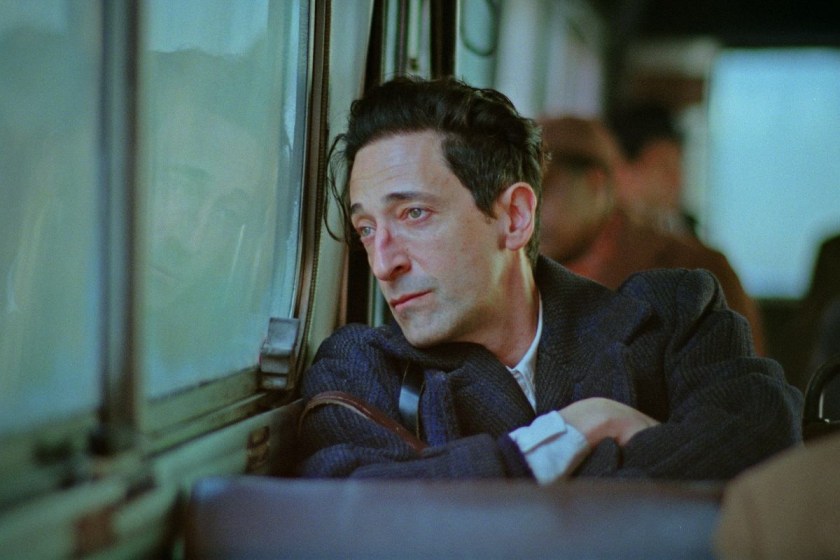
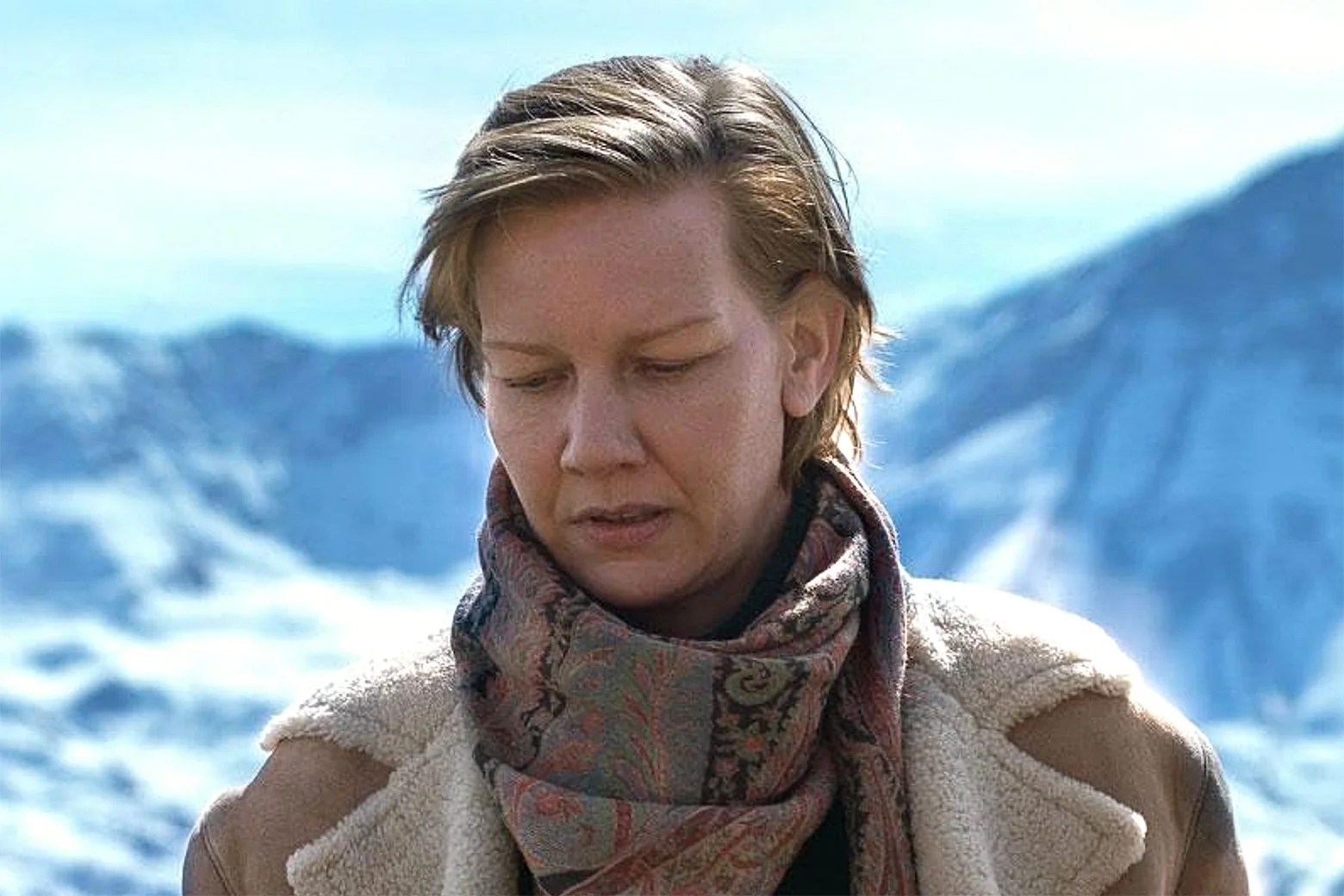
The Zone of Interest is a fiercely original work from Jonathan Glazer, his first film in eleven years. It tells the story of Rudolf Höss, the longest-serving commandant of the Auschwitz concentration camp, where he lived with his wife Hedwig (Sandra Hüller) in what they perceived as their idyllic home. Small catch – the garden wall with barbed wire atop it is shared with Auschwitz. 

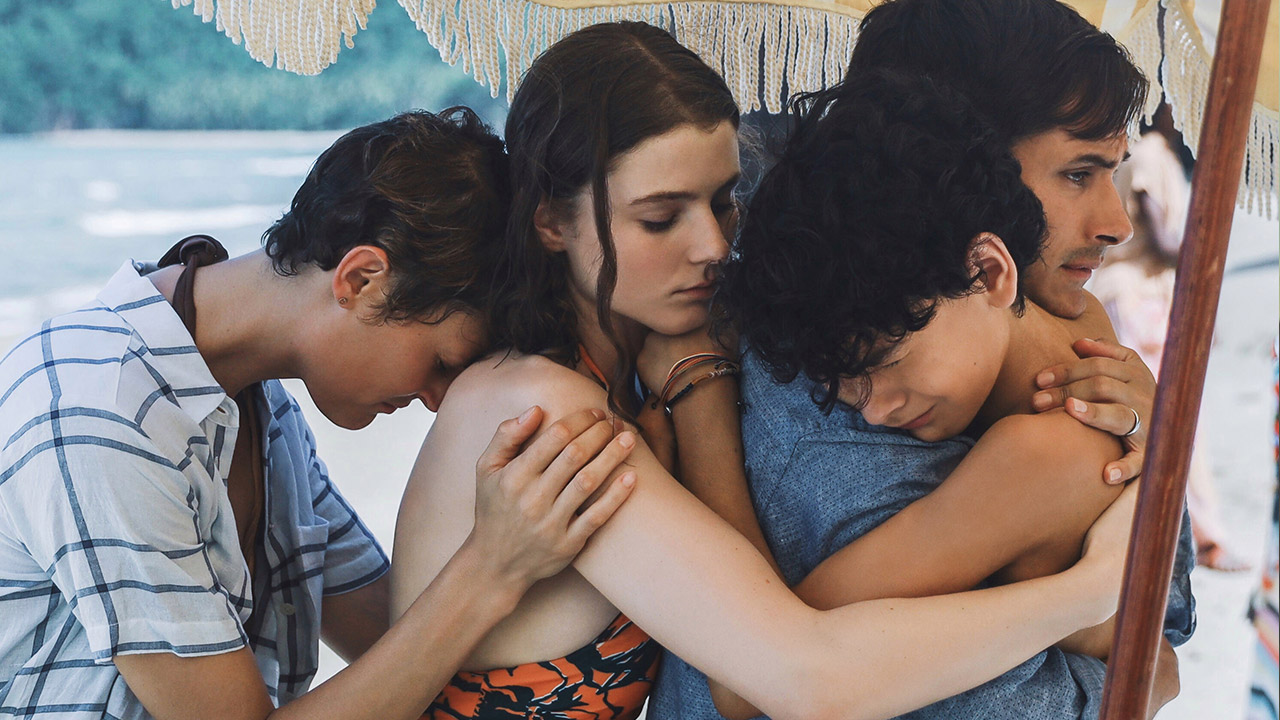
The result is an uncomfortable viewing and a film that really gets under your skin. The Zone of Interest represents the most important use of sound I can think of in quite some time – the sound of the droning concentration camp with its whirring machinery is ever-present during mundane conversation and day-to-day life. Glazer never shows us the atrocities inside the camp and what we hear beyond the frame is another film in itself. I loved the surreal elements too, particularly a storyline shot with thermal cameras. The Zone of Interest is a fascinating work in Glazer’s career, despite its cold and intentionally bad taste that will leave you thinking long after the credits have rolled. 

9) Longlegs

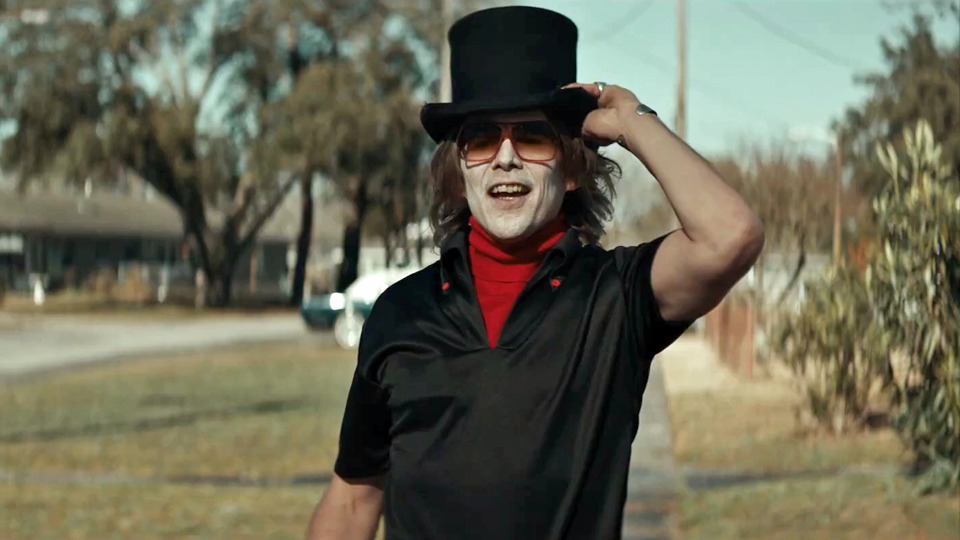
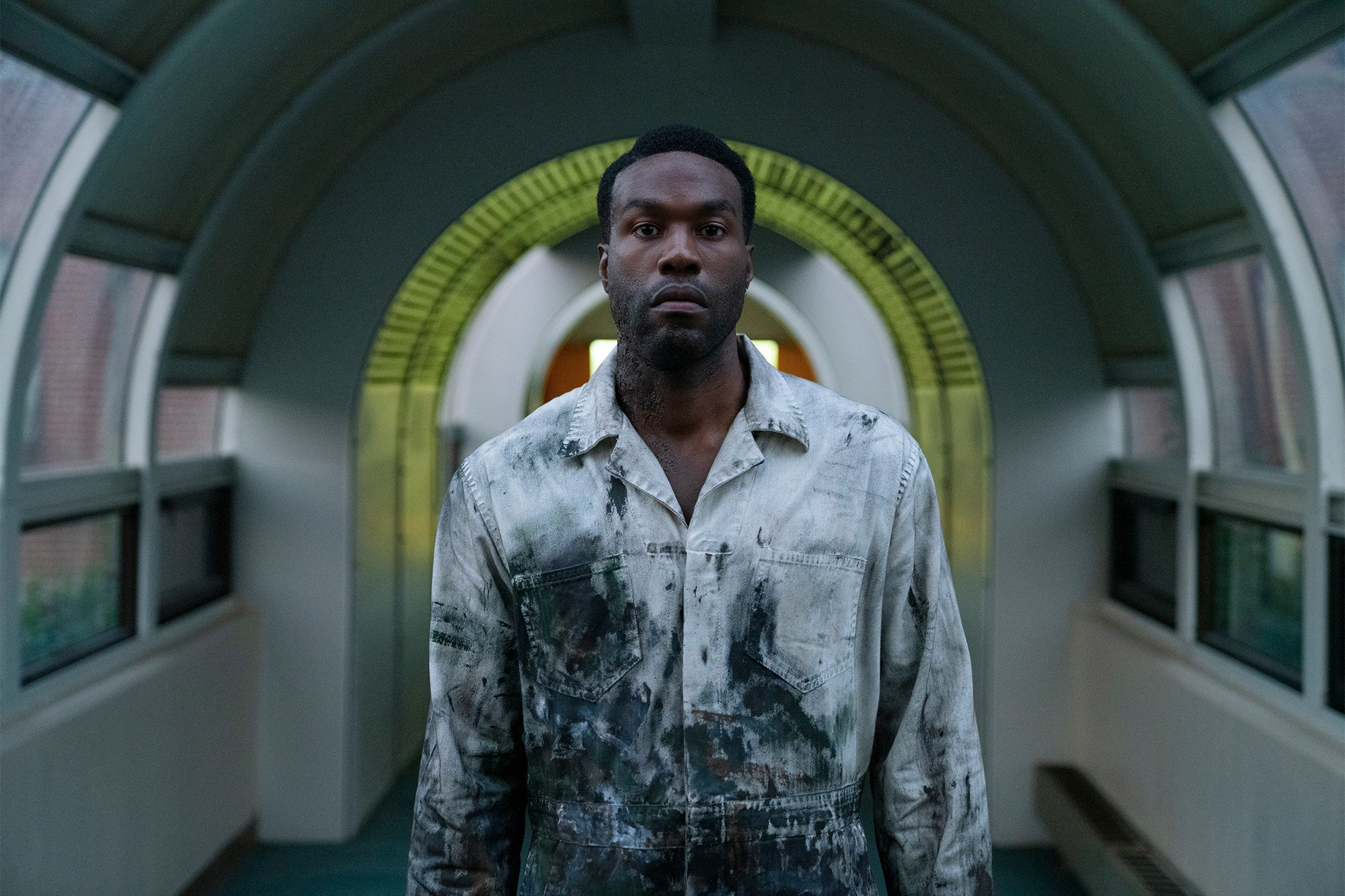
Longlegs is a horror thriller written and directed by Osgood Perkins, his fourth film but by far his highest profile effort. The film follows Lee Harker (Maika Monroe), an FBI agent assigned to investigate a decades-spanning case of a series of brutal murder-suicides. Although Longlegs isn’t as outright scary as some have made it out to be and is more of a crime thriller, this is still a barnstorming original effort from Perkins. He maintains a real sense of dread and tension throughout and the film is relentlessly bleak with some a terrific central performance by Maika Monroe. The film’s beautifully shot by Andrés Arochi, favouring close-ups of characters but keeping the background in shot – an early scene where Harker reads a letter following a home invasion is brilliantly shot as we’re constantly peering at the edge of the kitchen door frame. I also loved the muted, grey colour palette and the dreary, dilapidated homes many of the characters live in that portray the Oregonian setting is not particularly affluent. It’s also complemented by an excellent, rather minimalist score by Zilgi (who is actually the director’s’ brother, Elvis Perkins) but there are equally many scenes of silence which really contributes to the dread. While perhaps a little too neatly crafted in its narrative, Longlegs is a fiersomely original horror directed with real skill and flair. 

8) Kingdom of the Planet of the Apes

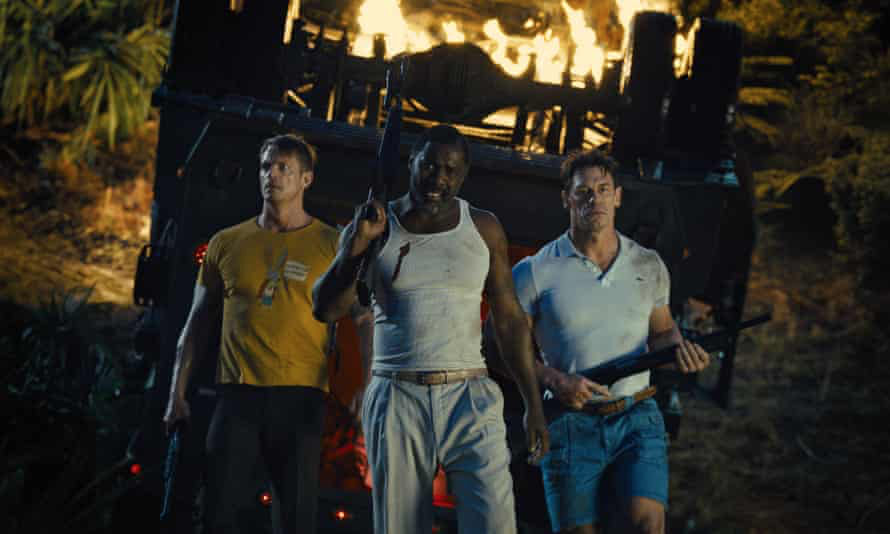
Kingdom of the Planet of the Apes is an uncommonly intelligent sequel and is another strong entry in the series. With Andy Serkis’ Caesar kicking the bucket at the end of War for the Planet of the Apes, this film picks up ‘many generations’ after War’s conclusion with a new set of characters. The underlying social subtext is what really allows the Planet of the Apes films to excel, and the lack of it is what lets down its two weakest instalments – Tim Burton’s misguided Planet of the Apes remake and Beneath the Planet of the Apes. The idea of exploring how a key figure’s teachings have been twisted after a period of time is a genius move, reflecting the intrigue and conflict brought by religion in our world. I loved how director Wes Ball advances the aesthetic and tone of the series – gone are the predominantly forested surroundings of Dawn and War and its road movie influence feels closer to earlier entries of the original pentology. The abandoned human world is fascinating to pick apart, from rusted escalators to buildings covered in overgrown fauna. There’s some great set-pieces too, with fast-paced and memorable action sequences, the highlight being one on a bridge. The film is lusciously shot by Gyula Pados and John Paesano does a great job with the score, no mean feat coming off of Michael Giacchino’s work. Kingdom of the Planet of the Apes does an excellent job of advancing the reboot series, while brimming with potent social subtext and respecting what made the original pentology work. 

7) Furiosa: A Mad Max Saga

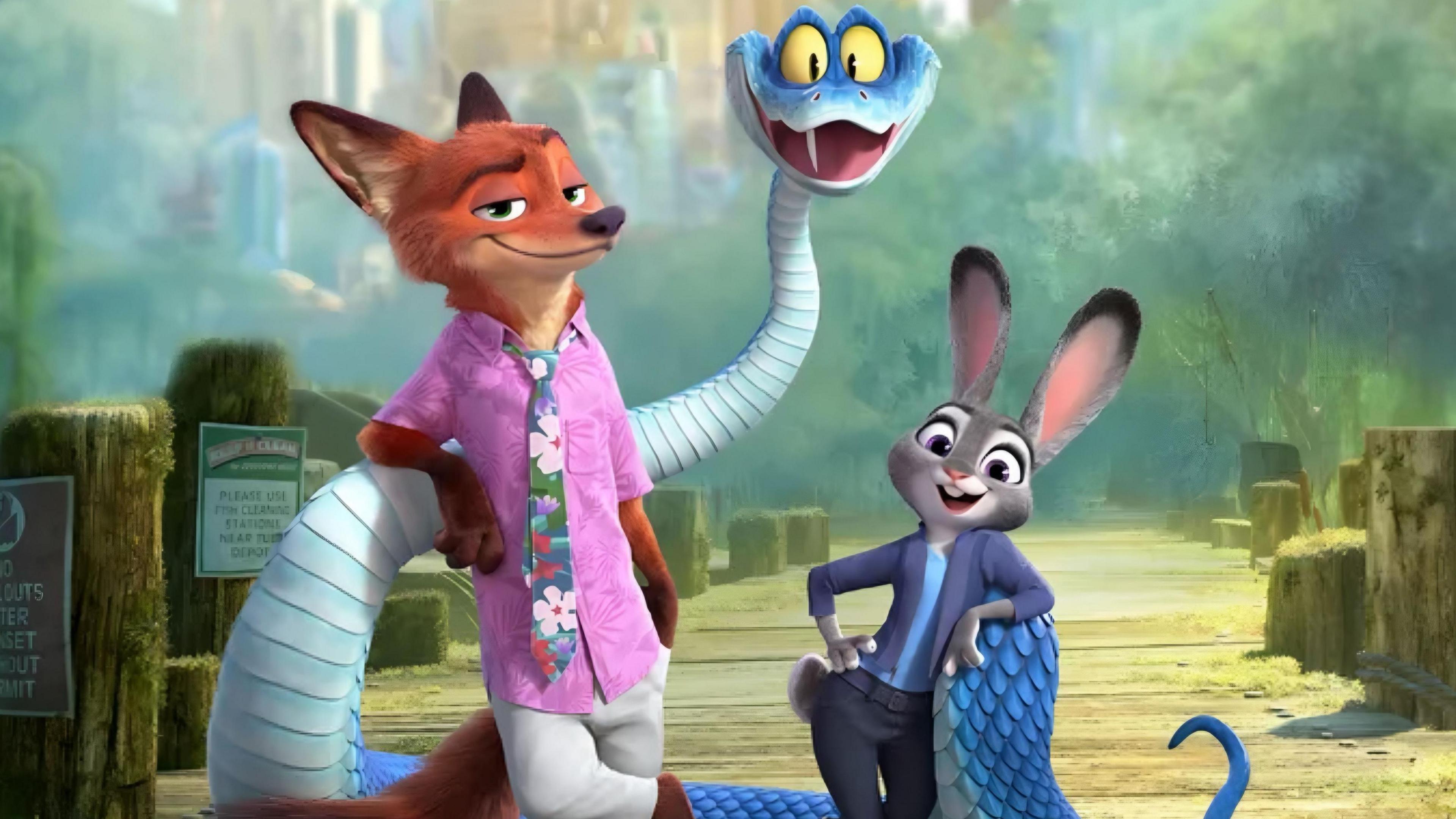
Those wanting a rehash of Mad Max: Fury Road should rethink their expectations because Furiosa: A Mad Max Saga plays out very differently – a mature and slow-burn revenge thriller split into five chapters. Except for perhaps ten minutes when the characters reach The Green Place in Fury Road, that film was effectively a non-stop car chase whereas there’s plenty of room to breathe this time around. Considering he’s almost eighty years old, Miller’s film is brimming with the same passionate energy with some truly breathtaking action sequences, the highlight an extended chase aboard the War Rig. There’s plenty of meat to the bone to all the characters too, with an excellent script Miller co-wrote with Nico Lathouris, and it’s expectedly beautifully shot by Simon Duggan.  Although she doesn’t show up until the third chapter, Anya Taylor-Joy stuns as the titular character. Not only is her performance magnetic, but she also embodies Charlize Theron’s (who played the character in Fury Road) sounds and mannerisms.

6) Civil War

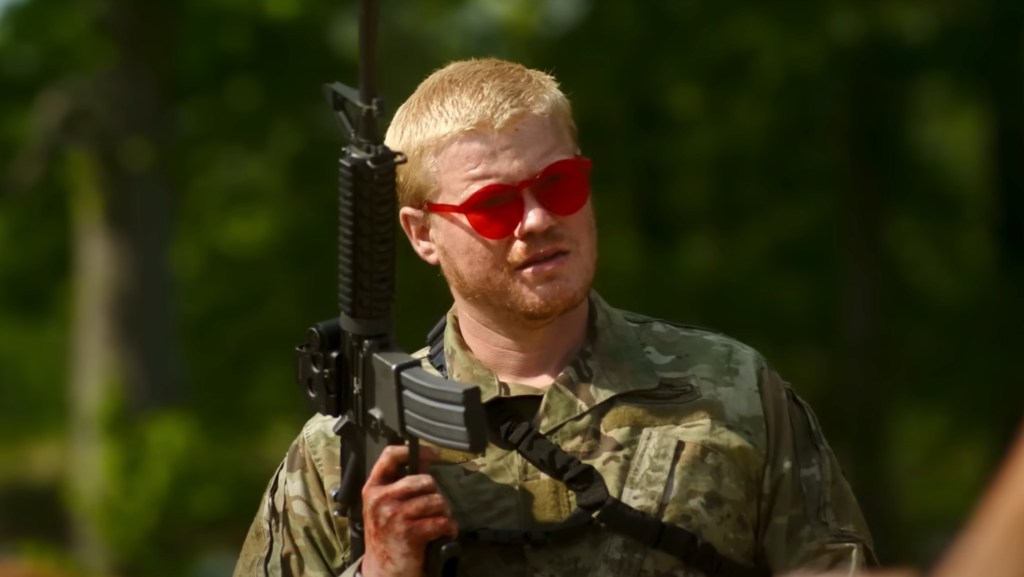
Civil War is a brilliant film and director Alex Garland’s best work to date – it’s well-paced and sustains its unnerving tension throughout. I really connected with the characters and the film looks more expensive than its $50 million budget suggests.  I loved its depiction of journalism in how there is the dedication, thrill, rush and joy of creating content. The idea of one photo in every 100 being perfect is also true, but the lengths in which Garland depicts journalists in capturing even a single photo (for example, by jumping into enemy gunfire) is chilling. I also loved how photojournalism was edited into the film and Civil War is about how a story becomes an image. Sound is also used to brilliant effect, with the lack of sound in key sequences very effective in increasing tension and portraying how used to violence these characters have become. While the performance are uniformly excellent, it’s Jesse Plemons that stands out as a racist militant.

5) Io Capitano

Io Capitano is a terrific and thought-provoking piece from Italian director Matteo Garrone about two teenage cousins who decide to leave their native Senegal for a more prosperous future in Italy. While its first twenty minutes are quite atypical of Garrone’s usual directorial style, once the boys leave home, this is an immersive experience through and through. A scene with a desperate woman falling behind as a group walk through a desert is particularly affecting, especially with how Garrone plays with time and hallucinations. The ending is also bleak and hard-hitting yet simultaneously joyous. An extended sequence set in a prison is also typical of Garrone and I really brought the relationship between Seydou (Seydou Sarr) and Martin (Issaka Sawagodo), a man he’s imprisoned with. Garrone masterfully often shows but doesn’t tell and I always respect it when a filmmaker treats their audience as intelligent. 

4) American Fiction

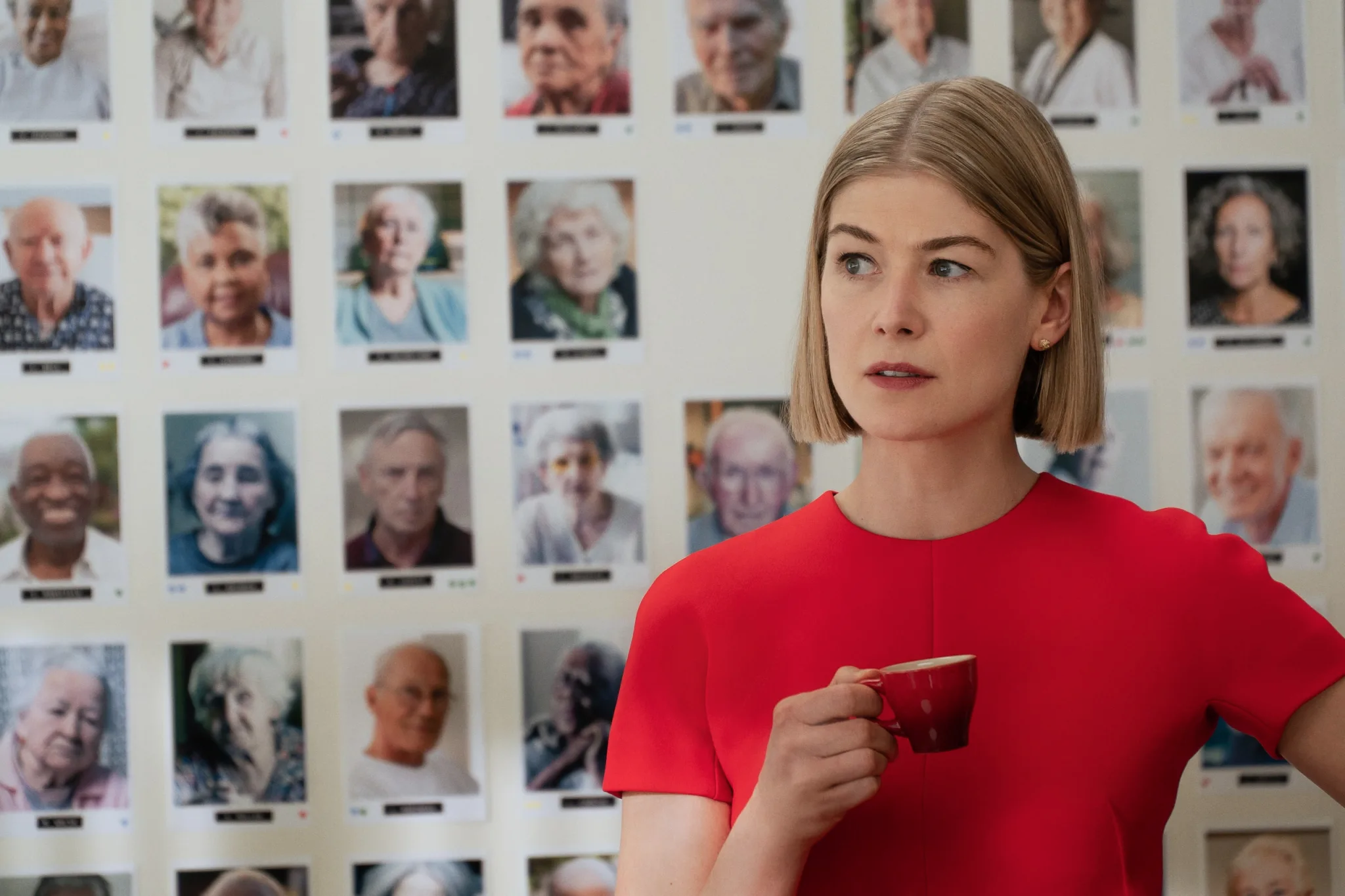
American Fiction is a highly entertaining literary comedy with a blisteringly sharp script that in some ways, feels like a film a more muted Spike Lee would make. This is a tough genre to crack and there have been far more failures than hits but I genuinely laughed quite a few times at this. There’s also more than a few kernels of truth about the publishing industry and what it means to be a writer, exploring the highs and lows of both the creative process and critical reception. But Cord Jefferson (in his directorial debut) deftly balances his commentary on the media with a heartfelt treatment of the themes of loneliness and family. The family drama element of the film is equally riveting, with the treatment of Alzheimers touching and the mundane but necessary tasks of trying to get someone into a home. There’s some terrific performances here too, especially Jeffrey Wright who’s always been a reliable screen presence but doesn’t often take the lead role. Wright nails the prickly, depressing nature of his character as he struggles to fit in and open up to people but with an almost lovable quality. To think this is only the directorial debut of Cord Jefferson makes me excited to see where he goes next.

3) Kinds of Kindness

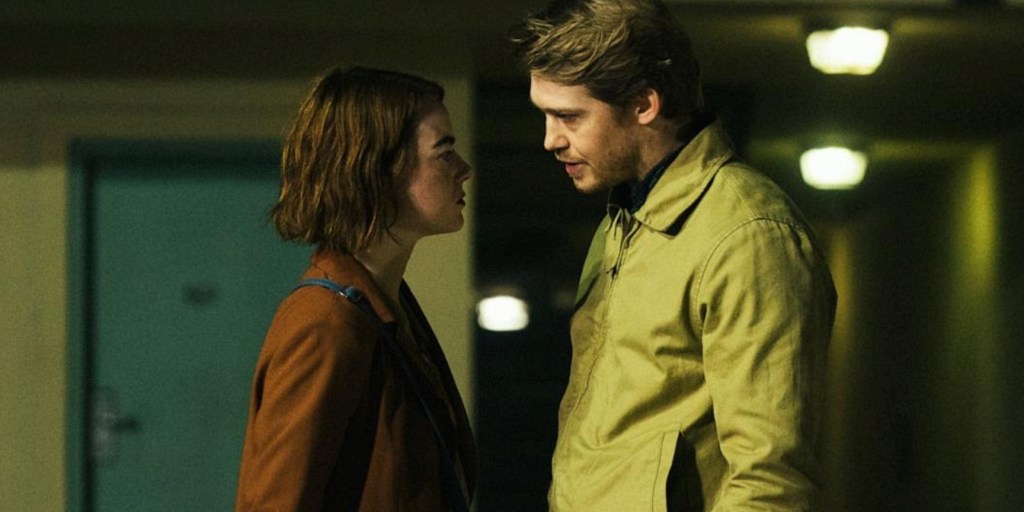
One of two Yorgos Lanthimos films to release this year, Kinds of Kindness sees the director reteam with Efthimis Filippou in their first writing collaboration since The Killing of a Sacred Deer (in my opinion, Lanthimos’ best film). An thrillingly cold-hearted abrudist triptych with a razor dry sense of humour, Kinds of Kindness represents the director at his most daring. It’s a fascinating film, where not everything in the three stories is meant to tie together, but it doesn’t stop one trying to piece the puzzle together. Jesse Plemons is sensational as the lead in the first two stories and Emma Stone and Willem Dafoe are also reliably excellent. Kinds of Kindness is a fascinating film in Lanthimos’ catalogue and while I expect he’ll be tempted to make more mainstream fare given The Favourite and Poor Things‘ reception, I love the eerie strangeness and uncomfortable feeling when he has a hand in the script.

2) The Holdovers

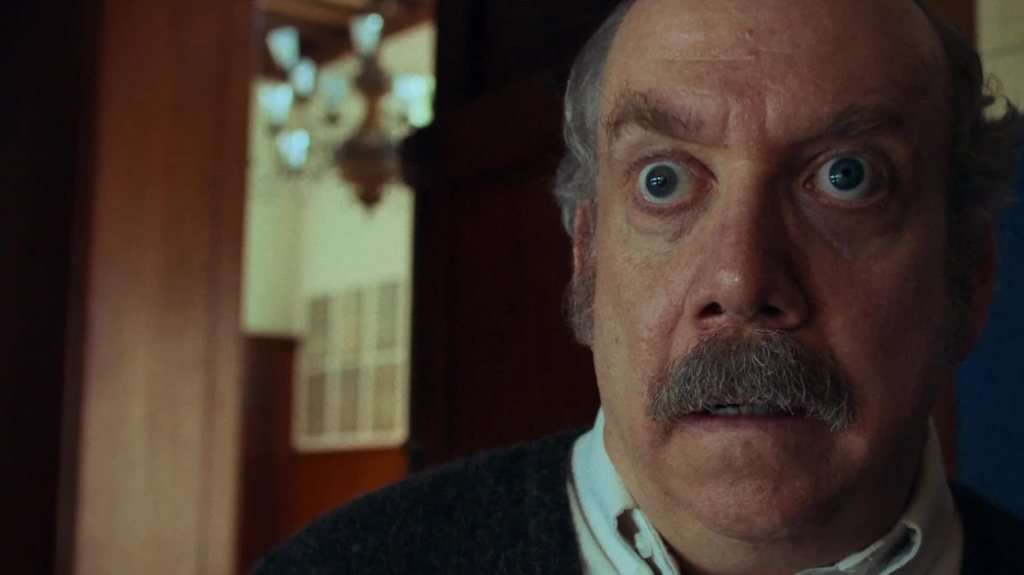
The Holdovers is the new Alexander Payne film and his first since 2017’s Downsizing. Payne reunites with his Sideways lead Paul Giamatti who stars as Paul Hunham, a strict classics teacher at Barton Academy, a New England boarding school that he attended back in his youth. The Holdovers is Payne at his best and is a tender delight from start to finish, but it deftly balances its warmth with a bittersweet tone. The performances are terrific all around, especially Giamatti, and the film perfectly evokes classic 1970’s cinema with its intentionally rustic aesthetic – it looks and feels like a work made at the time. It’s beautifully shot by In Bruges cinematographer Eigil Bryld, especially the wintry landscapes during the opening credits and some disorienting frames that feature late into the film. Paul Giamatti turns in what I’d probably consider a career-best performance as Hunham. Hunham is both lovable and loathsome and an easy character to relate to with the hardships he’s faced in life. In fact, there are many similarities between Hunham and Miles Raymond, the character Giamatti plays in Sideways – both characters that have been hard done-by in life.

I absolutely loved The Holdovers and was completely swept up by the film throughout, with its intelligent script and committed performances. It’s Payne’s best film since Sideways and after only the best part of a year since its release, I predict it will become a Christmas classic. They certainly don’t make films like this anymore.  

So the best film of the year is…

1) Poor Things

The first Yorgos Lanthimos film to release this year takes top honours. Poor Things is Lanthimos back on track (I thought The Favourite was flawed) with a brilliantly twisted, uncomfortable yet multi-layered triumph. A film that gets better on each viewing, Poor Things is narratively stuffed with thought-provoking themes, striking visuals and evocative production design. Robbie Ryan’s cinematography is a career-best, with every frame a painting worth pausing to analyse, which is interesting considering some of his work can be quite vanilla. The film boldly experiments with colour and perspectives are often shot through a fish-eye lens and it’s supported by the lavish production design. I also loved the retrofuturistic vision, with the Victorian London setting contrasting with succeeding elements.

Emma Stone turns in a career-best performance as the Frankenstein-like Bella Baxter, who opens the film as an inquisitive and brash child and ends as a self-made woman. I’ve sometimes struggled with her performances in the past and couldn’t believe she won the Best Actress Oscar for La La Land but not so here. Willem Dafoe is also reliably brilliant as the eccentric surgeon, who belches bubbles at the dinner table due to a health condition. Mark Ruffalo provides much of the comic relief as Wedderburn, who becomes increasingly child-like as the film progresses, although his British accent is rather wandery. Poor Things came out right at the very start of the year and nothing’s been able to dethrone it from the number one spot.


What are your favourite films of 2024? Let me know in the comments or tweet @TheFilmMeister
Best Films of 2024 (20-11)

Rankings, Year In Film

With 2024 now at a close, it’s time to reflect back on the year just gone and unveil my top film picks. 2024 was an interesting year in film – on the one hand, it had one of the strongest Awards seasons in many a year (many of which will be featuring in this list) and the films that delivered really hit the spot. But there were also a number of crushing disappointments, from sequels such as Alien: Romulus and Deadpool and Wolverine to career lows for directors like M. Night Shyamalan with Trap and J. C. Chandor with Kraven the Hunter.

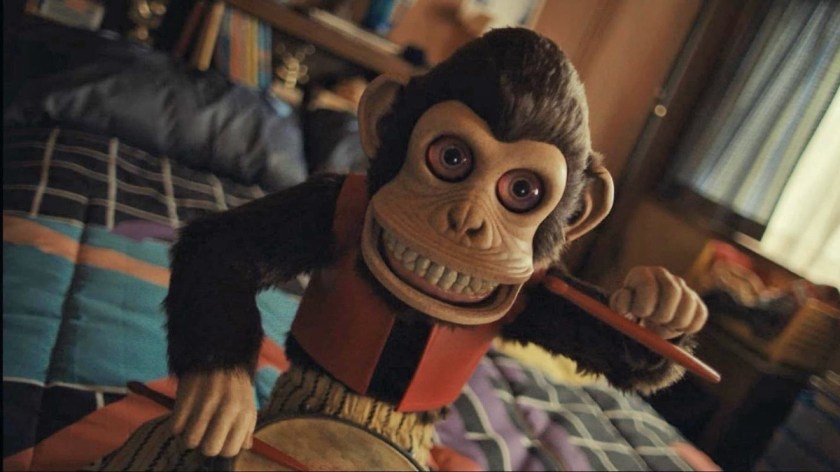
In this first of two articles, I’ll rank numbers 20 to 11. Stay tuned for part two, where I’ll unveil my top ten films of the year. But first a few honourable mentions that didn’t quite make the top 20 – Red Rooms, Conclave, The Beekeeper and Salem’s Lot (yes, seriously for those final two).

20) The Iron Claw

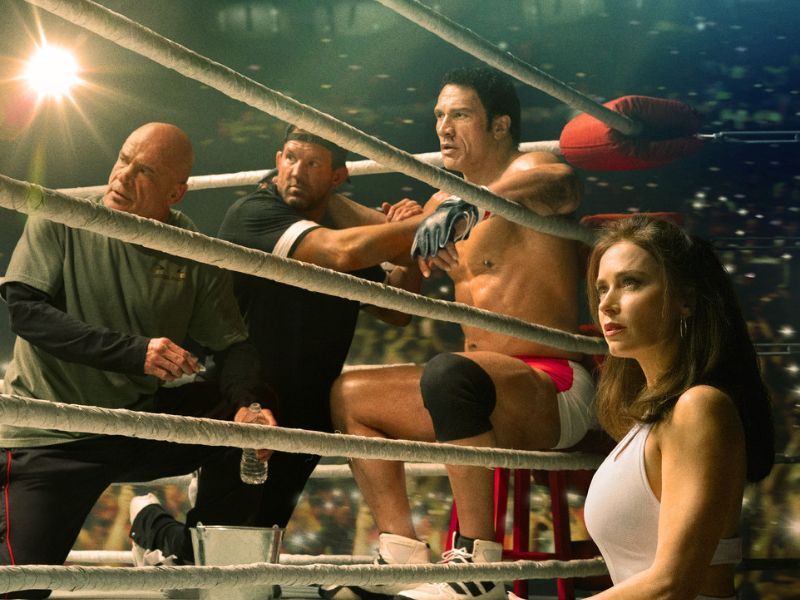
Beginning proceedings is The Iron Claw and although it’s Sean Durkin’s weakest effort to date in that it’s far more conventional than Martha Marcy May Marlene and The Nest, this is still a largely gripping and grim recount of the Von Erich family, who were beset by premature tragedies. The film’s bolstered by some terrific performances, with Zac Efron reliably brilliant as Kevin, who has noble and instinctual family values but struggles to carve a life with his own ambitions. Efron has had a fascinating career after his High School Musical breakthrough, and like with his chilling portrayal of Ted Bundy in Extremely Wicked, Shockingly Evil and Vile, proves he is a versatile actor with buckets of range. Holt McCallany, who is often lumped with supporting roles in action films such as Wrath of Man, gives a career-best performance as the patriarch, and Maura Tierney is also quietly brilliant as the quiet and sullen mother, who’s clearly faced her own despair. 

The first half of the film is pretty standard wrestling fare, chock-full with the sub-genre’s generic constructs, until the darker elements are introduced at the half-way mark. There’s an excellent near-surreal ending sequence that won me over and the film’s handsomely shot with a smoky, grey quality by Hungarian cinematographer Mátyás Erdély.

19) Immaculate

Although this religious psychological horror starring Sydney Sweeney as a troubled young nun takes a while to get going, once it shifts into gear, Immaculate is a gonzo, gleefully blood-soaked riptide. The last forty-five minutes are particularly memorable, with a series of wild twists and turns, with more than a few influences from Dario Argento and Roman Polanski. Director Michael Mohan knows how to build suspense and pile on the dread and the wince-inducing gore in its final act more than earns it its 18-certificate. The film looks a lot more expensive than it is and it’s beautifully shot by DP Elisha Christian. You’ll be left gasping for breath in its closing moments.

Although it’s not as strong, The First Omen came out a few weeks later and follows eerily similar themes – it’s worth a watch too.

18) Anora

One of my most memorable cinema-going experiences of the year, Anora is the new Palme D’Or winning film by Sean Baker. Other than Mikey Madison’s hypnotic lead performance as the titular Brooklyn stripper, I hated the first 45 minutes of this film. But when two men knock on a mansion door after Anora’s drink and drug-fuelled journey with Vanya (Mark Eydelshteyn), the 21-year-old-son of a Russian oligarch, the narrative takes a different direction and the rest of the 139 minute film had me grinning with its breathless fireball energy and wit. In retrospect, the first 45 minutes are needed to get you to despise the characters for the rest of it to work, so stay with it if you’re feeling the same way. It’s a film where characters are consistently pulled from pillar to post but there’s also a stark tenderness to its humanity and Baker portrays a vivid contrast between the rich and poor. It’s beautifully shot by Drew Daniels, who lends the film its disorientingly frenetic edge. Apart from Madison, Yura Borisov and Karen Karagulian are the other standouts of the cast, especially Borisov who makes such a strong impression despite not having many lines. Anora is ultimately an excellent film from Sean Baker and quite possibly his best work.

17) Juror No. 2

It’s a real shame that what is probably Clint Eastwood’s last film got bizarrely and unjustifiably buried by Warner Bros. It’s their loss because this legal thriller is an excellent effort from the nonagenarian filmmaker, which follows recovering alcoholic Justin Kemp (Nicholas Hoult) who is summoned for jury service where he realises he may have been responsible for the death he’s adjudicating on. What initially seems like a fairly routine, low-profile case gradually turns into a crime with plenty of holes. A morally ambiguous film that asks its audience what they would do in the main character’s shoes, Jonathan Abrams’ script does a good job of messing with its audience’s minds in creating doubt of what’s being portrayed on-screen. The film also questions the imperfect nature of the justice system, even if it’s rather unsubtle. But Eastwood does a better job of analysing the biases that certain characters bring into the courtroom, from the lawyers defending and prosecuting the accused to the backstories of the jury members. Nicholas Hoult makes for an excellent lead and we’re never sure whether we can fully side with him or not, despite making a compelling case for the decisions he makes. 

16) Turtles All The Way Down

I never expected a John Green adaptation to rank among my best films of the year – Paper Towns and The Fault In Our Stars were both ghastly – but I loved this. Sensitively directed by Hannah Marks, the ever-reliable (well, apart from Alien: Romulus…) Isabela Merced is fantastic as Aza, a 16-year-old struggling with OCD who tries to reconnect with her childhood crush. The chemistry she shares with her best friend Daisy (Cree) is terrific and the script is sharp, deftly balancing humour, wit and heart. Marks deftly portrays what it’s like to experience this disorder and the sense of achievement when characters overcome their obstacles in this film is commendable. I was gripped from start to finish and although it’s a film you’ll need to seek out, I highly recommend it.

15) Gladiator II

I had low expectations for this long-awaited sequel, having thought the 2000 Best Picture winning original was merely good, and returning director Ridley Scott has a chequered record with historical epics. Fortunately, Gladiator II is an excellent sequel and although it shares some similar story beats to the original, it shakes things up more than enough to avoid it being a simple rehash. At its height, it almost has a soap opera quality (much in the same vein as House of Gucci and Napoleon) but in a good way. There’s an immense pleasure in anticipating how the different characters are going to eventually clash with their various motivations, and David Scarpa’s script sets them up well. Some of the characters are gleefully horrible and the cast are more than game for it. Scott’s also concocted some thrilling (if wildly historically inaccurate set-pieces with sharks and killer monkeys) that lean into the gore – this is very much a film about revenge and retribution. It’s also vividly shot by returning cinematographer John Mathieson, who lends the film a rich colour palette. That Ridley Scott can still be directing a sword-and-sandals sequel like this with so much energy in his late eighties is nothing short of miraculous. 

14) Rebel Ridge

Rebel Ridge is a crime thriller by Jeremy Saulnier, his first film in six years after Hold The Dark. Having proved quite the accomplished director, Rebel Ridge may be his best yet – a gripping thriller that examines police injustice with a deliciously mean streak about it, even if it’s slightly overlong and peaks in its first act. But I still had a grin plastered on my face throughout. Aaron Pierre is brilliant as Terry, an ex-Marine who’s intercepted by two corrupt policemen while cycling to Shelby Springs to post bail for his imprisoned cousin. Don Johnson is deliciously snarky as the crooked Chief of Police and there are some terrific chase sequences, cementing why Saulnier is one of the best in the revenge thriller genre.

13) Beetlejuice Beetlejuice

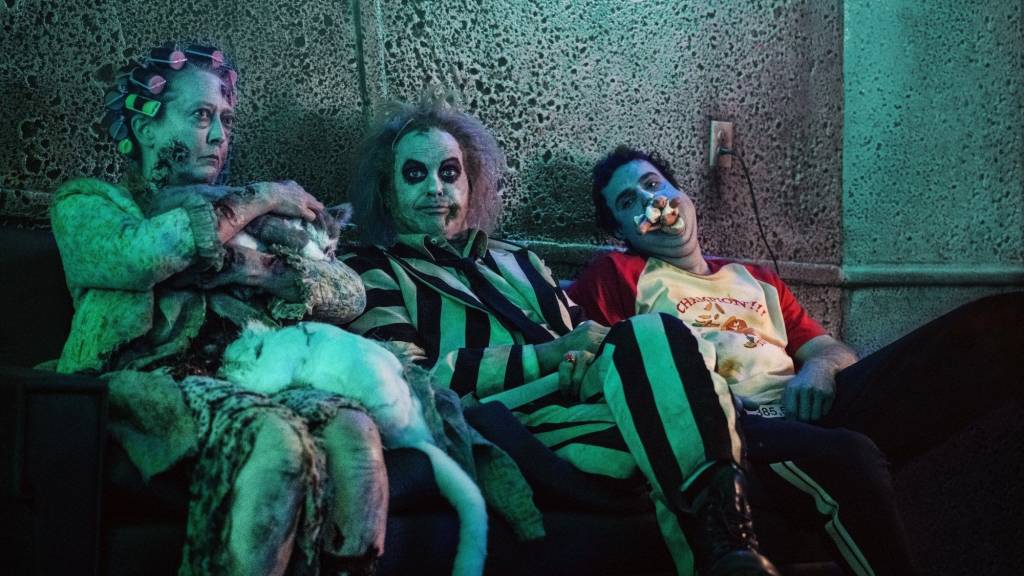
Beetlejuice Beetlejuice is a very pleasant surprise – an excellent legacy sequel that’s not far off the quality of the original, showcasing Tim Burton at his best. The script by Alfred Gough and Mark Millar is razor-sharp and full of charm, with lots of laughs to be had. Although some have criticised this sequel for being overstuffed, I thought the various elements really worked and there’s excitement in knowing that all of the different storylines are inevitably going to collide. The film’s visually arresting too, with lots of physical effects and I particularly admired an early body horror sequence where a character staples body parts together. Danny Elfman turns in a typically romping and swooning score that keeps the film fast-paced. Michael Keaton’s reliably excellent as the grotesque bio-exorcist, in the role that arguably launched his career. It’s also refreshing to see Winona Ryder, who hasn’t taken a leading role in a mainstream film in quite a while. Burton proves he’s still flowing with the creative juices that left such an impression on his early work and I hope the strong reception to this film inspires him to continue developing wholly original pieces. 

12) MaXXXine

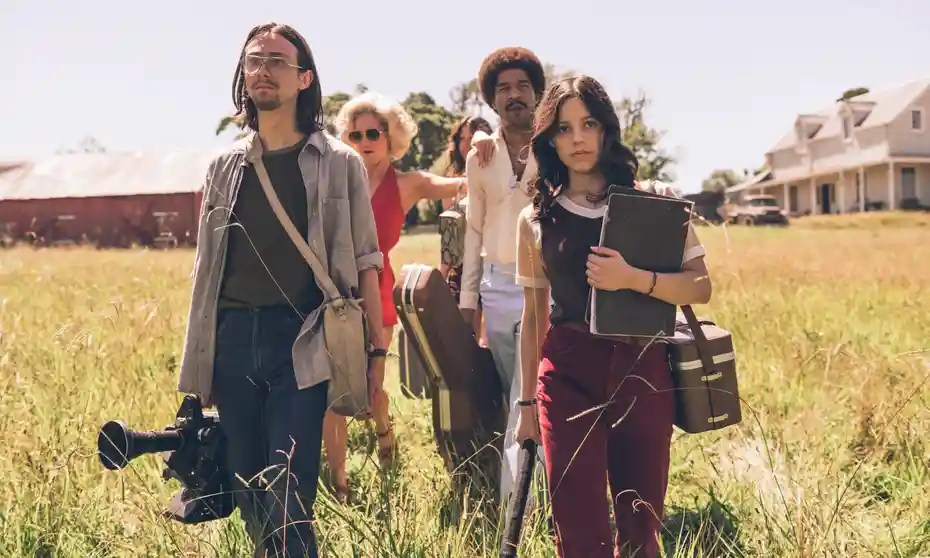
MaXXXine is the third instalment in Ti West’s X series and a direct sequel to X. It’s surreal to think what was originally a relatively low-key release is now a full-blown film series, with West having originally shot X (which I loved) and Pearl (fine, but overrated) back-to-back. MaXXXine is a thoroughly enjoyable, if uneven third instalment. Like its predecessors, West experiments with exploring a different horror sub-genre – in this case, Giallo horror. It unexpectedly shares many of the story beats of Quentin Tarantino’s Once Upon A Time In Hollywood but in a thrilling way that isn’t derivative. The energetic score by Tyler Bates is brilliant and is probably a career-best. The film’s also beautifully shot by Eliot Rocket, who really captures the neon, seedy 80’s Hollywood aesthetic. There’s some very entertaining performances across the board. Mia Goth is reliably strong but Kevin Bacon steals the show as a seedy private investigator, resplendent with gold teeth. Giancarlo Esposito is also a highlight as Maxine’s agent with an outrageous haircut. I really enjoyed MaXXXine and although it’s a little shambolically crafted, I’d be lying if I didn’t say I had a big grin on my face throughout.

11) Wallace and Gromit: Vengeance Most Fowl

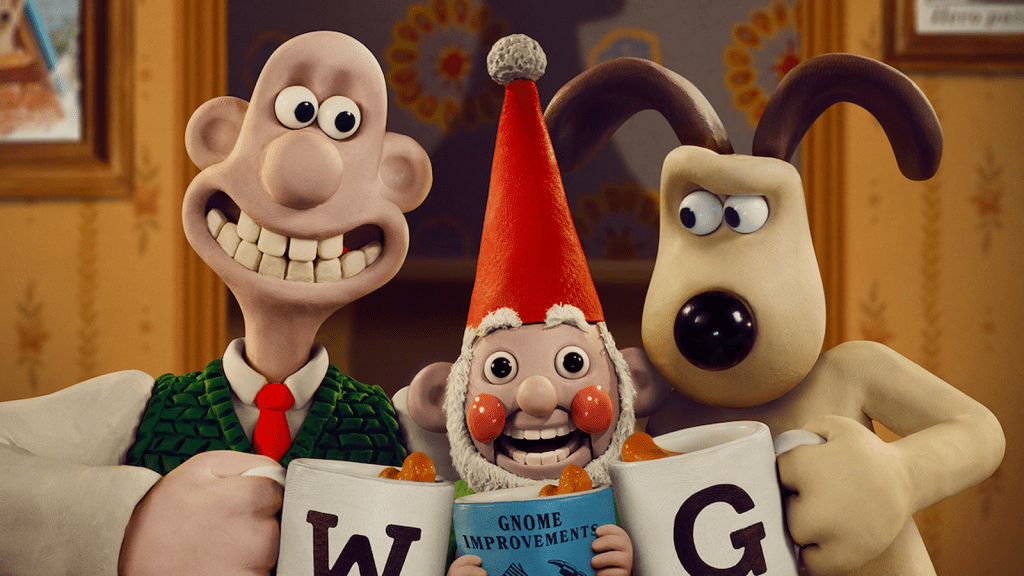
My expectations were very high after the 19 year wait since the masterpiece that was The Curse of the Were-Rabbit and Vengeance Most Fowl is a more than worthy follow-up. This is an excellent sequel with plenty of laughs and a typically sharp and witty script. The rapport between Wallace and Gromit is as strong as ever and the film has a lot to say on the reliance of AI and automation, the resurgence of old technology and police incompetence. There’s some fabulous action sequences (especially a climactic boat chase) and the film’s typically brimming with small details to pick up on future rewatches. Returning villain Feathers McGraw steals the show with some delicious gags and Ben Whitehead (replacing the late Peter Sallis) fits in seamlessly as Wallace.

I don’t think it’s quite as strong as The Curse of the Were-Rabbit though – Vengeance Most Fowl is decidedly smaller-scale and there’s a surprising lack of cheese jokes (although the film makes up for it with plenty of other gags). Otherwise, this is yet another Wallace and Gromit adventure that’s impossible to resist and it does nothing to tarnish their revered reputation.


What are your thoughts? Let me know in the comments or tweet @TheFilmMeister
Best Films of 2023 (10-1)

Rankings, Year In Film

This is the second part of my Best Films of 2023. I previously ran you through my best films of 2023 (20-11) and here, I unveil my top ten.

10) The Covenant

Guy Ritchie’s most mature film in years is a triumph with Jake Gyllenhaal reliably brilliant as Master Sergeant John Kinley, who after his unit are ambushed by the Taliban and his interpreter is killed, is teamed with Dar Salim’s Ahmed. This is a thrilling action drama from Ritchie with surprising restraint, considering his back catalogue, with some nail-biting action sequences and a pulse-raising score by Christopher Benstead. Both Kinley and Ahmed are well-developed and rounded characters and I really brought their friendship. If there’s a downside to the film, it has a rather Americanised ending but its intensity is still to be commended. It’s Ritchie’s best film since The Gentlemen.

9) Anatomy Of A Fall

Anatomy of a Fall is a fascinating character study of a family, the couple at its centre and the legal system that tries to break Sandra and her son apart. It’s a smart film that’s simmering with tension and excellent performances, although I’m confident it would pack an even greater wallop if it was tighter. Sandra Hüller is terrific in the lead role and is fully deserving of the praise she has been lauded. Her character is a matter-of-fact, frank individual and director Justine Triet delves into the idea that writers use those around them to bolster their image. Swann Arlaud is also brilliant as Sandra’s silver fox lawyer, Vincent Renzi, as is Antoine Reinartz as a particularly nasty prosecutor. He unpicks anything and everything Sandra or other persons called up to the bar say, constantly repurposing words as evidence of Sandra’s guilt. Although there isn’t an original score, the use of music is terrific and the recurring use of 50 Cent’ P.I.M.P. and Daniel’s piano recitals are chillingly effective. The film’s also beautifully shot by Simon Beaufils, who evocatively captures the high altitude setting of the chalet and likes to zoom in on certain minutiae, as if you’re a fly-on-the-wall. 

8) May December

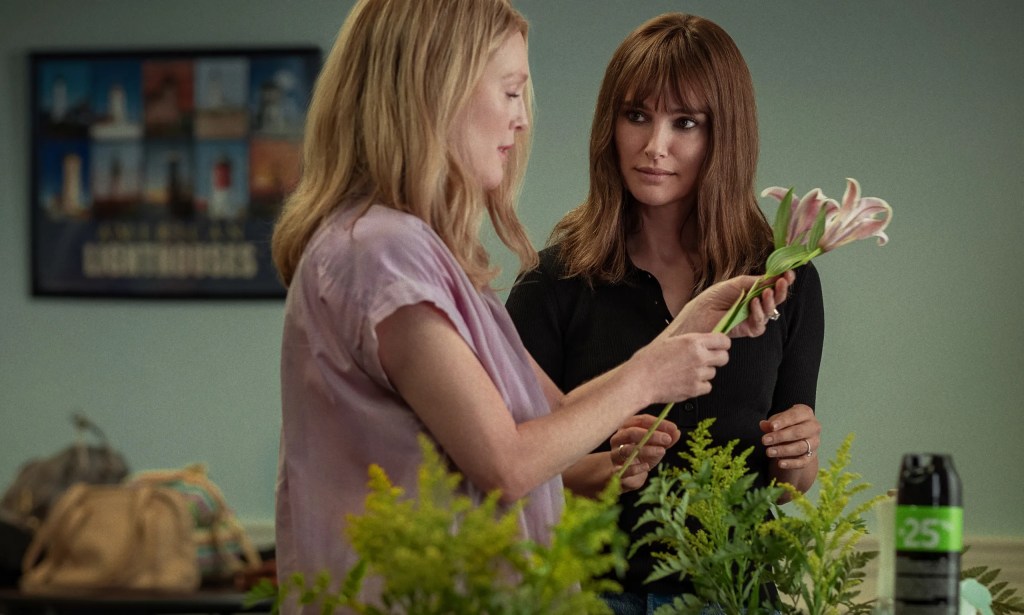
I’ve never fully got on the Todd Haynes hype train but May December is the film that’s converted me – I was enthralled from start to finish. The film is loosely inspired by the Mary Kay Letourneau scandal where the then-34 year old had a sexual relationship with 12-year-old Vili Fualaau. The characters are renamed and the story framed around Natalie Portman’s Elizabeth Berry as an actress who’s about to play the older woman in an upcoming film, played by Julianne Moore. May December isn’t interested at all in unpicking the how’s and why’s of what happened. Haynes refreshingly chooses to focus on the dark and tangled obsessions of its characters and how they mirror each other. The film is seeping in details to unpick and there are many different possible readings, which make it all the more satisfying. It’s brilliantly paced with a sharp script by Samy Burch which deftly balances the camp and unease. Perfectly complimenting the film is a peppery score by Marcelo Zarvos, who reuses Michael Legrand’s whirlwind-like themes from The Go-Between but develops them beautifully. 

7) Are You There God? It’s Me, Margaret

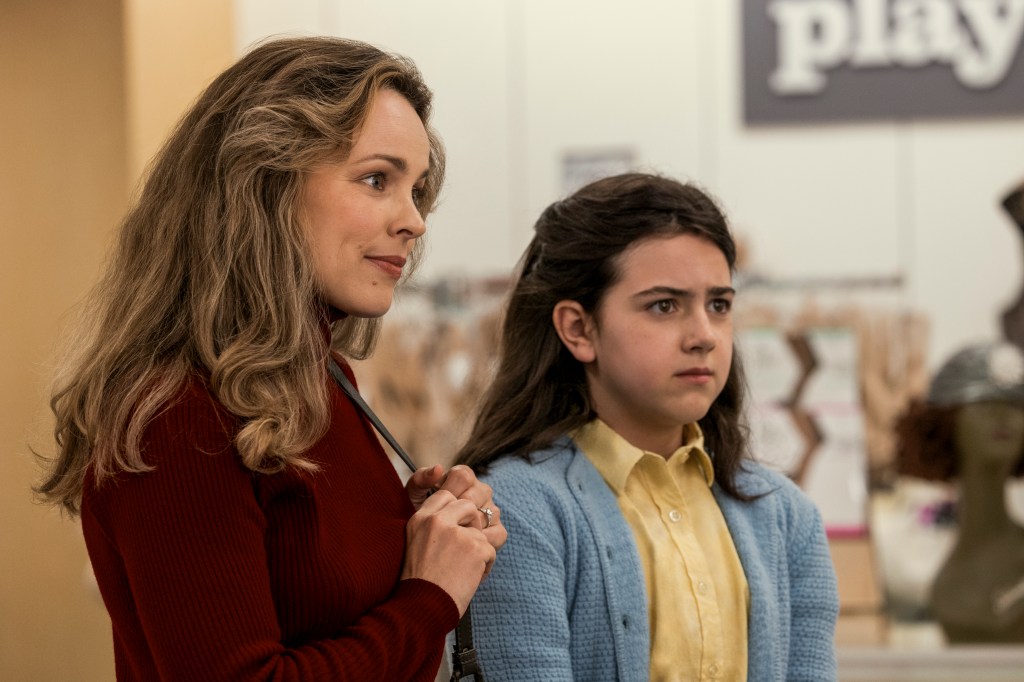
Kelly Fremon Craig’s adaptation of the 1970 novel of the same name is an utterly charming coming-of-age comedy drama that has plenty of laughs matched with real heart. The film is refreshingly frank about a girl’s journey through puberty and the director nails the uneasy but realistic conversations Margaret has with her friends. Abby Ryder Fortson is revelatory as the titular Margaret and Rachel McAdams is equally impressive as her mother, Barbara. Kathy Bates shines as her grandmother, Sylvia and Hans Zimmer’s score is uncharacteristically stripped back.

6) The Son

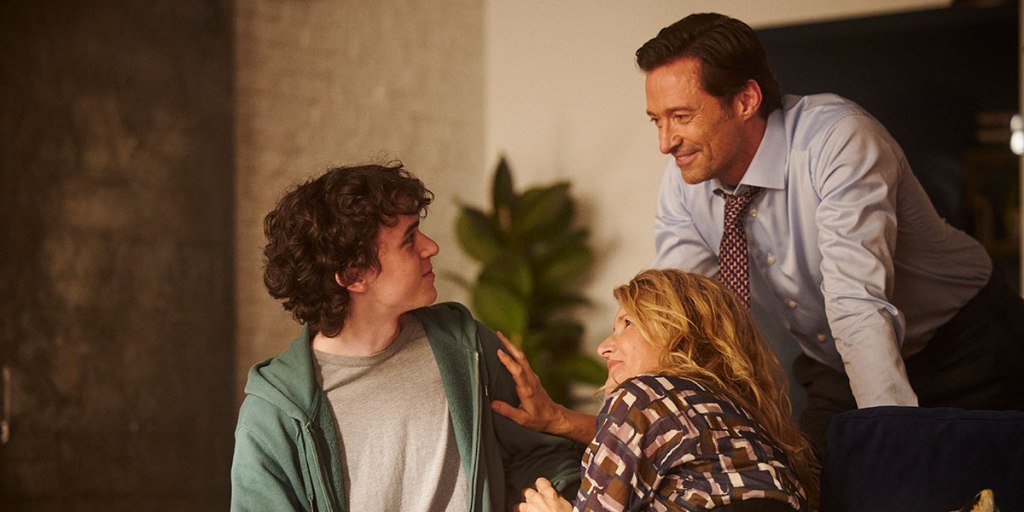
I never expected to like director Florian Zeller’s follow-up to The Father as much as I did, given the negative reception and the fact I had serious reservations regarding his debut. However, The Son really worked for me and follows Peter Miller (Hugh Jackman), who’s trying to juggle his marriage with his second wife Beth (Vanessa Kirby) while raising their newborn baby and his depressed 17-year-old son, Nicholas (Zen McGrath), from his previous marriage. This is an utterly devastating account of depression, with Peter constantly stuck between a rock and a hard place, on the one hand wanting to be a model father and move on from his own childhood trauma with his own cruel father (Anthony Hopkins). Jackman is reliably terrific in the lead, with strong work also from Kirby and McGrath and I was glued to the screen from start to finish. If there’s a film out there that warns you about the dangers of depression, this is it, akin to how Requiem For A Dream is the model film to put you off recreational drug use.

5) Beau Is Afraid

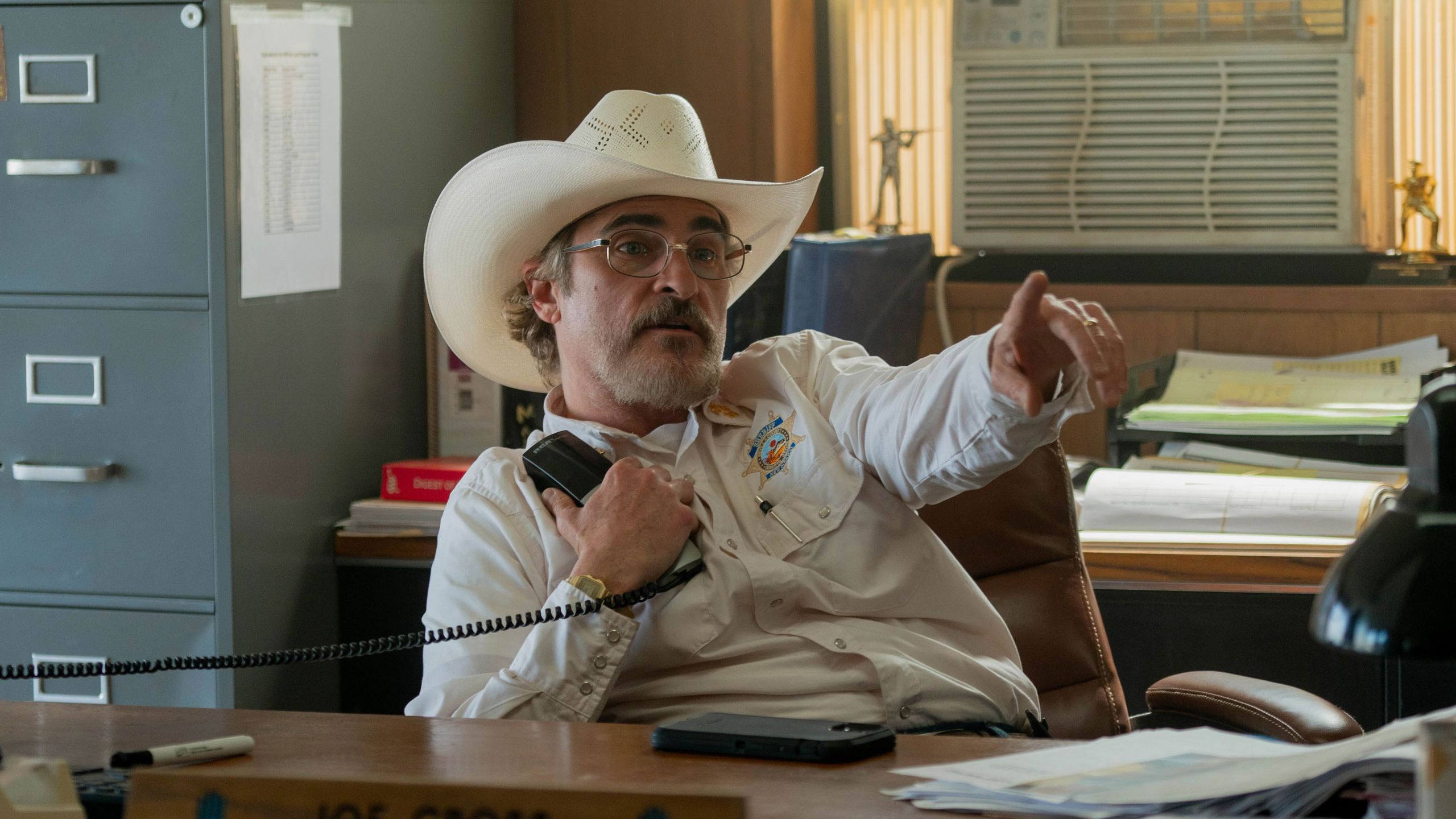
Beau Is Afraid is easily the most confounding cinematic experience I have had in quite some time. It’s a fiercely original effort – a sprawling, paranoia-inducing epic with more than its fair share of Kafka-inspired horror infused with Charlie Kaufman surrealism and a dose of Darren Aronofsky’s mother!. As you’d expect from an Ari Aster film, it’s overflowing in symbolism and requires multiple viewings to better understand its meaning. This isn’t a film that will ever be truly understood, but after two viewings, there is a ton to unpack. A beautiful animated sequence towards the close of the film’s second act is particularly affecting. Joaquin Phoenix is phenomenal as Beau, effortlessly flitting between being pathetic  the line between pathetic – crazed emotions, stunts, panic, confusion. Aster’s regular cinematographer Pawel Pogorzelski’s moody cinematography is stunning, an individual once again at the top of his game, and there’s a satisfyingly sickly score from Midsommar‘s Bobby Krlic.

4) John Wick: Chapter 4

John Wick: Chapter 4 is yet another strong entry in the series and its second half is particularly impressive, especially considering the intimidating 169 minute run time. It tells a clear and coherent story and there are real, life-threatening stakes for the characters. The film feels like a sprawling, ultra-violent James Bond film on steroids and mostly earns its length. As you’d expect, Chapter 4 sports some truly mesmerising action sequences that are straight up there as some of the best in the series and a model for action cinema in general. Keanu Reeves once again turns in an excellent performance as the titular character. Bill Skarsgård makes for what is probably the most formidable villain of the series to date and Donnie Yen is clearly having fun as a likeable old friend of Wick, who is forced out of retirement to kill him.

John Wick: Chapter 4 is a fantastic sequel and a genre-defining film for action cinema. It’s a globe-trotting stunt showcase from beginning to end that mostly earns its length and its second half is a tour-de-force. It’s certainly the best sequel of the franchise, although I’m not sure if it betters the original. It’s rare to see a series improve with each entry, although Chapter 4 ends on a fitting note and I hope Stahelski and Reeves aren’t tempted to risk making another. 

3) Killers of the Flower Moon

Killers of the Flower Moon is the latest by Martin Scorsese and an adaptation of David Grann’s 2017 non-fiction novel of the same name. The book is a must-read and tells the sickly story of how the Osage community are systematically murdered in the 1920s after oil is discovered on their tribal land. Killers of the Flower Moon is, for the most part, an excellent adaptation. It earns its 206 minute run time with its sprawling, fascinating story and Scorsese takes his time to develop the characters. He immerses you in the terror felt by the Osage, that no-one is safe on their own land with greedy wolves scheming from every corner. I was particularly impressed how like in The Irishman, Scorsese presents the horror in quite an understated way, raw and fact-of-life. Although a revisionist Western first and foremost, there’s still many of Scorsese’s gangster elements to be found, from fatally flawed men to America’s founding myths.  Of course, being a Scorsese picture, the film has real big screen beauty and is handsomely shot by regular cinematographer Rodrigo Prieto. He gorgeously captures the expansive Oklahoma vistas and holds onto a shot for uncomfortably long during heinous murders. The stunning cinematography and assured direction is paired with a haunting, bluesy final soundtrack by Robbie Robertson (who sadly passed away in August). A heartbeat motif that is repeated throughout the film is particularly effective, lending a feverish quality. 

2) Babylon

A misunderstood masterpiece, Damien Chazelle’s epic comedy chronicles Hollywood’s transition from silent to sound films in the late 1920s. I’ve had a mixed experience with Chazelle’s filmography. Whiplash is one of my favourite films of the 2010s, I couldn’t understand the praise for La La Land and I admired but didn’t love First ManBabylon is a return to form for Chazelle and is an ambitious, heady study of the history of cinema. It quite literally details the blood, sweat, tears and sheer luck needed to succeed in Hollywood and the strenuous work required to even film a single scene. Chazelle’s approach is unapologetic –  this is a sprawling, loud film that revels in excess be it through drink, drugs or discharging of bodily fluids. But it’s also regularly profound with characters wholly aware their Hollywood career has an expiry date. Although Chazelle’s view of the Hollywood studio system is critical, his passion for film as a medium is evident throughout this three hour plus extravaganza. I hope the mixed reception doesn’t discourage Chazelle from taking another ambitious risk. 

So the best film of the year is…

1) Oppenheimer

Oppenheimer is a tension-fuelled, thought-provoking minor-key masterpiece and is straight up there with director Christopher Nolan’s best work. It’s an incredibly rich piece of work and it left me feeling stone-cold with its characters haunting deliberation over the consequences of their work. This is a largely dialogue-heavy film for its lengthy three hour running time and except a breathtaking sequence depicting the Trinity test (even more impressive considering the minimal CGI), is largely bereft of action. Cillian Murphy has often represented one of the mechanisms to a successful Nolan film, and steps up to the lead role for Oppenheimer. His performance is simply sensational and a career-best. Oppenheimer is stacked with A-list actors, with Emily Blunt and Robert Downey Jr other notable highlights. The film is beautifully shot by now-Nolan regular Hoyte van Hoytema and Ludwig Göransson’s score is the glue that holds the film together. 


What are your favourite films of 2023? Let me know in the comments or tweet @TheFilmMeister
Best Films of 2023 (20-11)

Rankings, Year In Film

It’s the start of a new year so that means it’s time to reflect back on year just gone and bring you my top picks. 2023 was, overall a strong year for film, although apart from the upper echelons of this list, not quite on a par with 2022. There were far more misses than hits, especially on the sequel front.

Here, I’ll rank numbers 20 to 11. Numbers 10 to 1 will be detailed in a separate post so stay tuned for that.

20) Saltburn

Saltburn is the sophomore effort from Emerald Fennell, whose directorial debut was the razor-sharp feminist vigilante thriller Promising Young Woman, where she won an Academy Award for Best Original Screenplay. Although this follow-up isn’t as strong, Saltburn is a darkly satirical piece that isn’t afraid to withhold the shock-factor. It has a raucous quality to it and explores the themes of excess and obsession, with thoroughly unlikeable, vampiric characters, although Fennell’s sharp script gives us plenty to make us invest in them. The film’s horror tinge is particularly satisfying and its narrative leaves you guessing where it might head to the very end, although a final twist does feel a little tacked on, especially on a rewatch. 

Although thoroughly entertaining for the most part, Saltburn suffers from its clashing of tones, at times feeling like St Trinians meets an Edgar Wright film with the darker, erotic undertones of The Talented Mr Ripley and Brideshead Revisited. I’d have preferred the film to do without the former, the tacked-on balloon celebratory stylings at odds with the film’s darker elements. The film would have had more bite if it leaned further into its Gothicism and the cheekiness of its erotic thriller elements. 

19) Dead For A Dollar

Dead For A Dollar released in the UK straight-to-DVD in February despite being released in most territories in 2022, hence its inclusion here. And what a shame it received such a low-key release because this is a lean and satisfying Western. Christoph Waltz is excellent as veteran bounty hunter Max Borlund who is hired by businessman Martin Kidd (Hamish Linklater, who also puts in a strong performance) to retrieve his wife Rachel (Rachel Brosnahan). Thrown into the mix is Willem Dafoe’s slimy card shark and armed robber Joe Cribbens and you have a exciting Western with some great lines and gleefully bloody violence.

18) The Whale

The Whale is the latest by Darren Aronofsky, his first film since mother!which proved divisive. Mostly set in a single location, this is an emotionally powerful experience with a terrific performance from Brendan Fraser as morbidly obese English teacher Charlie. Aronofsky beautifully explores the relationship between a father and his daughter and there are many touching moments focussing on Charlie’s outlook of life. I walked out of the film grateful and determined to further my relations with others and to always be positive. Yet, the film deftly conveys Charlie’s pain and hopelessness and it becomes inevitable early on that he is on a path of self-destruction. The way in which Aronofsky portrays binge-eating is particularly harrowing – like Requiem For A Dream will make you never want to touch drugs, The Whale is the equivalent for food. It wouldn’t be an Aronofsky film without the exploration of religion and the events on-screen are interwoven with religious parallels and texts, which lend a pathos to Charlie’s situation. 

17) The Fabelmans

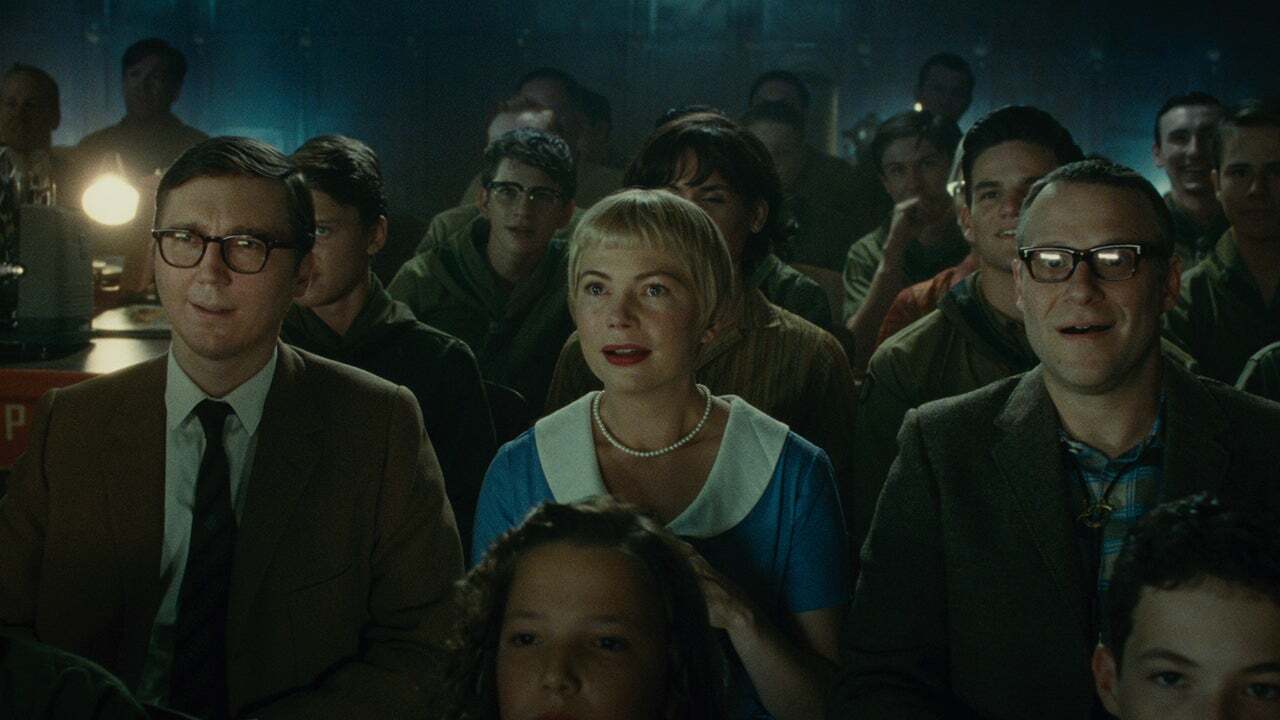
The Fabelmans is a coming-of-age drama directed and co-written by Steven Spielberg, representing a passion project for the revered filmmaker. The film is a semi-autobiographical tale loosely based on Spielberg’s adolescence and burgeoning career. The Fabelmans isn’t quite the masterpiece some have professed it to be but it’s certainly a profound and candid effort. If you’re a film fan, this semi-autobiographical tale will definitely resonate in places. Protagonist Sammy’s love of the medium sometimes usurp his commitments to his family and relationships, and Spielberg deftly explores how filmmaking can consume an individual and how one needs to be reminded that your close ones are more important. It’s beautifully shot by Spielberg-regular Janusz Kaminski, although the film is a tad overlong. That said, it really nails its last half an hour or so. The Fabelmans is a tender reminiscence of Spielberg’s childhood and although it would benefit from tighter pacing, it’s a warm and personal experience with some excellent performances. 

16) Silent Night

Silent Night is an action thriller by John Woo, his first English language film since 2003’s negatively received Paycheck. A film almost devoid of dialogue, for the most part Silent Night is a return to form for Woo with a trio of giddy action sequences. Two car chases are particularly vividly shot, especially the opening one where we see both the chase itself overhead and from the perspective of a character running towards the cars from an alley. There’s also a terrific stairwell sequence that’s meant to feel as if it’s one take. The story is pretty simplistic and Woo isn’t known for his subtlety – the film feels overly schmaltzy at times and cutting this out would have resulted in an even leaner film. The lack of dialogue mostly works well, although there are scenarios the characters fin themselves in, such as a meeting at a police station, where two people clearly need to communicate with words. I think the film would have packed more of a punch with a limited script rather than with virtually no spoken words. Although overly sentimental in its tone, Silent Night is mostly a blast throughout. 

15) Reptile

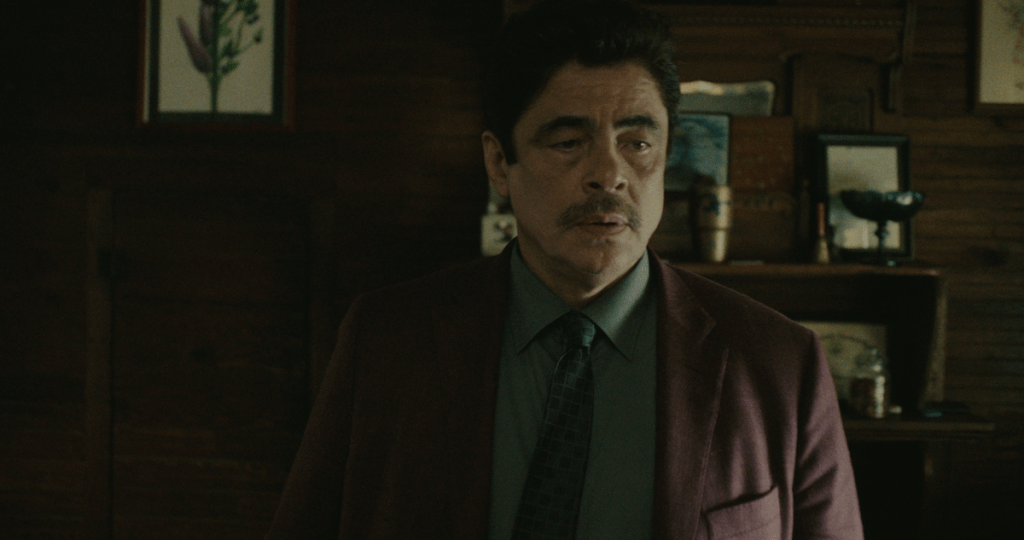
Although it received sniffy reviews, I found Reptile to be a blast from start to finish. Previously most famous for his music videos, Grant Singer’s directorial debut is an exciting crime thriller with a terrific central performance from Benicio Del Toro as the weary detective Tom Nichols. Many thought the film was overlong at 136 minutes but I appreciated Singer taking his time to develop the characters and mystery. The film’s lusciously shot by Michael Gioulakis, who revels in the murky darkness and there’s a handful of particularly tense shoot-outs that are worth a watch alone.

14) Champions

There were a handful of underdog sports comedy films this year, such as Hustle and Next Goal Wins, but Champions is my pick of the bunch. Directed by Bobby Farrelly in his solo directorial debt, Woody Harrelson is terrific as temperamental minor-league basketball coach Marcus Marakovich who’s tasked with caoching a team of disabled players as community service. The laughs are not only consistent but balanced with plenty of heart and it’s a film where we not only root for the team but you’ll have a permanent smile plastered on your face from start to finish.

13) A Man Called Otto

I was very surprised I liked A Man Called Otto as much as I did, but Marc Forster’s remake of the 2012 Swedish film has tons of heart and a brilliant Tom Hanks performance at its centre as the lovable but grumpy Otto. This is a film about what it means to be lonely and the importance of caring neighbours. Mariana Treviño holds her own as Otto’s new Mexican neighbour, Marisol, as does Manuel Garcia-Rulfo as her kind-hearted but slightly useless husband. A Man Called Otto is transfixing from start to finish and has more than few home truths in it.

12) Knock At The Cabin

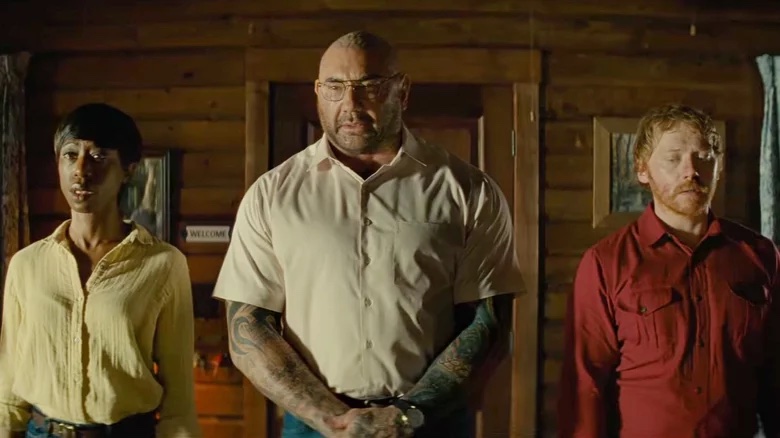
Knock At The Cabin is the latest by M. Night Shyamalan, whose once tarnished career is happily back on an uphill trajectory, as evidenced by Split, Glass and Old. A high-concept apocalyptic horror adapted from a novel by Paul G. Tremblay, the film follows a family of three on holiday in a remote cabin who are visited by a group of strangers, led by Leonard (Dave Bautista) who demand they sacrifice one of their own to prevent an impending apocalypse.  It’s a taut, intense ride while also being thought-provoking. This is not the first time the director’s explored the end of the world and this is a significant step-up from both After Earth and The Happening. Although the premise plays to Shyamalan’s strengths, as you’d expect he doesn’t do things by the book. The film does an excellent job of leaving you guessing the fanatical group’s motive – is the world really about to end? Are they telling the truth or are they suffering from some kind of psychosis? Shyamalan really makes the most of the mostly single location – the film doesn’t feel stagey and it’s beautifully shot by Jarin Blaschke, collaborating with Lowell A. Meyer. The cast are uniformly excellent and this may well be Dave Bautista’s best work yet, who is fantastic as the hulking yet polite Leonard. 

11) The Hunger Games: The Ballad of Songbirds and Snakes

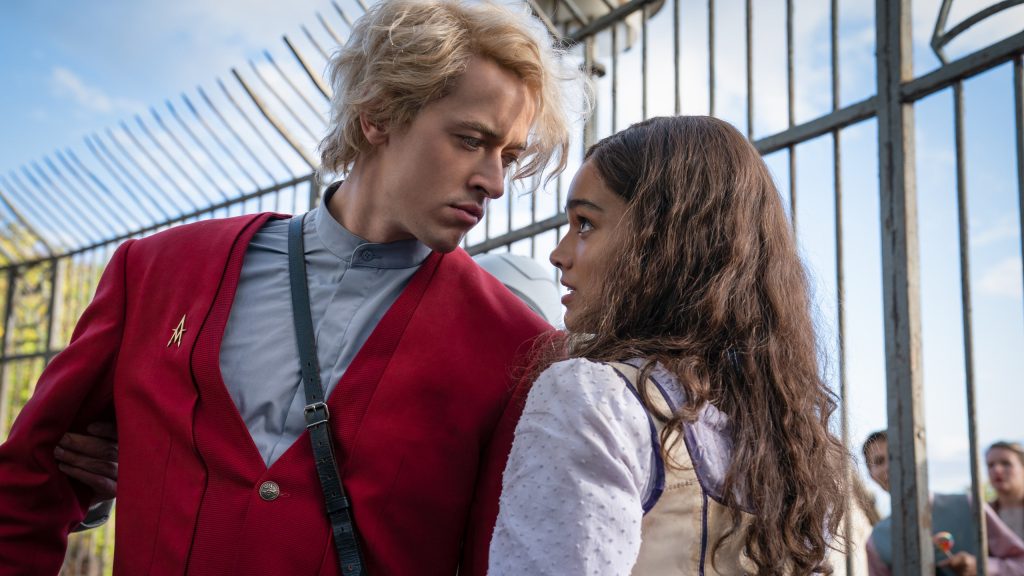
I wasn’t expecting to like this prequel to The Hunger Games as much as I did, which follows a young Coriolanus Snow (Tom Blyth) on his path to political power, the villain devilishly played by Donald Sutherland in the other films. Francis Lawrence returns in the director’s chair, having directed all of the previous entries bar the first. The Hunger Games: The Ballad of Songbirds and Snakes is an excellent adaptation and quite possibly the most mature film in the series to date. Lawrence does a great job of showcasing the more outright barbarity of the games, which are minimalist and lack the polish and pizzazz of future arenas. In fact, the games in this film are set in a literal arena, rather than the forest or tropical settings of The Hunger Gamesand Catching Fire. Knowing Lucy Gray is unlikely to win, Snow suggests revisions to the game structure, such as sponsorship, to improve her chances, while simultaneously propelling the games as a spectacle to increase viewership. I really admired the film’s more cold-blooded tone and its deeper dive into Snow’s character, especially in the film’s third act, which many seem to have taken issue with.


So there we go, numbers 20 down to 11. Stay tuned for the Top Ten in a separate post…


What are your thoughts? Let me know in the comments or tweet @TheFilmMeister

Best Films of 2022 (10-1)

Uncategorized

This is the second part of my Best Films of 2021 feature detailing my Top Ten films. Click here to read numbers 25 to 11.

10) Fantastic Beasts: The Secrets of Dumbledore 

Despite the many controversies riding against the film, as well as acting as a follow-up to the disappointing The Crimes of Grindelwald, I was surprised by how well this film redeems the series. Returning director David Yates deftly melds both Grindelwald’s political quest and Newt’s storyline and unlike the second film which sidelined the titular fantastic beasts, Newt’s briefcase of magical creatures play an important part in the narrative. There are some arresting visuals and the film is directed by Yates with confidence.  

There are some noteworthy performances, with Jude Law the standout in an expanded role as Dumbledore, who retains Michael Gambon’s twinkly personality and Irish lilt. Redmayne carries the film well again and Callum Turner as Newt’s Auror brother, Theseus makes more of an impression in an expanded role, as he was quite wooden last time round. Newcomer Mads Mikkelsen is excellent as Grindelwald but wisely avoids channeling Johnny Depp’s equally strong performance. 

Cinematographer George Richmond replaces Philippe Rousselot for this third installment and he conjures a greyer aesthetic to suit the world that is on the brink of an all-out war, foregoing Rousselot’s more romantic elements. 

Fantastic Beasts: The Secrets of Dumbledore is a thoroughly entertaining ride that justifies the existence of this series. I’m not sure if it’s quite as good as the first instalment but it’s certainly pretty close. Sadly, the film attracted mixed-to-positive reviews and didn’t perform very well at the box office – I really hope it’s not the end for the series and I’d love to see how the story develops.

9) Barbarian

Zach Cregger’s high-concept directorial debut packs plenty of satisfying surprises up its sleeve throughout its run time. This is a taut, claustrophobic and mostly satisfying piece that had me hooked throughout. It runs out of steam a little in its last ten minutes, where the ending is not quite as subversive as the rest of the film and Cregger feels the need to overexplain a little too much. However, this is forgivable considering how reserved the rest of the film is at showing its hand. Cregger balances the horror elements with pepperings of comedy, a notable highlight being Justin Long bringing a new meaning to measuring the square footage of a property. Barbarian is further elevated by its rich exploration of social commentary too, with plenty to say on the state of America, gender and race. I can’t wait to see what Cregger does next.

8) Spiderhead

A controversial choice but director Joseph Kosinski features again with Spiderhead, a straight-to-Netflix sci-fi thriller that received mixed reviews.  Spiderhead boasts a fascinating concept in that it is set in a penitentiary where prisoners are allowed to roam freely, in exchange for being experimented on medically. The characters are subjected to make some dark and difficult decisions and the film is directed with flair by Kosinski. Miles Teller is typically reliable and carries the baggage of his character’s crimes with the will to change his future convincingly. Chris Hemsworth is excellent as the voyeuristic Abnesti, whose charisma walks a fine line between prickly comedy and satisfying ridiculousness. 

Cinematographer Claudio Miranda captures the prisoners’ point of view excellently, the hues of artificial colours inside the penitentiary juxtaposed with the lush, tropical island settling. Kosinski does well to methodically reveal character backstories, maintaining tension throughout proceedings. He constantly keeps the film fresh, being careful to keep audiences on their toes with its narrative. Many feel the film falls apart in its third act, but I found the climax a natural and satisfyingly bleak place to develop its story.  

7) X

X is the new film from director Ti West, who returns to his horror roots after a brief venture to the Western with the giddily entertaining In A Valley Of ViolenceX is a thoroughly entertaining horror that is elevated by its cineliteracy towards 20th-century slasher films such as The Texas Chainsaw Massacre, as well as its satisfying exploration of a range of themes. It is most effective in its first half as the build-up is at a constant simmer. The film heads off the rails in its second half in a mostly satisfying way, albeit with some silliness as it leans into the genre tropes of that era.

Mia Goth has impressed in horror films with A Cure For Wellness and Suspiria and makes her mark here again. She brings a down-and-dirty edge into the role of Maxine and she quite literally disappears into her second role under heavy prosthetics as Pearl, the wife of Howard. The rest of the cast are all game too, with Jenny Ortega receiving a meaningful arc and Stephen Ure proving what an underrated actor he is, channeling the nastiness from his most famous portrayal of an Orc in Lord of the Rings: The Two Towers

The score by Tyler Bates and Chelsea Wolfe is haunting using period pieces as well as an original predominantly synth-based score. Chelsea Wolfe’s rendition of Oui Oui Marie is particularly mesmerising.  The film is also beautifully shot by Eliot Rockett. He frames the characters as if they are prey, an aerial shot of an alligator stalking its target and an eagle encircling the air above the film crew are of particular note. 

The score by Tyler Bates and Chelsea Wolfe is haunting using period pieces as well as an original predominantly synth-based score. Chelsea Wolfe’s rendition of Oui Oui Marie is particularly mesmerising.  The film is also beautifully shot by Eliot Rockett. He frames the characters as if they are prey, an aerial shot of an alligator stalking its target and an eagle encircling the air above the film crew are of particular note.

6) Where The Crawdads Sing

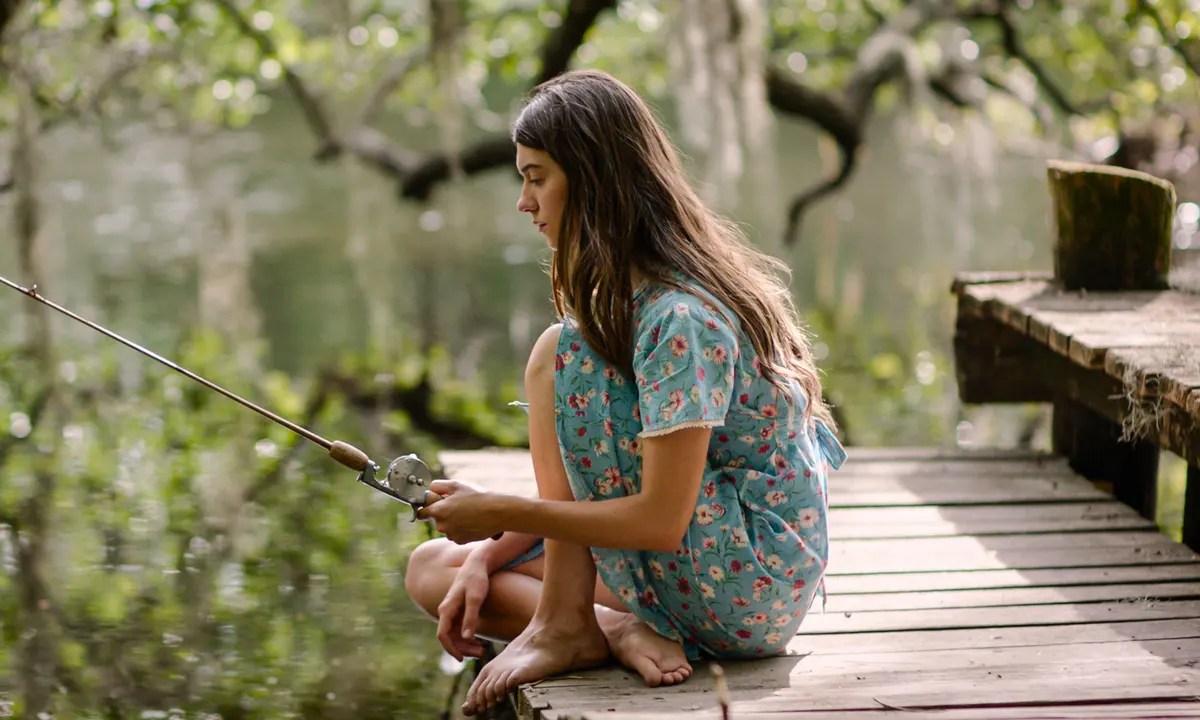
Contrary to the generally negative reception the film has received, I was enamoured by Where The Crawdads Sing. An adaptation of Delia Owen’s 2018 coming-of-age murder mystery Southern Gothic novel, director Olivia Newman’s film is consistently compelling and not afraid to explore some dark and tragic sub-plots. It really makes the most of its swampy location, which feels like a character of its own, and the 125 minutes raced by. I’d have been happy for the film to be an hour longer as it was that interesting. The film’s beautifully shot by Polly Morgan and is supported with a thoughtful Mychael Danna score. Daisy Edgar-Jones is tremendous in the lead role, a misunderstood yet ultimately kind and caring young woman.

Where The Crawdads Sing is a haunting adaptation told with beautiful humanity and is one of the best films of the year. It effortlessly melds its murder mystery, romantic and thriller genre qualities into a coherent and affecting drama that is never cheesy. I can’t wait to see what projects Newman and Edgar-Jones pick next as they are clearly both talents to watch.  

5) The Banshees of Inisherin

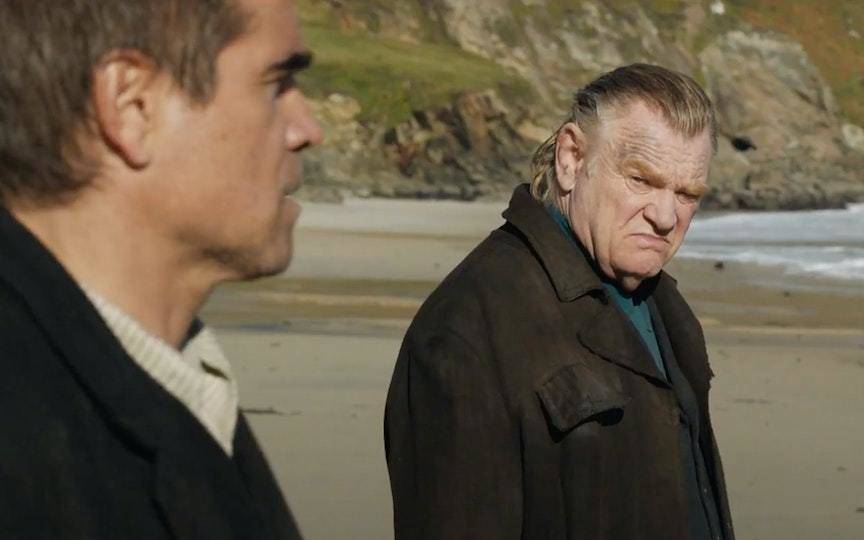
The Banshees of Inisherin is the latest by writer-director Martin McDonagh, whose three film track record is untarnished so far. Yet another knockout McDonagh feature, the script is full of his signature black, dry humour and the first half of the film is full of comedic moments. The film gets progressively grimmer and McDonagh deftly balances the initial laughs with the heavier subject matter and tone. There’s a lot of substance to the story, McDonagh being both critical and drawing parallels of the events on-screen with the Civil War, infused with a Shakespearean quality. Both Farrell and Gleeson turn in excellent performances, fully deserving of the awards attention.

Having watched the film three times now, it gets better each rewatch as you start to pick out the smaller minutatie and the foreboding signs of the narrative direction the film is heading in. It’s definitely McDonagh’s grimmest watch to date and the film leaves you stone-cold in its closing moments with characters that have lost their way. The film isn’t quite perfect though – it doesn’t seem to have quite as much substance as McDonagh’s first two films and the film’s pacing sags briefly just before it enters its final act.

4) Boiling Point

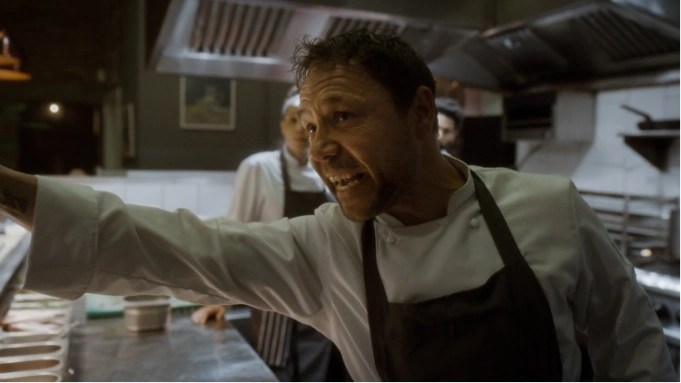
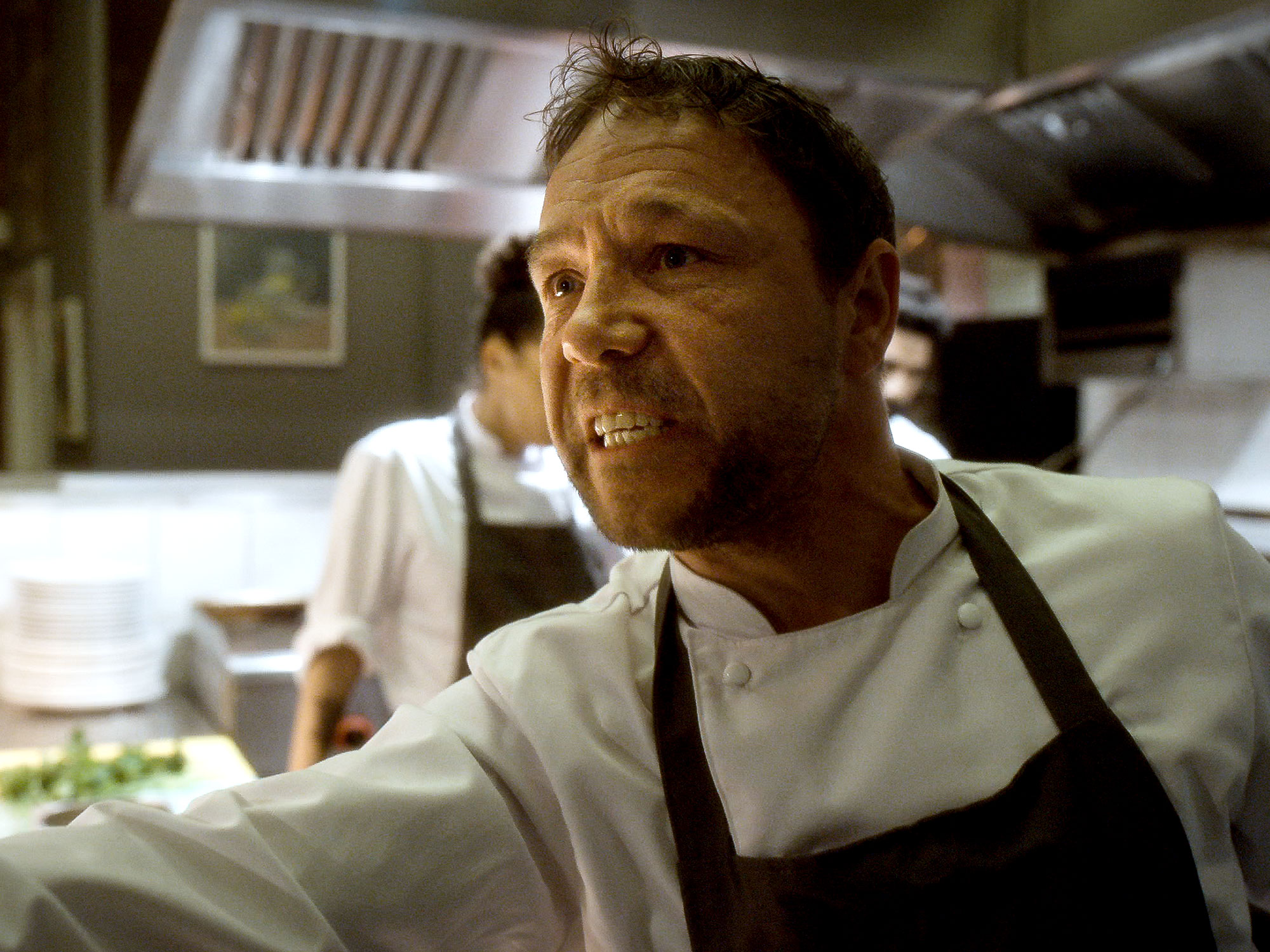
My top choice in my mid-year report, Boiling Point slips to a commendable fourth position. This single-take drama is thrilling and sharp, constantly ramping in tension and maintaining its momentum throughout. From the opening sequence of the Health and Safety assessment, director Philip Barantini has created a startlingly authentic, cutthroat environment and it’s astonishing to witness a film as riveting as Boiling Point is from seemingly few ingredients.  The script by Barantini and James Cummings is razor-sharp. They introduce a convincing restaurant team from the fellow chefs to the service staff and how they are divided. 

Stephen Graham delivers an astonishing performance as Andy, a man at his wits end and on the verge of a breakdown with his home life and the added stresses of ensuring that the dinner service runs like a Swiss watch. The rest of the cast are uniformly brilliant and are sure to land future roles based on the strengths of their performances here. 

Films that are or have been created to feel like they have been shot in one take have often been labelled as a gimmick, and to some extent this is true. But Boiling Point succeeds as a gripping, anxiety-inducing drama first with searing performances. It isn’t a hollow film that tries to hide behind a showy camera technique – the handheld one-shot take further adds to the hysteria on-screen.

3) Thirteen Lives

Thirteen Lives is a biographical retelling of the nail-biting 2018 Tham Lang cave rescue in northern Thailand.  A tremendous piece of work, it is quite possibly Ron Howard’s best film. Despite its two and a half hour length, it’s taut and constantly maintains tension. The film does a great job of re-dramatising the narrative from different perspectives, be it the local farmers whose land need to be flooded so the water can be diverted away from the cave, to the governor trying to manage the situation and facing pressure from his seniors. Both Viggo Mortensen and Colin Farrell are excellent, although it took me a couple of scenes to buy their British accents. It’s brilliantly shot by Sayombhu Mukdeeprom, most acclaimed for his collaborations with Suspiria director Luca Guadagnino. Mukdeeprom thrillingly captures both the claustrophobia of the situation and the serene yet threatening rural surroundings. 

2) Blonde

A misunderstood masterpiece, Andrew Dominik’s fictional retelling of Marilyn Monroe’s life is searing and provocative. It’s a hellish, unrelenting account that deftly captures the descent of Monroe’s life. The film argues Monroe was used and abused at every turn, a child-like figure who couldn’t handle herself. Redefining the parameters of the biopic genre, Blonde indebted to the style of David Lynch and Darren Aronofsky in its hallucinogenic portrayal of Monroe’s gloomy life. Dominik also experiments with colour and aspect ratios and there are numerous sequences which feel like they have been lifted straight from the 1950s.

The opening twenty minutes is particularly startling, a young Monroe (brilliantly played by Lily Fisher) suffering abuse at the hands of her mentally unstable mother, Gladys (Julianne Nicholson). Dominik’s portrayal of the paparazzi and male gaze is also fascinating, especially how he meticulously recreates iconic images from Monroe’s career. The film is unflinching in its depiction of sexual violence and domestic abuse, thoroughly earning its 18-rating. Its last act is a disorienting Lynchian descent into drug-fuelled mania. A scene where Monroe is sleeping is shot as if from the angle of a voyeur and she awakens from her slumber to check her surroundings. DP Chayse Irvin experiments with shadows and figures and there is definitely someone in the room. 

The score by Nick Cave and Warren Ellis is breathtaking – a haunting and melancholic soundscape that is endlessly memorable and is the glue that holds the film together. Chayse Irvin’s cinematography is similarly mindblowing, regularly experimenting with colours and aspect ratio.

Blonde is not for the faint-hearted but this is a fierce and muscular horror-filled biopic of Monroe. It’s directed with real vigour, backed up by committed performance and a technical crew on top of their game. The 166 minutes fly by and a second watch unlocks even more substance. 

So the best film of the year is…

1) The Black Phone

A film that gets better on each rewatch, The Black Phone sees horror maestro Scott Derrickson return to his roots, reteaming with writer C. Robert Cargill and actor Ethan Hawke. The result is an excellent, intelligent horror film that is very well-directed by Derrickson. He crafts a delicious setting, leaning into 1970’s suburbia and isn’t afraid of unflinchingly portraying playground violence. Derrickson takes the narrative to dark places and the fast pacing grips you instantly. The film is very cine-literate, with Derrickon’s passion for film evident on the screen, be through the inclusion of period television shows from the time and the playful nods to It. On that note of the nods to Stephen King, it’s not unreasonable that his son carries some of his traits such as a community of children going missing, but it’s not derivative and the tone isn’t cynical. 

The script by Derrickson and Cargill deftly humanises the characters through meaningful arcs and avoids resorting to caricatures. There are also some exhilarating set pieces and I loved the creative choice to portray some of the previous victim’s lives on grainy film, which was a highlight of Derrickson’s magnum opus Sinister. The film is further bolstered by an interesting and unnerving score by Mark Korven and it’s beautifully shot by Brett Jutkiewicz. The cast are excellent, especially newcomers Mason Thame and Madeleine McGraw who make an explosive impression. Hawke is also terrific – he has not played a villain on-screen before and ‘The Grabber’ is an unhinged and suitably sinister screen presence. 

The Black Phone isn’t perfect – Hawke’s villain could have been further explored, James Ransone’s character arc isn’t very well executed and I wish the film further explored the link between overcoming one’s demons and the repercussions stemmed from that. But otherwise, it’s pretty terrific and I can’t wait to see what Derrickson has up his sleeve next. 


What are your favourite films of 2022? Let me know in the comments or tweet @TheFilmMeister

Best Films of 2022 (25-11)

Uncategorized

After 2021 course-corrected the film industry after the coronavirus pandemic, 2022 continued to put it back on track.

Having sampled much of what 2021 had to offer, I now feel ready to share my best films of the year. I know that I am late in the game but there were quite a few films I didn’t get to watch in time and felt that it would be a disservice to generate a list that wasn’t truly reflective of the year. By and large, 2022 was a sound year for film and on a par with 2021 in terms of general quality.

Here I rank numbers 25 to 11. Numbers 10 – 1 will be detailed in a separate post so stay tuned for that.

As always, I am following the UK release date calendar from January 1st to December 31st hence the inclusion of some awards films from the start of the year.

25) The Electrical Life Of Louis Wain

Contrary to the overly whimsical trailers for the film, The Electrical Life Of Louis Wain is a thoroughly touching and fascinating biopic about the titular artist, famous for his anthropomorphic large-eyed cat drawings. Benedict Cumberbatch is excellent as Wain, deftly balancing the initial misunderstood energy of the artist and his fragmented mental state of mind as the film progresses. The relationship between Cumberbatch and Foy’s governess is tender and director Will Sharpe is able to gracefully shake up the tired biopic formla.

24) Kimi

Kimi is the latest by director Steven Soderbergh, whose enjoyed an incredibly varied career in terms of the genres he has worked in. This action thriller follows Angela Childs (Zoë Kravitz), an agoraphobe whose previously been the victim of assault and her anxiety has been worsened by the coronavirus pandemic.

Kimi is an efficient, mostly one-location thriller with a terrific central performance from Kravitz. Its first two acts are its best, with Soderbergh excellently capturing and exploring Angela’s agoraphobia, and there are clear parallels to Alfred Hitchcock’s Rear Window. In many ways, it’s a modern update for the Alexa-owning, coronavirus pandemic generation. The script is sleek and plays to writer David Koepp’s strengths who’s proved himself in this genre before with films such as Panic Room and Secret Window. The third act leans more into action, which I found less interesting, although still rather enjoyable and the film doesn’t outstay its welcome. 

23) Men   

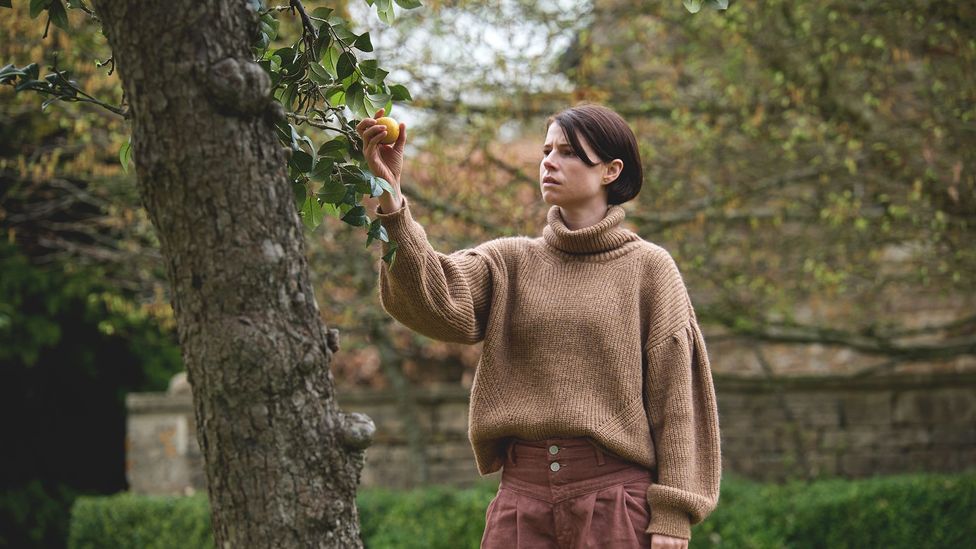
Men is the third film from Alex Garland, whose first two sci-fi films Ex_Machina and Annihilation were thoughtful, thrilling and visually interesting pieces. Garland sidesteps from sci-fi into British folk horror and this film follows a young widow, Harper (Jessie Buckley) who ventures to the Cotswolds for a well-earned break from London city life and to recover from the death of her husband, although she is terrorised by the predatory and patronising men in the village, who are all played by Rory Kinnear. 

Men’s first two acts are thrilling and Garland skilfully drip-feeds his audience details of her past trauma a piece at a time. He establishes a deeply unsettling tone and deftly ramps up the tension through Harper’s mental paranoia. The film is as much a metaphorical piece as much as it is a horror, using its frightening elements as allegories for misogyny, grieving and rebirth. Unfortunately, the film nosedives in its third act. On the plus side, there’s some suitably slimy body horror but Garland is self-indulgent and throws away any subtlety he builds in its first two acts. It just becomes rather silly and certainly not as clever as it thinks it is. 

The film is bolstered by an eery choral soundtrack from Garland regulars, Ben Salisbury and Geoff Barrow, and DOP Rob Hardy vividly captures the beauty yet foreboding nature of the Cotswolds.  Jessie Buckley’s great as the prickly Harper (despite my sniffy opinions on her past performances, especially with The Lost Daughter) and this is career best work from Rory Kinnear. Men may be Garland’s weakest film but it’s still a strong piece from the director and I’d rather a filmmaker take a risk and it not fully succeed than play it safe.

22) Hustle

Hustle doesn’t particularly stray from sports drama convention but it’s an investing and consistently entertaining drama from start to finish. After giving the performance of his career in the thoroughly unnerving Uncut Gems, Adam Sandler continues to turn his poor comedic career choices around with another excellent performance as Stanley Sugarman, a washed-up NBA scout. Juancho Hernangómez is also terrific as Cruz and is given a compelling back story for why he finds himself in the situation he is initially in at the start of the film. Both Sandler and Hernangómez share an absorbing chemistry, which makes the duo easy to root for. Of the rest of the cast, Latifah isn’t given much to work with as Sandler’s wife, and the ever-versatile Ben Foster is also short-changed as Sandler’s disparaging boss. 

21) Top Gun: Maverick

Top Gun: Maverick is the long-awaited sequel to the late Tony Scott’s 1982 original, a film which quite literally propelled Tom Cruise’s career. Very much a product of its time in its tone and treatment of women, while the action sequences are admirable and Cruise’s performance is earnest, I can’t say I’m a big advocate of the original. This sequel is directed by Joseph Kosinski, who most recently directed the excellent forest-fire action drama Only The Brave and he reunites with some of the cast and crew such as Miles Teller, Jennifer Connelly and cinematographer Claudio Miranda. 

Top Gun: Maverick is a surprisingly good film and is vastly superior to the original. While its story is familiar and fairly predictable, it is significantly more coherent and focussed with a singular narrative to achieve this specific mission. Tony Scott’s original wrangled in different directions and its climax sequence felt tacked on and unearned. The flight sequences are particularly excellent and are nail-biting in moments. It has the precision of Mission: Impossible director Christopher McQuarrie who co-writes and produces the film.

I’ve long been a critic of Tom Cruise and I’d argue he has far more misses than hits. Cruise’s performance works here as he plays an older and jaded instructor, whose ego and arrogance have been somewhat tarnished by his experiences. Miles Teller is reliably excellent as Rooster but there isn’t quite as much meat to the bone to the tumultuous relationship between him and Maverick as there could have been. 

Kosinski wisely finds the right balance between relying on nostalgia and creating an original piece. It’s not quite the action masterpiece that some are claiming it to be though – it’s not as radical a piece as George Miller’s Mad Max: Fury Road, which was essentially an entire film of rip-roaring action, and it doesn’t pack many narrative twists up its sleeve.  But it doesn’t need to be. For Top Gun: Maverick to be an improvement on the original is a miracle in and of itself and I’m glad it exists. 

20) Turing Red  

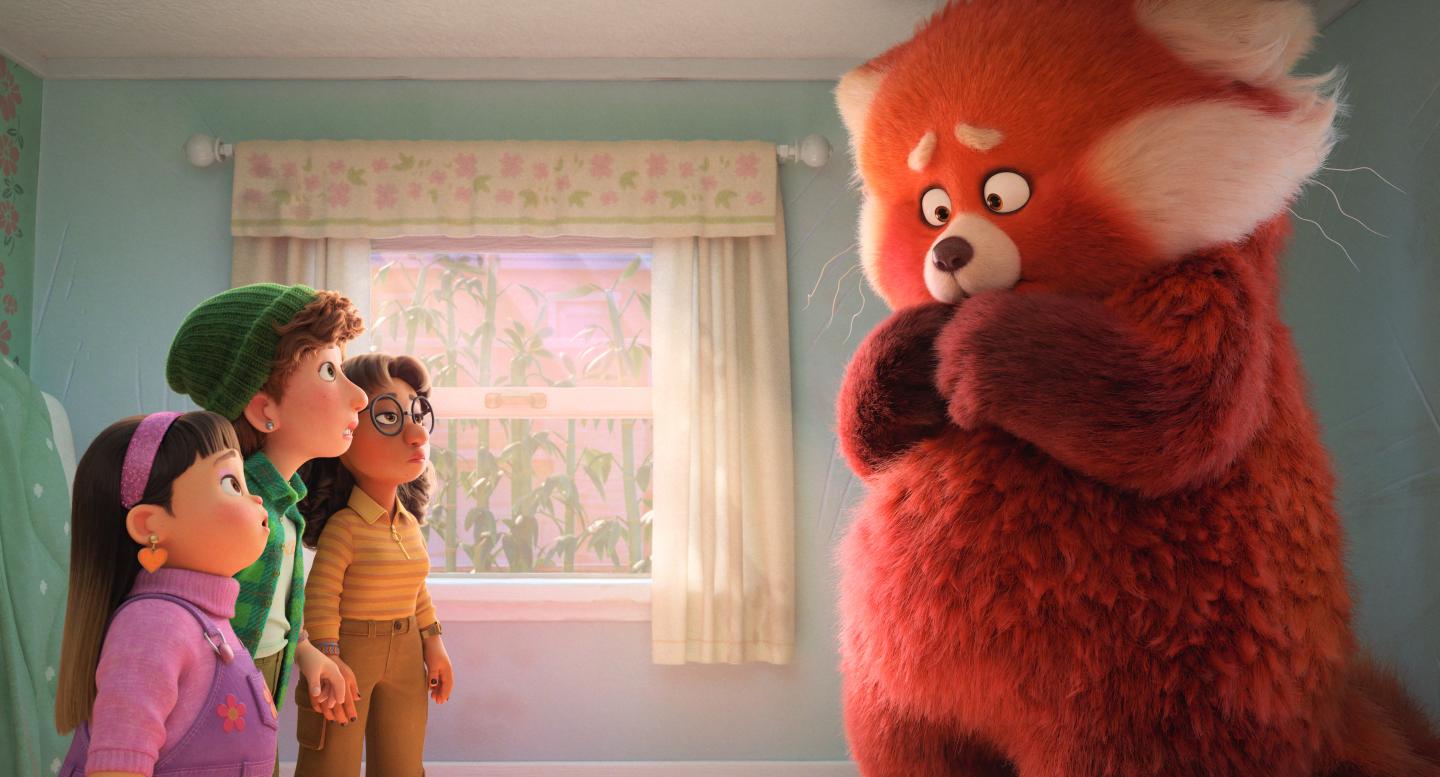
Turning Red is the latest in the Disney Pixar canon and like Soul and Luca last year, it has released straight on Disney+. Director Domee Shi’s feature-length debut is to be commended for its sheer ambition of exploring female puberty, a fairly taboo subject matter for a mainstream film, especially one that also has to appeal to younger audiences. It represents a very different affair for a Pixar film and as is typical for the animation studio, it is moving in parts. It is clearly inspired by anime with its transformative element and colour scheme, down to the extreme facial expressions of its characters. The script, co-written by Shi and Julia Cho, is smart and its characters bursting with personality. Mei is a very well written lead and is endlessly empathetic. 

Once you settle into its eclectic tone, it’s a very satisfying journey to watch unfold bolstered by its strongly written female characters. It’s not quite top-tier Pixar for me, as it isn’t quite as effortlessly charming and poignant as its best entries such as Up or Coco, but I’m very glad it exists. The film is sure to launch Domee Shi’s career and I can’t wait to see what she does next. 

19) Smile

Smile is a psychological horror written and directed by Parker Finn, in his feature-length debut. The film follows a therapist named Rose Cotter (Sosie Bacon) who starts having increasingly disturbing experiences after witnessing the unexplained suicide of a patient.

Smile is a surprisingly effective psychological horror that deftly explores the themes of trauma, grief and guilt through horror’s generic constructs. It’s not perfect – it overrelies on some classical horror tropes, particularly with its use of jump scares and there’s nothing here you’ve haven’t seen before. It’s also around 10 minutes overlong. That said, it’s impressive that it doesn’t fully reveal what is haunting Cotter right until the very end and as a result, it maintains its tension. There’s also a terrifically creepy yet awkward party and the atmosphere of the hospital Cotter works at is also well-realised. Smile is ultimately much better than it has any right to be and is thoroughly entertaining and meaningful from start to finish. I’m looking forward to seeing how Finn’s career develops. 

18) The Good Nurse

The Good Nurse is a thrilling drama based on the true story of a night nurse Amy (Jessica Chastain) who suspects her co-worker, Charlie Cullen (Eddie Redmayne) might be a serial killer. Both Chastain and Redmayne are brilliant and share a palpable chemistry together, with Redmayne particularly charismatic and chilling. Director Tobias Lindholm does an excellent job maintaining the tension throughout and the film is particularly effective as Amy tries to distance herself from Charlie after sharing quite a close and vulnerable relationship with him, prior to her accepting the insurmountable evidence against him.

17) The Batman

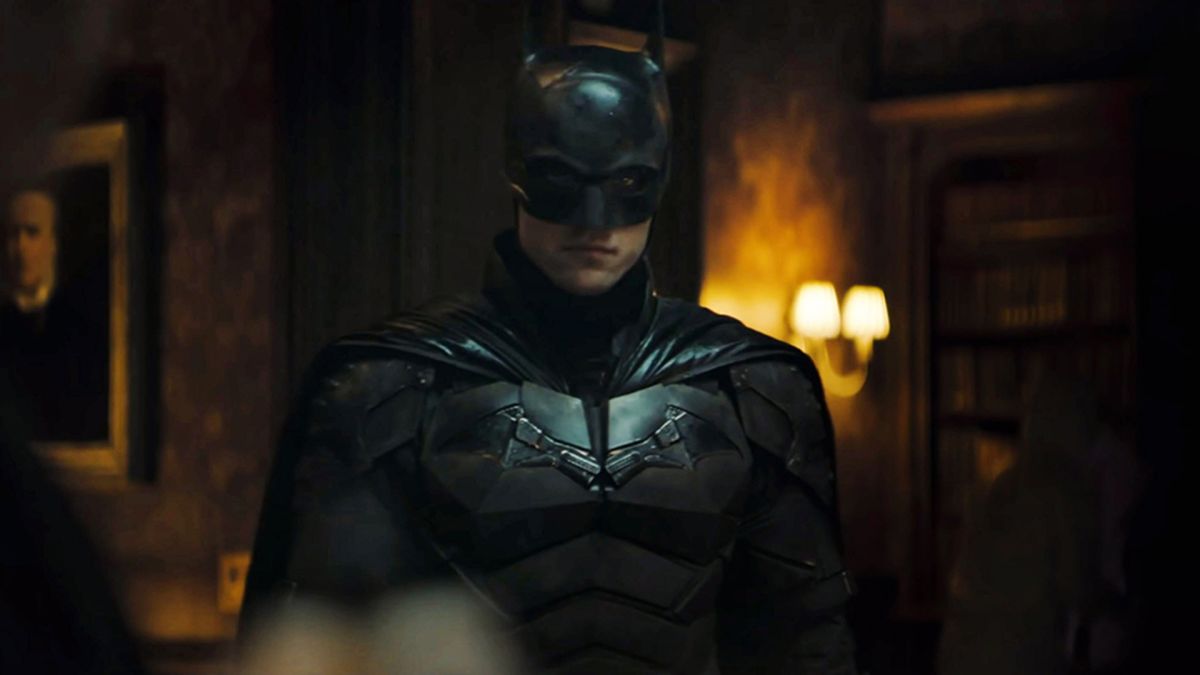
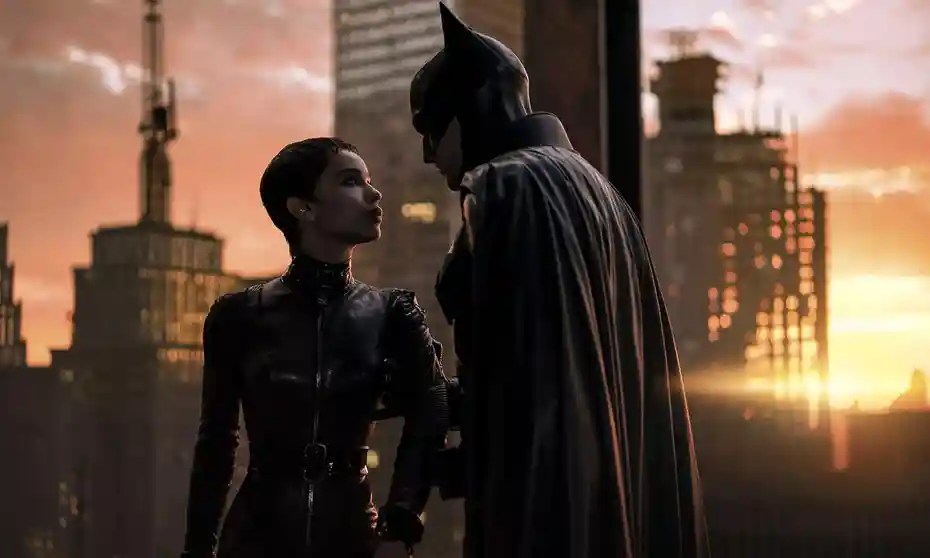
The Batman is a new rendition of the Caped Crusader by War For The Planet Of The Apes director Matt Reeves, positioned outside of the DCEU canon, and sees a younger Dark Knight (Robert Pattinson) in his second year of crimefighting and Reeves hones in on his detective skills. It is an interesting, if flawed, depiction of the Caped Crusader. Reeves’ take on the character is certainly admirable. It very much owes a debt to the Christopher Nolan and Zack Snyder aesthetic in that it is a darker and grungier interpretation. Experiencing Batman as a detective figure is refreshing. The notion of Batman providing narration is also innovative, yet uneven in that it’s not sustained throughout the film. The extended run time of 176 minutes isn’t to the film’s detriment.  It’s always promising to see a director allow a film breathe when it warrants it rather than resorting to quick cuts. 

Pattinson’s portrayal of Batman is expectedly excellent, although his Bruce Wayne needs some work. This is more a choice of the script rather than any wrongdoing by Pattinson as Bruce Wayne doesn’t receive a particularly meaningful arc so he isn’t granted the opportunity. Other highlights of the cast include Colin Farrell, who is almost unrecognisable as Oswald Cobblepot in his early Penguin days, and Jeffrey Wright is effortless as James Gordon. 

Paul Dano’s Riddler is an interesting villain and poses a genuine threat to Batman throughout much of the film but his character arc is severely let down towards the end of the film to the point where he doesn’t pose a threat and his performance borders on being laughable. 

The score by Michael Giacchino is really excellent and he establishes very memorable themes for the characters, although the score doesn’t always fit in with the scenes they are inserted in. The cinematography by Greig Fraser is beautiful, hot on the footsteps of his similarly excellent work on Dune.  

The Batman is a strong interpretation from Reeves and I’m looking forward to see where future instalments could go, although I have some reservations with the teases. However, it’s not quite the masterpiece that some have proclaimed it to be and Reeves is just not as competent a director as Nolan or even Snyder.

16) Black Panther: Wakanda Forever

After Black Panther electrified the superhero film genre, earning seven Oscar nominations and winning three, to say Wakanda Forever has its work cut out for it would be an understatement. Not least by the sudden death of its titular star, Chadwick Boseman, director Ryan Coogler had to effectively chuck out the original script and rewrite it to reframe the narrative on the character’s passing. 

The result is a significant improvement over its predecessor and Coogler has delivered an intelligent, sombre and politically charged sequel. Coogler makes a strong choice to fully explore the characters and how they react to T’Challa’s death, very much mirroring how audiences have mourned Boseman in reality, recreating a scenario we all understand. In a refreshing change of pace for Marvel and a trait that has plagued many of its films, Coogler retains the sombre tone throughout and doesn’t resort to cheap and disposable quips.

The performances are uniformly excellent, with Letitia Wright, Angela Bassett and Danai Gurira the highlights, as well as Tenoch Huerta’s fiersome yet empathetic villain, Namor. You can really empathise with his position and motivation and this makes him one of Marvel’s best villains. 

The action sequences are much better this time around and the third act doesn’t succumb to the usual mindless CGI-fest many comic-book films descend into. The film is crisply shot by Autumn Durald Arkapaw and the score by Ludwig Göransson is once again excellent. 

The extended 161 minute run time wasn’t an issue for me and the film kept me engaged throughout. This is much more of a slow-burn, which I appreciated, and Coogler deftly balances a grim tone with the idea of future hope and prosperity for the fictional nation of Wakanda. 

15) Prey

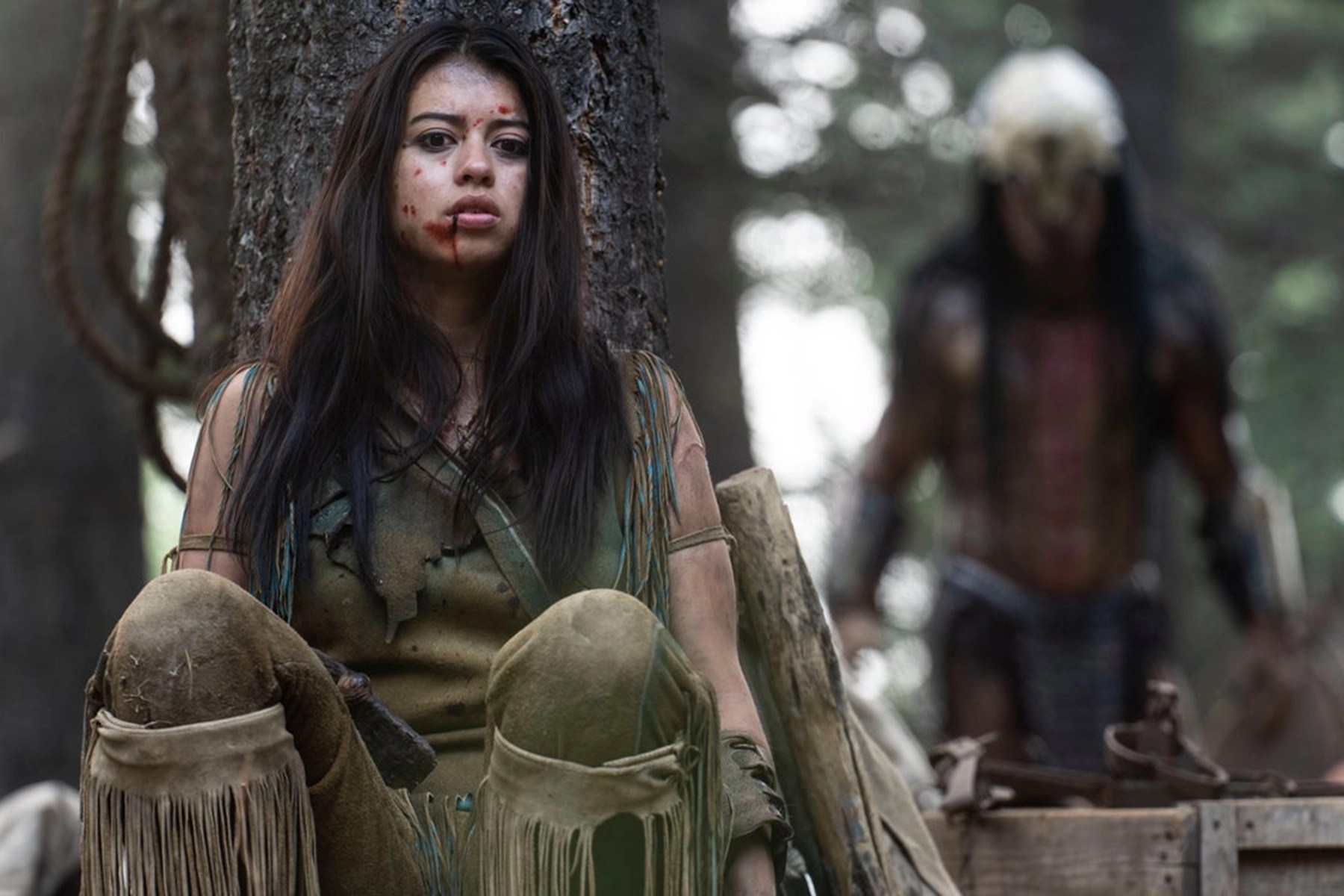
Prey is an excellent prequel and is just the gut-punch The Predator series needs. 10 Cloverfield Lane director Dan Trachtenberg puts his own stamp on the material and the film features some terrific performance among its almost exclusively Native American cast. The very fact Trachtenberg has opted to centre the film around an underrepresented community is to be commended, too, with the only exception to the rule being a group of French fur trappers Naru encounters. Amber Midthunder makes for a formidable screen presence and it’s great the film focusses on her humanity. She is portrayed as both a skilled hunter but also an individual who makes mistakes. Trachtenberg’s mirroring of smaller animals hunting each other and the Predator and anything that steps in its way is also an excellent creative stroke.

14) Terrifier 2

Damian Leone’s blood-soaked sequel is a slasher epic running 138 minutes and received a fair amount of media attention for its gory murders, with reports of some viewers vomiting and fainting. Not only does Terrifier 2 lives up to its gory hype but Leone has also crafted a gleefully riveting and original horror epic. Leone has demonstrably grown as a filmmaker and although there are some holes in the narrative, the time taken to develop the characters is a welcome one and sets the stage for events to unfold. 

I particularly appreciated the hallucinatory, dream-like elements, which afford a tangible scope to the story. The practical effects and make-up are brilliant and although it’s a bloody film, there is a sardonic edge to the kills. Terrifier 2 reaches creaky territory in its conclusion, where it starts to introduce some fantastical elements. While I got on board with it and appreciated the over-the-top execution, others understandably won’t. 

Terrifier 2 is an excellent slasher that outdoes its predecessor in pretty much every single way, other than the gnarliest kill which I think still belongs to the first film. It’s superbly directed, the increased character development compliments the gore and Leone crafts some arresting images. If Leone proceeds with a Terrifier 3, which an ambitious mid-credits scene alludes to, he has his work cut out to create a sequel that can better this. 

13) The Forgiven

The Forgiven sees John Michael McDonagh mostly back on form after the disappointing War On Everyone, although it’s not a masterpiece like his first two films were. The film is uneven and after the opening sequence, it takes a good twenty minutes or so to find its stride. At first, I thought McDonagh had made a straight-faced adaptation without his trademark black humour but thankfully, there’s plenty of that to be found once the film finds its feet. McDonagh balances this satisfying mean-spiritedness with sequences of profundity. Like the rest of his filmography, it’s a cathartic experience and the narrative leads you down some unexpected but satisfying roads.

Ralph Fiennes is excellent in the lead role, a tired and pitiful individual with a pessimistic outlook on life and McDonagh’s characterisation of him is excellent. He’s given some cracking lines in the script, especially one sequence where he is riding a camel in the desert. Fiennes balances this initial pessimism with an individual who has to do his penance and accept guilt. 

12) Nope

Nope is an original but flawed third film from Jordan Peele after Get Out and Us. It’s a multi-layered story that explores themes such as spectacle, the media, fantasy and the art of filmmaking and despite its shortcomings, it’s subversive and thrillingly original. Daniel Kaluuya is reliably great as an introverted but principled rancher. The score by Michael Abels is typically strong, ranging from other-worldly foreboding horror riffs to Western infusions.  The film is beautifully shot by Hoyte van Hoytema, who captures the spectacle of the wide vistas, through to immersive blood-drenched, nighttime horror. 

After a first viewing, you’ll need to ponder the various meanings and storyline and it’s a film that’s designed to be rewatched. Although it doesn’t flow quite as succinctly as Peele’s other films, Nope‘s many arresting images have stuck with me and it’s another success for the filmmaker.

11) Old Henry

Old Henry is a thrilling Western with a particularly satisfying final act with an inspired performance from Tim Blake Nelson. Nelson plays the titular character, a widower whose quite clearly experienced a violent past. He lives with his son, Wyatt (Gavin Lewis) on a farm in Oklahoma, who he is is very protective of. 

Directed by Potsy Ponciroli in what is his second feature-length film after the little known Super Zeroes in 2012, Old Henry keeps its cards close to its chest in its first act. But when it gets going, it’s a deeply satisfying romp with an elegiac quality. While it may seem like a fairly typical (but well done) Western, its narrative is elevated by a character revelation in the final act. There are some thrilling action sequences, particularly a chase within some reeds and a customary final shoot-out.  The film is also beautifully shot by director of photography, John Matysiak.


So there we go, numbers 20 down to 11. Stay tuned for the Top Ten in a separate post…


What are your thoughts? Let me know in the comments or tweet @TheFilmMeister

Top Ten Films Of 2022 – Mid-Year Report

Uncategorized

July has arrived and that means it’s time for my annual mid-year review of my favourite films of the year so far. As is to be expected, there are a handful films that I am still yet to see but I have tried to get through all the films that I have been looking forward to or the films that reviews have been good for. As usual, I am following the UK release date calendar between January and June.

Top Ten Films Of 2021 – Mid Year-Report

10) Men

Men is the third film from Alex Garland, whose first two sci-fi films Ex_Machina and Annihilation were thoughtful, thrilling and visually interesting pieces. Garland sidesteps from sci-fi into British folk horror and this film follows a young widow, Harper (Jessie Buckley) who ventures to the Cotswolds for a well-earned break from London city life and to recover from the death of her husband, although she is terrorised by the predatory and patronising men in the village, who are all played by Rory Kinnear. 

Men’s first two acts are thrilling and Garland skilfully drip-feeds his audience details of her past trauma a piece at a time. He establishes a deeply unsettling tone and deftly ramps up the tension through Harper’s mental paranoia. The film is as much a metaphorical piece as much as it is a horror, using its frightening elements as allegories for misogyny, grieving and rebirth. Unfortunately, the film nosedives in its third act. On the plus side, there’s some suitably slimy body horror but Garland is self-indulgent and throws away any subtlety he builds in its first two acts. It just becomes rather silly and certainly not as clever as it thinks it is. 

The film is bolstered by an eery choral soundtrack from Garland regulars, Ben Salisbury and Geoff Barrow, and DOP Rob Hardy vividly captures the beauty yet foreboding nature of the Cotswolds.  Jessie Buckley’s great as the prickly Harper (despite my sniffy opinions on her past performances, especially with The Lost Daughter) and this is career best work from Rory Kinnear. Men may be Garland’s weakest film but it’s still a strong piece from the director and I’d rather a filmmaker take a risk and it not fully succeed than play it safe and that’s why it creeps into tenth position.  

9) Hustle 

Hustle doesn’t particularly stray from sports drama convention but it’s an investing and consistently entertaining drama from start to finish. After giving the performance of his career in the thoroughly unnerving Uncut Gems, Adam Sandler continues to turn his poor comedic career choices around with another excellent performance as Stanley Sugarman, a washed-up NBA scout. Juancho Hernangómez is also terrific as Cruz and is given a compelling back story for why he finds himself in the situation he is initially in at the start of the film. Both Sandler and Hernangómez share an absorbing chemistry, which makes the duo easy to root for. Of the rest of the cast, Latifah isn’t given much to work with as Sandler’s wife, and the ever-versatile Ben Foster is also short-changed as Sandler’s disparaging boss. 

8) Top Gun: Maverick

Top Gun: Maverick is the long-awaited sequel to the late Tony Scott’s 1982 original, a film which quite literally propelled Tom Cruise’s career. Very much a product of its time in its tone and treatment of women, while the action sequences are admirable and Cruise’s performance is earnest, I can’t say I’m a big advocate of the original. This sequel is directed by Joseph Kosinski, who most recently directed the excellent forest-fire action drama Only The Brave and he reunites with some of the cast and crew such as Miles Teller, Jennifer Connelly and cinematographer Claudio Miranda. 

Top Gun: Maverick is a surprisingly good film and is vastly superior to the original. While its story is familiar and fairly predictable, it is significantly more coherent and focussed with a singular narrative to achieve this specific mission. Tony Scott’s original wrangled in different directions and its climax sequence felt tacked on and unearned. The flight sequences are particularly excellent and are nail-biting in moments. It has the precision of Mission: Impossible director Christopher McQuarrie who co-writes and produces the film.

I’ve long been a critic of Tom Cruise and I’d argue he has far more misses than hits. Cruise’s performance works here as he plays an older and jaded instructor, whose ego and arrogance have been somewhat tarnished by his experiences. Miles Teller is reliably excellent as Rooster but there isn’t quite as much meat to the bone to the tumultuous relationship between him and Maverick as there could have been.

Kosinski wisely finds the right balance between relying on nostalgia and creating an original piece. It’s not quite the action masterpiece that some are claiming it to be though – it’s not as radical a piece as George Miller’s Mad Max: Fury Road, which was essentially an entire film of rip-roaring action, and it doesn’t pack many narrative twists up its sleeve.  But it doesn’t need to be. For Top Gun: Maverick to be an improvement on the original is a miracle in and of itself and I’m glad it exists. 

There is now a step-up in quality…

7) Turning Red

Turning Red is the latest in the Disney Pixar canon and like Soul and Luca last year, it has released straight on Disney+. Director Domee Shi’s feature-length debut is to be commended for its sheer ambition of exploring female puberty, a fairly taboo subject matter for a mainstream film, especially one that also has to appeal to younger audiences. It represents a very different affair for a Pixar film and as is typical for the animation studio, it is moving in parts. It is clearly inspired by anime with its transformative element and colour scheme, down to the extreme facial expressions of its characters. The script, co-written by Shi and Julia Cho, is smart and its characters bursting with personality. Mei is a very well written lead and is endlessly empathetic.

Once you settle into its eclectic tone, it’s a very satisfying journey to watch unfold bolstered by its strongly written female characters. It’s not quite top-tier Pixar for me, as it isn’t quite as effortlessly charming and poignant as its best entries such as Up or Coco, but I’m very glad it exists. The film is sure to launch Domee Shi’s career and I can’t wait to see what she does next. 

6) The Batman

The Batman is a new rendition of the Caped Crusader by War For The Planet Of The Apes director Matt Reeves, positioned outside of the DCEU canon, and sees a younger Dark Knight (Robert Pattinson) in his second year of crimefighting and Reeves hones in on his detective skills. It is an interesting, if flawed, depiction of the Caped Crusader. Reeves’ take on the character is certainly admirable. It very much owes a debt to the Christopher Nolan and Zack Snyder aesthetic in that it is a darker and grungier interpretation. Experiencing Batman as a detective figure is refreshing. The notion of Batman providing narration is also innovative, yet uneven in that it’s not sustained throughout the film. The extended run time of 176 minutes isn’t to the film’s detriment.  It’s always promising to see a director allow a film breathe when it warrants it rather than resorting to quick cuts.

Pattinson’s portrayal of Batman is expectedly excellent, although his Bruce Wayne needs some work. This is more a choice of the script rather than any wrongdoing by Pattinson as Bruce Wayne doesn’t receive a particularly meaningful arc so he isn’t granted the opportunity. Other highlights of the cast include Colin Farrell, who is almost unrecognisable as Oswald Cobblepot in his early Penguin days, and Jeffrey Wright is effortless as James Gordon.

Paul Dano’s Riddler is an interesting villain and poses a genuine threat to Batman throughout much of the film but his character arc is severely let down towards the end of the film to the point where he doesn’t pose a threat and his performance borders on being laughable.

The score by Michael Giacchino is really excellent and he establishes very memorable themes for the characters, although the score doesn’t always fit in with the scenes they are inserted in. The cinematography by Greig Fraser is beautiful, hot on the footsteps of his similarly excellent work on Dune.  

The Batman is a strong interpretation from Reeves and I’m looking forward to see where future instalments could go, although I have some reservations with the teases. However, it’s not quite the masterpiece that some have proclaimed it to be and Reeves is just not as competent a director as Nolan or even Snyder.

Now into the Top Five and another step-up in quality…

5) Spiderhead

A controversial choice but director Joseph Kosinski features again with Spiderhead, a straight-to-Netflix sci-fi thriller that received mixed reviews. Spiderhead boasts a fascinating concept in that it is set in a penitentiary where prisoners are allowed to roam freely, in exchange for being experimented on medically. The characters are subjected to make some dark and difficult decisions and the film is directed with flair by Kosinski. Miles Teller is typically reliable and carries the baggage of his character’s crimes with the will to change his future convincingly. Chris Hemsworth is excellent as the voyeuristic Abnesti, whose charisma walks a fine line between prickly comedy and satisfying ridiculousness. 

Cinematographer Claudio Miranda captures the prisoners’ point of view excellently, the hues of artificial colours inside the penitentiary juxtaposed with the lush, tropical island settling. Kosinski does well to methodically reveal character backstories, maintaining tension throughout proceedings. He constantly keeps the film fresh, being careful to keep audiences on their toes with its narrative. Many feel the film falls apart in its third act, but I found the climax a natural and satisfyingly bleak place to develop its story.  

4) X 

X is the new film from director Ti West, who returns to his horror roots after a brief venture to the Western with the giddily entertaining In A Valley Of Violence. X is a thoroughly entertaining horror that is elevated by its cineliteracy towards 20th-century slasher films such as The Texas Chainsaw Massacre, as well as its satisfying exploration of a range of themes. It is most effective in its first half as the build-up is at a constant simmer. The film heads off the rails in its second half in a mostly satisfying way, albeit with some silliness as it leans into the genre tropes of that era.

Mia Goth has impressed in horror films with A Cure For Wellness and Suspiria and makes her mark here again. She brings a down-and-dirty edge into the role of Maxine and she quite literally disappears into her second role under heavy prosthetics as Pearl, the wife of Howard. The rest of the cast are all game too, with Jenny Ortega receiving a meaningful arc and Stephen Ure proving what an underrated actor he is, channeling the nastiness from his most famous portrayal of an Orc in Lord of the Rings: The Two Towers

The score by Tyler Bates and Chelsea Wolfe is haunting using period pieces as well as an original predominantly synth-based score. Chelsea Wolfe’s rendition of Oui Oui Marie is particularly mesmerising.  The film is also beautifully shot by Eliot Rockett. He frames the characters as if they are prey, an aerial shot of an alligator stalking its target and an eagle encircling the air above the film crew are of particular note. 

Now into the Top Three…

3) Fantastic Beasts: The Secrets of Dumbledore

Despite the many controversies riding against the film, as well as acting as a follow-up to the disappointing The Crimes of Grindelwald, I was surprised by how well this film redeems the series. Returning director David Yates deftly melds both Grindelwald’s political quest and Newt’s storyline and unlike the second film which sidelined the titular fantastic beasts, Newt’s briefcase of magical creatures play an important part in the narrative. There are some arresting visuals and the film is directed by Yates with confidence.  

There are some noteworthy performances, with Jude Law the standout in an expanded role as Dumbledore, who retains Michael Gambon’s twinkly personality and Irish lilt. Redmayne carries the film well again and Callum Turner as Newt’s Auror brother, Theseus makes more of an impression in an expanded role, as he was quite wooden last time round. Newcomer Mads Mikkelsen is excellent as Grindelwald but wisely avoids channeling Johnny Depp’s equally strong performance.

Cinematographer George Richmond replaces Philippe Rousselot for this third installment and he conjures a greyer aesthetic to suit the world that is on the brink of an all-out war, foregoing Rousselot’s more romantic elements. 

Fantastic Beasts: The Secrets of Dumbledore is a thoroughly entertaining ride that justifies the existence of this series. I’m not sure if it’s quite as good as the first instalment but it’s certainly pretty close. Sadly, the film attracted mixed-to-positive reviews and didn’t perform very well at the box office – I really hope it’s not the end for the series and I’d love to see how the story develops.

2) The Black Phone

The Black Phone sees horror maestro Scott Derrickson return to his roots, reteaming with writer C. Robert Cargill and actor Ethan Hawke. The result is an excellent, intelligent horror film that is very well-directed by Derrickson. He crafts a delicious setting, leaning into 1970’s suburbia and isn’t afraid of unflinchingly portraying playground violence. Derrickson takes the narrative to dark places and the fast pacing grips you instantly. The film is very cine-literate, with Derrickon’s passion for film evident on the screen, be through the inclusion of period television shows from the time and the playful nods to It. On that note of the nods to Stephen King, it’s not unreasonable that his son carries some of his traits such as a community of children going missing, but it’s not derivative and the tone isn’t cynical. 

The script by Derrickson and Cargill deftly humanises the characters through meaningful arcs and avoids resorting to caricatures. There are also some exhilarating set pieces and I loved the creative choice to portray some of the previous victim’s lives on grainy film, which was a highlight of Derrickson’s magnum opus Sinister. The film is further bolstered by an interesting and unnerving score by Mark Korven and it’s beautifully shot by Brett Jutkiewicz. The cast are excellent, especially newcomers Mason Thame and Madeleine McGraw who make an explosive impression. Hawke is also terrific – he has not played a villain on-screen before and ‘The Grabber’ is an unhinged and suitably sinister screen presence.

The Black Phone isn’t perfect – Hawke’s villain could have been further explored, James Ransone’s character arc isn’t very well executed and I wish the film further explored the link between overcoming one’s demons and the repercussions stemmed from that. But it’s pretty darn good and I can’t wait to see what Derrickson has up his sleeve next.

So the best film of the year is…

1) Boiling Point

Boiling Point, a drama shot in a single-take in an up-market London restuarant, is a thrilling and sharp drama that constantly ramps in tension and maintains its momentum throughout. From the opening sequence of the Health and Safety assessment, director Philip Barantini has created a startlingly authentic, cutthroat environment and it’s astonishing to witness a film as riveting as Boiling Point is from seemingly few ingredients.  The script by Barantini and James Cummings is razor-sharp. They introduce a convincing restaurant team from the fellow chefs to the service staff and how they are divided.

Stephen Graham delivers an astonishing performance as Andy, a man at his wits end and on the verge of a breakdown with his home life and the added stresses of ensuring that the dinner service runs like a Swiss watch. The rest of the cast are uniformly brilliant and are sure to land future roles based on the strengths of their performances here.

Films that are or have been created to feel like they have been shot in one take have often been labelled as a gimmick, and to some extent this is true. But Boiling Point succeeds as a gripping, anxiety-inducing drama first with searing performances. It isn’t a hollow film that tries to hide behind a showy camera technique – the handheld one-shot take further adds to the hysteria on-screen.

Reflection on 2022 so far…

2022 has been a solid year so far, although not without its disappointments. As we headed towards the end of May, I was worried about curating this list as some of the films’ quality wasn’t fitting of a best list – you’ll notice that like 2021 which began in similiar fashion, I have omitted an ‘Honourable Mentions’ section this year.

Here’s hoping for a stronger second half of the year and films that look like they have potential include:

– Thor: Love and Thunder
– The Gray Man
– Where The Cradads Sing
– Bullet Train
– Nope
– The Forgiven
– Crimes Of The Future
– Don’t Worry Darling
– Halloween Ends
– Decision To Leave
– Black Adam
– Black Panther: Wakanda Forever
– Avatar: The Way Of Water

However, it is important to note that this is not a definitive list and these titles are just a few picks scattered across the remainder of the year that have piqued my interest.


  What are your thoughts? Tweet @TheFilmMeister or leave your ideas in the comments

Best Films of 2021 (10-1)

Uncategorized

This is the second part of my Best Films of 2021 feature detailing my Top Ten films. Click here to read numbers 25 to 11.

Without further ado, here are my Top Ten films of 2021:

10) The Little Things 

Sure to be an unpopular choice, for the majority of the run time of The Little Things, I was enamoured by the atmosphere, the development of the characters and the performances. Denzel Washington and Rami Malek make a great pair, Washington particularly convincing as the experienced but unorthodox sheriff. The Little Things is a neo-noir crime thriller that heavily wears its inspiration of David Fincher’s Se7en and Zodiac on its sleeve. Director John Lee Hancock lends an assured hand to the material, allowing the film a familiar feel that revels in its atmosphere.

Unfortunately, the film runs into murky water in its final 15 minutes with its controversial ending. Granted, it is original but I found it very anti-climatic, abrupt and like a big nothing and more than a little underwhelming. Hancock justifies the decision to end the film in this way. The film could easily for me have gone on for longer to solve its central mystery, but the film isn’t really interested in this and is more focussed on character. It is easy to understand the mixed reception to The Little Things but until its ending, I found it to be a riveting drama that is very cine-literate.

9) The Suicide Squad

The Suicide Squad is for the most part a giddy, gory and thoroughly adult superhero film. The film is written and directed by James Gunn, whose sensibility for gory horror and dark humour, blend perfectly with the source material, feeling much more akin to his earlier works such as Slither and Super. Gunn originally hit critical acclaim with Marvel’s Guardians of the Galaxy and its sequel, the first film in particular proving a refreshing break from the tired Marvel formula that really allowed his personality to shine through. Despite breaking free of the Marvel formula, Gunn was still constrained to a 12A / PG-13 rating, therefore The Suicide Squad represents him at his most unrestrained. 

The Suicide Squad fits into the wider DCEU rather awkwardly in that it is a part-sequel to 2016’s critically mauled Suicide Squad in that it shares a handful of the same characters but it also functions as a part-reboot in that everything about it is completely different to that film. 

Gunn has proven a knack for picking unfamiliar comic-book characters and spinning a gripping yarn from their background. The Suicide Squad is paced extremely well and the script is stuffed with quips and wisecracking interplay between the characters. There is violence and gore aplenty – heads are decapitated, blood splatters after characters get shot in the face and King Shark likes to devour people… a lot! This is a film that earns its 15 / R rating and it is all the better for it. Like its predecessor, there isn’t much of a story again this time round, but the characters combined objective acts as a coherent plot and there are some excellent character twists along the way. Gunn does an excellent job in not allowing his audience to get to attached to characters, as life is pretty expendable in this film. 

In a wider context, what impressed me most about The Suicide Squad was its progressive characters for the genre, which acts as a revisionist take on the superhero genre. The superhero genre is overpopulated with generic films that are uncomfortable in breaking the mould and Gunn’s film actively tries to defy conventions, even if it’s not always successful, but the ambition is to be admired. 

The main drawback of the film is in its ending, which unfortunately sticks to convention and is a little anti-climatic when the rest of the film is so entertaining and refreshing. 

8) Minari

Minari is an affecting and amiable portrayal of a hard-working, but down on their luck Korean family who are trying to carve out their own American dream. Directed by Lee Isaac Chung, Minari follows immigrant Jacob Yi (Steve Yeun), who is fed up of working in a chicken hatchery in California and moves his young family to a considerable piece of land that he has brought in rural Arkansas with a rickety mobile home. The interplay between the family is excellent and the performances poignant. The highlights are of course, Youn Yuh-Jung, whose Oscar win for her turn as the grandmother is excellent, deftly balancing the comedic elements of the role with some powerful sequences in the third act. Steve Yeun is also commendable as Jacob and his plight for success is piercing to the audience, as is Han Ye-ri as Monica. The film is technically beautiful with dream-like cinematography from Lachlan Milne, the families land seeming other-worldly and distant. Emile Mosseri’s predominantly piano and woodwind based score is also soul-stirring in its ethereal quality.  

7) Candyman

Candyman is an accomplished and thought-provoking update in the series and cements director Nia DaCosta as a new talent to watch. This spiritual sequel is a continuation of the story established in Bernard Rose’s original Candyman, an equally stimulating entry that has aged well even today. DaCosta’s film ignores the two sequels, both of which failed to garner critical acclaim, the second of which was one of director Bill Condon’s early works. 

Yahya Abdul-Matteen II plays Anthony McCoy, an artist who is suffering from writer’s block who lives with his girlfriend, Brianna (Teyonah Paris) who is an art gallery director. His writer’s block subsides once he learns of the Candyman legend and this suddenly gets his creative juices following until the horror legend starts to come to life and consume his mind. 

Directing from a script which Get Out and Us director Jordan Peele contributed to, Nia DaCosta makes an electric impression behind the screen. Whilst the influences of Peele can be felt in the film’s interrogation of gender, race and sexuality, DaCosta impresses with her cineliteracy, particularly with the exploration of the theme of the double through the use of mirrors and mirrored reflections. Art is explored as a mirrored reality and Anthony is unsettled at his reflection. There are some arresting sequences in the first act of the film where images are inverted and disorienting, setting a foreboding atmosphere. This is complimented by Robert Aubrey Aiki Lowe’s brilliant score and soundscape and it’s refreshing to see him craft his own memorable themes as well as revisit Philip Glass’ original themes, which really elevated the original film.

6) Stillwater

Stillwater is the long awaited follow-up from writer-director Tom McCarthy, after his last film Spotlight won the Best Picture Oscar back in 2016. Despite the film drawing some controversy due to its parallels with the Amanda Knox case, Stillwater is an excellent crime drama that is played on a more human scale and centres on one of Matt Damon’s best performances.

Matt Damon plays unemployed oil-rig worker Bill Baker who frequently journeys to Marseille from the small town of Stillwater, Oklahoma to visit his daughter, Allison Baker (Abigail Breslin). Allison is five years into her nine year prison sentence after being convicted of killing her university roommate, Lina. Bill is a man of few words and works in order to afford the trips to France. When Bill is in France on a visit, there is an opportunity for the case to be reopened and he fights for his daughter to be exonerated. He has difficulty with the language barrier and the French bureaucracy system. Many locals in the city are aware of the case and know what his daughter did. After a fortuitous chain of events, befriends Virginie (Camille Cottin) and her young daughter, Maya and they all take a reciprocal liking to each other.

Stillwater has a satisfying yet searing narrative and the character relationships are admirably developed, particularly between the central trio of Bill, Virginie and Maya. Bill is essentially given a second chance at fatherhood, after he proclaims that he screwed up in the past. If you can accept the fact that Stillwater is merely inspired from Amanda Knox and doesn’t follow the case to the letter, then you have what is one of the best films of the year. 

5) Old

Old is another bonkers concept by the auteur M. Night Shyamalan, and tonally is somewhere between Get Out and The Beach, infused with The Twilight Zone. It is a frequently profound and is an intense, nightmarish exploration into the themes of life and maturation. The film follows a group of people who find themselves on a beach where they seem to be ageing rapidly. A scene between two old characters facing worsening eyesight and deafness is beautiful, as their memories are worsening and losing the concept of space and time. Shyamalan deftly balances these profound moments with freakish body horror and violence, one sequence in particular involving a knife is particularly harrowing and well shot. That said, the film could have benefitted from portraying more of these bloody images rather than most of the violence being portrayed off-screen, although the on-screen horror that Shyamalan decides to portray is enough to earn the film a 15 age rating.

Old is a strong and unapologetic effort from Shyamalan and is further evidence of his career resurrection following Split and (controversially) his best film Glass, if you get on board with the narrative. 

4) Army of the Dead

Army of the Dead, visionary director Zack Snyder’s first film post-DC, is a total blast from start to finish. Snyder is no stranger to the zombie thriller genre as his first film was Dawn of the Dead, a very solid remake of George A. Romero’s original. This is not connected to Dawnbut does take some inspiration from other Romero works. Snyder crafts a fascinating world here and there is some interesting political sub-text. Ethical questions are posed that draw parallels to the current American political climate and treatment of migrants. We are introduced to a diverse set of characters that are going to carry out the heist operation. Whilst the character tropes are fairly conventional and some characters aren’t really fleshed out, this is a zombie film after all and it’s inevitable that some of the cast are only introduced to die. The film is a visual treat and Snyder, who acts his own cinematographer for the first time, does a commendable job in building a convincing post-apolocalyptic world that doesn’t feel too far removed from how it is currently. The film is bursting with colour and Snyder leans into the creative kills and gore that earn the film its 18-rating with joyful glee, the opening credits to the film being particularly memorable. He balances this with some suitably dour darker lit sequences that highlight the origins of the Alphas and their leader Zeus, who is particularly well developed as a villain, and fits in perfectly with Snyder’s horror roots. Army of the Dead is further proof that Snyder works best when he is not restrained by a film studio.

Now into the top #3…

3) No Time To Die

No Time To Die represents Daniel Craig’s swan-song as James Bond, whose films have proved to be the most consistent out of all the actors to play Ian Fleming’s spy. This is an operatic and thrilling finale to the Daniel Craig era that takes some ambitious risks in its narrative. Director Cary Joji Fukunaga’s fingerprints can be felt all over the film from the Japanese memorabilia to the more intimate character moments. The first half an hour gave me goosebumps with an opening tinged in horror and then an emotive initial action sequence. Fukunaga explores a more personal side to Bond and excitedly departs from established franchise formula. The film is beautifully shot by Linus Sandgren, who makes the various travel destination locations look intoxicating.  

No Time To Die is a thoroughly thrilling send-off for Craig and it will be interesting to see how James Bond is regenerated in future instalments, given how this film ends. It doesn’t bottle out and Craig’s films cement themselves as the most consistent.

2) Zack Snyder’s Justice League

Who would ever have thought that two Zack Snyder films, a director of great controversy, features twice in a ‘Best’ list?! Zack Snyder’s Justice League is the director’s cut of the film Snyder tried to originally make before butting heads with Warner Brothers executives and then departing the project after a family tragedy. The end result was a crushing disappointment that was a schizophrenic mess that represented a clash of two opposing styles of direction with a feeling that it felt unfinished. Fans have petitioned for Snyder’s original vision and the movement began on social media with the hashtag #RestoreTheSnyderCut. After many months of speculation, Snyder then revealed that he had most of a finished cut completed and it was up to Warner Bros to release it. Fans continued to push for its release in their numbers and the ‘Snyder Cut’ was announced in May 2020. Warner Bros granted Snyder an additional $70 million to finish the film and it now sees the light of day in its full 242 minute glory.

Zack Snyder’s Justice League is an astonishing achievement and represents a mature and risky effort in establishing the DC team. The four hours fly by and it is a visual treat throughout. This is a Zack Snyder film through and through but it interestingly represents a more mature effort in that the storytelling here is improved from some of his previous filmography, where some of his films have bordered on the incoherent. By the film having its length, the film can breathe and Snyder works wonders in establishing and developing each and every character of the team. There is no conceivable way this story can be told in a two hour run time.

The wider context of this director’s cut is fascinating in how different it is from what Warner Bros chose to release. The stark differences between both cuts is something that can and likely will be studied for years to come and having watched this director’s cut, one has to question the psychology of the decision to approve the theatrical cut for cinema release.

Ultimately, Zack Snyder’s Justice League is a frequently astonishing and bold take on this DC lineup and it earns its four hour run time. With this director’s cut and Army Of The Dead, Snyder has matured as a director and he has markedly improved on some of his lesser qualities in previous films in regards to storytelling and representations. 

So the best film of the year is…

1) I Care A Lot  

From start to finish, I Care A Lot is really excellent with a riveting and thought-provoking story with a collection of morally bankrupt characters. Rosamund Pike plays Marla Grayson, a morally bankrupt but cool-as-a-cucumber con artist who preys and scams on the older generation by becoming their ‘legal guardian’ and sending them to a care home, whilst she profits from selling their property and assets. Perhaps some of the twists the film takes in its third act aren’t quite as fresh as the beginning and it begins to move away from its smart commentary in the first two acts on the elderly generation. The notion that this could happen to you when you are older is genuinely frightening and really doesn’t feel that far removed from reality. Director J. Blakeson has markedly developed and this is a thrilling and thoroughly original concept.


So there we go, these films were in my opinion the best of 2021. What are your thoughts? Let me know in the comments or tweet @TheFilmMeister
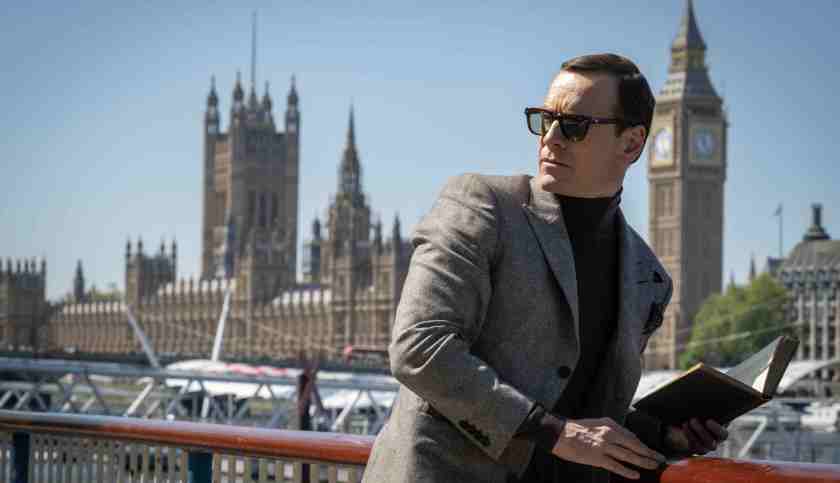
Best Films of 2021 (25-11)

Uncategorized

Compared to 2020 where cinema was in a state of paralysis, 2021 represented a year where the film industry got back on track. Make no mistake, the coronavirus pandemic still affected film releases and the first quarter of the year got off to a shaky start with many films continuing to head to streaming. Streaming has continued to rise in popularity, with Amazon and Netflix the dominant players and Disney+ and Apple TV+ not trailing too far behind.

Having had the chance to sample much of what 2021 had to offer, I now feel ready to share my best films of the year. I know that I am late in the game but there were quite a few films I didn’t get to watch in time and felt that it would be a disservice to generate a list that wasn’t truly reflective of the year. 

Generally, 2021 was a sound year for film and although the quality wasn’t as high as 2019, there were still some barnstorming works of art released for all to savour. The second half of the year really picked up as the mid-year list didn’t represent a particularly strong start to the year.

Here I rank numbers 25 to 11. The Top Ten will be detailed in a separate post so stay tuned for that.

Note

I am following the UK release date calendar from January 1st to December 31st hence why a lot of the Awards films do not feature here and why there are some from what may seem like are from 2020. 

25) Dune   

The long-awaited adaptation of Frank Herbert’s novel following David Lynch’s flawed take, Denis Villeneuve gets a lot right choosing wisely to only adapt the first half of the labyrinthyne story. Dune especially impresses in how it skilfully spins a coherent narrative that is relatively straightforward enough to follow. It’s certainly not a requirement to have prior knowledge of the material before watching this. 

Villeneuve’s adaptation is particularly cine-literate and the world-building is remarkable. He beautifully captures the arid and nomadic conditions of Arrakis and juxtaposes this with the water-rich yet isolated imagery of Caladan and the black nightmare of the House of Harkonnen. Dune is a visual spectacle and Villeneuve’s anger towards the film receiving a simultaneous streaming release in certain territories is justified. 

The film is particularly strong in its first act, as it sets the stage for conflict and establishes its sizeable roster of characters. The second and third acts become increasingly action-heavy and build on the spectacle. The performances all-around are excellent, although there are some characters who are short-changed that will have a greater presence in a second film. As well as Timothee Chalamet who makes a seamless transition from smaller fare to this behemoth of a project, Stellan Skarsgård is the standout as the levitating and grotesque antagonist Vladimir Harkonnen, who is used sparingly and is brought to life through visual effects.

Dune yet again cements Villeneuve as one of the key directors of our times and I hope the second part lives up to this chapter.

24) Reminiscence

Reminiscence is the feature film debut from Lisa Joy, one of the creators of hit Western sci-fi television series, Westworld. Unfortunately, the film was maligned on release but I found it to be is a thoughtful and satisfying neo-noir sci-fi that tells an engaging story, even if some of its story beats are clearly indebted to other film noir. This is partly intentional in that the very act of reliving one’s memories is to experience nostalgia. The film feels like a melding of Chinatown and Blade Runner with some of the beginnings of the ambitions of scale on display in Inception. Joy tackles some heady themes such as how we use and abuse our past and forget to live in the moment, as well as the obvious critical commentary on climate change and the rich-poor divide. 

Hugh Jackman gives a typically committed performance, proving his continued versatility across genres. Technically, Reminiscence is very competent and Paul Cameron’s cinematography beautifully captures the intricacies of the sinking city and the seedy goings on when its citizens are alive at night, under the protection of the dark. Lisa Joy’s direction is to be admired with her high-concept and there are a couple of excellent action sequences that are sparse but interspersed in the story. A scene in a bar with a tank full of eels feels like a microcosm of the Western sci-fi fusion of Westworld and there is a kinetic rooftop chase sequence. Joy reunites with Westworld composer Ramin Djawadi, who provides an exciting, predominantly guitar-based score.  

Reminiscence is a lot better than expected and is a well-realised concept that is a rewrite or two away from being something really impactful. I’m very glad it exists as films like this don’t really get made anymore, especially with a unique female vision.

23) Last Night In Soho   

Last Night In Soho is another sharp and entertaining piece from The Cornetto Trilogy and Baby Driver director Edgar Wright. It is meticulously crafted and is bursting with nostalgic nods to various 1960s iconography. Wright is clearly in love with the era, from the period correct posters of Thunderball to the decor in the sleazy but dazzling clubs of Soho that lead character Sandie (Thomasin McKenzie) finds herself in. In many ways, this feels like Wright’s most personal film. There are some good twists in the plot that keep the story fresh and the last act takes the story in an interesting and satisfying direction. The film is interestingly a Giallo horror with its macabre murder mystery, hallucinatory quality and visual aesthetic. 

Not everything works in the film. The contrast between the 1960s and the present day can be quite jarring in its tonal shifts and the mirroring between Eloise and Sandie isn’t always coherent in how Eloise experiences Sandie in her dream-like state. When the film leans into its horror elements more in the second half, it doesn’t always work as the ghosts that Eloise experiences aren’t particularly well realised visually and Wright doesn’t attempt to build tension or even try to scare audiences – the lucid hauntings and gore are meant to be what is frightening rather than what isn’t portrayed on-screen. 

Although uneven, there is a lot to admire in Last Night In Soho and it wildly succeeds in its story and the warmth that it brings to the 1960s of Wright’s vision. This is a really solid film to add to Wright’s back catalogue, even if it represents a departure from his comedic works. 

22) Eternals

The first Marvel Cinematic Universe film entry to receive mixed reviews, I found Eternals to represent a refreshing change of pace for the Marvel Cinematic Universe and Nomadland Oscar-winner Chloe Zhao lends an intimate and delicate hand to the material. The complex cosmic narrative is well-handled and each of the ten Eternals is well introduced and possess identifiable character traits, no mean feat when you’re juggling . The relationship between them all is admirably tackled, which is no mean feat as there is always a high risk of sidelining characters, especially when you have ten personalities to juggle. 

What allows Eternals to succeed (and perhaps why the film has received a decidedly mixed critical reception) is that it distances itself away from the wider Marvel Cinematic Universe formula and tone. This is a key problem with many entries, which silences the director’s vision and some of the films fall into the trap as feeling they are directed by committee. Other than some moments of light humour which are characteristic of most entries, Eternals boasts a heavier weight in that it asks some difficult questions of its characters and portrays them as god-like, reminiscent of Zack Snyder’s treatment in his DCEU entries Batman v Superman: Dawn of Justice and the director’s cut of Justice League. The film’s at its best in its quieter moments when characters weigh up some tough decisions.

21) The Power Of The Dog

The Power Of The Dog is an atmospheric, slow-burning yet fascinating character study from revered director Jane Campion. It features some brilliant performances, Benedict Cumberbatch gives possibly a career-best performance as Phil, a man with a masculine crisis. He conveys the seething and bullish nature of the character perfectly, going to great depths with his method acting by chain smoking to the point of nicotine poisoning and refusing to bathe and interact with Kirsten Dunst. A scene mid-way in the film where Rose is practicing the piano for a later dinner is particularly chilling as she struggles to perform the piece and Phil cruelly plays it faultlessly on his banjo out of sight. This is a masterful performance and one of the best of the year. 

The Power Of The Dog is an enigmatic experience with powerhouse performances. It is deserving of its praise and the unexpected fierce ending creeps up on you. Although the film is slow in its pacing, the ending asks the audience to reconsider what you have witnessed and you’ll want to watch it again to piece the character motivations, where it is a richer and more multi-layered experience. 

20) House of Gucci   

The first of two Ridley Scott directed entries in 2021, House of Gucci is a solid biopic and succeeds mainly on its performances and its gripping story. It is rather scattershot narratively in that it covers a lot of ground in a reasonably long run time but the film never really feels like it has a chance to breathe as it tries to cover too much. Scott also doesn’t quite master the balance between camp and serious and the film uneasily oscillates between the two tones. 

The characters are gleefully horrible and this is a sprawling exploration of the timeline. Lady Gaga is deserving of her praise in the lead role, a tempestuous character who descends further into delirium. It is impressive that this is her second major feature film role after A Star Is Born and she more than fends her own against the experienced cast. Adam Driver is also excellent as the more level-headed yet savvy Maurizio and provides an interesting contrast to Gaga in his more sober performance. Al Pacino is typically passionate as Maurizio’s Uncle, Aldo and Jeremy Irons is chilling as the decadent yet increasingly vampiric Rodolfo. Then, there is Jared Leto, who has received a mixed reaction to his performance, some labelling it as Awards worthy and others citing he is acting in a different film. I would position my opinion somewhere in the middle – he tries to do something different but isn’t too outlandish and the performance worked for me. There is one particular scene between Leto and Pacino and for Leto to outshine Pacino when he is in full-Pacino mode is no mean feat.

19) Antebellum

Antebellum is a really interesting debut from directors Gerard Bush and Christopher Renz and I’m very glad it exists, particularly in the context of a ‘Make America Great Again’ society. Positioned as a female-centered nervous mix of The Twilight Zone and 12 Years A Slave with more than a heavy dose of M. Night Shyamalan infused in the mix, Antebellum follows Janelle Monae’s Eden, who is a slave on a plantation in what appears to be Civil War-era America. About forty minutes in, she wakes up as renowned sociologist Dr Veronica Henley and audiences are drawn to the parallels between both narratives and how they might be connected. The first and third acts are particularly riveting even if the film sags in the middle, where there are some overly preachy speeches and a misjudged character played by the normally reliable Gabourey Sidibe. The plantation sequences are particularly uncomfortable to watch for a film of this genre and the cinematography by Pedro Luque and menacing string-based score are stunning. 

It’s a shame that the reception to this film has been fairly negative, with many finding the film to be exploitative, its twist not justifying the brutal violence and that its violence is torture porn. I would strongly disagree and would argue that the sadistic violence assists in creating a stronger verisimilitude. I can’t wait to see what Bush and Renz go onto make next and hope that they continue to take risks and are not deterred from the negative critical response.

18) Shang-Chi and the Legend of the Ten Rings

Another Marvel Cinematic Universe entry, other than a wonky beginning, Shang-Chi and the Legend of the Ten Rings is upper-tier superhero fare. It follows the Marvel formula but its emotional warmth and martial arts sequences make it stand out from the crowd. There is a great set up of Shang-Chi’s family, which plays an important dynamic in the film. Shang-Chi boasts some innovative set pieces, fusing and updating the wuxia and kung-fu genres with modern visual effects. The first action sequence on the bus and another early sequence set in Xialing’s fight club are particular highlights with their kinetic energy. The tone of the film feels like a melding of Crouching Tiger, Hidden Dragon and The Chronicles of Narnia with the mystical worlds that Cretton creates. Some of the sheen is lost in the final act of the film as Cretton succumbs to a big CGI battle, which is customary for comic-book films and is often their downfall as the investment is lost in the characters. However, the final CGI spectacle doesn’t derail the film as it is not overlong and there is a purpose in the narrative but it would have been far more exciting if Cretton had tried to deviate from convention.

17) The Last Duel

The Last Duel has a lot of positive aspects, in particular the fascinating and ambitious narrative concept of its Rashomon structure. We witness the same events from different perspectives and audience allegiances are challenged when we see conflicting accounts. The first two perspectives from the duellists are where the film is best, as they directly compliment each other. I found it particularly intelligent how Matt Damon’s performance changes between his account, where he presents himself as a stable and patriotic individual to Le Gris’ perspective of him where he is an embarrassing and oafish presence. The final perspective from Marguerite is also insightful in that women are regarded solely for transactional purposes. It’s interesting that many viewers have cited her telling as the ultimate truth but I think it is far more nuanced in that we don’t witness certain scenes of the film that the first two chapters highlight, invoking that even she isn’t as innocent as she presents herself. The culminating duel is fantastically realised by Scott and is an intense and bloody spectacle that ranks as one of his best set pieces. 

16) The Conjuring: The Devil Made Me Do It

The Conjuring: The Devil Made Me Do It represents a welcome change of direction compared to the first two films in that it delves from the haunted house formula and is more of a police procedural crime thriller. The story the film is based on is riveting, even if some creative liberties have been taken with it for it to fit the horror genre. The performances are all excellent, Vera Farmiga and Patrick Wilson as the Warren’s again are the centrepiece of the franchise and the film expands and revolves around their strong relationship. Director James Wan is not behind the camera this time around and the film is directed by Michael Chaves, who directed a previous entry, The Curse Of La Llorona. Chaves’ direction attempts to ape Wan’s from the use of title cards and a prologue sequence at the beginning to the general tone of the film. However, when it comes to the horror aspect of the film, Chaves just does not craft the scares in as sophisticated a fashion as Wan. I was riveted from start to finish but there is always the question of what if this film had been directed by James Wan and I think if had, the result here would have been extraordinary. If the film doubled down on its scares or chose to eliminate them completely and spent longer developing its characters and establishing the stakes, this could have been a masterpiece.

15) The Nest

The Nest is director Sean Durkin’s second film, whose delicate and poignant debut thriller Martha Marcy May Marlene featured Elizabeth Olsen in her breakout role – it’s well worth checking out. This sophomore effort is centred around a family of four in the mid-1980s America who relocate to the UK. The Nest is a riveting character study and features powerhouse performances from Jude Law and Carrie Coon. Durkin excels in creating an eery atmosphere of constant unease with a hint of supernatural horror, bolstered by Son of Saul’s Mátyás Erdély’s frenetic yet dreamy cinematography. The Nest is an absorbing and intelligent character study. 

14) CODA

CODA is directed by Sian Heder and is an English-language remake of the 2014 French-Belgian film, La Famille Bélier. The film follows Ruby Rossi (Emilia Jones), a teenager in her final year of high school who isn’t sure what the future holds for her. She is the titular CODA (child of deaf adults) and the only hearing member of her family as her brother, Leo (Daniel Durant) is also deaf. Ruby effectively has the unenviable task of acting as the family interpreter, given her fluency in American Sign Language. The family run a struggling fishing business, which Ruby is expected to help in full-time once she has completed her studies. However, Ruby has aspirations to be a singer but struggles to express her passion in her music class, due to a history of bullying having spoken differently as a child. 

CODA is an effortlessly heart-warming coming-of-age drama that is elevated by some brilliant performances. Emilia Jones steals the film with a sensational central performance as Ruby, an endlessly relatable teenager who struggles to fully fit in with her peers. She is between a rock and a hard place with her family as they are over-reliant on her help, to the detriment of her own wellbeing and life. This is, without a doubt, one of the best performances of the year. Generally, the film is paced perfectly and there are many sequences that are impossible to watch without anything other than a beam on your face. This is a crowd-pleasing film that intimately explores the deaf experience and its hearing protagonist’s young adult experience is endlessly relatable and touching. 

13) Malignant

Malignant is a welcome and wholly original return to the horror genre for director James Wan. Wan has had an impressive career to date, establishing himself as a top-tier horror director, launching three very different but highly successful franchises – Saw, Insidious and The Conjuring. He has since turned to bigger budget mainstream fare such as Furious 7 and Aquaman. It is always a promising sign when a director chooses to revisit their roots and tackle a lower budget original concept. Malignant has been marketed very much in the same vein as a supernatural horror film, more in line with Insidious and The Conjuring, but the result is very much not. 

Like Last Night In Soho, Malignant is Wan’s interpretation of a Giallo horror and this is a fascinating film that embraces a camp tone. It is an ambitious risk for the director and the story takes unexpected turns. The first act seems fairly generic on the surface, in the vein of Insidious, although Wan does establish an unsettling atmosphere. The film then morphs into a David Fincher-esque serial killer mystery, where it is at its best. A chase scene between the police and the assailant mid-way through is kinetic and heart-pounding. Its last half an hour or so is outrageous with a bonkers plot twist and is a cacophony of gleeful gore, body horror and John Wick-like ultraviolence, with a hint of Sam Raimi camp.

12) Those Who Wish Me Dead

Those Who Wish Me Dead is the latest from writer-director Taylor Sheridan and in keeping with his back catalogue, is another film that explores the modern American frontier. It is yet another original and commanding effort from Taylor Sheridan. It is frequently thrilling and as is customary for the writer-director, there are some interesting twists narratively and in its portrayal of gender. The way in which Sheridan introduces the characters allow the audience to be two steps ahead of them, which is thrilling as we can predict how they will likely act when all the pieces fall together later in the film. Sheridan is again able to extract some excellent performances from the cast. Angelina Jolie makes for a commanding screen presence, haunted by what she feels is her mistake, and this is a solid project for her to pick in her acting comeback. Gillen and Hoult make for an unstoppable reckoning as the assassins. 

11) Another Round

Another Round is a high concept tragicomedy from director Thomas Vinterberg who re-teams with the ever-versatile Mads Mikkelsen. Mikkelsen plays Martin, a jaded and uninspired History teacher who is struggling to enthuse his students and has a stale relationship with his wife and kids at home. These qualities are shared by three of his close friends who also teach in the same school – sports teacher Tommy (Thomas Bo Larsen), music teacher Peter (Lars Ranthe) and psychology teacher Nikolaj (Magnus Millang). When they meet up to celebrate Nikolaj’s 40th birthday in an up-market restaurant, they get very drunk. One of them brings up the subject of a theory by Norwegian psychologist Finn Skårderud who opined that humanity performs best when they have a blood alcohol content of 0.05%.  Martin decides to put this theory to the test one day whilst teaching and he finds that he has a much closer relationship with his pupils. The rest of the group decide to join in and they all have similarly positive results. They start to record their results in an academic journal that they curate and as the film progresses, they slowly up the alcohol level to explore the effects. Perhaps unsurprisingly, they discover that the benefits start to stagnate the more they drink and they eventually reach the road of self-destruction, with both comedic and devastating consequences. 

Another Round is often infectiously humorous and the relationship between the four teachers is developed very authentically and they have fantastic chemistry. The film is equally depressing at times when we witness the dire consequences alcohol can have on these teachers. The first two thirds of the film is particularly beautifully crafted but it loses its footing in the final third somewhat. The final act negates the message of the first two acts and Vinterberg seems to be unsure in his argument of whether alcohol has a positive or negative influence. 


So there we go, numbers 20 down to 11. Stay tuned for the Top Ten in a separate post…


What are your thoughts? Let me know in the comments or tweet @TheFilmMeister
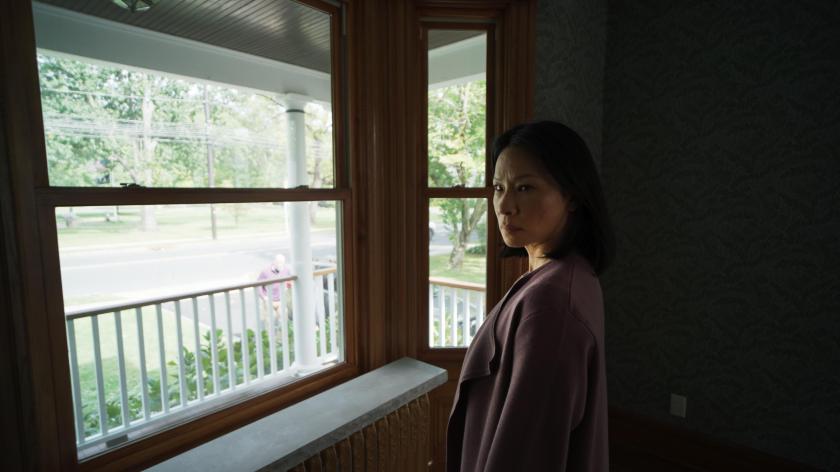
Ranking The Comic-Book Films Of 2021

Uncategorized

After a brief lull in 2020 due to the coronavirus pandemic, the comic-book genre propelled back to full force and 2021 brought us seven new films. Here, I rank these films in order of my personal preference.
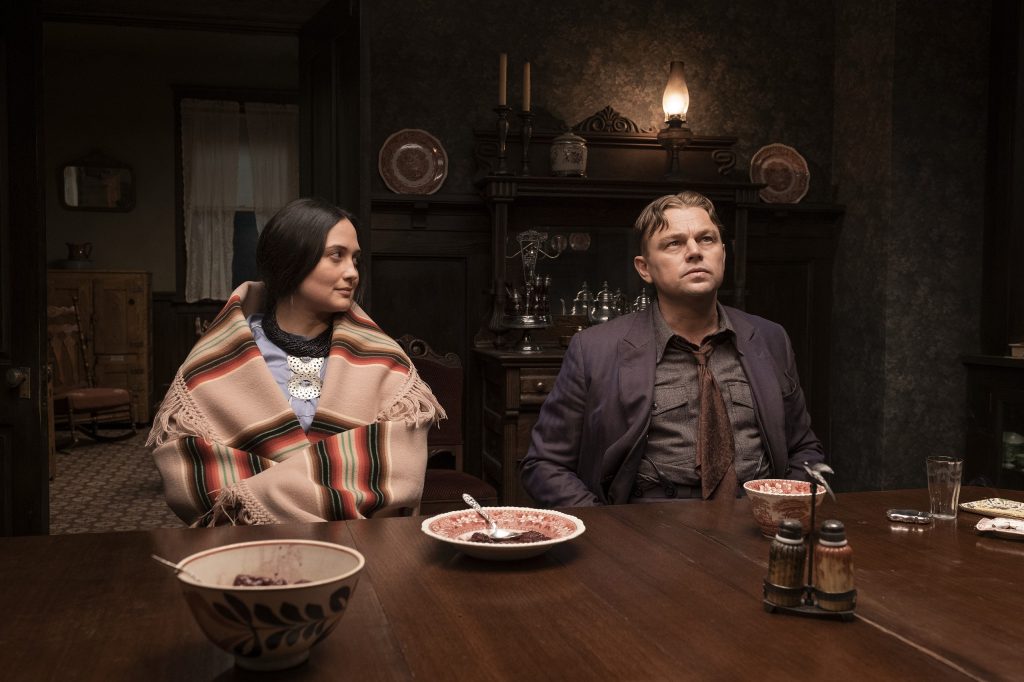
Marvel dominated with four MCU entries releasing and kicking off the brand’s Phase 4. It started with Black Widow, which was supposed to release in Spring 2020 and was then followed by Shang-Chi and the Legend of the Ten Rings and Eternals, the latter also having meant to release last year. Marvel closed the year out with Spider-Man: No Way Home.
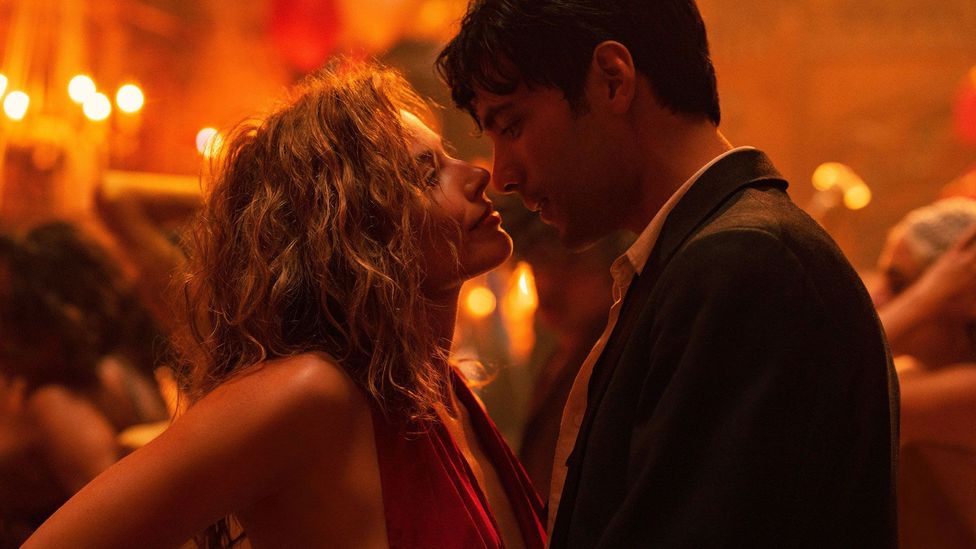
In its Sony slate, Venom: Let There Be Carnage released, swapping places with Morbius, which has moved to next year.

DC initially just had The Suicide Squad to release, with Matt Reeves’ The Batman being pushed back to 2022 and being revealed to be a standalone project, outside of its own cinematic universe. However, early in the year, many had their wish granted as Zack Snyder was given the all-clear to release his director’s cut, as he intended it of Justice League.

There’s a varying degree of quality in this list but for the most part, it was a very strong year for the genre. Let’s get started!

7) Venom: Let There Be Carnage

Venom was a regressive film for the comic-book genre, a painfully embarassing watch with an ear-scraping script, its action sequences were terrible and even the stature of Tom Hardy in the lead role couldn’t propel the film. When I heard that a sequel was commissioned and Andy Serkis would be stepping in the director’s chair with Quentin Tarantino’s regular cinematographer Robert Richardson shooting the film, my interest was piqued. Despite a generally positive reception this time around, unfortunately, I think it’s possibly even worse than the original!

The script is once again cringe-inducing and Tom Hardy phones his performance in. Serkis’ direction is surprisingly totally anonymous, as is Richardson’s cinematography. Even Woody Harrelson is completely wasted as the villain and isn’t allowed to inject any of his personality into the film. Naomie Harris joins the cast as a villain called Shriek and her performance is abysmal. I can’t believe this film exists in the form it does and the only saving grace is it runs under 100 minutes, but it feels like a lot longer!

6) Black Widow

Black Widow starts out in a promising fashion and almost suggests a new direction for the Marvel Cinematic Universe with its grittier tone and its well choreographed and stylised action sequences. It embraces its globe-trotting James Bond-esque origins even if it lacks the sophistication, sex and wit. Unfortunately after about half an hour, the film loses its edge and descends into convention with a half-baked story, cheesy family reunions and an over reliance on CGI, particularly at the film’s climax, which has been many a comic book film’s downfall in recent years. There are glimpses of Cate Shortland’s authorship in the first half an hour but the rest of the film feels like it was directed by a committee. 

5) Spider-Man: No Way Home

Spider-Man: No Way Home is a mostly thrilling ride with some excellent surprises in its narrative. It perfectly melds with the Sam Raimi and Marc Webb era and irreverently integrates the included villains with the Marvel Cinematic Universe. The film clearly takes inspiration from Spider-Man: Into The Spider-Verse, which was rapturously received and although I admired that film’s effort to metatextualise its story, it runs into a raft of problems. 

No Way Home features some excellent interactions between characters, particularly in the second act, and the script penned by Chris McKenna and Erik Sommers is sharp. It is not an easy task to meld the past and present in a film, with other tentpole films such as Star Wars: The Rise of Skywalker cheaply capitalising on nostalgia. 

No Way Home naturally barrels towards a large CGI set piece in the final act, which is well-handled due to some plot revelations that allow the film to explore what it means to be Spider-Man. The narrative choices are generally well-judged and attempts to mirror or contrast other entries in the MCU or prior Spider-Man films.

4) Eternals

Perhaps a controversial choice, but I found Eternals (the first MCU entry to receive mixed-to-negative reviews) to represent a refreshing change of pace for the Marvel Cinematic Universe and Nomadland Oscar-winner Chloe Zhao lends an intimate and delicate hand to the material. The complex cosmic narrative is well-handled and each of the ten Eternals is well introduced and possess identifiable character traits, no mean feat when you’re juggling . The relationship between them all is admirably tackled, which is no mean feat as there is always a high risk of sidelining characters, especially when you have ten personalities to juggle. 

What allows Eternals to succeed (and perhaps why the film has received a decidedly mixed critical reception) is that it distances itself away from the wider Marvel Cinematic Universe formula and tone. This is a key problem with many entries, which silences the director’s vision and some of the films fall into the trap as feeling they are directed by committee. Other than some moments of light humour which are characteristic of most entries, Eternalsboasts a heavier weight in that it asks some difficult questions of its characters and portrays them as god-like, reminiscent of Zack Snyder’s treatment in his DCEU entries Batman v Superman: Dawn of Justice and the director’s cut of Justice League. The film’s at its best in its quieter moments when characters weigh up some tough decisions.

3) Shang-Chi and the Legend of the Ten Rings

The best MCU entry of the year, other than a wonky beginning, Shang-Chi and the Legend of the Ten Rings is upper-tier superhero fare. It follows the Marvel formula but its emotional warmth and martial arts sequences make it stand out from the crowd. There is a great set up of Shang-Chi’s family, which plays an important dynamic in the film. Shang-Chi boasts some innovative set pieces, fusing and updating the wuxia and kung-fu genres with modern visual effects. The first action sequence on the bus and another early sequence set in Xialing’s fight club are particular highlights with their kinetic energy. The tone of the film feels like a melding of Crouching Tiger, Hidden Dragon and The Chronicles of Narnia with the mystical worlds that Cretton creates. Some of the sheen is lost in the final act of the film as Cretton succumbs to a big CGI battle, which is customary for comic-book films and is often their downfall as the investment is lost in the characters. However, the final CGI spectacle doesn’t derail the film as it is not overlong and there is a purpose in the narrative but it would have been far more exciting if Cretton had tried to deviate from convention.

2) The Suicide Squad

The Suicide Squad is for the most part a giddy, gory and thoroughly adult superhero film. The film is written and directed by James Gunn, whose sensibility for gory horror and dark humour, blend perfectly with the source material, feeling much more akin to his earlier works such as Slither and Super. Gunn originally hit critical acclaim with Marvel’s Guardians of the Galaxy and its sequel, the first film in particular proving a refreshing break from the tired Marvel formula that really allowed his personality to shine through. Despite breaking free of the Marvel formula, Gunn was still constrained to a 12A / PG-13 rating, therefore The Suicide Squad represents him at his most unrestrained. 

The Suicide Squad fits into the wider DCEU rather awkwardly in that it is a part-sequel to 2016’s critically mauled Suicide Squad in that it shares a handful of the same characters but it also functions as a part-reboot in that everything about it is completely different to that film. 

Gunn has proven a knack for picking unfamiliar comic-book characters and spinning a gripping yarn from their background. The Suicide Squad is paced extremely well and the script is stuffed with quips and wisecracking interplay between the characters. There is violence and gore aplenty – heads are decapitated, blood splatters after characters get shot in the face and King Shark likes to devour people… a lot! This is a film that earns its 15 / R rating and it is all the better for it. Like its predecessor, there isn’t much of a story again this time round, but the characters combined objective acts as a coherent plot and there are some excellent character twists along the way. Gunn does an excellent job in not allowing his audience to get to attached to characters, as life is pretty expendable in this film. 

In a wider context, what impressed me most about The Suicide Squad was its progressive characters for the genre, which acts as a revisionist take on the superhero genre. The superhero genre is overpopulated with generic films that are uncomfortable in breaking the mould and Gunn’s film actively tries to defy conventions, even if it’s not always successful, but the ambition is to be admired. 

The main drawback of the film is in its ending, which unfortunately sticks to convention and is a little anti-climatic when the rest of the film is so entertaining and refreshing. 

And the best comic-book film of 2020 is…

1) Zack Snyder’s Justice League 

Zack Snyder’s Justice League is an astonishing achievement and represents a mature and risky effort in establishing the DC team. The four hours fly by and it is a visual treat throughout. This is a Snyder film through and through but it interestingly represents a more mature effort in that the storytelling here is improved from some of his previous filmography, where some of his films have bordered on the incoherent. By the film having its length, the film can breathe and Snyder works wonders in establishing and developing each and every character of the team. There is no conceivable way this story can be told in a two hour run time.

The wider context of this director’s cut is fascinating in how different it is from what Warner Bros chose to release. The stark differences between both cuts is something that can and likely will be studied for years to come and having watched this director’s cut, one has to question the psychology of the decision to approve the theatrical cut for cinema release.

Ultimately, Zack Snyder’s Justice League is a frequently astonishing and bold take on this DC lineup and it earns its four hour run time. With this director’s cut and Army Of The Dead, Snyder has matured as a director and he has markedly improved on some of his lesser qualities in previous films in regards to storytelling and representations. 


What are your thoughts? Let me know in the comments or tweet @TheFilmMeister