Director: Sean Durkin Starring: Jude Law, Carrie Coon, Charlie Shotwell, Oona Roche Certificate: 15 Run Time: 107 mins
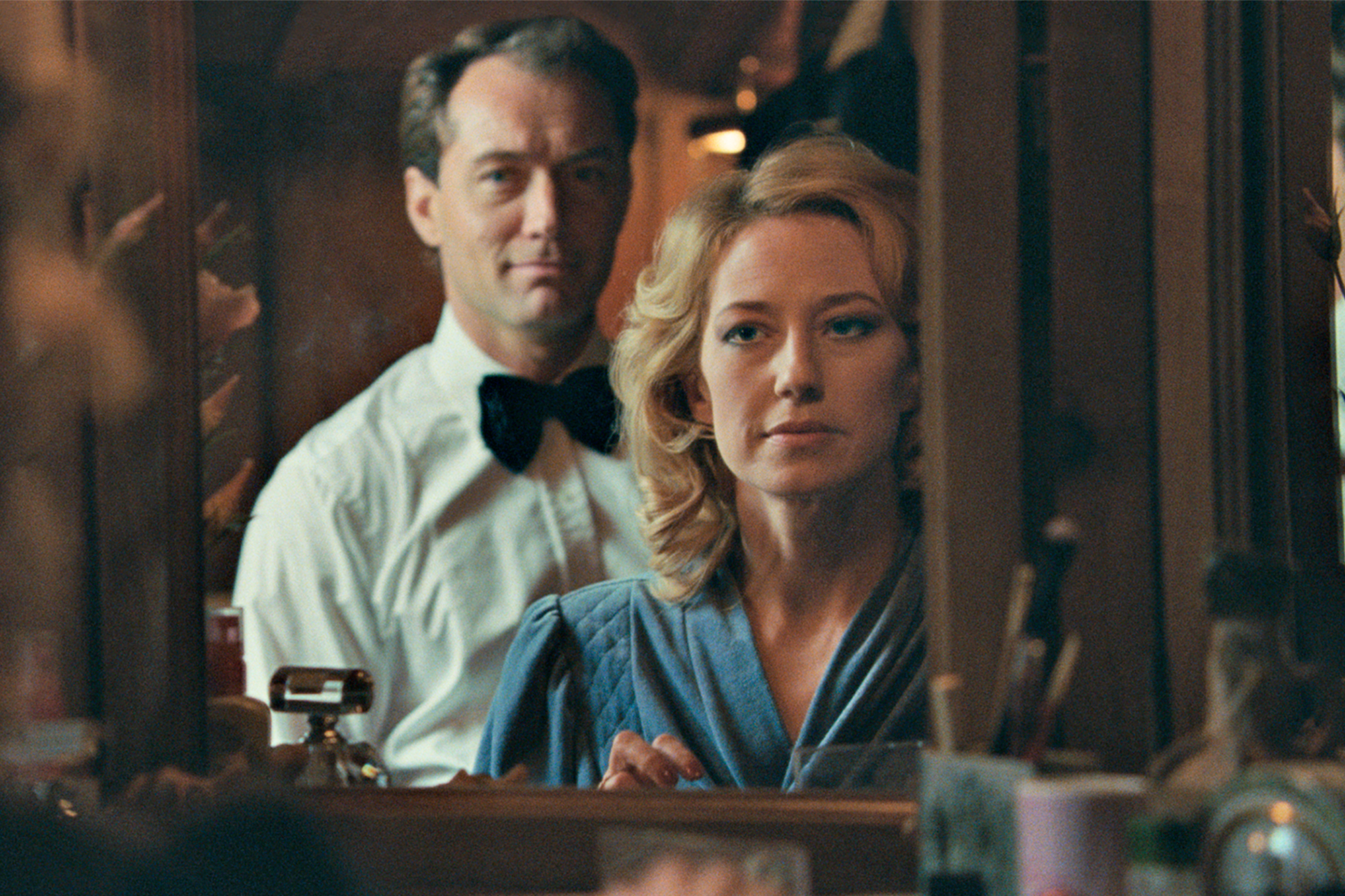
The Nest is director Sean Durkin’s second film, whose delicate and poignant debut thriller Martha Marcy May Marlene featured Elizabeth Olsen in her breakout role – it’s well worth checking out. This sophomore effort is centred around a family of four in the mid-1980s America. Englishman Rory O’Hara (Jude Law) and his wife Allison (Carrie Coon) are a middle-class family living in New York City. They have a son, Ben (Charlie Shotwell), and Sam (Oona Roche) also lives with them, who is Allison’s daughter from a previous relationship.
Allison teaches horse riding and Rory is a trader. Rory has grown bored and believes his chances of career success have stagnated in the US. Early on in the film, it is alluded that the family have moved many times due to Rory’s work. Rory convinces Allison to emigrate to London where he can work at his old employer, Arthur Davis’ (Michael Culkin) firm. Rory rents a mansion in Surrey with ‘the option to buy’, enrols Ben in a costly private school, Sam in a state school and buys Allison a new horse called Richmond. All initially seems well, although everyone other than Rory feels that the mansion is unnecessary for their needs and they feel coldly detached from it. When Rory is unable to pay for some building work that is being carried out, problems start to ensue and The Nest very much represents the unravelling of a family.
TheNest is a riveting character study and features powerhouse performances from Jude Law and Carrie Coon. Durkin excels in creating an eery atmosphere of constant unease with a hint of supernatural horror, bolstered by Son of Saul’s Mátyás Erdély’s frenetic yet dreamy cinematography.
Rory is a particularly interesting character, who has worked his way up and sees himself as above everyone, creating and living a fantasy which he cannot afford. A prickly scene with his mother (Anne Reid) makes it not hard to see where he might have inherited this mindset from. This is in contrast to Allison, who has more simplistic aspirations but also lives grounded in reality and takes on the brunt of raising her children. She is not afraid to call Rory out when he makes reckless decisions and is the nearest character to representing the voice of reason.
This all makes for an inevitable, and perhaps cyclical conclusion, the empty and hollow mansion is representative of the decay the family experiences. The Nest has received next-to-no marketing and has quickly headed to streaming services after a short theatrical release. Therefore, there is no excuse not to watch this film, which if you absorb yourself into the characters and setting, you will be rewarded with an atmospheric and intelligent character study.
Director: Rawson Marshall Thurber Starring: Dwayne Johnson, Ryan Reynolds, Gal Gadot Certificate: 12A Run Time: 118 mins
Red Notice is an action-adventure comedy that teams Dwayne Johnson, Ryan Reynolds and Gal Gadot together. FBI Agent John Hartley (Dwayne Johnson) is assigned to investigate the theft of one of Cleopatra’s bejewelled, priceless eggs in a museum in Rome, of which in total there are three. The location of two are known but not the third. Hartley crosses paths with international art thief, Nolan Booth (Ryan Reynolds) who is in the process of stealing the egg as Hartley is in the room in the museum and a chase ensues. After a series of events, both Hartley and Booth are forced to team together to locate the other eggs in order to catch an even more skilled art thief, Sarah Black (Gal Gadot).
On paper, the film’s cast and plot are a promising proposition. Johnson reteams with director Rawson Marshall Thurber who directed him in Central Intelligence and Skyscraper which were fun enough if rather derivative. Red Notice was originally a Universal feature but was acquired by Netflix and represents their largest budget feature to date at $200 million.
Red Notice is a light enough romp but it fails to utilise its bankable three stars and is bland, lazy and rote in its construction. It feels like a mix of Indiana Jones, Jumanji and Jungle Cruise with a hint of The Hitman’s Bodyguard thrown in – essentially any film with a MacGuffin device with a comedic edge. There is even an unashamed and cheap reference to Indiana Jones as Reynolds whistles John Williams’ theme in a scene as the filmmakers clearly feel that the audience aren’t intelligent enough to understand the inference. The script isn’t brilliant – the humour mostly doesn’t land and the character quips feel forced and aggressive. The action sequences are laden with unconvincing CGI and there are no stakes – there are no after-effects if the third egg isn’t located and the world will continue as it was.
The performances are all serviceable from these profitable actors and Thurber asks them to do the things they do best in the constraint of a 12A rating. Johnson is a likeable presence and makes the most of the preposterous lines his character is given. Reynolds is on sarky autopilot and plagiarises his Deadpool performance but without the humour. Gadot isn’t great either and it is difficult to buy her as a dishonest character with a stilted performance.
The narrative is convoluted for the sake of it and characters take actions that require you to suspend belief and then some. The film will then revisit events audiences are likely to question and offer a preposterous explanation of what actually happened, which one has to further suspend belief for. There are a couple of twists here and there and a large one at the end which don’t make the investment in the film all for nothing.
The 12A rating really hurts Red Notice. The humour is painfully generic as the boundaries cannot be pushed and the film would have really benefited from some more risqué humour that Reynolds is renowned for, stronger language and more convincing and hard-hitting violence in the action sequences. This is simply a case of Netflix and / or Thurber wanting to appeal to the highest common denominator and in doing so, they appease no-one.
Red Notice is watchable in the moment but is ultimately painfully cookie-cutter and represents a poor investment for its big budget with its CGI-heavy action. It is difficult to comprehend how the film’s budget is to the extent that it is as it certainly doesn’t portray that way on the screen. The film unashamedly sets up a sequel in its closing moments (and also contains a toe-curling Ed Sheeran cameo). When (not if) this happens, serious lessons will need to be learnt if this is to be a quality series to rival other action-adventure properties. Red Notice, as it is now, is a film that I’m sure I will forget about almost immediately.
Director: Miguel Sapochnik Starring: Tom Hanks, Caleb Landry Jones Certificate: 12A Run Time: 115 mins
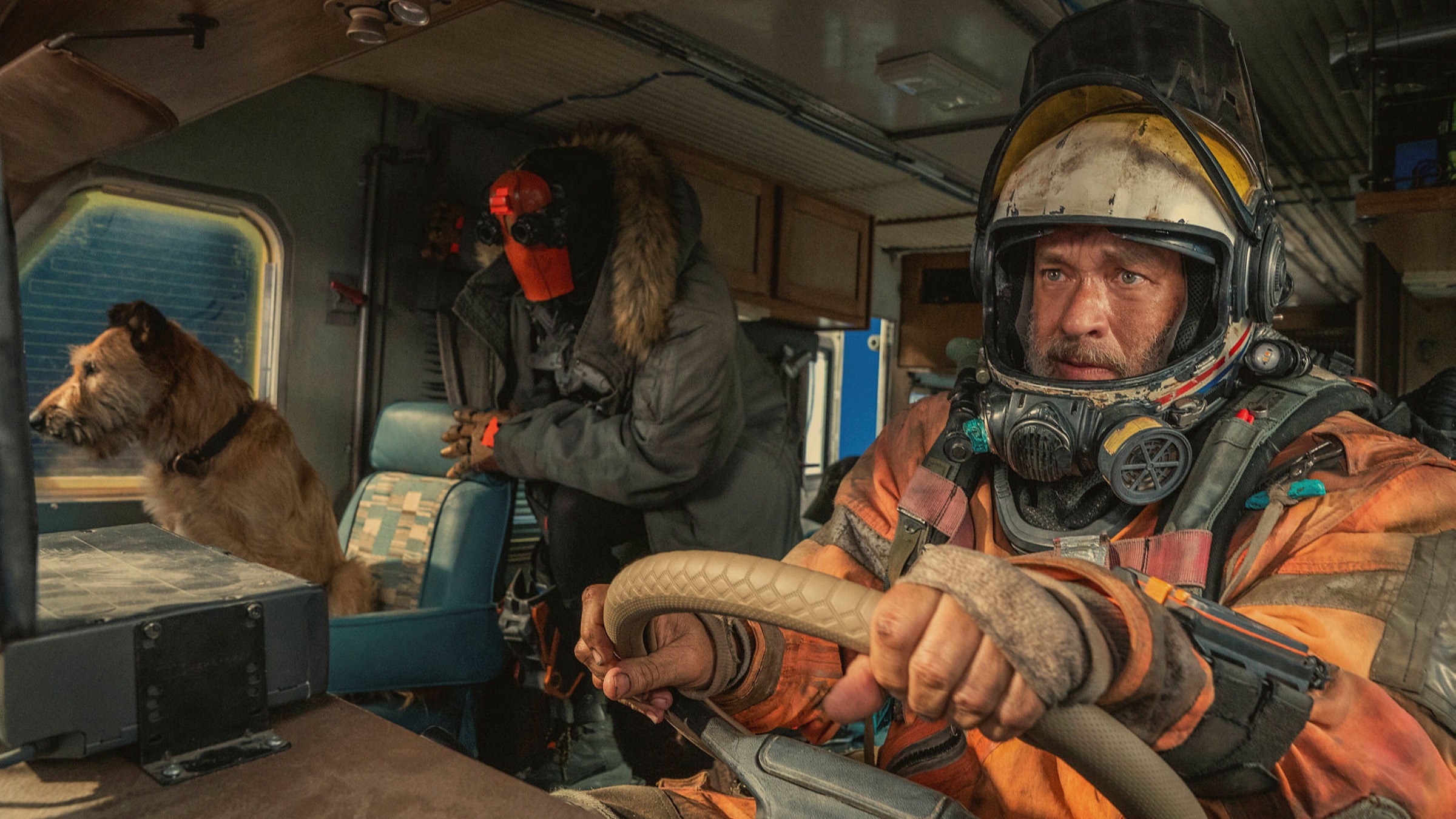
Finch is a post-apocalyptic drama starring the ever-reliable Tom Hanks as the titular character. Earth is a largely uninhabitable planet after a solar flare destroyed the ozone layer, with extreme weather and high levels of radiation. Finch, seemingly one of the only humans left on the planet, is a robotics engineer who lives with his dog, Goodyear and a robot, Dewey. He only ventures outside when he needs supplies.
Early on in the film, Finch is reading a book in bed on the effects of ionising radiation. It is invoked that he is slowly dying from this, although it is never explicitly confirmed, and the engineer is working on creating a new humanoid helper robot, Jeff, who can look after his dog when he passes.
The film is directed by Miguel Sapochnik, most famous for his Game of Thrones episodes, although this is not his first venture into film as he previously directed Repo Men, another science fiction effort although it was received negatively.
Finch is fine in the moment and it’s anchored by a committed Hanks performance, but it’s rather perfunctory and adds nothing new to the genre. Sapochnik’s direction is disappointingly anonymous, its tone cloying and it painfully channels a Steven Spielberg or Robert Zemeckis film but without nuance or warmth. It’s a real shame as he has proven a master at large battle sequences and is adept with character development, but his heart doesn’t seem to be in it here.
Finch’s training of Jeff and the film’s road movie elements are obvious and take up too much of the film’s run time. Jeff (voiced by Caleb Landry Jones) is an exhausting screen presence and the dog would probably have a happier life if he kicked the bucket with Finch. Even Gustavo Santaolalla’s score, the composer most famous for his collaborations with director Alejandro Gonzalez Inarritu, fails to spurt the film to life and he typically almost always livens up a film.
Finch’s problems are conceptual in root and it really needed to find a way to distance itself from other sci-fi works of this nature. It’s not a complete failure and it has its moments here-and-there but ultimately, you’ll forget Finch five minutes after viewing.
Director: Jeymes Samuel Starring: Jonathan Majors, Idris Elba, Zazie Beetz, Regina King, Delroy Lindo, Lakeith Stanfield, RJ Cyler, Danielle Deadwyler, Edi Gathegi, Deon Cole Certificate: 15 Run Time: 139 mins
The Harder They Fall is a revisionist Western directed by music producer Jeymes Samuel in his feature length debut. Samuel makes it clear in the film’s opening that although the story is fictional, it is based on real individuals and it is one of very few Westerns where all the principle cast members are of African-American origin.
The film follows Nat Love (Jonathan Majors), an outlaw whose parents were uncompromisingly slain by enemy Rufus Beck (Idris Elba) when he was a child, who also carved a cross on the young child’s forehead, which the film opens on. When Nat hears news that Beck is released from prison, he rounds up a gang consisting of Stagecoach Mary (Zazie Beetz), Bill Pickett (Edi Gathegi), Jim Beckwourth (RJ Cyler) and the transgender Cuffee (Danielle Deadwyler), modelled on Cathay Williams to track the villain down and enact his revenge. Beck also has a loyal gang backing him up, most notably Trudy Smith (Regina King) and Cherokee Bill (Lakeith Stanfield). Samuel has assembled quite the talented cast and this makes for a really interesting opportunity to further develop the Western so can this translate onto the screen?
The Harder They Fall has an astoundingly refreshing first twenty minutes or so. It is innovative in its craft and reminiscent of Quentin Tarantino’s authorship with its poetic script and dazzling cinematic style – a scene portraying the brutal murder of Nat Love’s parents and his disfiguring is masterfully crafted in its tension, as is Nat enacting his revenge on one of Beck’s accomplices twenty years later and an early action sequence on a train. Idris Elba’s villain makes for a formidable foe in these early scenes and centres him as a brooding presence until he further appears later in the film.
Unfortunately, that’s about it in terms of the good. The rest of the film is a slog to the finish with a simplistic story that is elongated to a 140 minute run time that lacks depth and is all surface. The script is quite egotistical and the various representations of race, gender and disability are heavy-handed and flat-out unrealistic.
There are a mixed bag of performances here. Jonathan Majors makes for a compelling lead in his ever-developing career and Idris Elba’s early scenes are excellent, although this energy isn’t sustained in the second half of the film. Lakeith Stanfield is excellent as Cherokee Bill, possibly even more daunting a villain compared to Elba and Delroy Lindo can always be relied upon to elevate a film.
Zazie Beetz’s performance is rather grating and her character largely unnecessary. If Beetz’s performance misses the mark, then Regina King’s henchwoman might make you want to gouge out your eyeballs more. King’s character is just horrible and totally unrelatable and she is saddled with boring monologue after monologue. Although perhaps as her performance and character is so abrasive, perhaps that makes for a powerful antagonist?
Another large obstacle the film possesses is its obtrusive soundtrack, which has been compiled by Samuel and Jay-Z. The soundtrack is a mixture of contemporary soul, reggae, hip hop and rap artists, as well as songs that are sung diegetically by various cast members. Many of the musical choices aggressively do not fit in with the events being portrayed on-screen. The film feels, in many ways, like a musical, which isn’t necessarily a bad decision but this is the wrong type of story to try and balance this with in that the story is designed to have emotional weight.
One final plus for the film is its cinematography with Paul Thomas Anderson regular Mihai Mălaimare Jr. behind the camera. The early train sequence in particular is masterfully shot, a standoff between two characters is portrayed as a split screen and when one character walks through the door to the other, the two views satisfyingly collide.
It’s very disappointing that The Harder They Fall cannot sustain its inventive opening and that it is all surface and no depth. With a cast this talented, Samuel largely wastes them and the film is a good hour or so overlong and carries a lot of baggage. Although omitting the boisterous soundtrack would have helped the film wonders, it’s still difficult to imagine the film being successful with its simplistic story and its clumsy representations of marginalised communities. The Harder They Fall has an interesting angle for a Western but Samuel fails to capitalise on it and the result is mostly unsuccessful.
Director: Chloé Zhao Starring: Gemma Chan, Richard Madden, Kumail Nunjiani, Lia McHugh, Brian Tyree Henry, Lauren Ridloff, Barry Keoghan, Don Lee, Harish Patel, Kit Harington, Salma Hayek, Angelina Jolie Certificate: 12A Run Time: 157 mins
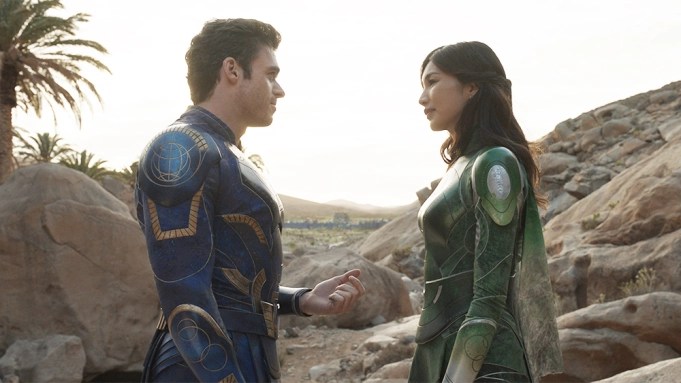
Eternals is the third entry in the Marvel Cinematic Universe this year and the twenty sixth in the overall canon. It is a particularly interesting entry in that it is the first film to depict these C-level superheroes on screen and secondly, that it is directed by Chloe Zhao, her follow-up effort to her Best Picture and Best Director win for Nomadland earlier this year. The Eternals are a group of ten immortal humanoids who are sent to Earth in 5000 BC to supervise and allow humans to develop, whilst protecting them from Deviants, depicted as vicious reptilian aliens. The Eternals consist of Ajak (Salma Hayek), the leader of the group who has the ability to heal, Ikaris (Richard Madden) who can project cosmic rays from his eyes in the vein of Superman (who Zhao makes reference to at one point in the film) and Sersi (Captain Marvel’s Gemma Chan) who is the empathetic member of the group who is the audience’s eye into the world. Other prominent Eternals include Sprite (Lia McHugh), who can project realistic illusions, Phastos (Brian Tyree Henry), who is technologically minded, Druig (Barry Keoghan), who can manipulate the minds of others and Thena (Angelina Jolie), who can form any weapon through cosmic energy but struggles with a psychological condition where she has forgetful episodes and attacks her teammates.
The Eternals defeat the last of the Deviants in 1521 and then go their separate ways as they await to be recalled by the Celestial Arishem. In the present day (conveniently to allow the film to catch up to the events following Avengers: Endgame), the Deviants surprisingly return, forcing the Eternals to regroup. Despite the seemingly unwieldy narrative, Zhao has an unenviable task of establishing this comic lore and large roster of characters, whilst making audiences care for them in the space of a feature-length film.
Eternals represents a refreshing change of pace for the Marvel Cinematic Universe and Zhao lends an intimate and delicate hand to the material. The complex cosmic narrative is well-handled and each of the Eternals is well introduced and possess identifiable character traits. The relationship between them all is admirably tackled, which is no mean feat as there is always a high risk of sidelining characters, especially when you have ten personalities to juggle.
What allows Eternals to succeed (and perhaps why the film has received a decidedly mixed critical reception) is that it distances itself away from the wider Marvel Cinematic Universe formula and tone. This is a key problem with many entries, which silences the director’s vision and some of the films fall into the trap as feeling they are directed by committee. Other than some moments of light humour which are characteristic of most entries, Eternals boasts a heavier weight in that it asks some difficult questions of its characters and portrays them as god-like, reminiscent of Zack Snyder’s treatment in his DCEU entries Batman v Superman: Dawn of Justice and the director’s cut of Justice League. The film’s at its best in its quieter moments when characters weigh up some tough decisions, for example Druig is uncomfortable watching conflict between humans and finds it hard to resist using his powers to break fights up. Thena is a particularly touching character in that she has episodes where she forgets who and where she is and the interplay between her and the team trying to coax her out of an episode is authentic, invoking that superheroes can also face human problems.
Of the performances, Gemma Chan makes for a sympathetic but slightly shallow lead. Richard Madden gives a measured performance as Ikaris and his character arc has quite a lot of meat to the bone. Salma Hayek makes for a formidable team leader and Angelina Jolie shows range in her complex role. Barry Keoghan’s performance is typically mystical and his fellow teammates can never be quite sure if they are on the same wavelength as him. Kumail Nunjiani is clearly having fun as the wisecracking Kingo, an Eternal who can project cosmic energy projectiles from his hands and becomes a Bollywood star to blend in on Earth in the present day. The underrated Harish Patel has some fitting comedic moments as his valet, Karun.
Eternals has quite a lengthy run time of 157 minutes but it earns the right to take its time through the sheer amount of material it has to get through and the film is never boring. It is well-shot by Ben Davis (this is the first time Zhao has not reteamed with partner Joshua James Richards as her cinematographer) and it’s refreshing to see the camera linger a little longer than necessary generally to give the film a more intimate feel. There are some stunning vistas that are beautifully captured, such as in the Canary Islands which act as the location for the climactic action sequence and the various Western and Aztec landscapes.
Zhao is a little out of her depth with the action sequences, which are infrequent as this is more of a character piece. On the one hand, it is always a plus that the film isn’t very reliant on green screen, Zhao preferring to stick to practical effects and shots. However, they’re uninvolving at times and lack a sense of pace. Zhao can be commended though for not falling into the trap of an overlong final action sequence that is a CGI-fest. Whilst there is a climactic action sequence, it serves the narrative well and doesn’t outstay its welcome.
Ultimately, Eternals represents a refreshing change of pace for the Marvel Cinematic Universe and the result is reassuring in what a director-driven vision can achieve. Many superhero films that are have a distinctive director at the helm dilute their authorship and it is always a grappling act of what decisions are the directors and what are mandated by the studio. It’s a shame that Eternals hasn’t received the typically positive reception that Marvel efforts have garnered to date, as it takes some bold risks. If audiences want Marvel films to diversify and not to follow a tiring formula, then more films like Eternals need to exist and it is to be commended for this.
Director: Edgar Wright Starring: Thomasin McKenzie, Anya Taylor-Joy, Matt Smith, Michael Ajao, Terence Stamp, Diana Rigg Certificate: 18 Run Time: 116 mins
Last Night In Soho is a psychological horror from director Edgar Wright that represents a departure for him in that it mostly foregoes his comedic roots. Wright is most notable for directing the Cornetto trilogy, Scott Pilgrim Vs The World and the excellent BabyDriver, as well as a documentary, The Sparks Brothers, earlier this year. Wright has consistently proved an impressive cineliteracy in his filmography and his latest continues the trend where he is clearly influenced by 1960s British cinema.
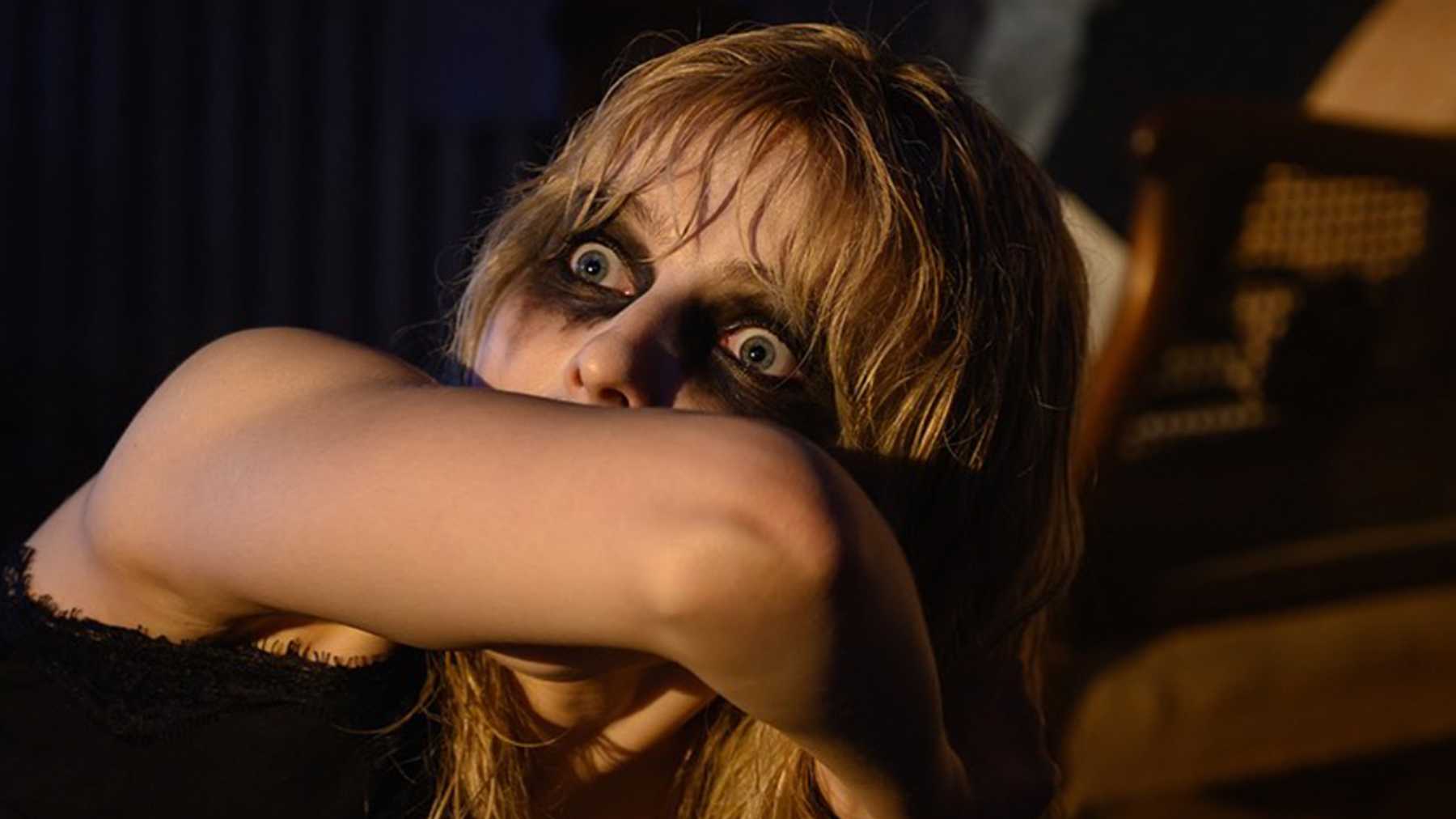
Rising star Thomasin McKenzie plays Eloise, a budding fashion designer who lives with her grandmother in Redruth, Cornwall, who achieves the grades to study fashion design at her preferred university in London. She is excited about making the move to the Big Smoke, although her grandmother is weary over her mental wellbeing. In the past, Eloise has seen her mother’s ghost in mirrors, who had committed suicide in her childhood. Eloise gets off to an uncomfortable start in London. She doesn’t get on well with her flatmates and finds herself cruelly isolated amongst the students, unable to socially fit in. She decides to move into a top-floor bedsit belonging to the elderly Ms Collins. The landlord has a strict big upfront deposit and ‘no boys at night’ policy. Once Eloise moves in, she starts to have vivid dreams of Sandie (Anya Taylor-Joy), a young woman in the 1960s who enters a West End nightclub hoping to make a career as a singer but she has to fend off numerous advances from piggish men. Sandie attracts the attention of Jack (Matt Smith), who helps her ignite her career but his intentions are not as honest as they originally seem. The line between fantasy and reality start to blur and Eloise starts to experience horrors in her everyday life.
Last Night In Soho is another sharp and entertaining piece from Edgar Wright. It is meticulously crafted and is bursting with nostalgic nods to various 1960s iconography. Wright is clearly in love with the era, from the period correct posters of Thunderball to the decor in the sleazy but dazzling clubs of Soho that Sandie finds herself in. In many ways, this feels like Wright’s most personal film. There are some good twists in the plot that keep the story fresh and the last act takes the story in an interesting and satisfying direction. The film is interestingly a Giallo horror with its macabre murder mystery, hallucinatory quality and visual aesthetic. The Giallo sub-genre is beginning to make a comeback after a long period of dormancy with Wright’s film and also last month’s Malignant.
After dazzling in Leave No Trace, Jojo Rabbit and Old, Thomasin McKenzie puts in another excellent performances in her young career as the vulnerable Eloise. The film constantly keeps the audience on its toes as we question if the horrors she is witnessing is down to mental degradation or external forces. Diana Rigg puts in a barnstorming performance as Mrs Collins in what is sadly her final film role. There is also a notable extended cameo from Terence Stamp, who is clearly having fun. Despite being prominently billed, Anya Taylor Joy is solid as Sandie but she isn’t given that much to do in terms of acting range and acts as more of a vessel for McKenzie to react off. There is also a sincere performance by Michael Ajao, a fellow student of Eloise who takes a romantic interest in her.
The original score by Steven Price and musical choices are inspired and mostly mesh well with the events being portrayed on-screen. Wright’s films have always had a musical quality choreographed to the action and this continues the trend. The film is handsomely shot by Chung Chung-hoon, although it’s not as showy stylistically as some of his other works, particularly his collaborations with fellow Korean director Park Chan-Wook.
Not everything works in the film. The contrast between the 1960s and the present day can be quite jarring in its tonal shifts and the mirroring between Eloise and Sandie isn’t always coherent in how Eloise experiences Sandie in her dream-like state. When the film leans into its horror elements more in the second half, it doesn’t always work as the ghosts that Eloise experiences aren’t particularly well realised visually and Wright doesn’t attempt to build tension or even try to scare audiences – the lucid hauntings and gore are meant to be what is frightening rather than what isn’t portrayed on-screen.
Although uneven, there is a lot to admire in Last Night In Soho and it wildly succeeds in its story and the warmth that it brings to the 1960s of Wright’s vision. This is a really solid film to add to Wright’s back catalogue, even if it represents a departure from his comedic works. It makes a convincing argument for Giallo horror which the film revitalises, although between this and Malignant, Malignant is the better film in that it takes more risks and has a mind-blowing twist to its story. There is still lots to admire in Last Night In Soho and I can’t wait to see what genre Wright tries to tackle next.
Director: Matthias Schweighöfer Starring: Matthias Schweighöfer, Nathalie Emmanuel, Ruby O. Fee, Stuart Martin, Guz Khan, Jonathan Cohen Certificate: 15 Run Time: 127 mins
Army Of Thieves is a prequel to Army of the Dead that released on Netflix earlier this year, the platform having full confidence in the property and produced this film despite not knowing how audiences would receive the original. This prequel centres on the safecracker known as Ludwig Dieter, a minor character in the first film and we learn how his character comes to be involved in the latter through the events of this film. Snyder’s zombie film was a refreshing change for the genre, a giddy and gory thrill ride. This prequel is directed by Matthias Schweighöfer and centres on Sebastian Schlencht-Wohnert (who renames himself to Ludwig Dieter later in the film) and his rise from his simple, mundane life as a bank teller to being part of a heist team. He idolises Hans Wagner, an individual who designed a series of intricate safe systems, each more difficult than the last. Sebastian post videos on YouTube and one day receives an anonymous message inviting him to an underground safecracking challenge where safecrackers race against each other to unlock a series of safes. One has to suspend disbelief that such a competition exists. Sebastian impresses in the competition and is recruited by Gwendoline (Nathalie Emmanuel), a skilled jewel thief to join a team that also consists of Portuguese expert hacker Karina (Ruby O. Fee), getaway driver Ralph (Guz Khan) and gunman Brad Cage (Stuart Martin). The film focuses on three heists that the team intend to pull off with a significant cash reward if they are successful, which happen to be three out of four of Wagner’s designs, that lead up to the events of Army of the Dead. An Interpol team, lead by the obsessed Delacroix (Jonathan Cohen) are hot on the tails of the gang, cueing various double-crosses and chase sequences.
Army Of Thieves starts out quite promisingly. Sebastian receives meaningful character development and Schweighöfer does a convincing job of portraying the mundanity of his life through repetition of his daily routine and humour. Schweighöfer captures Sebastian admiration of Wagner’s safe designs well and it is clearly evident that he enjoys the challenge and privilege of cracking these safes more than the cash result. The heist team are also reasonably well developed, even if some have generic tropes. Karina and Gwendoline fare best off and have a believable arc. Brad Cage is an action hero wannabe who is fun but rather one note and what we see of Ralph is humorous but he isn’t developed enough. The film gets increasingly more generic as it progresses and lacks the sharp commentary that propelled the first film above standard genre fare. There are not enough surprises or shake-ups to the heist formula and the tone of the film can be quite boisterous at times.
Schweighofer does a sound job directing but he is not a visionary director like Zack Snyder is and lacks his bold vision. The film makes an effort to tie itself in to Army of the Dead by being set at the beginning of the zombie apocalypse, where we see some news clips of the initial outbreak. The juxtaposition of zombies to heists feels rather awkward and there could have been a more satisfying way to tie the two movies together. There is a reasonable score by Hans Zimmer and Steve Mazzaro that matches the goofy nature of the character.
Army of Thieves is ultimately unremarkable but it passes the time easily enough. It succeeds its purpose as a prequel in that it fleshes out a fun yet minor character into a character with greater depth. The fact that it is a prequel always means you’re going to be less invested as you know that Sebastian will somehow make it through the high stakes as he needs to feature in the next film. At least it’s not a severe comedown in quality like many sequels suffer and certainly if Schweighöfer were to return in another film, now that we understand his personality a little more, this film benefits audiences in existing.
Director: Ridley Scott Starring: Matt Damon, Adam Driver, Jodie Comer, Ben Affleck Certificate: 18 Run Time: 153 mins
The Last Duel is the latest from director Ridley Scott, who shows no signs of slowing down despite being in his eighties. Outside of the sci-fi genre where Scott has garnered most acclaim, this is a historical epic where he is also well-experienced with films such as Gladiator, Kingdom of Heaven and Exodus: Gods and Kings. These films have varied in quality with Kingdom of Heaven in particular proving a chore to get through.
Set in France in 1386, The Last Duel details the background to the final legally sanctioned judicial duel, of which the victor is seen as determined by God. The titular duel is between Jean de Carrouges (Matt Damon) and his former friend, Jacques Le Gris (Adam Driver), who he had once saved in battle. Their quarrel is over an accusation of Le Gris raping de Carrouge’s wife, Marguerite (Jodie Comer), Le Gris vehemently denying the crime. The rape is the final blow to their friendship, after de Carrouges is unhappy that he has lost land that he feels is rightfully his that is gifted to Le Gris and he also loses his Captain promotion to him.
Should de Carrouges lose the duel, not only will his life be lost but also his wife’s, Marguerite, as she will be burned at the stake as Le Gris will be seen as the victor chosen by God. Scott elects to tell the gripping story in a Rashomon structure from the perspectives of the two duellists and Marguerite before we then witness the duel.
Screenwriting duties are by Matt Damon and Ben Affleck, their first writing reunion since Good Will Hunting, with the latter also starring in the film as the drunken and greedy Count Pierre D’Allencon. Damon and Affleck have drafted in Nicole Holofcener, chiefly to write Marguerite’s telling to provide a specifically female voice.
The Last Duel has a lot of positive aspects, in particular the fascinating and ambitious narrative concept of its Rashomon structure. We witness the same events from different perspectives and audience allegiances are challenged when we see conflicting accounts. The first two perspectives from the duellists are where the film is best, as they directly compliment each other. I found it particularly intelligent how Matt Damon’s performance changes between his account, where he presents himself as a stable and patriotic individual to Le Gris’ perspective of him where he is an embarrassing and oafish presence. The final perspective from Marguerite is also insightful in that women are regarded solely for transactional purposes. It’s interesting that many viewers have cited her telling as the ultimate truth but I think it is far more nuanced in that we don’t witness certain scenes of the film that the first two chapters highlight, invoking that even she isn’t as innocent as she presents herself. The culminating duel is fantastically realised by Scott and is an intense and bloody spectacle that ranks as one of his best set pieces.
There are some gripping performances. Matt Damon is the highlight here with his excellent versatility of varying his performance according to the character account. Driver is also convincing and is an unlikeable screen presence and I found it easy to root against him. Comer is convincing as the silenced and judged Marguerite and Affleck is clearly having fun as the pompous Count with bleached blonde hair.
The Last Duel is not without its flaws and I would argue that its concept has far more promise than the end result. Firstly, it is overlong despite covering lots of content. Scott never really allows the film the opportunity to breathe. It is typically workmanlike for the director and brisk in sections, which makes it emotionally distant. Scott revels in portraying the period detail and bloody battles with temporal weather. Although visually spectacular, they are largely irrelevant for the narrative and make the film feel like it’s running through a history lesson rather than the central thread of the question its posing of the truth.
The script is also problematic in that it is frequently on-the-nose. Character exchanges don’t feel natural and the script lacks subtlety. In conjunction with the period milieu, the film veers dangerously close to parody at times.
Although flawed and not as strong in execution as its concept, The Last Duel is a very interesting offering from Ridley Scott. The film works best in its first two chapters as the two characters align together more than with Marguerite, even if her rape is the event in question that leads to the duel. The performances are also worth the time with Damon and Affleck playing against type. A brisker pacing, less focus on the period timeline and a sharper script would have really elevated the film. The cut that Scott has ultimately released is a fascinating narrative that with some improvements is something that is very close to being extraordinary.
Director: Denis Villeneuve Starring: Timothée Chalamet, Rebecca Ferguson, Oscar Isaac, Josh Brolin, Stellan Skarsgård, Dave Bautista, Stephen McKinley Henderson, Zendaya, Chang Chen, Sharon Duncan-Brewster, Charlotte Rampling, Jason Momoa, Javier Bardem Certificate: 12A Run Time: 156 mins
Dune is the long-awaited adaptation of Frank Herbert’s first novel in his sci-fi series. It is directed by Denis Villeneuve, one of the most innovative talents in film at the moment behind films such as Prisoners, Sicario, Arrival and Blade Runner 2049. The latter two films were Villeneuve’s first foray into sci-fi and Blade Runner 2049 in particular proved that the filmmaker could tackle a sacred sci-fi property.
As a property, Dune has experienced a particularly hard life in a filmmaker being able to successfully transpose the novel from the page to the screen. Revered maverick Alejandro Jodorowsky unsuccessfully attempted to film an adaptation and ended up citing it as ‘unfilmable’. David Lynch’s adaptation made it to screens in 1984 but his film was the result of studio interference and it received mixed reviews, with Lynch disowning and distancing himself from his work. Lynch’s film has many traits of the auteur and there are some unsettling and visually arresting images but it is an unwieldy work that is often incoherent in that it chronicles the entirety of the novel in just over two hours.
Villeneuve certainly has his work cut out for him, but if there is anyone who could take on a behemoth such as this, it is him. He has made the wise decision to split the novel into two films and he has assembled a star-studded cast and reliable crew for the task. It is an especially ambitious yet commendable decision to film half of a novel when the prospect of a second part isn’t guaranteed. One only needs to look back at what happened to Blade Runner 2049, which although it received a rapturous response, severely underperformed at the box office.
This first film establishes the House of Atreides, a family who live on the ocean planet of Caladan. The universe is ruled by Padishah Emperor Shaddam and he assigns the Atreides family to replace the House of Harkonnen as rulers of the planet of Arrakis, also known as Dune. Arrakis is a desert planet and is the source of ‘spice’, a valuable substance that prolongs youth, life and enables interstellar travel.
Paul (Timothée Chalamet) is the protagonist and is the son of Duke Leto of Atreides (Oscar Isaac), the ruler of Atreides and Lady Jessica (Rebecca Ferguson). Lady Jessica is a member of the Bene Gesserit, a political and religious power who train their minds and bodies through conditioning to obtain superhuman-like abilities. Paul has regular visions of what appears to be the future and early in the film, he is visited by a Bene Gesserit Reverend Mother (Charlotte Rampling) who subjects him to a test, which he passes. He is referred to as a messianic figure, who can guide humanity to a more stable and prosperous future.
Once the House of Atreides relocate to Arrakis, there are betrayals and challenges aplenty, setting off an irreversible chain of events.
There is much to admire in Denis Villeneuve’s Dune, who has proven that the material is not ‘unfilmable’. The decision to split the adaptation into two is an excellent one and the film especially impresses in how it skilfully spins a coherent narrative that is relatively straightforward enough to follow. This was the key downfall of Lynch’s film and it’s always hard to emotionally invest in a film that you cannot understand. It’s certainly not a requirement to have prior knowledge of the material before watching this.
Villeneuve’s adaptation is particularly cine-literate and the world-building is remarkable. He beautifully captures the arid and nomadic conditions of Arrakis and juxtaposes this with the water-rich yet isolated imagery of Caladan and the black nightmare of the House of Harkonnen. Dune is a visual spectacle and Villeneuve’s anger towards the film receiving a simultaneous streaming release in certain territories is justified.
The film is particularly strong in its first act, as it sets the stage for conflict and establishes its sizeable roster of characters. The second and third acts become increasingly action-heavy and build on the spectacle. There is always a danger with big-budget blockbusters such as these for the authorship of the director to be minimised but this is not the case here. Villeneuve’s signature brooding, black imagery is utilised to great effect. The sequence where Paul is tested by the Reverend Mother is particularly reminiscent of a nightmare, very much in the vein of his unsettling yet mind-boggling Jake Gyllenhaal thriller, Enemy. The dreams Paul experiences are beautifully handled, intercut into Paul’s reality, effecting a fragmented milieu.
The performances all-around are excellent, although there are some characters who are short-changed that will have a greater presence in a second film. Timothee Chalamet makes a seamless transition to this behemoth of a project and is particularly convincing and messianic as Paul. Rebecca Ferguson’s had a spotty career so far with more misses than hits but this is a strong performance from her. Stellan Skarsgård is the standout of the cast as the levitating and grotesque antagonist Vladimir Harkonnen, who is used sparingly and is brought to life through visual effects. Stephen McKinley Henderson also has a small role as the Atreides Menat but impresses with a sincere and twinkly performance.
Of the rest of the ensemble, Oscar Isaac is typically reliable as Duke Leto and Josh Brolin plays himself. Charlotte Rampling makes for an icy and emotionless Reverend Mother whilst Jason Momoa adds in some swashbuckling action and wisecracking humour as Duncan, one of Paul’s mentors. Javier Bardem, Zendaya and Dave Bautista all have very minor roles this time around but they should play a heavier part in a sequel.
The score by Hans Zimmer is fitting and he establishes some memorable themes. It is perhaps not quite as innovative as some of his other works, but there are moments of pure Zimmer bombast such as the inclusion of bagpipes. Greig Fraser’s cinematography is astonishing and beautifully complements Villeneuve’s direction from dimly lit, claustrophobic sequences to opulent, yet ferocious vistas of the desert.
If there are any flaws to the film, it is that it has to deal with some of the baggage that comes with the first film in a franchise, in that its final act lacks a climax, given that we are only at the half way point of the story. One major character knowingly remarks in the closing moments to another that “This is just the beginning.”
Dune is ultimately an unqualified success of an adaptation and yet again cements Villeneuve as one of the key directors of our times. He establishes the rules and boundaries of Hebert’s literary world seamlessly and sets the stage with aplomb for a second part. This is pure cinema through and through and demands to be experienced on the biggest screen possible. Villeneuve retains his signature authorship and Dune feels like a Villeneuve film through-and-through. This was one of the problems I had with Blade Runner 2049, which left me rather cold, as Villeneuve tried to ape Ridley Scott’s original. I will be very surprised if a second part isn’t commissioned and it will be an uncomfortably long wait for its release.
Director: David Gordon Green Starring: Jamie Lee Curtis, Judy Greer, Andi Matichak, Will Patton, Thomas Mann, Anthony Michael Hall, Kyle Richards Certificate: 18 Run Time: 100 mins
The Halloween series has had a tough life that has experienced sequels, spin-offs and reboots, all in an attempt to try and recapture the magic of John Carpenter’s iconic 1978 original. This was until the unlikely duo of director David Gordon Green and comedian Danny McBride hatched an idea together and wrote their own treatment. Their concept ignored the various sequels and instead acted as a direct continuation of the original film, picking up where that left off 40 years later.
Halloween (2018) was an excellent sequel and the duo demonstrated a clear understanding of the components and ideas that made the original work. It chose to explore the psychology of central franchise character Laurie Strode (Jamie Lee Curtis) and how her horrific experience in the original film has haunted her life and shaped her relationship with her two generations of family. Its final act left a clear and satisfying finality to iconic villain Michael Myers.
Or so we thought…
Halloween Kills is a sequel to Halloween (2018) and franchise villain Michael Myers’s decidedly grisly fate in the conclusion of the previous film has been reversed. Green remains in the director’s chair and on co-scripting duties with McBride, and they are joined by writer Scott Teems. The rest of the cast and crew remain virtually the same, with Jason Blum producing, as well as John Carpenter returning for scoring duties with his son, Cody Carpenter, and Daniel Davies.
Allegedly, Green and McBride had always envisioned a trilogy for their story. Halloween Kills picks up directly where Halloween (2018) ended and sees Michael Myers embark on yet another murderous rampage. There will be a final entry set for next October entitled Halloween Ends.
It’s difficult to decipher if plans for two sequels had always been in mind or if Blum’s production company Blumhouse, wanted to cash in on the revitalised appreciation of the franchise, following the positive critical reception to their first effort. The case for the latter is significantly more compelling.
Halloween Kills is a terrible entry in the franchise and undoes most, if not all of the good work that its predecessor accomplished. It is hard to believe that this retrograde effort has come from the same creative minds. The film’s script is particularly weak and there are many lines that are borderline laughable. Characters do not act authentically and dialogue exchanges feel wooden and unnatural.
The film has a handful of interesting ideas, such as the notion of mob violence and how the residents of Haddonfield are hurting and want to move on with their lives. But they don’t know how or where to direct their anger. This could have been a novel direction for a Halloween film but the execution defies logic. Characters split up when in groups to hunt for Myers, the mob leader Tommy Doyle (Anthony Michael Hall) has several call to arms and they act unnaturally. There is a particularly ill-judged sequence set in a hospital at the climax of the second act that is designed to portray the negative effects of mob violence but again, the execution is laughable.
Halloween Kills is one of the more grisly entires in the franchise and certainly earns its 18 rating. The kills are generally repetitive but there are a handful of creative kills tossed into the mix, coupled with some interesting camera angles from cinematographer Michael Simmonds. Unfortunately, there is generally no sense of palpable tension preceding any of the kills, resulting in a rather empty film.
For what is designed as a trilogy, Halloween Kills suffers badly from middle film syndrome. Jamie Lee Curtis is sidelined for the majority of the film and and when she features in the film, she is saddled with terrible dialogue and some implausible character actions. It’s hard to invest in the multiple subplots that Green and McBride to stretch out for an entire film when you are aware that there is another film to go and that they’ll have no consequence.
Halloween Kills shows the beginnings of signs of spurting into life towards the end of the third act but then it makes a terrible and cheap narrative choice to end itself on a shock and there are mighty chasms of lack of logic and common sense portrayed by the mob.
Even the score, which John Carpenter has a hand in, isn’t as effective this time around. The trio had managed to conjure some memorable and innovative themes last time around, whilst honouring the score of the original. Save for a sequence between Myers and Laurie’s granddaughter Allyson (Andi Matichak) that has a compelling score, this effort is largely devoid of any spark.
It’s such a shame that the magic couldn’t be captured a second time around for this cast and crew in this cynical sequel. Halloween Kills represents a complete 180 from Halloween (2018) and the notion of a trilogy was an ill-conceived, money-grabbing concept from the start. It is rote, its story, characters and dialogue often laughable and ill-judged and it is offensive to the point of undoing a lot of the good work that had been achieved in its predecessor. Halloween Kills is one of the worst films of the year and is generally a complete misfire and at this point in time, it is hard to see if and how Halloween Ends can redeem this trilogy.







 The Film Meister