Fantastic Beasts: The Secrets of Dumbledore (Review)

Uncategorized
⭐⭐⭐⭐ (Excellent)

Director: David Yates
Starring: Eddie Redmayne, Jude Law, Ezra Miller, Dan Fogler, Alison Sudol, William Nadylam, Callum Turner, Jessica Williams, Mads Mikkelsen
Certificate: 12A
Run Time: 142 mins

Fantastic Beasts: The Secrets of Dumbledore is the third instalment in the spin-off series to the Harry Potter films. The series has drawn a fair amount of controversy, firstly with J.K. Rowling’s controversial comments on the transgender community losing her a legion of fans following the release of the The Crimes of Grindelwald. Then, there is Johnny Depp who plays the lead villain, Gellert Grindelwald, his career in limbo during his high-profile feud with Amber Heard. For The Secrets of Dumbledore, he was controversially asked to step down from the series and is instead replaced by Mads Mikkelsen. Ezra Miller, who plays Credence, has also been in trouble for his public conduct, which also doesn’t grant the film any favours. 

Perhaps the biggest hurdle of all is that The Secrets of Dumbledore is riding off the back of The Crimes of Grindelwald, the first in the entire Wizarding World canon to garner a mixed-to-negative reception. Whilst I loved Fantastic Beasts and Where To Find Them, I was also disappointed by The Crimes of Grindelwald, a film that makes some strange decisions, chooses to bewilderingly retcon prior narrative events and is far too busy concerned with setting up future films than being entertaining itself. 

This third entry sees the younger Dumbledore (Jude Law) tasking series lead Newt Scamander (Eddie Redmayne) and his allies in their quest to thwart Grindelwald’s rapid ascent, who seeks to be elected as the Supreme Mugwump to govern over the wizarding world to unleash his reign of terror.  Can The Secrets of Dumbledore function as a course-correction for the series?  

The answer is mostly a resounding yes as Fantastic Beasts: The Secrets of Dumbledore learns some important lessons from the second film’s shortcomings. Returning director David Yates deftly melds both Grindelwald’s political quest and Newt’s storyline and unlike the second film which sidelined the titular fantastic beasts, Newt’s briefcase of magical creatures play an important part in the narrative. 

David Yates is a fine director and as well as this series, he was responsible for the final four Harry Potter films and also the underrated The Legend of Tarzan. He excels as a visual voice and always strikes a poetic tone but he sadly seemed to be on autopilot for large sections of The Crimes of Grindelwald. There are some arresting visuals here and the film is directed with confidence.  

There are some noteworthy performances, with Jude Law the standout in an expanded role as Dumbledore, who retains Michael Gambon’s twinkly personality and Irish lilt. Redmayne carries the film well again and Callum Turner as Newt’s Auror brother, Theseus makes more of an impression in an expanded role, as he was quite wooden last time round. 

Newcomer Mads Mikkelsen is excellent as Grindelwald but wisely avoids channeling Johnny Depp’s equally strong performance. Mikkelsen is a more straight-faced but solemn presence and the idea that his character and Law’s Dumbledore had a romantic relationship is believable. Richard Coyle is also new to the franchise as Dumbledore’s brother Aberforth, and he’s also great and I can very easily see how the character grows up to be his older, gruff self as played by Ciaran Hinds in Harry Potter and the Deathly Hallows Part 2

Cinematographer George Richmond replaces Philippe Rousselot for this third installment and he conjures a greyer aesthetic to suit the world that is on the brink of an all-out war, foregoing Rousselot’s more romantic elements. 

Fantastic Beasts: The Secrets of Dumbledore is a thoroughly entertaining ride that justifies the existence of this series. I’m not sure if it’s quite as good as the first instalment but it’s certainly pretty close. Sadly, the film has attracted mixed-to-positive reviews and with the many controversies looming over, I really hope it’s not the end for the series. I’d love to see how the story develops, as it slowly heads to the exciting historical wizarding match between Dumbledore and Grindelwald. Only time (and the box office) will determine the series future. 

⭐⭐⭐⭐ (Excellent)

Best Films of 2021 (10-1)

Uncategorized

This is the second part of my Best Films of 2021 feature detailing my Top Ten films. Click here to read numbers 25 to 11.

Without further ado, here are my Top Ten films of 2021:

10) The Little Things 

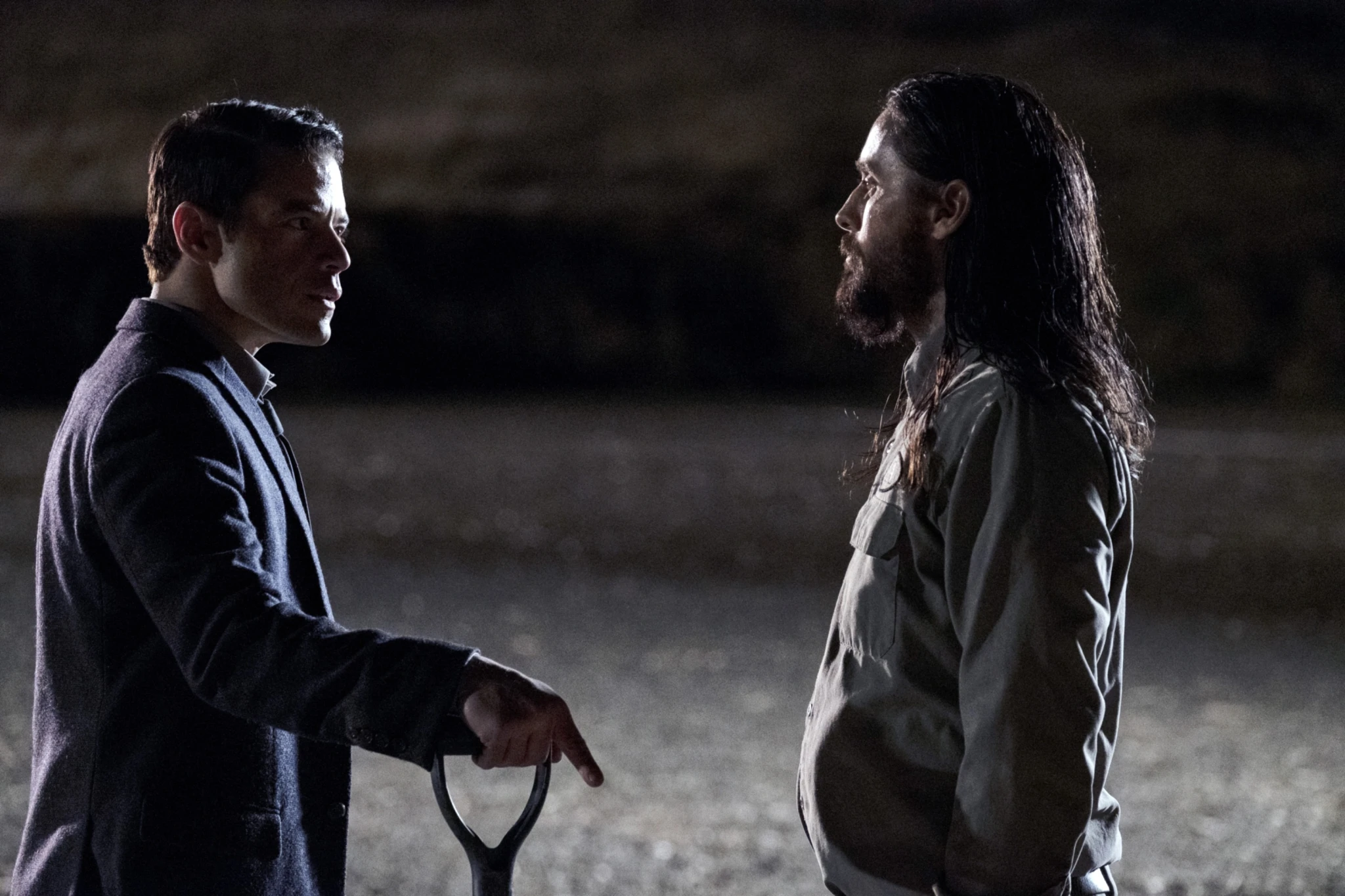
Sure to be an unpopular choice, for the majority of the run time of The Little Things, I was enamoured by the atmosphere, the development of the characters and the performances. Denzel Washington and Rami Malek make a great pair, Washington particularly convincing as the experienced but unorthodox sheriff. The Little Things is a neo-noir crime thriller that heavily wears its inspiration of David Fincher’s Se7en and Zodiac on its sleeve. Director John Lee Hancock lends an assured hand to the material, allowing the film a familiar feel that revels in its atmosphere.

Unfortunately, the film runs into murky water in its final 15 minutes with its controversial ending. Granted, it is original but I found it very anti-climatic, abrupt and like a big nothing and more than a little underwhelming. Hancock justifies the decision to end the film in this way. The film could easily for me have gone on for longer to solve its central mystery, but the film isn’t really interested in this and is more focussed on character. It is easy to understand the mixed reception to The Little Things but until its ending, I found it to be a riveting drama that is very cine-literate.

9) The Suicide Squad

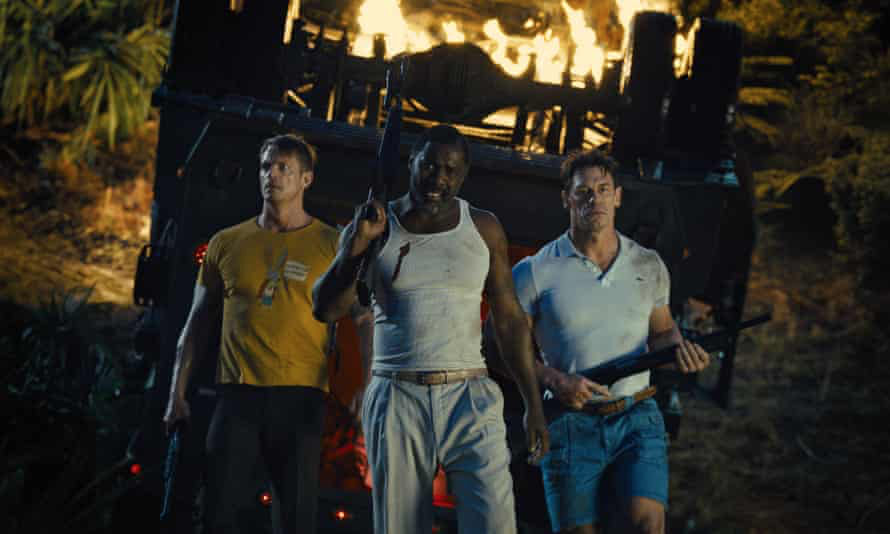
The Suicide Squad is for the most part a giddy, gory and thoroughly adult superhero film. The film is written and directed by James Gunn, whose sensibility for gory horror and dark humour, blend perfectly with the source material, feeling much more akin to his earlier works such as Slither and Super. Gunn originally hit critical acclaim with Marvel’s Guardians of the Galaxy and its sequel, the first film in particular proving a refreshing break from the tired Marvel formula that really allowed his personality to shine through. Despite breaking free of the Marvel formula, Gunn was still constrained to a 12A / PG-13 rating, therefore The Suicide Squad represents him at his most unrestrained. 

The Suicide Squad fits into the wider DCEU rather awkwardly in that it is a part-sequel to 2016’s critically mauled Suicide Squad in that it shares a handful of the same characters but it also functions as a part-reboot in that everything about it is completely different to that film. 

Gunn has proven a knack for picking unfamiliar comic-book characters and spinning a gripping yarn from their background. The Suicide Squad is paced extremely well and the script is stuffed with quips and wisecracking interplay between the characters. There is violence and gore aplenty – heads are decapitated, blood splatters after characters get shot in the face and King Shark likes to devour people… a lot! This is a film that earns its 15 / R rating and it is all the better for it. Like its predecessor, there isn’t much of a story again this time round, but the characters combined objective acts as a coherent plot and there are some excellent character twists along the way. Gunn does an excellent job in not allowing his audience to get to attached to characters, as life is pretty expendable in this film. 

In a wider context, what impressed me most about The Suicide Squad was its progressive characters for the genre, which acts as a revisionist take on the superhero genre. The superhero genre is overpopulated with generic films that are uncomfortable in breaking the mould and Gunn’s film actively tries to defy conventions, even if it’s not always successful, but the ambition is to be admired. 

The main drawback of the film is in its ending, which unfortunately sticks to convention and is a little anti-climatic when the rest of the film is so entertaining and refreshing. 

8) Minari

Minari is an affecting and amiable portrayal of a hard-working, but down on their luck Korean family who are trying to carve out their own American dream. Directed by Lee Isaac Chung, Minari follows immigrant Jacob Yi (Steve Yeun), who is fed up of working in a chicken hatchery in California and moves his young family to a considerable piece of land that he has brought in rural Arkansas with a rickety mobile home. The interplay between the family is excellent and the performances poignant. The highlights are of course, Youn Yuh-Jung, whose Oscar win for her turn as the grandmother is excellent, deftly balancing the comedic elements of the role with some powerful sequences in the third act. Steve Yeun is also commendable as Jacob and his plight for success is piercing to the audience, as is Han Ye-ri as Monica. The film is technically beautiful with dream-like cinematography from Lachlan Milne, the families land seeming other-worldly and distant. Emile Mosseri’s predominantly piano and woodwind based score is also soul-stirring in its ethereal quality.  

7) Candyman

Candyman is an accomplished and thought-provoking update in the series and cements director Nia DaCosta as a new talent to watch. This spiritual sequel is a continuation of the story established in Bernard Rose’s original Candyman, an equally stimulating entry that has aged well even today. DaCosta’s film ignores the two sequels, both of which failed to garner critical acclaim, the second of which was one of director Bill Condon’s early works. 

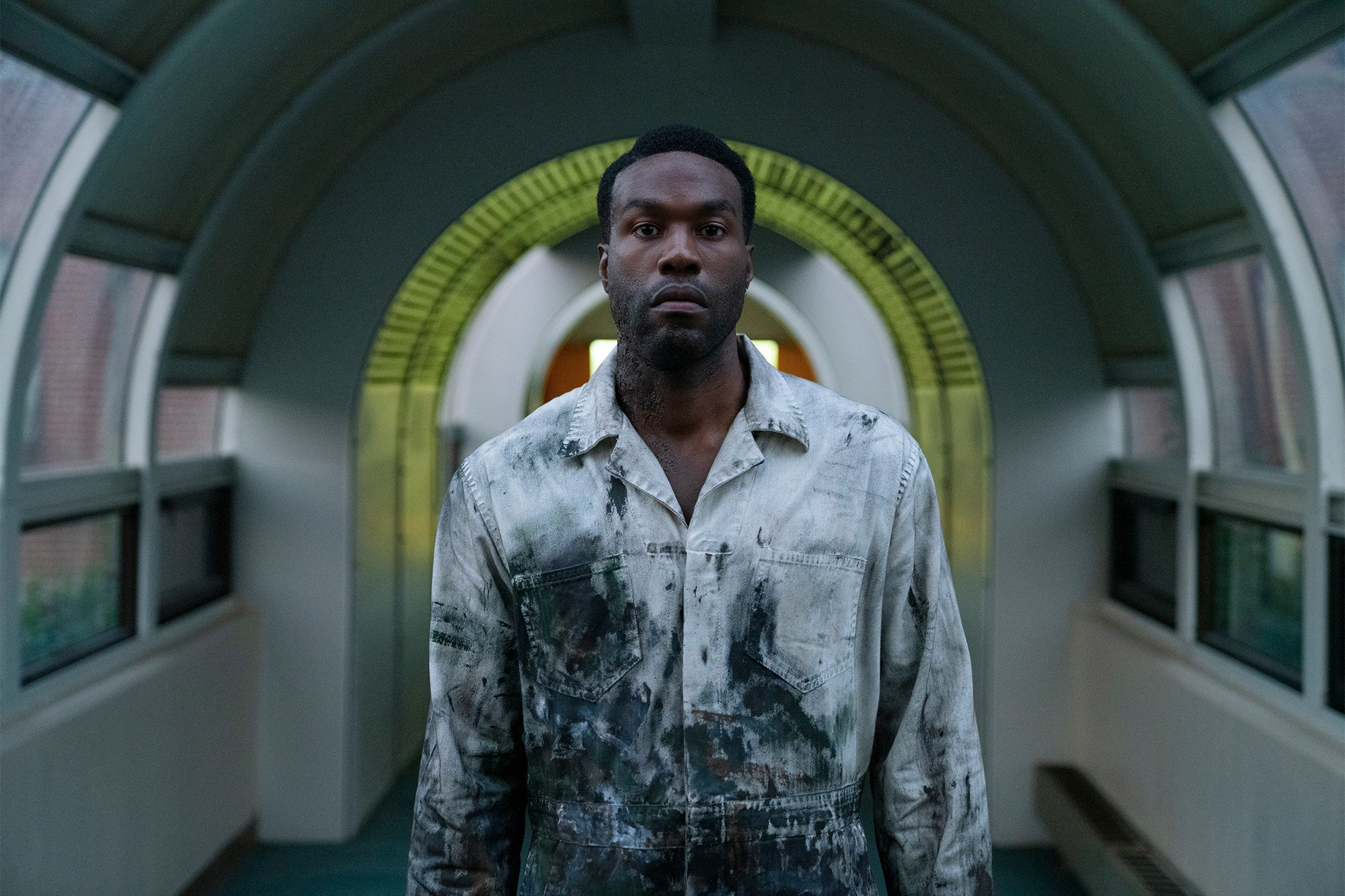
Yahya Abdul-Matteen II plays Anthony McCoy, an artist who is suffering from writer’s block who lives with his girlfriend, Brianna (Teyonah Paris) who is an art gallery director. His writer’s block subsides once he learns of the Candyman legend and this suddenly gets his creative juices following until the horror legend starts to come to life and consume his mind. 

Directing from a script which Get Out and Us director Jordan Peele contributed to, Nia DaCosta makes an electric impression behind the screen. Whilst the influences of Peele can be felt in the film’s interrogation of gender, race and sexuality, DaCosta impresses with her cineliteracy, particularly with the exploration of the theme of the double through the use of mirrors and mirrored reflections. Art is explored as a mirrored reality and Anthony is unsettled at his reflection. There are some arresting sequences in the first act of the film where images are inverted and disorienting, setting a foreboding atmosphere. This is complimented by Robert Aubrey Aiki Lowe’s brilliant score and soundscape and it’s refreshing to see him craft his own memorable themes as well as revisit Philip Glass’ original themes, which really elevated the original film.

6) Stillwater

Stillwater is the long awaited follow-up from writer-director Tom McCarthy, after his last film Spotlight won the Best Picture Oscar back in 2016. Despite the film drawing some controversy due to its parallels with the Amanda Knox case, Stillwater is an excellent crime drama that is played on a more human scale and centres on one of Matt Damon’s best performances.

Matt Damon plays unemployed oil-rig worker Bill Baker who frequently journeys to Marseille from the small town of Stillwater, Oklahoma to visit his daughter, Allison Baker (Abigail Breslin). Allison is five years into her nine year prison sentence after being convicted of killing her university roommate, Lina. Bill is a man of few words and works in order to afford the trips to France. When Bill is in France on a visit, there is an opportunity for the case to be reopened and he fights for his daughter to be exonerated. He has difficulty with the language barrier and the French bureaucracy system. Many locals in the city are aware of the case and know what his daughter did. After a fortuitous chain of events, befriends Virginie (Camille Cottin) and her young daughter, Maya and they all take a reciprocal liking to each other.

Stillwater has a satisfying yet searing narrative and the character relationships are admirably developed, particularly between the central trio of Bill, Virginie and Maya. Bill is essentially given a second chance at fatherhood, after he proclaims that he screwed up in the past. If you can accept the fact that Stillwater is merely inspired from Amanda Knox and doesn’t follow the case to the letter, then you have what is one of the best films of the year. 

5) Old

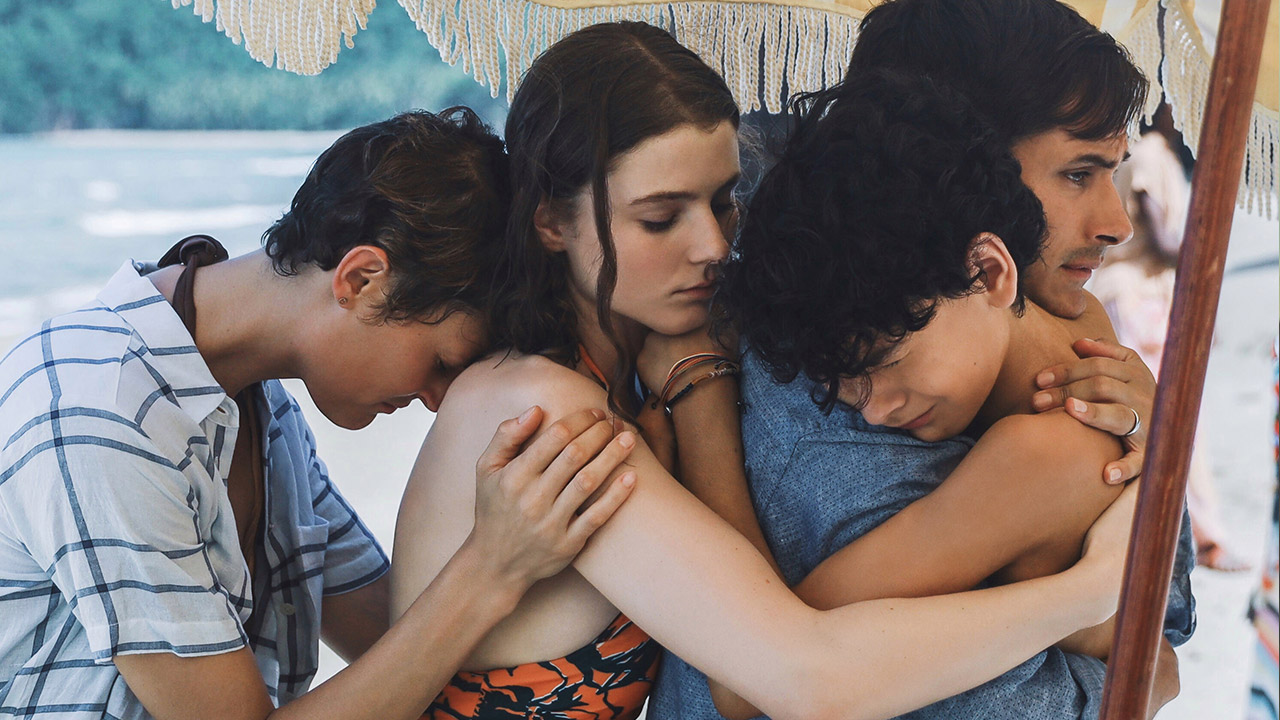
Old is another bonkers concept by the auteur M. Night Shyamalan, and tonally is somewhere between Get Out and The Beach, infused with The Twilight Zone. It is a frequently profound and is an intense, nightmarish exploration into the themes of life and maturation. The film follows a group of people who find themselves on a beach where they seem to be ageing rapidly. A scene between two old characters facing worsening eyesight and deafness is beautiful, as their memories are worsening and losing the concept of space and time. Shyamalan deftly balances these profound moments with freakish body horror and violence, one sequence in particular involving a knife is particularly harrowing and well shot. That said, the film could have benefitted from portraying more of these bloody images rather than most of the violence being portrayed off-screen, although the on-screen horror that Shyamalan decides to portray is enough to earn the film a 15 age rating.

Old is a strong and unapologetic effort from Shyamalan and is further evidence of his career resurrection following Split and (controversially) his best film Glass, if you get on board with the narrative. 

4) Army of the Dead

Army of the Dead, visionary director Zack Snyder’s first film post-DC, is a total blast from start to finish. Snyder is no stranger to the zombie thriller genre as his first film was Dawn of the Dead, a very solid remake of George A. Romero’s original. This is not connected to Dawnbut does take some inspiration from other Romero works. Snyder crafts a fascinating world here and there is some interesting political sub-text. Ethical questions are posed that draw parallels to the current American political climate and treatment of migrants. We are introduced to a diverse set of characters that are going to carry out the heist operation. Whilst the character tropes are fairly conventional and some characters aren’t really fleshed out, this is a zombie film after all and it’s inevitable that some of the cast are only introduced to die. The film is a visual treat and Snyder, who acts his own cinematographer for the first time, does a commendable job in building a convincing post-apolocalyptic world that doesn’t feel too far removed from how it is currently. The film is bursting with colour and Snyder leans into the creative kills and gore that earn the film its 18-rating with joyful glee, the opening credits to the film being particularly memorable. He balances this with some suitably dour darker lit sequences that highlight the origins of the Alphas and their leader Zeus, who is particularly well developed as a villain, and fits in perfectly with Snyder’s horror roots. Army of the Dead is further proof that Snyder works best when he is not restrained by a film studio.

Now into the top #3…

3) No Time To Die

No Time To Die represents Daniel Craig’s swan-song as James Bond, whose films have proved to be the most consistent out of all the actors to play Ian Fleming’s spy. This is an operatic and thrilling finale to the Daniel Craig era that takes some ambitious risks in its narrative. Director Cary Joji Fukunaga’s fingerprints can be felt all over the film from the Japanese memorabilia to the more intimate character moments. The first half an hour gave me goosebumps with an opening tinged in horror and then an emotive initial action sequence. Fukunaga explores a more personal side to Bond and excitedly departs from established franchise formula. The film is beautifully shot by Linus Sandgren, who makes the various travel destination locations look intoxicating.  

No Time To Die is a thoroughly thrilling send-off for Craig and it will be interesting to see how James Bond is regenerated in future instalments, given how this film ends. It doesn’t bottle out and Craig’s films cement themselves as the most consistent.

2) Zack Snyder’s Justice League

Who would ever have thought that two Zack Snyder films, a director of great controversy, features twice in a ‘Best’ list?! Zack Snyder’s Justice League is the director’s cut of the film Snyder tried to originally make before butting heads with Warner Brothers executives and then departing the project after a family tragedy. The end result was a crushing disappointment that was a schizophrenic mess that represented a clash of two opposing styles of direction with a feeling that it felt unfinished. Fans have petitioned for Snyder’s original vision and the movement began on social media with the hashtag #RestoreTheSnyderCut. After many months of speculation, Snyder then revealed that he had most of a finished cut completed and it was up to Warner Bros to release it. Fans continued to push for its release in their numbers and the ‘Snyder Cut’ was announced in May 2020. Warner Bros granted Snyder an additional $70 million to finish the film and it now sees the light of day in its full 242 minute glory.

Zack Snyder’s Justice League is an astonishing achievement and represents a mature and risky effort in establishing the DC team. The four hours fly by and it is a visual treat throughout. This is a Zack Snyder film through and through but it interestingly represents a more mature effort in that the storytelling here is improved from some of his previous filmography, where some of his films have bordered on the incoherent. By the film having its length, the film can breathe and Snyder works wonders in establishing and developing each and every character of the team. There is no conceivable way this story can be told in a two hour run time.

The wider context of this director’s cut is fascinating in how different it is from what Warner Bros chose to release. The stark differences between both cuts is something that can and likely will be studied for years to come and having watched this director’s cut, one has to question the psychology of the decision to approve the theatrical cut for cinema release.

Ultimately, Zack Snyder’s Justice League is a frequently astonishing and bold take on this DC lineup and it earns its four hour run time. With this director’s cut and Army Of The Dead, Snyder has matured as a director and he has markedly improved on some of his lesser qualities in previous films in regards to storytelling and representations. 

So the best film of the year is…

1) I Care A Lot  

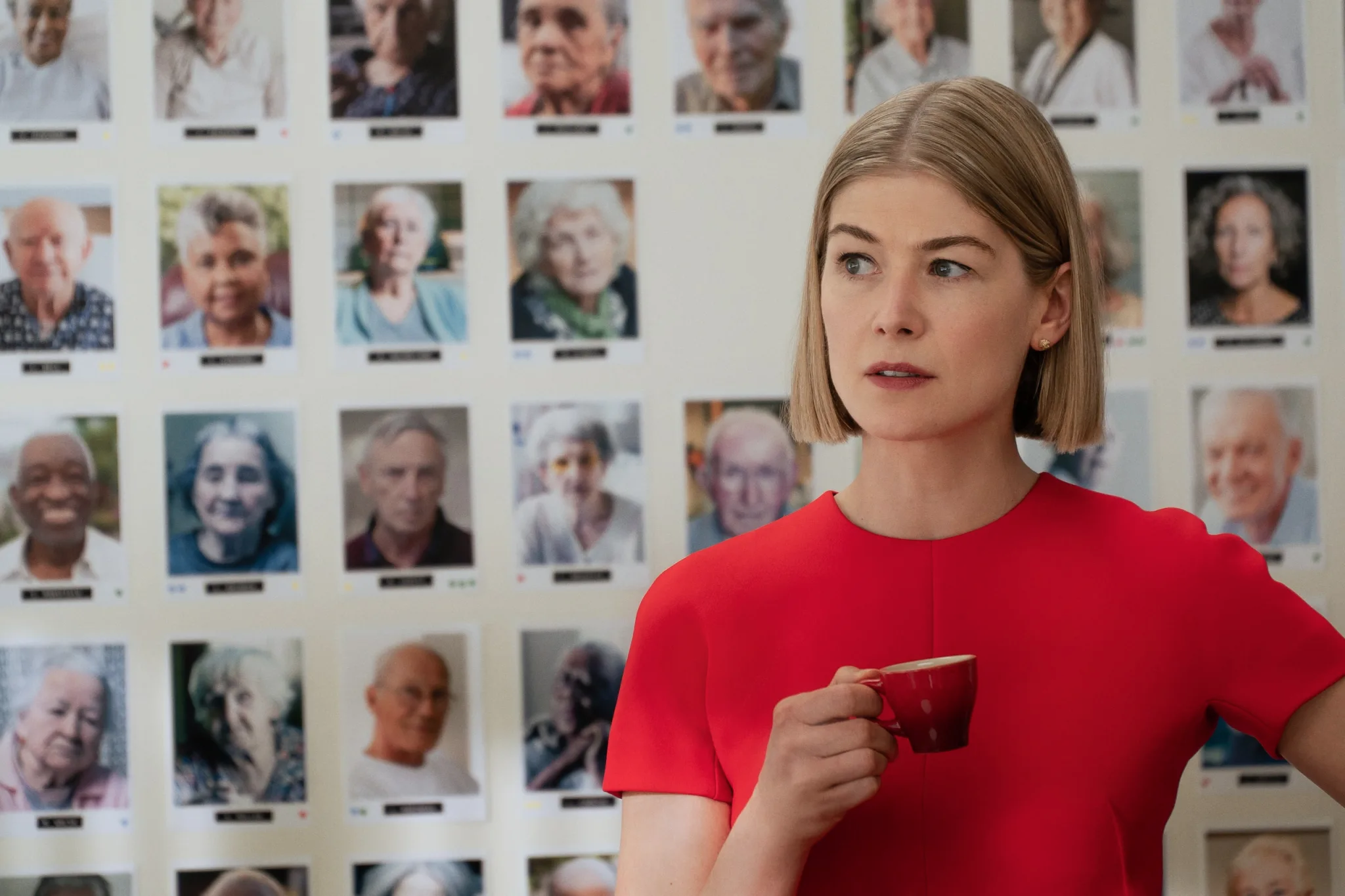
From start to finish, I Care A Lot is really excellent with a riveting and thought-provoking story with a collection of morally bankrupt characters. Rosamund Pike plays Marla Grayson, a morally bankrupt but cool-as-a-cucumber con artist who preys and scams on the older generation by becoming their ‘legal guardian’ and sending them to a care home, whilst she profits from selling their property and assets. Perhaps some of the twists the film takes in its third act aren’t quite as fresh as the beginning and it begins to move away from its smart commentary in the first two acts on the elderly generation. The notion that this could happen to you when you are older is genuinely frightening and really doesn’t feel that far removed from reality. Director J. Blakeson has markedly developed and this is a thrilling and thoroughly original concept.


So there we go, these films were in my opinion the best of 2021. What are your thoughts? Let me know in the comments or tweet @TheFilmMeister

Blacklight (Review)

Uncategorized
⭐ (Terrible)

Director: Mark Williams
Starring: Liam Neeson, Emmy Raver-Lampman, Taylor John Smith, Aidan Quinn, Claire van der Boom
Certificate: 15
Run Time: 104 mins

Blacklight is Liam Neeson’s latest action vehicle, re-teaming with Honest Thief director Mark Williams. Neeson stars as Travis Block, a Vietnam War veteran turned FBI fixer. He extracts undercover agents from difficult situations but wants to spend more time with his daughter, Amanda (Claire van der Boom) and granddaughter Natalie (Gabriella Sengos). When Block is tasked with bringing in undercover FBI Agent Dusty Crane (Taylor John Smith), a web of conspiracy ensues. 

Although Neeson has his detractors for his action era, I believe he picks interesting projects. The original Taken was a lean and mean thrill-ride and A Walk Among The Tombstones oozes in grit and substance. Run All Night has surprising style and Cold Pursuit revels in its dark humour. I’ve even got time for some of his lesser works directed by Jaume Collet-Serra and Taken 2 at a push. 

Unfortunately, Blacklight is a total disaster and has virtually no redeeming qualities. Neeson tries to make the best of a bad situation but even he can’t convince audiences with some terrible lines. It’s offensively bland in its direction, the supporting performances are embarrassing and the storyline nonsensical. Taylor John Smith and Aidan Quinn are particularly poor in their roles and Claire van der Boom’s character struck me as borderline psychotic to be a mother. 

Blacklight is marketed as an action thriller and yet, only really contains two action sequences. Even if the storyline is poor, action sequences can pass the time well but this film doesn’t have that. It’s a total chore to sit through, despite only being 104 minutes and I lost patience very early on into the film. 

Blacklight is an utter dud in Neeson’s action catalogue and is terrible in pretty much every respect. It manages to make Taken 3, a film in which no-one actually gets taken, look like a masterpiece. Luckily in the UK, it’s not being released theatrically and is heading straight to Sky Cinema, so you can very easily avoid it.  

⭐ (Terrible)

Best Films of 2021 (25-11)

Uncategorized

Compared to 2020 where cinema was in a state of paralysis, 2021 represented a year where the film industry got back on track. Make no mistake, the coronavirus pandemic still affected film releases and the first quarter of the year got off to a shaky start with many films continuing to head to streaming. Streaming has continued to rise in popularity, with Amazon and Netflix the dominant players and Disney+ and Apple TV+ not trailing too far behind.

Having had the chance to sample much of what 2021 had to offer, I now feel ready to share my best films of the year. I know that I am late in the game but there were quite a few films I didn’t get to watch in time and felt that it would be a disservice to generate a list that wasn’t truly reflective of the year. 

Generally, 2021 was a sound year for film and although the quality wasn’t as high as 2019, there were still some barnstorming works of art released for all to savour. The second half of the year really picked up as the mid-year list didn’t represent a particularly strong start to the year.

Here I rank numbers 25 to 11. The Top Ten will be detailed in a separate post so stay tuned for that.

Note

I am following the UK release date calendar from January 1st to December 31st hence why a lot of the Awards films do not feature here and why there are some from what may seem like are from 2020. 

25) Dune   

The long-awaited adaptation of Frank Herbert’s novel following David Lynch’s flawed take, Denis Villeneuve gets a lot right choosing wisely to only adapt the first half of the labyrinthyne story. Dune especially impresses in how it skilfully spins a coherent narrative that is relatively straightforward enough to follow. It’s certainly not a requirement to have prior knowledge of the material before watching this. 

Villeneuve’s adaptation is particularly cine-literate and the world-building is remarkable. He beautifully captures the arid and nomadic conditions of Arrakis and juxtaposes this with the water-rich yet isolated imagery of Caladan and the black nightmare of the House of Harkonnen. Dune is a visual spectacle and Villeneuve’s anger towards the film receiving a simultaneous streaming release in certain territories is justified. 

The film is particularly strong in its first act, as it sets the stage for conflict and establishes its sizeable roster of characters. The second and third acts become increasingly action-heavy and build on the spectacle. The performances all-around are excellent, although there are some characters who are short-changed that will have a greater presence in a second film. As well as Timothee Chalamet who makes a seamless transition from smaller fare to this behemoth of a project, Stellan Skarsgård is the standout as the levitating and grotesque antagonist Vladimir Harkonnen, who is used sparingly and is brought to life through visual effects.

Dune yet again cements Villeneuve as one of the key directors of our times and I hope the second part lives up to this chapter.

24) Reminiscence

Reminiscence is the feature film debut from Lisa Joy, one of the creators of hit Western sci-fi television series, Westworld. Unfortunately, the film was maligned on release but I found it to be is a thoughtful and satisfying neo-noir sci-fi that tells an engaging story, even if some of its story beats are clearly indebted to other film noir. This is partly intentional in that the very act of reliving one’s memories is to experience nostalgia. The film feels like a melding of Chinatown and Blade Runner with some of the beginnings of the ambitions of scale on display in Inception. Joy tackles some heady themes such as how we use and abuse our past and forget to live in the moment, as well as the obvious critical commentary on climate change and the rich-poor divide. 

Hugh Jackman gives a typically committed performance, proving his continued versatility across genres. Technically, Reminiscence is very competent and Paul Cameron’s cinematography beautifully captures the intricacies of the sinking city and the seedy goings on when its citizens are alive at night, under the protection of the dark. Lisa Joy’s direction is to be admired with her high-concept and there are a couple of excellent action sequences that are sparse but interspersed in the story. A scene in a bar with a tank full of eels feels like a microcosm of the Western sci-fi fusion of Westworld and there is a kinetic rooftop chase sequence. Joy reunites with Westworld composer Ramin Djawadi, who provides an exciting, predominantly guitar-based score.  

Reminiscence is a lot better than expected and is a well-realised concept that is a rewrite or two away from being something really impactful. I’m very glad it exists as films like this don’t really get made anymore, especially with a unique female vision.

23) Last Night In Soho   

Last Night In Soho is another sharp and entertaining piece from The Cornetto Trilogy and Baby Driver director Edgar Wright. It is meticulously crafted and is bursting with nostalgic nods to various 1960s iconography. Wright is clearly in love with the era, from the period correct posters of Thunderball to the decor in the sleazy but dazzling clubs of Soho that lead character Sandie (Thomasin McKenzie) finds herself in. In many ways, this feels like Wright’s most personal film. There are some good twists in the plot that keep the story fresh and the last act takes the story in an interesting and satisfying direction. The film is interestingly a Giallo horror with its macabre murder mystery, hallucinatory quality and visual aesthetic. 

Not everything works in the film. The contrast between the 1960s and the present day can be quite jarring in its tonal shifts and the mirroring between Eloise and Sandie isn’t always coherent in how Eloise experiences Sandie in her dream-like state. When the film leans into its horror elements more in the second half, it doesn’t always work as the ghosts that Eloise experiences aren’t particularly well realised visually and Wright doesn’t attempt to build tension or even try to scare audiences – the lucid hauntings and gore are meant to be what is frightening rather than what isn’t portrayed on-screen. 

Although uneven, there is a lot to admire in Last Night In Soho and it wildly succeeds in its story and the warmth that it brings to the 1960s of Wright’s vision. This is a really solid film to add to Wright’s back catalogue, even if it represents a departure from his comedic works. 

22) Eternals

The first Marvel Cinematic Universe film entry to receive mixed reviews, I found Eternals to represent a refreshing change of pace for the Marvel Cinematic Universe and Nomadland Oscar-winner Chloe Zhao lends an intimate and delicate hand to the material. The complex cosmic narrative is well-handled and each of the ten Eternals is well introduced and possess identifiable character traits, no mean feat when you’re juggling . The relationship between them all is admirably tackled, which is no mean feat as there is always a high risk of sidelining characters, especially when you have ten personalities to juggle. 

What allows Eternals to succeed (and perhaps why the film has received a decidedly mixed critical reception) is that it distances itself away from the wider Marvel Cinematic Universe formula and tone. This is a key problem with many entries, which silences the director’s vision and some of the films fall into the trap as feeling they are directed by committee. Other than some moments of light humour which are characteristic of most entries, Eternals boasts a heavier weight in that it asks some difficult questions of its characters and portrays them as god-like, reminiscent of Zack Snyder’s treatment in his DCEU entries Batman v Superman: Dawn of Justice and the director’s cut of Justice League. The film’s at its best in its quieter moments when characters weigh up some tough decisions.

21) The Power Of The Dog

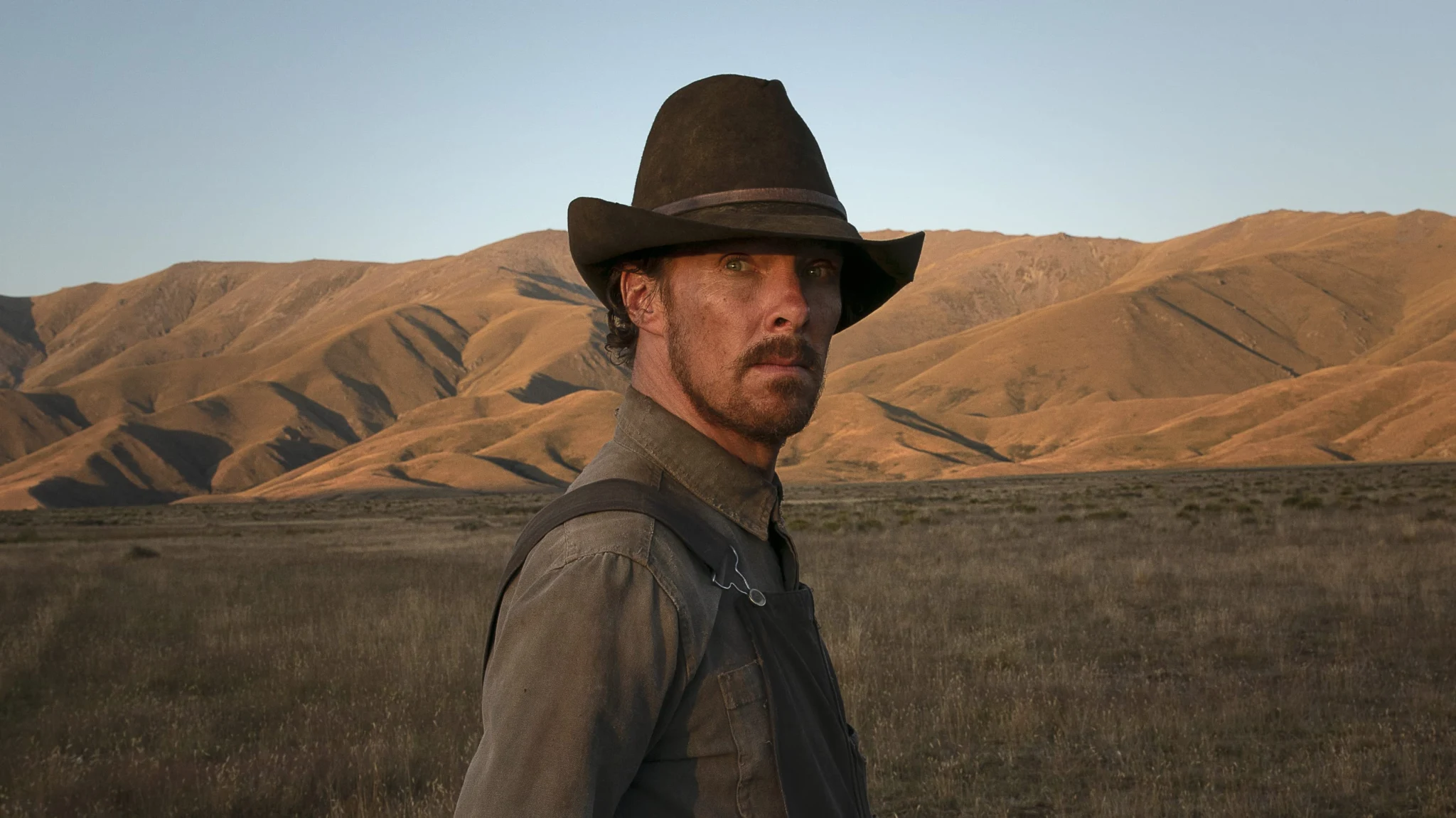
The Power Of The Dog is an atmospheric, slow-burning yet fascinating character study from revered director Jane Campion. It features some brilliant performances, Benedict Cumberbatch gives possibly a career-best performance as Phil, a man with a masculine crisis. He conveys the seething and bullish nature of the character perfectly, going to great depths with his method acting by chain smoking to the point of nicotine poisoning and refusing to bathe and interact with Kirsten Dunst. A scene mid-way in the film where Rose is practicing the piano for a later dinner is particularly chilling as she struggles to perform the piece and Phil cruelly plays it faultlessly on his banjo out of sight. This is a masterful performance and one of the best of the year. 

The Power Of The Dog is an enigmatic experience with powerhouse performances. It is deserving of its praise and the unexpected fierce ending creeps up on you. Although the film is slow in its pacing, the ending asks the audience to reconsider what you have witnessed and you’ll want to watch it again to piece the character motivations, where it is a richer and more multi-layered experience. 

20) House of Gucci   

The first of two Ridley Scott directed entries in 2021, House of Gucci is a solid biopic and succeeds mainly on its performances and its gripping story. It is rather scattershot narratively in that it covers a lot of ground in a reasonably long run time but the film never really feels like it has a chance to breathe as it tries to cover too much. Scott also doesn’t quite master the balance between camp and serious and the film uneasily oscillates between the two tones. 

The characters are gleefully horrible and this is a sprawling exploration of the timeline. Lady Gaga is deserving of her praise in the lead role, a tempestuous character who descends further into delirium. It is impressive that this is her second major feature film role after A Star Is Born and she more than fends her own against the experienced cast. Adam Driver is also excellent as the more level-headed yet savvy Maurizio and provides an interesting contrast to Gaga in his more sober performance. Al Pacino is typically passionate as Maurizio’s Uncle, Aldo and Jeremy Irons is chilling as the decadent yet increasingly vampiric Rodolfo. Then, there is Jared Leto, who has received a mixed reaction to his performance, some labelling it as Awards worthy and others citing he is acting in a different film. I would position my opinion somewhere in the middle – he tries to do something different but isn’t too outlandish and the performance worked for me. There is one particular scene between Leto and Pacino and for Leto to outshine Pacino when he is in full-Pacino mode is no mean feat.

19) Antebellum

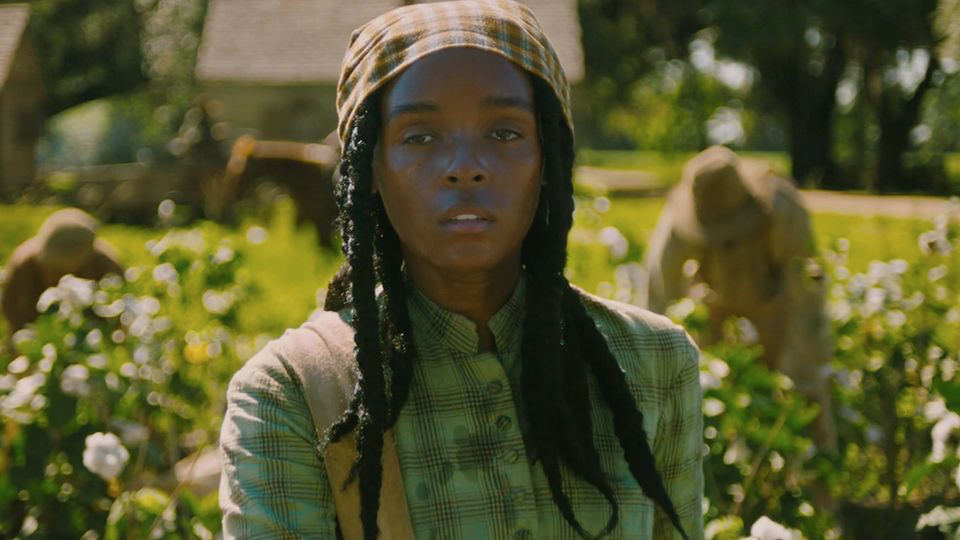
Antebellum is a really interesting debut from directors Gerard Bush and Christopher Renz and I’m very glad it exists, particularly in the context of a ‘Make America Great Again’ society. Positioned as a female-centered nervous mix of The Twilight Zone and 12 Years A Slave with more than a heavy dose of M. Night Shyamalan infused in the mix, Antebellum follows Janelle Monae’s Eden, who is a slave on a plantation in what appears to be Civil War-era America. About forty minutes in, she wakes up as renowned sociologist Dr Veronica Henley and audiences are drawn to the parallels between both narratives and how they might be connected. The first and third acts are particularly riveting even if the film sags in the middle, where there are some overly preachy speeches and a misjudged character played by the normally reliable Gabourey Sidibe. The plantation sequences are particularly uncomfortable to watch for a film of this genre and the cinematography by Pedro Luque and menacing string-based score are stunning. 

It’s a shame that the reception to this film has been fairly negative, with many finding the film to be exploitative, its twist not justifying the brutal violence and that its violence is torture porn. I would strongly disagree and would argue that the sadistic violence assists in creating a stronger verisimilitude. I can’t wait to see what Bush and Renz go onto make next and hope that they continue to take risks and are not deterred from the negative critical response.

18) Shang-Chi and the Legend of the Ten Rings

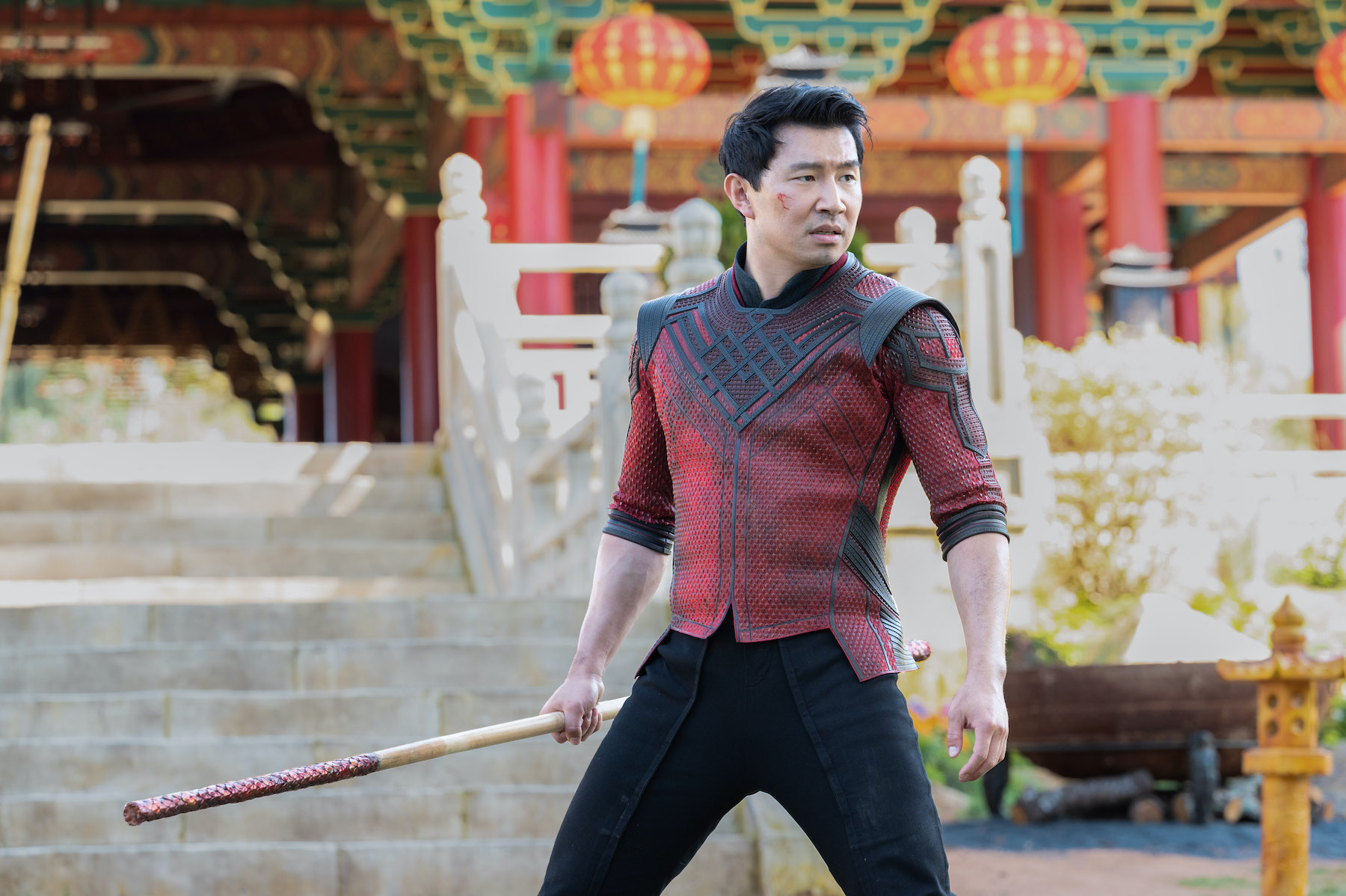
Another Marvel Cinematic Universe entry, other than a wonky beginning, Shang-Chi and the Legend of the Ten Rings is upper-tier superhero fare. It follows the Marvel formula but its emotional warmth and martial arts sequences make it stand out from the crowd. There is a great set up of Shang-Chi’s family, which plays an important dynamic in the film. Shang-Chi boasts some innovative set pieces, fusing and updating the wuxia and kung-fu genres with modern visual effects. The first action sequence on the bus and another early sequence set in Xialing’s fight club are particular highlights with their kinetic energy. The tone of the film feels like a melding of Crouching Tiger, Hidden Dragon and The Chronicles of Narnia with the mystical worlds that Cretton creates. Some of the sheen is lost in the final act of the film as Cretton succumbs to a big CGI battle, which is customary for comic-book films and is often their downfall as the investment is lost in the characters. However, the final CGI spectacle doesn’t derail the film as it is not overlong and there is a purpose in the narrative but it would have been far more exciting if Cretton had tried to deviate from convention.

17) The Last Duel

The Last Duel has a lot of positive aspects, in particular the fascinating and ambitious narrative concept of its Rashomon structure. We witness the same events from different perspectives and audience allegiances are challenged when we see conflicting accounts. The first two perspectives from the duellists are where the film is best, as they directly compliment each other. I found it particularly intelligent how Matt Damon’s performance changes between his account, where he presents himself as a stable and patriotic individual to Le Gris’ perspective of him where he is an embarrassing and oafish presence. The final perspective from Marguerite is also insightful in that women are regarded solely for transactional purposes. It’s interesting that many viewers have cited her telling as the ultimate truth but I think it is far more nuanced in that we don’t witness certain scenes of the film that the first two chapters highlight, invoking that even she isn’t as innocent as she presents herself. The culminating duel is fantastically realised by Scott and is an intense and bloody spectacle that ranks as one of his best set pieces. 

16) The Conjuring: The Devil Made Me Do It

The Conjuring: The Devil Made Me Do It represents a welcome change of direction compared to the first two films in that it delves from the haunted house formula and is more of a police procedural crime thriller. The story the film is based on is riveting, even if some creative liberties have been taken with it for it to fit the horror genre. The performances are all excellent, Vera Farmiga and Patrick Wilson as the Warren’s again are the centrepiece of the franchise and the film expands and revolves around their strong relationship. Director James Wan is not behind the camera this time around and the film is directed by Michael Chaves, who directed a previous entry, The Curse Of La Llorona. Chaves’ direction attempts to ape Wan’s from the use of title cards and a prologue sequence at the beginning to the general tone of the film. However, when it comes to the horror aspect of the film, Chaves just does not craft the scares in as sophisticated a fashion as Wan. I was riveted from start to finish but there is always the question of what if this film had been directed by James Wan and I think if had, the result here would have been extraordinary. If the film doubled down on its scares or chose to eliminate them completely and spent longer developing its characters and establishing the stakes, this could have been a masterpiece.

15) The Nest

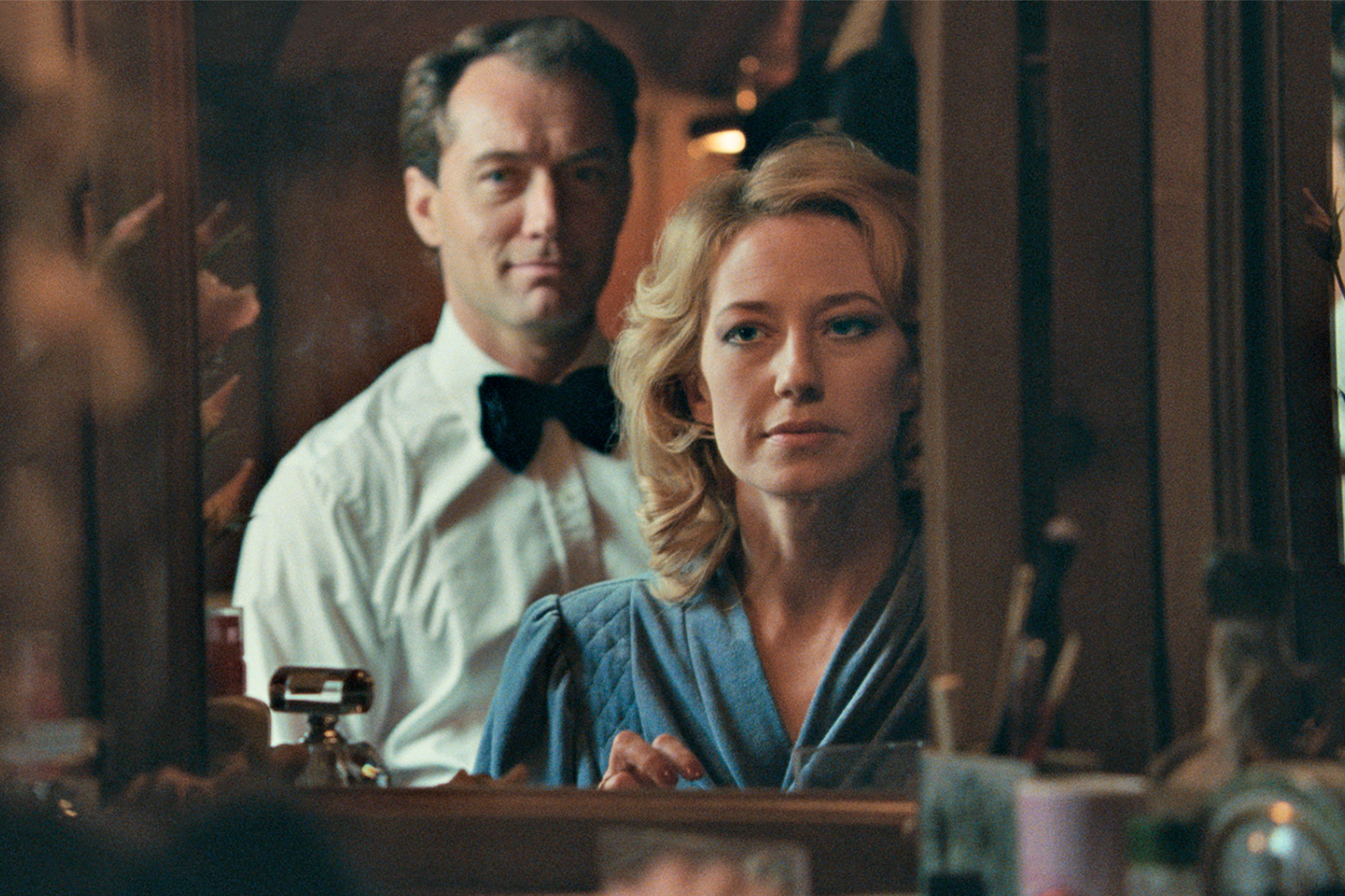
The Nest is director Sean Durkin’s second film, whose delicate and poignant debut thriller Martha Marcy May Marlene featured Elizabeth Olsen in her breakout role – it’s well worth checking out. This sophomore effort is centred around a family of four in the mid-1980s America who relocate to the UK. The Nest is a riveting character study and features powerhouse performances from Jude Law and Carrie Coon. Durkin excels in creating an eery atmosphere of constant unease with a hint of supernatural horror, bolstered by Son of Saul’s Mátyás Erdély’s frenetic yet dreamy cinematography. The Nest is an absorbing and intelligent character study. 

14) CODA

CODA is directed by Sian Heder and is an English-language remake of the 2014 French-Belgian film, La Famille Bélier. The film follows Ruby Rossi (Emilia Jones), a teenager in her final year of high school who isn’t sure what the future holds for her. She is the titular CODA (child of deaf adults) and the only hearing member of her family as her brother, Leo (Daniel Durant) is also deaf. Ruby effectively has the unenviable task of acting as the family interpreter, given her fluency in American Sign Language. The family run a struggling fishing business, which Ruby is expected to help in full-time once she has completed her studies. However, Ruby has aspirations to be a singer but struggles to express her passion in her music class, due to a history of bullying having spoken differently as a child. 

CODA is an effortlessly heart-warming coming-of-age drama that is elevated by some brilliant performances. Emilia Jones steals the film with a sensational central performance as Ruby, an endlessly relatable teenager who struggles to fully fit in with her peers. She is between a rock and a hard place with her family as they are over-reliant on her help, to the detriment of her own wellbeing and life. This is, without a doubt, one of the best performances of the year. Generally, the film is paced perfectly and there are many sequences that are impossible to watch without anything other than a beam on your face. This is a crowd-pleasing film that intimately explores the deaf experience and its hearing protagonist’s young adult experience is endlessly relatable and touching. 

13) Malignant

Malignant is a welcome and wholly original return to the horror genre for director James Wan. Wan has had an impressive career to date, establishing himself as a top-tier horror director, launching three very different but highly successful franchises – Saw, Insidious and The Conjuring. He has since turned to bigger budget mainstream fare such as Furious 7 and Aquaman. It is always a promising sign when a director chooses to revisit their roots and tackle a lower budget original concept. Malignant has been marketed very much in the same vein as a supernatural horror film, more in line with Insidious and The Conjuring, but the result is very much not. 

Like Last Night In Soho, Malignant is Wan’s interpretation of a Giallo horror and this is a fascinating film that embraces a camp tone. It is an ambitious risk for the director and the story takes unexpected turns. The first act seems fairly generic on the surface, in the vein of Insidious, although Wan does establish an unsettling atmosphere. The film then morphs into a David Fincher-esque serial killer mystery, where it is at its best. A chase scene between the police and the assailant mid-way through is kinetic and heart-pounding. Its last half an hour or so is outrageous with a bonkers plot twist and is a cacophony of gleeful gore, body horror and John Wick-like ultraviolence, with a hint of Sam Raimi camp.

12) Those Who Wish Me Dead

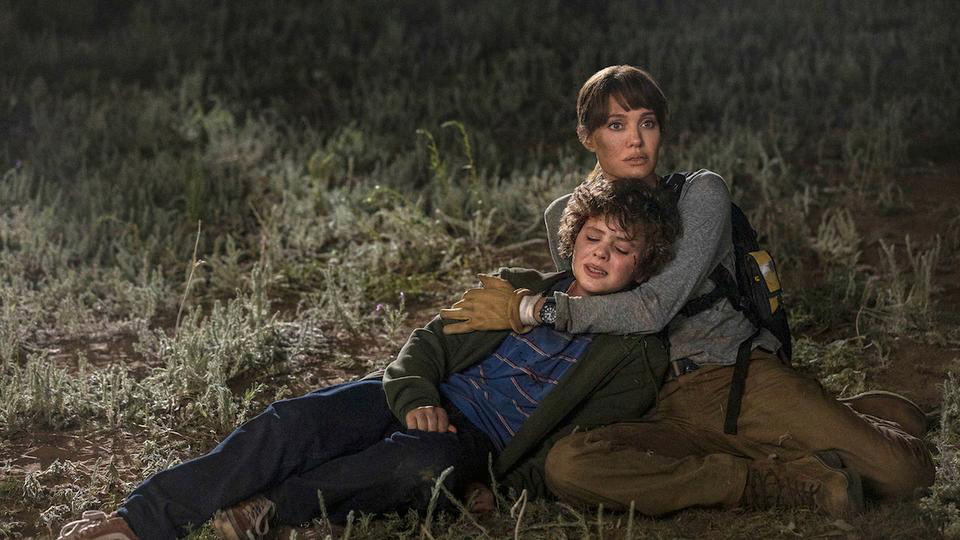
Those Who Wish Me Dead is the latest from writer-director Taylor Sheridan and in keeping with his back catalogue, is another film that explores the modern American frontier. It is yet another original and commanding effort from Taylor Sheridan. It is frequently thrilling and as is customary for the writer-director, there are some interesting twists narratively and in its portrayal of gender. The way in which Sheridan introduces the characters allow the audience to be two steps ahead of them, which is thrilling as we can predict how they will likely act when all the pieces fall together later in the film. Sheridan is again able to extract some excellent performances from the cast. Angelina Jolie makes for a commanding screen presence, haunted by what she feels is her mistake, and this is a solid project for her to pick in her acting comeback. Gillen and Hoult make for an unstoppable reckoning as the assassins. 

11) Another Round

Another Round is a high concept tragicomedy from director Thomas Vinterberg who re-teams with the ever-versatile Mads Mikkelsen. Mikkelsen plays Martin, a jaded and uninspired History teacher who is struggling to enthuse his students and has a stale relationship with his wife and kids at home. These qualities are shared by three of his close friends who also teach in the same school – sports teacher Tommy (Thomas Bo Larsen), music teacher Peter (Lars Ranthe) and psychology teacher Nikolaj (Magnus Millang). When they meet up to celebrate Nikolaj’s 40th birthday in an up-market restaurant, they get very drunk. One of them brings up the subject of a theory by Norwegian psychologist Finn Skårderud who opined that humanity performs best when they have a blood alcohol content of 0.05%.  Martin decides to put this theory to the test one day whilst teaching and he finds that he has a much closer relationship with his pupils. The rest of the group decide to join in and they all have similarly positive results. They start to record their results in an academic journal that they curate and as the film progresses, they slowly up the alcohol level to explore the effects. Perhaps unsurprisingly, they discover that the benefits start to stagnate the more they drink and they eventually reach the road of self-destruction, with both comedic and devastating consequences. 

Another Round is often infectiously humorous and the relationship between the four teachers is developed very authentically and they have fantastic chemistry. The film is equally depressing at times when we witness the dire consequences alcohol can have on these teachers. The first two thirds of the film is particularly beautifully crafted but it loses its footing in the final third somewhat. The final act negates the message of the first two acts and Vinterberg seems to be unsure in his argument of whether alcohol has a positive or negative influence. 


So there we go, numbers 20 down to 11. Stay tuned for the Top Ten in a separate post…


What are your thoughts? Let me know in the comments or tweet @TheFilmMeister

Deep Water (Review)

Uncategorized
⭐⭐⭐ (Good)

Director: Adrian Lyne
Starring: Ben Affleck, Ana de Armas, Tracy Letts, Grace Jenkins, Dash Mihok, Rachel Blanchard, Kristen Connolly, Jacob Elordi, Lil Rel Howery
Certificate: 15
Run Time: 115 mins

Deep Water is an erotic psychological thriller, directed by Adrian Lyne, his first film in twenty years. This genre is Lyne’s bread-and-butter, most famous for films such as Fatal Attraction, Lolita and Jacob’s Ladder, all of which feature sexually charged stories and characters. 

The film is an adaptation of Patricia Highsmith’s 1957 novel of the same name and follows Vic and Melinda Van Allen (Ben Affleck and Ana de Armas), a couple in a loveless marriage. The two have an agreement that Melinda is allowed to have affairs with anyone she wants, as long as she does not desert Vic for the sake of their young daughter, Trixie (Grace Jenkins). 

Their open marriage isn’t a well kept secret amongst their friends, although Vic grows increasingly tired and jealous of Melinda’s lovers. They are both led into a web of conspiracies following the death of one of Melinda’s partners, with Vic the obvious prime suspect. 

Although Deep Water is a rather trashy affair, it’s a thoroughly enjoyable and pulpy ride. The film plays to Lyne’s directorial strengths and he’s able to capitalise on the spiky yet sensual relationship convincingly. Until the third act, the mystery is satisfying to witness unravel and it sustains its positively vicious tone throughout. 

Affleck is no stranger to this type of role, with obvious comparisons to Gone Girl. Vic has a cynical outlook on life and can be cold and clinical at times, but he is also measured and has the closer relationship with his daughter compared to her mother. Melinda, on the other hand, has an erratic personality and revels in the pain she inflicts on Vic and isn’t particularly motherly towards her daughter. After excellent performances in Knives Out and No Time To Die, Ana de Armas continues to build her impressive career with her versatility, as her character is quite despicable. 

Unfortunately, the film finds itself in fittingly deep water in its third act where it falls apart in its logic. Tracy Letts plays Don Wilson, a friend of the couple who is judgemental, in one scene outwardly questioning the moral ethics of the drone warfare that Vic has made his wealth from. It’s unnatural how uncommonly interested Wilson finds himself in Vic’s character and it’s impossible to take the character’s intentions seriously, which are particularly prevalent in the third act. There is also a borderline laughable chase between a car and a bicycle, worsened by choppy editing, that ends too narratively conveniently. 

Whilst it’s perhaps easy to understand why critics haven’t taken particularly kindly to Deep Water, I found the film a guilty pleasure. The spiky relationship of the central duo are the thread that binds the narrative and the murder mystery elements are genuinely interesting, as a result of the convincing development of the couple. If you can get on board with its ludicrous premise, it makes for a thoroughly entertaining ride until it falls apart somewhat in its third act. 

⭐⭐⭐ (Good)

X (Review)

Uncategorized
⭐⭐⭐⭐ (Excellent)

Director: Ti West
Starring: Mia Goth, Jenny Ortega, Martin Henderson, Brittany Snow, Owen Campbell, Stephen Ure, Scott Mescudi
Certificate: 18
Run Time: 106 mins

X is the new film from director Ti West, who returns to his horror roots after a brief venture to the Western with the giddily entertaining In A Valley Of Violence. West’s horror films have been hit-and-miss – I liked aspects of The House of the Devil and while The Innkeepers had an original concept, it just tonally didn’t work for me. That said, you can’t deny he always has a vision and for that reason, West is an exciting director.

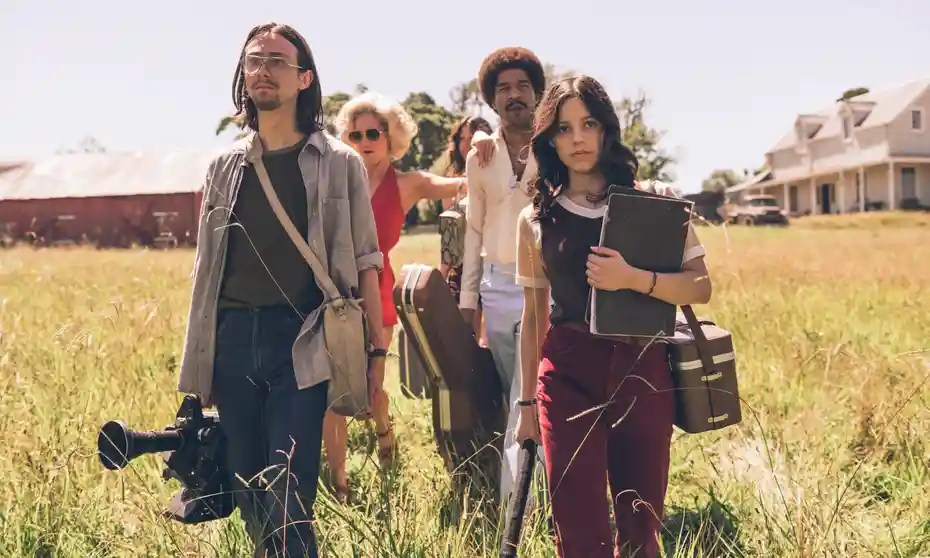
X takes place in 1979 and follows a cast and crew of a pornographic film who choose to shoot on an unsuspecting elderly couple’s rural Texas property. The group is comprised of aspiring actress Maxine Minx (Mia Goth), her producer boyfriend Wayne (Martin Henderson) , actors Bobby-Lynne (Brittany Snow) and Jackson Hole (Scott Mescudi), the director RJ (Owen Campbell) and his girlfriend Lorraine (Jenna Ortega). 

Immediately on arrival, one of the proprietor’s, Howard (Stephen Ure), is temperamental towards the group and things seem off. What follows is a cacophony of gleeful violence intertwined with sexual awakenings and discovery. 

X is a thoroughly entertaining horror that is elevated by its cineliteracy towards 20th-century slasher films such as The Texas Chainsaw Massacre, as well as its satisfying exploration of a range of themes. It is most effective in its first half as the build-up is at a constant simmer. The film heads off the rails in its second half in a mostly satisfying way, albeit with some silliness as it leans into the genre tropes of that era.

Mia Goth has impressed in horror films with A Cure For Wellness and Suspiria and makes her mark here again. She brings a down-and-dirty edge into the role of Maxine and she quite literally disappears into her second role under heavy prosthetics as Pearl, the wife of Howard. The rest of the cast are all game too, with Jenny Ortega receiving a meaningful arc and Stephen Ure proving what an underrated actor he is, channeling the nastiness from his most famous portrayal of an Orc in Lord of the Rings: The Two Towers

The score by Tyler Bates and Chelsea Wolfe is haunting using period pieces as well as an original predominantly synth-based score. Chelsea Wolfe’s rendition of Oui Oui Marie is particularly mesmerising.  The film is also beautifully shot by Eliot Rockett. He frames the characters as if they are prey, an aerial shot of an alligator stalking its target and an eagle encircling the air above the film crew are of particular note. 

X is quite easily Ti West’s best horror film and is a great example of how to flirt with the past and deliver an original concept. In A Valley Of Violence remains his best film overall but this is a thoroughly entertaining piece that wears its inspirations on its sleeve and has depth. 

⭐⭐⭐⭐ (Excellent)

Turning Red (Review)

Uncategorized
⭐⭐⭐ (Good)

Director: Domee Shi
Starring: (voices of) Rosalie Chiang, Sandra Oh, Ava Morse, Hyein Park, Maitreyi Ramakrishnan, Orion Lee, Wai Ching Ho, Tristan Allerick Chen, James Hong
Certificate: PG
Run Time: 100 mins

Turning Red is the latest in the Disney Pixar canon and like Soul and Luca last year, it has released straight on Disney+. Whilst the coronavirus pandemic hasn’t gone away, this seems a strange decision, especially considering Disney films such as Encanto and Spider-Man: No Way Home have performed very well in cinemas. The film is directed by Domee Shi, the Oscar-winning director of Pixar short Bao.

Set in 2002, Turning Red’s central character is a thirteen year old Chinese-Canadian girl called Meilin ‘Mei’ Lee (Rosalie Chiang). She lives with her parents in Toronto – her father, Jin (Orion Lee) is relaxed and easygoing but her mother, Ming (Sandra Oh), is authoritative and overprotective. Mei walks a fine line between trying to please her mother and  trying to fit in with her peers at school, although she’s part of a small circle of girls who are fans of a boyband called ‘4*Town’. Her mother disapproves and outside of school, Mei helps to look after her family’s temple dedicated to their ancestor, Sun Yee. 

Mei gets increasingly stressed with having to walk the tightrope between her mother and her own personal choices and one morning, Mei wakes up and finds that she has transformed into a giant red panda. Mei discovers that she transforms  whenever she gets into a strong state of emotion, evocative of growing up and the film doesn’t shy away from topics such as menstruation and puberty. 

Turning Red is to be commended for its sheer ambition of dealing with what is a relatively taboo subject matter for a mainstream film, especially one that also has to appeal to younger audiences. It represents a very different affair for a Pixar film and as is typical for the animation studio, it is moving in parts. It is clearly inspired by anime with its transformative element and colour scheme, down to the extreme facial expressions of its characters. 

The script, co-written by Shi and Julia Cho, is smart and its characters bursting with personality. Mei is a very well written lead and is endlessly empathetic. She simply wants to carve her own life and is intelligent and funny, although crucially not perfect. Her friends – Miriam, Priya and Abby are also delightful and the topics they discuss and aspirations they share are typical of teenagers in an early 2000’s society. 

The toxic relationship between Mei and her mother is well-handled and once we start to learn more about the extended family that the Lee’s belong to, some of the extreme measures Ming takes to protect her daughter make more sense. It’s a shame that Jin is sidelined as a character, reduced to a quiet though thoroughly comedic presence. The film wears its distinctly female voice with pride on its sleeve but a more fleshed-out role for Jin would have been more satisfying to balance the drama. 

Turning Red takes some adjusting to get into, as its first fifteen minutes or so comes across as obnoxious. However, this is by design as Shi conveys the eclectic teenage lifestyle and once its characters have been introduced, the film is much easier to get on board with. The score by Ludwig Göransson, his first animation effort, is similarly eclectic but the themes aren’t particularly memorable and simply put, it doesn’t always work in the context of the scene it accompanies. 

Overall, Turning Red is an innovative and thoroughly original Pixar film and is respectful though unashamed in its presentation of its subject matter. Once you settle into its tone, it’s a very satisfying journey to watch unfold bolstered by its strongly written female characters. It’s not quite top-tier Pixar for me, as it isn’t quite as effortlessly charming and poignant as its best entries such as Up or Coco, but I’m very glad it exists. The film is sure to launch Domee Shi’s career and I can’t wait to see what she does next. 

⭐⭐⭐ (Good)

The Adam Project (Review)

Uncategorized
⭐⭐⭐ (Good)

Director: Shawn Levy
Starring: Ryan Reynolds, Mark Ruffalo, Jennifer Garner,
Walker Scobell, Catherine Keener, Zoe Saldaña
Certificate: 12A
Run Time: 106 mins

The Adam Project is the second collaboration between director Shawn Levy and Ryan Reynolds. They first collaborated on last year’s Free Guy, a film that received critical acclaim but I found it to be a bland disappointment. The Adam Project is more of a straightforward sci-fi, which Free Guy also skirted with but in a more fantastical setting. This film follows Ryan Reynolds as a pilot from the future who attempts to time-travel back to 2018 to save his wife, Laura (Zoe Saldaña). Unfortunately, things go rather wrong and he ends up in 2022. There, he meets his 12-year-old self (Walker Scobell), who is trying to come to terms with the death of his father (Mark Ruffalo) one year prior. He is bullied at school and has a rocky relationship with his mother (Jennifer Garner). The Adams are soon attacked by the leader of the future dystopian world, Maya Sorian (Catherine Keener) and have to team together to protect the future from her dictatorship. 

The Adam Project is a much better effort this time around and the first half of the film has a lot going for it. Levy assuredly establishes and develops the characters and it is quite moving in places, especially the relationship between the younger Adam and his mother and how they are both trying to process the loss of their patriarchal figure. Reynold’s Adam touchingly attempts to step in to repair the relationship and set it on a better course so that his younger counterpart doesn’t live the same life of regret.  

The second half of the film is a far more conventional science fiction piece and adheres to many of the genre codes and conventions. There’s a reasonably kinetic chase sequence mid-way through the film but Levy leans too far into the realm of visual effects for the climax. The film is visually interesting, except for its climax and it’s typically clinically yet warmly lensed by Tobias Schliesser. 

Reynolds plays his usual self, which is fine, and luckily the film doesn’t resort to trying to coast on his humour, which is hit-and-miss. Scobell is excellent as the younger Adam and really sells the fed-up and down teenager. Garner has some nice moments too, although Ruffalo is sadly underused and not given a lot to work with. Keener doesn’t fare particularly well in the villain role and is far better suited to subtle roles, such as her excellent performances in Sicario 2: Soldado or Get Out

The Adam Project is far better than expected and is best in its first half where it explores and tackles the broken family dynamic in an interesting way. I cared less for its second half, which gets increasingly visual effects heavy and formulaic. Following the release of the film, it’s been announced that Levy will re-team with Reynolds again for the long-awaited Deadpool 3. Whilst I am hoping for the best, I’m sceptical with Levy in the director’s chair as his career so far suggests he is better suited to more family-oriented fare. 

⭐⭐⭐ (Good)

The Batman (Review)

Uncategorized
⭐⭐⭐ (Good)

Director: Matt Reeves
Starring: Robert Pattinson, Zoë Kravitz, Paul Dano, Jeffrey Wright, John Turturro, Peter Sarsgaard, Andy Serkis, Colin Farrell
Certificate: 15
Run Time: 176 mins

The Batman is a new rendition of the Caped Crusader, positioned outside of the DCEU canon. The film was originally destined for the DCEU, functioning as a solo effort on Ben Affleck’s iteration of the character established in Batman v Superman: Dawn of Justice and Zack Snyder’s Justice League. Affleck was to also direct the project but departed, feeling it was too much to take on with his schedule at the time. 

War for the Planet of the Apes director Matt Reeves stepped in and decided to steer the property in a different direction to what Affleck had envisaged. Affleck had wanted to make a James Bond influenced film (which sounded very promising!) but Reeves wanted to introduce his own Batman without the confines of a cinematic universe. 

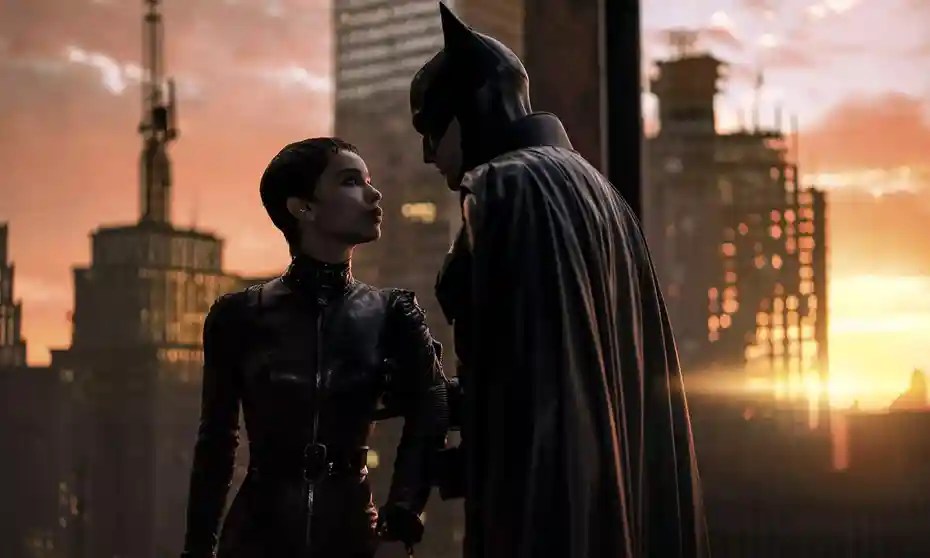
The Batman sees a younger Dark Knight (Robert Pattinson) in his second year of crimefighting and Reeves hones in on his detective skills. Gotham City is threatened by serial killer, The Riddler (Paul Dano), who is targeting the city’s elite. Batman uncovers a web of corruption, drawing him closer to the villain, as well as other unsavoury characters such as The Penguin (an almost unrecognisable Colin Farrell) and Carmine Falcone (John Turturro). He works alongside James Gordon (Jeffrey Wright) and Reeves portrays a much closer relationship between the two, Batman allowed to investigate live crime scenes. His inquiries also collide with Selina Kyle (Zoë Kravitz), who is also in her early days of her alter ego, Catwoman, and the two form a relationship. 

There has been no filmic shortage of the Caped Crusader in recent memory. As well as the DCEU, there has been Will Arnett’s comedic Lego-themed performances, most notably in The Lego Batman Movie. There have also been spin-offs such as Joker, which received awards acclaim for its demented yet innovative treatment of Joaquin Phoenix’s supervillain, whose course collides with a young Bruce Wayne at one point. 

Even Christopher Nolan’s triumphant trilogy that represents the very pinnacle of the character is barely a decade old. Can Reeves’ neo-noir vision translate into an engaging film that stands apart from the plethora of other Batman properties?  

The Batman is an interesting, if flawed, depiction of the Caped Crusader. Reeves’ take on the character is certainly admirable. It very much owes a debt to the Nolan and Snyder aesthetic in that it is a darker and grungier interpretation. Experiencing Batman as a detective figure is refreshing. The notion of Batman providing narration is also innovative, yet uneven in that it’s not sustained throughout the film. The extended run time of 176 minutes isn’t to the film’s detriment.  It’s always promising to see a director allow a film breathe when it warrants it rather than resorting to quick cuts. Reeves has clearly been inspired by the filmography of David Fincher, with the aesthetic and narrative highly reminiscent of Se7en and Zodiac. There are also visual elements of Alfred Hitchcock in its ideology of crafting suspense (Reeves isn’t always successful), as well as an ode to Saw with some of the elaborate traps that the Riddler places his victims in. 

Batman is easily Pattinson’s highest profile role since his early career Twilight days. Pattinson has proved a particularly versatile screen presence, picking thoughtful projects and always being a highlight in them, with films such as Good Time, Tenet and The Devil All The Time. His portrayal of Batman is expectedly excellent, although his Bruce Wayne needs some work. This is more a choice of the script rather than any wrongdoing by Pattinson as Bruce Wayne doesn’t receive a particularly meaningful arc so he isn’t granted the opportunity. 

Other highlights of the cast include Colin Farrell, who is almost unrecognisable as Oswald Cobblepot in his early Penguin days. Here, he is presented as a mobster and Farrell does a great job here, although the role is rather limited. I can’t wait to see where they take the character in future instalments.

Jeffrey Wright is effortless as James Gordon and provides strong support to Pattinson. Andy Serkis portrays Alfred and represents a much younger portrayal from other actors who’ve taken the role such as Michael Caine and J.K. Simmons. I wasn’t sold on Serkis’ performance to begin with, as he lacks the wisened nature of his predecessors but I was won over later in the film, although his role is also quite limited. 

Moving onto the lesser performances, The Riddler is an interesting villain and poses a genuine threat to Batman throughout much of the film. He’s not in it a great deal but the spectre of his actions loom heavily throughout. Paul Dano does a reliably good job, as we’d expect him to do after performances in Prisoners and There Will Be Blood where he’s proved he can play this kind of deranged character. Unfortunately, his character arc is severely let down towards the end of the film to the point where he doesn’t pose a threat and his performance borders on being laughable. A scene that suggests a future direction for a sequel that features Dano is also ill-judged and undoes a lot of the solid groundwork. 

Zoë Kravitz also doesn’t particularly make much of an impression as Catwoman. Pattinson and Kravitz just don’t share a particularly believable chemistry, nor is their relationship believable from a scripting point of view.

The narrative that Reeves has concocted is pretty convincing and there are some interesting twists in the narrative. The riddles that The Riddler creates are not straightforward to answer and the way his intentions unfold over the bulk of the run time is mostly satisfying. 

I appreciated the darker tone that Reeves aimed for. Although the BBFC have rated the film a 15 in the UK, in reality, it is more of a high 12A as the violence doesn’t dwell on detail and there is only one use of strong language. The gritty world that Reeves creates is screaming for an adult rating and it feels a little restrained within the confines of being appealing to the broadest audience possible.

Reeves also isn’t quite sure on how to open the film. There are effectively three openings with two false starts. Some shuffling around of these scenes would have worked in the film’s favour, establishing Batman and the city of Gotham before introducing a problem.  

The score by Michael Giacchino is really excellent and he establishes very memorable themes for the characters. His score centres mainly on three themes, one for Batman, Catwoman and the Riddler. That said, how his score interacts with the scenes isn’t always brilliant and it’s also overused in places. Nirvana’s Something’s In The Way (which had also featured in the first trailer) is used twice, but it is inserted clumsily, as it is over speech and just doesn’t really fit. 

The cinematography by Greig Fraser is beautiful, hot on the footsteps of his similarly excellent work on Dune. He doesn’t resort to quick cuts and finds refreshing angles to shoot from. The film is pitch black, creating an atmosphere where Gotham’s criminals are unaware if Batman could be overseeing their activities. A high-octane car chase in the pouring rain is particularly interesting in that it has intentionally been shot incoherently. There is a beautiful shot towards the end of the film where the light erupting from a flare is contrasted against black.   

Ultimately, The Batman is a strong interpretation of the material and I’m looking forward to see where future instalments could go, although I have some reservations with the teases. However, it’s not quite the masterpiece that some have proclaimed it to be and Reeves is just not as competent a director as Nolan or even Snyder. Snyder may get a bad rap for his storytelling when he is restrained by a run time but despite any shortcomings, they are packed with his authorial traits. A neo-noir, detective spin is a strong stylistic choice from Reeves to go for and I hope he sustains these traits if he is to further develop this world. As a standalone film, The Batman is a promising diversion for the Caped Crusader, if not without its flaws. 

⭐⭐⭐ (Good)

Old Henry (Review)

Uncategorized
⭐⭐⭐⭐ (Excellent)

Director: Potsy Ponciroli
Starring: Tim Blake Nelson, Scott Haze, Gavin Lewis, Trace Adkins, Stephen Dorff
Certificate: 15
Run Time: 99 mins

Old Henry is a thrilling Western with a particularly satisfying final act with an inspired performance from Tim Blake Nelson. Nelson plays the titular character, a widower whose quite clearly experienced a violent past. He lives with his son, Wyatt (Gavin Lewis) on a farm in Oklahoma, who he is is very protective of. One day, when roaming the Oklahoma landscape, he comes across a wounded man, Curry (Scott Haze) carrying a satchel of cash. He takes him back to his house, methodically erases any trace of his whereabouts, and nurses him back to health, while keeping him handcuffed. Soon enough, a trio led by Ketchum (Stephen Dorff) arrive on the property to see if Henry has seen Curry, who plays ignorance. Being a Western, you’d be wise to assume Ketchum doesn’t just head off on his way. 

Directed by Potsy Ponciroli in what is his second feature-length film after the little known Super Zeroes in 2012, Old Henry keeps its cards close to its chest in its first act. But when it gets going, it’s a deeply satisfying romp with an elegiac quality. While it may seem like a fairly typical (but well done) Western, its narrative is elevated by a character revelation in the final act. There are some thrilling action sequences, particularly a chase within some reeds and a customary final shoot-out.  The film is beautifully shot by director of photography, John Matysiak.

Tim Blake Nelson is excellent as the world-weary, tired titular pig farmer. He wants to be left in peace and look after his son, who he is trying to raise in a different way to his own upbringing. It’s rare to see Nelson fully carry a film, but he does so with gusto. Nelson is no stranger to the Western after featuring in The Coen Brothers’ The Ballad of Buster Scruggs and being its brightest spot. Nelson was apparently apprehensive to commit to this film, not wanting it to be similar to Buster Scruggs, but he needn’t have worried. The other performances are also solid, with Stephen Dorff another highlight as the sadistic villain.

Old Henry is a thrilling, old-fashioned Western with a couple of tricks up its sleeve to shake the genre’s formula. 

⭐⭐⭐⭐ (Excellent)