Ranking The Comic-Book Films Of 2023

Review

The comic-book genre continued to dominate in 2023, with a record eight new releases. Unfortunately though, it was an overall weak year for the genre with both Marvel and DC facing headwinds.

Marvel got off to a bad start this year when Ant-Man and the Wasp: Quantumania debuted to lukewarm reviews. Of any Marvel film to not hit the mark, this wasn’t the one the brand would have chosen. Not only did it open the studio’s hotly anticipated Phase 5, this film marked Kang’s (Jonathan Majors) debut, who is scheduled to be the big-bad in the next Avengers films. Although critics and audiences largely agree he made a strong impression, the film around him was uninspiring. It didn’t help that later in the year, Majors would later plead guilty to serious sexual assault charges, casting doubt over his future in the franchise.

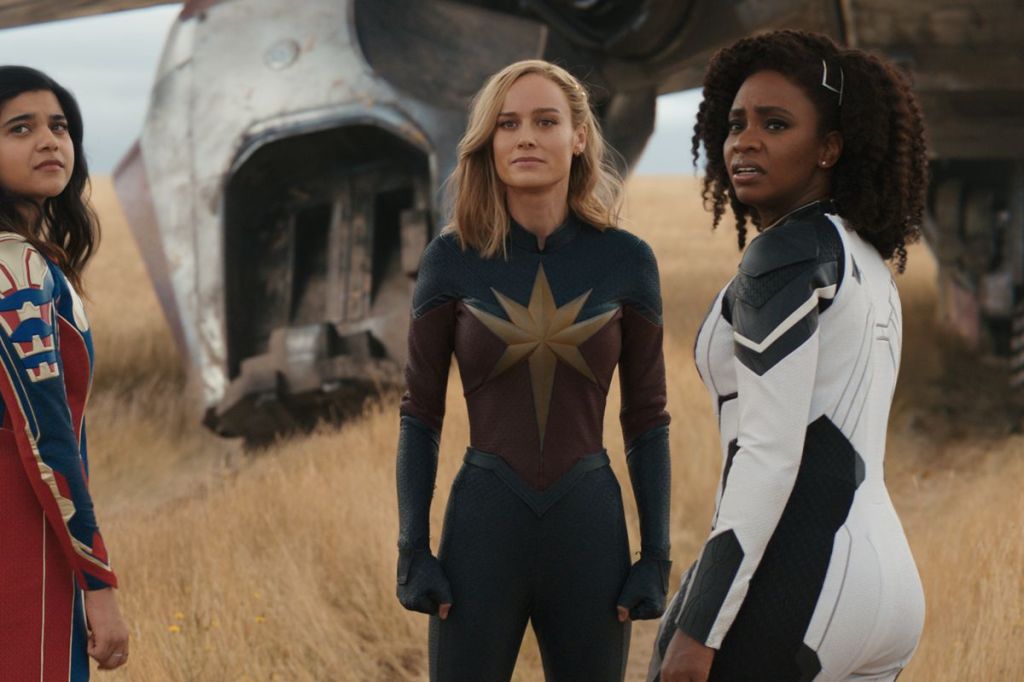
Later in the year, The Marvels bombed financially, becoming the studio’s lowest grossing film of all time, with tepid reviews despite a talented black female director in the form of Nia DaCosta. On the plus side for Marvel, Guardians of the Galaxy Vol. 3 was a hit and marked director James Gunn’s final work for the studio and is now spearheading a rebranded vision for DC.

Moving swiftly onto DC, because of the aforementioned upcoming regeneration, all four of the films released this year could be considered ‘legacy products’ now that the DCEU is closing up shop. That meant limited or in some cases, next-to-no marketing for its films, unceremoniously dumped into cinemas having been, at one time, part of a bigger picture. Shazam: Fury of the Gods and The Flash received mixed reviews and the DCEU closer Aquaman and the Lost Kingdom washed up with a poor reception. Blue Beetle was a surprise critical hit but given the limited marketing, flopped financially.

Sony was arguably the big winner this year with Spider-Man: Across The Spider-Verse opening unanimously positive reviews and tipped for Awards consideration.

There’s a varying degree of quality in this list but for the most part, it was a poor year for the genre. Comparing to the comic-book films of 2022, my top pick for this year doesn’t compare to any of the top three last year.

8) Spider-Man: Across The Spider-Verse

The part where you completely disregard this ranking, I just can’t understand the love for Spider-Man: Across The Spider-Verse. I thought its predecessor, Spider-Man: Into The Spider-Verse, was overrated but at least it had its plus points in that it had plenty of heart and well-developed characters. This sequel was just an overlong headache throughout, completely and utterly overstuffed, stretching the already worn multiverse trope at nauseum. Many left the film giddily excited by its cliffhanger ending but I can’t imagine sitting through another 150 minute snoozefest.

Rating: 1.5 out of 5.

7) The Marvels

The sequel to the surprisingly entertaining Captain Marvel had all the right things going for it, chiefly an interesting director in the form of Candyman‘s Nia DaCosta. What a shame that the finished product completely misses the mark, both as a Marvel and a Nia DaCosta film. The Marvels is utterly bereft of the director’s fingerprints and completely misguided. It doesn’t help that not only do you need to have seen Captain Marvel to be up-to-date before watching this film but you also need to have seen two Marvel television series – Ms Marvel and Secret Invasion. The trademark quippy humour of Marvel films rears its ugly head here and it’s missing almost all of the ingredients that made its predecessor a success. There’s next-to-no character development for Brie Larson’s Carol Danvers and the film doesn’t capitalise on her relationship with Nick Fury (Samuel L. Jackson) – the interplay between them was one of the main ingredients that made it work. The film also suffers from a poor and one-dimensional villain and a grating score. It’s quite possibly the worst Marvel entry to date, with other contenders including Avengers: Age of Ultron and the boring and formulaic Black Widow.

Rating: 2 out of 5.

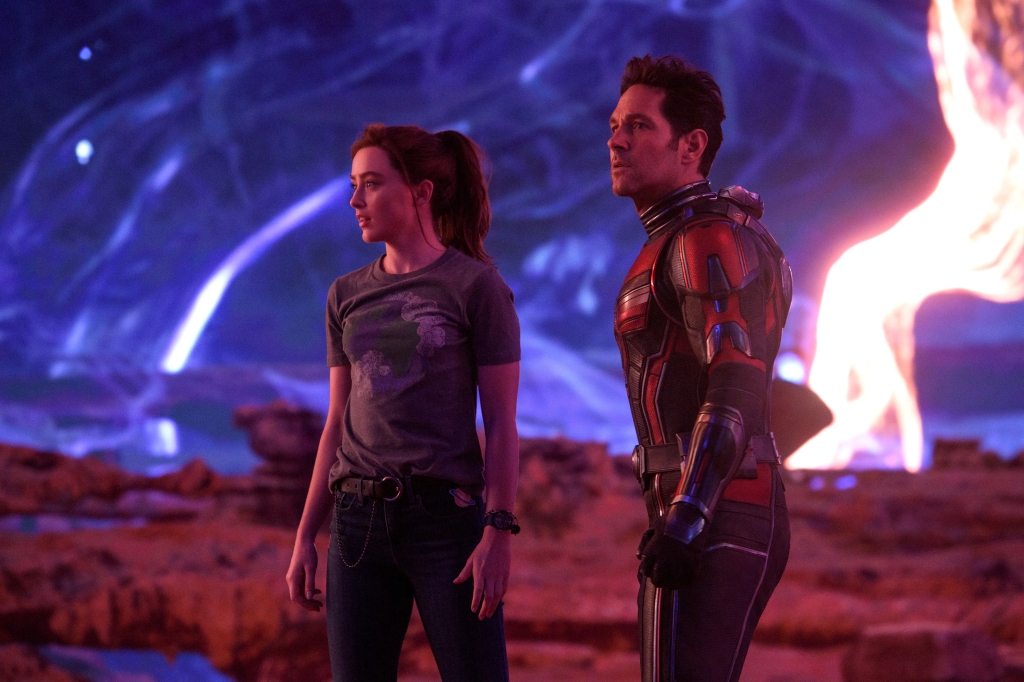
6) Ant-Man and the Wasp: Quantumania

The film to kick-start the Marvel Cinematic Universe’s Phase 5 fell short of the mark. Unlike both of its excellent predecessors, Ant-Man and Ant-Man and the Wasp, which acted as pallette-cleansers, Ant-Man and the Wasp: Quantumania performs a very different function in that it needs to introduce Kang, the big bad for Marvel’s forseeable future.

Starting with the positives, the cast are excellent and the chemistry shared between Paul Rudd’s Scott Lang and his daughter is admirable, although not as heartfelt as in previous films. Jonathan Majors is by far and away the standout as Kang, a cool and calculated villain with oodles of charisma and intelligence. Outside of the fun performances, the film unfortunately has an episodic quality to it, akin to watching a Saturday morning television show. Moving the story away from Earth to the Quantum Realm also lowers the film’s quality. The first two films excelled with their innovative action sequences and their manipulation of size and spectacle, whereas this disappointingly doesn’t. Most distractingly, the Quantum Realm is not well-realised. There is an unnerving amount of CGI and the film is visually drab. Even the score by Christophe Beck isn’t particularly memorable and Bill Pope’s cinematography is surprisingly anonymous considering his filmography, likely drowned out by the distracting CGI. 

Rating: 3 out of 5.

5) The Flash

The Flash is a mixed bag – there’s some fun to be had in the middle with Michael Keaton’s Batman but it’s bookended by fairly turgid first and third acts. The multiverse is an increasingly worn concept and it really plagues this film as it lessens the stakes for the characters. Despite a carousel of cameos from stars all over the DC canon, the result is a film with an episodic quality akin to watching a Saturday morning cartoon than the series-defining reset The Flash was intended to be. The problem of ropey visual effects also plagues The Flash, especially a spectacularly misjudged opening action sequence involving a group of babies. Ezra Miller makes for a fine, if schizophrenic lead, although the character arguably received a more meaningful arc with less screentime in Zack Snyder’s Justice League.

Rating: 3 out of 5.

4) Guardians of the Galaxy Vol. 3

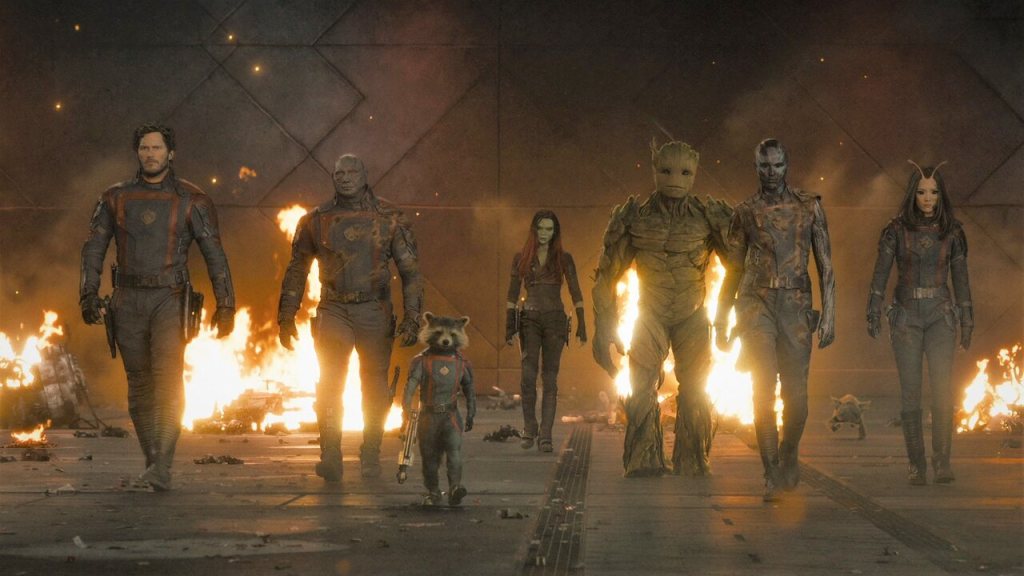
Guardians of the Galaxy Vol. 3 is quite different in tone from its predecessors but for the most part, it’s an enjoyable trilogy closer. Returning director James Gunn treats the characters with love and care and it’s impressive how even minor characters get a meaningful arc. When you’re juggling close to ten primary characters, that’s no mean feat.  The film is surprisingly dark in places and has Gunn’s fingerprints all over it, even if its violence, language and disturbing depictions are somewhat sanitised. It’s also a very personal watch, its story mirroring Gunn’s Marvel experience and how he is saying goodbye to the conglomerate that propelled his career. That said, I wish Gunn took more narratively risks and applied his ‘everyone is expendable’ mentality from The Suicide Squad here. Like Guardians of the Galaxy Vol. 2, it’s also baggily constructed and at least half an hour too long. It’s also not as humorous as the first two but this isn’t necessarily a con given it tackles darker subject matter.  

Rating: 3 out of 5.

3) Aquaman and the Lost Kingdom

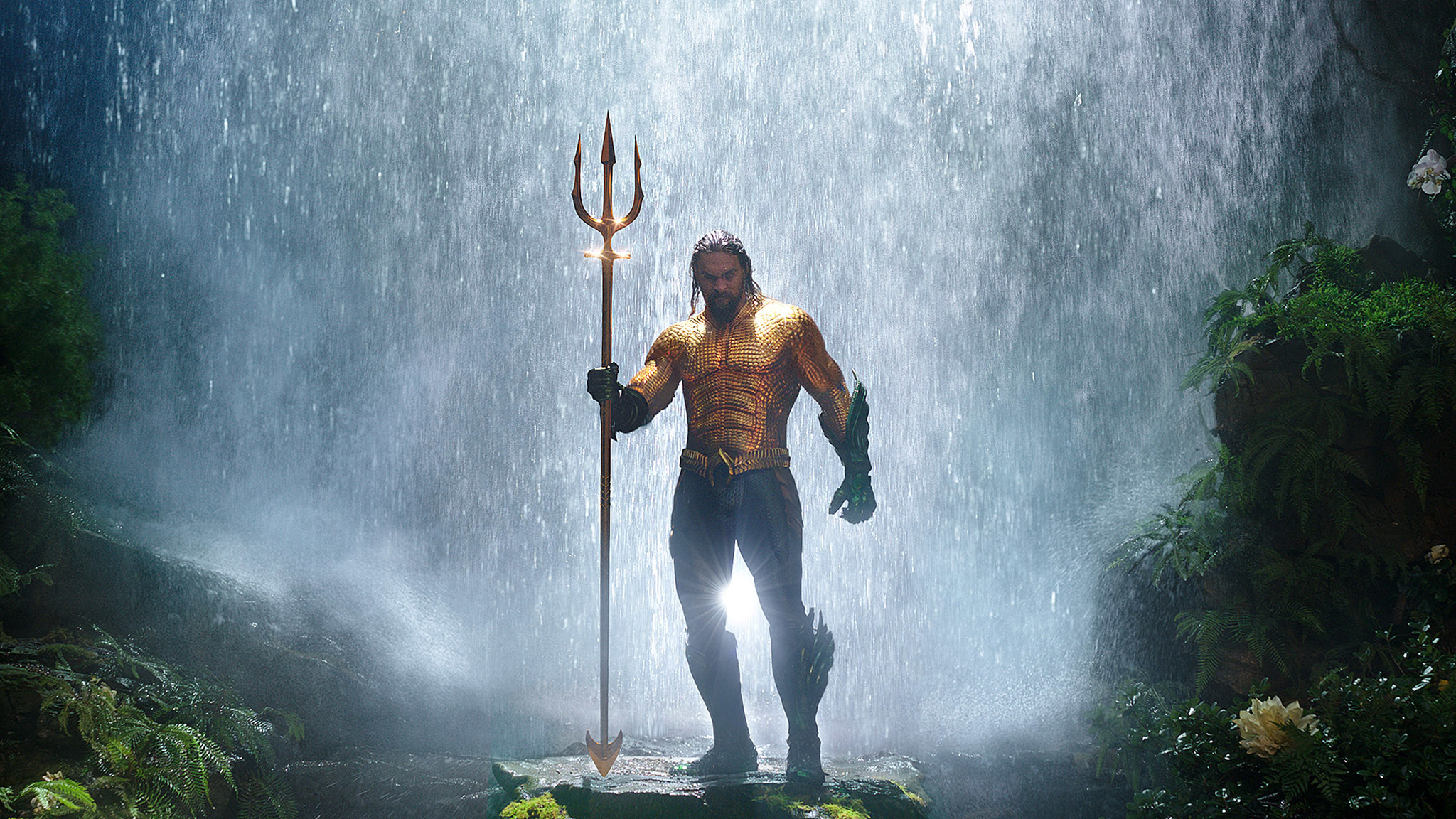
The final film in the DCEU before it’s reimagined under James Gunn’s leadership attracted negative reviews but I found returning director James Wan‘s sequel to be very entertaining and visually interesting. Devil’s Deep, a volcano island lots of the second act takes place in is particularly nicely realised and there’s an excellent early heist and ensuing chase that can only have been created by Wan with his horror tinge. The cast are all clearly having fun. Jason Momoa essentially plays himself and Wan-regular Patrick Wilson fares much better this time round. His villain was a little disappointing in the original due to a lack of character development but Wan puts a much greater focus on him to great effect and both Momoa and Wilson share an excellent bromance chemistry. Yahya Abdul Mateen II makes for a sinister, if slightly cartoonish villain and Randall Park is another bright spot as Dr Stephen Shin.

You can tell it’s a film that was meant to be bigger than it is and it does feel like some scenes have been cut down and storylines reduced. This sequel is twenty minutes shorter than its predecessor and the film runs at a brisk pace, never really taking the time to breathe. 

Rating: 3 out of 5.

2) Blue Beetle

Blue Beetle is a pleasant surprise and by far and away its biggest asset is the amiable family dynamic which although affectionate, is fiercely positive. The characters are generally very well developed and by the half way point when there is a pivotal moment in the narrative, it’s safe to say we’ve really come to care for them. Angel Manuel Soto’s film feels like a fusion of Iron ManAnt-ManSpy Kids and Coco and he does a great job of making Palmera City seem like a real place, with its Miami-esque new town juxtaposed against the suburbs that are undergoing gentrification, signifying an economic inequality. The film does a great job of showing you the mansions and the neighbourhood Jaime Reyes (Xolo Maridueña) lives in, and it feels like an actual Central or South American city.  Although it’s not going to set the superhero genre alight, I appreciated Blue Beetle’s upbeat energy and it manages to stand out in a crowded genre.

Rating: 3 out of 5.

1) Shazam: Fury of the Gods

Shazam: Fury of the Gods isn’t as fresh as its predecessor but aside from a rocky start, it’s another entertaining ride. It’s considerably of a higher production value than Shazam spin-off Black Adam that released last year. This sequel mostly retains its warm portrayal of family and all of the characters receive meaningful character development. The script penned by Henry Gayden and Chris Morgan is sharply written and there’s a few laughs peppered throughout. Once again, Sandberg’s horror fingerprints can be felt all over the film, particularly in the climactic battle sequence and there’s even a cameo by the Annabelle doll that you’ll need to keep an eye out for. Other than the opening action sequence, there’s some fun set pieces here and even the final climactic battle remains consistently fun to watch, often the undoing of many a comic book film. The film is well shot by Gyula Pados but the score by Christophe Beck is disappointing and unmemorable.

Rating: 3 out of 5.


What are your thoughts? Let me know in the comments or tweet @TheFilmMeister

Every Christopher Nolan film ranked from worst to best

Rankings

With Christopher Nolan’s latest film Oppenheimer playing in cinemas,  it’s time to revisit my ranking of the auteur’s stellar filmography. Along with Quentin Tarantino, Nolan is my favourite director working today, both consistently making thought-provoking, fearsomely original films with neither yet to make ‘a bad film’ to date.  Even when Nolan isn’t firing on full cylinders, his work is still effortlessly striking.

11) Tenet

Tenet plays to Nolan’s strengths with the jaw-dropping visual effects and high-stakes action sequences but also showcases his worst qualities. The high-concept storyline packs plenty of twists and the film requires multiple viewings to truly unpack, but there’s no denying the third act falters in some of its logic and is overly expository. The characters also just generally aren’t particularly well-developed and the film is more an exercise in spectacle and ambition.

Rating: 5 out of 5.

10) Dunkirk

Bodega Bay

Whilst there is undoubtedly a lot to admire in Dunkirk, it also has many flaws. While the aim of having an objective viewpoint is to be lauded, the tone of the film just feels a little off and I struggle to find an emotional response. It struggles to make full use of its scope and the I’d still recommend going and seeing it as it is a story that needs to be told and there are quite a few nice moments but ultimately, the film left me rather cold in its depiction of this momentous event. Also, it is his newest film and I have only seen it once so perhaps it warrants further viewings.

Rating: 3.5 out of 5.

9) Memento

picture_0

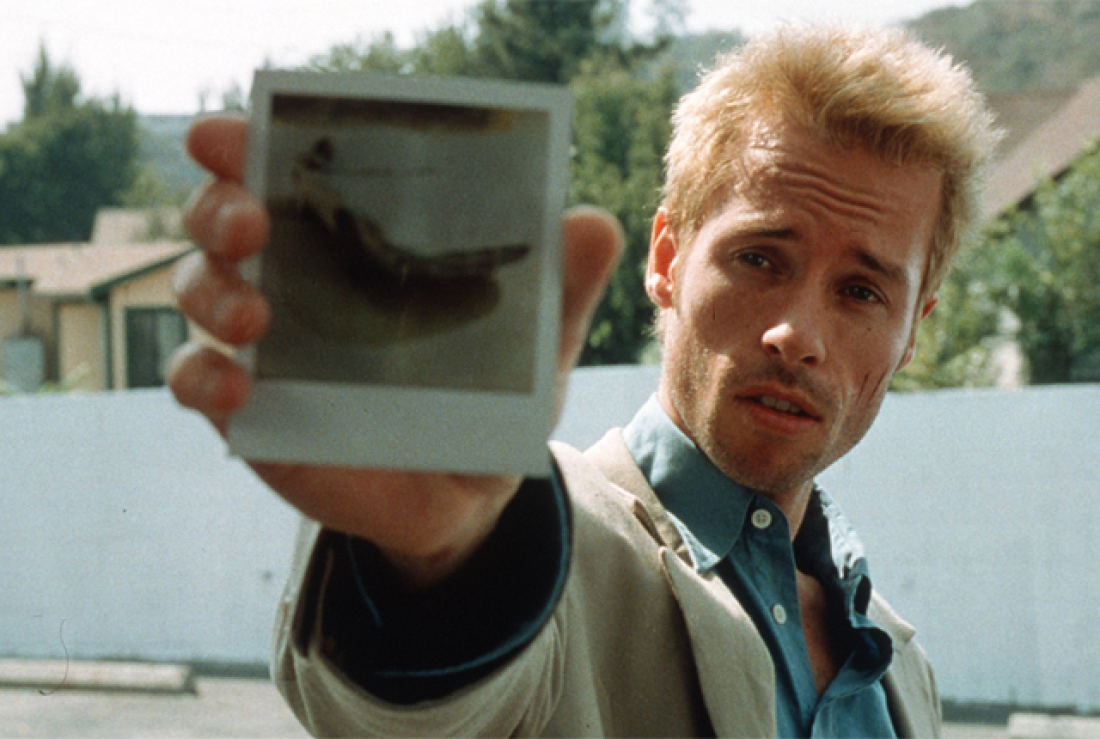
Memento certainly made a statement with its unconventional and bold backwards-storytelling, as well as its experimentation with colour. Guy Pearce is terrific as the amnesiac Leonard and the film barrels towards a tragic and seriously intelligent conclusion. 

Rating: 3.5 out of 5.

8) Batman Begins

batman-begins

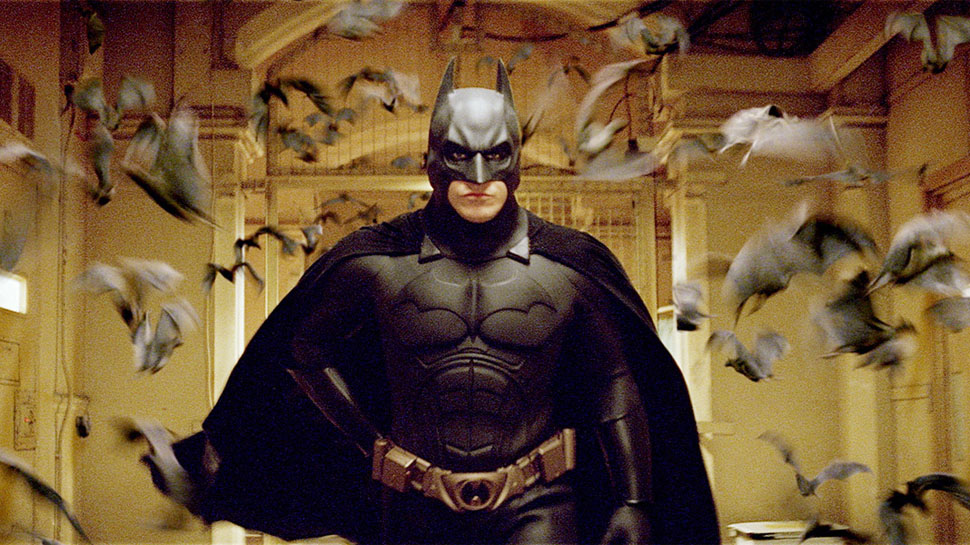
The film that kick-started the Dark Knight trilogy and propelled Nolan into the mainstream set an unsurpassed precedent for future comic-book films. Nolan’s decision to frame Batman Begins as an origin story was a first for the genre, as was its sense of realism that granted the superhero more weight. The performances are excellent across the board and Liam Neeson’s villain particularly underrated.  Compared to the rest of Nolan’s films, it ranks lower due to its more simplistic plotting.

Rating: 4 out of 5.

7) Insomnia

still-of-al-pacino-and-robin-williams-in-insomnia-2002-large-picture

Wrongly regarded as Nolan’s weakest film, Insomnia is a fantastic film. With excllent performances across the board, particularly Robin Williams in an atypical villainous performance,  Nolan effortlessly invokes a sense of paranoia and regularly questions the morality of the character’s decisions.  One also has to remember Insomnia is a remake, so for it to not just be good, but great is no short feat.

Rating: 4 out of 5.

6) The Dark Knight Rises

maxresdefault

An underrated trilogy closer, The Dark Knight Rises is a far more conventional comic-book film that provides a fitting and tension-fuelled closing arc for Christian Bale’s Caped Crusader. Tom Hardy’s Bane is the antithesis of Heath Ledger’s Joker in that he is a physical villain and the film ramps up its nihilistic destruction of Gotham City in a riveting fashion for its almost three hour run time.

Rating: 4.5 out of 5.

5) Interstellar

interstellar-thm_

Interstellar is pretty much perfect for most of its lengthy 168 minute run time, until it reaches the last half an hour or so which become ridiculously complicated, bamboozling and its last scene a little too neat. But for the most part, Nolan doesn’t put a foot wrong and Interstellar is extremely atmospheric, with some stunning cinematography by Hoyte van Hoytema in his first collaboration with Nolan after departing from Wally Pfister who shot the rest of his preceding films. Matthew McConaughey gives a fantastic performance as the endlessly empathetic Cooper. There’s awe-inspiring shot after awe-inspiring shot, topped by Hans Zimmer’s beautiful score.

Rating: 4.5 out of 5.

4) Oppenheimer

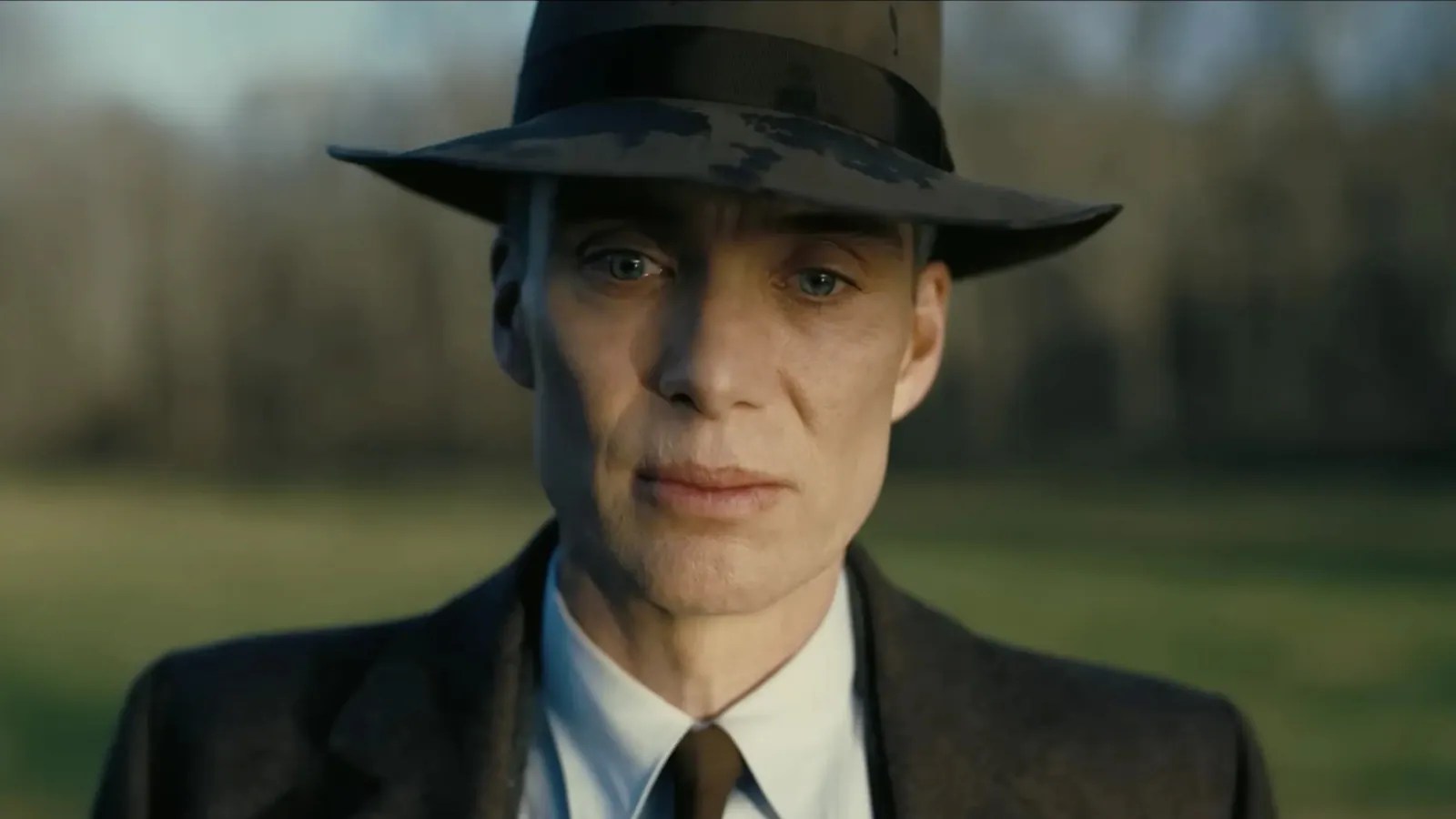
Oppenheimer is a tension-fuelled, thought-provoking minor-key masterpiece and left me stone-cold with its characters haunting deliberations over the consequences of their work. The script is brilliantly written, constantly ramping in tension and Jennifer Lame’s editing is a monumental achievement. Cillian Murphy puts in a career-best performance as the father of the atomic bomb and Robert Downey Jr is another highlight with his slippery, atypical portrayal of Lewis Strauss. The film is beautifully shot by Hoyte van Hoytema and Ludwig Göransson’s score is the glue that holds the film together.

Rating: 4.5 out of 5.

3) The Prestige

edf272d36446daf1885b4b6ba81920ecf57e1fcff50ef5c673be21ab4b9be3eb

A perfect film, The Prestige is a dramatic masterclass that’s smaller in scale than the films he would go onto make. Hugh Jackman and Christian Bale both give tremendous performances in the lead role and the late David Bowie also stands out in a small role as Tesla. The film has many revelatory twists and features one of my favourite twist endings.

Rating: 5 out of 5.

2) The Dark Knight

heaths-joker-300x128

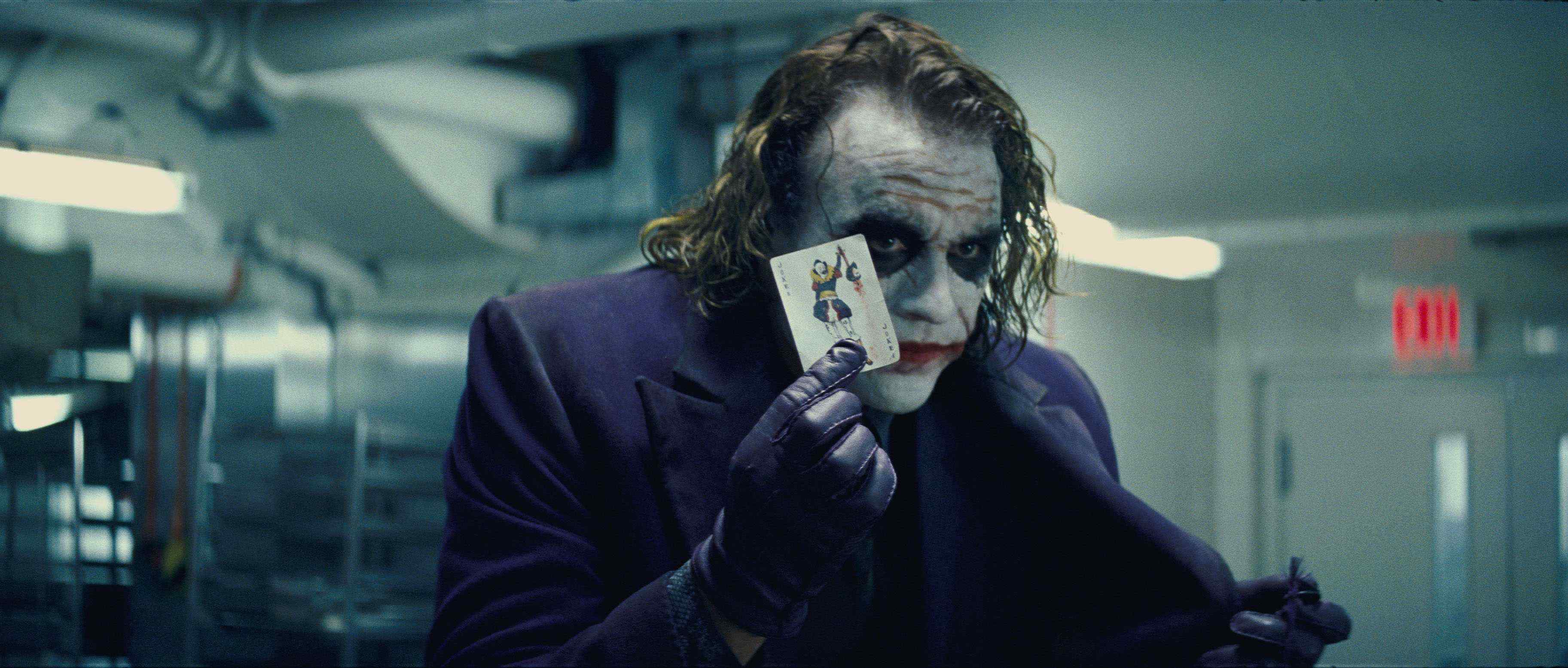
Not only the best comic-book film of all time, but also one of the best crime films, Nolan continues his quest for superhero realism. Heath Ledger’s performance as The Joker is nothing short of incredible and the film moves from one action sequence that’s stood the test of time to another. It still is a staggering achievement.

Rating: 5 out of 5.

1) Inception

ba6a05d604045e7077b7c58ae02deb4a33f32dc2

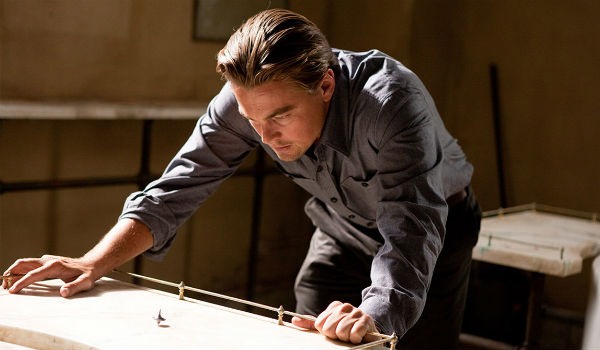
An incredibly layered and influential effort, Inception is breathtaking throughout and quite possibly, my favourite film. Nolan proves blockbusters can be smart and treats his audience intelligently. With an ending that continues to be debated, the performances are terrific across-the-board and many of the images will sear into your brain. I don’t think Nolan’s crowning achievement will ever be topped.

Rating: 5 out of 5.

What are your thoughts? Let me know in the comments or tweet @TheFilmMeister

Every Insidious film ranked from worst to best

Rankings

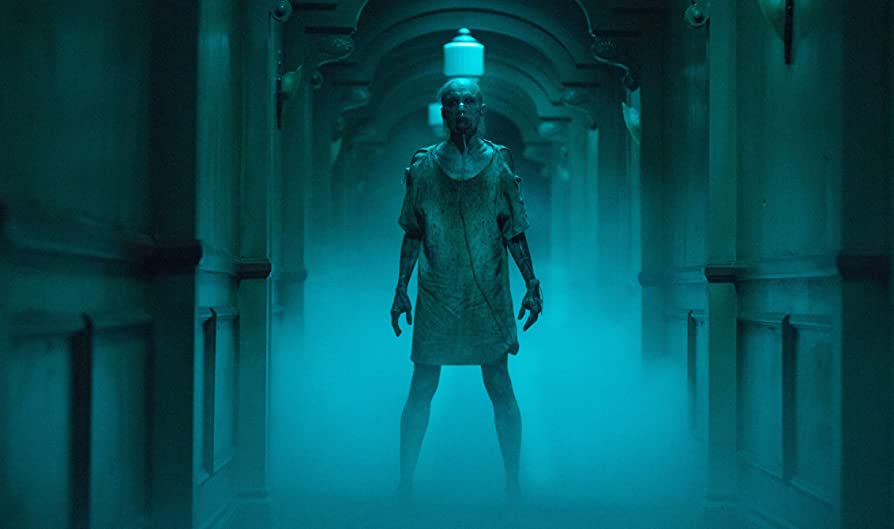
Insidious: The Red Door is currently playing in cinemas and the series has come a long way since the 2011 original, which earned a very healthy $100 million on a modest $1.5 million budget. Insidious was the third horror collaboration between director James Wan and writer Leigh Whannell, whose then-back catalogue included Saw and Dead Silence.

Insidious followed the Lambert family who battle a paranormal presence when the oldest son, Dalton (Ty Simpkins) falls into a coma. Chapter 2 was a direct sequel to the original, whereas both Chapter 3 and Insidious: The Last Key were prequels that primarily focussed on psychic paranormal investigator Elise Rainier (Lin Shaye) in favour of the Lambert’s. Insidious: The Red Door picks up nine years later after the events of Chapter 2 and is supposedly the final installment, providing audiences closure on the Lambert family.

With the exception of Insidious: Chapter 3, the four sequels have generated a mixed-to-negative critical reception, although they’ve been better received by audiences.

It’s impressive that even after five films, there hasn’t been one outright disaster. Most horror series tend to decline in quality far quicker, although there are certainly three films in the series of significantly greater quality than two of them. Here’s my ranking of the series.

5) Insidious: The Last Key

The weakest entry in the series by some distance, The Last Key is set between Chapter 3 and the original. Adam Robitel is in the director’s chair and does an admirable job but doesn’t have the skill in crafting tension like Wan and Whannell can. The film begins with a powerful extended sequence which introduces and explores Elise’s difficult childhood and dysfunctional family. Unfortunately, the rest of the film never lives up to the strong opening and its mechanical jump scares are dismally second-rate. On the plus side, Lin Shaye makes for a reliable lead and there’s some good performances from Tessa Ferrer and Josh Stewart as her parents, as well as Bruce Davison as her younger brother.

Rating: 3 out of 5.

4) Insidious: The Red Door

The latest (and supposedly final film) in the series, Insidious: The Red Door returns to the Lambert family and is the directorial debut of actor Patrick Wilson. The film opens on the funeral of Lorraine Lambert (Barbara Hershey) and we learn that Josh (Patrick Wilson) and Renai (Rose Byrne) are now divorced. It’s time for Dalton (Ty Simpkins) to head to college and Josh decides to take him to try and heal their strained relationship, only for their supernatural past to rear its ugly head once again. Wilson’s directorial debut is a mixed bag – it’s quite different from its predecessors in that it’s a drama film at its core rather than a horror. He crafts a gripping family dynamic and takes his time with the characters, the first two acts a slow burn that deftly explore the theme of generational trauma. Once again, there’s some excellent performances, particularly from Simpkins, Wilson and newcomer Sinclair Daniel. Unfortunately, the film falls short in its sudden rush to the finish and the film falling short as a horror. This is by far, the least scariest film in the series and it also frustratingly seems to undermine the previous film’s logic as to how The Further operates. While Insidious: The Red Door has more than its fair share of problems, there’s still plenty to admire here and I’m glad Wilson took a risk.

Rating: 3 out of 5.

3) Insidious: Chapter 2

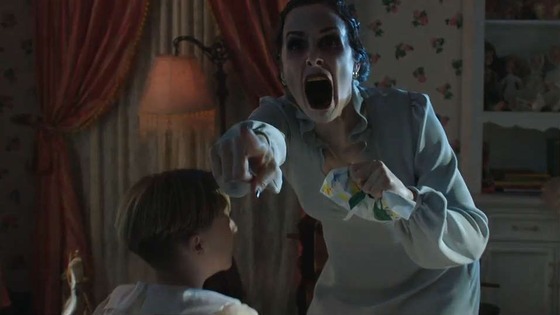
Insidious: Chapter 2 received mixed reviews on its release and granted, it does lose some of its originality that the first film had but there are still some top rate scares here and a very interesting storyline, which returning director James Wan prioritises over the horror. Picking up immediately after the original, Chapter 2 successfully expands the mythology and framework of The Further which the series would then go onto develop even more. Patrick Wilson turns in an entertaining performance as the possessed Josh, riffing on Jack Nicholson’s Danny Torrance in The Shining.

Rating: 4 out of 5.

2) Insidious: Chapter 3

An underrated sequel, Insidious: Chapter 3 represents then-writer Leigh Whannell’s directorial debut, who would then go onto make Upgrade and The Invisible Man. Whannell decides to opt down the prequel route and focus on a new family, the Brenner’s. Quinn (Stefanie Scott) is grieving the death of her mother and despite a warning from Elise to exercise caution, is stalked by a dark spirit wearing an oxygen mask, known as The Man Who Can’t Breathe. It’s an assured effort from Whannell, who crafts some memorable scares and oddly empathetic villain who, in my opinion, is the most effective of the series. It’s also got surprising thematic depth with its emotive exploration of death and familial loss.

Rating: 4 out of 5.

1) Insidious

The film that started it all is the best and although Insidious seems to begin as a somewhat conventional supernatural horror (albeit with quality jump scares), James Wan deftly takes his time before unearthing the supernatural elements in the second and third acts, while packing in some intelligent twists and turns. It’s a thrilling horror that flips the haunted house horror convention on its head by revolving the haunting around a person. The Lambert family are well-developed and are smart characters, unafraid to leave the house or turn a light on. Wan’s variation of jump scares is particularly impressive, especially his ability to unleash horror on the family in broad daylight, something the majority of horrors are guilty of avoiding.  

Rating: 4 out of 5.

What are your thoughts? Let me know in the comments or tweet @TheFilmMeister

Every Indiana Jones film ranked from worst to best

Uncategorized

The long-awaited Indiana Jones and the Dial of Destiny is currently playing in cinemas and who would have thought we’d see Harrison Ford continue to play the role as an octogenarian? The series began 42 years ago in 1981 with Raiders of the Lost Ark. Director Steven Spielberg had found tremendous success with Jaws and Close Encounters of the Third Kind but had tainted his career with 1941, so he teamed with George Lucas on a project inspired by some of the early 20th century serial films he enjoyed in his youth.

When Raiders of the Lost Ark opened to critical and financial acclaim, it spawned a prequel, Indiana Jones and the Temple of Doom and a sequel, Indiana Jones and the Last Crusade. Many consider these films to be a perfect trilogy, but the team had another crack with Indiana Jones and the Kingdom of the Crystal Skull, which released in 2008. Although it also opened to positive reviews, many didn’t find it as satisfying as the original trilogy for various reasons, chiefly some far-fetched setpieces inspired by 1950s sci-fi. While many at the time assumed Kingdom of the Crystal Skull to be the final installment in the series, due to both Ford’s age and the fact the ending left his character with a peaceful resolution.

Alas, this was not the case and now 15 years later, we have Indiana Jones and the Dial of Destiny which is surely the final film. Dial of Destiny represents the first time Steven Spielberg isn’t in the director’s chair, nor George Lucas on story duties. Instead, Logan and Ford v Ferrari director James Mangold helms the project.

5) Indiana Jones and the Dial of Destiny

The weakest entry in the series by some distance, Dial of Destiny disappoints with its unconvincing visual effects and the fact lacks a sense of fun in its action sequences. It also could easily lose half an hour and largely fails to add any meaningful development to its characters. Although Harrison Ford turns in another committed performance, newcomer Phoebe Waller-Bridge doesn’t share much of a chemistry with him. Mads Mikkelsen turns in a reliably slimy performance as the villainous Jürgen Voller but it’s a shame his villain is rather straightforwardly written. It’s not all for nothing, as director James Mangold hints at a more interesting depiction of Indy in its early sequences as a drunk and miserable shadow of his former self before the film contently runs through the motions – he’s a fine director and I suspect Disney watered down his original vision.

Rating: 3 out of 5.

4) Indiana Jones and the Last Crusade

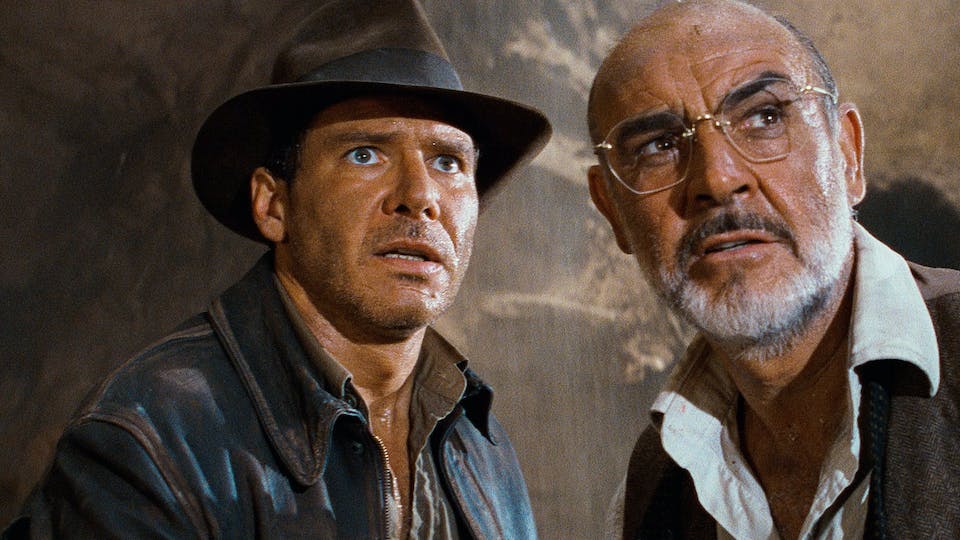
A terrific third entry which not only functions as the next Indiana Jones adventure but also an exploration as to why and how he came to be. In this film, Jones partners with his father (an spot-on Sean Connery) to track down the Holy Grail. The initial opening sequence which features the late River Phoenix as young Jones is particularly gripping and throughout the film, Spielberg strikes an almost perfect balance between rip-roaring action and surprising poignancy, which differentiates it from the first two films. Alison Doody is another highlight as the charismatic Elsa Schneider and the final set-piece with the Holy Grail is masterfully crafted. It speaks volumes of the quality of the rest of the franchise that this film is only fourth and for me, it’s a film I tend to rewatch less than my next picks as it’s not paced quite as well.

Rating: 4 out of 5.

3) Raiders of the Lost Ark

The film that started it all and what many consider to be the peak of the series only makes the third position in my list. “Heresy”, I hear you say. This first installment is a blast from start to finish and really cemented Spielberg in the action-adventure genre. Ford is excellent from the off and Karen Allen’s Marion Ravenwood is just as compelling, and shares a compelling chemistry with Indy. Ronald Lacey is another highlight as the iconic henchman, Arnold Toht, a particularly nasty Gestapo agent. The majority of the action sequences are superb, from the opening sequence that’s largely disassociated from the rest of the film that tells you all you need to know about Indy to a kinetic chase on the streets of Cairo. So why is Raiders of the Lost Ark only in third? Two reasons – firstly, Paul Freeman’s villain just isn’t as impressionable as others in the series and I don’t think the film is paced quite as perfectly as my top two picks.

Rating: 4 out of 5.

2) Indiana Jones and the Kingdom of the Crystal Skull

A choice that’s sure to spark a witch hunt in the comments section, Indiana Jones and the Kingdom of the Crystal Skull is a vastly underrated sequel. Although thirty years older than his previous appearance in The Last Crusade, the grizzled nature of Ford’s performance suits the story Spielberg and Lucas concoct and Karen Allen effortlessly slip back into the role of Marion and shares a great rapport with Indy. I’ll go on the record to say I don’t take issue with Shia LaBoeuf either as Mutt Williams as the character receives a meaningful arc and his past baggage is integral to the plot. There’s great performances from the rest of the cast too, with John Hurt getting lots to do and Ray Winstone clearly having fun as a former agent who worked with Jones. Although Cate Blanchett is completely over-the-top as the villainous Soviet military scientist, it’s completely in keeping with the film’s 1950’s pulp sci-fi influences (even the questionable CGI many complain of). The action sequences are terrific, from a horror-inflected graveyard scramble to a balletic car chase which culminates in a punch-up among heroes and villains, while trying to avoid an army of giant ants. Kingdom of the Crystal Skull is exactly the risk this series needed and it leaves Indy in a peaceful resolution that didn’t warrant Dial of Destiny coming to trample all over.

Rating: 4.5 out of 5.

1) Indiana Jones and the Temple of Doom

A very different and darker film than Raiders of the Lost Ark, Spielberg and Lucas chose to make a prequel that explored a younger Indy a year before the events of the original. Despite mixed initial reviews and even Spielberg himself referred to the film as his least favourite of the four when Kingdom of the Crystal Skull released. However, this darker entry is exactly the kick this series needed – gone are the Nazi’s and light-heartedness and instead, we get themes of the occult and devil worship. Ford turns in another excellent performance as the titular character and Amrish Puri is a highlight as the terrifying villain, Mola Ram. Ke Huy Quan makes for a terrific sidekick as Short Round and despite common criticism of Kate Capshaw’s nightclub singer love interest as a shrilling damsel-in-distress, the character really works in context of the film. The action sequences are thrilling throughout, be it the mine cart chase or the rope bridge finale and I appreciated the influences and references to the James Bond films. Temple of Doom is one of my favourite action films of all time, so dark that the MPAA introduced the PG-13 rating.

Rating: 4.5 out of 5.

What are your thoughts? Let me know in the comments or tweet @TheFilmMeister
Ranking The Comic-Book Films Of 2022

Uncategorized

The comic-book genre propelled back into full swing in 2021 after a brief lull in 2020 due to the coronavirus pandemic. 2022 continued that trend, bringing us six new films. Here, I rank these films in order of my personal preference.

Marvel closed off its Phase Four with three MCU entries. This included the long-awaited Doctor Strange in the Multiverse of Madness, Thor: Love and Thunder and Black Panther: Wakanda Forever, the latter film having to reinvent its titular superhero after the sad and sudden death of its star Chadwick Boseman.

In the Sony slate, Morbius released, following last year’s Venom: Let There Be Carnage.

It looked like it would be a bumper year for DC with The Batman, Batgirl, Shazam: Fury of the Gods and Aquaman and the Lost Kingdom due for release. The Batman released without issue but the latter two films have been moved to next year, with Black Adam brought forward. Then, Batgirl shockingly faced the unexpected and unfortunate of its production closing, after DC were reportedly not happy with the quality of the film and wanted to save future costs. As you’d expect, this attracted a significant amount of controversy.

There’s a varying degree of quality in this list but for the most part, it was a strong year for the genre, although not up to the standard of 2021. Let’s get started!

6) Morbius

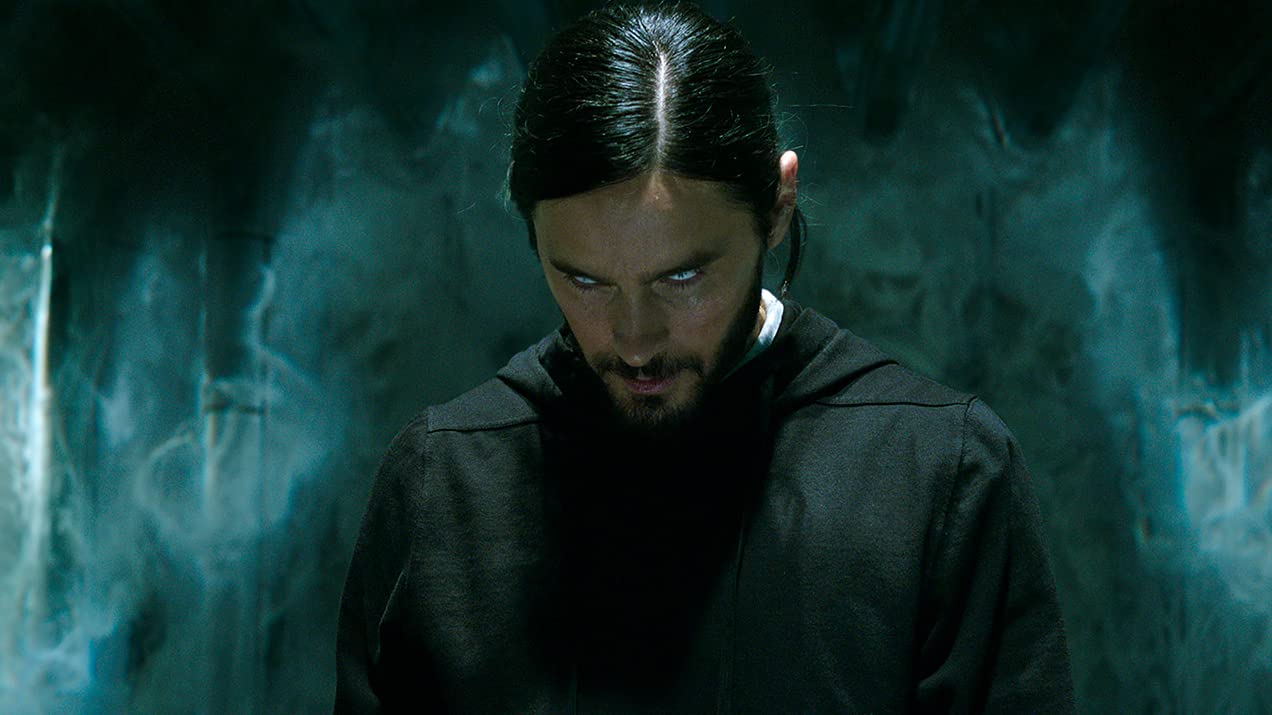
The only out-and-out failure of the year, Sony still hasn’t figured out what it’s doing with its Spider-Man supervillain cinematic universe. On paper, the film really works as this is the kind of role Jared Leto excels in and director Daniel Espinosa has proved his hand at horror with the sci-film film, Life. Alas, this was not meant to be and the result is a film with a 1990’s aesthetic and script, that packs no surprises up its sleeve and has surprisingly poor visual effects.

The script is dull and lifeless and Leto is unable to inject his personality to lighten things up. Of the rest of the cast, Matt Smith is poor as the villain and the always reliable Jared Harris is given nothing to work with. There is a bewildering cameo from Michael Keaton as Vulture from Spider-Man: Homecoming, in a vein attempt to bridge the Sony and Marvel Cinematic Universe’s together.

It may be damning with faint praise, but Morbius is an upgrade over Venom: Let There Be Carnage, which had no redeeming features to it. Still, Sony need to do better and I hope Kraven The Hunter will be the film to break the poor streak. With the excellent J. C. Chandor in the director’s chair, behind A Most Violent Year and Triple Frontier, I’m hopeful.

There is now a significant increase in quality…

5) Black Adam

Hotly anticipated after many years of development, Dwayne Johnson’s anti-hero finally hit the big screen this year. Black Adam is a mixed bag and is generally pretty mindless and disposable, albeit reasonably entertaining. Despite a two hour run time, the film never takes the time to breathe and focus on developing its character, instead choosing to prioritise action sequence after action sequence. By the end of the a climactic battle towards the end of the film’s second act, it’s pretty derivative superhero fare but the third act somewhat reframes the first two acts in a more interesting light.

Jungle Cruise‘s Jaume Collet-Serra’s direction is rather anonymous but the hallmarks of a more adult-oriented film are evident. Prior to the film’s release, the studio were required to make cuts to achieve a 12A / PG-13 rating – arguably, a 15 / R rating is just what the film needs to elevate it. 

Black Adam isn’t the DCEU’s crowning achievement and it’s a shame it rarely strays from superhero convention. At least it takes a handful of narrative risks in its third act that make it worthwhile and whilst there are inklings of a more genre-progressive film, the framing of the titular character as an anti-hero is an inspired creative choice. Still, Black Adam functions in setting the foundations of the character with Johnson is clearly game in the role and the film is entertaining, even if you’ll forget it shortly after the credits start to roll. 

4) Thor: Love and Thunder

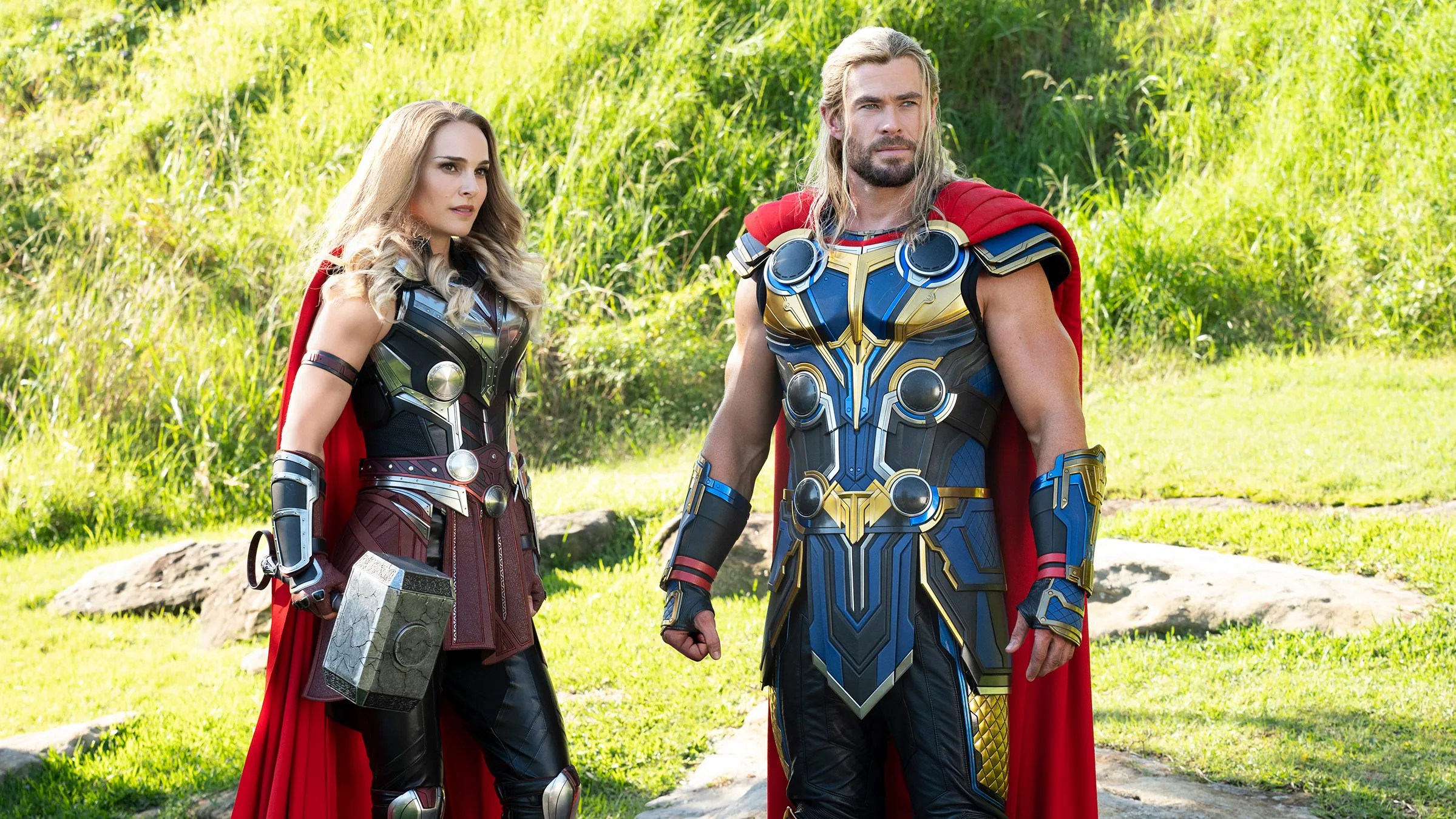
Thor: Love and Thunder has attracted some very sniffy reviews and while it’s far from the Marvel Cinematic Universe’s best, it’s perfectly watchable and there’s enough going on in it for it to be worthwhile. Some have commented it is a redux of Thor: Ragnarok and I would disagree – arguably the reason why the reviews have been lukewarm is because Waititi once again subverts expectations, but with some mis-steps. In many ways, Thor: Love and Thunder feels more akin to Thor and Thor: The Dark World in exploring the relationship between the titular character and Foster. Returning director Taika Waititi injects a fair amount of heart and clearly revels in digging deeper into their romantic banter. 

Chris Hemsworth once again proves his game as the God and successfully balances both the comedic and tragic elements Thor is exposed to. It’s a welcome return for Portman, too, and the pair share a healthy chemistry. Christian Bale is excellent as the villain, Gorr but he’s woefully underused. Waititi’s decision to bathe the character and his surroundings in black-and-white is inspired, affording the vampiric character a Nosferatu quality. 

Outside of Gorr, the film is visually a mixed bag. Some of the visual effects are surprisingly ropey for a film costing $250 million and Marvel has attracted controversy over the treatment of its VFX artists, specifically with this film. Despite its flaws and ramshackle construction, Thor: Love and Thunder gets enough right to make it worthwhile. 

There is now another step-up in quality…

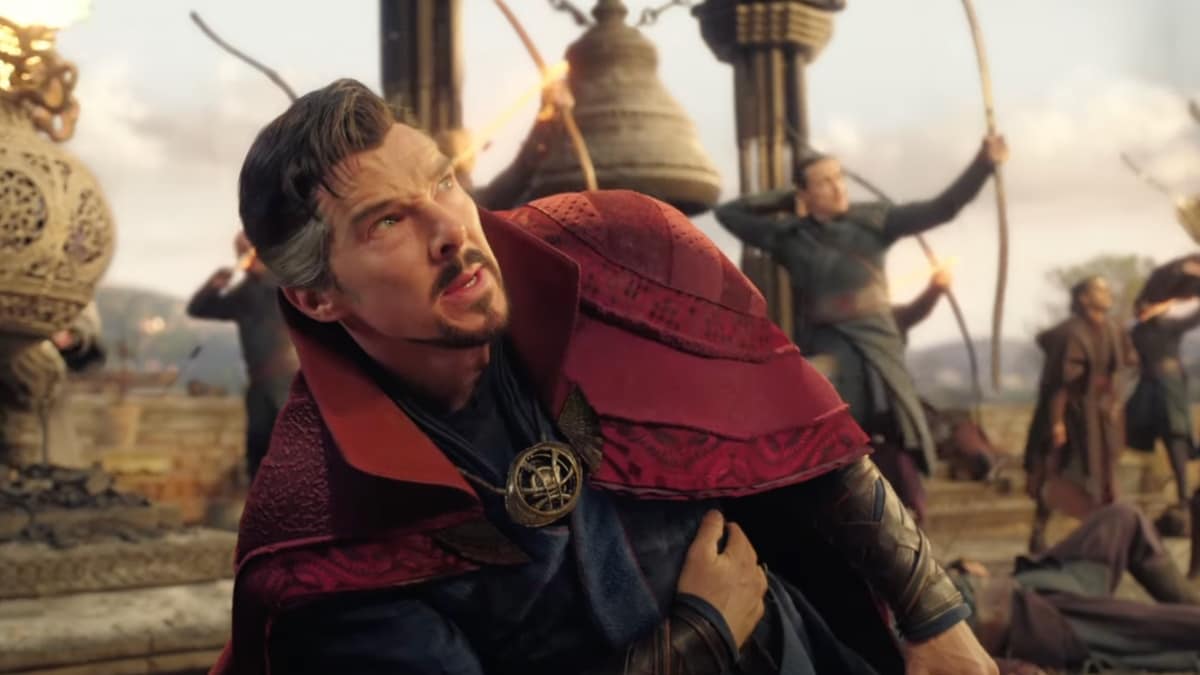
3) Doctor Strange in the Multiverse of Madness

The sequel to Scott Derrickson’s excellent Doctor Strange saw the director replaced by horror maestro Sam Raimi following creative differences early into the project. The result is a well-directed and generally entertaining sequel that takes ambitious risks in its narrative with its characters. From a directorial standpoint, Raimi mostly succeeds with putting his signature stamp on the material such as the exploration of the themes of possession, witchcraft and apparitions. There are a handful of jump scares too, which is novel for a Marvel entry, although they are relatively tame for a mature audience. The film is often visually arresting and the cinematography by John Mathieson is interesting. Like his work on Logan, Mathieson prefers to hold onto a shot than resort to quick cuts and the camera movement is often disorienting and kaleidoscopic. 

Doctor Strange in the Multiverse of Madness’ most significant downfall is its ramshackle construction. It is all over the place narratively and not everything sticks. For every bold choice, there is a regressive counterpart and the film isn’t paced particularly well. It comes in at a reasonable 126 minute run time but there is a lot of narrative to get through and some scenes race through character beats whilst others are tiresome.

The film is ultimately a bit of a hodgepodge of a sequel, but an often entertaining ride and Raimi is able to put his personal stamp on the material to a degree. I wish Raimi was allowed even more free rein and leaned harder into the horror angle, as that feels like a natural tone for the material. There will always be a part of me that wonders what Scott Derrickson had in mind, as he also wanted to head down the horror route. Had he been able to deliver the film that he envisaged, it could have been very special.

Deciding between the final two was particularly difficult, but the runner-up is…

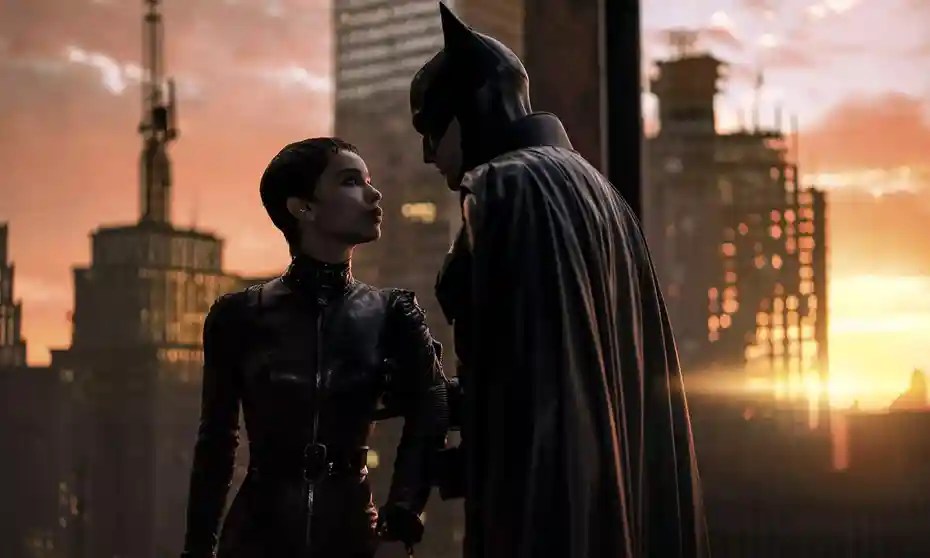
2) The Batman

The Batman is a new rendition of the Caped Crusader by War For The Planet Of The Apes director Matt Reeves, positioned outside of the DCEU canon, and sees a younger Dark Knight (Robert Pattinson) in his second year of crimefighting and Reeves hones in on his detective skills. It is an interesting, if flawed, depiction of the Caped Crusader. Reeves’ take on the character is certainly admirable. It very much owes a debt to the Christopher Nolan and Zack Snyder aesthetic in that it is a darker and grungier interpretation. Experiencing Batman as a detective figure is refreshing. The notion of Batman providing narration is also innovative, yet uneven in that it’s not sustained throughout the film. The extended run time of 176 minutes isn’t to the film’s detriment.  It’s always promising to see a director allow a film breathe when it warrants it rather than resorting to quick cuts. 

Pattinson’s portrayal of Batman is expectedly excellent, although his Bruce Wayne needs some work. This is more a choice of the script rather than any wrongdoing by Pattinson as Bruce Wayne doesn’t receive a particularly meaningful arc so he isn’t granted the opportunity. Other highlights of the cast include Colin Farrell, who is almost unrecognisable as Oswald Cobblepot in his early Penguin days, and Jeffrey Wright is effortless as James Gordon. 

Paul Dano’s Riddler is an interesting villain and poses a genuine threat to Batman throughout much of the film but his character arc is severely let down towards the end of the film to the point where he doesn’t pose a threat and his performance borders on being laughable. 

The score by Michael Giacchino is really excellent and he establishes very memorable themes for the characters, although the score doesn’t always fit in with the scenes they are inserted in. The cinematography by Greig Fraser is beautiful, hot on the footsteps of his similarly excellent work on Dune.  

The Batman is a strong interpretation from Reeves and I’m looking forward to see where future instalments could go, although I have some reservations with the teases. However, it’s not quite the masterpiece that some have proclaimed it to be and Reeves is just not as competent a director as Nolan or even Snyder.

And the best comic-book film of 2022 is…

1) Black Panther: Wakanda Forever

After Black Panther electrified the superhero film genre, earning seven Oscar nominations and winning three, to say Wakanda Forever has its work cut out for it would be an understatement. Not least by the sudden death of its titular star, Chadwick Boseman, director Ryan Coogler had to effectively chuck out the original script and rewrite it to reframe the narrative on the character’s passing.

The result is a significant improvement over its predecessor and Coogler has delivered an intelligent, sombre and politically charged sequel. Coogler makes a strong choice to fully explore the characters and how they react to T’Challa’s death, very much mirroring how audiences have mourned Boseman in reality, recreating a scenario we all understand. In a refreshing change of pace for Marvel and a trait that has plagued many of its films, Coogler retains the sombre tone throughout and doesn’t resort to cheap and disposable quips.

The performances are uniformly excellent, with Letitia Wright, Angela Bassett and Danai Gurira the highlights, as well as Tenoch Huerta’s fiersome yet empathetic villain, Namor. You can really empathise with his position and motivation and this makes him one of Marvel’s best villains.

The action sequences are much better this time around and the third act doesn’t succumb to the usual mindless CGI-fest many comic-book films descend into. The film is crisply shot by Autumn Durald Arkapaw and the score by Ludwig Göransson is once again excellent. 

The extended 161 minute run time wasn’t an issue for me and the film kept me engaged throughout. This is much more of a slow-burn, which I appreciated, and Coogler deftly balances a grim tone with the idea of future hope and prosperity for the fictional nation of Wakanda. 


What are your thoughts? Let me know in the comments or tweet @TheFilmMeister


Ranking The Comic-Book Films Of 2021

Uncategorized

After a brief lull in 2020 due to the coronavirus pandemic, the comic-book genre propelled back to full force and 2021 brought us seven new films. Here, I rank these films in order of my personal preference.

Marvel dominated with four MCU entries releasing and kicking off the brand’s Phase 4. It started with Black Widow, which was supposed to release in Spring 2020 and was then followed by Shang-Chi and the Legend of the Ten Rings and Eternals, the latter also having meant to release last year. Marvel closed the year out with Spider-Man: No Way Home.

In its Sony slate, Venom: Let There Be Carnage released, swapping places with Morbius, which has moved to next year.

DC initially just had The Suicide Squad to release, with Matt Reeves’ The Batman being pushed back to 2022 and being revealed to be a standalone project, outside of its own cinematic universe. However, early in the year, many had their wish granted as Zack Snyder was given the all-clear to release his director’s cut, as he intended it of Justice League.

There’s a varying degree of quality in this list but for the most part, it was a very strong year for the genre. Let’s get started!

7) Venom: Let There Be Carnage

Venom was a regressive film for the comic-book genre, a painfully embarassing watch with an ear-scraping script, its action sequences were terrible and even the stature of Tom Hardy in the lead role couldn’t propel the film. When I heard that a sequel was commissioned and Andy Serkis would be stepping in the director’s chair with Quentin Tarantino’s regular cinematographer Robert Richardson shooting the film, my interest was piqued. Despite a generally positive reception this time around, unfortunately, I think it’s possibly even worse than the original!

The script is once again cringe-inducing and Tom Hardy phones his performance in. Serkis’ direction is surprisingly totally anonymous, as is Richardson’s cinematography. Even Woody Harrelson is completely wasted as the villain and isn’t allowed to inject any of his personality into the film. Naomie Harris joins the cast as a villain called Shriek and her performance is abysmal. I can’t believe this film exists in the form it does and the only saving grace is it runs under 100 minutes, but it feels like a lot longer!

6) Black Widow

Black Widow starts out in a promising fashion and almost suggests a new direction for the Marvel Cinematic Universe with its grittier tone and its well choreographed and stylised action sequences. It embraces its globe-trotting James Bond-esque origins even if it lacks the sophistication, sex and wit. Unfortunately after about half an hour, the film loses its edge and descends into convention with a half-baked story, cheesy family reunions and an over reliance on CGI, particularly at the film’s climax, which has been many a comic book film’s downfall in recent years. There are glimpses of Cate Shortland’s authorship in the first half an hour but the rest of the film feels like it was directed by a committee. 

5) Spider-Man: No Way Home

Spider-Man: No Way Home is a mostly thrilling ride with some excellent surprises in its narrative. It perfectly melds with the Sam Raimi and Marc Webb era and irreverently integrates the included villains with the Marvel Cinematic Universe. The film clearly takes inspiration from Spider-Man: Into The Spider-Verse, which was rapturously received and although I admired that film’s effort to metatextualise its story, it runs into a raft of problems. 

No Way Home features some excellent interactions between characters, particularly in the second act, and the script penned by Chris McKenna and Erik Sommers is sharp. It is not an easy task to meld the past and present in a film, with other tentpole films such as Star Wars: The Rise of Skywalker cheaply capitalising on nostalgia. 

No Way Home naturally barrels towards a large CGI set piece in the final act, which is well-handled due to some plot revelations that allow the film to explore what it means to be Spider-Man. The narrative choices are generally well-judged and attempts to mirror or contrast other entries in the MCU or prior Spider-Man films.

4) Eternals

Perhaps a controversial choice, but I found Eternals (the first MCU entry to receive mixed-to-negative reviews) to represent a refreshing change of pace for the Marvel Cinematic Universe and Nomadland Oscar-winner Chloe Zhao lends an intimate and delicate hand to the material. The complex cosmic narrative is well-handled and each of the ten Eternals is well introduced and possess identifiable character traits, no mean feat when you’re juggling . The relationship between them all is admirably tackled, which is no mean feat as there is always a high risk of sidelining characters, especially when you have ten personalities to juggle. 

What allows Eternals to succeed (and perhaps why the film has received a decidedly mixed critical reception) is that it distances itself away from the wider Marvel Cinematic Universe formula and tone. This is a key problem with many entries, which silences the director’s vision and some of the films fall into the trap as feeling they are directed by committee. Other than some moments of light humour which are characteristic of most entries, Eternalsboasts a heavier weight in that it asks some difficult questions of its characters and portrays them as god-like, reminiscent of Zack Snyder’s treatment in his DCEU entries Batman v Superman: Dawn of Justice and the director’s cut of Justice League. The film’s at its best in its quieter moments when characters weigh up some tough decisions.

3) Shang-Chi and the Legend of the Ten Rings

The best MCU entry of the year, other than a wonky beginning, Shang-Chi and the Legend of the Ten Rings is upper-tier superhero fare. It follows the Marvel formula but its emotional warmth and martial arts sequences make it stand out from the crowd. There is a great set up of Shang-Chi’s family, which plays an important dynamic in the film. Shang-Chi boasts some innovative set pieces, fusing and updating the wuxia and kung-fu genres with modern visual effects. The first action sequence on the bus and another early sequence set in Xialing’s fight club are particular highlights with their kinetic energy. The tone of the film feels like a melding of Crouching Tiger, Hidden Dragon and The Chronicles of Narnia with the mystical worlds that Cretton creates. Some of the sheen is lost in the final act of the film as Cretton succumbs to a big CGI battle, which is customary for comic-book films and is often their downfall as the investment is lost in the characters. However, the final CGI spectacle doesn’t derail the film as it is not overlong and there is a purpose in the narrative but it would have been far more exciting if Cretton had tried to deviate from convention.

2) The Suicide Squad

The Suicide Squad is for the most part a giddy, gory and thoroughly adult superhero film. The film is written and directed by James Gunn, whose sensibility for gory horror and dark humour, blend perfectly with the source material, feeling much more akin to his earlier works such as Slither and Super. Gunn originally hit critical acclaim with Marvel’s Guardians of the Galaxy and its sequel, the first film in particular proving a refreshing break from the tired Marvel formula that really allowed his personality to shine through. Despite breaking free of the Marvel formula, Gunn was still constrained to a 12A / PG-13 rating, therefore The Suicide Squad represents him at his most unrestrained. 

The Suicide Squad fits into the wider DCEU rather awkwardly in that it is a part-sequel to 2016’s critically mauled Suicide Squad in that it shares a handful of the same characters but it also functions as a part-reboot in that everything about it is completely different to that film. 

Gunn has proven a knack for picking unfamiliar comic-book characters and spinning a gripping yarn from their background. The Suicide Squad is paced extremely well and the script is stuffed with quips and wisecracking interplay between the characters. There is violence and gore aplenty – heads are decapitated, blood splatters after characters get shot in the face and King Shark likes to devour people… a lot! This is a film that earns its 15 / R rating and it is all the better for it. Like its predecessor, there isn’t much of a story again this time round, but the characters combined objective acts as a coherent plot and there are some excellent character twists along the way. Gunn does an excellent job in not allowing his audience to get to attached to characters, as life is pretty expendable in this film. 

In a wider context, what impressed me most about The Suicide Squad was its progressive characters for the genre, which acts as a revisionist take on the superhero genre. The superhero genre is overpopulated with generic films that are uncomfortable in breaking the mould and Gunn’s film actively tries to defy conventions, even if it’s not always successful, but the ambition is to be admired. 

The main drawback of the film is in its ending, which unfortunately sticks to convention and is a little anti-climatic when the rest of the film is so entertaining and refreshing. 

And the best comic-book film of 2020 is…

1) Zack Snyder’s Justice League 

Zack Snyder’s Justice League is an astonishing achievement and represents a mature and risky effort in establishing the DC team. The four hours fly by and it is a visual treat throughout. This is a Snyder film through and through but it interestingly represents a more mature effort in that the storytelling here is improved from some of his previous filmography, where some of his films have bordered on the incoherent. By the film having its length, the film can breathe and Snyder works wonders in establishing and developing each and every character of the team. There is no conceivable way this story can be told in a two hour run time.

The wider context of this director’s cut is fascinating in how different it is from what Warner Bros chose to release. The stark differences between both cuts is something that can and likely will be studied for years to come and having watched this director’s cut, one has to question the psychology of the decision to approve the theatrical cut for cinema release.

Ultimately, Zack Snyder’s Justice League is a frequently astonishing and bold take on this DC lineup and it earns its four hour run time. With this director’s cut and Army Of The Dead, Snyder has matured as a director and he has markedly improved on some of his lesser qualities in previous films in regards to storytelling and representations. 


What are your thoughts? Let me know in the comments or tweet @TheFilmMeister

Ranking The Films Of Adam McKay

Uncategorized

With Adam McKay’s latest feature, Don’t Look Up, hitting cinemas and also Netflix, now would make a fitting time to rank the director’s work to date. McKay’s career can be divided into two – a string of Will Ferrell-starring comedies and more serious satires. McKay is arguably one of the most influential figures in mainstream comedy behind films such as Anchorman, Talladega Nights and Step Brothers, holding a special place in fans of Will Ferrell’s hearts. McKay has seemingly ended his collaborations with Ferrell after a disagreement and has now moved into satirical pieces. His first, The Big Short, earned considerable acclaim and received Awards attention and he has continued this brand of film with Vice and now Don’t Look Up.

8) Step Brothers

Step Brothers is McKay’s only complete dud and what a shame with the talent involved. The conceit of Will Ferrell and John C. Reilly as brothers in adult’s bodies is genius but the film is aggressively unfunny and incredibly self-indulgent. It is expectedly juvenile in its humour but with a crass and nasty edge, the characters are nothing but annoying and the film’s tone is even quite mean-spirited at times. There isn’t really a narrative to the film and McKay just permits Ferrell and Reilly to perform their antics for the best part of 100 minutes. Even in lesser comedies, both comedians are capable of at least drawing a handful of laughs but even they can’t save this cynical and ugly film.

There is now a sizeable step in quality…

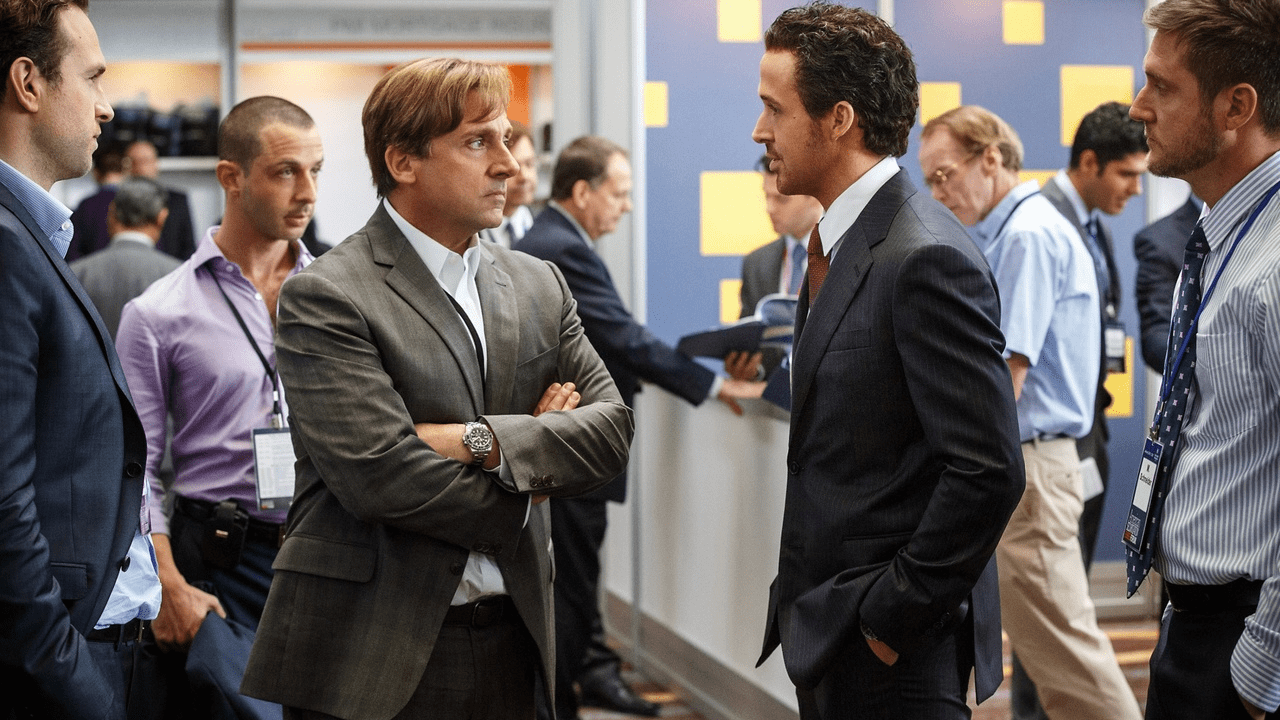
7) The Big Short  

McKay’s first film without Will Ferrell, The Big Short deals follows stockbrokers who bet that America will collapse into a housing crisis and reap the rewards when it does. The Big Short is a mixed bag – it is very original and has many flashes of sheer brilliance. There are some fantastic performances – Christian Bale is the standout and plays against type, not sharing any scenes with the rest of the main cast. However, on the flipside, the film comes off as incredibly smug and boisterous and it has a big identity crisis tonally. McKay isn’t quite sure what the film wants to be – at times it feels like a knock-off of The Wolf of Wall Street and at other times, he regresses to his comedic roots. This deeply impacts the film as tonally it feels very disjointed and feels more like a collection of scenes (some outstanding) spliced together rather than a feature length film. However, originality is what is to be admired here despite the film not hitting all the right notes. (My full review here)

Another large step up in quality…

6) Don’t Look Up

McKay’s latest, Don’t Look Up is an interesting piece. It is an expectedly biting satire with many satisfyingly uncomfortable comparisons to reality. There aren’t many laughs here due to how close the humour hits to home. That said, Don’t Look Up runs into the exactly the same problems as his previous two films (The Big Short and Vice) with its obnoxious and boisterous tone.  McKay directs with the subtlety of a sledgehammer and the film would have worked better if he had left more to the imagination, perhaps with the aid of a co-writer, who could have reigned him in. The film’s pacing is scattershot throughout but particularly in its first half. Reducing the length by around twenty minutes would have really helped tighten up the pacing as the film doesn’t need to be 140 minutes. There are a range of quality performances here with Jennifer Lawrence, Leonardo DiCaprio, Ron Perlman and Melanie Lynskey the highlights, Meryl Streep and Jonah Hill miscast and a very strange performance from Mark Rylance. (My full review here)

5) Vice

Vice is definitely watching alone for the Christian Bale performance and McKay is working with some strong material. Taken on its own merits outside of being an Awards film of its respective year, this is an interesting and unconventional telling of America’s most powerful Vice-President in its history. There’s a lot more to like in Vice compared to The Big Short as it features a tremendous performance by Christian Bale and it tells an interesting story of his rise to power. However, it’s unfortunate that the film runs into pretty much all the same problems that plagued The Big Short as it also is rather disjointed in its pacing and similiarly boisterous in tone. There is no subtlety to McKay’s direction whatsoever and he drives his political message home with a sledgehammer throughout which often crosses the line of being preachy. Whilst there are a number of comedic moments that work, there are also moments where the film is aggressively unfunny.(My review here)

4) The Other Guys

The Other Guys represented a slightly more serious affair than McKay’s previous comedies but this is still a rib-tickling buddy cop action comedy parody that has plenty of heart to boot. Mark Wahlberg and Will Ferrell make for an excellent duo – Ferrell’s sensible policeman has a hilarious but loveable back story and Wahlberg flexes his comedic chops, arguably for the first time in his career. There is plenty to enjoy with the star-studded cast with strong supporting performances from Eva Mendes and Michael Keaton. Samuel L. Jackson and Dwayne Johnson also make for a fantastic cop duo at the start of the film.

And now for the top three…

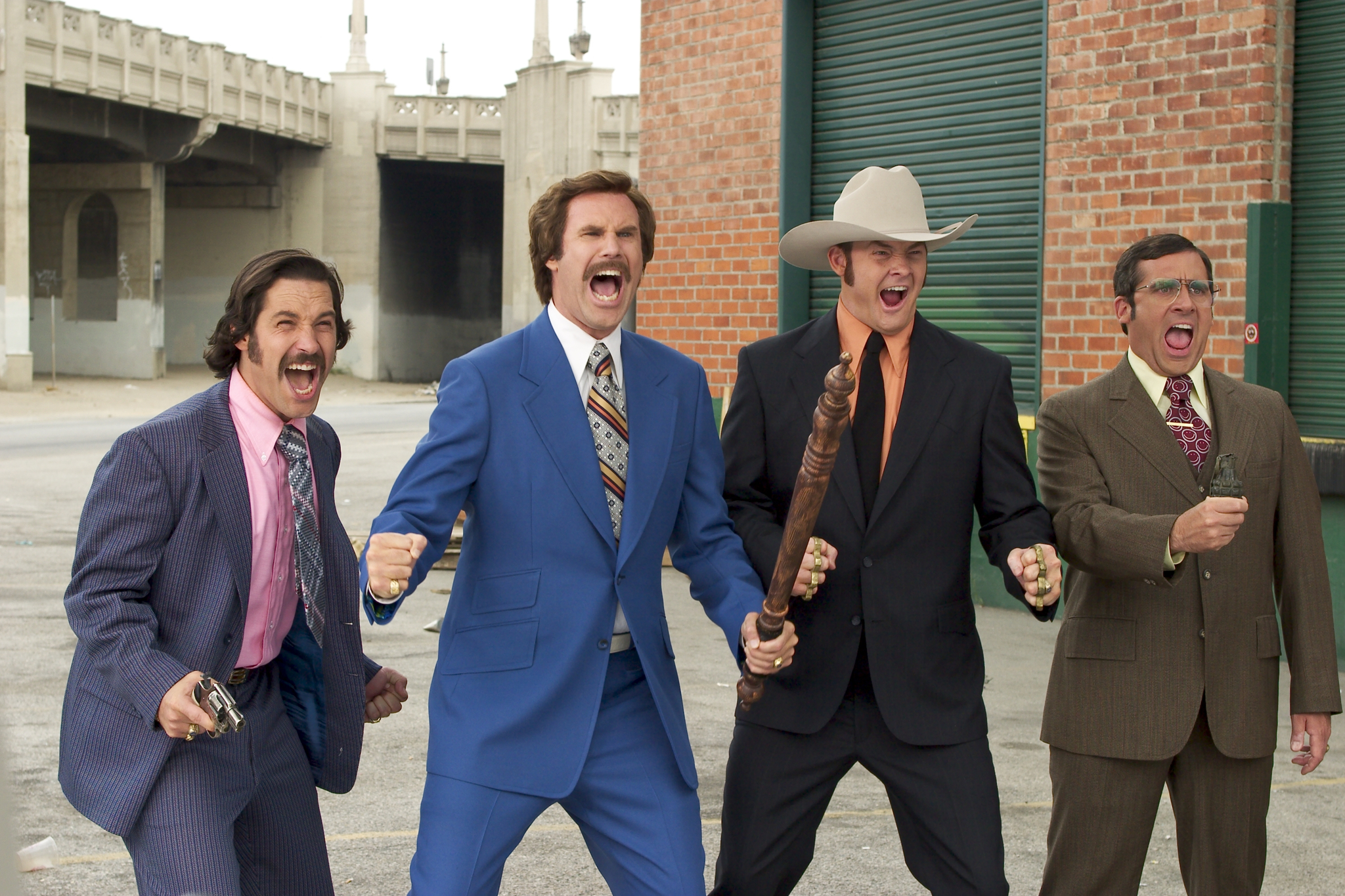
3) Anchorman: The Legend of Ron Burgundy

Whilst many would opine that Anchorman is McKay’s finest piece, it only makes it to third position on this list. Anchorman is a hilarious and endlessly quotable piece that put McKay on the map and elevated Will Ferrell’s career as the legendary newsreader Ron Burgundy, many still citing it up there with his best works. There are many standout comedic sequences, especially a scene with a cameo where Jack Black features in where Ferrell’s dog meets an unfortunate fate. Ferrell has great chemistry with the rest of the news team, consisting of Steve Carrell’s Brick, Paul Rudd’s Brian and David Koechner’s Champ who are all granted excellent lines and moments in the spotlight.

2) Talladega Nights: The Legend of Ricky Bobby

McKay and Ferrell’s second effort is another hilarious comedy, with Ferrell playing the titular character, a world-class NASCAR driver and his rivalry with Sacha Baron Cohen’s Jean Girard and the implications that has. Talladega Nights is yet another endlessly quotable comedy with some standout sequences, particularly one where Ricky Bobby is in hospital after a crash and is convinced that he is paralysed. This film also marks the first collaboration between Ferrell and John C. Reilly and both share an excellent chemistry here, bouncing off each other’s lines.

And the best Adam McKay film is…

1) Anchorman 2: The Legend Continues

A controversial choice but Anchorman 2 is the rare sequel that betters the original. It is a more cohesive film than its predecessor and is far more intelligent with its humour, asking the philosophical question of what consitutes news and how newsreporting developed in the 1980s. There are many standout sequences here and again, a very sharp script written by McKay and Ferrell with some committed performances and some fun cameos. What elevates an already excellent film is its third act, where Burgundy faces an existential crisis that forces him to discover himself as an individual. Anchorman 2 is by far the best Adam McKay film and one of my favourite comedies of the 2010s.


What are your thoughts? Let me know in the comments or tweet @TheFilmMeister

Ranking The Films Of James Wan

Uncategorized

With James Wan’s return to the horror genre, Malignant, hitting cinemas, now would make a fitting time to rank the director’s work to date. Wan is arguably the most influential figure in mainstream horror over the past two decades, launching the Saw, Insidious and The Conjuring horror franchises, each offering a distinctive take on the horror genre. Based on his success, Wan has recently tackled bigger budget fare such as Furious 7 and Aquaman. Malignant reflects Wan’s return to the horror genre and has received a polarised reception, some completely dismissing it whereas others sharing an appreciation for its ambition.

Please note that I am yet to see Furious 7, therefore it doesn’t feature in this ranking. 

9) Dead Silence

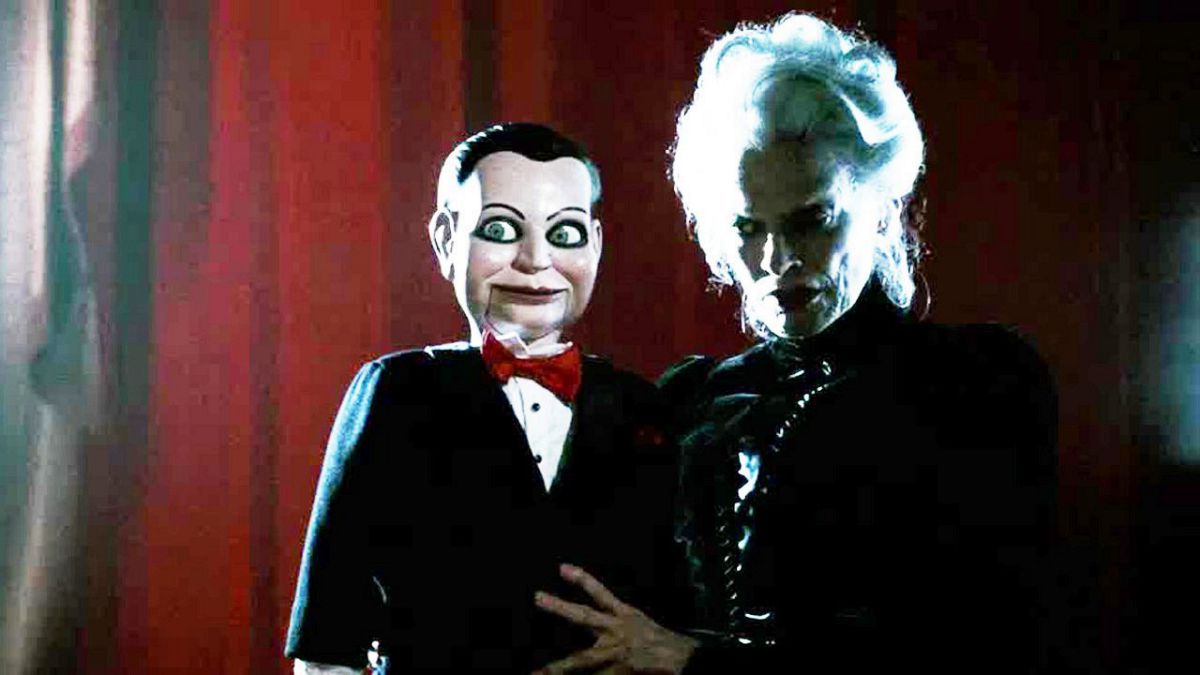
Wan’s follow-up feature after Saw, Dead Silence is by quite some distance, the worst film of Wan’s career. It was released off the back of many horror films of this type and Wan heavily leans into the camp territory. The narrative isn’t particularly interesting, it lacks a twist and the characters aren’t particularly well written, which are reflected in the stale performances. It’s not an outright disaster as Wan demonstrates he is adept with puppetry and there are a handful of creepy images but that’s about it.

There is now a sizeable step in quality…

8) Aquaman

Aquaman just about works as a film and it is a largely entertaining underwater extravaganza that is consistently visually stunning. I was frequently in awe witnessing the underwater world Wan created and there are many shots in the film that are wonderfully crafted. Even when the characters are on land, the visuals are excellent and a chase scene in a Sicilian setting is choreographed particularly well. As for Aquaman himself, James Wan certainly embraces the more corny aspects of the character but manages to inject a lot of heart and development to make him more likeable which is a relief. This cheesy tone Wan goes for isn’t entirely successful and the film is stuffed with formulaic dialogue and plot points. It’s also overlong at a whopping 143 minutes and although not to as bad an extent as other films, it does succumb to a CGI-fest in its final act. (My full review here)

Another large step up in quality…

7) Death Sentence

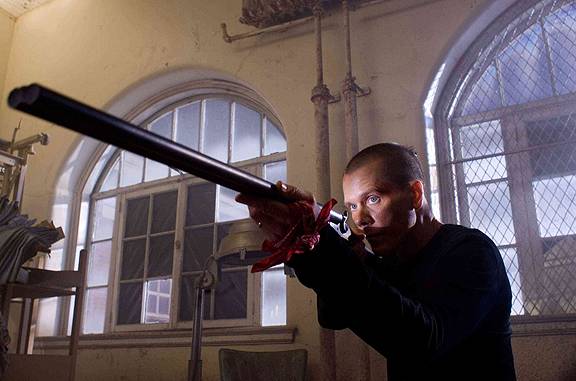
Death Sentence gets a bad rap from critics and audiences but I think this film is quite underrated. This is a lean and brutal revenge thriller that isn’t afraid of gore and violence. Kevin Bacon puts in a committed performance as a vigilante father with not much else to lose after his son is brutally murdered by a gang in an initiation ceremony. The villainous gang, headed by Garrett Hedlund, make for a particularly viable threat and Wan crafts some giddy action sequences. Ignore the reviews and give Death Sentence a watch as it is a total blast and has been somewhat buried compared to his other projects.

6) Insidious: Chapter 2

Insidious: Chapter 2 received mixed reviews on its release and granted, it does lose some of its originality that the first film had but there are some top rate scares here and a very interesting storyline, which Wan prioritises over the scares. It successfully expands the mythology and framework of ‘The Further’ which this series would go on to further develop in its further sequels. Patrick Wilson provides a sinister riff on Jack Nicholson’s Danny Torrance in his performance and ties in with the first film very neatly.

5) The Conjuring 2

The Conjuring 2 isn’t as strong as the first film – it is overlong which severely impacts the pacing and just isn’t quite as interesting a story as the first one was. However, Wan delivers in spades on the scare-front and the film has some truly frightening sequences and there are also some great performances from the cast. Only Wan could have made or been given permission to make this film as 134 minutes for a horror film is uncommonly long and whilst there is a lot of character development (and self-indulgence), 20 minutes could fairly easily have been chopped off and the film would almost be as strong as the original. This is definitely its main problem which is to its detriment. The film bears many similarities to William Friedkin’s The Exorcist and there are a couple of moments where the film leaves a bit of a sour taste as it reiterates many of the clichéd elements of superior horror films. Coming off a near-perfect original, it’s a shame The Conjuring 2 isn’t a knock-out, but that was always going to be impossible and there is still a lot to like in this film. (My full review here)

4) Malignant

Wan’s latest, Malignant is an ambitious risk and is the director’s interpretation of a Giallo horror. The narrative takes unexpected turns. The first act seems fairly generic on the surface, in the vein of Insidious, although Wan does establish an unsettling atmosphere. The film then morphs into a David Fincher-esque serial killer mystery, where it is at its best. A chase scene between the police and the assailant mid-way through is kinetic and heart-pounding. Its last half an hour or so is outrageous with a bonkers plot twist and is a cacophony of gleeful gore, body horror and John Wick-like ultraviolence, with a hint of Sam Raimi camp. As successful as Wan has been in establishing horror franchises, I hope this film remains a standalone piece, as I think it would be impossible for Wan to surprise his audience to this extent twice if he tackles a sequel. (My full review here)

And now for the top three…

3) Insidious

On the face of it, Insidious seems to begin as a somewhat conventional supernatural horror but with a better quality of jump scare. However, Wan is original with the material in terms of where the story goes and the second and third acts are particularly exciting and take some unexpected turns. What’s particularly impressive is Wan’s variation of jump scares and he is not afraid of unleashing horror on the family in broad daylight, which many horror films are guilty of avoiding.  

2) Saw

Wan’s directorial debut is by far and away the best in the franchise and its influence is somewhat diluted now by its cash cow sequels as most of them miss the point of this film to varying degrees. This is a gleefully nasty film, heavily influenced by Se7en but with its own parameters and character mythology. It has a knock-out twist at the end that if you were not aware of it going in, is jaw-dropping on a first viewing. What makes the film scary isn’t the gore and violence but it’s what Wan alludes to that you don’t witness on-screen. This is filmmaking at its most creative – Wan achieved this film on a very limited budget and he makes the most out of every dollar.

And the best James Wan film is…

1) The Conjuring

There was never any contention for the top spot. The Conjuring is by far and away the best film in the series and this film really helped to propel Wan’s career. The film is suitably scary, very atmospheric and has a fascinating narrative. Wan develops the characters superbly, in particular Vera Farmiga and Patrick Wilson, who are great as The Warren’s. Although the scares aren’t the most original, it’s in the execution which allows this film to really deliver and some of the set pieces in this film are mesmerising. The Conjuring is a film that is even better on rewatches and when we come back to look on the horror genre in the 2010’s, this film is straight up there with its highlights. It is a masterpiece.


What are your thoughts? Let me know in the comments or tweet @TheFilmMeister

Top Five Mads Mikkelsen Performances

Uncategorized

Danish actor Mads Mikkelsen has a new film out later this week called Riders of Justice, which reunites him with director Anders Thomas Jensen, after collaborating on The Green Butchers, Adam’s Apples and Men and Chicken. Whatever film he is in, be it in his native Denmark or in his international efforts, Mikkelsen consistently puts in a strong performance and his filmography covers a vast array of genres. He has been often typecast for his villainous roles but Mikkelsen is capable and has proved himself in a wider range of characters and performances as one could be led to believe.

Here, I will reveal my top five performances in films that have featured Mikkelsen. These choices are based on both his performance in them and their quality.

5) The Salvation

This was a toss-up between this film and The Three Musketeers, the latter a rather controversial choice but the film is great fun and Mikkelsen makes for a devious Rochefort. The Salvation is a Western which finds Mikkelsen playing Jon, a Danish settler who has emigrated to the United States and his family arrive seven years later. Unfortunately, the family’s reunion is short-lived after an ill-fated stagecoach journey and Mikkelsen finds himself on a path of revenge and destruction against the villainous Delarue, gleefully portrayed by the also underrated Jeffrey Dean Morgan. The Salvation is a lean and mean Western that doesn’t particularly reinvent the genre but largely succeeds on Mikkelsen’s barnstorming performance.

4) Another Round

Currently in cinemas, although you may need to seek it out (and I suggest you do!), Another Round is a high concept tragicomedy from director Thomas Vinterberg. These qualities are shared by three of his close friends who also teach in the same school – sports teacher Tommy (Thomas Bo Larsen), music teacher Peter (Lars Ranthe) and psychology teacher Nikolaj (Magnus Millang). When they meet up to celebrate Nikolaj’s 40th birthday in an up-market restaurant, they get very drunk. One of them brings up the subject of a theory by Norwegian psychologist Finn Skårderud who opined that humanity performs best when they have a blood alcohol content of 0.05%.  Martin decides to put this theory to the test one day whilst teaching and he finds that he has a much closer relationship with his pupils. The rest of the group decide to join in and they all have similarly positive results. They start to record their results in an academic journal that they curate and as the film progresses, they slowly up the alcohol level to explore the effects. Perhaps unsurprisingly, they discover that the benefits start to stagnate the more they drink and they eventually reach the road of self-destruction, with both comedic and devastating consequences. 

Another Round is often infectiously humorous and the relationship between the four teachers is developed very authentically and they have fantastic chemistry. The film is equally depressing at times when we witness the dire consequences alcohol can have on these teachers. The first two thirds of the film is particularly beautifully crafted but it loses its footing in the final third somewhat. The final act negates the message of the first two acts and Vinterberg seems to be unsure in his argument of whether alcohol has a positive or negative influence. Mikkelsen is typically excellent in the role, who portrays Martin with a potent world-weariness and a tinge of sadness. He is an easy character to care for as he learns to live again many times in the film. (Full review here)

3) Polar

A wildly controversial choice as Polar got absolutely trashed by critics in its reviews. A Netflix OriginalPolar is a revenge thriller in the vein of John Wick and Taken with Mads Mikkelsen playing the action hero with spectacular results. The film is utterly bonkers and what is impressive is how it manages to balance sheer grittiness and savage ultraviolence with its ridiculous tone. The decision to cast Matt Lucas as the over-the-top villain is a stroke of genius and the result is a film that I really got on board with.

2) Casino Royale

Mikkelsen’s big Hollywood break came in the form of James Bond where he is put against Daniel Craig in his debut film. Casino Royale rejuvenated the franchise after the disastrous Die Another Day, a film that rebooted Bond for the modern day audience with its grittier and darker tone. Mikkelsen plays Le Chiffre, an expert poker player who suffers from a blood-weeping eye. Mikkelsen makes for a nasty villain, who for much of the run time, taunts Bond intellectually. There is a particularly grisly torture sequence late in the film for Le Chiffre to further open up, which makes for satisfyingly uncomfortable viewing.

1) The Hunt 

By far and away Mads Mikkelsen’s career pinnacle, The Hunt is a masterclass of a drama from director Thomas Vinterberg. Mikkelsen plays Lucas, a daycare employee, who is falsely accused of indecently exposing himself to a child. The film follows the community turn against him and Lucas is treated quite terribly, as he tries to prove his innocence. This film packs an emotional wallop and Lucas goes through hell, his world-weary and slitted eyes wearing guilt that he shouldn’t have. If you haven’t seen The Hunt, go and watch it immediately as it is not just Mikkelsen’s best performance or Vinterberg’s best film but it is one of the best films of the 2010s.


So there we go. What do you think? What did I miss? If you haven’t watched any of these films, I’d highly recommend you do so as they’re all really worthwhile and I’m sure Mikkelsen’s career will continue to be a fascinating one, especially with the untitled Fantastic Beasts sequel where he will replace Johnny Depp as the main antagonist of the series, Grindelwald.

Riders of Justice is released in UK cinemas on Friday 23rd July

Ranking The Comic-Book Films Of 2020

Uncategorized

The comic-book genre continues to maintain its audience popularity and 2020 brought some new additions to the table. Unfortunately, not every film that was in the calendar has been released due to the coronavirus pandemic, so this is a much smaller year in terms of volume. Three films made it to release. Here, I rank these films in order of my personal preference.

In a surprise move, DC had the biggest year releasing two of its films. Birds of Prey was lucky to release in February just before the pandemic hit and was interesting in that it represents a more adult take on the genre with an all female cast. Wonder Woman 1984 was scheduled for early June but found itself getting delayed and ultimately recieved a hybrid release in select open cinemas and video-on-demand in December.

Marvel were meant to release two films this year – Black Widow and The Eternals but neither were released and have moved to the 2021 slate. Black Widow was meant to release in May but Disney have been reluctant to move it to their Disney+ channel and are trying to hold out for a theatrical release.

In their Sony slate, Marvel were also meant to release Morbius and Venom 2 this year that continue the universe set up by Venom but both have also been moved to 2021.

In what is perhaps a surprise move, the final X-Men film (well more of a spin-off that was meant to release back in 2018!), The New Mutants, had a quiet release in Summer once cinemas reopened but had next to no marketing. It has been clear since its strained release that Disney-Fox lacked confidence in the product and in the vein of Fantastic Four, tried to dump it on screens so that it had a theatrical release and be rid of it. 

Overall, I would argue that the three films in this small list here are all good and there isn’t a great deal between them, especially the top two films in this list. Let’s get started!

maxresdefault

3) Birds of Prey 

Birds of Prey is an interesting addition to the DCEU in that it functions as a distanced sequel to Suicide Squad in that it follows Margot Robbie’s Harley Quinn and some of the ramifications following the events in that film but functions as a standalone piece otherwise. Directed by Cathy Yan, this is an interesting and original entry into the comic-book genre that hits more than it misses. Yan implores the use of unreliable narration and dials up the violence to earn the film a 15 rating, following the success of more adult entries such as Deadpool and Logan. It’s also an all female team directed with a feminist agenda which is also refreshing. The film is very ramshackle in its construction for its first two acts and there are some sequences that diverge from the main plot which just don’t work, alongside some poor musical choices. However, the film finds its footing in the final act once the team are assembled and there is a carnival-esque quality to their camrarderie. Birds of Prey is an interesting film that I’m glad exists and I would be happy to watch future installments but this film does run into its fair share of issues.

Wonder-Woman-1984

2) Wonder Woman 1984 

Overall, Wonder Woman 1984 is a risky sequel that retains the first film’s quality in developing its characters and uses action sparingly in its long run time. I can understand the mixed reception to some of the film’s themes but I got on board with the narrative and was thoroughly entertained from when the film finds its footing about 20 minutes in right through to the end. Yes, it has its problems with some of the narrative choices and the depiction of Cheetah but director Patty Jenkins poses enough thought-provoking questions and develops her characters very well to make the film worthwhile. It is always better for a sequel to take risks in order to develop a film series rather than just rehash the same beats and for that, you have to appreciate the ambition of Wonder Woman 1984, even if said risks don’t always pay off. It will be very interesting to see where Wonder Woman and the supporting characters are taken next in future DCEU films. (My full review here)

And the best comic-book film of 2020 is…

disney-will-release-a-new-trailer-for-marvels-the-new-mutants-next-month-social

1) The New Mutants 

A choice that I’m sure will spark controversy! Although Wonder Woman 1984 is perhaps a slightly more consistent film, The New Mutants surprised me in that it is a far better film than it has any right to be or as the delays would suggest. The notion of director Josh Boone melding a comic-book film with the horror genre is an interesting decision and whilst the film isn’t particularly scary, there are some unsettling images of some of the team’s greatest fears. The smaller scale works wonders for the film, with Boone successfully establishing and developing its close-knit characters. By the time the film reaches the third act, all of the characters make compelling cases to really care for them. Unfortunately, The New Mutants commits the classic comic-film sin with its last 15 mins as it descends into a bit of a CGI-fest but it’s relatively short-lived. It does undo the sense of intrigue somewhat but it needs to integrate into the genre somehow, I suppose. Despite the ambitions for The New Mutants to start a new series, this standalone film is a valiant effort in its final form and is worth watching for viewers of the series. (My full review here)


What are your thoughts? Let me know in the comments or tweet @TheFilmMeister